Lina Filipovich
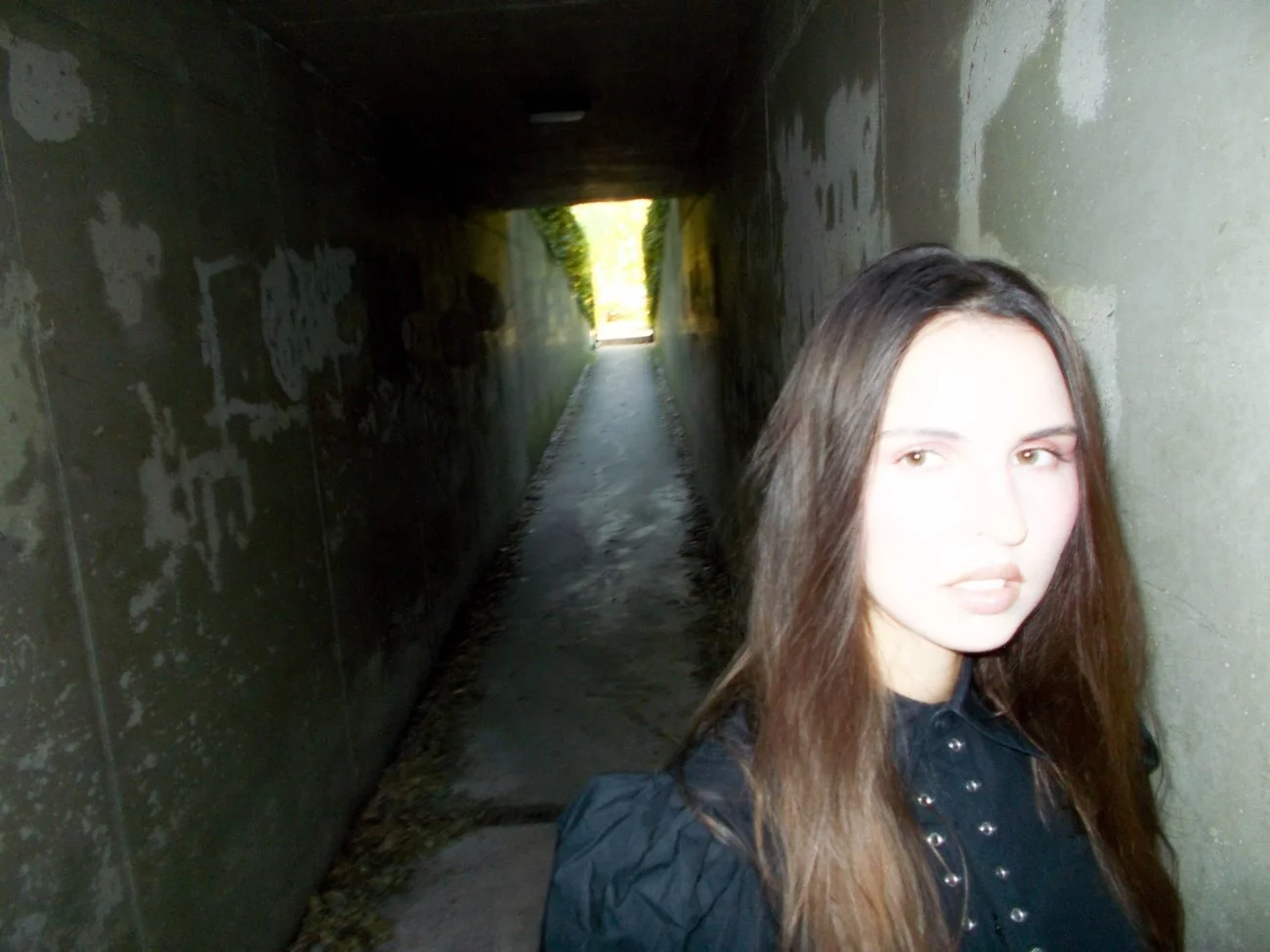
This interview with Lina Filipovich explores her feminist reappropriation of religious and political symbols, transforming them into rituals that challenge patriarchal authority, memory, and cultural power. Working across textiles, sound, and performance, her practice engages ritual as both a personal and collective experience. Through electroacoustic compositions, tactile installations, and quasi-ritualistic performances, she creates immersive environments that invite contemplation, participation, and critical reflection. Techniques historically associated with women’s and queer craft traditions, such as patchwork, bright fabrics, and reclaimed materials, become forms of aesthetic disobedience and cultural affirmation. Her work is deeply informed by questions of historical memory and political symbolism: rather than erasing these symbols, she reactivates them to transform their inherited meanings, confronting the persistence of ideological power and exploring how art can function as a protective and transformative ritual. Lina Filipovich is currently presenting her work at the Salon de Montrouge, where her installation invites viewers into a shared space of sound, material, and embodied experience. On view until March 1, 2026, the exhibition offers a timely opportunity to encounter her practice, which challenges dominant narratives while imagining new forms of collective awareness and resistance.
Your work does not limit itself to criticizing religious iconography but constructs a new feminist mythology. We often find ourselves having to choose between reforming patriarchal religions from within or abandoning them entirely. In your work, you seem to position yourself in an intermediate space, where you do not destroy religious symbols but rather reappropriate and transform them. What is the idea behind this approach?
Thank you for this question, because it allows me to articulate my position within this complex in-between position. I think that religion is also a part of personal identity, so in my work it’s not belief itself that I try to deconstruct, but rather the authoritarianism and patriarchy that have historically been associated with it. Religion is one of the institutions that create the mechanisms of submission, enforces rules, dogmas, and norms, and it is precisely this that I want to question in my practice. I also appreciate how François Vergès explores the relationship between religion and feminism in her book Feminism Decolonial. Appropriation is a strategy I use to reactivate old symbols and myths through a subjective and intimate experience, opening them up to new meanings. I believe subjectivity and the irrational can be a way to resist authoritarianism. In my practice, I not only use Christian imagery, but also occult symbols, which have often been employed by different countercultural movements, for example, metal culture, psychedelic rock, and New Age or esoteric movements. Many of these movements have appropriated mystical or occult symbols, but they were often patriarchal or misogynistic, even within countercultural contexts. My work seeks to reinterpret these symbols from a feminist perspective.
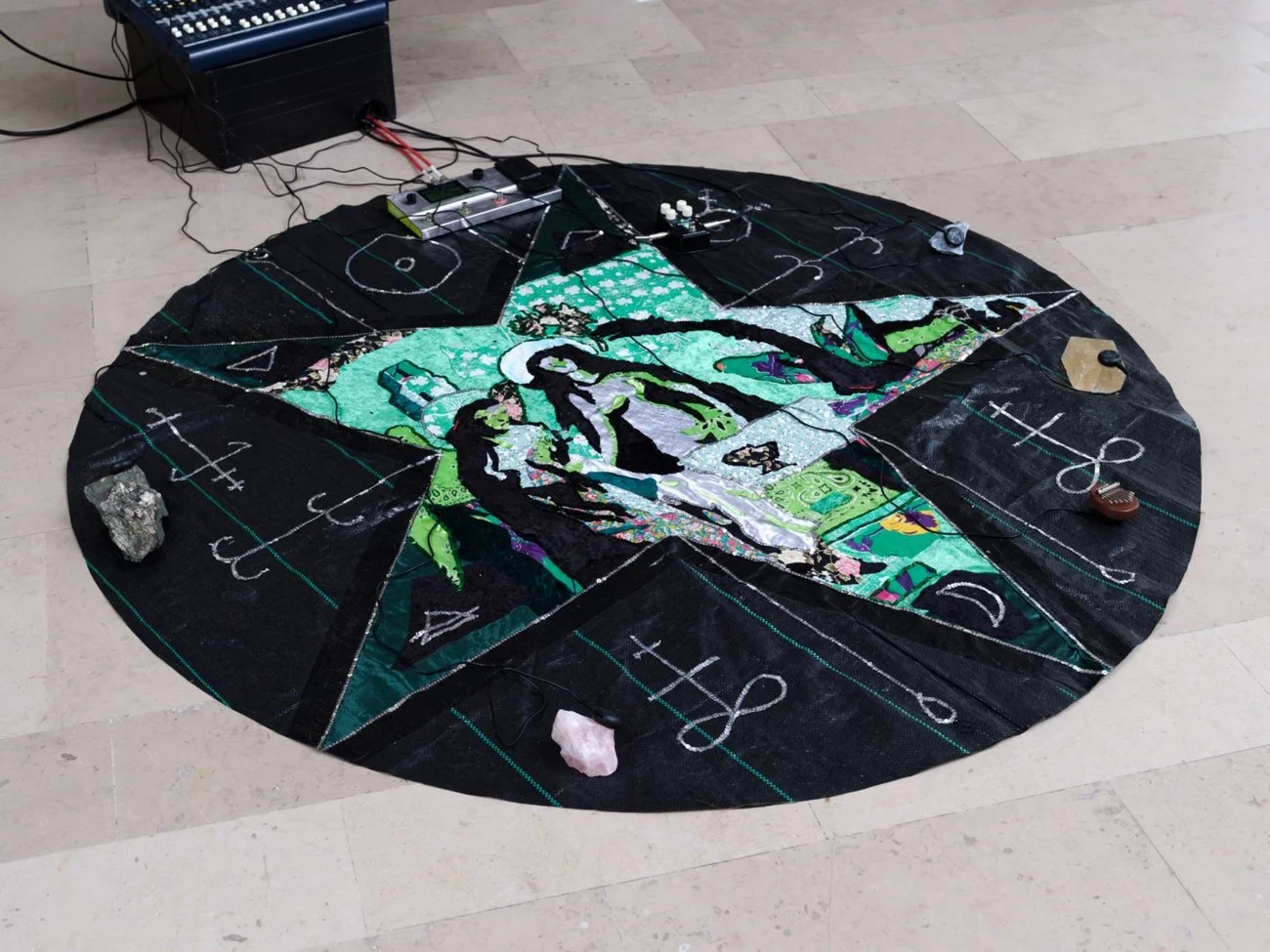
“I also appreciate how François Vergès explores the relationship between religion and feminism in her book Feminism Decolonial. Appropriation is a strategy I use to reactivate old symbols and myths through a subjective and intimate experience, opening them up to new meanings. ”
In your performances, you use decontextualized liturgical sounds and transform them through dark electroacoustic textures. Do you think sound has a particular power in desacralizing religious and patriarchal authority, perhaps in a more direct or visceral way than image?
Yes, I think sound has a particular power in desacralizing, because it acts directly on the body, it bypasses language and interpretation, before you can rationalize it. You can disturb the authority while keeping their affective charge alive. The sound is an intuitive medium for me. While composing or performing, I rely heavily on improvisation, which helps make the reinterpretations personal and subjective. In my visual practice, the preparatory work takes much more time and energy. I often start by reading and researching to find a narrative or concept that I want to reinvest in. Then I work on sketches, compositions, and colors, often creating a full-scale paper model of the image, which I later translate into textiles and other recovered materials. The many steps involved make the visual practice less intuitive than sound, but both are ways for me to explore the same concepts.
Your performances also take the form of rituals, rituals of intimacy and disobedience at the same time. What role does ritual play for you today?
It’s a quasi-ritual for me, a symbolic, artistic form of ritual rather than a “real” one. It’s a way of deconstructing existing rituals within the context of art. I think of it as a personal and intimate practice that allows me to explore gestures, sounds, and materials in a way that is both introspective and performative. Through this form of ritual, I can question and deconstruct the systems of power and patriarchy that these rituals often embody. These quasi-rituals are also a way to engage the audience in a shared experience. During my exhibition at the Salon de Montrouge, I presented a sound installation imagined to activate the textiles. The idea was to make it interactive, allowing the audience to manipulate different instruments, such as stones or a kalimba, while lying on a patchwork arranged like a ritual carpet. It was an invitation to participate in a collective ritual of sound-making and attentive listening.
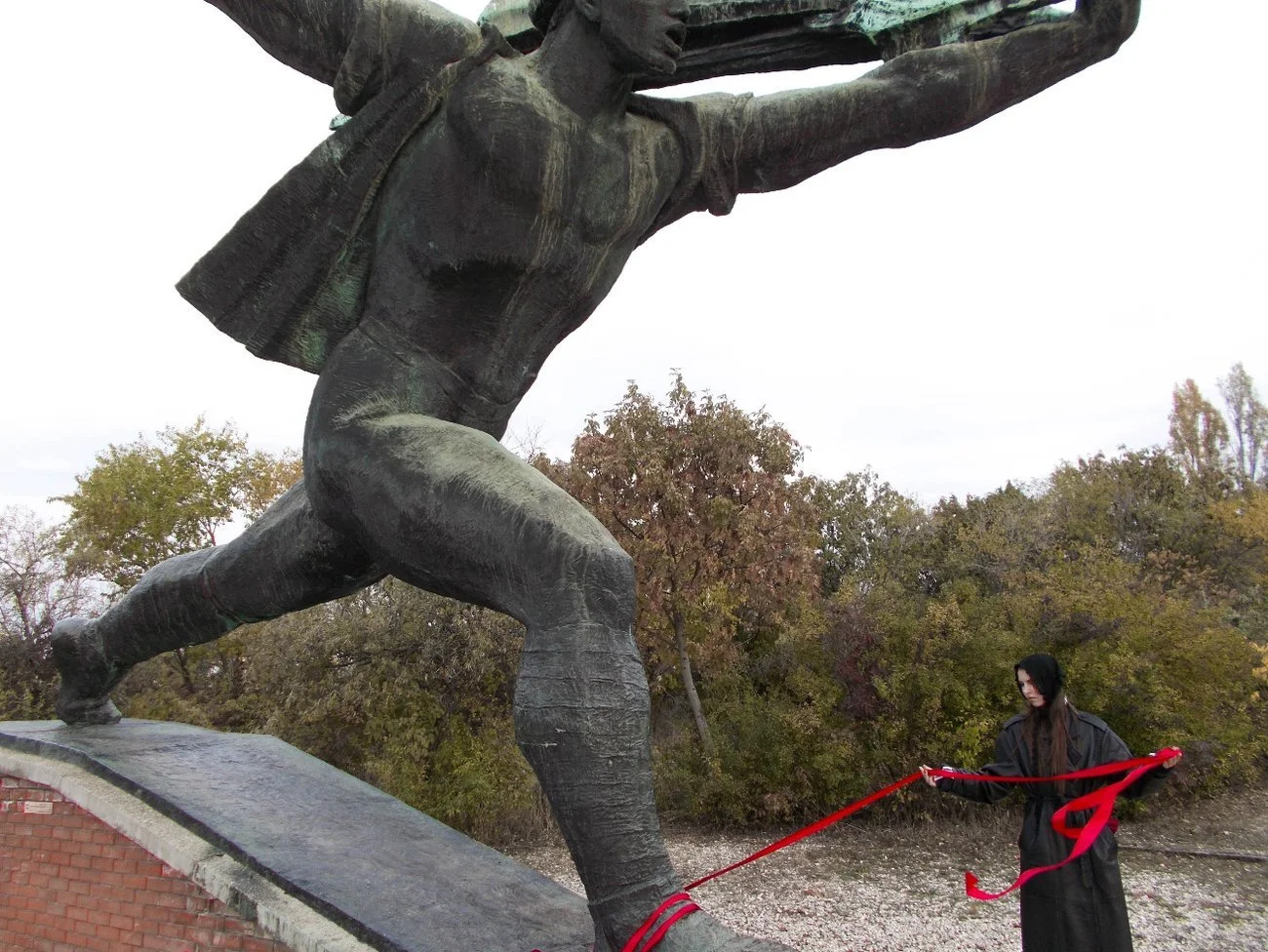
“Through this form of ritual, I can question and deconstruct the systems of power and patriarchy that these rituals often embody. ”
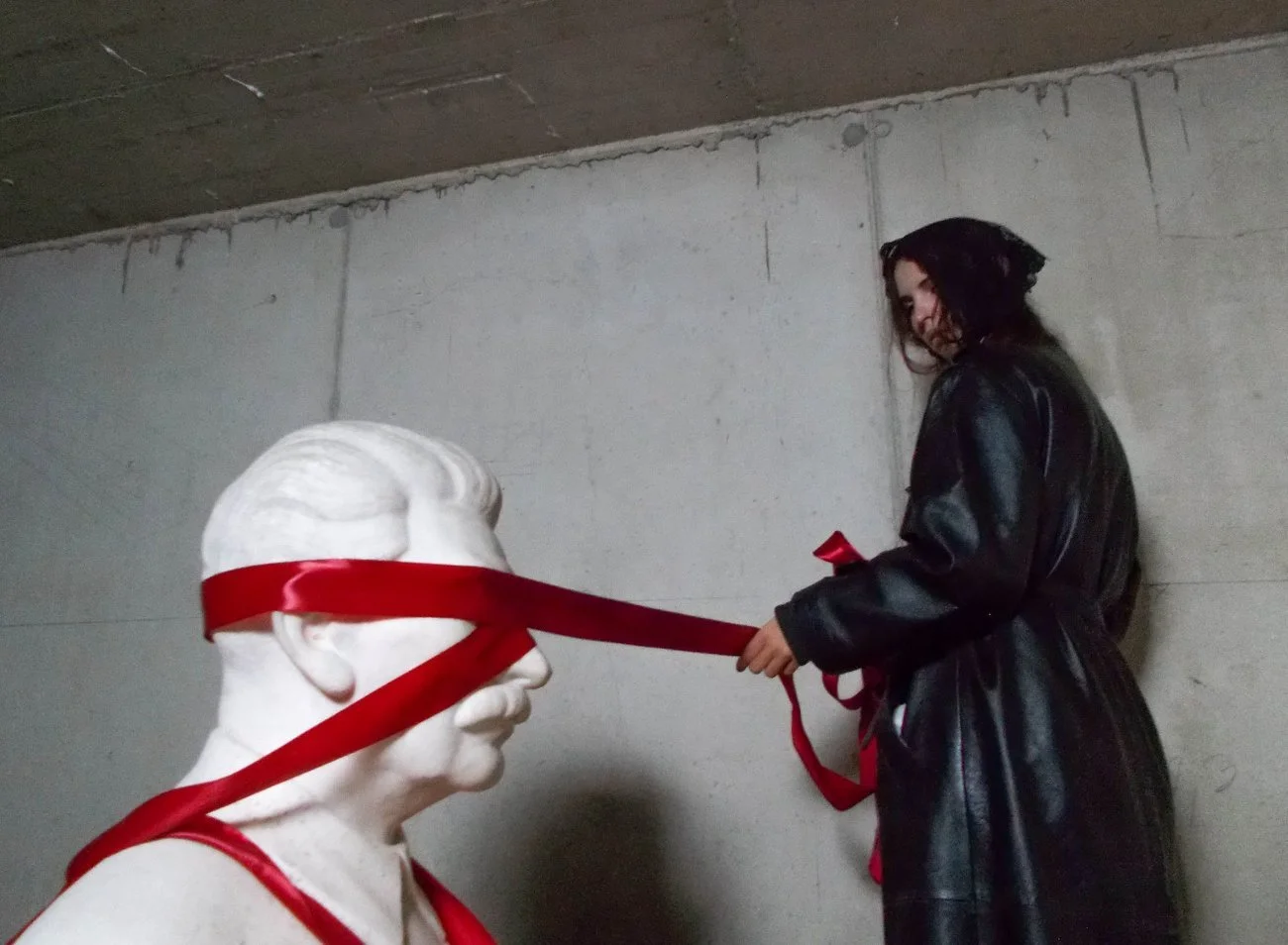
In your work Fallen Star, you activate propaganda statues in a liturgical way as if they were relics of a toxic power, carrying ideological memory and an energy that is still operative. At a historical moment in which many statues of patriarchal, capitalist and colonialist figures are being contested or destroyed, do you think it is more powerful to destroy these “symbols” or to reclaim them and transform their meaning?
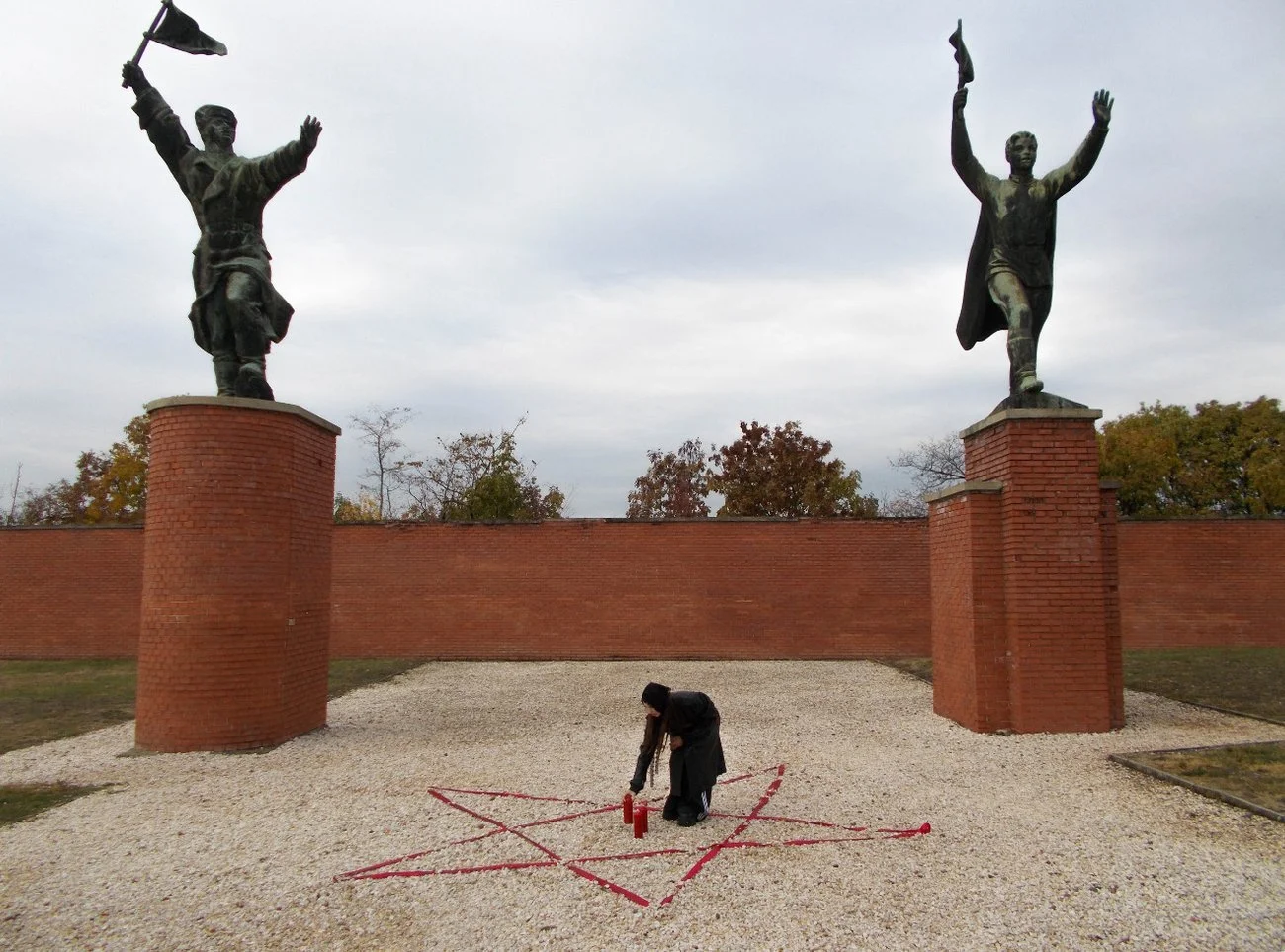
It’s important to mention that my performance did not take place in the city of Budapest itself, where today such Soviet propaganda statues are no longer visible, but in Memento Park, on the outskirts of the city, which serves as a kind of cemetery of ideologies. Many statues there were damaged or destroyed during the Hungarian Revolution of 1956. I approached my performance as a confrontation with a complex history, including that of my own country, Belarus, where a similar process of “desacralization” of the Soviet period has not yet occurred. In Belarus, many of these statues are still present in public spaces, except for Stalin statues, which were removed shortly after his death in 1953. The power of these statues does not lie solely in their physical presence, but in the meanings and memories they carry. Destroying these symbols can be cathartic and signal a rupture with oppressive histories, but it risks erasing the complexity of the past and the conversations it can still provoke. In my performance Fallen Star, I chose to transform symbols of oppression into instruments of contemplation and resistance. It is a way to confront the political traumas and histories experienced by post-socialist countries during the 20th century, represented in these statues, and to activate them in a manner that serves a means of acknowledging and processing. I see this performance as a ritual that protects against authoritarianism, nationalism, xenophobia, and patriarchal forces, which, as we see today, continue to persist and even strengthen.
“The power of these statues does not lie solely in their physical presence, but in the meanings and memories they carry. Destroying these symbols can be cathartic and signal a rupture with oppressive histories, but it risks erasing the complexity of the past and the conversations it can still provoke.”
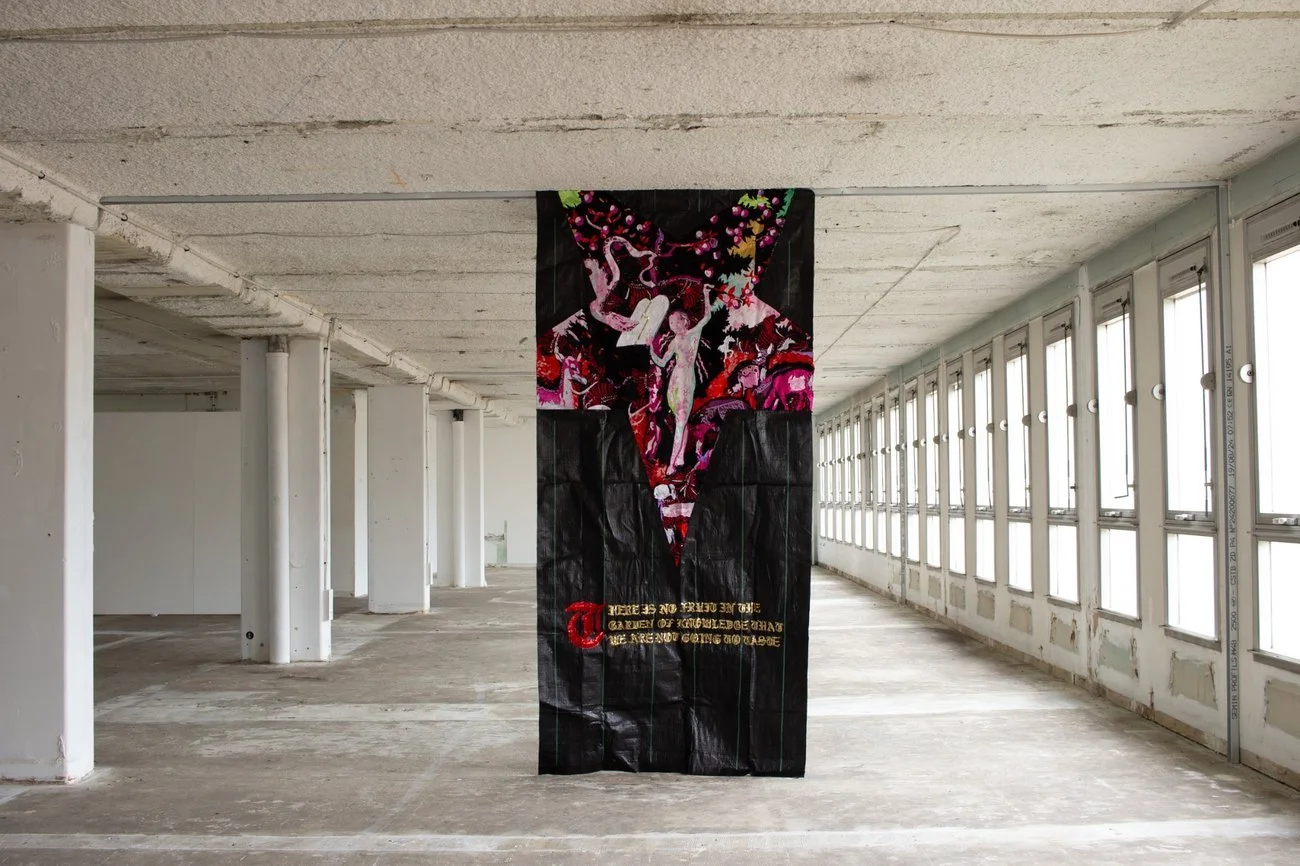
You use techniques such as patchwork and screen printing, traditionally associated with women’s work and often considered “minor.” Do you see the use of these materials and techniques as a way to challenge male hierarchies in art history and redefine what is considered cultural power?
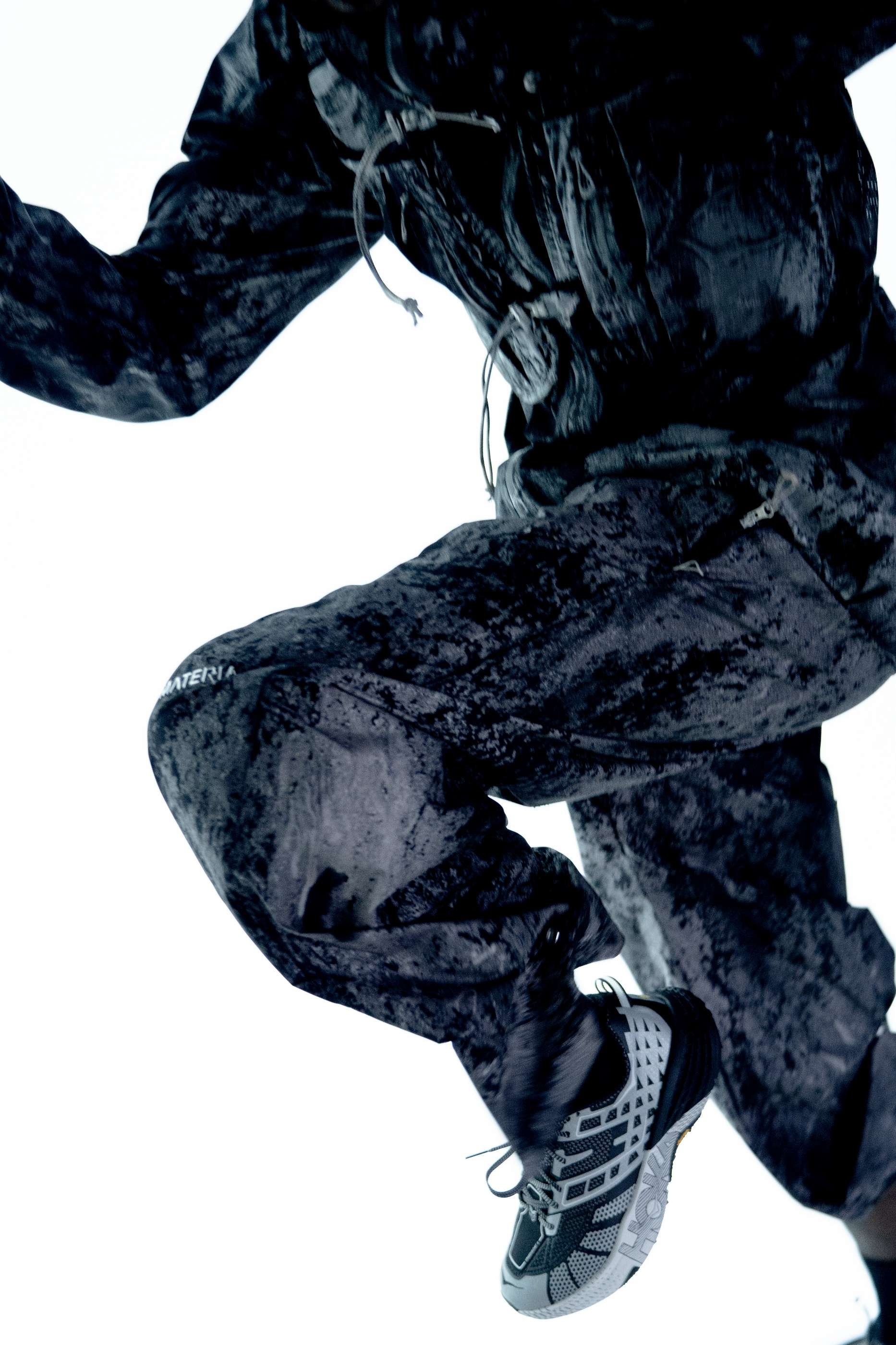
Yes, absolutely. I consciously choose these materials, along with bright colors, sequins, and textures, as symbols of resistance and disobedience. They are not aligned with bourgeois “good taste,” but with pop culture, collective craft knowledge, and forms of aesthetics historically associated with women and queer communities. This is also a way to reconnect with territories and visual languages that have long been considered peripheral or illegitimate within dominant art histories.

What do you think is the responsibility of art in actively confronting power structures, and what role does the artist have in creating spaces of awareness, transformation and contemplation?
Personally, the context in which I was born and raised has made me question the power structures I have been confronting all my life. The political situation in Belarus is complex, and the historical moment we are living through is extremely tense. Yet I feel this responsibility everywhere, even outside countries with strong authoritarian tendencies, because no one is fully protected from them and we all need to defend ideas of equality, freedom, and nonconformity.
What to read next