An interview with dancer Siko Setyanto and choreographer Tianzhuo Chen
Trance, embodiment, invocation, fabricated mythology: we were spellbound.
For the 2026 edition, KUBORAUM curates a series of musical nights under the title We Travel To Know Our Own Geography, during the Venice Biennale preview from May 6 to 8, 2026. Among the guests, Tianzhuo Chen, founder of the multi-disciplinary collective ASIANDOPEBOYS, arrives for the first time with a new performance devised alongside Indonesian choreographer Siko Setyanto. Teh night was a lengthy, potent, and deeply spiritual performance. Drawn from Noh theatre and rooted in ancestral memory and oceanic mythology, Moyang 先祖 & Seaman 漁師 was, in my view, one of the most stirring performative moments of the programme, and I seized the chance to ask Siko and Tianzhuo a few questions.
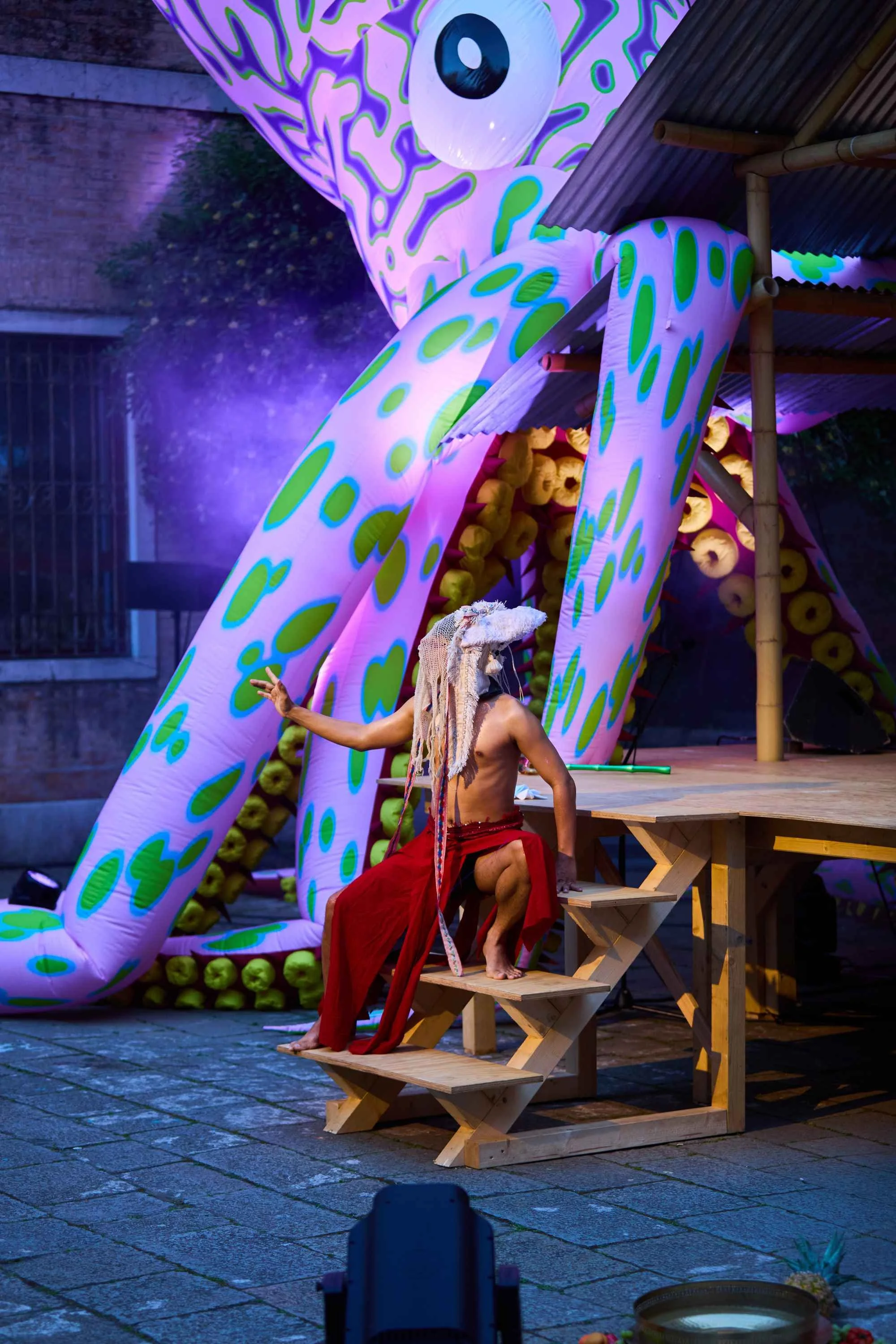
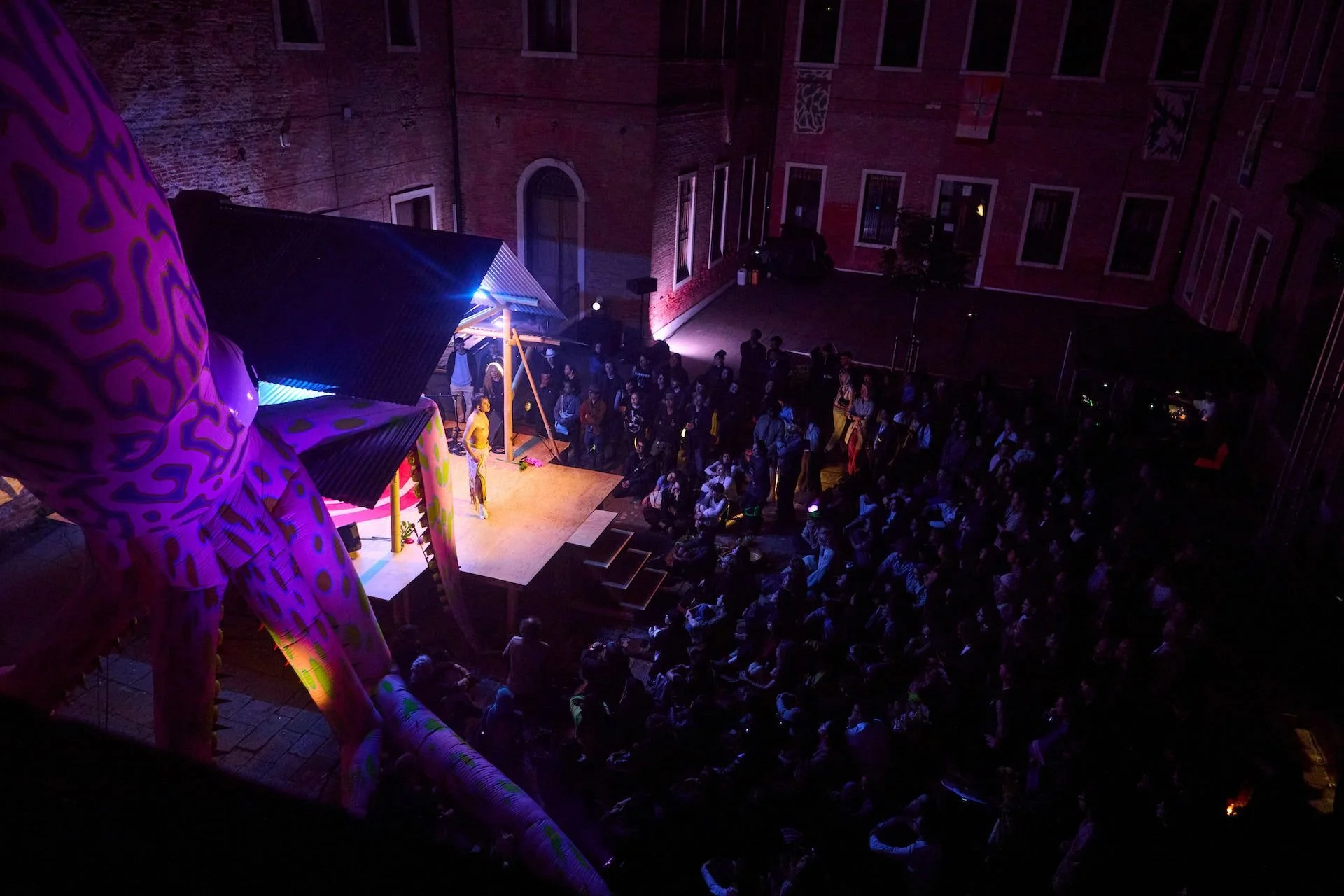
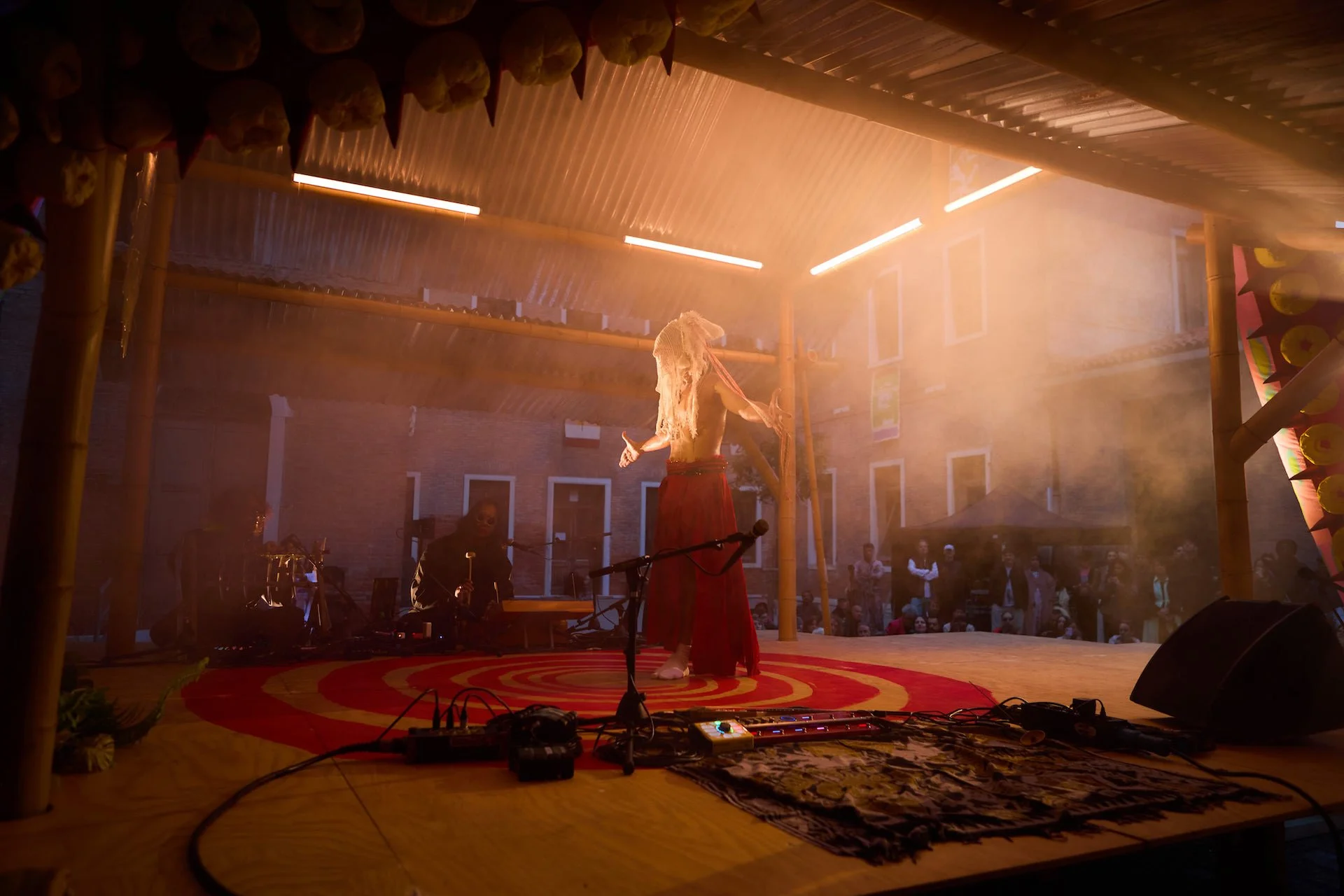
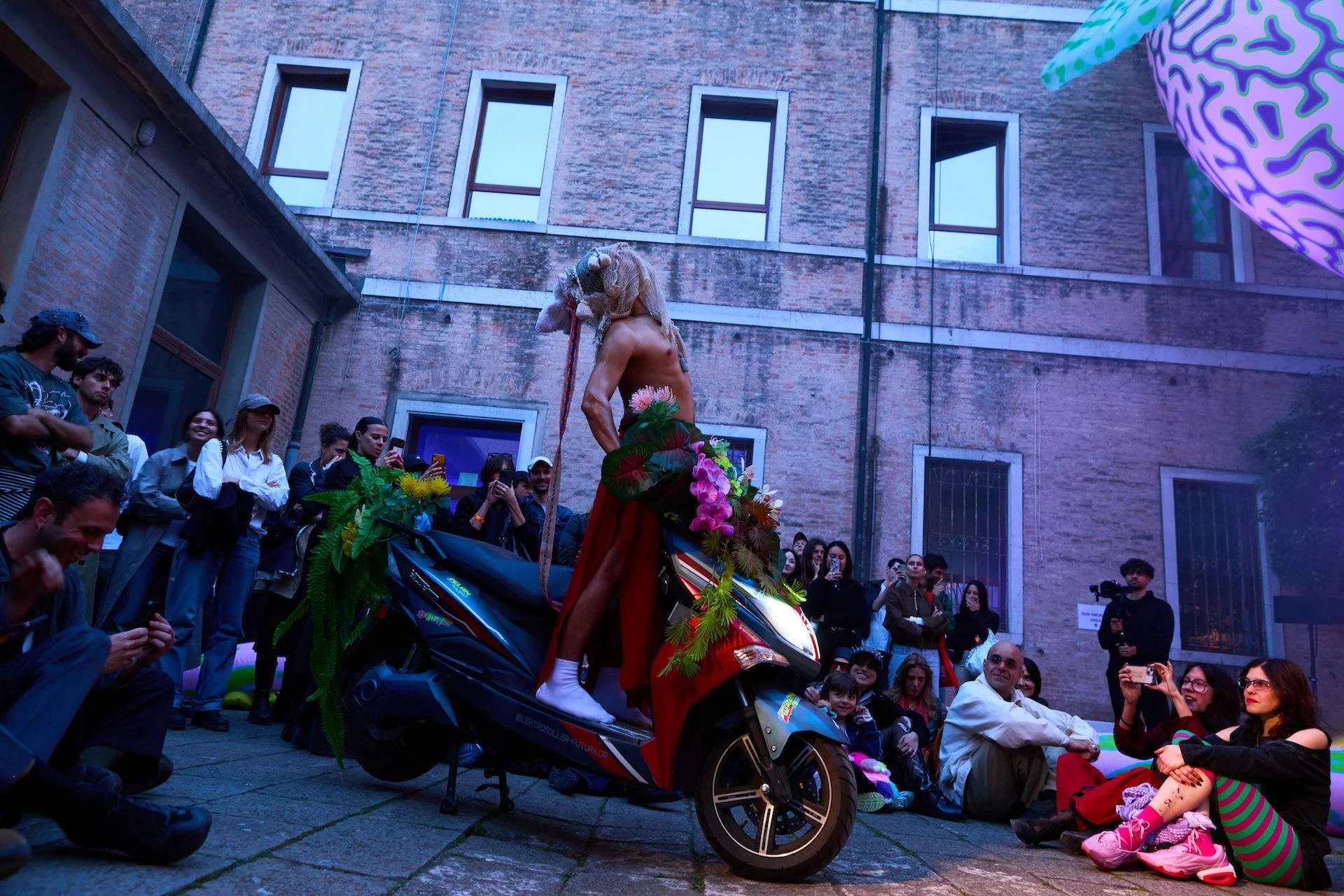
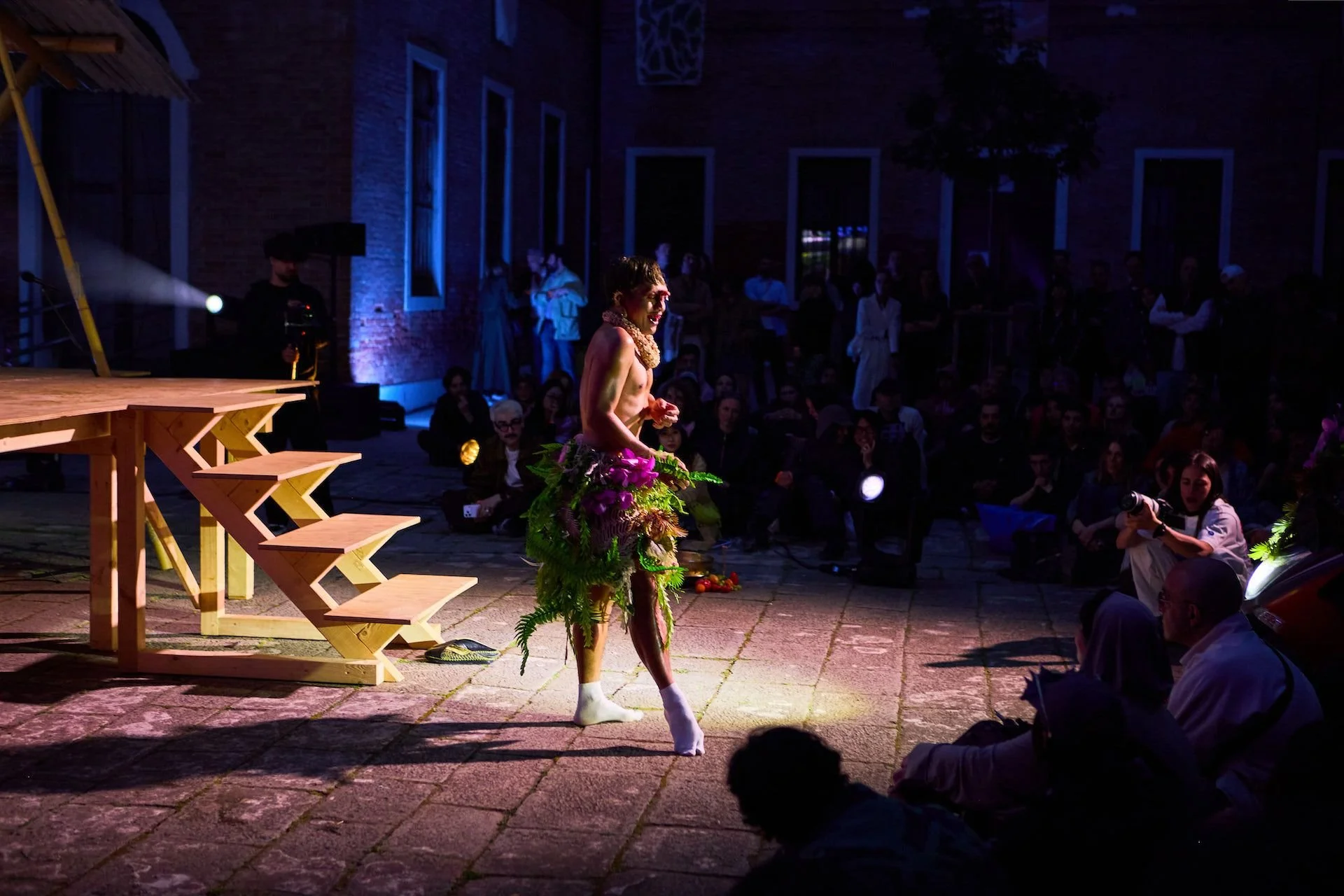
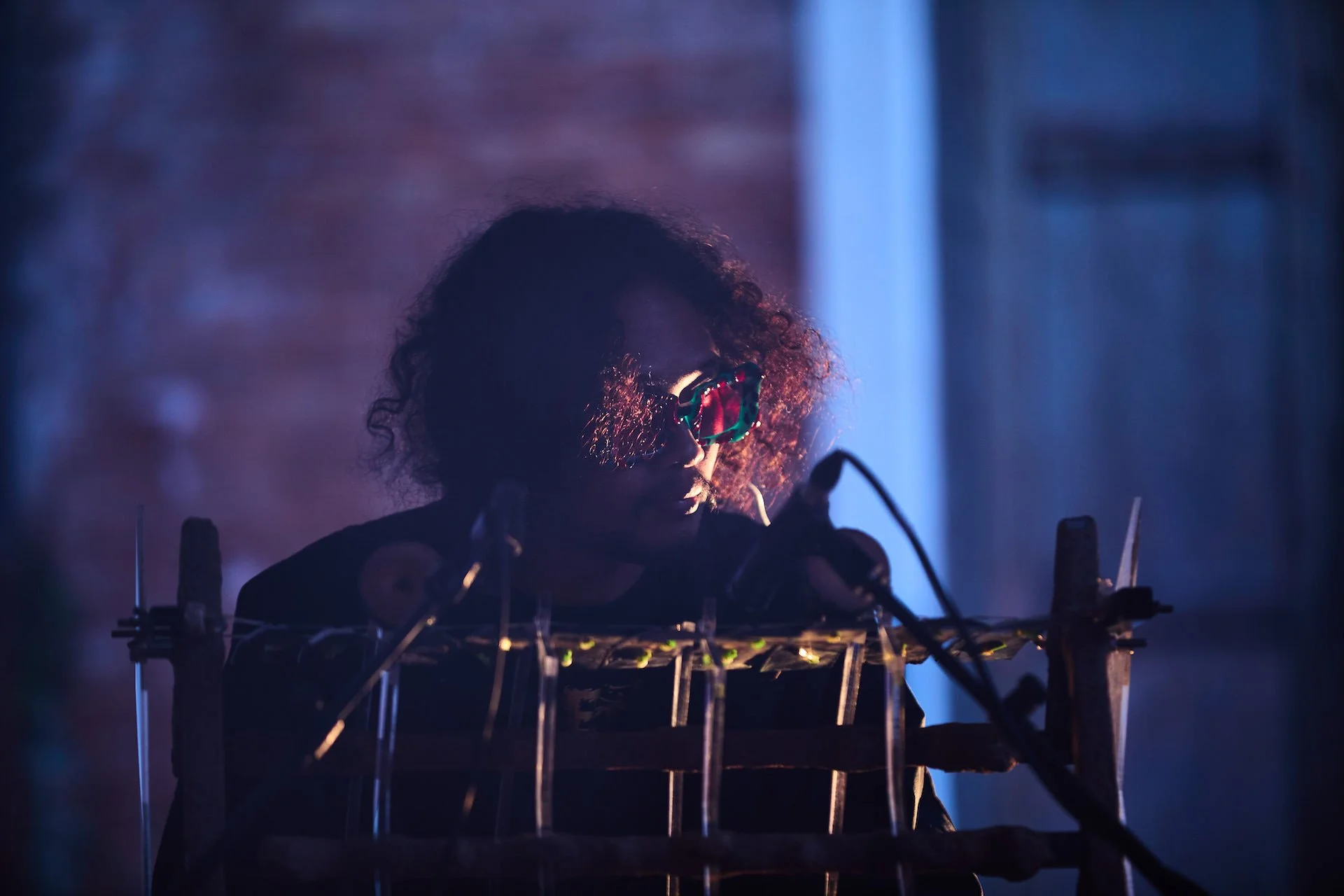
A wooden stage inside a secondary school near the Arsenale recalls the raised platforms of traditional Balinese architecture. The audience sits close, encircling the performance space. A moped, ritual plants, incense, fruit and masks set the scene for a story of transformation from human to divine told through eye contact, facial expression, shouts and chant.
As Setyanto's meditative choreography meets the dense, living sonic landscape of the singer Nova Ruth and Kadapat, both in the stage, we are drawn into an encounter between spirituality, trance, and ritual music.
The project will also take shape as a collaborative vinyl and sonic work by Kadapat and Nova Ruth featuring Siko Setyanto, co-released with Kuboraum Editions and @svbkvlt. We Travel To Know Our Own Geography, curated by Kuboraum, is hosted within the public programme of the exhibition 'One Touch of Nature Makes the Whole World Kin', curated by the School for Curatorial Studies Venice. KUBORAUM, present at the Venice preview for years, is a platform and residency for sonic research, and pursues a curatorial investigation of non-genre, consistently proposing varied contents and formats — spanning live sets, performances, and record production.
Moyang 先祖 & Seaman 漁師,the Ancestor and the Fisherman
Trance, invocation, embodiment. The performer and the god that dwells inside the performer. With Moyang 先祖 & Seaman 漁師, Siko Setyanto, a Javanese dancer and performer, custodian of Kejawen and the ritual theatres of Nusantara, crosses the stage in full lucidity, oscillating between himself and Lera Wulan, the God. Tianzhuo Chen, a Chinese artist based in Berlin, is a "theatrical DJ" who remixes ritual architectures and cosmologies from disparate cultures to build what he calls fakelore, contrived mythologies that sear like genuine ones. Perhaps because they are.
The translated title is “"the Ancestor & the Fisherman", two archetypal figures: the one who comes before (memory, lineage, the sacred) and the one who lives in direct relationship with nature and the ocean (labour, survival, the journey). Together they conjure a world of oral transmission, of spirituality rooted in the body and in the land.
Alongside musicians Nova Ruth and Kadapat, their work cuts across Nō theatre, Balinese cosmologies, Sulawesi animism, experimental sound art. The traditions are not kept in a museum case but become emotional technologies, structures capable of holding the threshold ajar between the self and the archetype. Tradition is not an archive, but a force, malleable, adaptable, without losing its sacred grain.
A special interview with the dancer Siko Setyanto and choreographer Tianzhuo Chen.
Siko, Chen, you were born and shaped between China, Berlin, Jakarta: how did the encounter unfold, and what was the artistic initiation, including with the two musicians?
Siko Setyanto: I first met Tianzhuo when he invited me to perform in his work titled Trance in Beijing back in 2019. After that, Tianzhuo invited me to collaborate on Ocean Cage. As we discussed the project, we ultimately brought in Nova Ruth and Kadapat, to complete the powerful performance of Ocean Cage that continues to this day.
How is the performance received by our audience and by yours, from your respective countries? What, or which element, do you believe is better apprehended, and what is instead mystified by our gaze, accustomed as it is to vastly different rituals?
SS: I have always viewed performing on stage as the ultimate expression of professional commitment. I never overthink how audiences in different countries will respond to the friction between our rituals and theirs, or how they will perceive us. For me as a performer, the only thing that truly matters is the impression of our readiness to deliver the work. The rest belongs to the audience; they are completely free to interpret whatever they find.
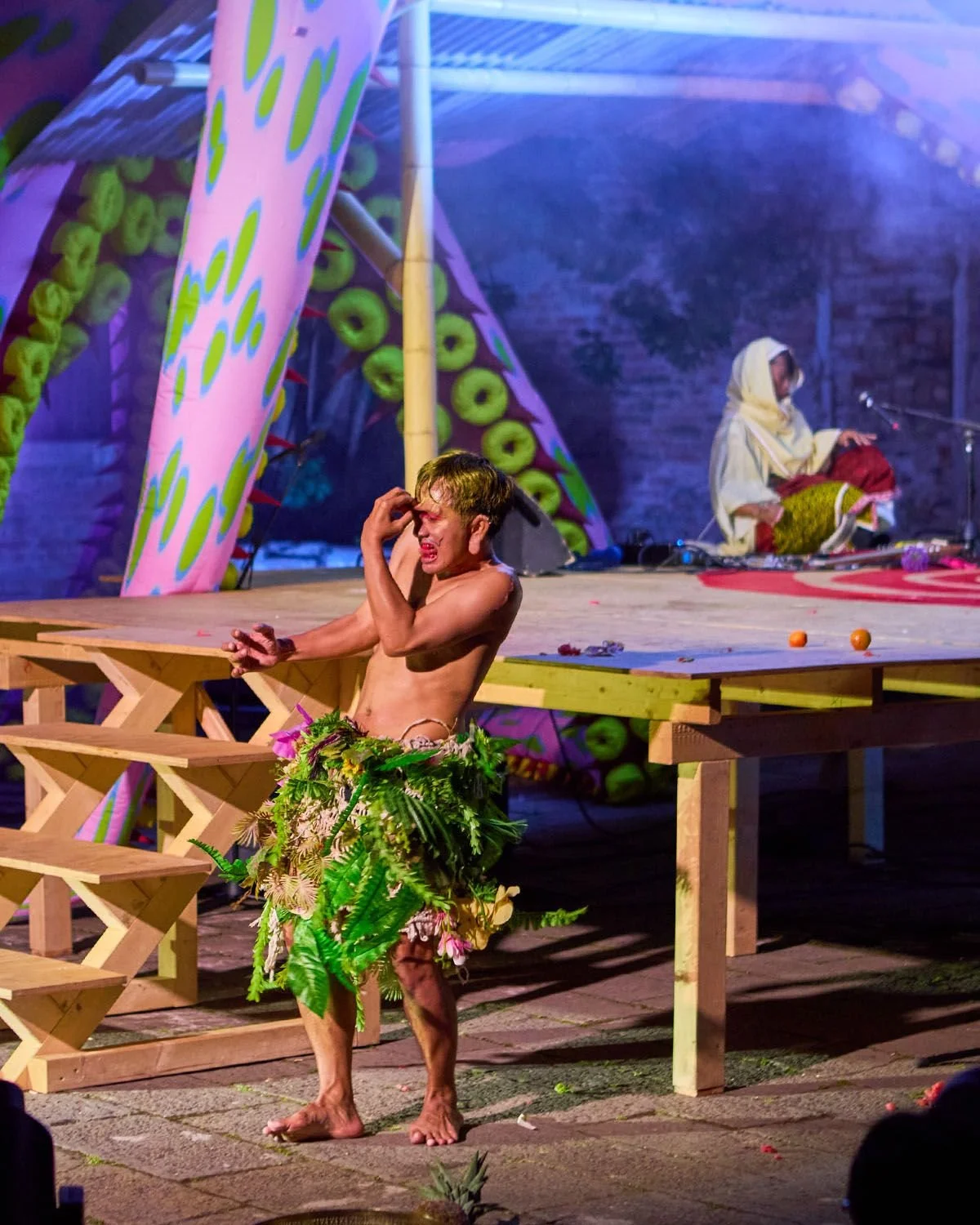
Ritual dance guides the audience through ancestral invocation and improvisational movement. The dance, the body: Siko, what were you experiencing while performing, which force within you was prevailing? What deep and ancestral significance do dance and movement hold for you?
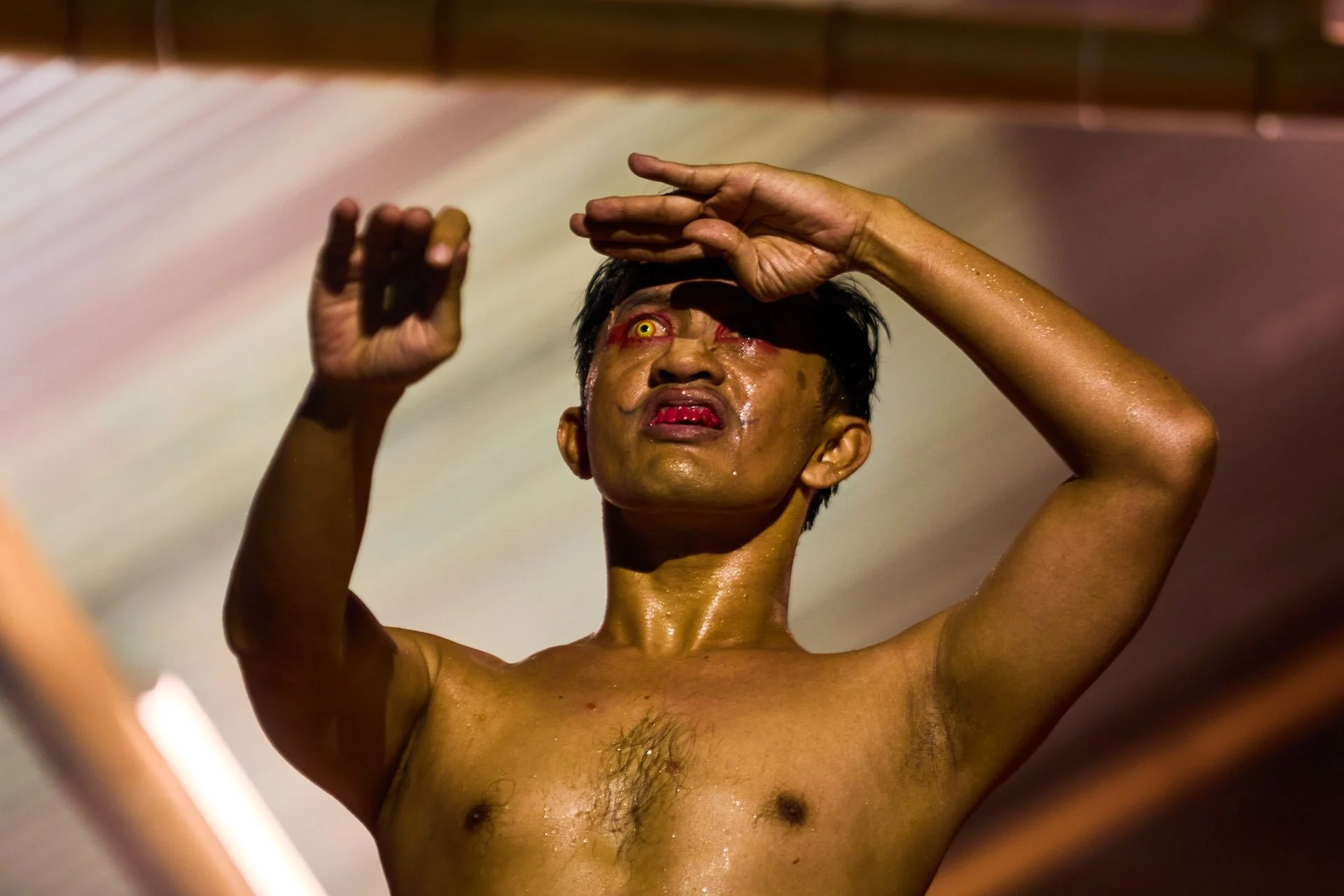
SS: Dancing is the only 'wealth' I possess. Therefore, I make sure my dance is truly valuable, at the very least to myself. I am fully aware of my role when performing; navigating the responsibility of when to embody Lera Wulan—The God—and when to be myself on stage is deeply fulfilling. In my daily life, I often feel almost invisible and ordinary, which is a stark contrast to who I am when I am on stage.
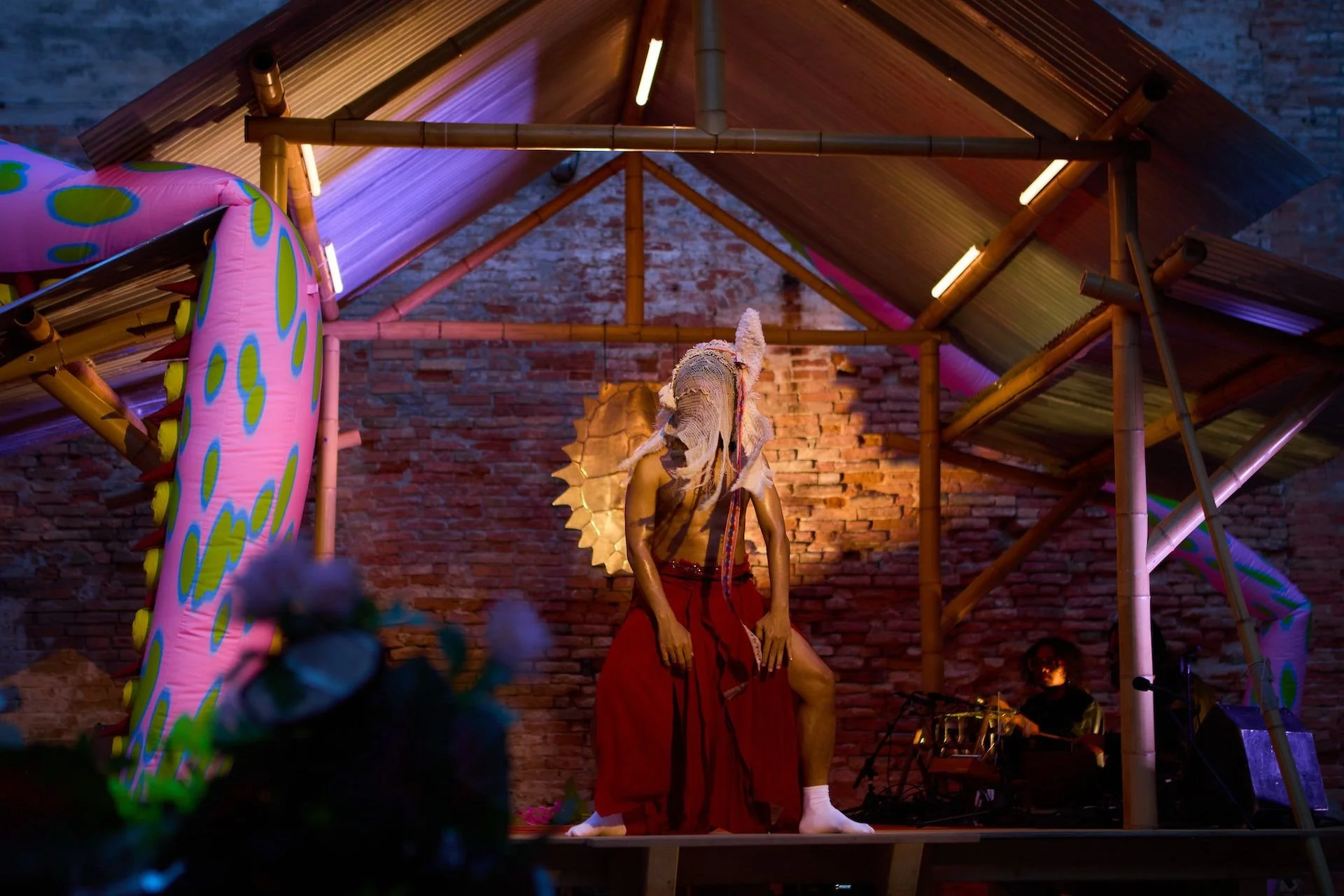
“ “Dancing is the only ‘wealth’ I possess…. navigating the responsibility of when to embody Lera Wulan (The God) and when to be myself on stage is deeply fulfilling””
Invocation of spirits, demonic presences, ritual objects: I would like to ask you for a brief account (personal, familial, intimate), should you wish to share it, of an episode in which you experienced something otherworldly.
SS: I come from a Javanese family that holds to its traditional belief system, Kejawen. Although we no longer practice its rituals today, our respect for it and our commitment to preserving the nobility of Kejawen's positive philosophies have long been deeply ingrained in us. Perhaps this is what makes Indonesia so fascinating: while we continuously reach for modernity, spirituality and our connection to the unseen remain natural, well-preserved staples of life in our country.
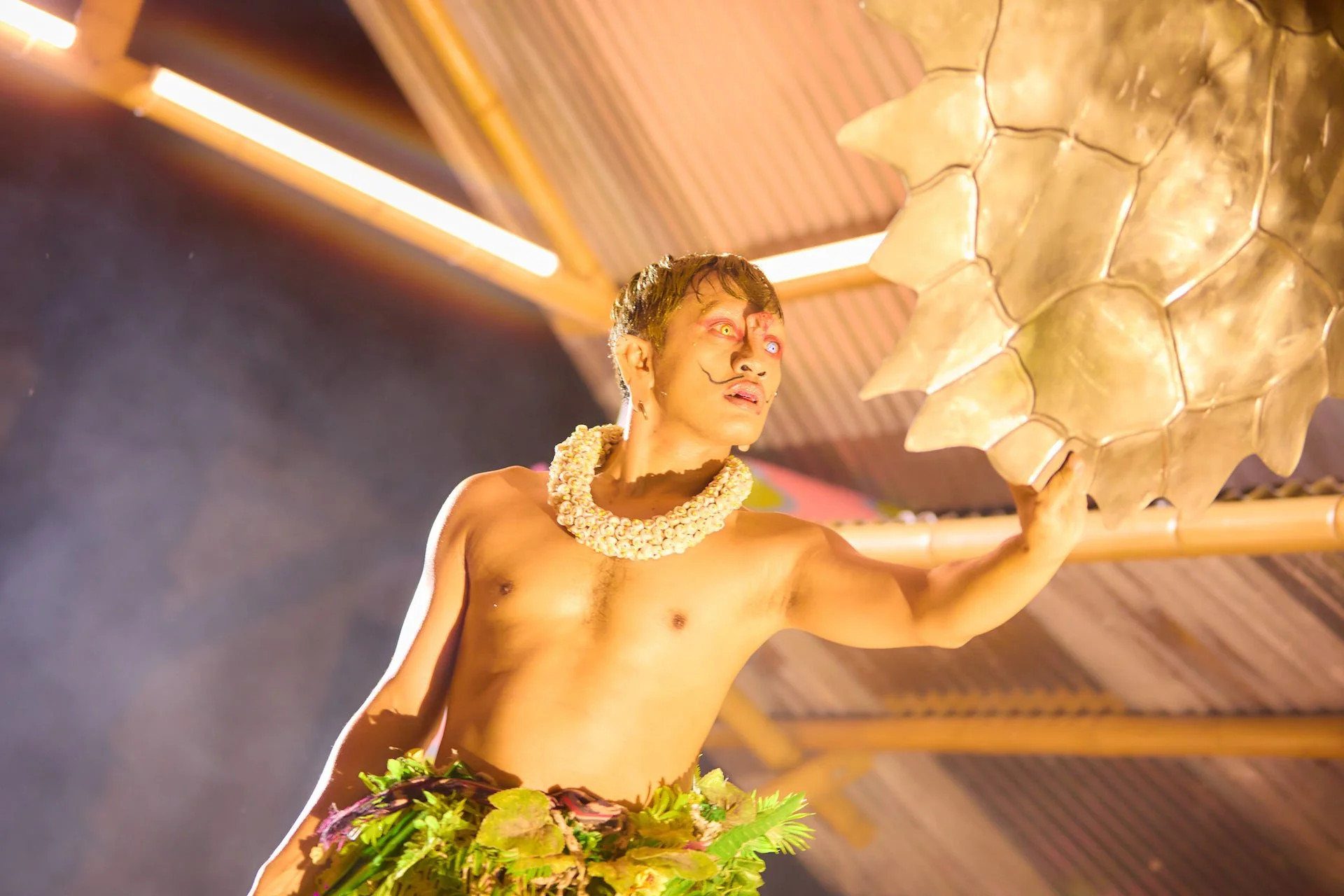
“ “In my daily life, I often feel almost invisible and ordinary, which is a stark contrast to who I am when I am on stage”.”
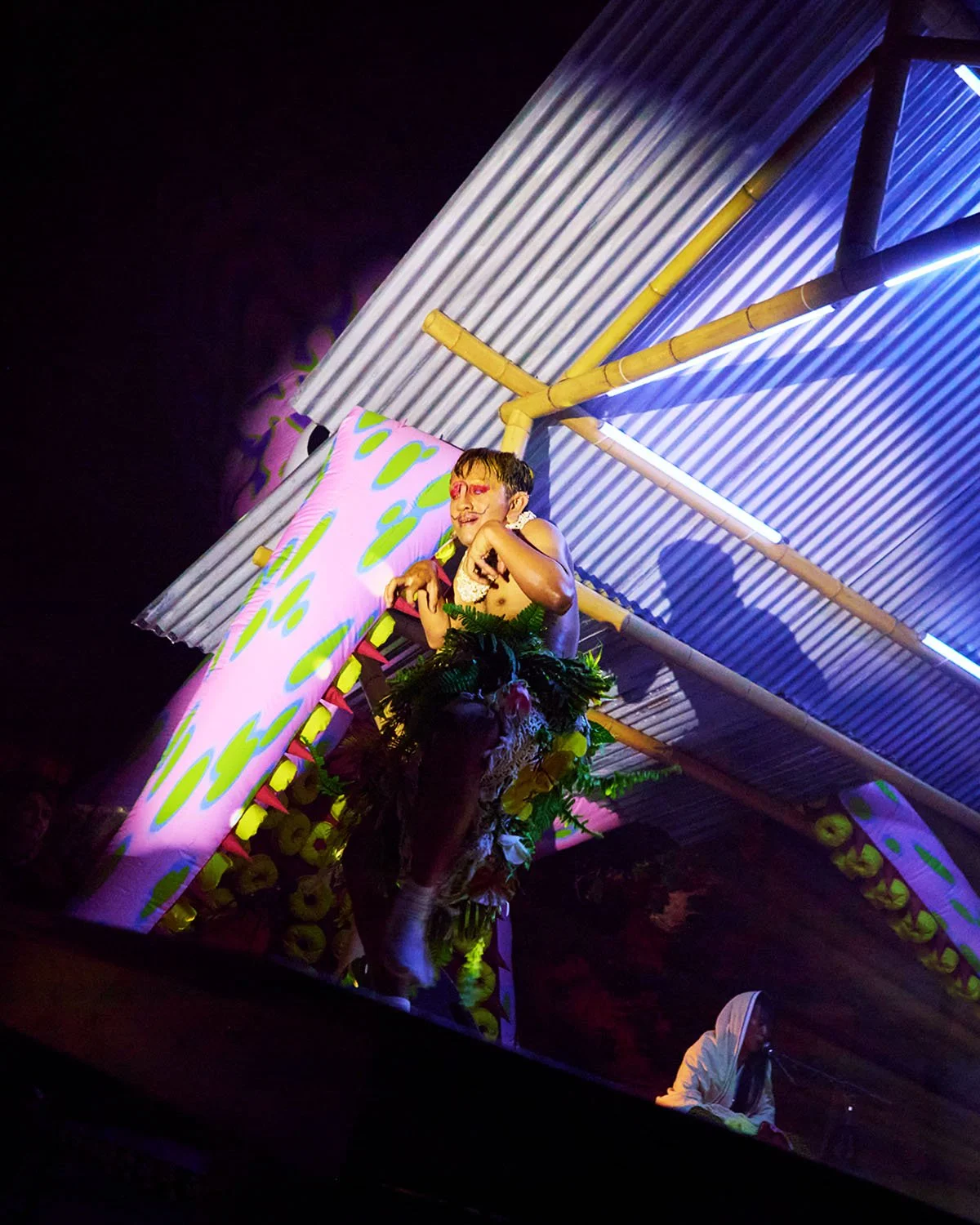
A pan-Asian project: one of the most compelling aspects of the work is that it does not represent a single national tradition, but a constellation of Asian cultures. Japanese Nō theatre, Balinese cosmologies, Indonesian ritual practices, contemporary Chinese aesthetics, experimental Berlin sound art. Tianzhuo Chen, why these particular references? What, in your view, unifies them, and how did you personally discover and inhabit them?
Tianzhuo Chen: The original Ocean Cage performance created from our journey to the island Lamalera and inspired by their whaling tradition and ancestral cosmologies. Later next year we are invited to perform in Tokyo in Shinjuku Noh Stage which is a small old Noh theatre established in 1941. This is how “Moyang 先祖 & Seaman 漁師” born. We adapted our performance into this small old stage that use for communicating with God, we are also deeply inspired by this long rich tradition form of theatre to create this new twist. So, the connection happening naturally here by shifting the from one space to another. No need to emphasise that underneath everything, ours own whoness are also blended together in this piece.
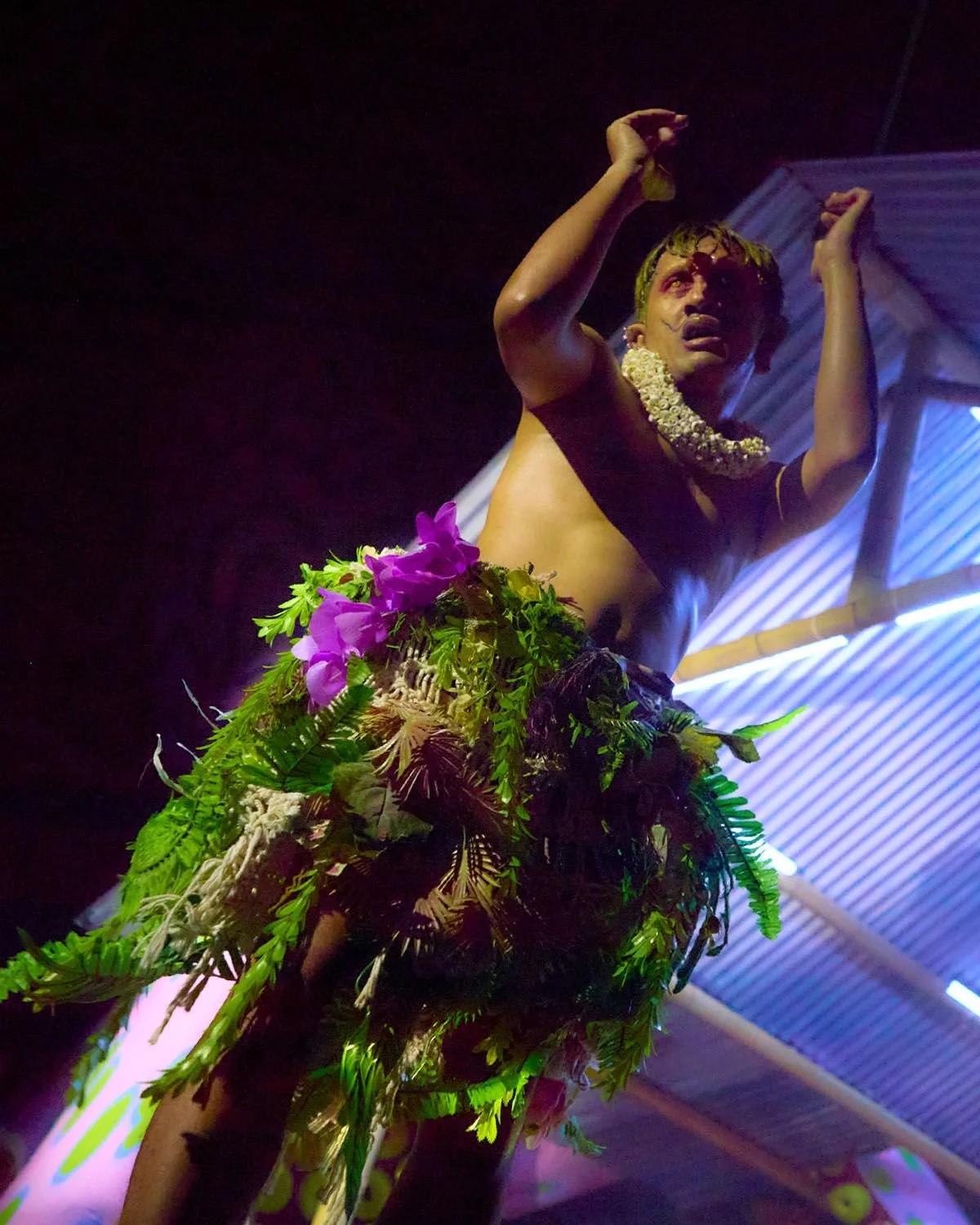
Tell me about the various ritual elements on stage: the Gong, the food, the tomatoes, the mask you wore and then removed from your face, the moped, and the concept of "performative trance".
SS : Our performance is akin to an immersive, seamless artistic practice within the cultural landscape of Nusantara. Our people are accustomed to watching, enjoying, and being the performers all at once during various cultural events. We apply this exact approach to this staging: the musicians listen to my body, I see the energy of the music floating all around me, and together we inherently understand where we are headed.
““Our performance is akin to an immersive, seamless artistic practice within the cultural landscape of Nusantara. Our people are accustomed to watching, enjoying, and being the performers all at once during various cultural events”.”
Buddhist, Taoist and animist iconographies: which ones specifically do you engage with?
TZ: I think all of us have a bit different religion, depending very much on who you ask. I’m a Tibetan Buddhism. If I remember correctly Kadapat are Hindu and Nova is Muslim?
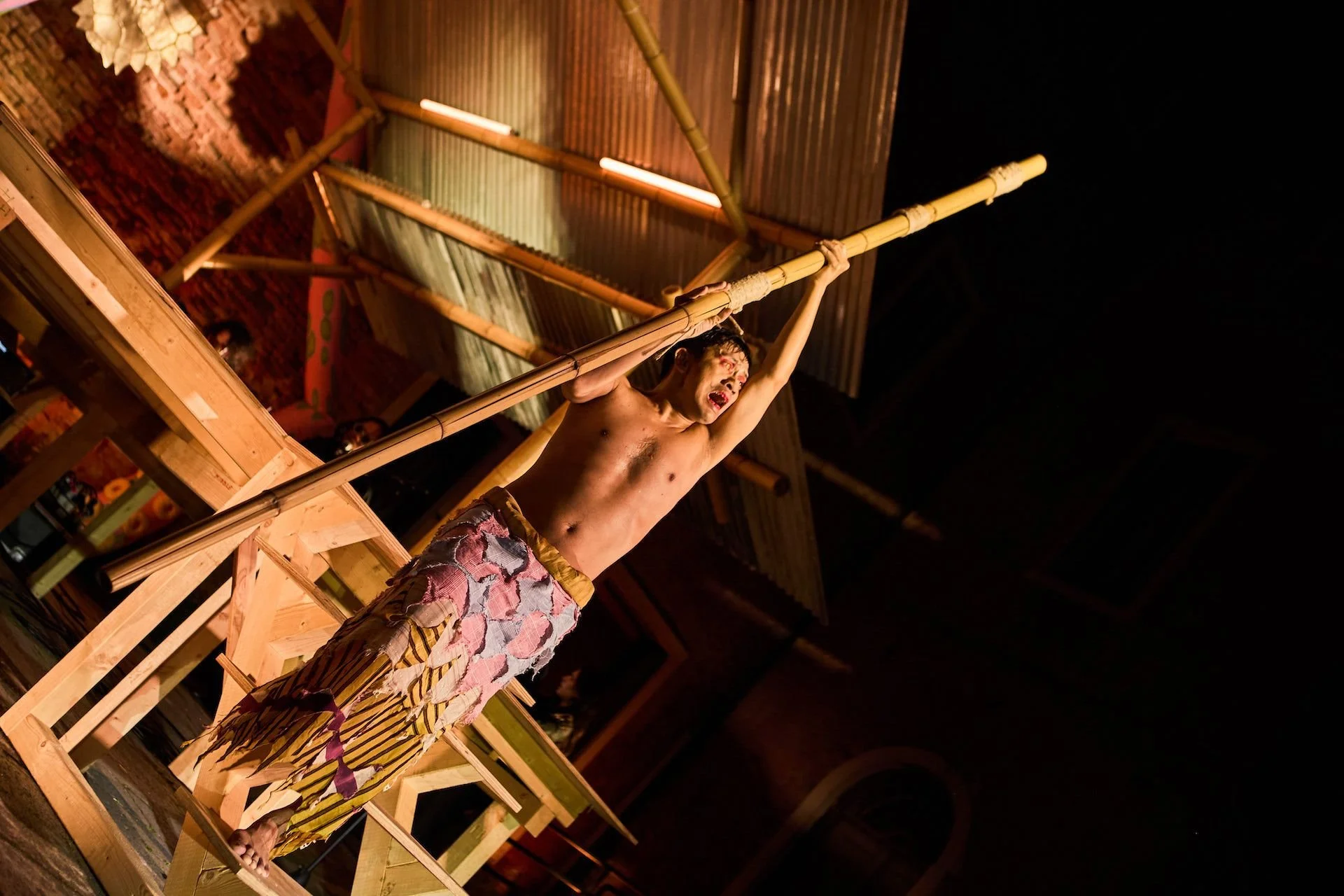
“ “I embody archetypal figures such as the Ancestor, the Sun-Moon God, characters I grew up with. The real questioni s: what if we all secretly want to be human and God at the same time?””
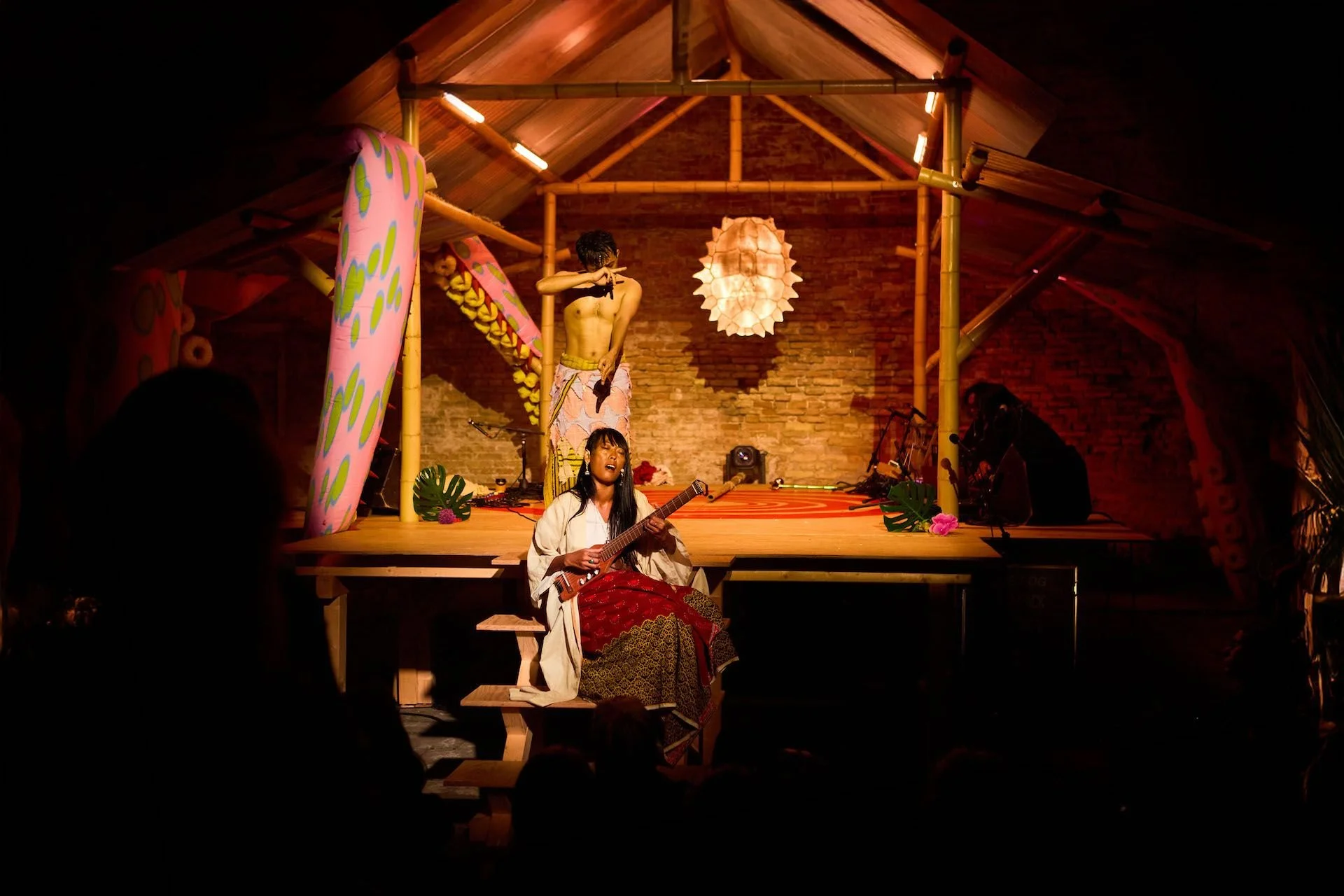
Siko, in the project you embody archetypal figures such as the Ancestor or the Sun-Moon God. Your movement is highly controlled, almost meditative, yet traversed by sudden physical tensions. Tell me more about what these references meant to you.
SS: Thank you so much for the appreciation of my performance. But you should know that I grow alongside the character I play in Ocean Cage. There are simply too many references to unpack regarding how I embody that role. One question that fascinates me the most is: what if we all secretly want to be human and God at the same time? So, make no mistake. if I ever get the chance to be God, I want to be the coolest and most memorable one.
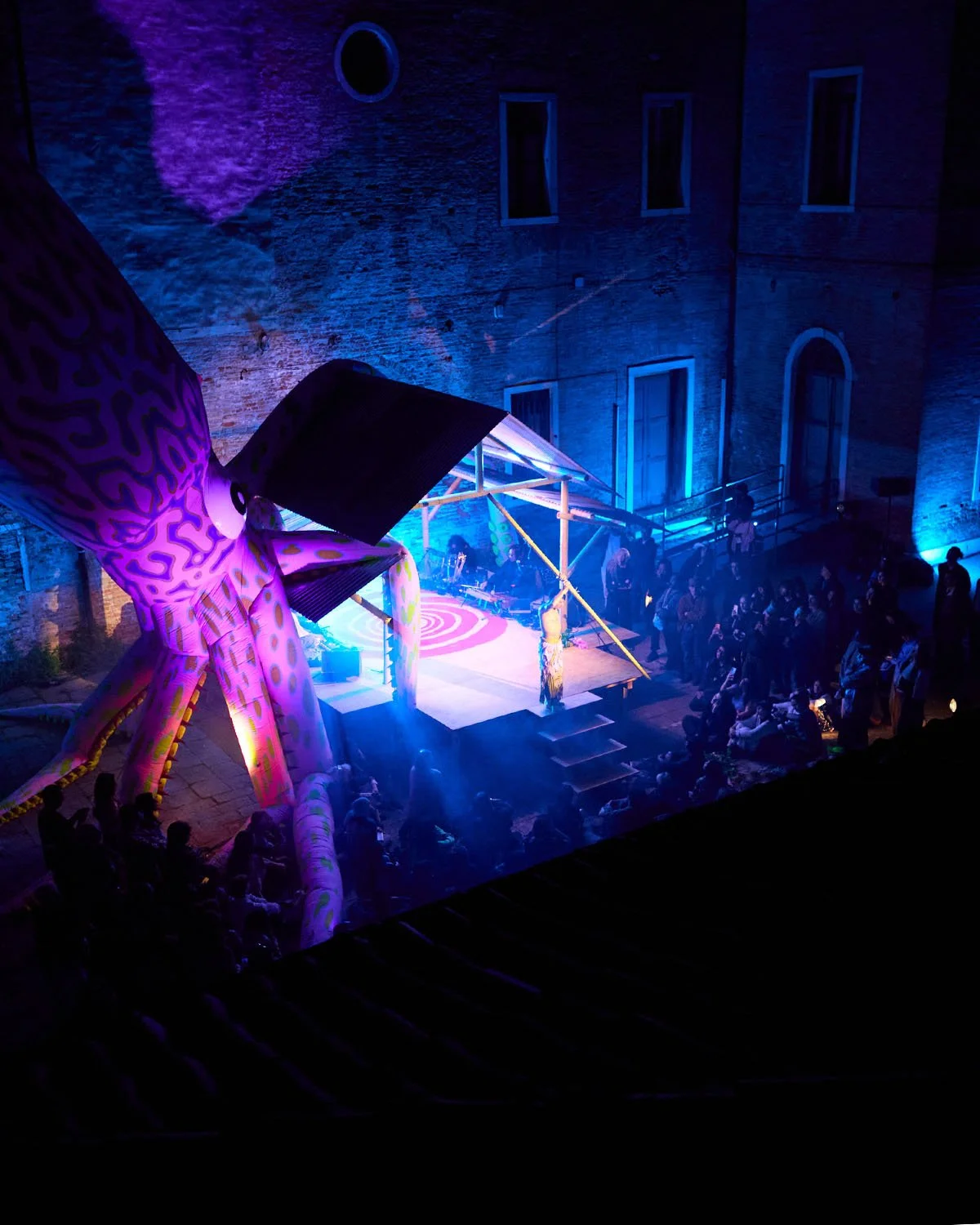
““I’m very interested in ritual structures, cosmologies, and emotional technologies that are already connected in different cultures, and the liminal space those states of mind are sharing.””
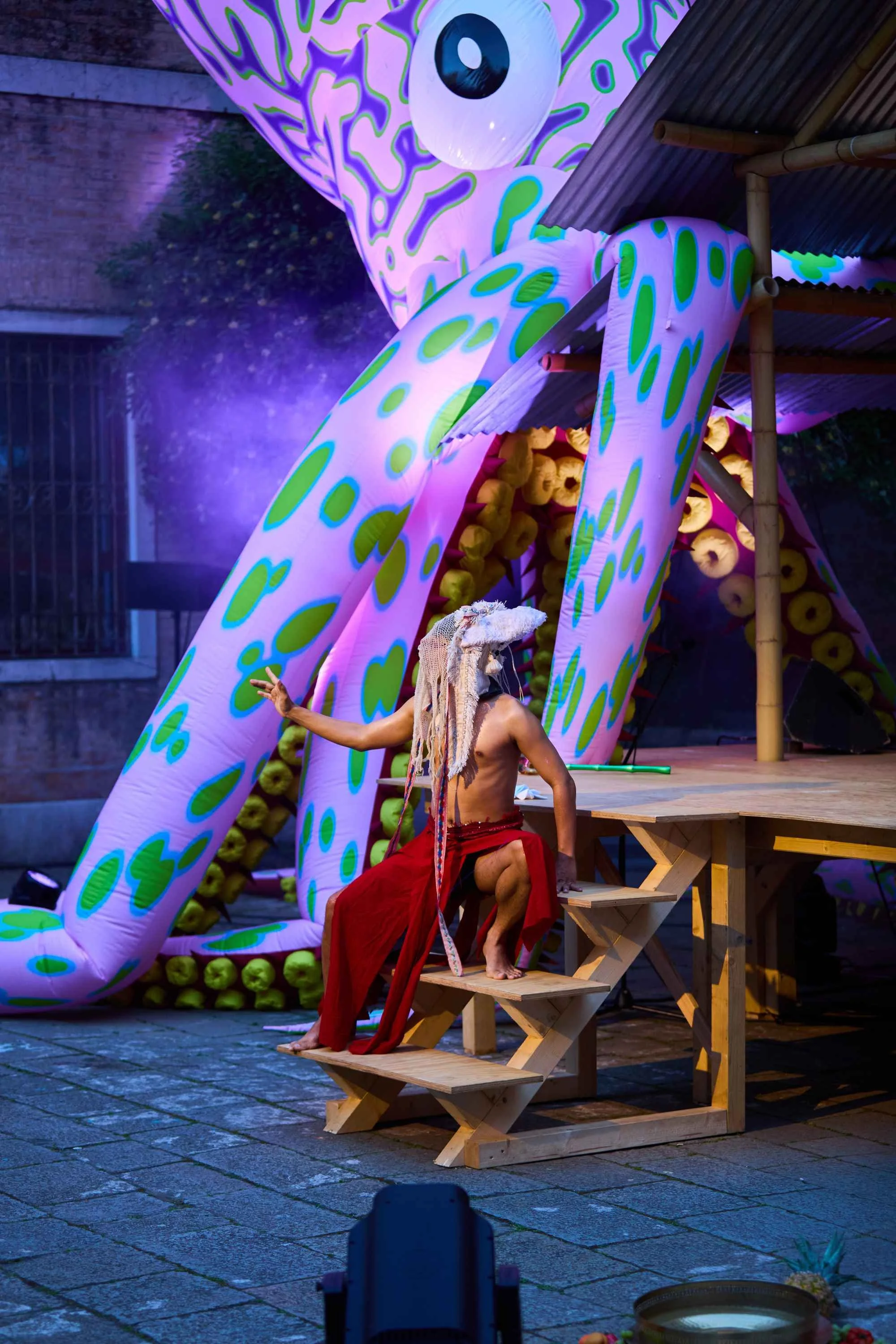
Traditions, in your performance, are not employed philologically, but recombined freely to generate new contemporary myths. Is that accurate?
SS: In my view, this is how I respect my tradition. It is my responsibility to keep tradition flexible and adaptive to changing times. While my ancestors passed down its noble values, my role is to modernize and refresh them without losing their sacred essence.
Can you both recommend a text or essay that has shaped your emotional or artistic sensibility, and A place in the world you deeply wish to visit?
TZ: im currently reading “The Solar Anus” by Georges Bataille, which very much related to our next performance. The place…a rare earth mining quarry
To know more, take a look on:
Interview by Matilde Crucitti
What to read next