Hotel Infinito: On Sonic Ecologies of Presence

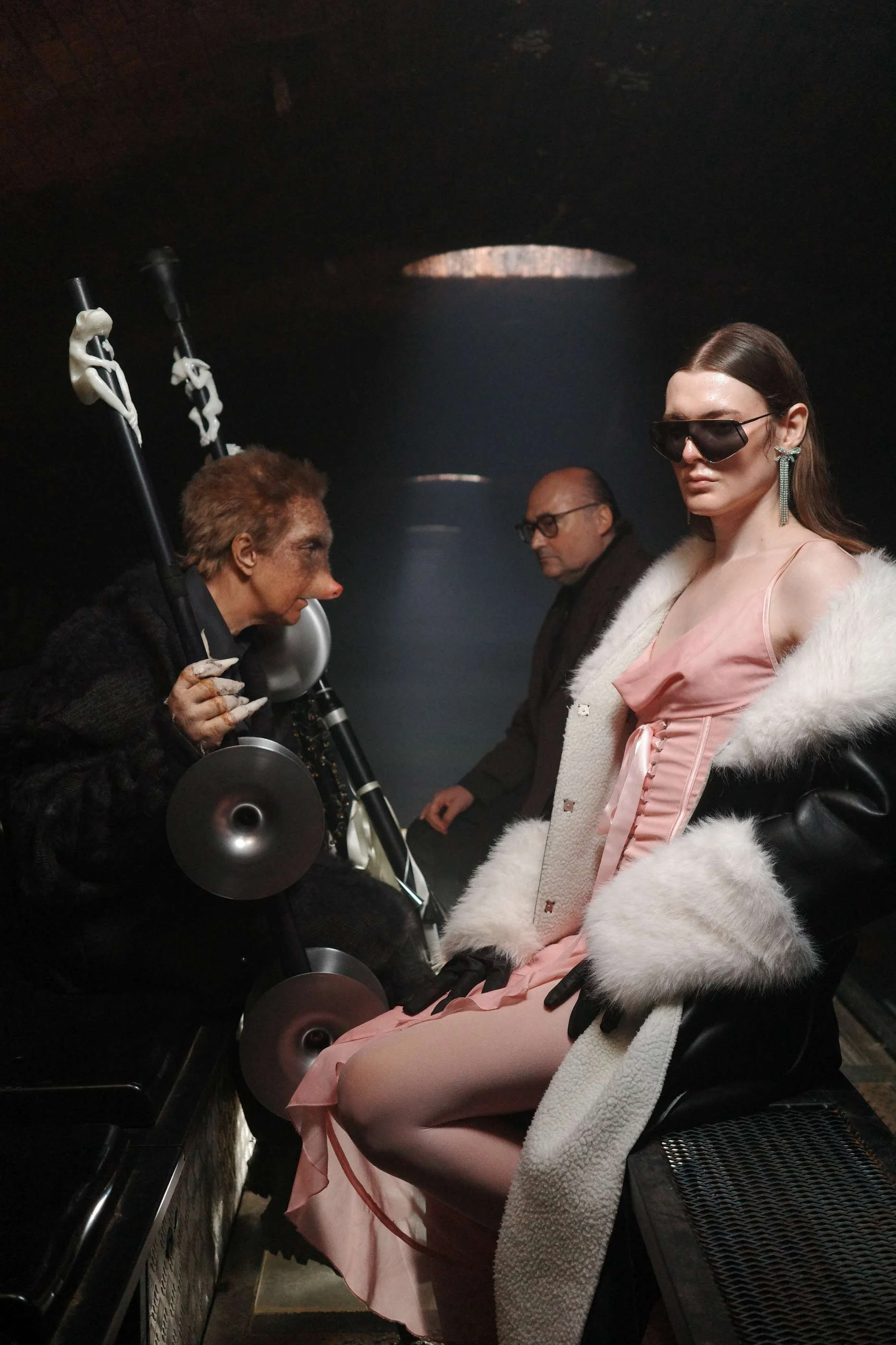
Credit photo: Aria Ruffini
There is no resolution in Hotel Infinito. No climax, no exit. Just sound that keeps expanding, room after room. Working as Missing Ear, Milan-based experimental drummer and sound designer Matteo Gualeni has spent years pushing at the edges of rhythm, starting from acoustic drum recordings, then processing them into layered architectures where beat dissolves into texture, and texture becomes space. Think the fractured density of Oneohtrix Point Never or Autechre, the spatial drift of Lanark Artefax. Something visceral and cerebral at once.
Conceived around Hilbert's paradox of the infinite hotel, a structure that never fills, no matter how many guests arrive, the record refuses easy entry points and instant gratification. It asks you to stay. To inhabit the sound rather than consume it.
For the project's visual world, Alessandra Leone, a Berlin-based director and live visuals artist whose work shown at Atonal, MUTEK, Rewire, Sónar, and alongside artists like Alessandro Cortini, Loraine James, and Zoë McPherson operates at the threshold where bodies meet technology and physical space bleeds into the digital. Leone's contribution doesn't illustrate the music. It amplifies its tensions: presence, mediation, dissolution.Together, they've built something that sits at the intersection of sonic experimentation and perceptual provocation, a record that positions listening itself as a political act.
Hotel Infinito is not simply an album, but a critical device that calls into question the contemporary conditions of listening. In the new work by Matteo Gualeni, a Milan-based drummer and sound designer operating under the name Missing Ear, sound ceases to be entertainment or aesthetics and transforms into perceptual architecture, an emotional-cognitive environment, and political space.
The project takes shape from Hilbert's celebrated paradox of the infinite hotel: a theoretical structure capable of accommodating an unlimited number of guests without ever reaching saturation. Gualeni translates this concept into an open and continuously expanding sonic construction that deliberately refuses closure, climax, and resolution. Rhythmic structures proliferate, accumulate, overlap, and deform; the drums do not simply mark time, but generate unstable environments in which the listener is continuously engaged in redefining their own perceptual orientation.

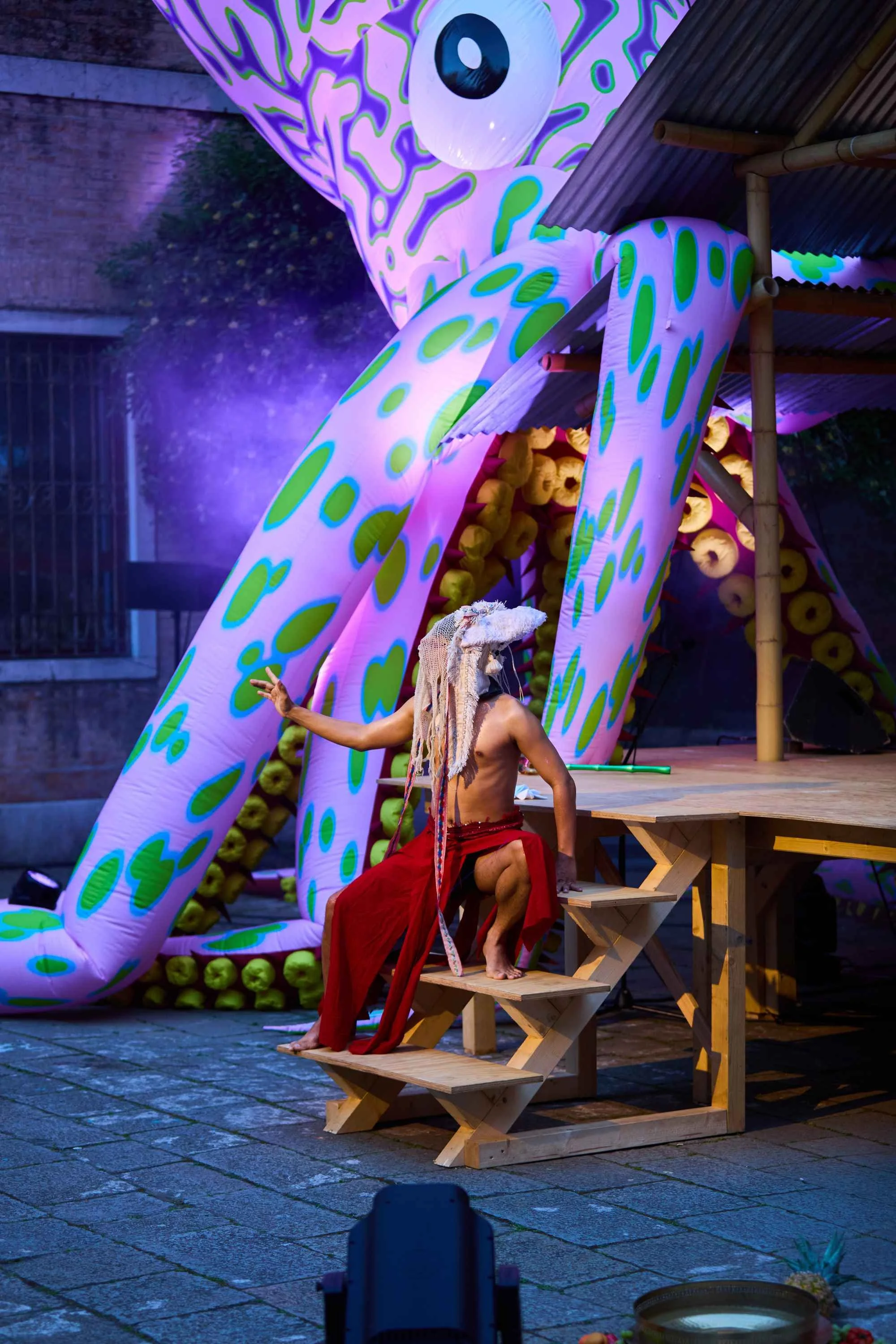
Credit photo: Amalie Köhler-O
““Each layer in Hotel Infinito works exactly like that: a room that may or may not be occupied depending on where the listener places their attention. Follow one auditory stream and find one idea. Follow another and find something else entirely.” ”
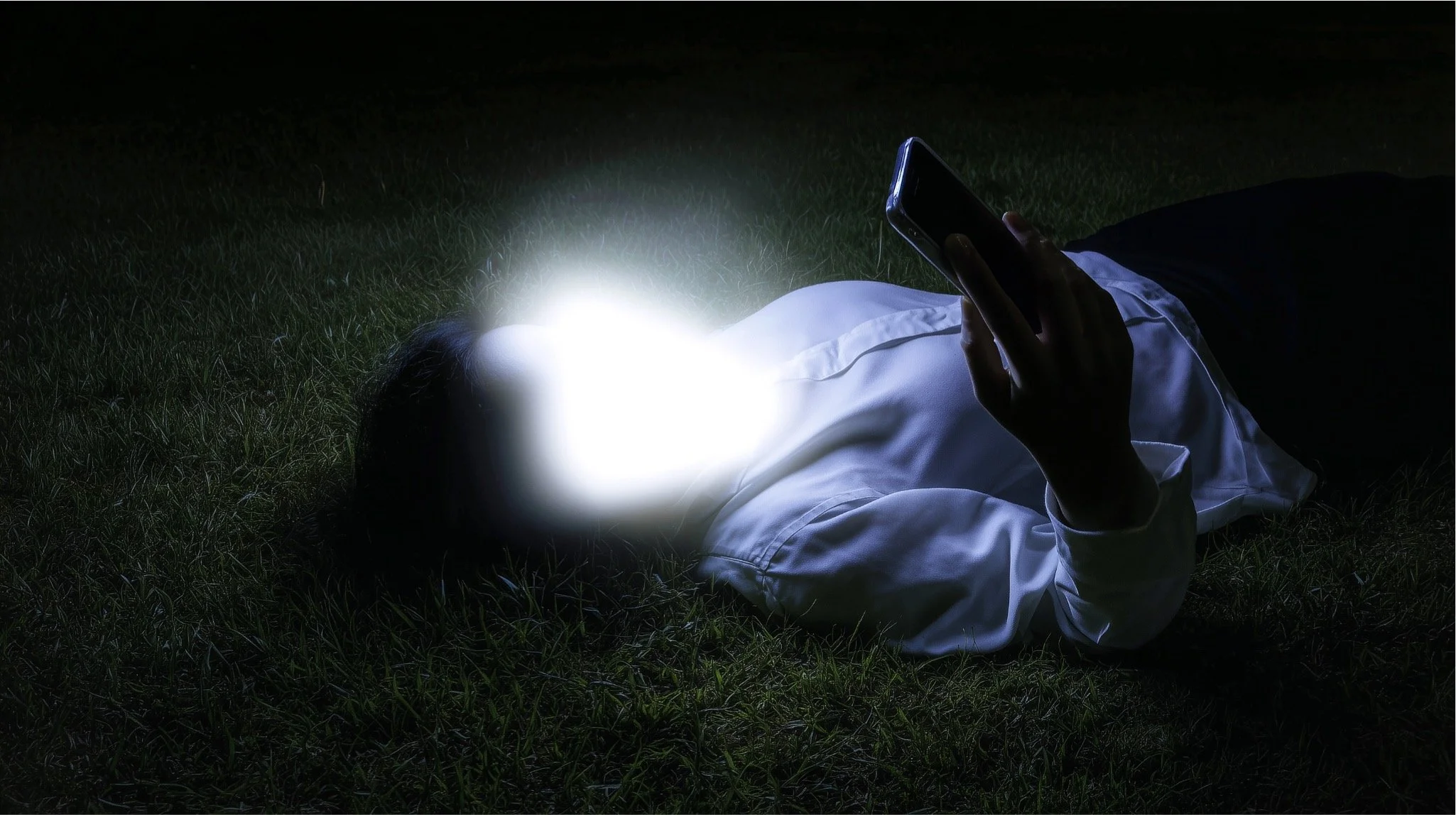
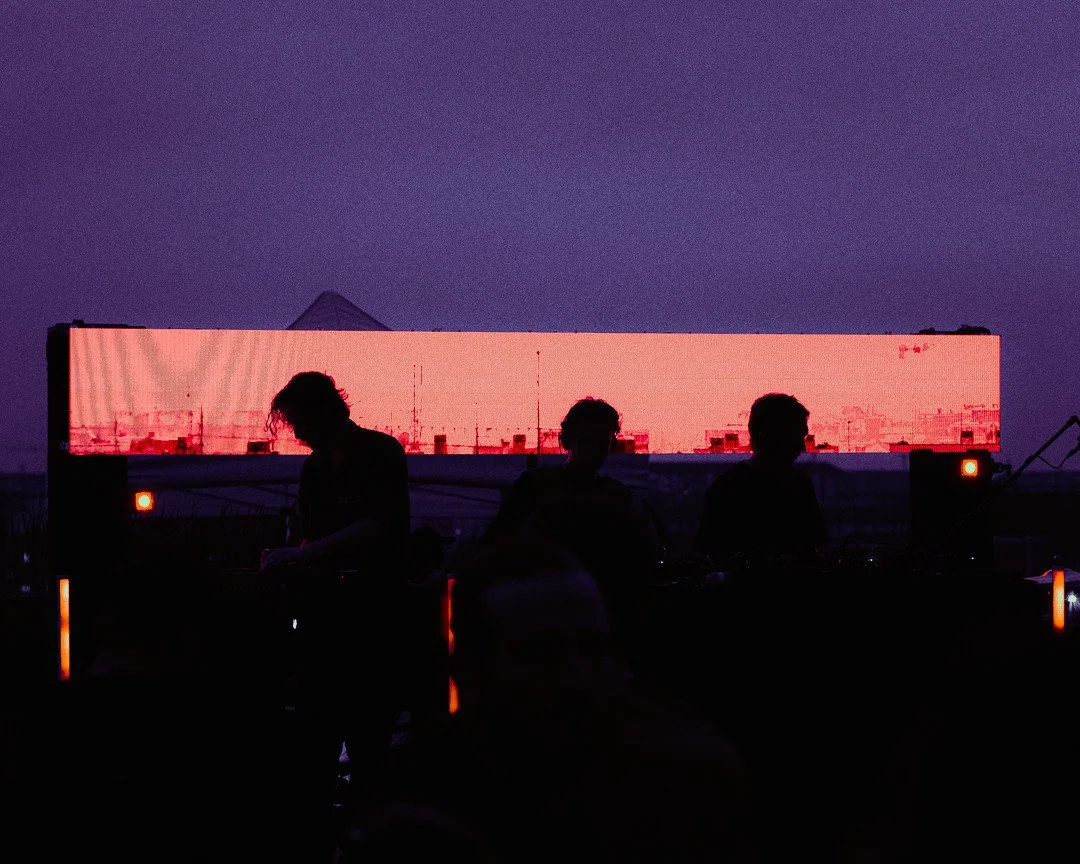
Credit visual: Alessandra Leone
Hotel Infinito does not seek to capture the listener through seductive dynamics or immediate gratifications; on the contrary, it constantly suspends any possibility of rapid consumption. What is demanded is not emotional adhesion, but permanence. To remain inside the sound. To inhabit time.
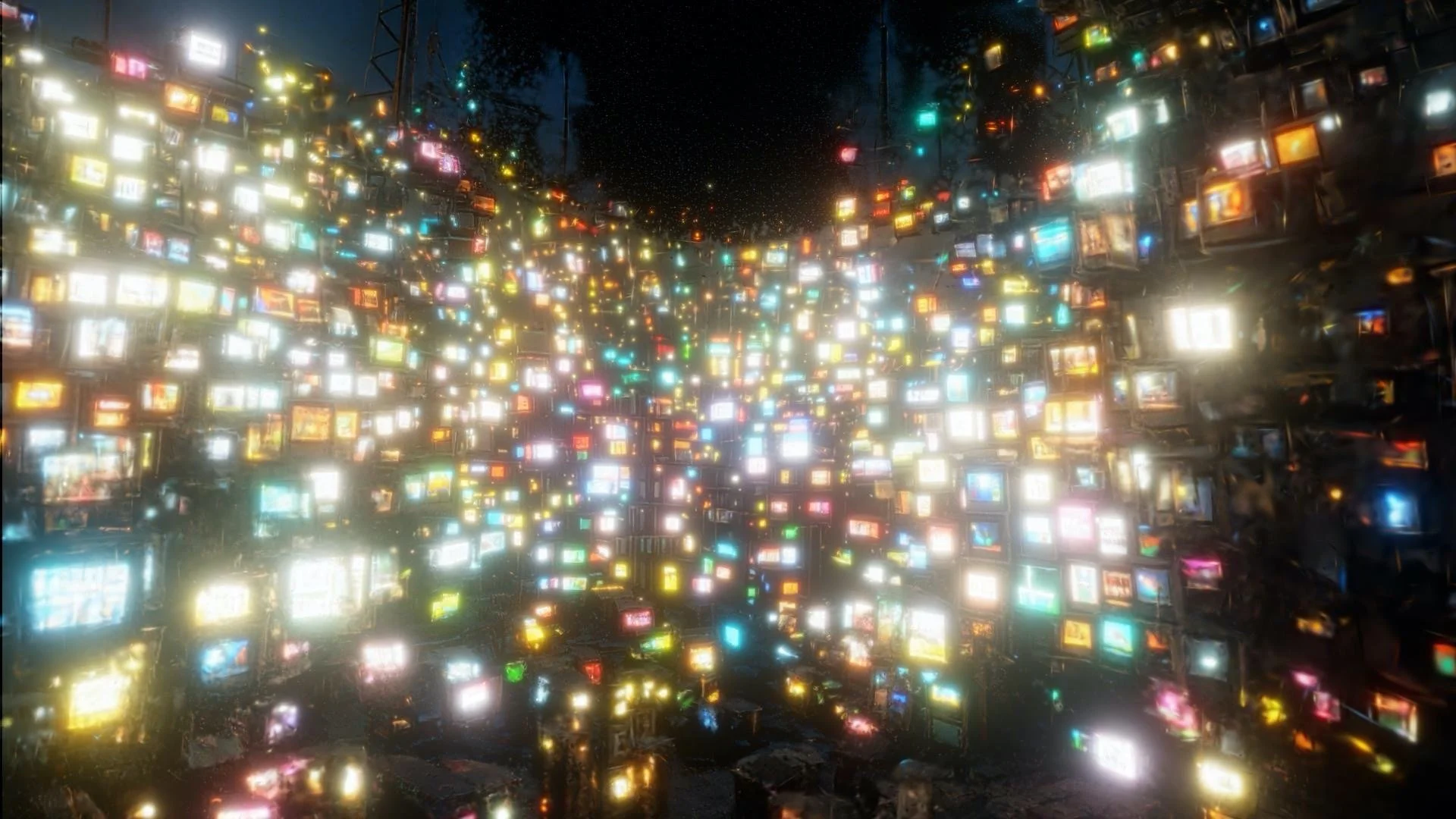
And it is precisely in this intention that the project reveals its political force, announced in the album's intro through a manifesto on listening. In a culture dominated by permanent overstimulation, attention has become one of the primary territories of appropriation and control. Digital platforms, algorithms, and the content economy operate through perceptual fragmentation, producing an intermittent, accelerated, and distracted mode of listening. Contemporary music, too, increasingly participates in this logic: tracks built to retain a few seconds of attention, compressed structures designed for algorithmic circulation, listening reduced to a continuous background and passive consumption. In this scenario, distraction no longer represents a simple consequence of media saturation, but a genuine technology of cognitive manipulation. The dispersal of attention makes it increasingly difficult to construct perceptual continuity, critical memory, and bodily presence, and listening thus loses its relational and transformative dimension, reduced to instant stimulus and a current to be crossed rapidly.

Hotel Infinito stands in radical opposition to this condition. The record does not facilitate listening: it calls it into question and redefines it critically. It offers no reassuring refuge, but exposes the listener to the "effort" of presence, making evident how difficult it has become today to sustain a continuous perceptual experience.
In a manner that is anything but implicit, Gualeni's work situates itself within contemporary reflections on the use of sound and music as seductive technologies of cognitive occupation, affective modulation, and social control. In this scenario, listening no longer appears as a neutral action, but as a contested political territory, continuously traversed by devices designed to capture, direct, and saturate attention, which, consequently, modifies our way of perceiving the spatial and emotional reality that surrounds us and of acting within it. It is precisely against this condition that Hotel Infinito takes a position. Where sonic power acts by disorienting and colonising perceptual capacities, the Missing Ear project attempts to withdraw listening from the extractive logics of the attention economy, reconfiguring it as an active and critical practice and as a form of cognitive resistance. Listening thus becomes a political act: a constant exercise in presence and permanence that opposes contemporary perceptual fragmentation and reclaims the possibility of inhabiting sound in a conscious, relational, and transformative way.

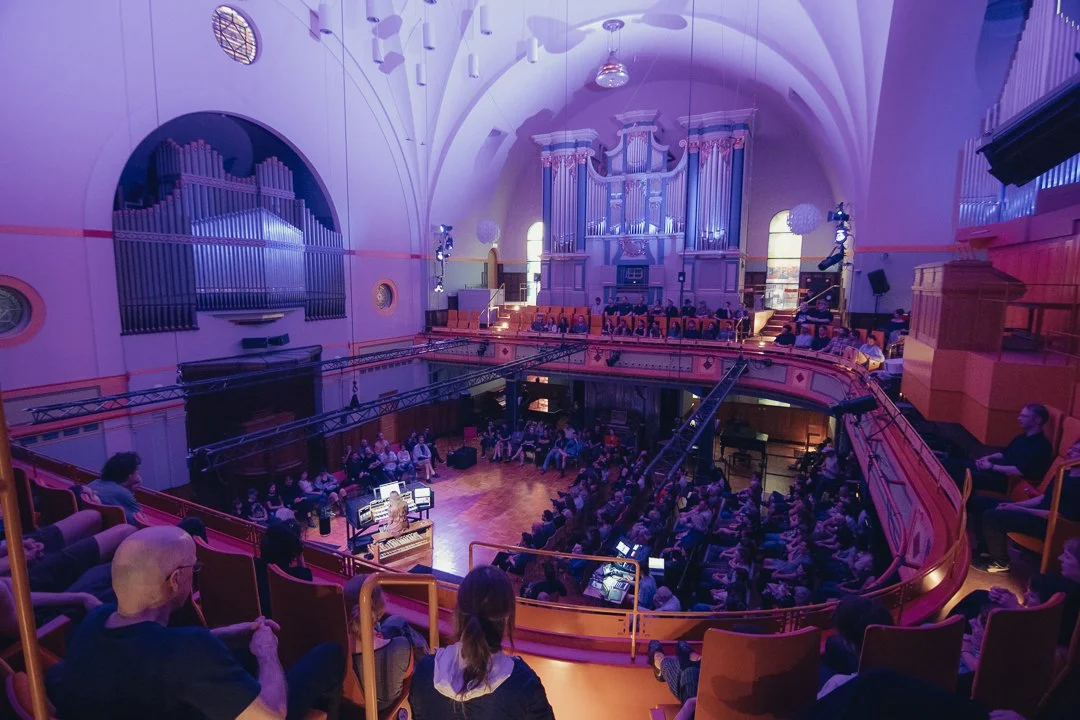
Credit visuals: Alessandra Leone
The album seems therefore to propose a different perceptual ecology. Listening is not understood as a passive activity, but as an intentional practice that implies bodily engagement, openness to instability, and availability to transformation. In this sense, the record approaches a resonant conception of listening: a process in which body, space, and sound enter into reciprocal relation, continuously modifying one another. The drums thus become not only a musical instrument, but a relational technology capable of redefining the relationship between subject and (sonic) environment.
What emerges is a broader reflection on the very possibility of paying attention in the present. Hotel Infinito does not simply produce sound: it constructs perceptual conditions that force a confrontation with the cognitive, emotional, and temporal limits imposed by contemporary hyperconnection. Its radicality resides precisely in the refusal of simplification and immediate gratification, repositioning conscious listening at the centre of experience.
To listen to this record is therefore to experience a form of friction against the accelerated temporality of digital capitalism. It means withdrawing time from permanent distraction and reclaiming the possibility of a sensitive and conscious presence. In an age in which attention is constantly captured, monetised, and manipulated, Hotel Infinito suggests that listening deeply is a political act.
Words by Daniela Gentile
What to read next