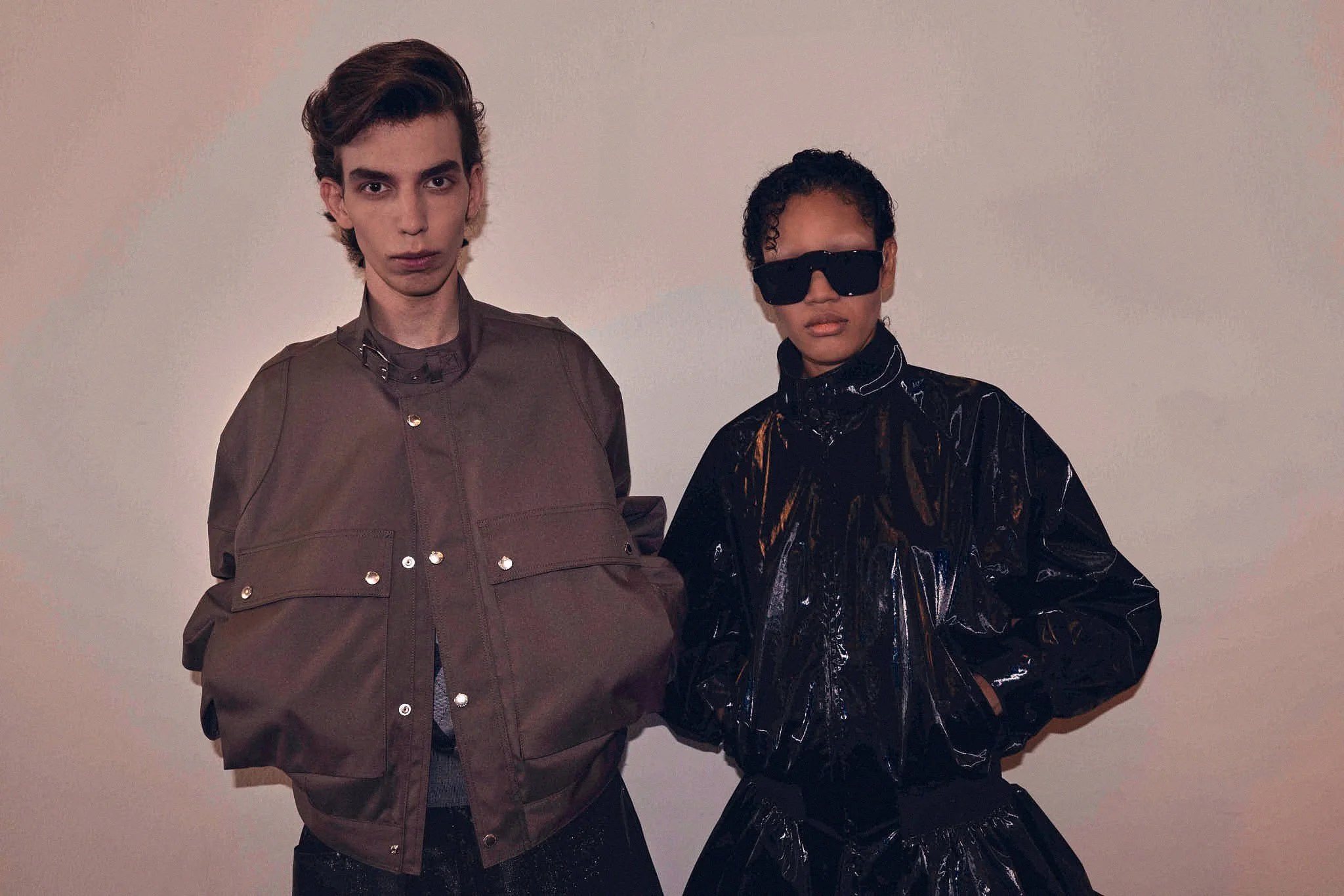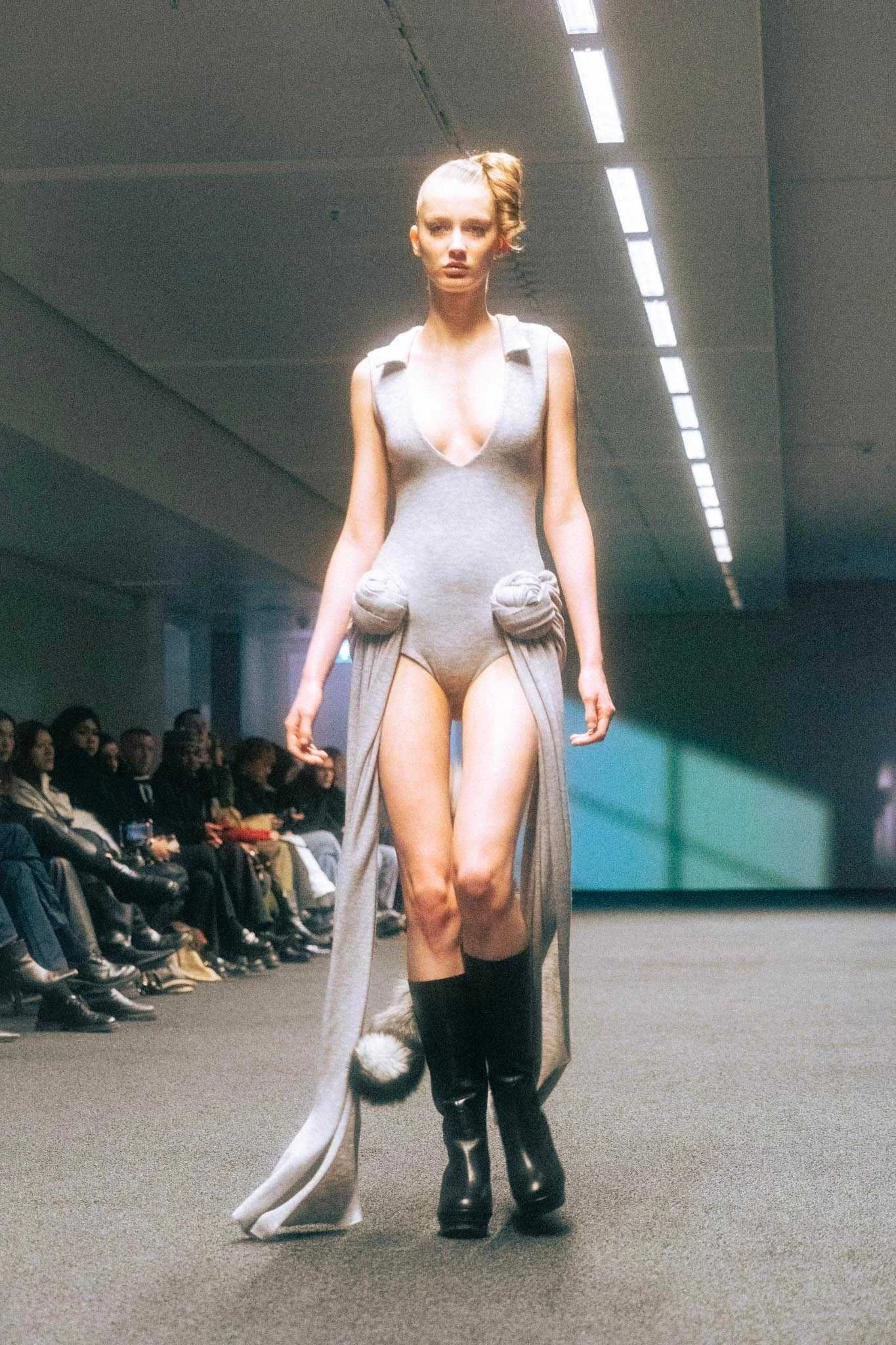
Berlin Fashion Week Fall Winter 2026
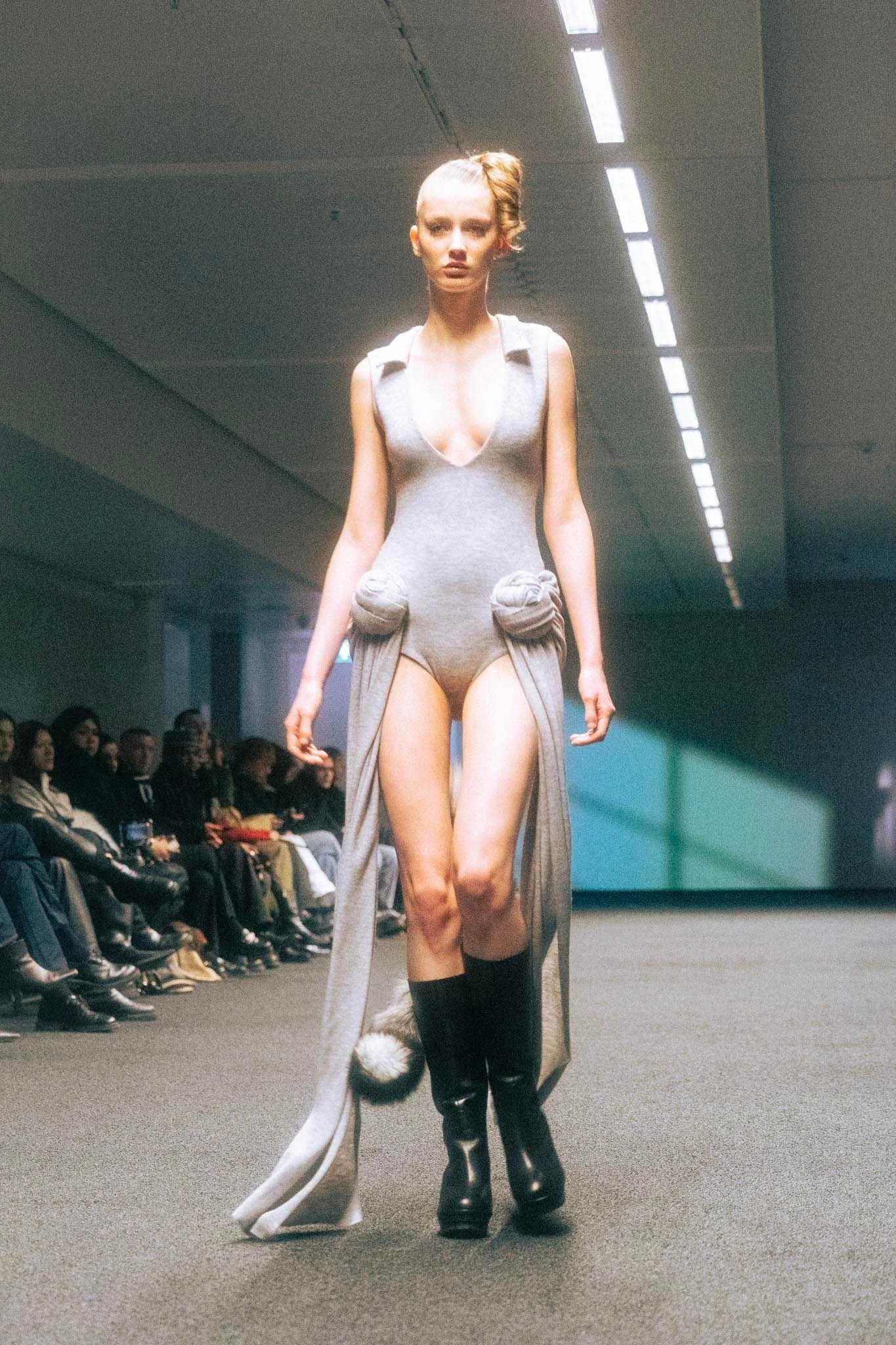
Berlin Fashion Week FW26 made explicit what other cities prefer to obscure: fashion cannot separate itself from politics, grief, or the material conditions of its own production. The designers who matter refuse such separation.
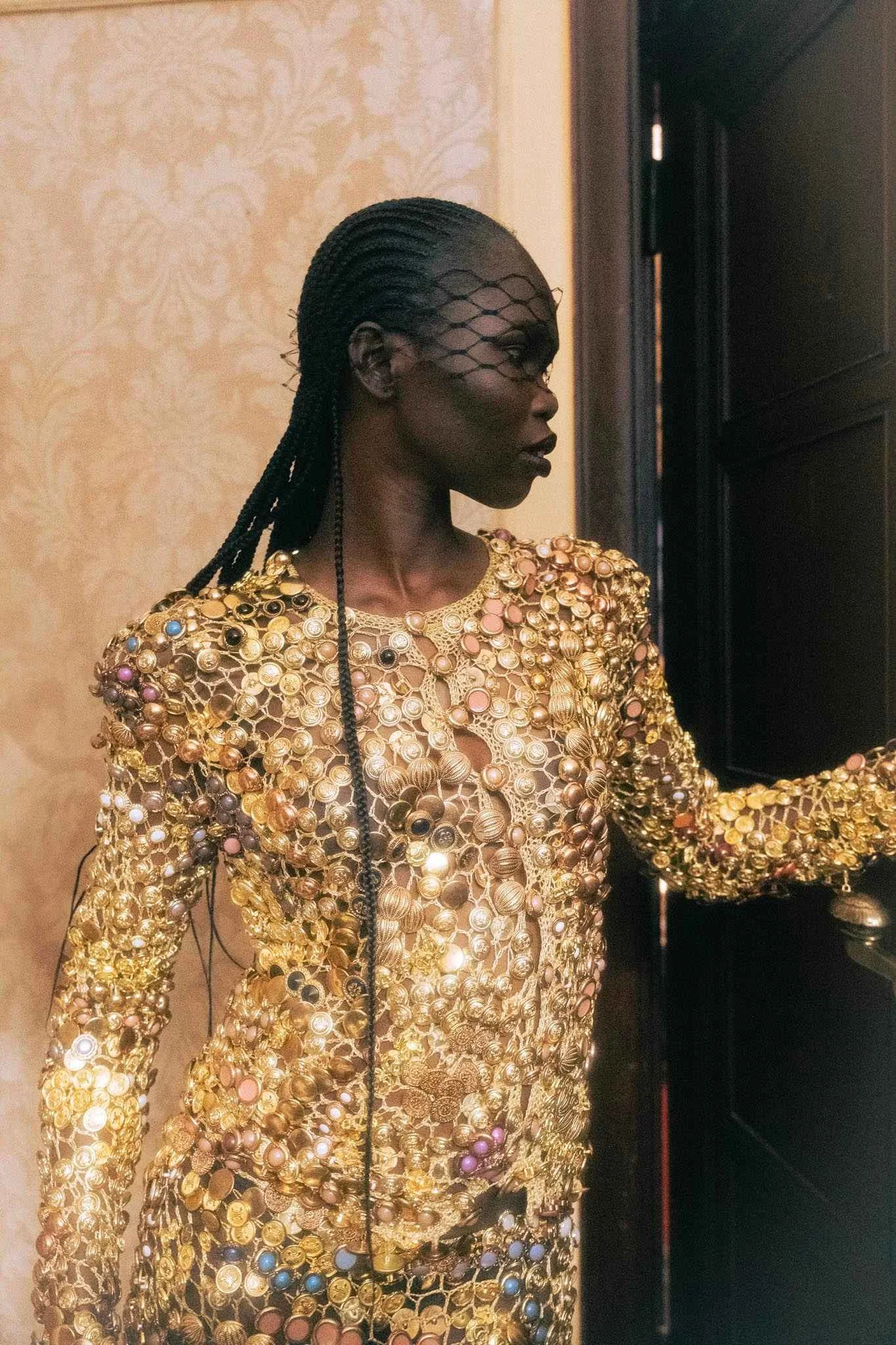
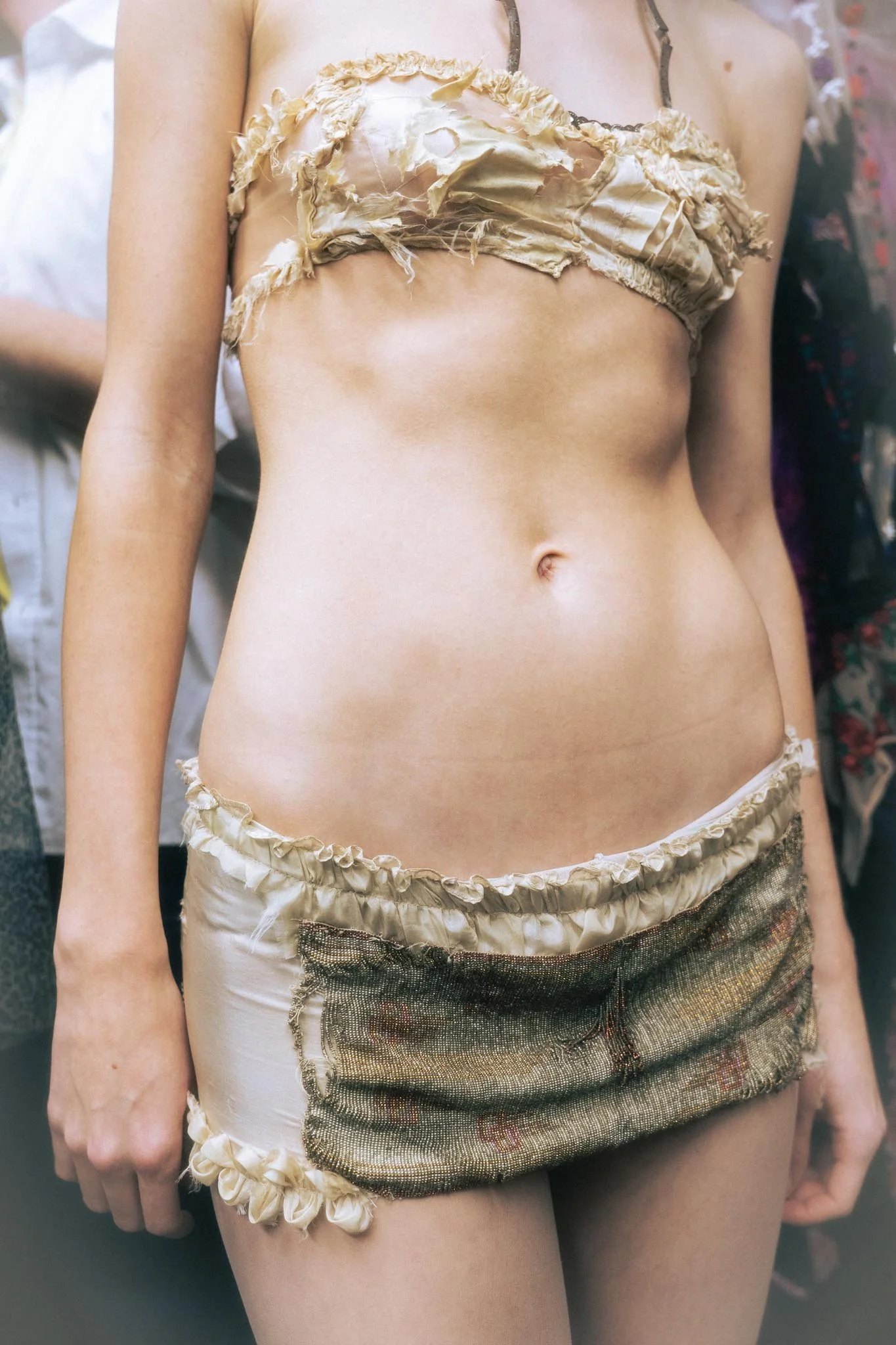
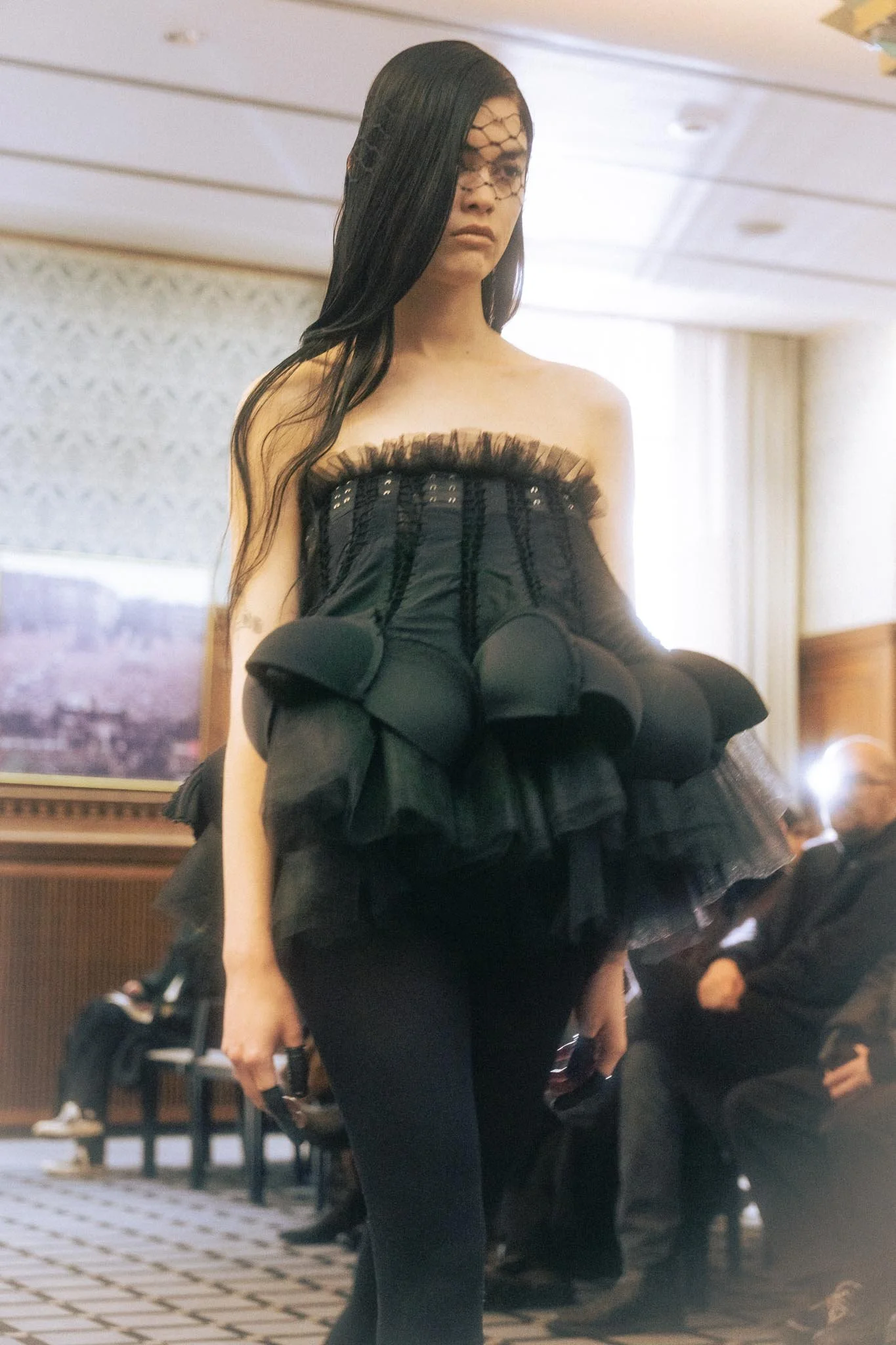
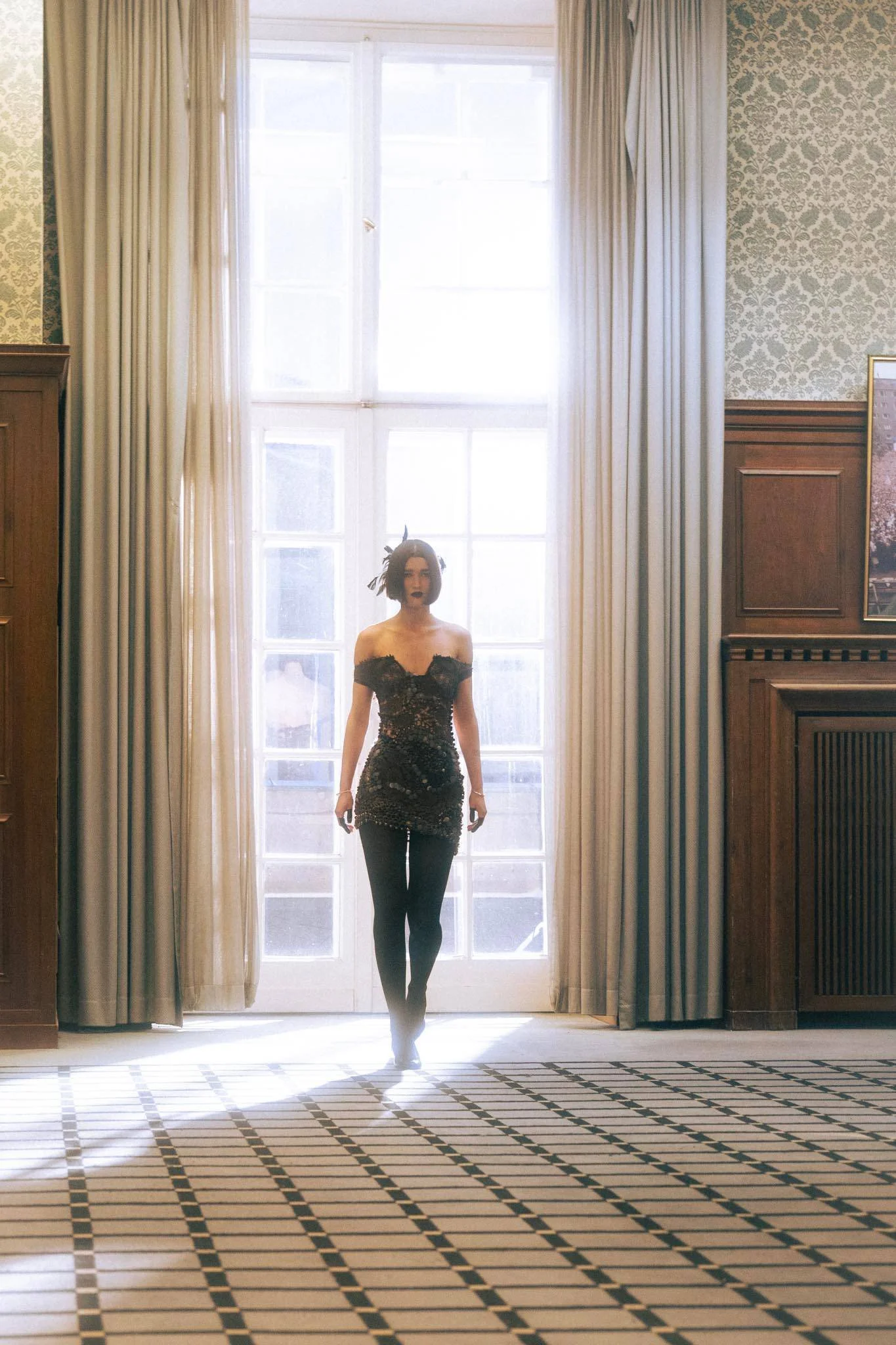
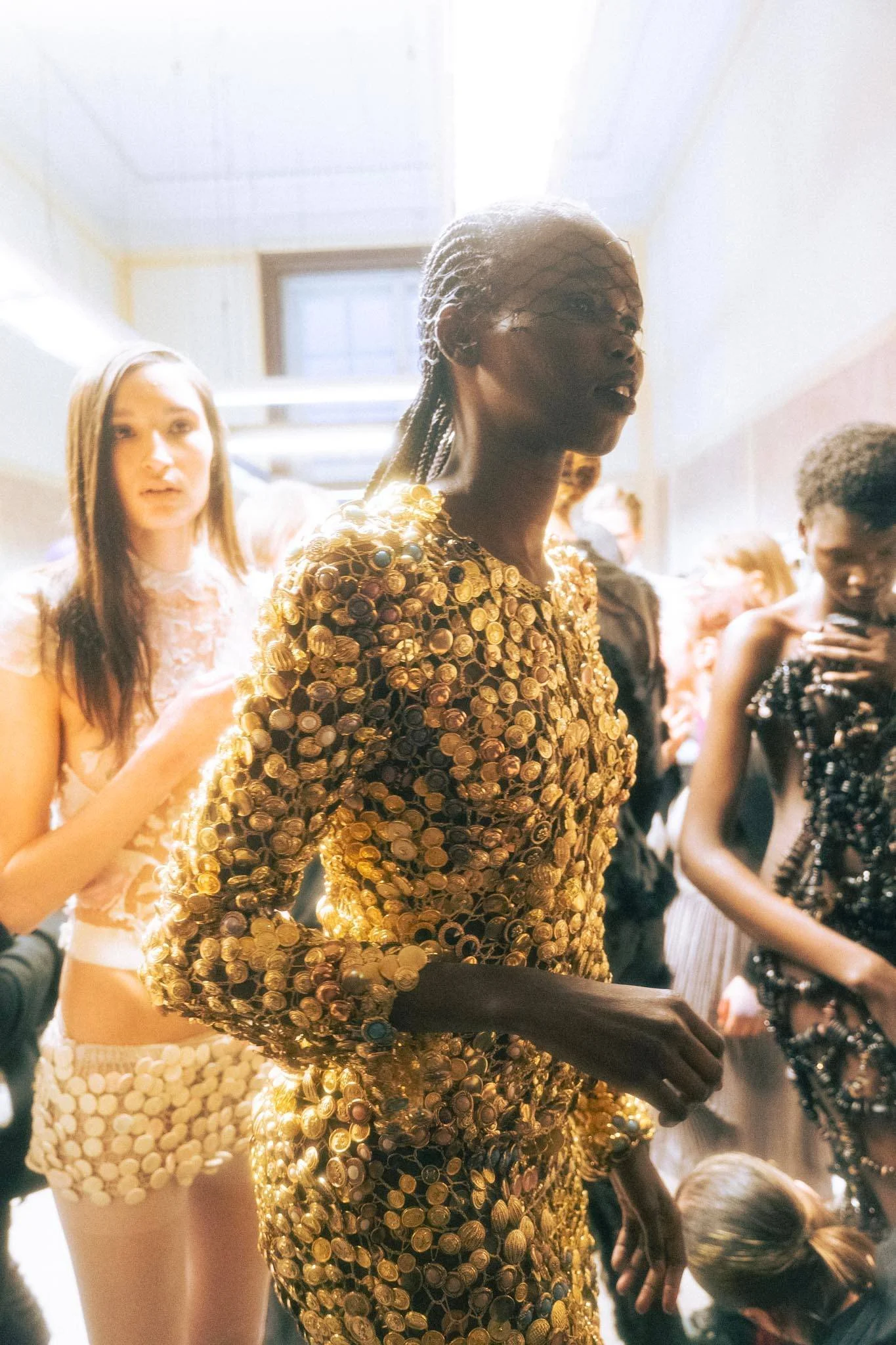
Lou de Bètoly mined flea markets for vintage corsetry and rebuilt silhouettes with crocheted panels and beaded draping. Her gold dress, constructed entirely from gilded jewellery, stood as argument against disposability. Bobby Kolade's Buzigahill literalized the reversal of extraction, sourcing secondhand waste from Kampala's Ownio Market and returning redesigned garments to the Global North as critical objects. His twelfth RETURN TO SENDER collection asked why East African millennials feel nostalgia for post-independence optimism they inherited only as photographs.
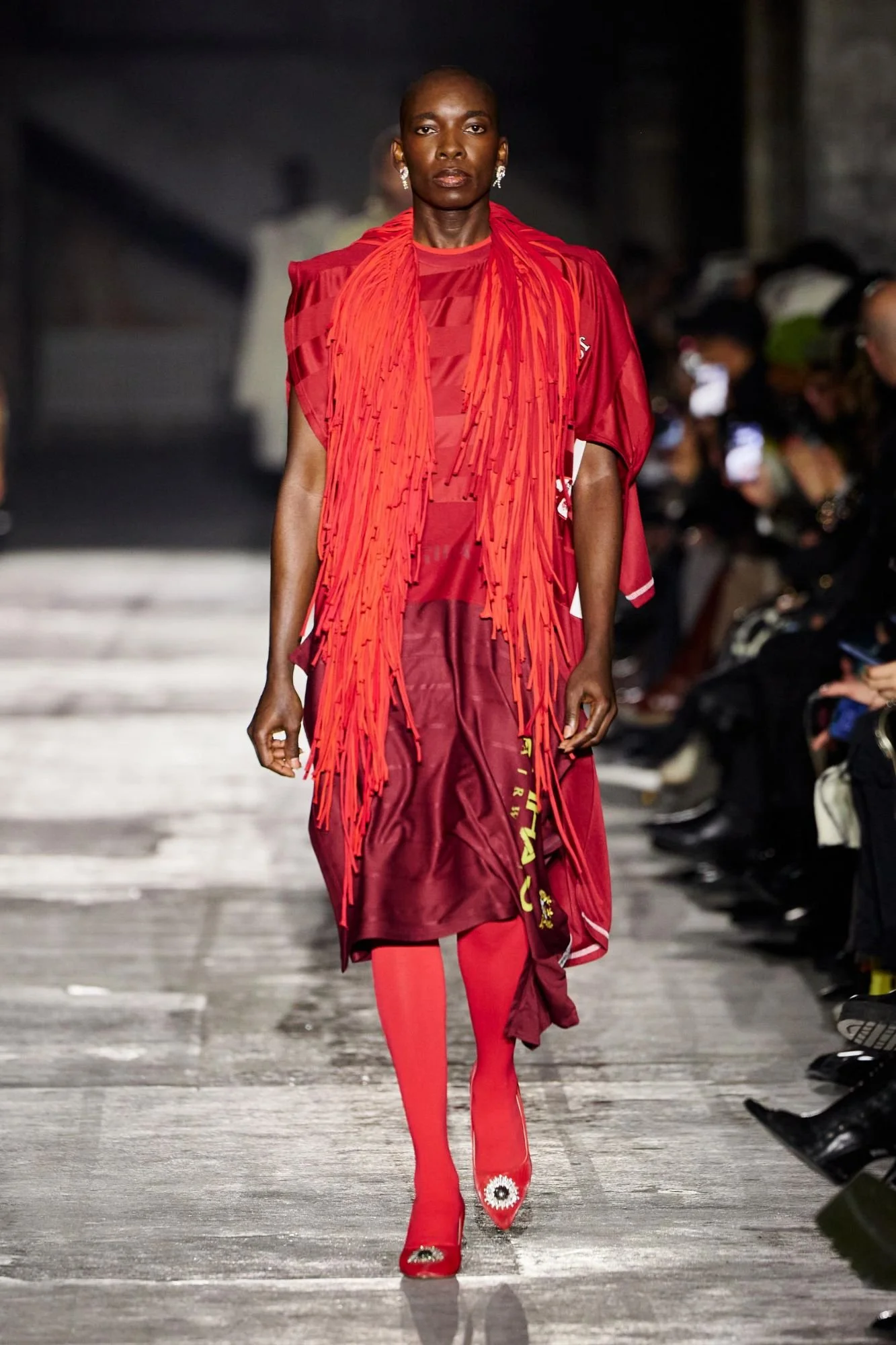
Marie Lueder staged an AW24-SS26 Archive with choreographer David Varhegyi directing moving bodies through medieval-futurism. Her thesis: real innovation excavates the forgotten rather than inventing the new. Medieval communities understood protection and ritual. Lueder translates this knowledge through ribbed knitwear as contemporary chainmail. Kasia Kucharska's liquid latex technique makes visible what society demands remain hidden: emotional labor, physical exhaustion, maternal ambivalence. Her FW26 work refuses the myth of balance. Black latex collides with pink plush. Structured pinstripes interrupt fluid forms. Adebayo Oke-Lawal presented Orange Culture's Backyards of Memory as tribute to his late mother, transforming Nigerian domestic life into contemporary luxury through hand-dyed fabrics and handcrafted fringe. Arashi Yanagawa brought boxing and Norwegian black metal to John Lawrence Sullivan, staging leather armor at minus ten degrees.
Berlin continues attracting designers for whom fashion means something beyond commerce. The city rewards those willing to make different work.
JOHN LAWRENCE SULLIVAN
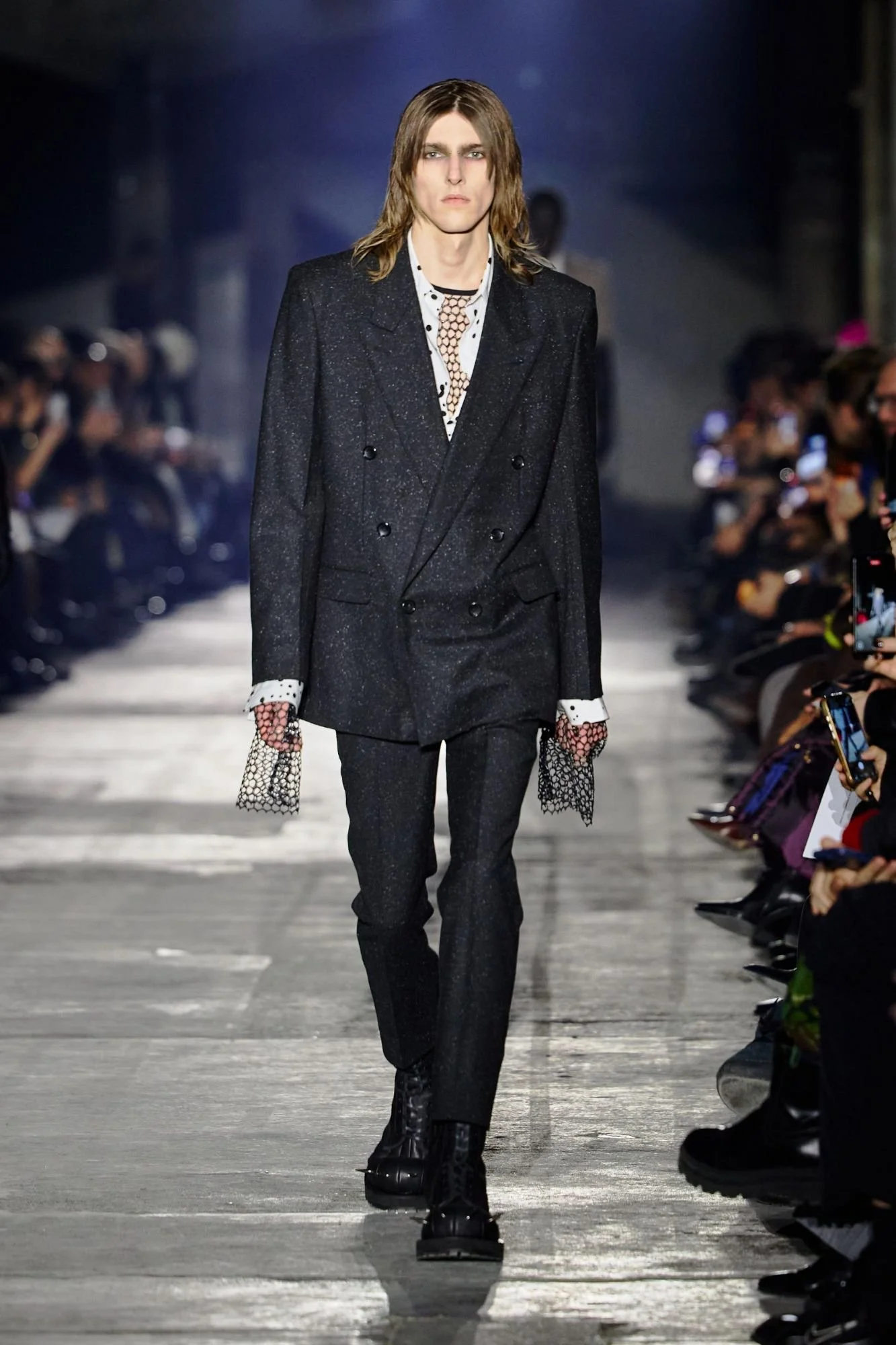
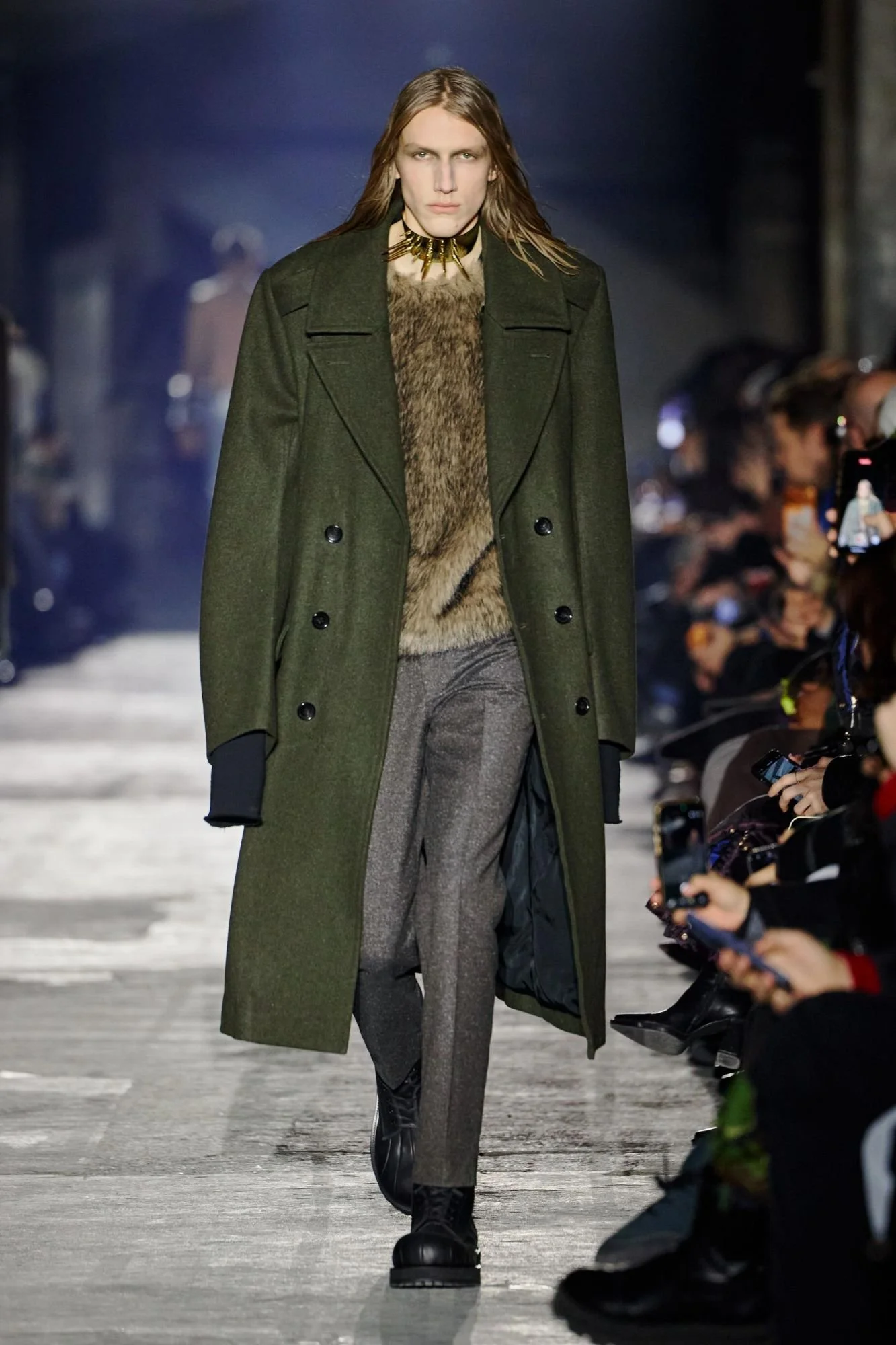
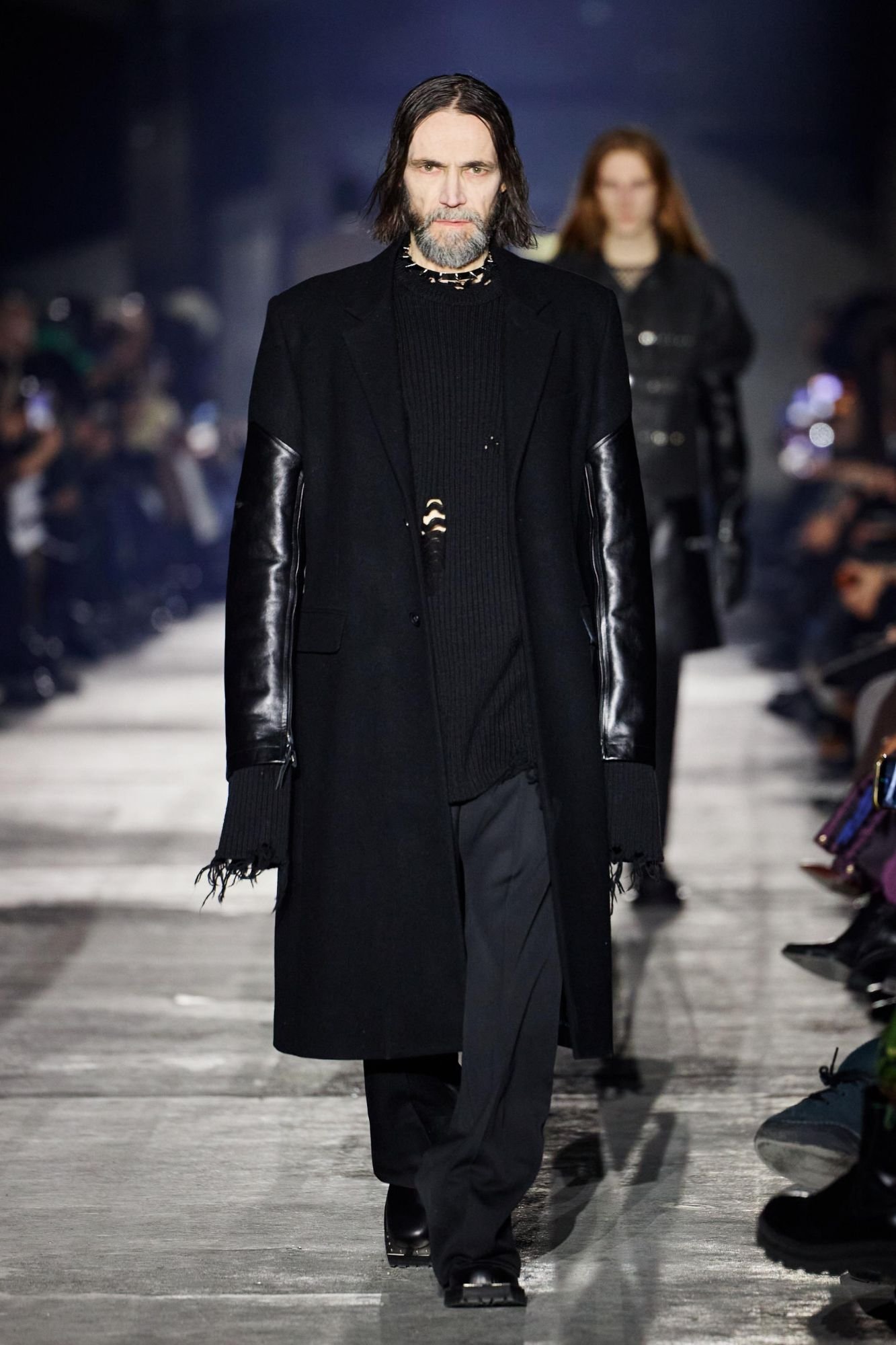
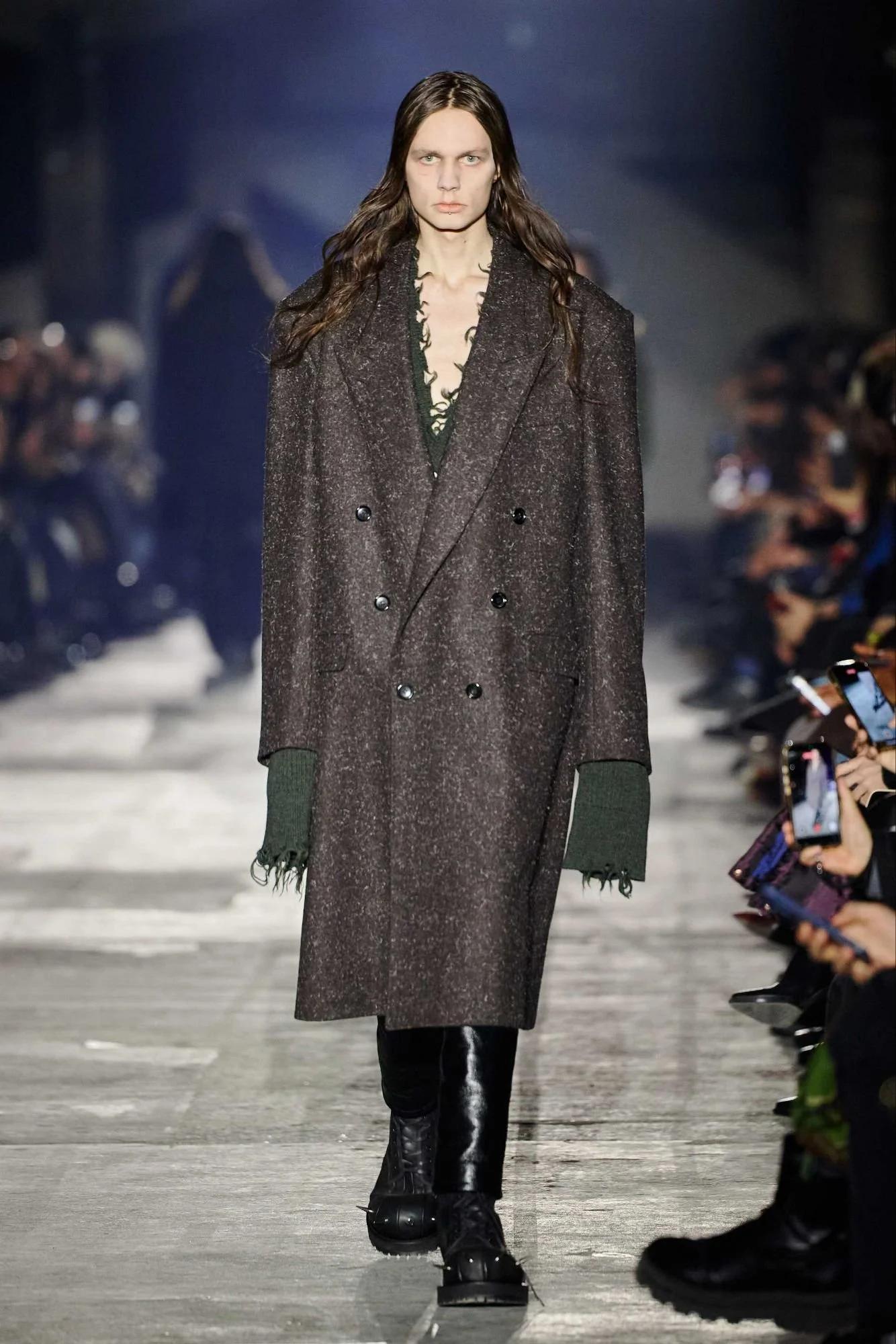
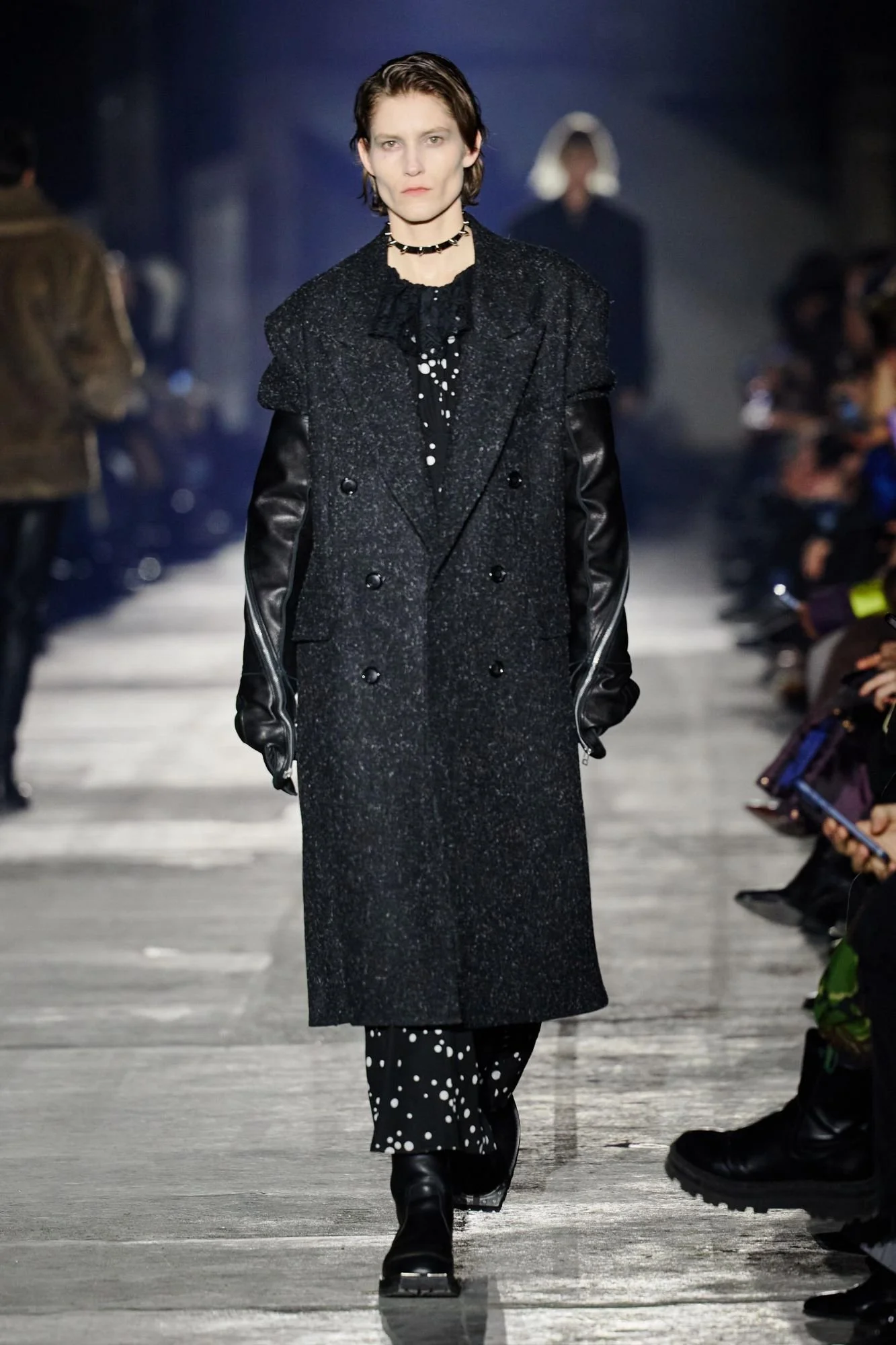
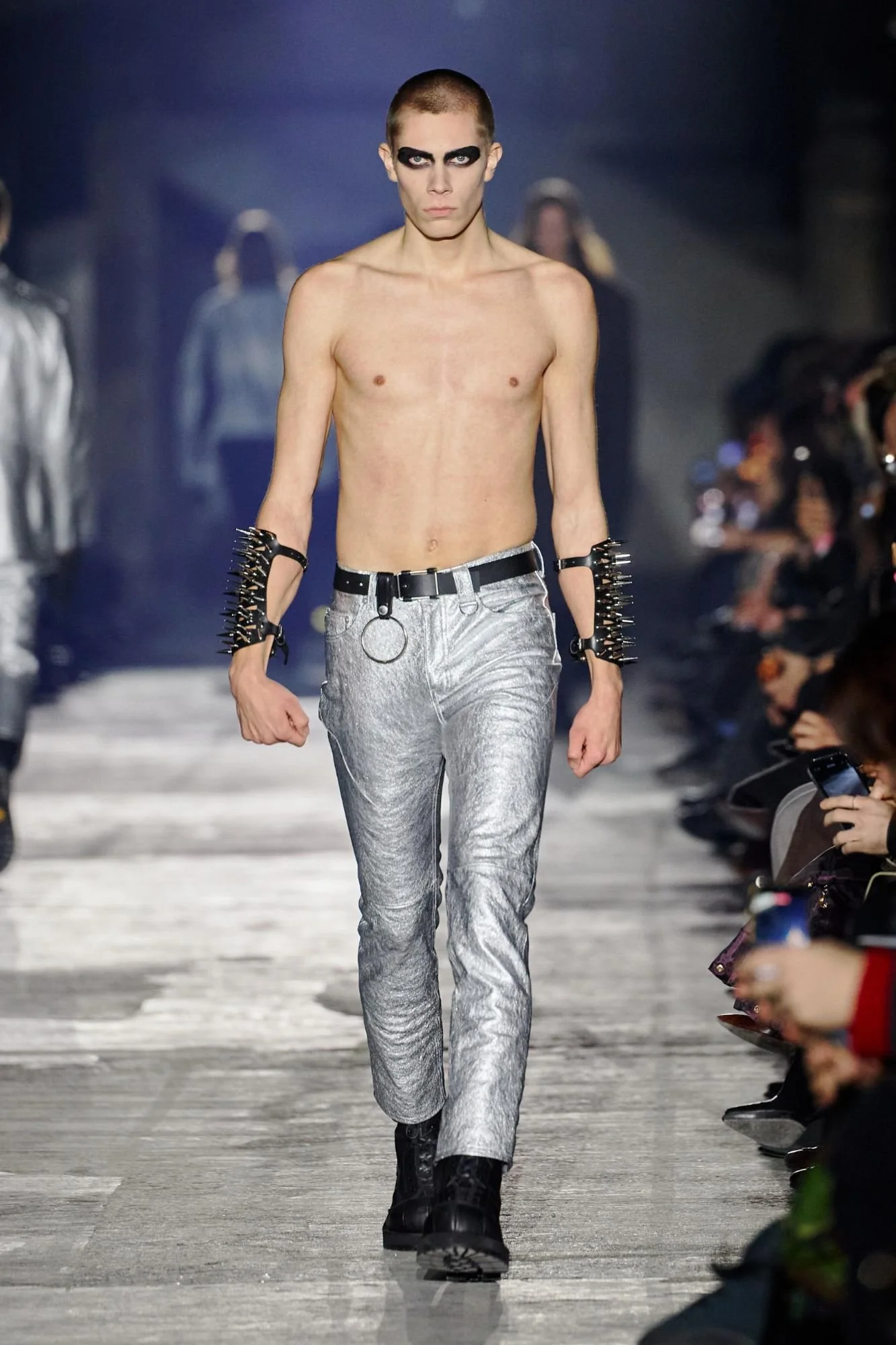
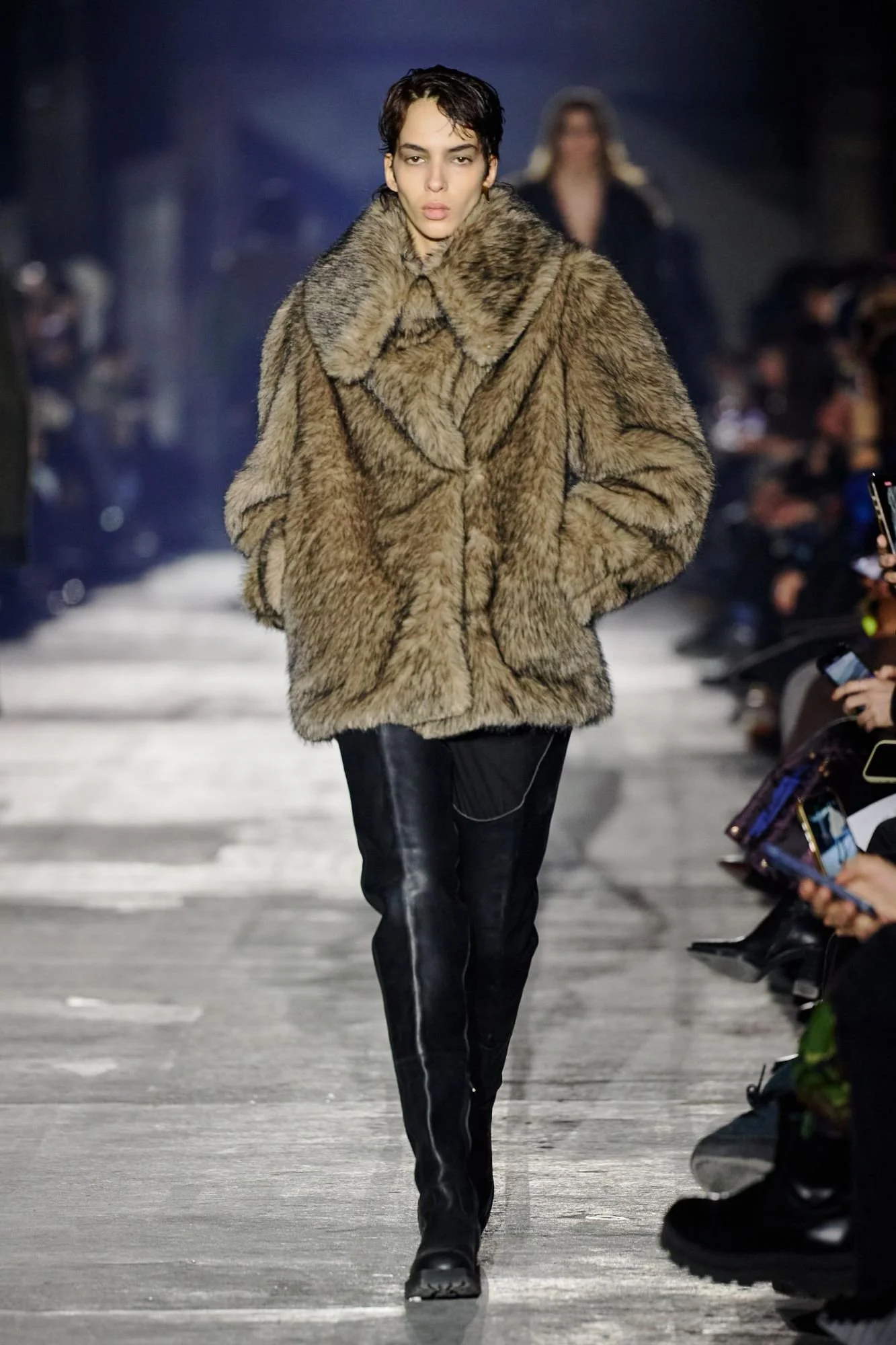
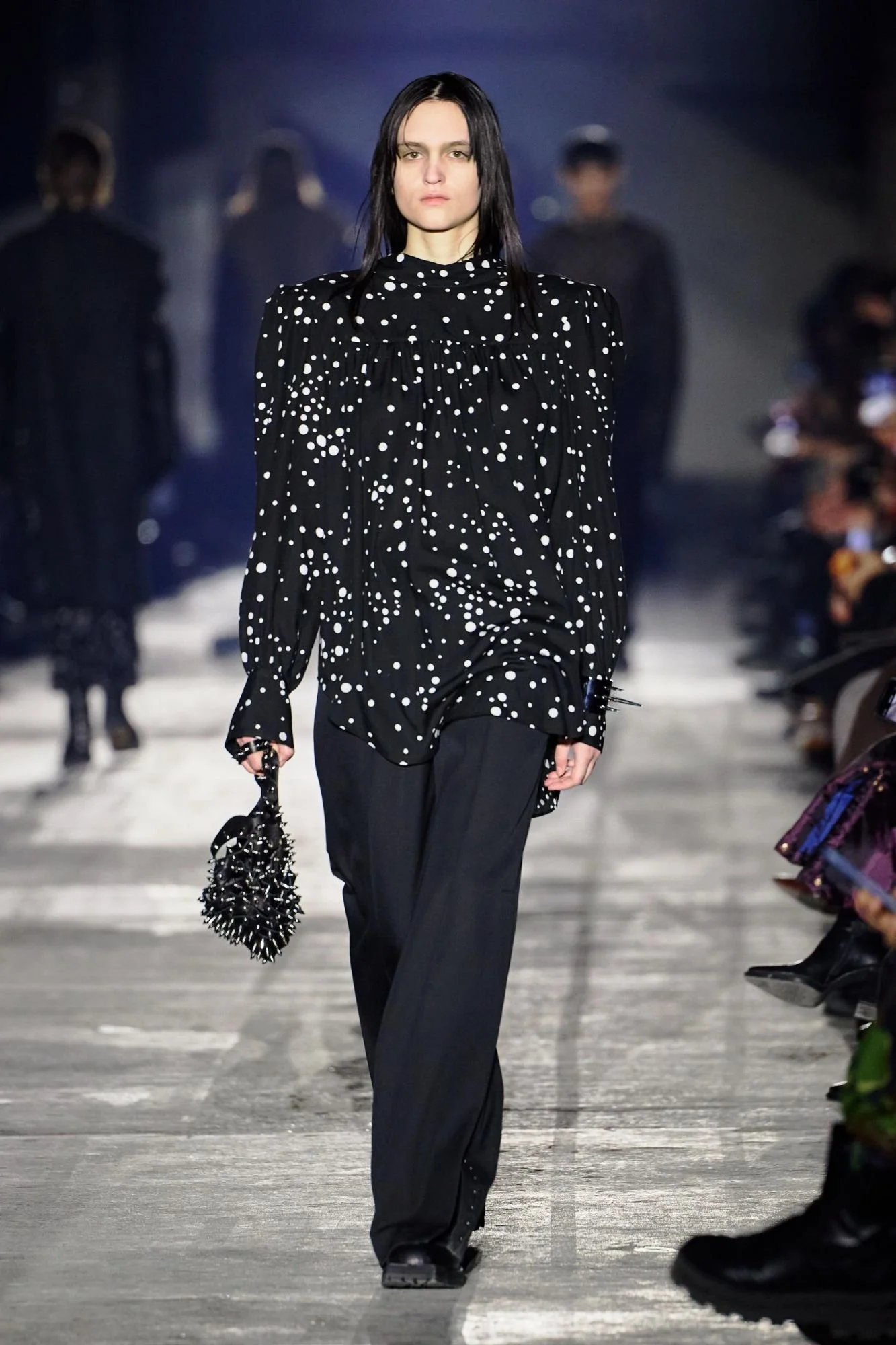
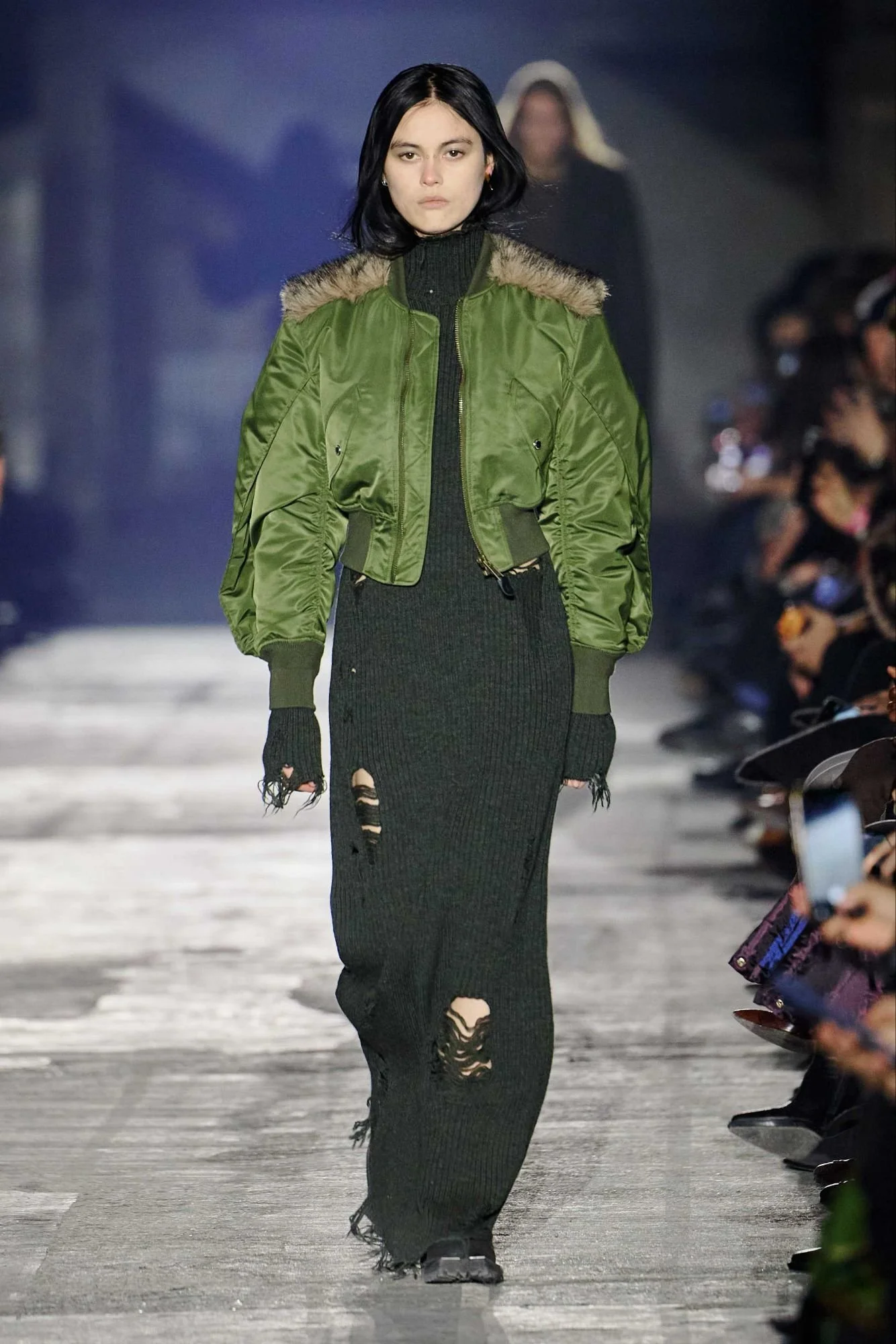
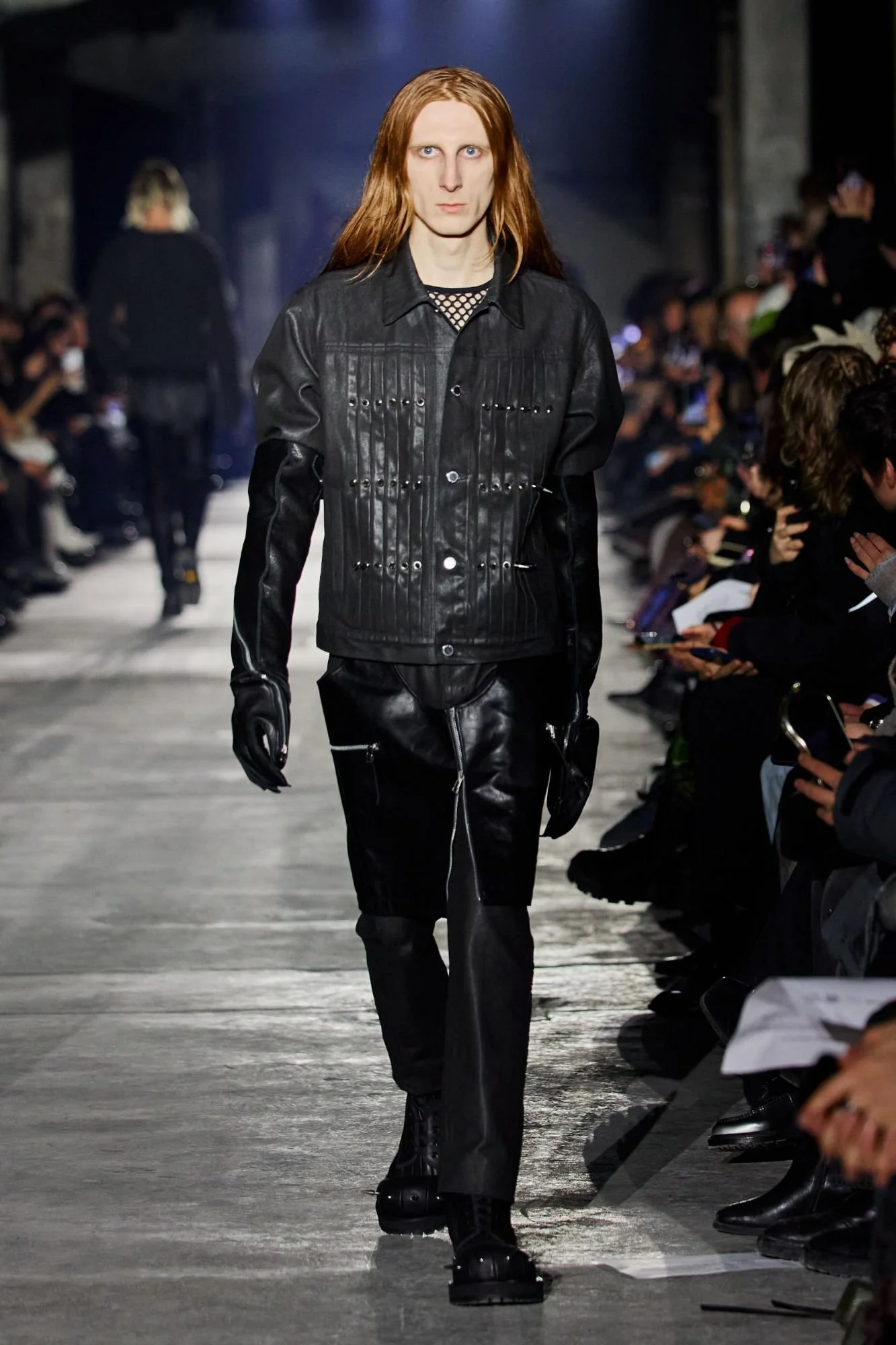
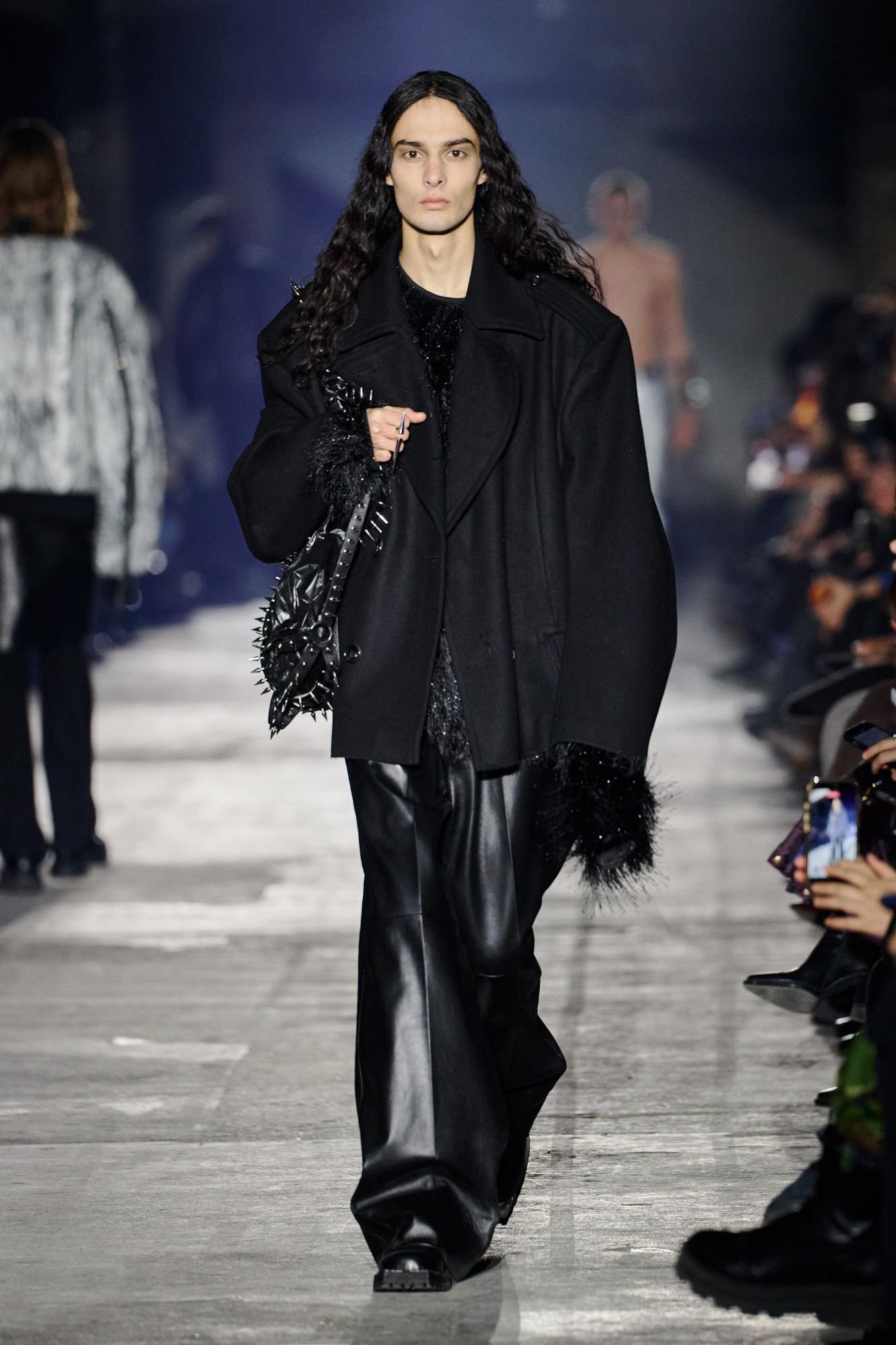
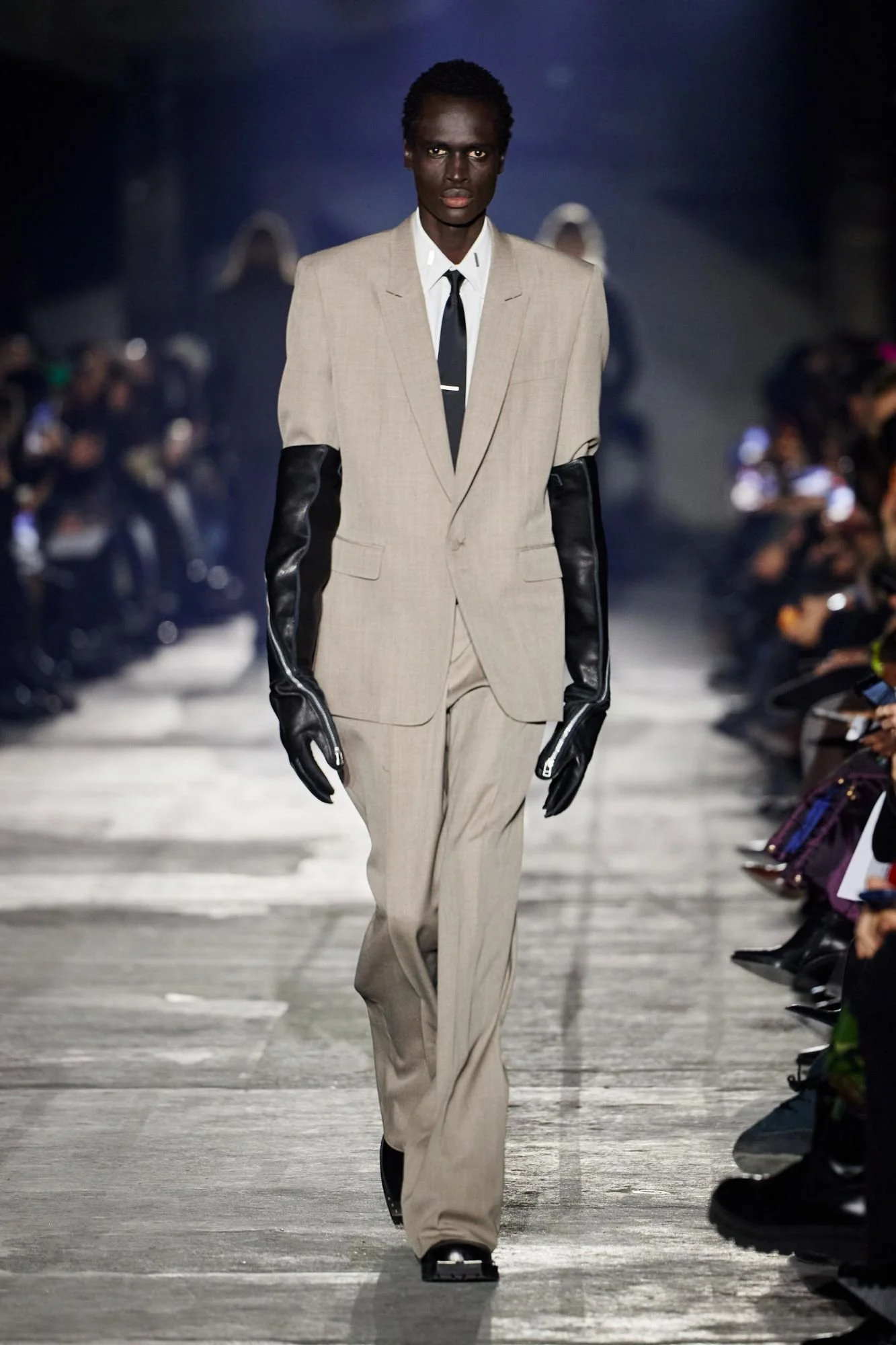
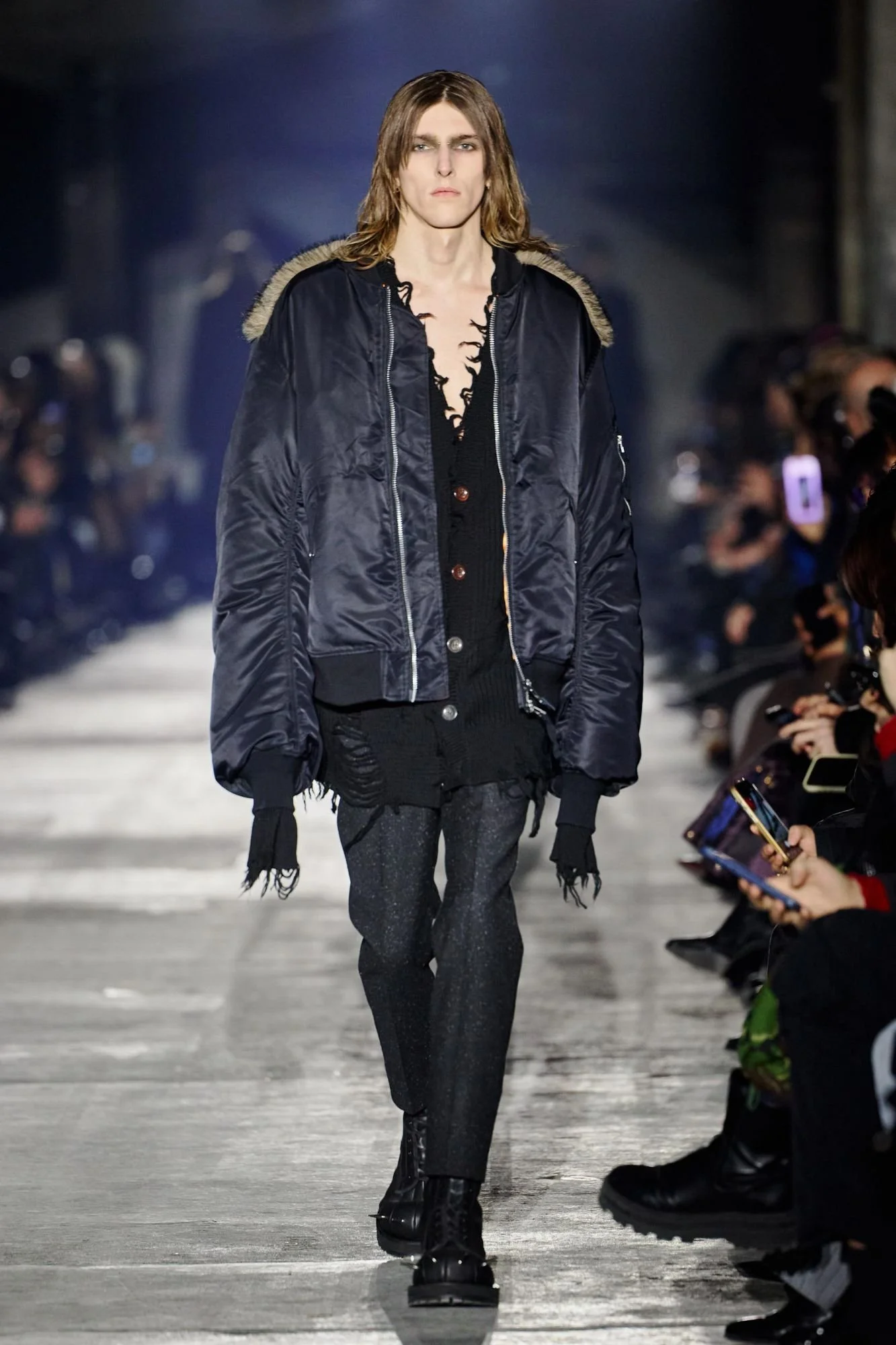
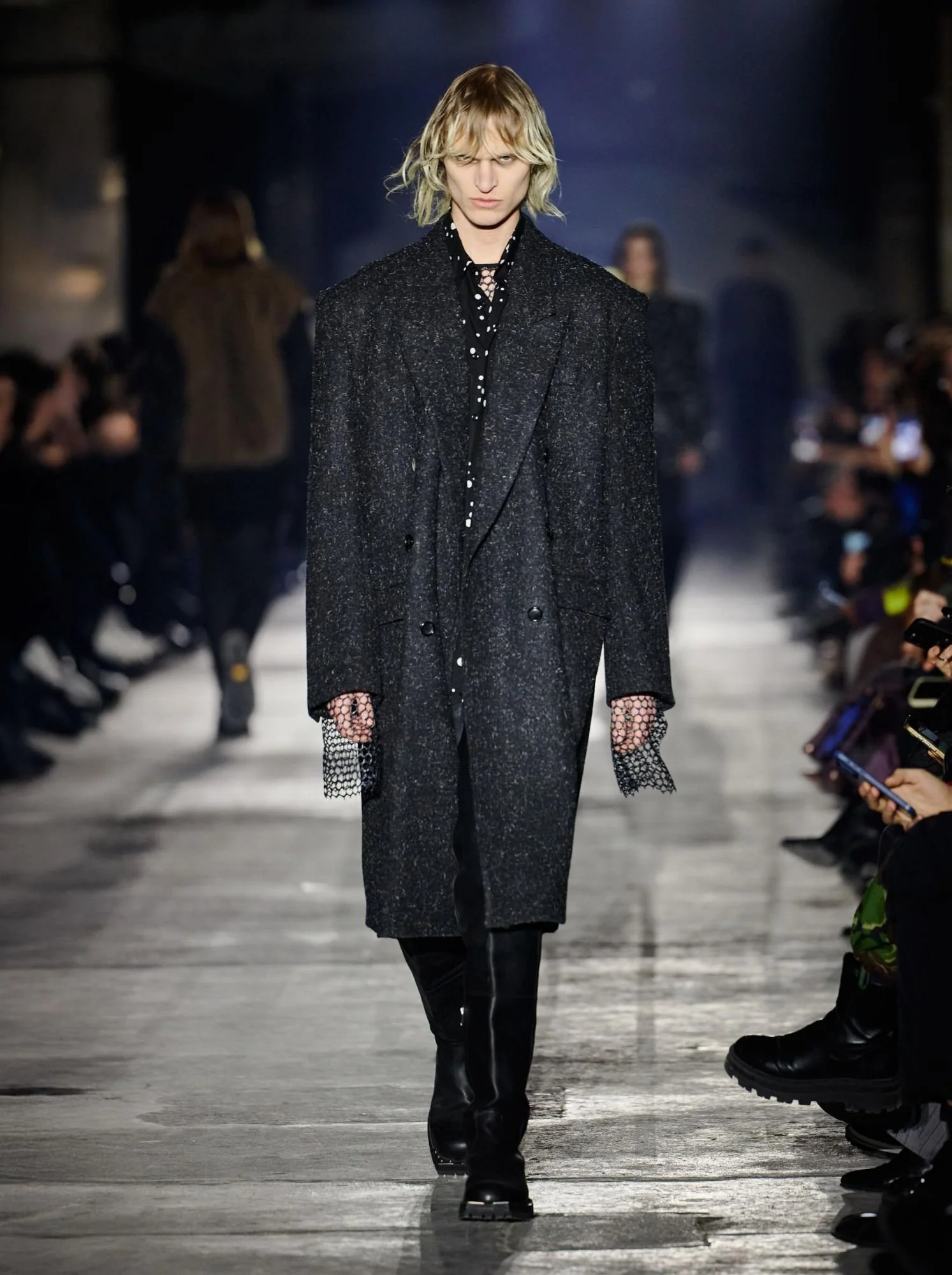

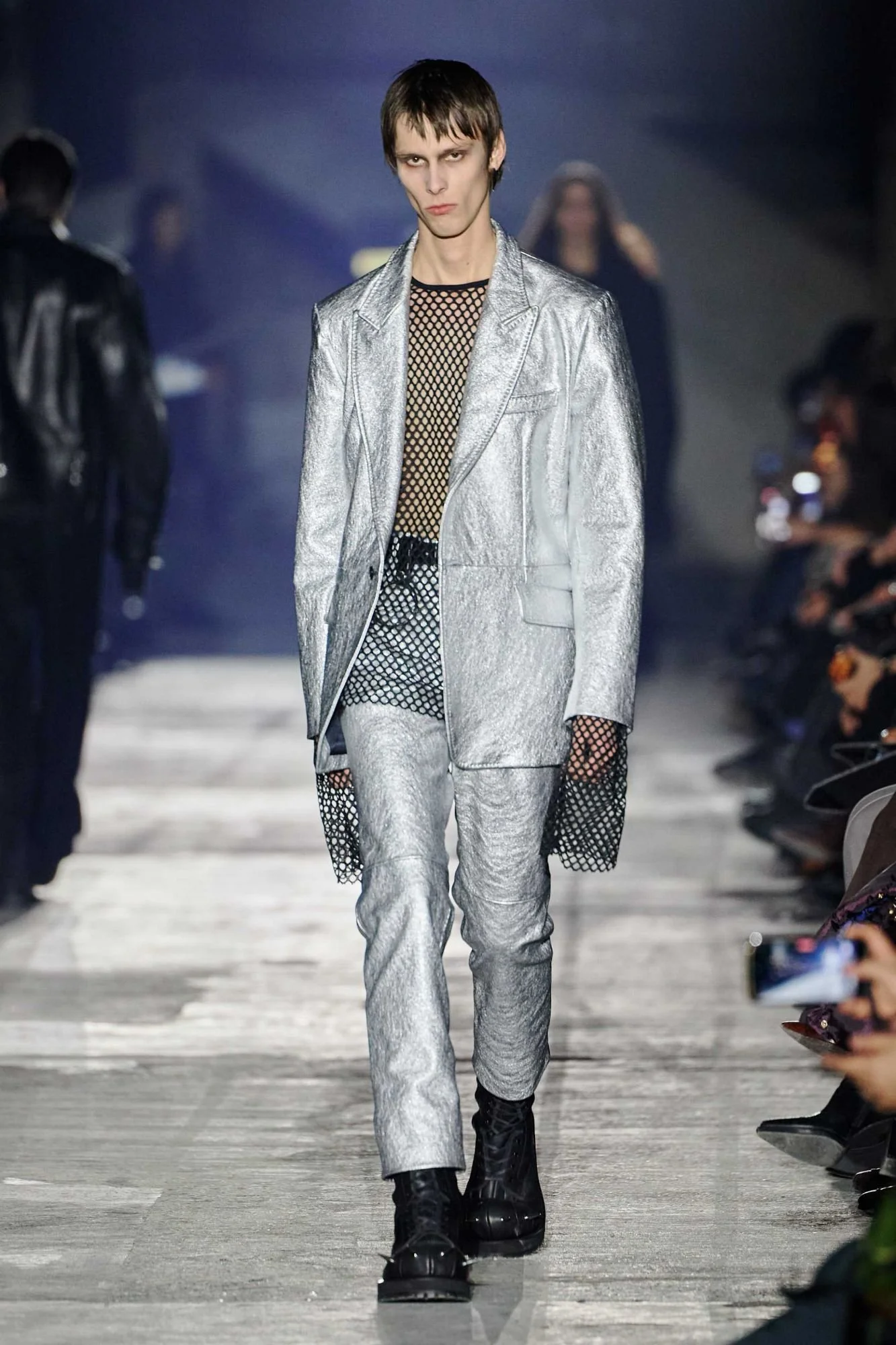
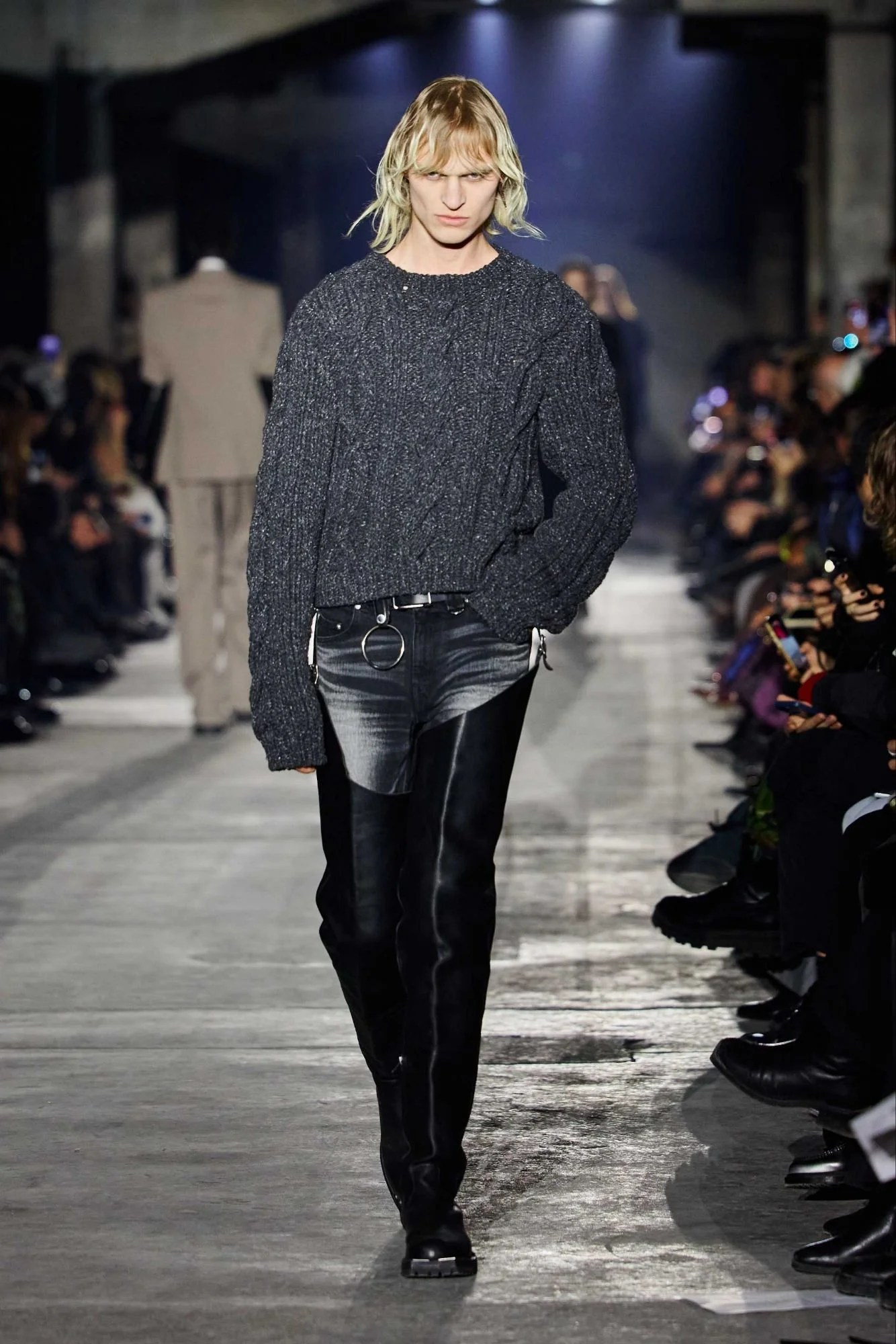
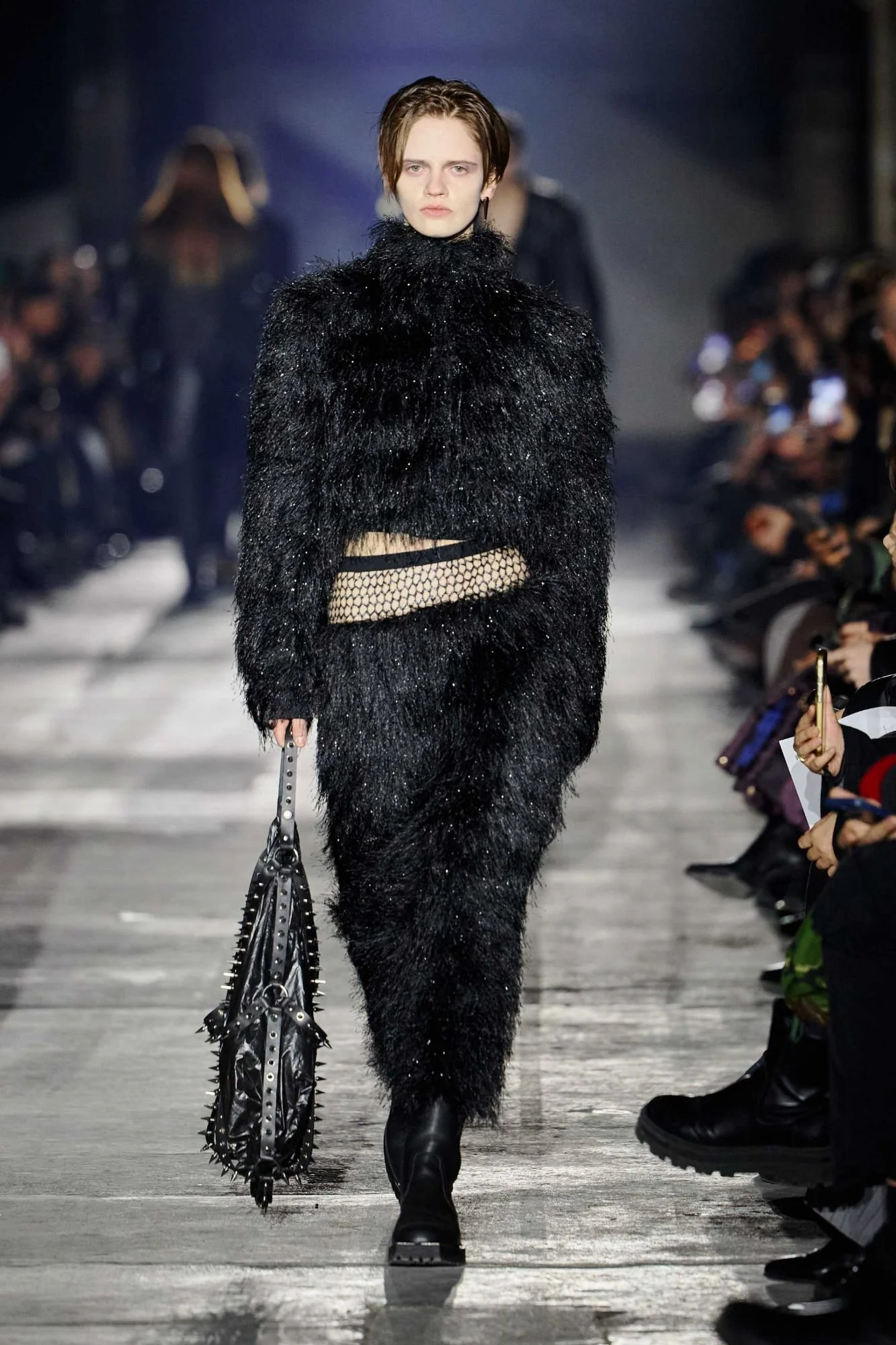
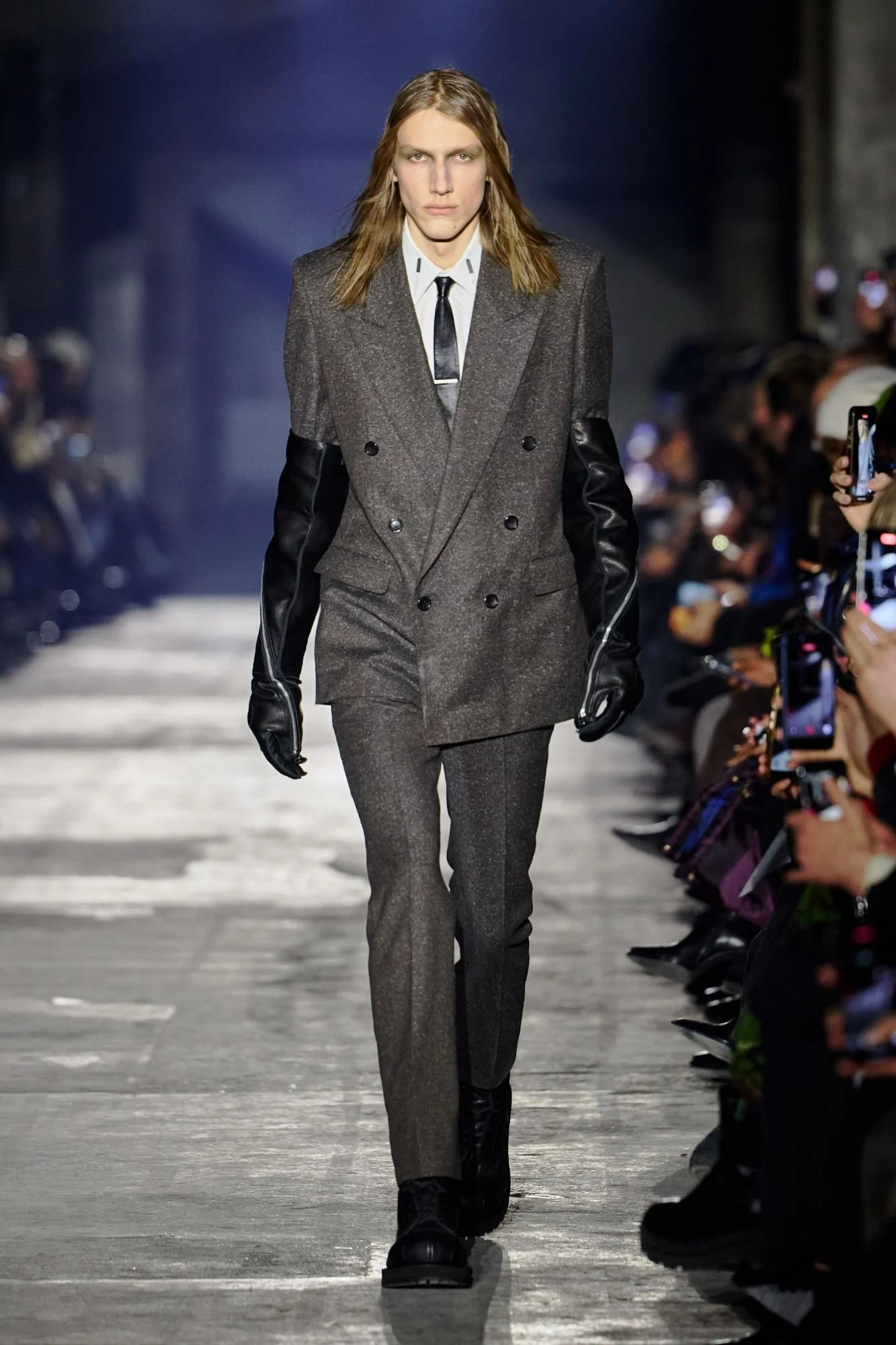
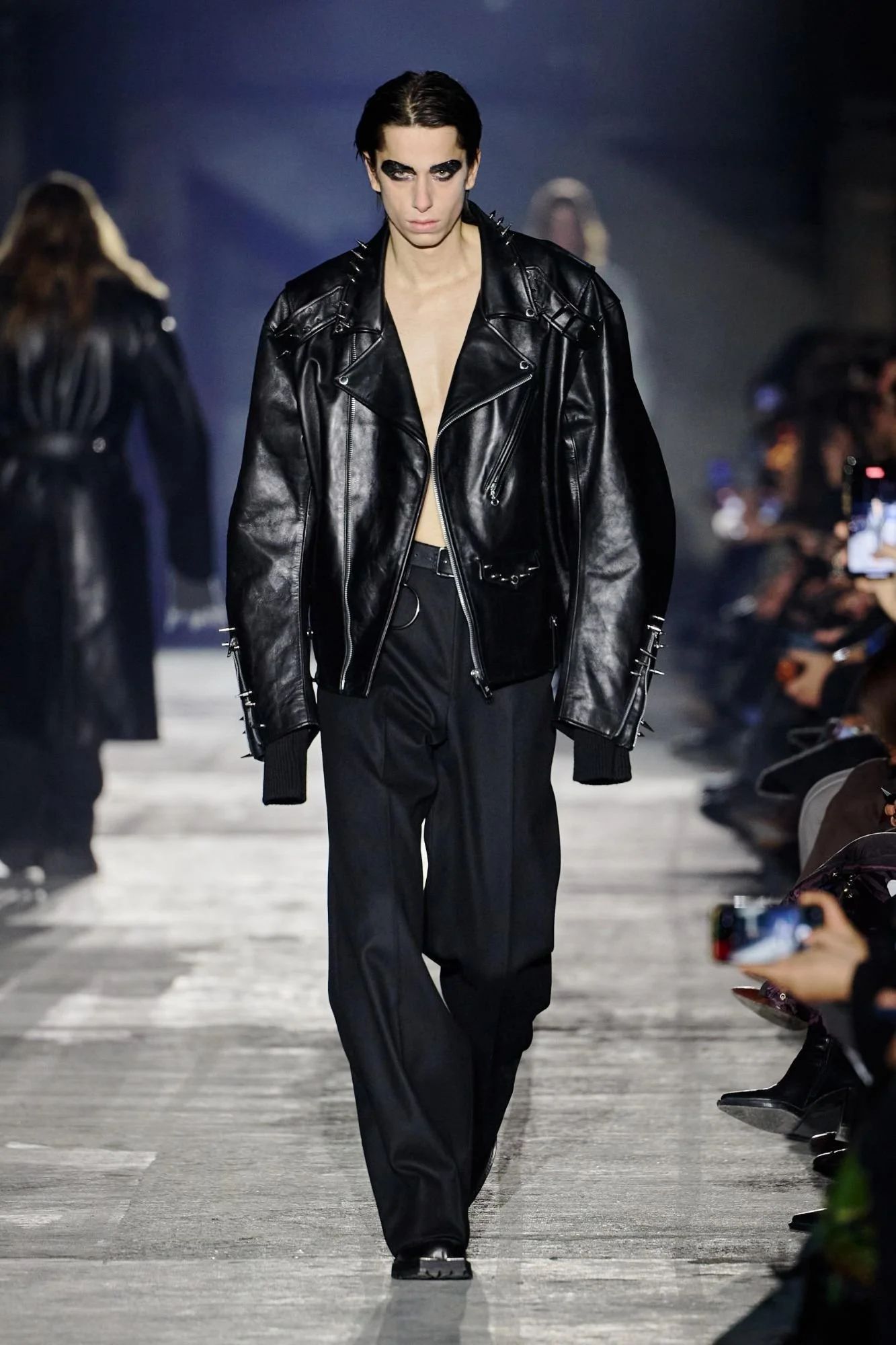
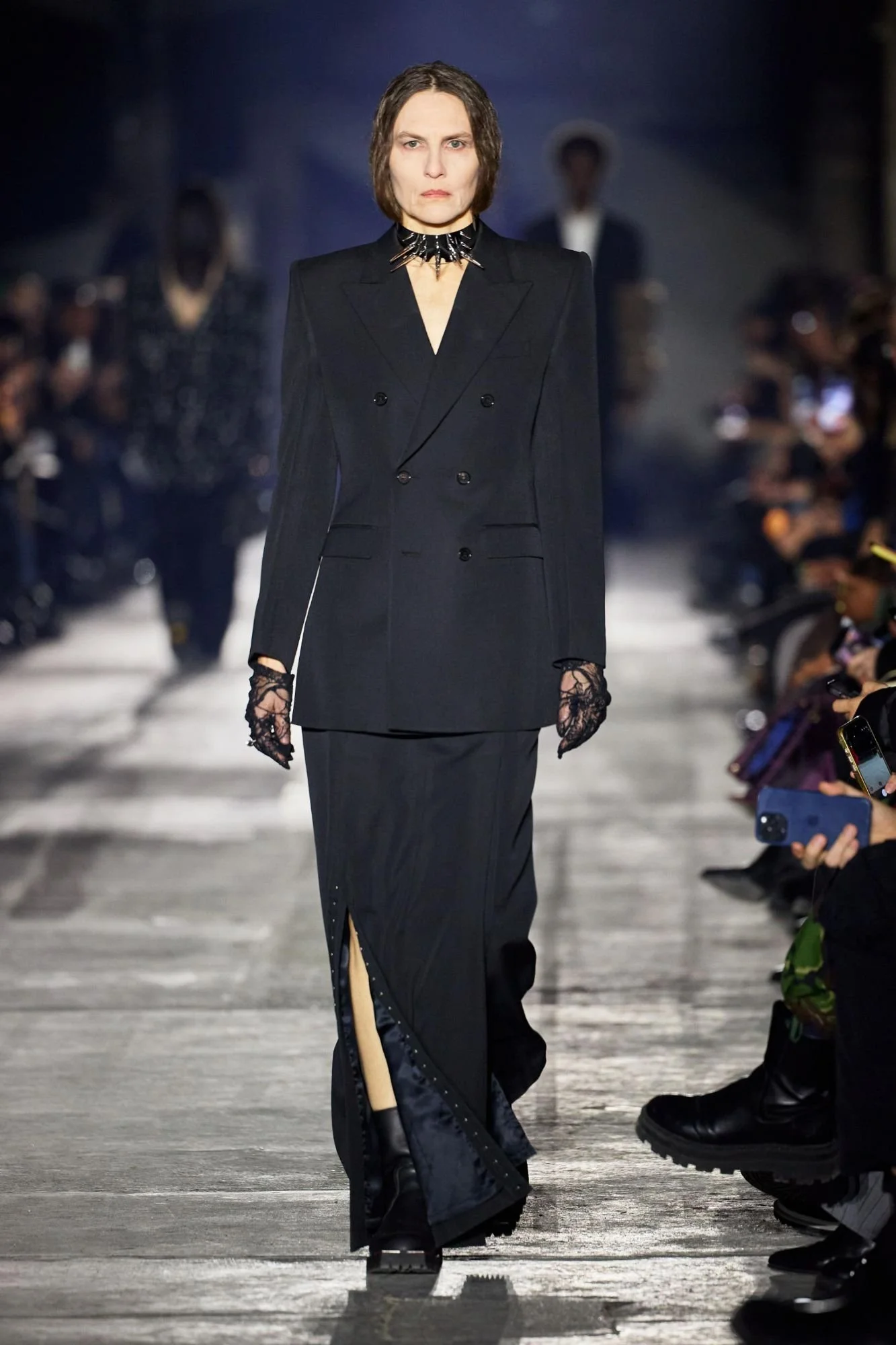
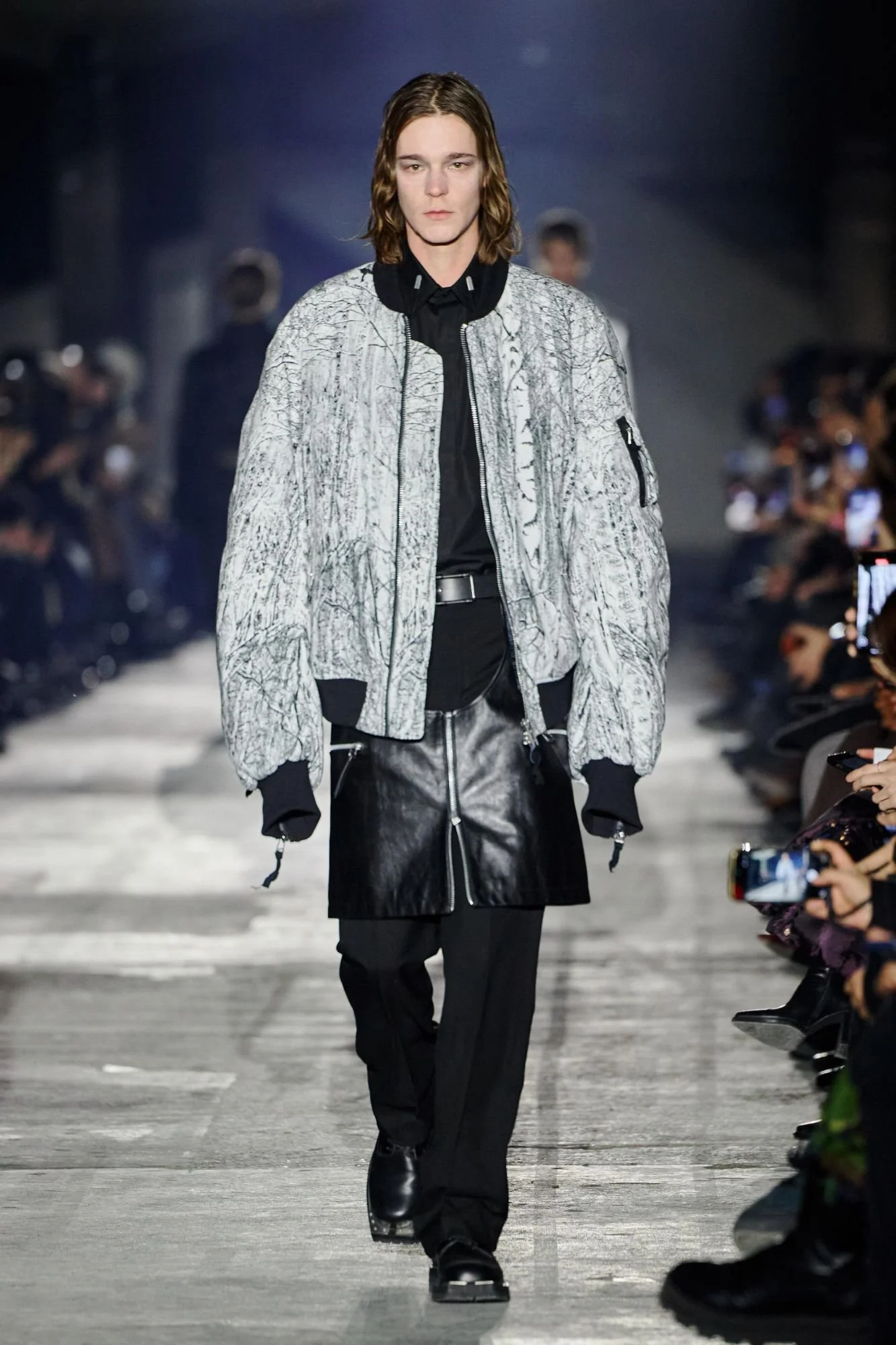
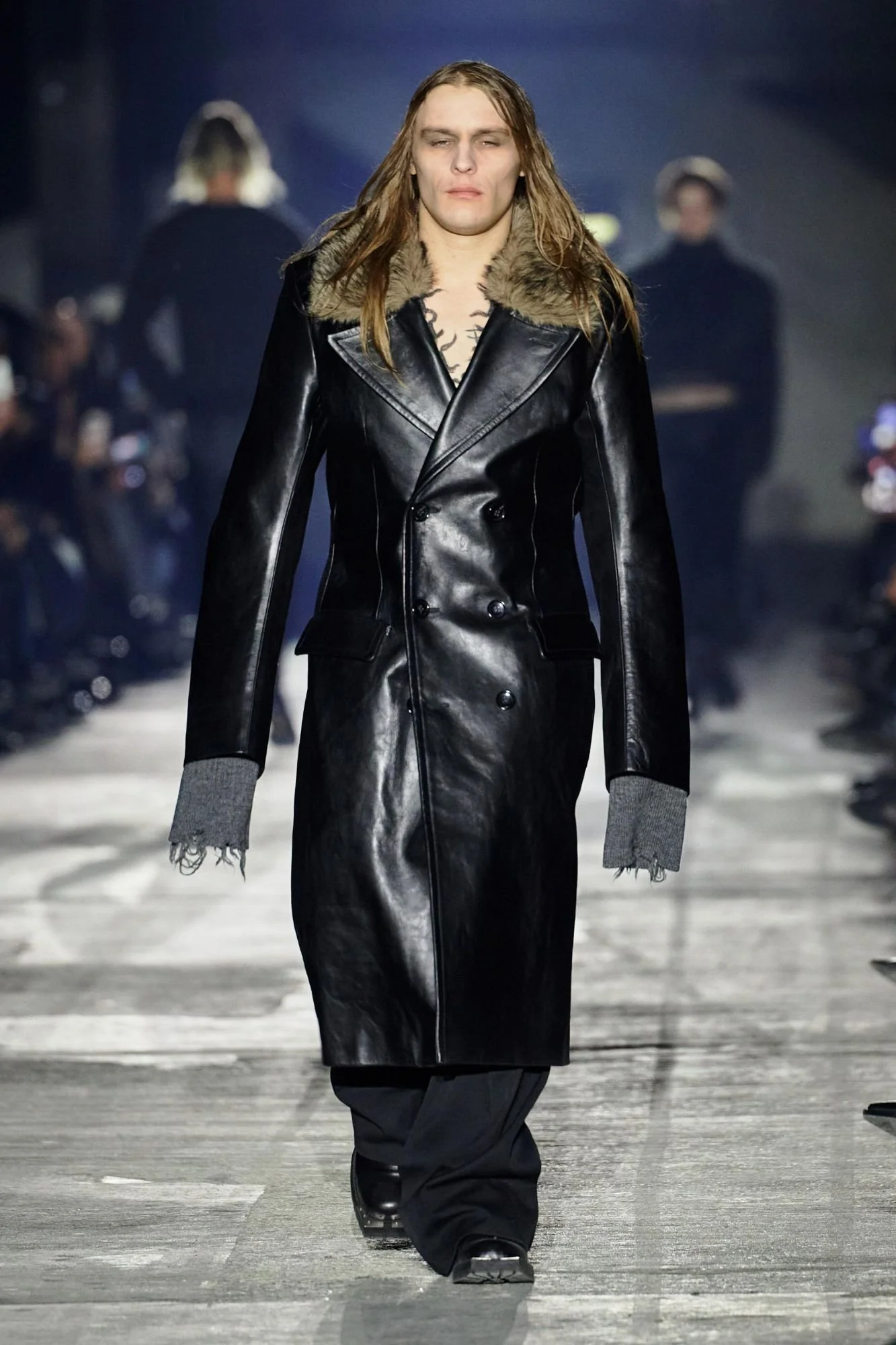
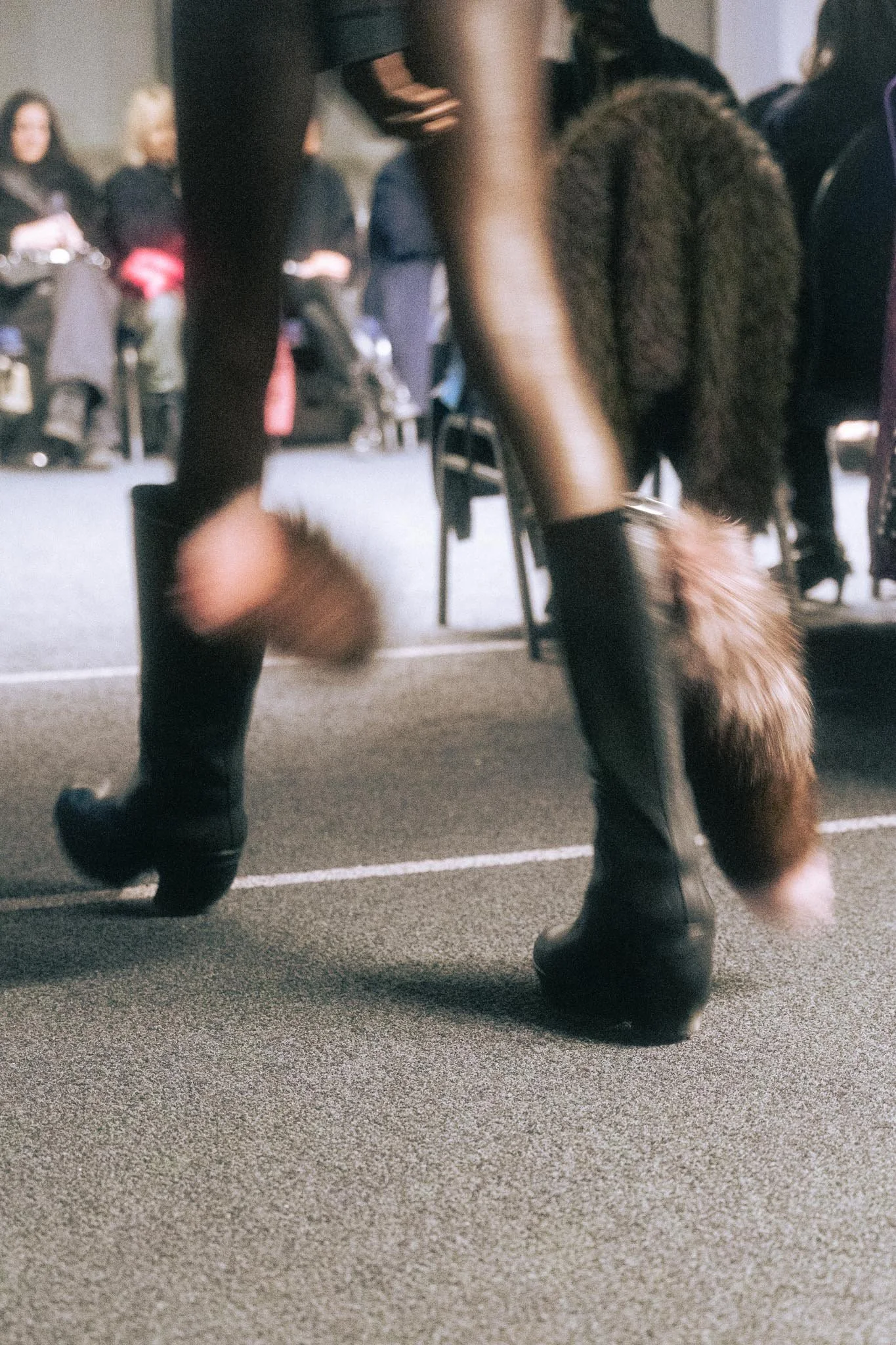
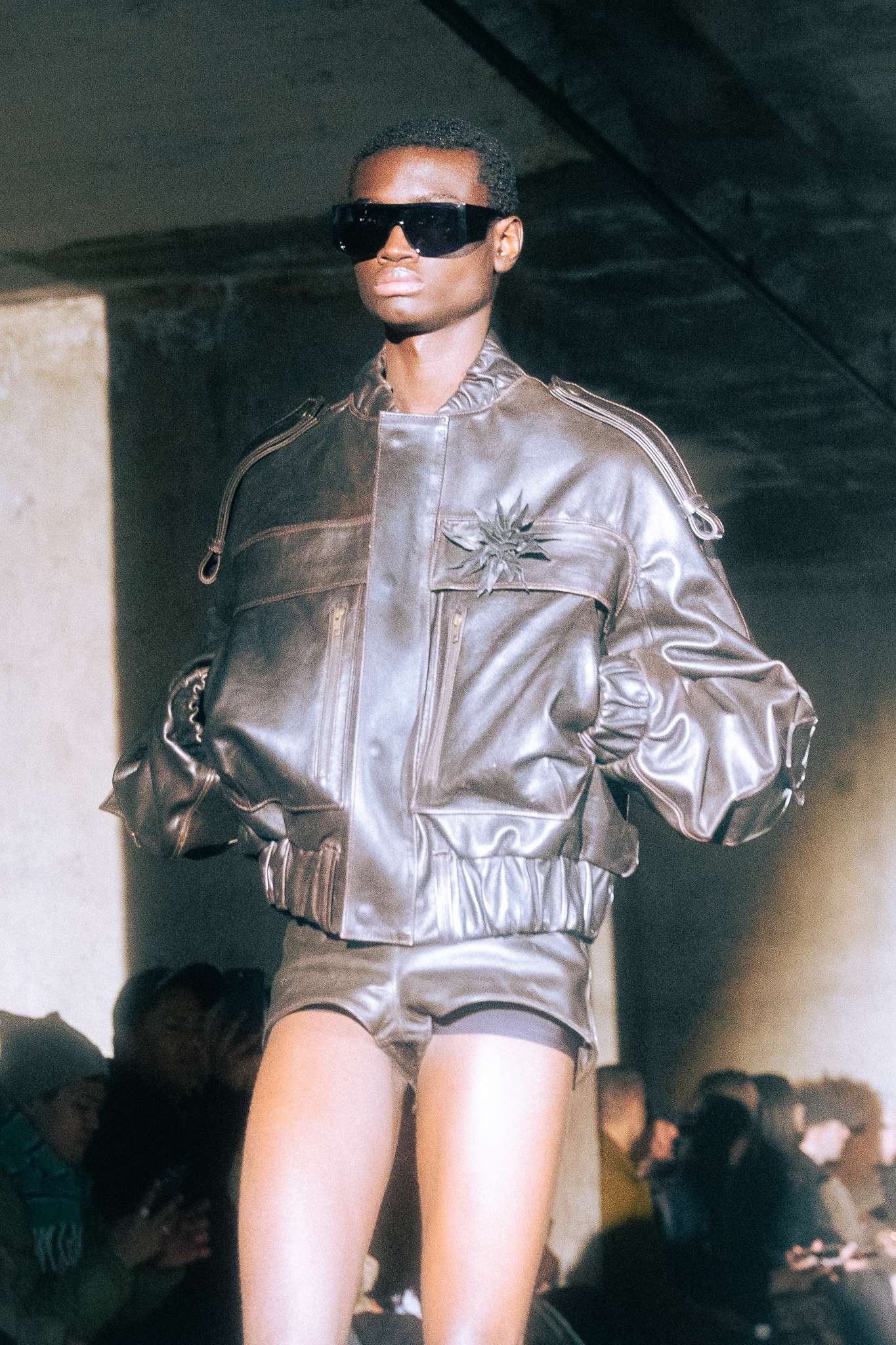
Arashi Yanagawa brought boxing gloves and black metal to Berlin's Kraftwerk venue for John Lawrence Sullivan's FW26 debut at the city's fashion week. The Japanese designer, a former professional boxer, fused the mentality of his past career with inspiration from Norwegian metal scene friends who party in snowy forests. The result is a collection that refuses to look back.
Leather dominated: long coats, over-the-knee boots, gloves that could survive both the ring and the mosh pit. Transparent mesh long sleeves and studded details on boots and bags nodded to subculture without costume. Clean tailoring provided tension against the rock aesthetic, with narrower-cut suit trousers grounding the aggression. The color palette stayed dark with strategic hits of silver on suits, green on knits, and brown on faux-fur coats.
Held at minus ten degrees with snow on the pavements, the collection felt native to Berlin's party scene. Norwegian forest prints appeared throughout. Yanagawa's vision celebrates strength, independence, and forward motion. No retreat, only advance.
LOU DE BÈTOLY

Photography by Paloma Schäfer @whiterabbitjpg
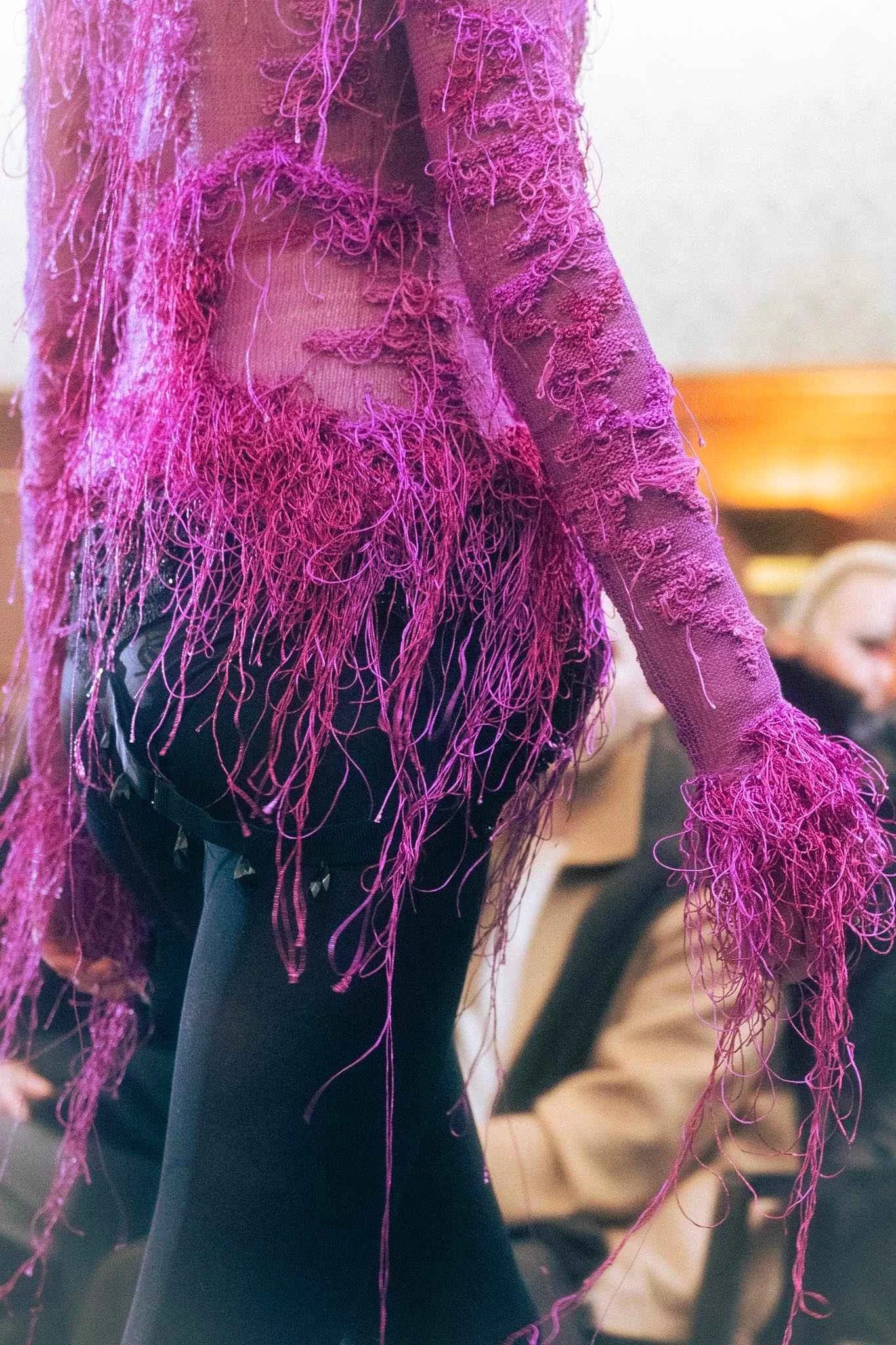
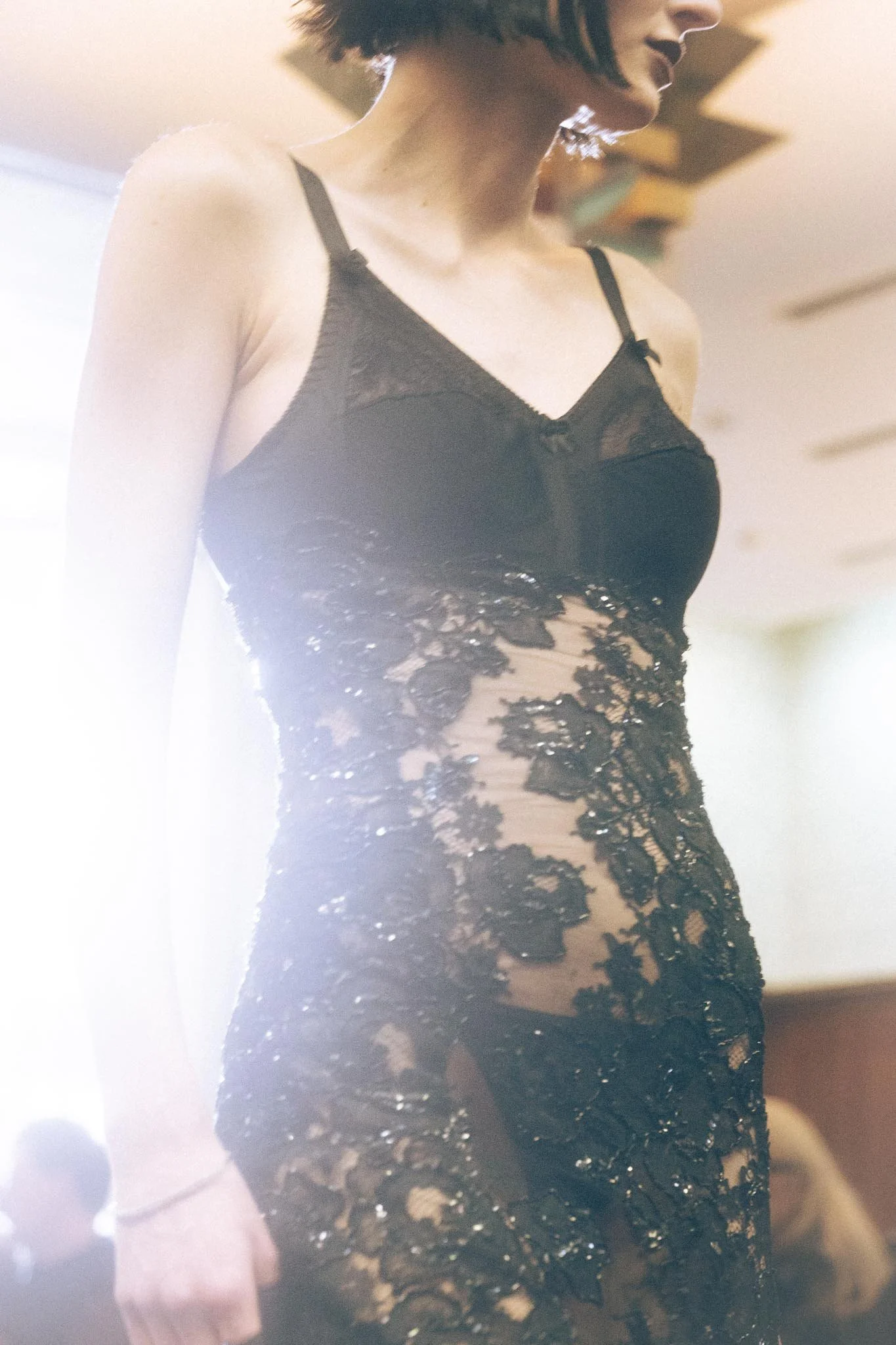
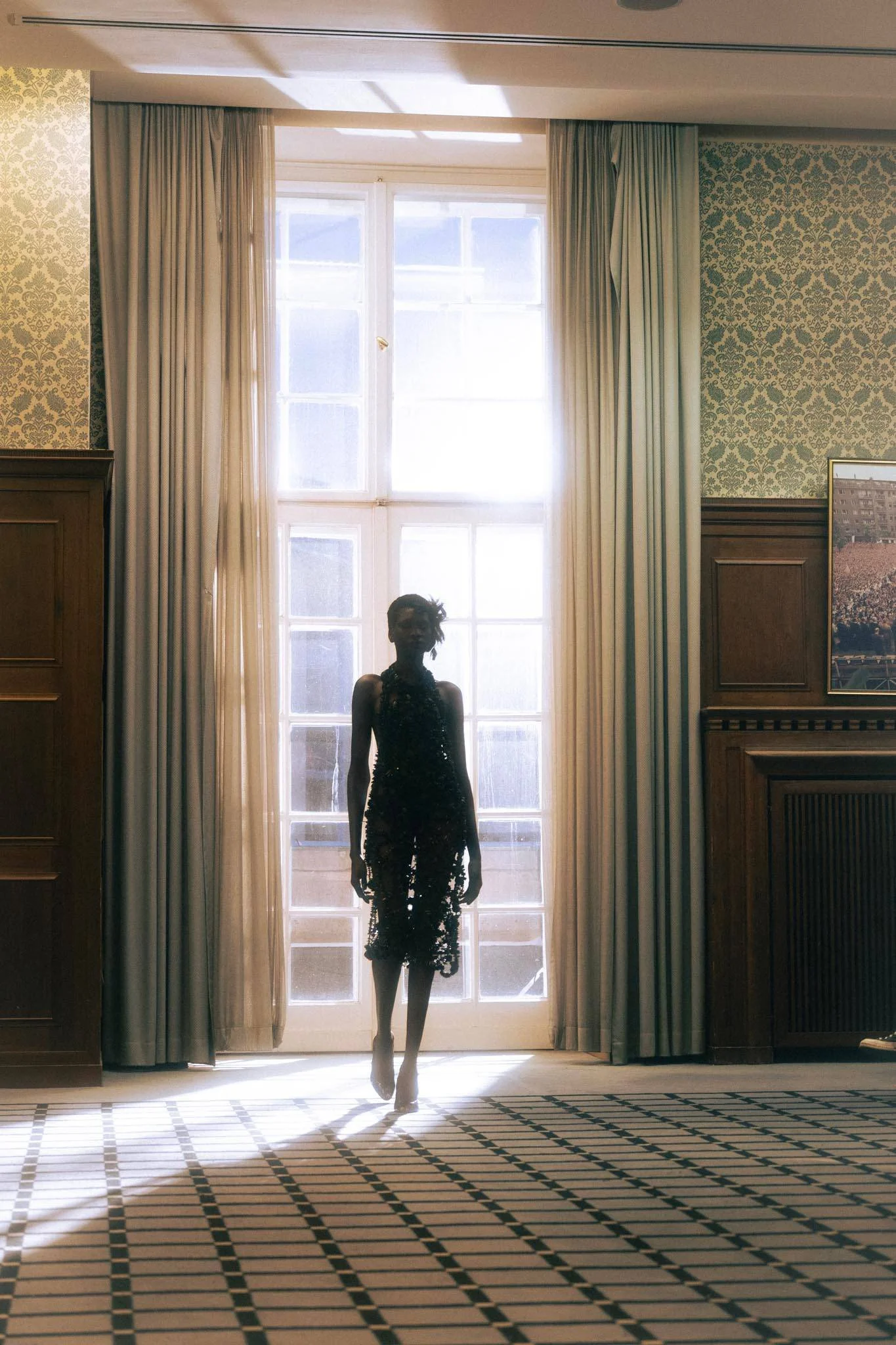
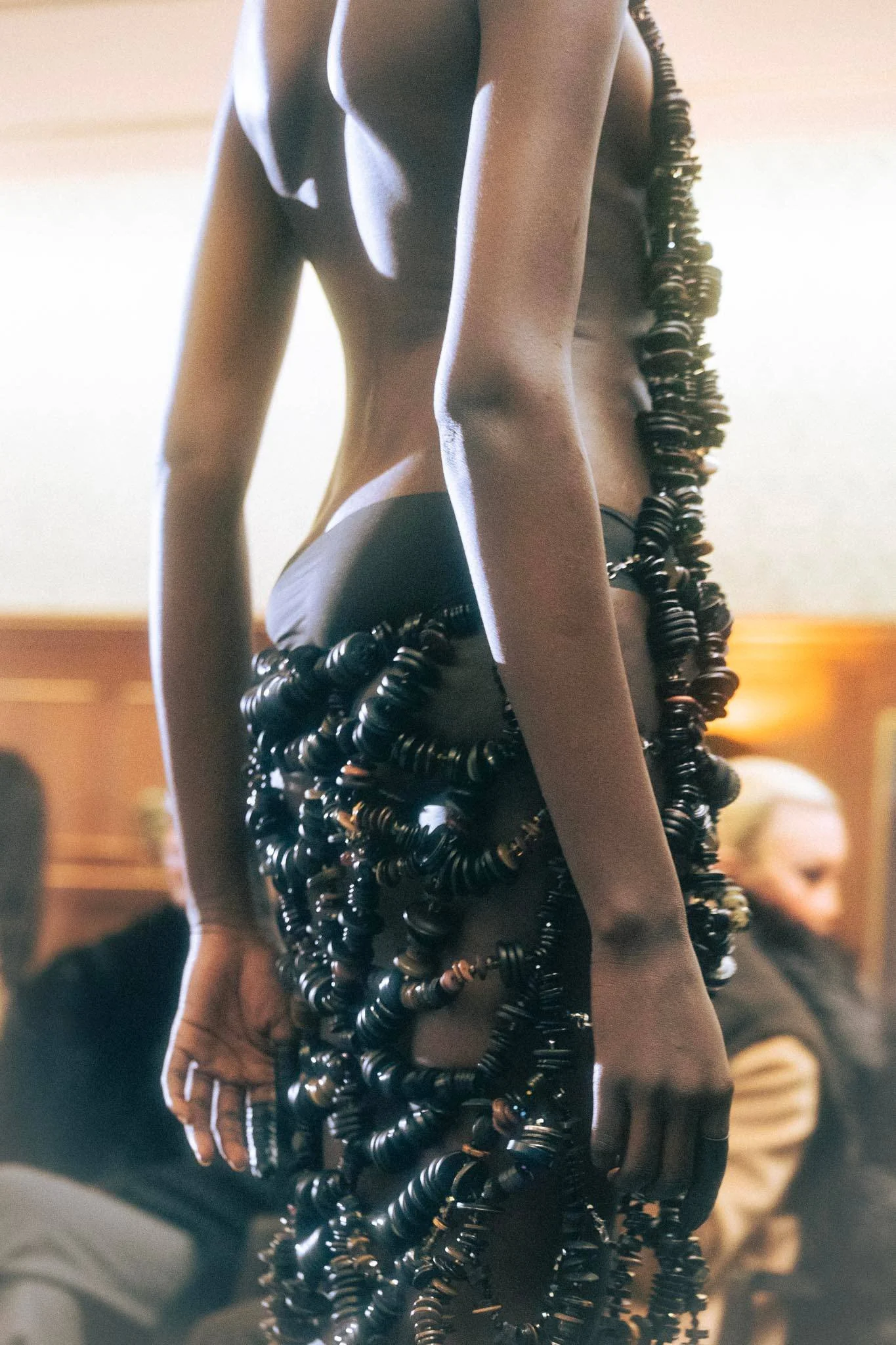
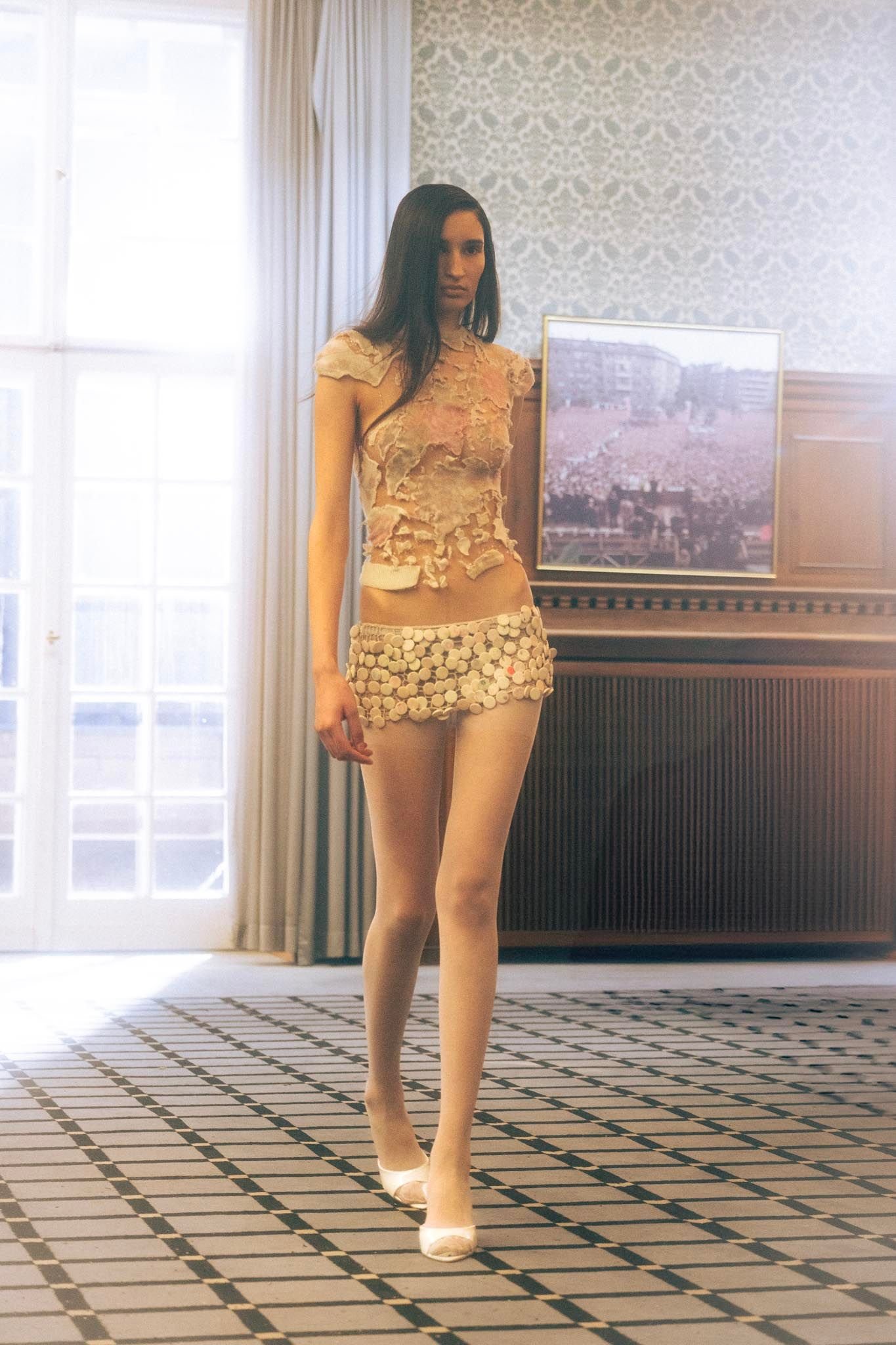
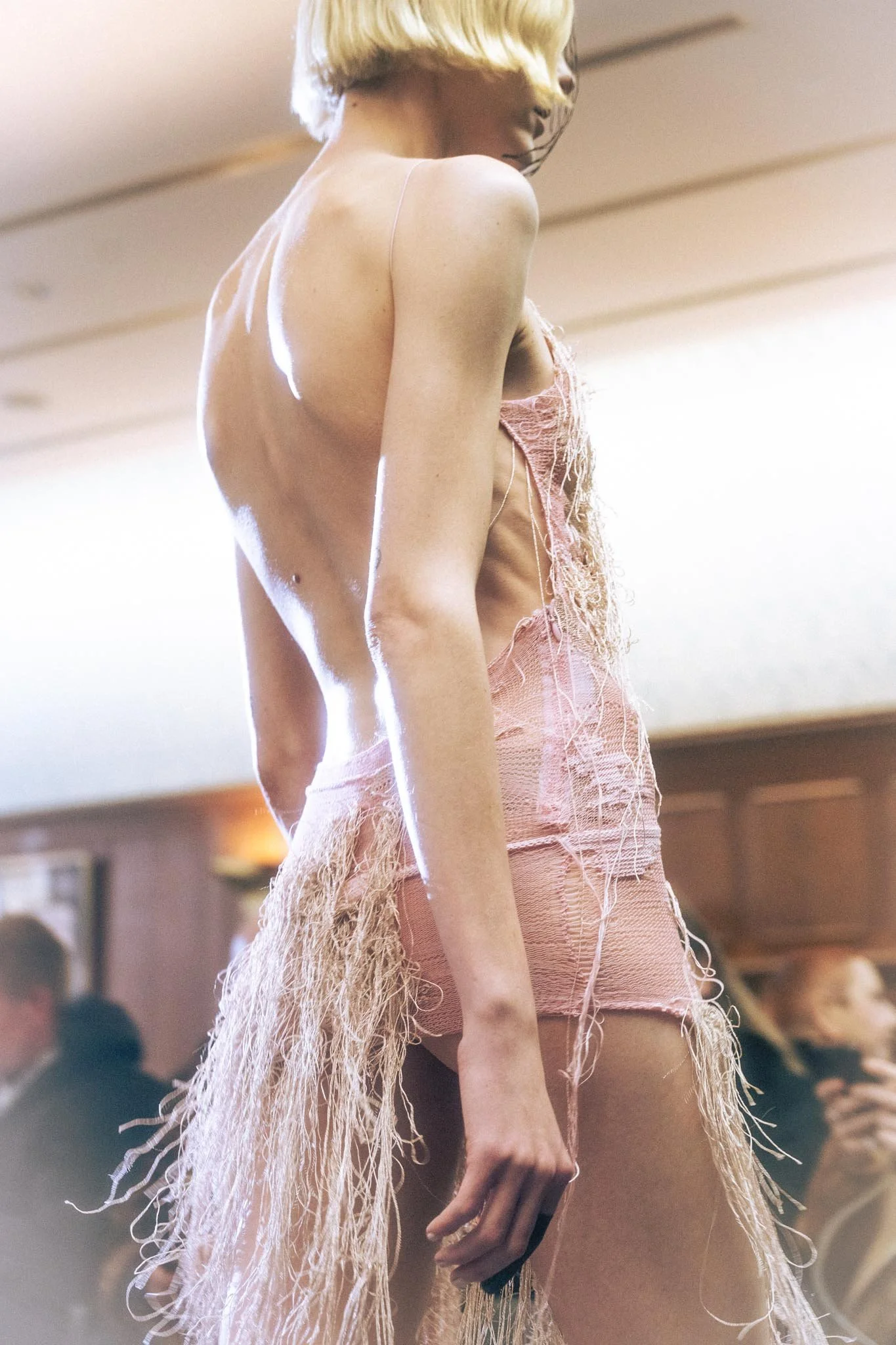
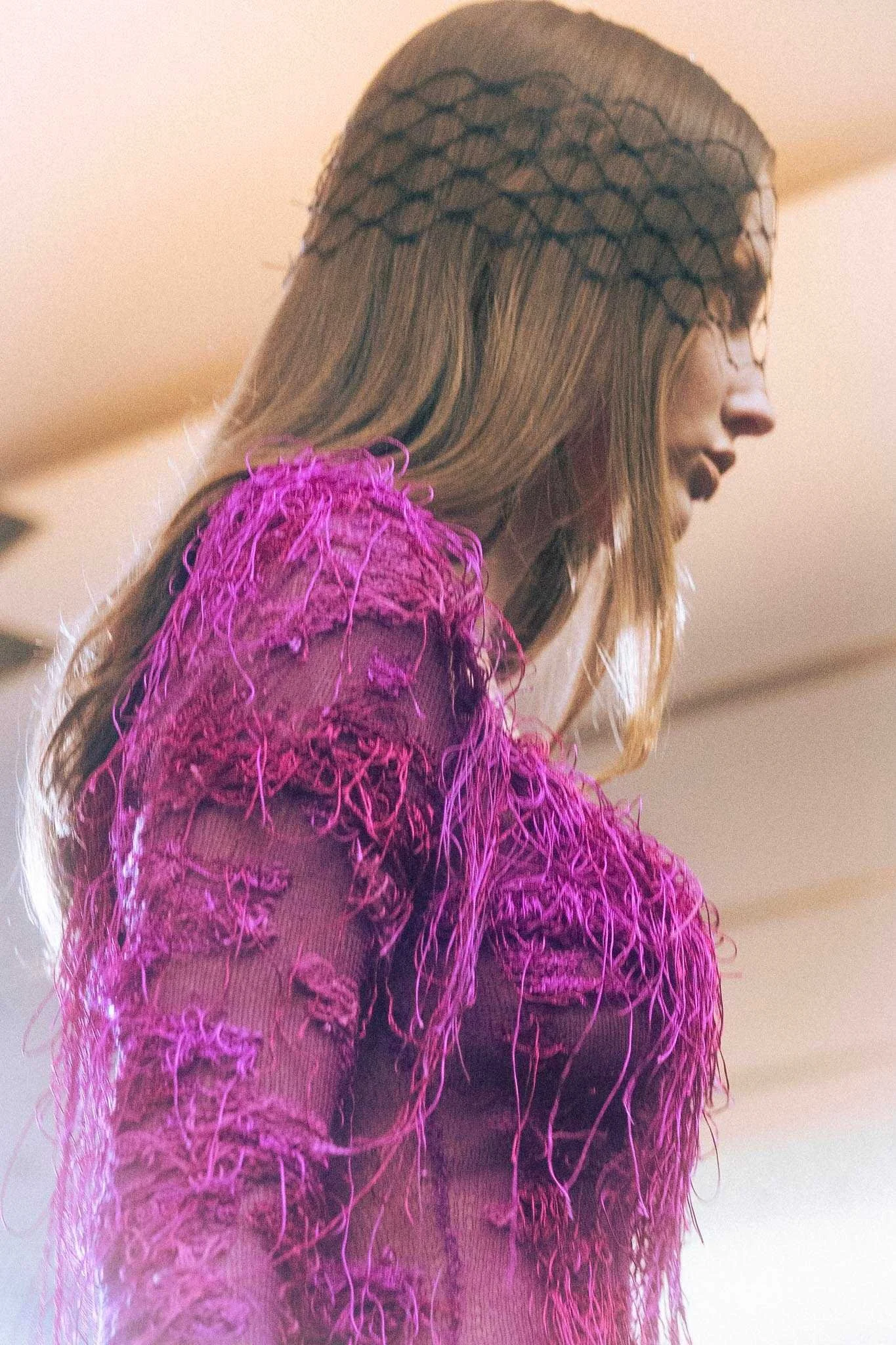
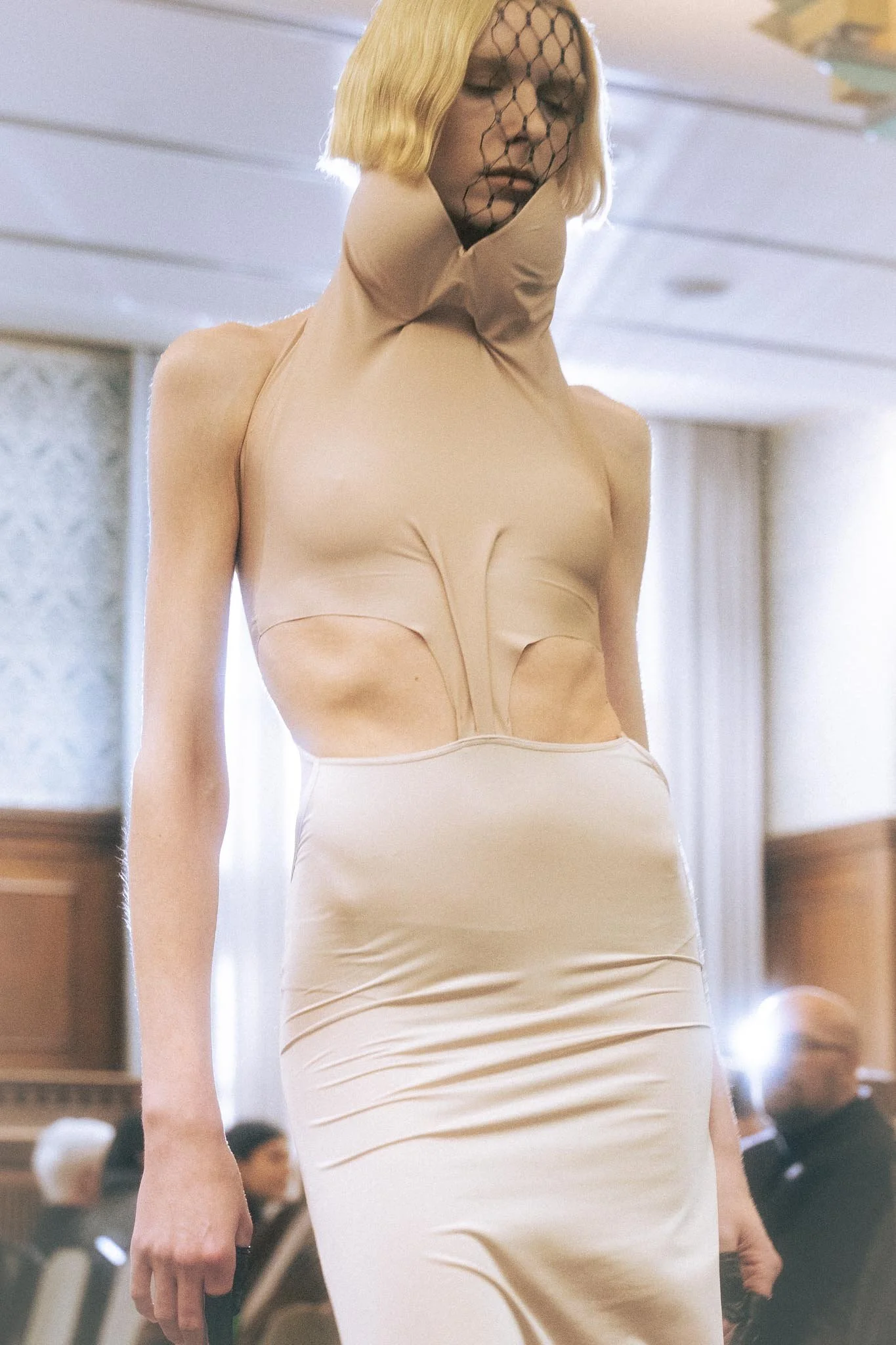
Lou de Bètoly returned to Berlin Fashion Week with her FW26 collection, transforming Rathaus Schöneberg into a showcase for her radical upcycling vision. The French designer continues her fifteen-year commitment to creating only unique pieces, sourcing vintage corsetry, lace, hosiery, and leather from Berlin's flea markets and rebuilding them into contemporary silhouettes that feel both familiar and strange.
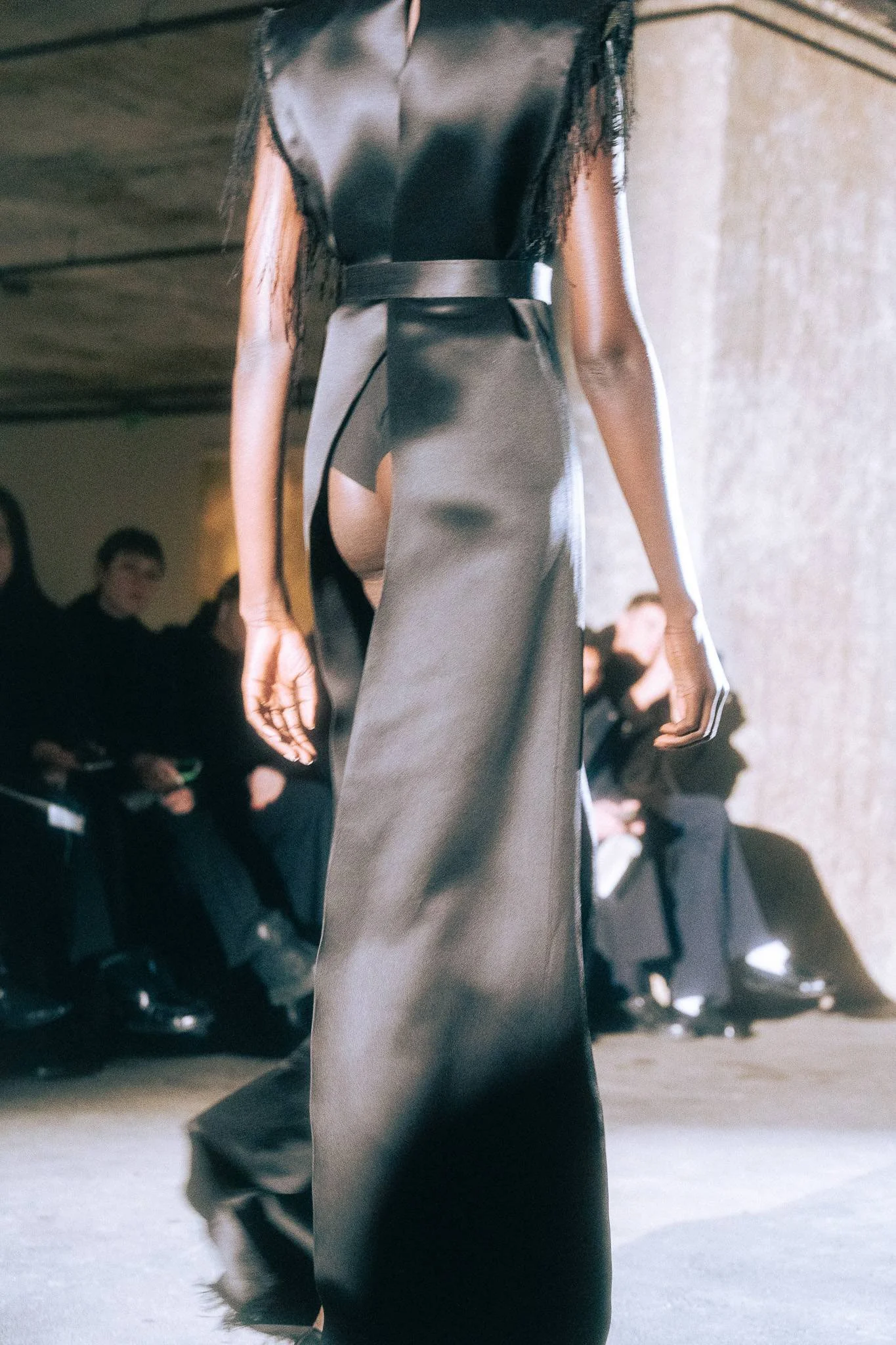
From a distance, the collection reads as restrained: black, rose, and beige in clean lines. Up close, it reveals dense handwork. Crocheted panels intersect with beaded draping, floral structures emerge from forgotten textiles, intricate lacing holds everything together. The standout piece is a dress constructed entirely from gilded jewellery, sourced from Berlin's Hatay Juwelier. It shimmers like a challenge to fast fashion. Vintage pressed purses hang from necks as jewellery-sculpture hybrids. Bra cups migrate onto tailored jackets. Hemlines push boundaries. Her approach remains playful and erotic, refusing commercialism while proving that sustainability can seduce.
RICHERT BEIL


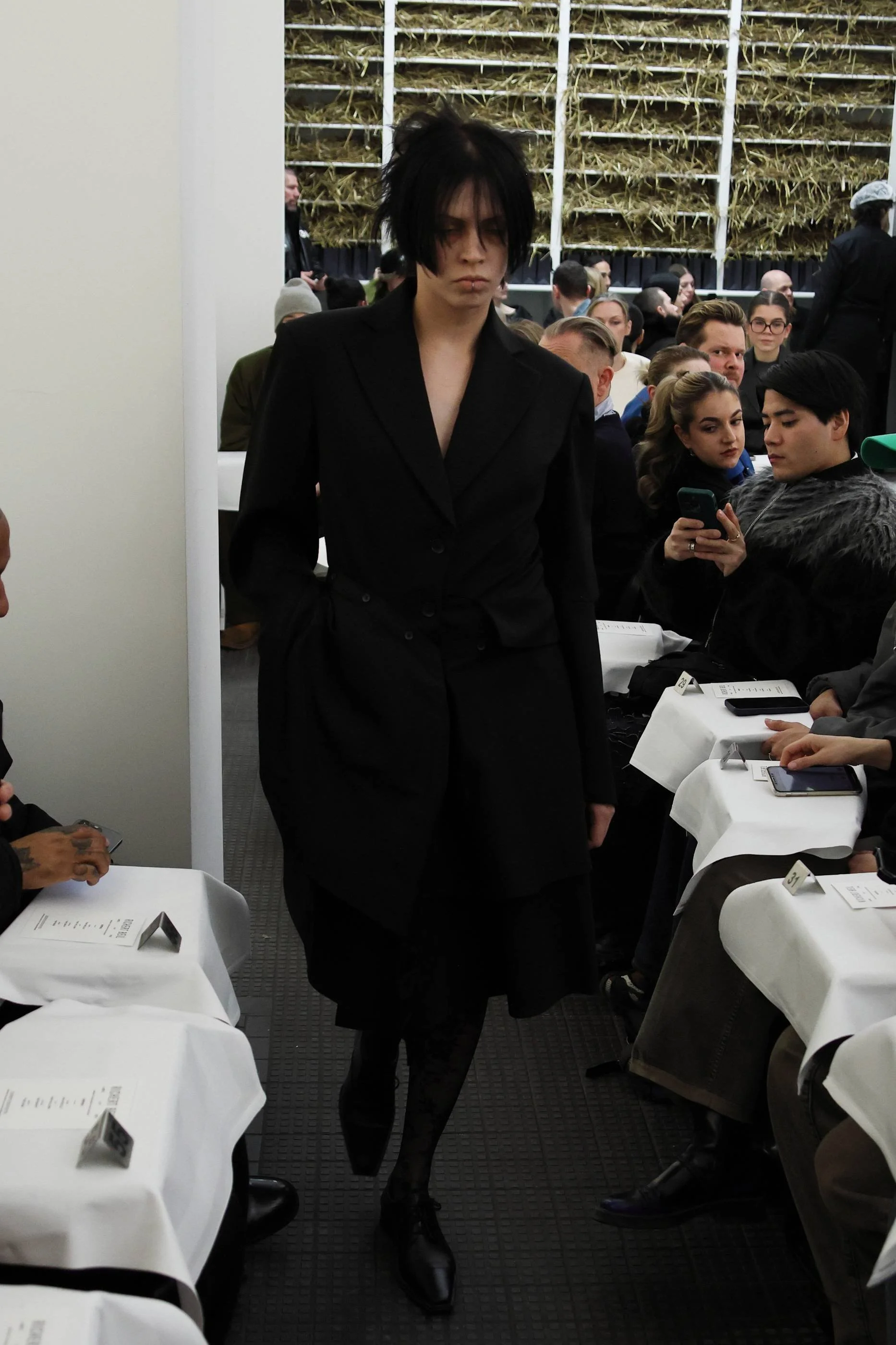


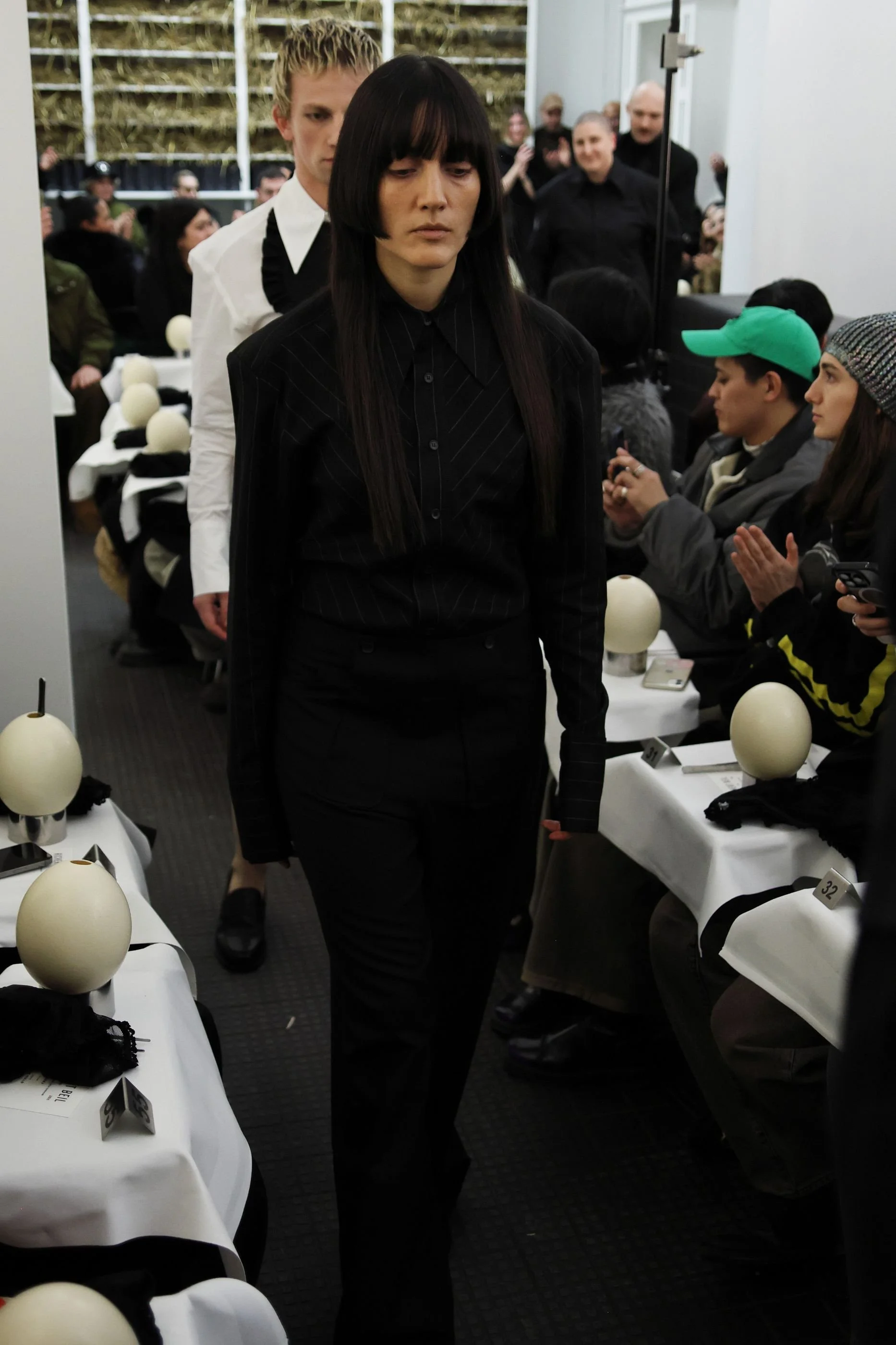
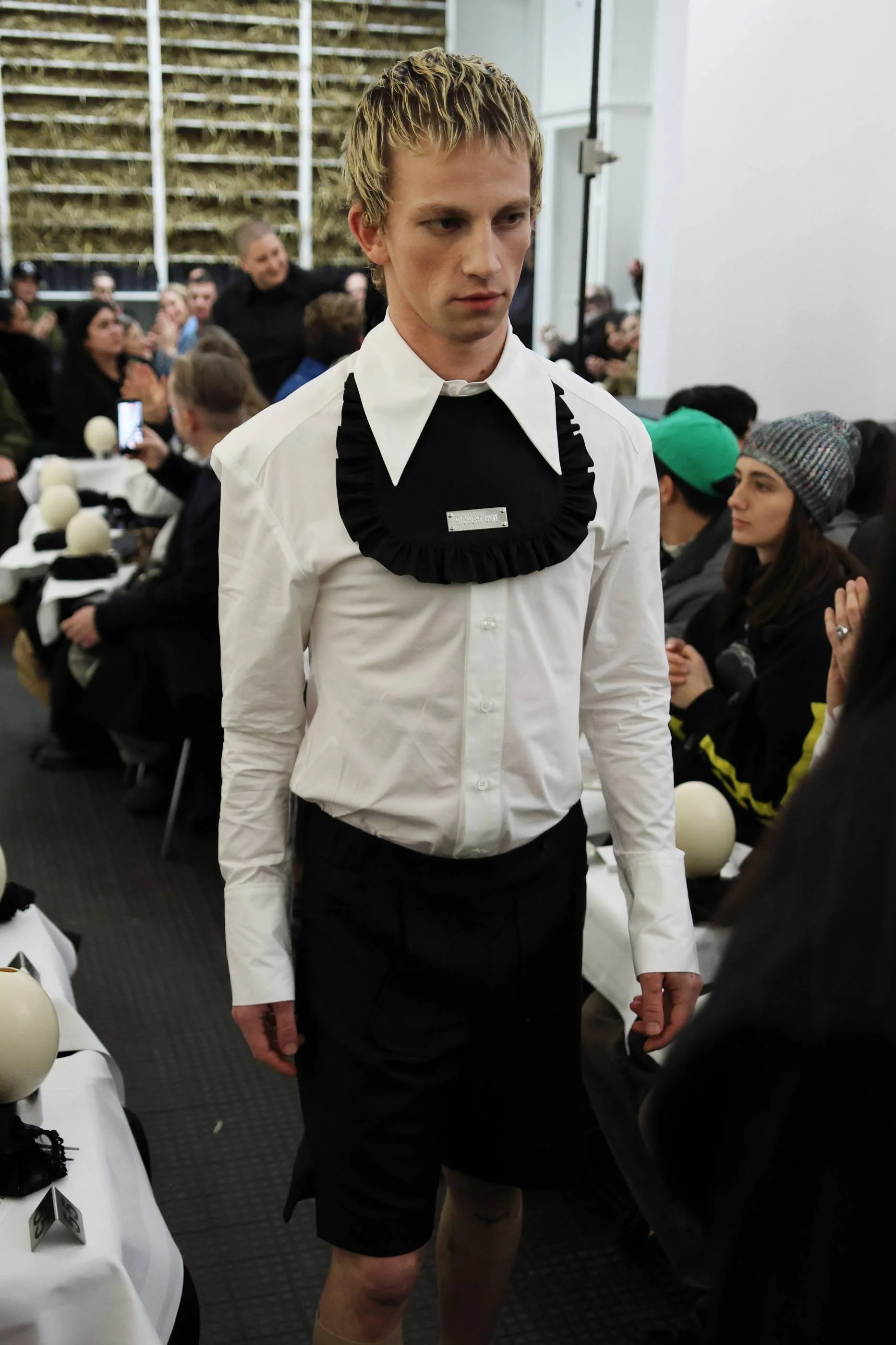
Richert Beil closed Berlin Fashion Week with LANDEI, a dinner performance that functioned as social experiment. Jale Richert and Michele Beil seated guests individually for four courses: seaweed roll with beetroot, pastry pillow, mushroom potion, ostrich egg cracked to reveal black lace underwear. Models in uniforms threaded between tables, pausing to hold our gaze. The experience generated discomfort, yet this discomfort proved valuable. Isolated at separate tables, forced into proximity with strangers while models scrutinized us, we confronted the social circumstances we typically ignore: the performance of exclusivity, the hierarchies embedded in shared meals, the power dynamics between observer and observed. The collection itself, exacting tailoring in latex and grand proportions, mattered less than the ritual. LANDEI valued reflection over replication, accountability over spectacle.
BUZIGAHILL
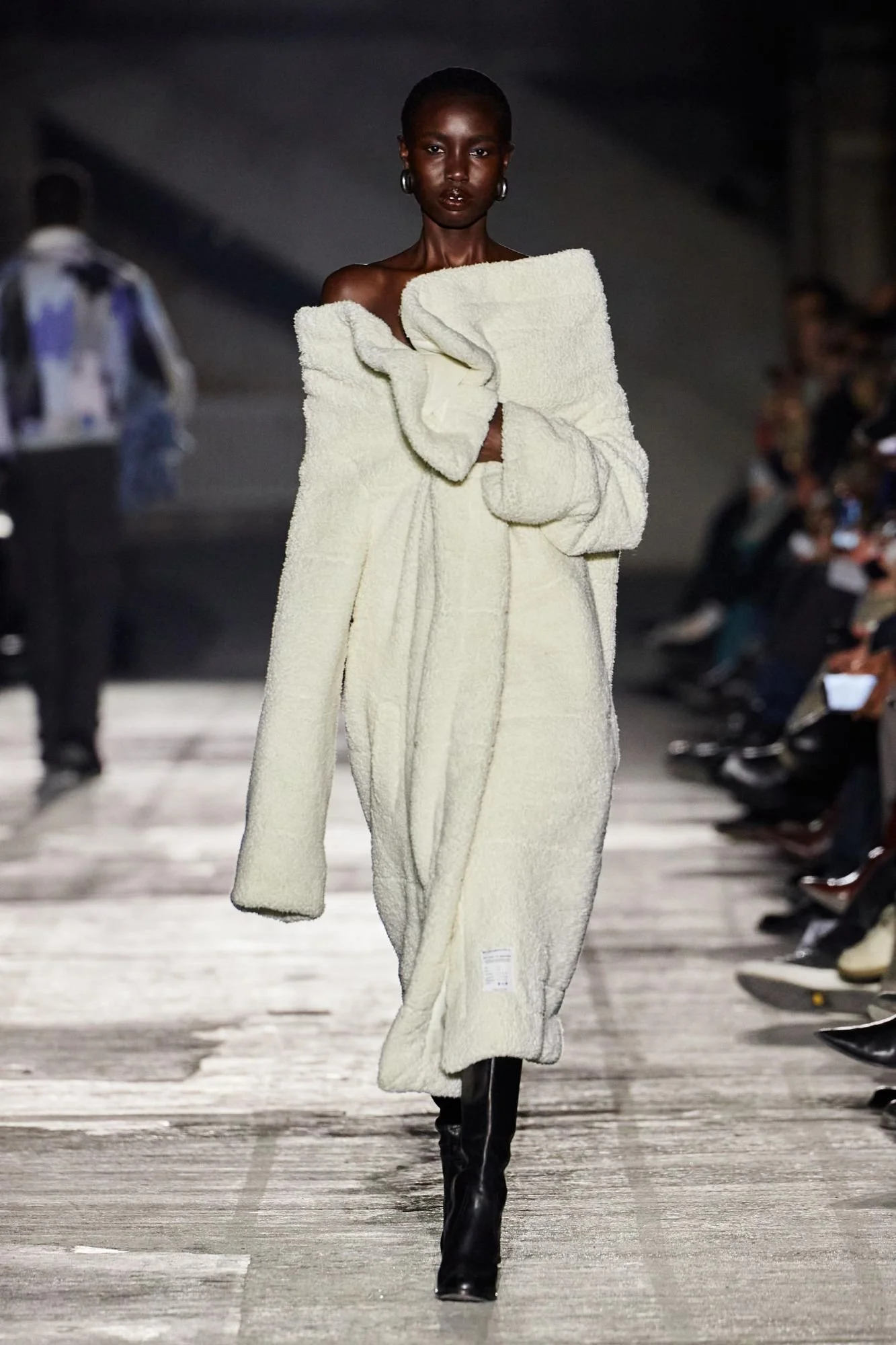
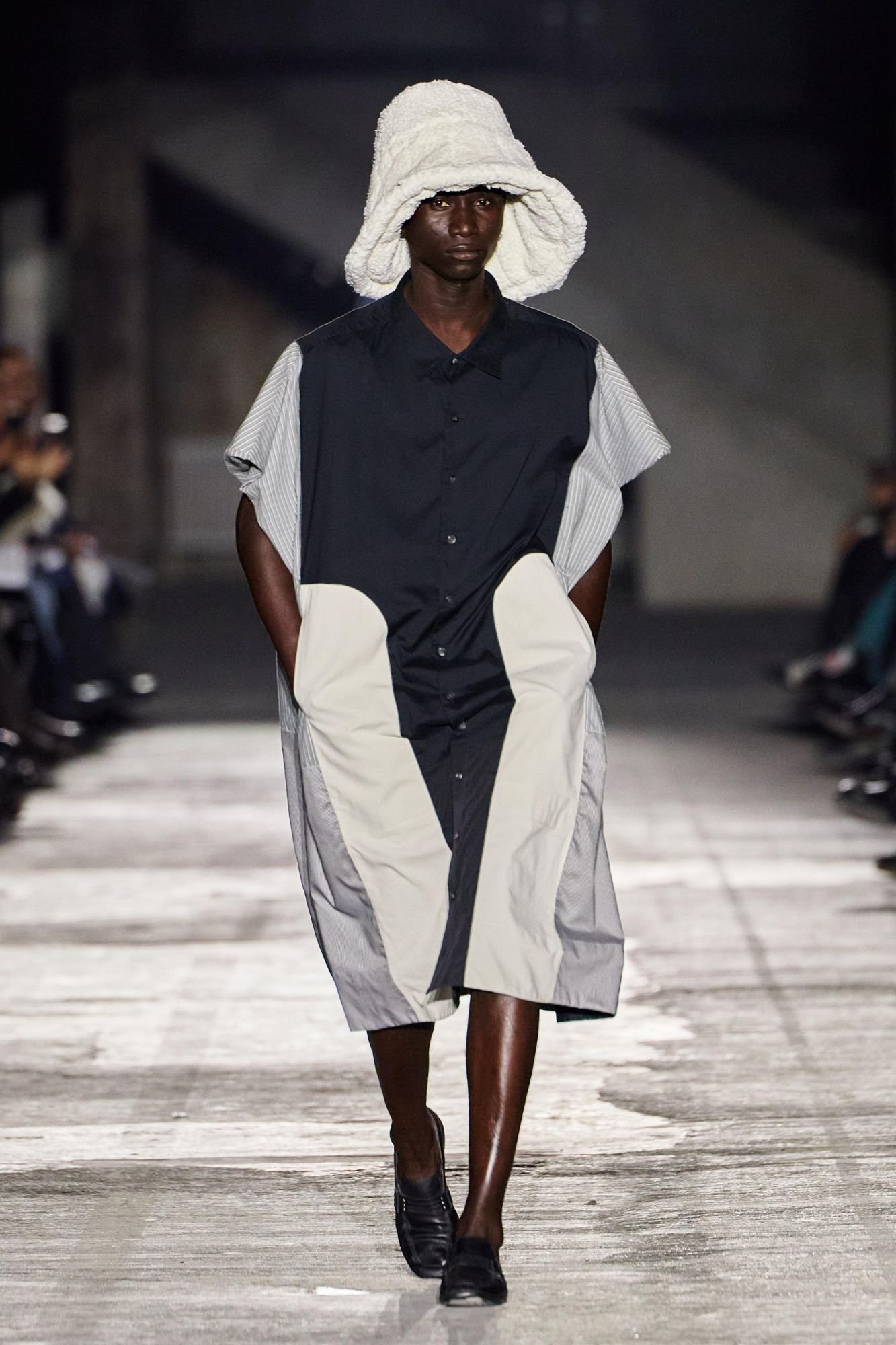
“Buzigahill channels post-independence hope through contemporary forms, translating freedom into fashion vocabulary.”
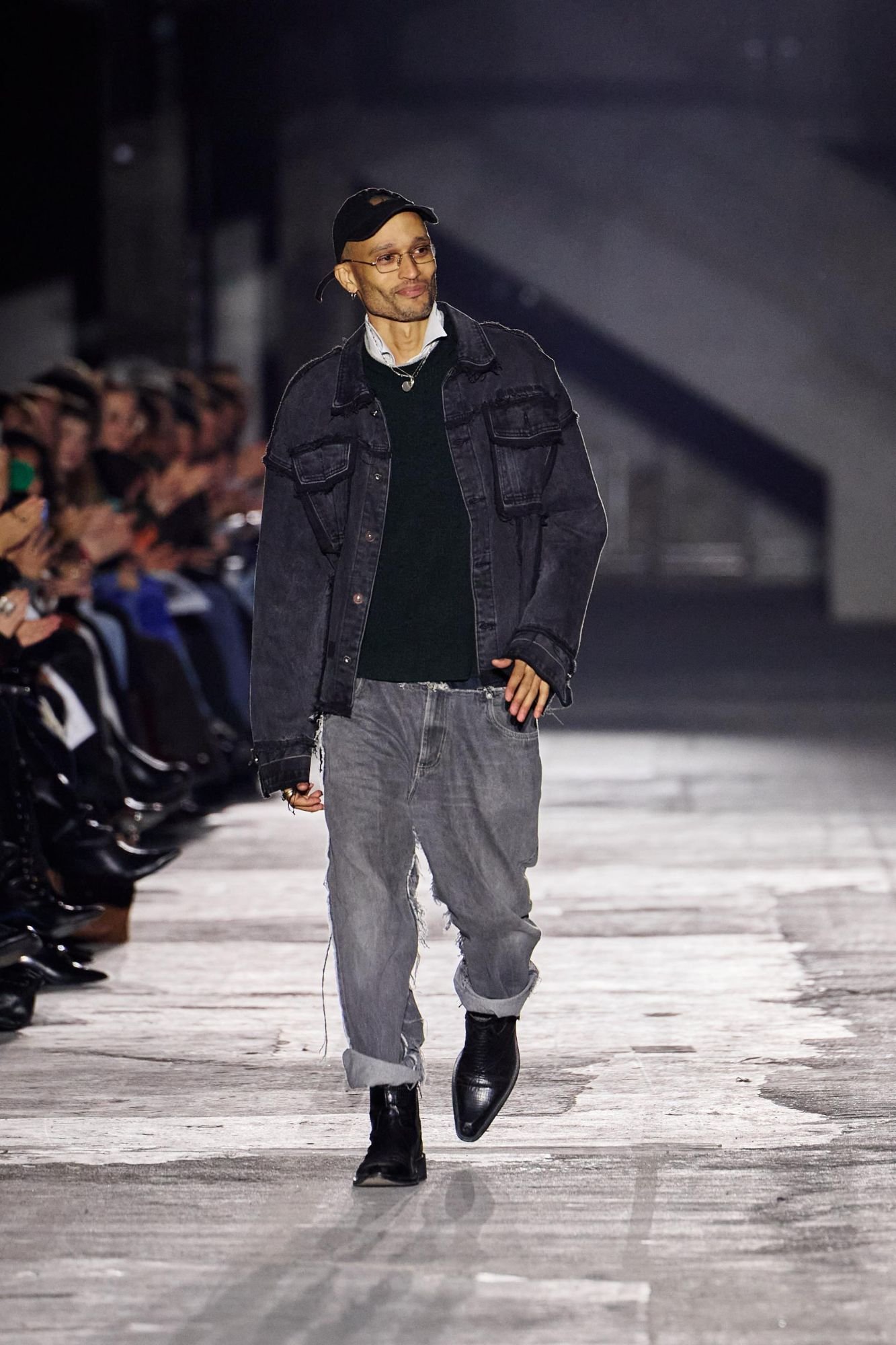
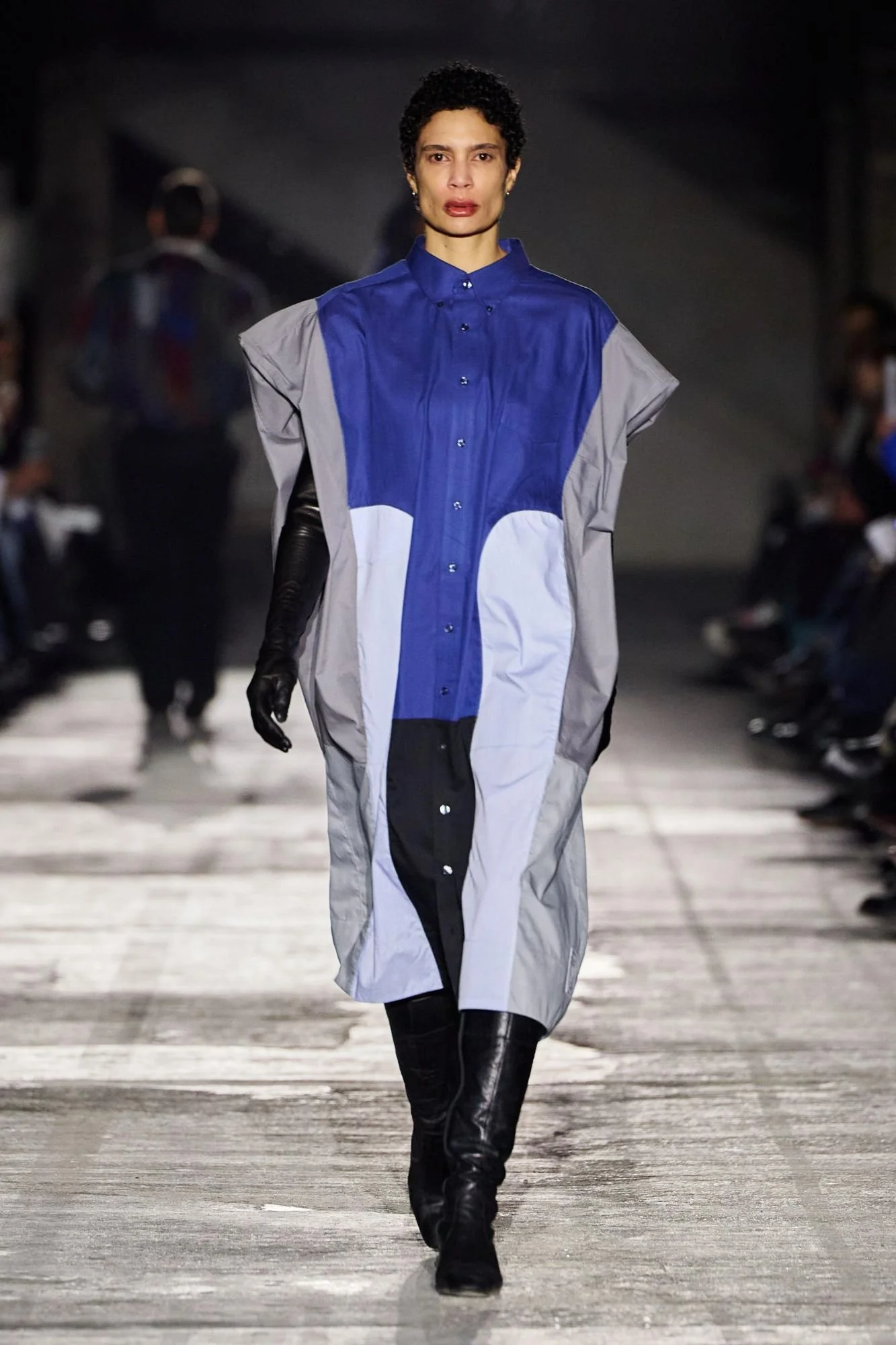
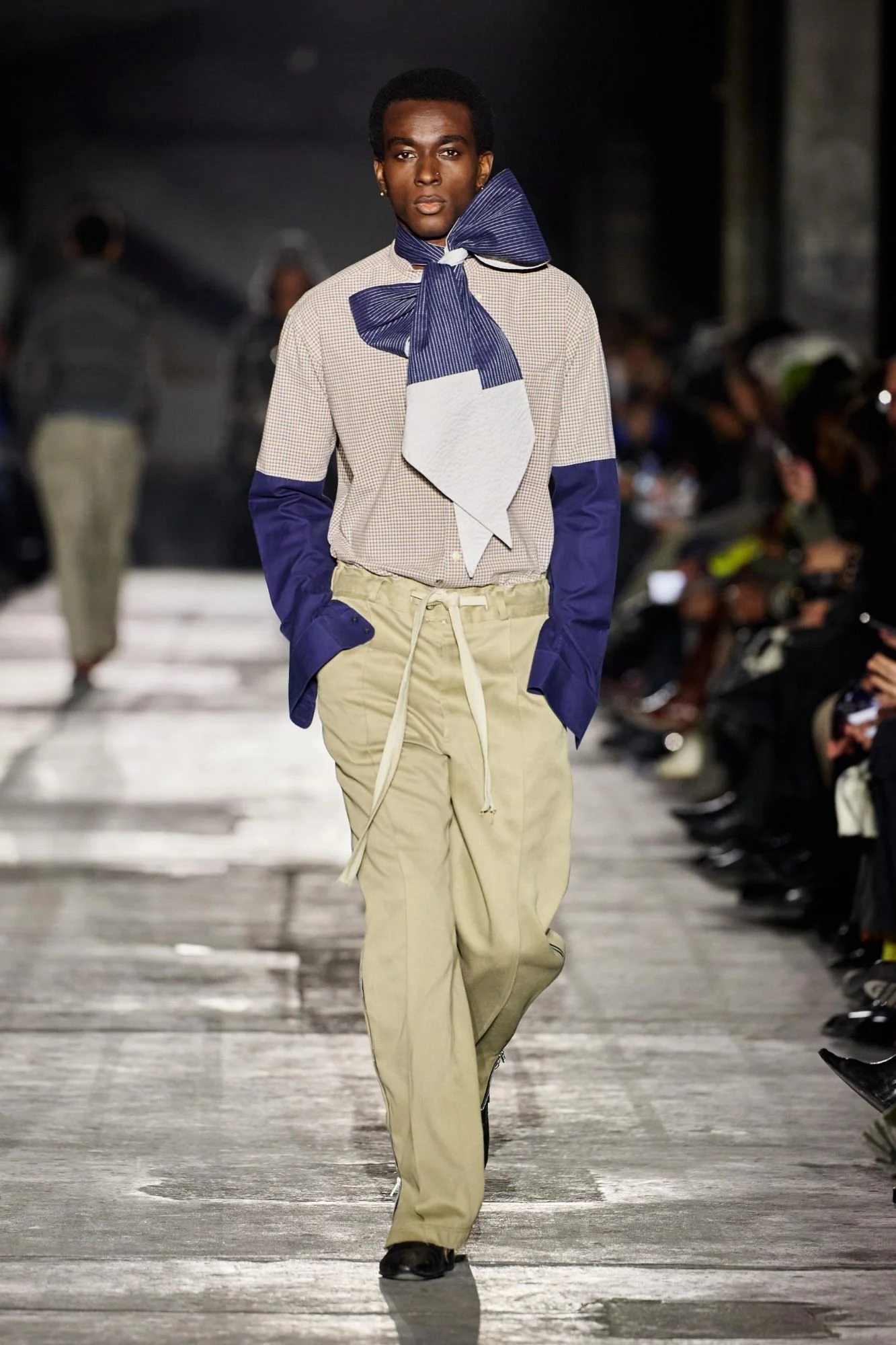
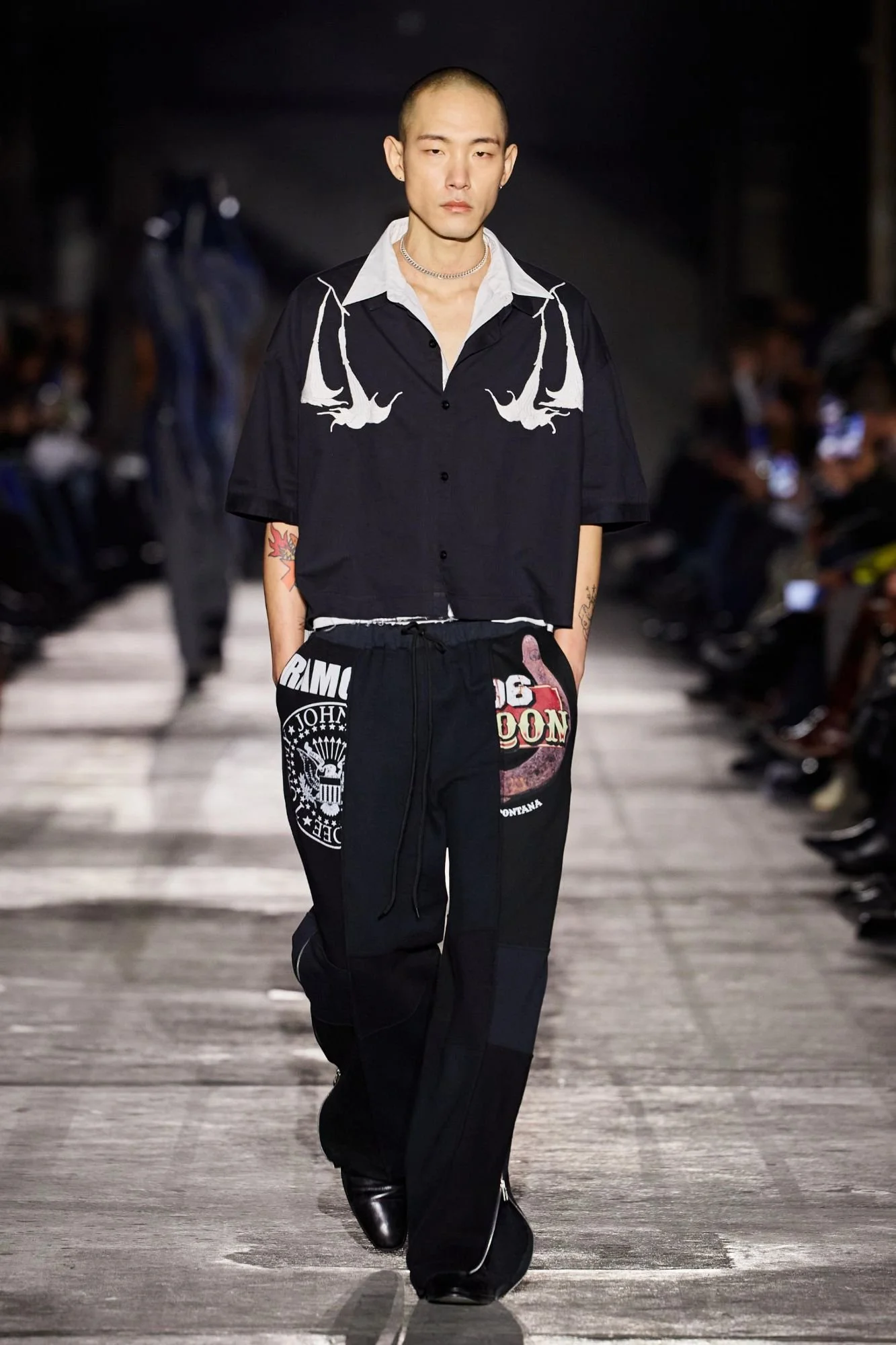
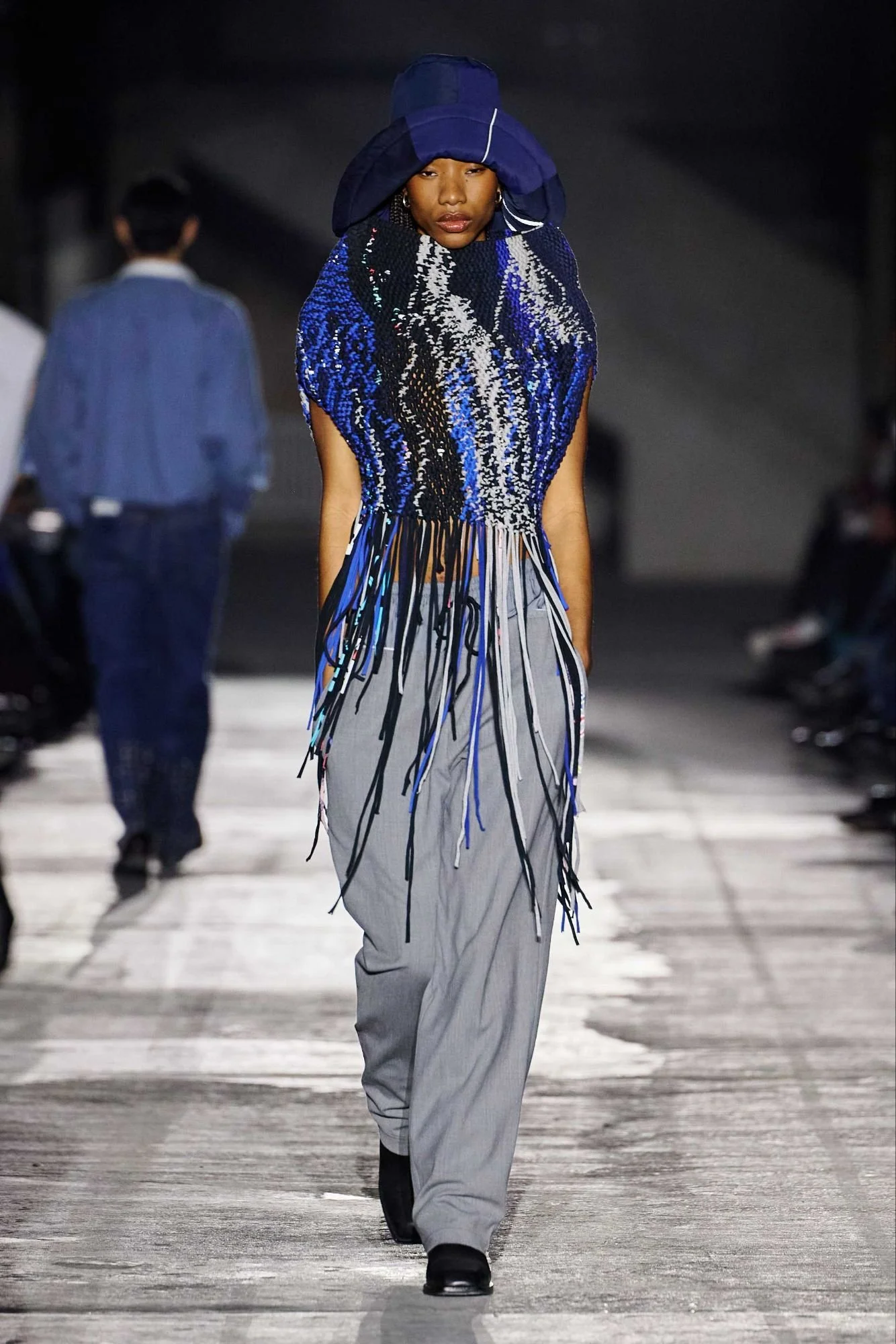
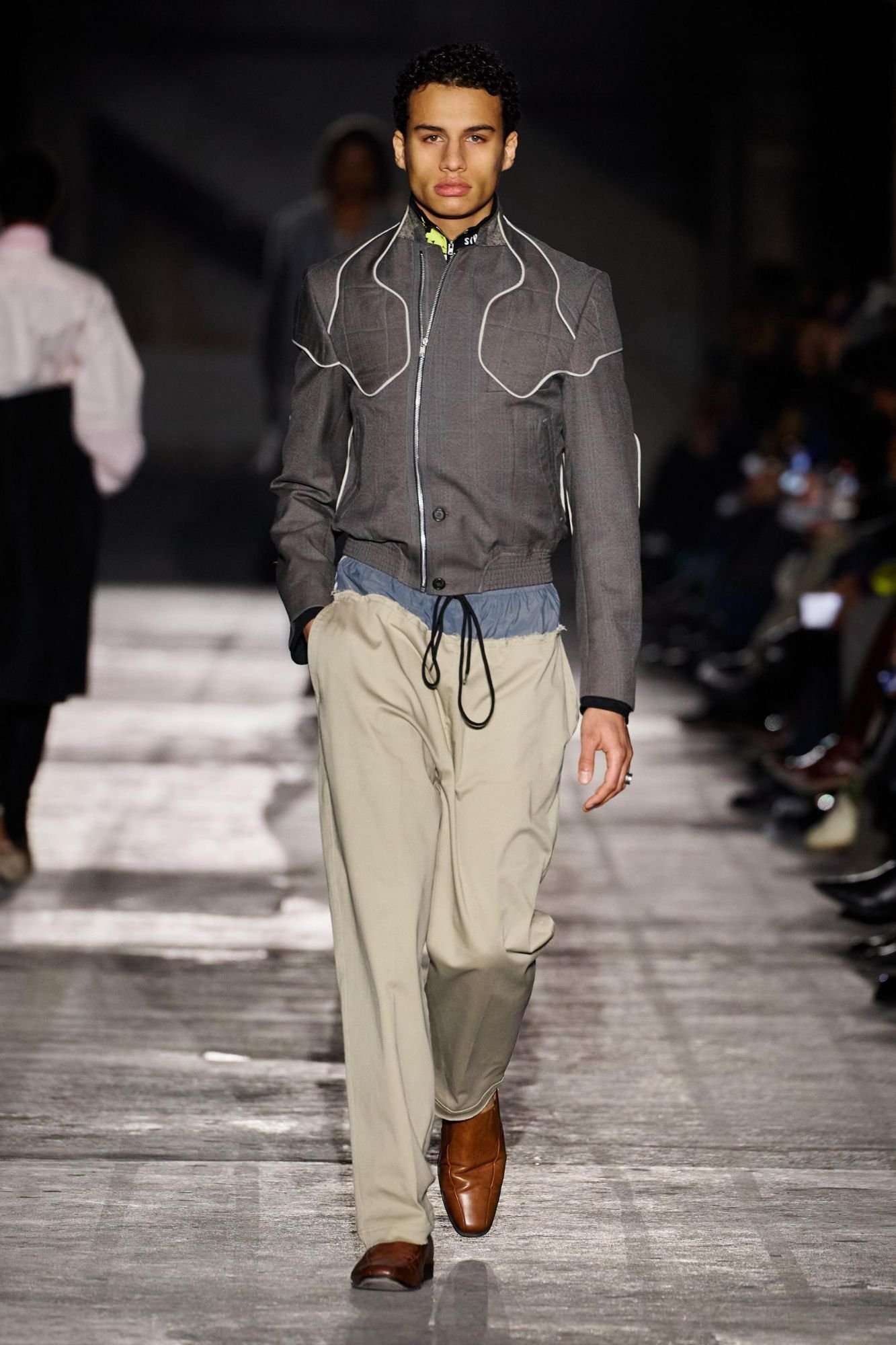
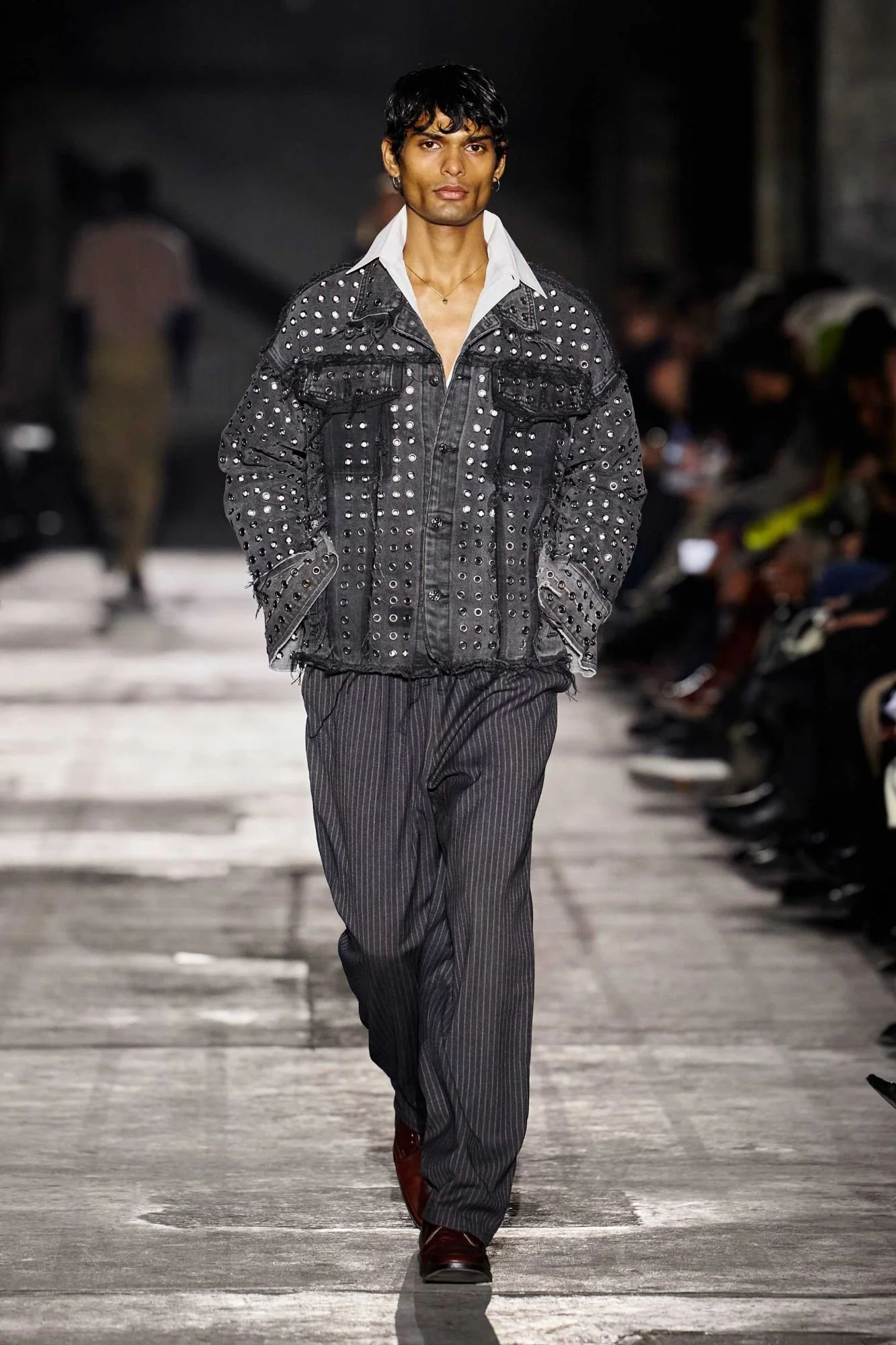
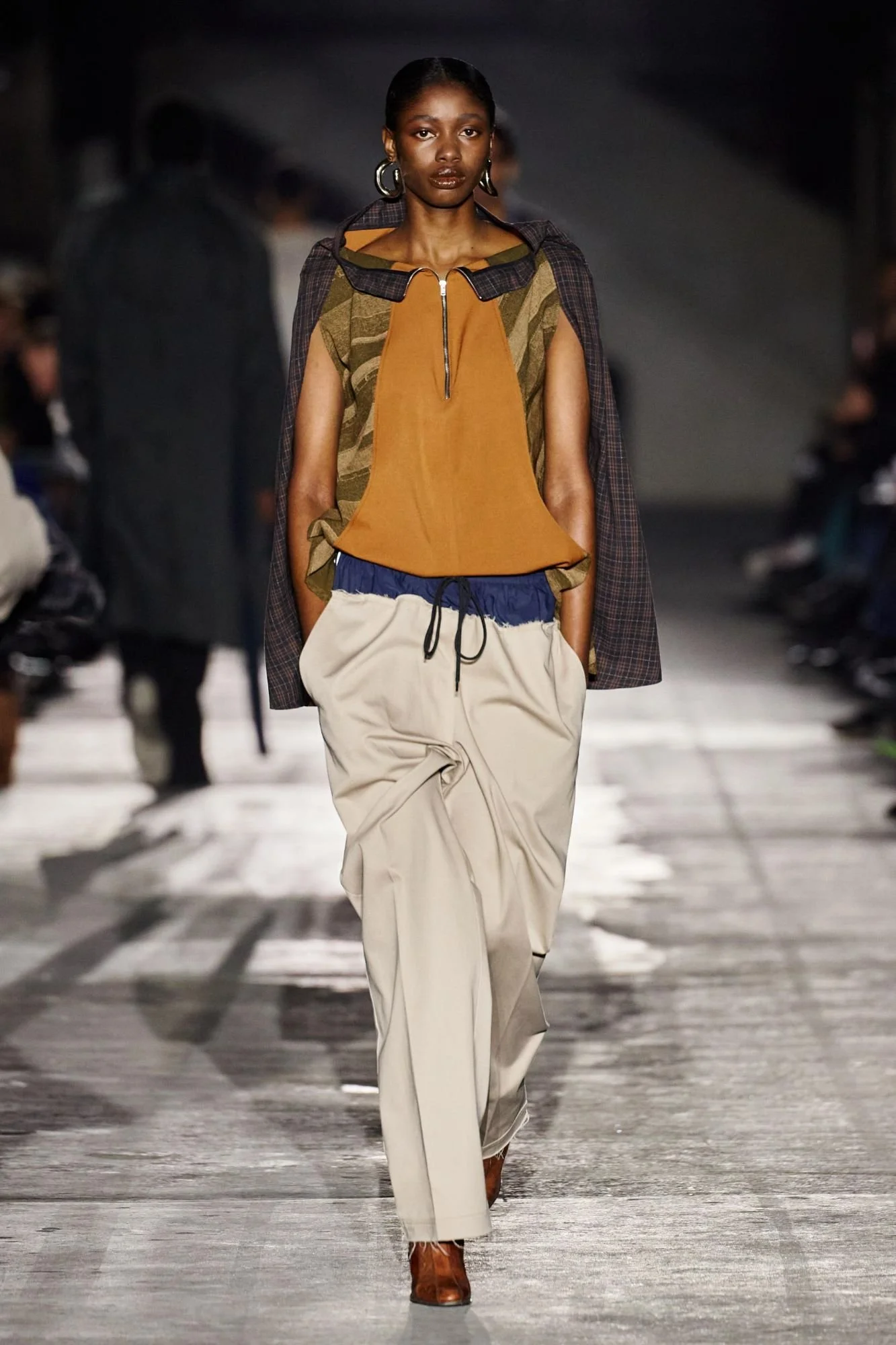
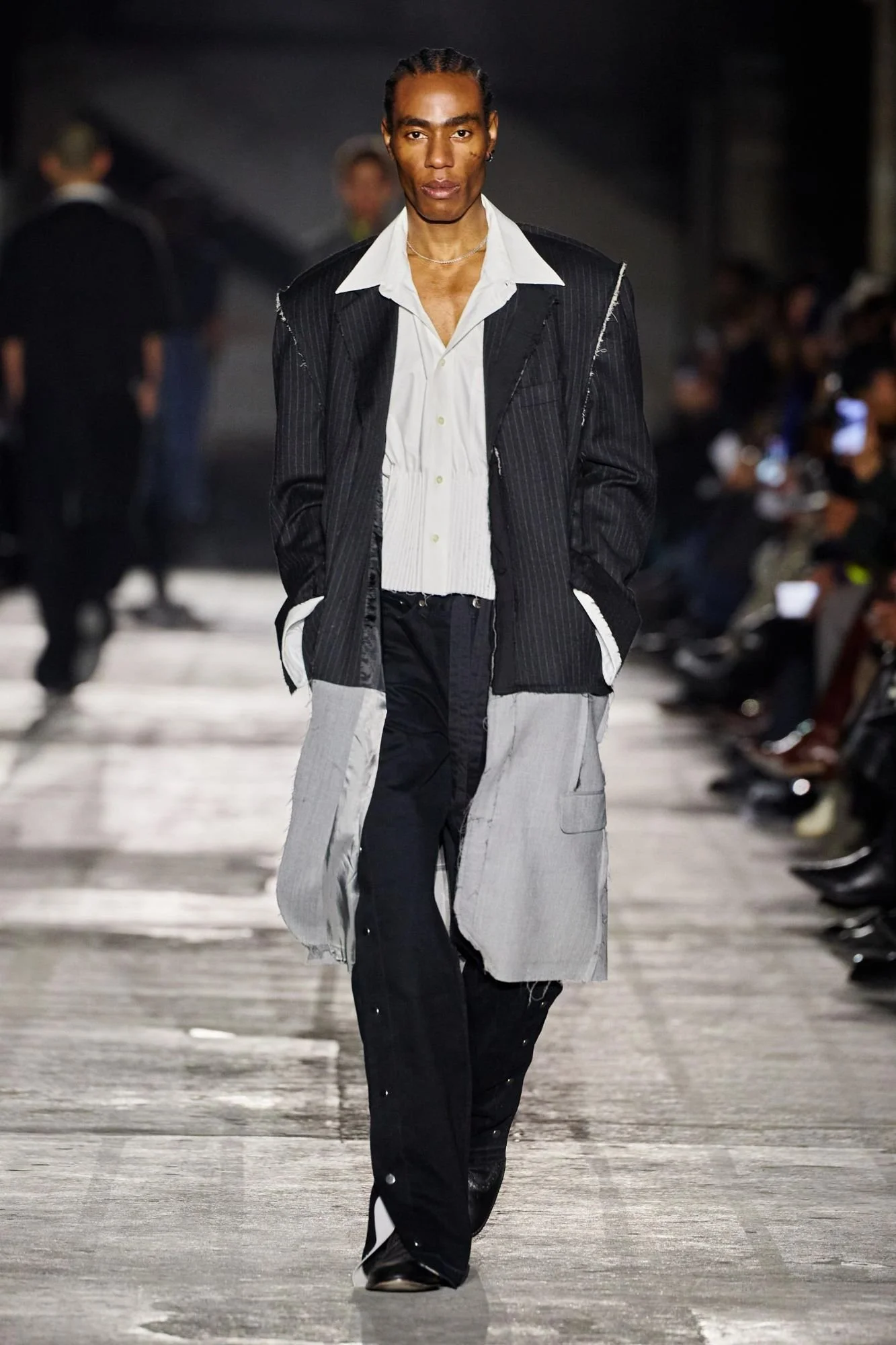
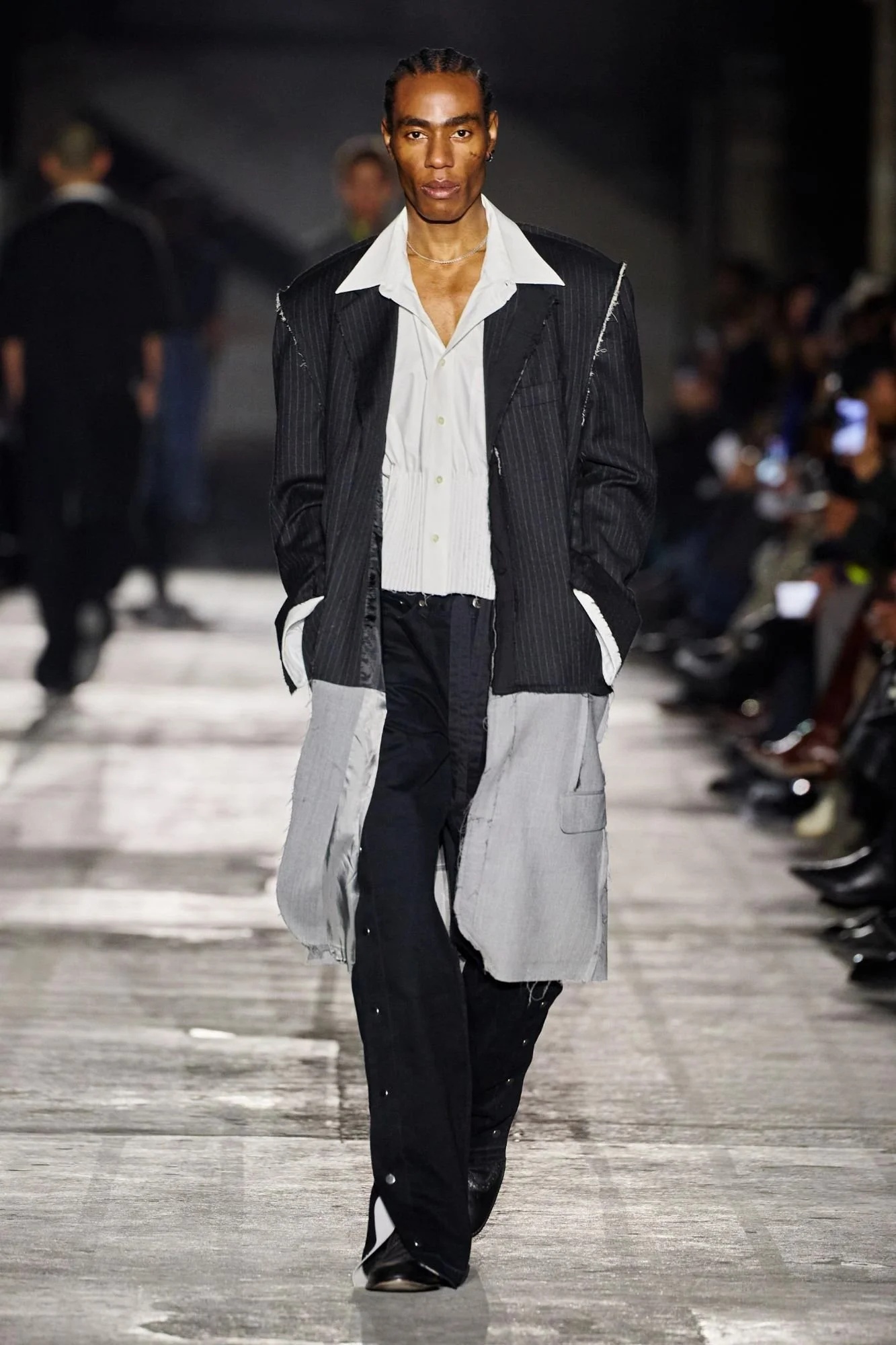
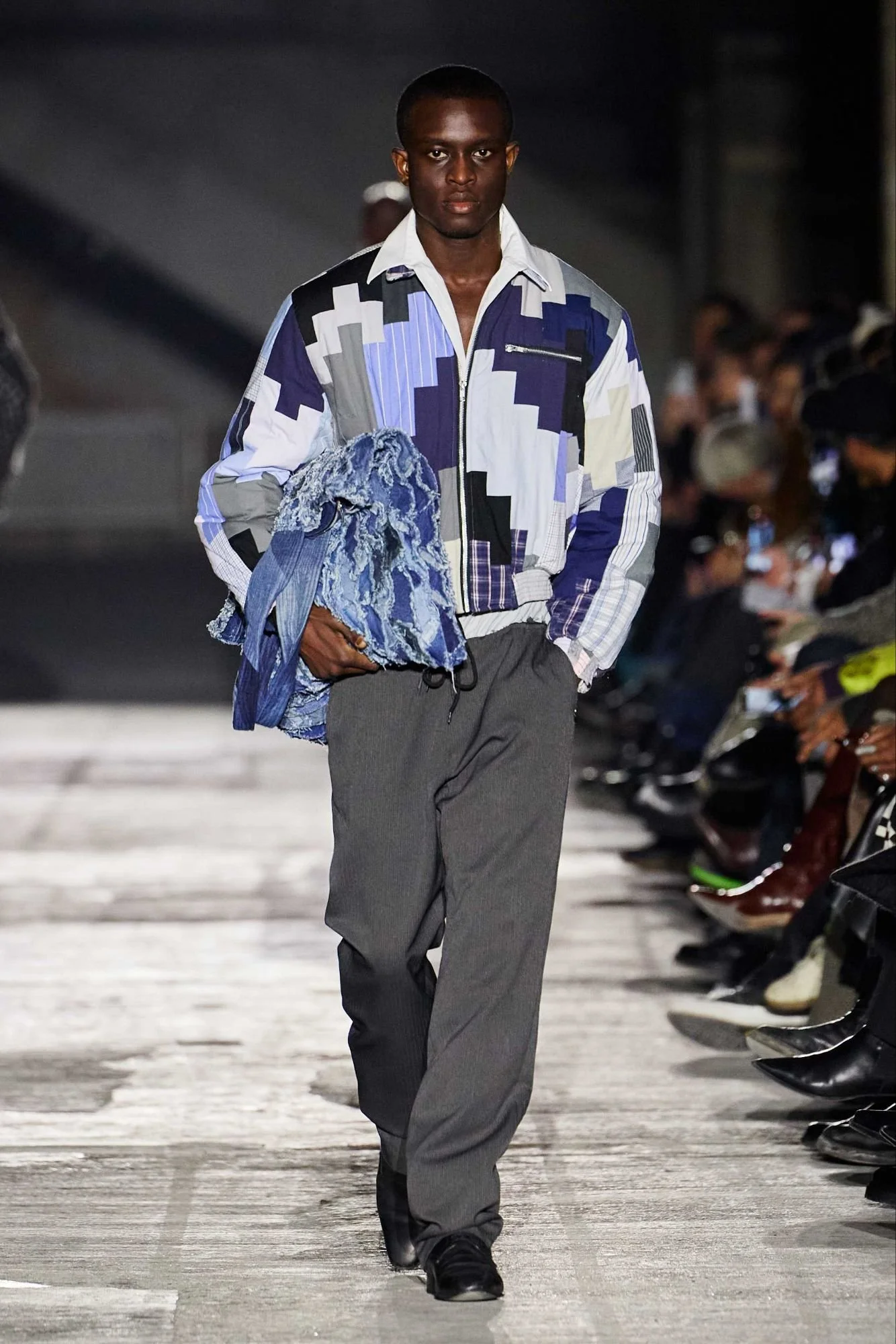
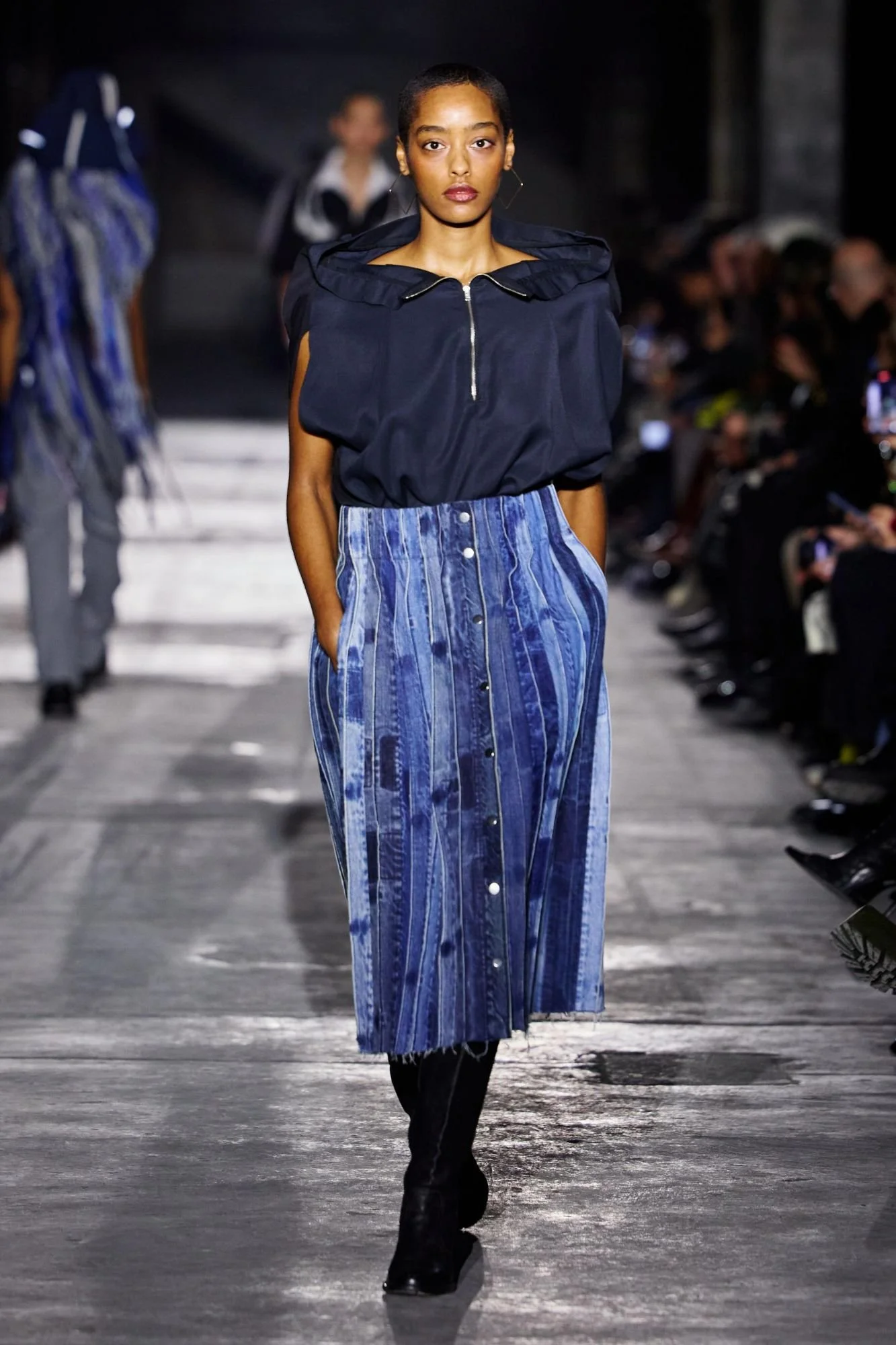
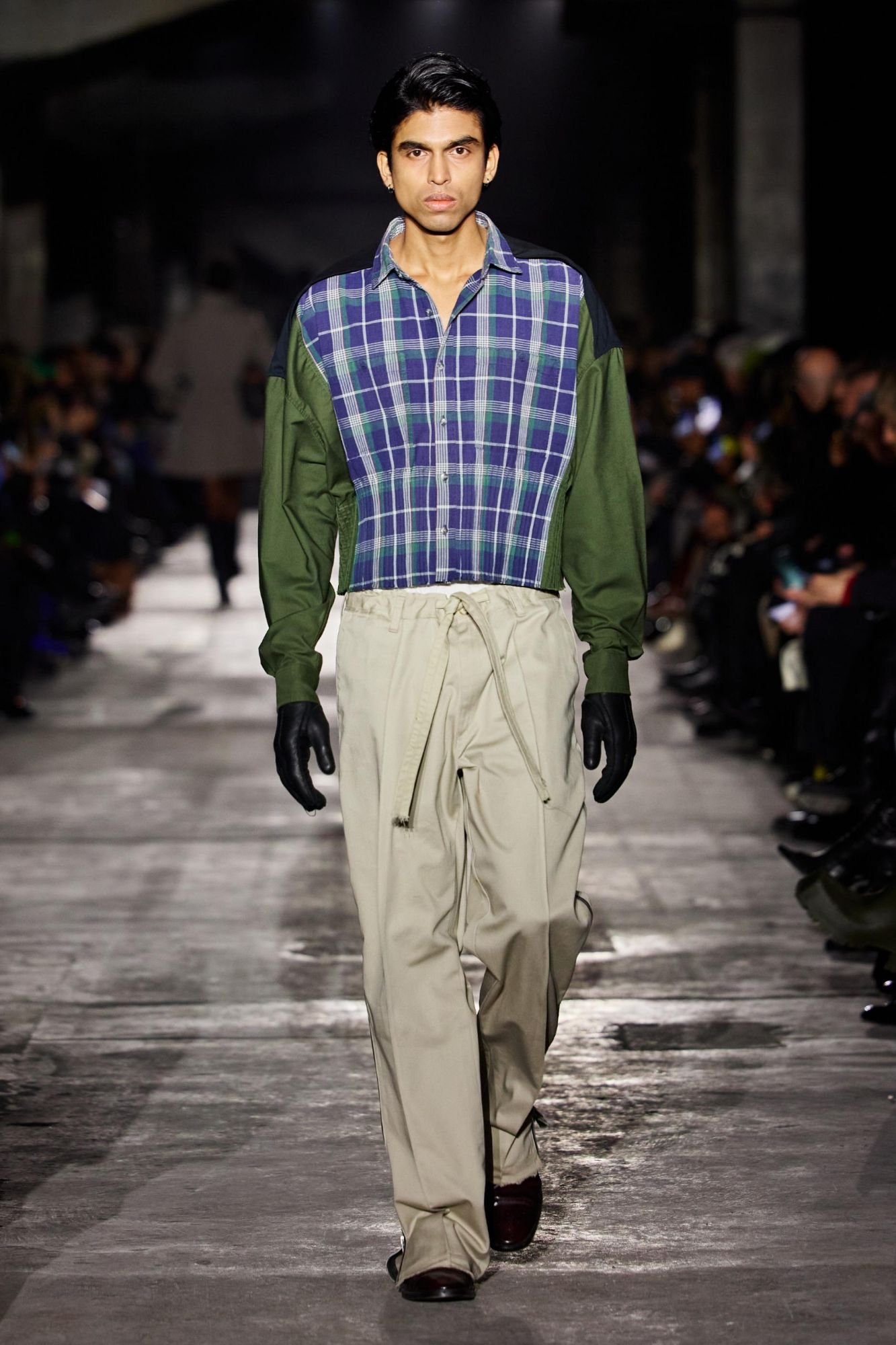
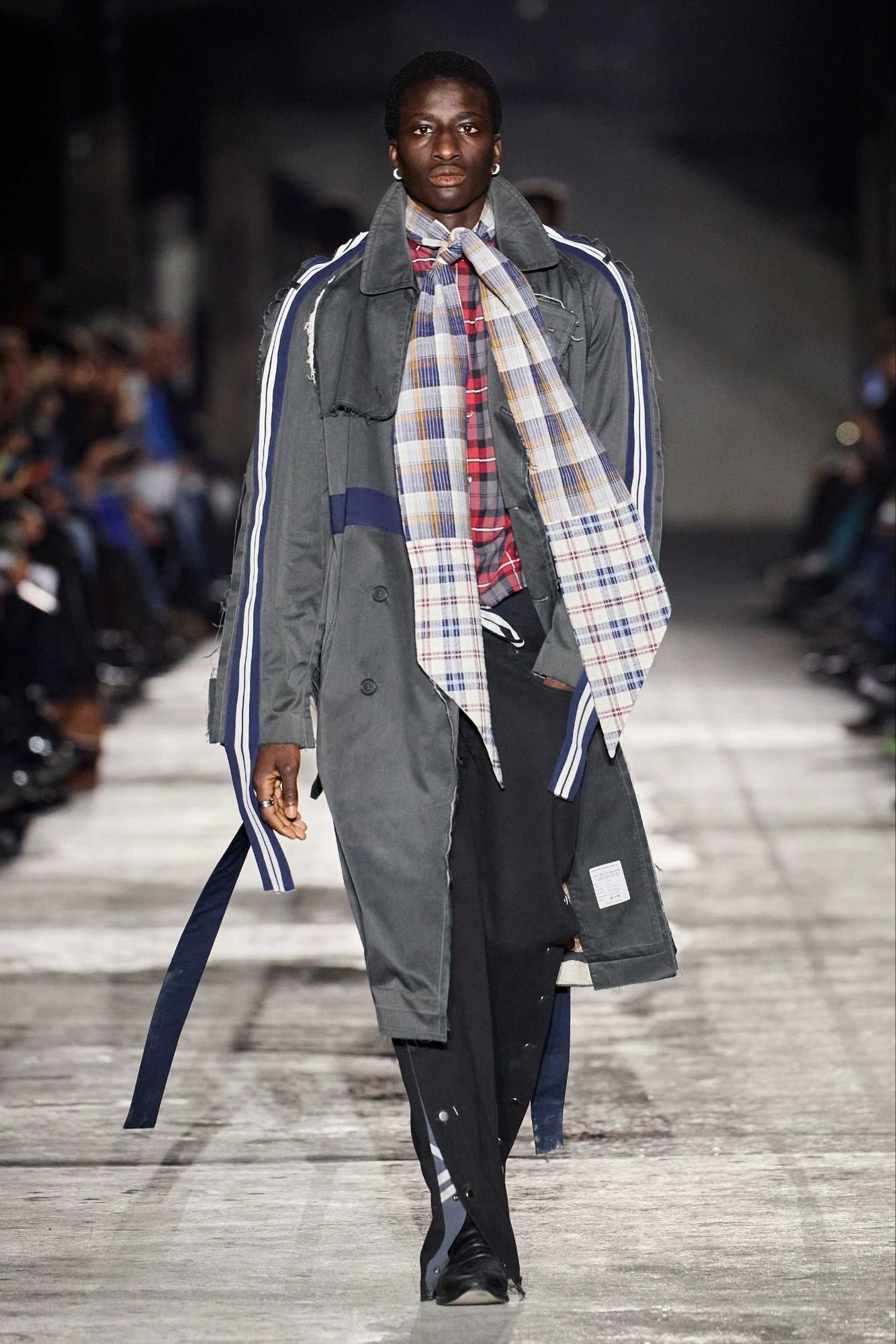
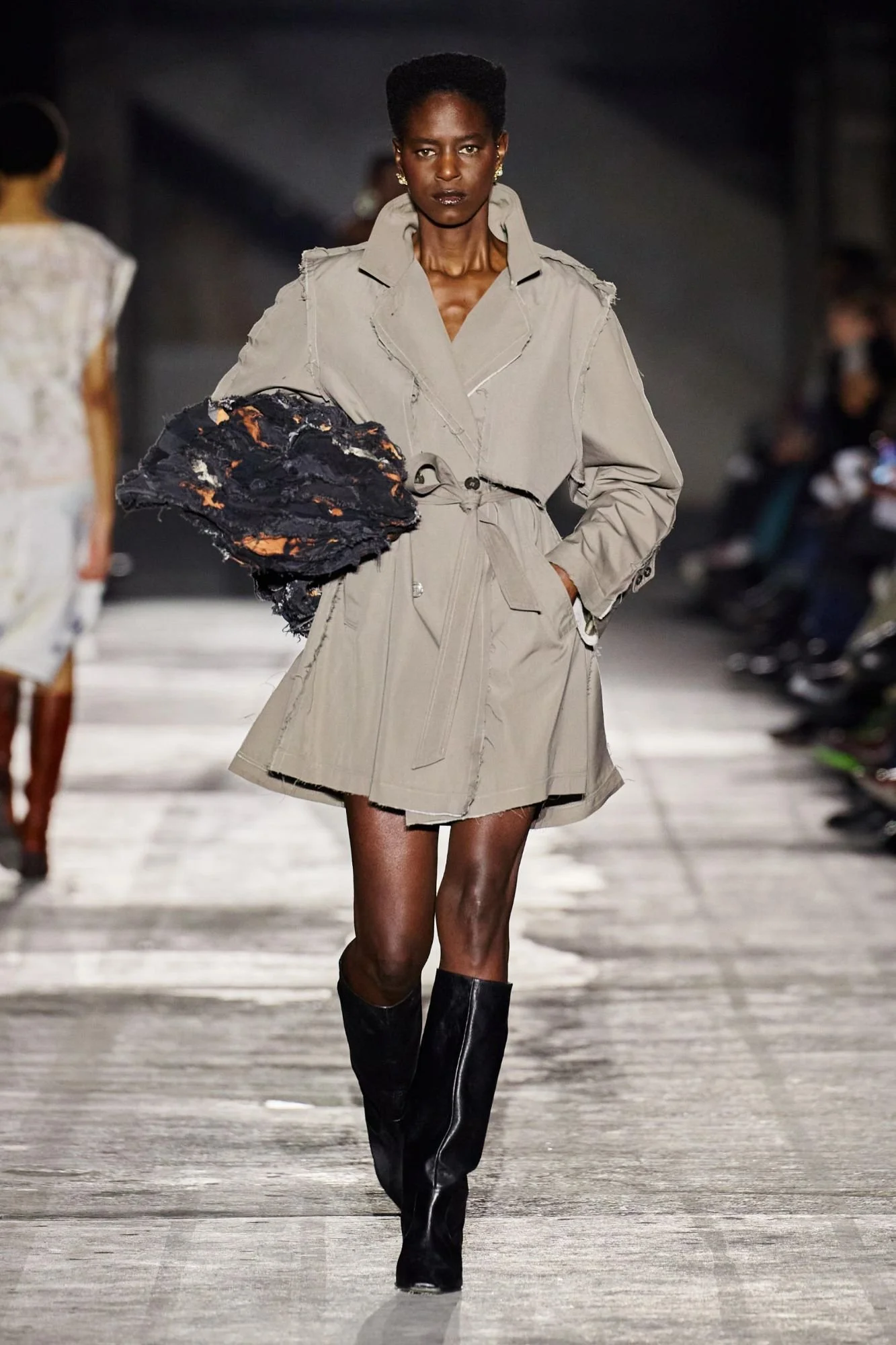
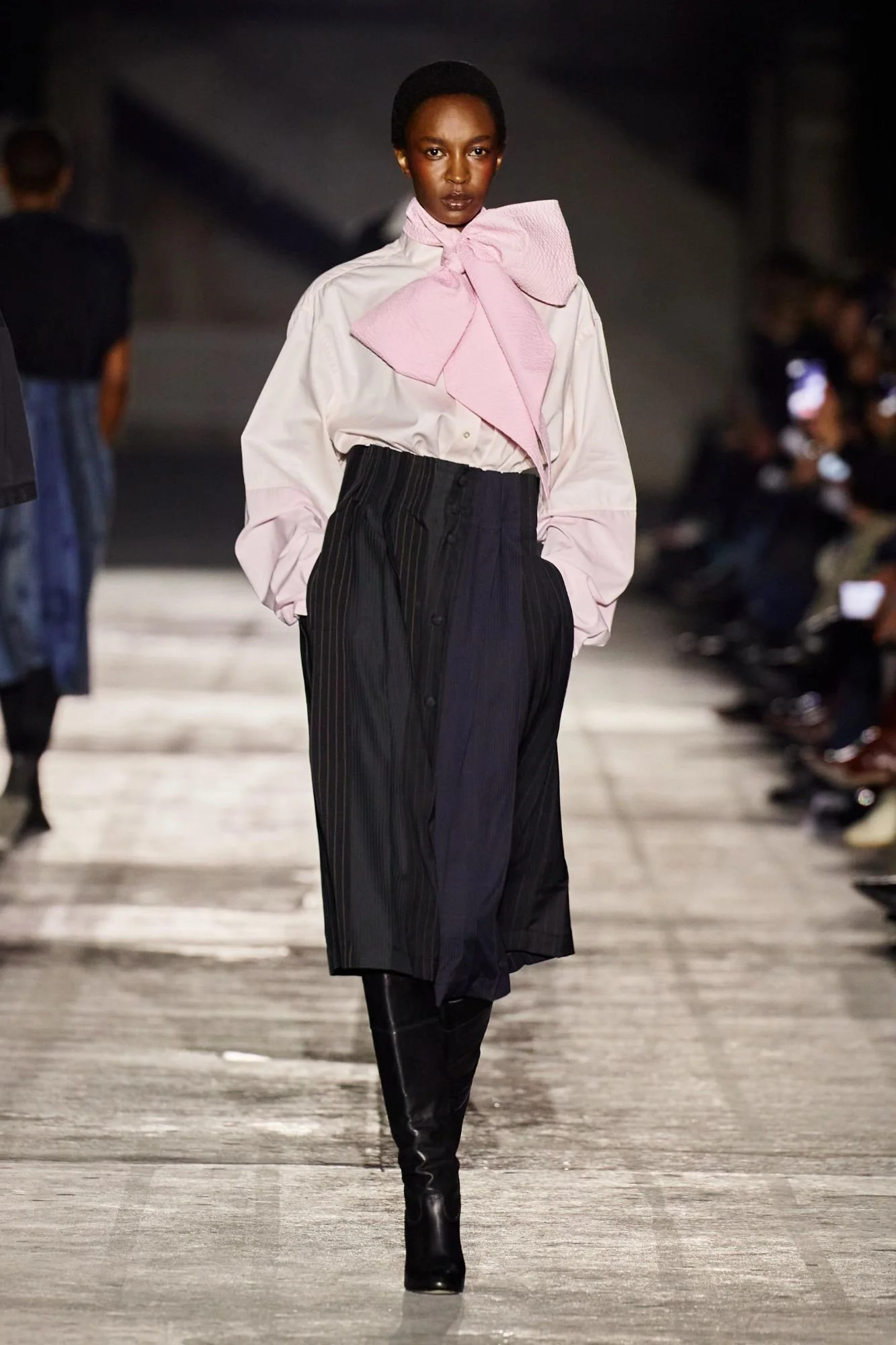
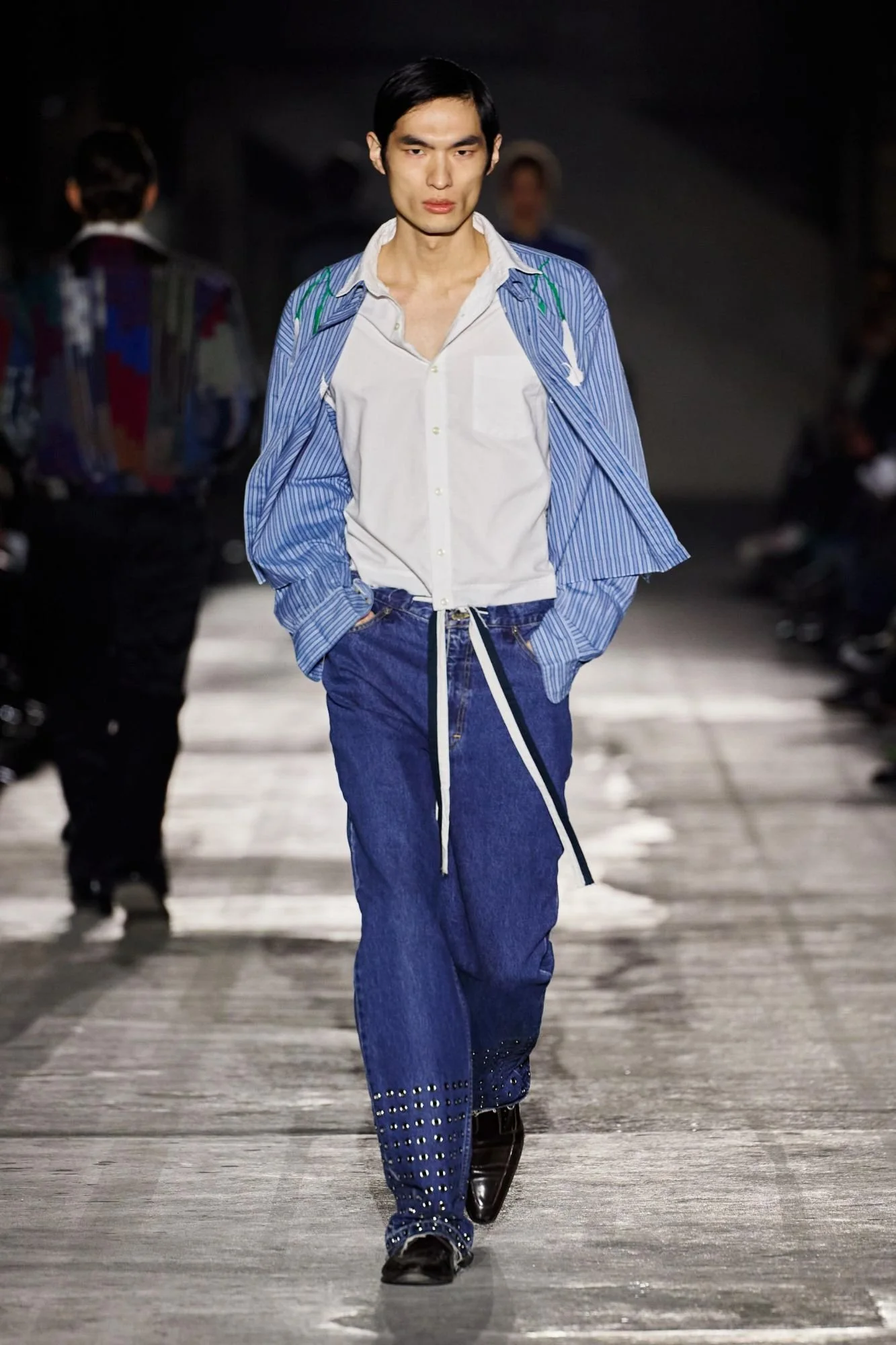
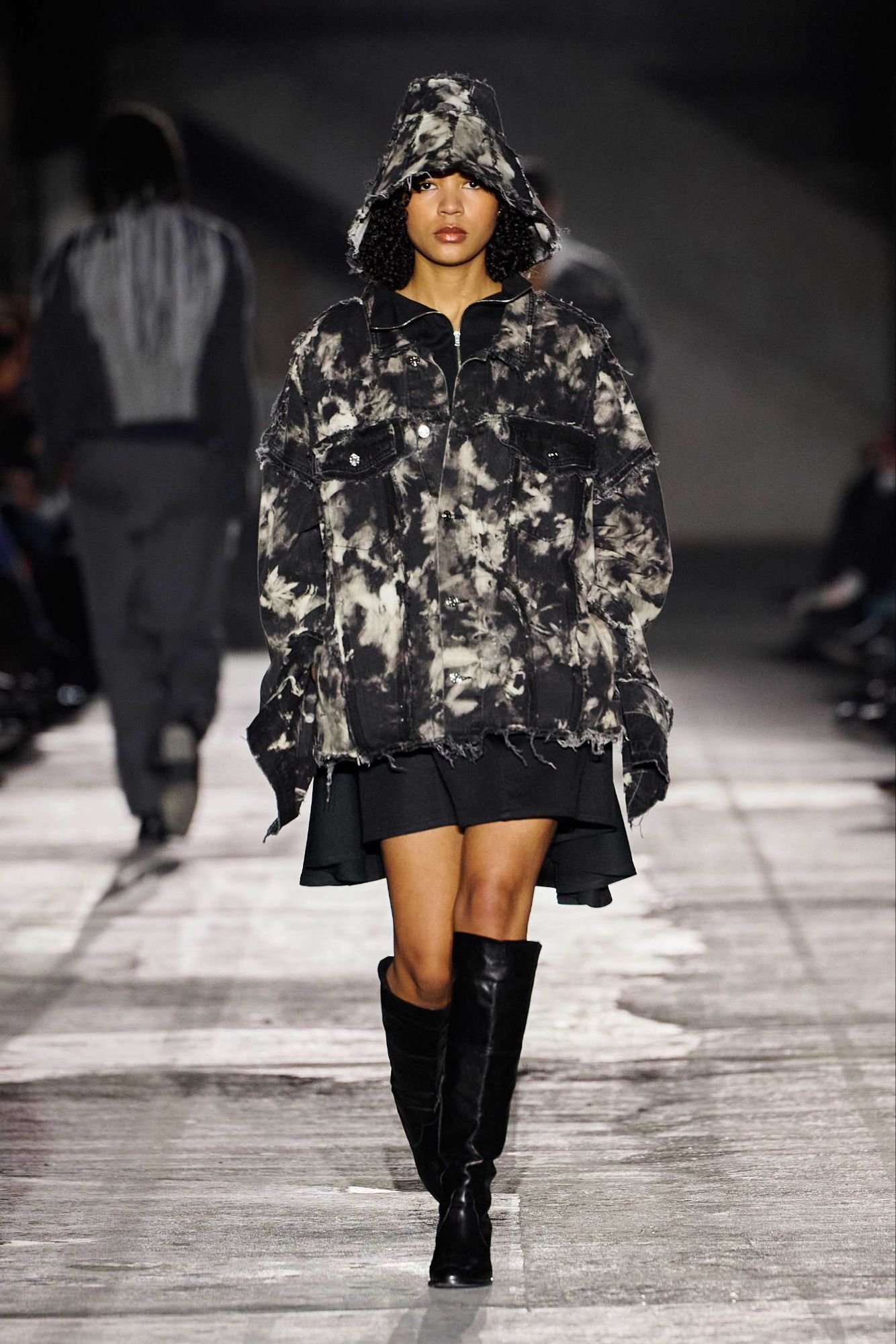
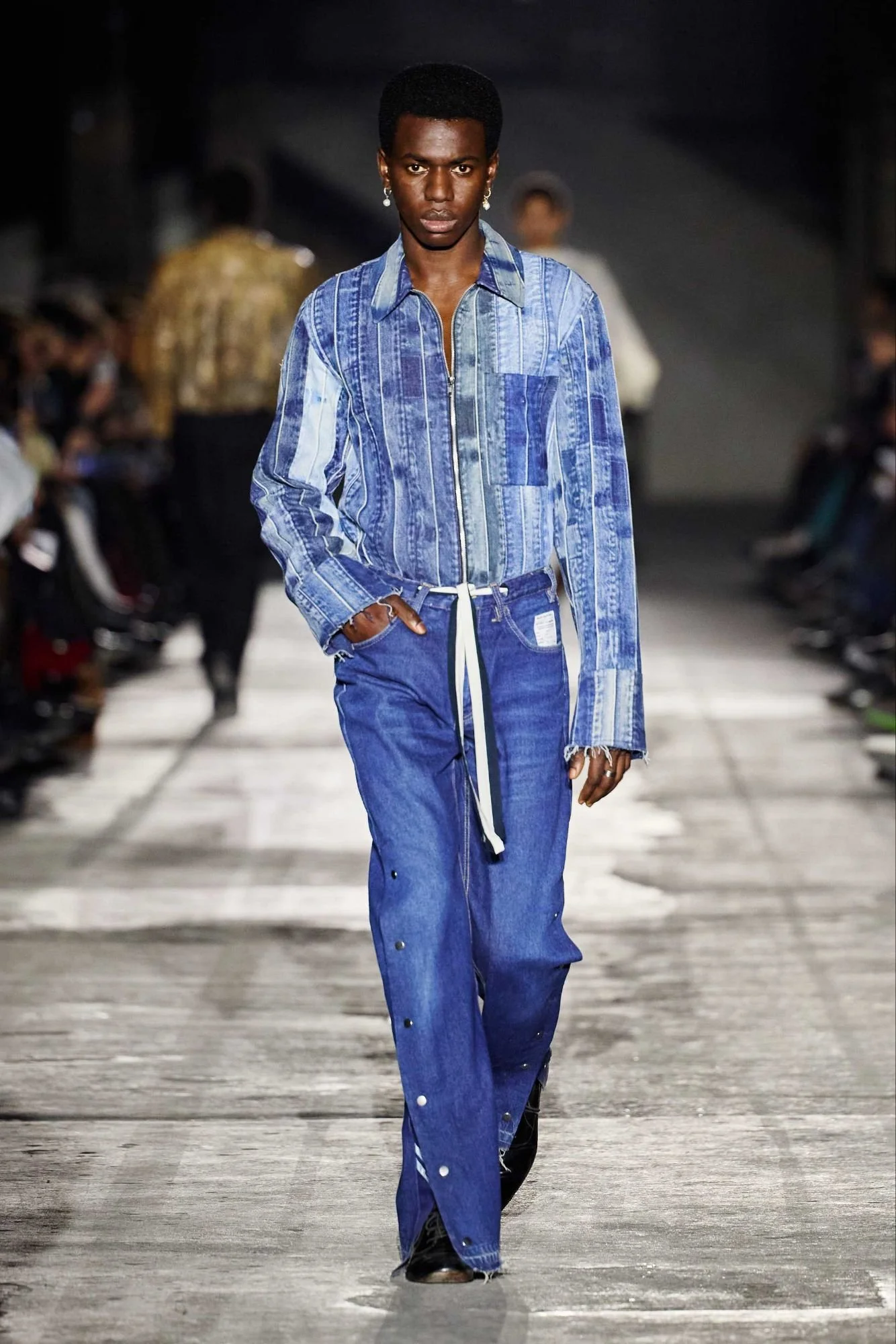
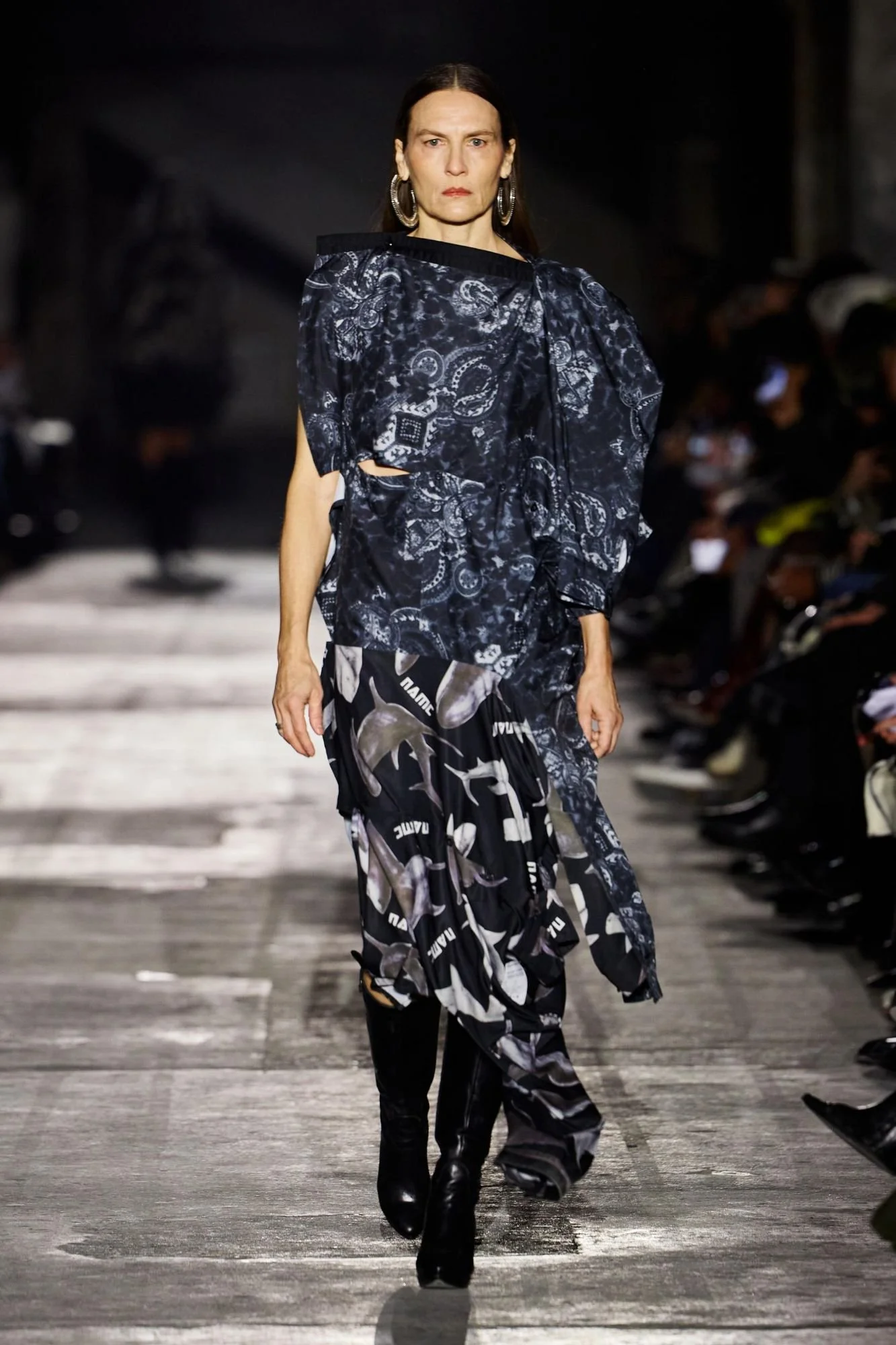
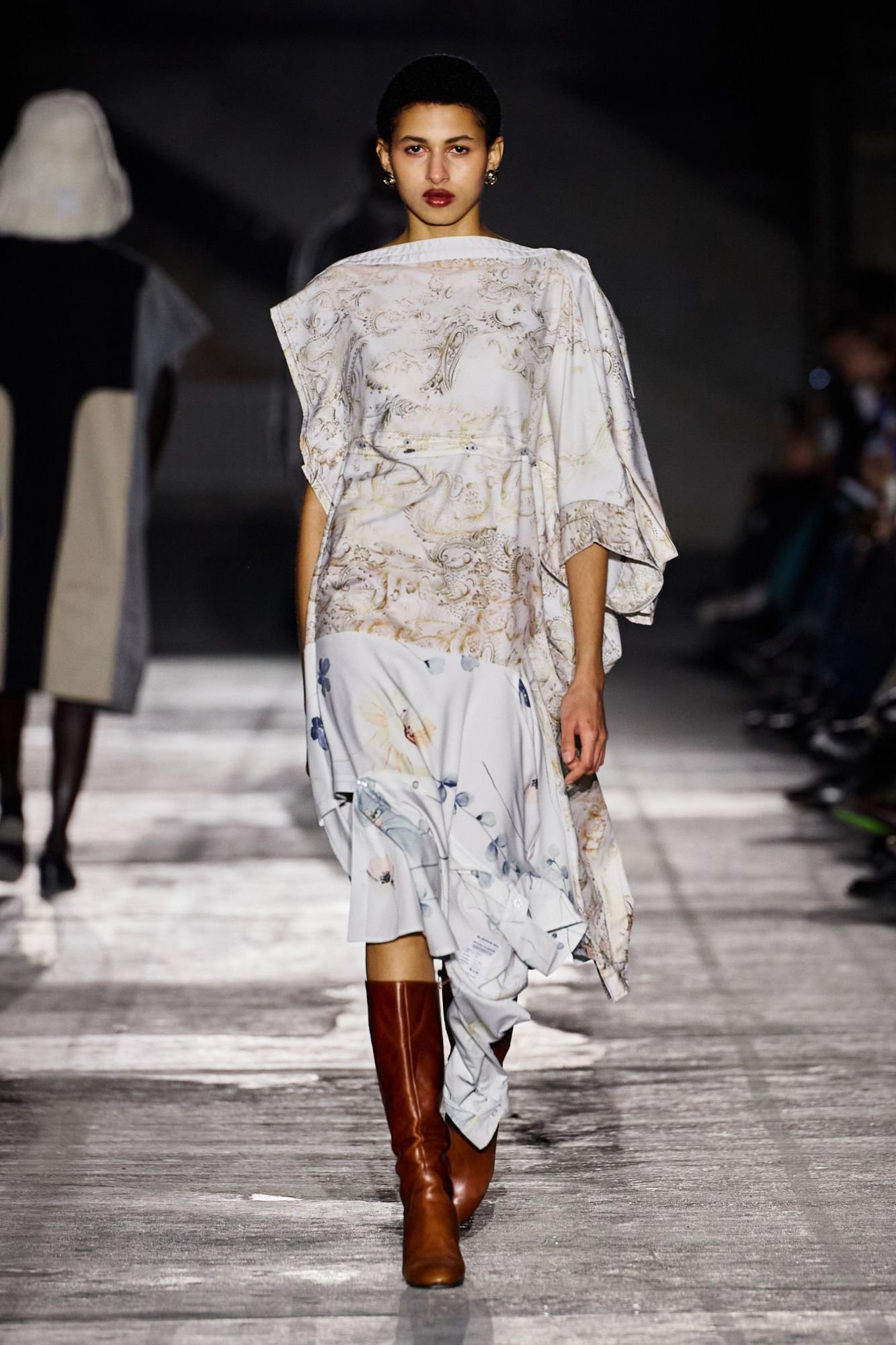
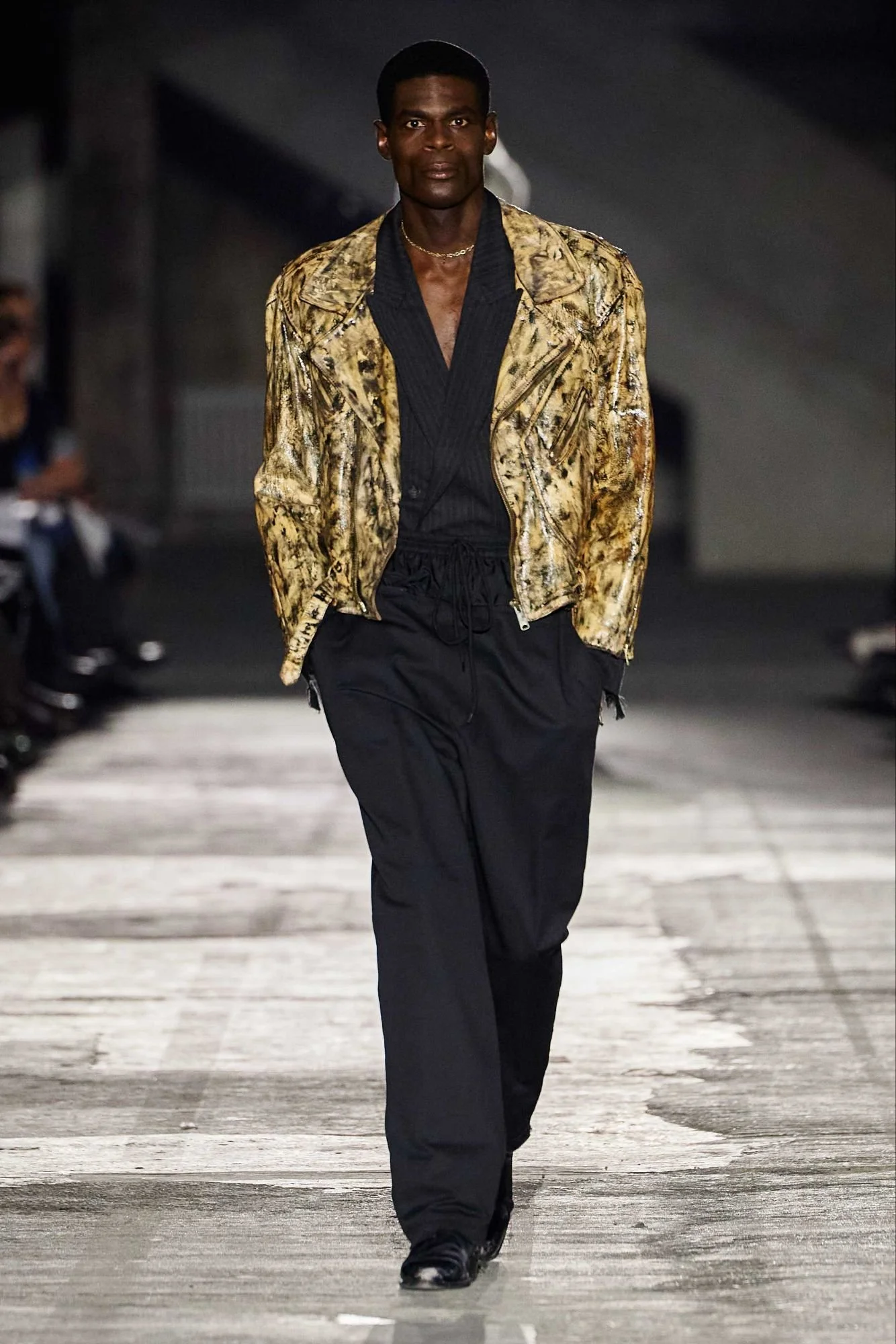
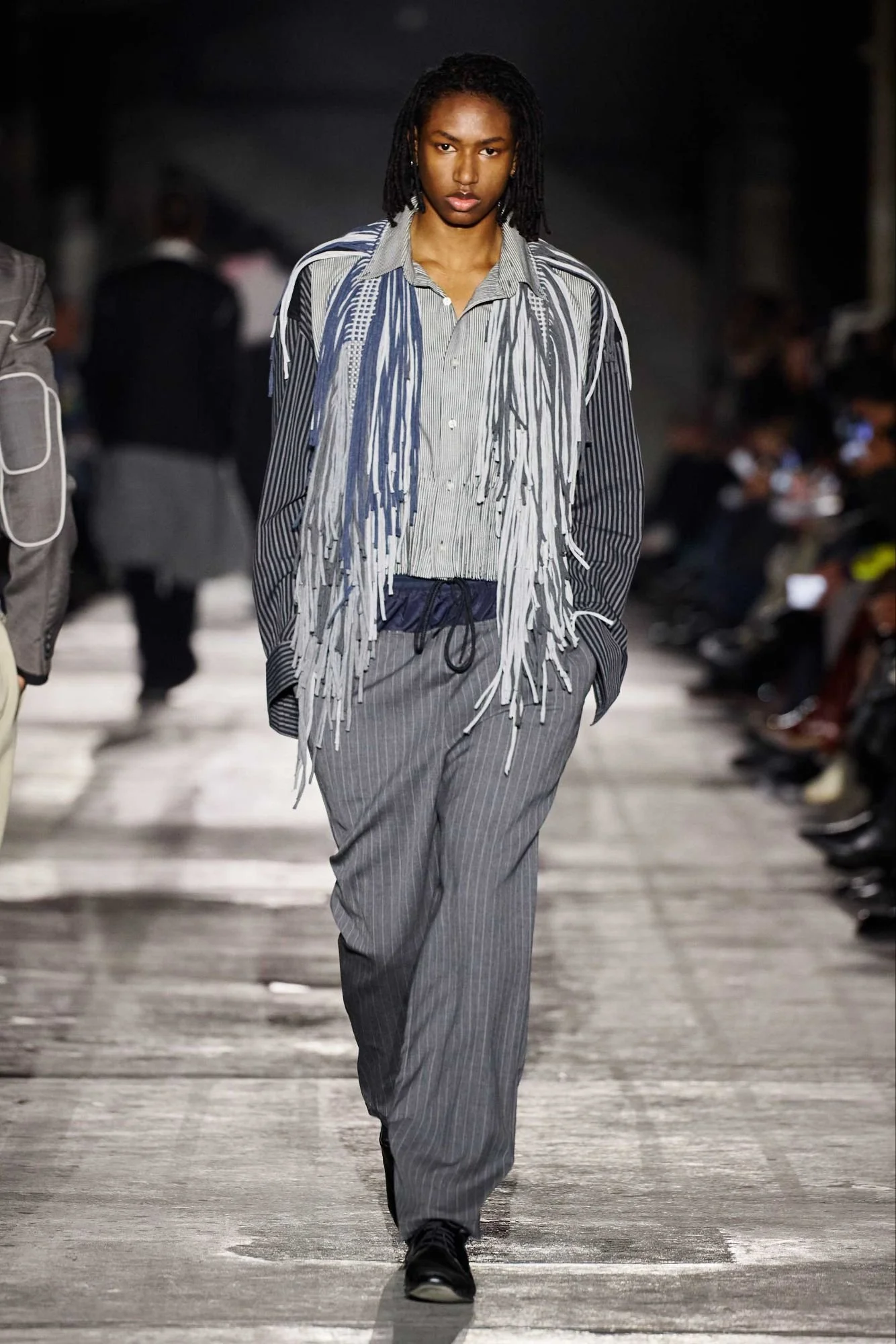
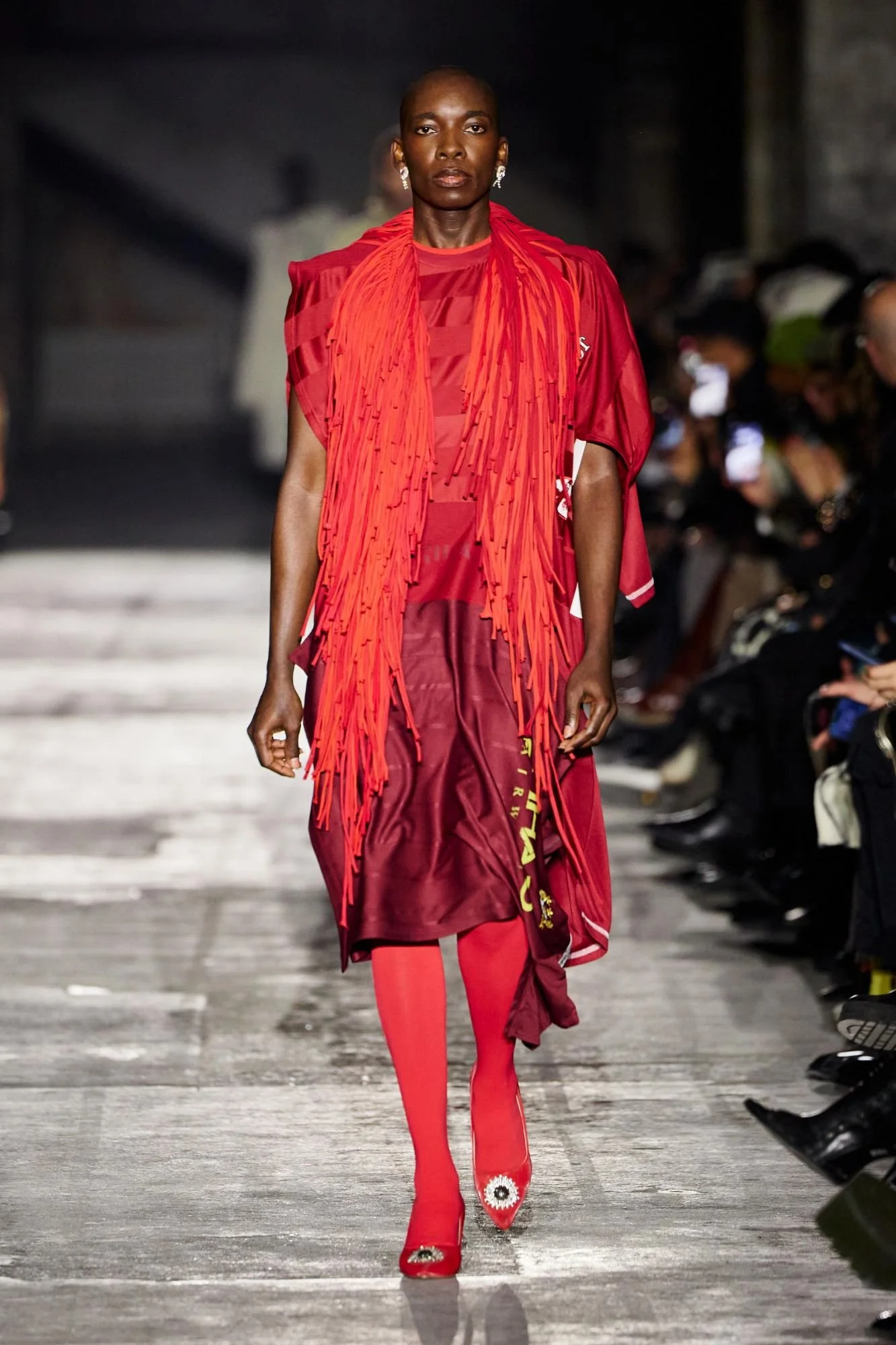
Bobby Kolade's Buzigahill continues to ask the most uncomfortable question in contemporary fashion: what if we sent it all back? For his twelfth installment of RETURN TO SENDER, the Kampala-based designer mines nostalgia for 1960s and 1970s East Africa, the decades after Uganda and Kenya gained independence and textile factories flourished. Wide collars, bell-bottoms, parquet dance floors, Citroëns. A period defined by freedom and new beginnings.
Kolade sources secondhand clothing from Ownio Market in Kampala, garments originally shipped from Europe, the US, and Asia as textile waste. He deconstructs and redesigns them, then returns them to the Global North as critical fashion objects. It's a literal reversal of extraction, a circular gesture with teeth. The collection translates post-independence optimism through contemporary silhouettes, challenging why millennials feel nostalgic for an era they never lived.
Buyers are paying attention. Shuhei Iwasa confirmed orders for Takashimaya. Stavros Karelis is considering the label for Machine-A. Buzigahill participated in Reference Studios' Intervention presentation format, solidifying its position as one of Berlin's most politically urgent voices. Definitely our favorite collection.
LUEDER
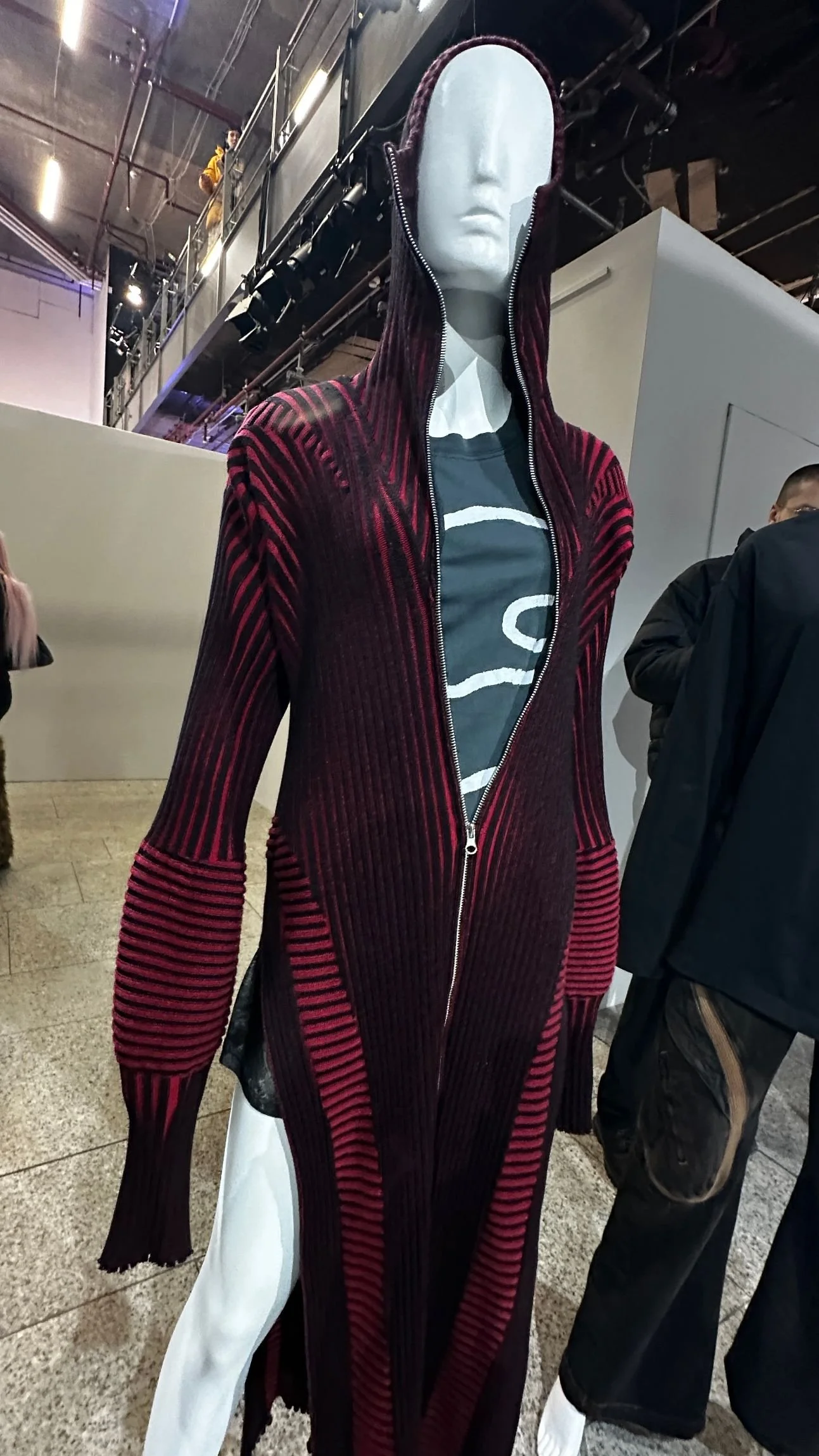
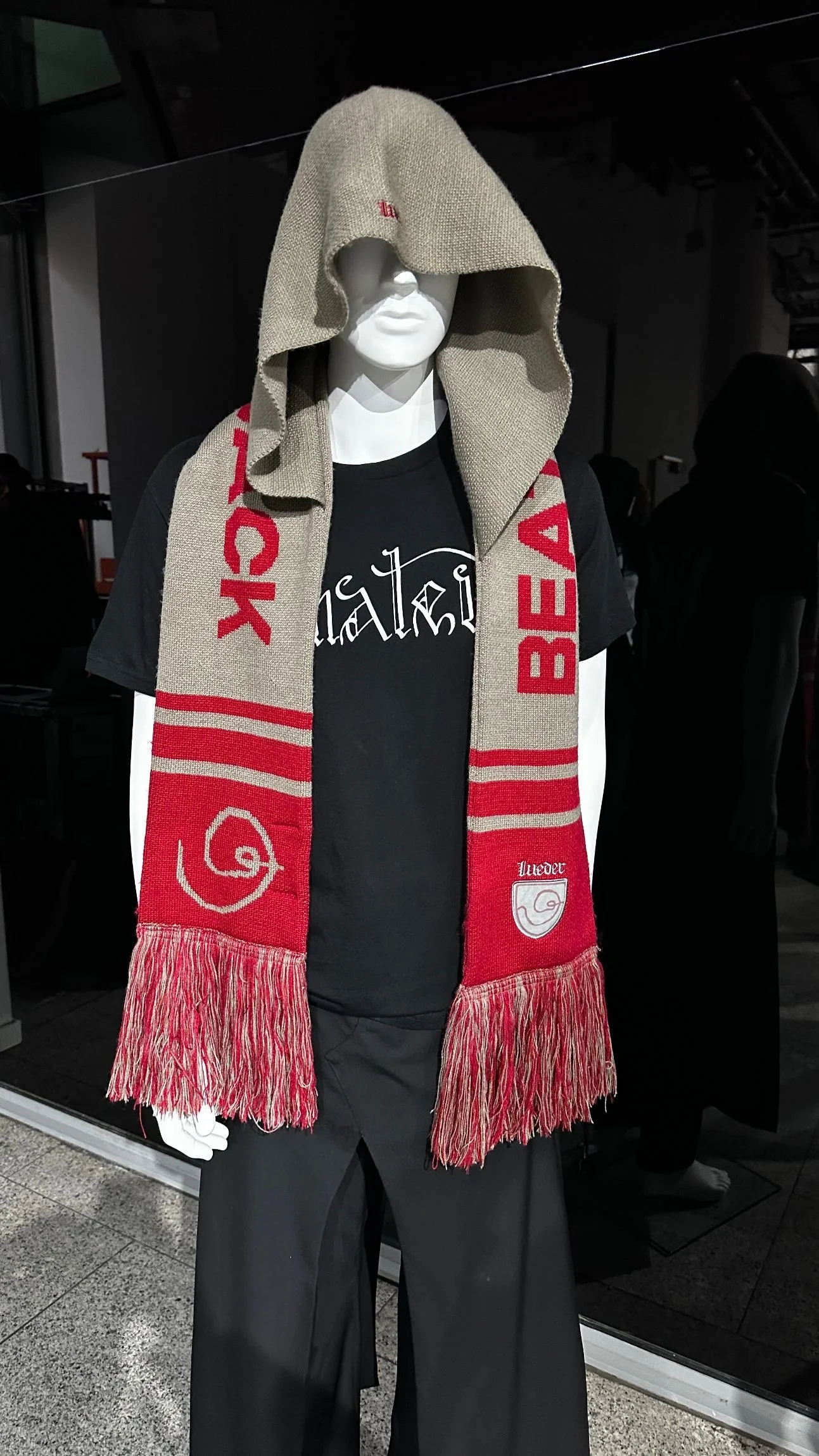
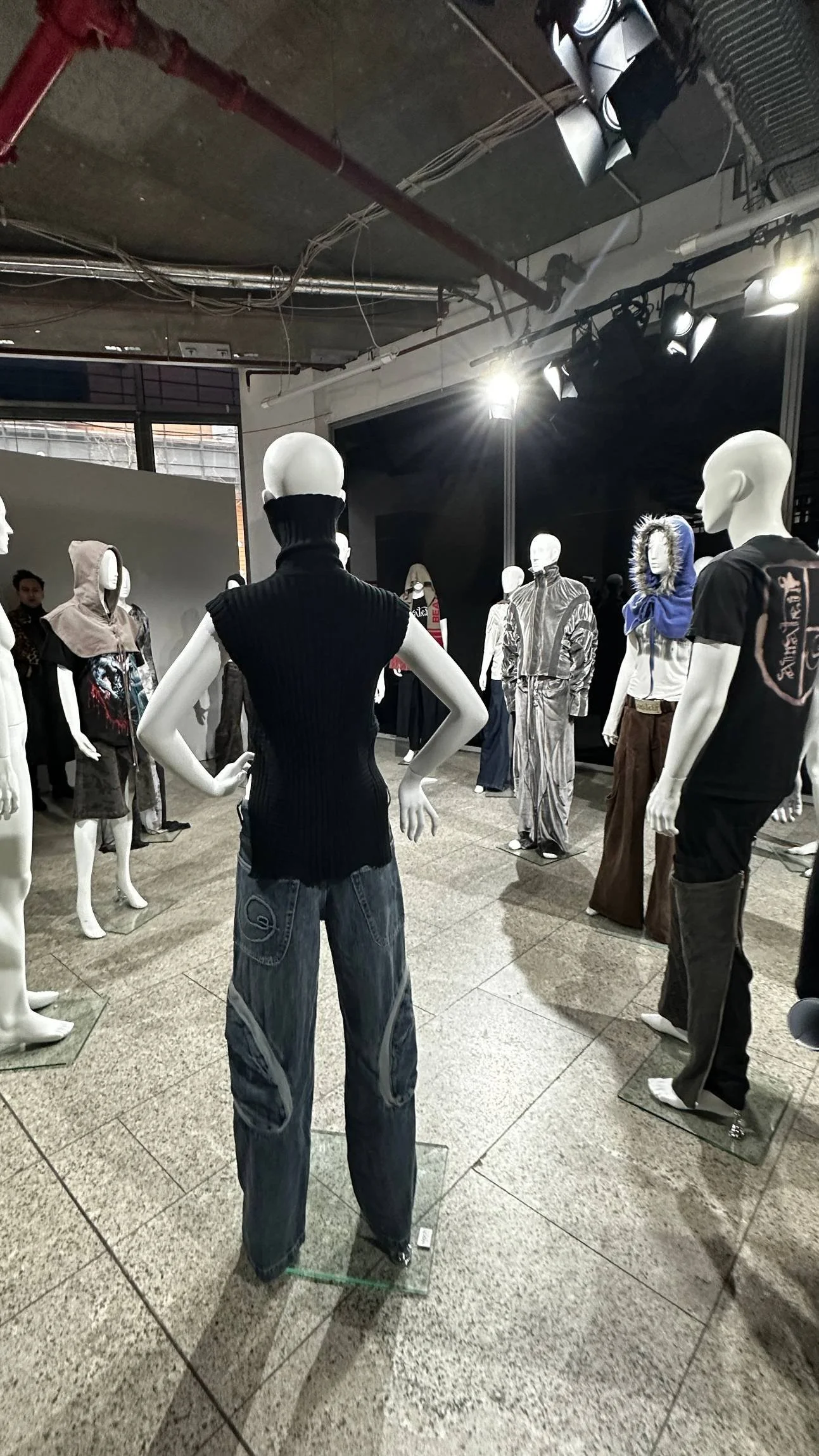
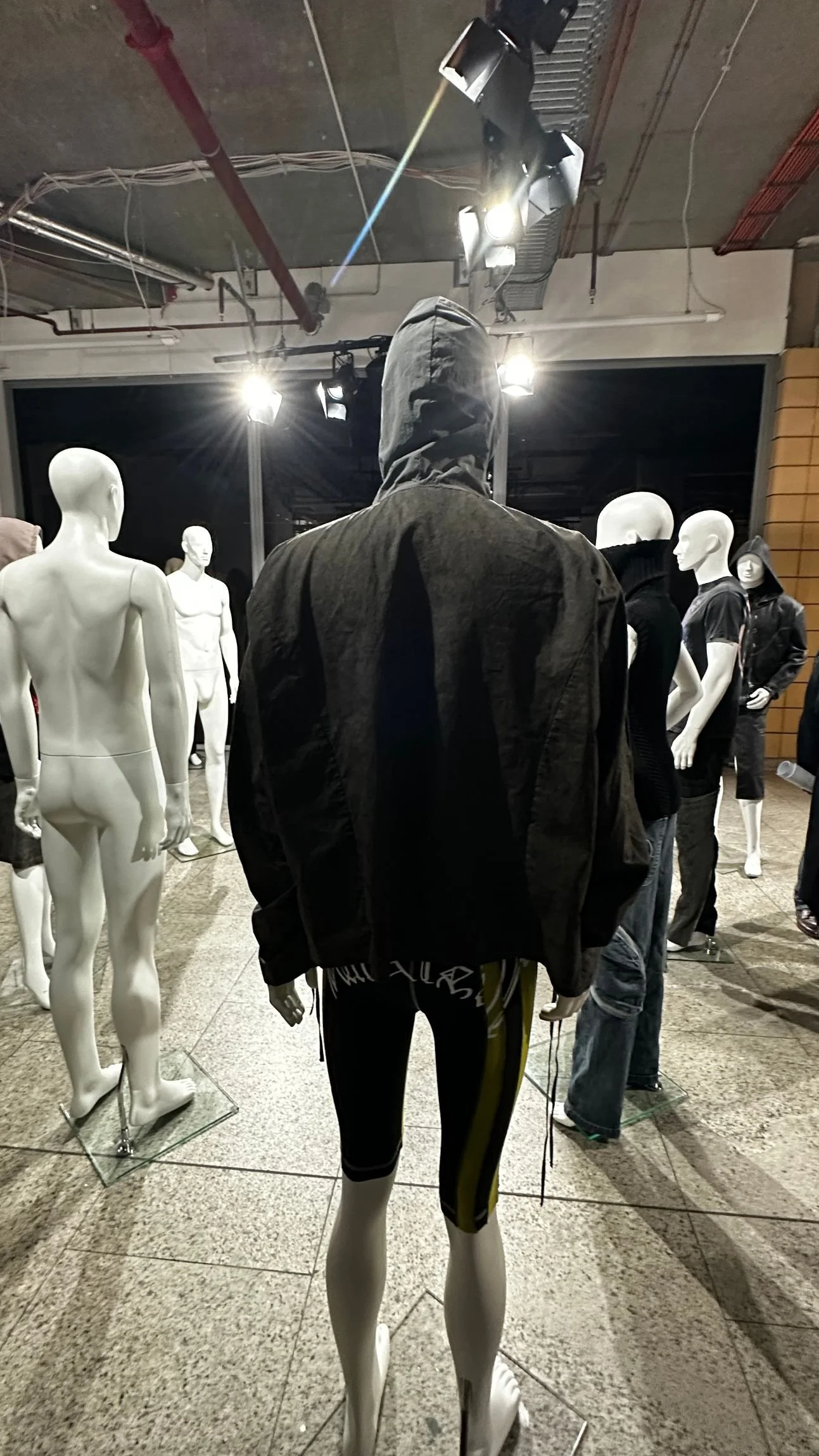
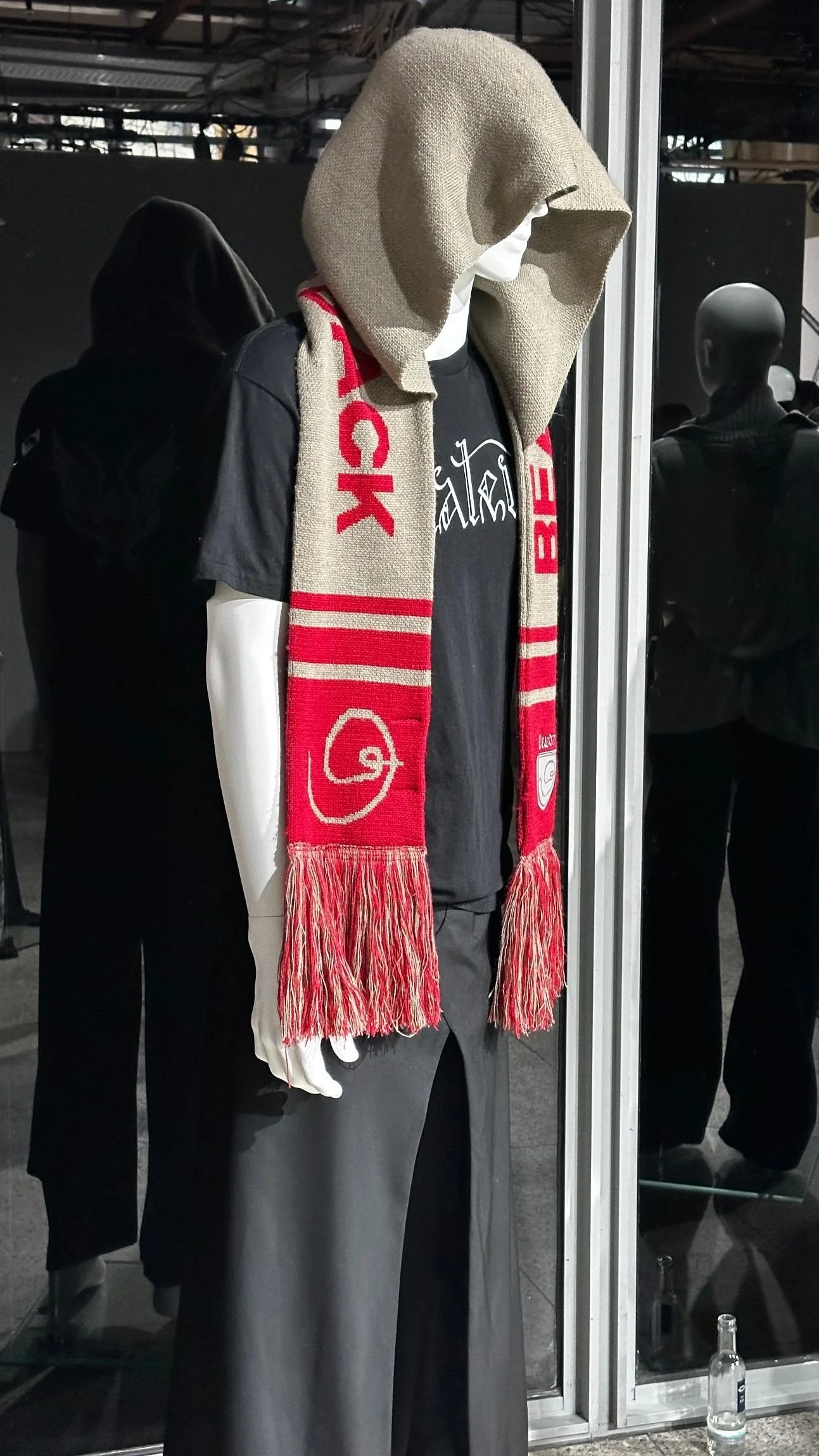
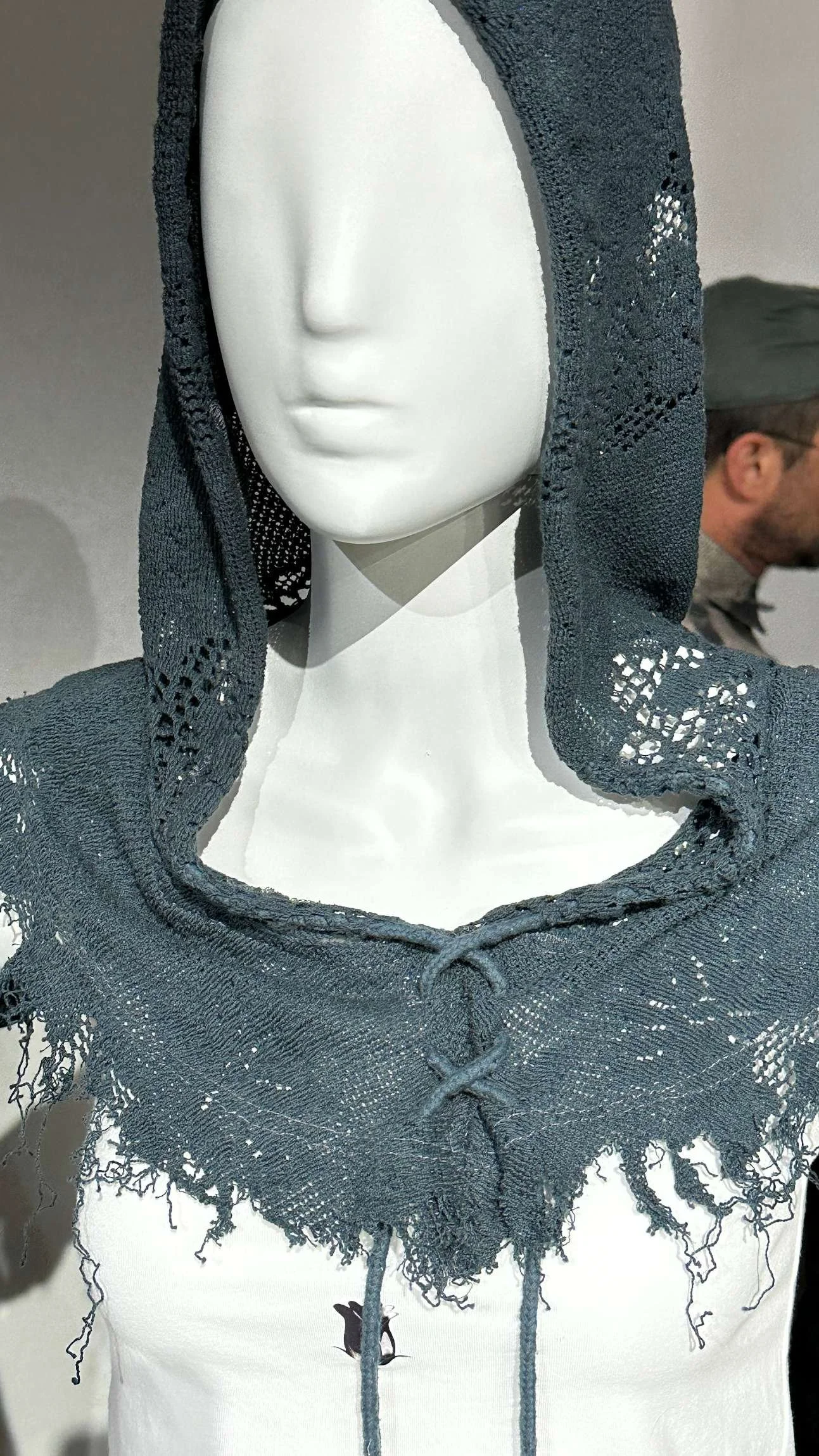
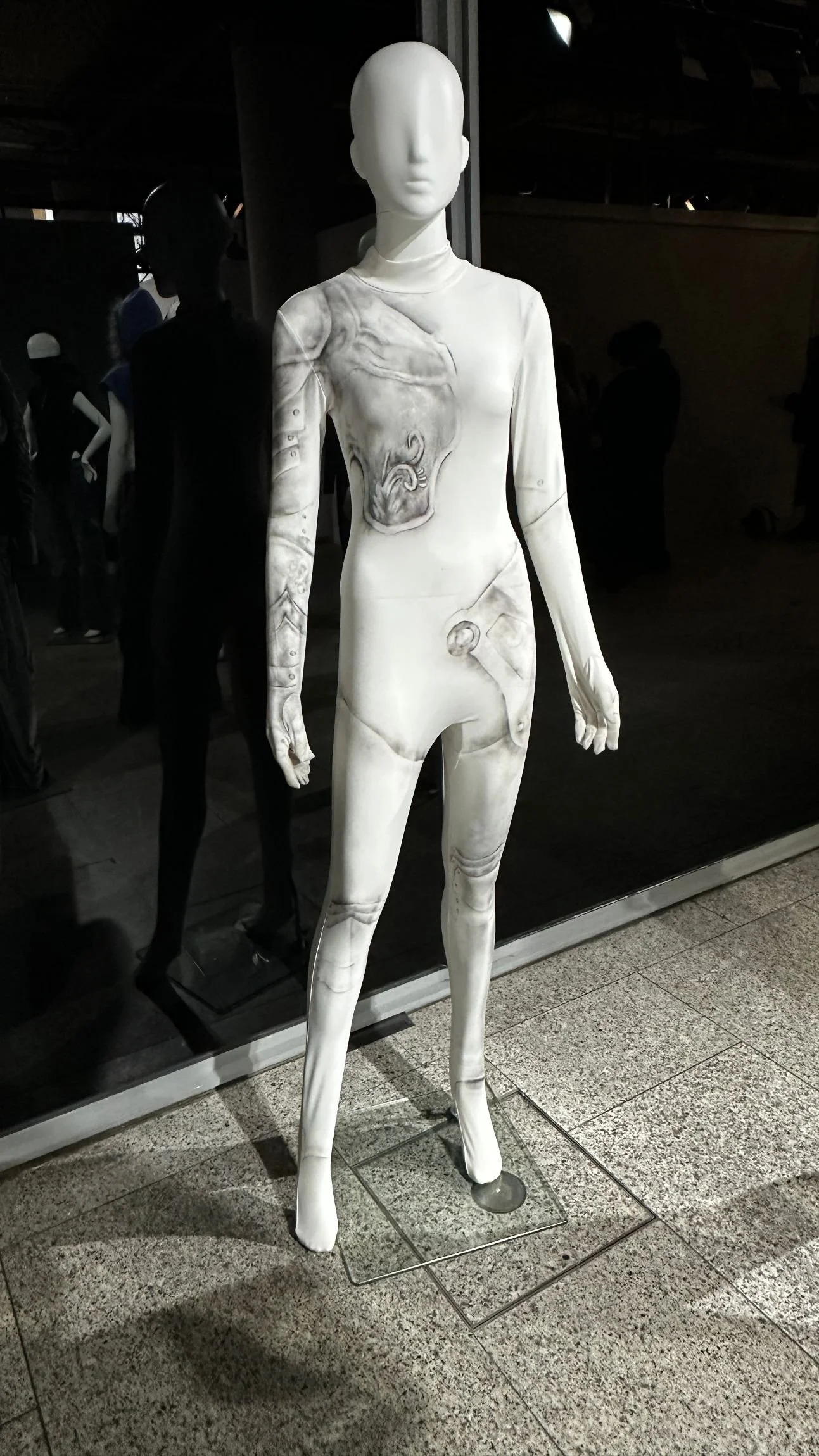
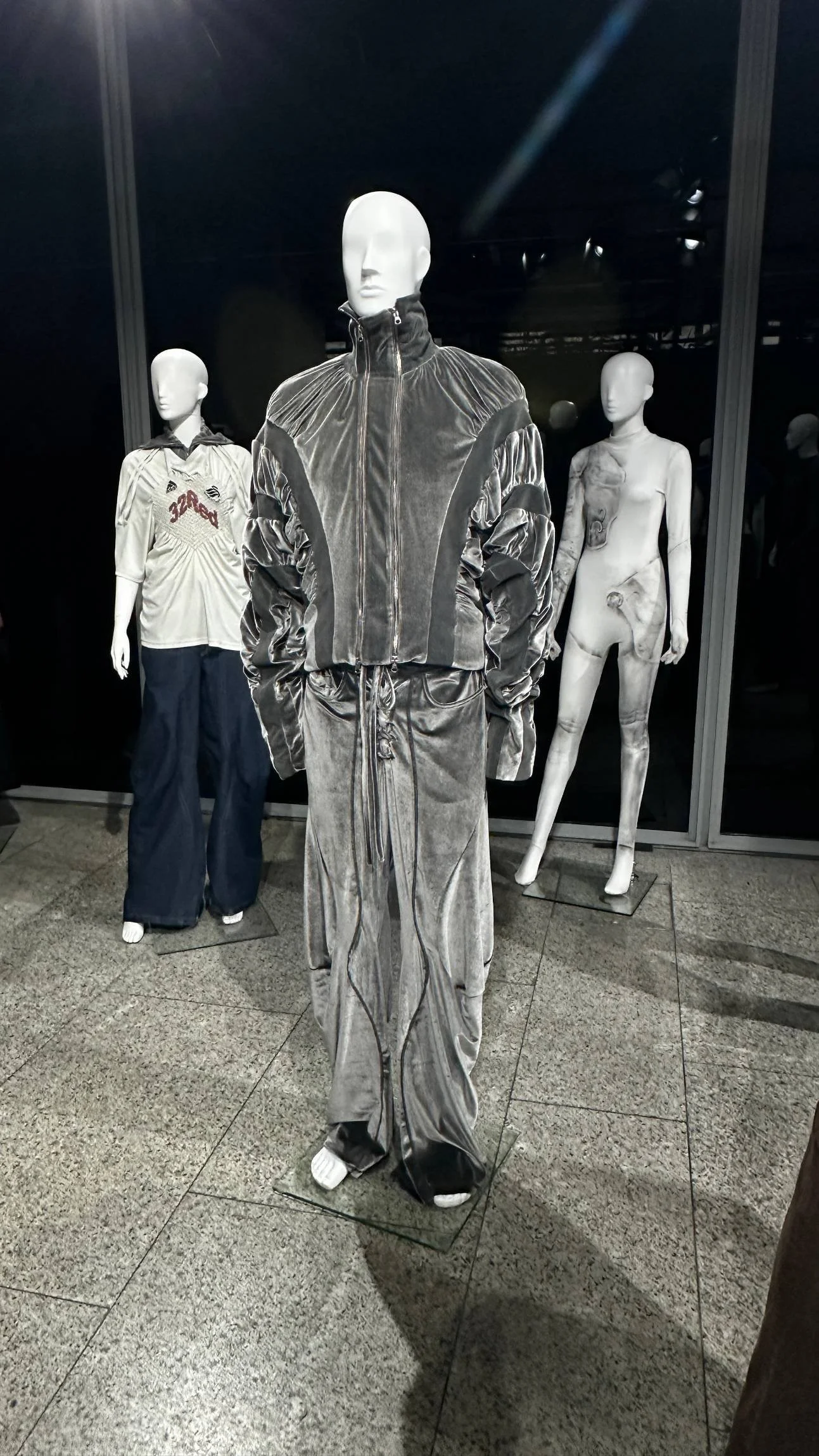
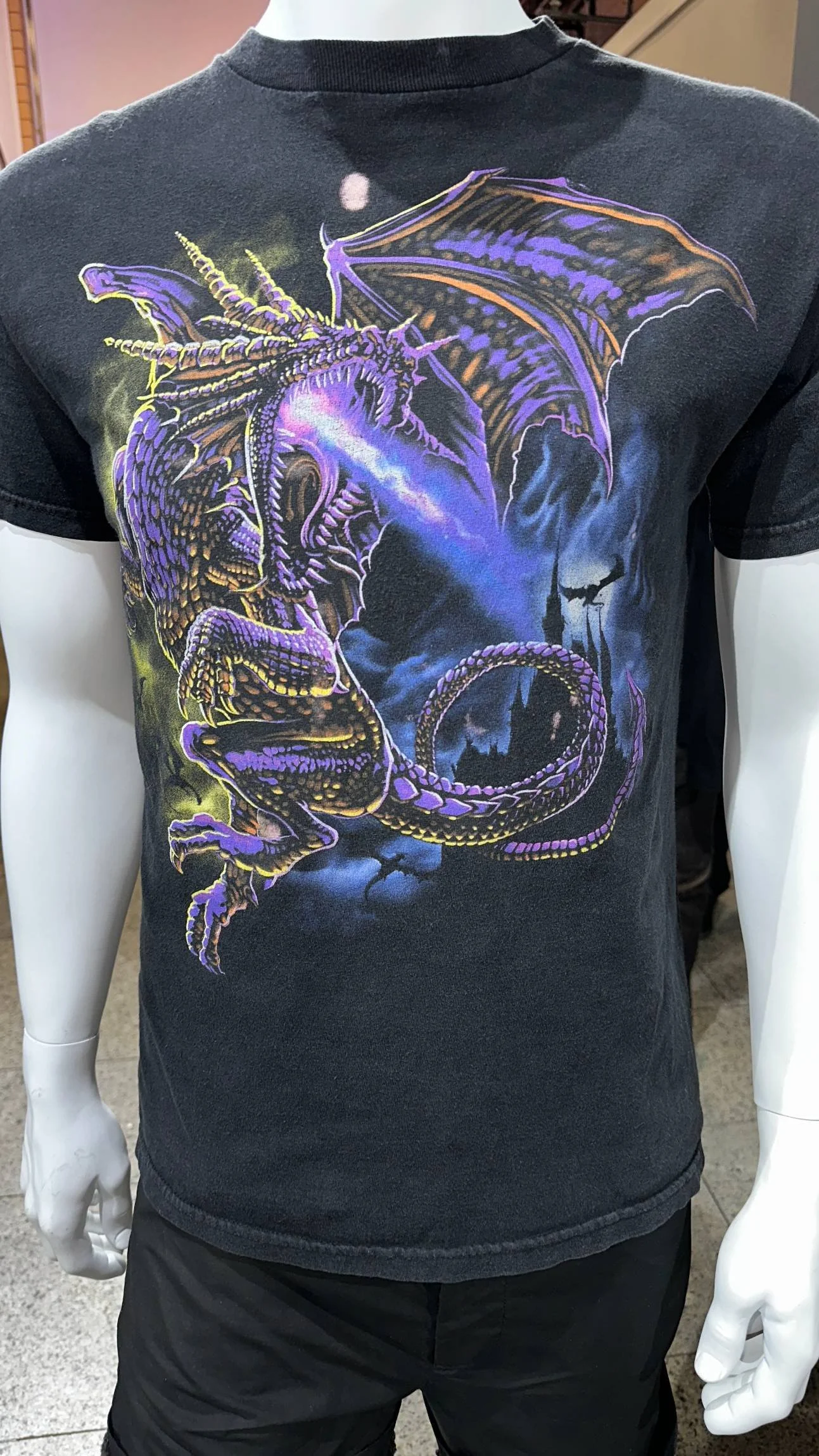
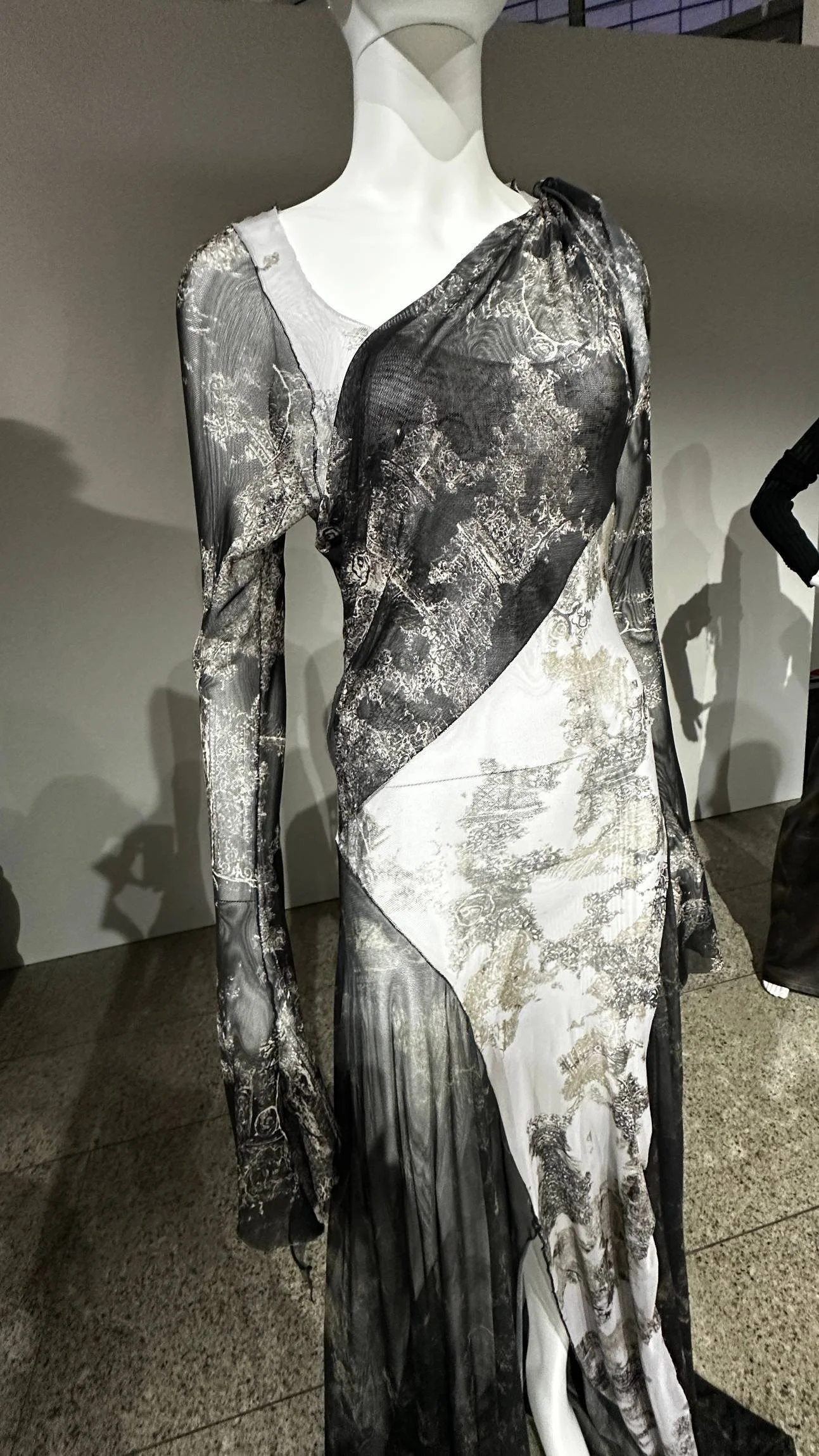
Lueder's AW24-SS26 Archive presentation staged a radical proposition: true innovation lies dormant in history, waiting to be reawakened. With choreographer David Varhegyi orchestrating moving bodies through the space, the presentation became a living archaeology, where medieval inspiration collided with futuristic vision in a collision that felt less like nostalgia and more like prophecy.
The archive format allowed Lueder to trace her evolution across seasons, revealing how her signature medieval armor aesthetic has always been reaching forward, not back. Ribbed knitwear as protective shells, sculptural tailoring as modern chainmail, transparent mesh as contemporary vulnerability. Varhegyi's movement direction transformed models into ritualistic figures, their gestures echoing both courtly processionals and club culture.
Lueder's thesis is compelling: the past understood protection, community, and transformation in ways our digital present has forgotten. Her garments function as metaphorical armor for navigating contemporary chaos, drawing strength from historical archetypes reimagined through sportswear hybridity and sustainable practice. The real innovation isn't technological advancement but remembering what we've lost.
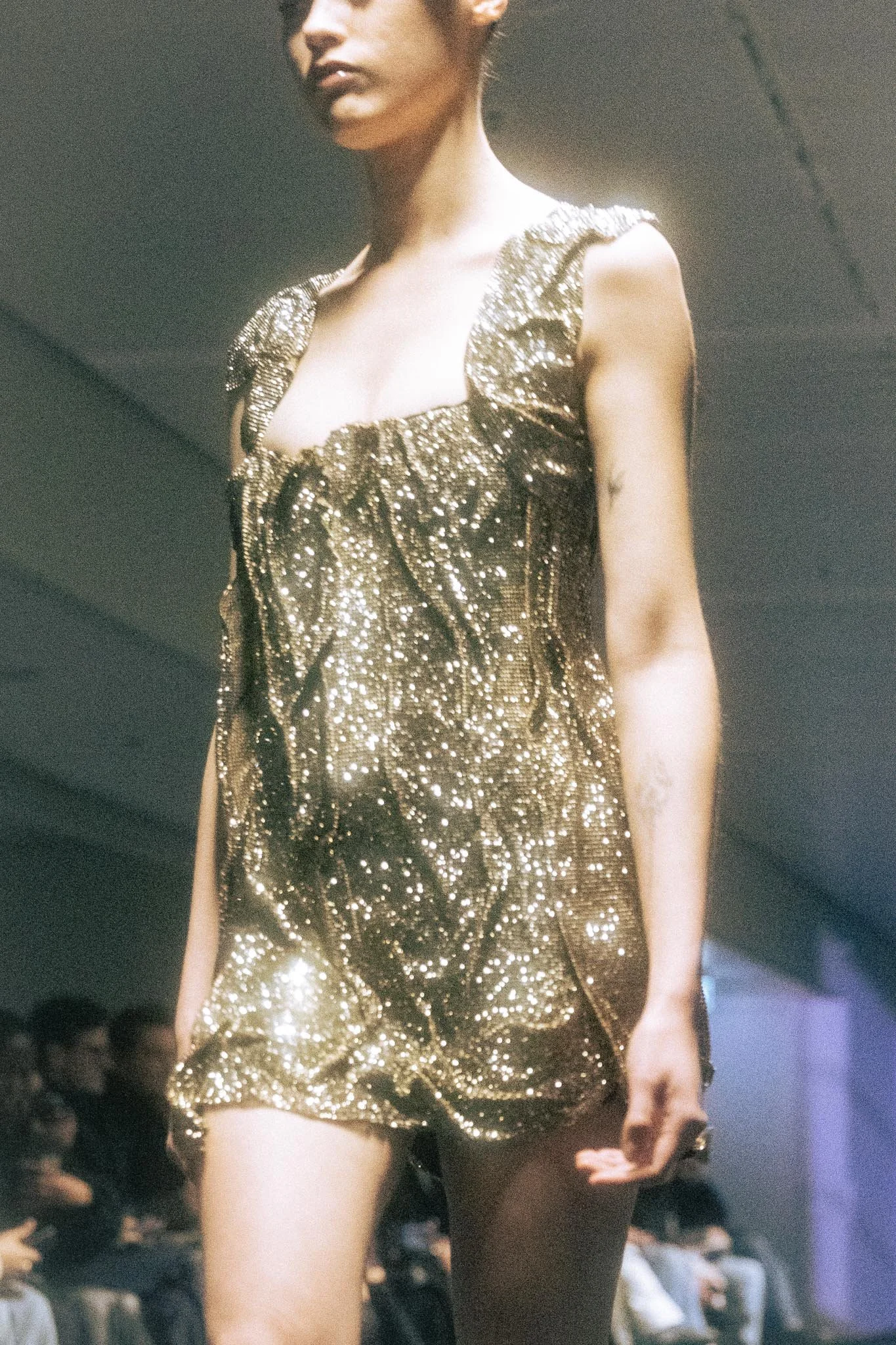
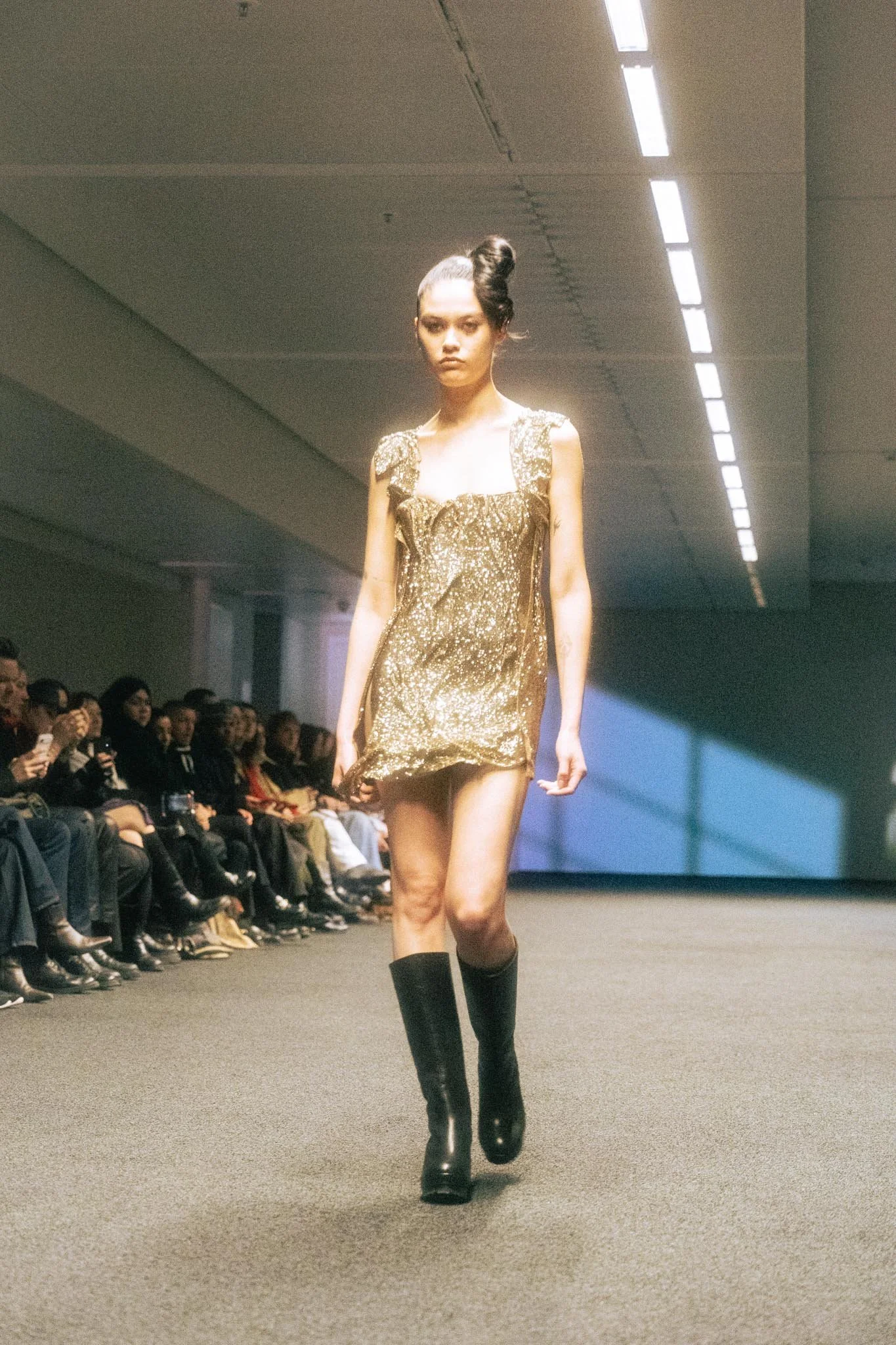
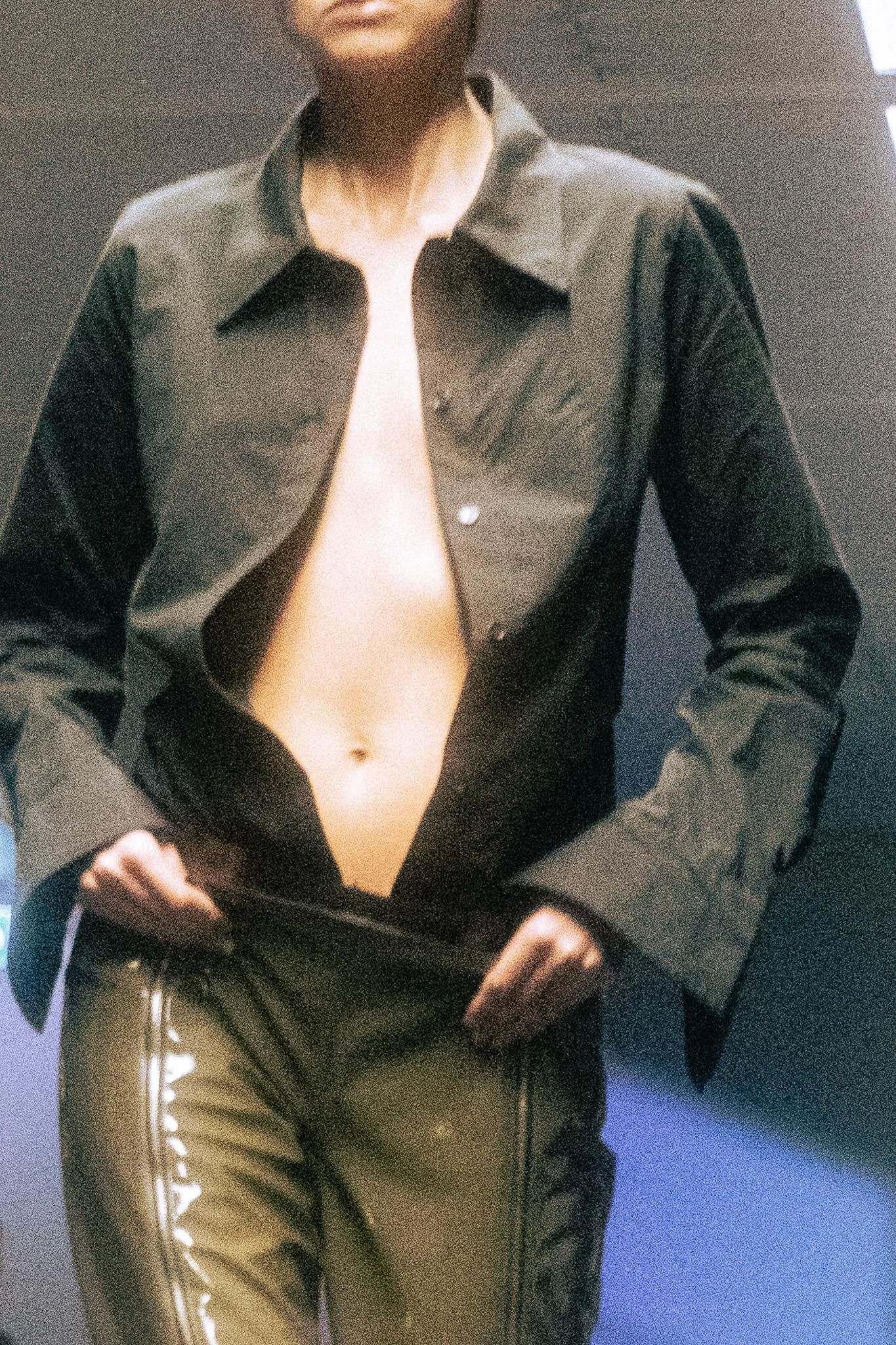
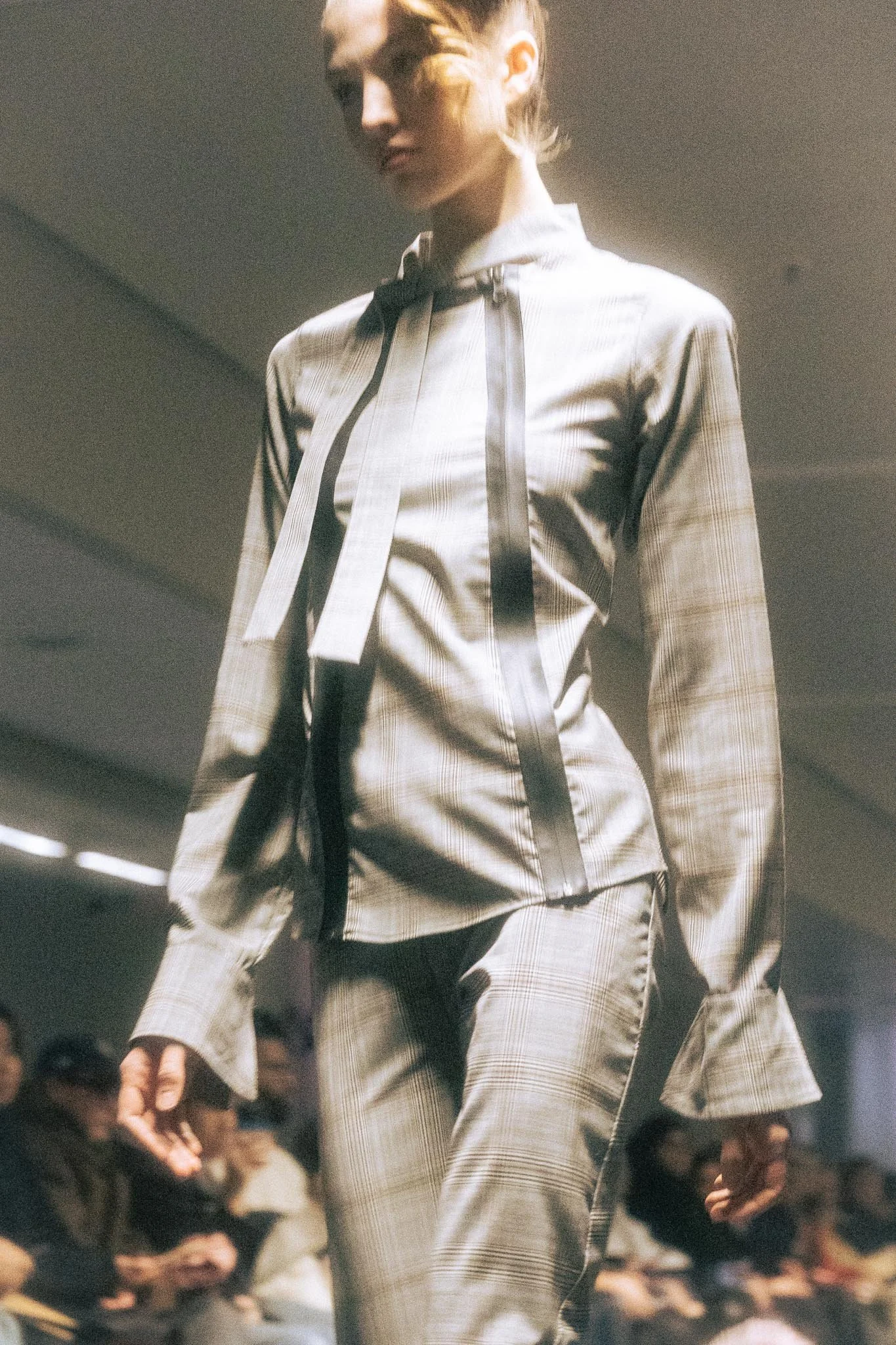
SIA ARNIKA
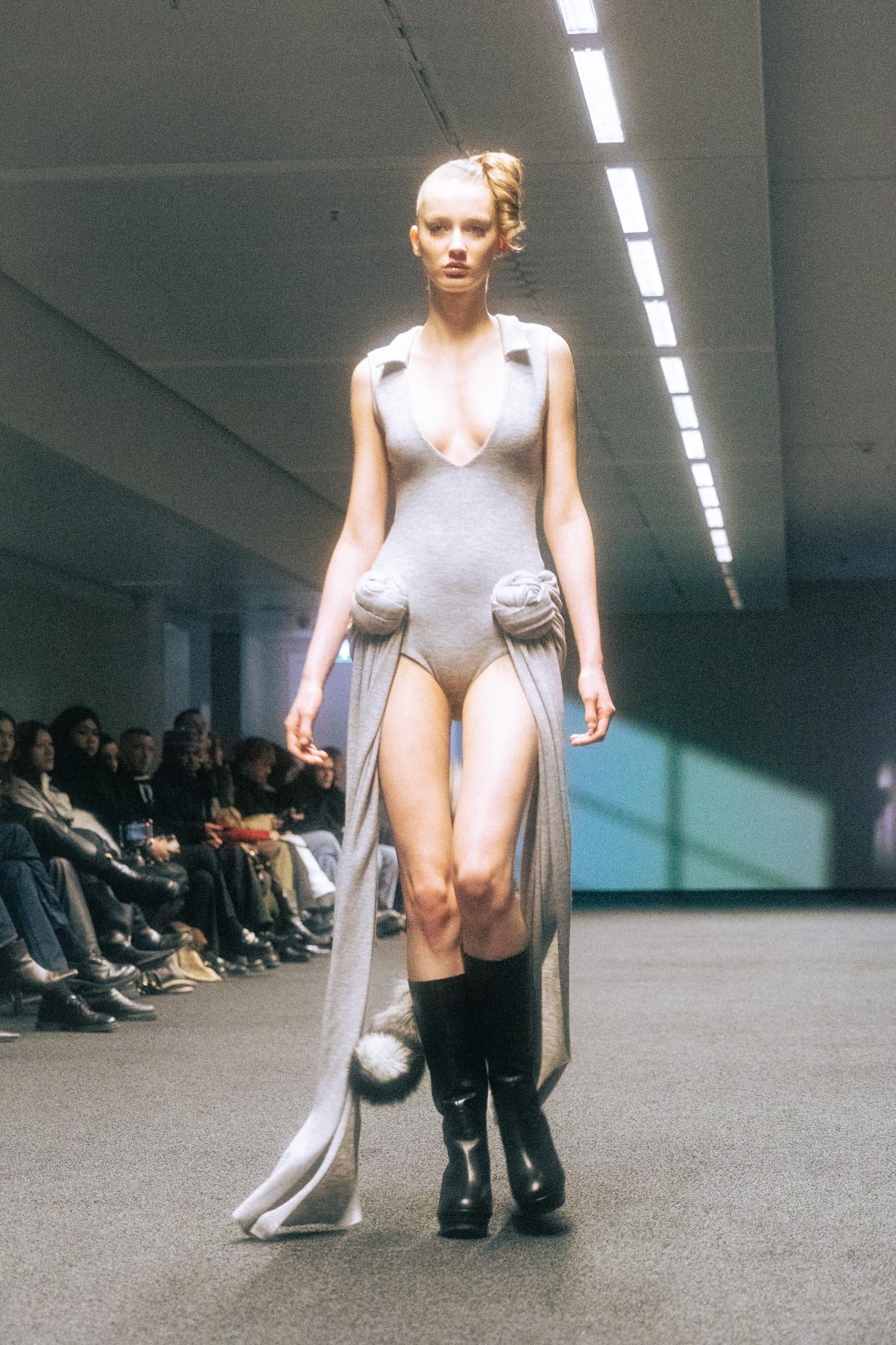
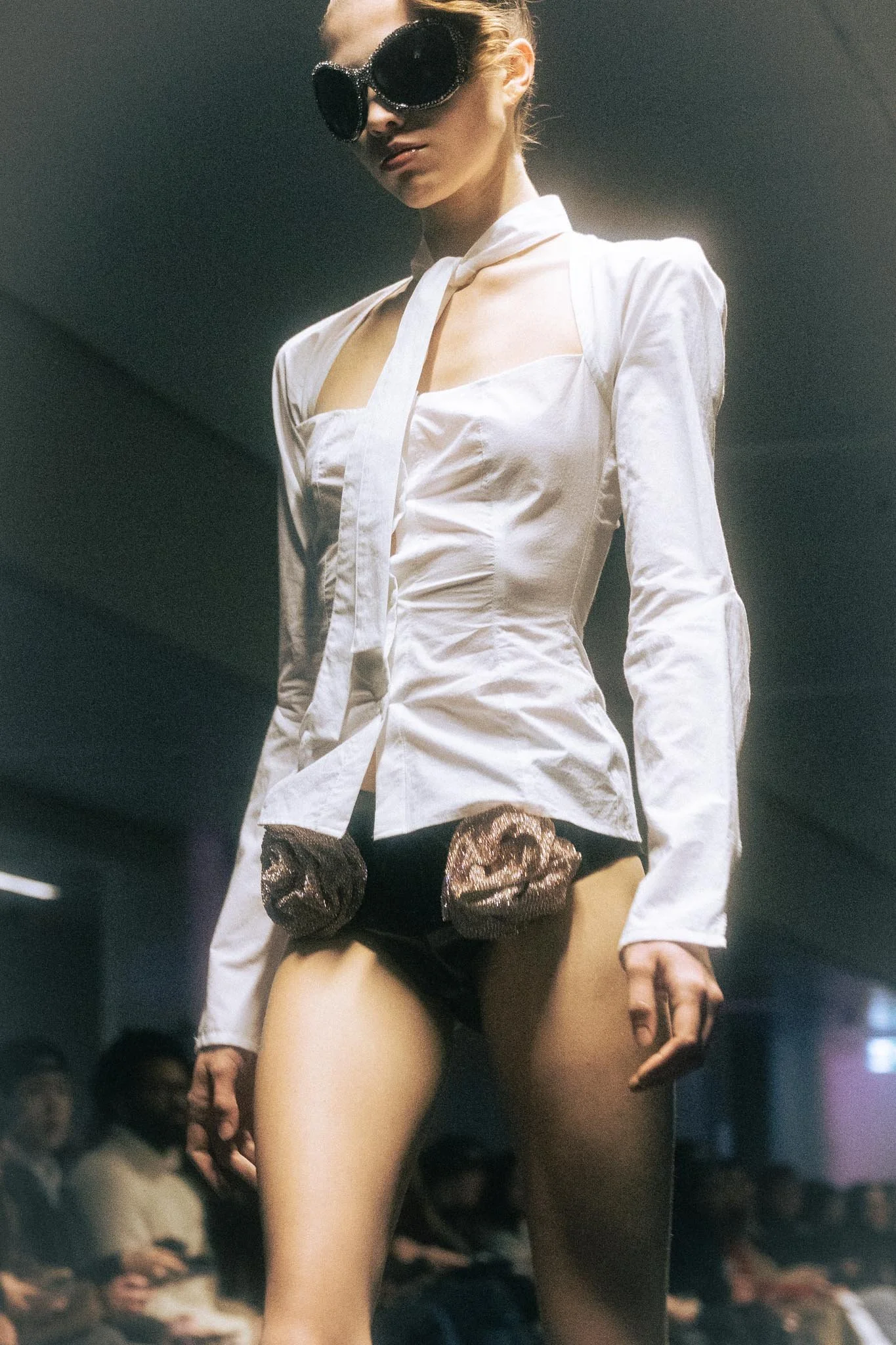
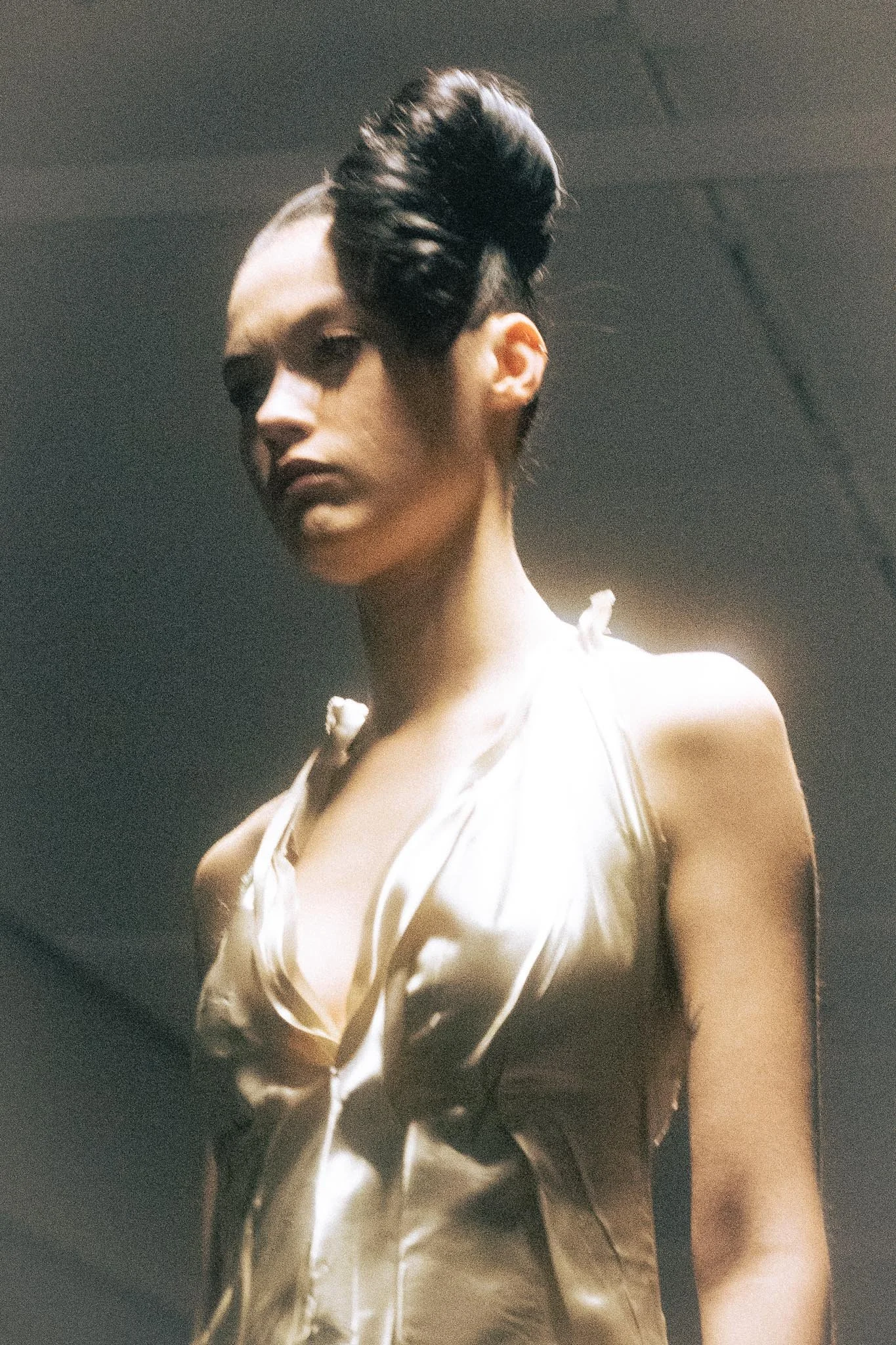
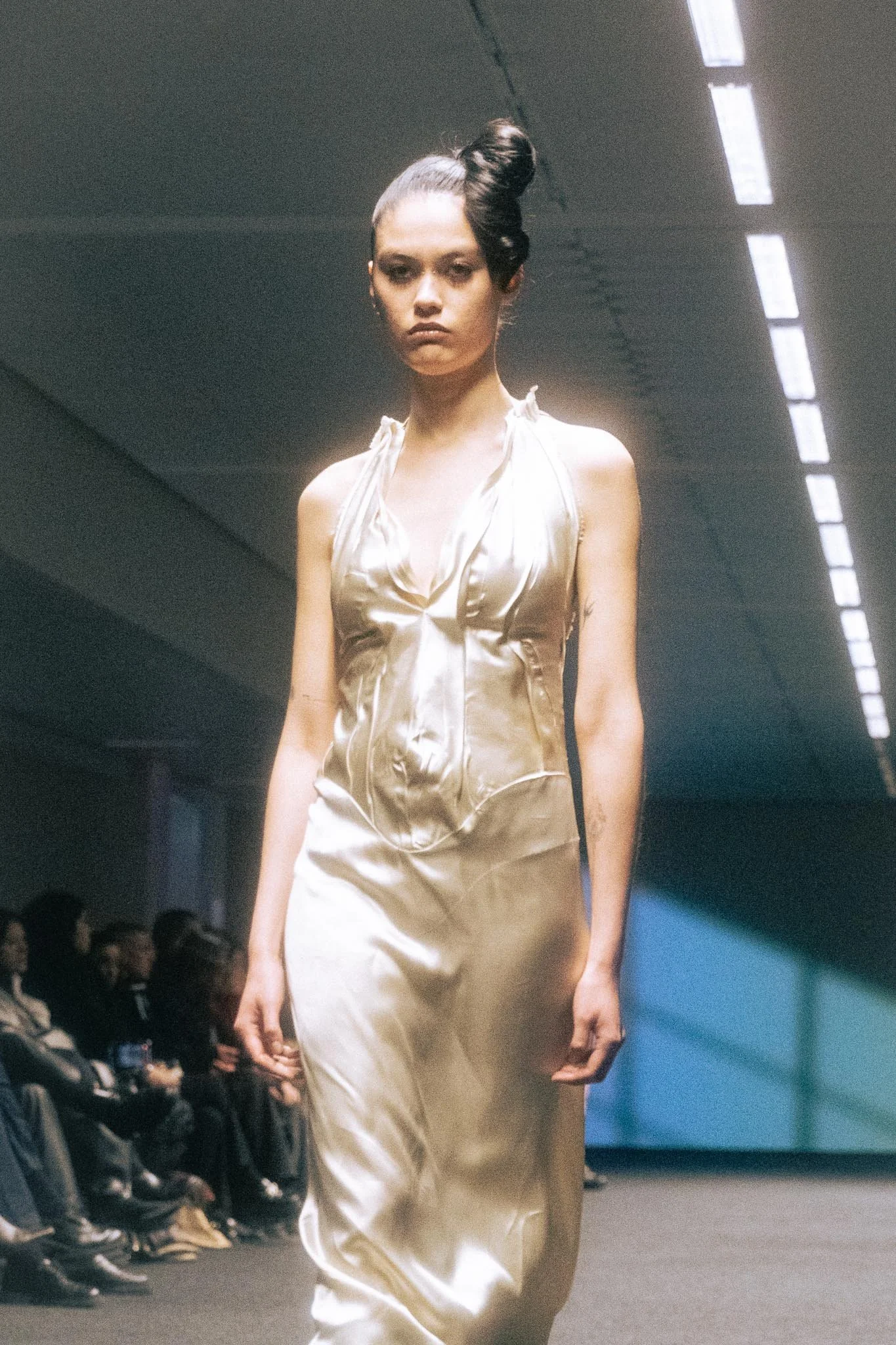
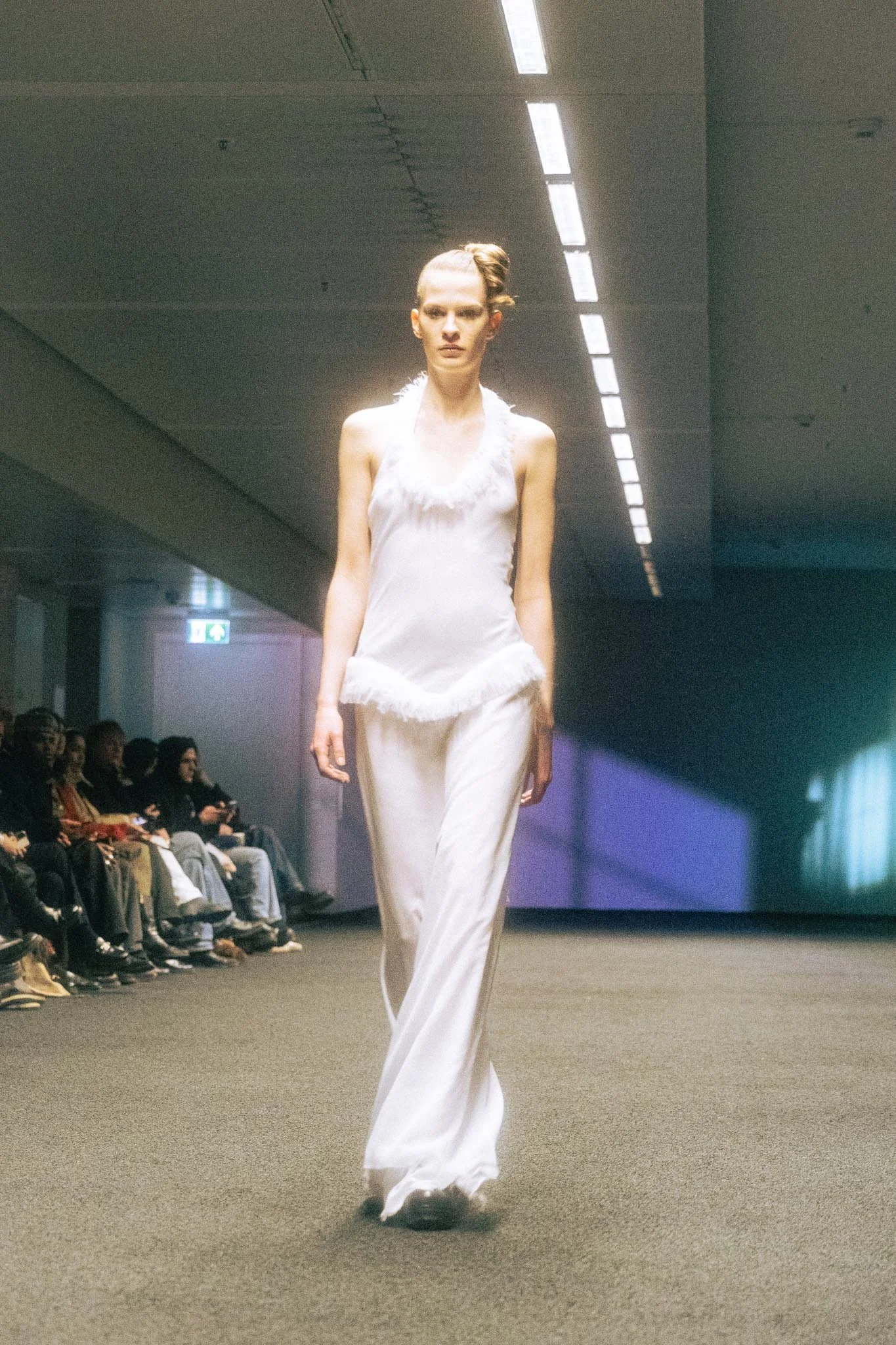
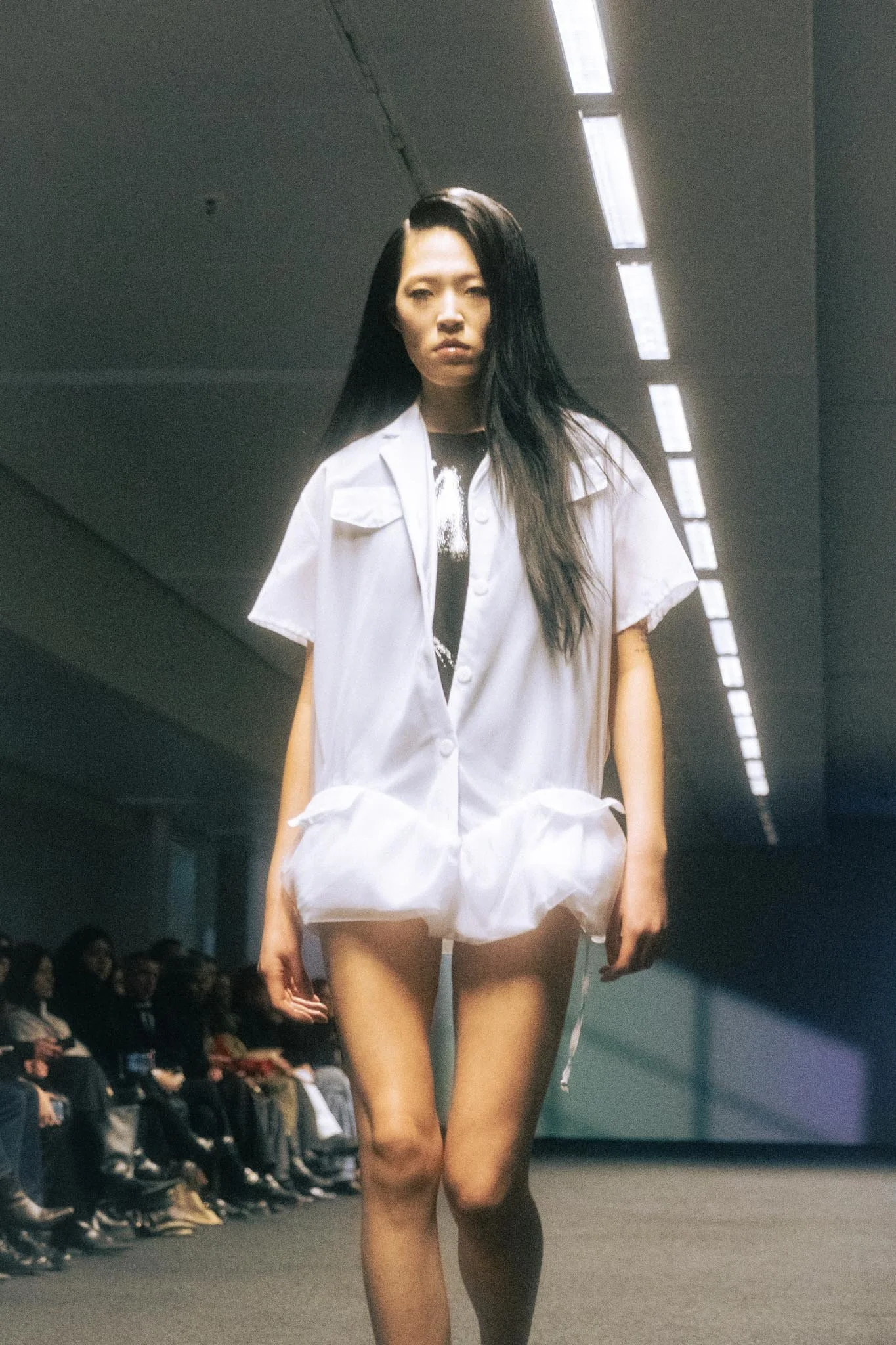
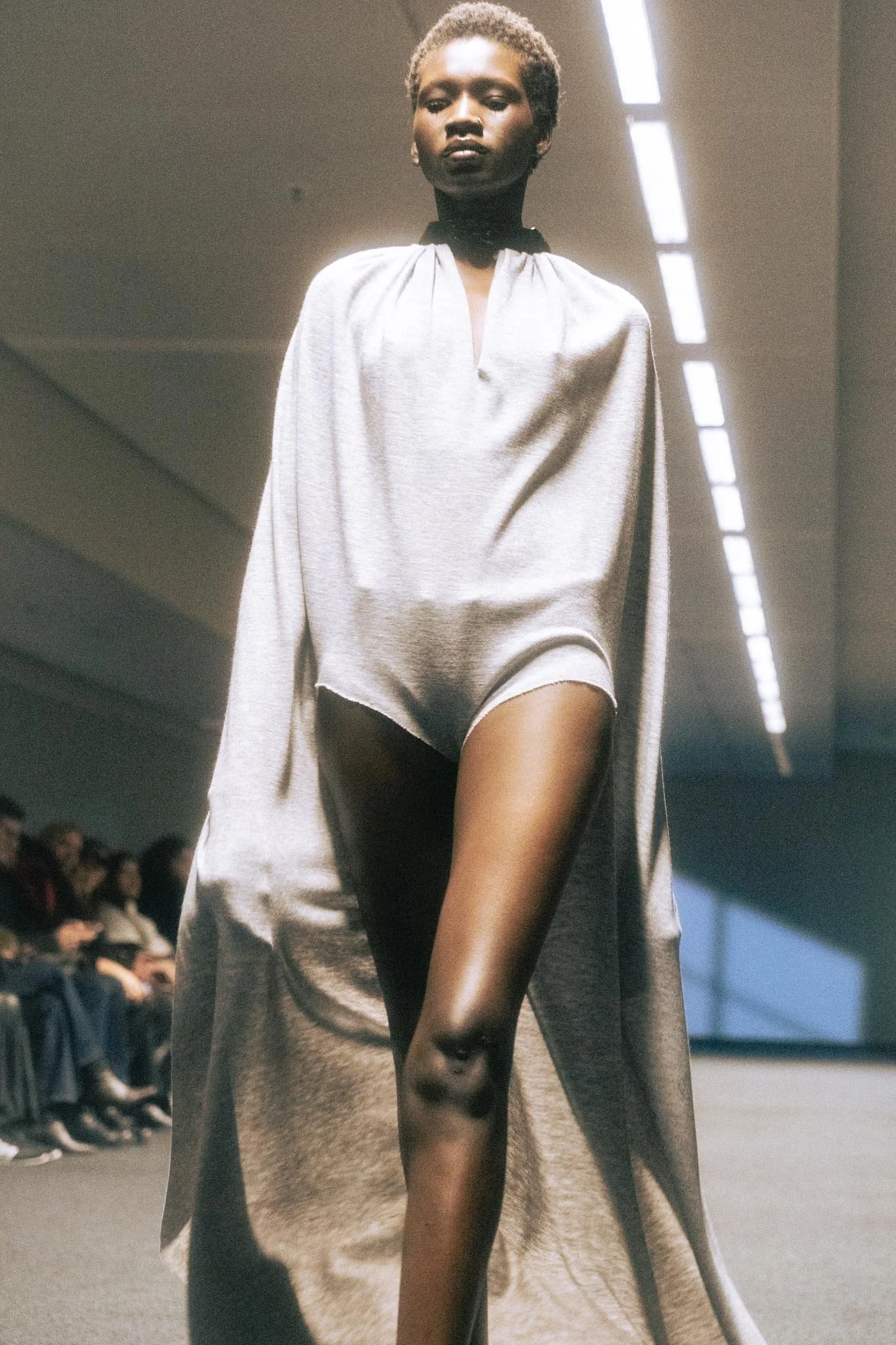
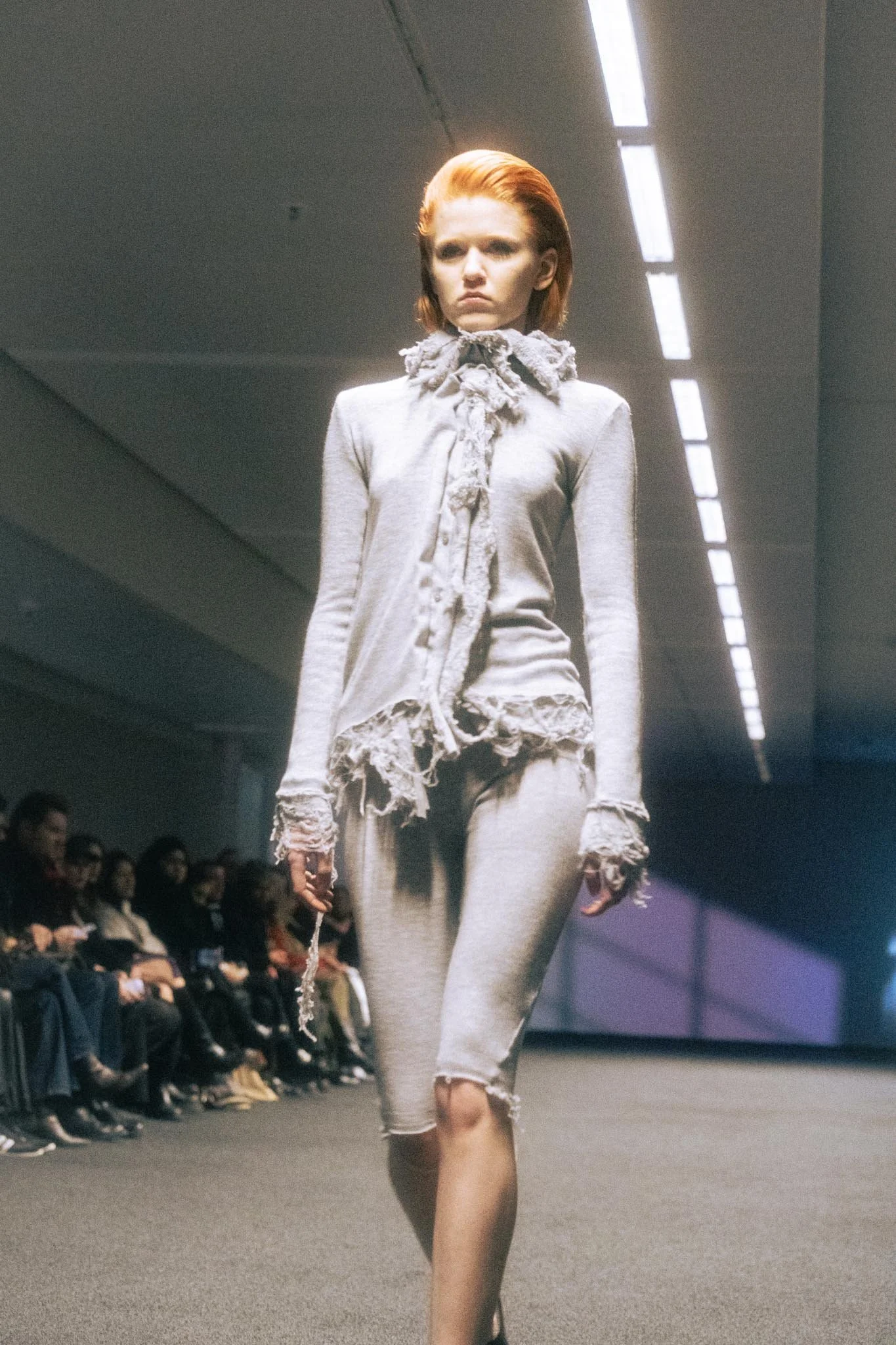
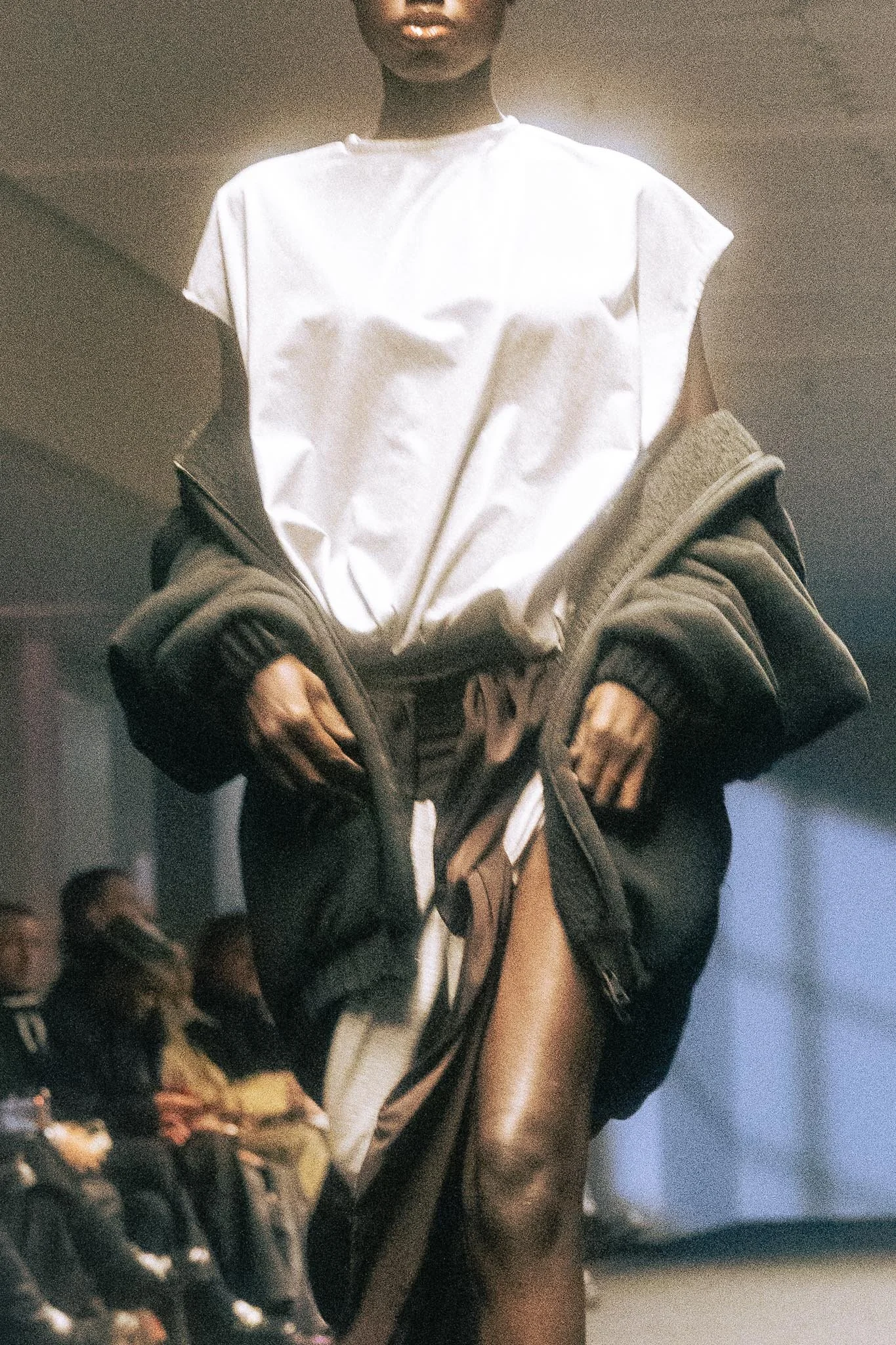
“Sia Arnika continues exploring minimalism and maximalism, control and desire, Nordic clarity and Berlin’s nocturnal spirit.”
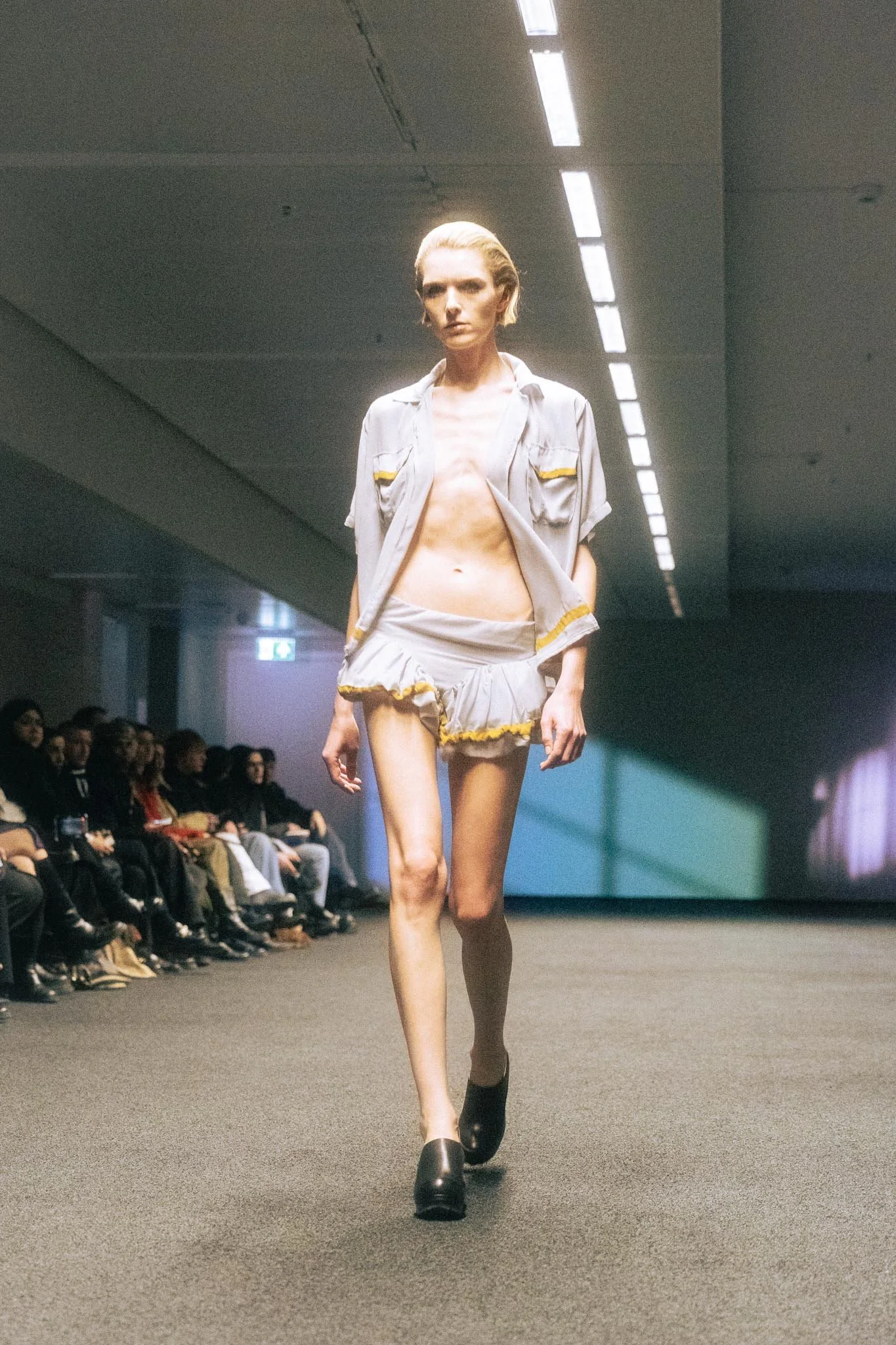
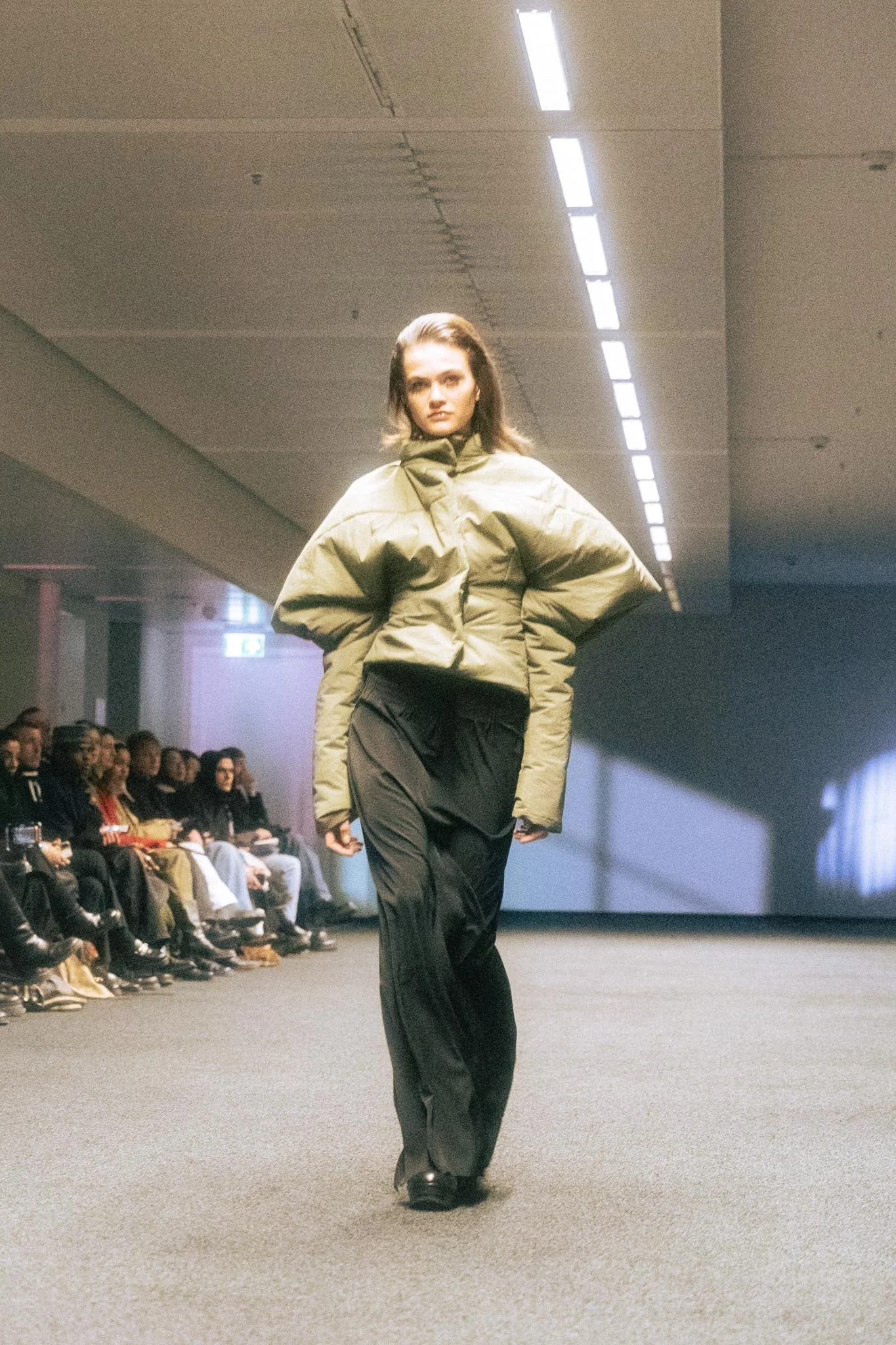
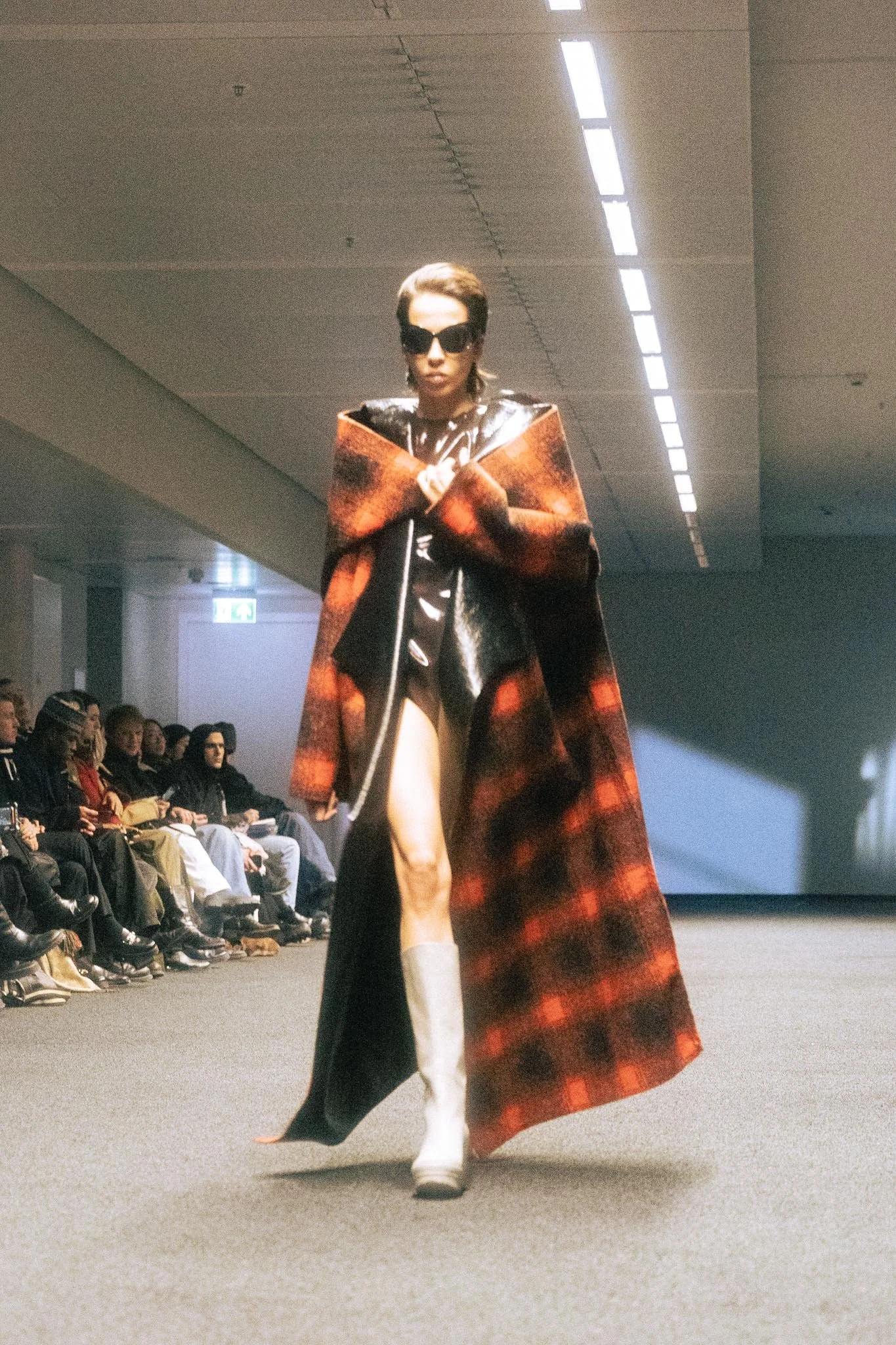
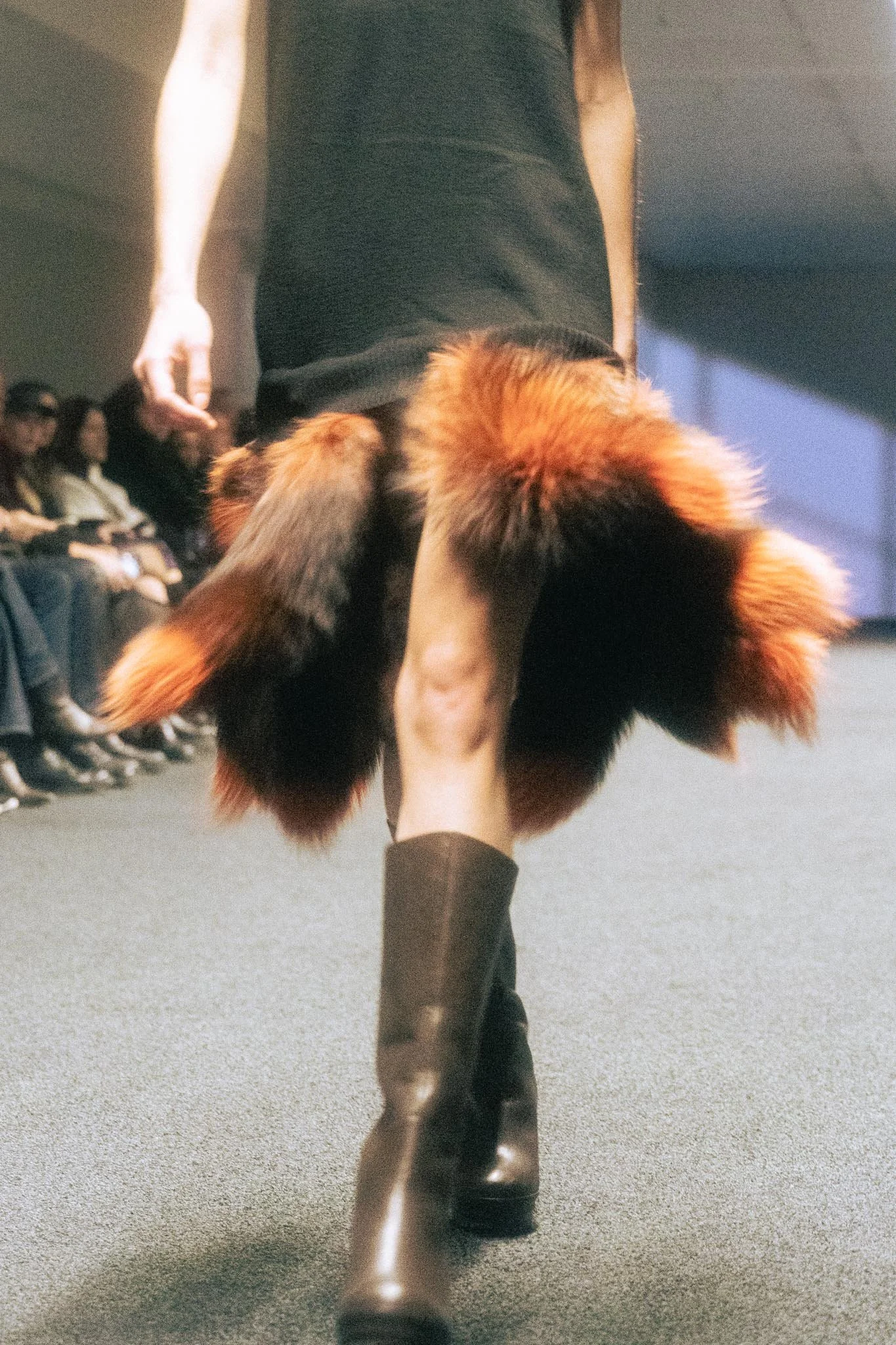
Photography by Paloma Schäfer @whiterabbitjpg
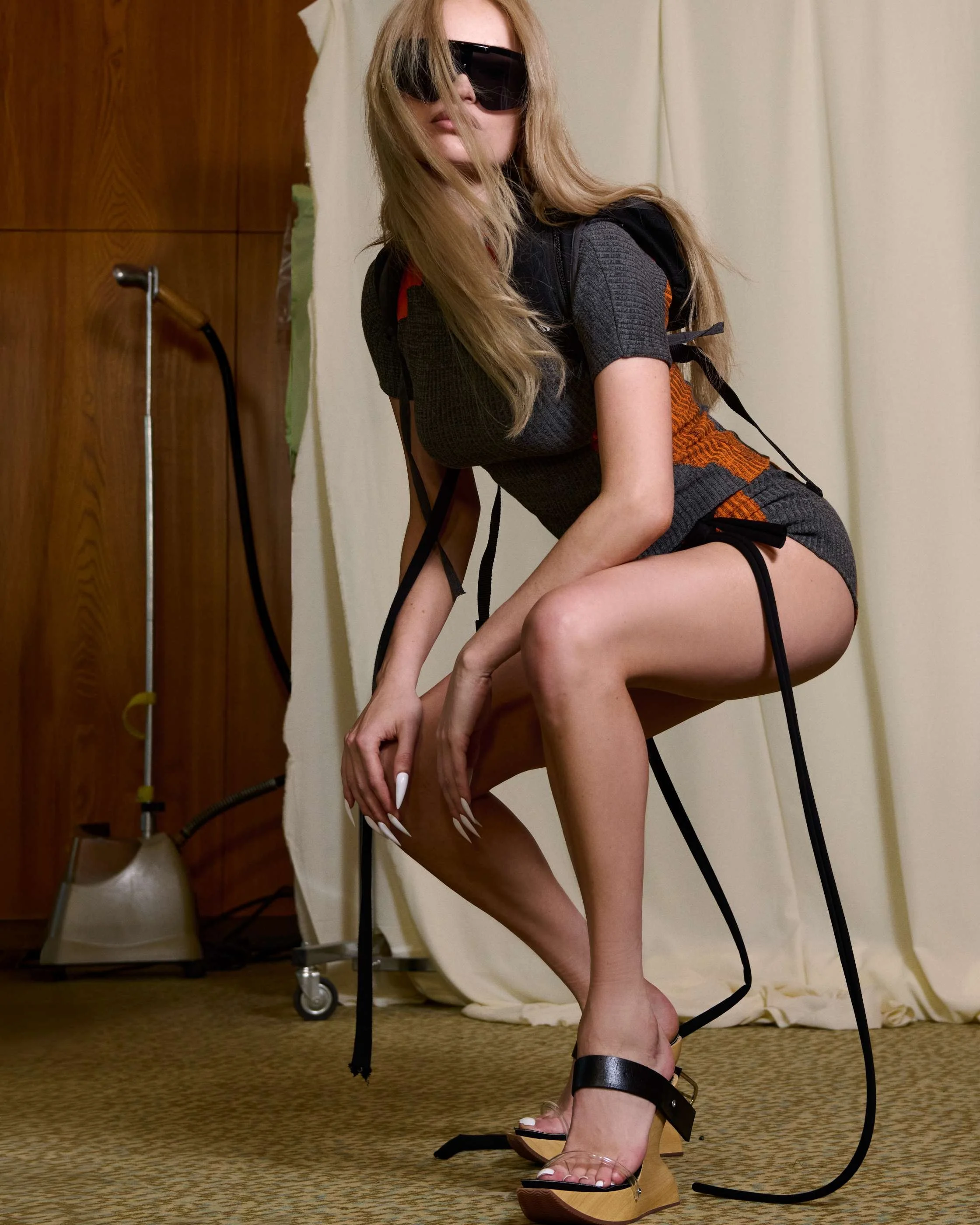
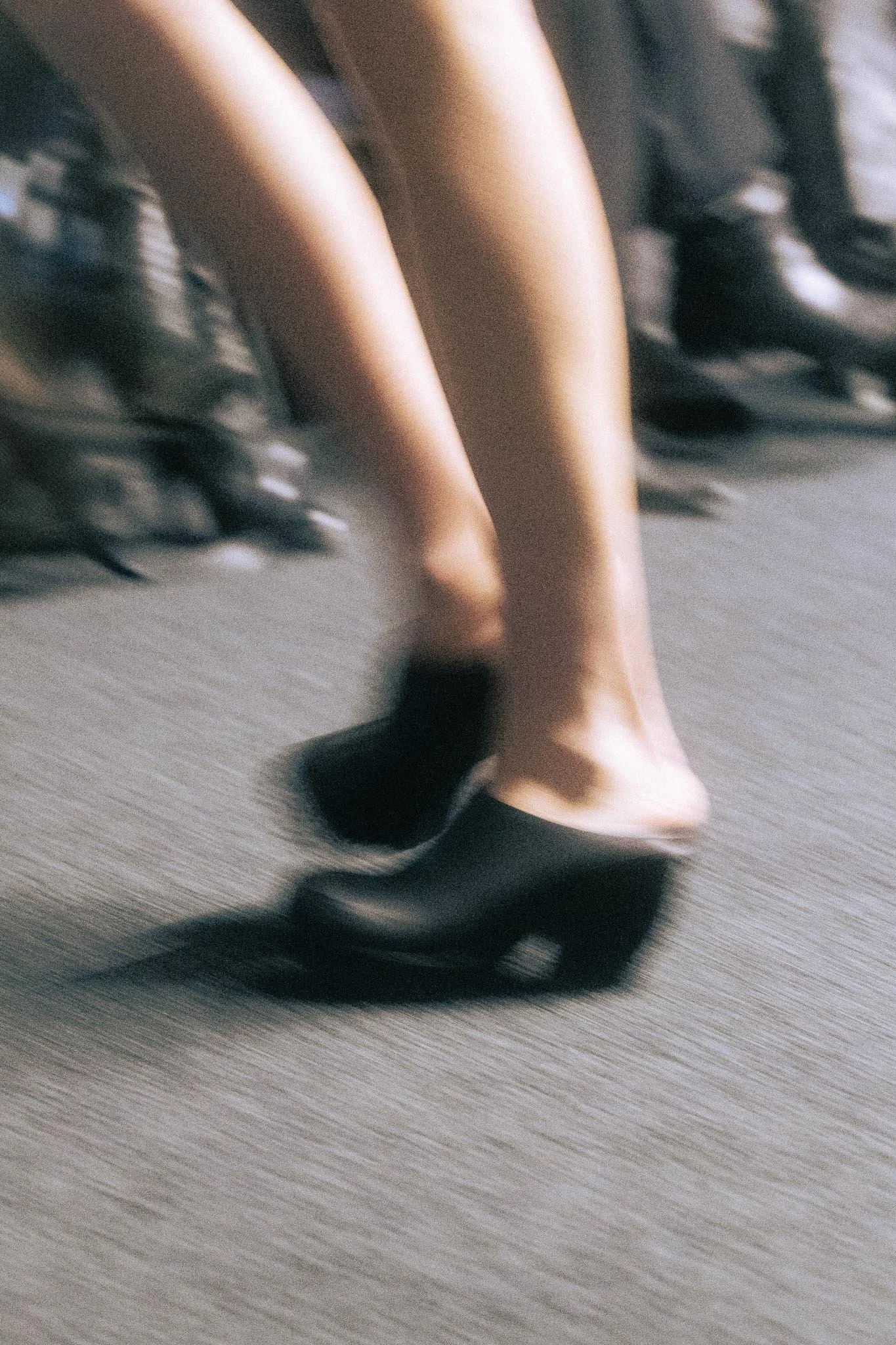
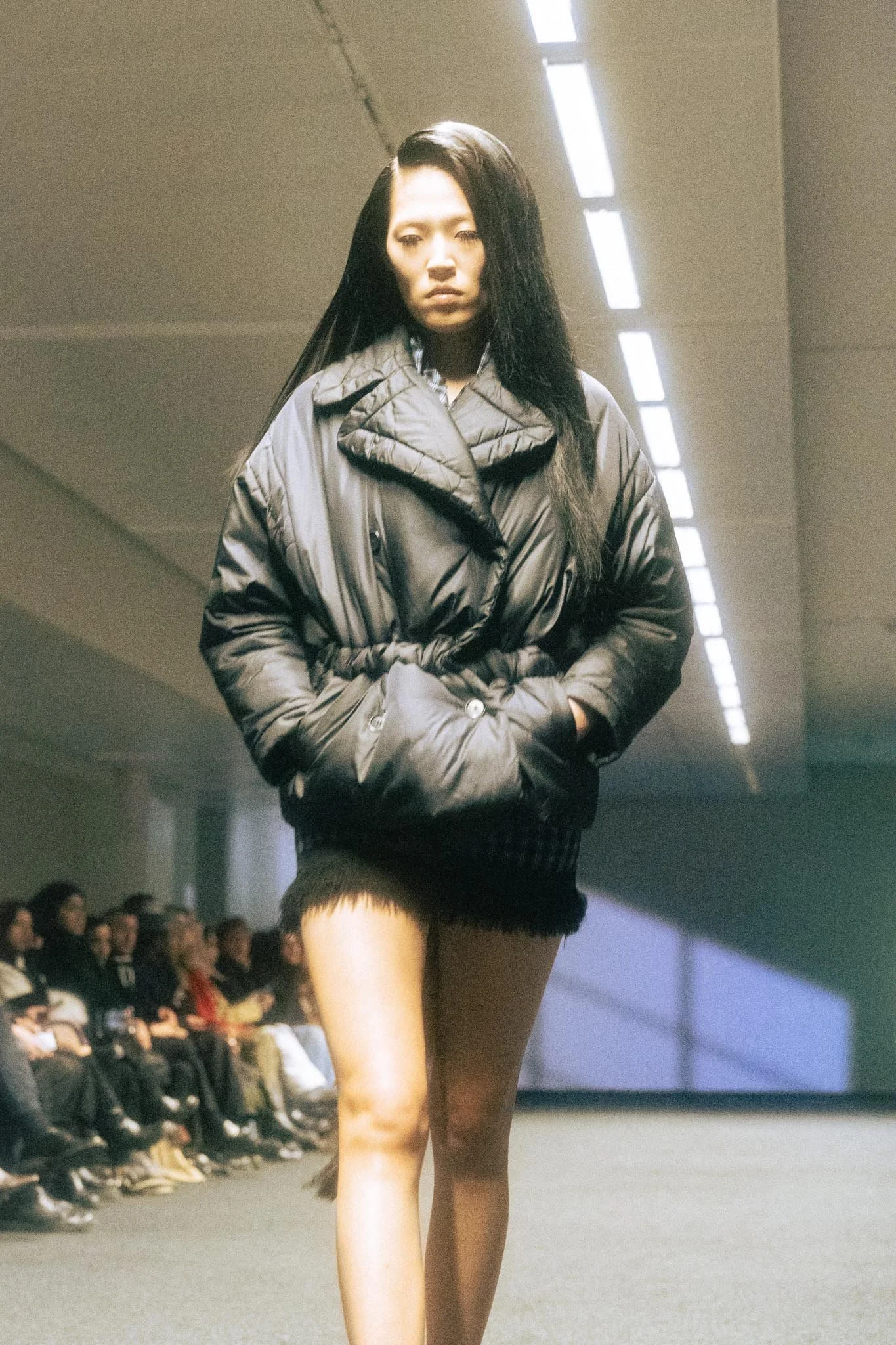
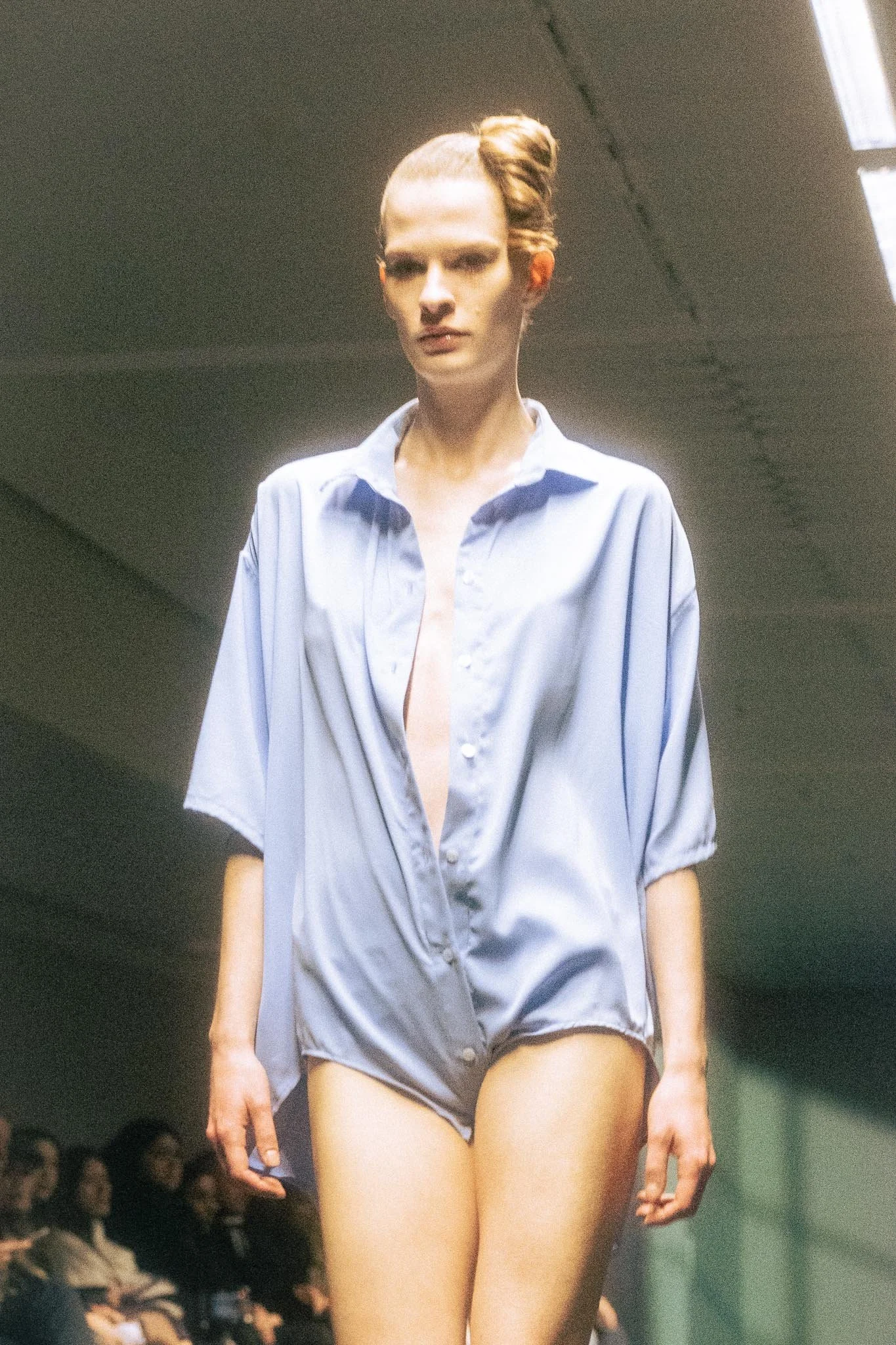
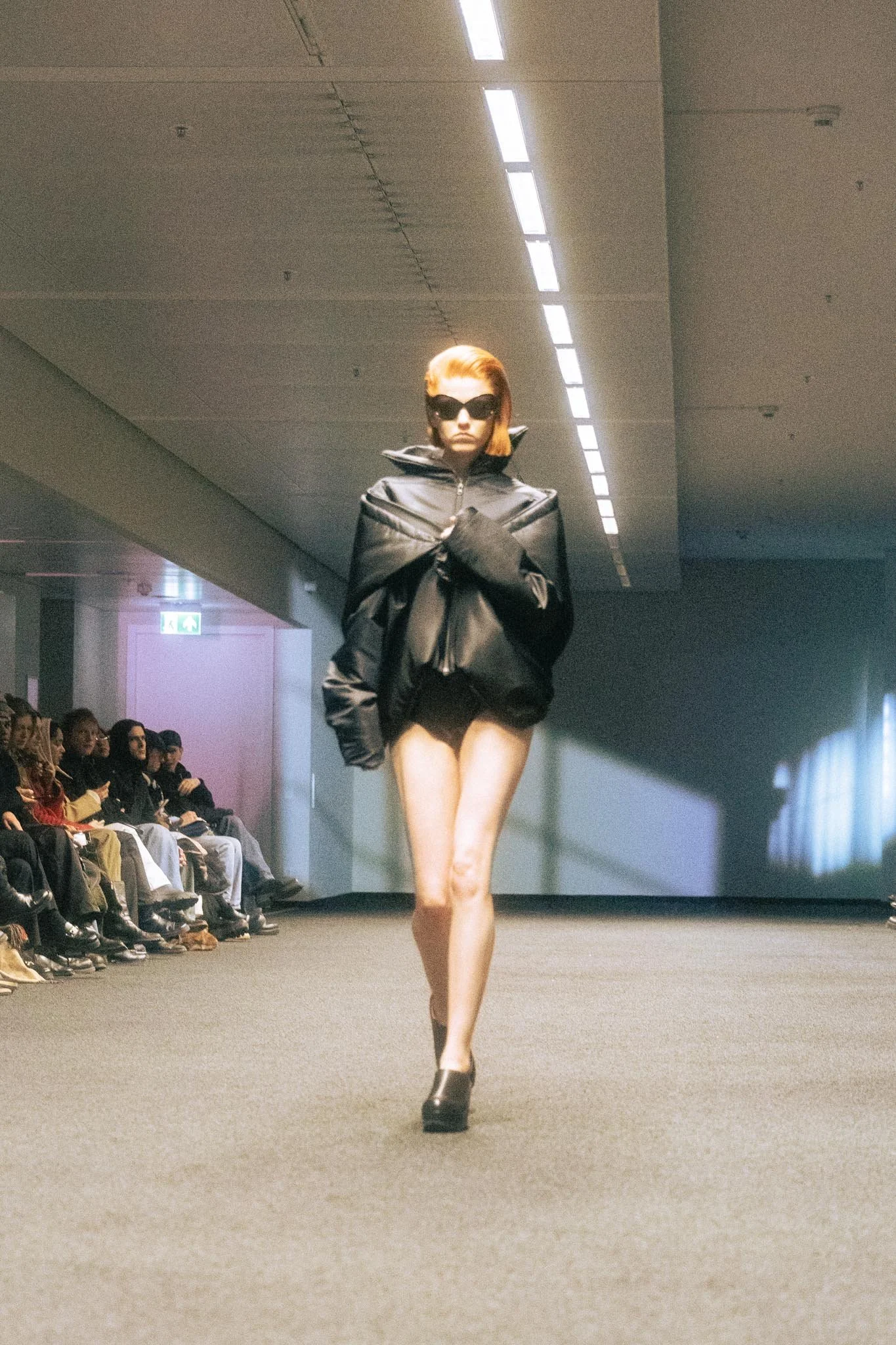
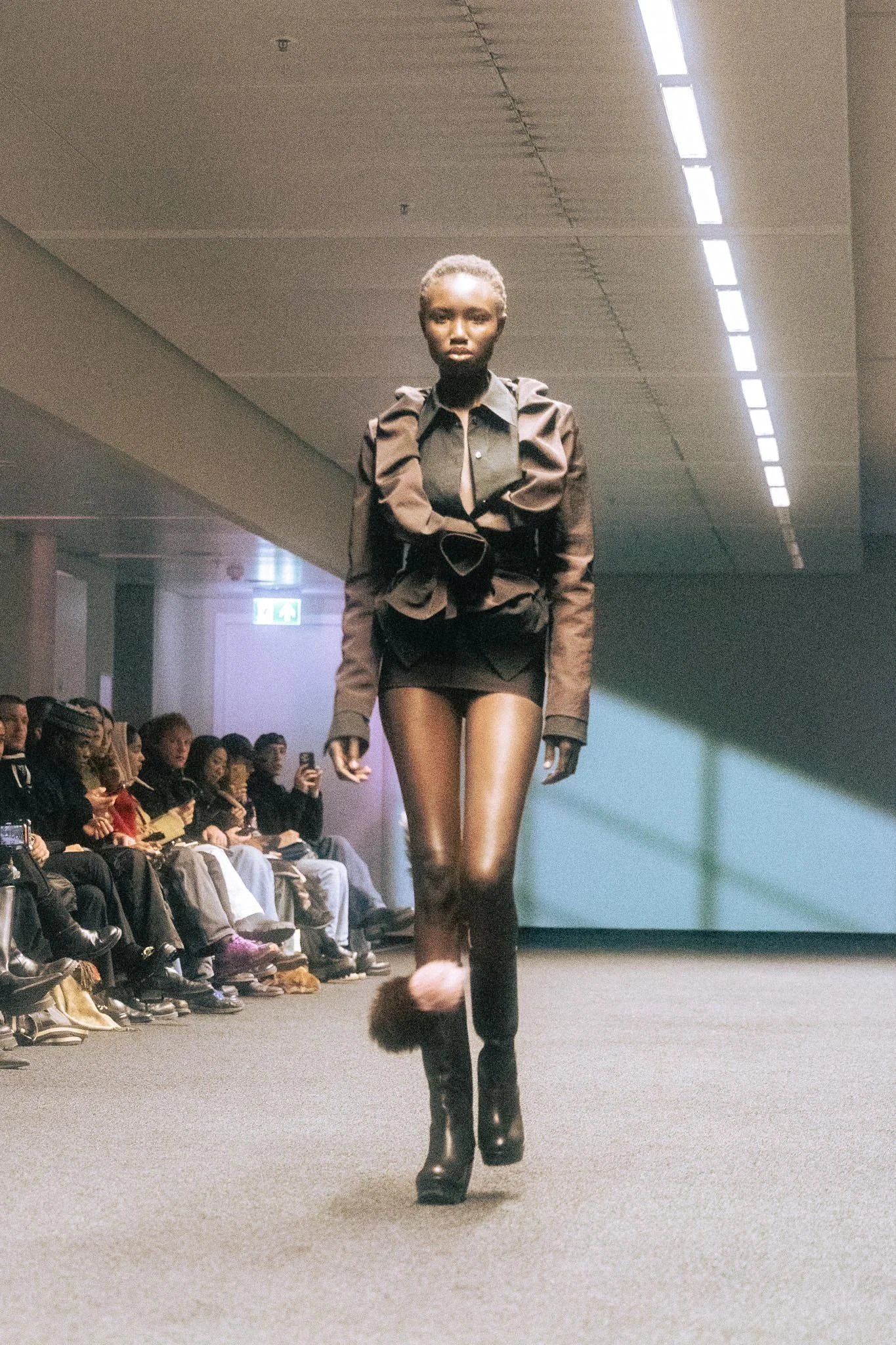
Sia Arnika's Overtime captures the slow exhale after fluorescent hours. Set in an office left mid-function, the FW26 collection showcased like uniforms loosening, silhouettes slipping, workwear fracturing into something nocturnal and intimate. The Danish, Berlin-based designer explores that liminal space when obligation yields to escape, when rigid corporate structures dissolve into possibility.
Proportions shortened. Jackets and button-ups paired with micro-mini skirts, shirts reworked as bodysuits, silhouettes turned top-heavy. Mesh, jersey, and tactile layers clung and interrupted the body, punctuated by flashes of Swarovski shine. Plaid sets referenced corporate dressing while slinky slip dresses and faux-fur trims injected daring. EUROPA's soundtrack amplified the sense of excitement, performance ending, night approaching.
ORANGE CULTURE
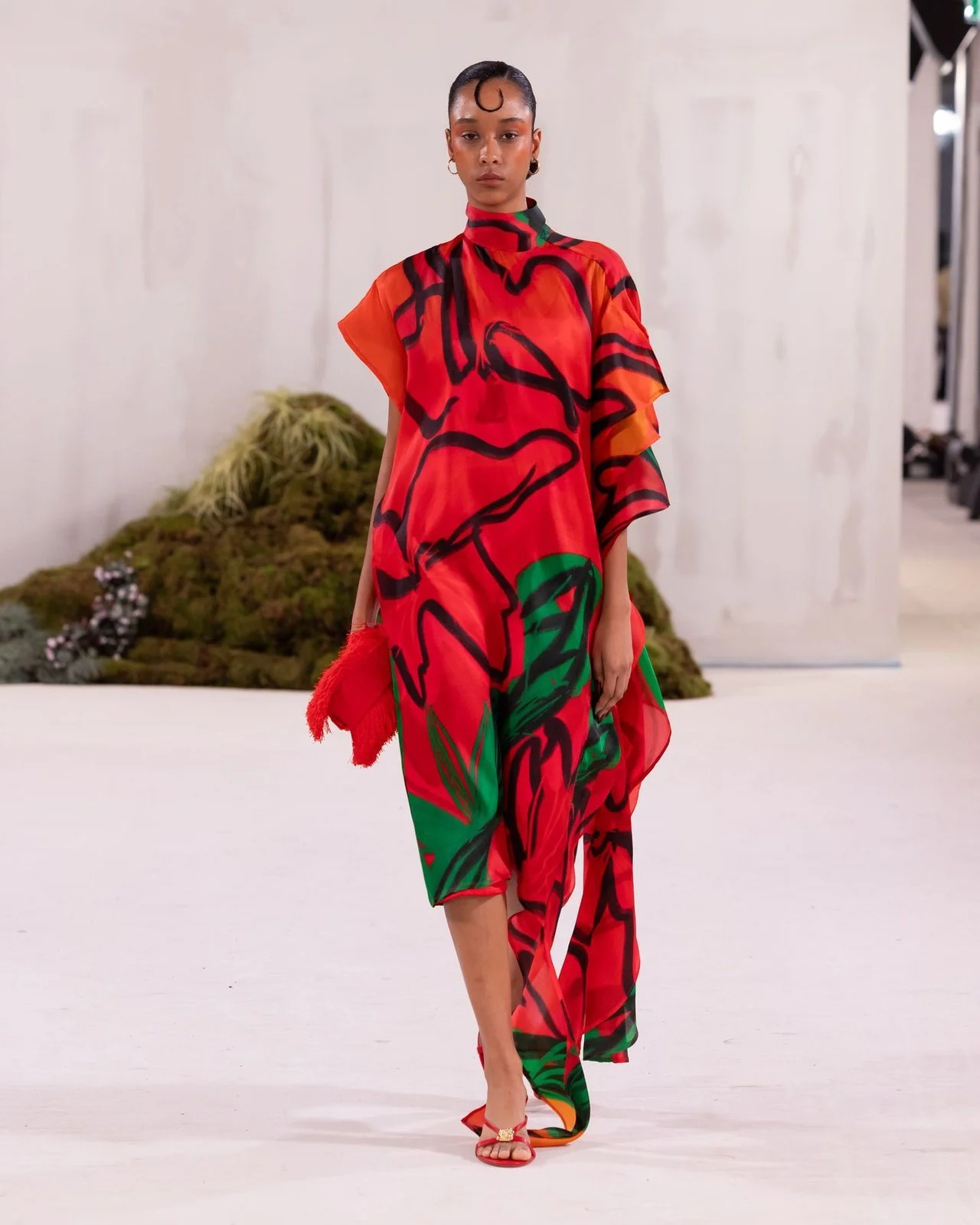
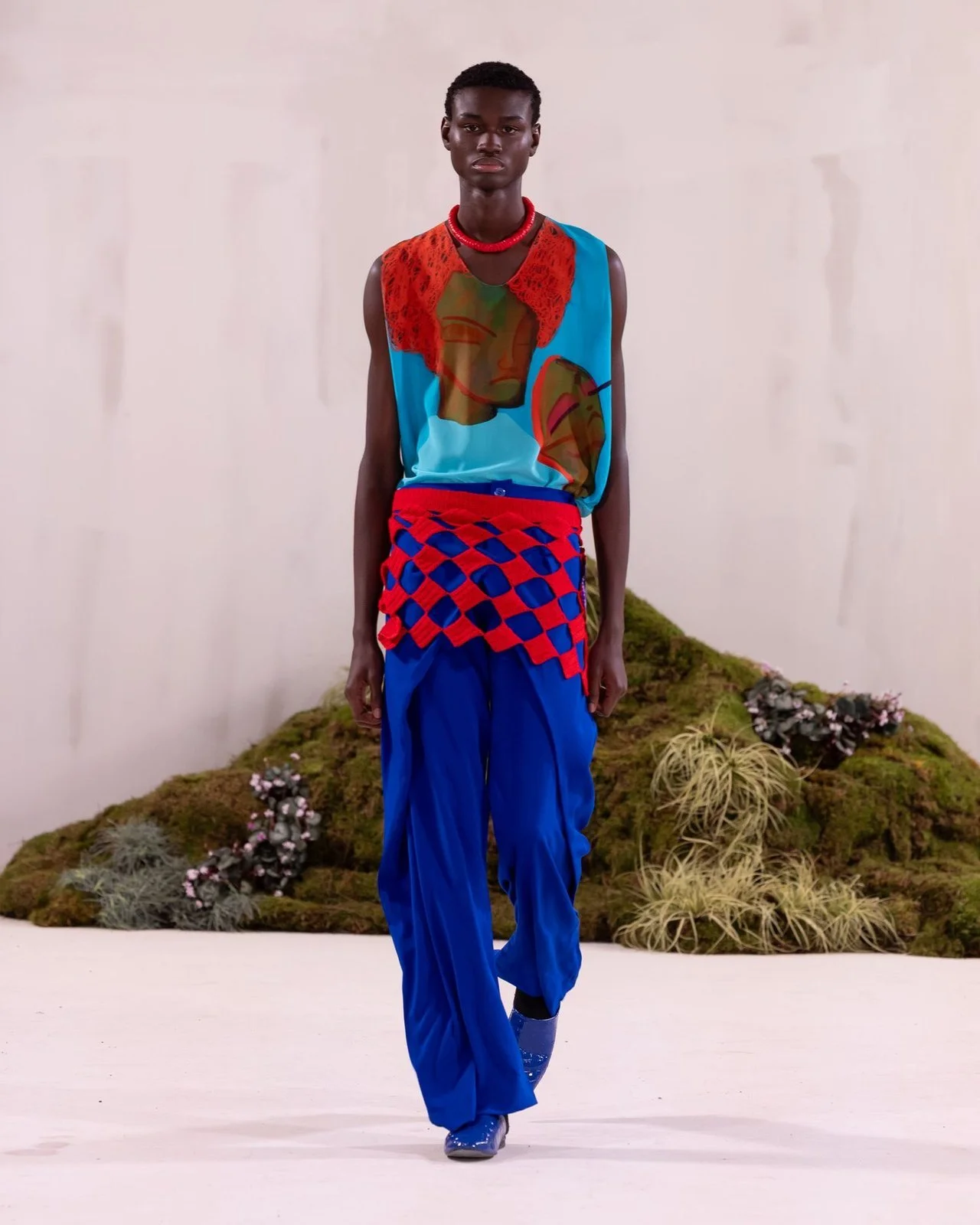
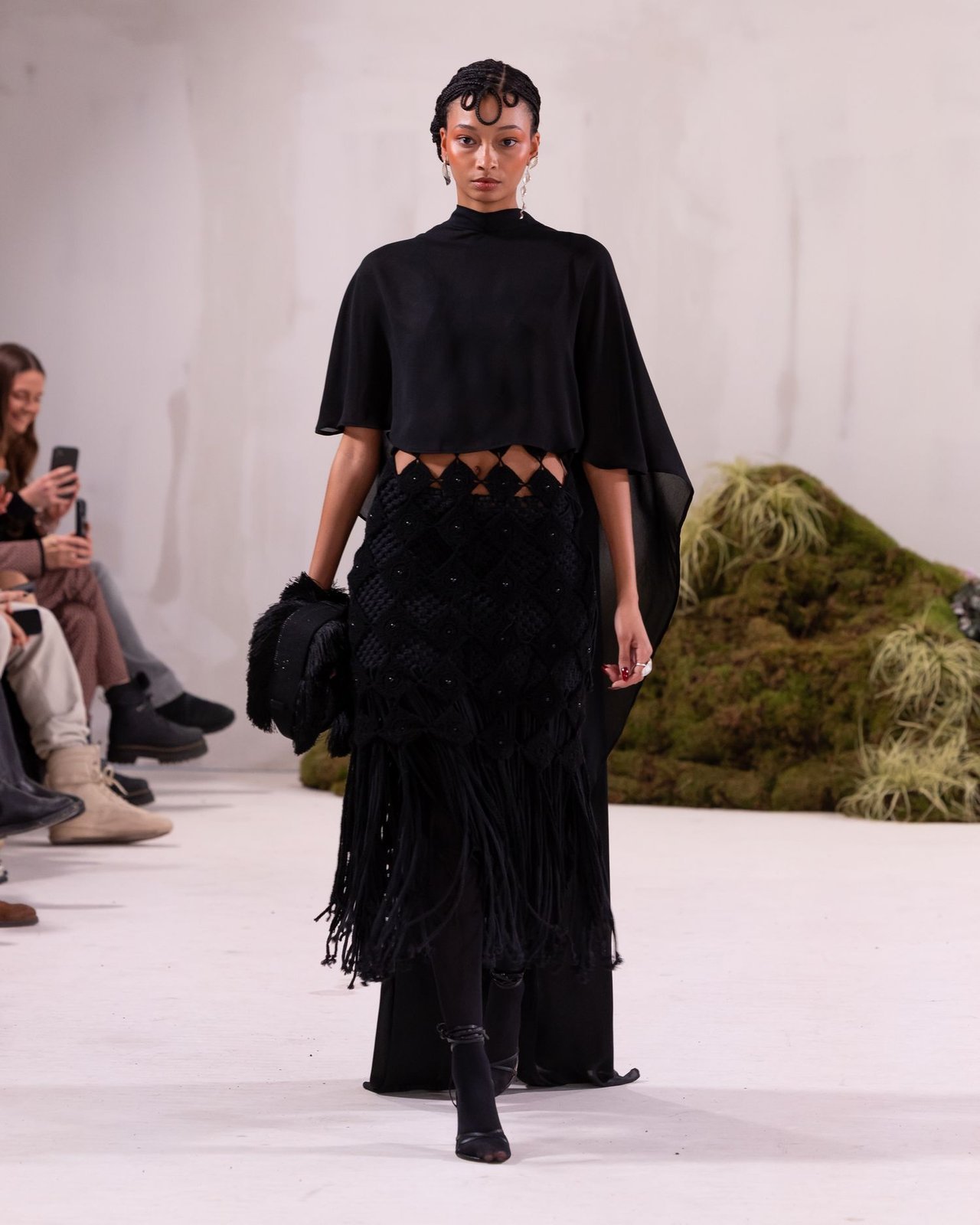
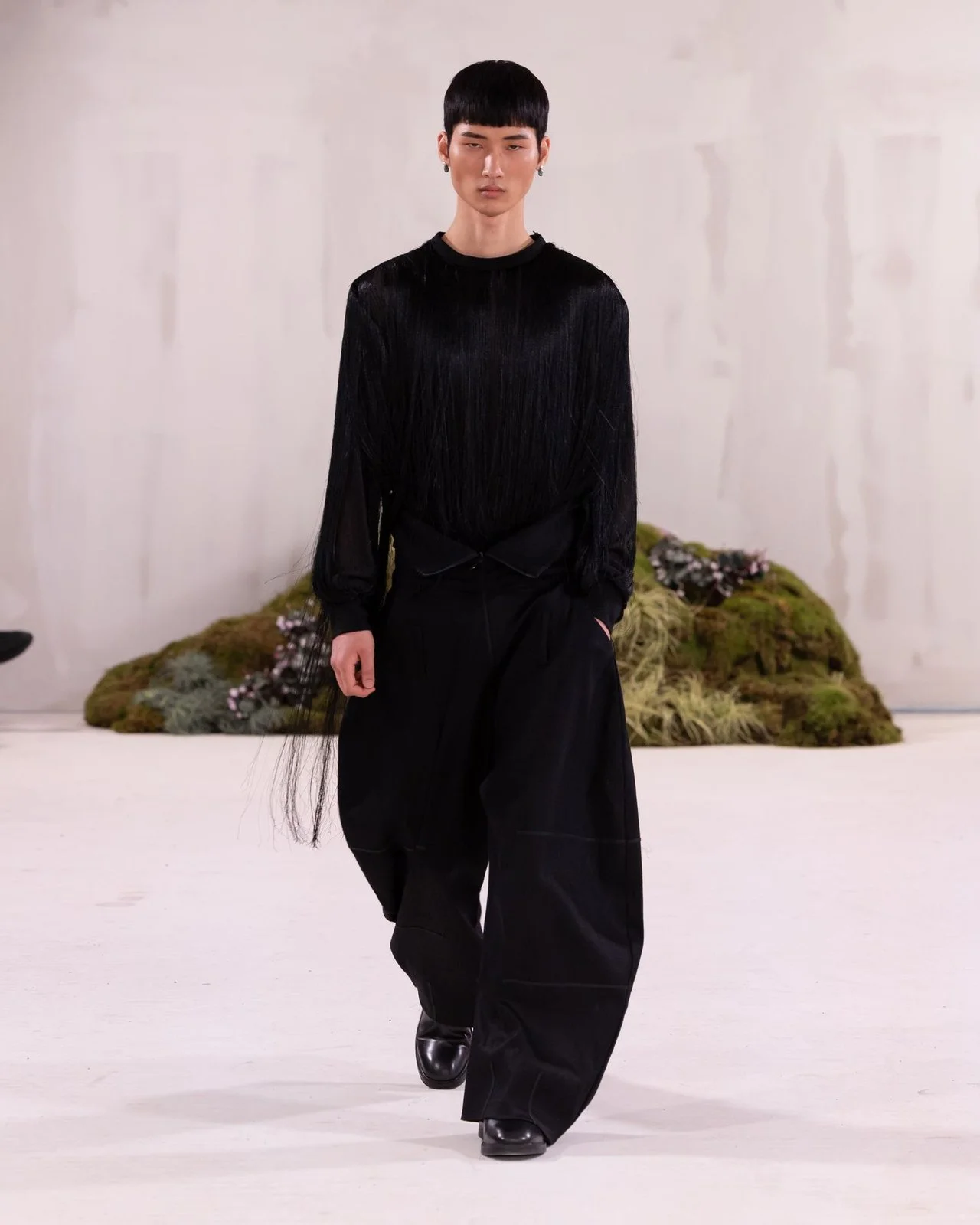
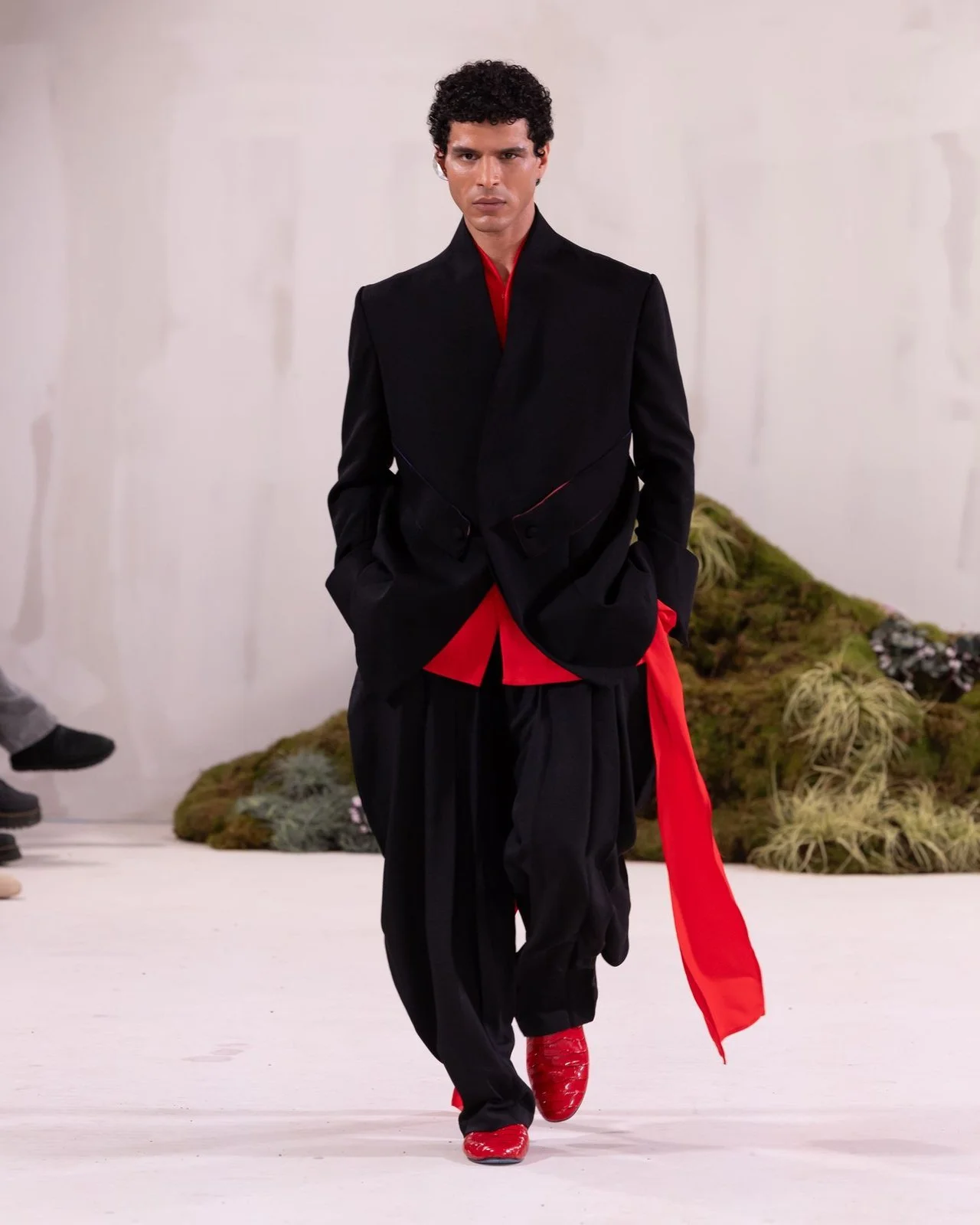
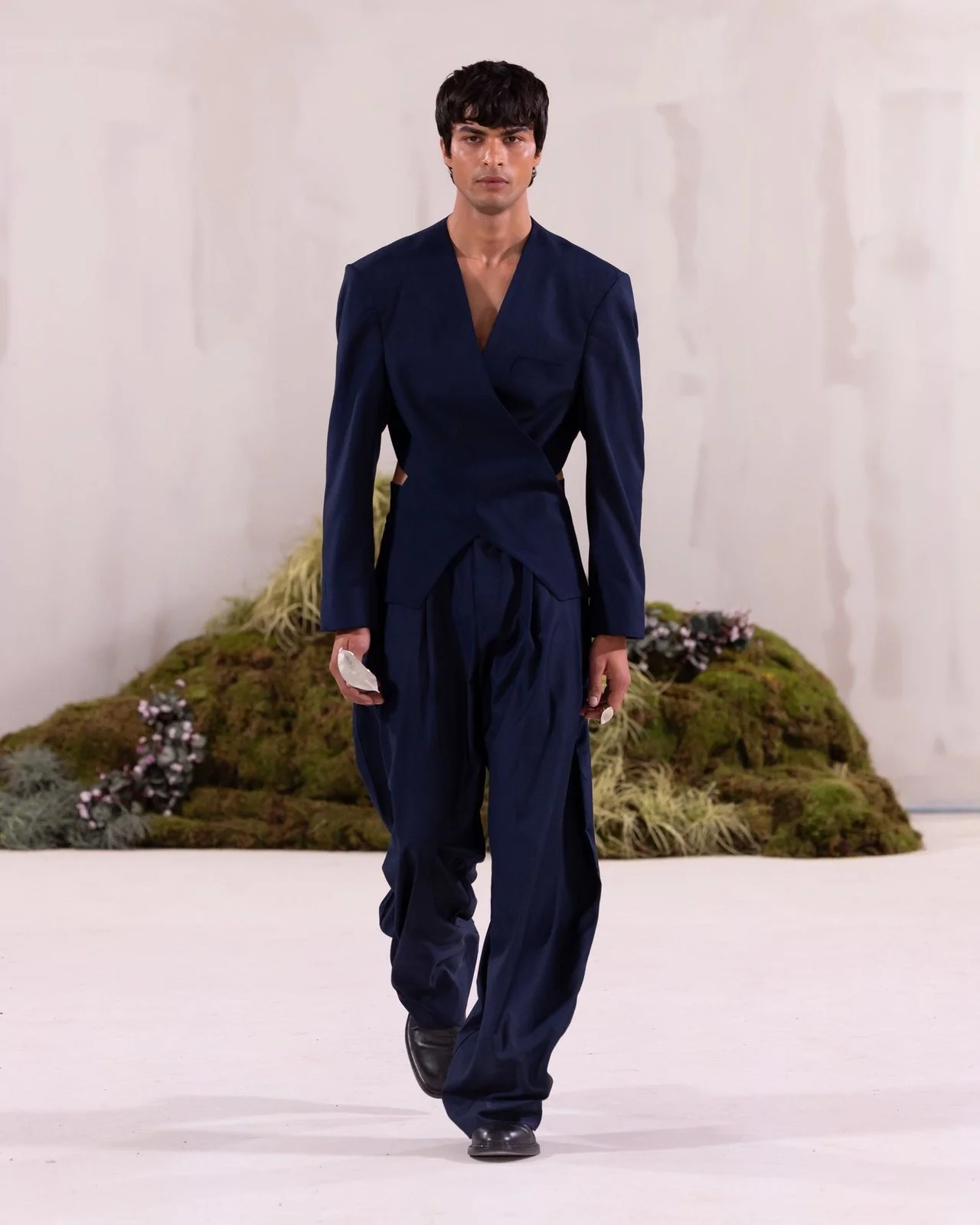
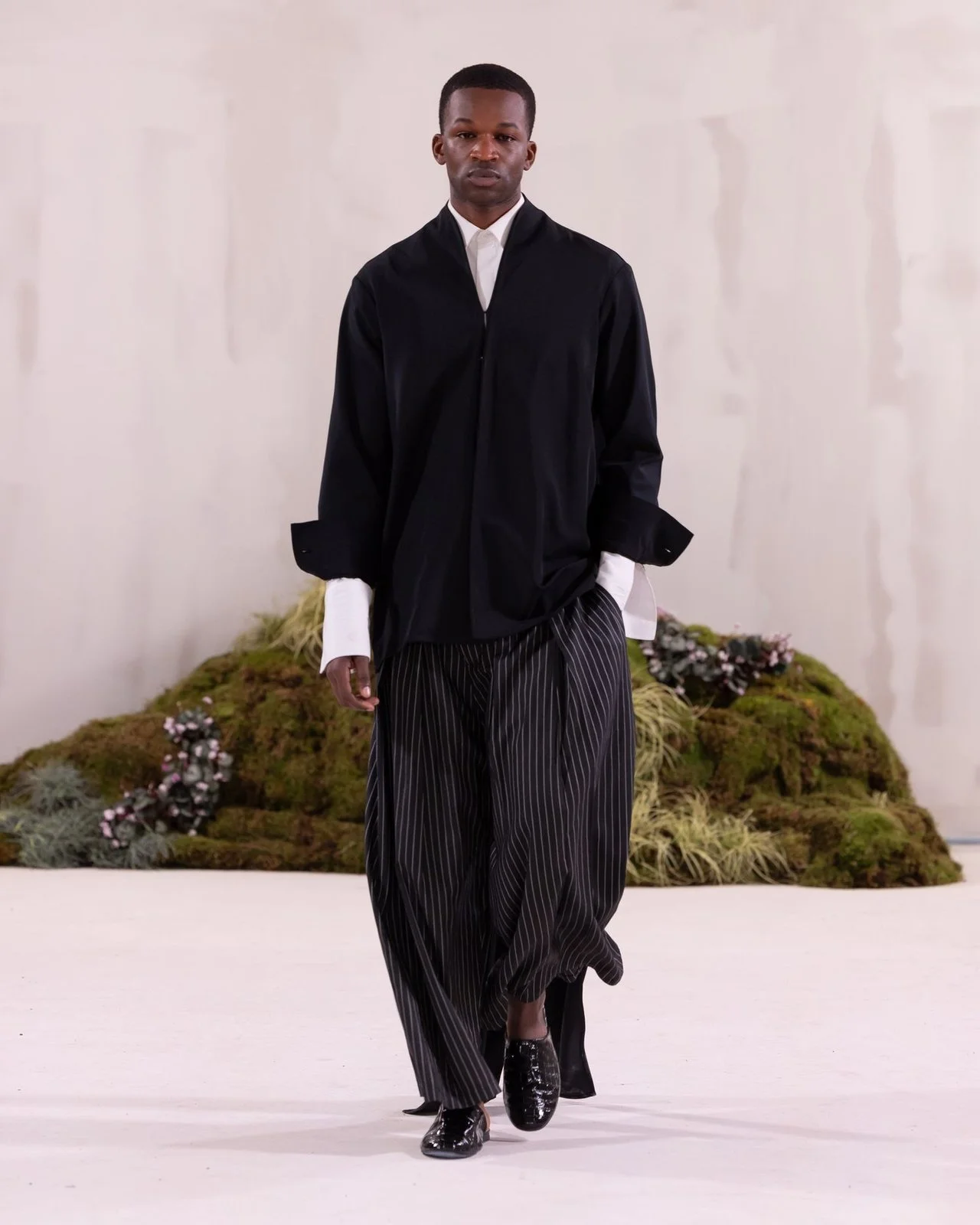
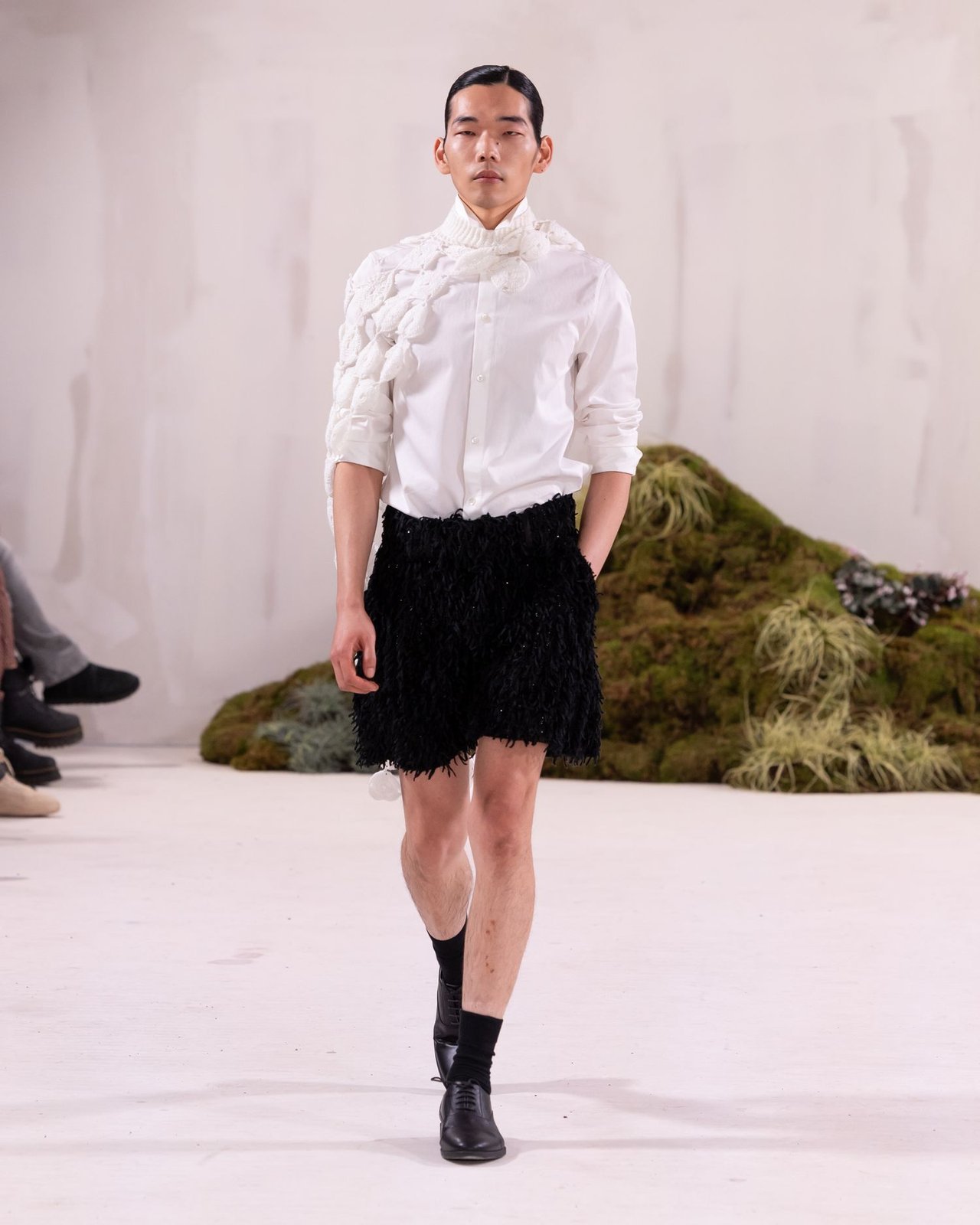
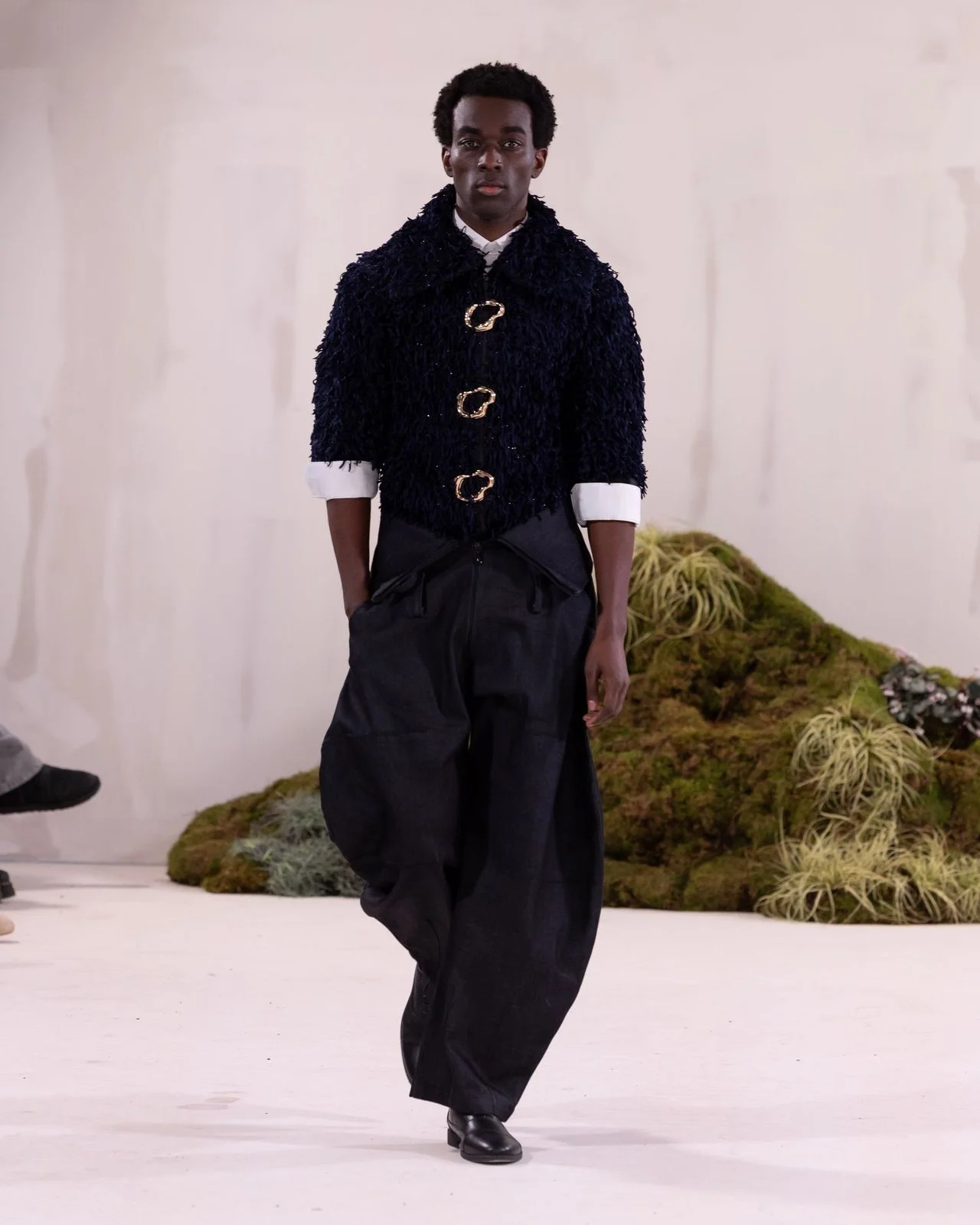
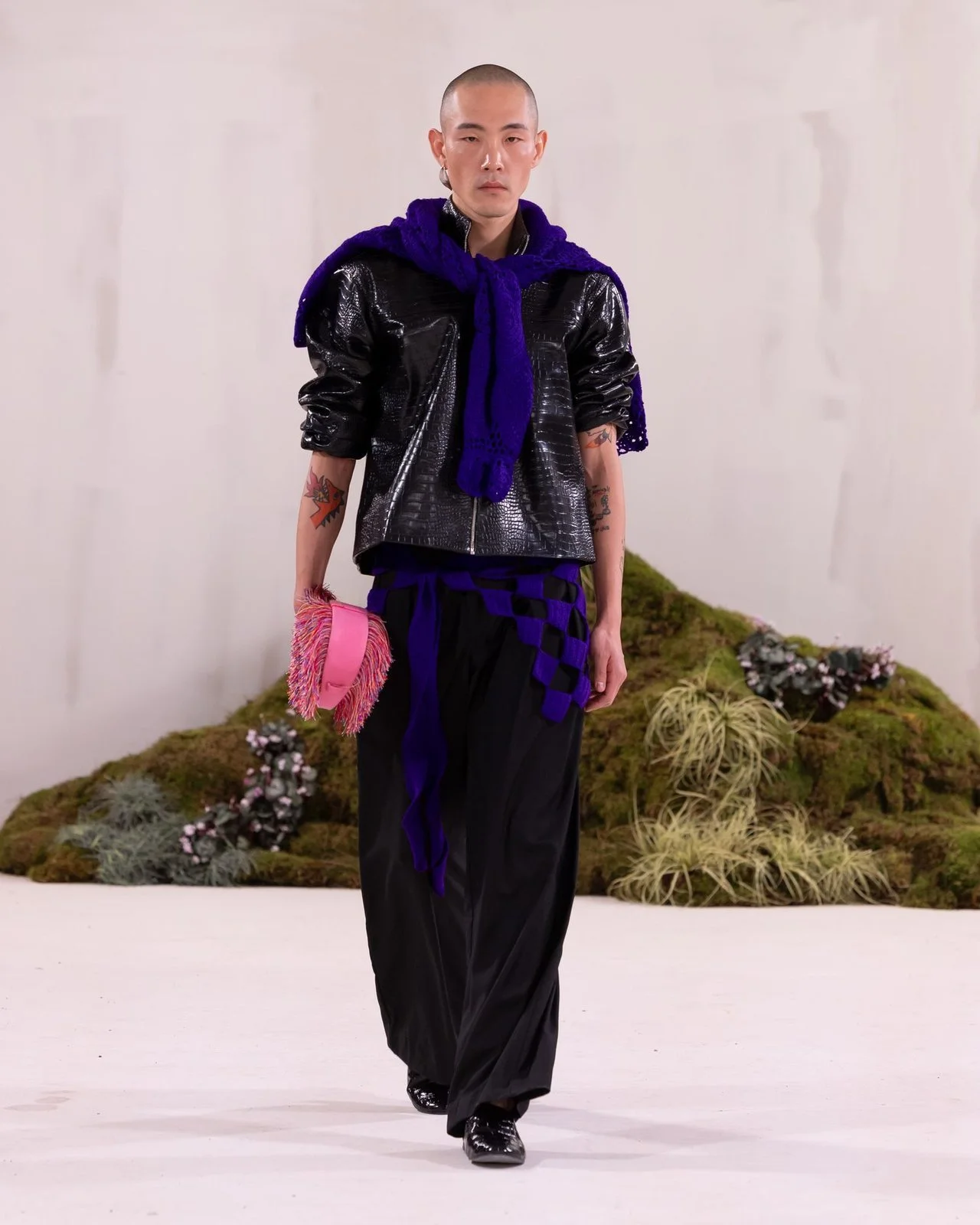
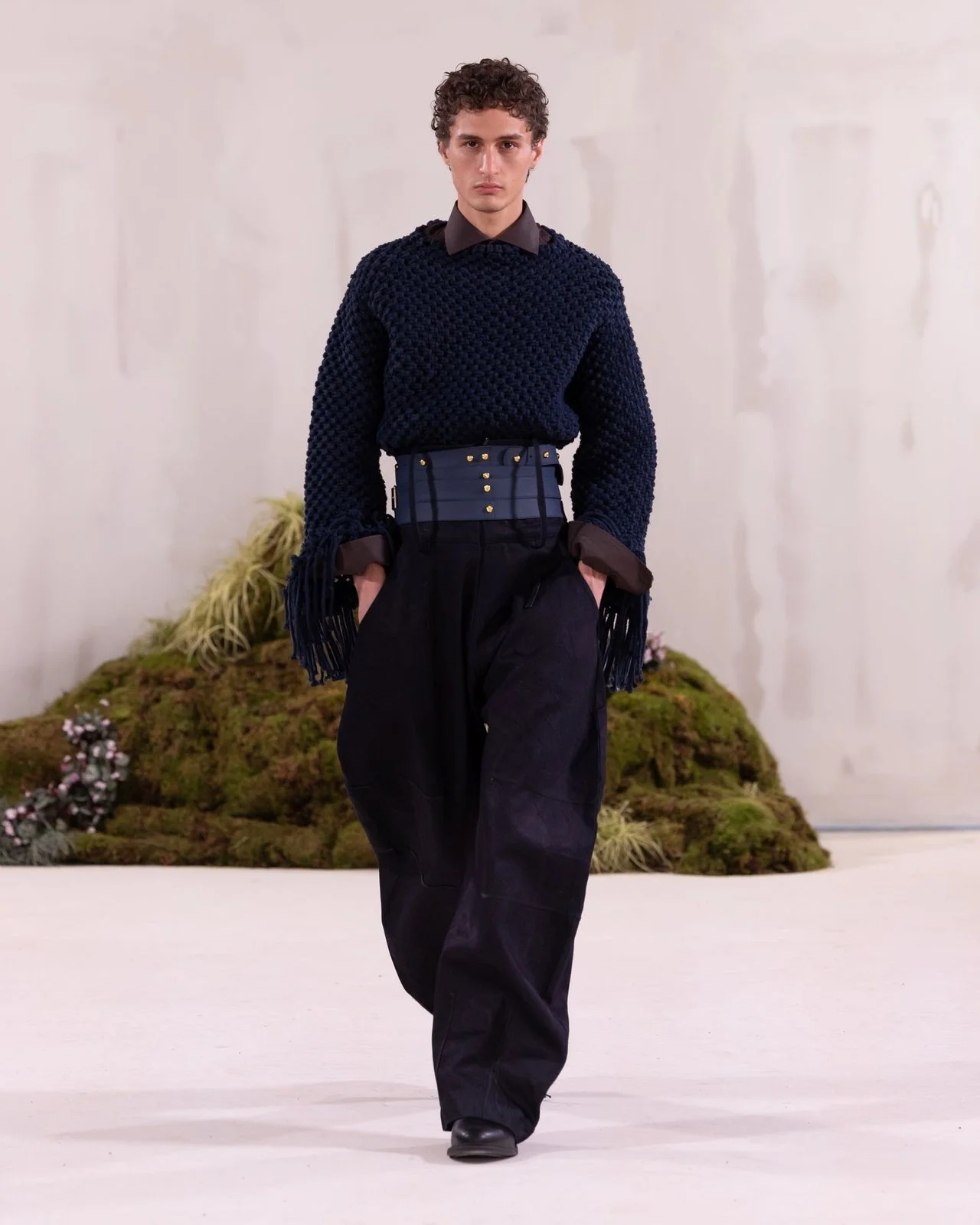
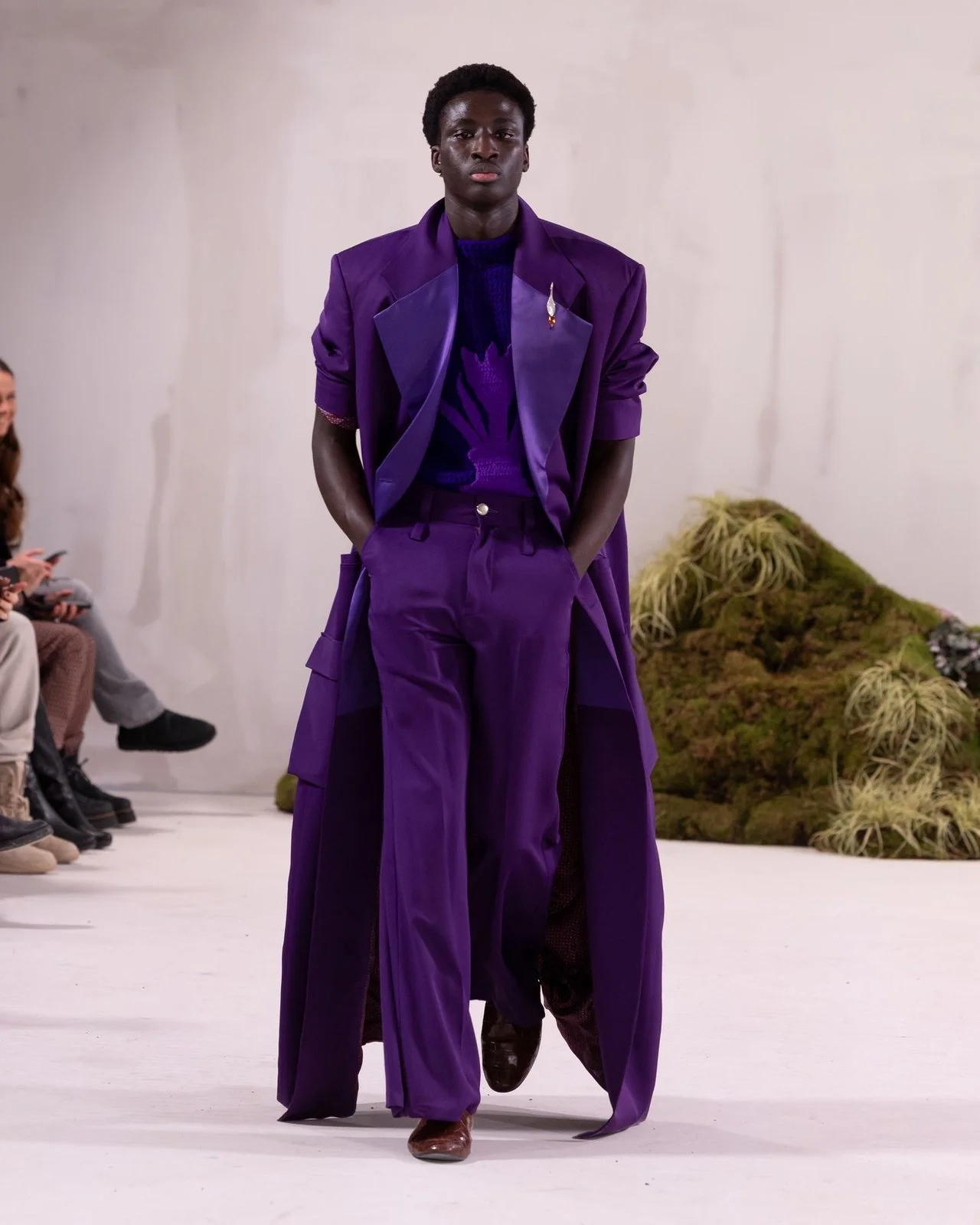
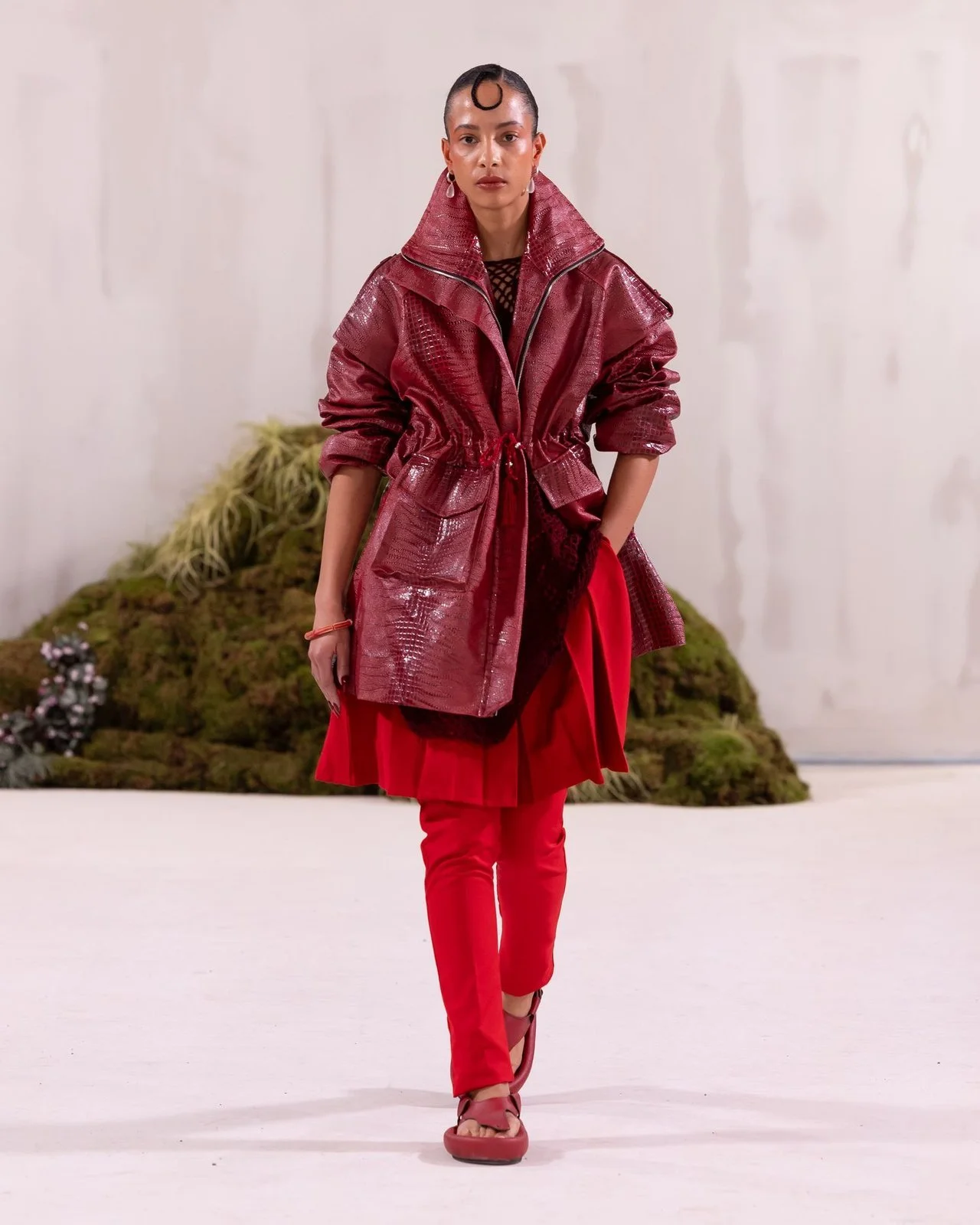
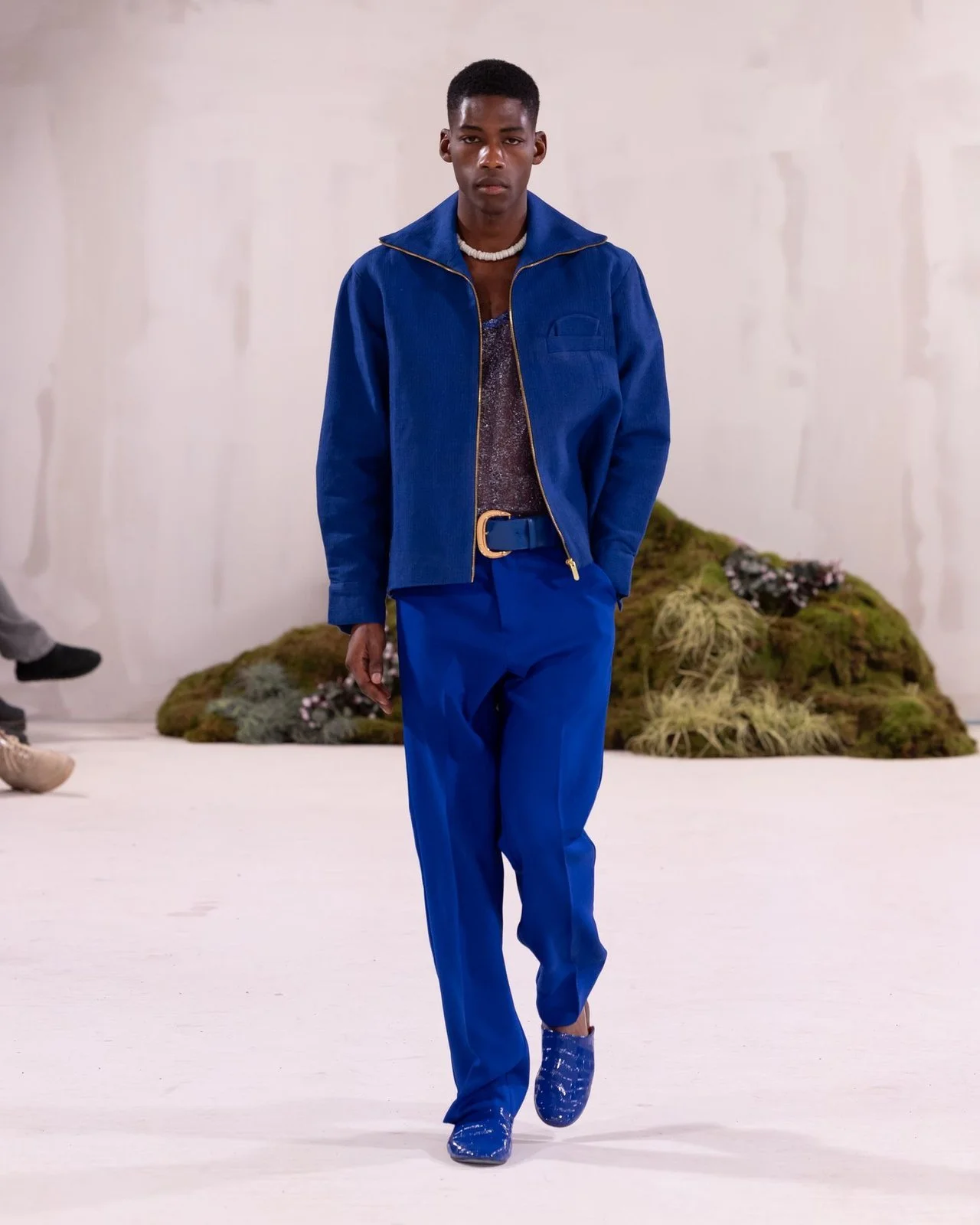
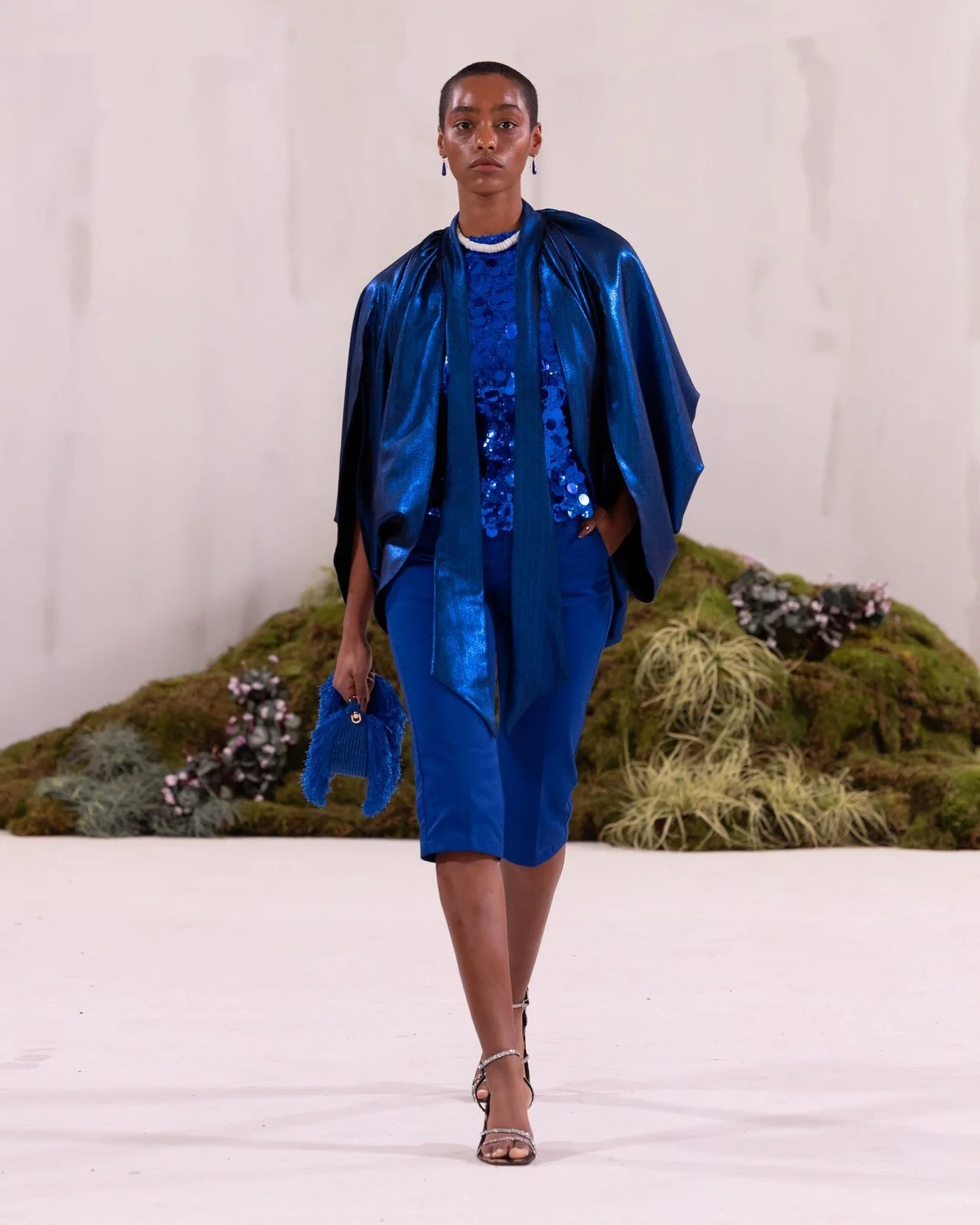
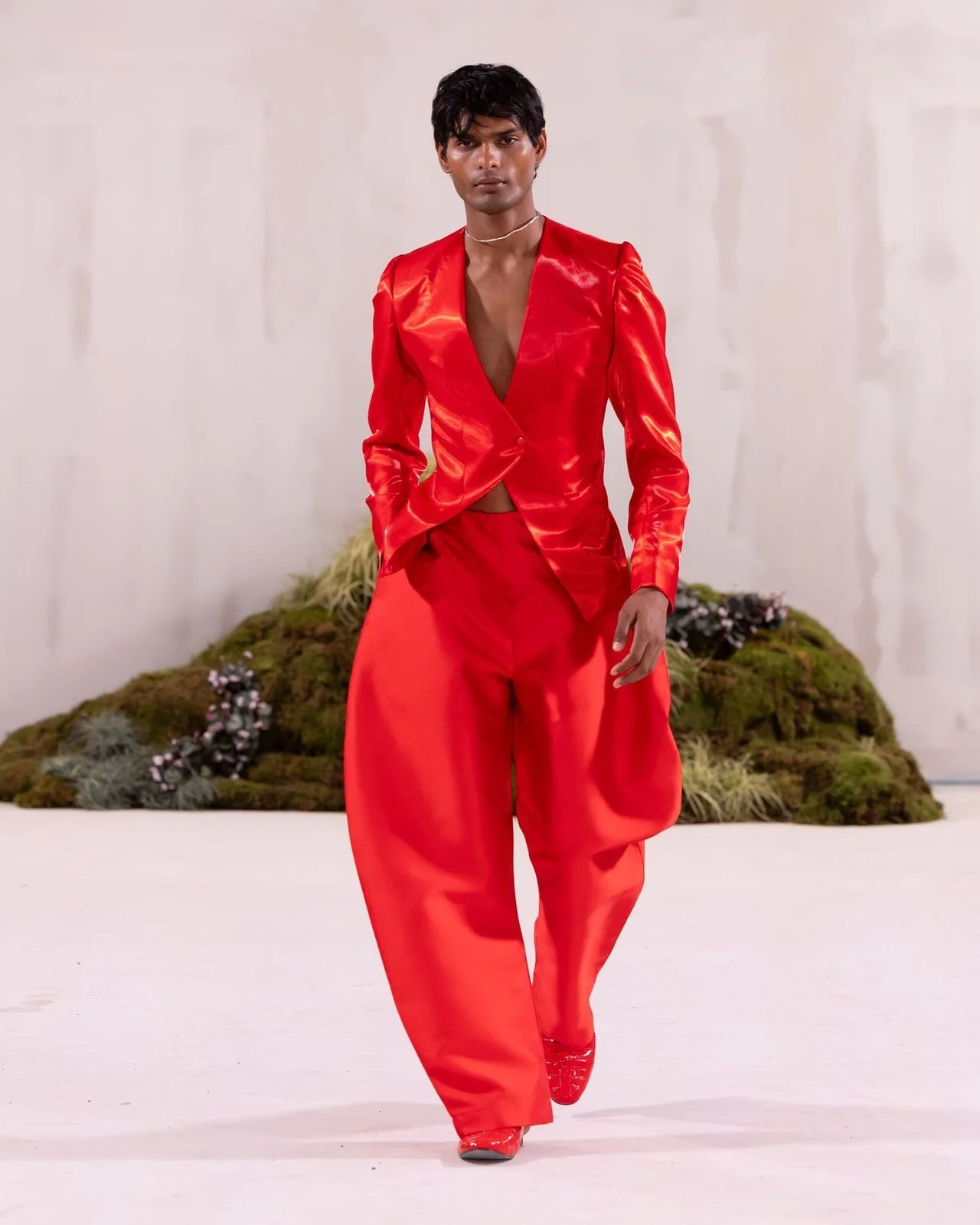
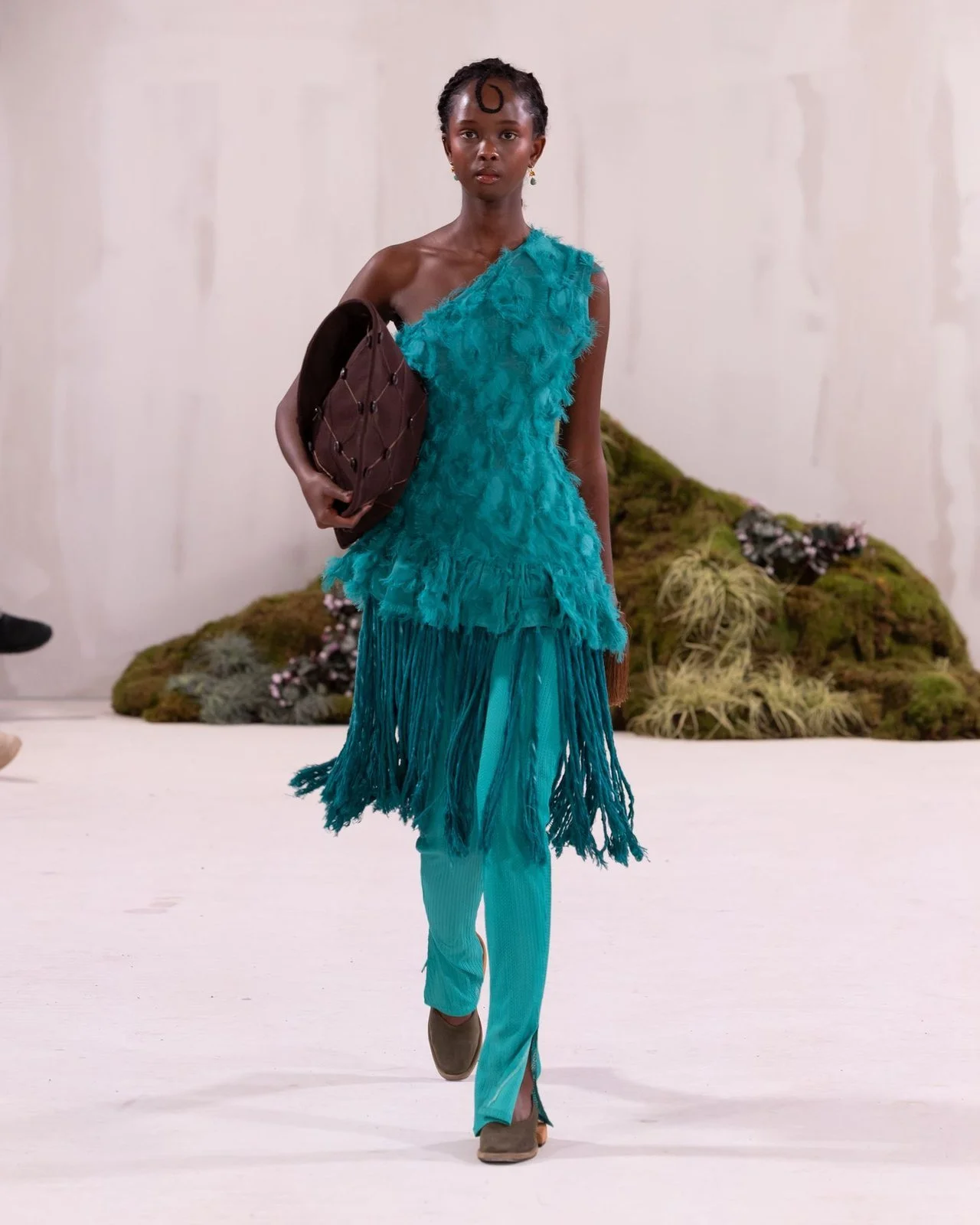
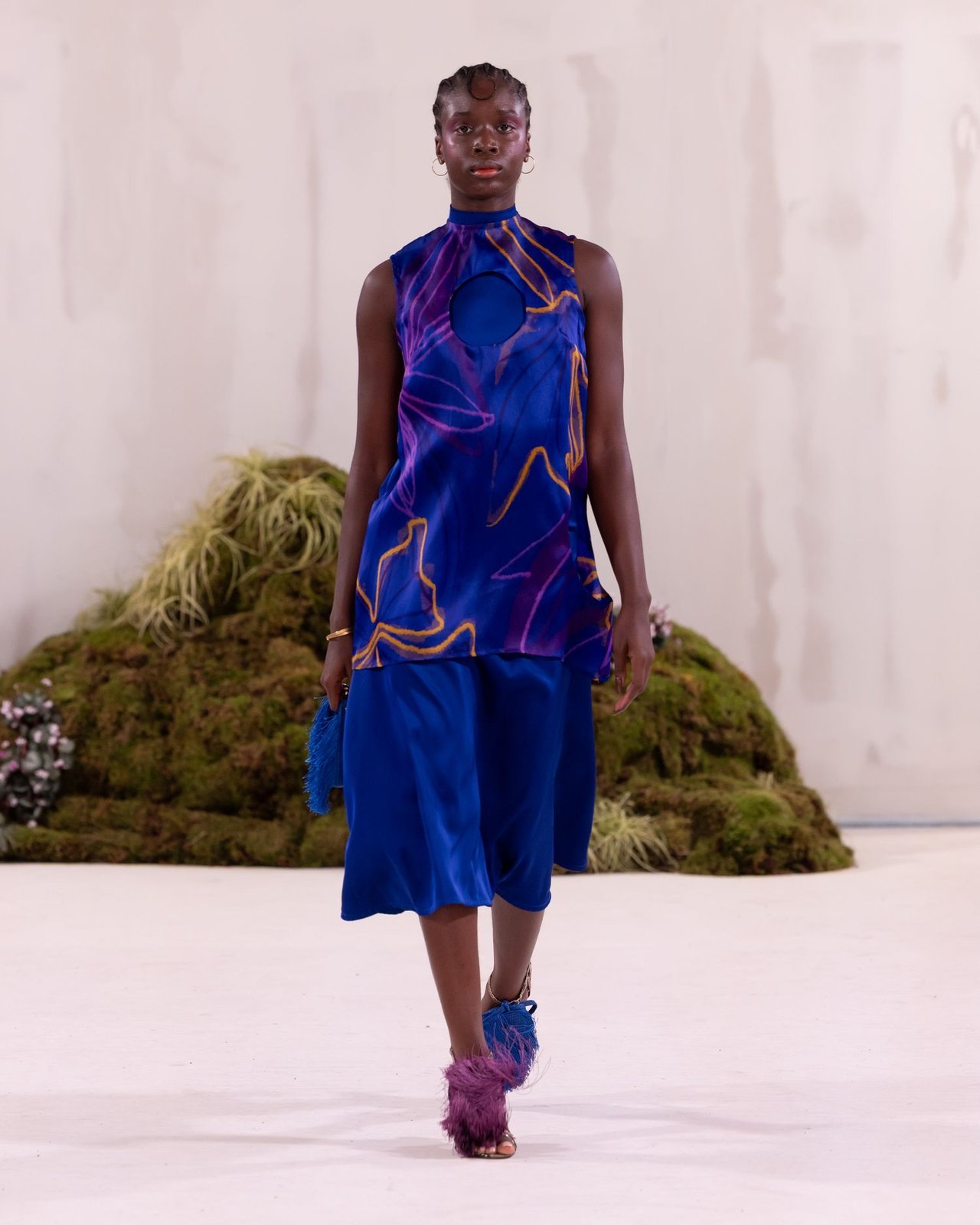
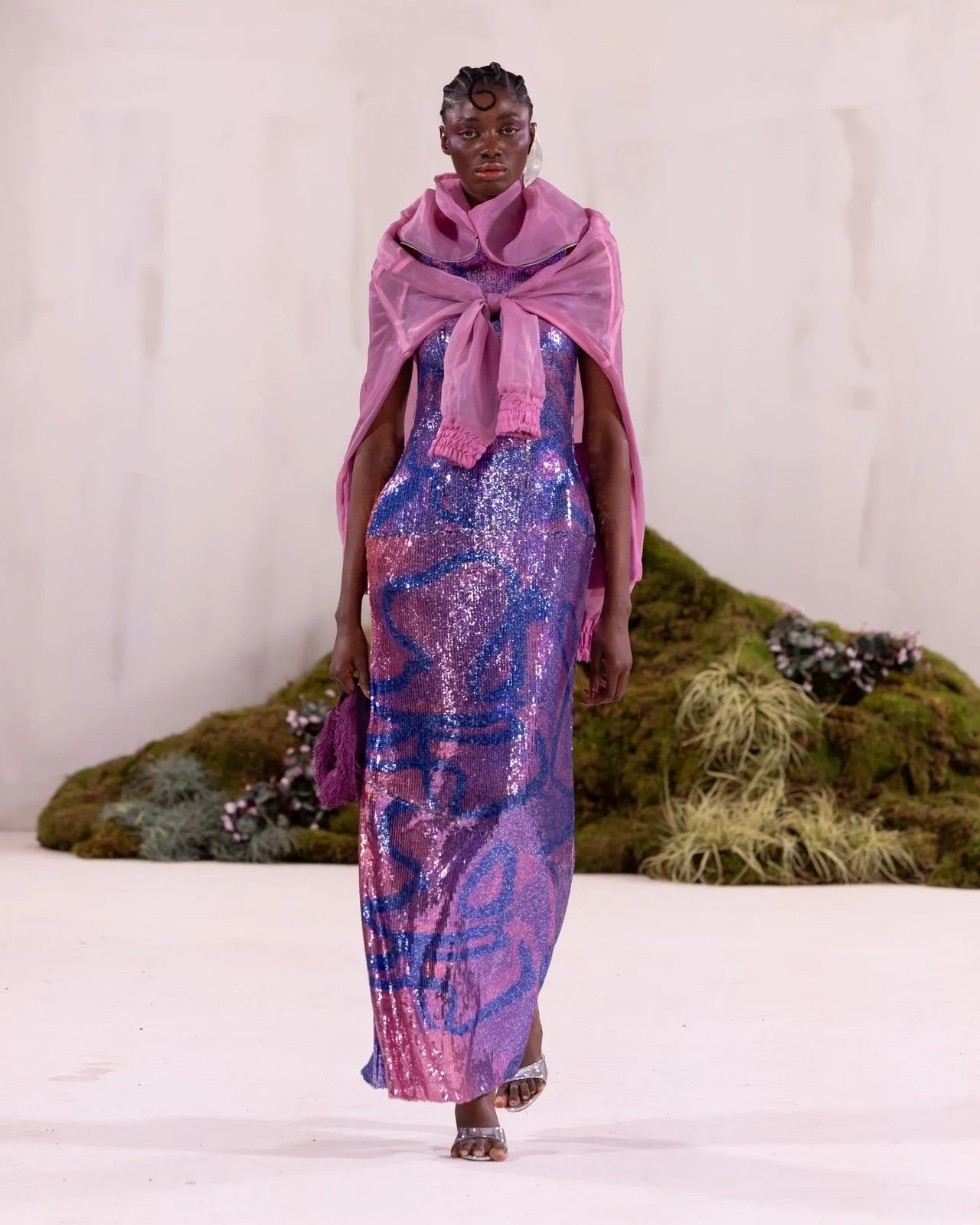
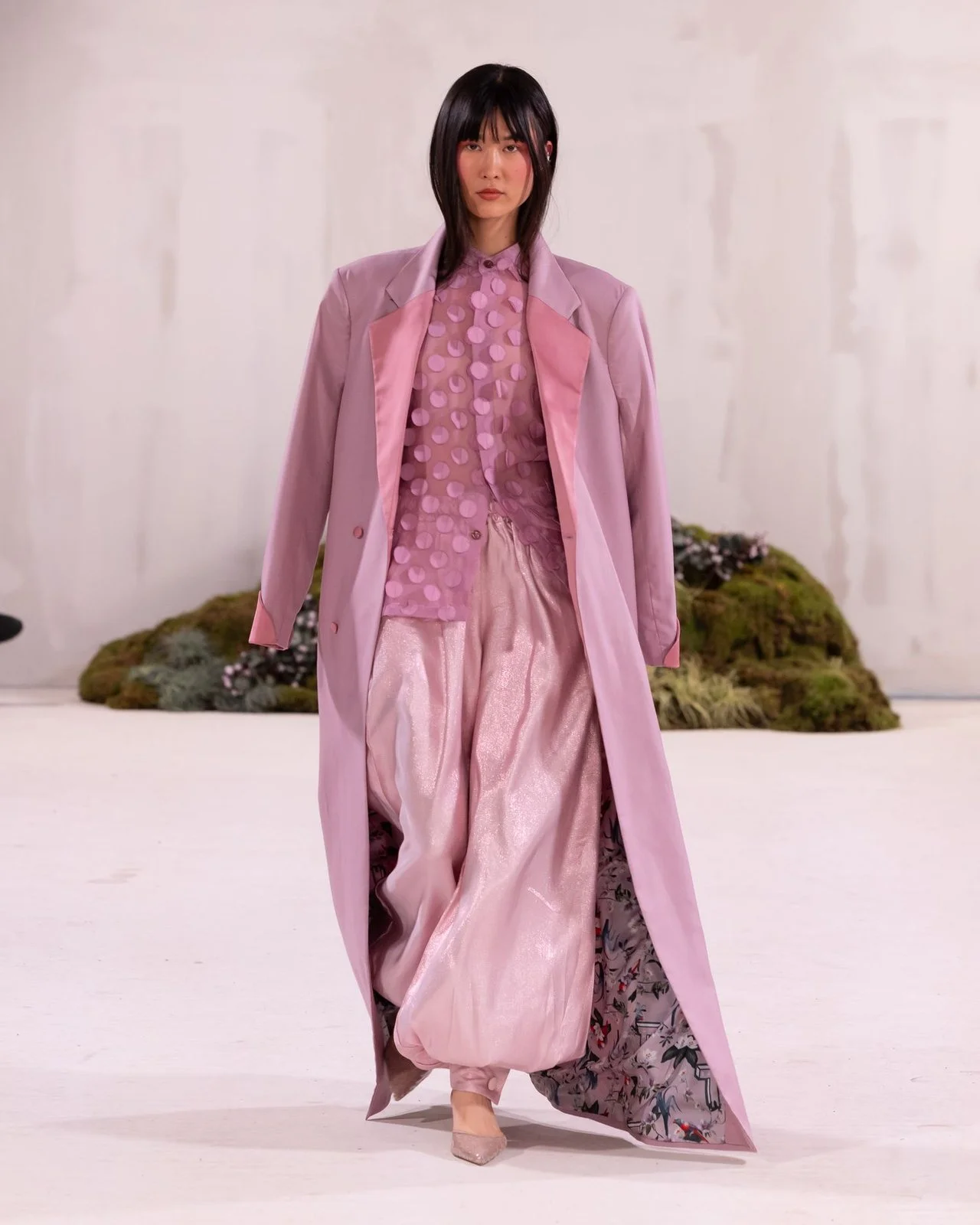
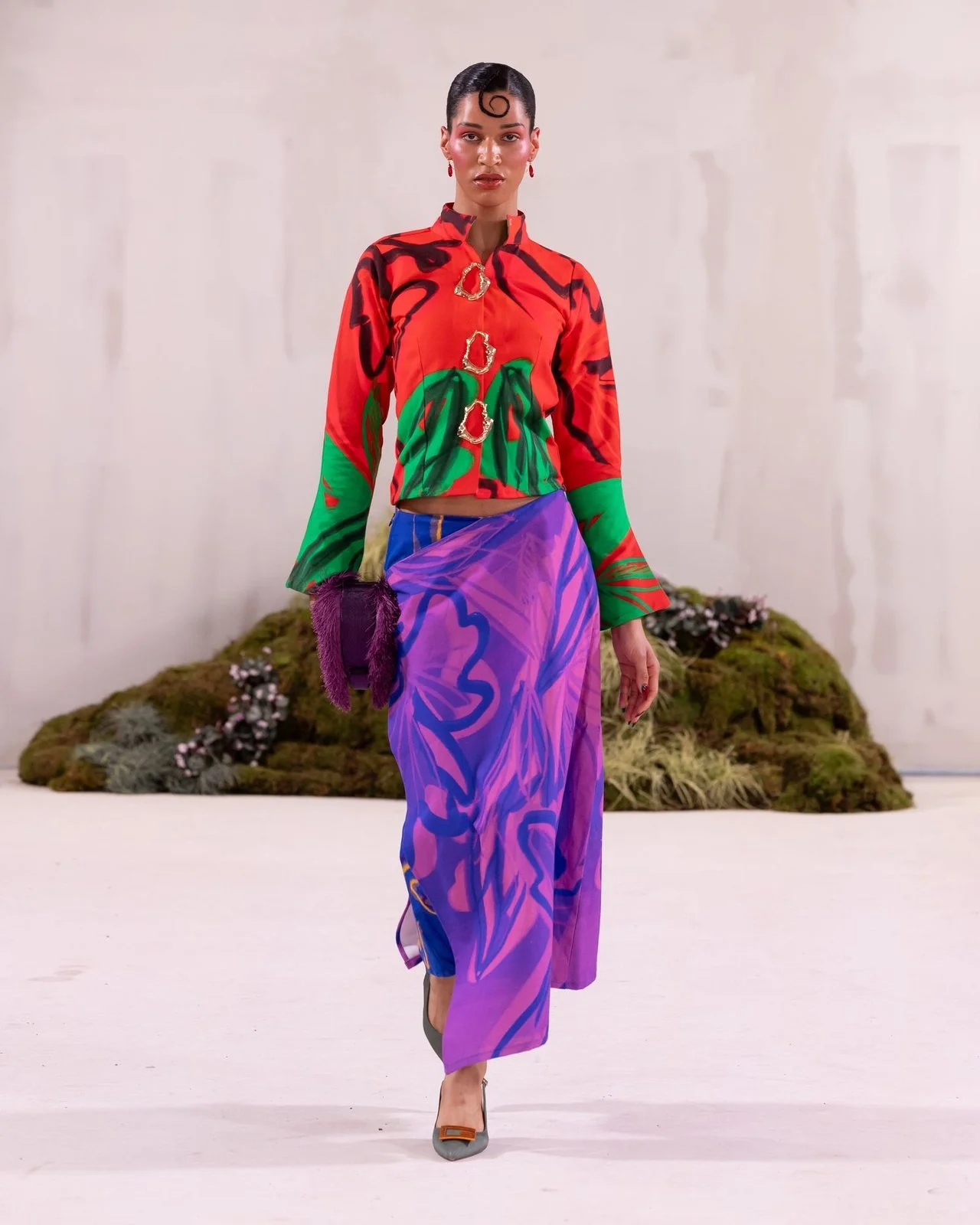
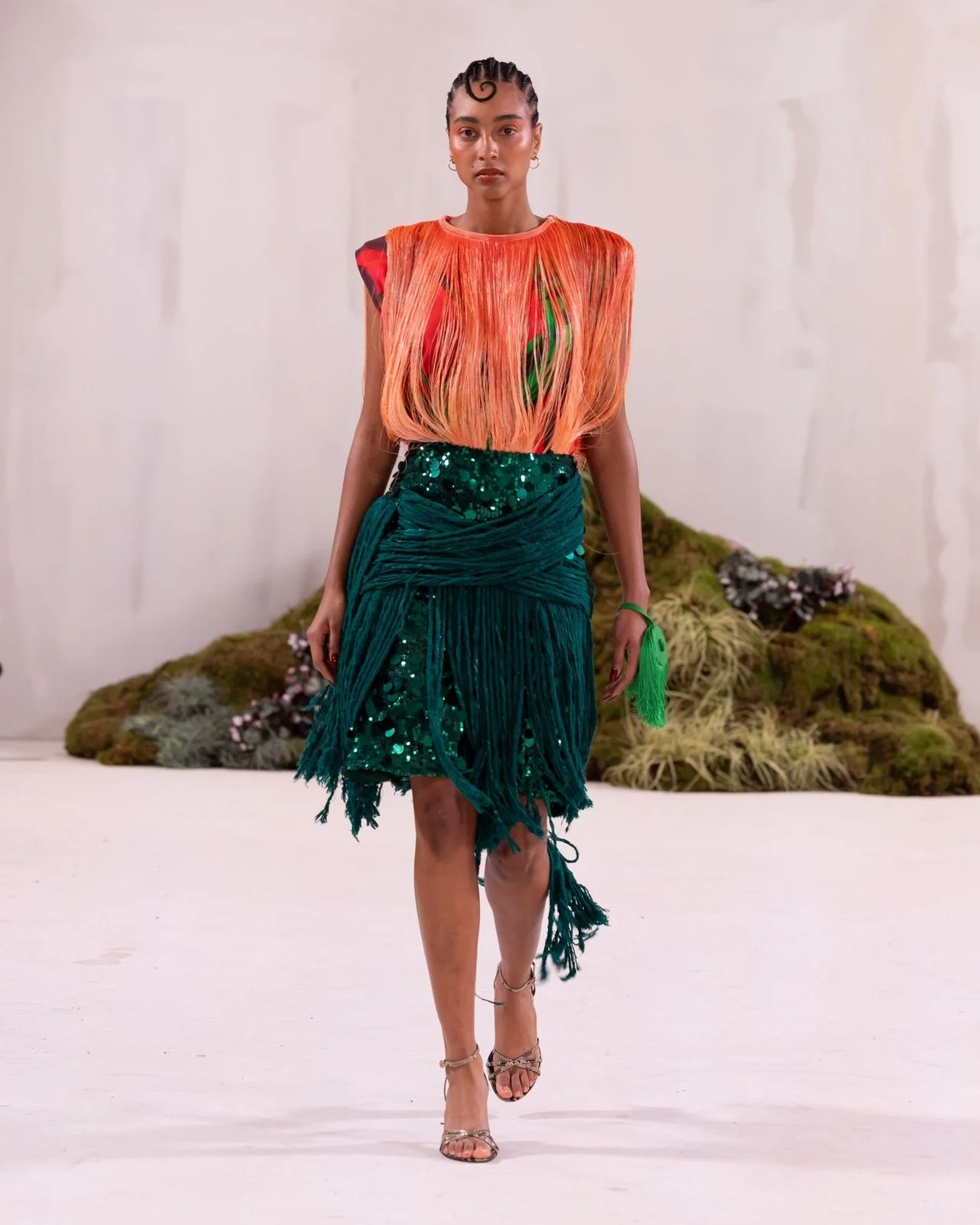
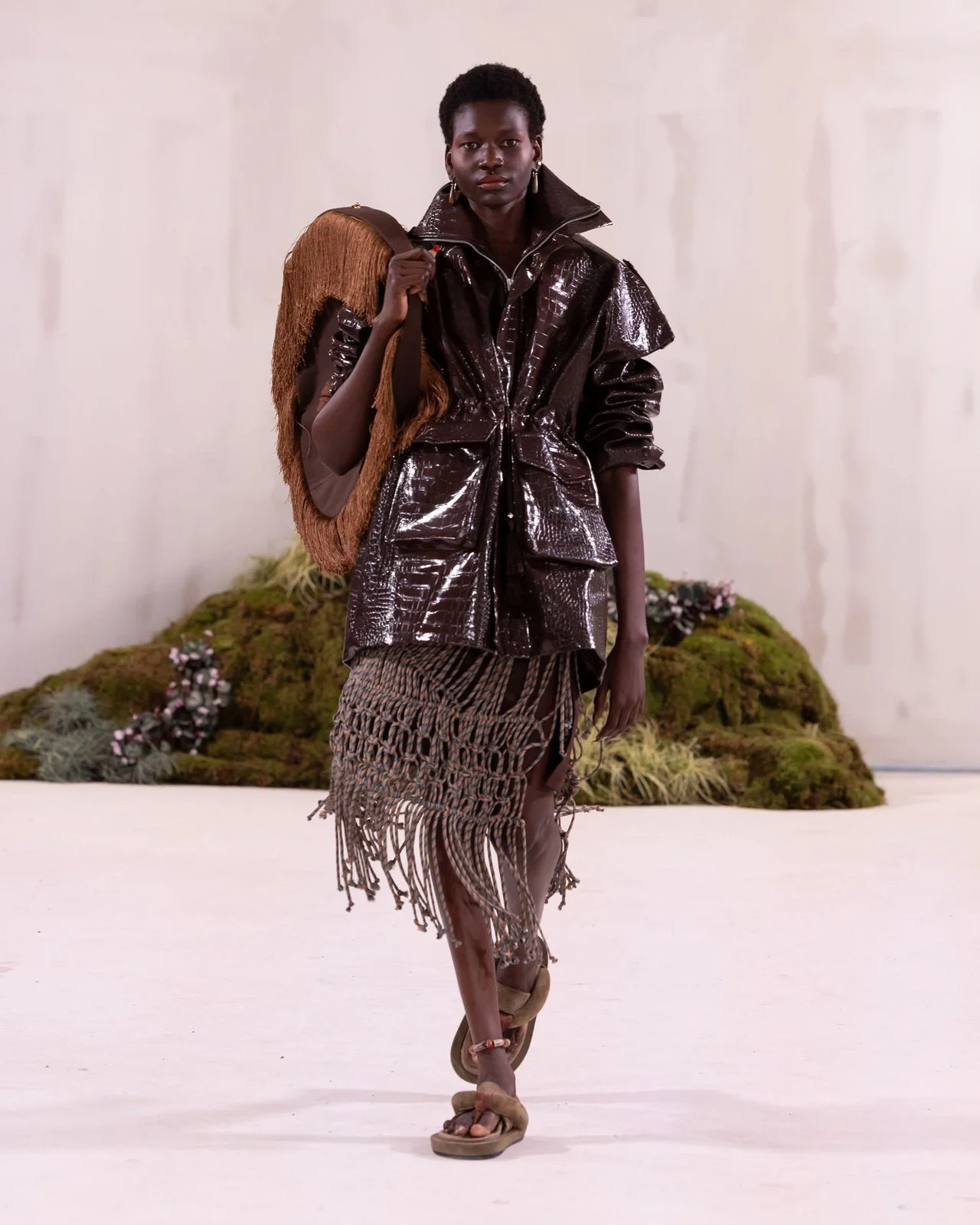
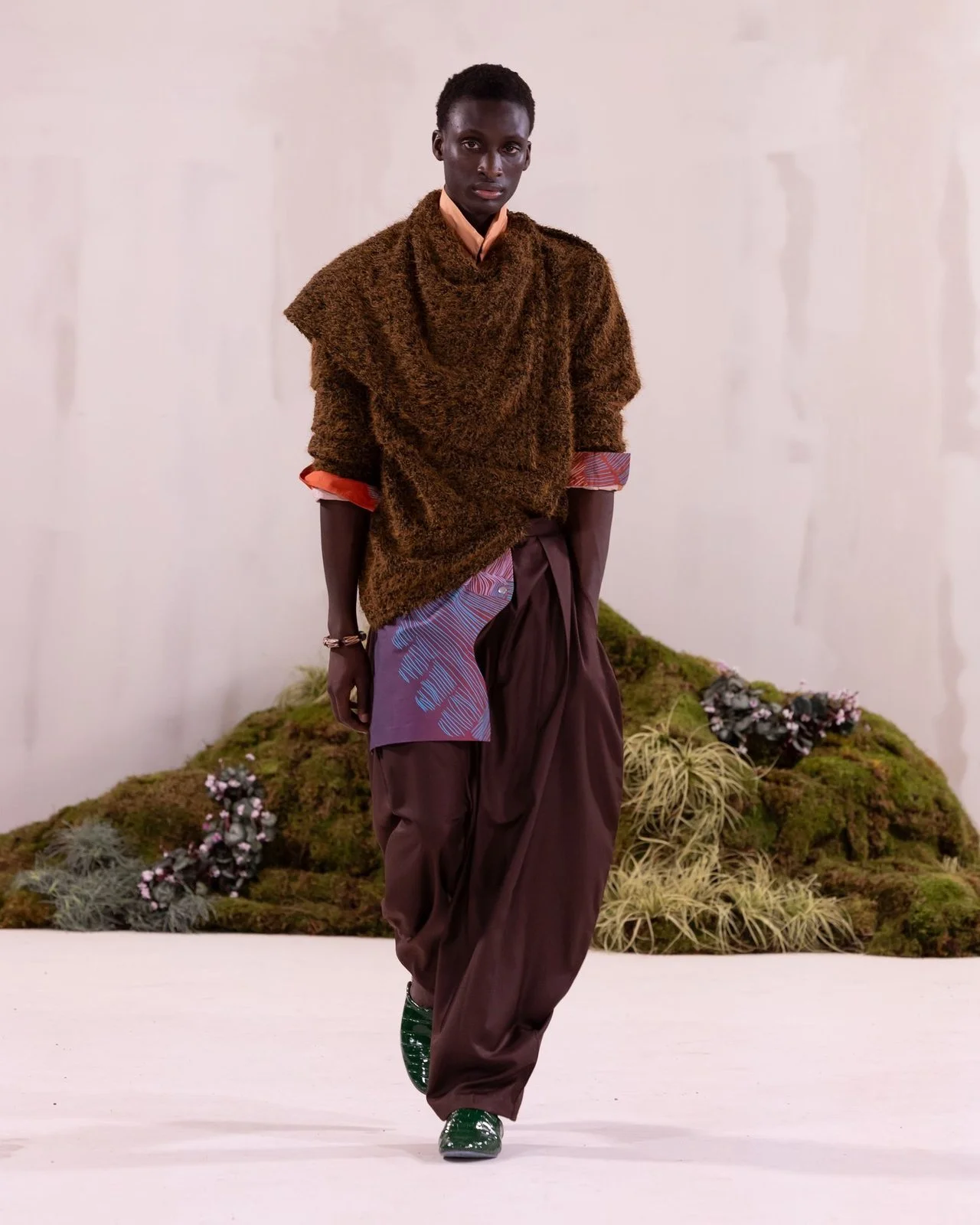
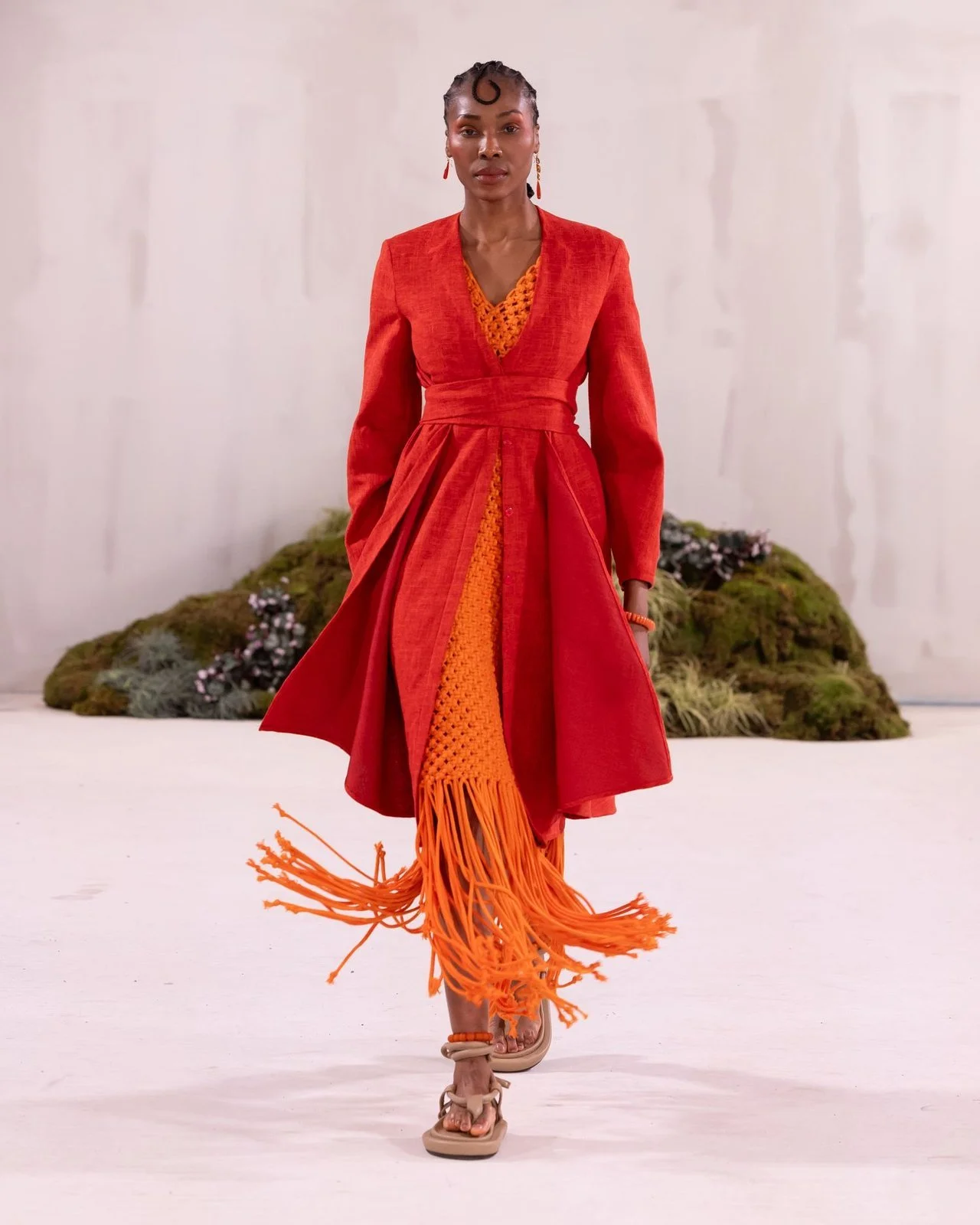
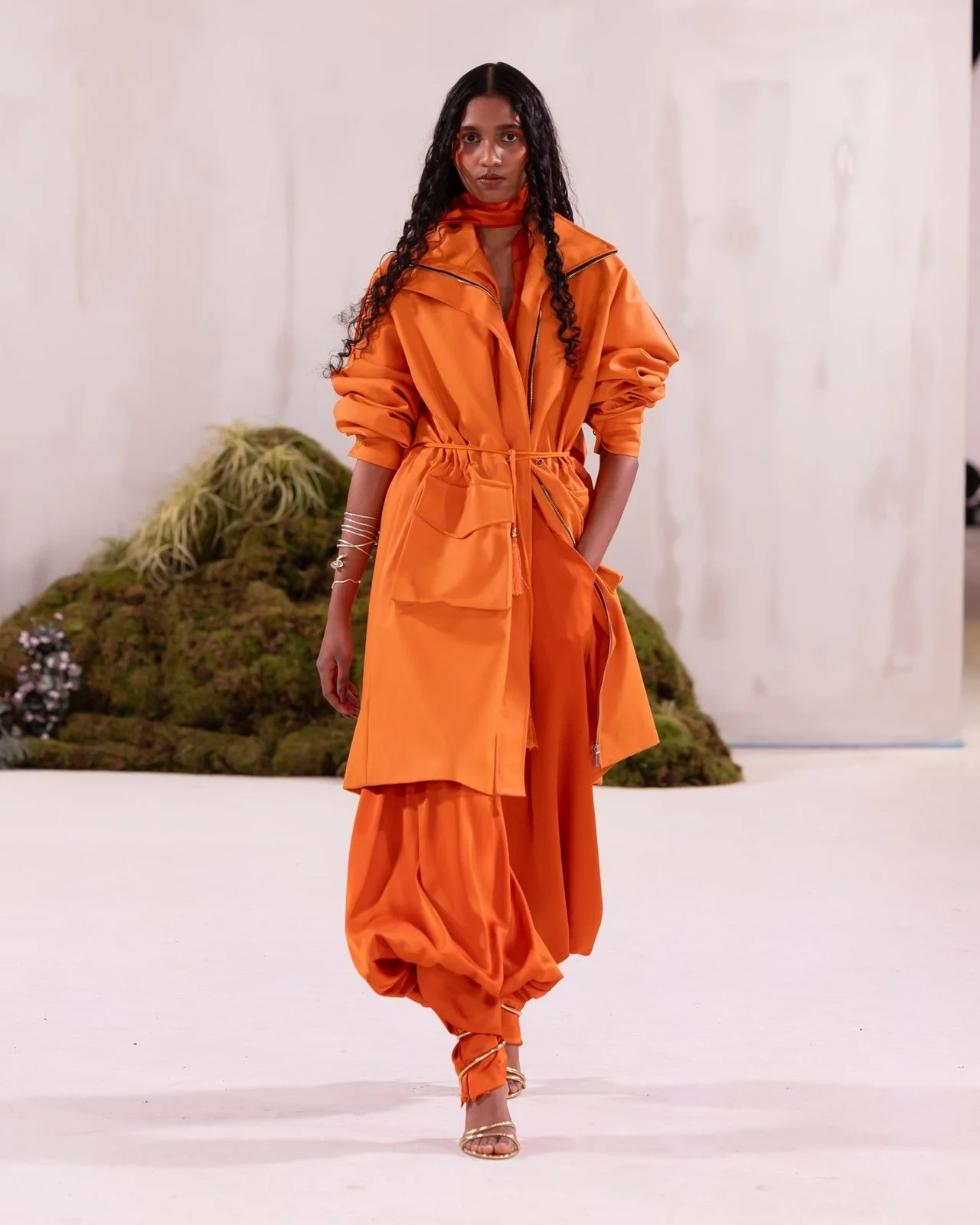
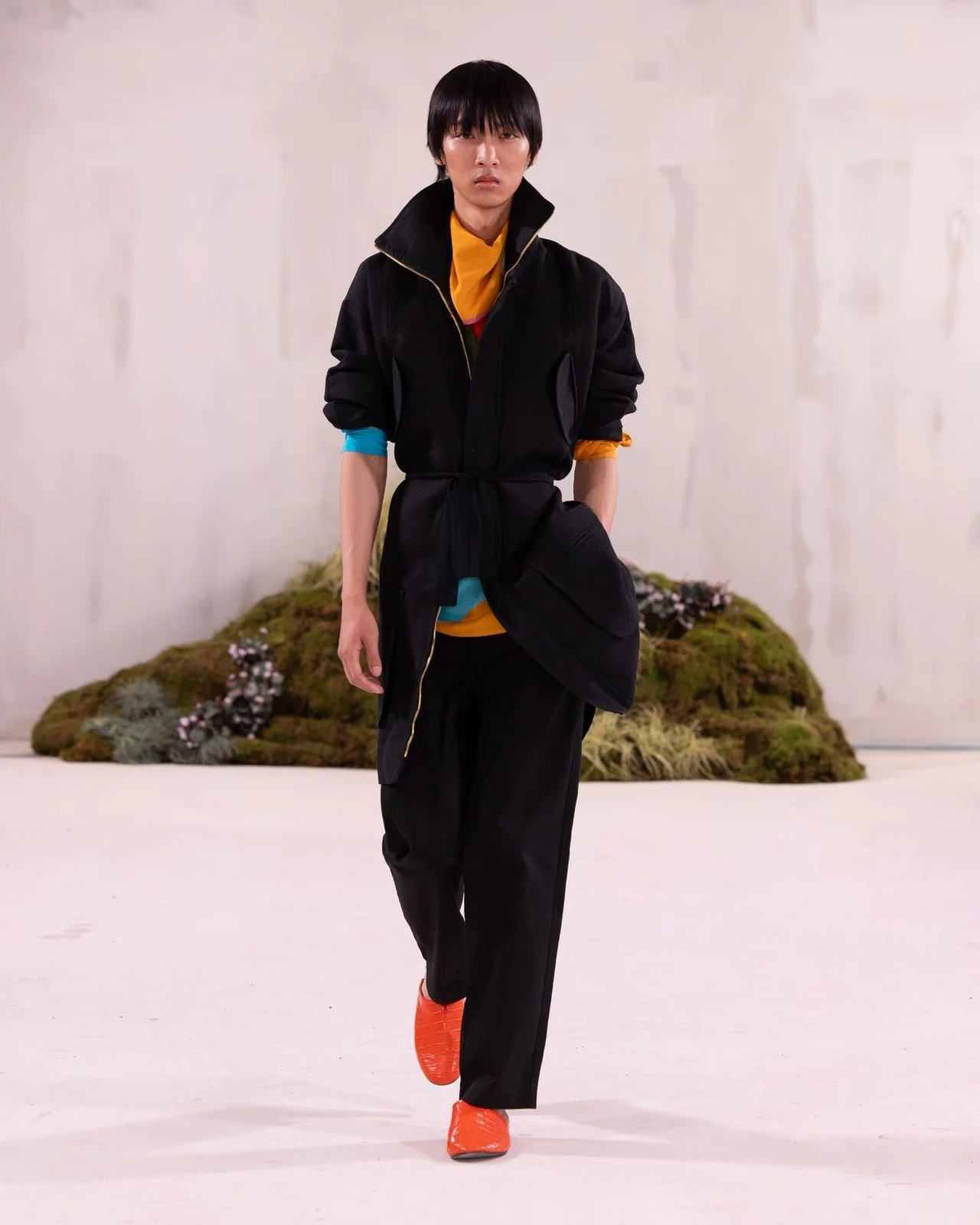
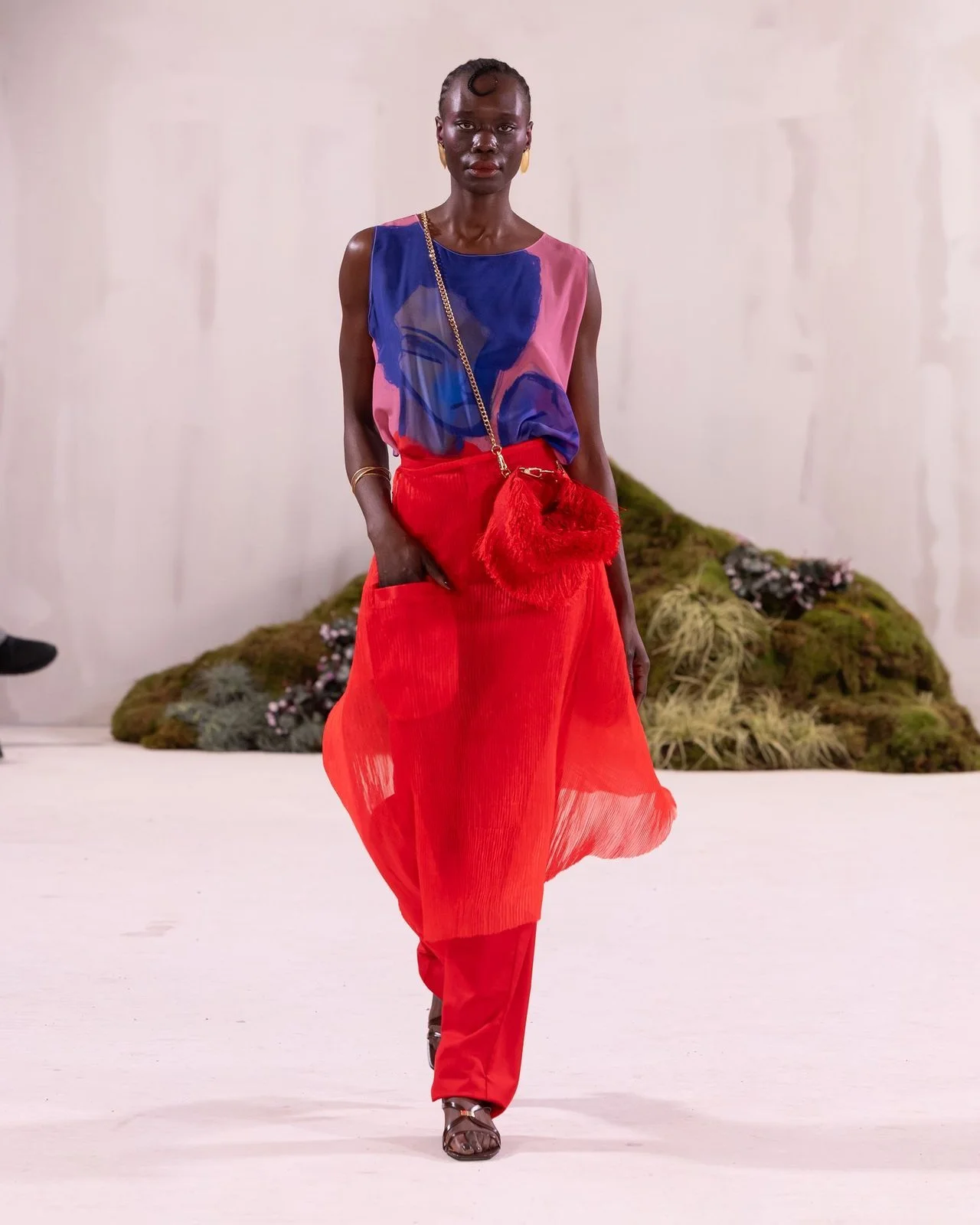
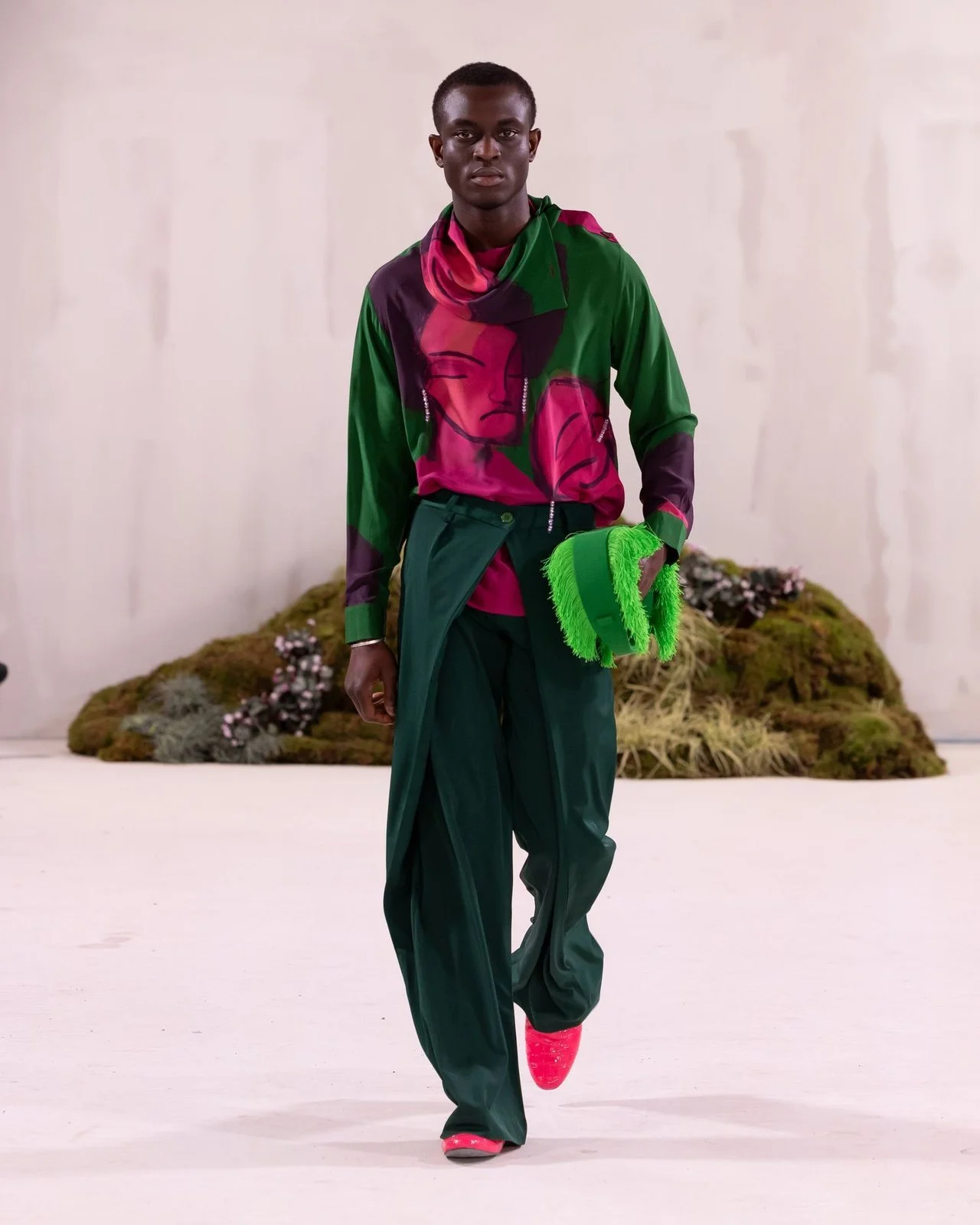
Adebayo Oke-Lawal's Backyards of Memory feels like returning home to a place that exists only in feeling. Presented at M60 at Hallesches Ufer with expansive views over Kreuzberg, Orange Culture's FW26 collection was a continuation of the designer's tribute to his late mother, a meditation on memory, loss, and the warmth that persists after grief.
Light and shadow danced with silhouettes that seemed to breathe in slow motion. Hand-dyed fabrics by local artisans, handcrafted fringe, and candle-wick details added vibrant, sensually poetic depth. This was Nigerian domestic life transformed into contemporary luxury: hanging clothes, sunlight filtering through fabric, everyday intimacy as identity and resilience. The collection celebrated life and community while honoring the emotional resonance of what remains.
For Oke-Lawal, collaboration isn't optional but a responsibility. The work spans from Lagos across Africa to Berlin, empowering others, honoring craftsmanship, sharing stories. Styled by Olaolu Ebiti with casting by Hien Le, Backyards of Memory emerged as one of Berlin Fashion Week's most moving presentations, elegant and optimistic yet powerfully nostalgic.
ANDREJ GRONAU
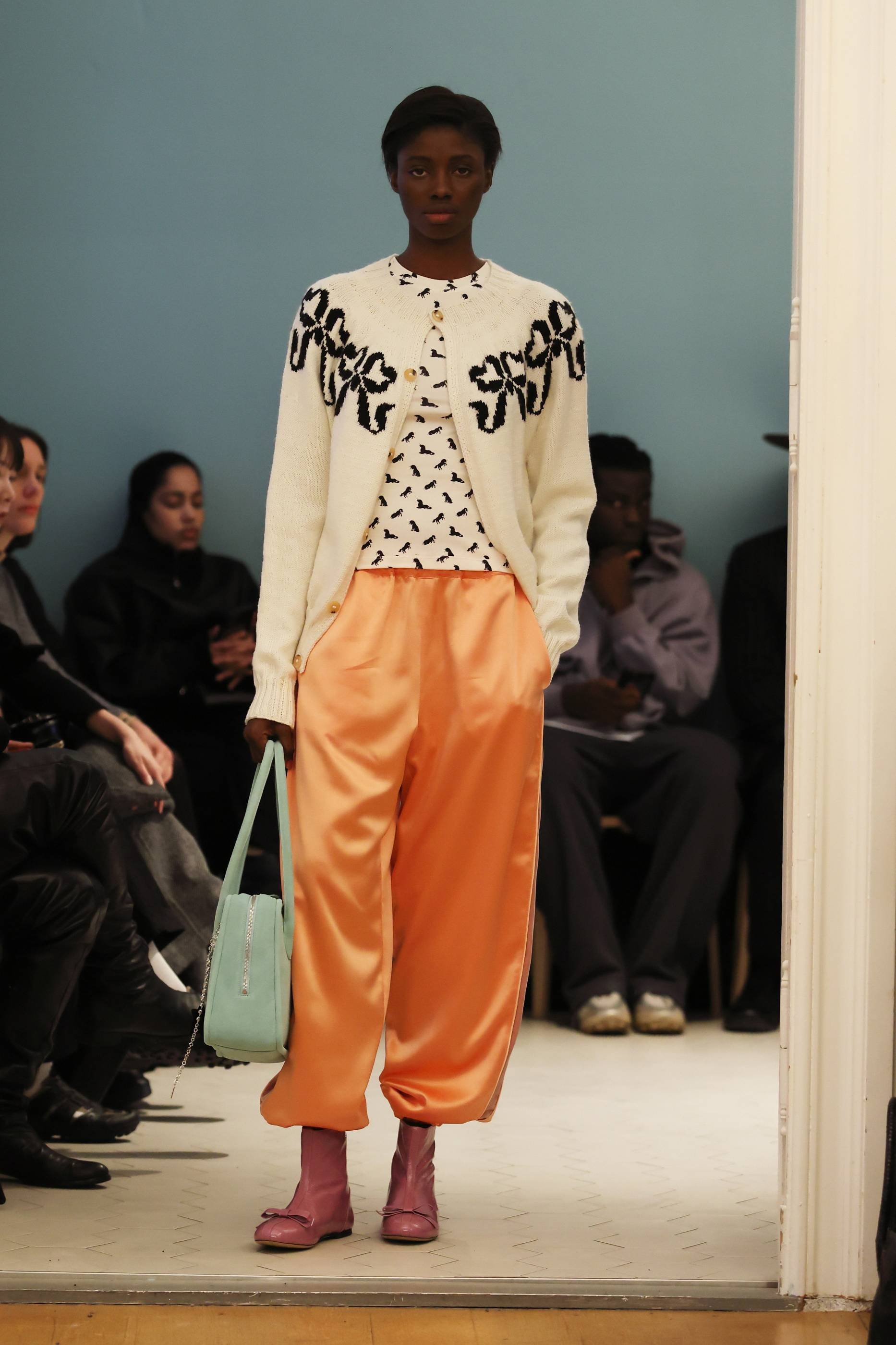
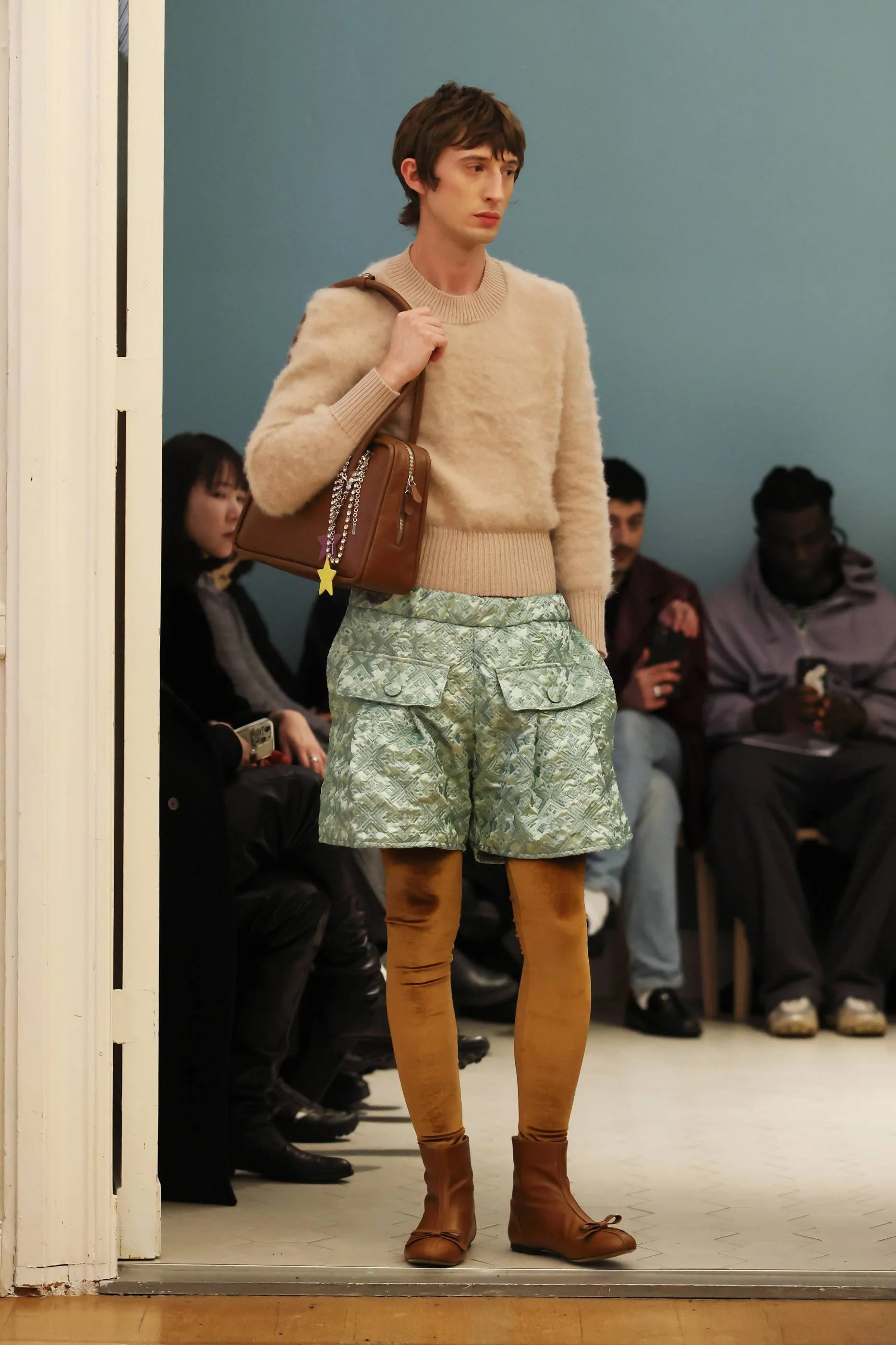


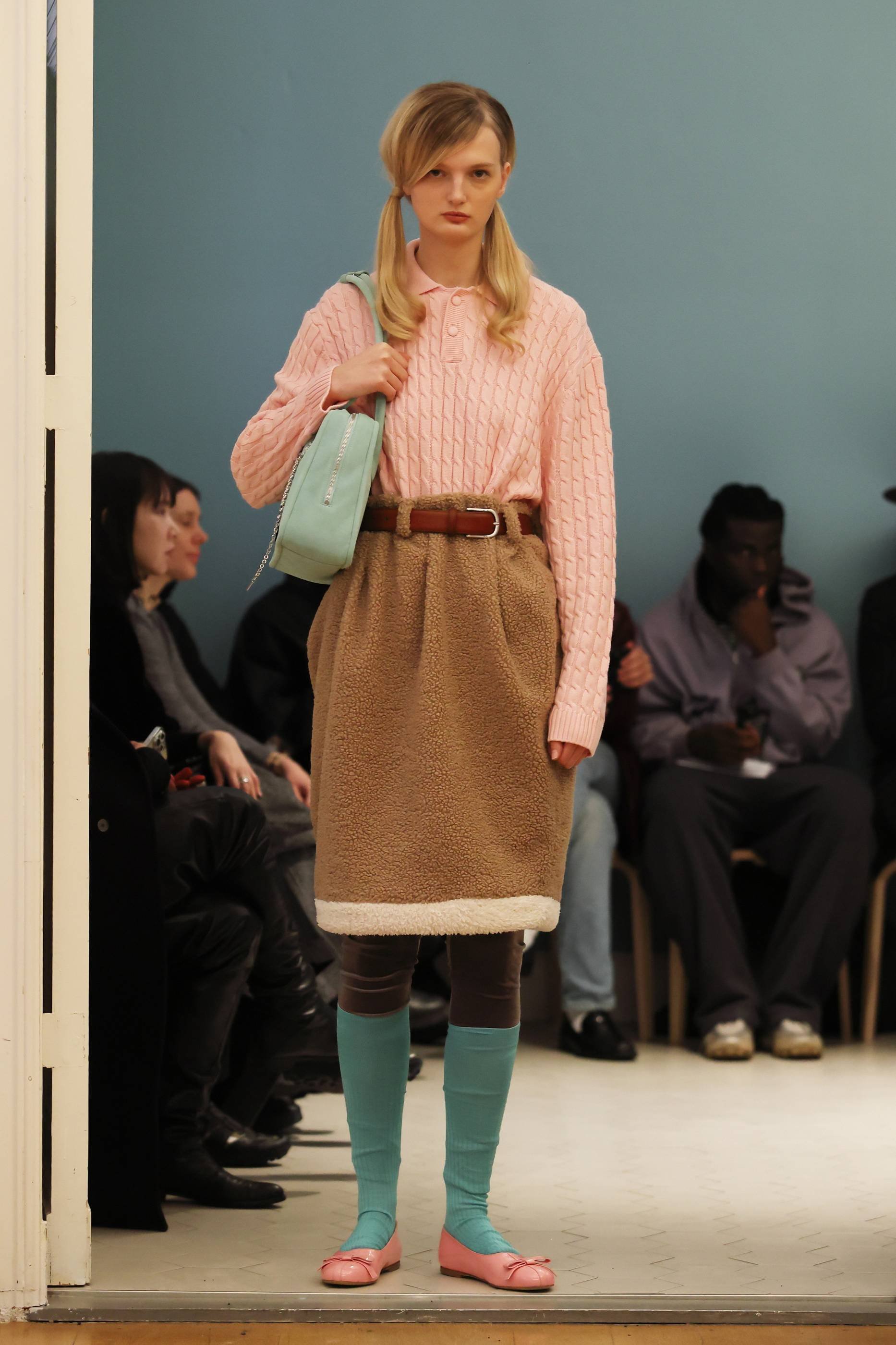

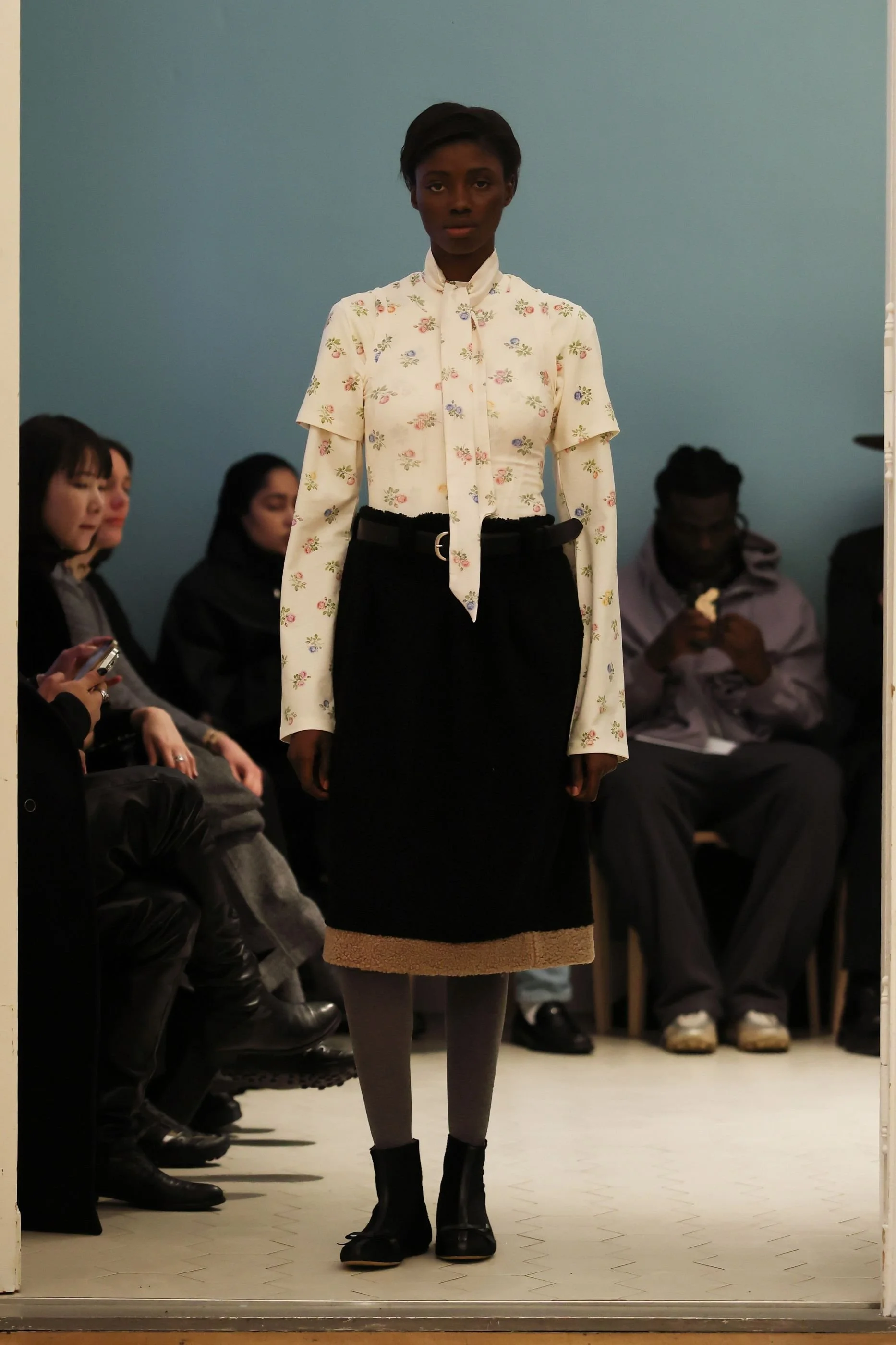

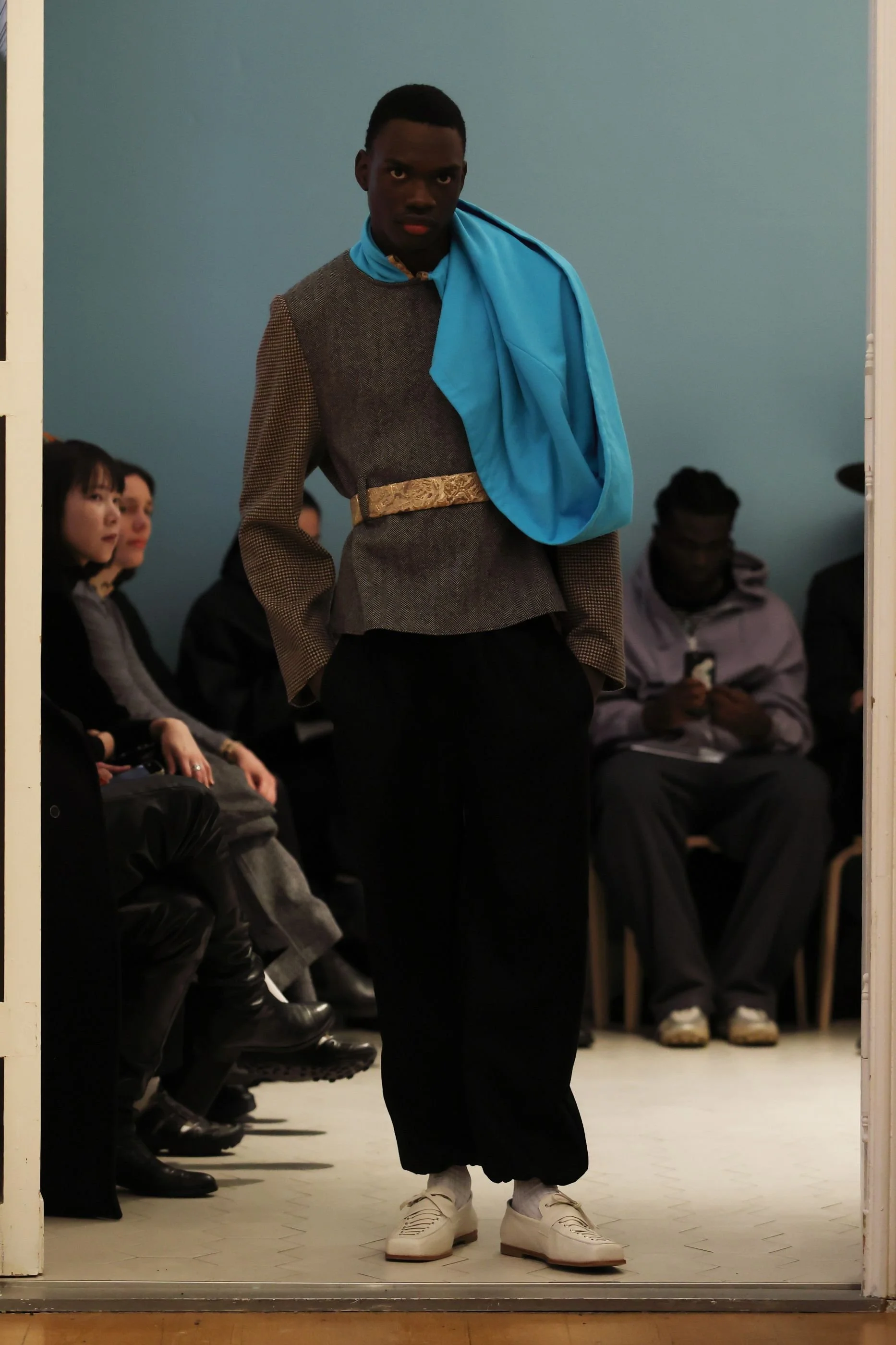
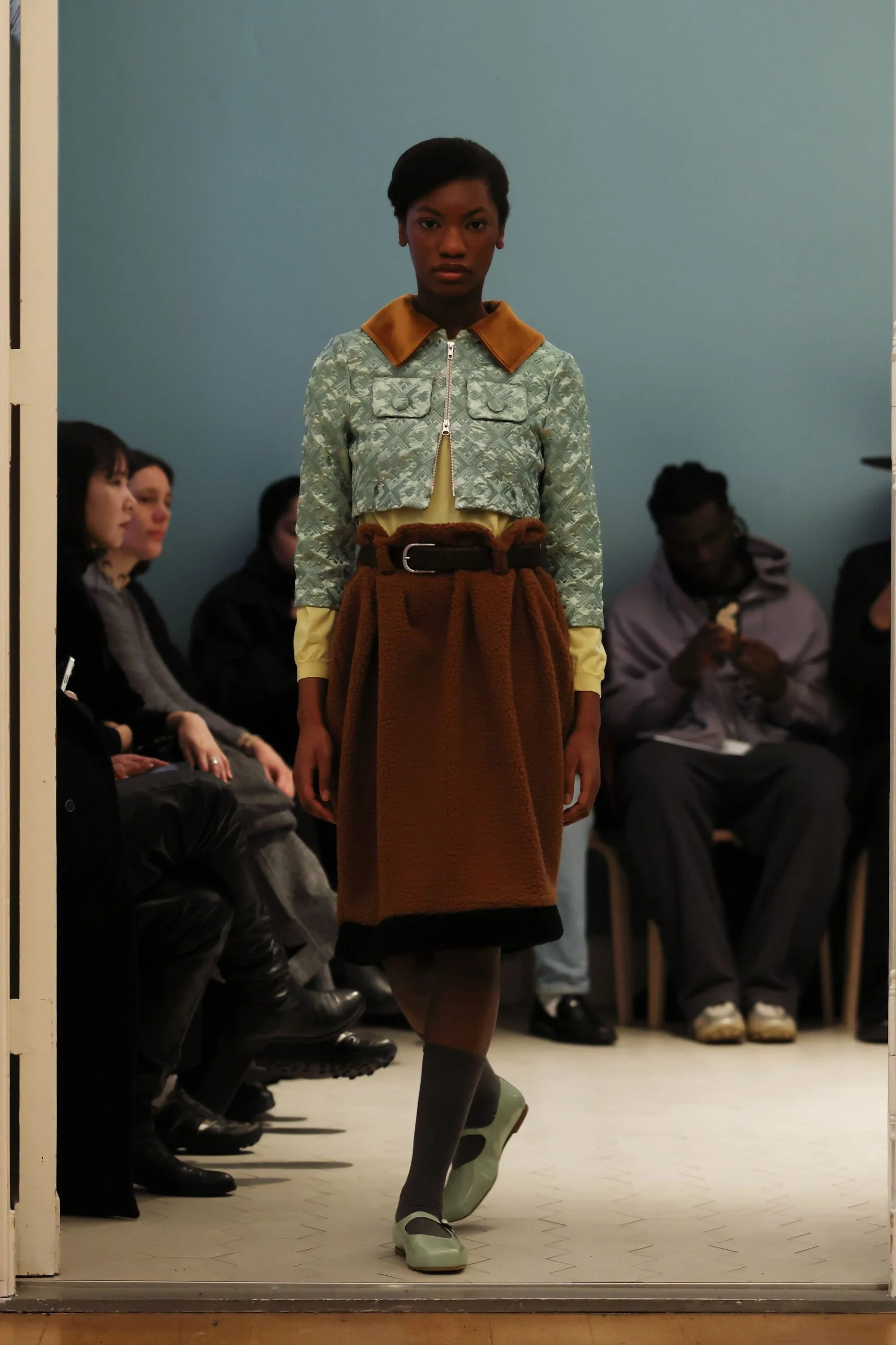
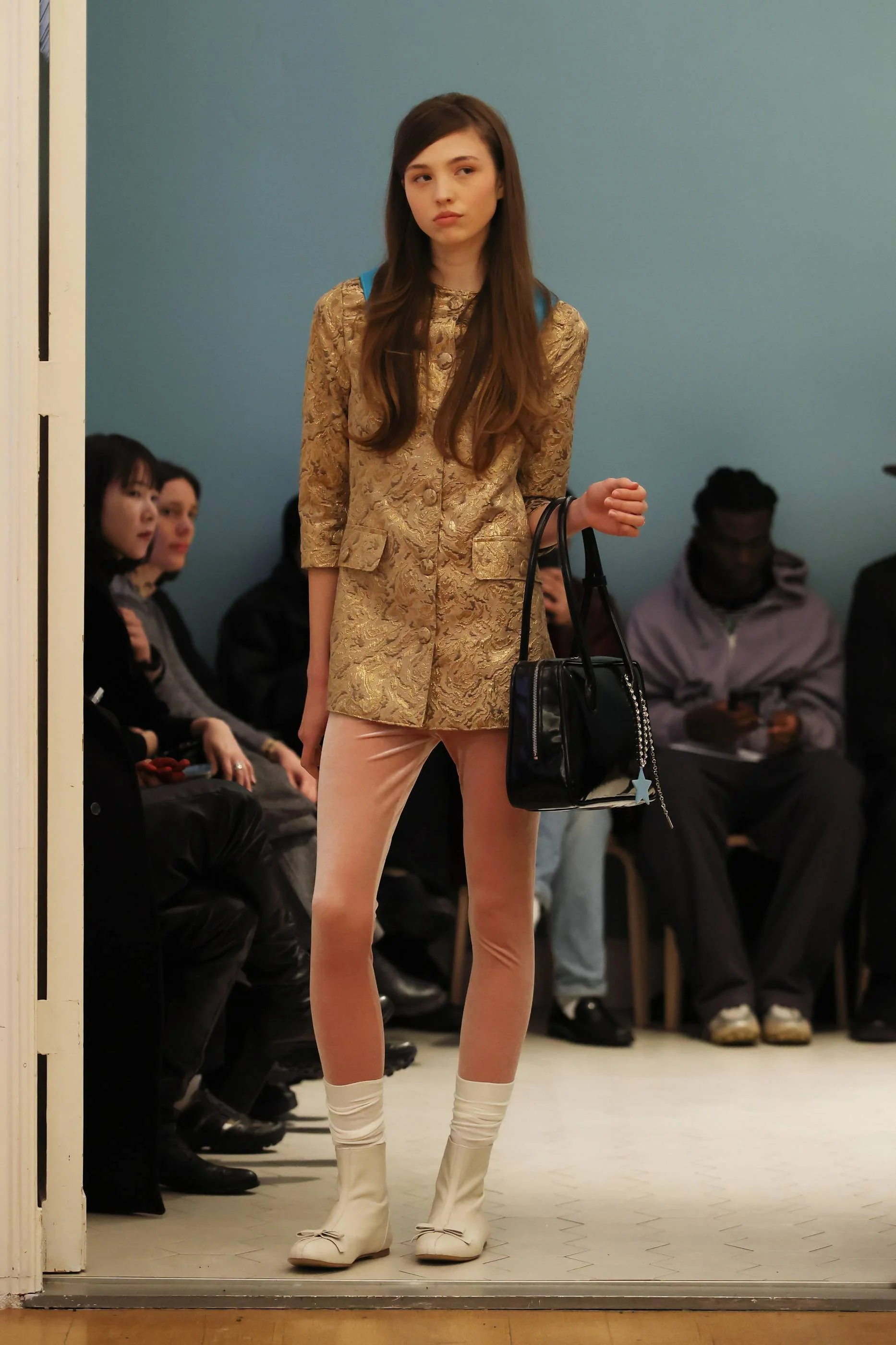
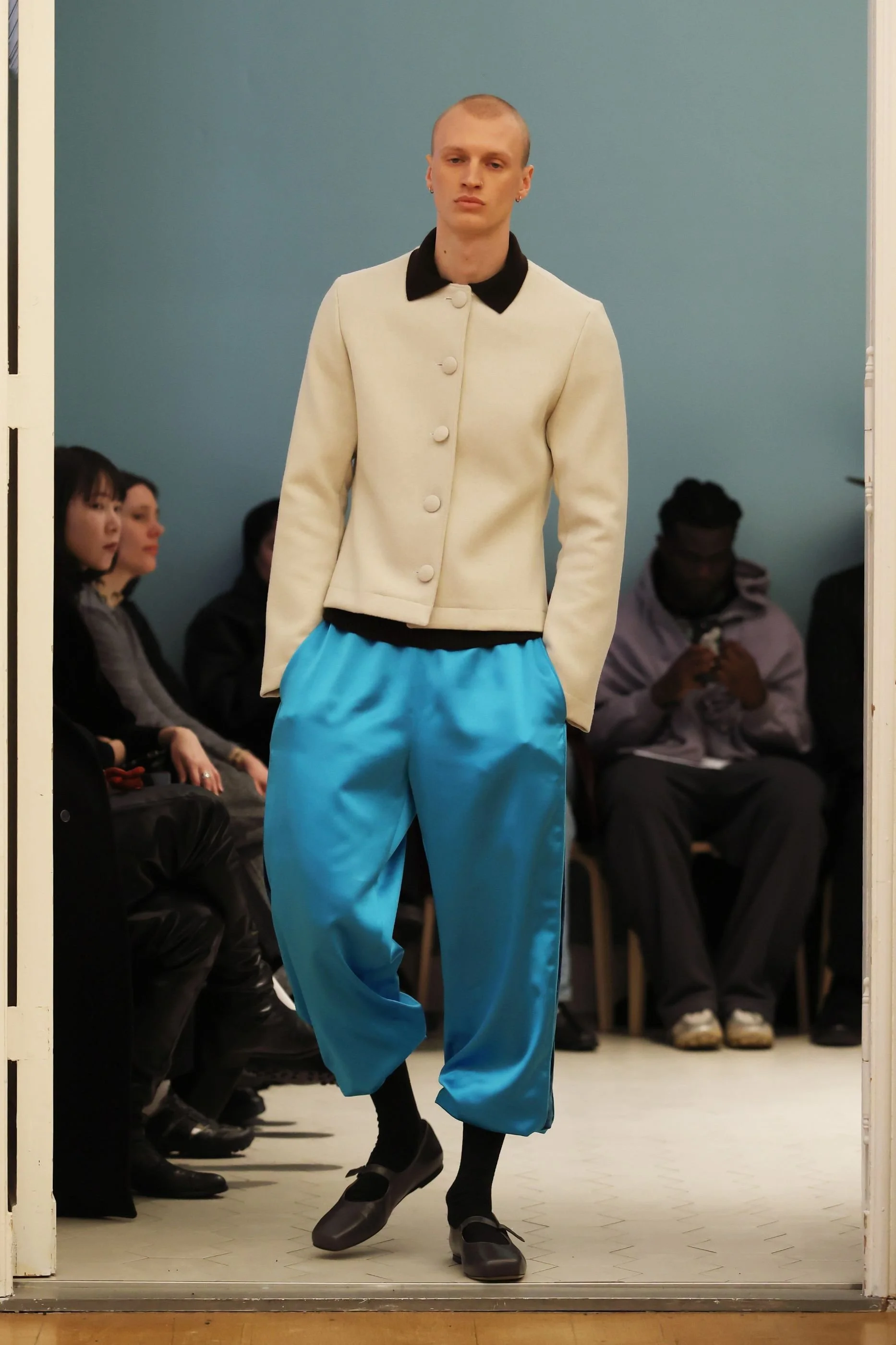


Andrej Gronau's Room For Play makes a compelling case: the bedroom, not the dancefloor, is Gen Z's true refuge. The London-based German designer, fresh from winning the Berlin Contemporary Prize, transformed dollhouse domesticity into wearable rebellion. His FW26 collection declares a simple manifesto: My house. My rules. My pleasure.
Inspired by his grandmother's 80th birthday in a time-worn villa and his nephew's christening where the child was dressed like an adult, Gronau questions why adults abandon playfulness for rigid dress codes. His answer materialized in velour, French terry, and sherpa fleece elongated into indulgent silhouettes. Curtains became hoods. Blankets transformed into dress. Brocade patterns evoked wallpaper, while saturated yellows, turquoise, mint, and gold recalled when velvet dominated interiors. Long sleeves met wide shorts. Trousers tucked into socks. Cozy knitwear styled with fluffy skirts and stockings. Horse motifs appeared on jumpers. The collection celebrates comfort as confidence, privacy as power, reclaiming the domestic sphere as a space where taste slips free from convention and childhood naivety coexists with adult elegance.
KASIA KUCHARSKA
Photography by Paloma Schäfer @whiterabbitjpg
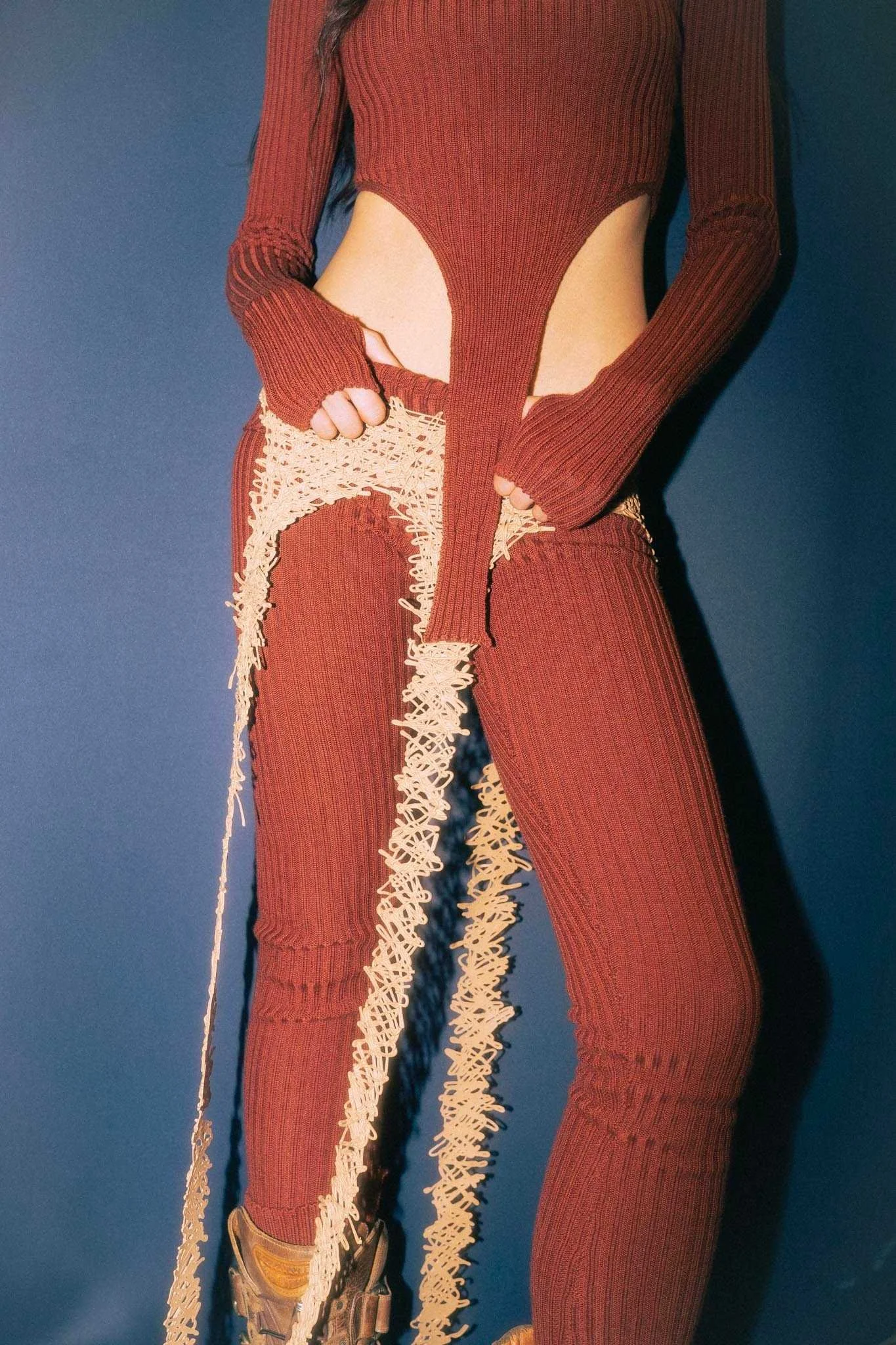
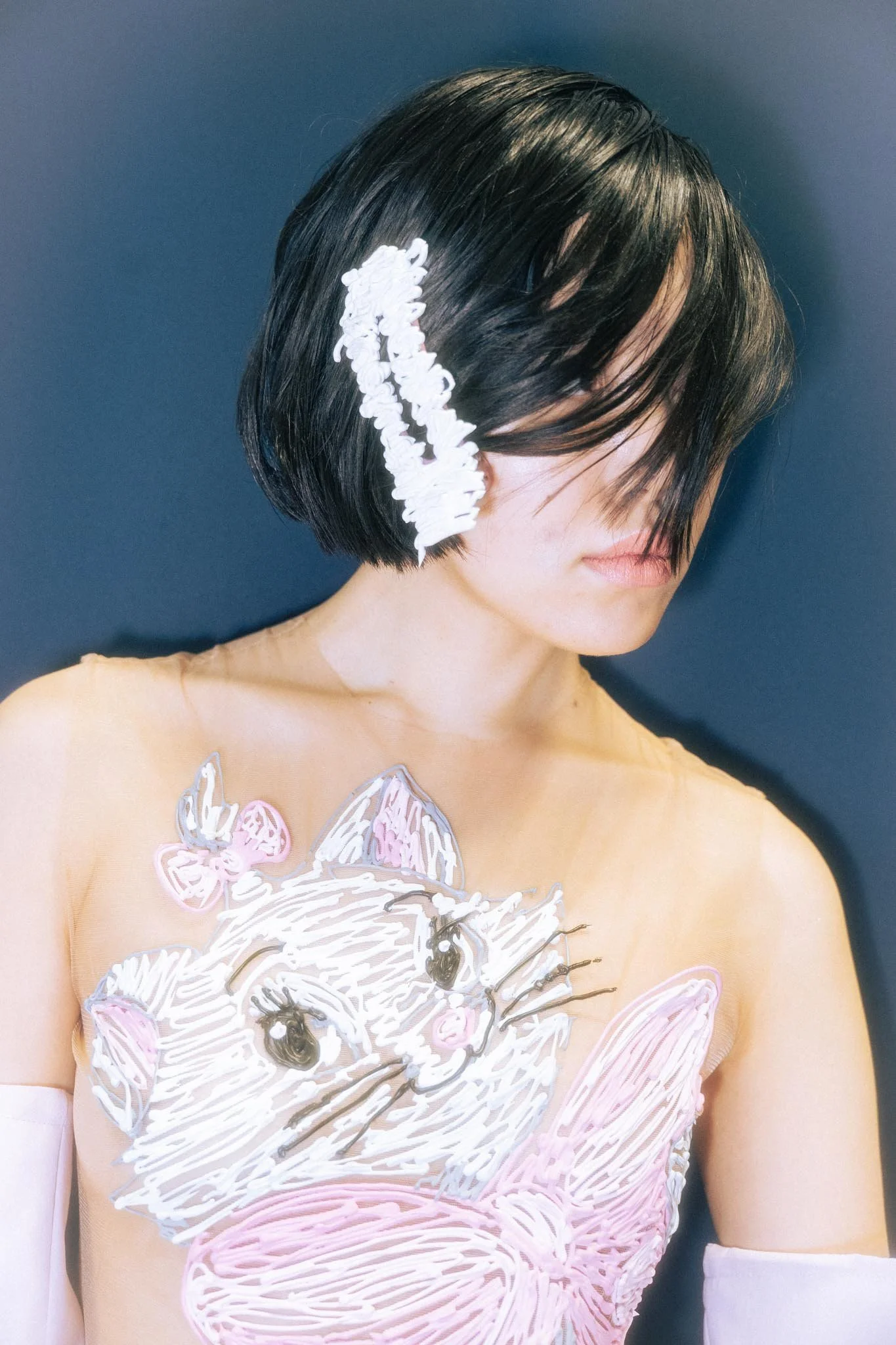
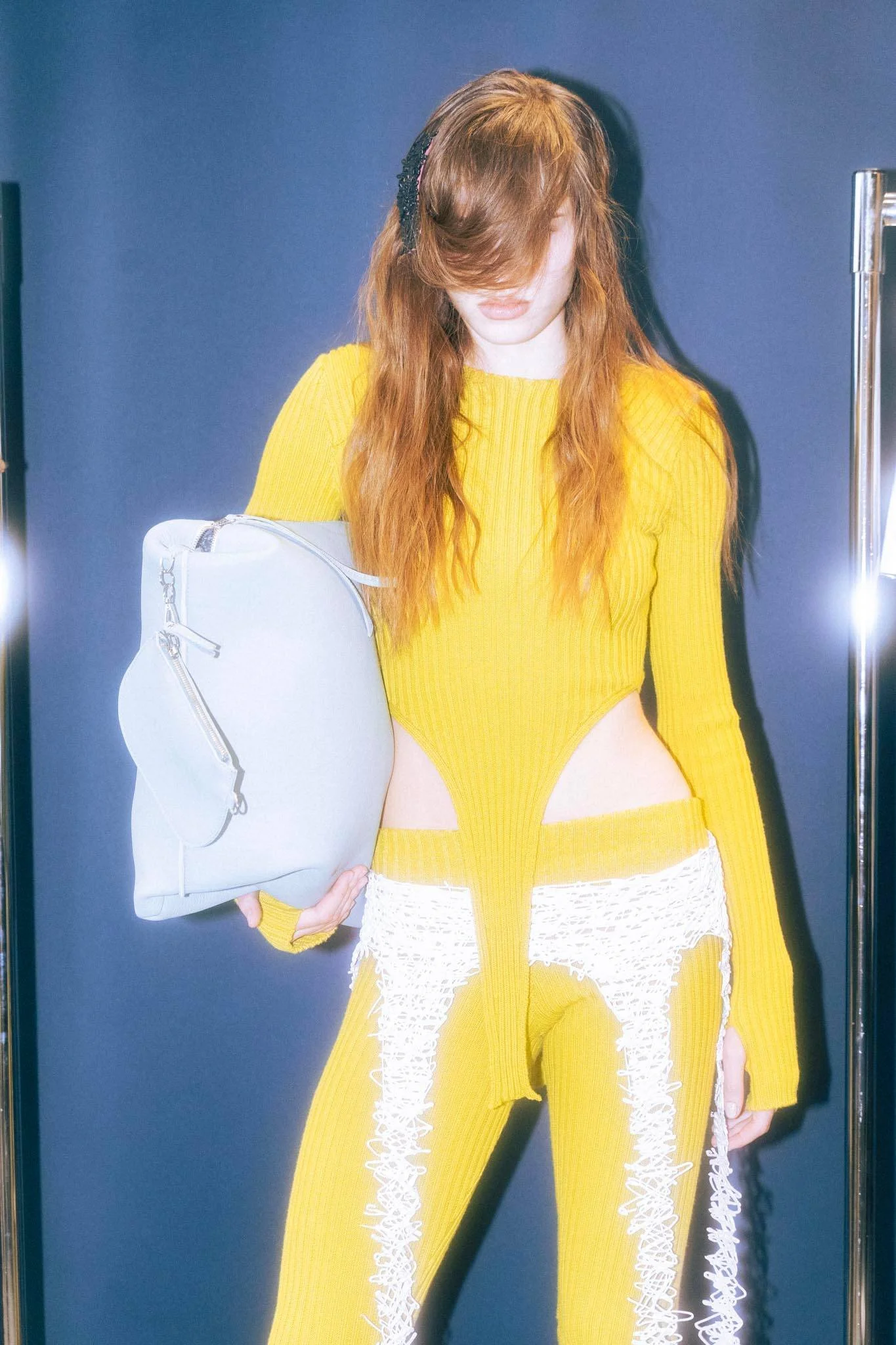
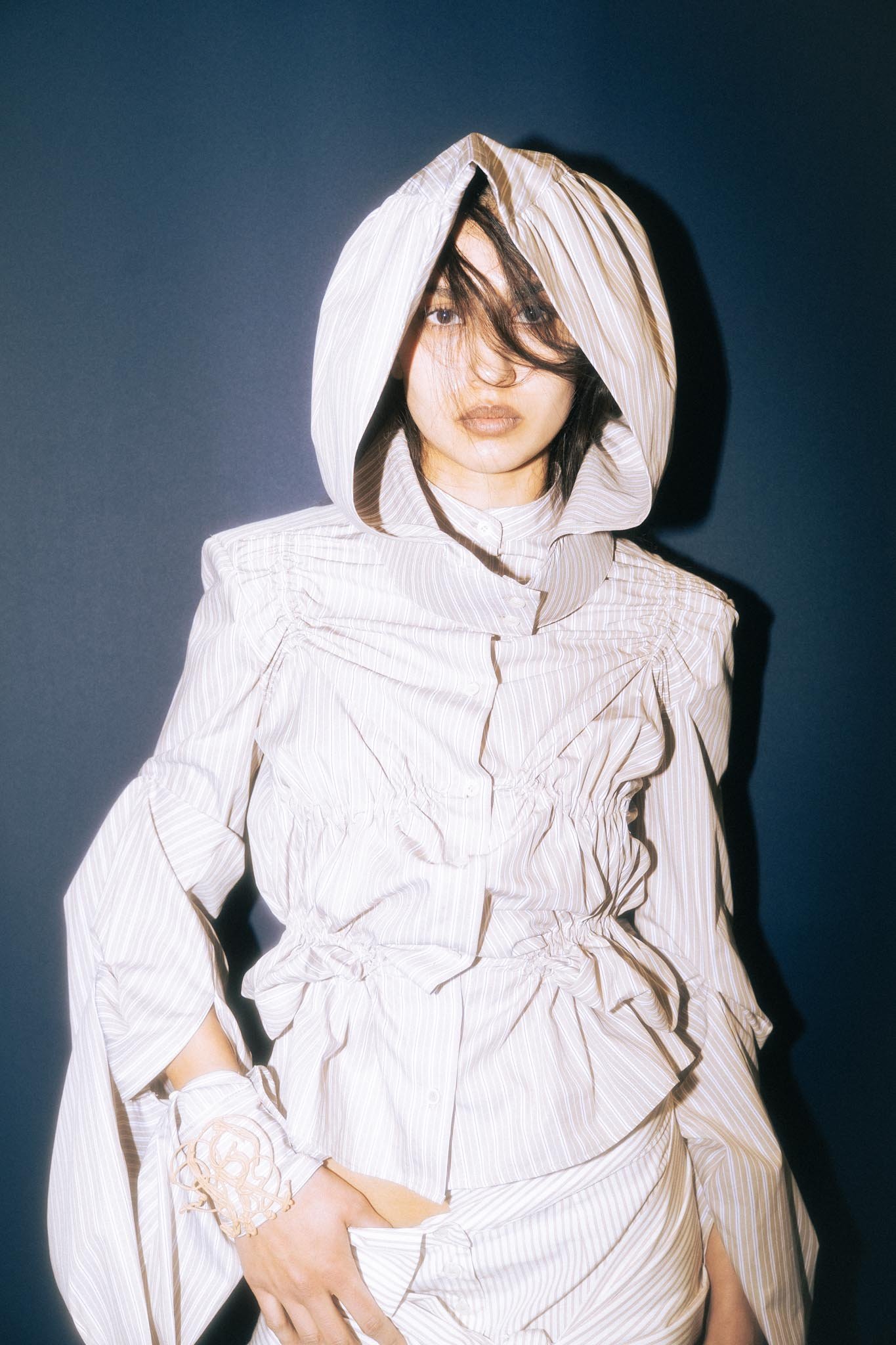
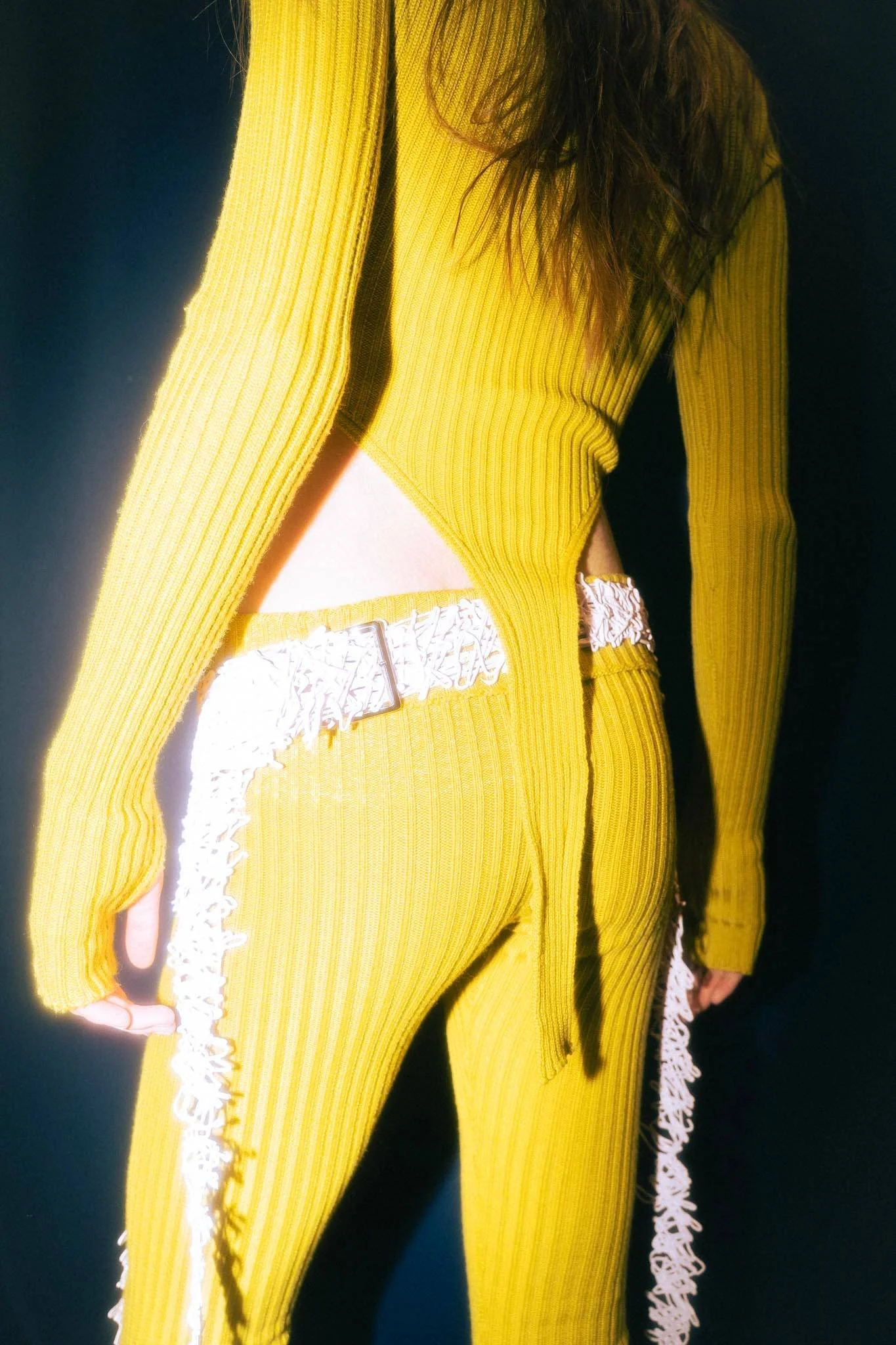
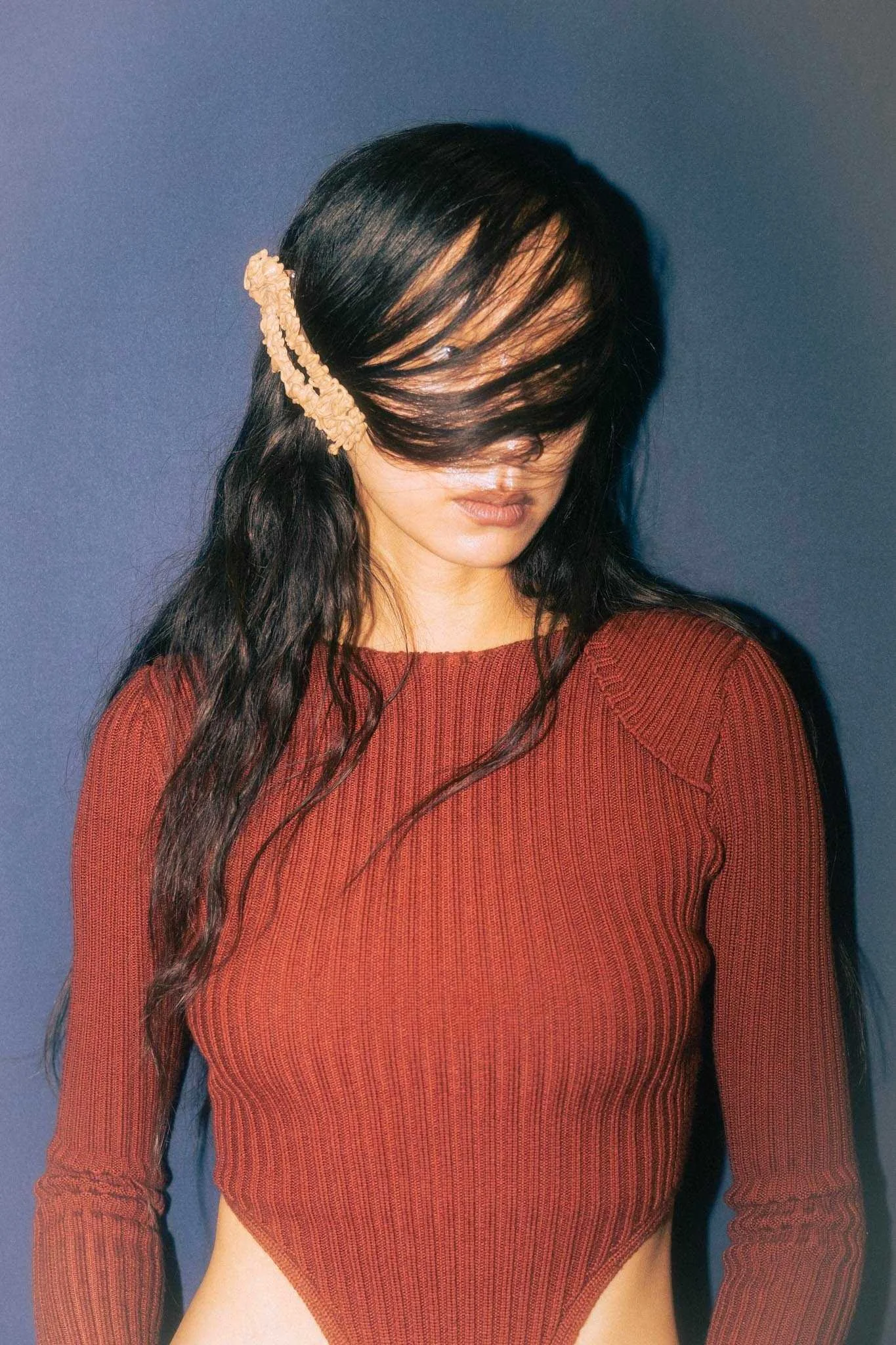
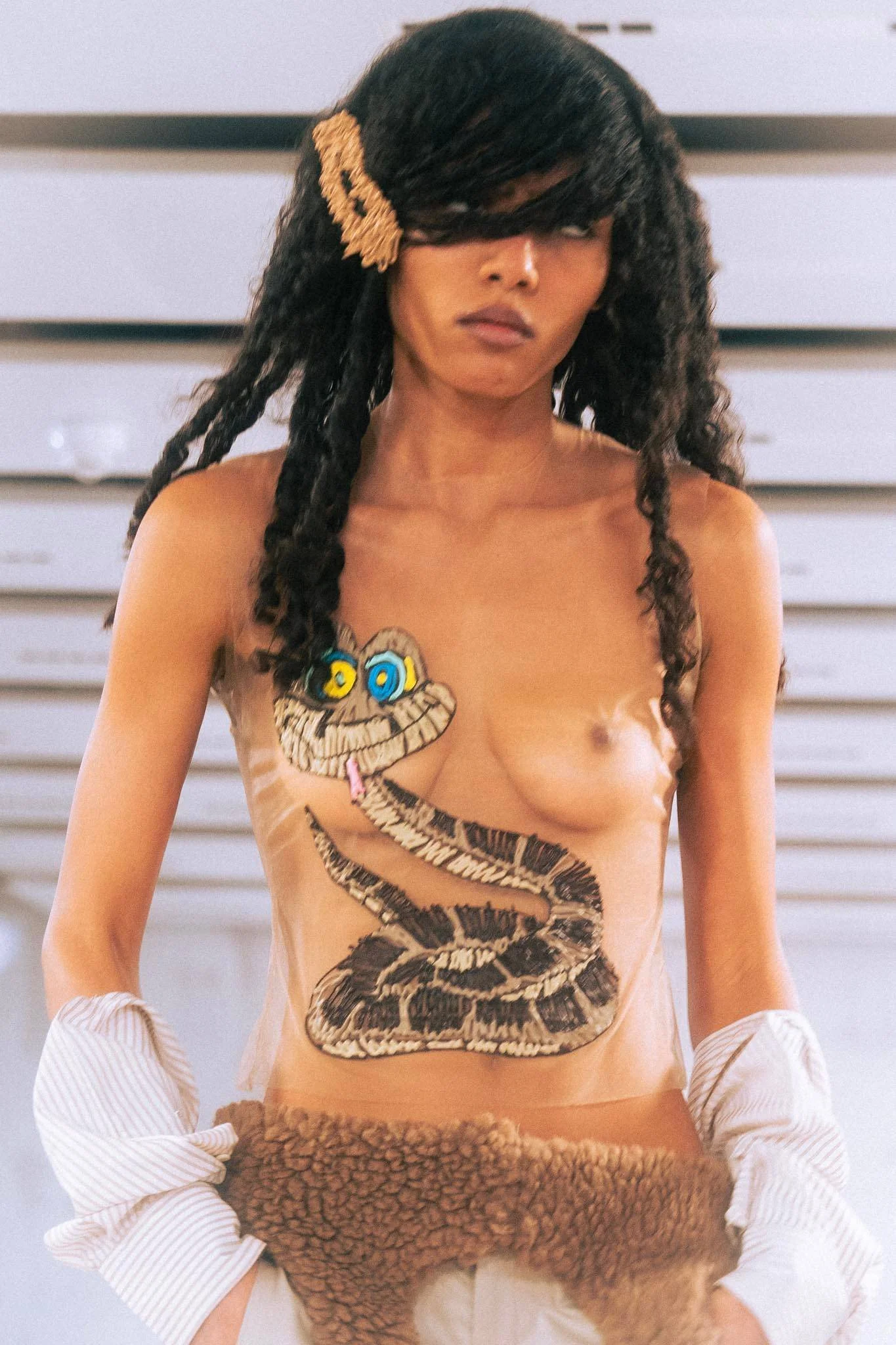
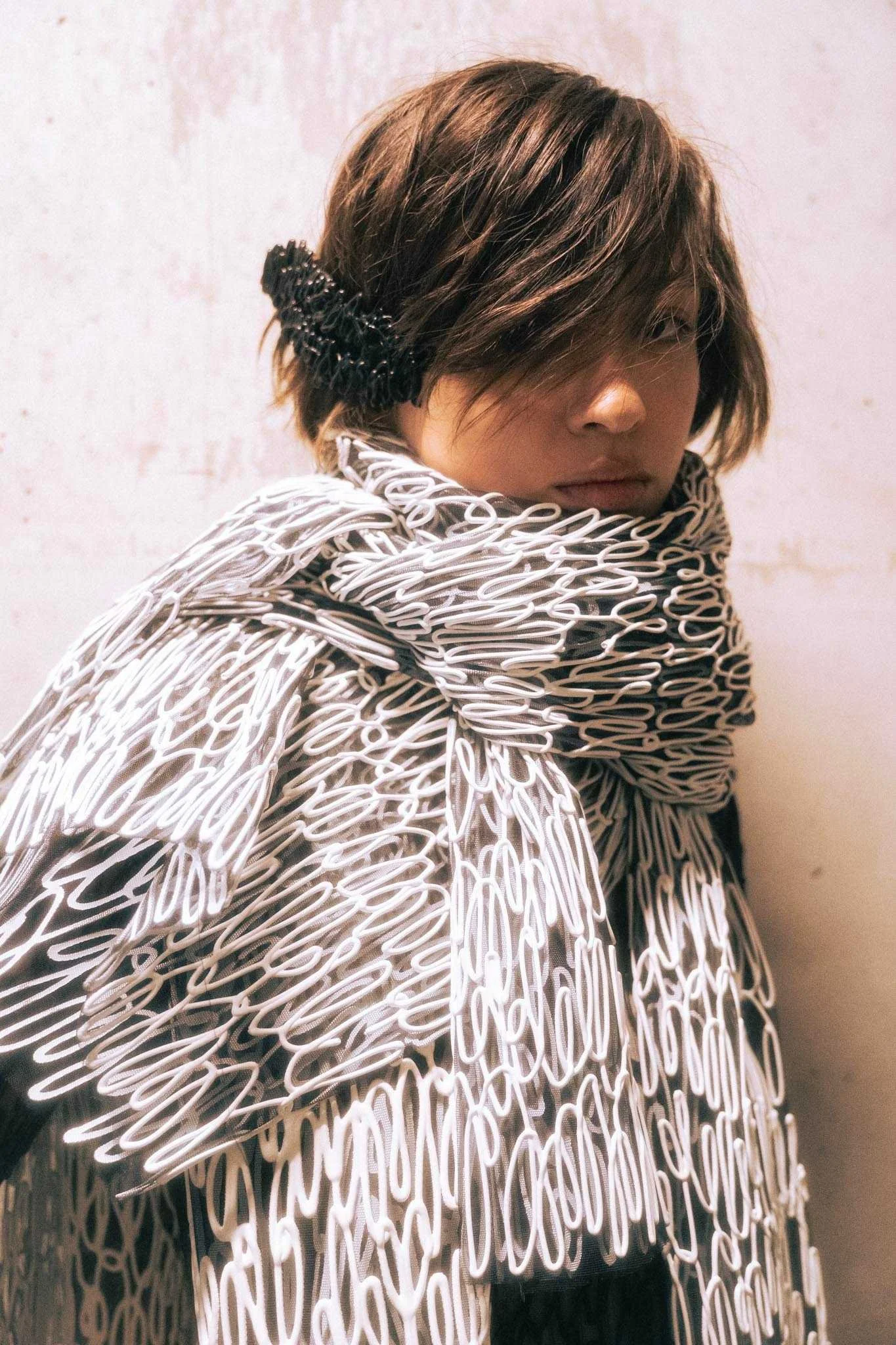
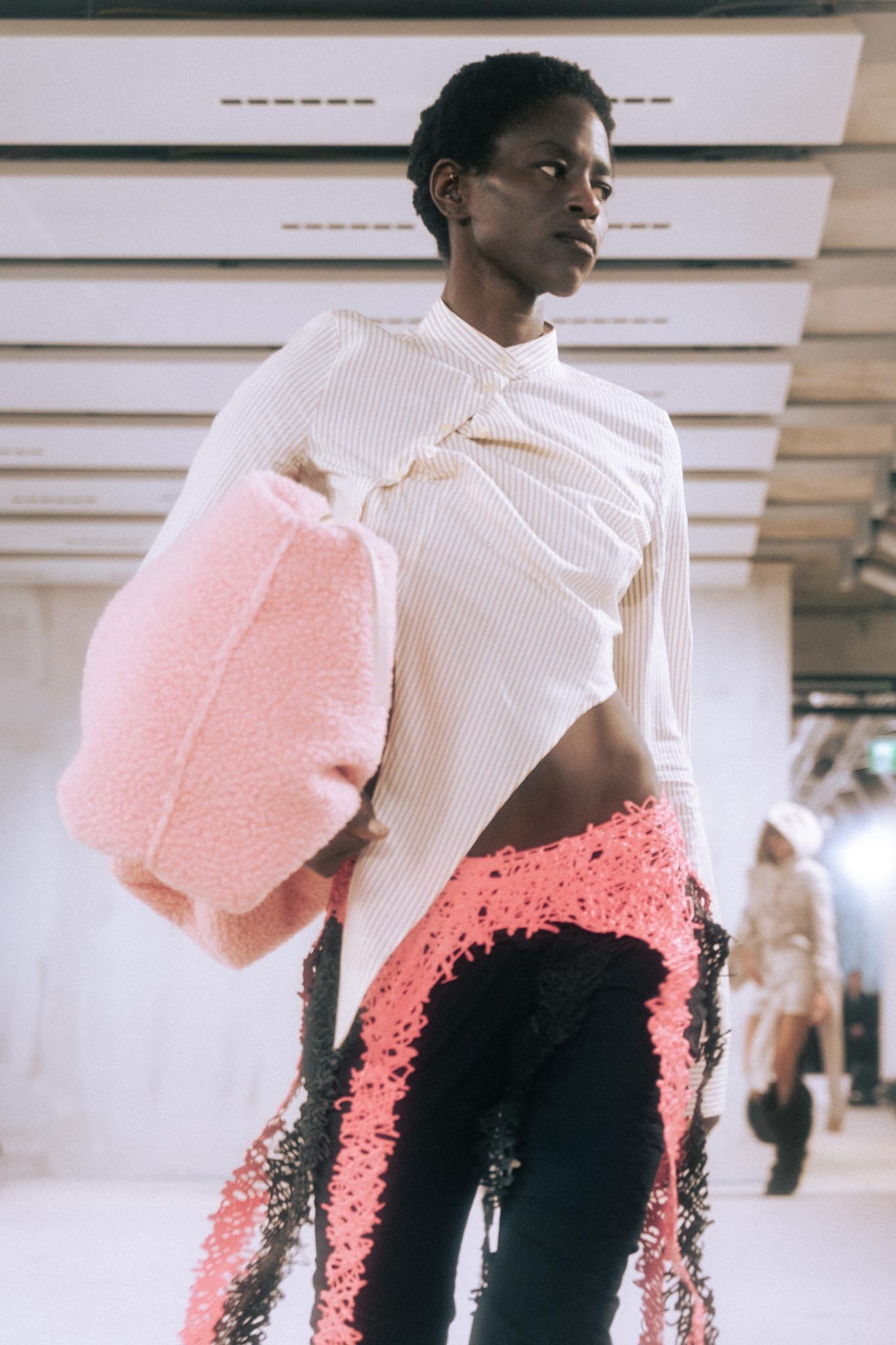
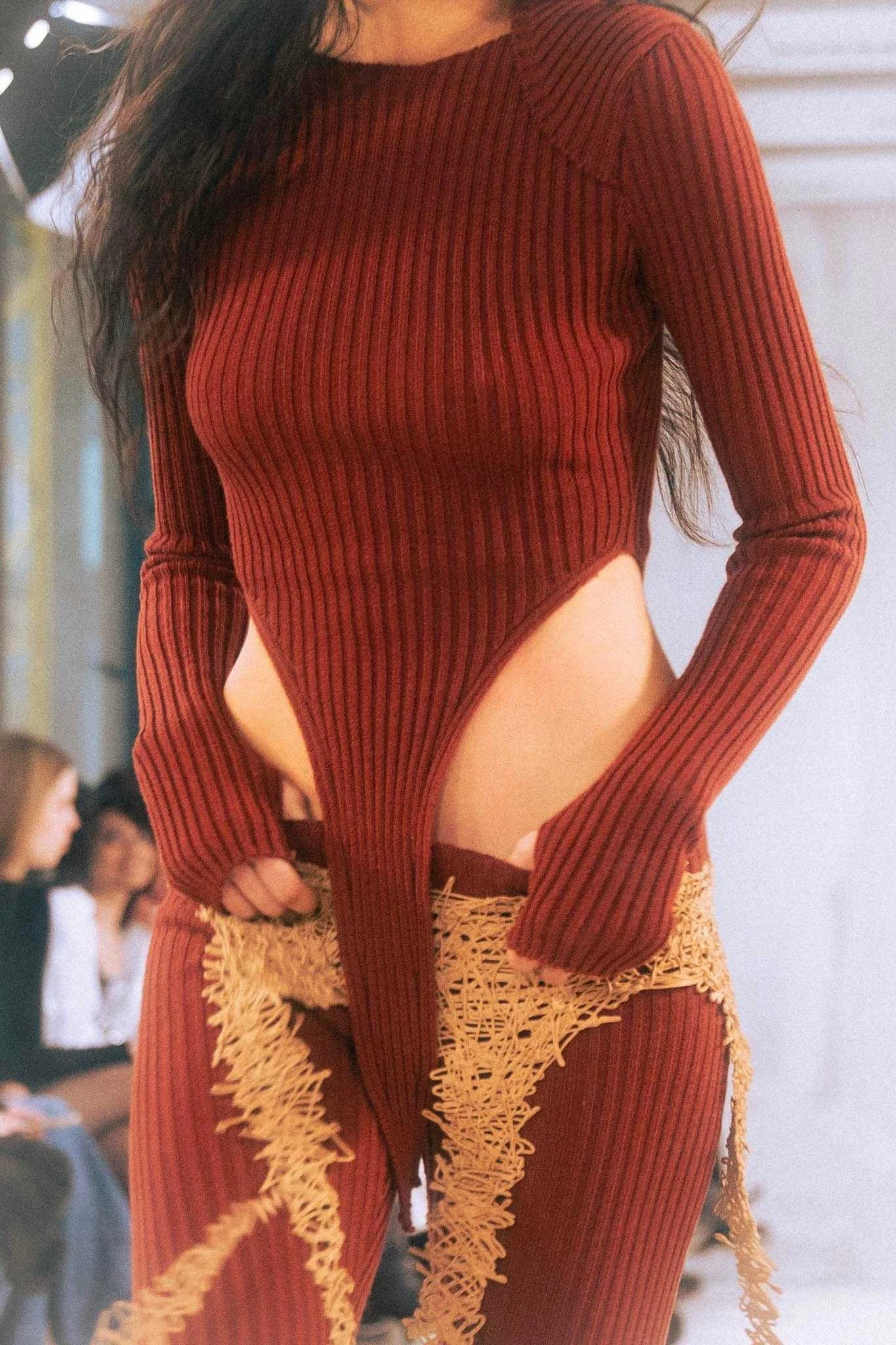
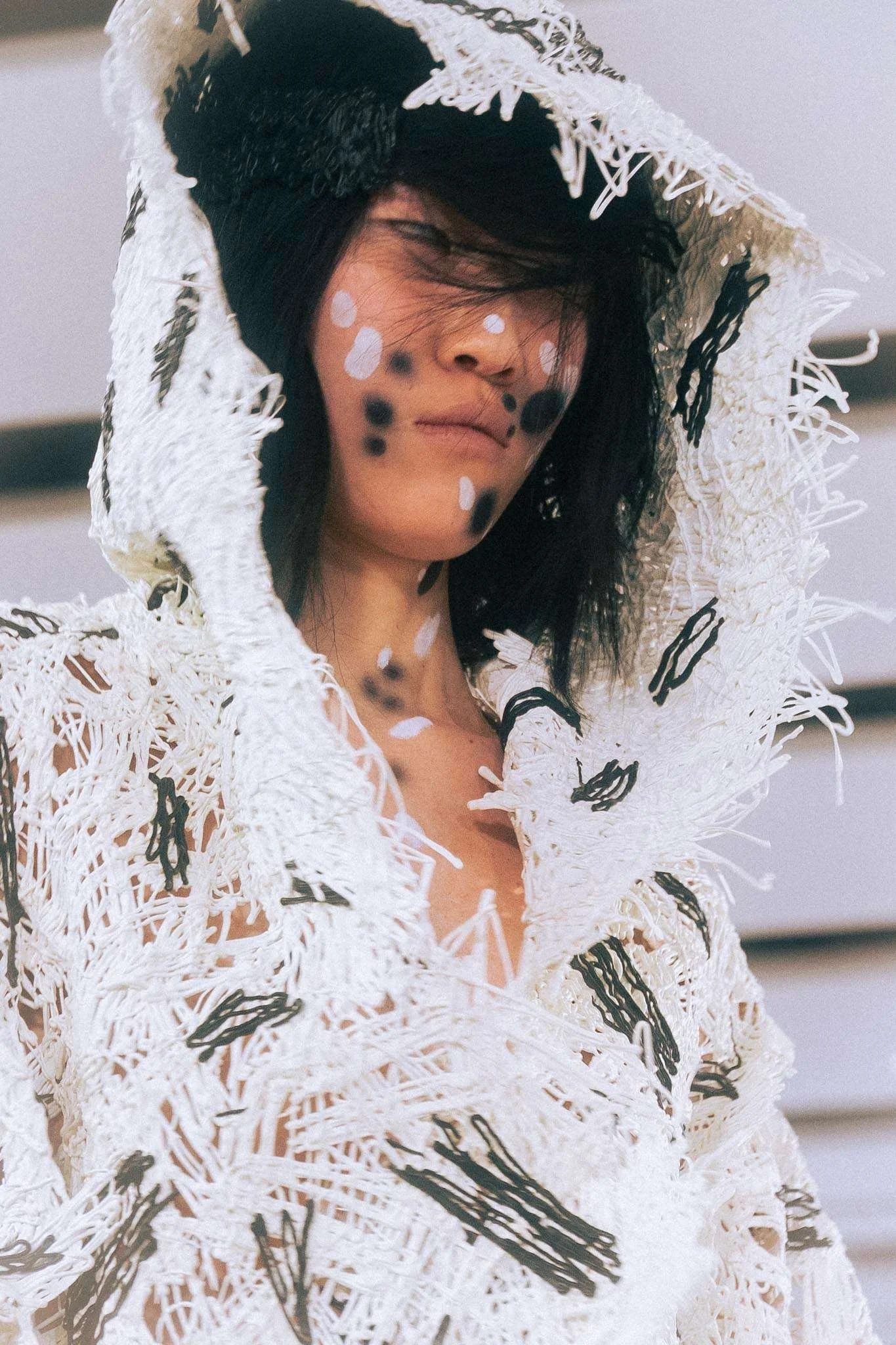
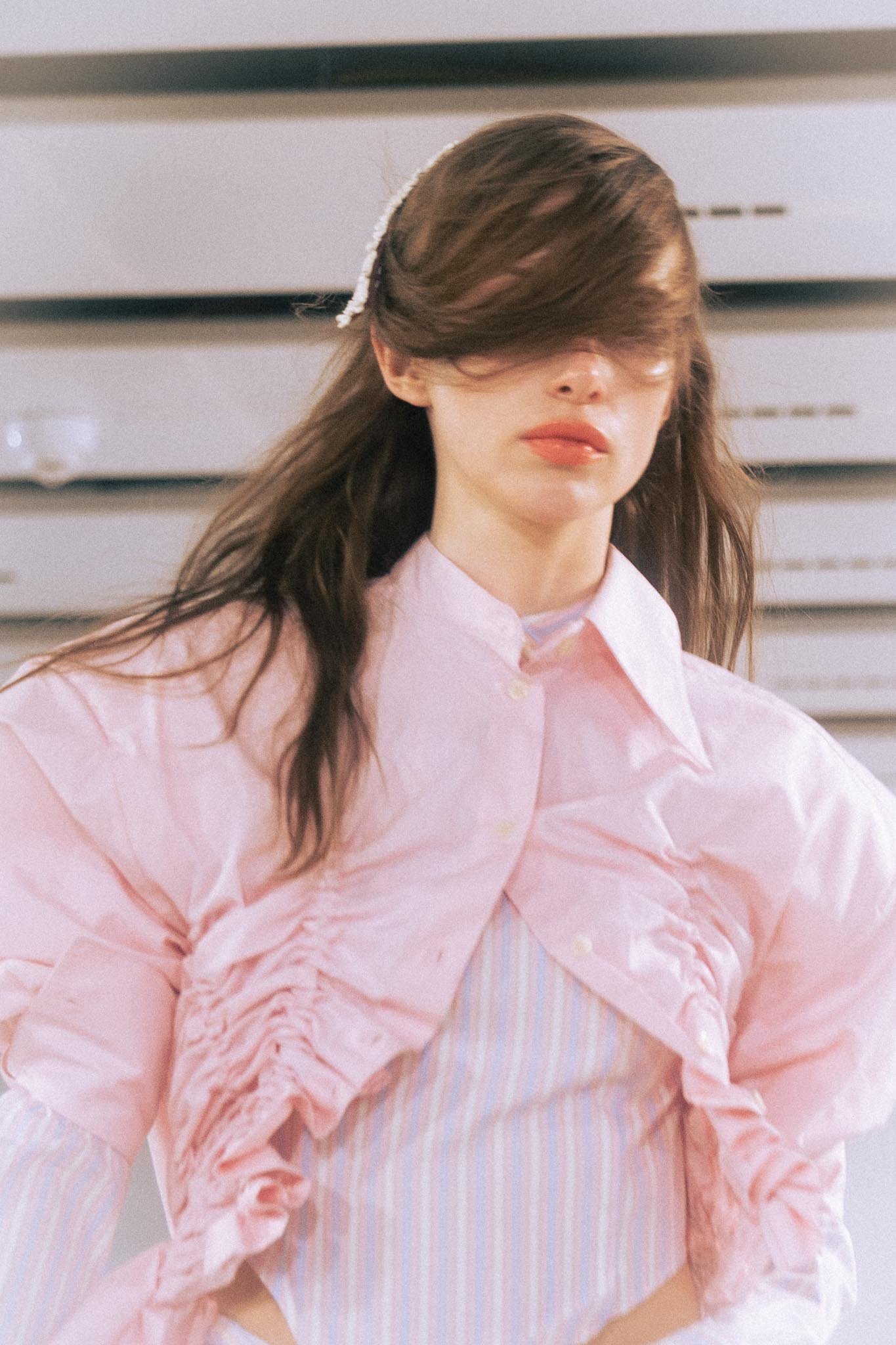
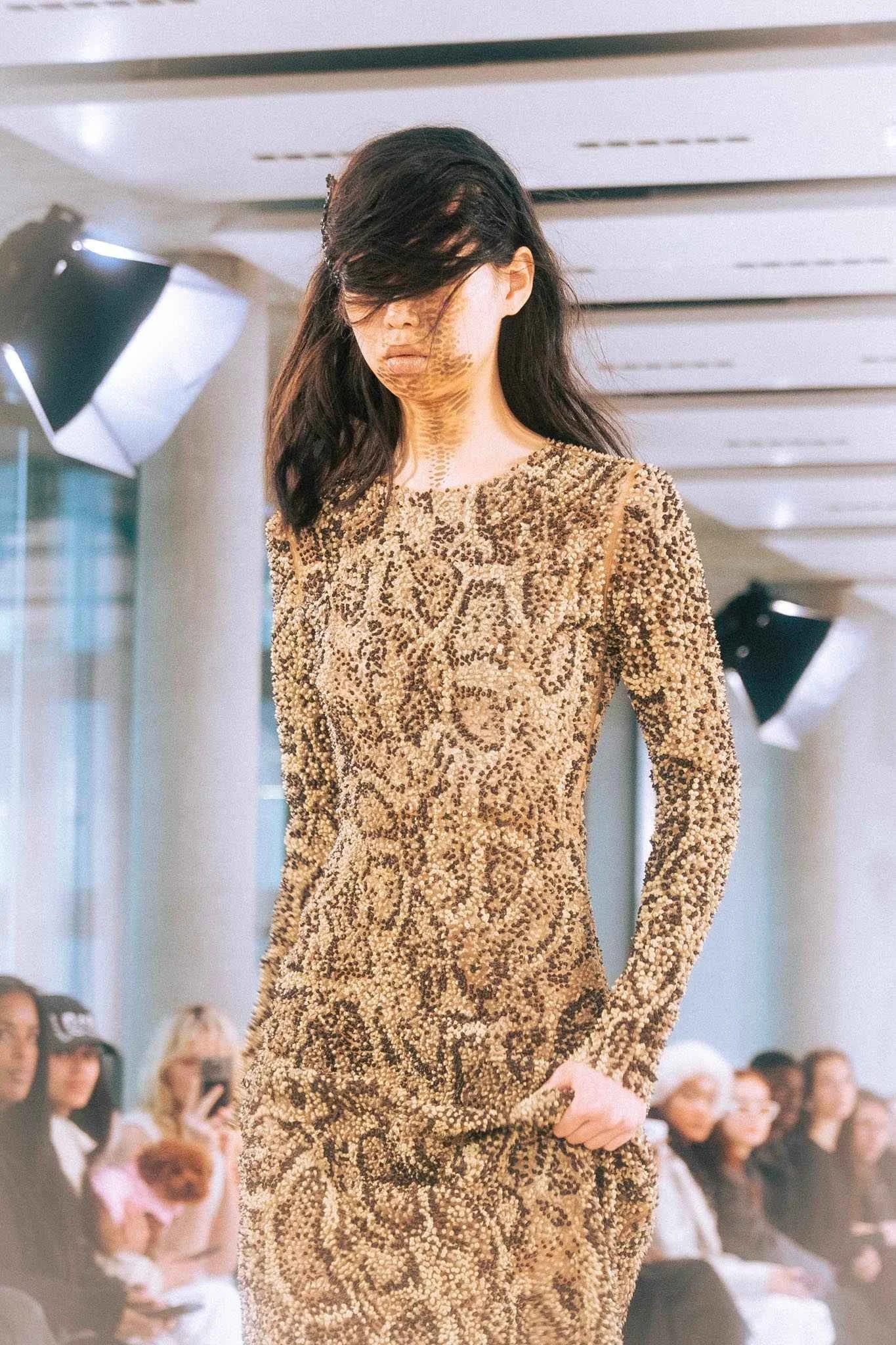
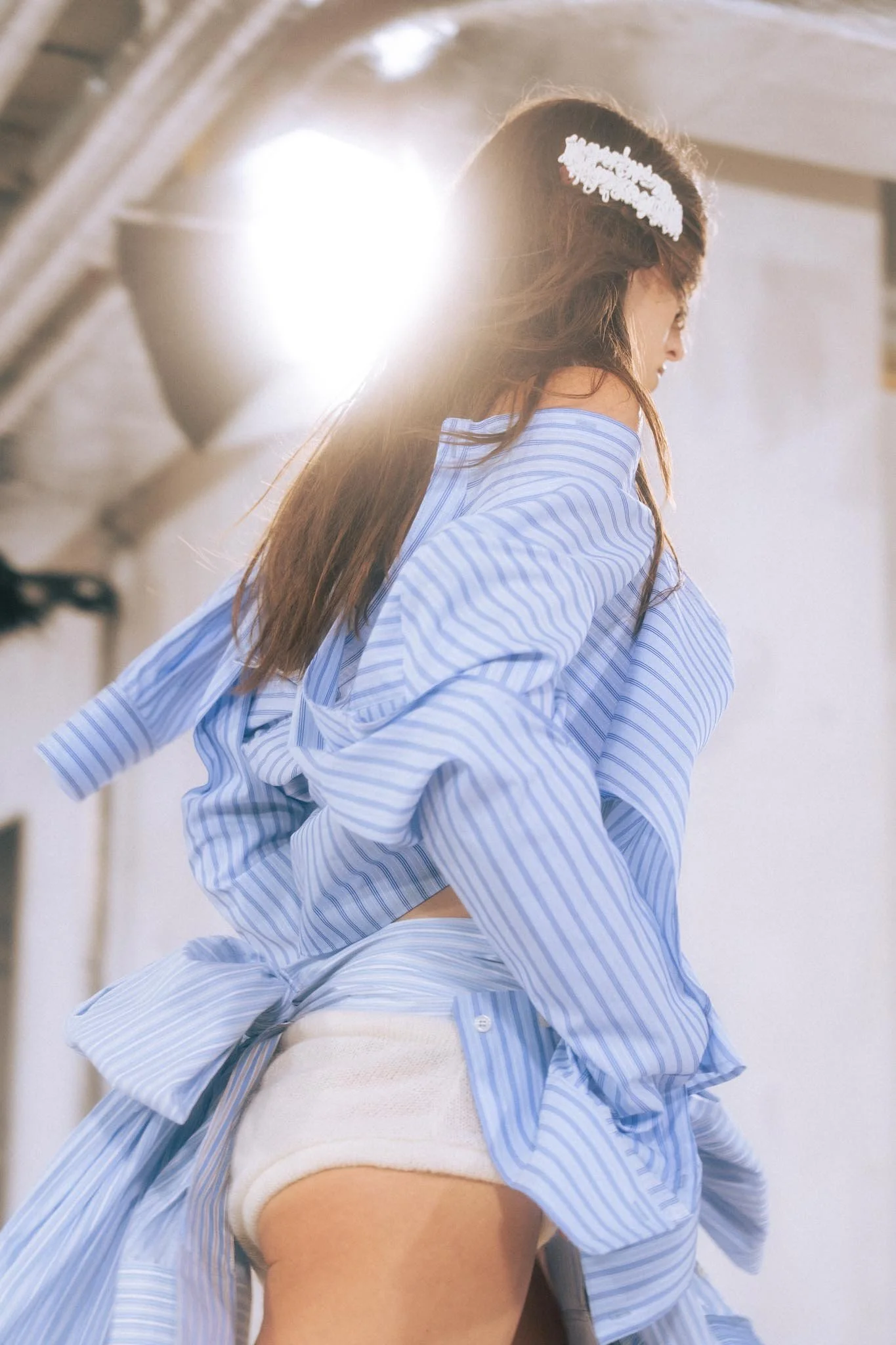
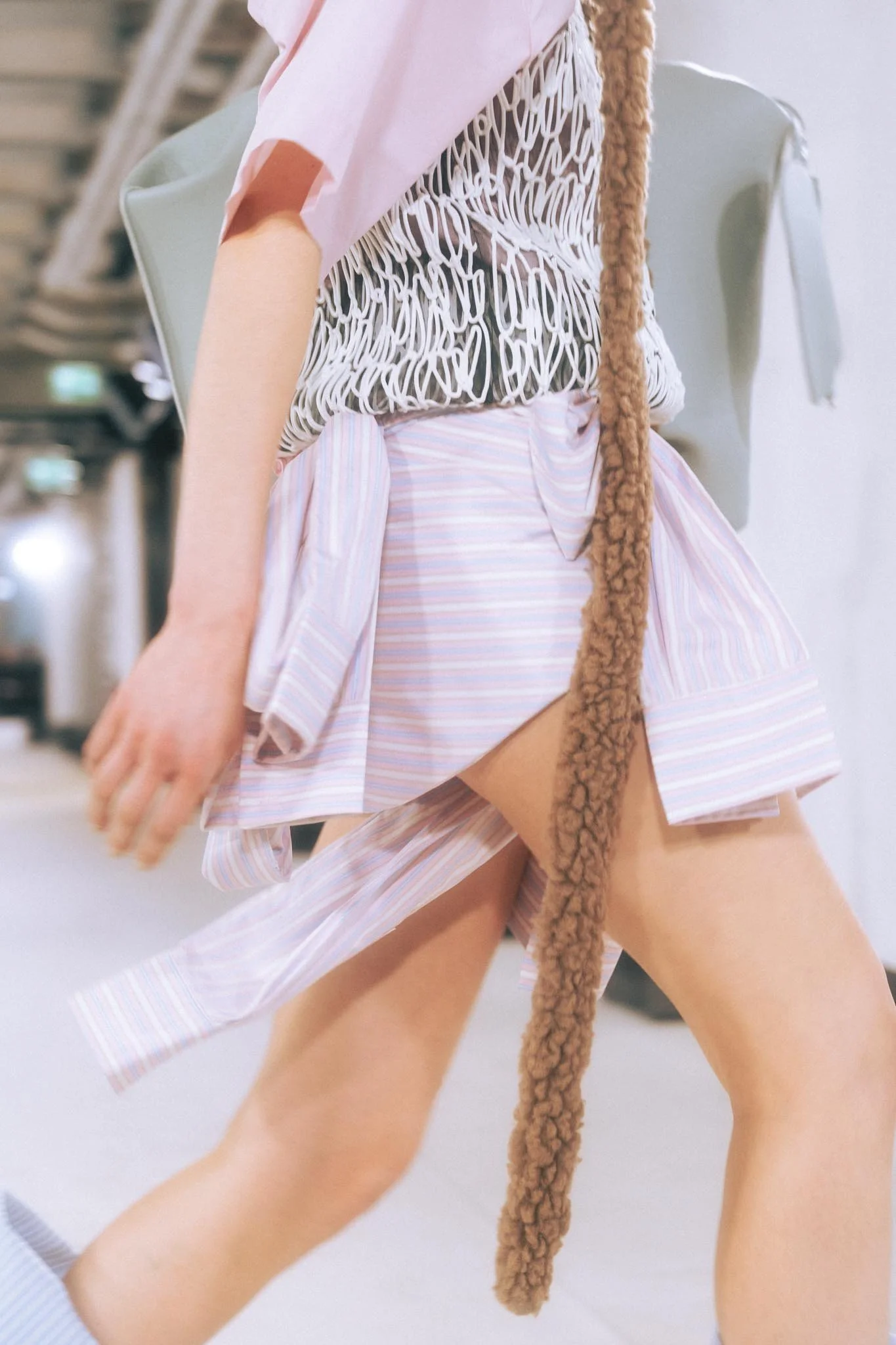
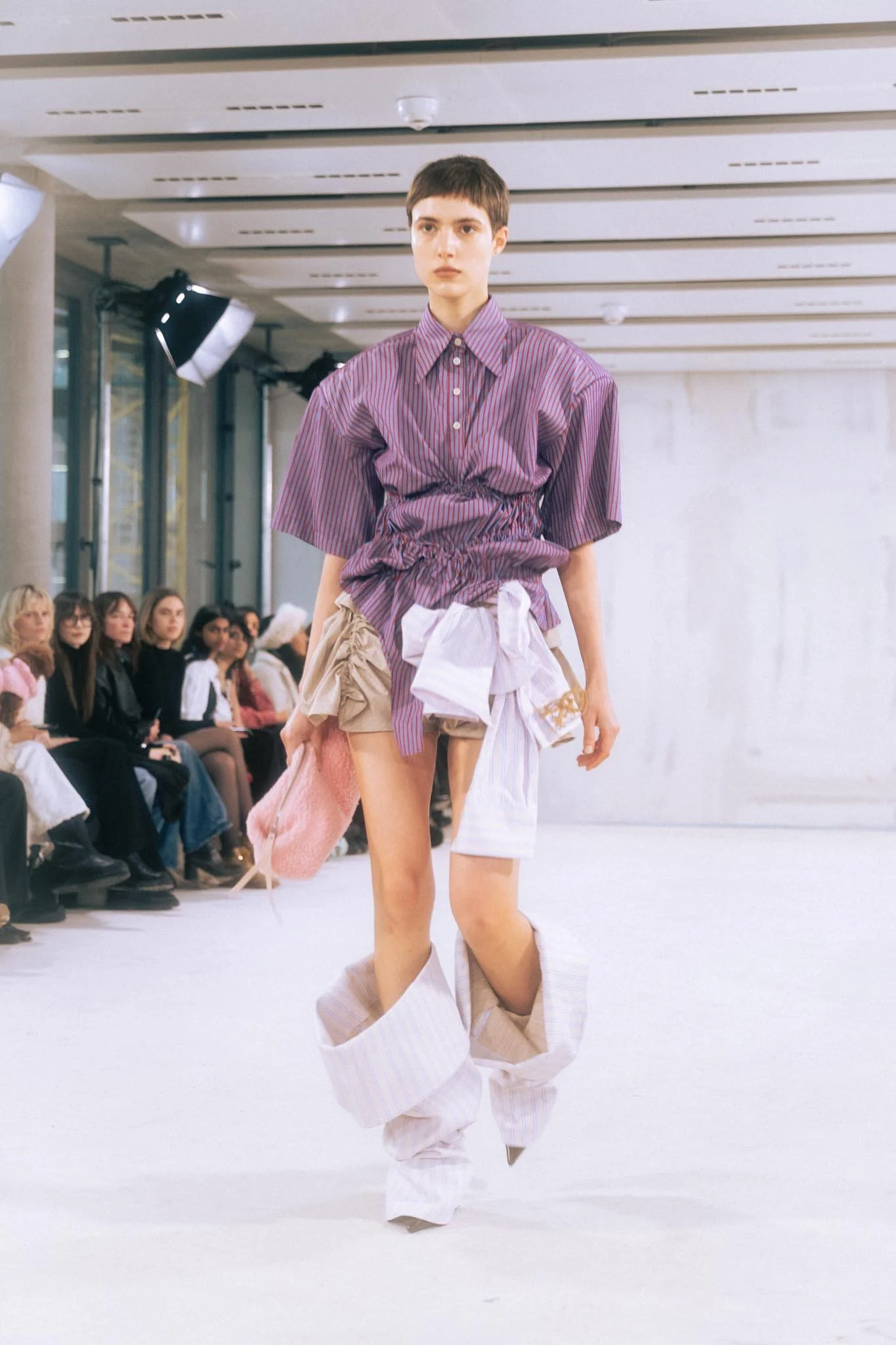
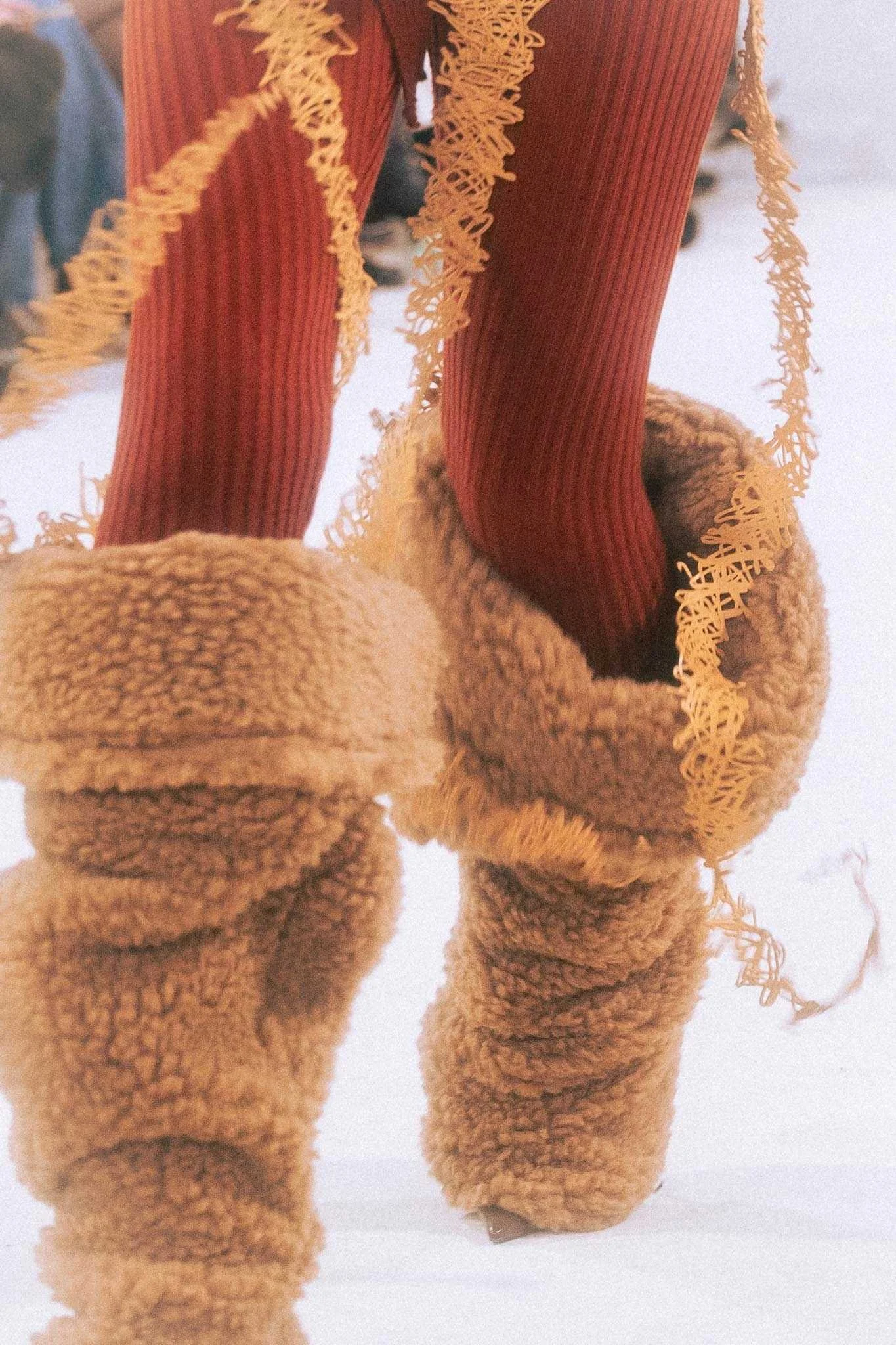
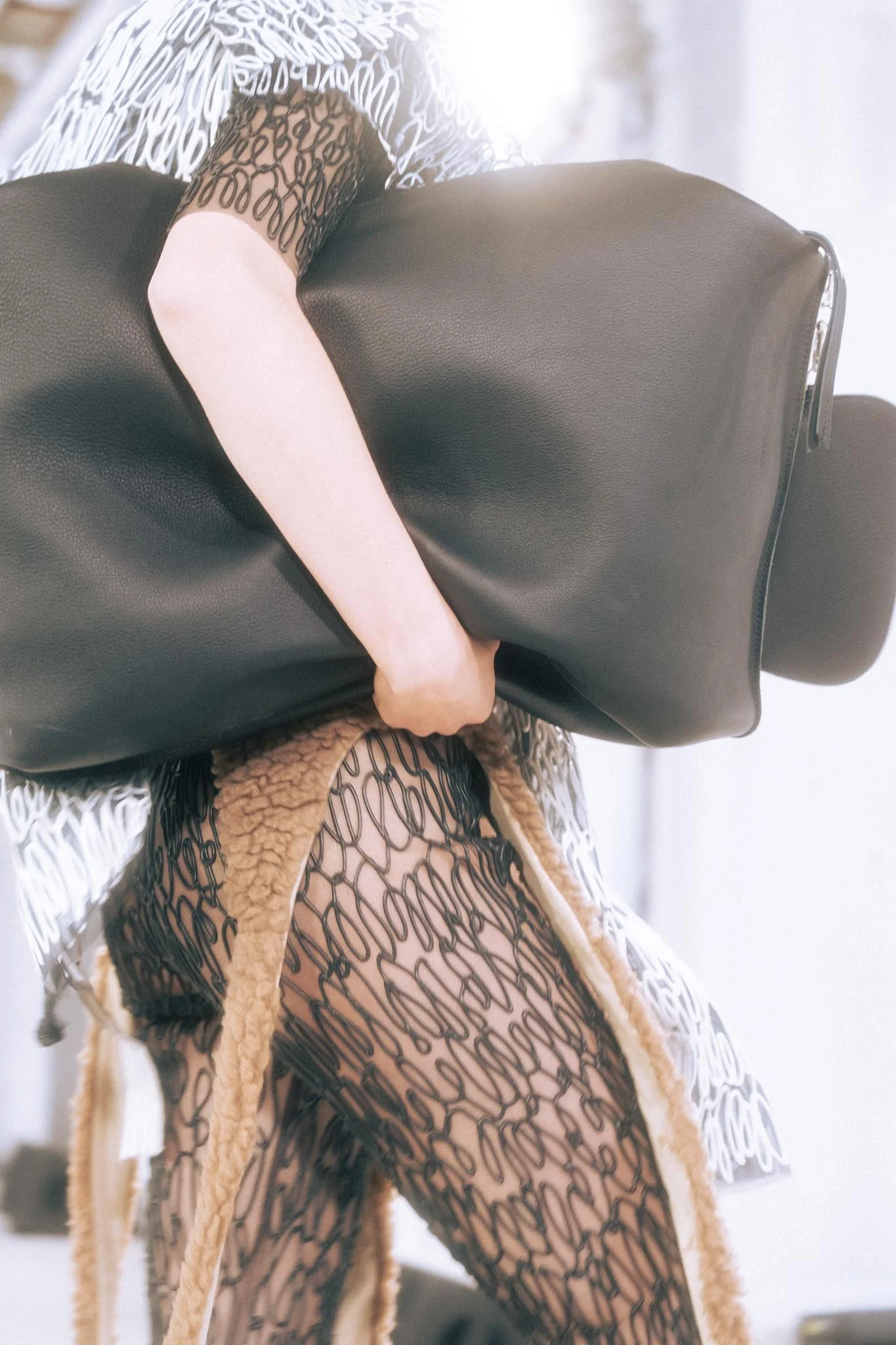
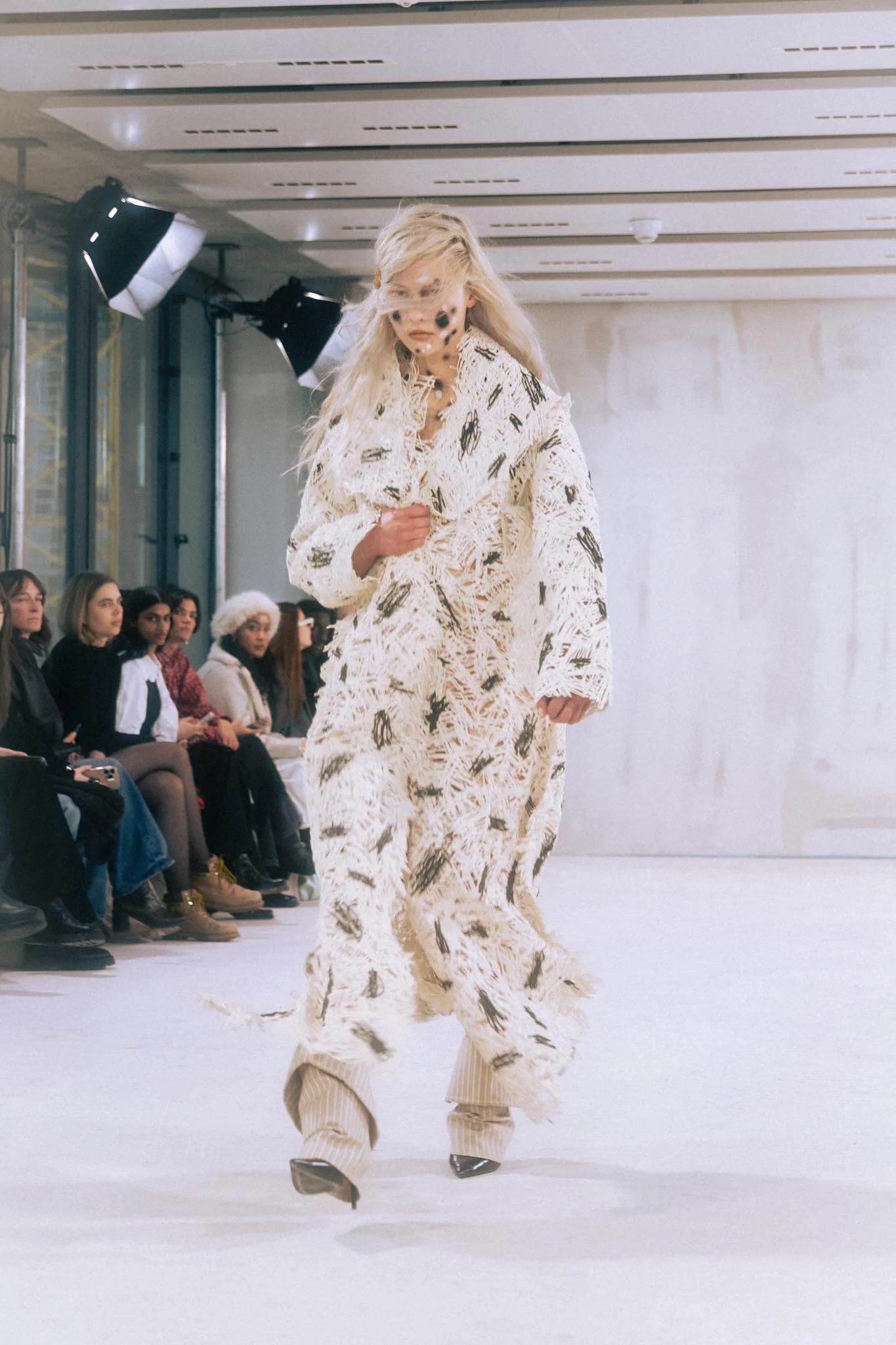
Kasia Kucharska's FW26 collection refuses balance. The Berlin-based designer, fresh from winning the FCG/Vogue Fashion Fund, staged a collection born from emotional extremes: overwhelming love colliding with frustration, tenderness wrestling anger. This is not fashion that celebrates equilibrium. It allows happiness and rage to coexist, embracing multitasking and ambivalence as reality, as attitude, as female strength.
The collection frames the lived experiences of women through a lens of vulnerability as resilience. Kucharska explores motherhood's complex landscape, where the pressure to endure coexists with fierce longing for protection. Nostalgia becomes material: childhood cinematic heroes and comfort memories materialized in full-latex statements, furry friends from children's movies turning models into animals. Black latex collides with soft pink plush. Structured pinstripes meet fluid silhouettes. Central to the work is Kucharska's mastery of liquid latex as printing medium. Shirts are deconstructed into modular, fast-to-wear pieces that cinch and tie rather than button. The collection makes visible what society ignores: emotional labor, physical exhaustion, the invisibility of domestic work. Beautiful entropy becomes design language.
HADERLUMP
Photography by Paloma Schäfer @whiterabbitjpg
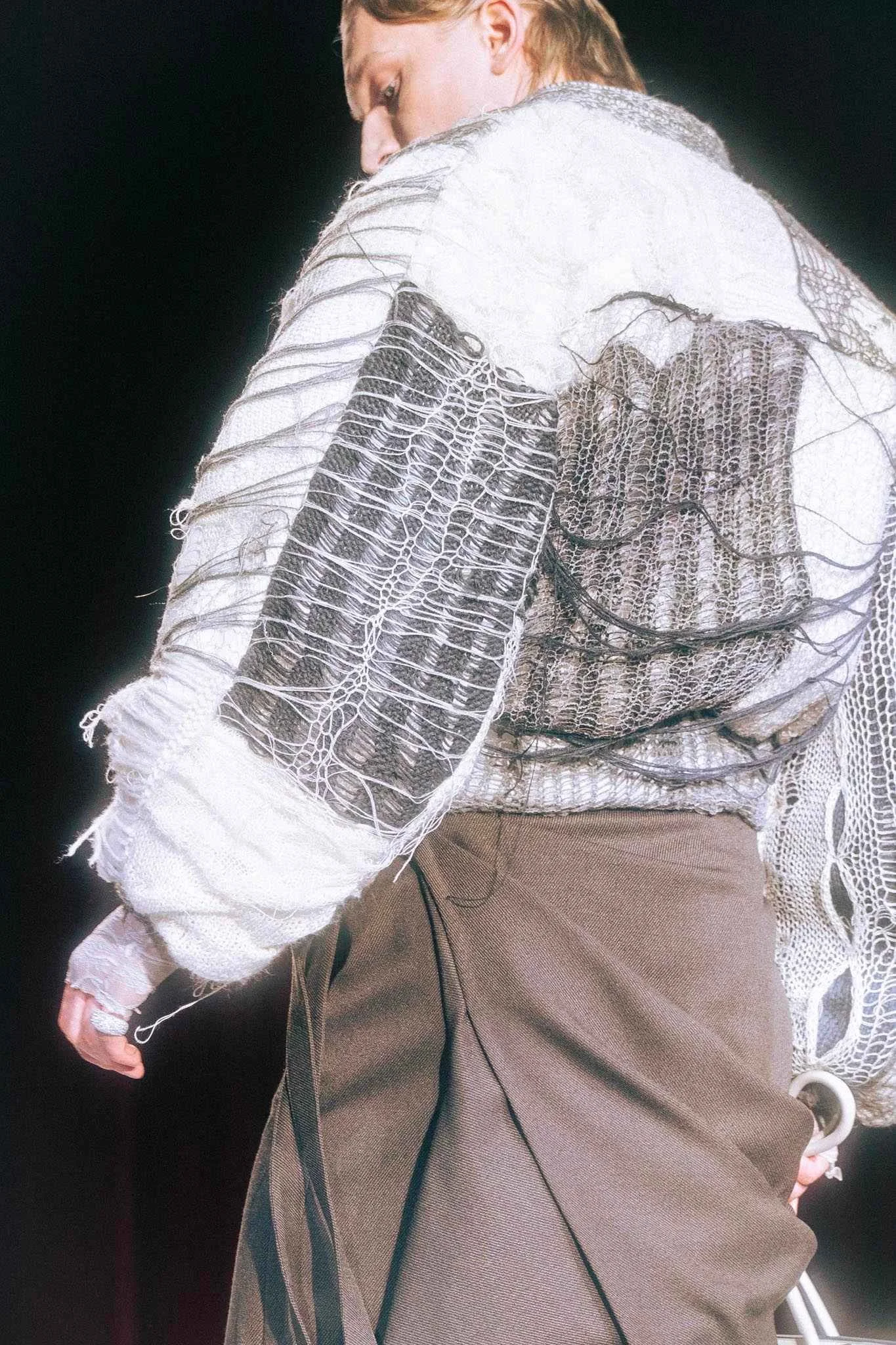
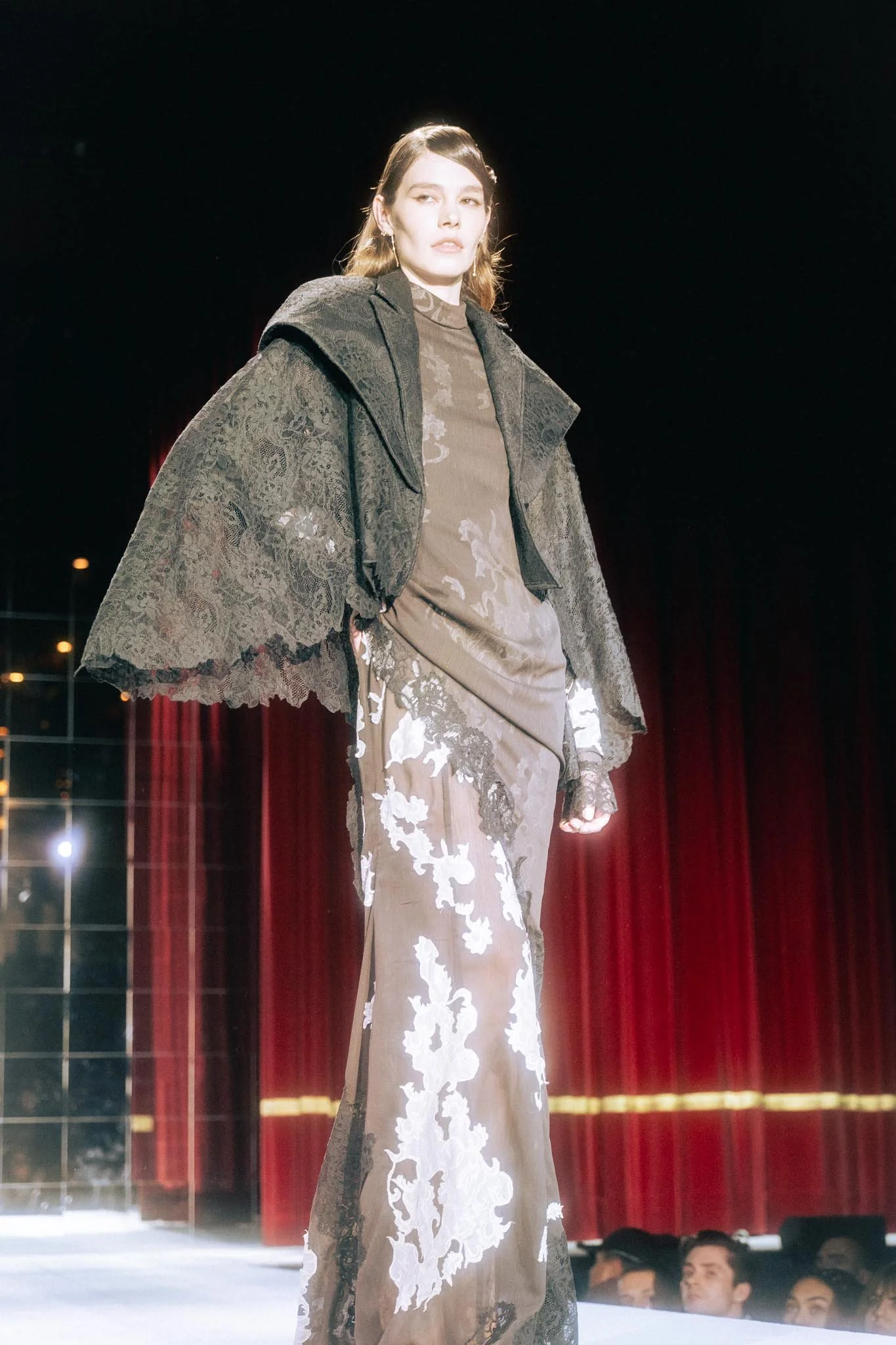
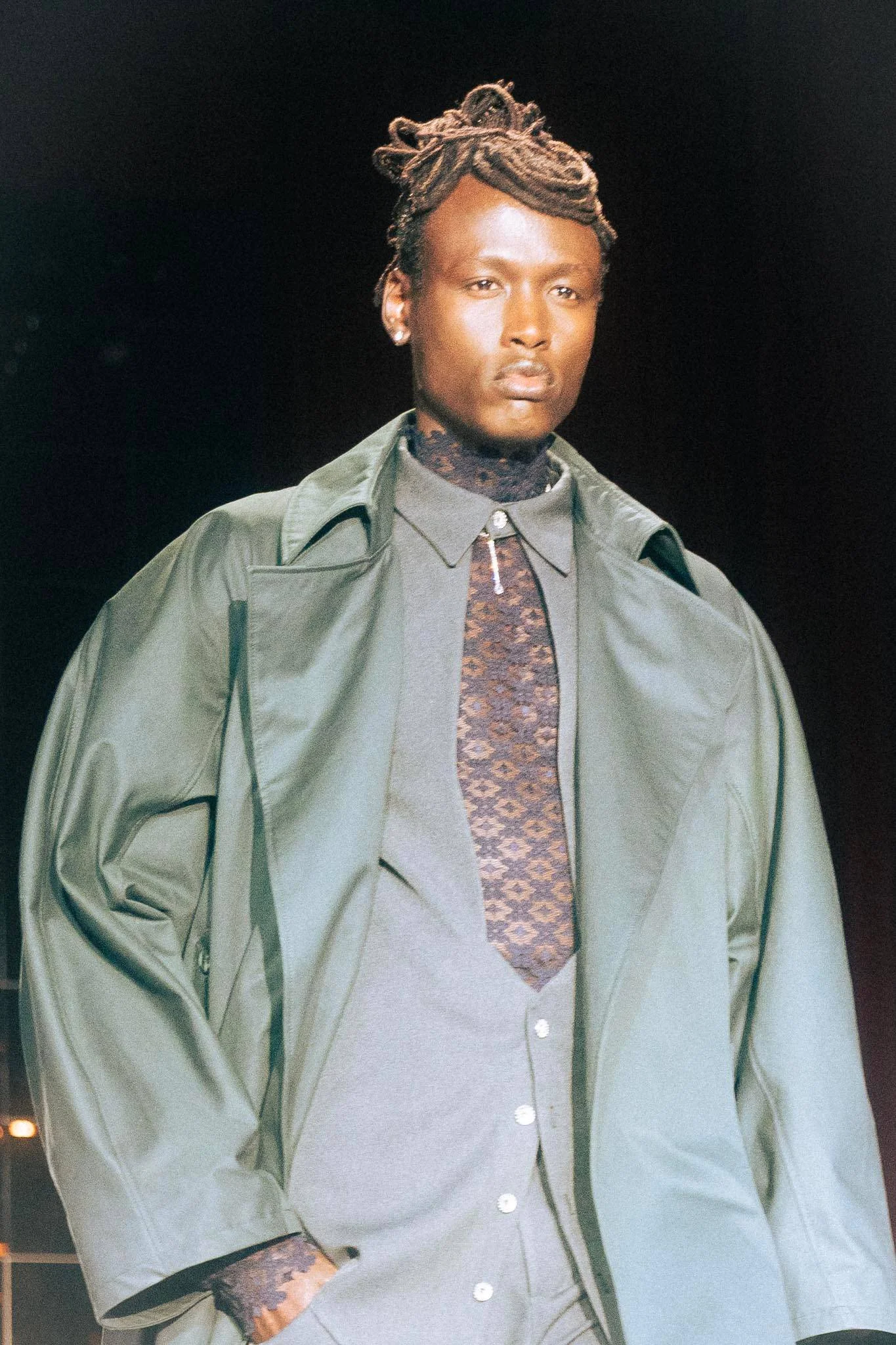
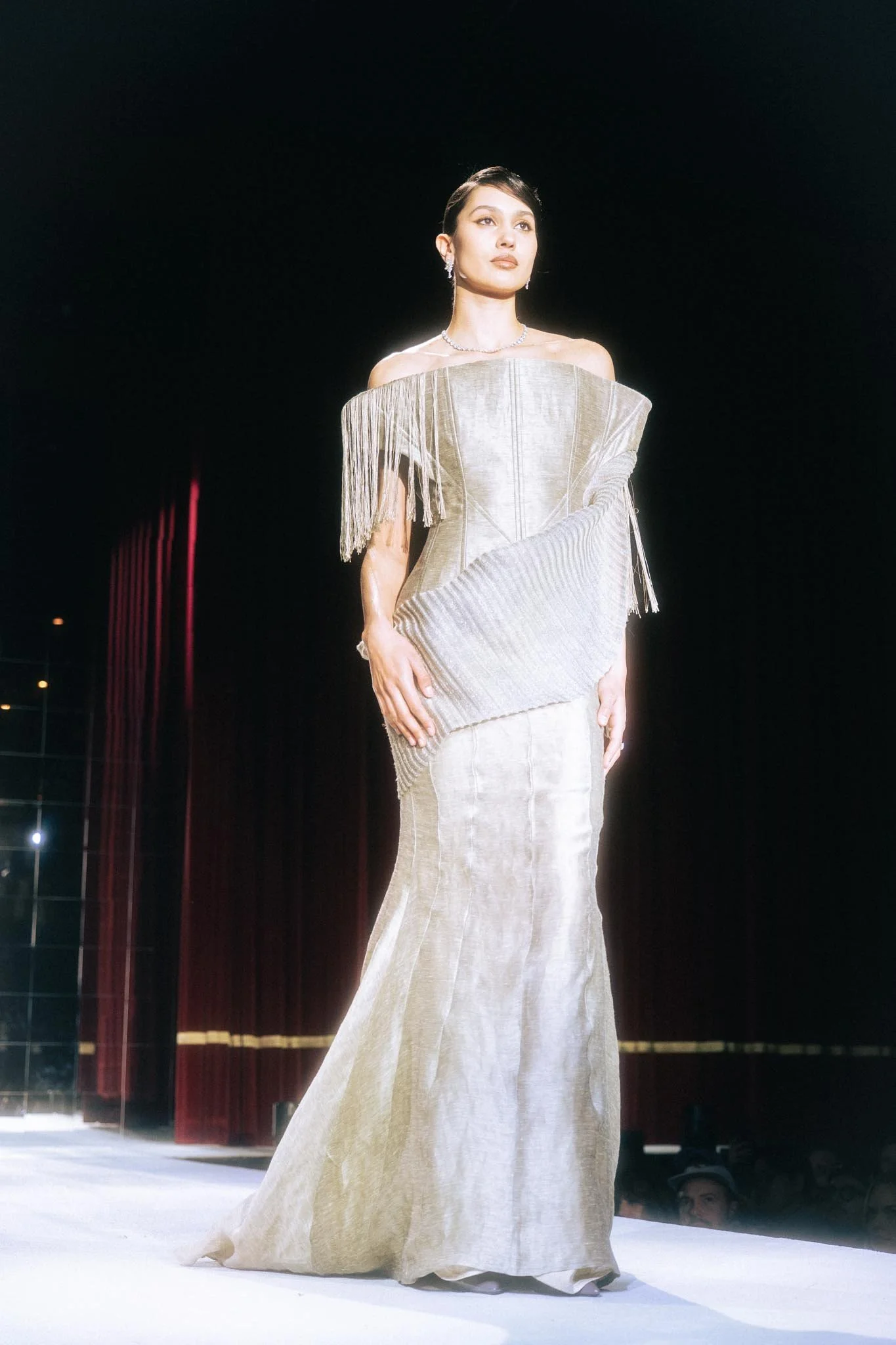
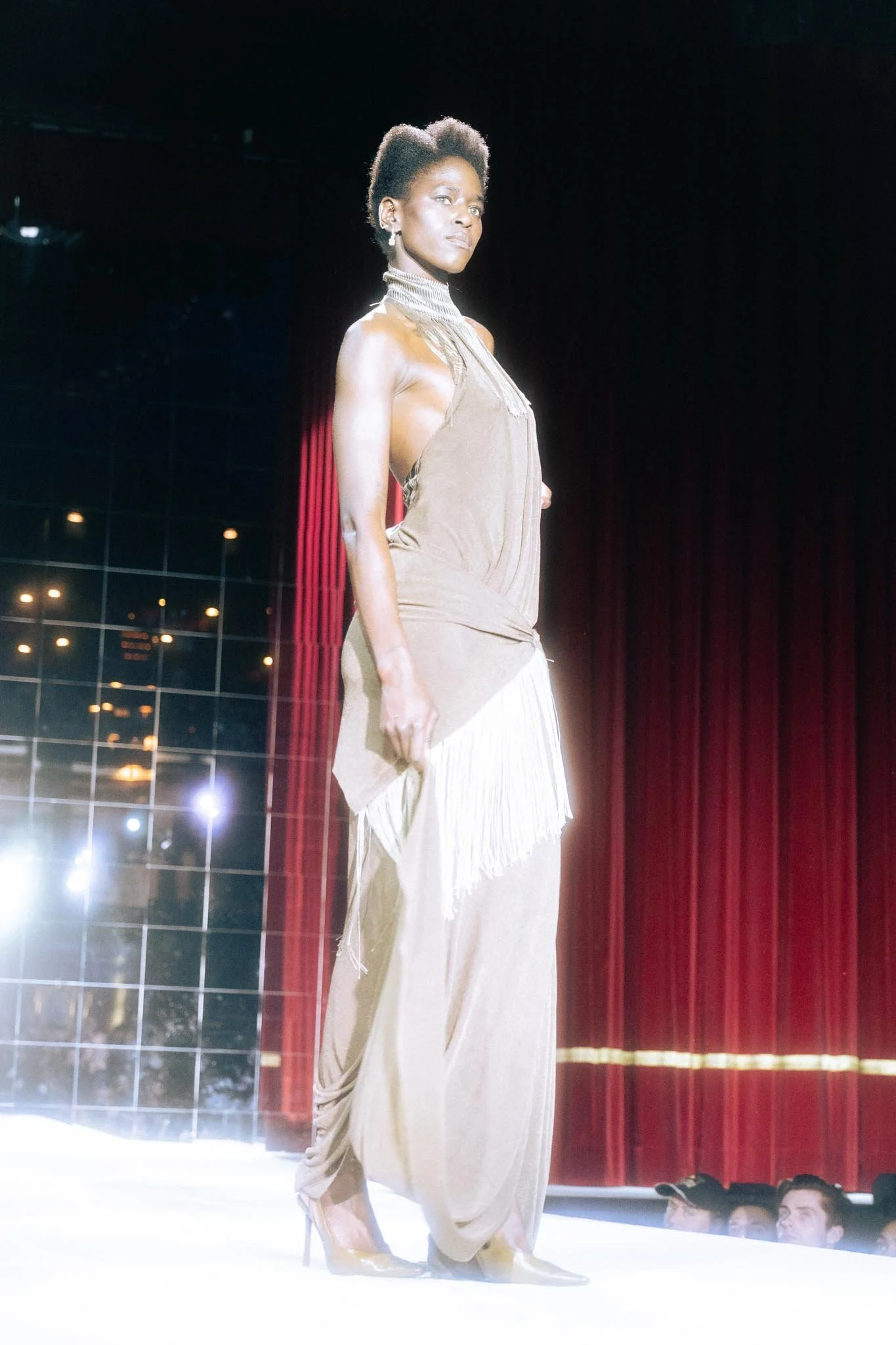
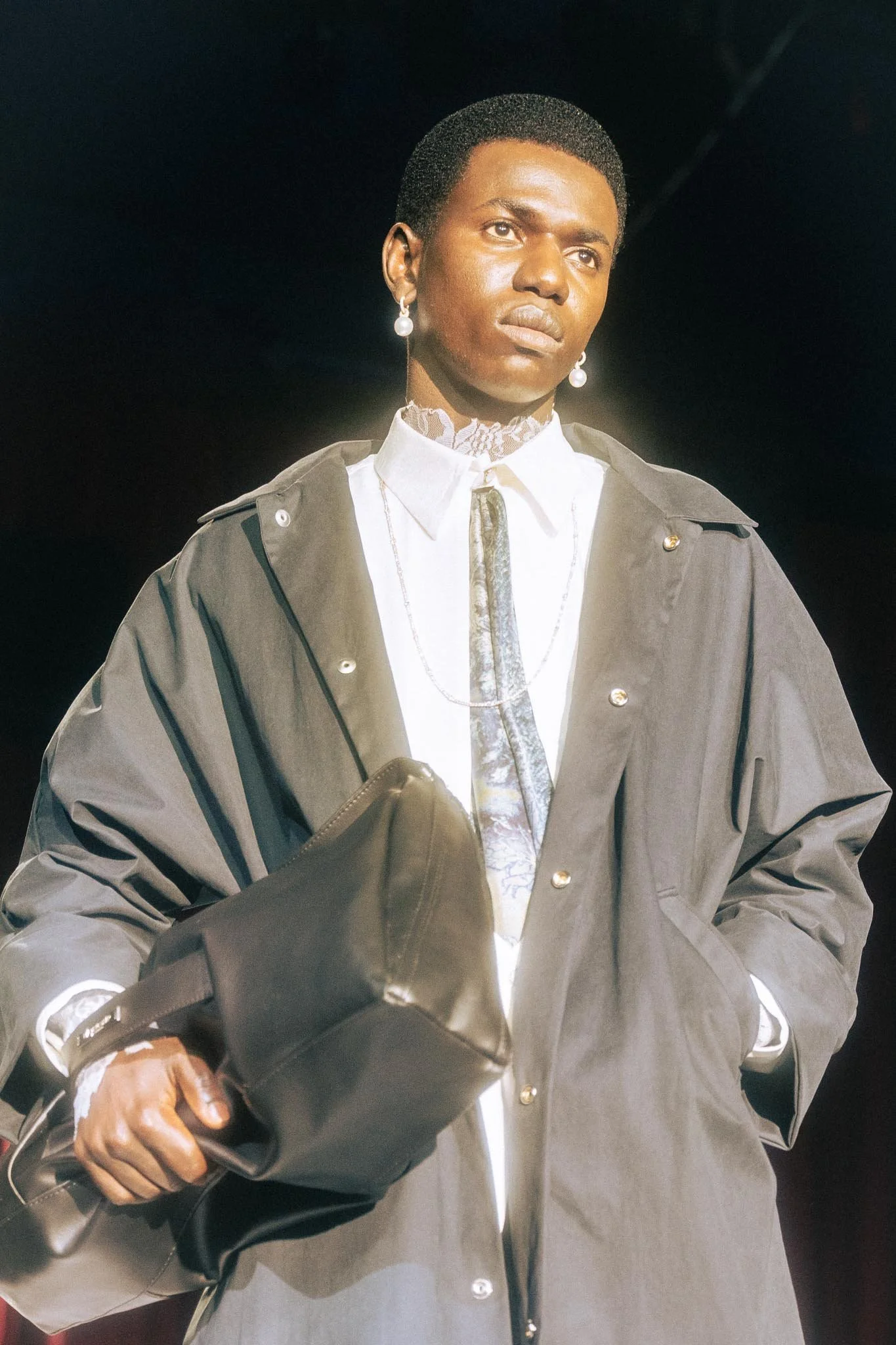
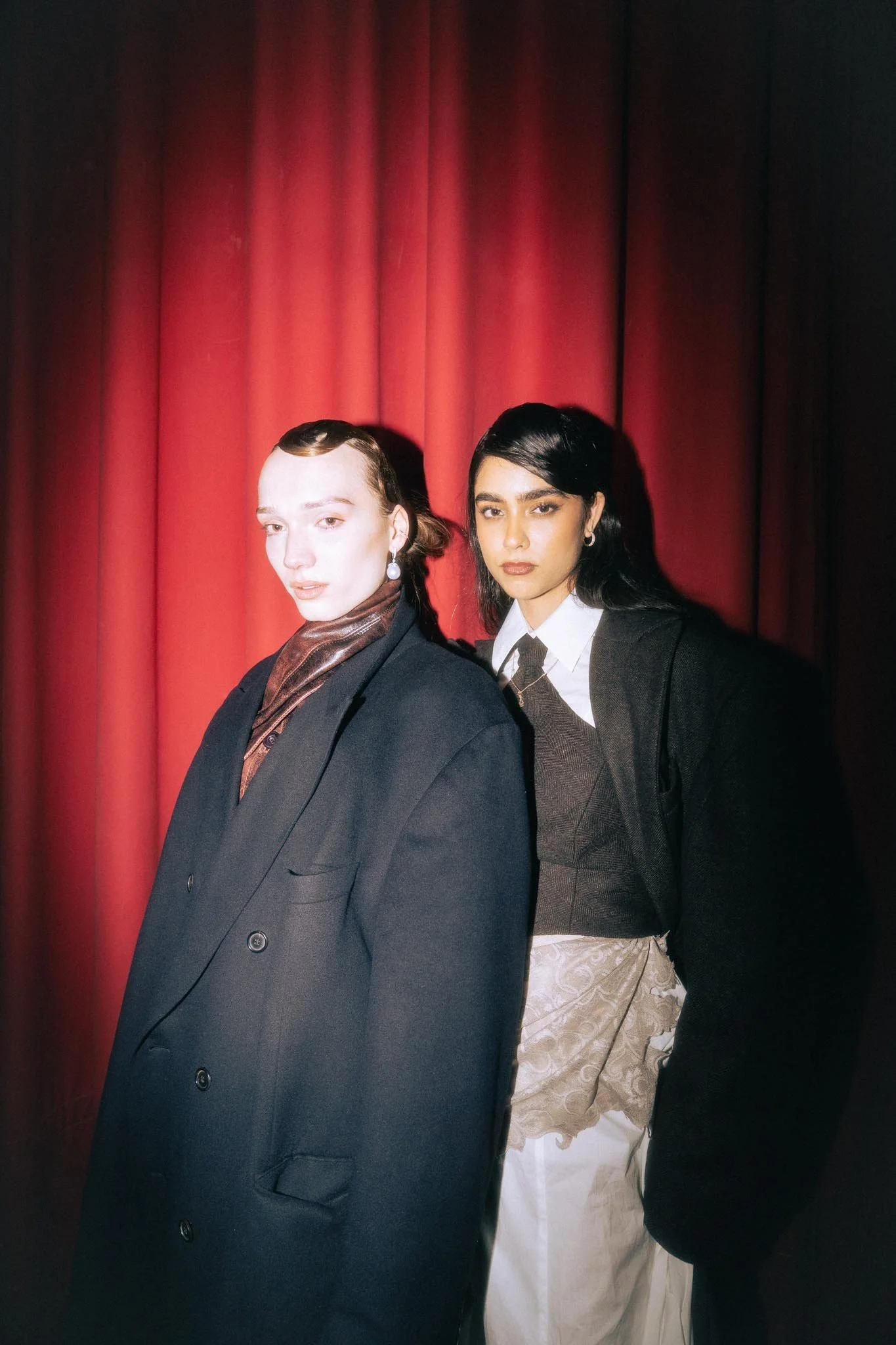
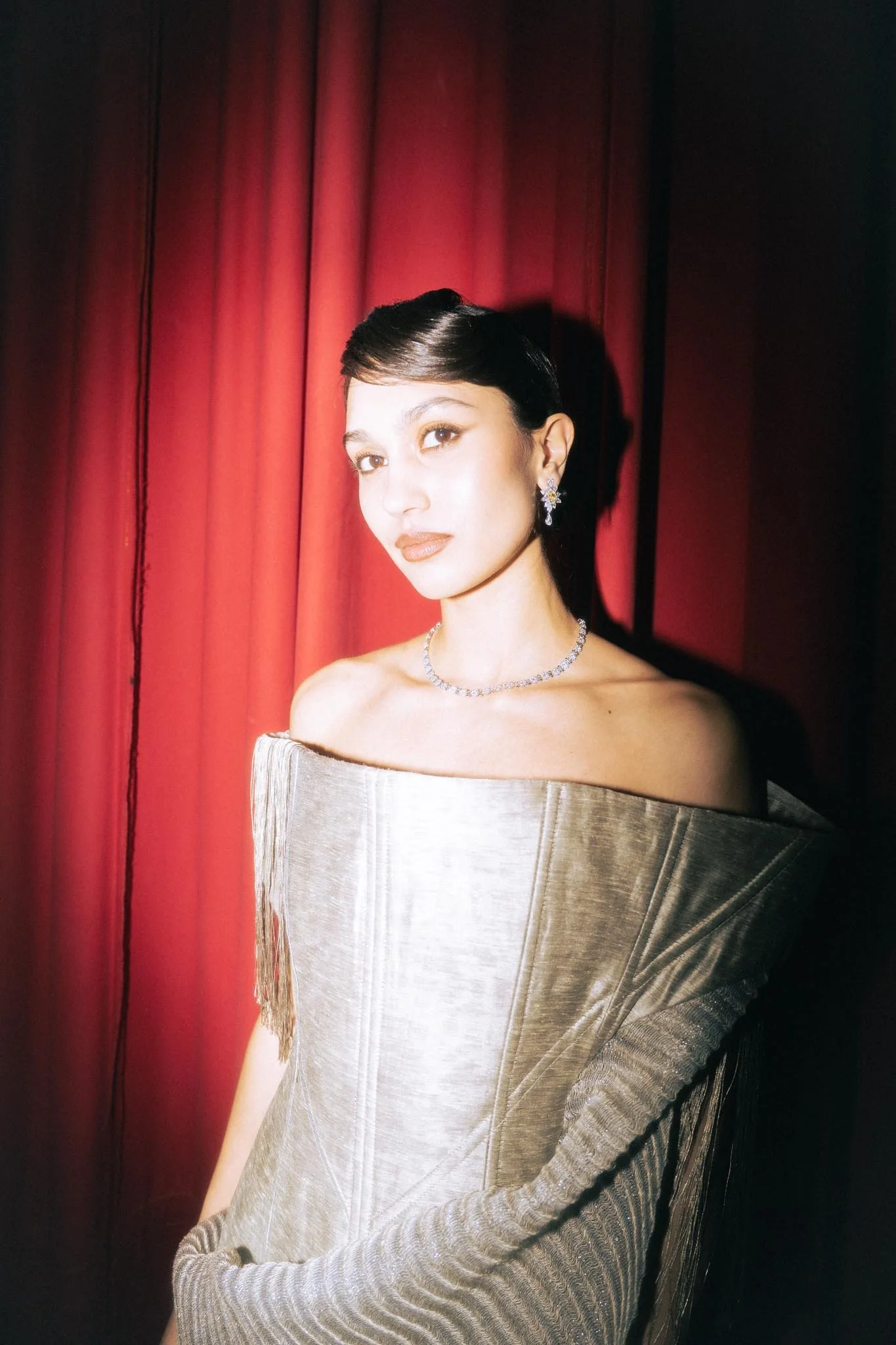
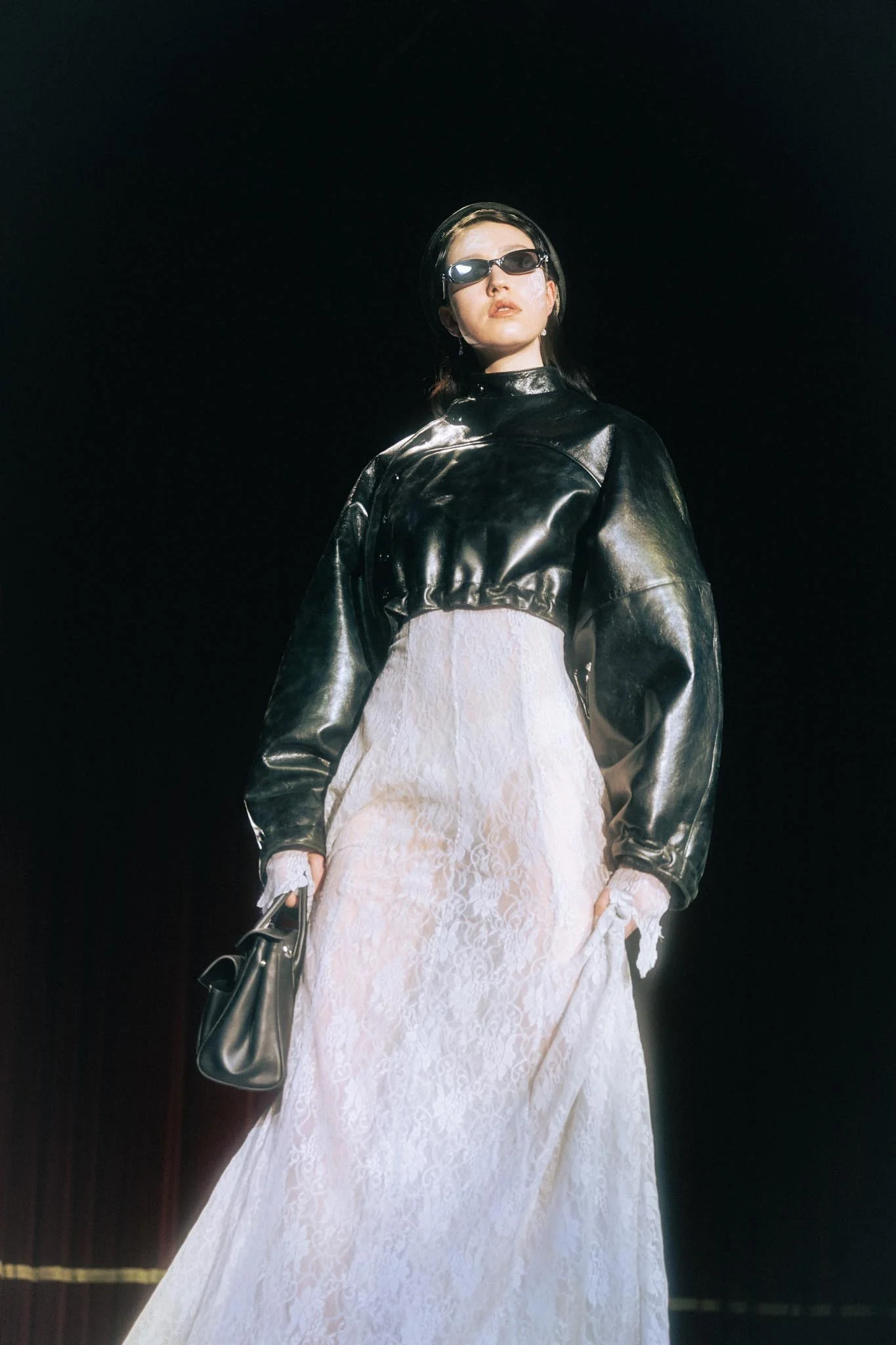
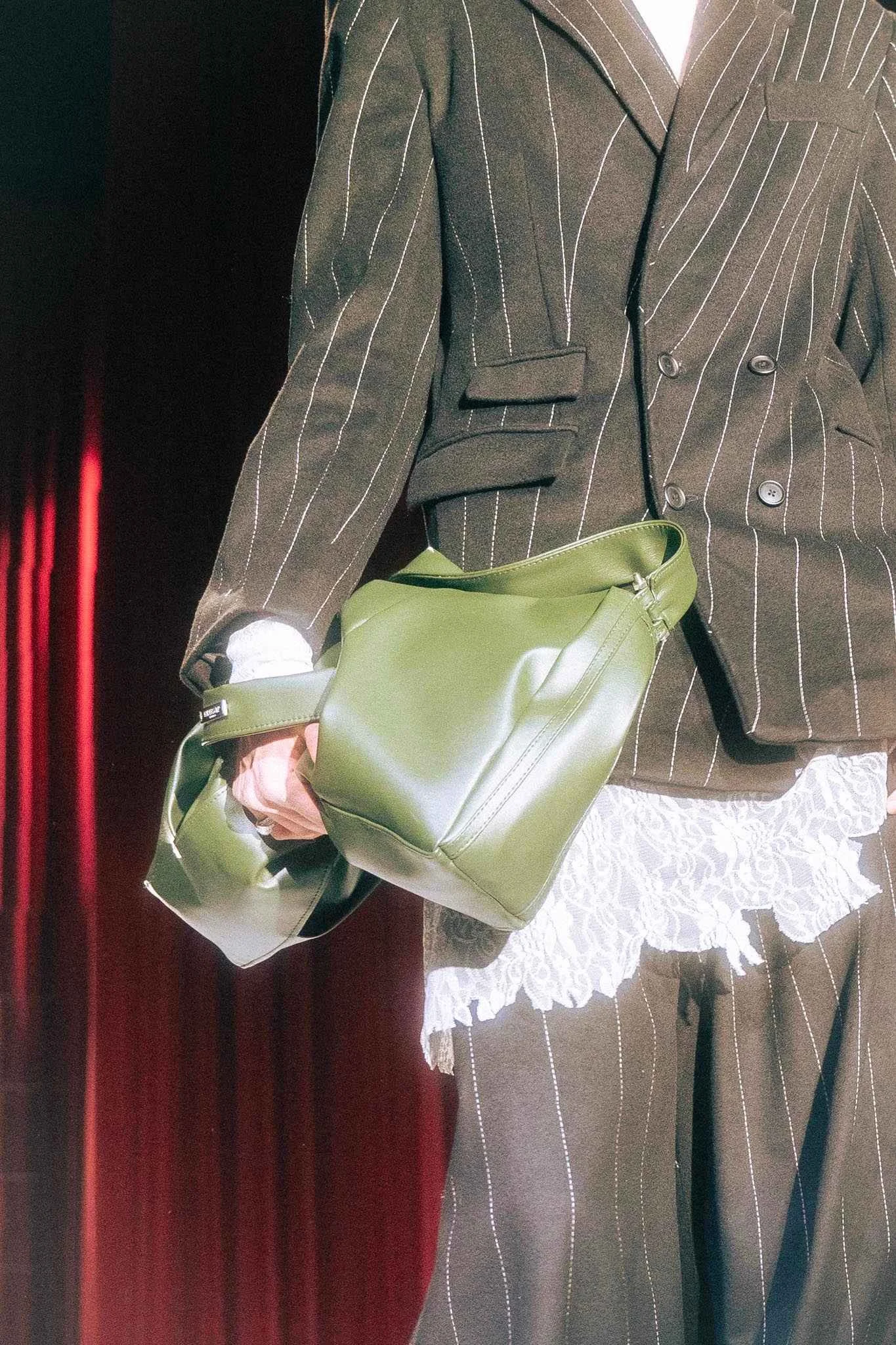
At Berlin's Wintergarten Varieté, Haderlump Atelier Berlin staged VARIUS as theatre, not fashion show. Red velvet curtains parted after a piano solo to reveal a collection paying tribute to Marlene Dietrich, that legendary embodiment of uncompromising independence and radical freedom. Creative director Johann Ehrhardt translated Dietrich's legacy into 28 looks of contemporary autonomy, each one wearable, each one essential.
This season marks an evolution. Haderlump ventures into lace for the first time, combining it with leather, denim, and thick wool. The brand's signature tension between softness and strength remains, but refined: structured, powerful silhouettes softened by fluid draping and flowing fabrics. Wide, grand proportions in oversized coats and pinstripe suits. Chunky knits alongside sharply cut blazers and the iconic Marlene trousers.
The established palette of muted browns, blacks, and greys expands with bold injections of red and blue. Sailor caps and historically inspired jacket cuts heightened the theatrical atmosphere. VARIUS moves away from avant-garde and rustic influences toward elegance, exploring classic tailoring with newfound confidence. Fashion as autonomy, performed with strength and sovereignty.
IOANNES
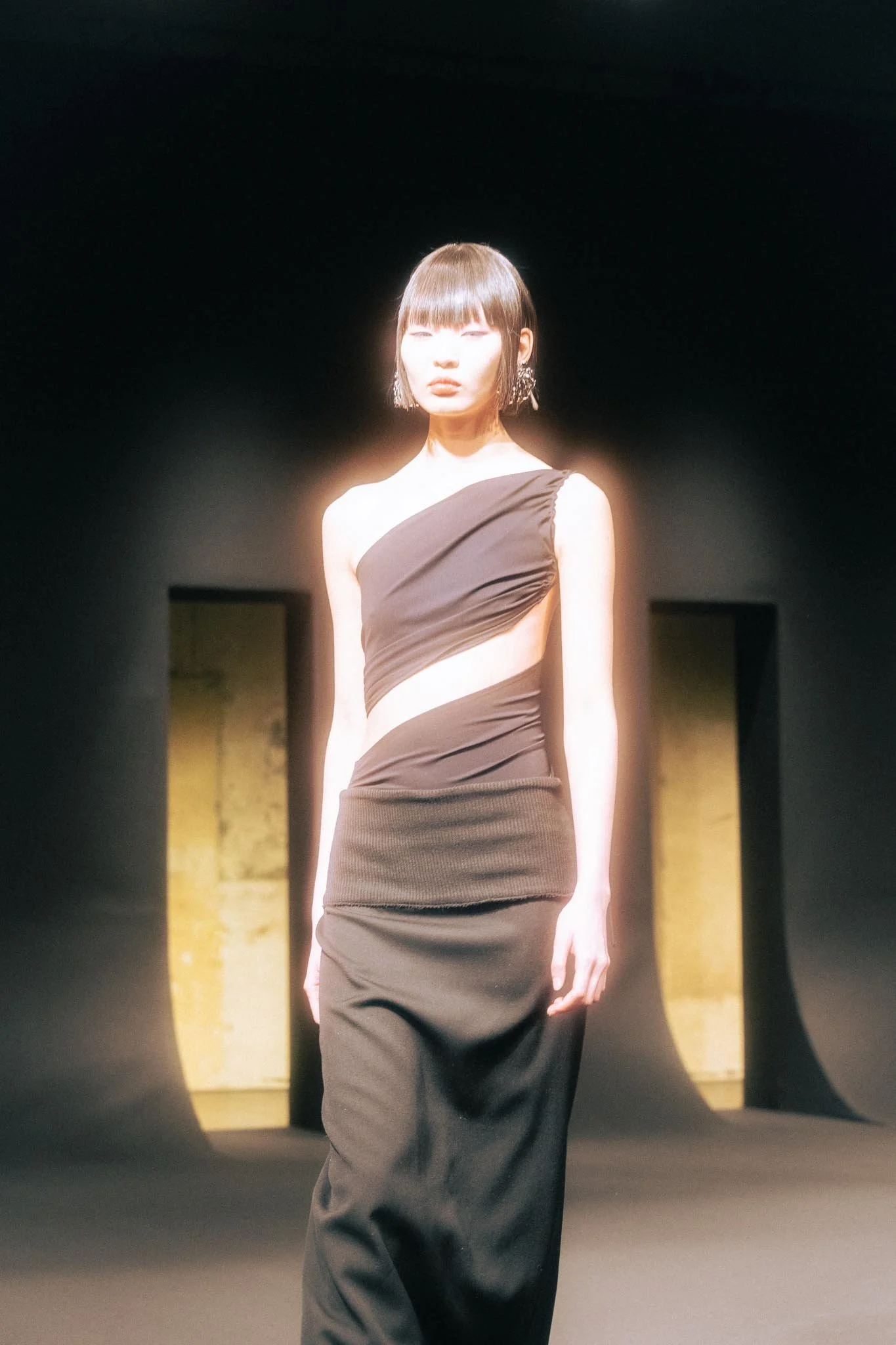
Photography by Paloma Schäfer @whiterabbitjpg
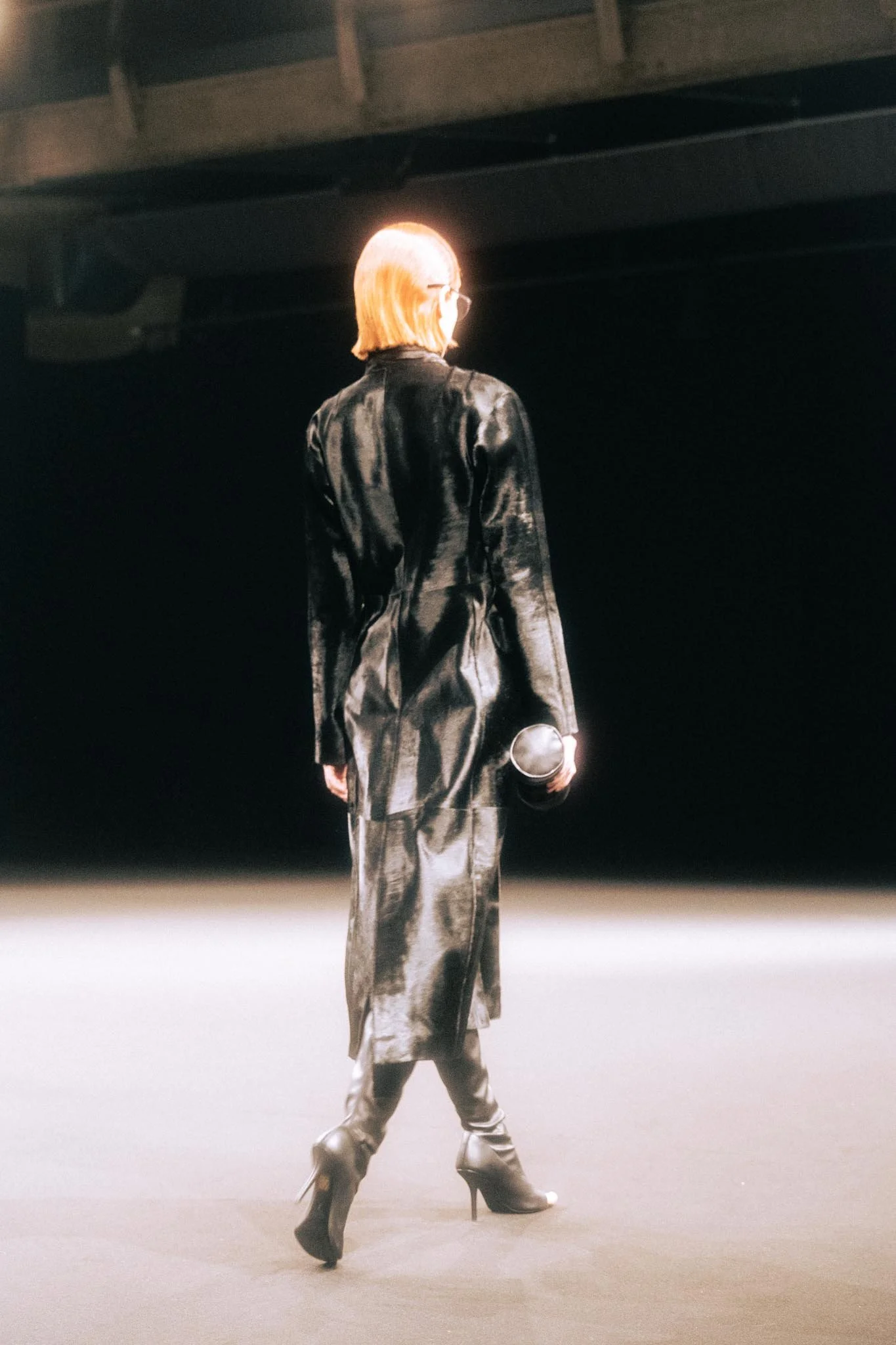
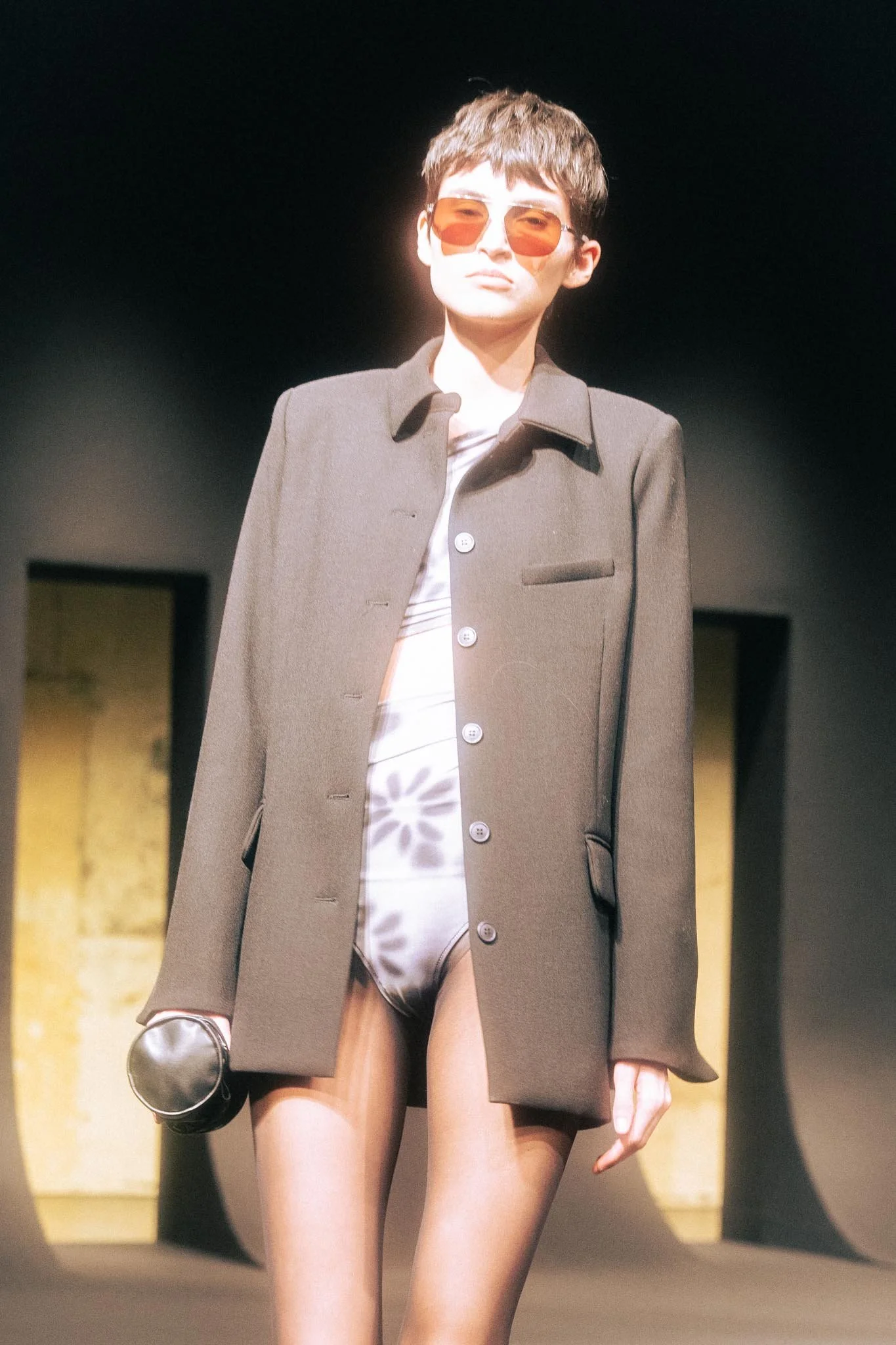
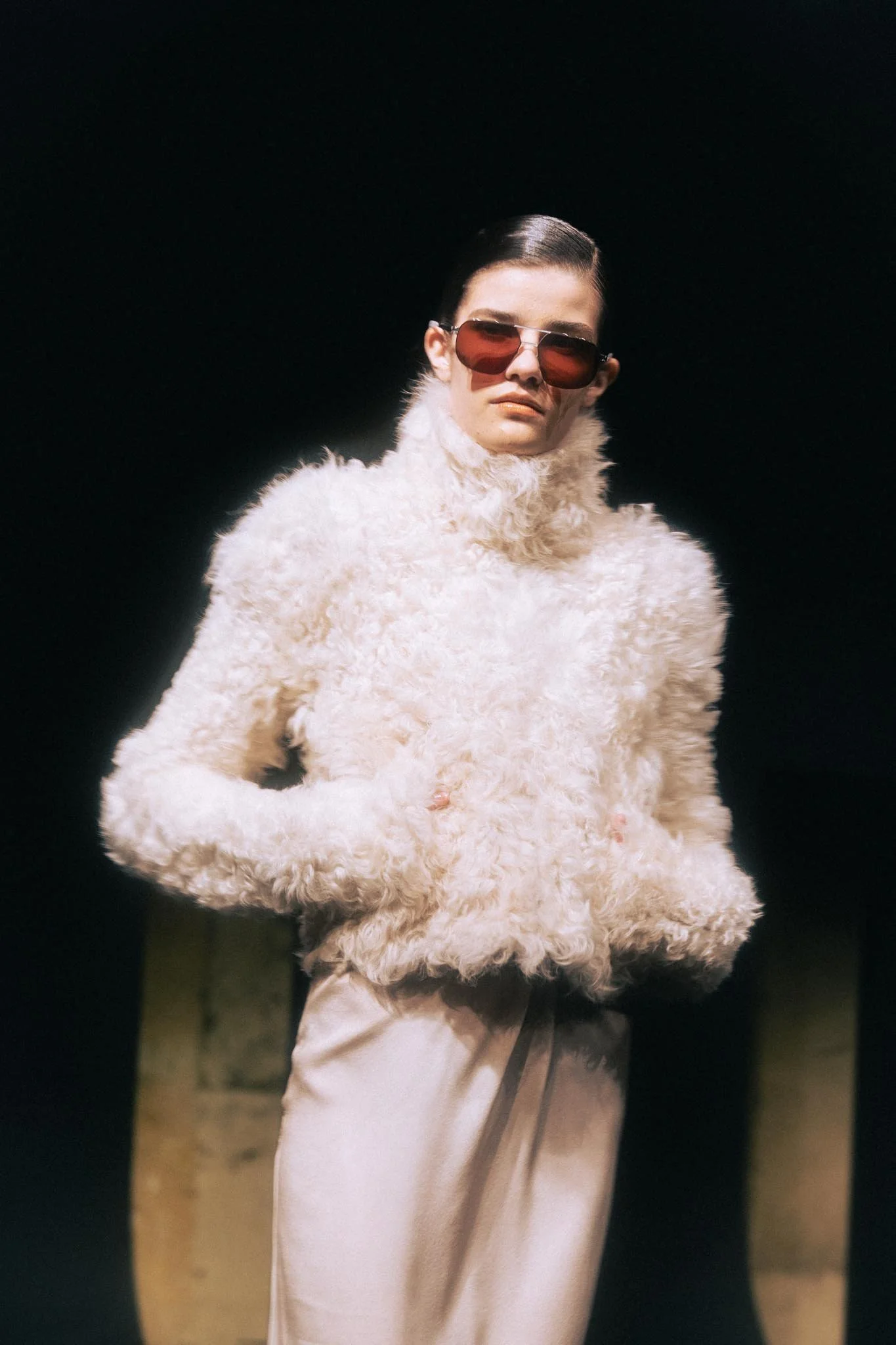
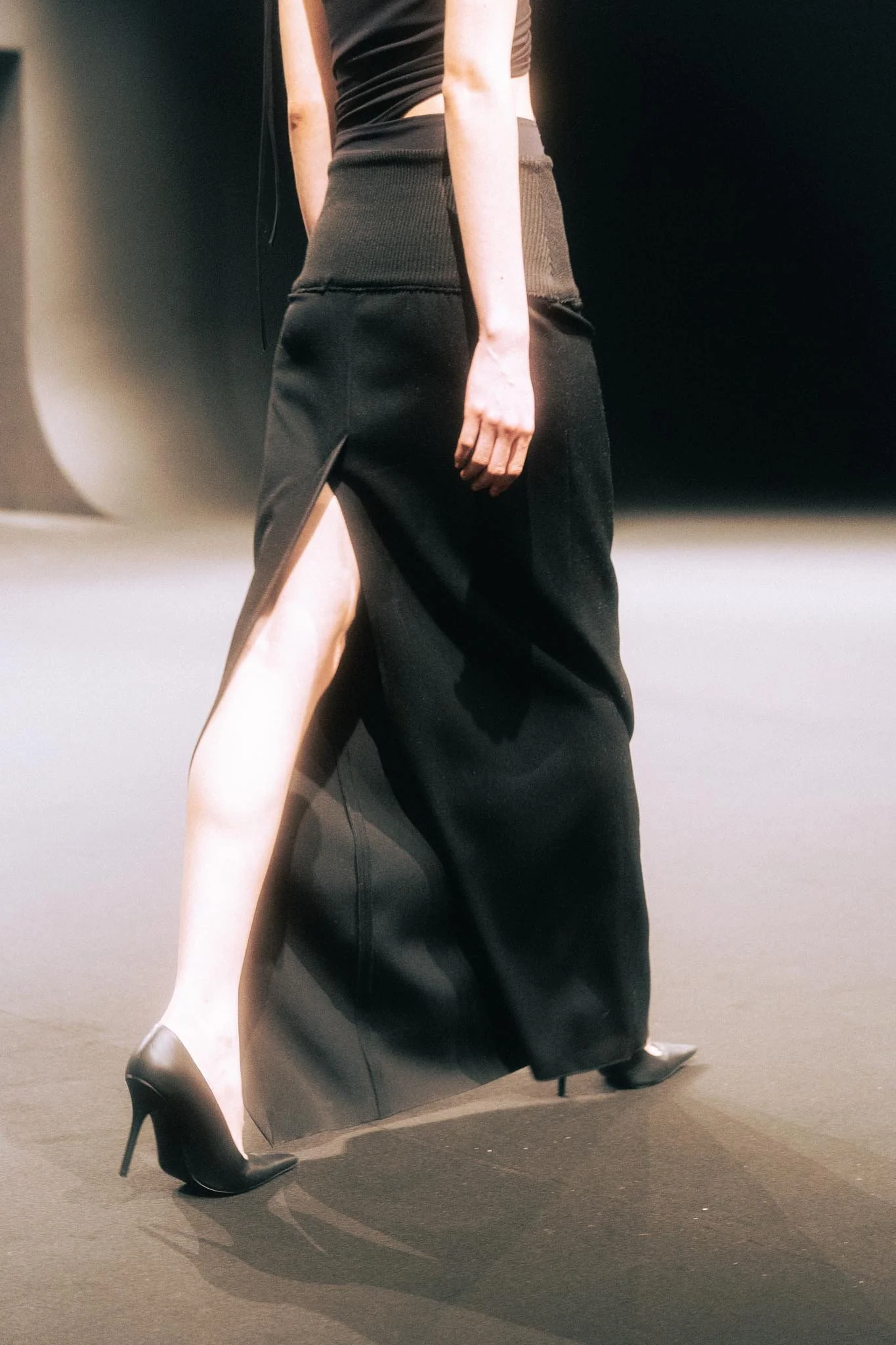
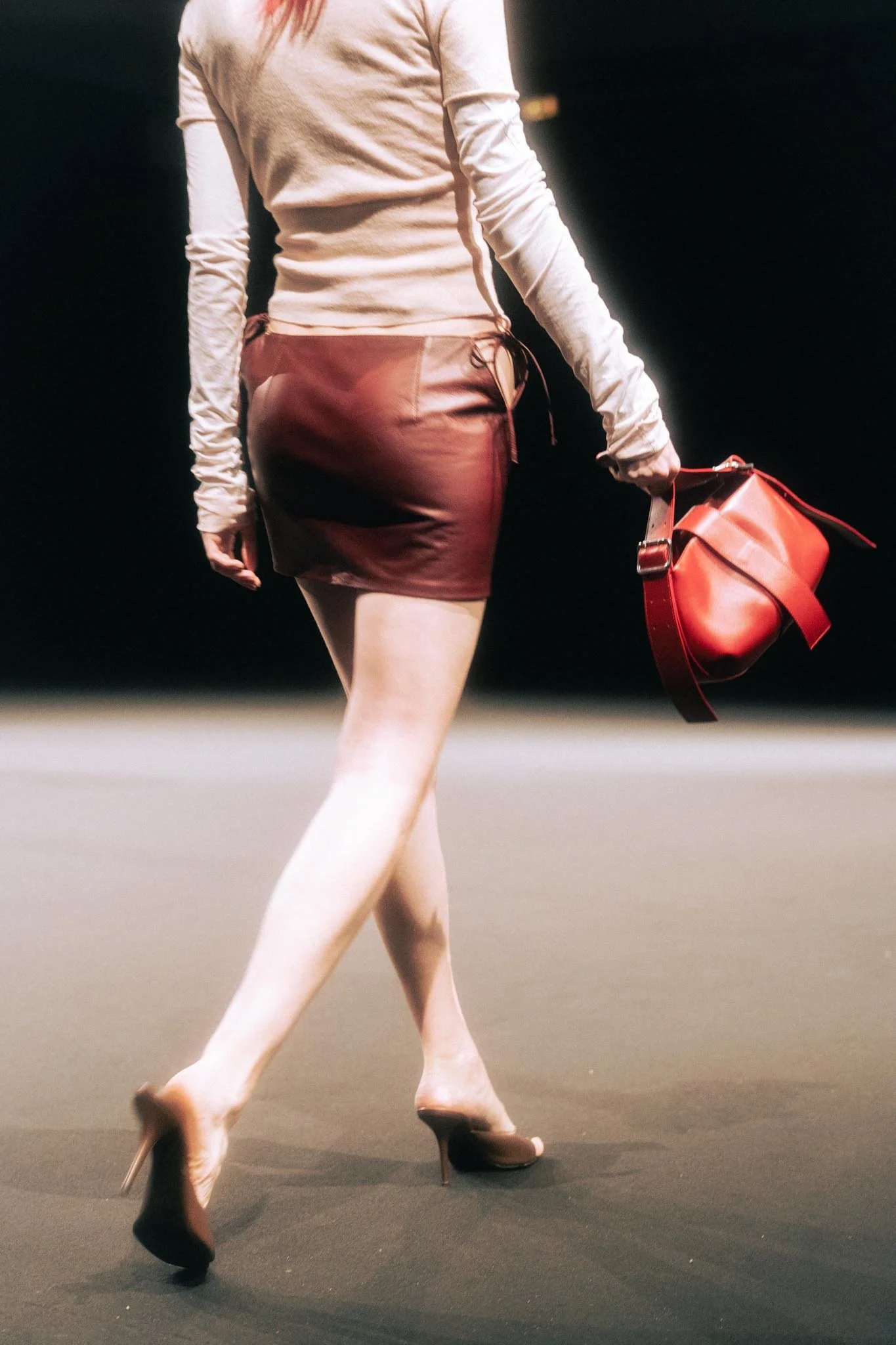
Johannes Boehl Cronau asked himself a question: if this were the last time, would every seam, every piece, every choice be exactly right? Apokalypsis, meaning unveiling rather than destruction, answered with quiet precision. After seven years on the seasonal calendar, Ioannes presented what felt like distillation rather than departure.
The collection drew from personal memory: his mother's black office suits, 1970s and 1990s style codes, Madonna's track suits as pop cultural anchor. Floral motifs transferred from wood to textiles through pyrography, combined with hand-dyed cashmere. Slinky silhouettes met precise tailoring. Sensuality tempered by control. Harsh blacks clashed with soft pastels. Archival suiting moved between dress and undress.
UNVAIN
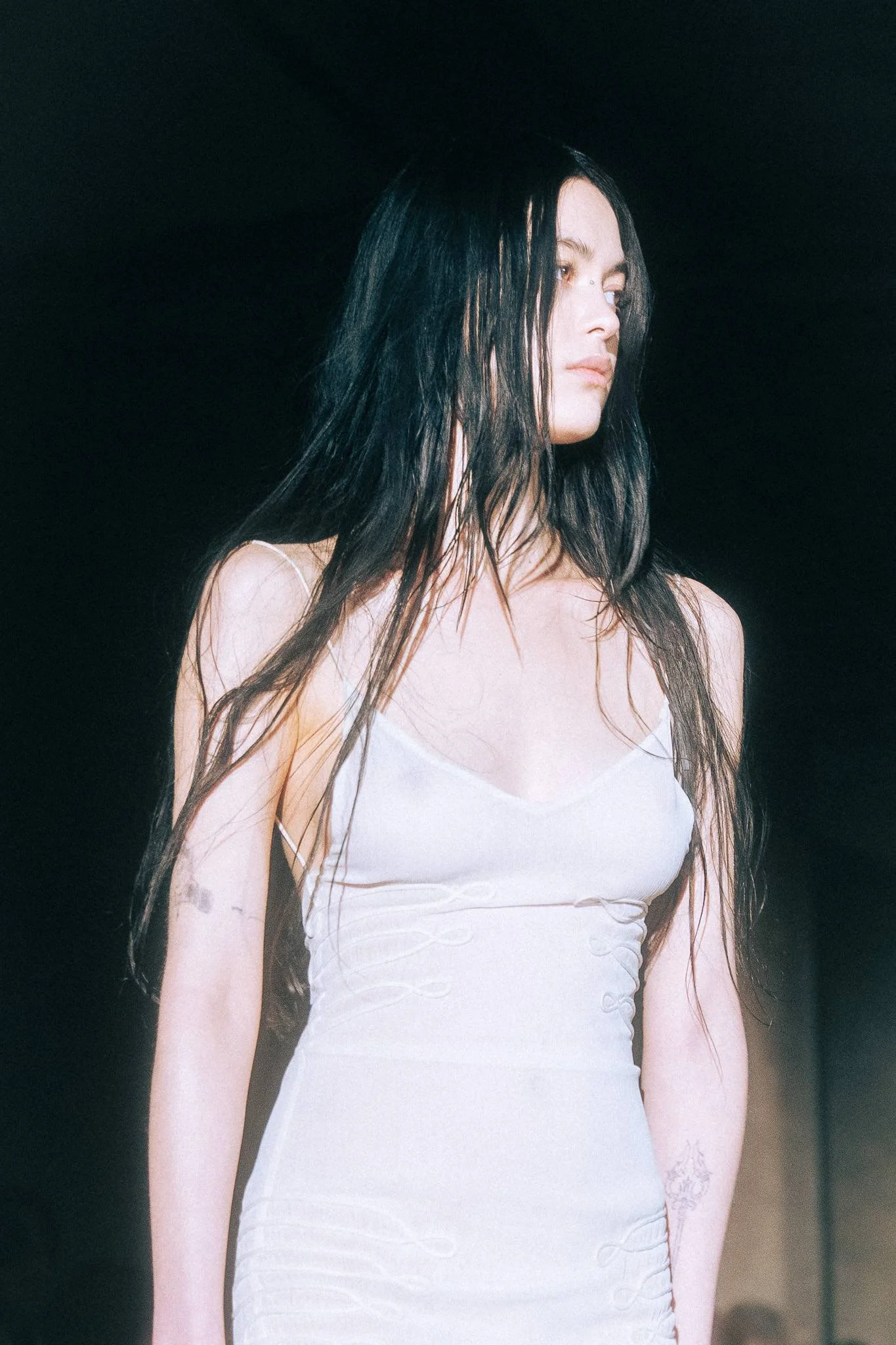
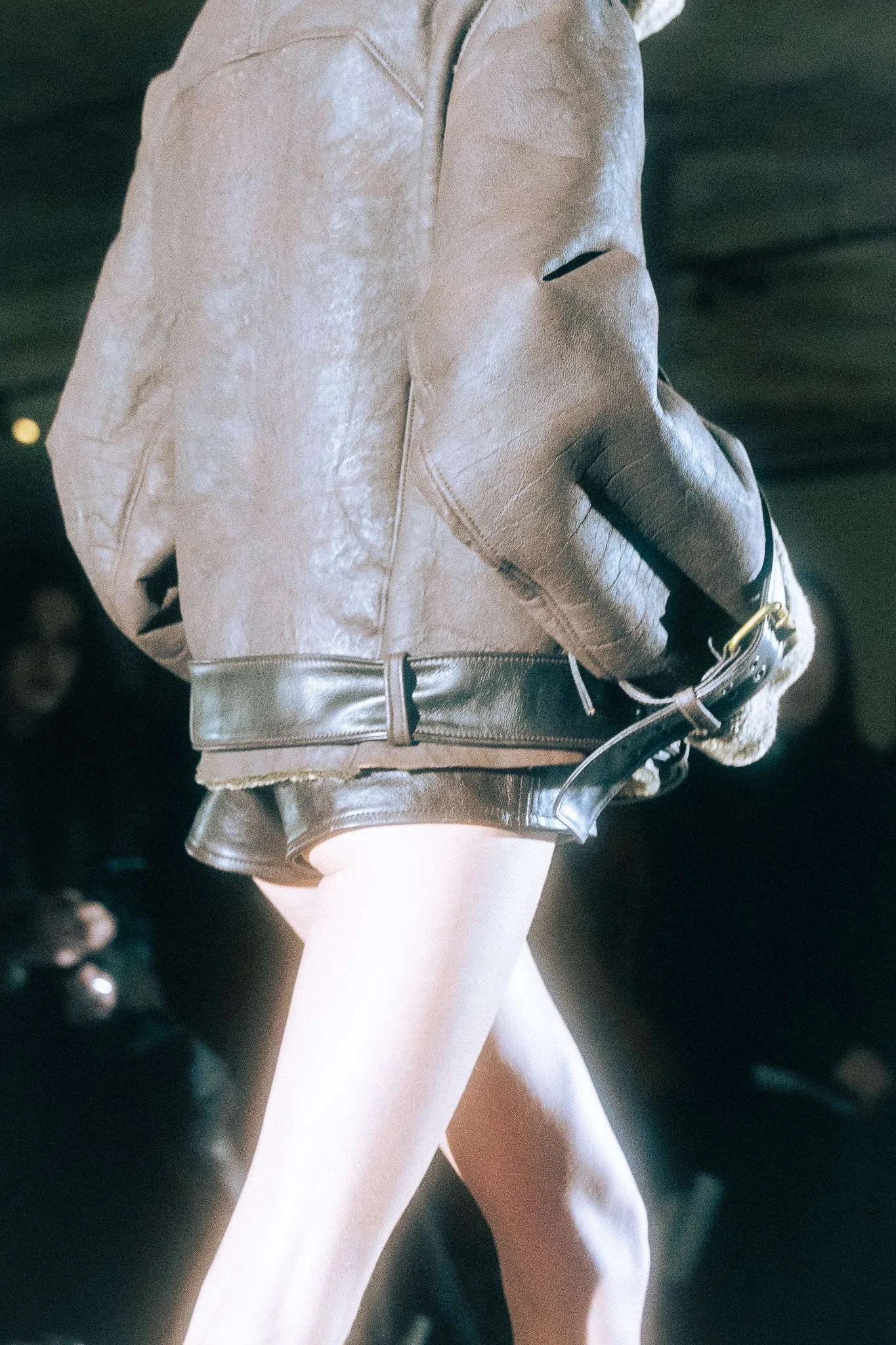
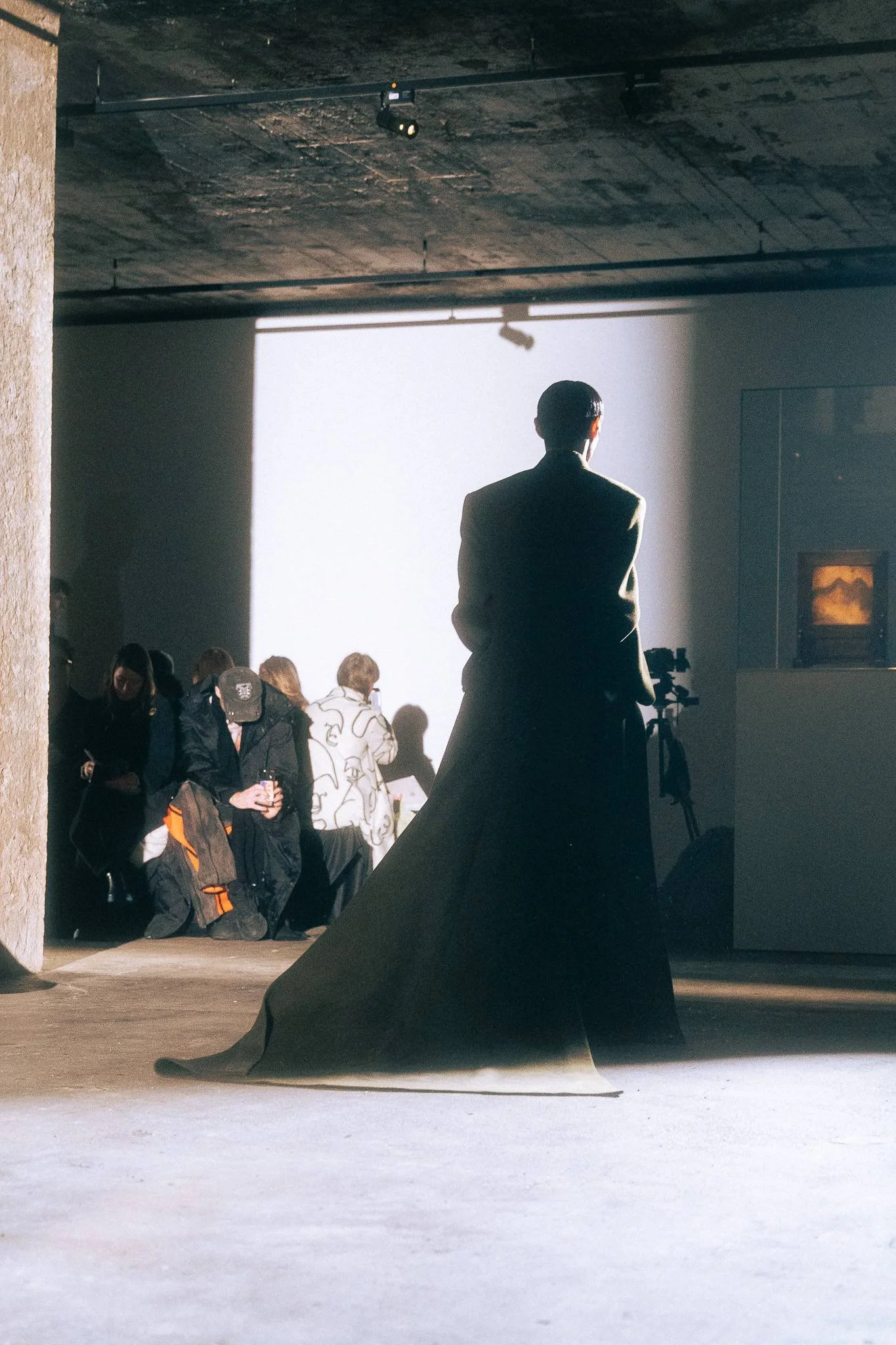
Photography by Paloma Schäfer @whiterabbitjpg
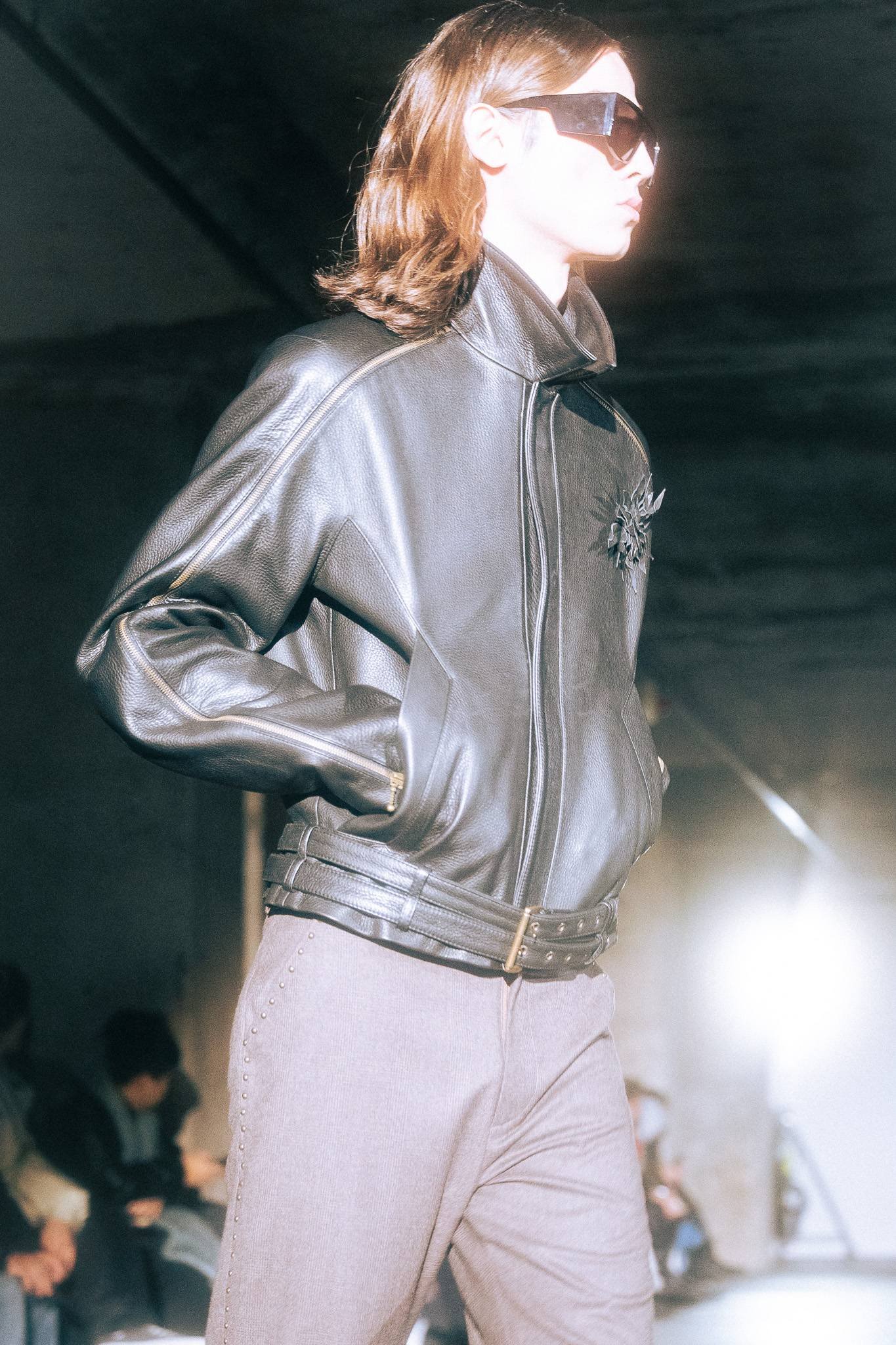
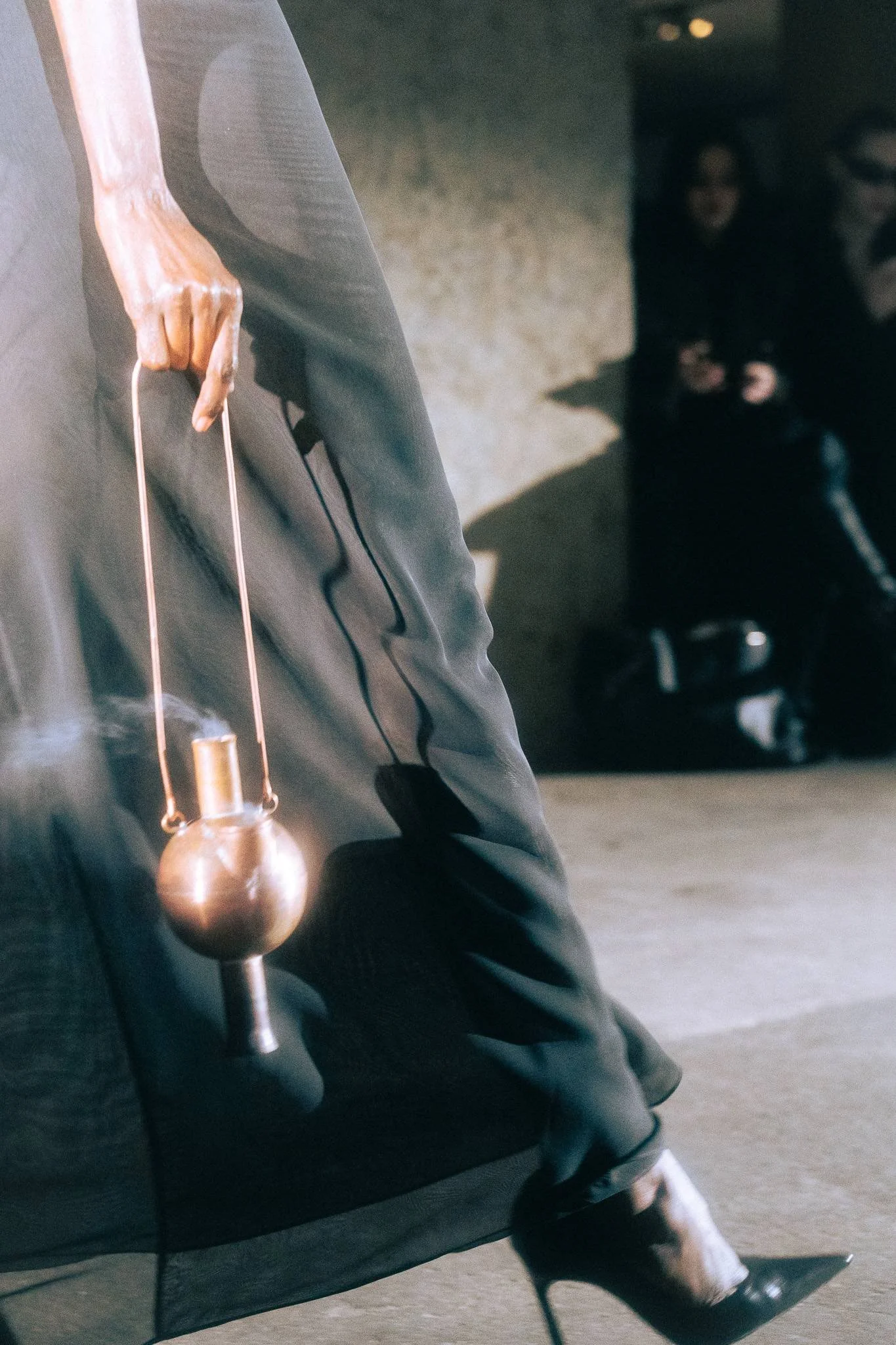
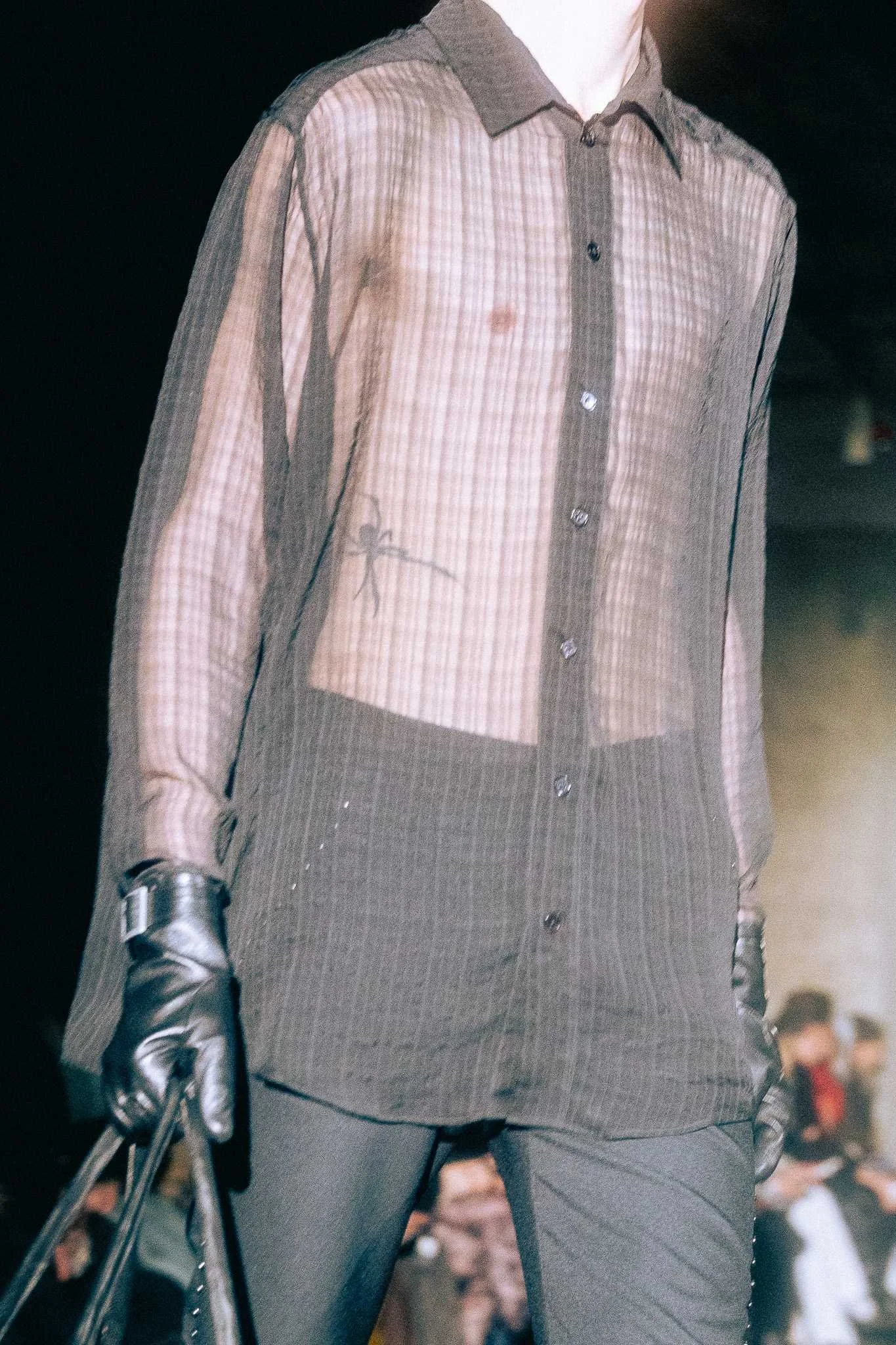
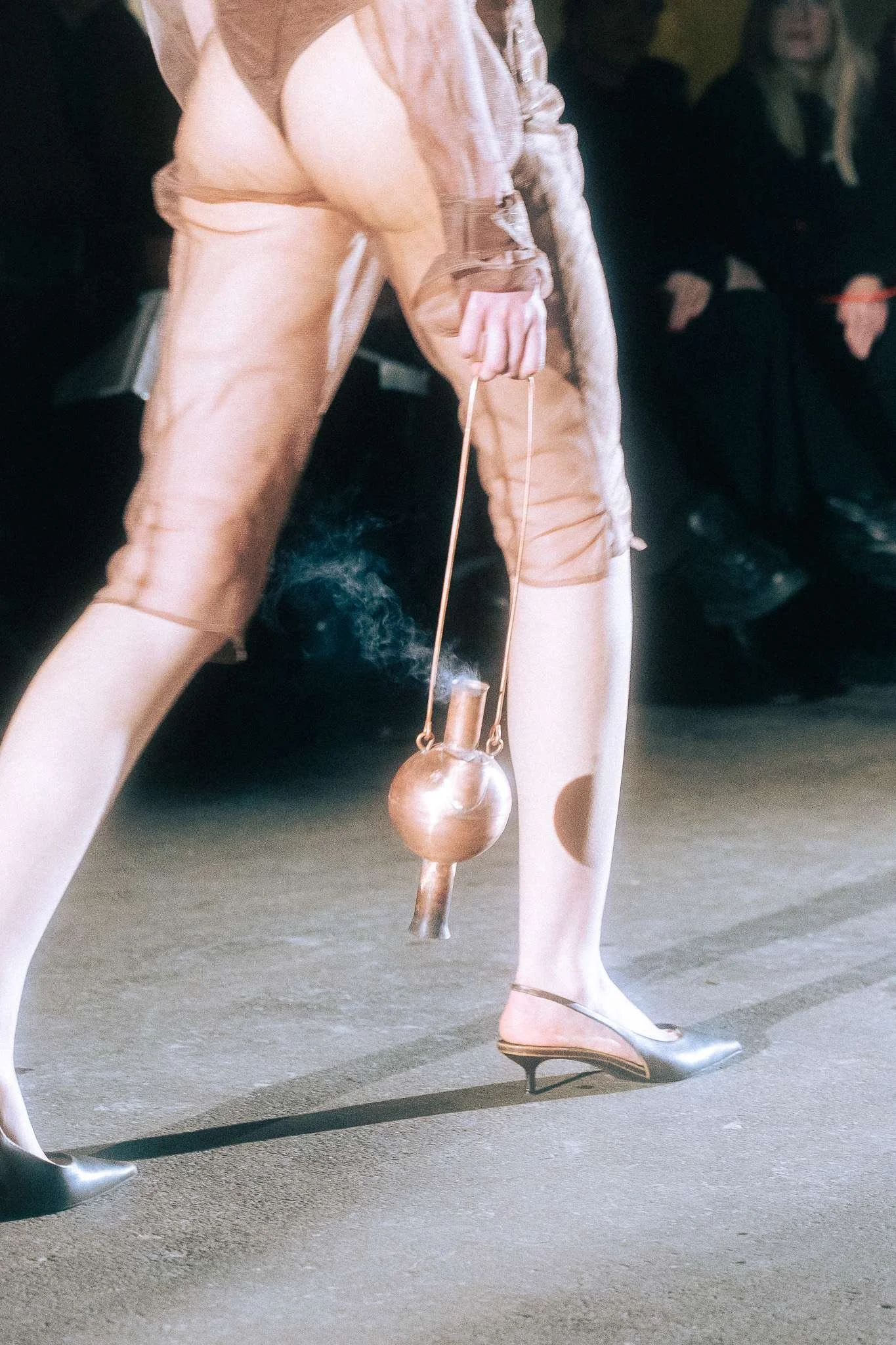
Robert Friedrichs chose a former WWII telecommunications bunker for Unvain's debut runway. The Feuerle Collection, filled with Southeast Asian sculptures and Imperial Chinese furniture, framed the FW26 collection as encounter between brutalist minimalism and restrained rockstar mysticism. After six years building digital community and commercial momentum, Friedrichs finally staged his vision.
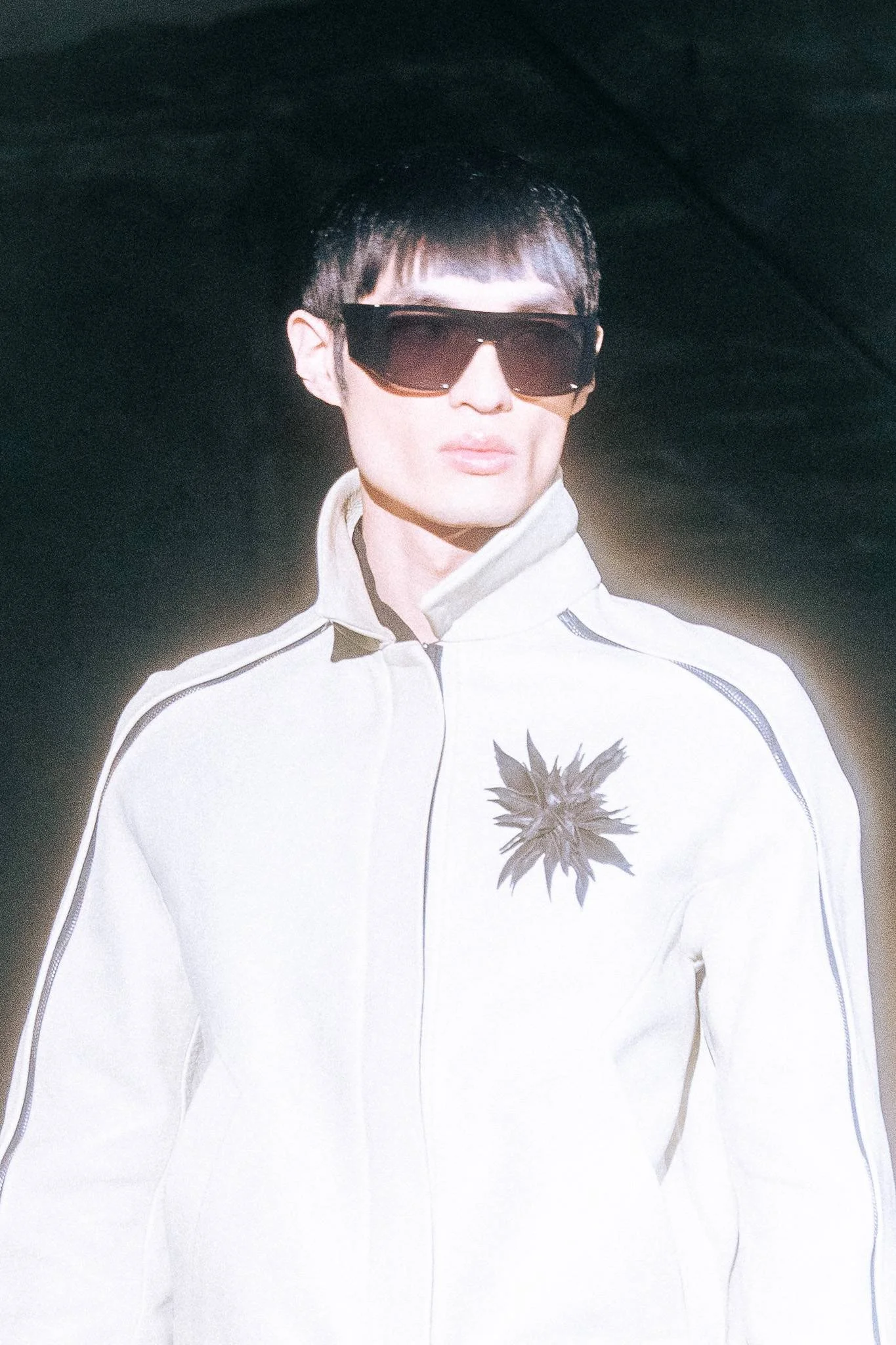
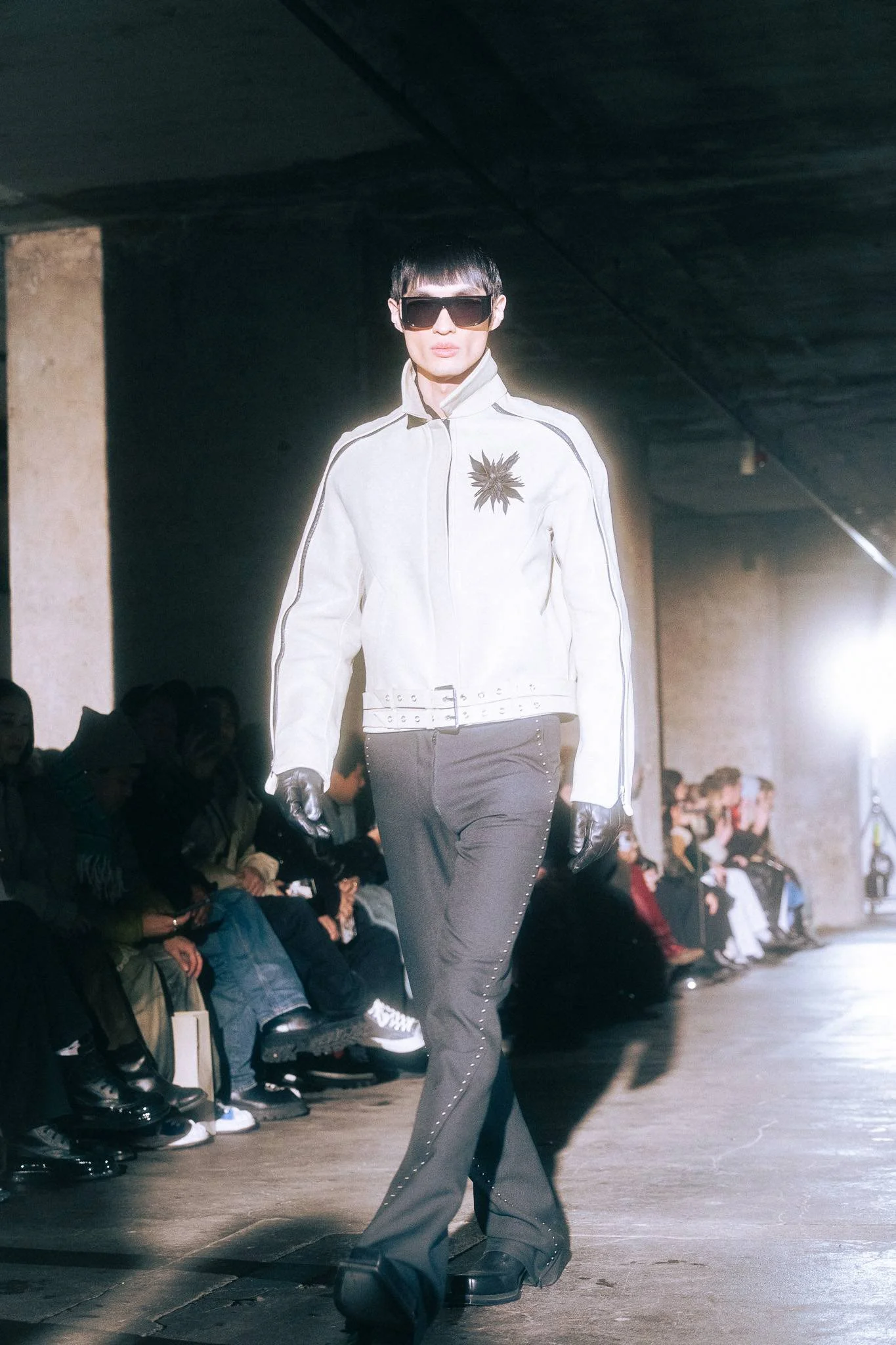
The brand name means not vain. This matters. Unvain pursues beauty beyond surface polish, finding richness in tension rather than resolution. The collection presented contrasts as vocabulary: rough versus soft, severe versus sensitive, architectural sharpness meeting rebellious fluidity. Epaulettes, studs, transparent fabrics, leather, Napoleonic details, upcycled fur accents. Elements interacted rather than cohered.
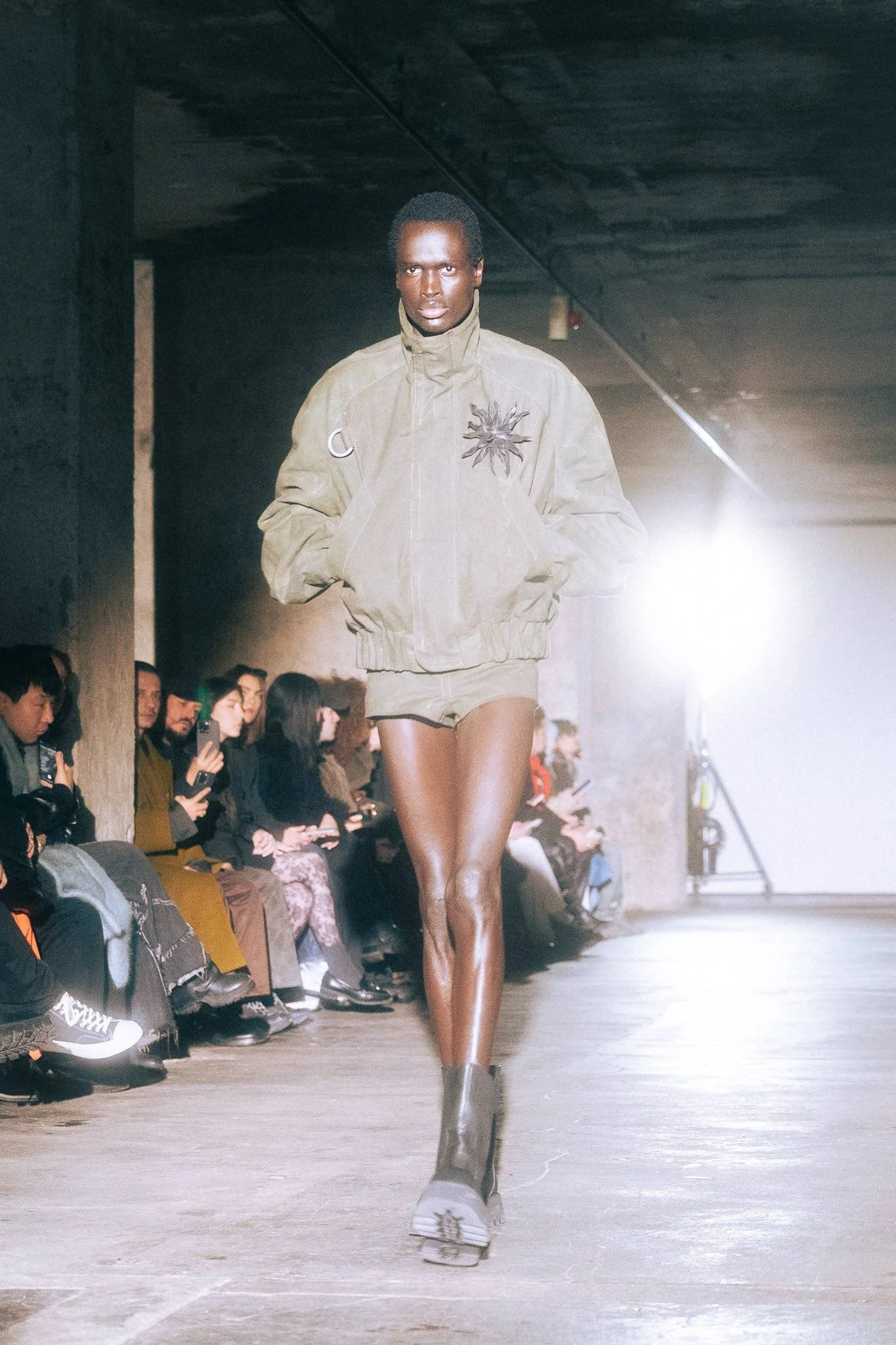
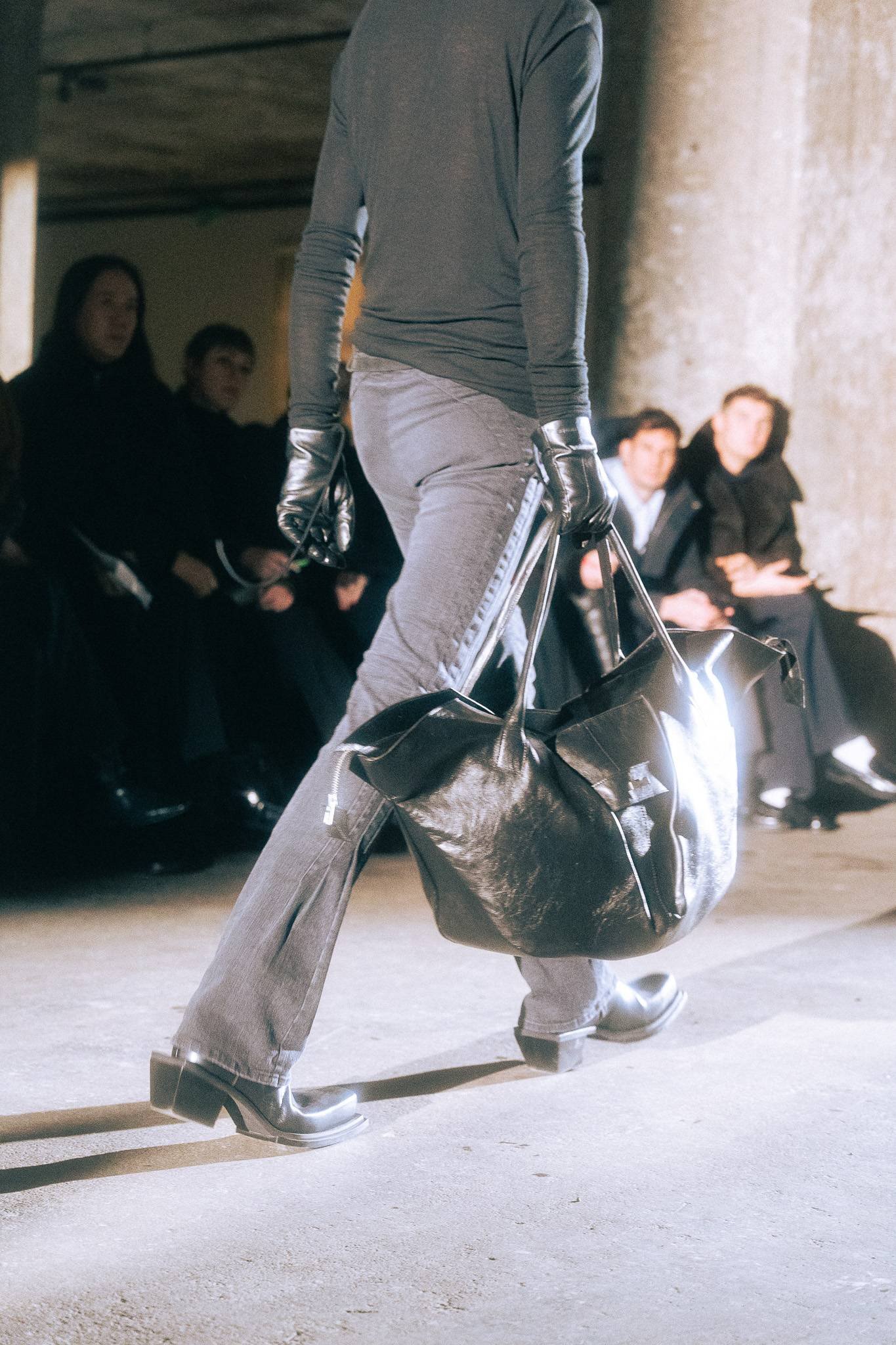
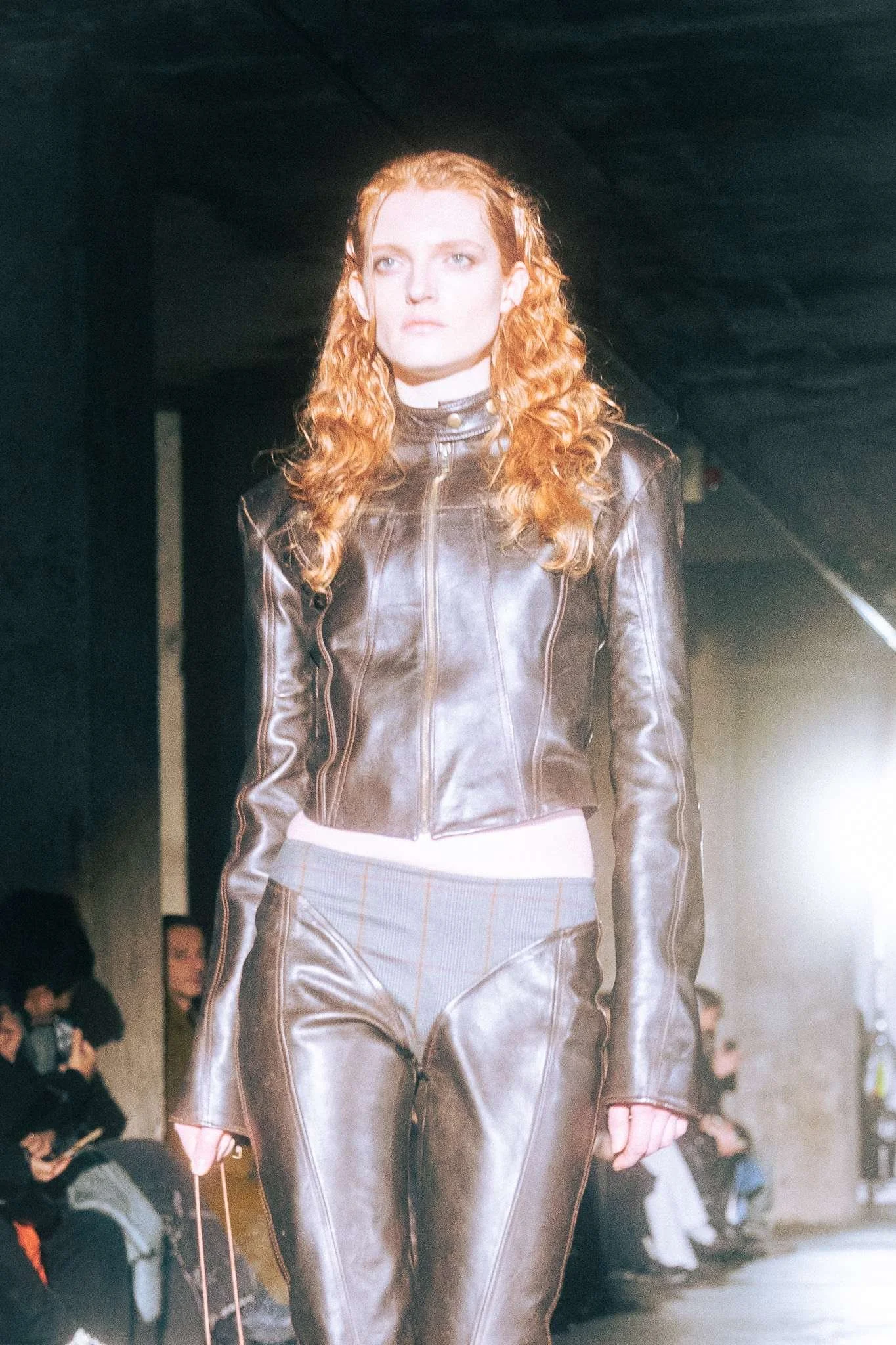
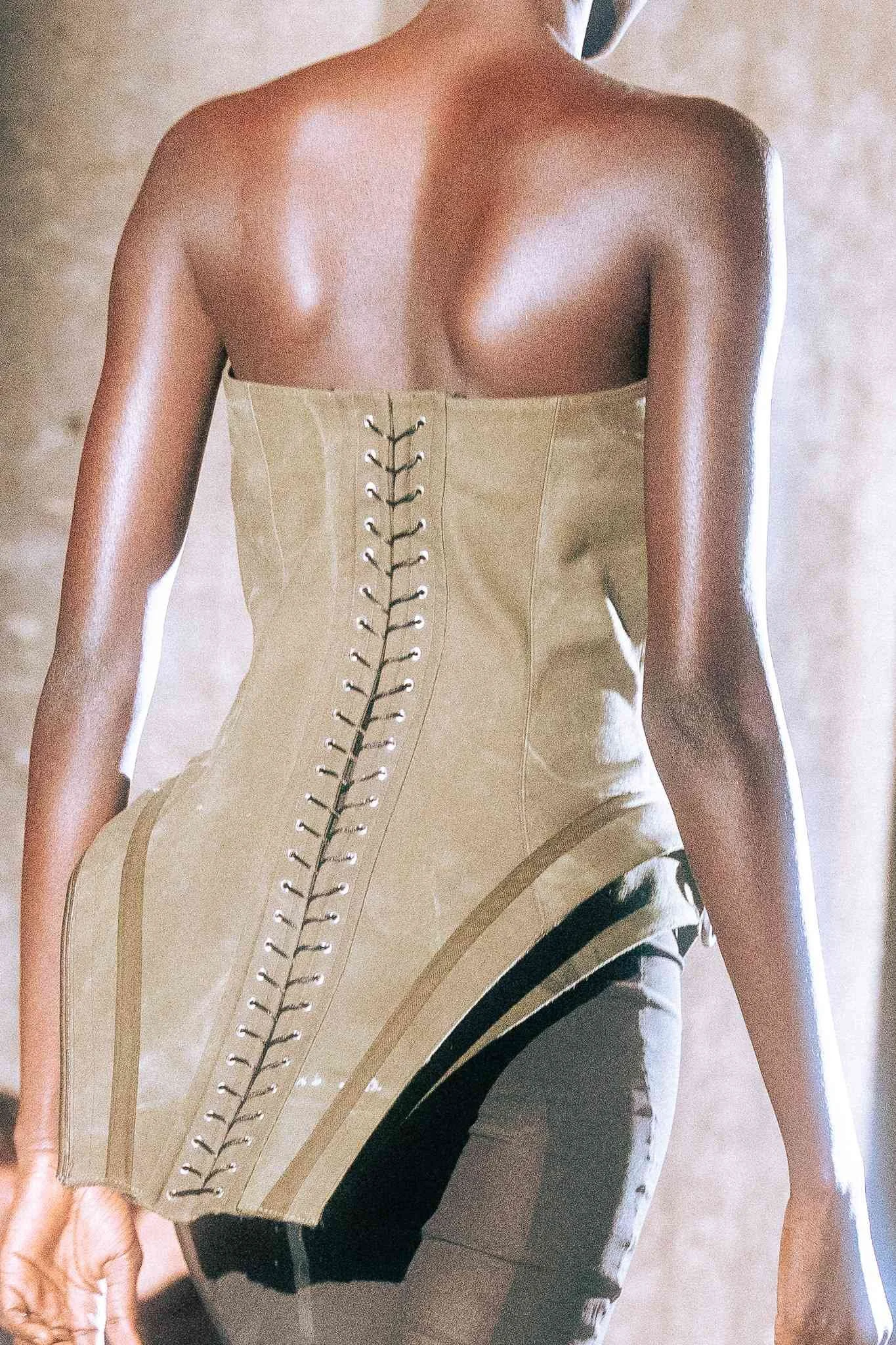
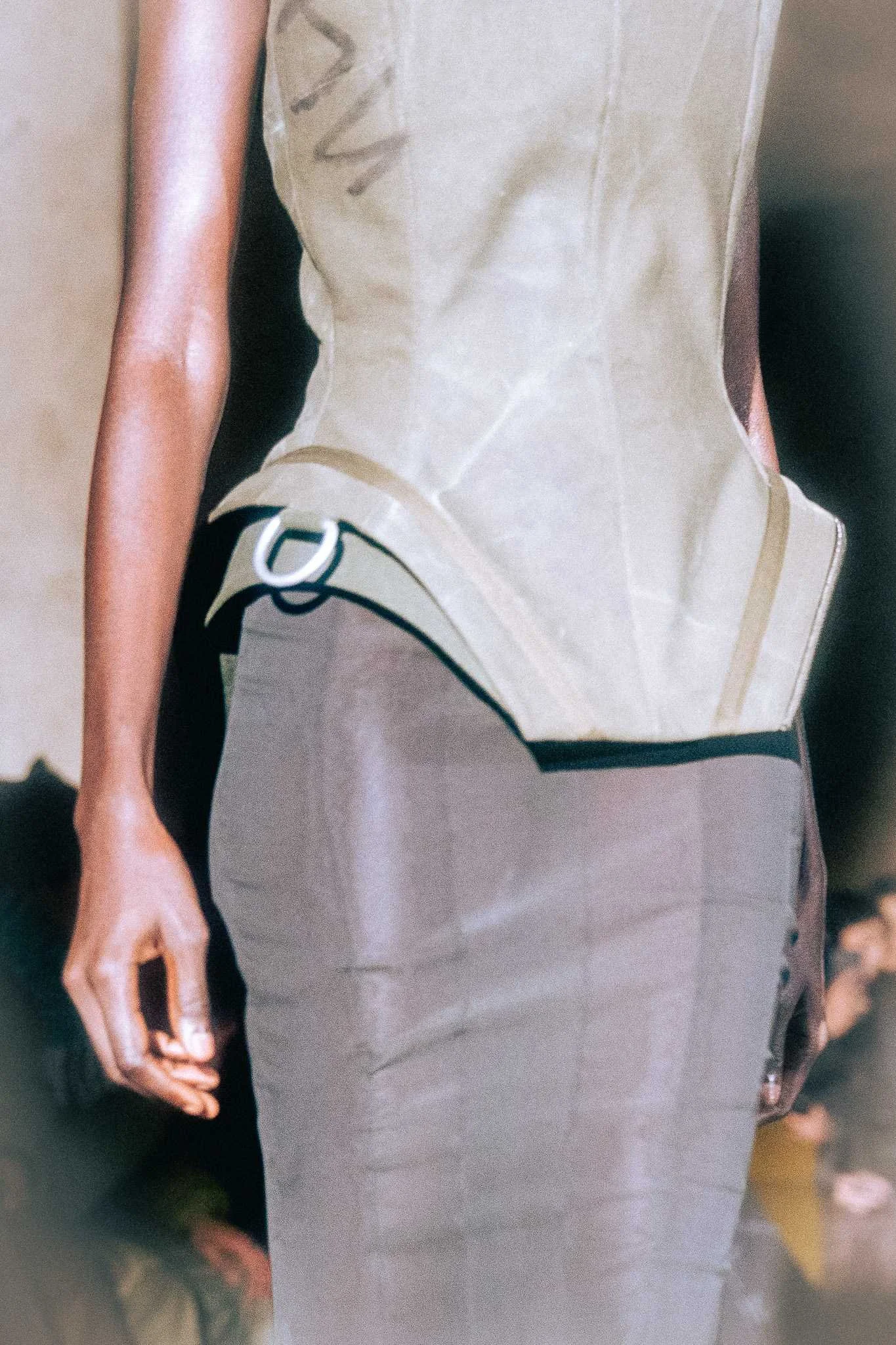
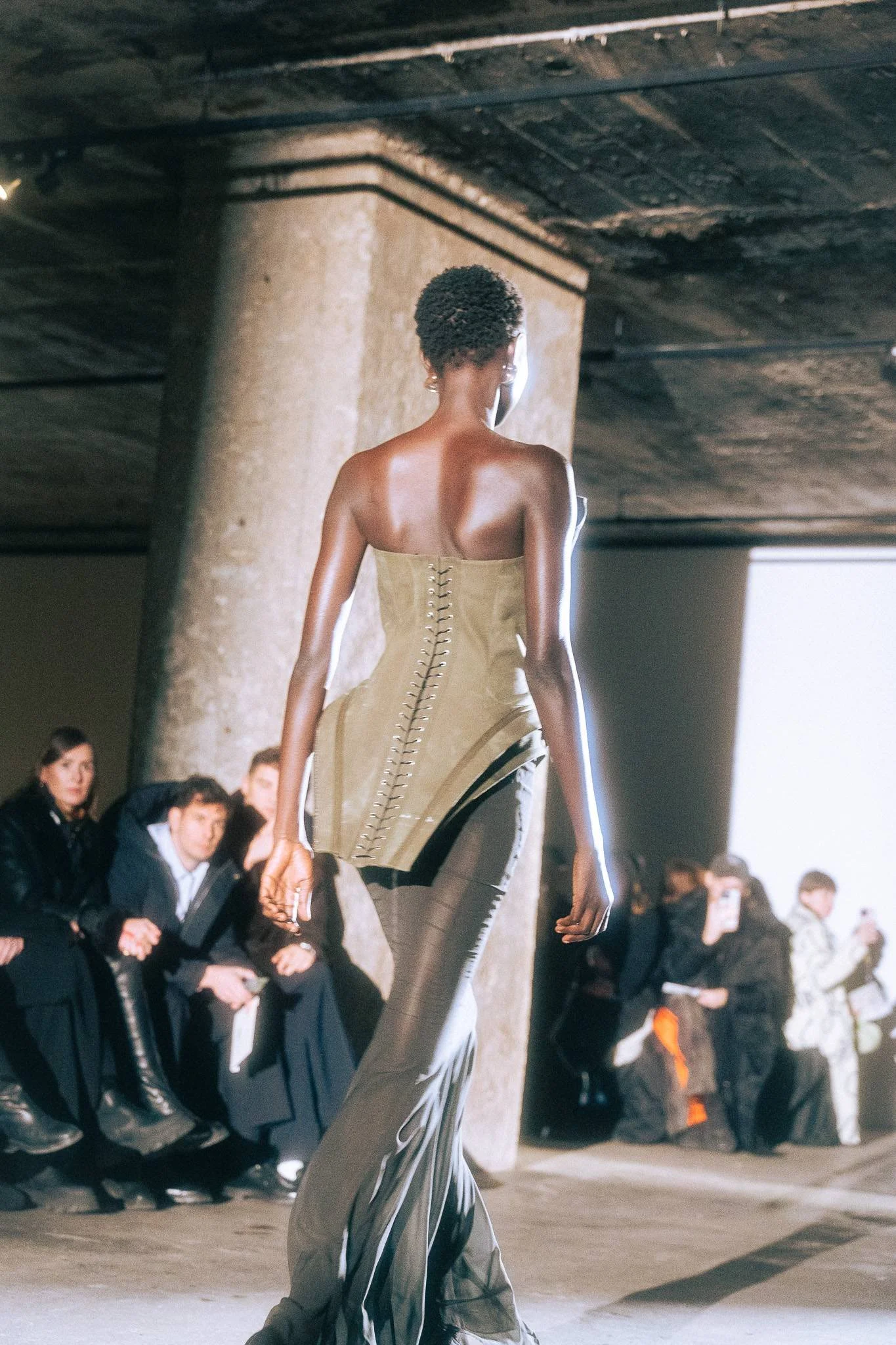
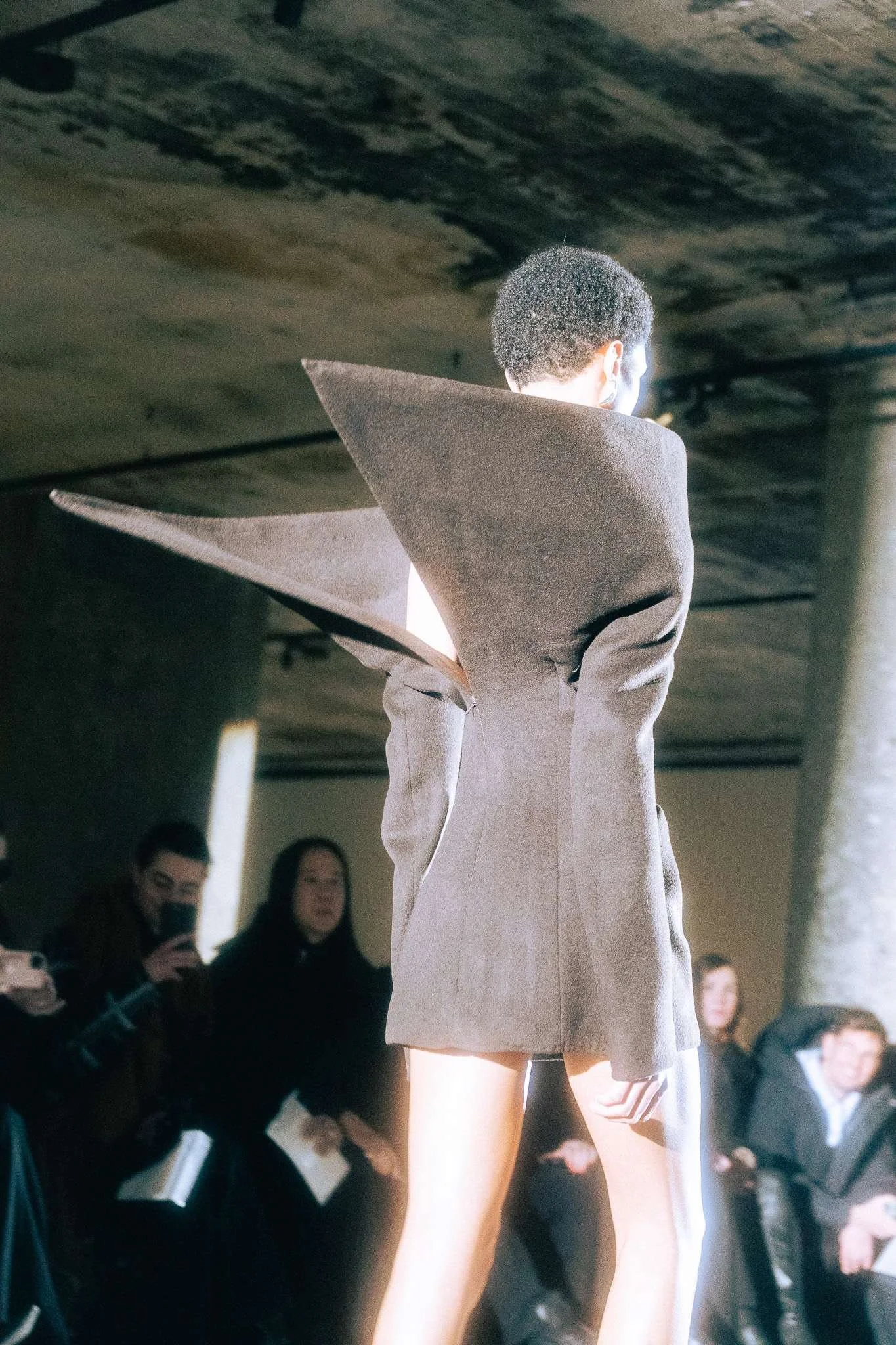
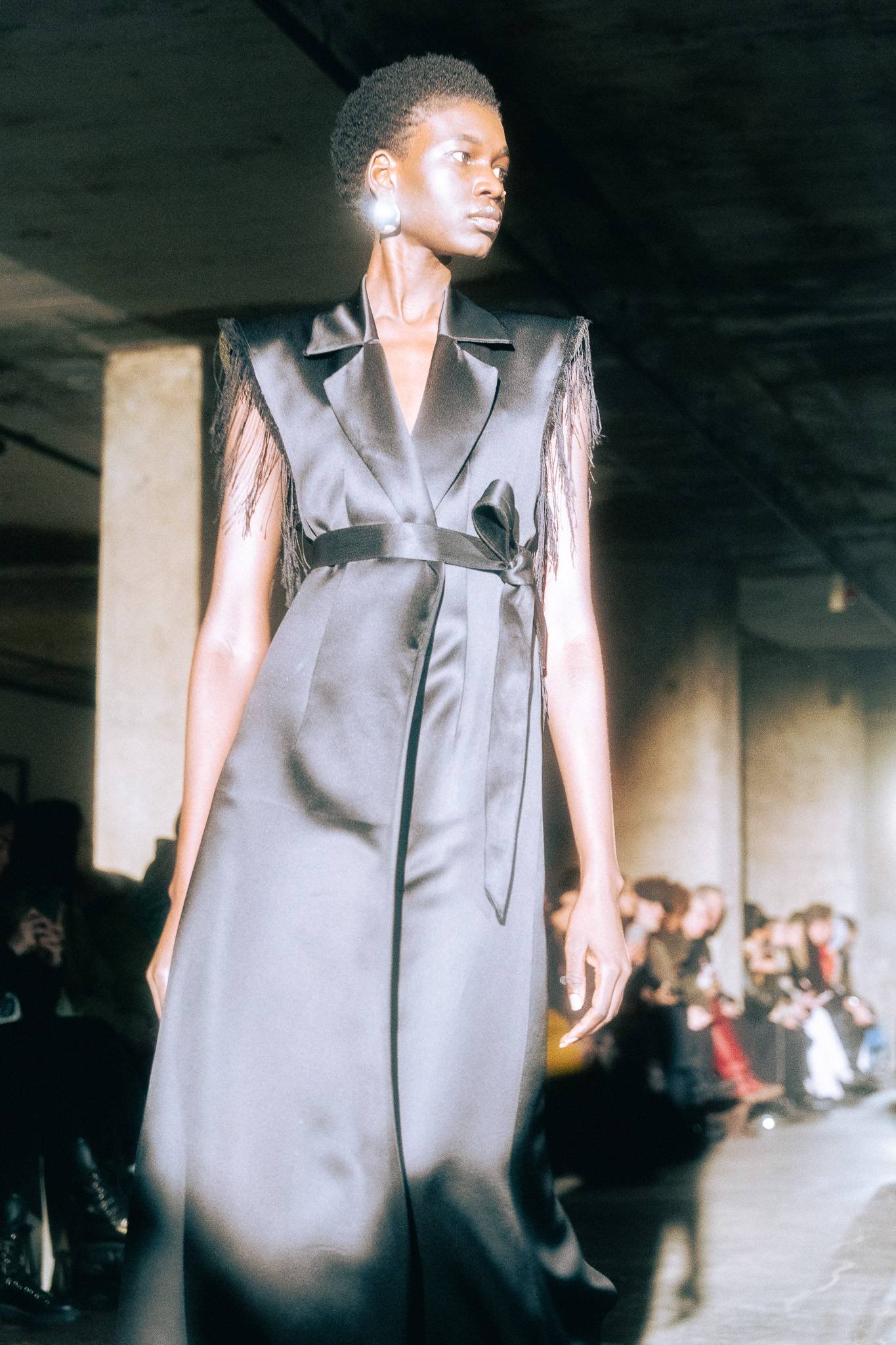
We arrive at the end of an incredible season. Berlin Fashion Week FW26 delivered collections that mattered, presentations that provoked, moments that lingered. The Fashion Council Germany deserves recognition for creating conditions where this work could exist and breathe and we are extremely grateful.
words DONALD GJOKA
What to read next