Casella Meyer
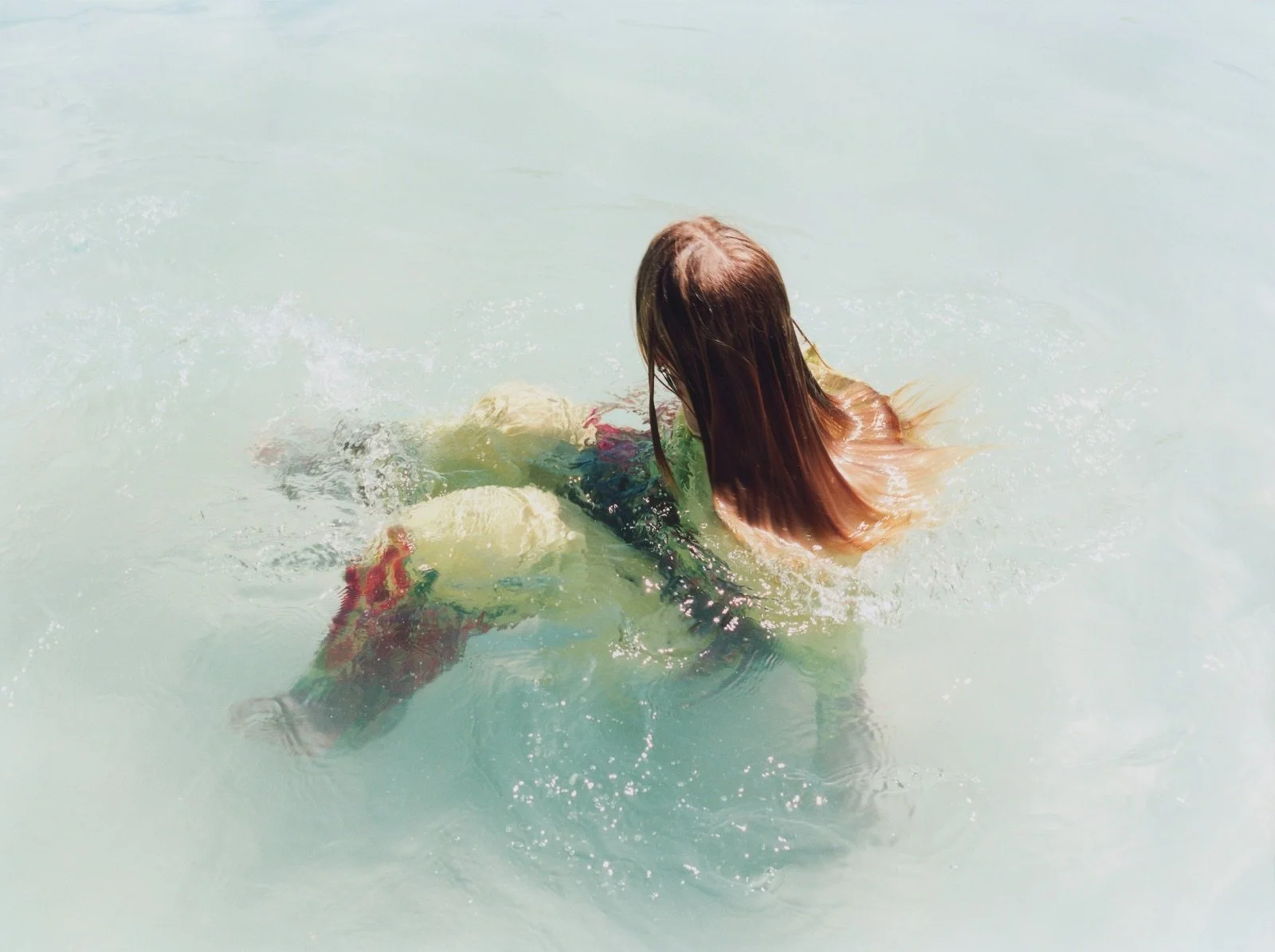
Casella Meyer believes clothing should feel right before it looks right. This starts with fabric. They develop their own textiles to match the shape, flow, and structure they want to achieve. The silk in their cargo pants was washed over and over until it had the right mix of softness and weight. The guipure lace was drawn from their own story. Stargazing builds on this way of working.
The clothes are shaped by clear lines, soft tones, and materials chosen for comfort and precision. The jacket made with guipure is a key piece. It layers tradition with personal meaning. Worn, it feels like something meant to last. The production process is just as careful. In Veneto, a small team of women tailors craft each garment by hand.
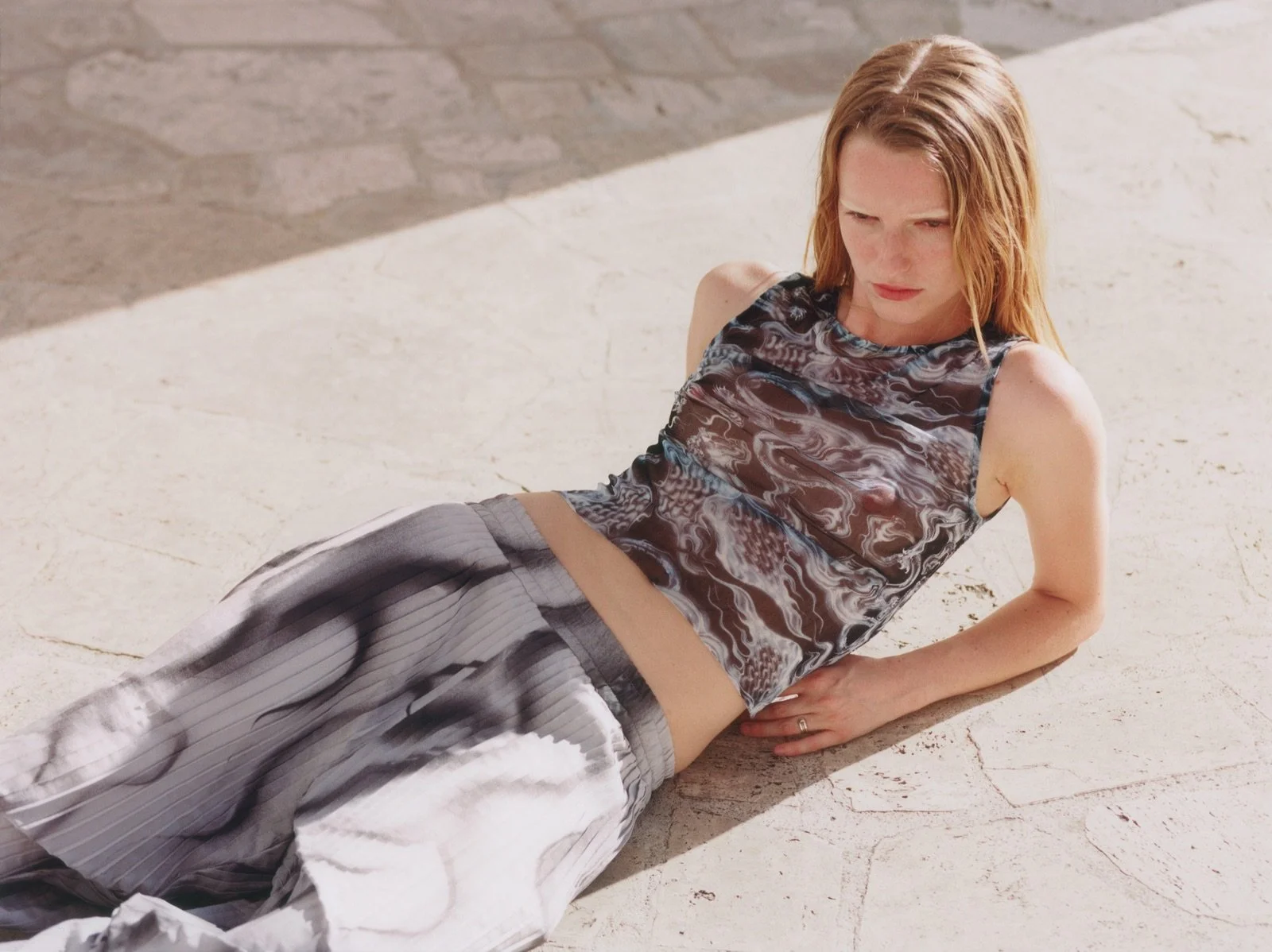
Casella Meyer’s determination for craftsmanship extends to the development of your own fabrics. What specific innovations or unique properties do these proprietary textiles possess that render them indispensable to your garments’ identity, beyond simply being "recognisable and unique"
Tobias: A fundamental component of CASELLA MEYER is the balance between comfort and silhouette. The material from which a fabric is made contributes significantly to how we feel in it. The choice of material is essential for achieving the desired silhouette. The fluidity of a fabric is very often an issue. For example, we spent a considerable amount of time developing our cargo pants. They are crafted from heavy, rigid silk that required multiple washing treatments to achieve the desired hand. Fluid, but not too much, still a certain stability but not stiff. It is the nuances that are decisive for us. That all sounds very technical and theoretical. We are not technicians - we are driven by curiosity and experiment a lot. The only way to really understand Casella Meyer is by wearing it.
The journey deeper into your design practice, as you describe it, suggests an ongoing process of introspection. What fundamental tenets of Casella Meyer’s design philosophy have solidified or shifted most significantly through the creation of "Stargazing"?
Rico: Our design practice is in fact also an introspection of where we are growing as creatives and humans and toward where our beliefs are heading. I believe that with the creation of Stargazing, we have solidified our approach to create a brand that embodies its vision through a strong product rather than through image alone. We are becoming even more radical in our strategy of where we want to position our brand. We are currently experiencing this "fast-paced culture", in which nobody takes the time anymore to stop, breathe and really analyze if a garment is crafted with devotion. Nowadays, consumers are conditioned to be easily captivated by trendy marketing campaigns that are driven by a feeling derived from the image - however the actual product ends up being average in most cases.
With Casella Meyer we are built on the opposite pillars. We invest the major part of our resources into materials, craftsmanship and manufacturing of our garments. For those products we create imagery with trusted creatives, whose artistic vision enriches and shapes our brand identity. Coming from the point of view of a curious person, I love to discover things and that’s what we want Casella Meyer to be. A world that has to be truly discovered in a noisy and loud environment that lacks soul within the creative industry. The individual who makes the effort to truly discover Casella Meyer will uncover a world that is thoughtfully curated down to every detail. A brand that focuses on wearability and elegance paired with its very own visual language. Whether it’s in your range of taste is up to you. I think those are the individuals we aim to reach with our work.
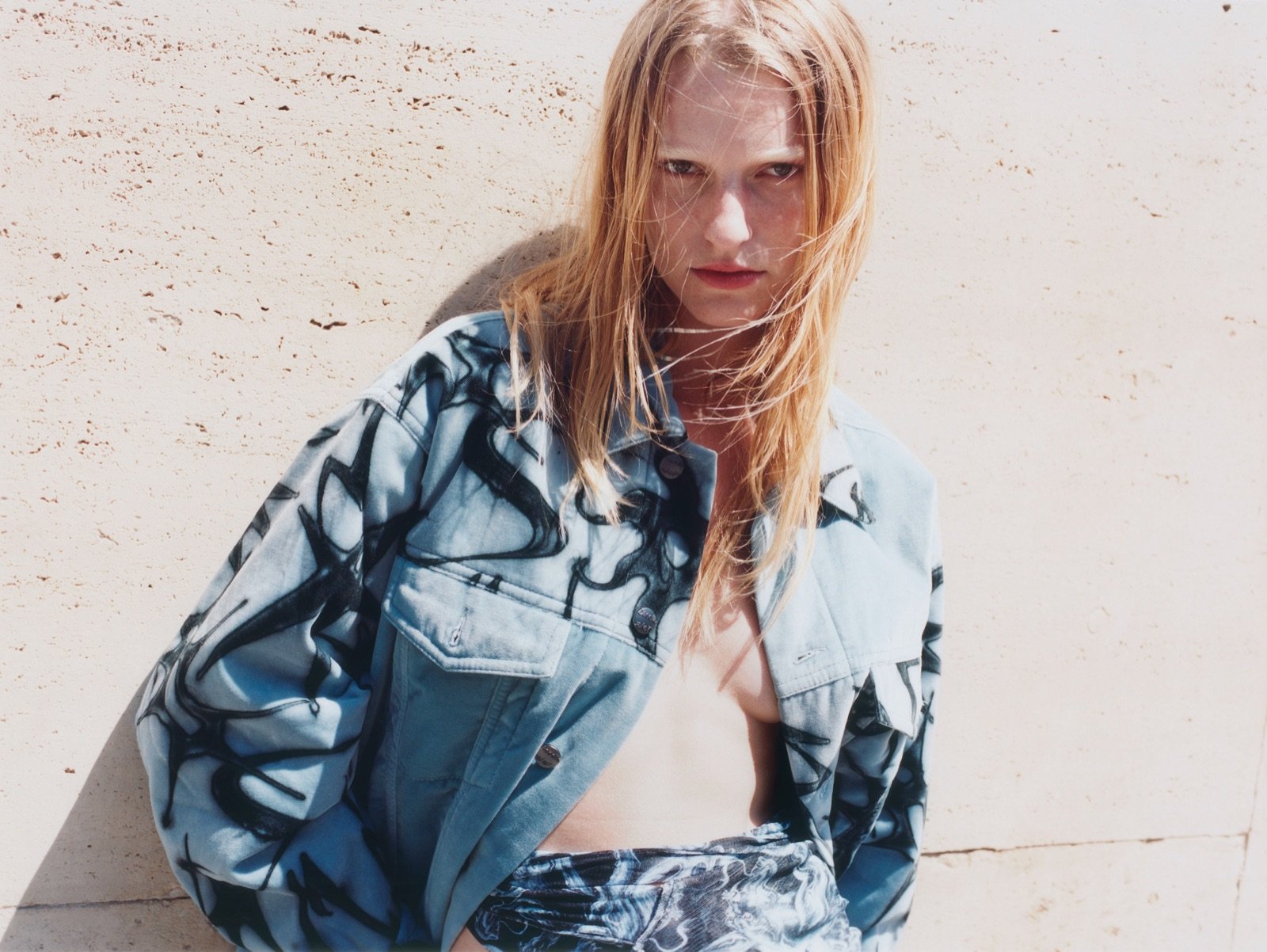
The integration of more tailoring moments, culminating in the guipure jacket, marks a clear evolution. What precise design or ideological considerations informed the decision to introduce guipure fabric, and how does its structured presence converse with the more fluid or illustrative elements within the collection?
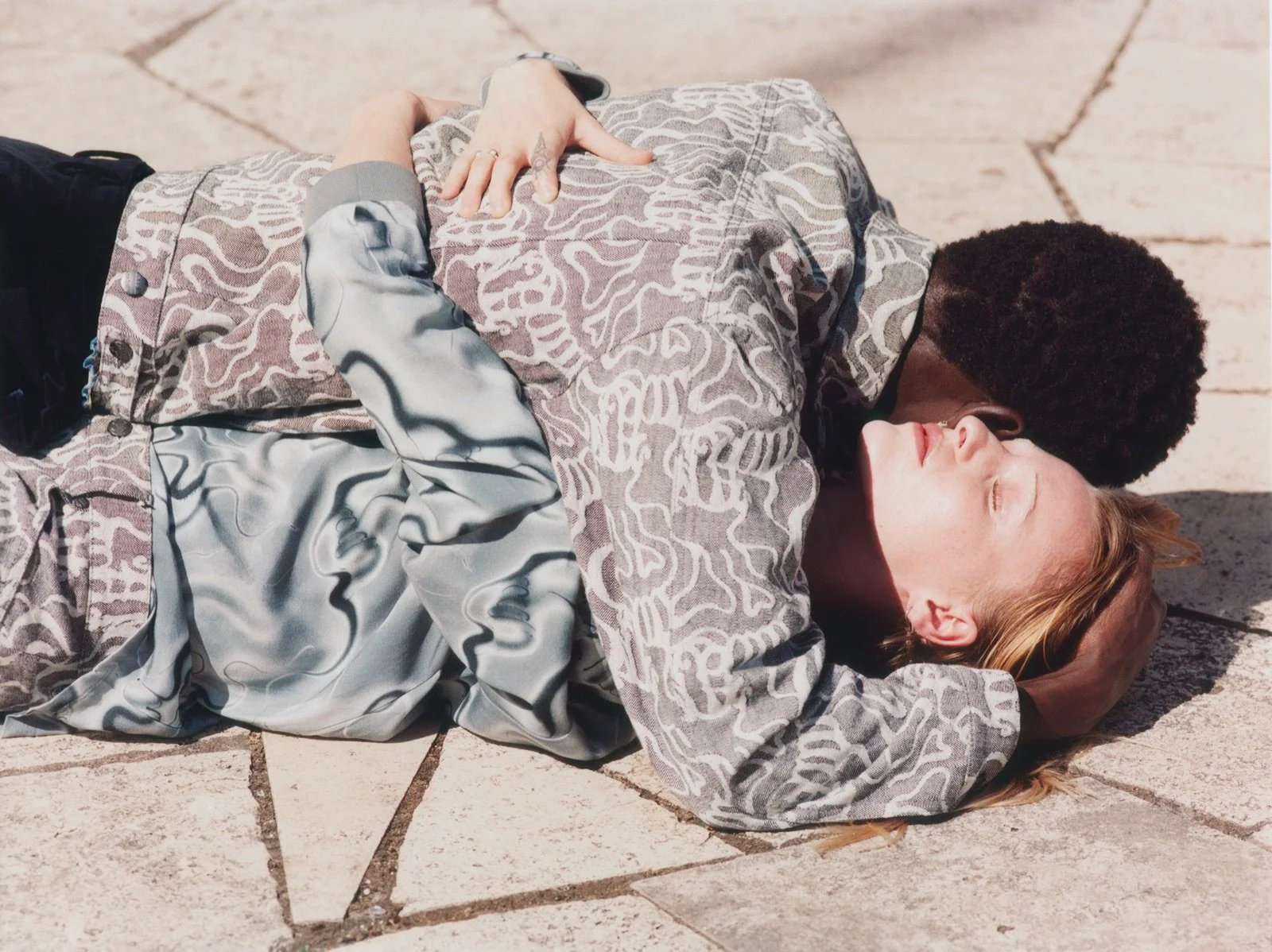
Tobias: The decision to design our own guipure was essential for our narrative - the fabric is unique in its elegance and sophistication and speaks for itself. Having arrived in the royal houses in the 16th century, we know guipure from couture fashion shows. Usually used in beautiful floral or ornamental designs. For us personally and as designers, apart from the beauty of these guipure creations, there was a lack of cultural access - we come from typical working class families where there was no connection to these established references. Therefore, it was of great necessity to design a guipure that reflects our cultural past. The design symbolizes a kind of identification gauge and should convey a sense of presence and belonging in today‘s fashion.
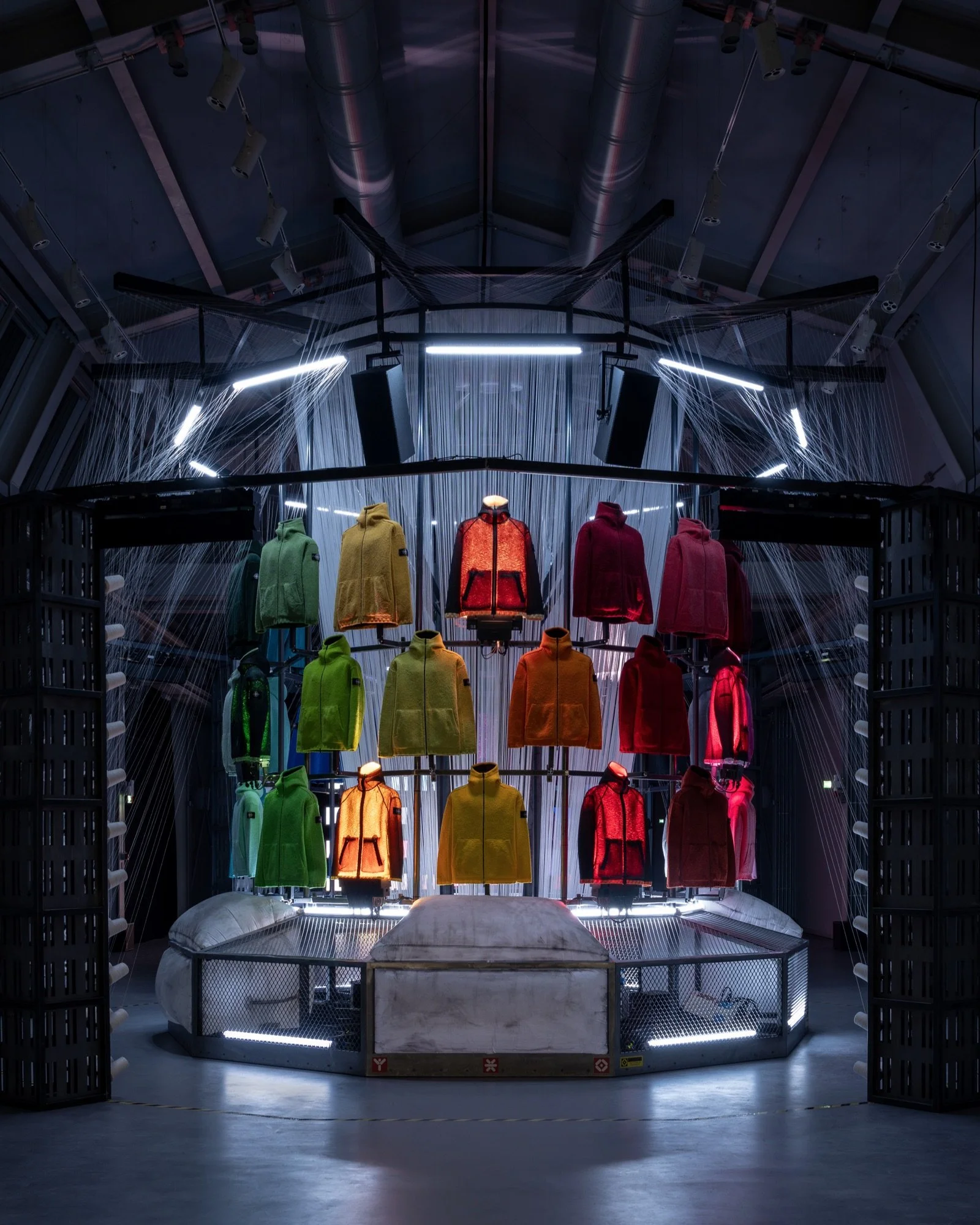
The Guipure jacket is emblematic of our design practice of layering. The body is made from a single canvas of seamless and tightly woven wool. The outside is finished with reflective resin, which is layered with the guipure. Through reflection, the guipure design seems to come to life. The combination of a rigid wool fabric on the one hand and fluid figurative guipure on the other is the aximization of design, textile craft and tailoring – and therefore is the shooting star of the Stargazing collection.
The production in partnership with selected tailors in the Veneto region speaks to a specific geographic and artisanal heritage. What unique contribution does this regional collaboration provide to the final execution and essence of the "Stargazing" collection that could not be replicated elsewhere?
Rico: Our supply chain in this specific region of Italy is built around a tightly woven and diverse network of artisan realities. All of our garments are manufactured in a small, women-led atelier, which means every single piece we create is crafted by a tailor with deep expertise in precision and a personal relationship with their craft. Craft is truly the essence of our drive and motivation. We’re involved in every small step of manufacturing, and this proximity to the making process is something we treasure. We do not just know where our garments are manufactured, but by whom, therefore understanding each artisan’s particular mastery and their role in bringing our vision for the product to life.
Each garment undergoes the attention of an artisan who has spent years, sometimes decades, perfecting their techniques. There’s an intimacy between maker and garment that you simply cannot achieve in larger manufacturing environments. When a tailor knows every stitch, every seam, every detail by hand, the quality becomes something entirely different. Within this constellation of artisans, everyone specializes in a particular aspect of manufacturing and has mastered that element to perfection. This refined specialization, combined with the intimate scale, creates an ecosystem where quality is inevitable. This is something we truly believe is unique in the world.
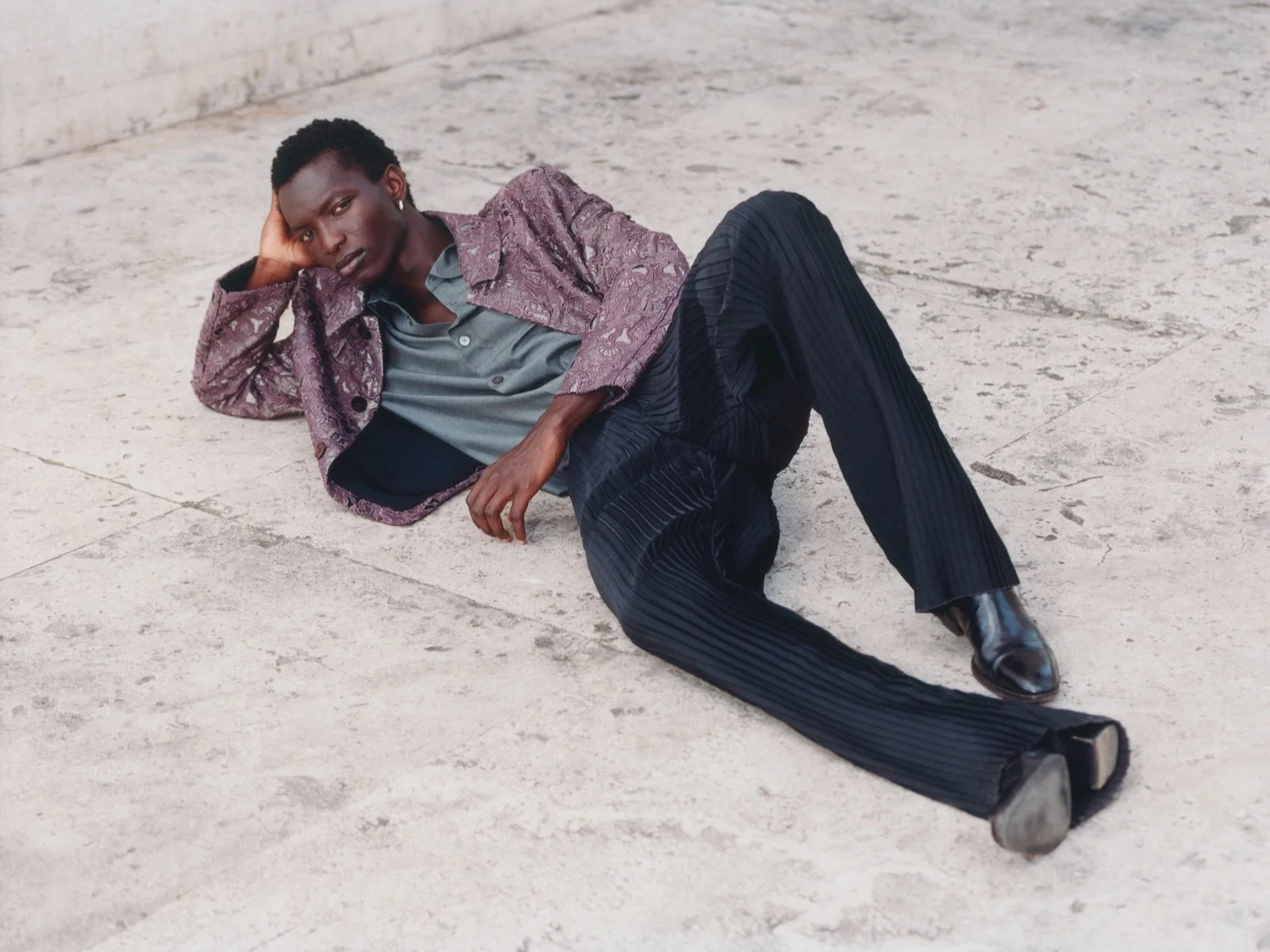
Luxury, as a concept, is continuously redefined. How does "Stargazing" specifically contribute to Casella Meyer’s vision of this redefinition, moving beyond mere material opulence to something more profound or intellectually resonant?
Tobias: For us, luxury is not a concept – rather, it is a conviction to which we are committed. We are convinced that luxury, as we understand it, always requires a combination of craftsmanship, quality, and creativity—without compromise. Consequently, a product is available in limited quantities. We believe that luxury should always be authentic in its form. That is why we create a new narrative for each collection - from scratch. Each collection begins with a name that refers to a state of mind, an emotion, or a theme that affects us. We exchange ideas and have in-depth conversations about how we can creatively build the collection around this theme. This is followed by a poem that is intended to reflect the feeling of the collection. This is a very intense phase, because we begin to translate this emotional world into a visual language. This ranges from the typographic development of the collection name to the first fabric samples, color schemes, location scouting for the campaign, etc. During the STARGAZING collection process in particular, it seemed as if the world was upside down—events were happening at breakneck speed everywhere: social, environmental, and economic. We tried to zoom out, slow down, and not be distracted. To remain calm and consciously perceive what is happening. This meant more subtle colors, clear lines, and more free canvas.
Looking beyond the immediate visual impact, what emotional or philosophical resonance do you intend for the wearer to experience when engaging with a piece from "Stargazing," particularly given the collection’s celestial inspiration?
Tobias: We believe that the most important thing—it may sound cliché—is that you should feel special, like a beautiful star in the universe. A lot of effort and passion goes into our clothes, and you can feel that you are wearing something special. This goes hand in hand with our overall philosophy— we want to offer a genuine and positive alternative in the luxury fashion segment. You should feel better when you wear Casella Meyer. We pay close attention to the texture and material of the fabrics we use, because clothes act like a second skin. Most of our fabrics are made from natural fibers and have properties that make them comfortable to wear. Because it should be about how you feel.
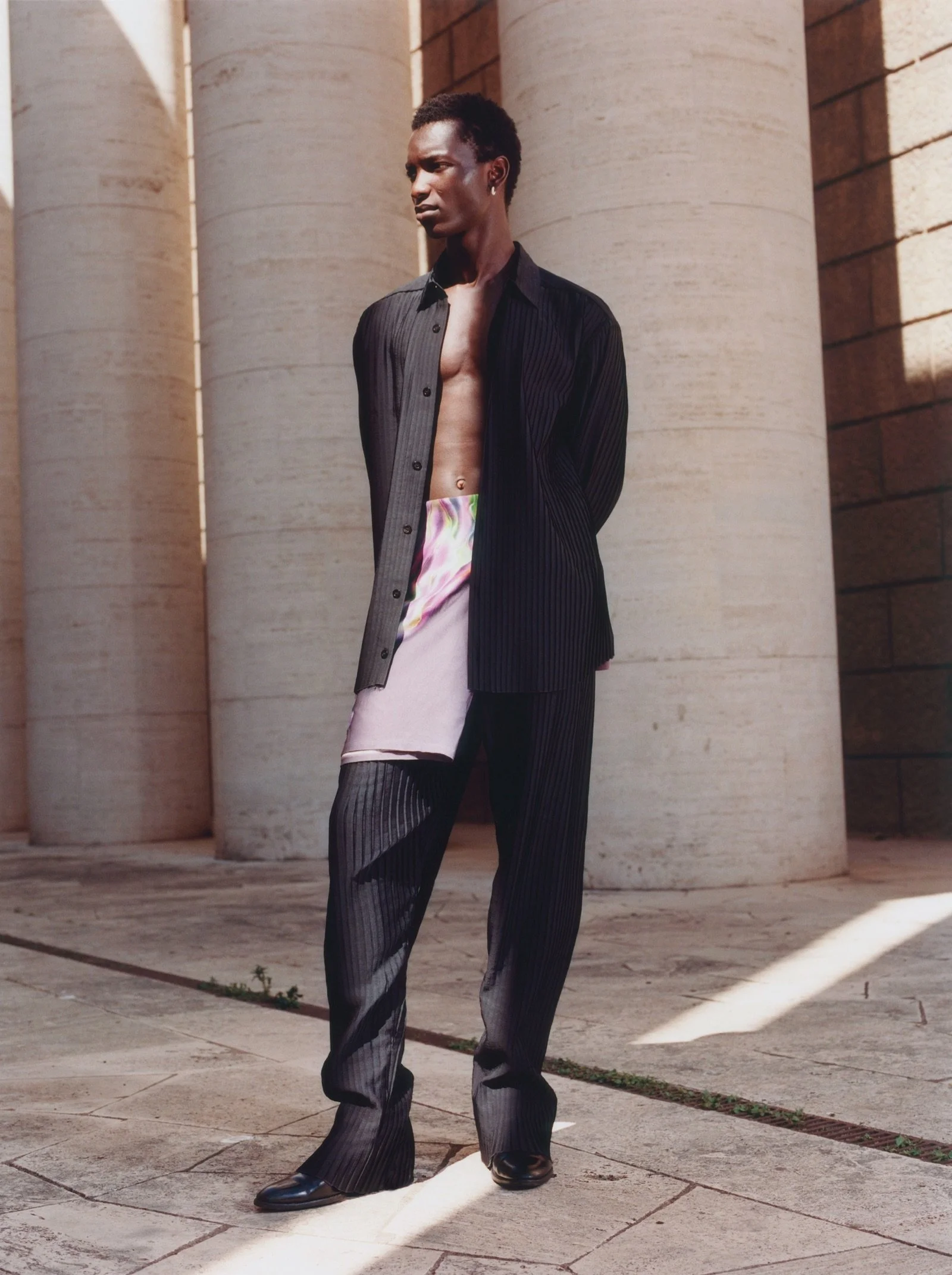
Your prior collections established a certain vocabulary. With "Stargazing" being your third full-size offering, what significant internal dialogues or external observations propelled this specific thematic and aesthetic direction, especially the initial focus on grey?
Rico: Initially we were both bored by the idea that the ultimate elegance has to be reduced to a conceptual black garment. Something so drained and emotionally dicharged; I think that both of us can’t really connect to this dystopian idea of creation. We want people to feel good in Casella Meyer and this is also why we worked a lot with vivid and animated colors which also trigger certain feelings or vulnerabilities when you get in touch with them.
After our last collection titled DESIRE, we intuitively understood and felt that the time had come for us to challenge our design core of "elegant playfulness" and pair it with different scales of grey and black. I think in general with Casella Meyer we’re looking for the perfect balance between a certain playfulness, that comes from deep inside, and the certain elegance we believe a garment must have. With Stargazing we’ve made another step towards this aesthetic we’re trying to achieve.
Beyond the technical aspects, were there any particular artistic movements, films, pieces of music, or literary works that provided a more abstract, yet profound, source of inspiration for the mood or conceptual depth of "Stargazing"?
Rico: I think I am confident enough to speak for both of us when I say that our design practice is rather a deep journey towards our inner selves than a conceptual construction assembled from references. Both of us have a wide range of interests in our personal lives that go beyond the arts and design. I feel we are living in a bit of a "cultural depression" where people are missing real life experiences and and get lost in digital ones, leading to a lack of true authenticity.
Regarding the conceptual depth of the collection and finding an overarching theme: this process also carries a certain drive towards the subconscious. Questioning where we are standing personally and as a brand in that very moment when we start to create a new collection. This process of navigation to find the right topic is very fluid because we are in a daily exchange about a million different things, and the journey as a brand involves so much more than just creative ideas. We face all kinds of ideological, economic, organizational and creative challenges, and this mix in the end is the factor that determine what the collection will be titled and what the ideas behind it will be. Of course there is also a certain conceptual approach, but this one follows after a journey towards our position and challenges we are facing as human beings in this very moment.
Photography @jules.jpeg
Styling @francescacefiscasoli
Hair @davideperfetti_
Make-Up @filippoferrarimk
Photography Assistant @federicotribbioli
Styling Assistant @biancaottaviani
Casting @lollodefa
Interview by DONALD GJOKA
What to read next