'Crystal Crypt' by Emmanuelle Luciani for Baccarat
At Milan Design Week, Baccarat gave over its space to two artists and stood back. The result was one of the week's most rewarding environments: dense, serious, and lit like a fever dream.
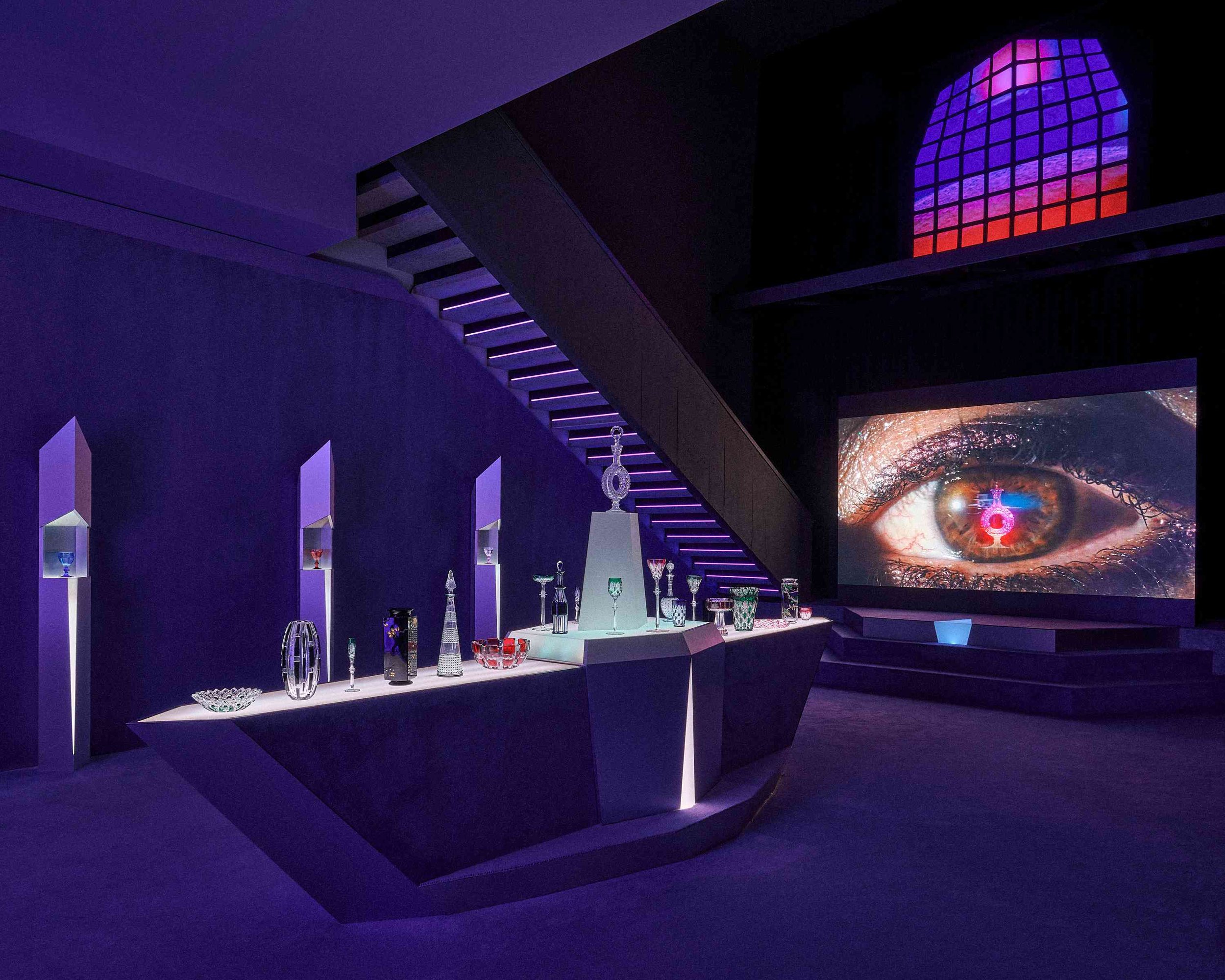
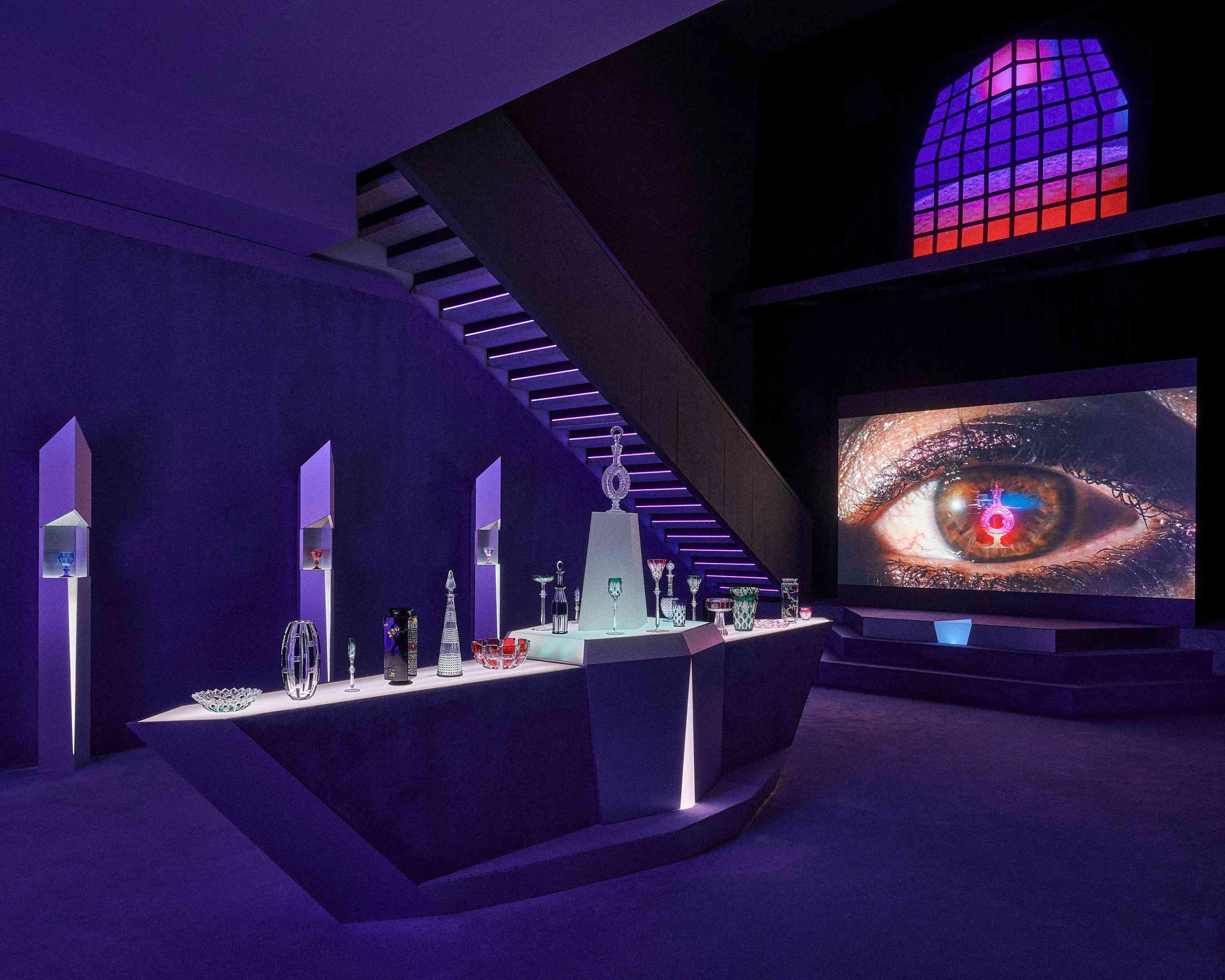
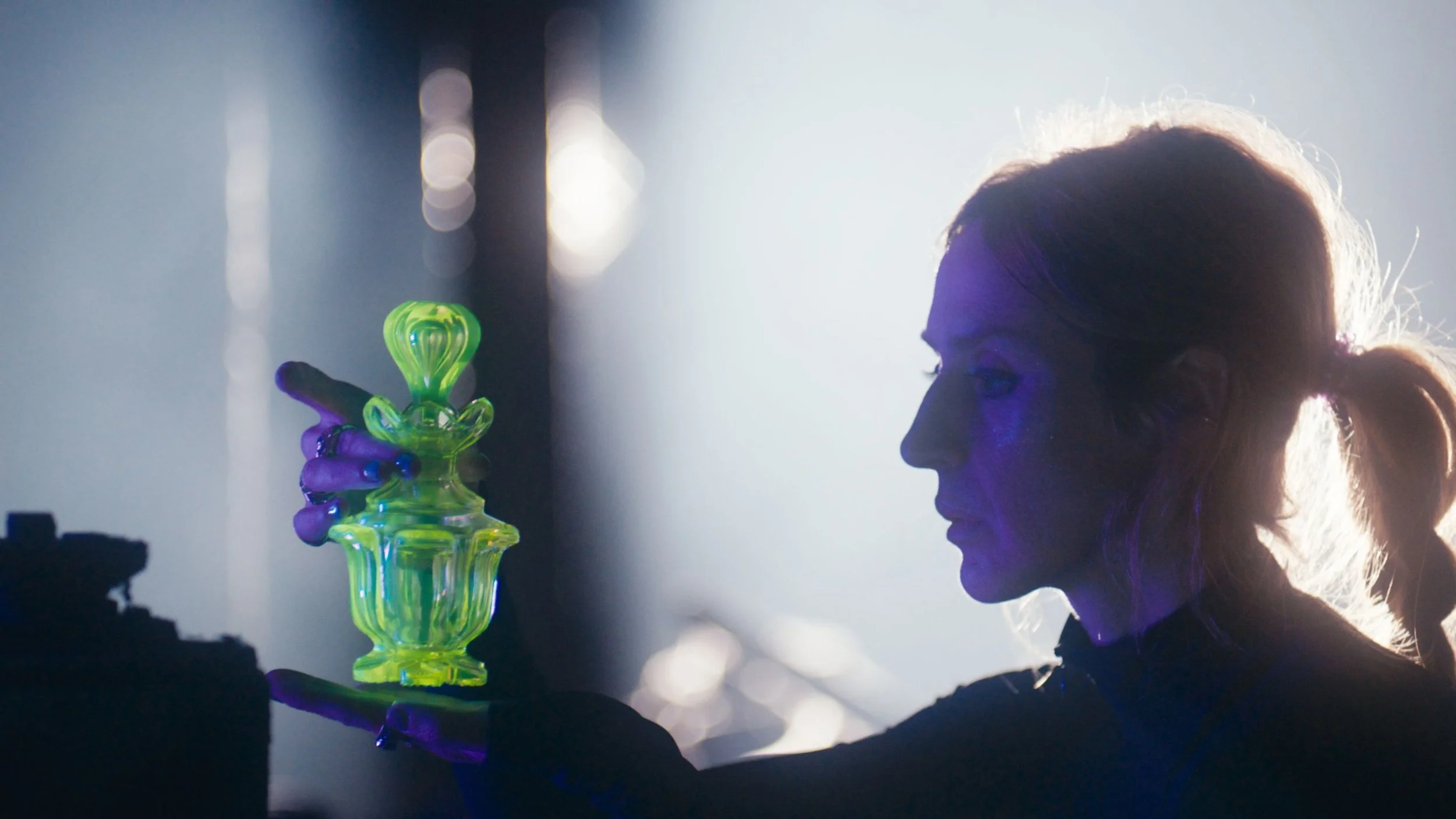
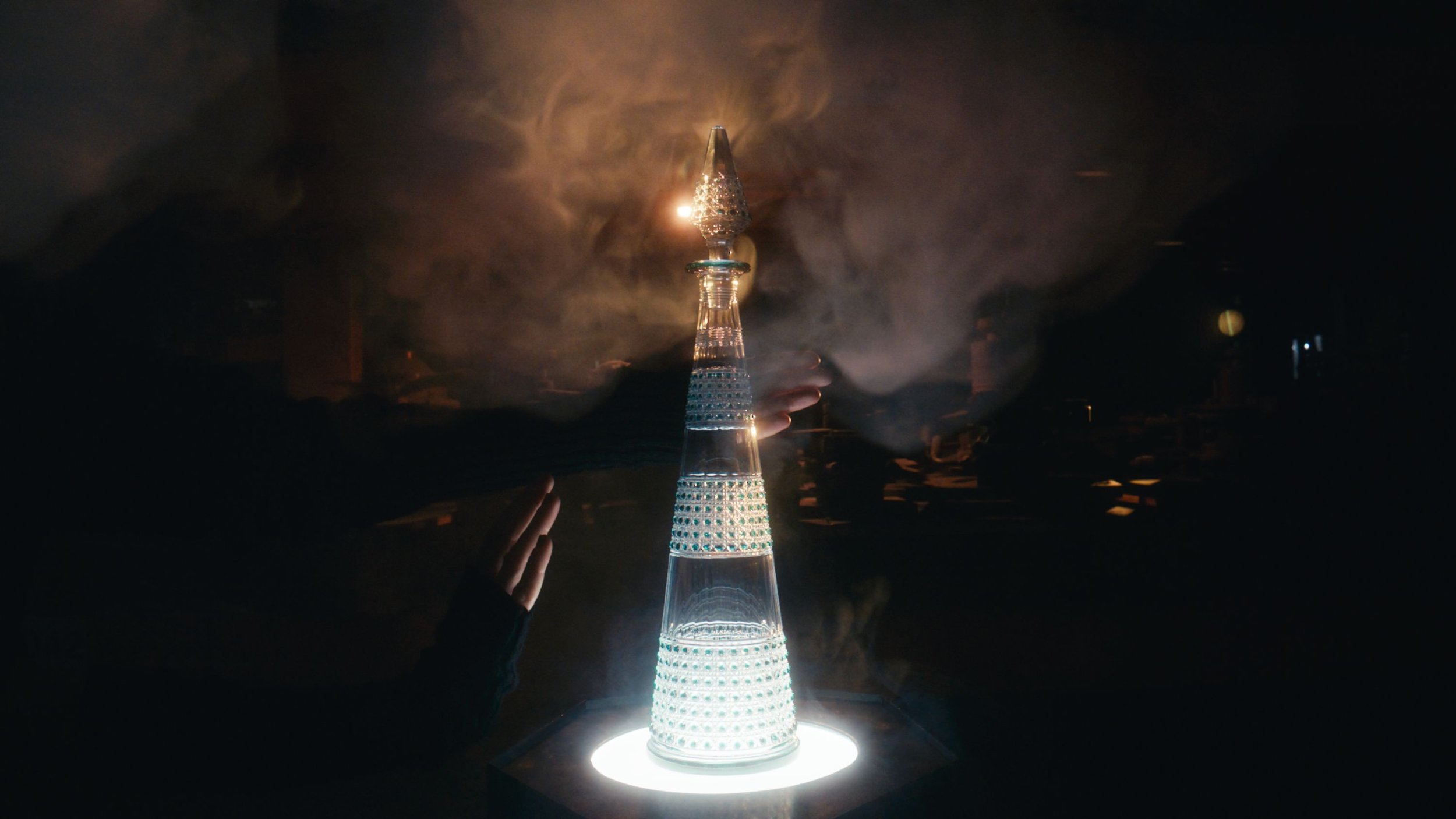
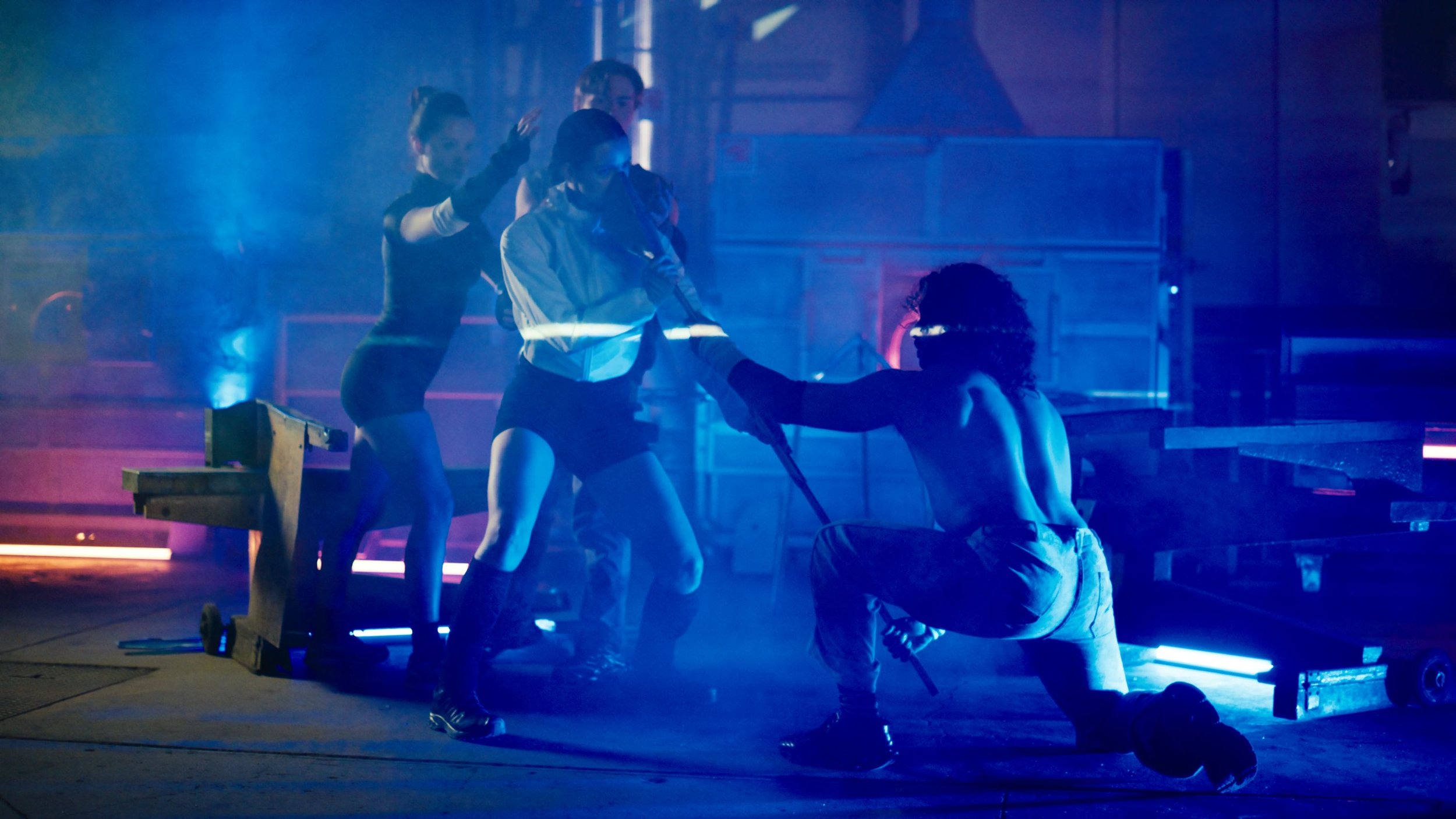
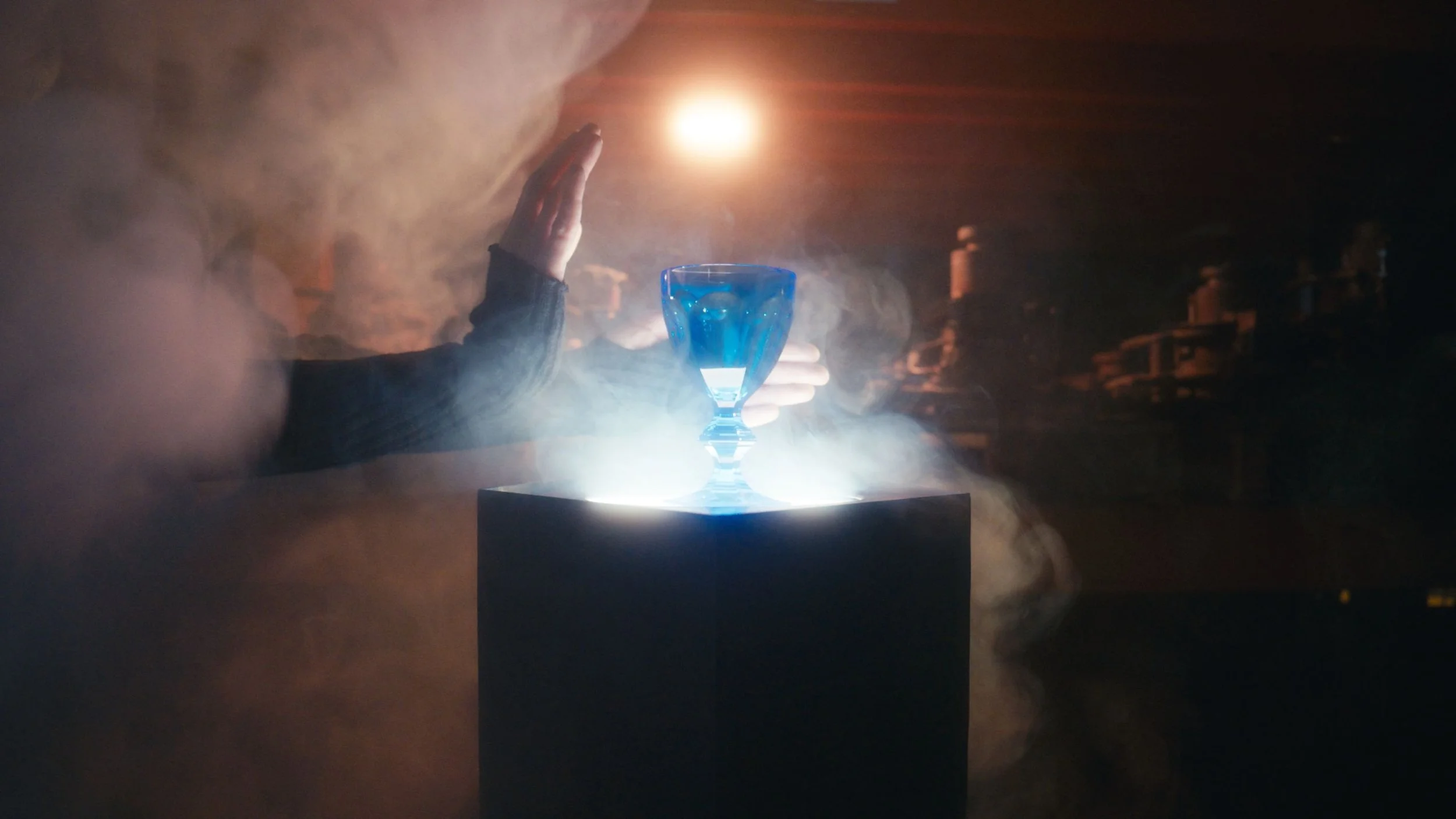
Emmanuelle Luciani took the full scope. Crystal Crypt was her title, her concept, her film, her set, her sound. Working with a collaborator, she recorded the actual noise of the Baccarat foundry (furnace, water, production) and reworked it into a score that ran beneath a film whose visual references moved from Ghost in the Shell to David Lynch. The light was not decorative. It was, as Luciani puts it, unreal by design, creating a dimension adjacent to the one you walked in from. Her thinking about crystal is not sentimental: she sees the savoir-faire as genuinely at risk, with only three manufacturers remaining in France, and she wanted to make something that carried that weight without collapsing under it. A homage, yes, but also a provocation: look at this, understand what it costs to exist.
Donald Gjoka: The set design here is extraordinary, it almost reads as a work of art in itself. Was that always the intention?
Emmanuelle Luciani: Yes, completely. The set design was conceived as an artwork. We made what you might call a stained glass element, very cold, very precise. And then this evening I wanted to create a kind of ballet around it, drawing on all the gestures of the glassmakers. For me, it was essential to make something that was simultaneously a film and a ballet. The two had to coexist. I grew up practicing ‘ballet russe’, that’s why I put Life in my work.
Donald Gjoka: It sounds like there’s a strong pull between tradition and something much more forward-looking in your approach. Is that a tension you consciously work with?
Emmanuelle Luciani: Always. I’m very drawn to placing the past in dialogue with the future, to creating spaces where the two meet. With this project, for instance, I wanted to avoid making something empty or merely decorative. I wanted to show the time and the labour that live inside the crystal, all that collective history embedded in the material.
When I look at a piece of crystal, I see everything: the history, the craft, the weight of many hands. I wanted to create a homage to that collective work. But alongside that, there are a lot of cyberpunk references in what I’ve made, because I also think of crystal as something fragile, a fragile savoir-faire. It’s possible that it disappears. There are only three manufacturers left in France, and what they do is extraordinarily complex, nothing like ceramics, for example. There is real engineering involved, real risk of loss. So I wanted to build an entire world around it, to give form to my own phantasm of crystal, but also to carry that message: grasp this, hold on to this extraordinary thing.
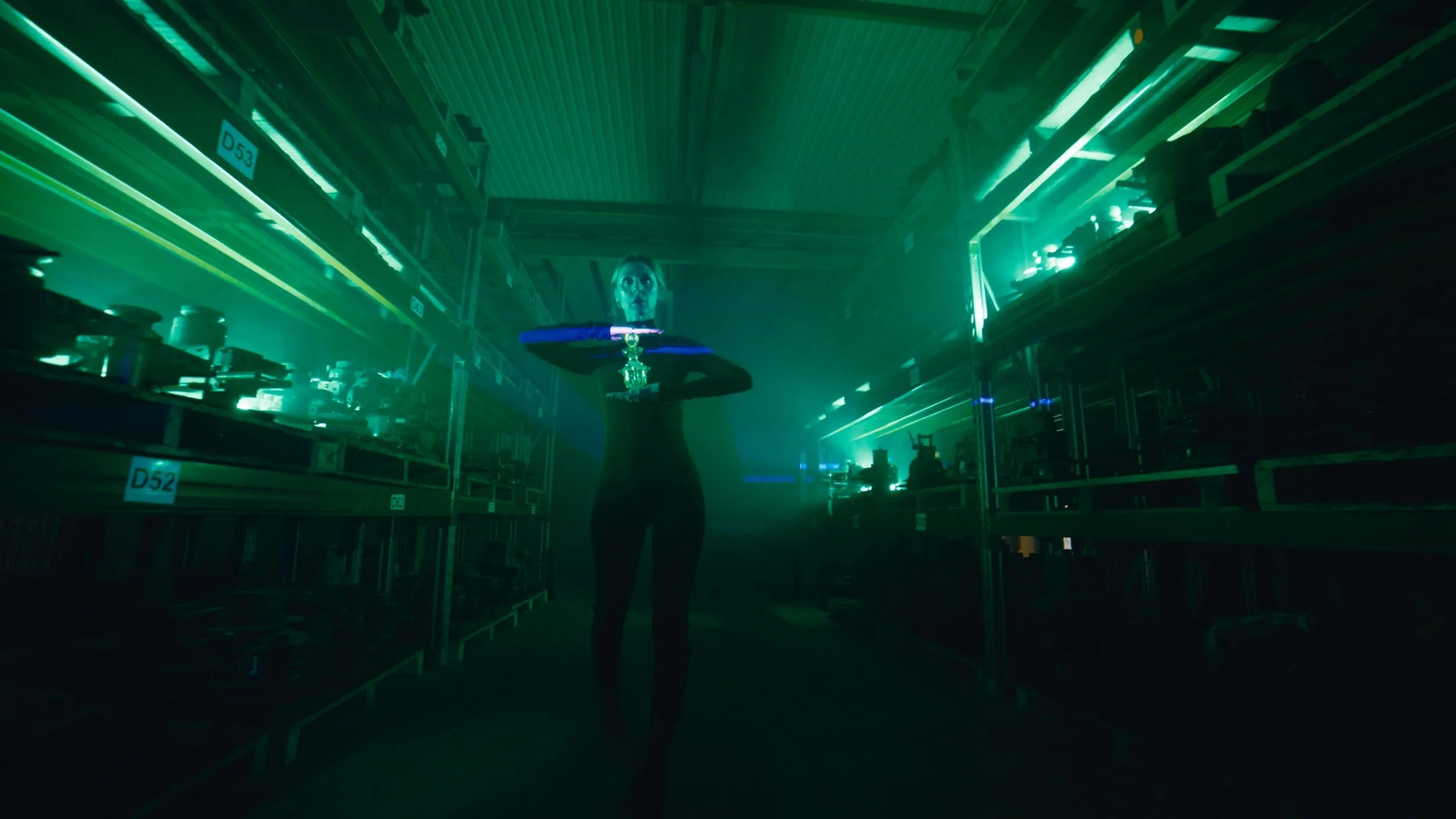
Donald Gjoka: The lighting in the video is very striking, almost otherworldly. What were you drawing on visually?
Emmanuelle Luciani: Cyberpunk, above all. I looked a lot at Ghost in the Shell, at David Lynch. I’m deeply drawn to that territory where myth and reality blur. The light in the film was not meant to be realistic, it creates another reality, an unreal one. Almost dreamy, almost another dimension. I think that’s genuinely how I see things. When I visited the manufacturer for the first time, I was already imagining all of this. I felt the past and the present together, and I knew it had to go somewhere.
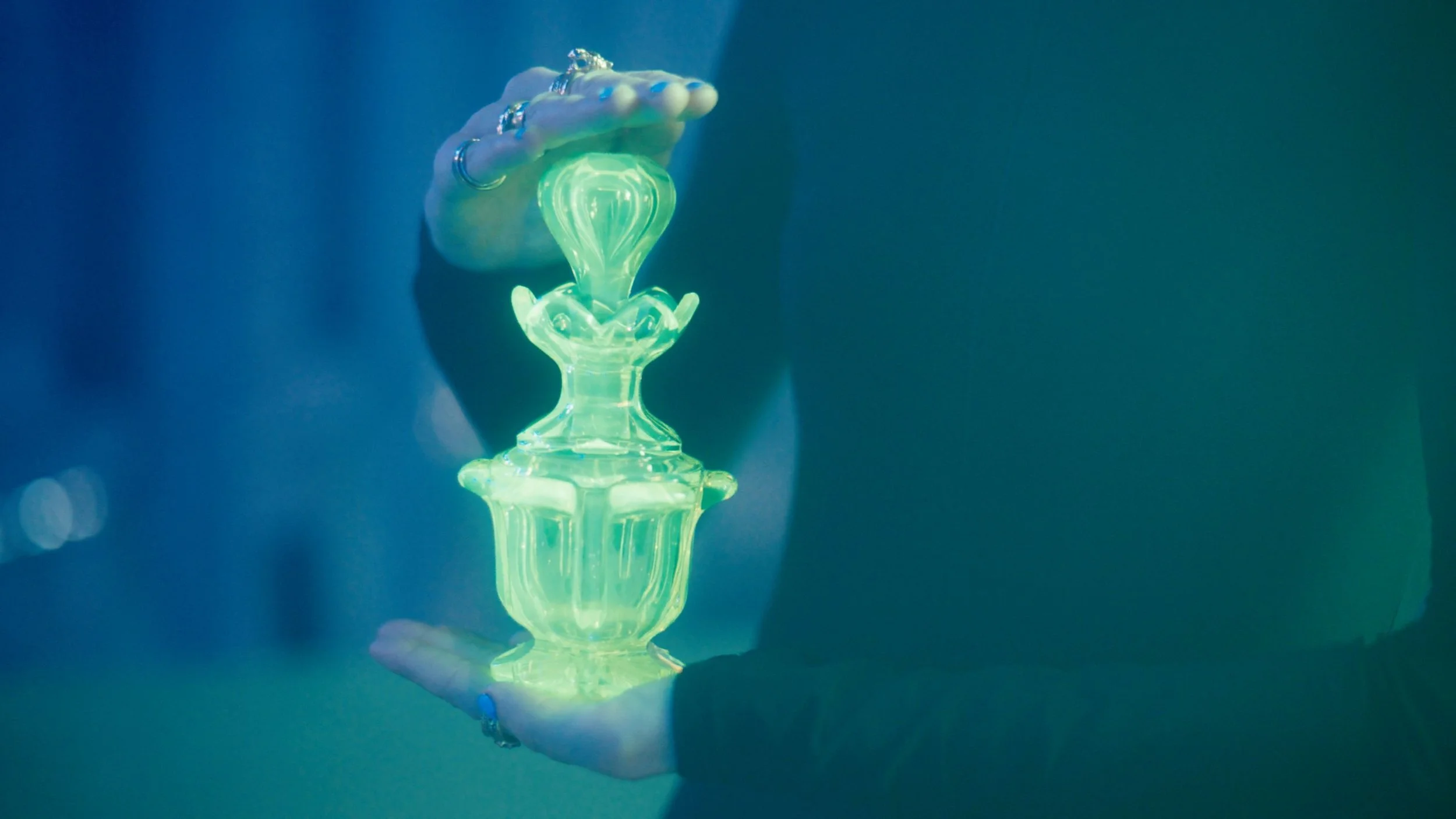
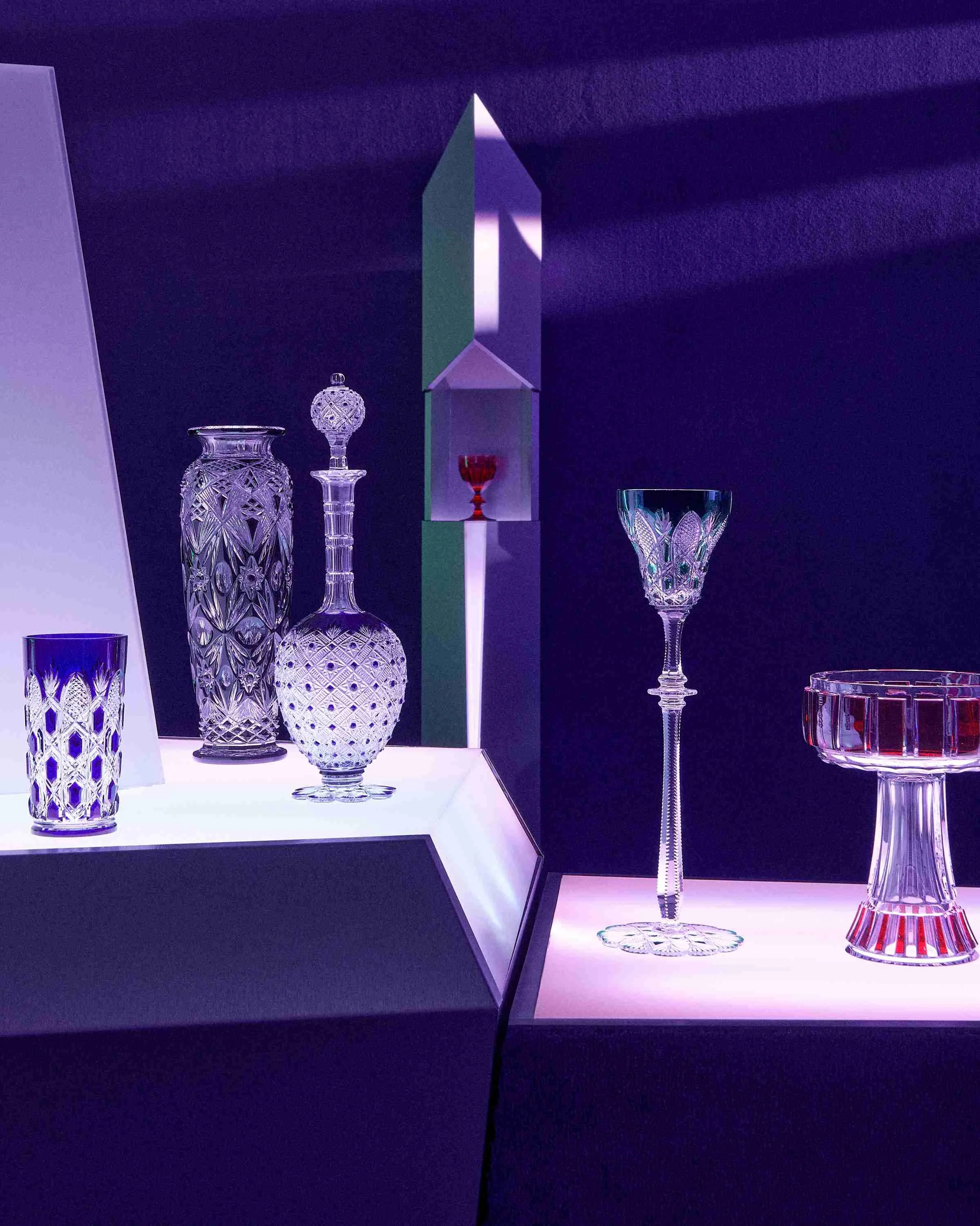
For me, the vessel, the crystal itself, is like an artifact from another civilisation. You could look at these objects and, if you arrived from elsewhere, you’d have no framework for them at all. And I wanted to show that: the strangeness of it, but also the modernity. Because there are pieces here from the 19th and 20th centuries that are utterly contemporary in their feel. That red coupe, for example, it could be Sottsass, it could be anything. The point was to create movement, to push things a step forward.
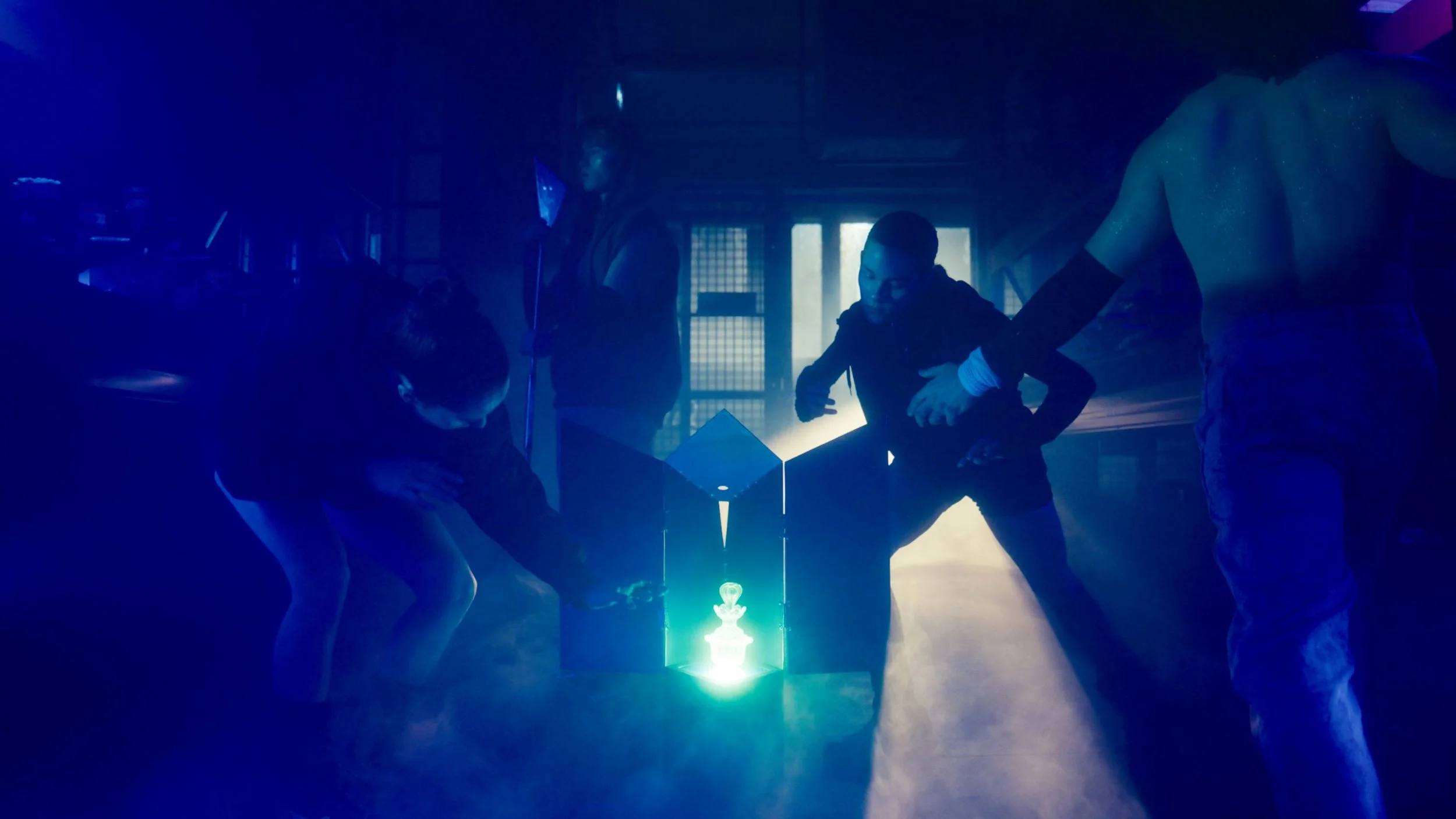
Donald Gjoka: There’s a quality to the work that feels medieval and futuristic at the same time. Is time itself part of what you’re thinking about?
Emmanuelle Luciani: Yes, absolutely. Time is the one place you cannot go. I love the feeling of making a kind of loop through time in my mind, it’s not like geography, where you can navigate anywhere with a map. Time is a genuine mystery, and that draws me in completely.
Donald Gjoka: Did you create everything here yourself, the film, the set, the sound?
Emmanuelle Luciani: Everything, except the crystal itself, though that’s something I hope to work with directly in the future. I took on the full scope of Crystal Crypt: art direction, scenography, film, performance, and sound design. The brief, in the broadest sense, was to make something worthy of a material that has survived centuries and may not survive this one. There are only three crystal manufacturers remaining in France. What they produce is the result of collective labour so specific, a fragile savoir-faire. The work responds to that fragility not with mourning but with force.
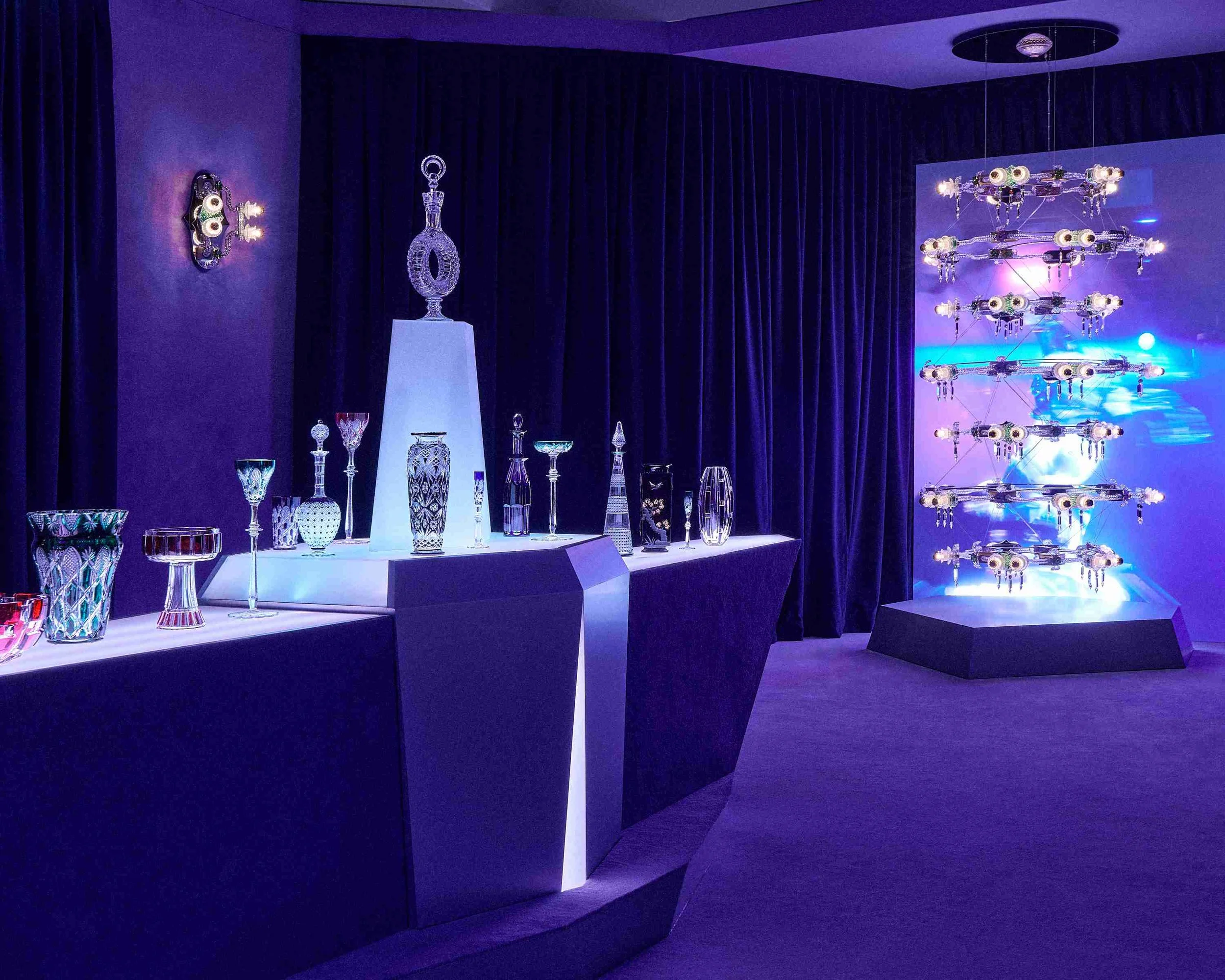
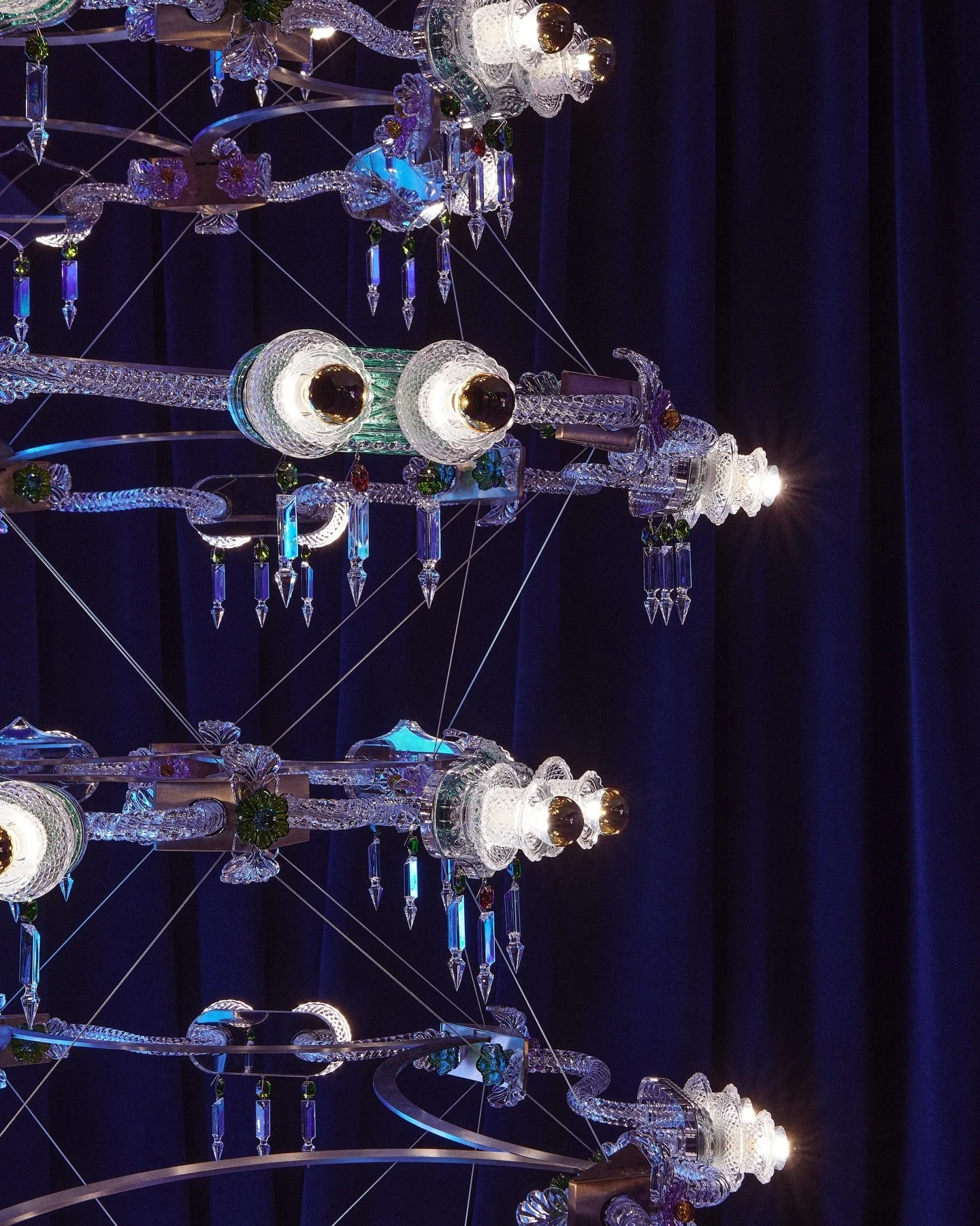
Bethan Laura Wood's Mille Fleurs arrived in that charged atmosphere and held its own. Her chandelier collection takes the traditional form apart and reassembles it as a modular system. The central core, normally the anchor around which everything organises, is gone. In its place, tension cables cross through seven configurable layers, producing a structure that reads alternately as a column of cut crystal and a geometric ghost of one. Inside each ring: miniature flowers. The visual logic is rigorous and quietly astonishing. Wood, who grew up visiting Tudor and Elizabethan houses in Shropshire, has been building in these references for years (the roses, the architectural decorative programmes) and here they land with particular clarity.
Donald Gjoka: The collection feels quite different from a traditional chandelier. What was the central idea behind it?
Bethan Laura Wood: My starting point was to question the conventions of the form. A chandelier normally dictates a very particular type of space, so I was curious what would happen if, instead of treating the central core as the traditional focal point from which all elements radiate, I took those elements and rotated and repositioned them to create a more open structure. Here the piece is configured with seven layers, but each layer is available as an individual unit.
Donald Gjoka: So it's modular, adaptable to different spaces?
Bethan Laura Wood: Exactly. If you have a smaller space, you could simply have a single rosette, just the small rosettes grouped together, or just the large rosettes. The modularity is fundamental to how the collection works.
What I love about developing the system with Baccarat, and the special housing that allows for so many configurations, is how it generates this crisscrossing of tension cables. In this particular arrangement, they produce a feeling somewhere between a giant piece of cut crystal and the ghost outline of one, while also reading as a very architectural column. And then, when you get close and look inside, each ring is filled with miniature flowers.
Donald Gjoka: You mentioned new elements as well, are any of the crystal pieces entirely new designs?
Bethan Laura Wood: For this piece, I developed two new elements: the pinched lozenge and the straight lozenge. They act as bridges between the historical crystal pieces, connecting them to the new electrical housing to create a more contemporary version of the form.
I also play with reflection and refraction throughout. If you look upward at the ceiling rose, there's another perspective entirely, it becomes a kind of vortex of light and crystal. And the mirroring on the backs of certain elements reflects the flowers back at you. The effect is almost endless.
Donald Gjoka: How long did the project take to develop?
Bethan Laura Wood: The very first discussions began four years ago now, so it has been quite a long development. With crystal projects like this, there are always multiple timelines running in parallel within the factory, it's very specific to when they are pouring and working with particular colours and materials. We found windows in the schedule to make our experimentations, to develop the metal housing and framework, and to go through the certification process, which takes its own time. But I'm very happy that the pieces are finally here. I'm genuinely excited to see how people respond, and I hope it sparks a new kind of imaginative engagement with how Baccarat can work in people's spaces.
Donald Gjoka: What were your inspirations? Were they rooted in history, or did anything more contemporary feed into the work, film, technology, gaming?
Bethan Laura Wood: For the chandeliers, the starting point was primarily the Zenith, Baccarat's own historical piece. But once I began working on it, something interesting emerged: the design started to carry this lovely tension between science fiction and Elizabethan imagery, the crisscross of garters, the sense of jumping between different periods of history. I like that quality in the work, and I also appreciate what it means to engage with a house like Baccarat, which carries such a long and specific heritage. Playing with that history to arrive at something that reads as almost futuristic feels right.
The immersive sound environment created by Emmanuelle for this space has also played beautifully into that. She has brought a similarly otherworldly, futuristic sensibility to how one experiences the crystals. It's really enjoyable to see the two things working together.
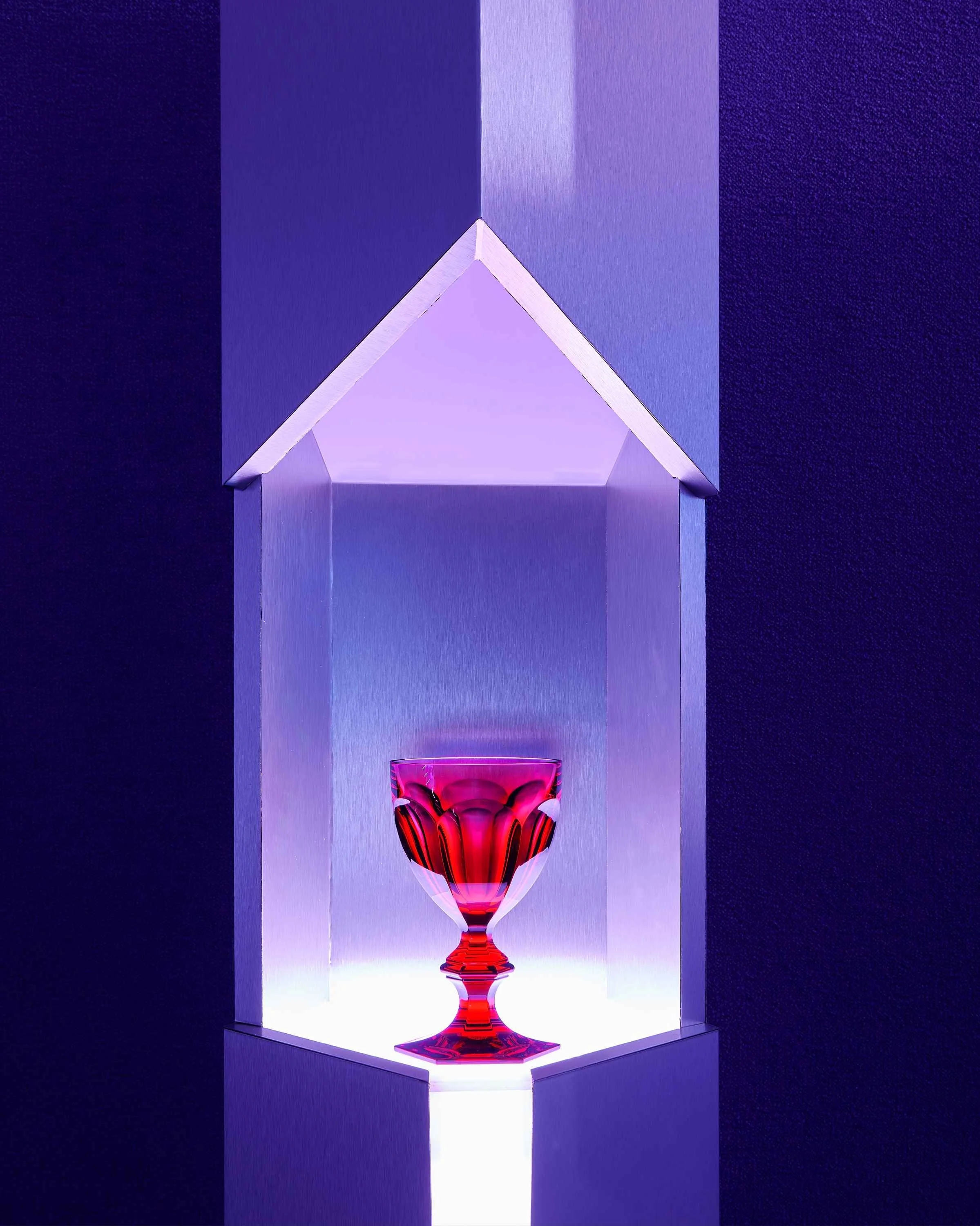
Donald Gjoka: The installation here feels very experiential. Was that the intention, to show the pieces in two registers?
Bethan Laura Wood: Very much so. Down here we have what I'd describe as an emotional showcase environment, fitting for the context of design week. And then upstairs, for those who want to see the pieces in a quieter setting, there are some of the appliqués, including one that isn't shown here below. The idea is that people can absorb the full universe of the collection on this floor and then move upstairs to begin imagining how individual pieces might work in their own homes.
I should also mention that I have a candle collection alongside the electric pieces. For those pieces I use some of the same elements and floral references, but deliberately gave them a more organic quality suited to the table. With the chandeliers and sconces, I wanted to maintain a strictly architectural, graphical feeling.
Donald Gjoka: Where are you originally from? And has that background shaped your work?
Bethan Laura Wood: I'm from the UK, I grew up in Shropshire, in the Midlands. I've lived in London for many years, and London has been a major influence on me as an adult. But growing up in Shrewsbury, in an area with strong craft traditions and a very particular relationship to the handmade, definitely left its mark.
As a child, most weekends we would visit a National Trust property or a historic house. I think that's where my fondness for the Elizabethan and Tudor references comes from, the roses, the decorative programmes of those interiors. Throughout my work, you'll find these quiet nods to things that have shaped me over the years. With this project specifically, it was also genuinely exciting to connect with the heritage of Baccarat itself.
Via Marco Formentini, 10
Brera centro storico, Milano
Exhibition on view from April 21 to 25, 2026
Interview by Donald Gjoka
What to read next