Hélène Vogelsinger
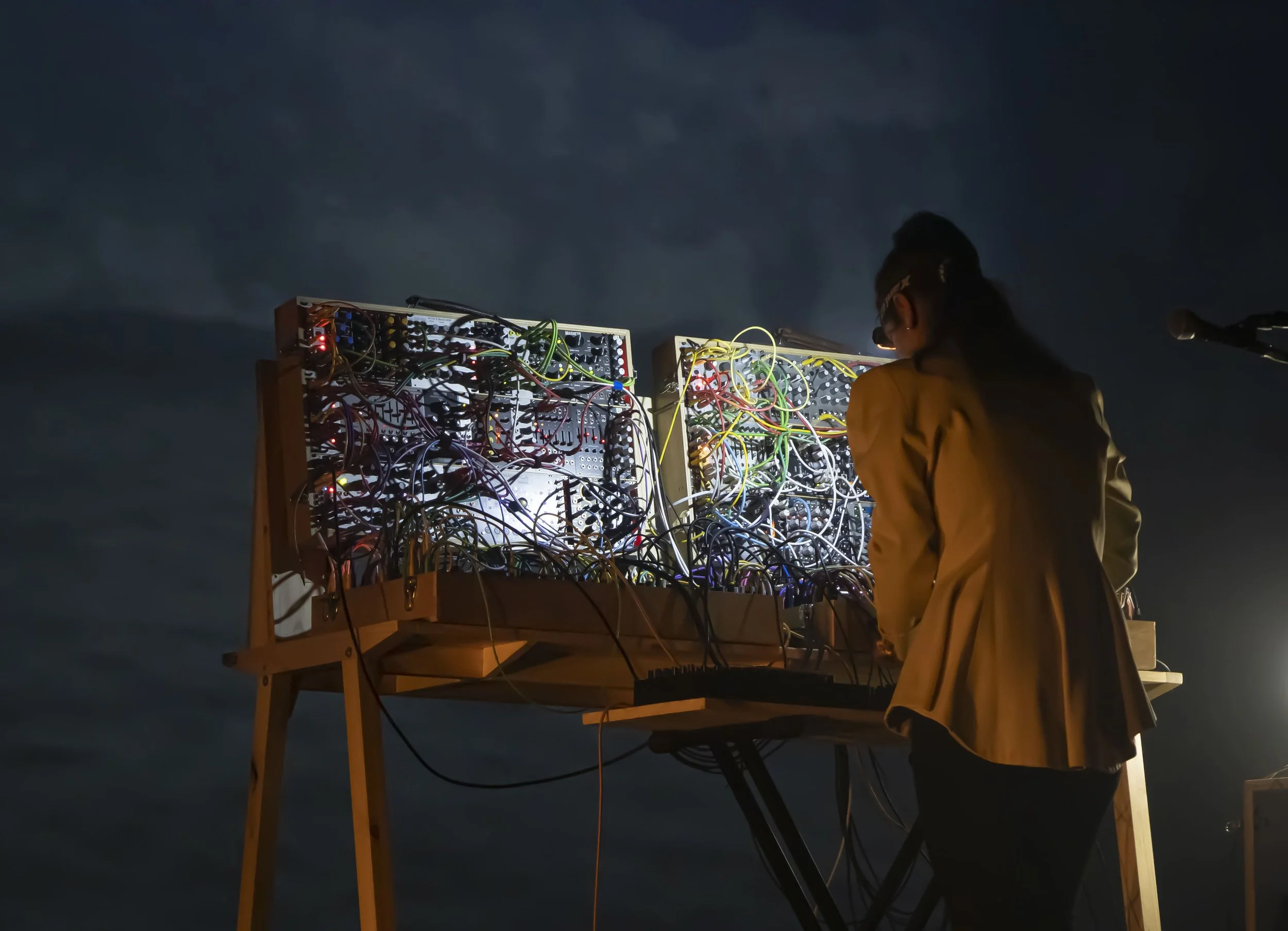
Hélène Vogelsinger builds her universe through attunement. She works in the in-between, where sound brushes against matter, where empty architectures hold their own memory and silence behaves like a living organism.
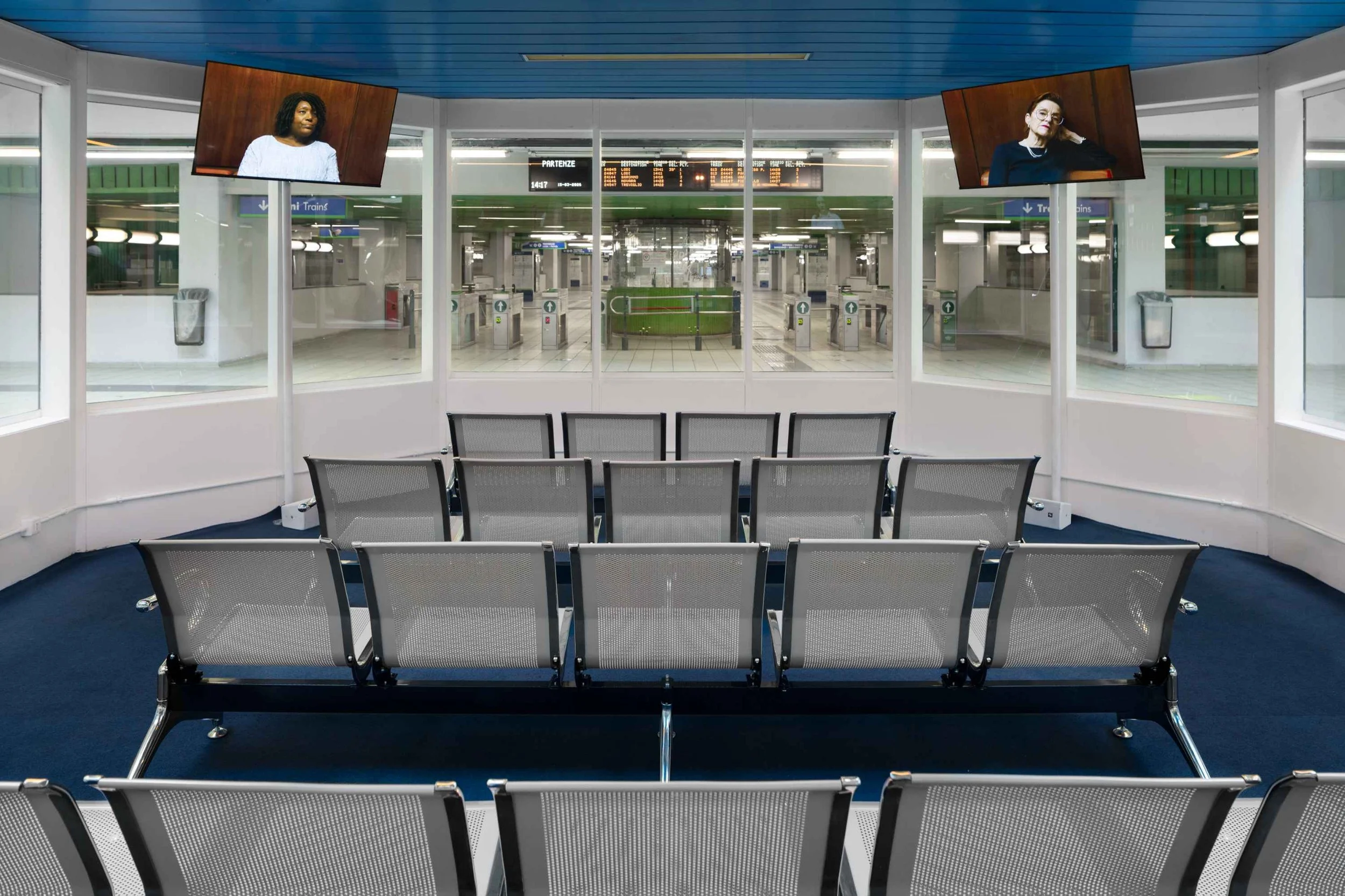
She moves through abandoned sites and monumental spaces as if they were sentient partners, each carrying a memory field, each resonating back.
With modular synthesis, voice, and slow, ritual-like gestures, Vogelsinger turns these places into delicate ecosystems of vibration. Human presence dissolves into architecture; the room becomes an instrument; the air becomes a score.
Her practice is precise yet instinctive, grounded in the idea that sound isn’t something you simply hear, it’s something that enters you, rearranges you, reveals what usually stays hidden.
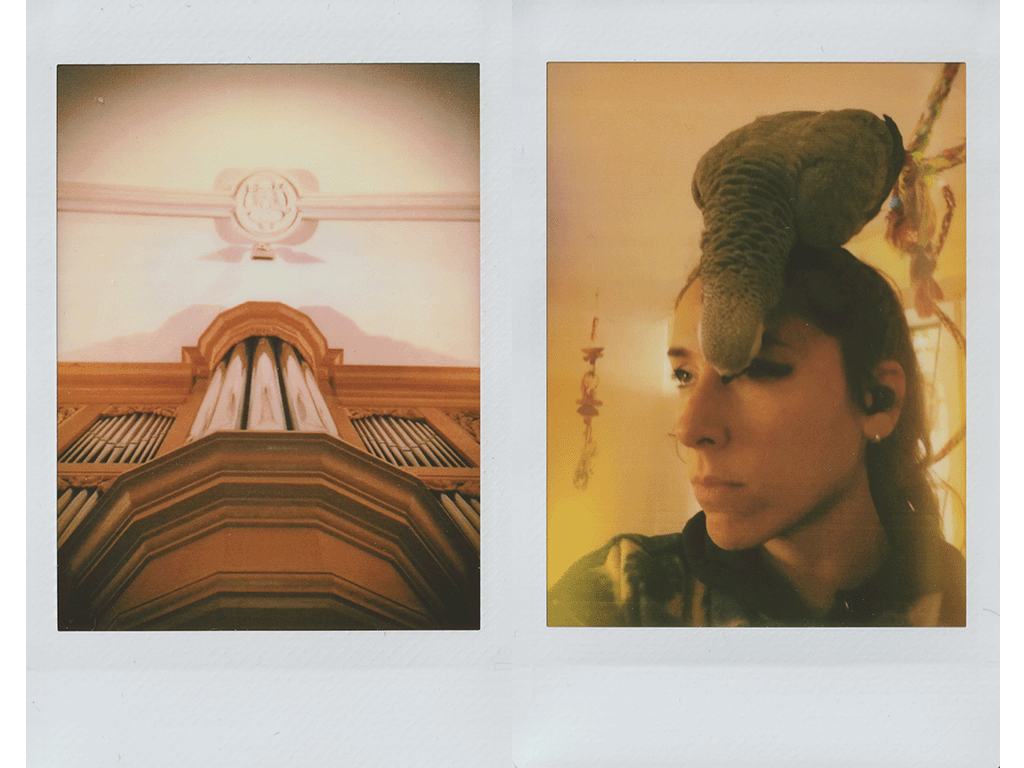
Many of your performances take place in large, empty, or brutalist spaces, places where silence feels almost physical. These aren’t just backdrops, but seem to shape the experience as much as the sound itself. What draws you to these kinds of environments? What do you look for in a space before deciding to perform there?
In these spaces, silence becomes almost tangible; it breathes, it remembers. I look for architectures that have endured through time, that carry the trace of the human while detaching themselves from it. These places are thresholds between disappearance and rebirth. When I enter them, I immediately feel their energy. If the place resonates with me, everything begins there.
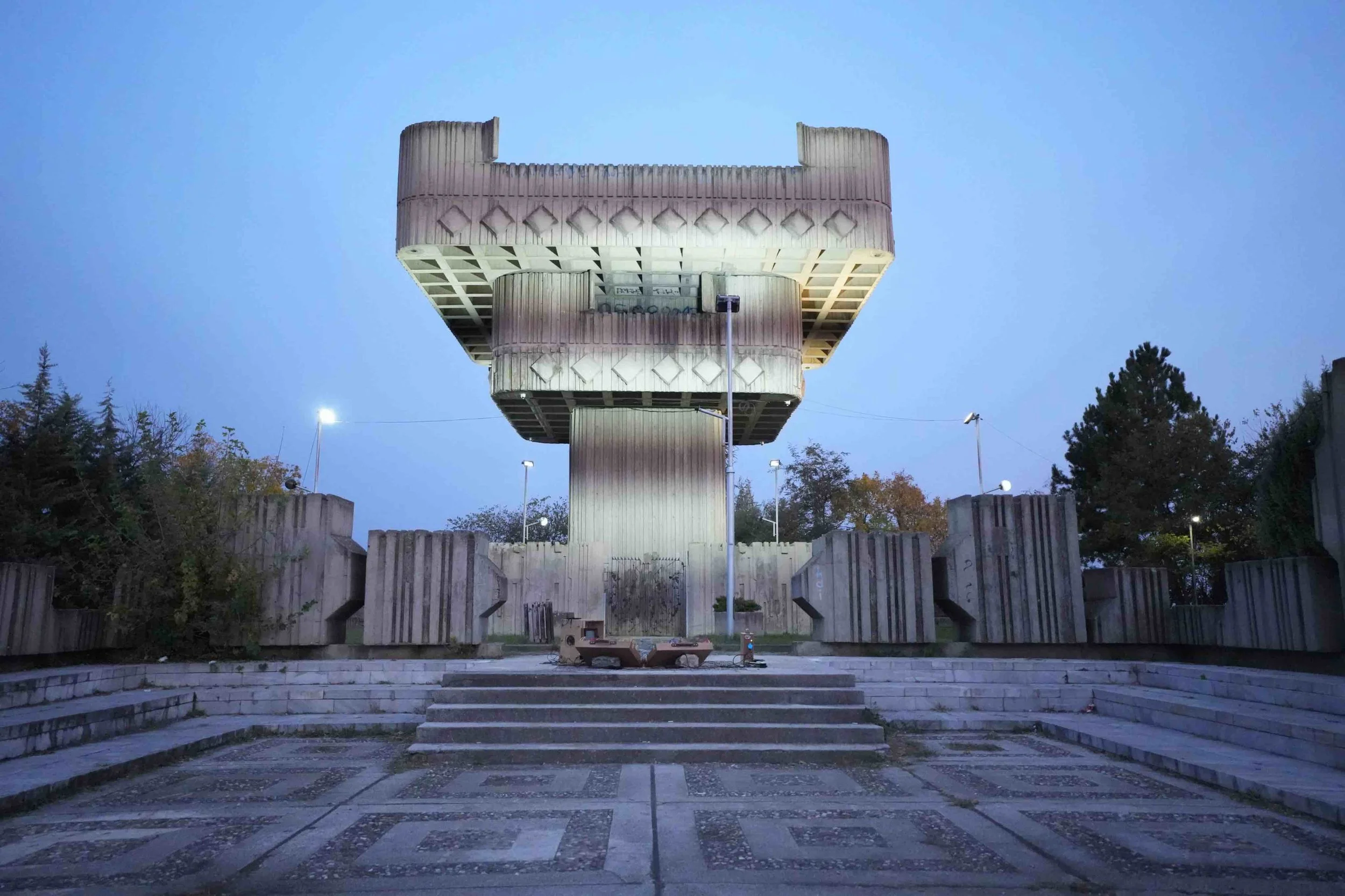
There’s often a sense that your work begins by listening, by letting the space speak first. It feels as though the architecture has its own voice, and that your sound responds to it rather than simply filling it. When you enter a new site, do you start by listening to its natural resonance? Or do you introduce your own sound first, and see how the space reacts?
Even before composing, I listen. Each space has its own voice, its own tone, its own memory. I take the time to tune myself to it, as to a living presence. I listen to how the air circulates, how the walls resonate, how silence holds the traces of what once happened. It is always the space that plays first; I merely respond to it.
In your performances, the contrast between your moving body and the monumental scale of the space is striking. You often appear small within these vast structures, which creates a strong visual and emotional dynamic. Do you experience this contrast as a kind of vulnerability, a sense of power, or more as a conversation between two presences, yourself and the space?
This contrast is essential. Faced with these monumental structures, I feel both very small and deeply connected. There is a form of vulnerability, but also of surrender. It is a constant reminder that I am part of something far greater than myself. It is not a question of power or domination, but of coexistence. My body becomes another frequency within the architecture: human, fragile, yet vibrant.
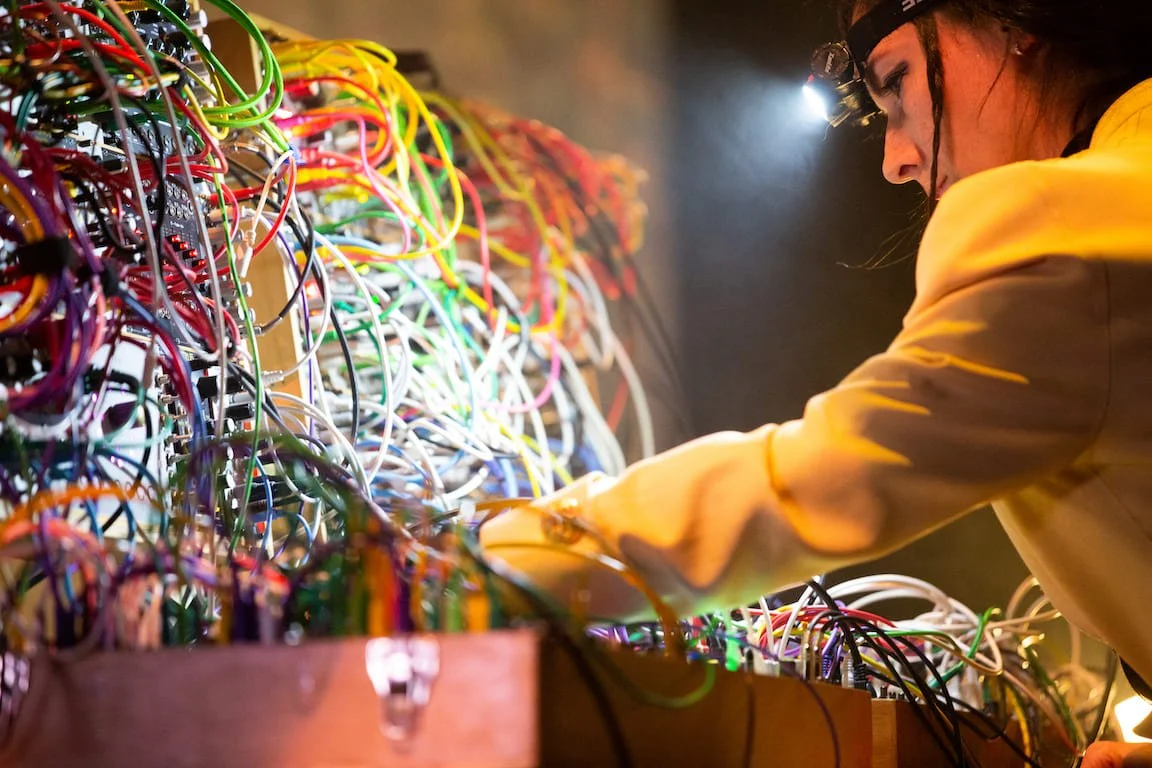
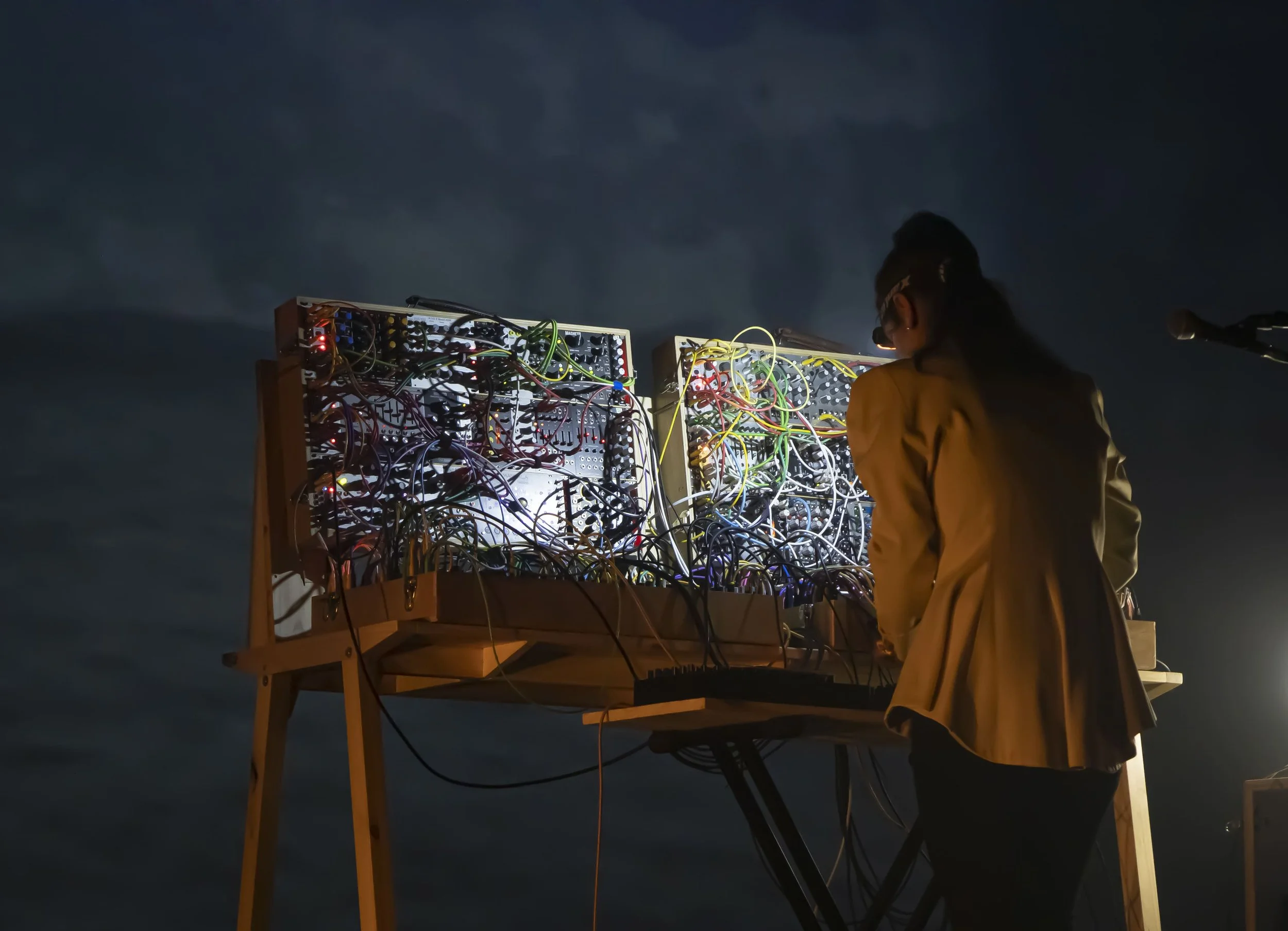
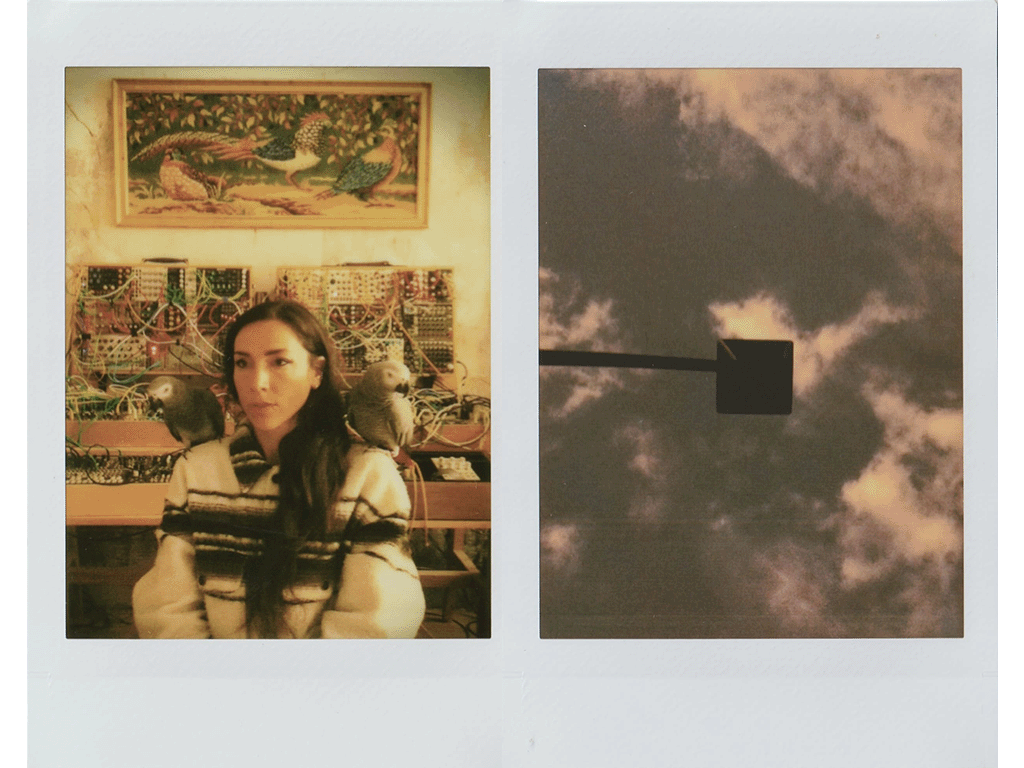
The modular synthesizer is known for being unpredictable and constantly changing. In a way, it mirrors the behavior of the spaces you work in, both are systems that resist control. How do you manage this unpredictability when you're dealing with both an unstable instrument and an active acoustic environment? What kind of relationship do you build between the two?
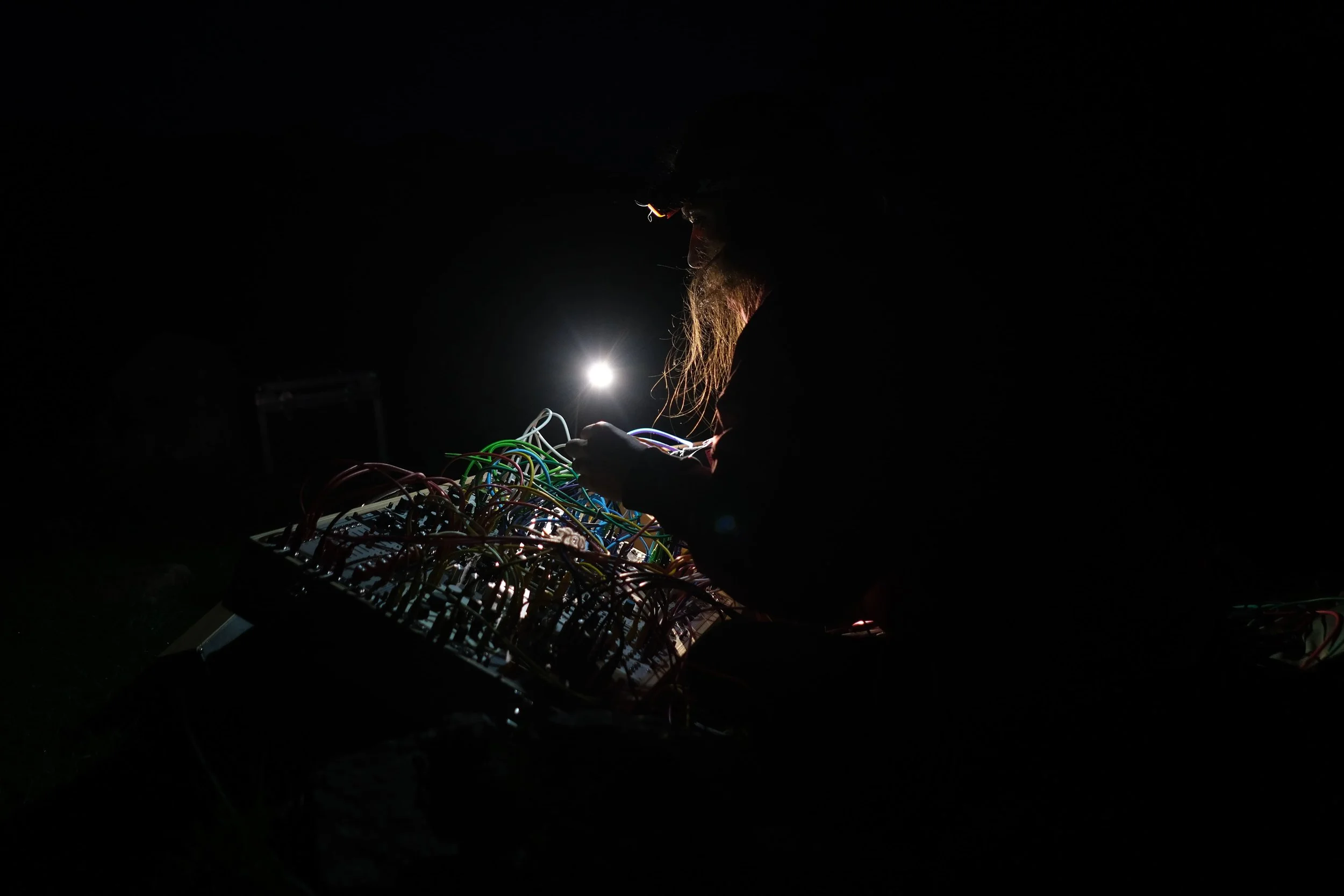
The modular synthesizer, like the spaces in which I play, has its own will. They teach me to let go. Rather than trying to control them, I listen and respond. I play with headphones, as if in a state of suspension. The place hears me, but I only hear the inside of the sound. The modular can drift, the space can react differently, and that is where the magic happens. Each performance becomes a dialogue on several levels: organic, electronic, spatial, and energetic. It is a balance between surrender and attention.
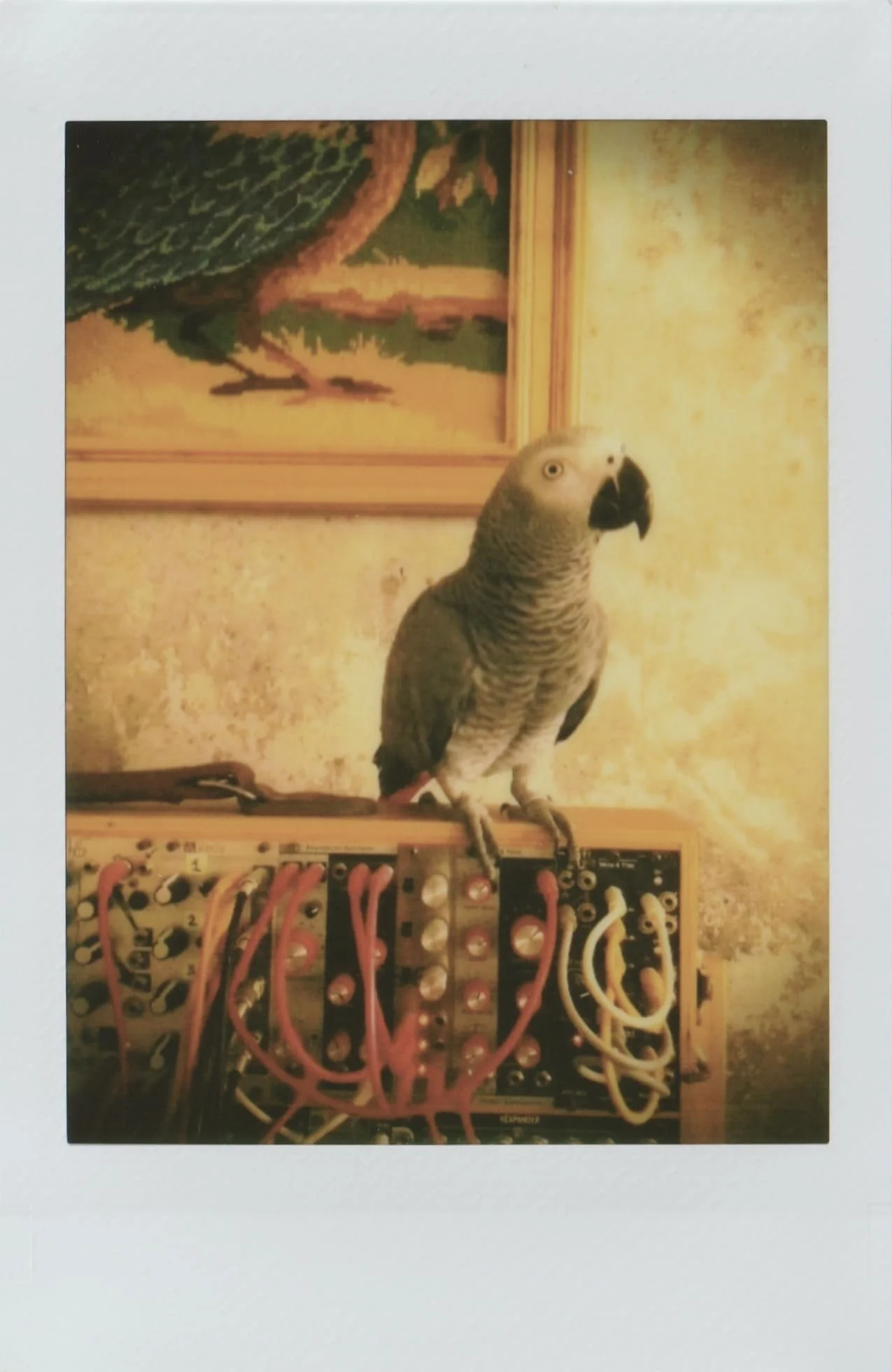
Your approach to sound seems to move between scientific precision and something more intuitive or even spiritual. There’s a strong focus on frequencies and physical vibration, but also a sense of ritual and atmosphere. How do you balance these two aspects in your work? Are they separate for you, or deeply connected?
For me, these two dimensions are inseparable. Sound is both a physical vibration and a sensitive, spiritual language. Working with frequencies means shaping an invisible substance: precise, measurable, yet filled with emotion. Scientific knowledge gives me the tools to sculpt the invisible, and intuition reveals its energetic and poetic reach.
The places you choose often feel full of memory, as if they’re holding onto something from the past. Your music seems to wake something up in them, to reactivate or even heal these forgotten spaces. Do you see your performances as a way of bringing these places back to life, at least for a moment?
Each place retains the trace of what it has gone through, in the air, in the silence. When we give it attention, something begins to resonate again. Sound does not come to fill this silence; it reveals it. It allows this memory to circulate once more, to exist differently. Sometimes it acts as a subtle, shared form of healing—an imperceptible movement, where space, sound, and those who listen are brought back into tune.
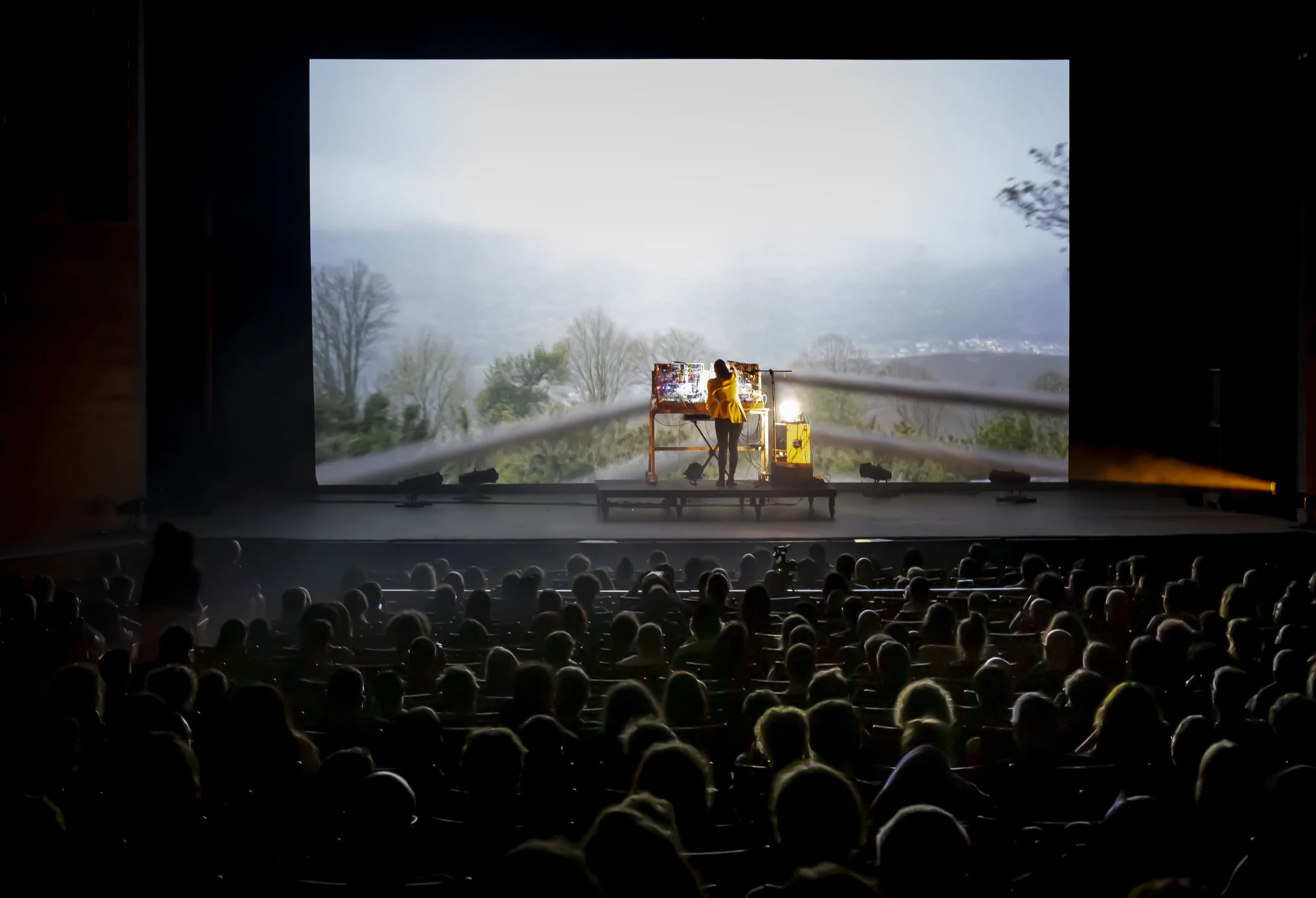
Your work suggests a deep understanding of sound as something physical, something that inhabits space and stirs emotion. Was there a particular moment when you first realized that sound could behave this way? A time when you experienced sound not just as something you hear, but something you feel and move through?
I believe that sound has inhabited me for as long as I can remember. It is not something I discovered, but something that has accompanied me from the beginning, like an evidence. I have always carried it within me, without knowing why, like a kind of calling—an intimate, almost silent mission. Very early on, I understood that sound was not only something one hears, but something one feels, something that moves through the body and matter. Over time, I have learned to give it space, to let it guide me. This is the connection I try to share: a way of inhabiting the world through vibration.
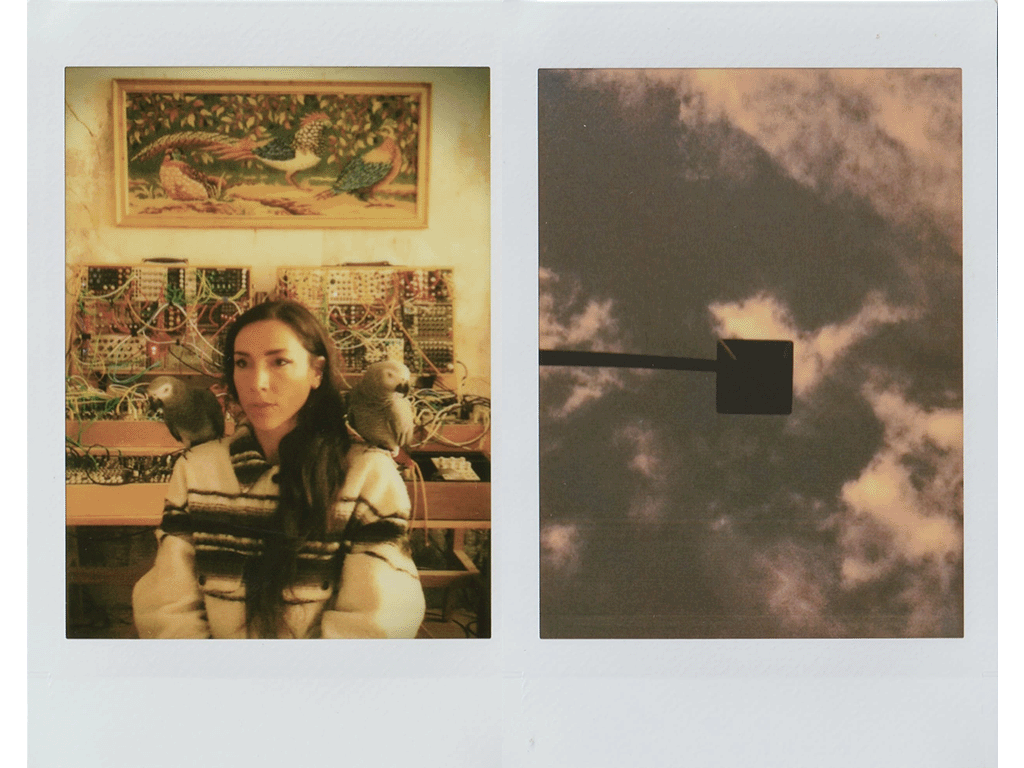
If there were a space built entirely around your sound, a kind of listening sanctuary, what would it be like? Would it resemble a ruin, a temple, or something more fluid and open-ended? How would that space behave, and how would it invite people to listen?
This place would resemble the source of all things—a living, moving space, neither temple nor ruin. It would be fluid, open, traversed by the breath of the world. Sound, light, and silence would coexist there as essential substances, bound together. Nothing would be fixed. Frequencies would move freely, dissipating and returning like a slow tide. This place would invite a different kind of listening—not to hear something, but to sense what comes before sound. A space of attentiveness and presence, where each person could perceive the common wave that runs through all things.
interviewed by Luna Ruzza and Giulia Bellosi
What to read next