Ivy Vo
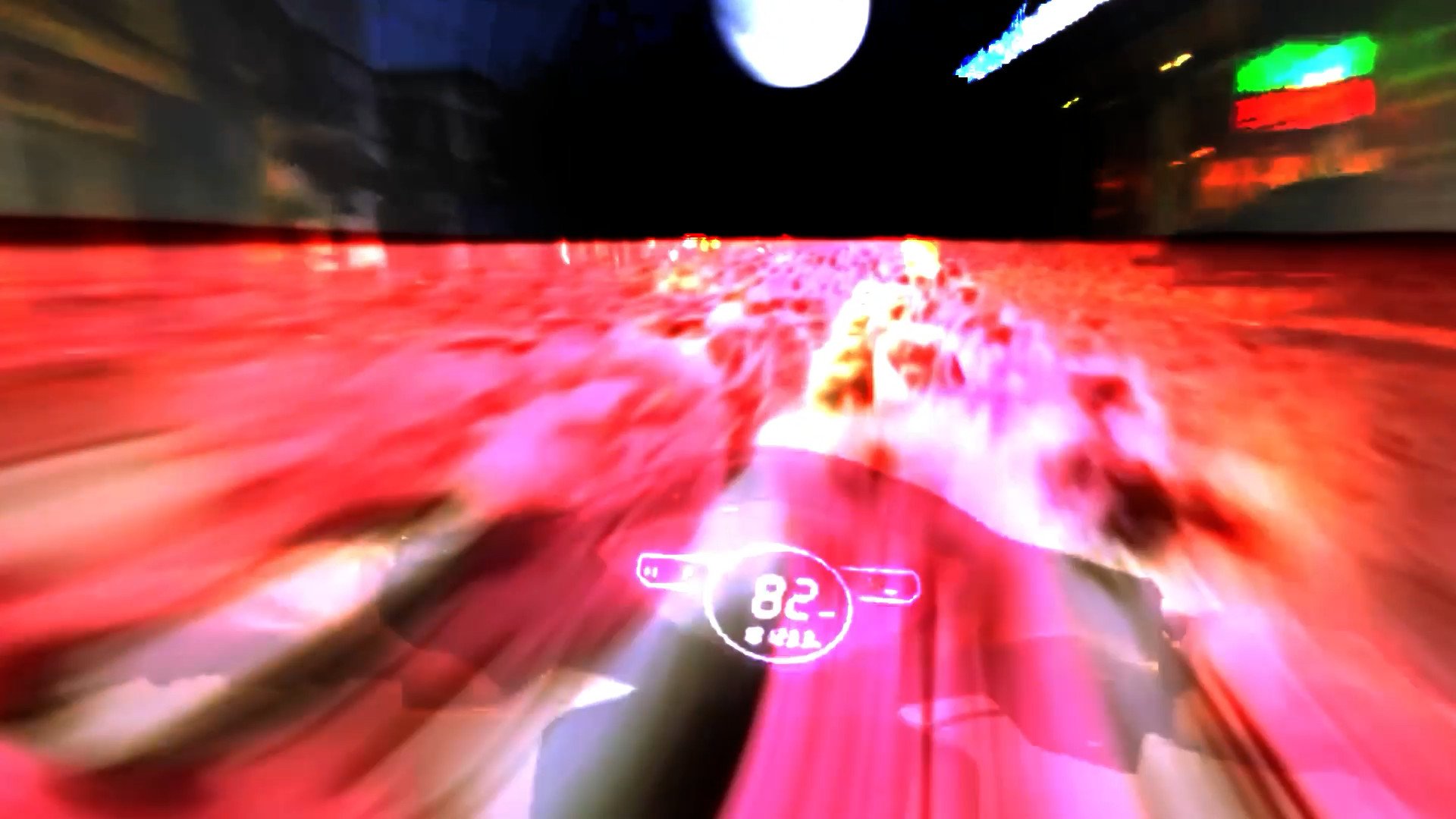
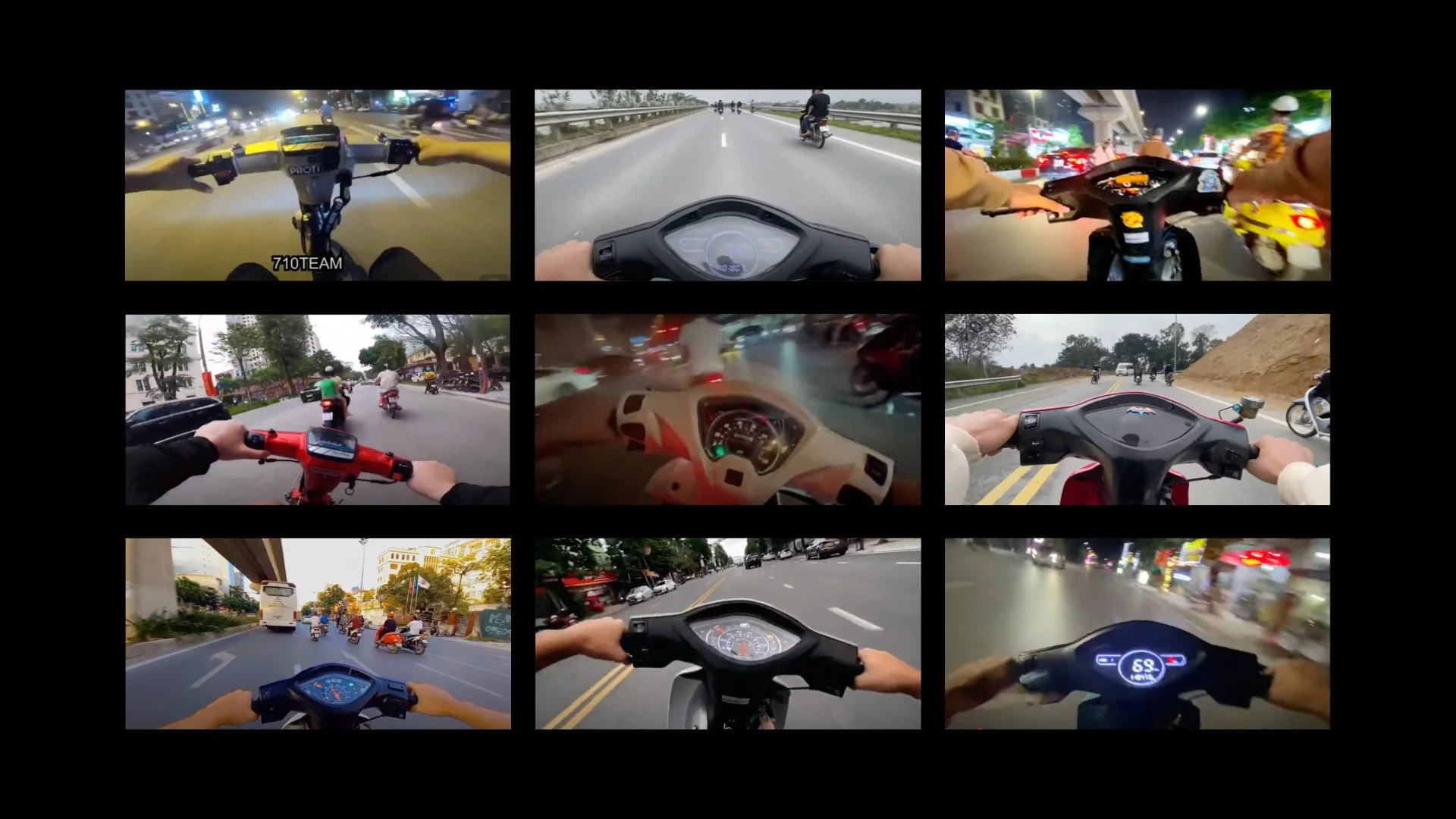
Ivy Vo, a UK-based Vietnamese artist works across multimedia formats – printmaking, video, installation, and graphic design – and she often transposes a digital world to physical spaces and sculptural objects. Throughout all of Vo’s work, there is a sense of the unheimlich where something isn’t quite right, or quite real. This is most clearly seen in Vo’s Lynchian film G9, made from the perspective of a biker within an entropic digital landscape that is wildly layered with found footage taken from Viet-biker Youtubes, seductive adverts, against perked CGI pink lips that engulf the screen. The movement of the biker is constantly halted, the motorbike jittering and stuttering, unable to accelerate against a rapidly changing, untethered image. What should be a dreamscape of unimaginable freedom paradoxically becomes one of further entrapment – within the bombardment of memories, footage, and a policed attention economy.
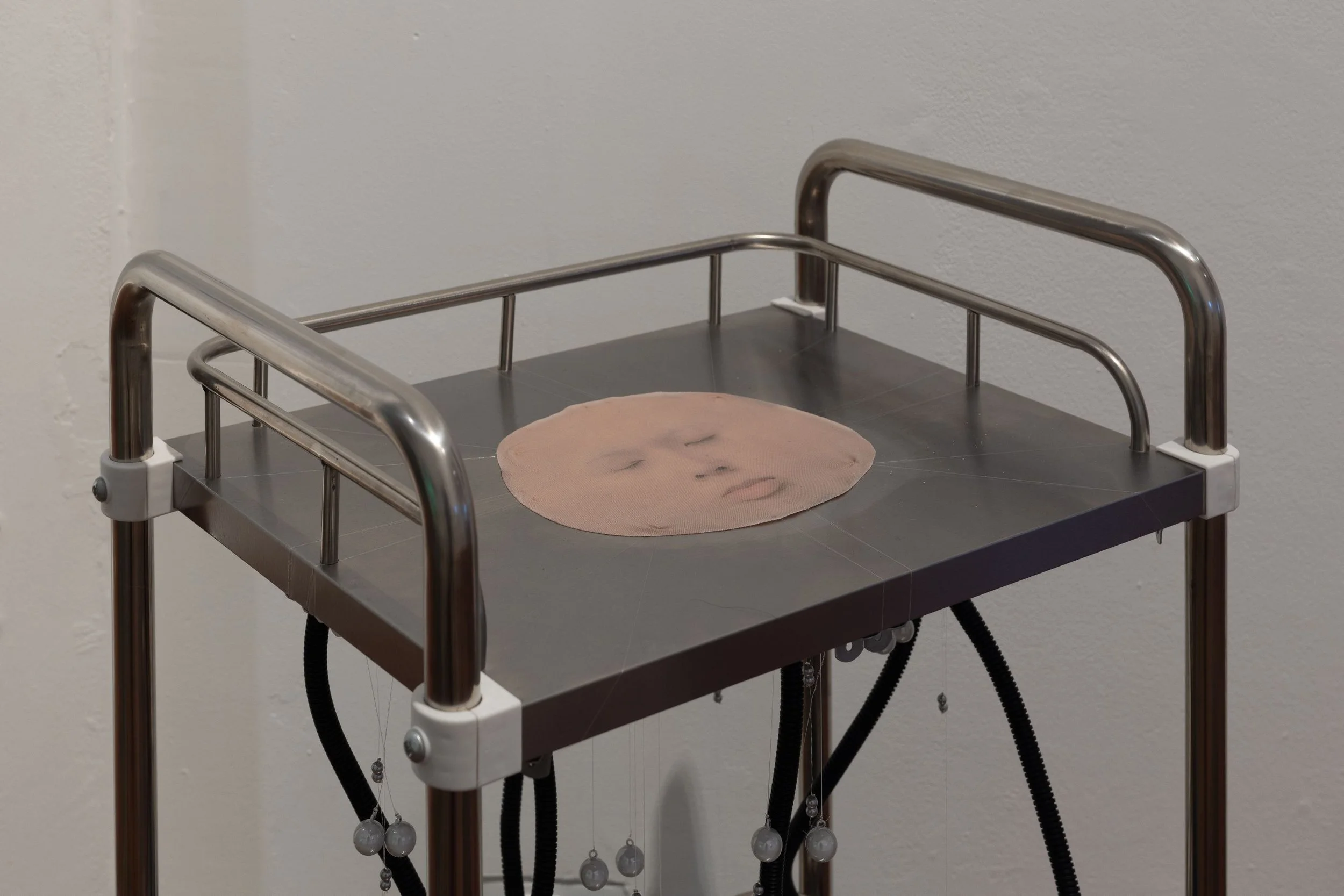
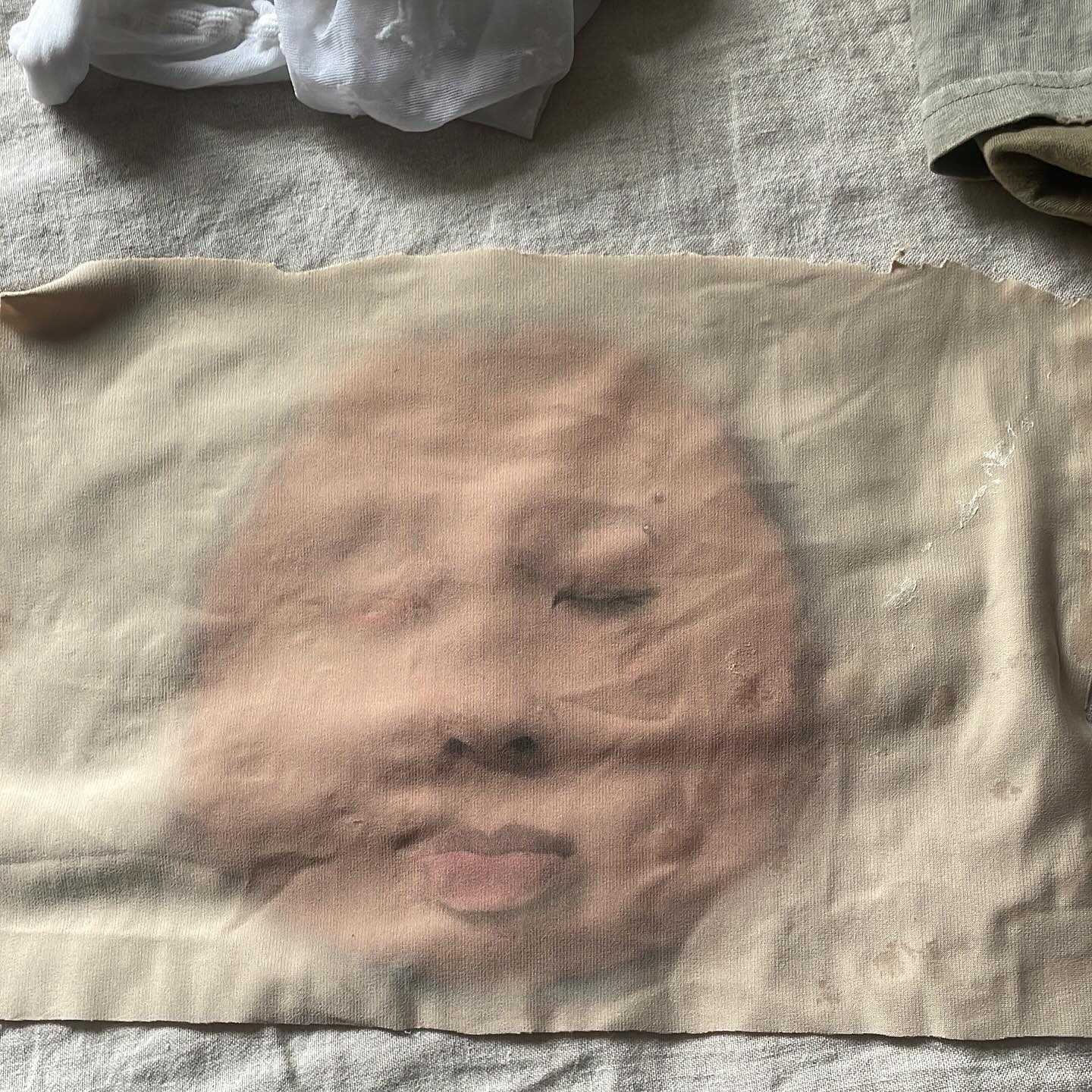
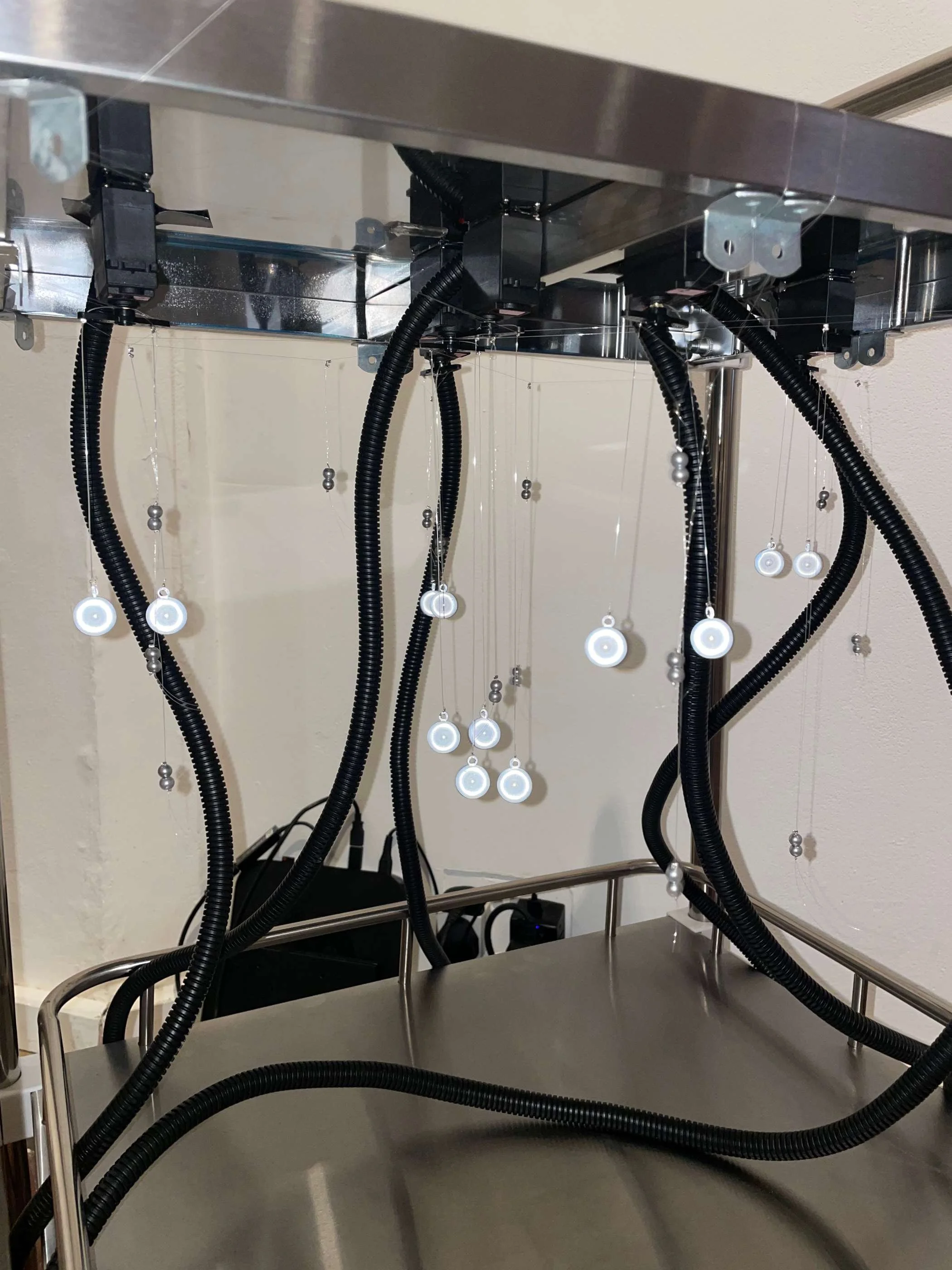
The uncanny has often been associated with digital tools and their failure to render the “real,” from Ed Atkins to Lawrence Lek. For Vo, however, the digital becomes a way of exemplifying the sheer weight of our nerve-wracking physicality. Facelift playfully gestures towards the violent demands of feminine beauty, and the simultaneous desire to be perceived and hidden behind a perfected image. Scanning, then printing her own face onto stretched jersey, Vo produces a ghastly, flattened self-portrait, a Frankensteinian creature cut to the cloth of her maker’s desire. Delicate, yet violent, Vo then offsets the replica’s clinical stillness with servo sensors attached to the installation, which are sensitive to human motion. Beads jingle and screech, while the face itself mimics breathing – waking only to perform in the presence of others. Many of Vo’s works pierce through the tension of a still image, a smooth surface to generate a darker reality.
Ivy Vo’s work has been exhibited at BiM Milano, Brasserie Atlas, Bow Arts and more. We speak to the artist as she begins to create a new project at airHue, Vietnam.
A lot of your work is about movement – whether that’s the dream motorbike landscape in ‘G9’, or ‘Facelift’ installation that’s sensitive to motion with moving parts, or even the words that exist in the digital ether in ‘miss word’. Can you talk about this idea of constant motion?
Motion = instability.
Growing up in Saigon, 80% of my time was spent riding a motorbike, so I was constantly in motion – physically, mentally and visually. That kind of movement has found its way into my work. I'm interested in what happens when a body or image is set in motion but still locked inside a specific framework. In G9, the forward motion suggests riding freely, but it’s actually tightly constrained within a dreamscape. In Facelift, movement activates the work, but starts to piss people off. In miss word, language drifts and distorts until it becomes noise. Motion, for me, is never neutral, it’s a tool to expose the structures quietly controlling what we see and how we flow through the world. The tension between moving and being held in place is almost violent, it’s vigorous.
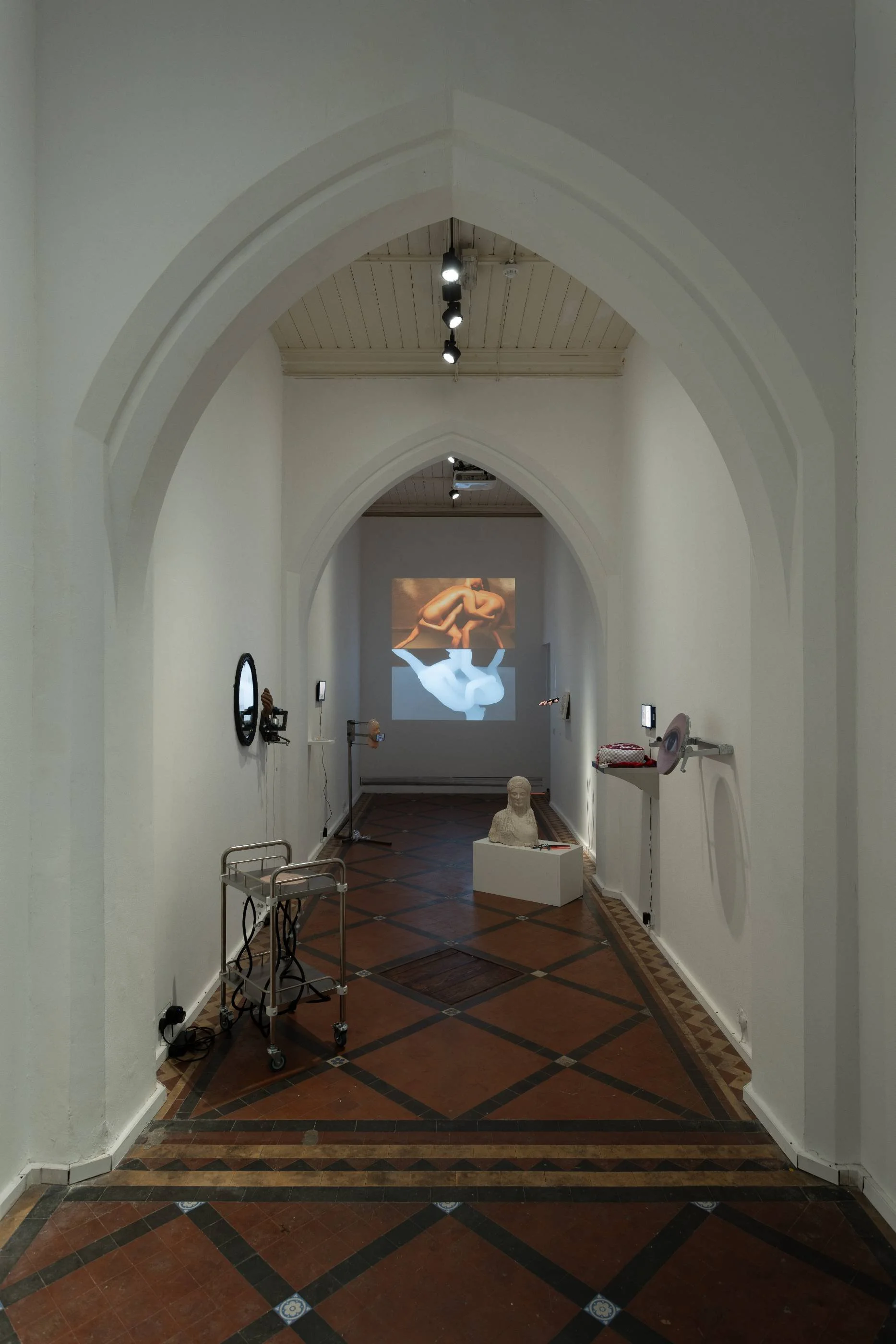
““In a way, Facelift is gore, but made poetic. Not the kind that bleeds or bruises, but the kind that’s clean, methodical.””
In G9, the dreamscape images are rooted in a distorted digital landscape – where did the images come from? How were you dealing with the idea of ‘policed dreams’?
The images in G9 come from fragments of internet videos, VHS footage from the 1990s and early 2000s, pink films, and POVs of Viet-biker videos I found online. I chose to use them because they felt like half-remembered dreams. They echo the way memory works: pixelated, unstable, stitched together from different timelines.
One important thing to mention is the vinahouse track made by my friend Tân Thiếu Gia, which carries its own sense of speed and seduction. And funnily enough, vinahouse used to be hated so much (at least by me) because it is associated as low class and associated with roadman culture in Vietnam (dân tổ/đôn chề). I think that’s part of why it stuck. The things you reject have a way of coming back louder. I love vinahouse now, by the way.
“Policed dreams” is probably something I made up for myself. The idea that even in dreams – our most lawless and personal space, there’s still someone watching. In this case, it’s me. I’m the police. I patrol my own fantasy. G9 deals with it by exaggerating it, turning it into something so loud, so smooth, so fast. So seductive but tight. You move forward but you’re stuck. That friction is the point. I’m trying to escape my fantasy by fully stepping into it, wearing my dream helmet to protect me.
““Curiosity leads me, and so does my wallet””

Your work often considers repetition – repeated words, repeated faces, with patterns and variations. Can you elaborate on the use of repetition of your work?
If you repeat a word 10 times, 100 times, it detaches from meaning. It becomes sound, vibration, residue. That's the moment I'm chasing: when it stops making sense and becomes something else. I’m intrigued to know what happens when an image, motif, gesture, or phrase is pushed through cycles of return, and how the human instinct to seek patterns shapes the way we read what repeats. At what point does it stop communicating and start echoing? As humans, we are wired to seek out patterns, even where there are none, so I like to push repetition until it becomes uncomfortable, even unstable. It’s less about clarity and more about watching meaning dissolve and reform. Each repetition is slightly different, like a memory that shifts each time you return to it.
Can you talk about making Facelift – it’s both clinical and intimate. Why did you want to make the sculpture where the face is transposed onto a 2D, flat material, yet it also has these beads that render the 3D forms?
I like playing with the expectation that something should exist in a particular material (again, our brains are wired to recognise patterns and feel disoriented when they break). With Facelift, I was thinking about the face as a surface, something we read like text. I'd never worked with latex, so I wanted to see if I could transfer my face onto a flat surface differently, but still make it feel like it could pulse and breathe.
For the beads and bells, they are visceral, they could drop at any moment. I remember literally thinking, "I’m losing my marbles," as I threaded them together. The bells were meant to be meditative, quiet, almost ceremonial, but they’re paired with the mechanical screech of servos that activate the piece. That pairing creates a tension I’m always working with: control and surrender, precision and collapse.
In a way, Facelift is gore, but made poetic. Not the kind that bleeds or bruises, but the kind that’s clean, methodical. Like being carefully opened up. Not torn, but taken apart piece by piece. It's clinical and very fragile. The body becomes surface, and the surface becomes unstable.
“
“I’m interested in what happens when an image, motif, gesture, or phrase is pushed through cycles of return, and how the human instinct to seek patterns shapes the way we read what repeats. At what point does it stop communicating and start echoing?””
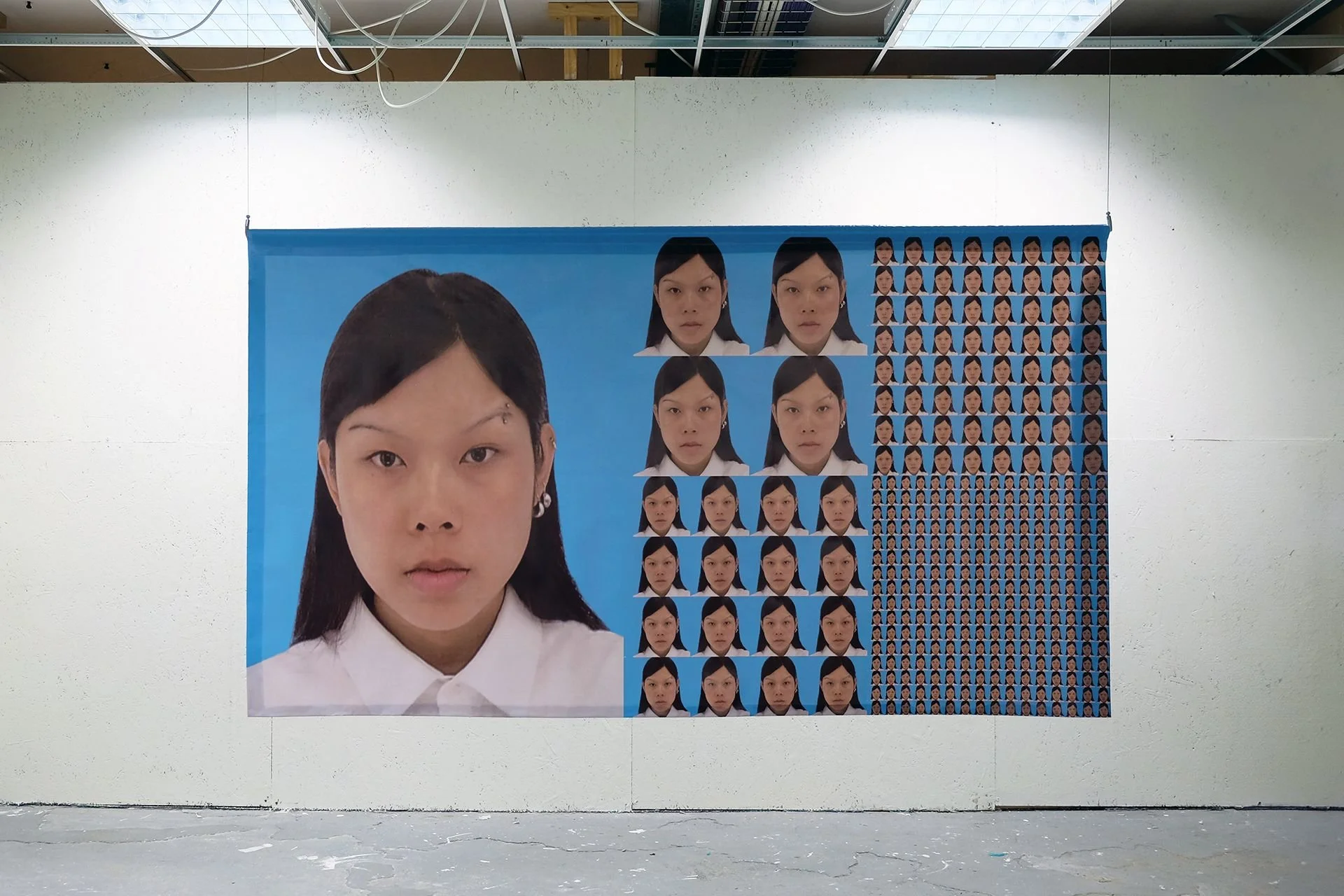
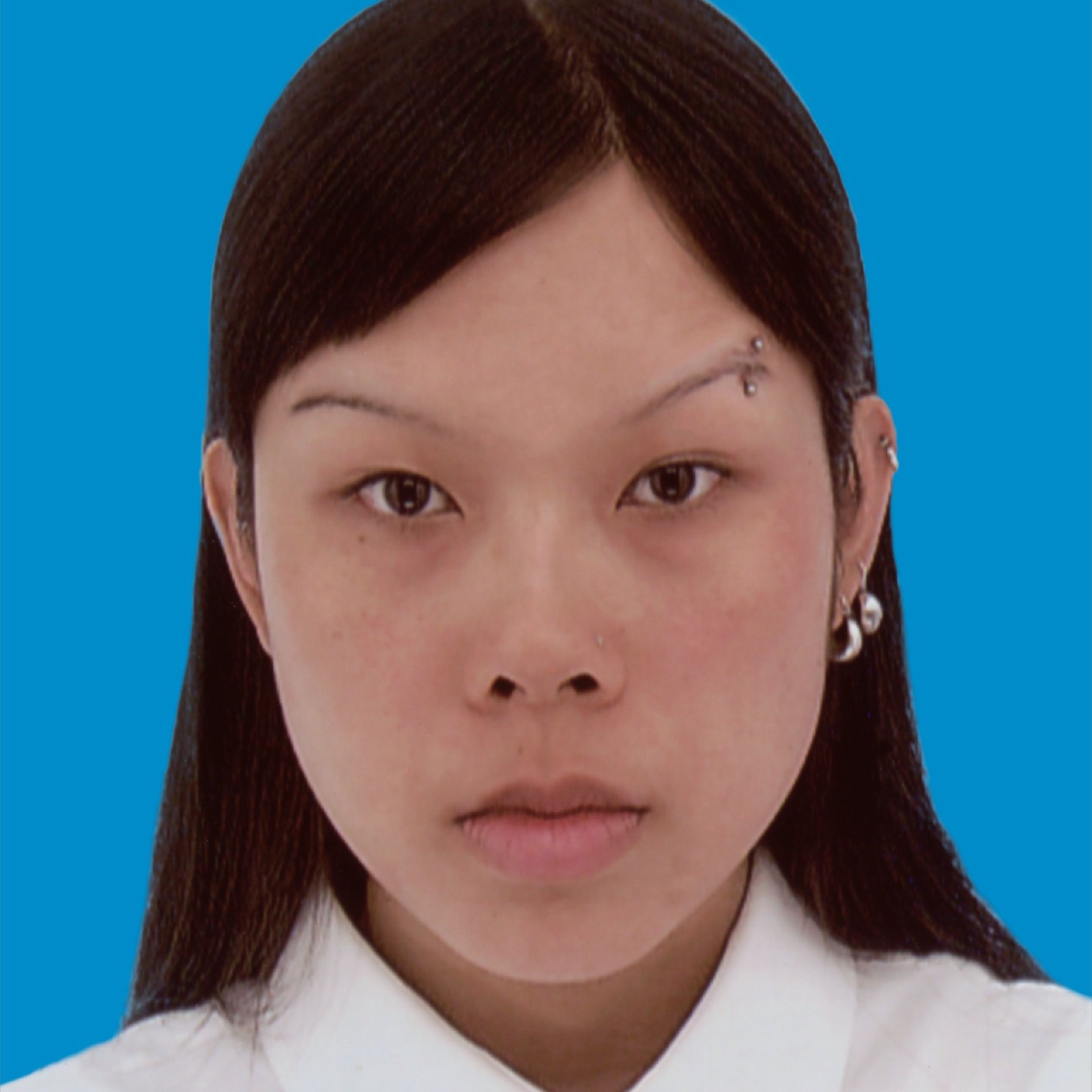
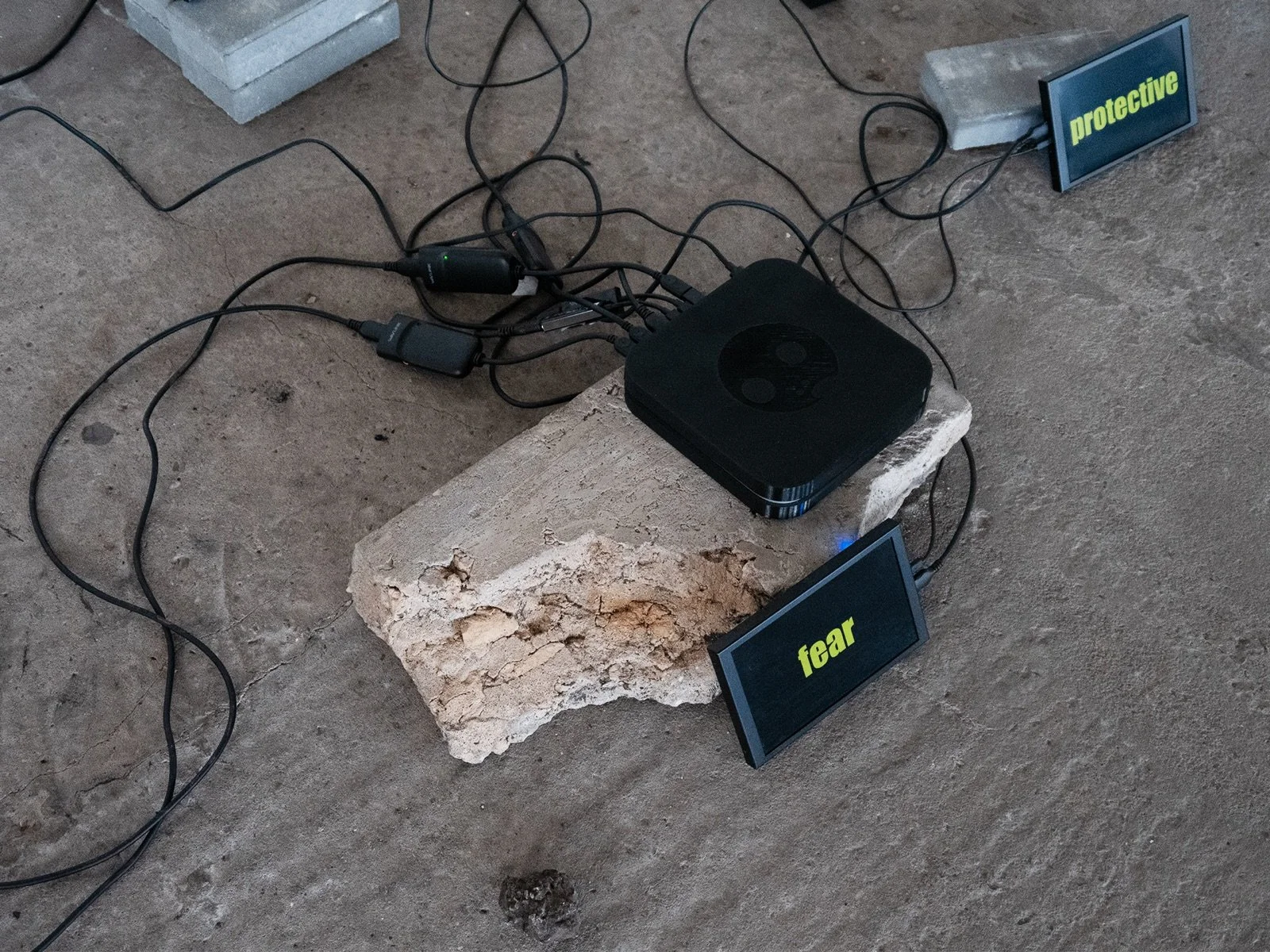
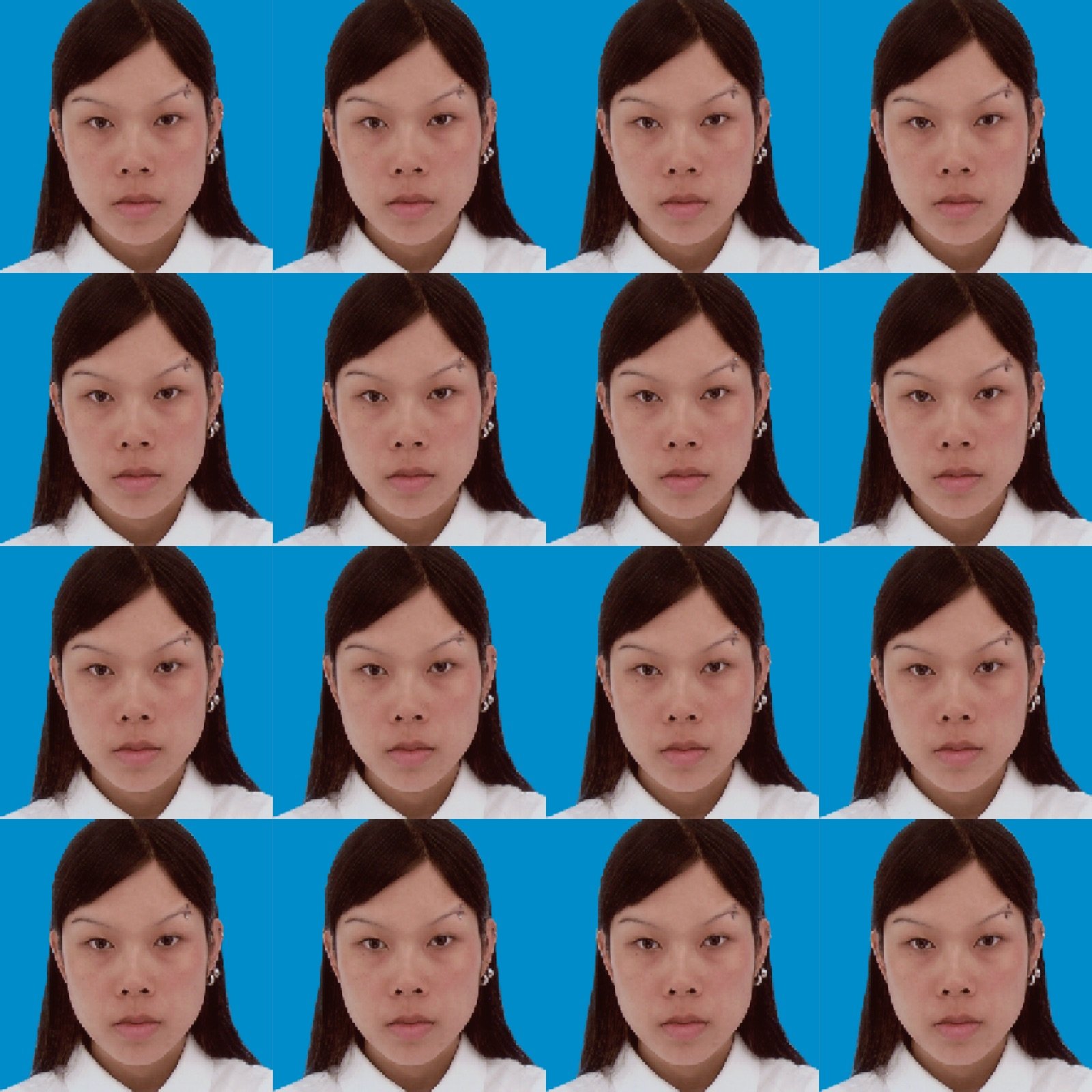
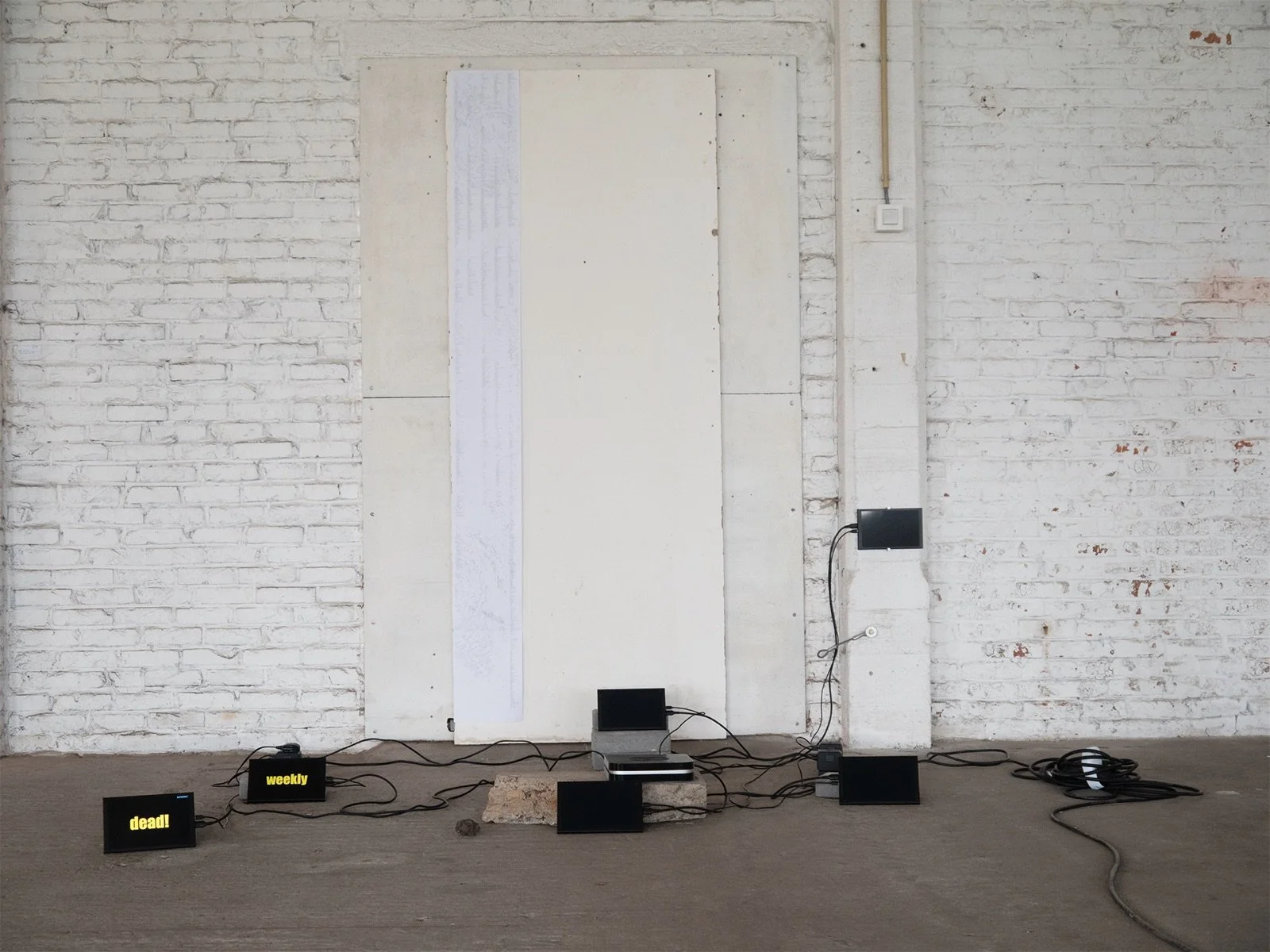
You frequently use and distort your own body and image throughout your work – from its eerie composition in Facelift to your surveilled passport-photo like image in ‘Photo shop’, to your body in G9. Can you talk a bit about placing yourself within your works?
Sometimes I feel like I’m performing without knowing who is part of the audience. This feeling of being watched lives somewhere inside me, like a tiny bureaucrat in my head: checking forms, stamping sheets, quietly judging. Even when I’m trying to express myself freely, there’s a part of me that’s already editing, already adjusting. It has become a way to survive whatever system I’m in. That’s why I use my own image in the work.
In Photoshop, I feed my ID image into an algorithm that produces 340 iterations of myself, each one subtly altered. Through this process, I calculate the dimensions of my own face, adjusting it toward what might be read as acceptable, verifiable, compliant. In G9, I’m a roadman rampaging through a dreamworld that only looks free. And in Facelift, my face becomes a mask, pulled flat and strung up like an anatomy study.
I’m always there, but always off. I stay myself, but just enough to pass, just enough to stay safe.
Your practice is incredibly varied and multidisciplinary. How do you see yourself working across such different forms and how do you decide on your mediums?
I come from graphic design, so I think in symbols and images. Most of my work starts on digital screens, but I'm curious about what happens when those elements that exist in the digital ether enter a physical space.
I don't pick a medium ahead of time or follow any strict process. I just chase the idea and let it tell me what it needs. Sometimes it stays on screen. Sometimes it wants texture, resistance, presence. Curiosity leads me, and so does my wallet.
What new projects are you currently developing?
I’m currently doing my first art residency at airHue, Vietnam. A collaboration with my friend Nhan Phan exploring the poeticism of trúc chỉ - a paper art technique originated in Hue. It’s still in the early stages of development, and I don’t want to say too much yet. In Vietnamese, we have a saying: “If you speak too soon, you might not make it through.” ;)
Interview by Cici Peng
What to read next