Kushtrim Memeti at Bazament Tirana
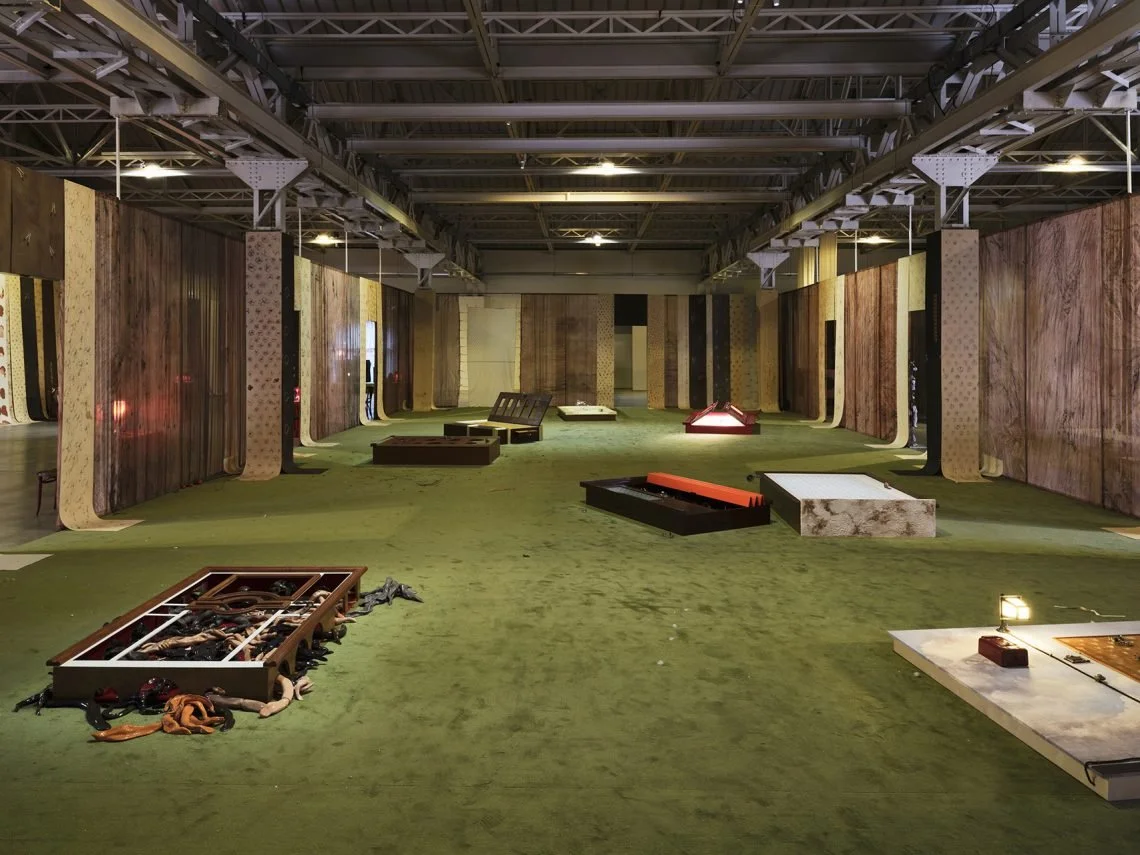
Kushtrim Memeti works with the residue of power, the byproducts of exploitation that those who wielded it never thought to make invisible because they never imagined anyone would look this closely. At Bazament in Tirana, his exhibition the ground holds reconstructs a landscape of industrial and colonial extraction centered on the Trepça mine in Kosovo, where generations of miners worked under conditions designed to extract maximum value from both the ground and the bodies moving through it.
How can we collectively organize to fight back against authoritarian, racist, exploitative, colonial, and fascist regimes? This question underpins the works presented in the exhibition ‘the ground holds. It’s both about surplus extraction as it is worked out in the bodies of miners and the body of the Trepça mine, and about the resistance they have been mobilizing.
In the exhibition, earth, the ground, the mineralo-chemical elements, and the miners’ bodies serve as a constellation of forces that do not succumb to the oppressor’s authority and power. The individual wounds inflicted on rough hands, crusted lungs, and the collective wounds inflicted on the body of the nation. The mine works simultaneously as a collective unconscious and an ancient womb, on the one hand holding the repressed, the untold, and the unexpressed, while, on the other, bearing and sheltering the seeds of ongoing acts of resistance, struggle, and defiance.
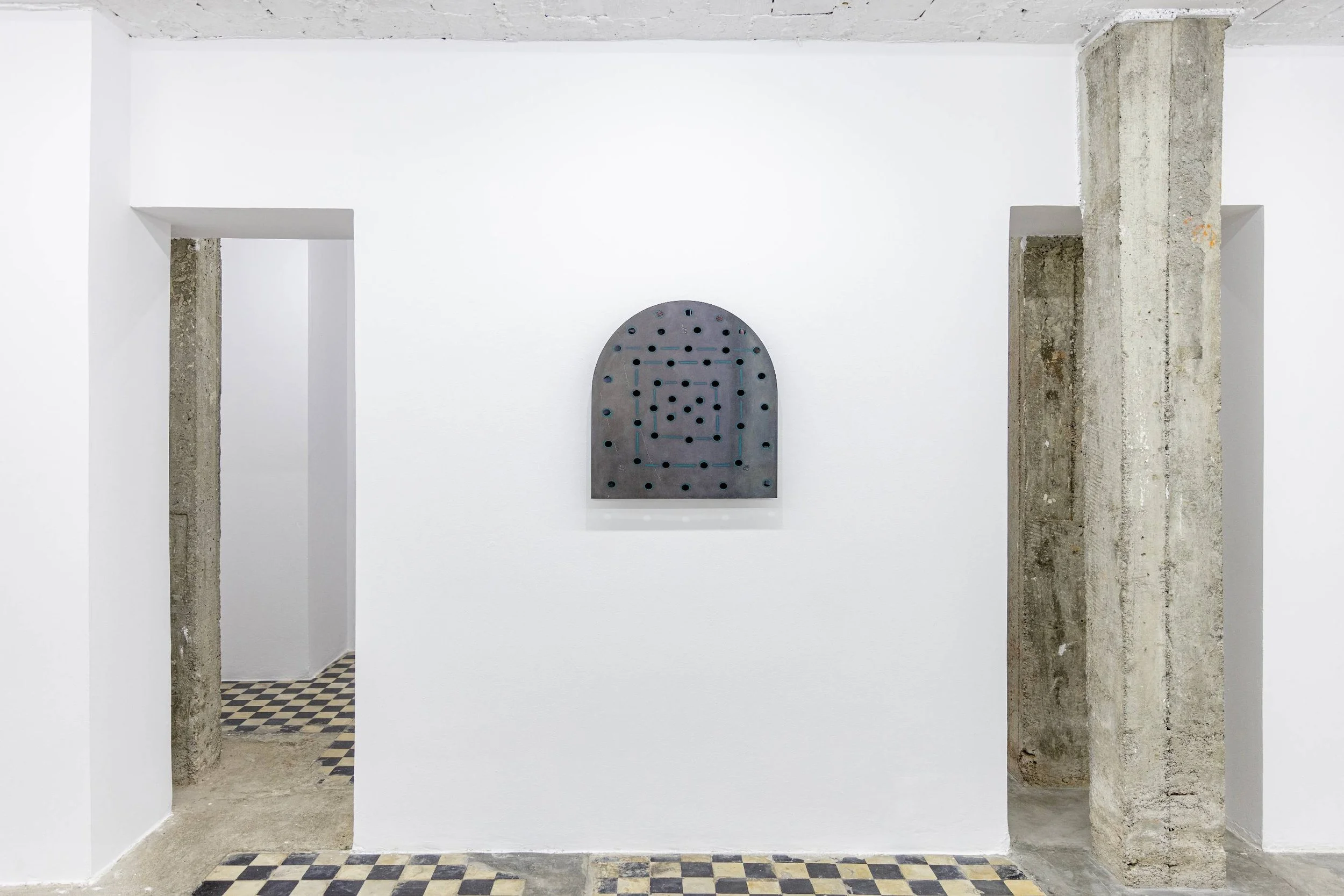
Kushtrim’s work becomes a gesture of uncovering, archiving, and reworking what the mine has delivered and produced and what the miners have extracted, changed, discharged, and discarded in a space at the heart of a broader ethno-political struggle and contestation. The assembled, ready-made objects shown here confront the dark, frozen heart of exploitative and extractive logics that have been at play historically. Kushtrim’s works juxtapose the immobile giant of industrial and capitalist exploitation, engendered within an ethno-colonial logic of suppression and repression, with the everyday and grassroots resistance and collective solidarity of miners.
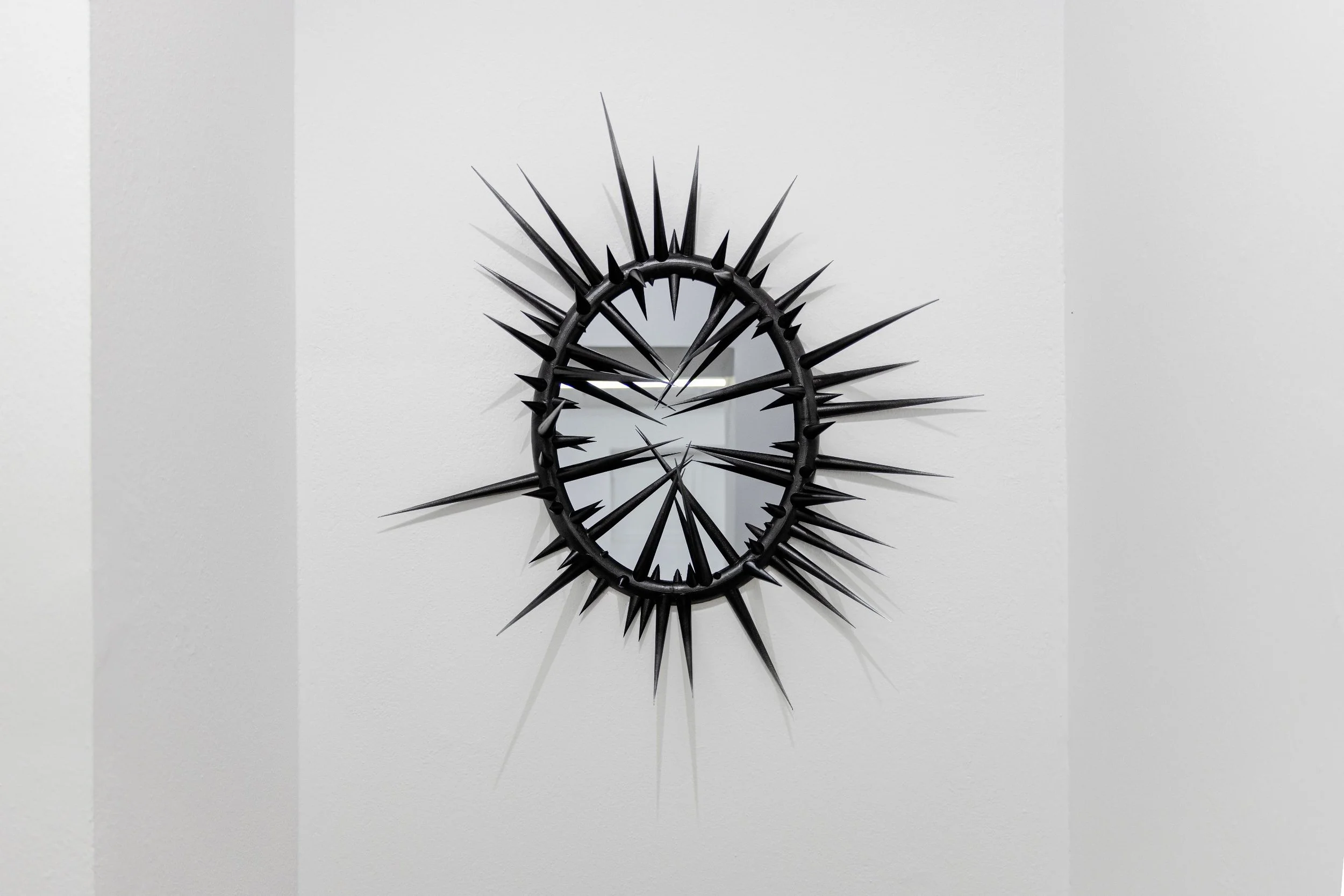
To highlight the darkness of this history, a key element the works seek to convey is a persistent sense of discomfort and a heaviness embedded in and radiating from the pieces. In ‘silent grids, hidden blasts’, the biopolitical and invisible systems of violence and repression by the oppressor are circled back to him. The structural violence embedded in the architecture of oppression and exploitation seems to carry the seeds of its own downfall and overcoming. In ‘Performing Rituals’, the threatening fragmentation of the image connects personal and collective identity with resistance and refusal, thereby calling for action and bravery.
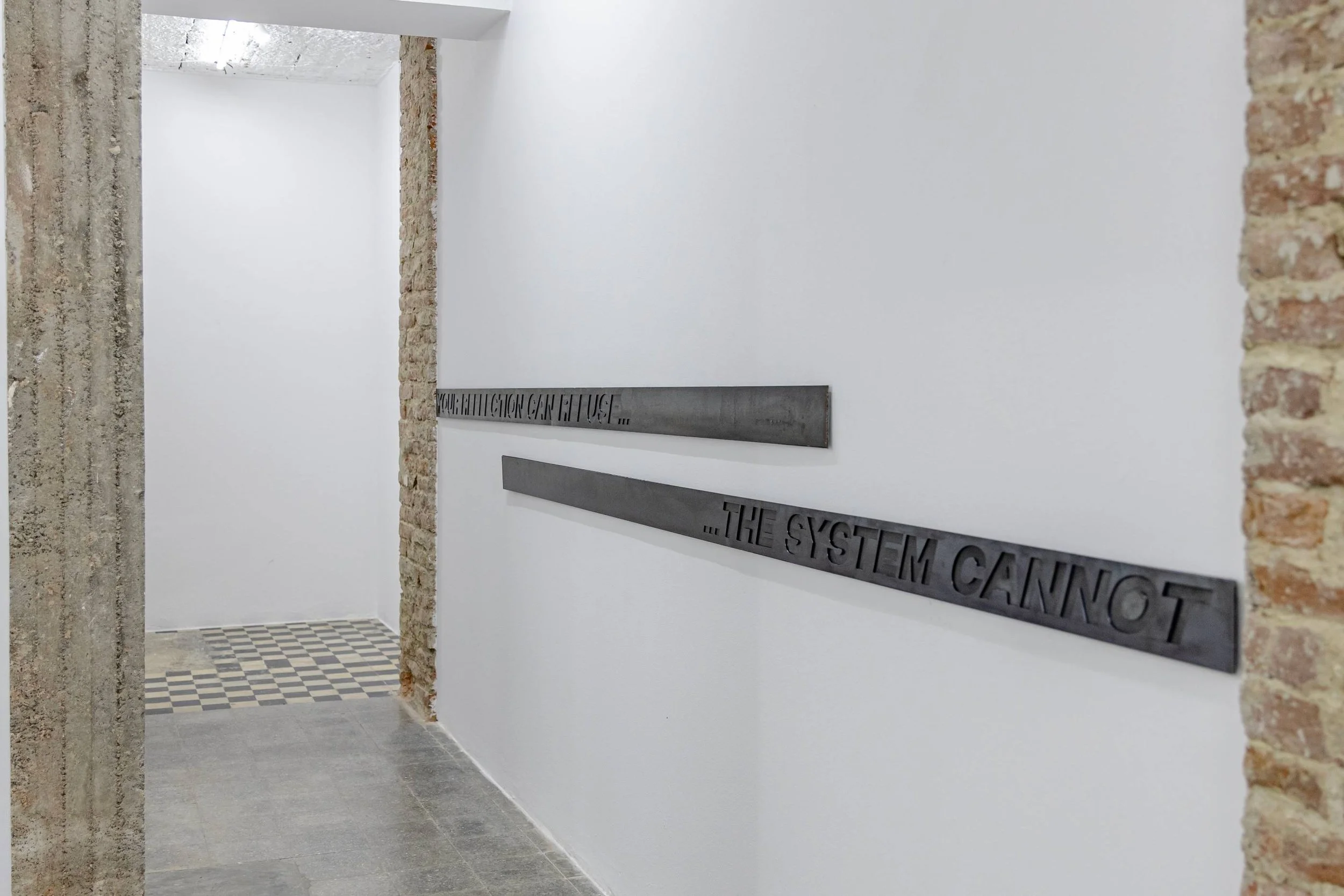
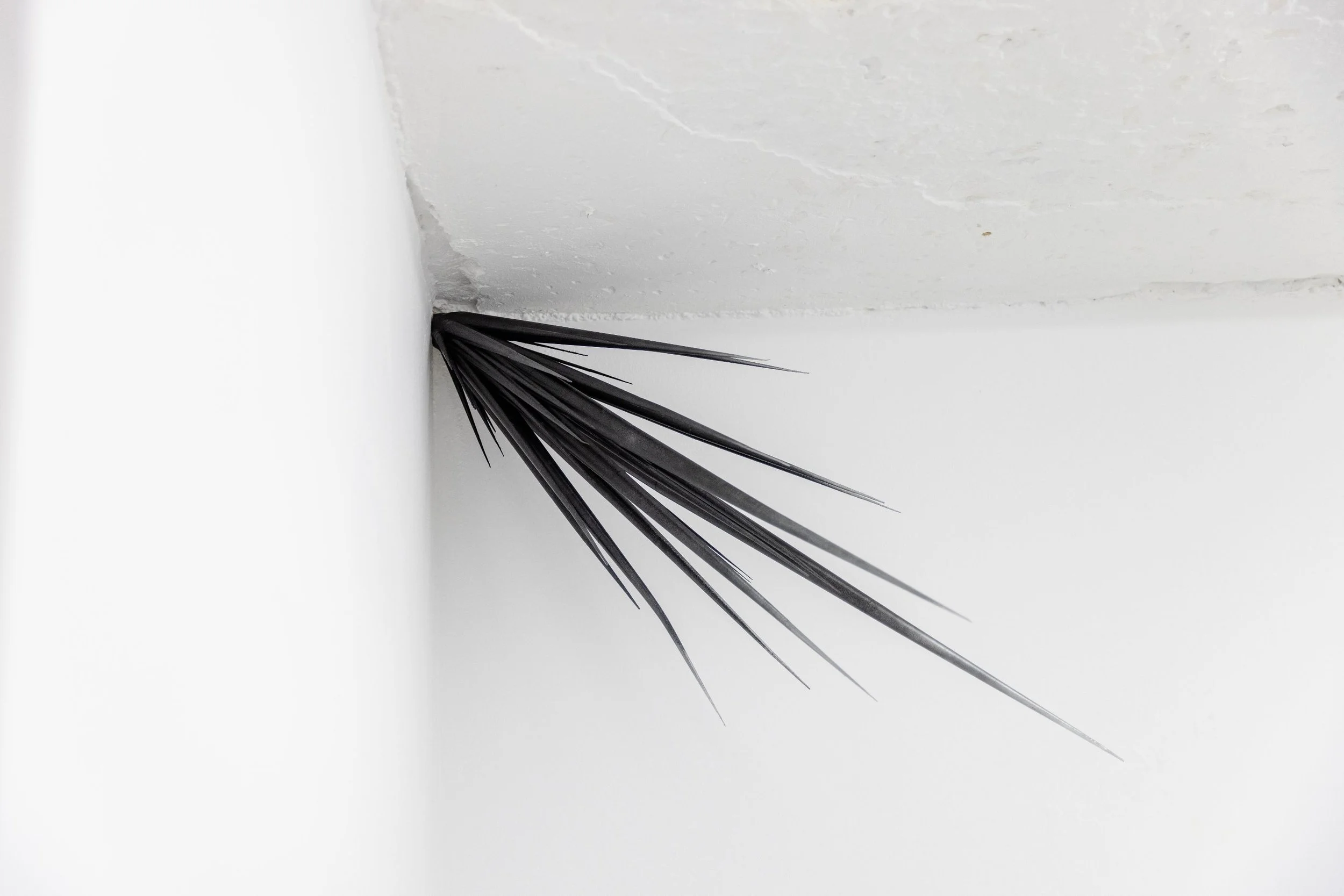
In ‘contact zone’, the large spikes that explode from the ceiling and pierce the small room serve as a reminder of the power of the masses rather than the system's and highlight the urgency of rupture and friction as constitutive acts of micro and multiple resistances. Similarly, the text on heavy metal plates in ‘fault lines’ cracks open the space, in a conversation both with the violence of the past and with the possibilities for justice in the future.
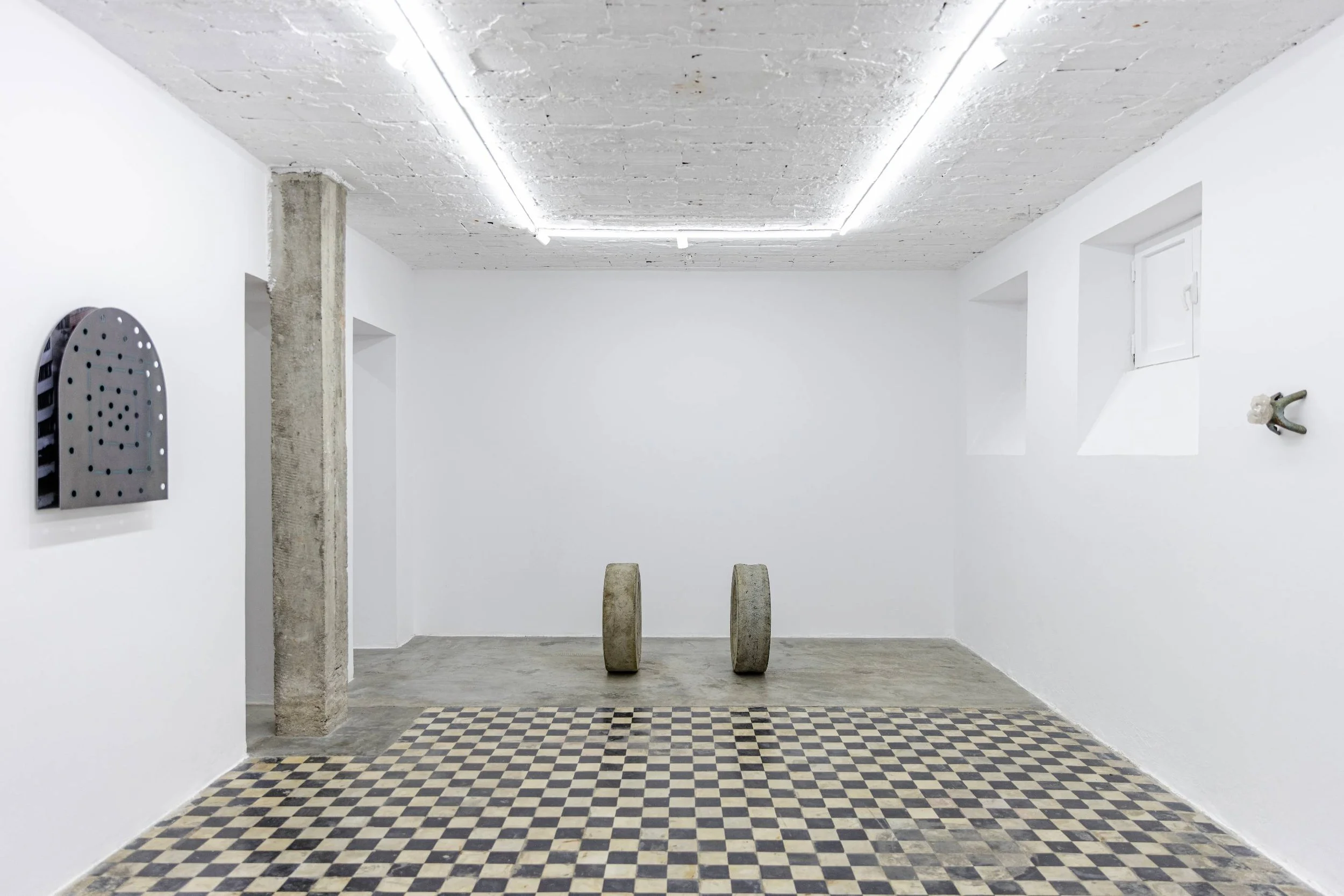
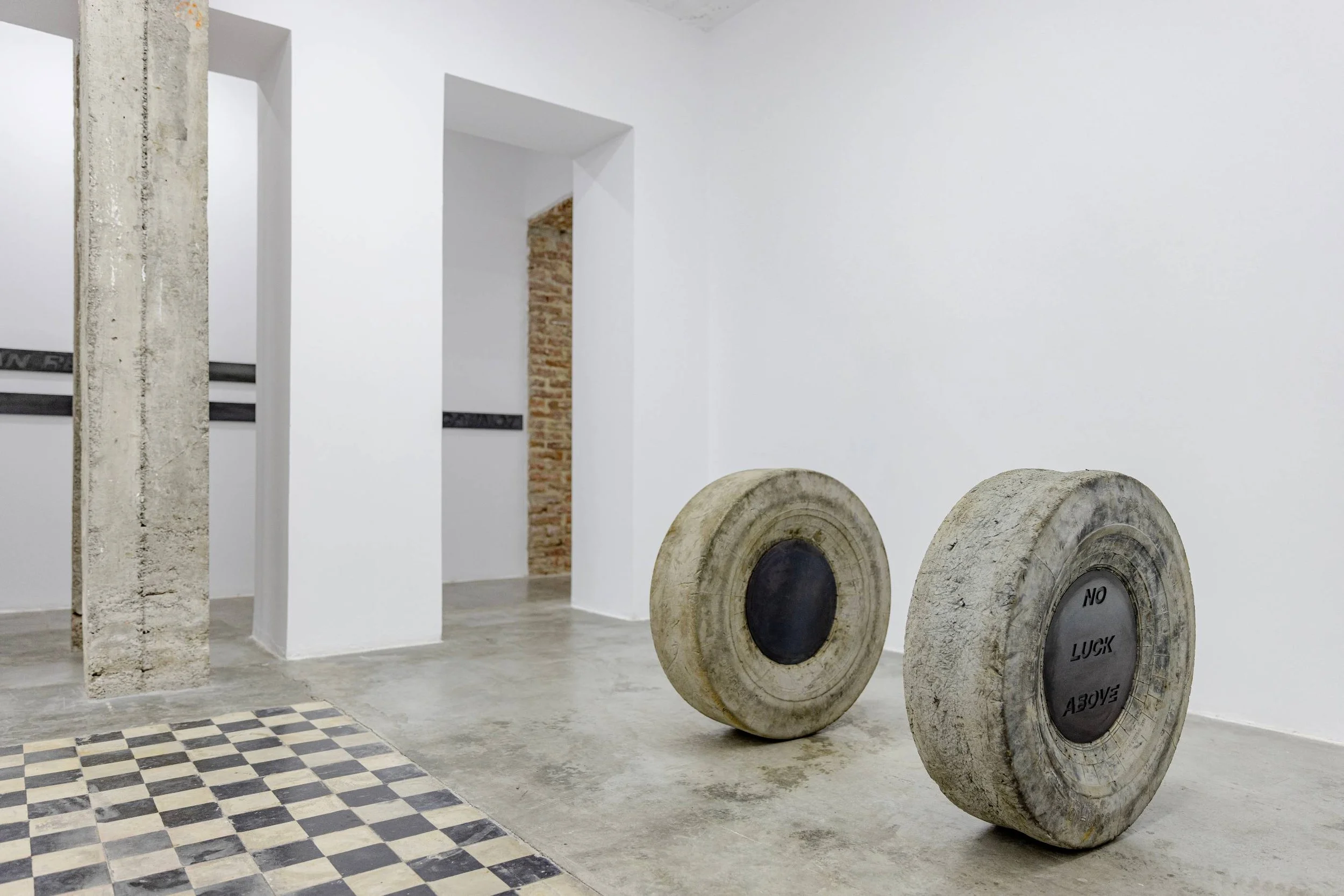
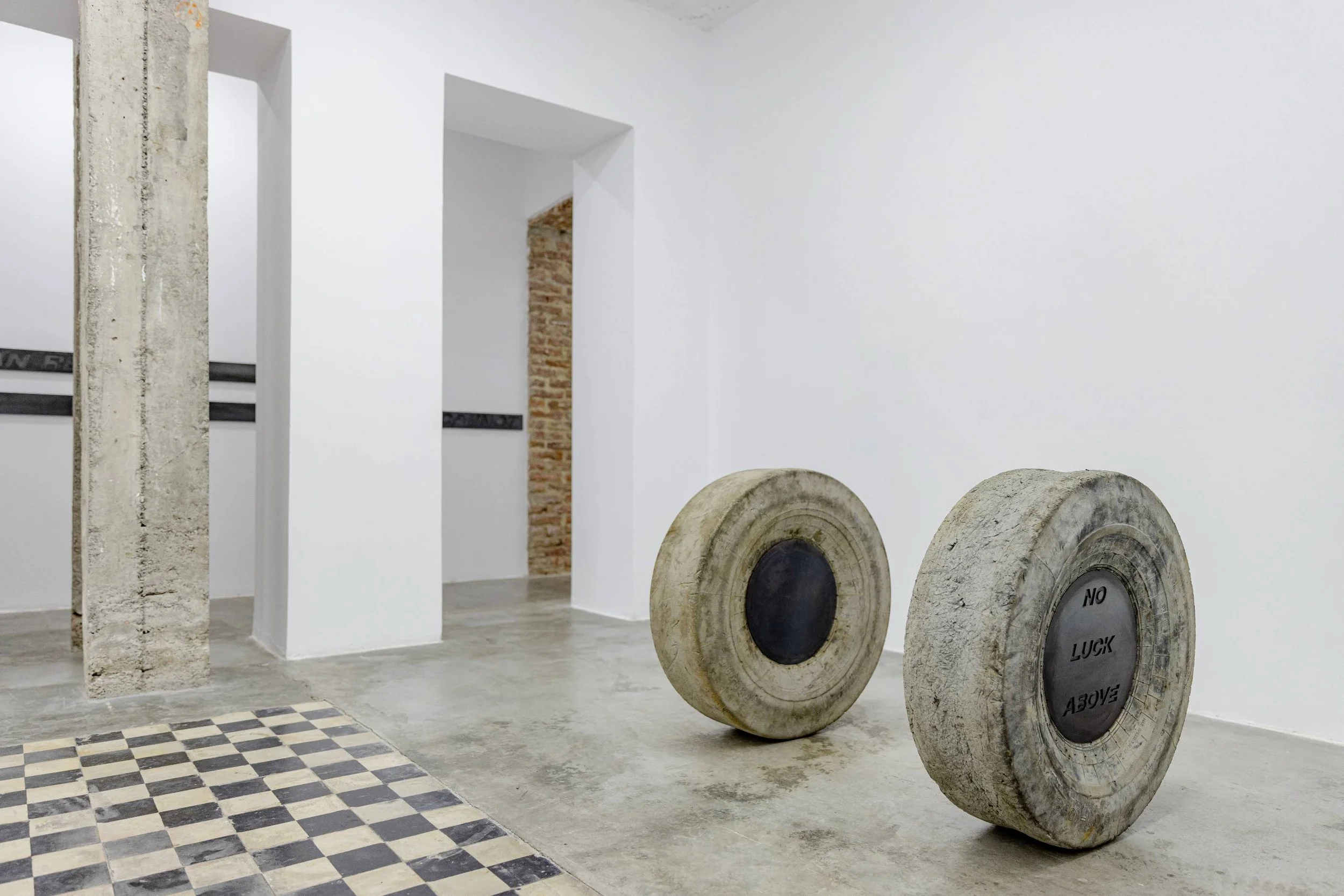
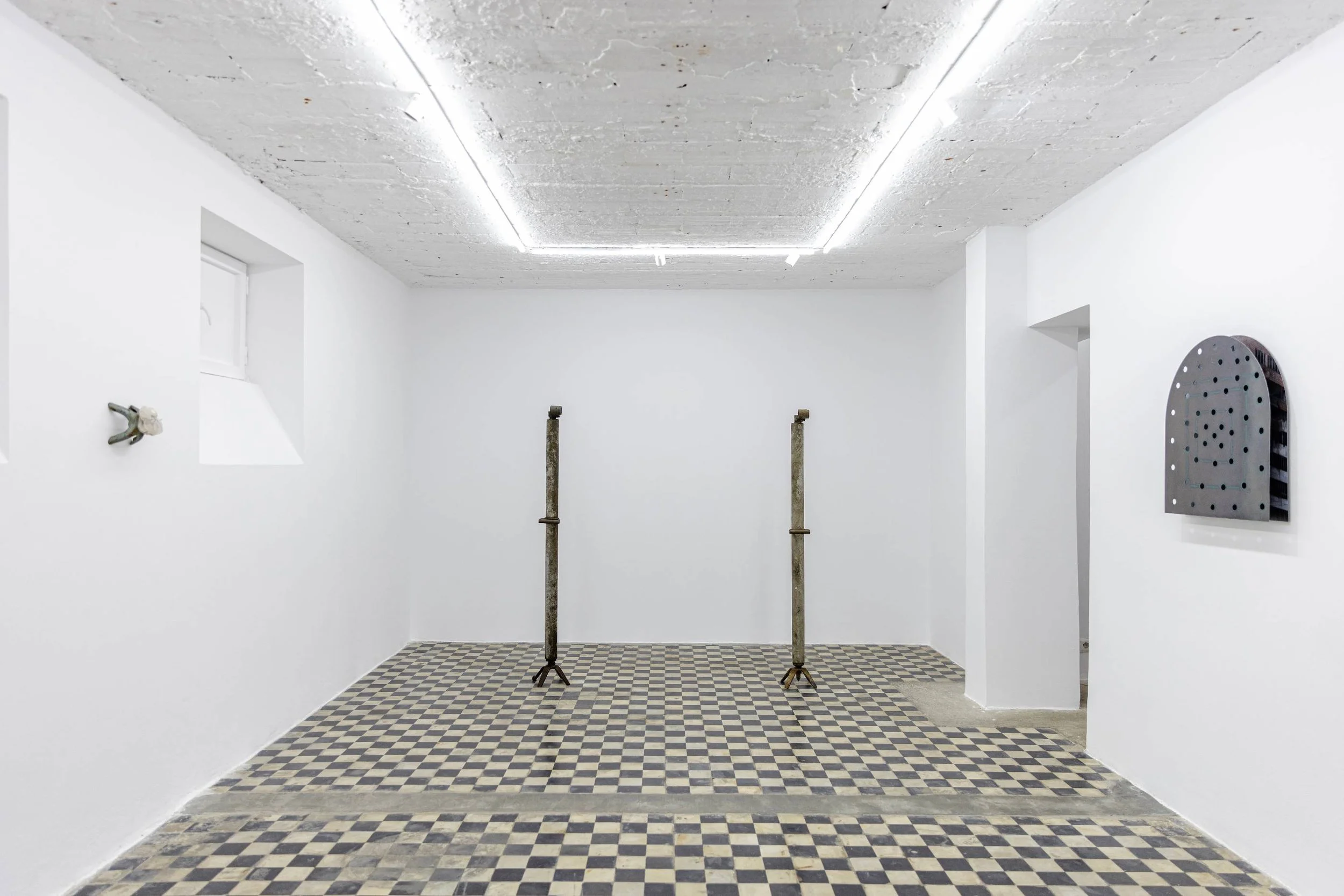
The big room further delves into the dark and harsh reality in the mine, mirrored by the heavy metal pieces and ready-made untouched jack lag and fatalistic wishes as in the piece ‘luck below, no luck above’, that serve as a manifesto of survival against the death drive of extractive colonial capitalism. In this piece, hierarchy is reversed, and power lies within solidarity, proximity, and dignity rather than moral loss, exploitation, and extraction. What appears as power carries loss, whereas what appears as lack carries dignity.
Finally, ‘value, unextracted’ is a poetic reminder of true value lying in acts of care, protection, and solidarity, but also what cannot be taken away from the bodies and identities of miners.
Words by Ervjola Selenica
What to read next