'Rebecca' by Benni Bosetto at Hangar Bicocca
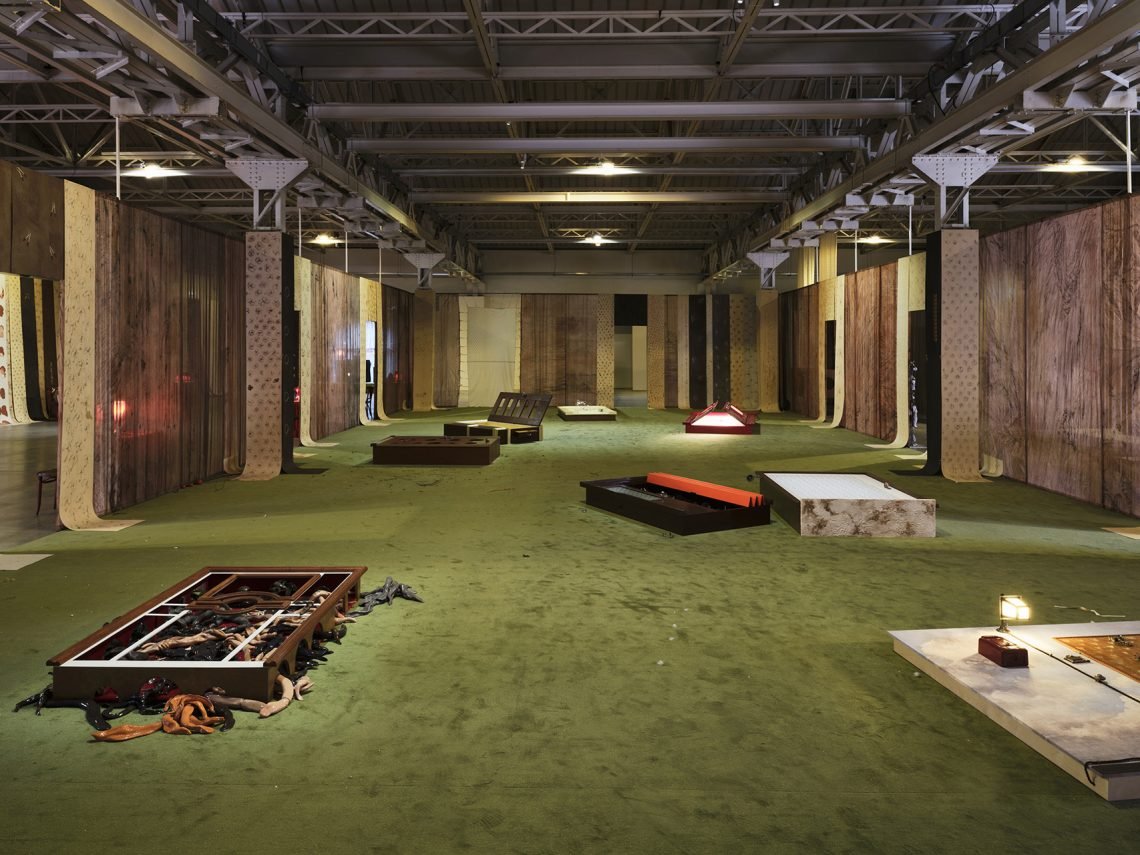
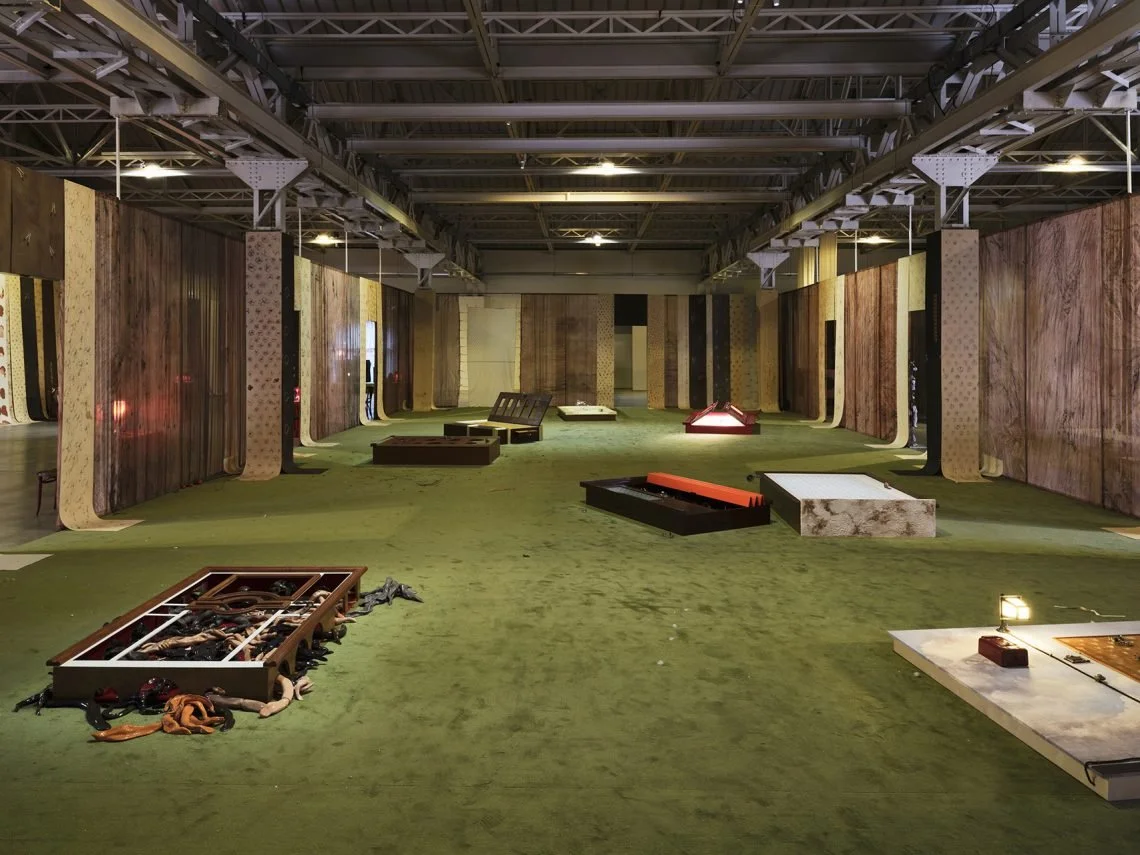
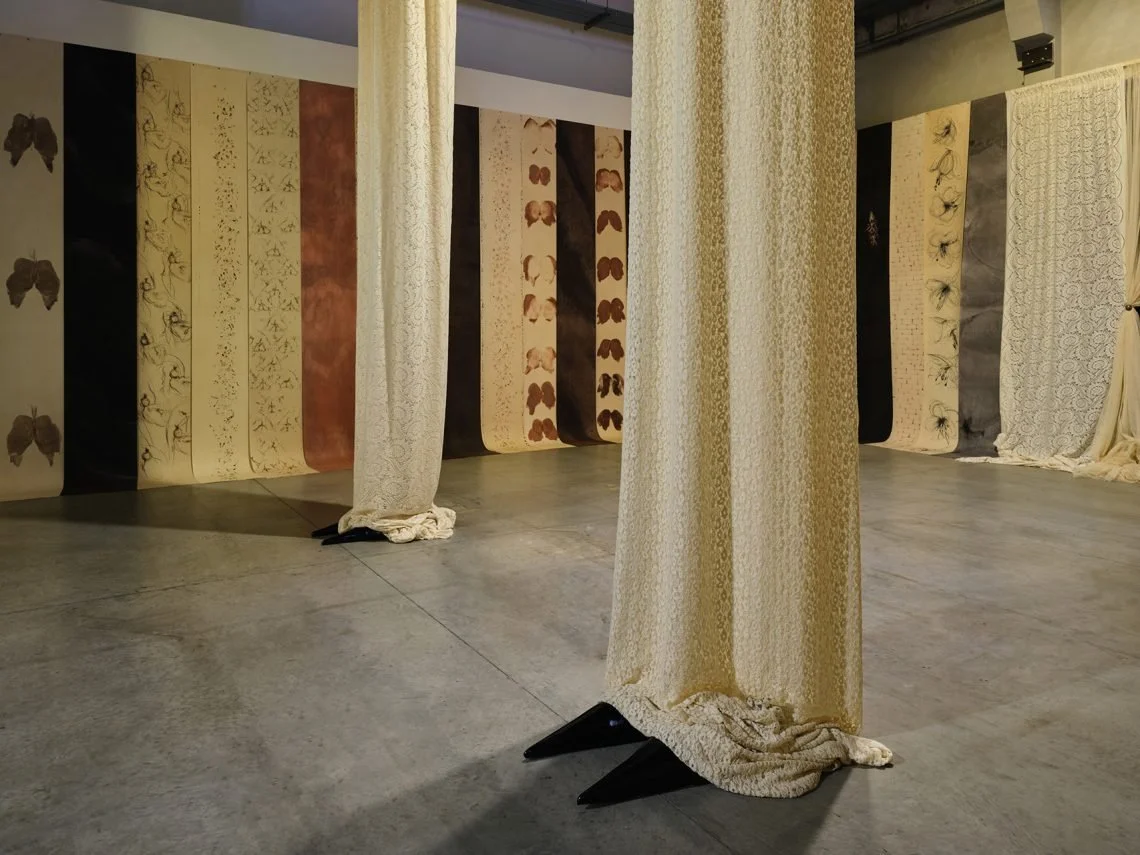
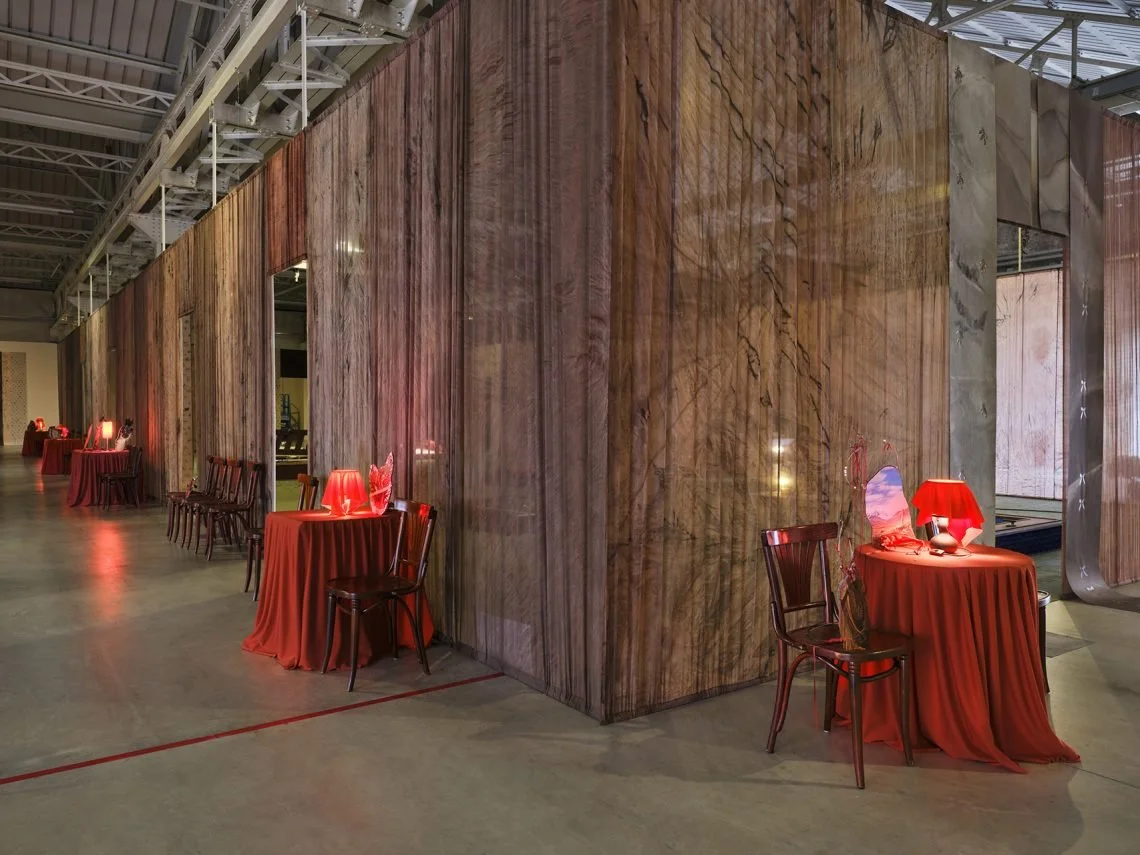
Entering the Shed at Pirelli HangarBicocca for Benni Bosetto’s solo exhibition, Rebecca, is like slipping into the core of a living, breathing presence. Drawing inspiration from Daphne du Maurier’s classic novel, Bosetto (b. 1987) transforms the space into an environment that is simultaneously domestic and impenetrable, treating the architecture not merely as an extension of the body, but as the body itself. The artist has conceived the entire space as a total environment: walls, curtains, and the entire domestic landscape appear to be draped in a new skin. This tactile metamorphosis is a physical manifestation of Bosetto’s imaginative lexicon where drawing, sculpture, and performance converge into a multifaceted narrative.
But who is Rebecca? What form does she take?
The exhibition functions as a quiet intromission into a private universe. It’s divided in four different sections, named after body parts: La bocca (The mouth) at the entrance, followed by La guancia (The cheek) on the right, La pancia (The belly) in the middle, and Il cuore (The heart) on the left, each serving as a different stage of a psychological and physical journey. In this state of evanescent corporeality, the distinction between flesh and structure fades; it is a visceral exploration of the fleshiness of the dwelling, a metamorphosis that radically redefines our physical relationship with the spaces we inhabit.
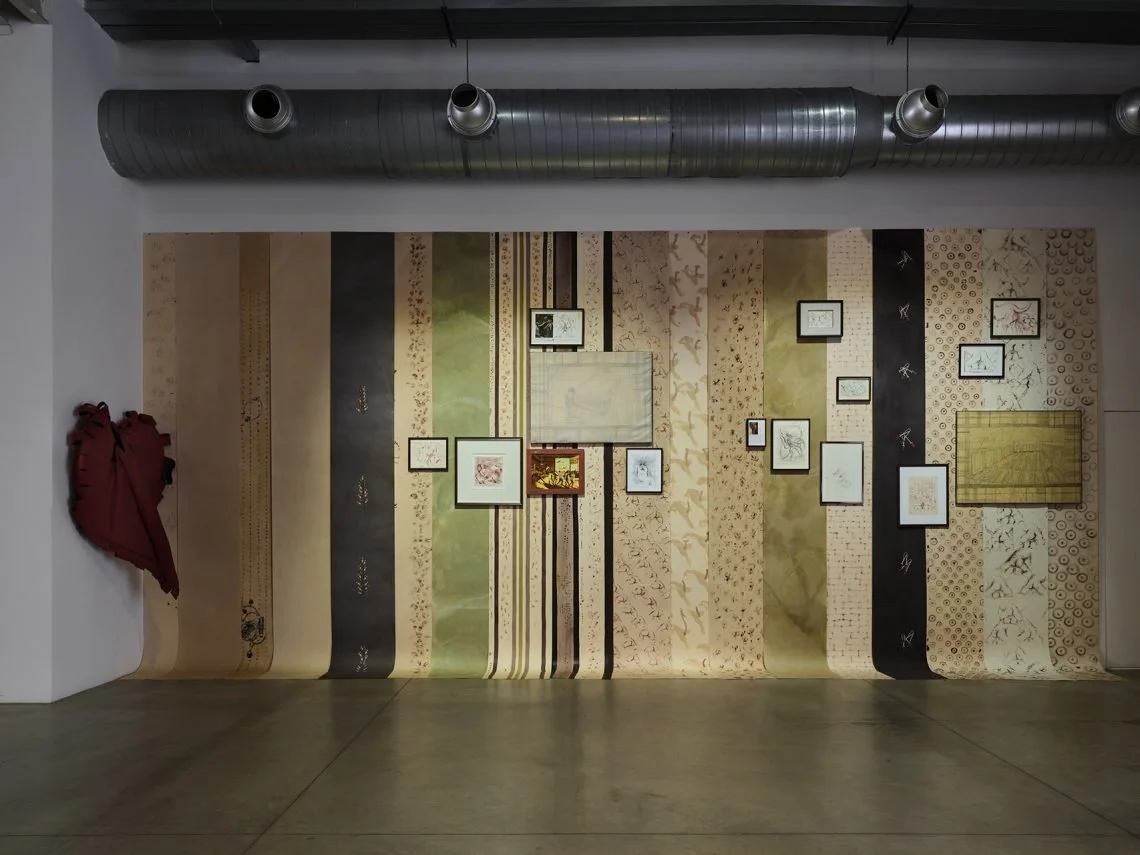
Beyond the threshold of La bocca, the walls of the Shed vanish beneath the intricate layers of Le cellule (The cells), a monumental site-specific installation composed of hundreds of hand-painted vertical paper strips. Embedded within the layers are the anatomical traces of the artist herself (lips, nipples, and other physical imprints pressed directly onto the paper), interwoven with illustrations of aphrodisiac plants. Among this carnal landscape, the letter 'R' is a constant, rhythmic pulse, a recurring sigil that binds the presence of Rebecca to the walls.
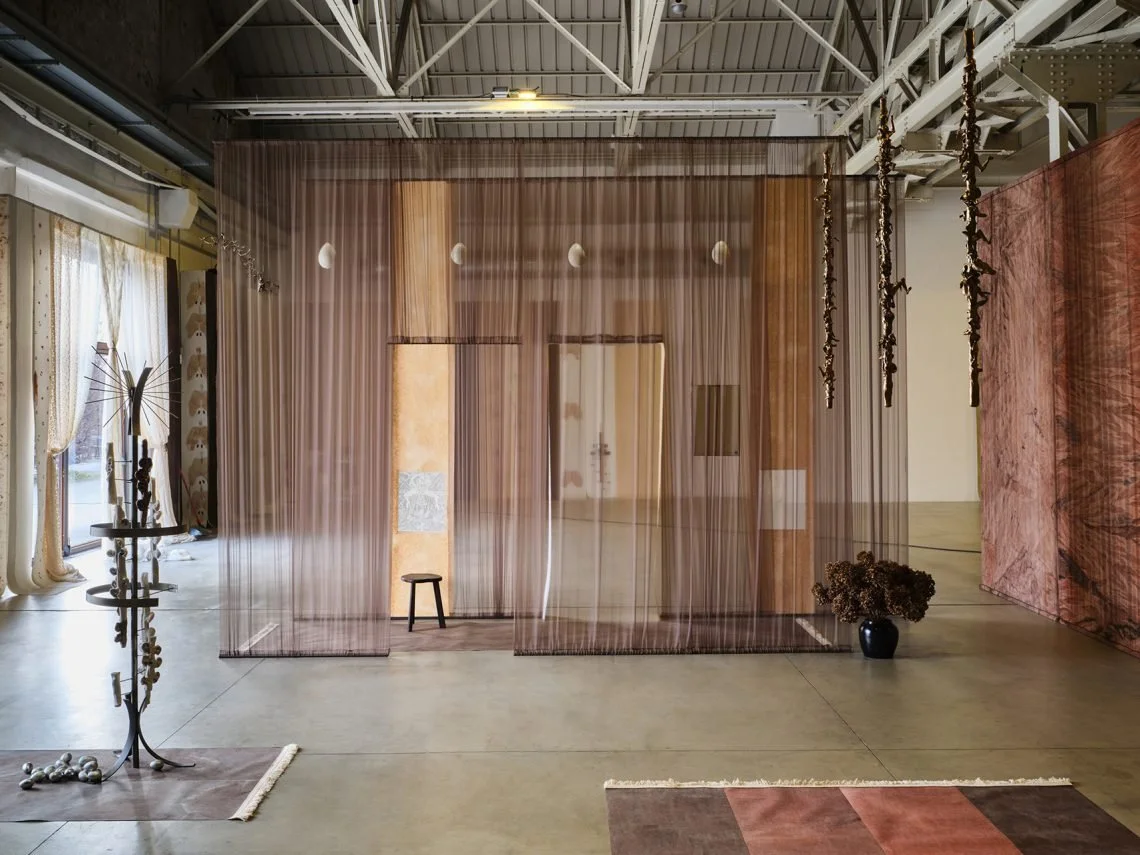
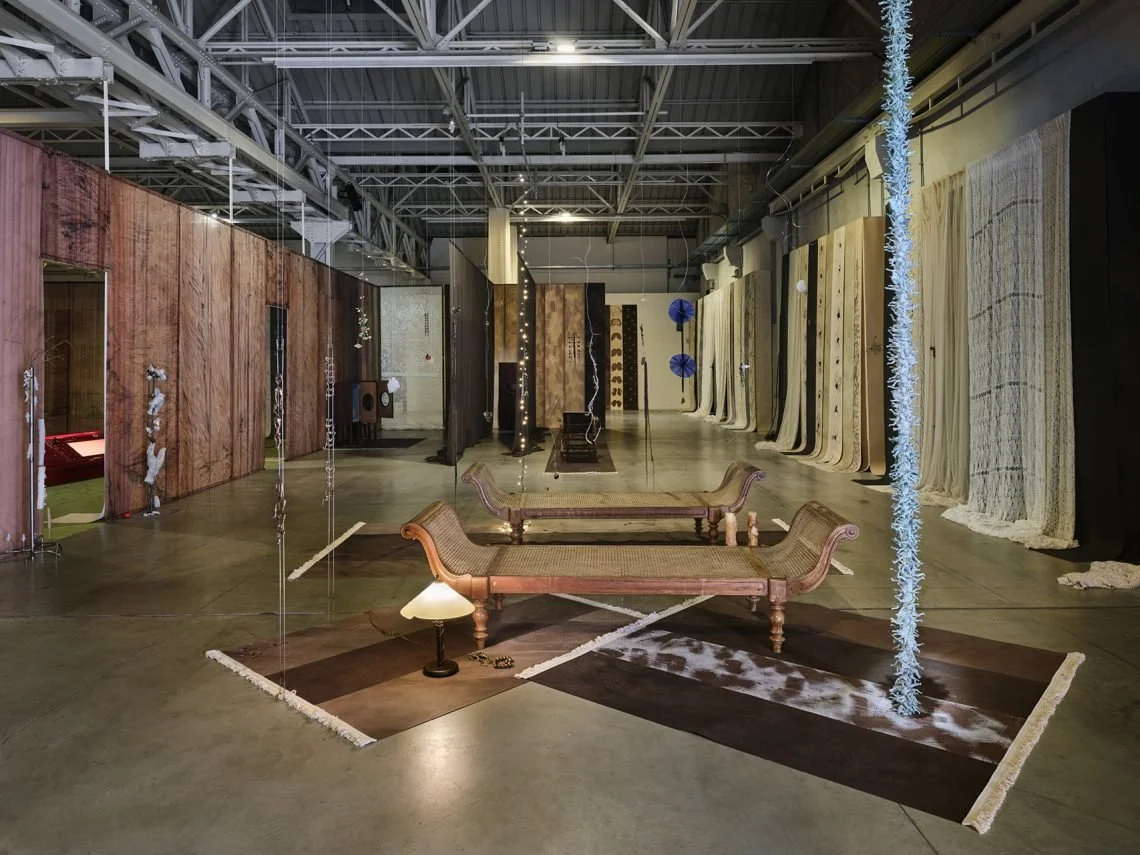
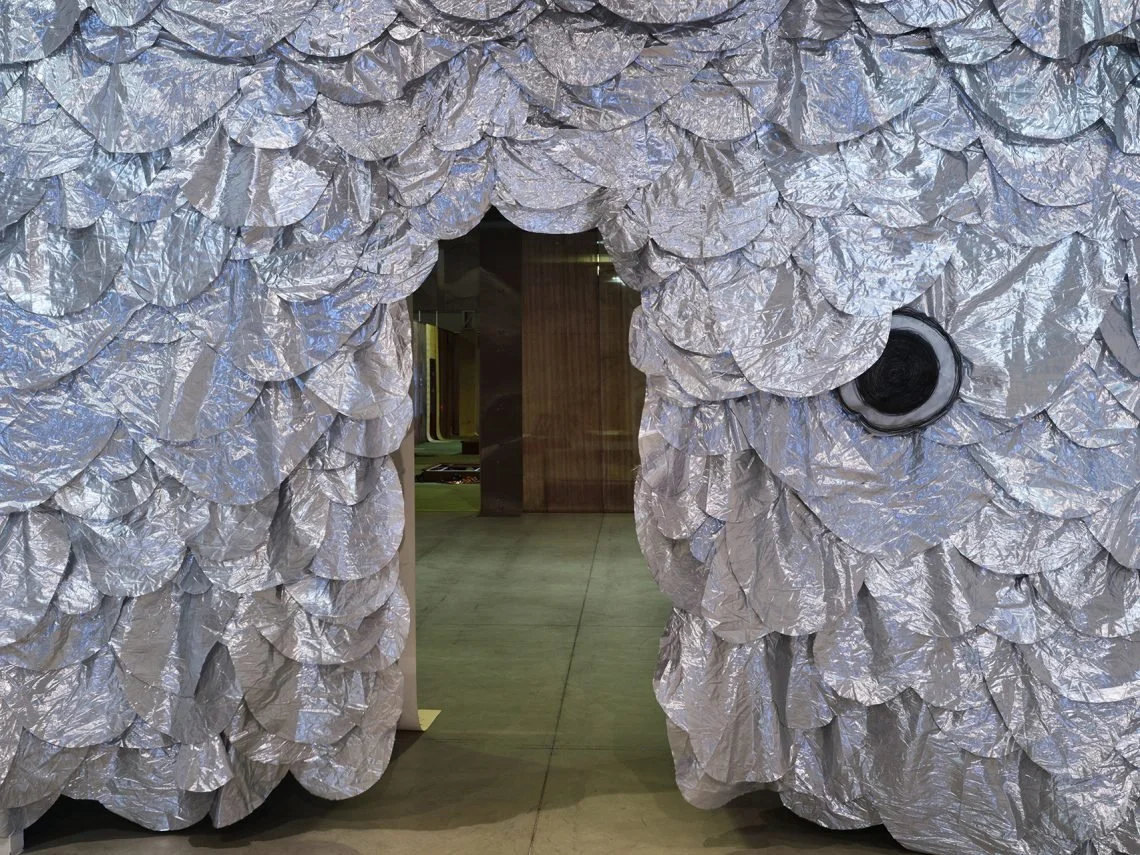
La guancia is described as a place of contact and the sudden warmth of a blush. This section is composed of four installations: Confessionale animale (Animal Confessional), La guancia, Corridoio orgonico (Orgone hallway), and Gli occhi (The eyes); and other sculptural elements. Passing through the threshold of Confessionale animale, which structure is similar to a long corridor, we remember that we are no longer merely viewers, but voyeurs in a home that does not belong to us. Though the space is deeply personal, it remains a hollow body until it is activated by our presence: in La guancia, for example, Bosetto provides functional forms for sitting and reclining. But if La guancia was about shared memory, the Corridoio orgonico is about shared vitality: a hypothetical form of sexual energy that connect us with other living beings.
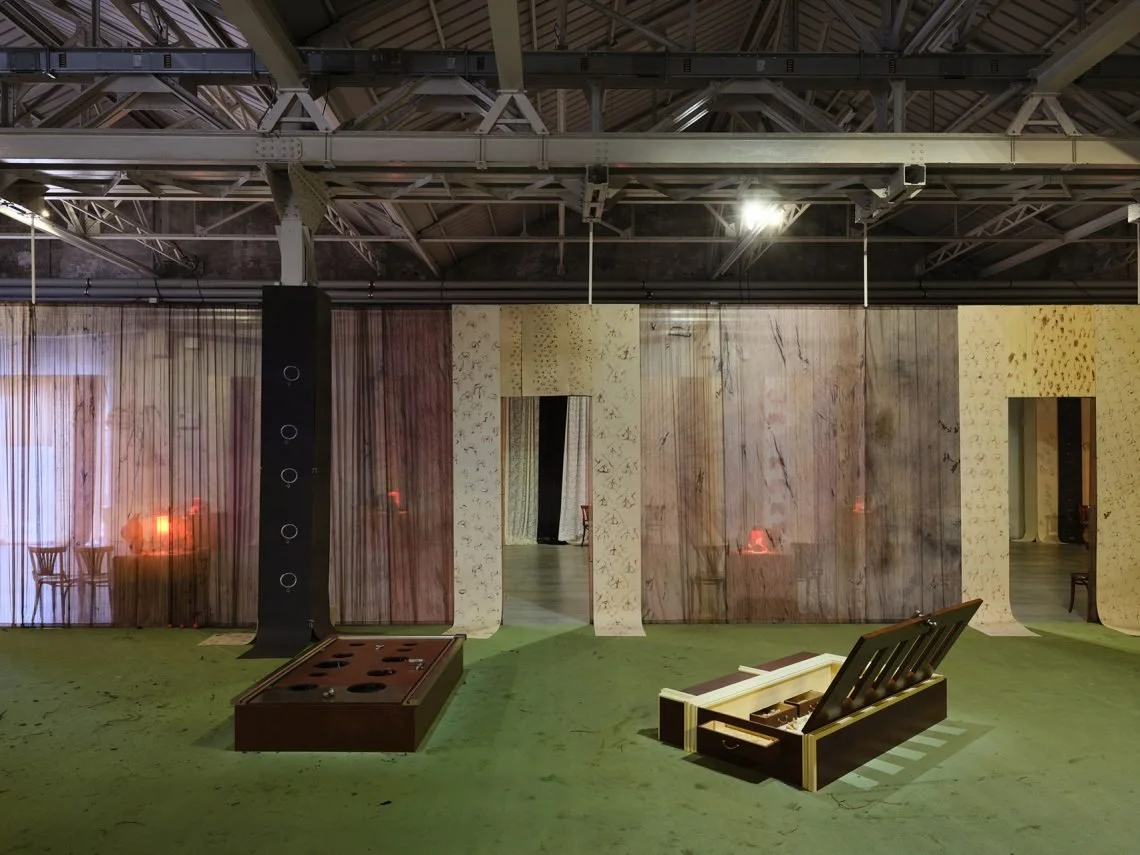
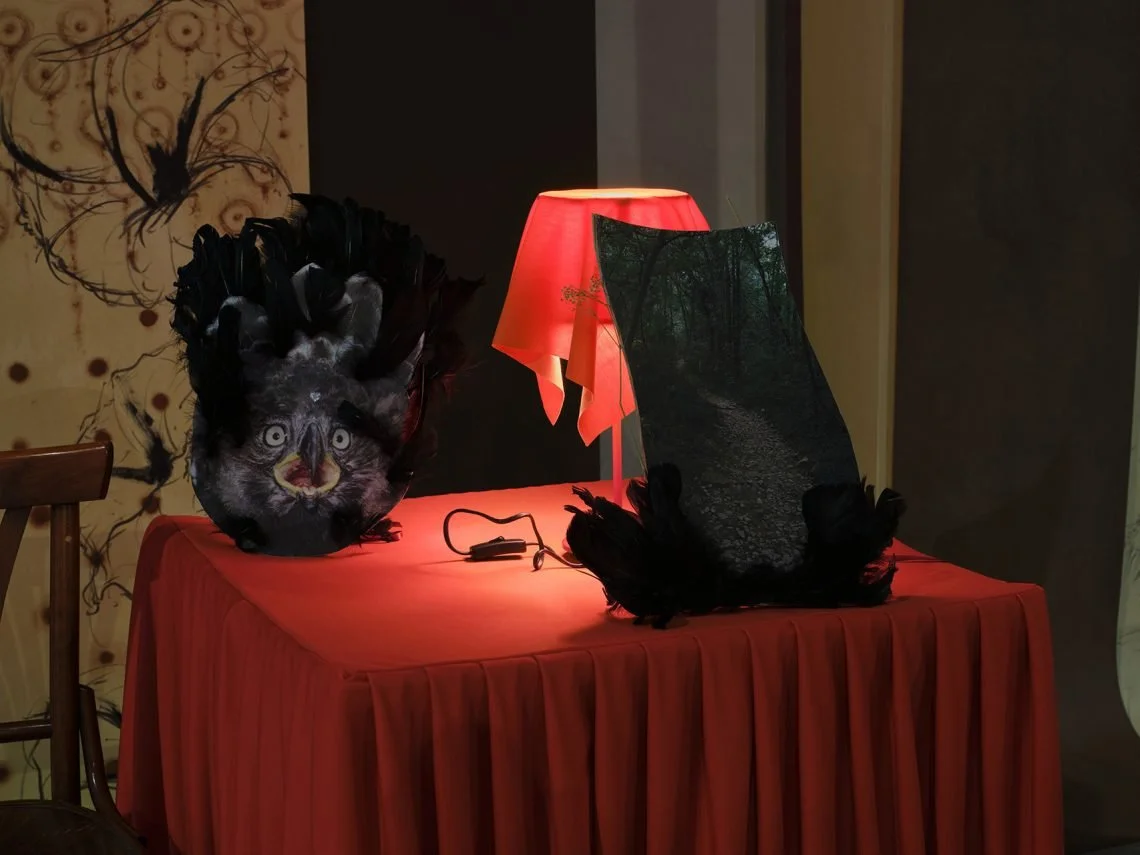
La pancia is the site of internal processing, a realm for the stratified and deeply felt emotions that define both our domestic lives and our human existence. This section features nine horizontal doors that relinquish their original function of separating or securing; instead, each acts as an independent microcosm. Echoing the poetic teatrini of Fausto Melotti, these portals contain a dense layering of animal, vegetable, and inorganic traces, an impenetrable stratification that mirrors the density of our dwellings, and the vulnerable form of intimacy that our deepest selves could face at home.
Il cuore is the last section of the exhibition, the vital core that gives the rhythm to the entire installation. Here, Bosetto reimagines the space as a milonga, a traditional social hall dedicated to the dance of tango. This shift from private architecture to public stage is activated once a week by the performance Tango (II version), which fills the space with the sound and movement of a living pulse. This encounter becomes a collective choreography, and a way to bridge the gap between the domestic and the social through the act of welcoming. Rebecca, then, is multiform: she can be a physical space, a person, a collective, an animal, our objects; an extension in which our being is amplified.
Words by Alessia Imprescia
What to read next