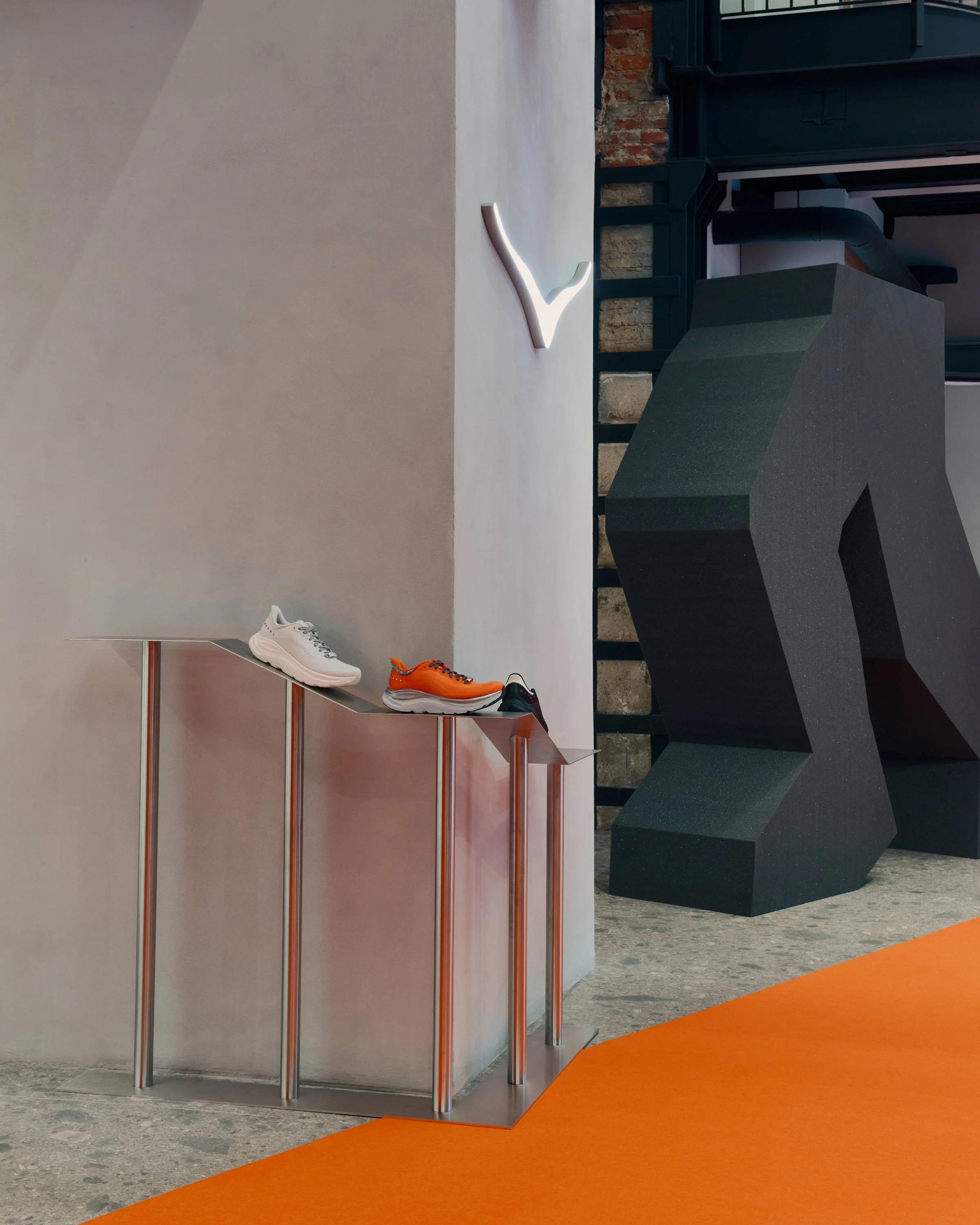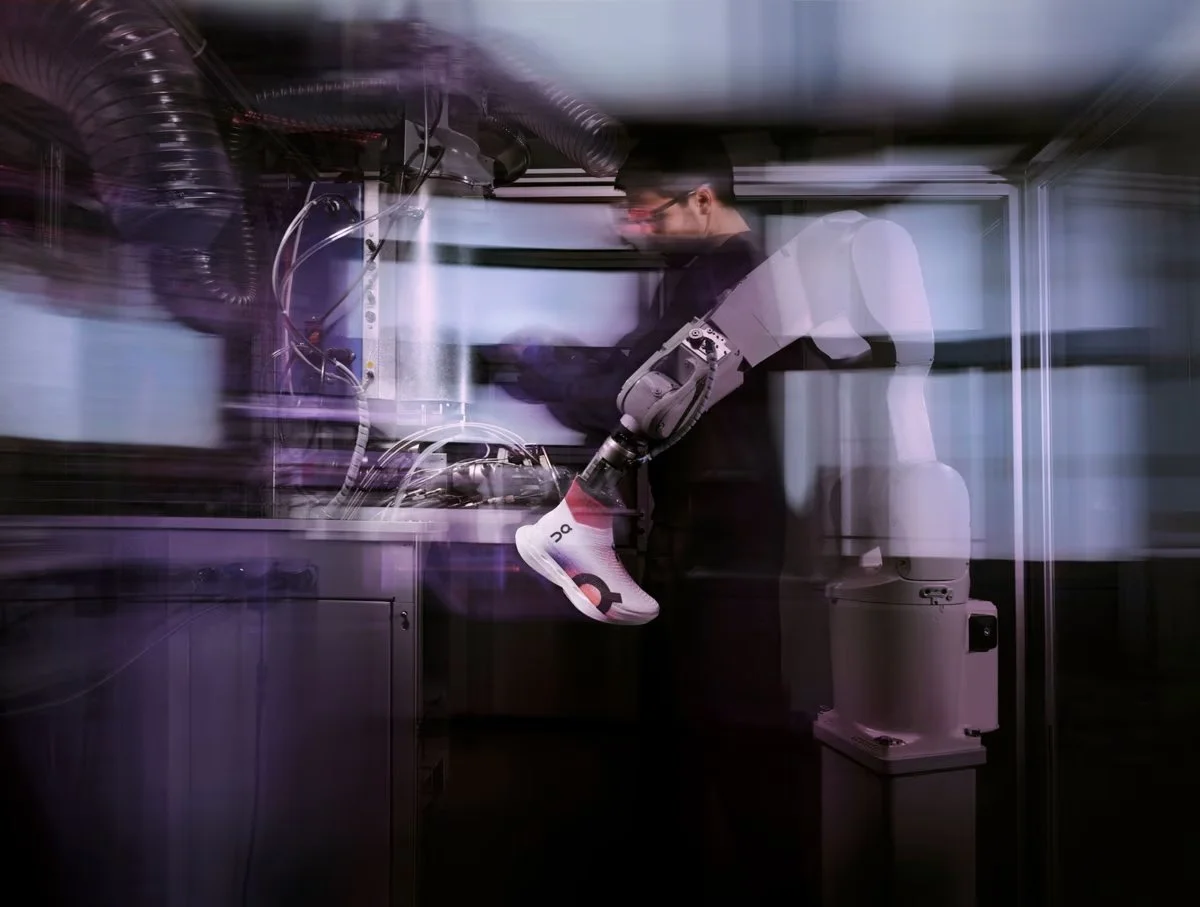
Nils Arne Altrogge on On’s LightSpray Cloudboom Strike 2
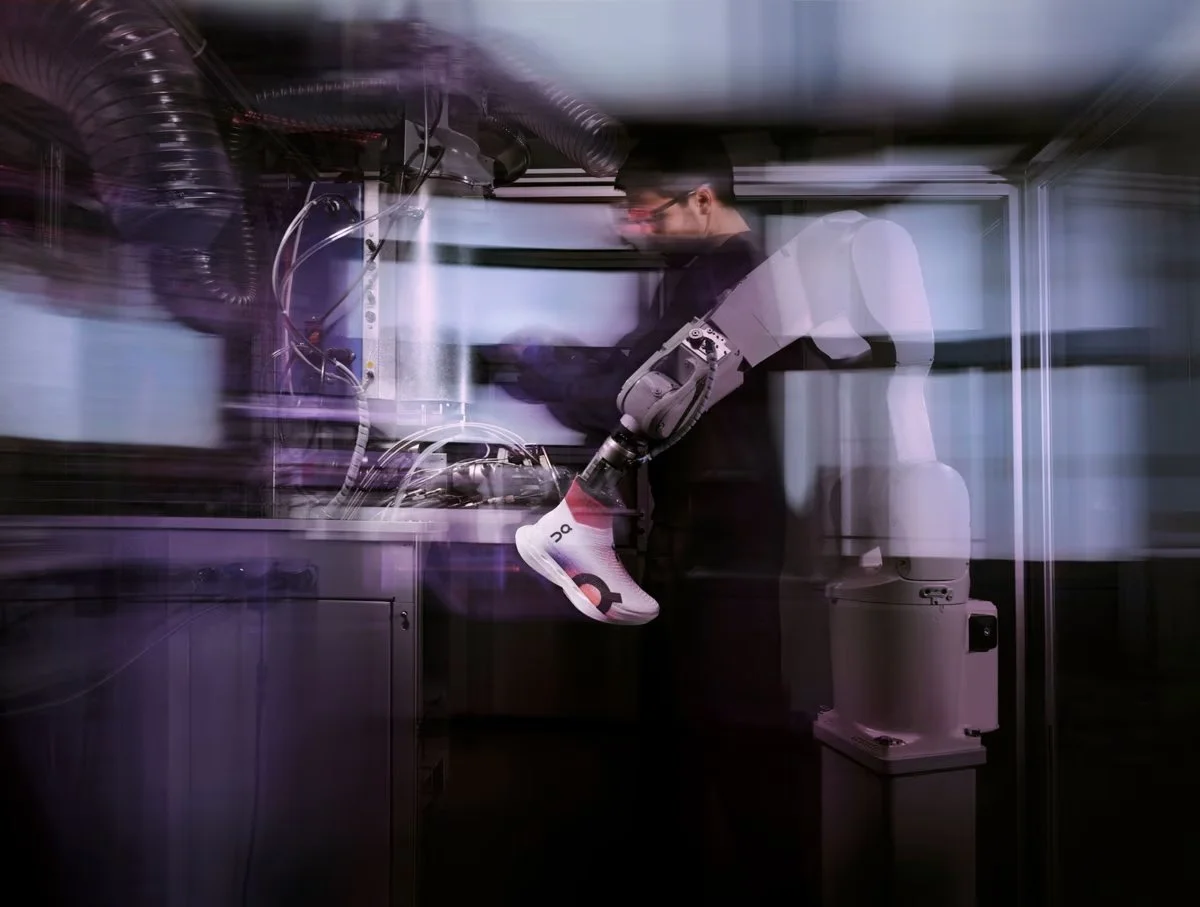
At On's headquarters in Zurich, Nils Arne Altrogge oversees the brand's full innovation portfolio, working on products meant for 2028 and beyond. His teams range from material scientists running their own polymer lab to sports scientists who study how the body moves. At the centre of it all is a Maker Space spread over several floors, where data from the lab becomes a physical prototype in record time.
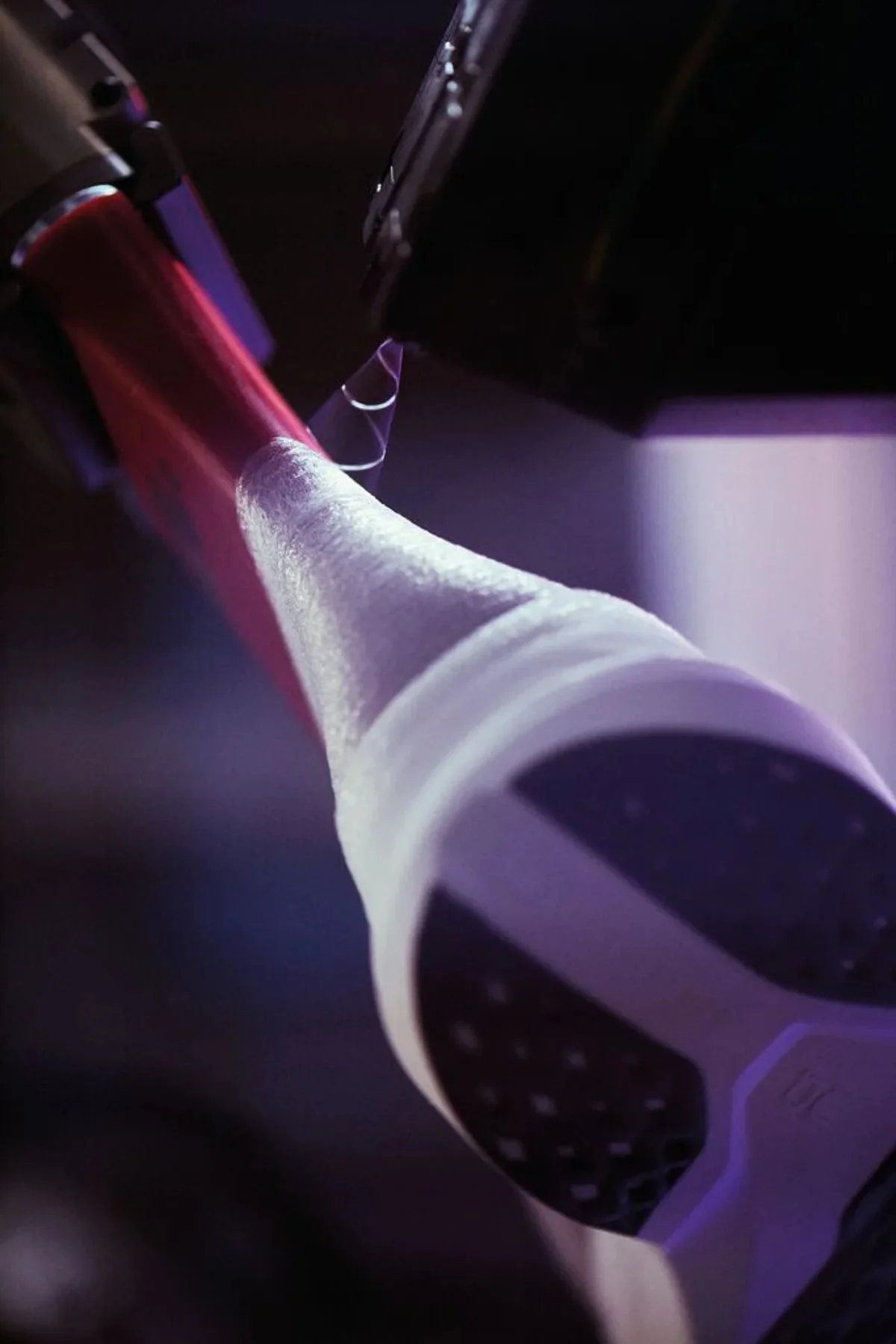
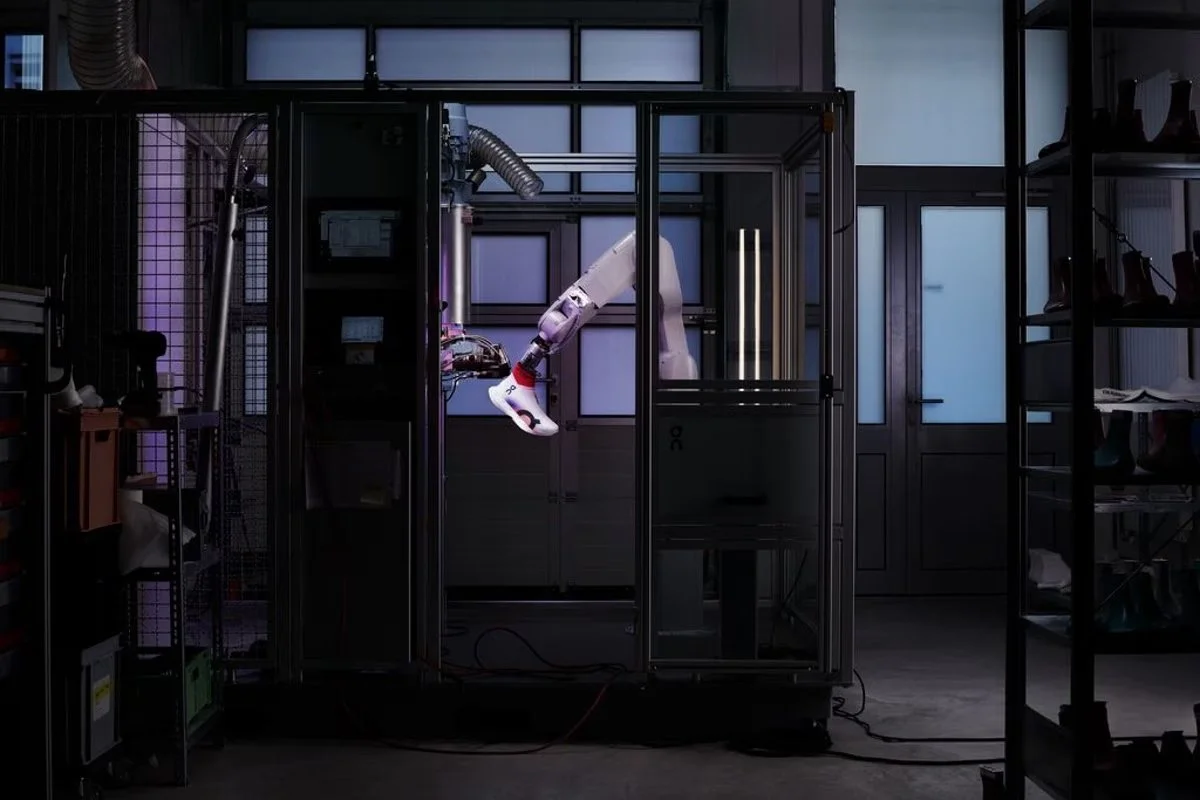
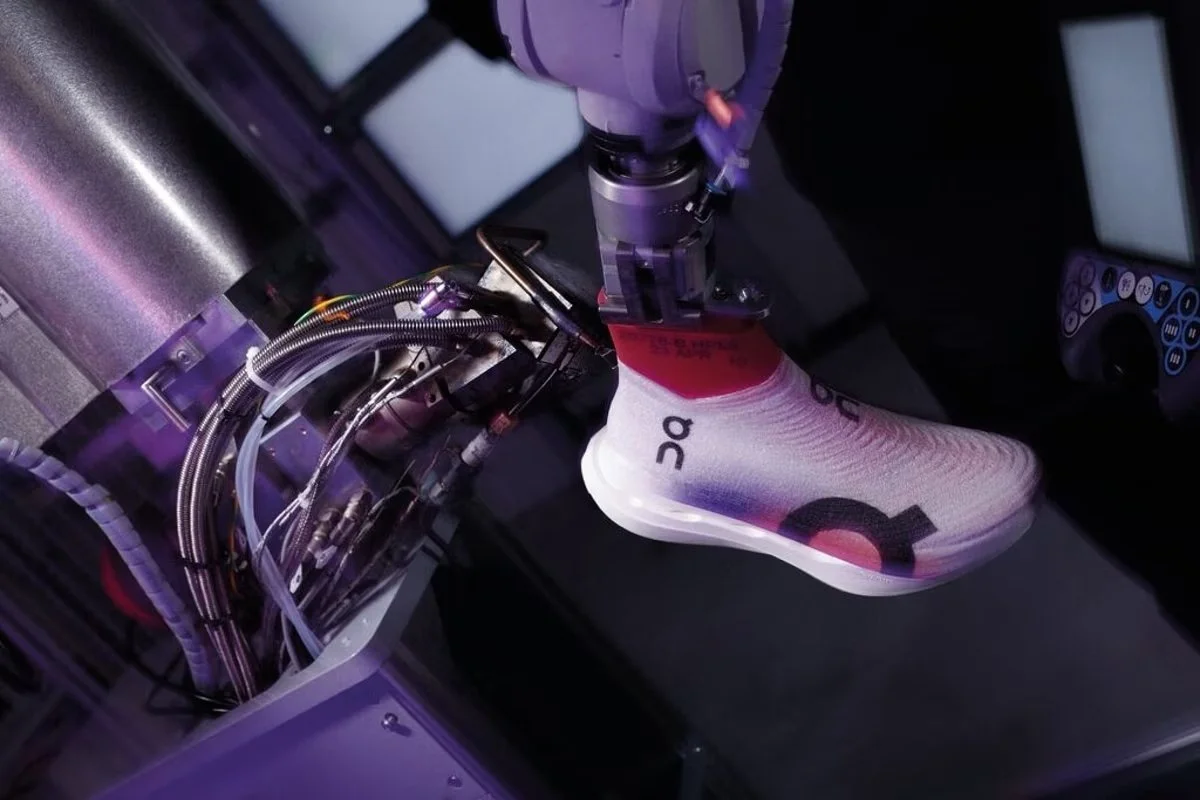
The latest result is the LightSpray Cloudboom Strike 2, a marathon racer that weighs 158 grams. A robot sprays around 1.5 kilometres of filament to form its laceless one-piece upper, while CloudTec Sphere and a lighter Helion HF foam work on the closing kilometres of the race, where the brief asked for fresh legs. In conversation with COEVAL, Nils talks about the hardest step in any innovation process, turning one prototype into a million identical pairs, and about the woodpecker whose bone structure inspired the Cloudmonster.
You lead innovation at On from the Zurich headquarters. For readers meeting you for the first time, what does a Senior Director of Innovation actually do day to day, and which part of the job takes up most of your energy?
As Senior Director of Innovation, I oversee all the innovation teams at On and the full innovation portfolio: how our products will look, how they will be engineered and how they will function beyond 2028. This work stands on the pillars of science and engineering, across new materials, new constructions and new manufacturing technologies.
Day to day, I am convinced we have the best people in the team. They know what to do, so my role comes down to two things. The first is to create a culture that enables innovation. The second is to help with prioritisation: being the link to our company management, understanding where we want to go as a brand, and making sure we focus on what is truly relevant. So I take care of the people and the team, making sure we have the right people and that they grow in the right way, and I am there for day-to-day questions. On the other side, I help on high-impact projects and make sure we prioritise the innovation portfolio in the right way. That is the job, day in, day out: being with people and making sure we innovate faster and better than anyone else.
I have always admired how closely engineering and materials connect at On. The quality and choice of materials feel unique to the brand. Where do you look to find the best materials?
It is very simple. We realised early on that we wanted to go far beyond buying materials off the shelf. So we built our own material science team, with our own laboratory and facilities where we work on polymers at the material level itself. A lot of what you see is specific to On and built on proprietary technologies. We have invested heavily in this, and we believe it is the only way to create better products. Our shoes, for example, are engineered very differently, with structure in the sole. Most standard materials from suppliers would fall short there, so we develop them specifically for our needs.
Once you have the material, how do you turn it into the best possible feeling for the runner?
That part is entirely science-driven. It starts with understanding how the body moves while running, walking or doing any kind of sport. What does the body need in terms of comfort from the upper? How important is the fit? What are the performance requirements for the bottom unit? All of this comes out of deep science. We have a full team of sports scientists, people who understand biomechanics and physiology, and they deliver the data that we then turn into the final product through the right material and the right engineering.
I wear On a lot, and with certain jackets I notice a warmth that feels perfect for winter, together with a strong sense of airflow that lets the body breathe. How does this engineering work on the apparel side?
Apparel plays an extremely important part in protection, comfort and support. The best example is thermoregulation. We study how the human body regulates its temperature and make sure the garment supports that process, keeping the body warm when it needs warmth, and cool and ventilated when it needs air. Then we match this with the right textile innovation, fibres that deliver a specific function. Some fibres are more cooling, others are more elastic and let you move freely. Then comes the question of how to create patterns that support that movement, and of course aesthetics are an important part of it. All of this needs to come together, which is why we believe in integrated teams. A scientist, a material expert and a pattern developer all work together on a project, and that is how every perspective comes together.
Innovation is a word that gets stretched in many directions. Do you rely on a mix of tools, media and methods to work out what it means today, and if you feel like sharing, which tools do you find yourself experimenting with most?
The most important tool we have is our so-called Maker Space. It is a huge area spread over several floors where we do rapid prototyping of functional products, from apparel to footwear, in record time. It is directly linked to our sports science lab. When we work with an athlete or on a project, we can measure people and immediately turn that data, with the help of computational engineering, into digital twins of products, which then move into prototyping. The prototyping happens on different machines, but in the end it is craft. We have people there who truly understand how to build shoes and apparel and how to create the physical prototype. Innovation in the sporting goods industry happens in the workshop, far from a laptop full of emails.
So craft comes first. What are the other tools you rely on?
Craft is one important pillar. The second is science, understanding human movement in the right way, as I mentioned before. The third brings us into the digital world: we use a lot of simulation, so-called finite element analysis. Before we commit a final product to the manufacturing site, we can simulate different variations of it and predict up to 80 to 85 percent of how it will feel and how it will work, specifically in footwear. Digital simulation, physical craft and the science behind them make a great combination, with every perspective in the room.
Your team's work spans foam chemistry, carbon plates and a robot that sprays 1.5 kilometres of filament into a shoe upper in minutes, with production now running in Zurich and near Busan. What are the hardest challenges in taking a process this radical from a lab experiment to a marathon racing shoe, and where does the friction usually come from?
Every innovation process starts with a challenge, a problem, the right question. When we come up with a solution and people call it great, we always question a little whether we pushed hard enough. And the moment people say “impossible,” our teams get very excited. Doing things no one has done before means a lot of information is missing, and collecting it is important and very challenging. Interestingly, going from an idea to a first concept you can run a marathon in, win races in and turn into the world’s fastest shoe is challenging, yet it is still the smaller challenge.
So what is the biggest one?
Making millions of them. The hardest part of the innovation process is scaling new ideas. Often you need to adjust how you manufacture and scale. With new materials, you need to build a sourcing setup around them. The pricing of the full system and the cost structure change. And then the key question: beyond making one stable prototype in the lab, how do you replicate it a million times with the same quality? That technical scale-up, and making it replicable, is the biggest challenge. The first prototype is very difficult too, and we have very strong people here for it, but the real mission starts after the proof of concept.
Your brief for the Cloudboom Strike 2 was about sustaining speed as athletes approach the closing stages of a marathon, what you call a fresh-leg advantage. How do you turn a goal like that into a technical specification, and what changed at the midsole with CloudTec Sphere and the Helion HF foam to get there?
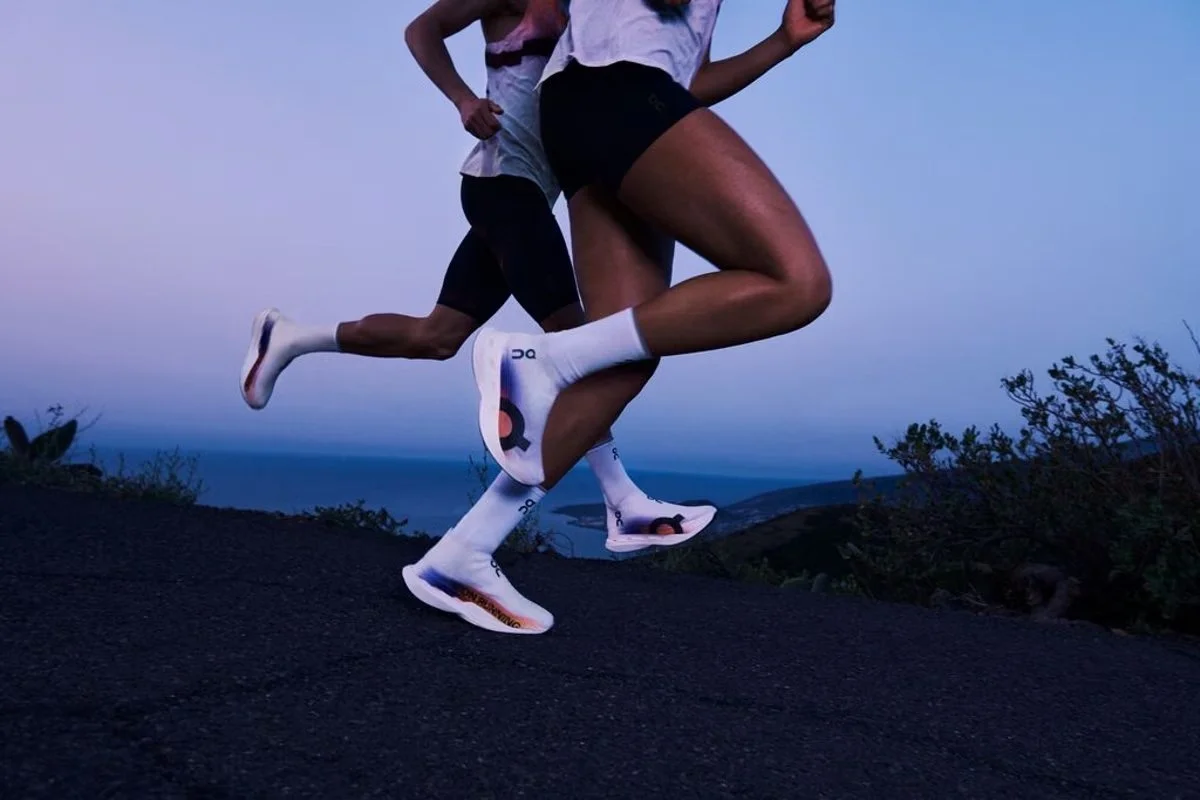
For the marathon, it was very clear from the start: we wanted to create the shoe with the best running efficiency. To borrow a metaphor from the car world, a car that drives at a certain speed while using less fuel is more efficient. So how do you design a shoe that lets a runner hold a certain speed with less energy? The effect is that towards the end of the race, you have more energy left in the tank to keep the pace or even accelerate over the last 5K. That was the original brief.
Where did the science take you from there?
The theory behind it is what we call leg stiffness. We found that the moment you optimise the cushioning of the product, the body needs less energy and less work to cushion each step. In a marathon you hit the ground over 100,000 times, and every time your body has to absorb the impact, which costs energy. The energy you want to spend goes into forward motion, into the push-off. So by optimising the cushioning of the shoe, you save a lot of energy that the body can use to run forward.
In the midsole, the result is two things. First, our newest Helion HF, a highly responsive and highly cushioned foam that is also super light. Second, CloudTec Sphere, a technology built up in different pods that optimise how the shoe deforms and how it cushions the runner. Energy return is on par with our industry competitors, while the cushioning is much better. That is how you get better running economy, and that is how you make the fastest shoe.
Beyond the midsole, what role do the plate and the upper play?
The bottom unit still needs a certain stiffness to propel you forward, which is why there is a highly responsive carbon plate. Then we combine it with our other technology, LightSpray. It is the lightest upper on the market and it fits like a second skin. The lighter the shoe, the better the running efficiency. The analogy I always use is that the shoe should feel like part of your body. That is what LightSpray is.
A University of Cape Town study measured a 1.6 percent gain in running economy against leading benchmarks, and Hellen Obiri, Yeman Crippa and Joe Klecker have all set marathon PBs in the shoe this year. How do lab results and elite athlete feedback feed each other during development, and what happens when the two disagree?
We always start with both. Lab data and science measured in a controlled environment are very, very important, and we always consider the athlete alongside them. The athlete’s perception and feedback are crucial, because these people know their bodies extremely well, and they need to feel confident in what they wear. So perception data and lab data are always taken together.
When the two disagree, we need to understand why. Sometimes the results are very close, yet the athlete simply feels better in a shoe that is measurably less optimised for them. In that case we listen to the athlete, because mindset matters enormously in a marathon. When an athlete believes they have the perfect shoe, that belief creates huge forces. It is a mentality that stays with you from the starting line to the finish and helps in the moments when it gets very tough.
And when the data points clearly in one direction?
Then the athlete’s hesitation usually comes from newness. Humans tend to be sceptical of anything very new. So we look at the data together with the athlete and give them time to adjust. We tell them to take the product into more training sessions and do their exercises in it. Very often, after one, two or three weeks, the athlete starts to really like the product, even love it, because they see the benefit. The product was simply different, and different takes time. It can go both ways, but in the end we are making a shoe for a human, and the human makes the final decision.
The LightSpray Cloudboom Strike 2 weighs 158 grams, laceless, with a sprayed one-piece upper that fits like a second skin, while the standard Strike 2 keeps laces and a conventional upper at 191 grams. How do you decide which athletes and which races call for each version, and what do the extra 33 grams buy or cost on the road?
The athlete stands at the centre here too. When someone feels more confident with a classic upper and laces, we decide together, and the athlete goes with the laced version. A lot of it is personal preference. The full system of an athlete is very complex: physiology, biomechanics and psychology all have a huge impact. In the end, athletes need to feel good. We all know this feeling. There are certain T-shirts, shoes or pieces of gear we love or dislike, and the reason often escapes us. So we let the athlete decide.
As for the weight, 33 grams may sound like little, but over a marathon it accumulates, and the lower weight is certainly one reason the LightSpray version is so efficient.
Which version do you recommend?
We recommend the LightSpray version, and we invest a lot in bringing as many athletes as possible into it, which brings us back to the newness factor. The moment they wear it and the shoe fits, they love it. If the upper is less than a perfect fit, there are two options: we go with a laced version, or we make the effort to adjust the fit through the spray system and customise it further, which is one of the powerful advantages of LightSpray. We also want to offer the laced version to everyone who feels more comfortable with it, while we continue our journey of convincing more and more athletes that LightSpray is the future.
The curved carbon Speedboard is lighter and stiffer than before and layered between two densities of Helion HF foam. How do you tune the balance between plate stiffness and foam softness for a marathon, and how much of that setup still comes down to trial on the track rather than simulation?
It starts from science. There is an ideal stiffness for a given racing speed, and it comes from our internal research. We know exactly which stiffness helps a professional runner at world-record pace the most, and which helps an everyday runner more. You can calculate the ideal stiffness of a shoe, how stiff the carbon plate needs to be, and how it works together with Helion HF to reach maximum propulsion. Trial and error then comes into the final optimisation through the athlete’s perception, and there we put all our focus on the athlete. To create the first versions, though, we follow our own science of performance.
Beyond sport science, where do you find cultural inspiration when you think about engineering? Are there fields, disciplines or references outside footwear that shape how you define what innovation should look like at On?
Three areas come to mind right away. Number one, by far, is nature. Nature has built systems over millions of years, optimised for specific purposes. The best waterproof membrane, the lotus effect, comes from nature. And one of the best cushioning systems in the world, sorry to geek out here, is the bone structure of the woodpecker.
Imagine a bird that hammers its head against a tree millions of times with quite heavy force, and its brain stays completely unharmed. How does it do that? The answer is a very specific bone structure, with many small cavities lined up one behind the other, each absorbing a little of the shock. That was, by the way, an inspiration for our Cloudmonster, with its layer of cavities to increase cushioning.
And the other areas?
The second is other industries, from aerospace to construction to the medical field, even the food industry. We visit many of them and look at how they solve problems. Interestingly, the products differ, yet the problems are similar, and there are great solutions out there. Transferring technologies and principles from other industries is very powerful, and LightSpray is one example. The third is less technical: the culture of how communities work. Sport and our products should make movement fun, and the power of communities, what drives you to move, has fully shaped the way we think about products. I would add a fourth as well: the whole world of design and art, which speaks more to the aesthetics of products. There is a lot of inspiration to take from it.
The community side feels especially visible. On started as a brand recognised by a small group in Switzerland, then in Italy, and now I see it everywhere in the world. How do you see the brand growing now that its communities are so international?
That is a very important part. We want to create more than great products. We create experiences and we want to influence culture. Being open and inclusive, and enabling our communities to feel the products and also come together, is a very important part of everything we think about.
Looking past the Strike 2, what is the innovation team working on next that you can share with us, whether it concerns race-day footwear, new materials or the LightSpray platform itself?
I can share only a little openly, but I can give a few insights. Number one: we launched LightSpray in performance products, and we believe it can deliver value to millions of people beyond running and performance. So the next step is scaling up. The LightSpray journey has just begun, and a lot more innovation will follow.
The second is about changing manufacturing and materials while keeping the highest performance and taking care of our planet. Sustainability is a strong driver for us. We are also investing heavily in understanding human movement, even before we get to a product. We believe that if we are the brand that understands movement better than anyone else, we will serve our community best. So the investment in the science behind it is huge, as is the investment in new manufacturing technologies and materials that deliver the highest performance, can be produced closer to the market, as with LightSpray, and reduce our carbon footprint. And LightSpray itself has only just started.
Beyond the products themselves, what philosophy guides the way you and your teams work at On?
One idea we drive very strongly is combining ingenuity and innovation, bringing them to market faster than anyone else, while driving quality and excellence at the same time. That is very important to us and part of our premium ambition. We believe we have a superpower no one else has, which is Swiss engineering: a very specific framework that combines the culture we come from with very clear ways of working.
For me, innovation is a mindset, and it can come from anywhere in the company. The innovation team, development, design, finance: we need to innovate across every part of the value chain. That is the mindset we drive every day, and these are two important parts of our culture and philosophy.
Interview by Donald Gjoka
What to read next