TRANSART FESTIVAL 2026
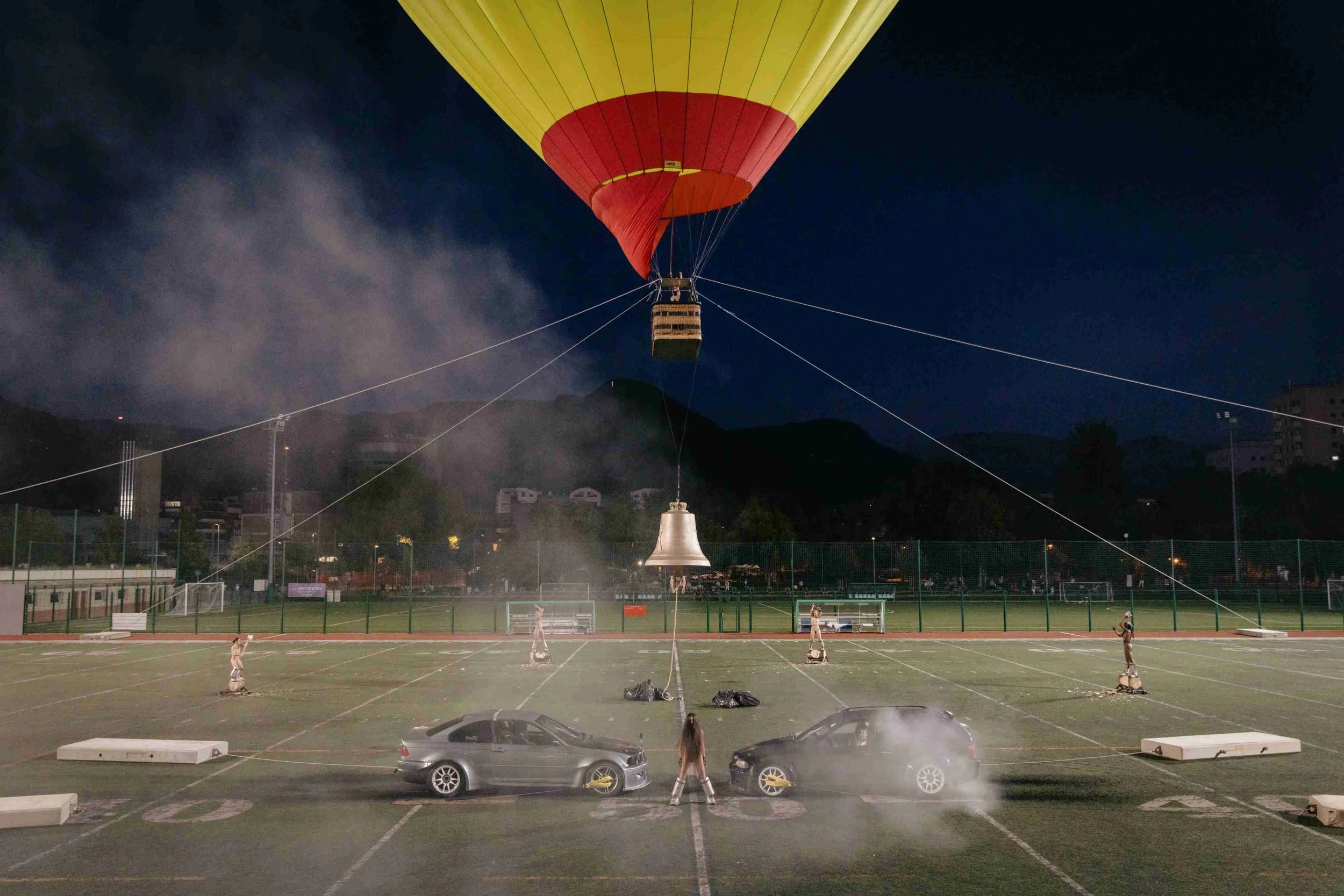
Photo: Helena Manhartsberger
Transart26 took over Bolzano and South Tyrol this September with a programme that kept asking the audience to show up with their whole body. COEVAL followed the festival and picked three evenings that stayed with us long after the lights came up.
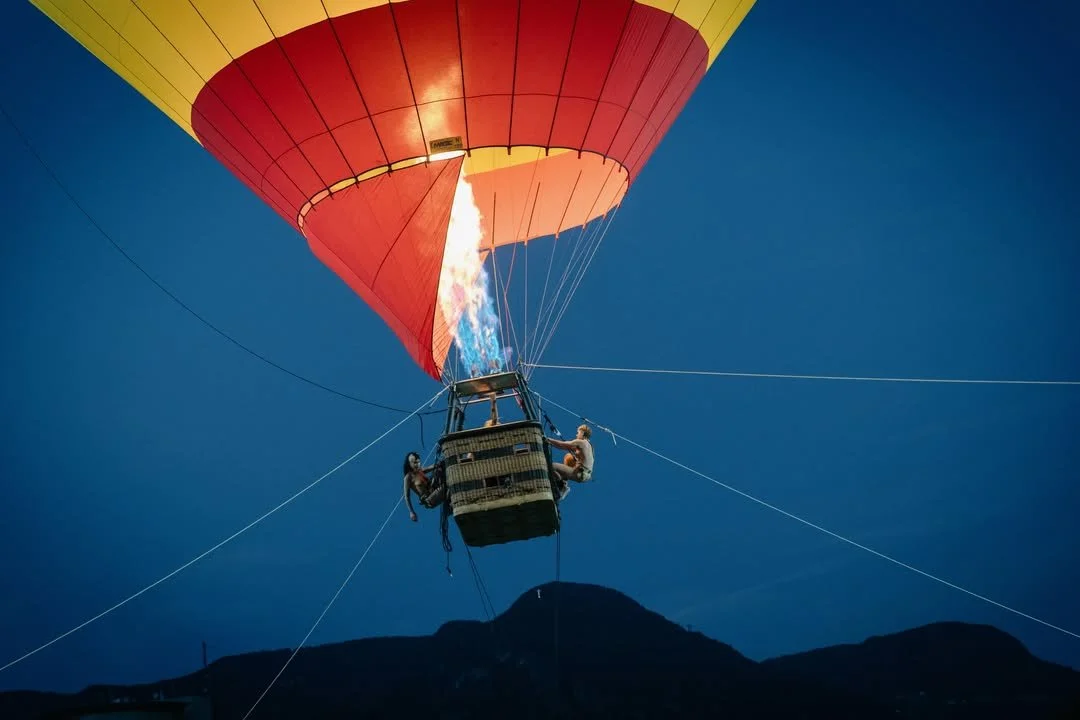
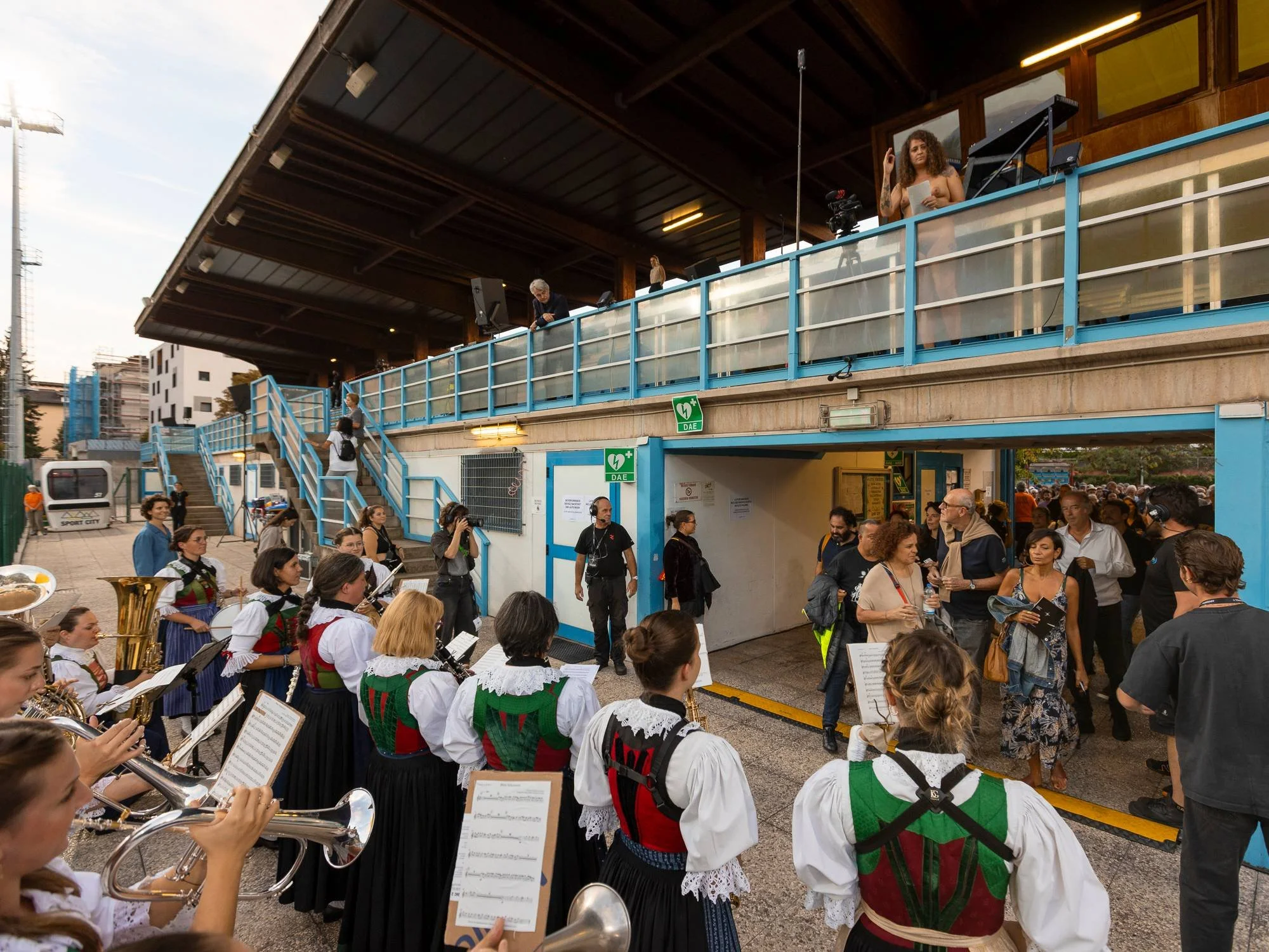
At Stadio Europa, Florentina Holzinger staged Stadion Étude, a satellite of SEAWORLD VENICE, her Austrian Pavilion at the 61st Venice Biennale. A hot air balloon rose over the pitch while a Musikkapelle played regional Volksmusik below. Performers climbed up to two bells and became their pendulums.
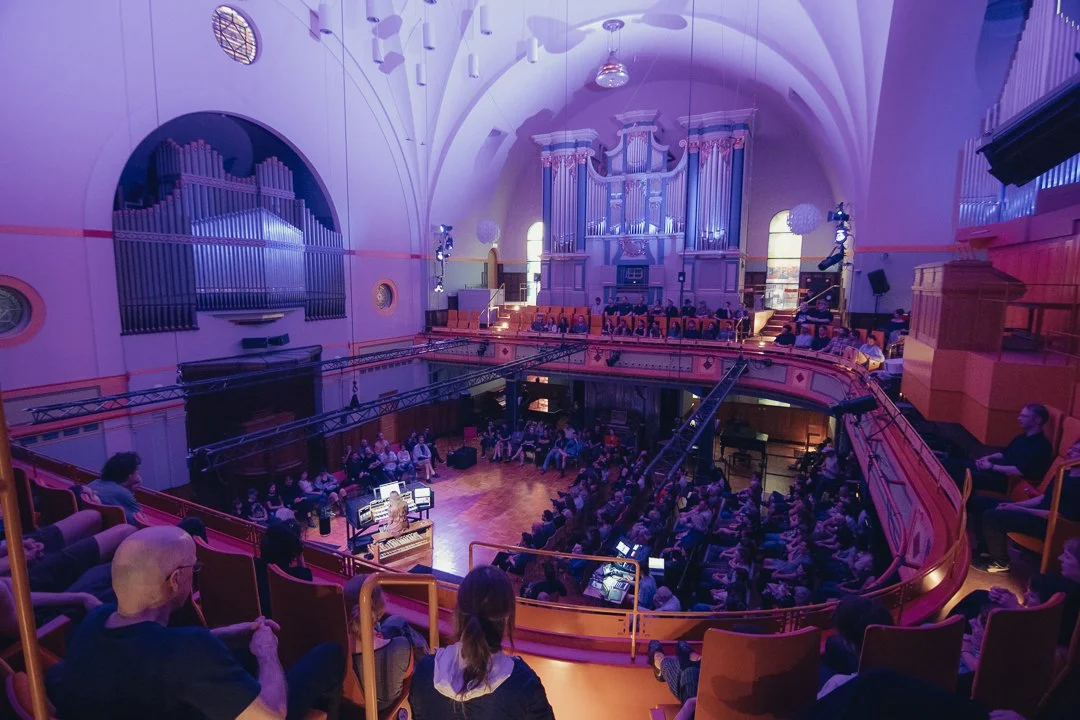
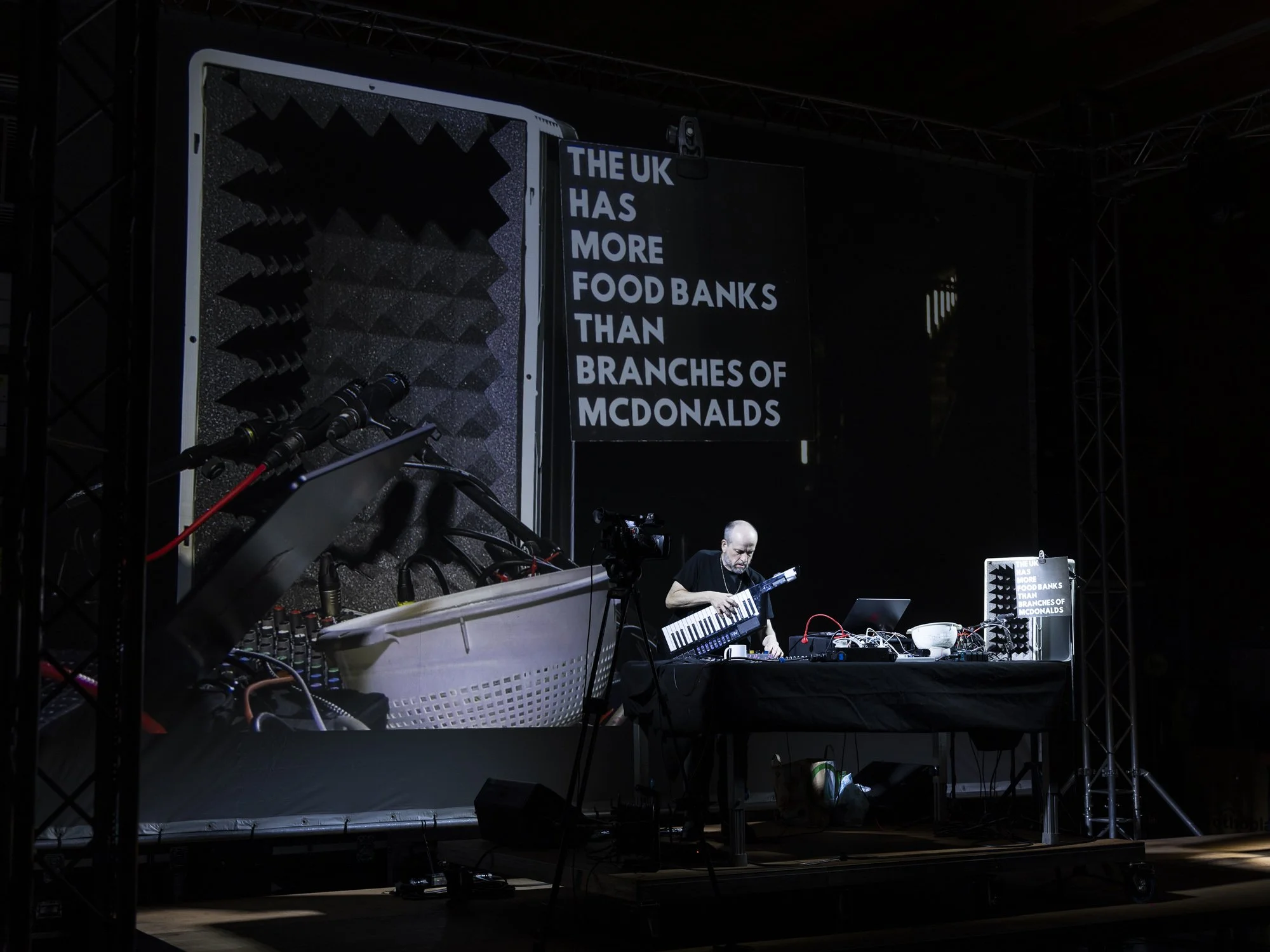
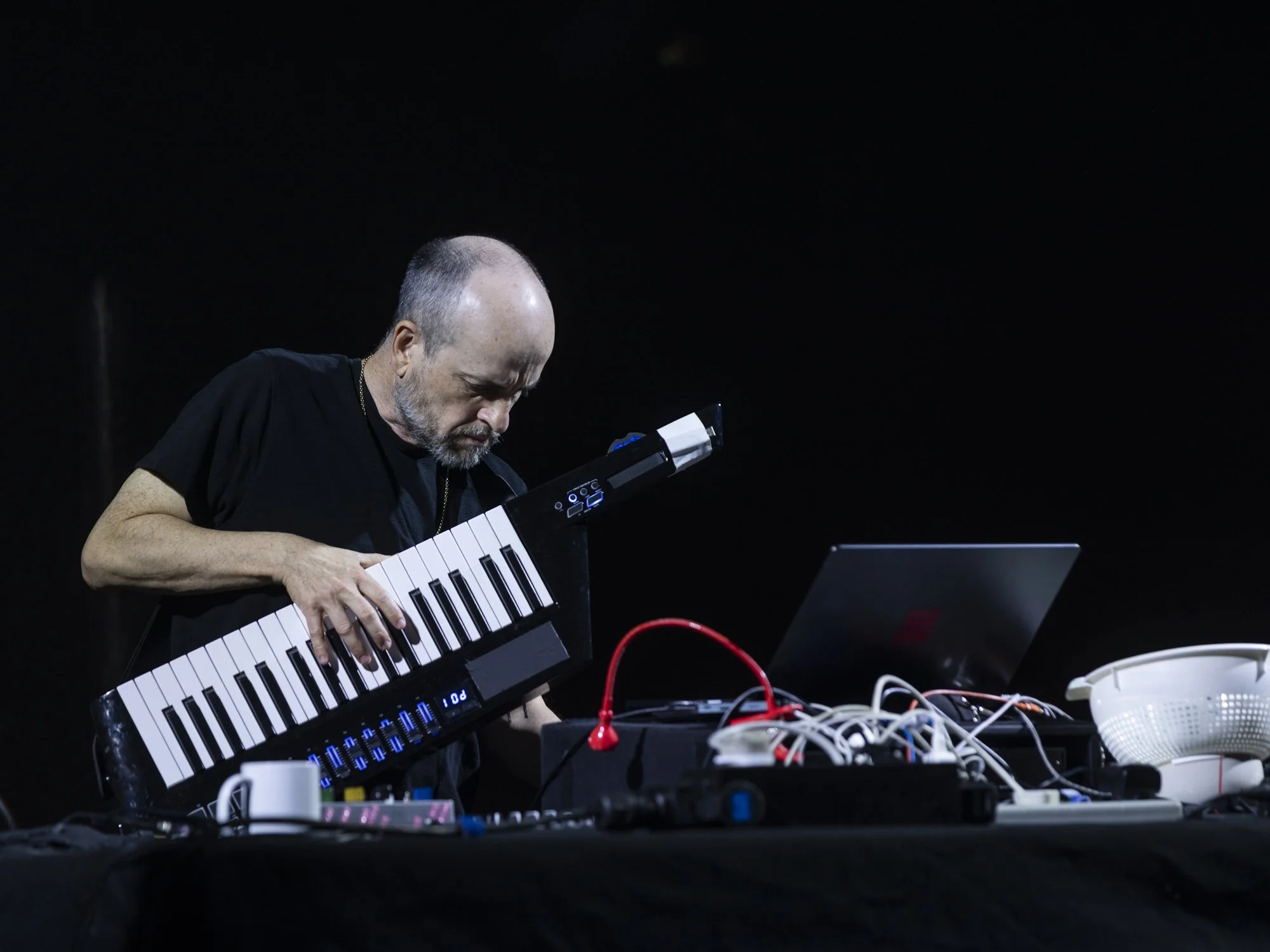
In Kurtatsch, Xiu Xiu returned to David Lynch with Eraserhead Xiu Xiu. Matthew Herbert followed with an album made entirely from the contents of food bank parcels, its title a working URL.
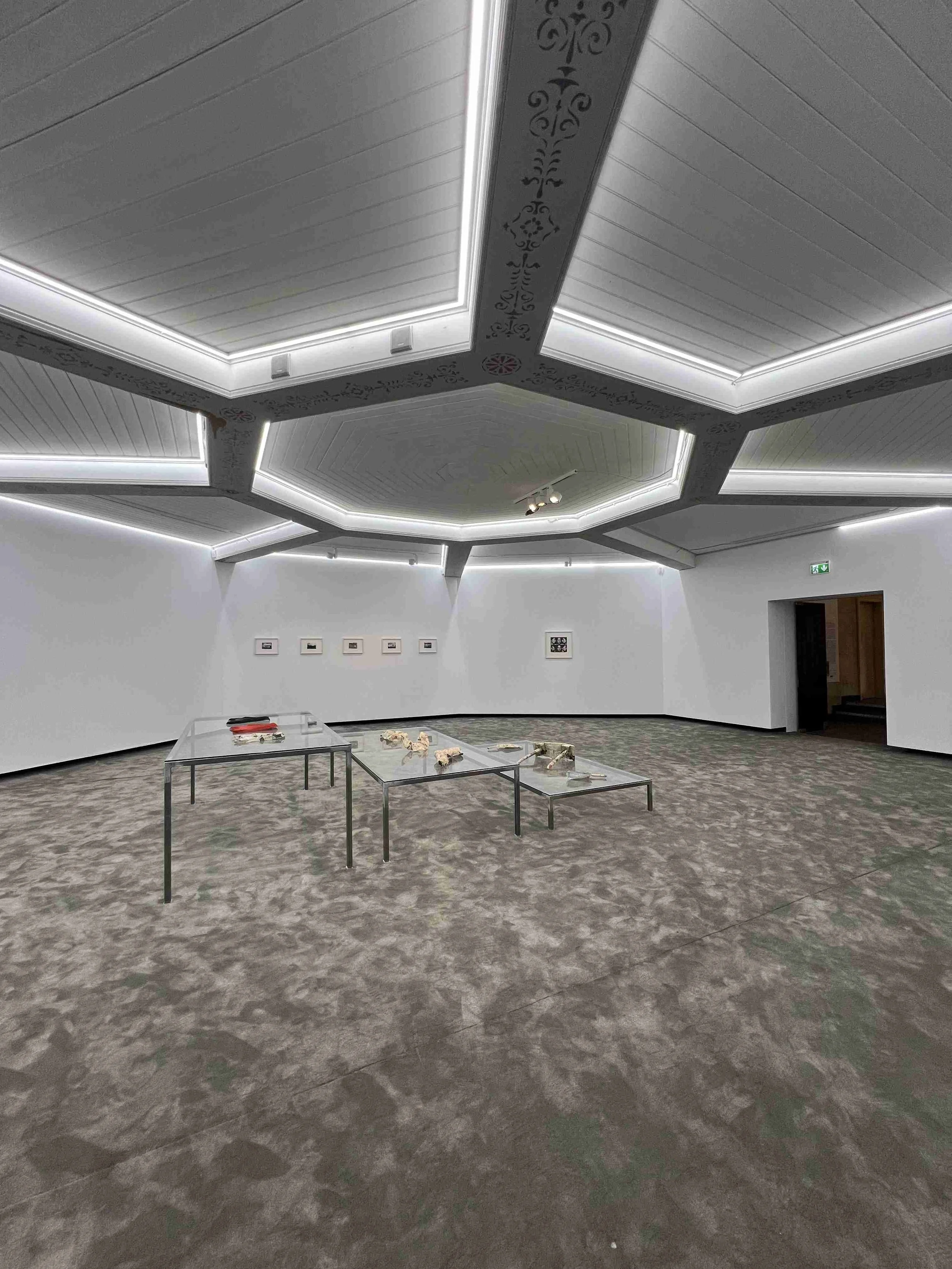
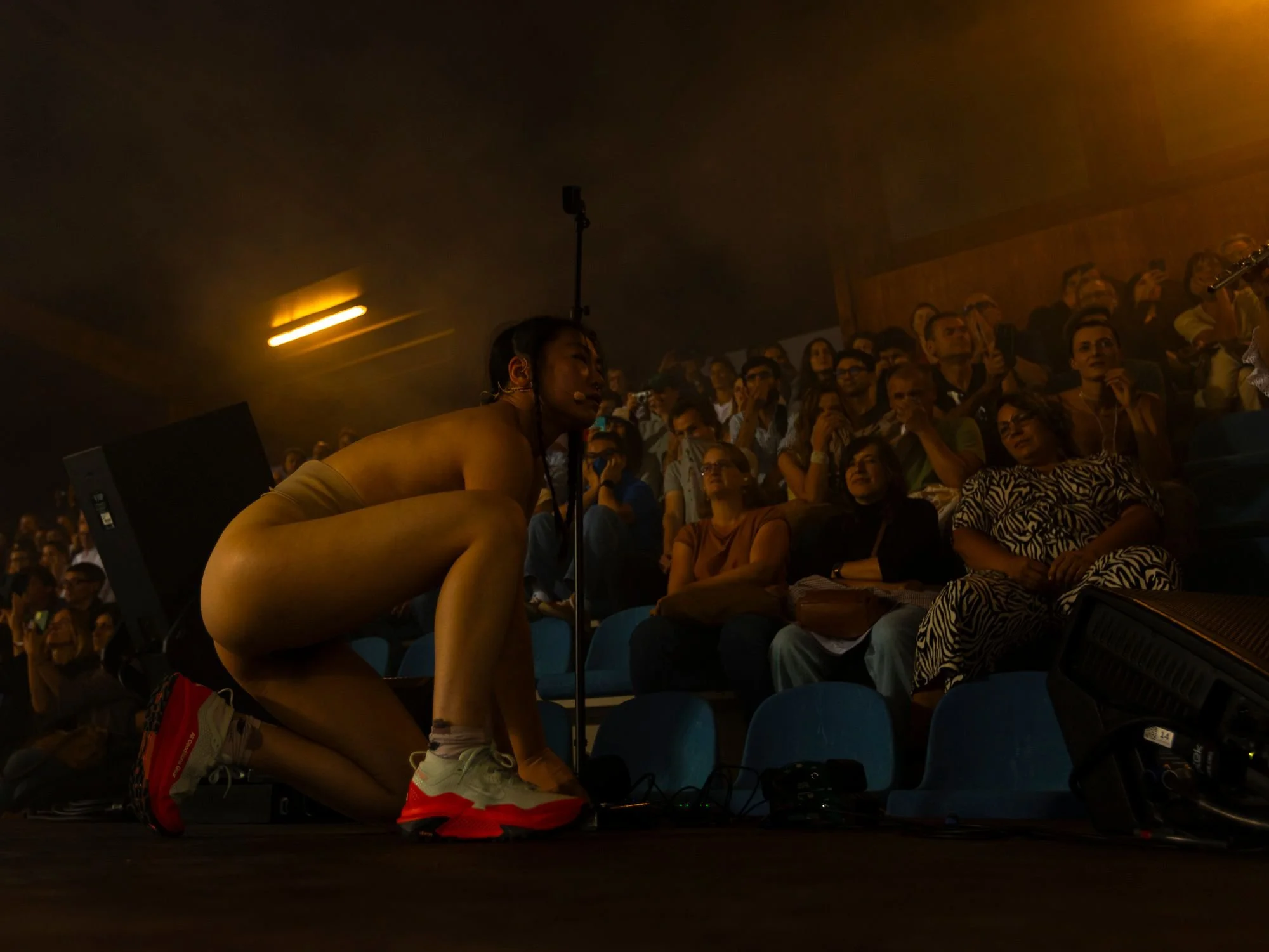
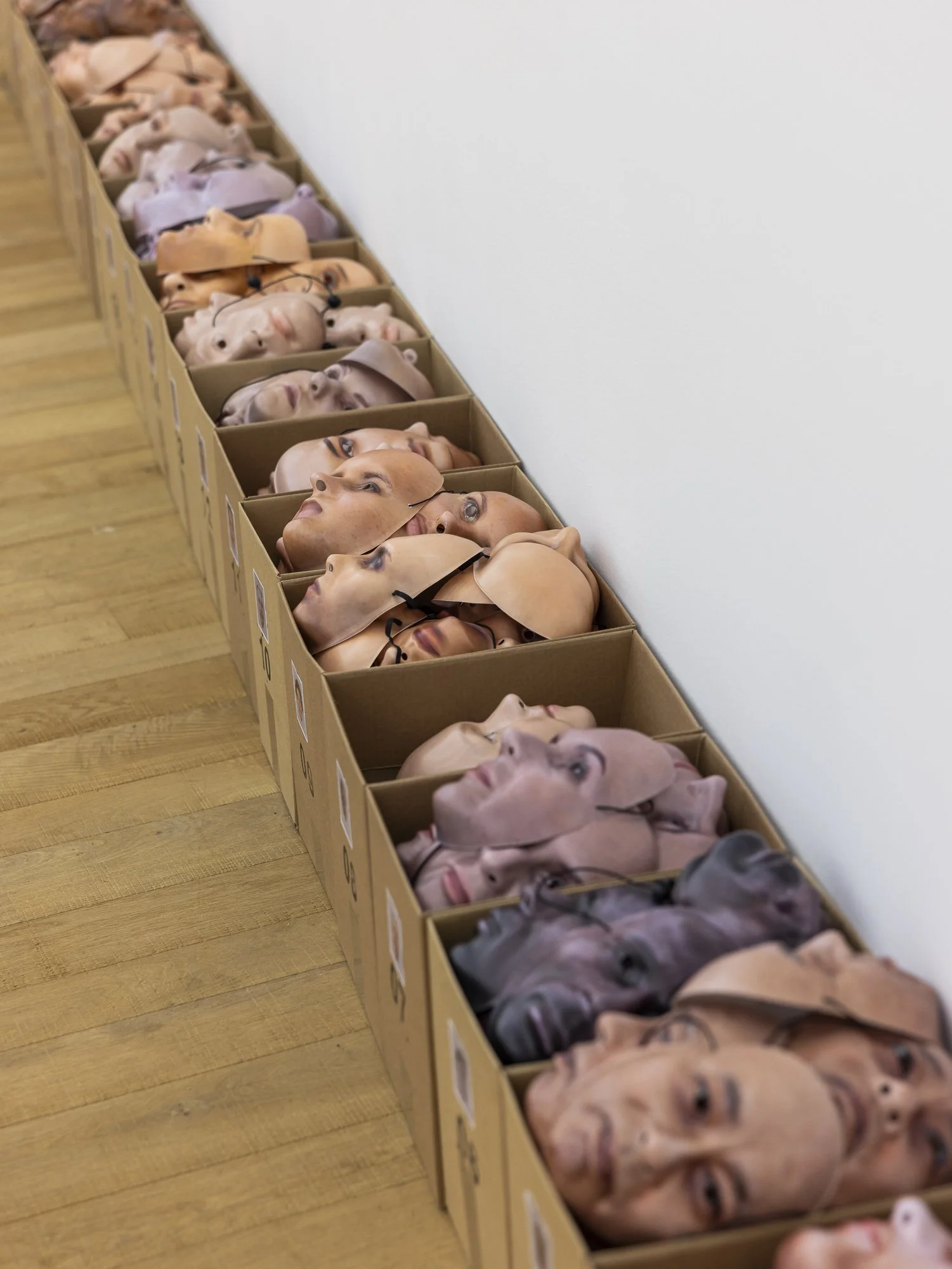
Romeo Castellucci's Credere alle Maschere began at the door, where every spectator received a mask to wear for the whole performance and keep for life. Inside, words on a wall named objects wrongly, and an electric chair waited for its volunteers.
Three very different works with one shared demand: take part. Here is what we saw.
Florentina Holzinger rings the stadium: Stadion Étude at Transart26
On the evening of 19 September, Stadio Europa in Bolzano became a bell tower. Florentina Holzinger brought Stadion Étude to Transart26, a single forty-minute performance conceived as a satellite of SEAWORLD VENICE, the work that represents Austria at the 61st Venice Biennale and drew the longest queues of any national pavilion this year. Anyone who stood in line at the Giardini will recognise the vocabulary: machines under strain and bodies pushed to the edge of endurance. In Bolzano, Holzinger scaled it up to the size of a football pitch.
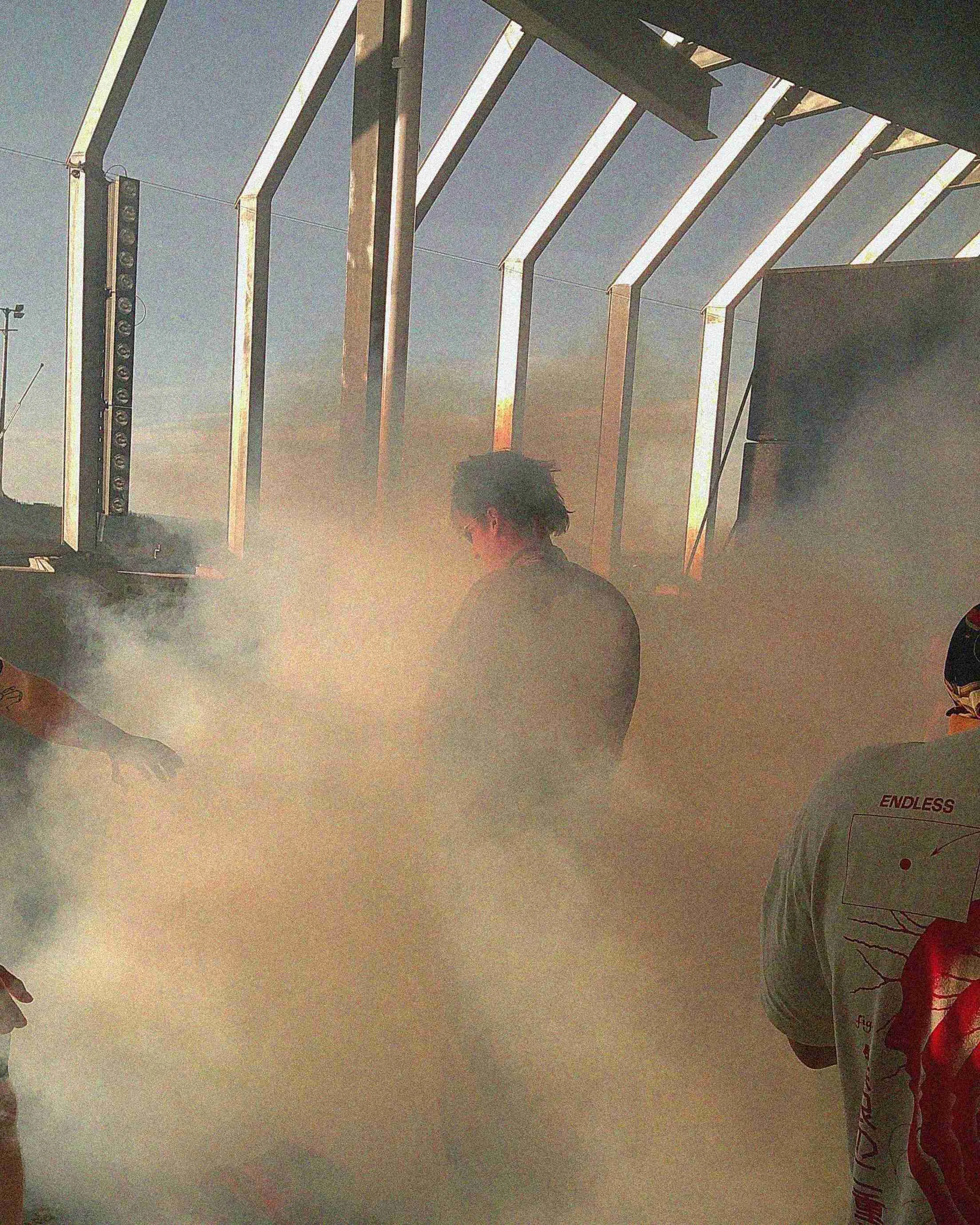
A hot air balloon rose at the centre of the field, anchored and swaying above the grass. Around it, heavy machines held steel cables at full tension, a web of pull stretched across the stadium. Two bells hung from the structure. The performers climbed up to them and swung their own bodies against the bronze, becoming the pendulum that struck each note. Every toll came from muscle and weight, and the audience could hear the effort inside the sound. Below, a Musikkapelle played. The brass band is the backbone of village life across South Tyrol, and Holzinger placed it at the heart of the composition together with the zither, folding motifs from regional Volksmusik into a score that grew stranger and heavier as the bells rang over it. For centuries, church bells marked parish borders and local identity in these valleys. Here they rang inside a stadium, the building Holzinger reads as the contemporary cathedral, where crowds gather to watch bodies perform at their limit.
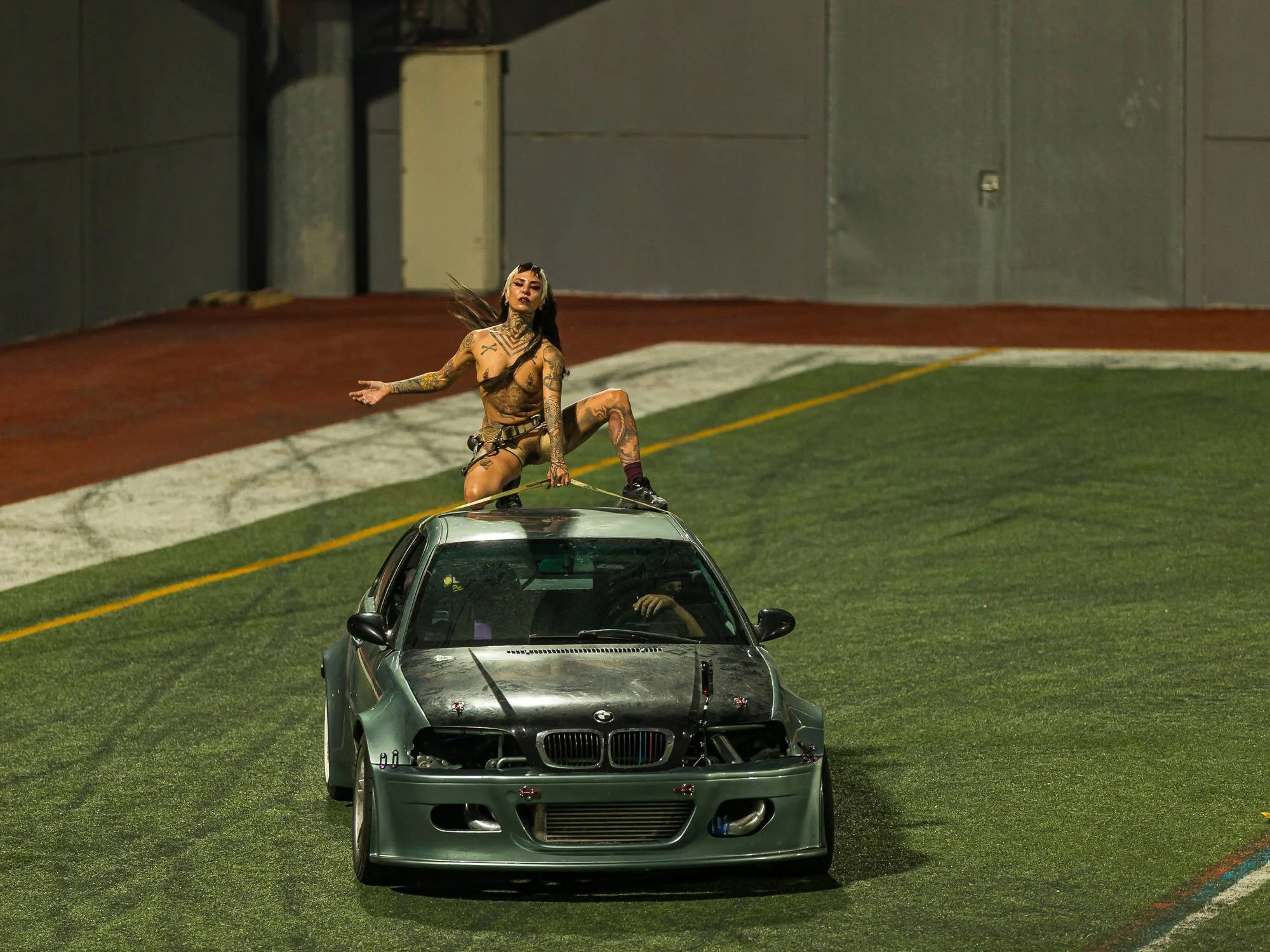
Photo: Andrew Klotz
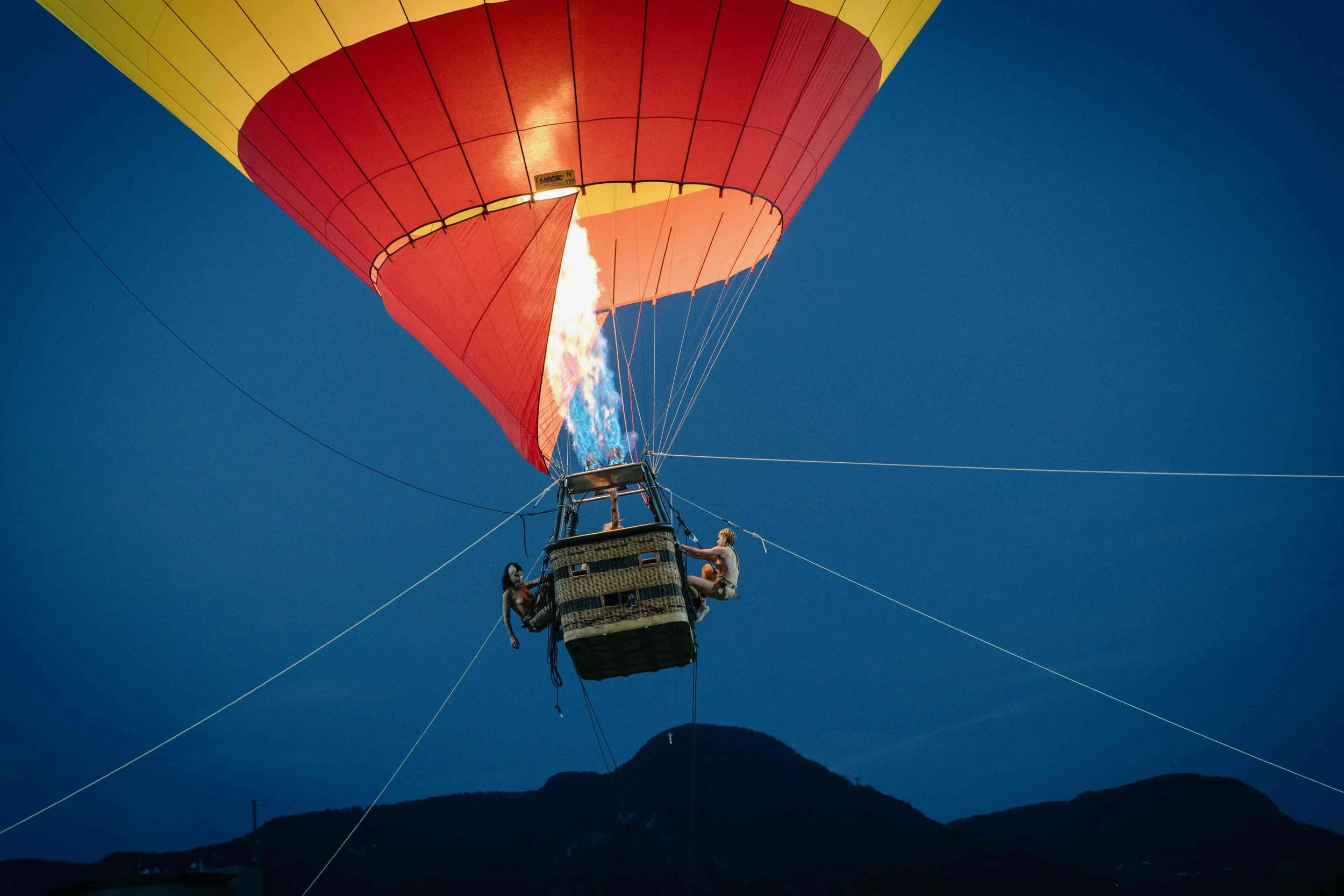
Photo: Helena Manhartsberger
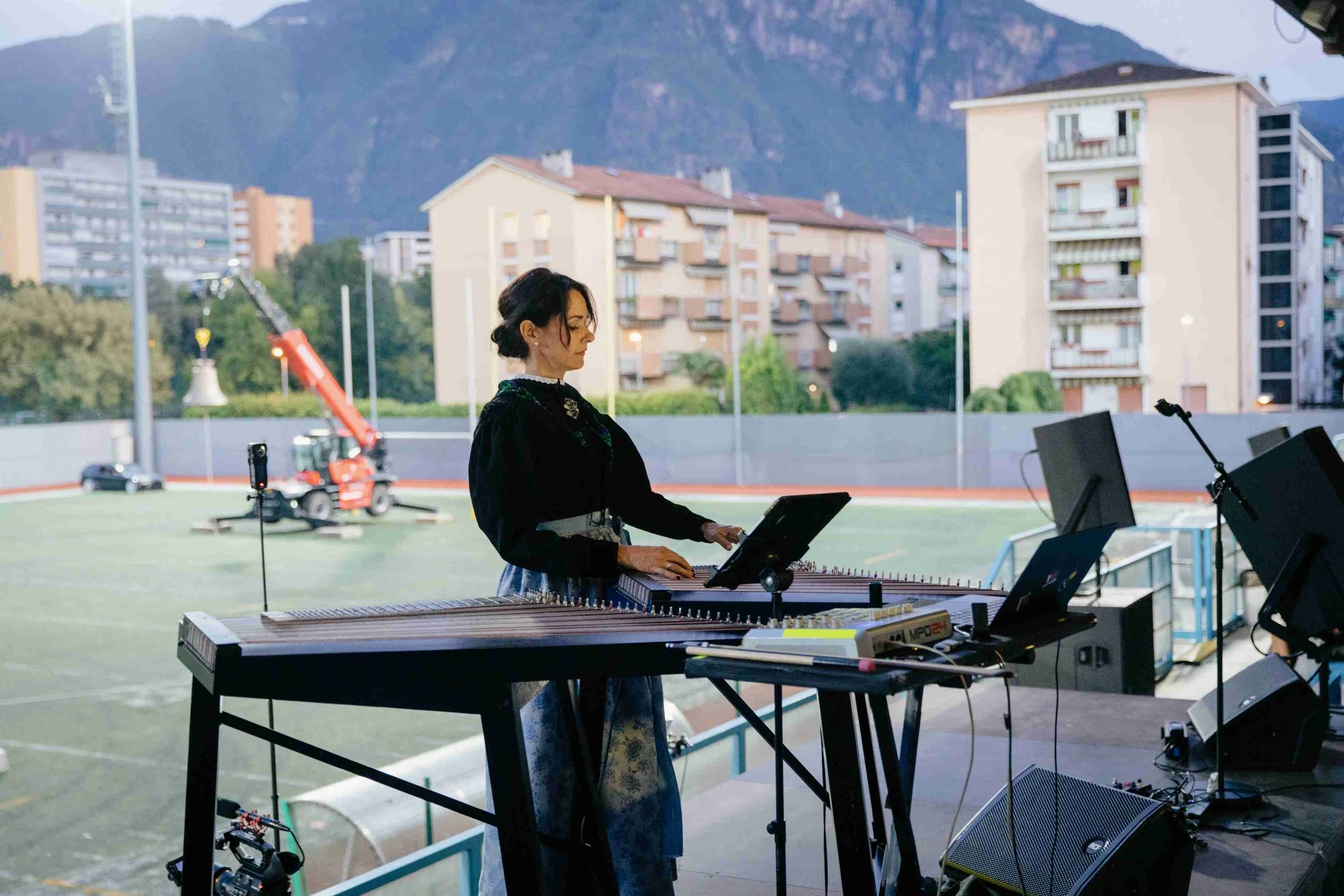
Photo: Helena Manhartsberger
The Études are Holzinger's ongoing series for public space, with earlier chapters staged alongside Schinkel Pavillon in Berlin, Bergen Kunsthall, Berlin Atonal and the Wiener Festwochen. Each one condenses her practice into a handful of images: a feminism shaped by technology and desire, with mechanics and physical resistance used to write new myths. Stadion Étude was the first to reach Alto Adige, and it felt made for the place, alpine tradition pulled into an apocalyptic ritual. Stadion Étude was produced with Transart Festival in collaboration with Bukhman Foundation, with additional support from Robert Ramsauer.
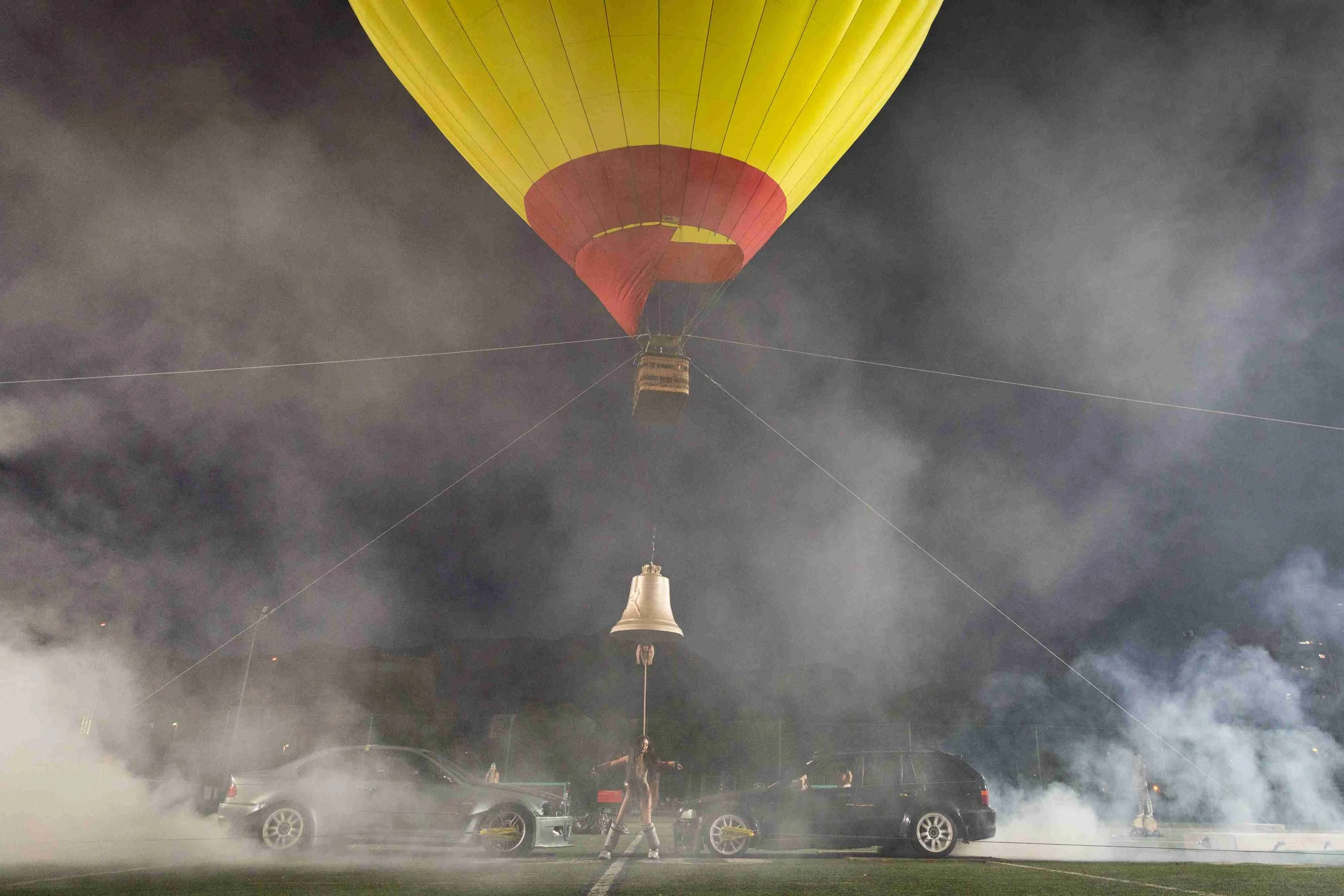
Photo: Helena Manhartsberger
Romeo Castellucci: Credere alle Maschere
There is something peculiar about the title Credere alle Maschere, something that disappears almost immediately when it is translated into the familiar vocabulary of theatrical criticism. To believe in masks would imply that masks are objects of belief, perhaps figures behind which another identity is concealed, perhaps surfaces whose falsity must be overcome in order to reach whatever truth lies beneath them. But the Italian construction is more ambiguous than this. One does not simply believe in a mask; one can believe the mask, just as one can believe a witness, an image, a testimony. The mask can therefore be treated not as the object of belief but as its speaker.
This distinction becomes decisive from the first moment of Romeo Castellucci's performance. Before there is an image, an action or even a theatrical space in the conventional sense, there is an instruction: the spectator receives a stiff mask that one has to wear throughout the performance. The mask is not selected according to an expressive preference, nor does it function as the customary theatrical invitation to assume another identity. It is distributed by chance, and yet Castellucci gives the object an almost juridical permanence: each mask belongs to the person who receives it and will remain theirs for life. A mask is forever and getting a face(lift) equals being sentenced. There’s zero reversibility in the arbitrary.
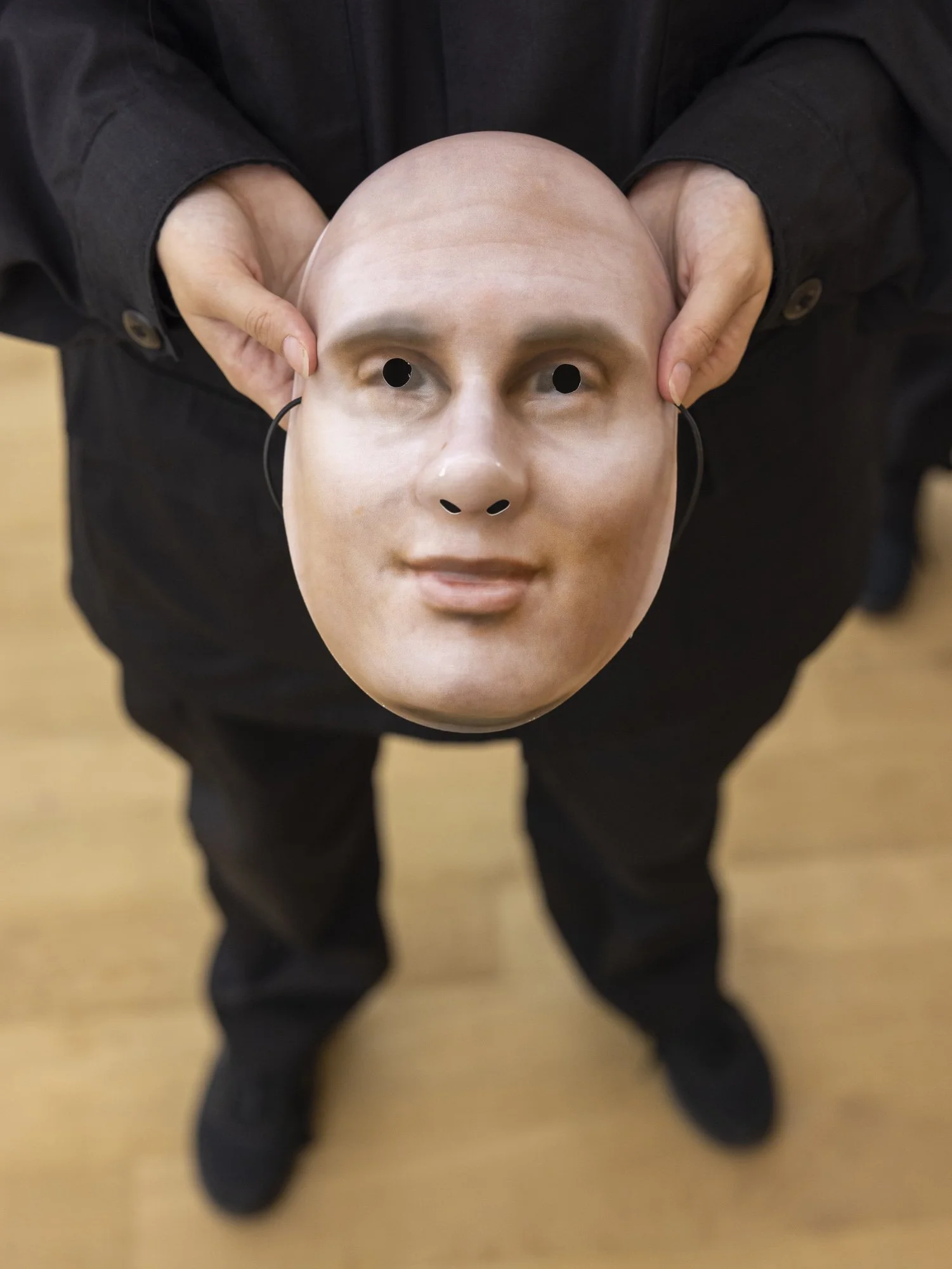
The theatrical event consequently begins with a protocol whose content is almost negligible but whose consequences are considerable. One puts something over one's face because one has been told to do so. There is no proposition to accept, no fiction to enter into, no character to inhabit. There are only bodies complying with conditions of access as the acceptance of the mask is a discriminating factor in deciding who will be allowed to sit and who will need to stay behind a red line.
This is perhaps where the performance's relation to language first becomes visible, although Credere alle Maschere is, strictly speaking, an almost wordless work. Its words appear on a wall. They name things, or seem to name them, while the objects brought into the room stubbornly refuse to correspond to those names. The pipe is not a pipe; other objects receive designations that belong elsewhere. Castellucci's own description deliberately invokes Magritte only to dismiss him: the pipe is “only an excuse” and “not the problem”.
The history of twentieth-century art has already made the discrepancy between words and things almost banal. What is more unusual here is that the spectator is not invited to contemplate the failure of language from a safe distance. The words do not cease to function merely because they cease to describe.
Deleuze and Guattari's argument in A Thousand Plateaus is that language not only contains commands, but that it is fundamentally implicated in relations of obligation and transformation: an utterance changes the situation in which it is received, producing an incorporeal transformation in bodies that have been caught within a particular assemblage. Language, in this sense, does not first communicate a content and only afterwards produce an effect; its capacity to affect is already internal to its functioning as language.
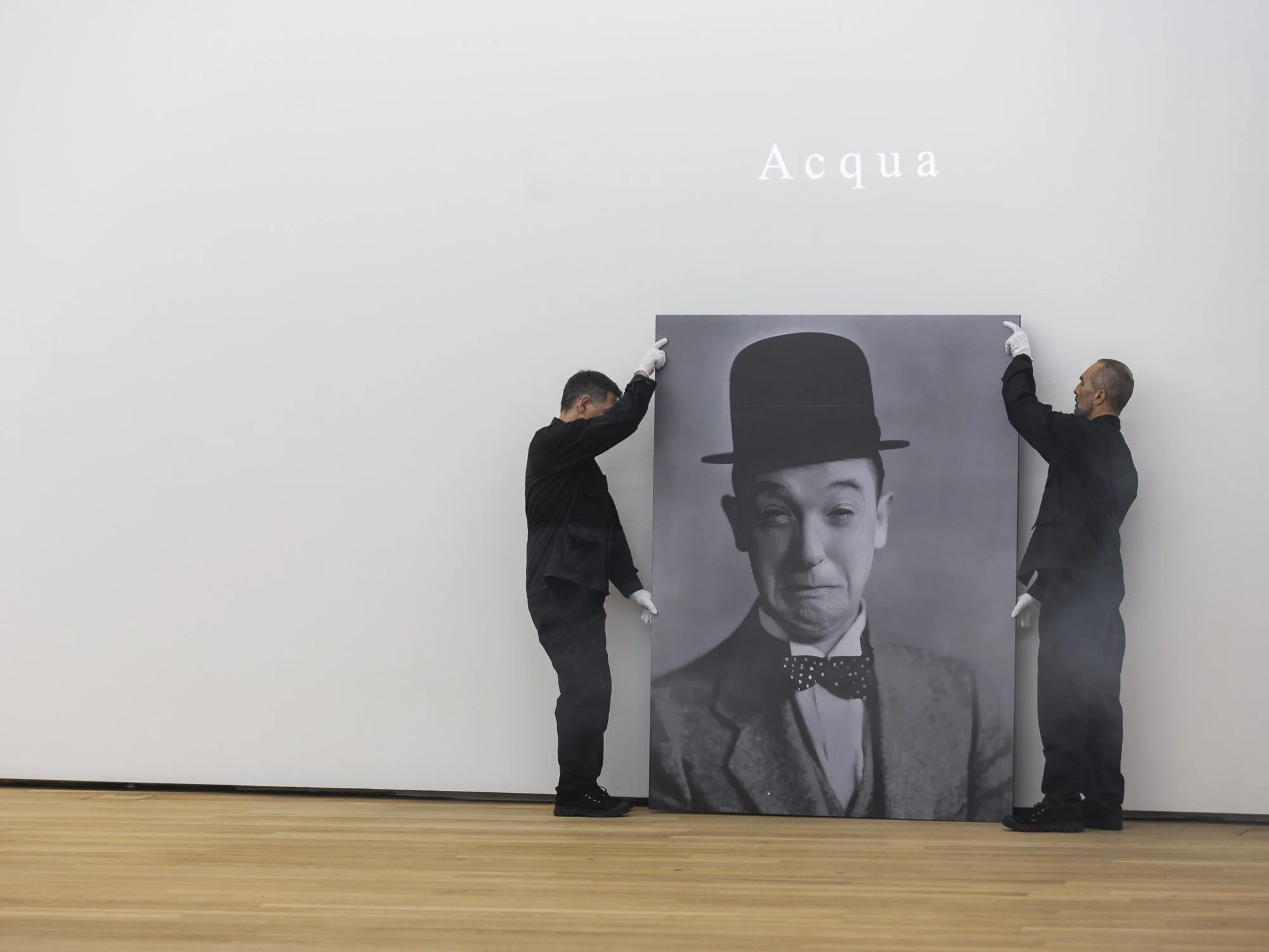
A word beside an object establishes a relation, even when that relation is manifestly false. It causes the spectator to perform a small act of correction, to compare, hesitate, substitute, search for a correspondence that has been deliberately withheld. Castellucci turns the spectator into a grammatical animal: a body continually attempting to restore the missing syntax between what is seen and what is said.
But this is also why the mask cannot be separated from the projected words. Both belong to the same economy of legibility. The wall receives the word; the face receives the mask. One establishes what the object may be called, the other establishes what the spectator may appear to be. Both are surfaces upon which an order is inscribed.
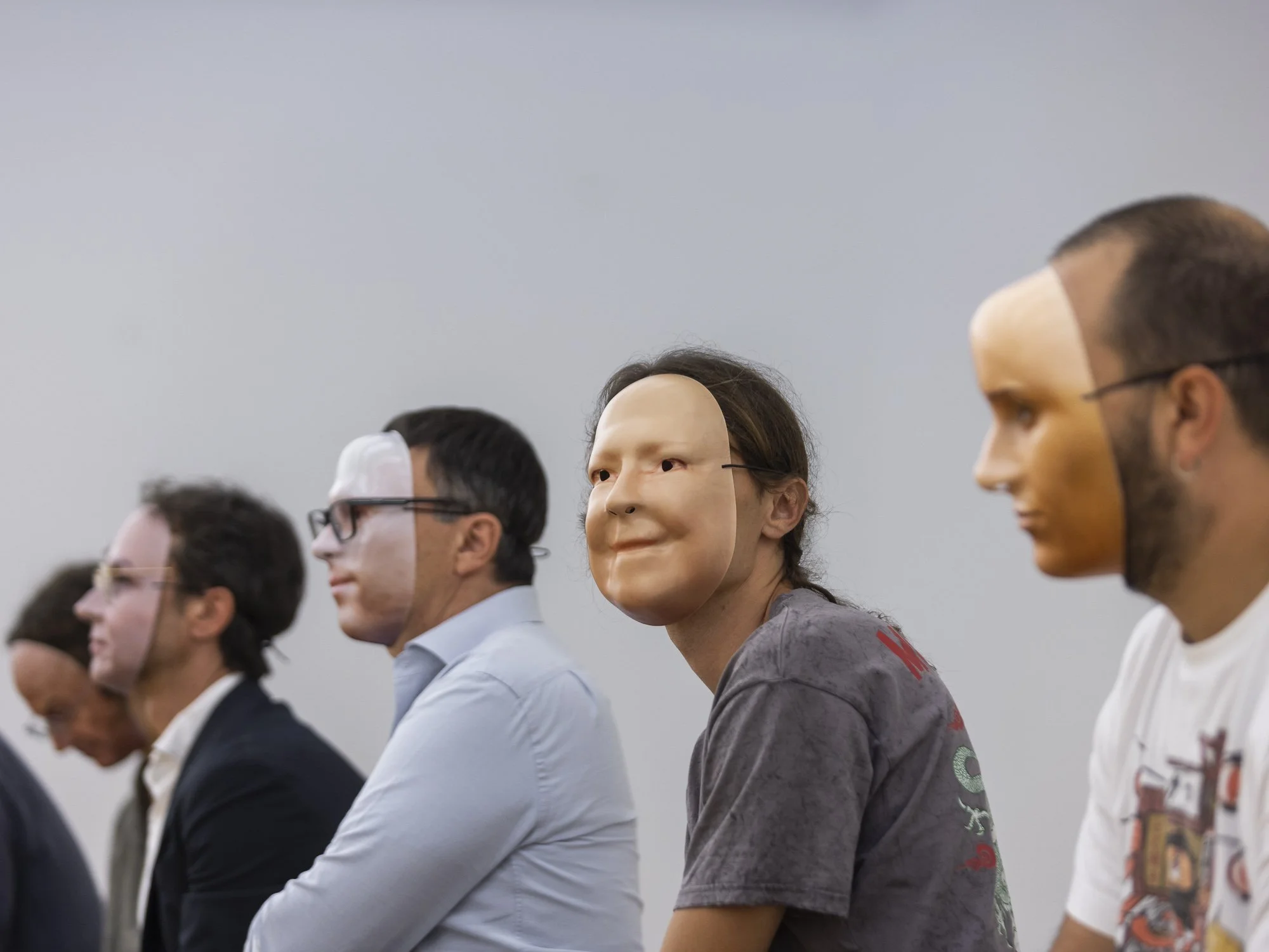
Hans Belting's history of the face is particularly pertinent because it refuses the assumption that the face is simply a natural given to which the mask is subsequently added. The face is already bound to representation, role and interaction: it becomes a face through the encounter between seeing and being seen, and its expressions continuously produce new versions of the face that one has. To make it short, the spectator does not become another person by putting on the mask. The spectator becomes perceptible according to another regime.
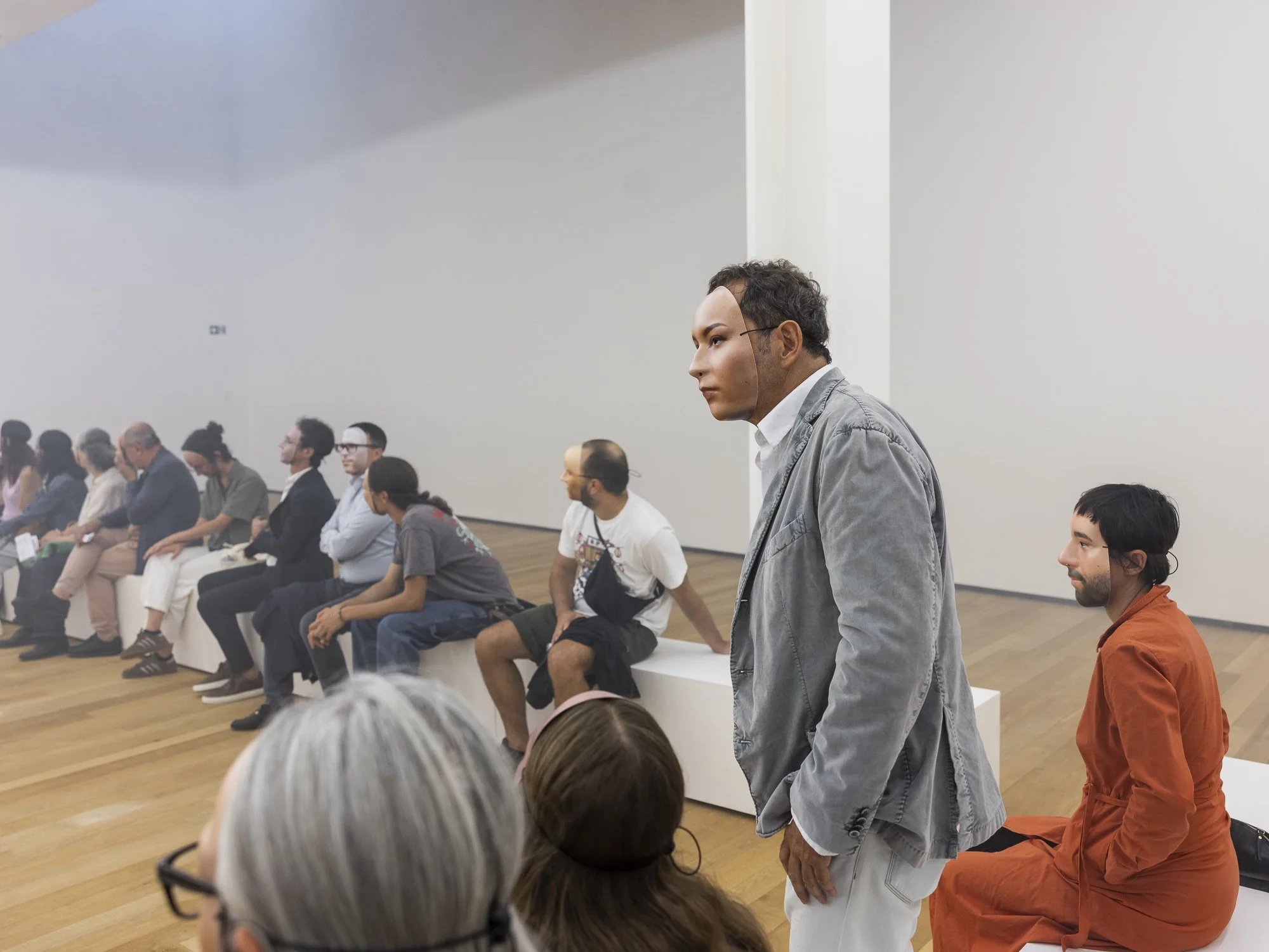
For Canetti, one of the fundamental transformations produced by the crowd is the temporary abolition of distance between individuals and, with it, the anxiety of being touched, identified and seized. The crowd changes the body's relation to the bodies around it; it does not merely contain more people but produces another kind of corporeal existence.
Castellucci's spectators constitute precisely such a provisional body, although in an inverted form. They are physically close but visually estranged. Their faces are present and yet inaccessible. They occupy the same space without being able to verify one another as individuals. This is perhaps the deeper meaning of Castellucci's insistence that the mask belongs to its recipient for life. What is being given is not an identity but the possibility of carrying an externally produced identity beyond the temporal limits of the performance. The theatrical object is permitted to outlive the theatre because the distinction between the theatrical and the non-theatrical has already been compromised. The mask leaves with the spectator and the theatre has therefore ceased to be just a place.
Among the different object/word pairings that the performance displays, there’s one that seems to occupy a prominent position (funnily enough, it will be the only one against which the performers will lash out) and that is an (electric) chair. A chair is perhaps the most ordinary of theatrical objects, almost beneath interpretation. It is defined by its use: something on which a body sits. Yet the chair that appears in Castellucci's description is already contaminated by memory, by art history, by Warhol, by the association with the electric chair and therefore with the transformation of an object of everyday utility into an apparatus of sovereign violence. Castellucci himself describes it as a chair “seen from afar” that recalls Warhol, then himself, then the spectator. The sequence is not an iconographic puzzle, but rather a genealogy of the gaze.
If an urn is a “pipe”, a crucifix is “rain”, the skin is the “screen”, flowers are the “face”, an (electric) chair is just a “chair” upon which one does (not) die. During the act, a total of three performers, disguised among the public, stand up from their place on the very same benches we were sitting on to either sit on or attack this chair; it is quite interesting that the two female figures are the ones voluntarily sitting down to be electrocuted, the second after having witnessed what happened to the first. They are interspersed with a male figure who, offended, takes his offense out on the chair. And yet, who would ever refuse a seat?
There’s a persistence of command after its premises have become visibly false, which questions the very way in which we can live with ourselves. Every chair is an electric chair, there’s no safe space. After electrocution, the two shaking female performers try to cover themselves; it is cold when you are resurrected.
Xiu Xiu and Matthew Herbert at Transart26: a night of noise in Kurtatsch
On 12 September, Transart26 headed south of Bolzano to Rothoblaas in Kurtatsch/Cortaccia for a double bill presented with Museion. Two acts with very different starting points shared one conviction: sound can hold a film, a loss and a political argument, all at full volume.
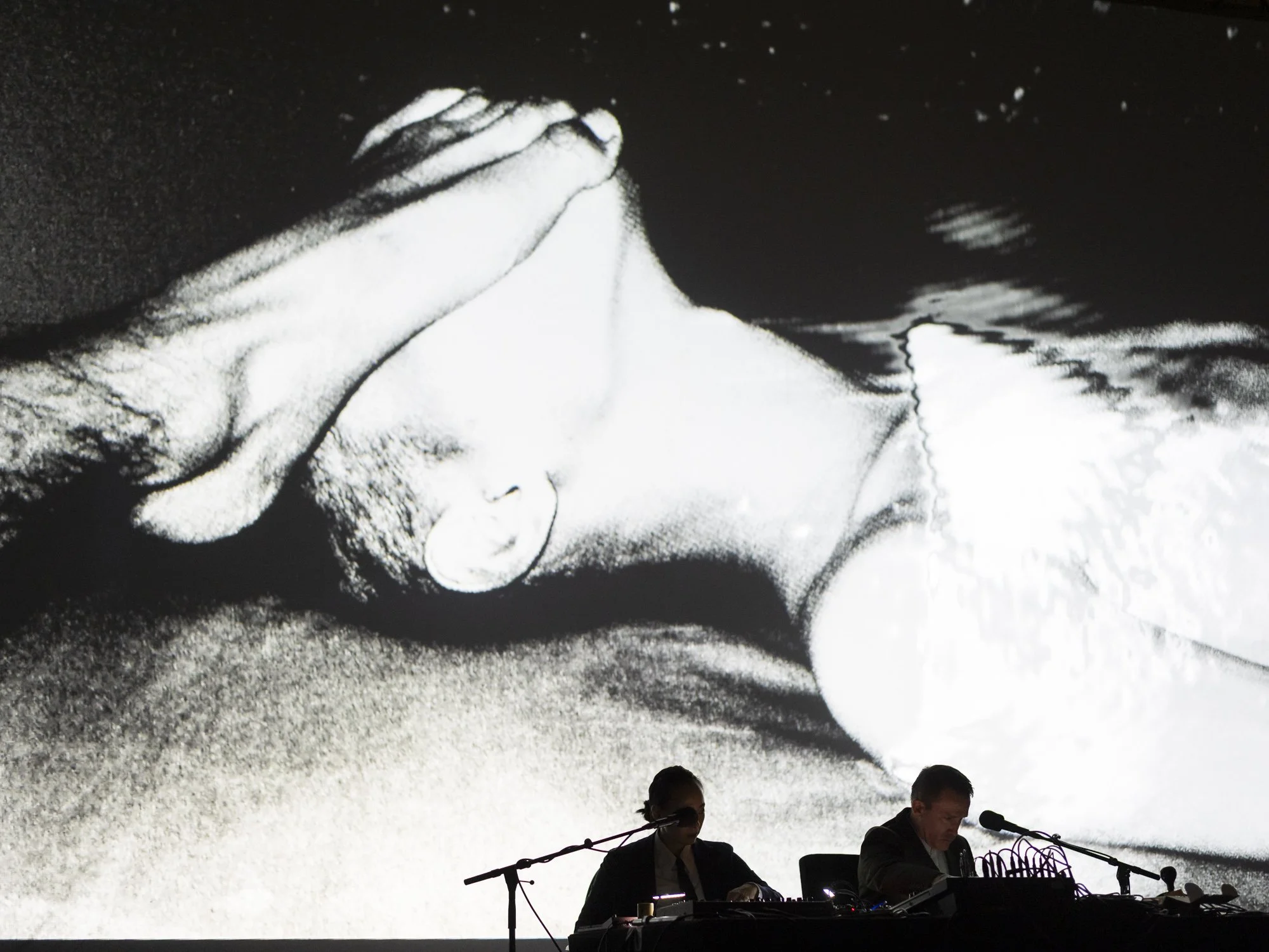
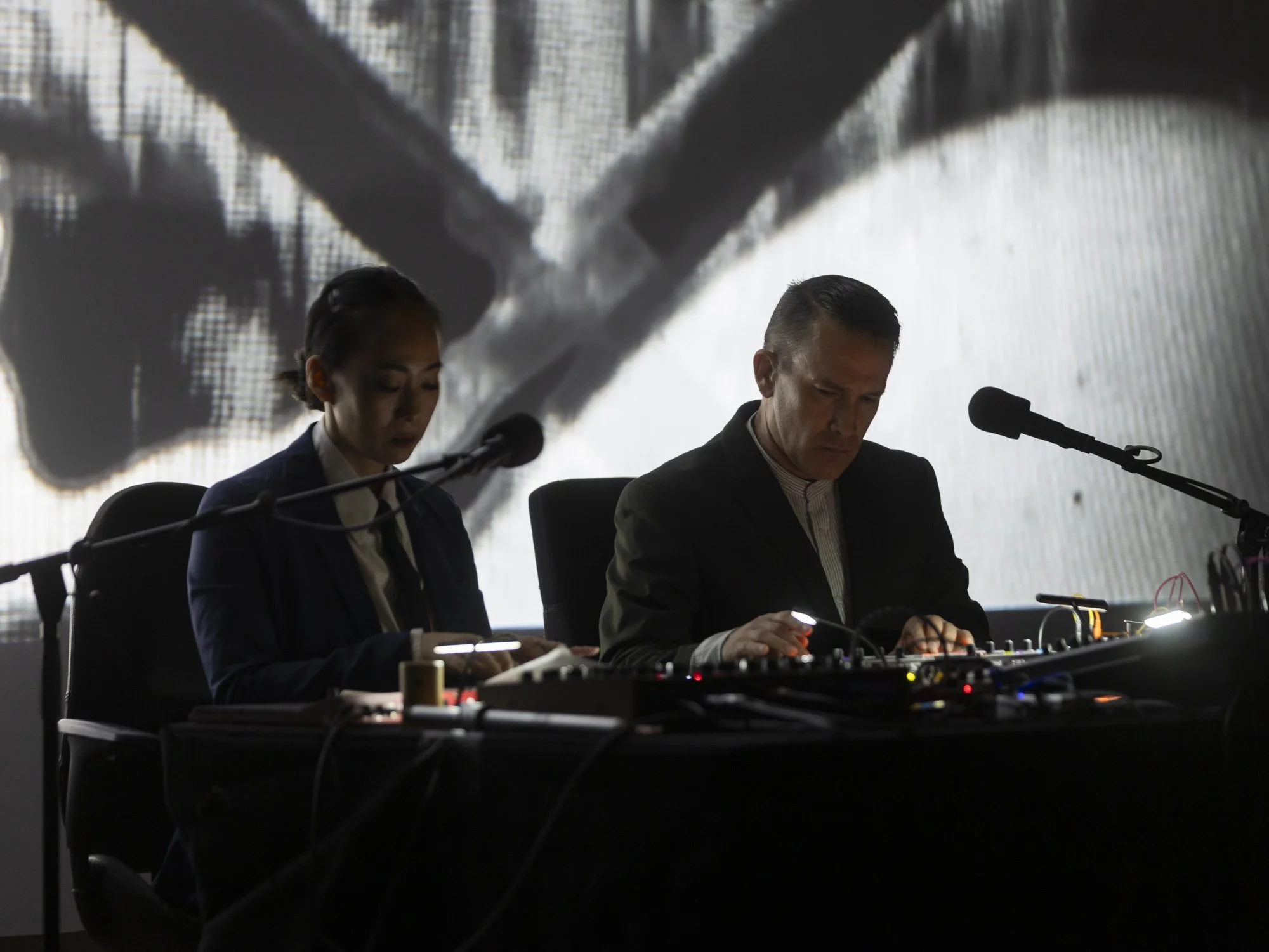
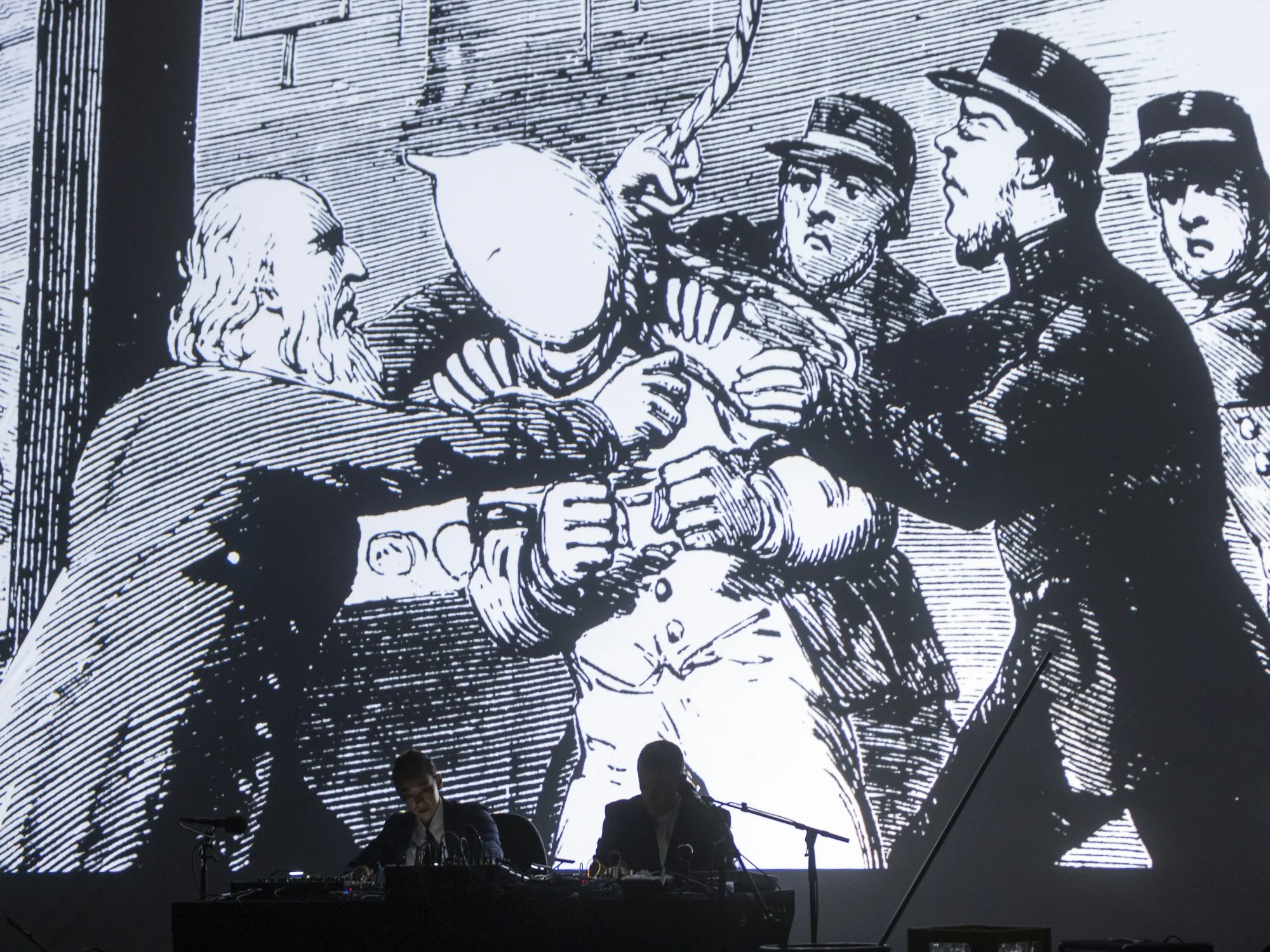
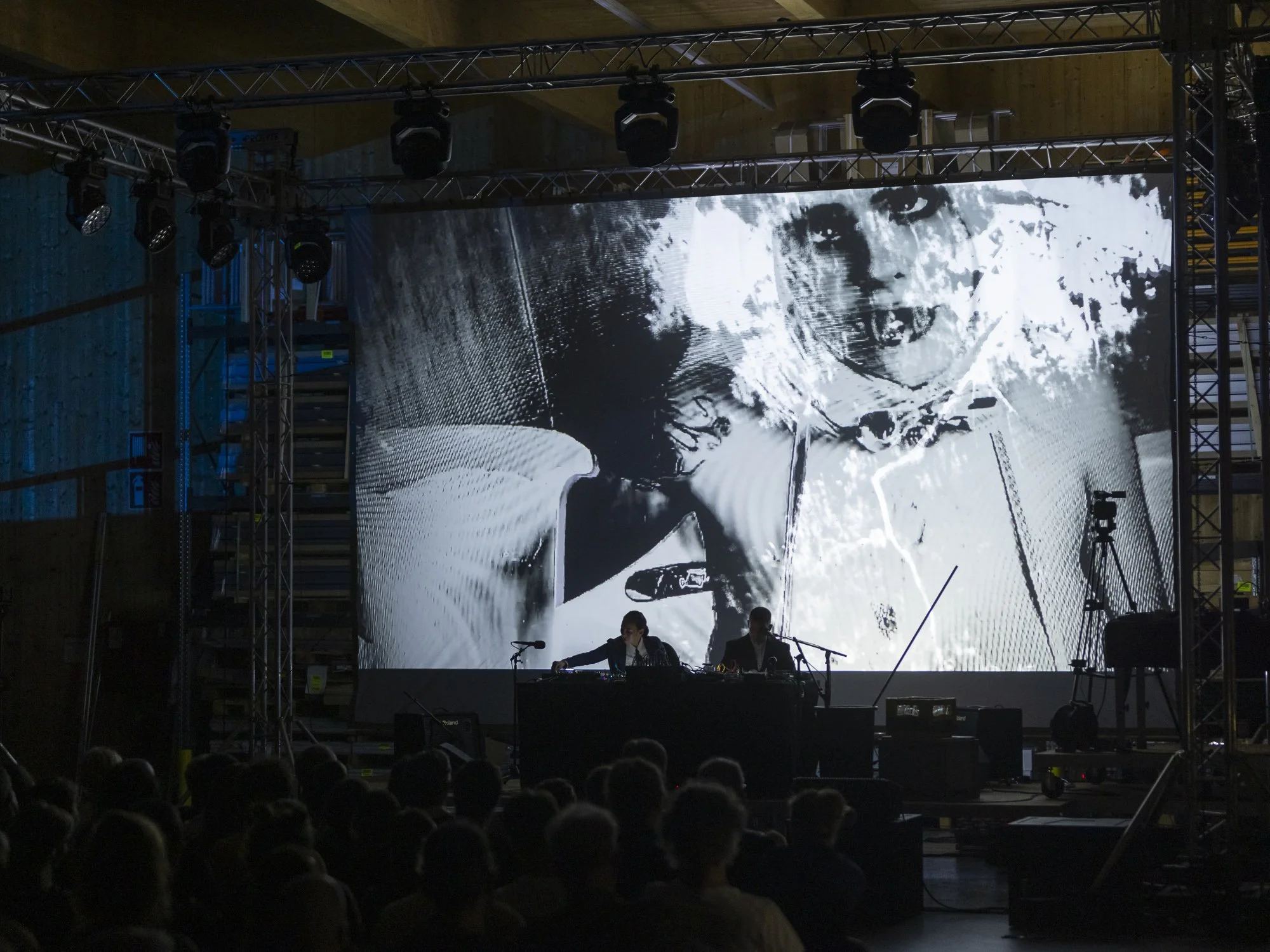
Xiu Xiu opened with Eraserhead Xiu Xiu. The band's bond with David Lynch goes back to 2016, when, with the blessing of Lynch and Angelo Badalamenti, they released and toured Plays the Music of Twin Peaks. Lynch's death drew Jamie Stewart and Angela Seo back into his world, this time with the ambition to push past reinterpretation. Their new live work, paired with the film and an album of the same name, starts from the original sound design Alan Splet and Lynch built for Lynch's 1977 debut. On stage, field recordings met handmade instruments and a church organ, modular synths hummed under Stewart's voice, and electrical interference cracked open into passages of musique concrète. The set leaned hard into the film's dread, with long minimal stretches that snapped into cacophony and a darkness thick enough to feel in the chest. As the programme put it, this is Eraserhead after all.
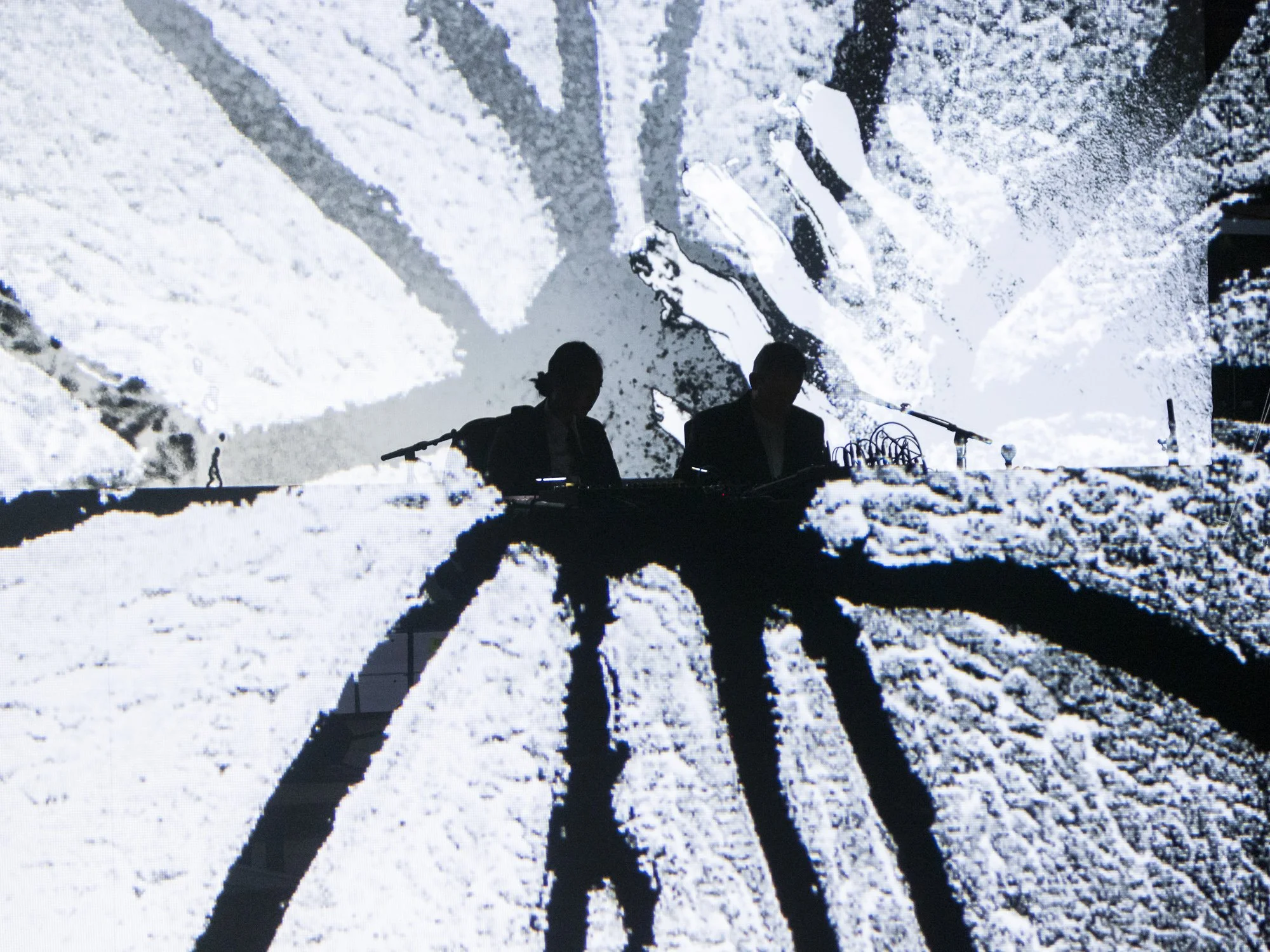
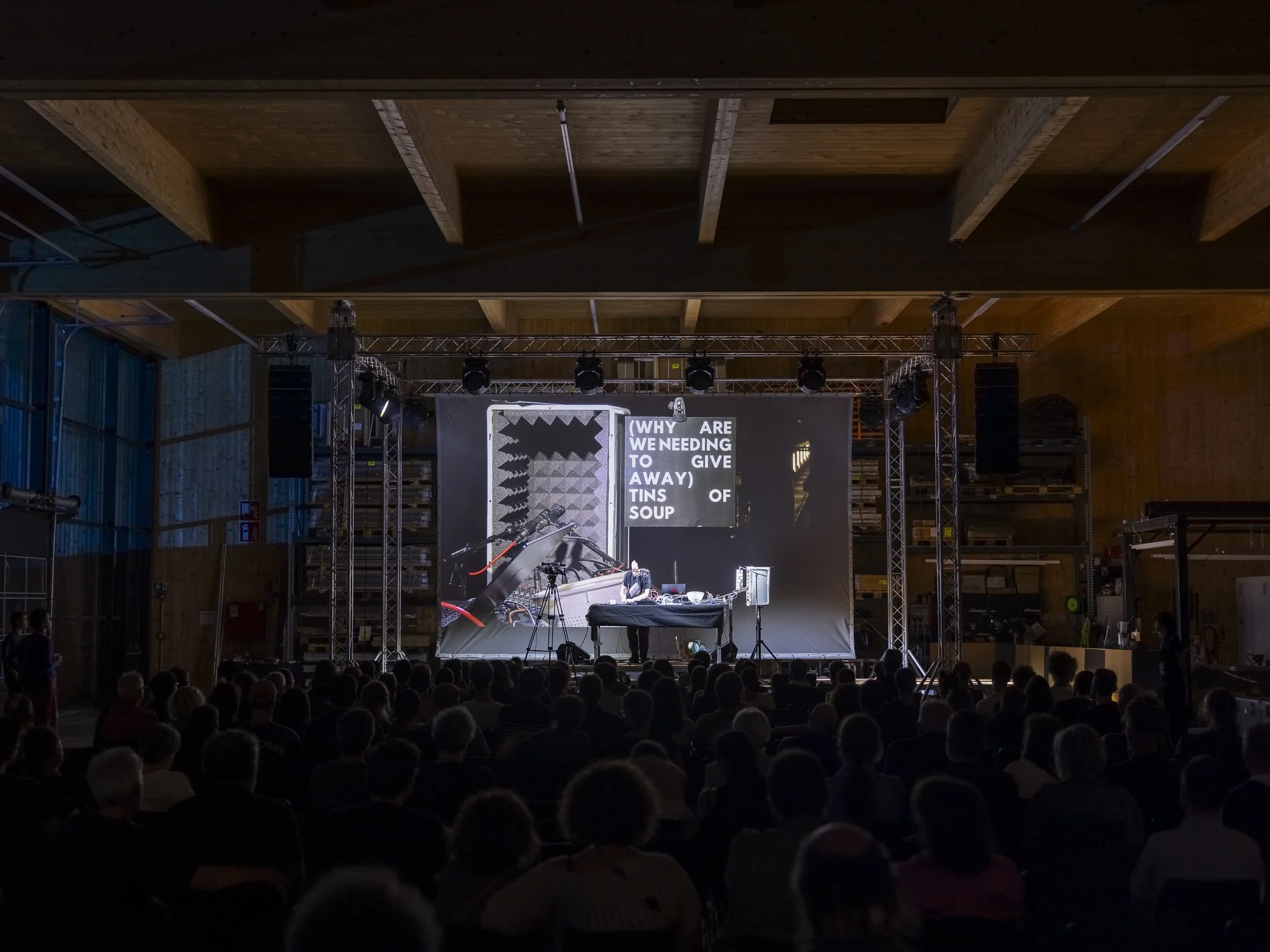
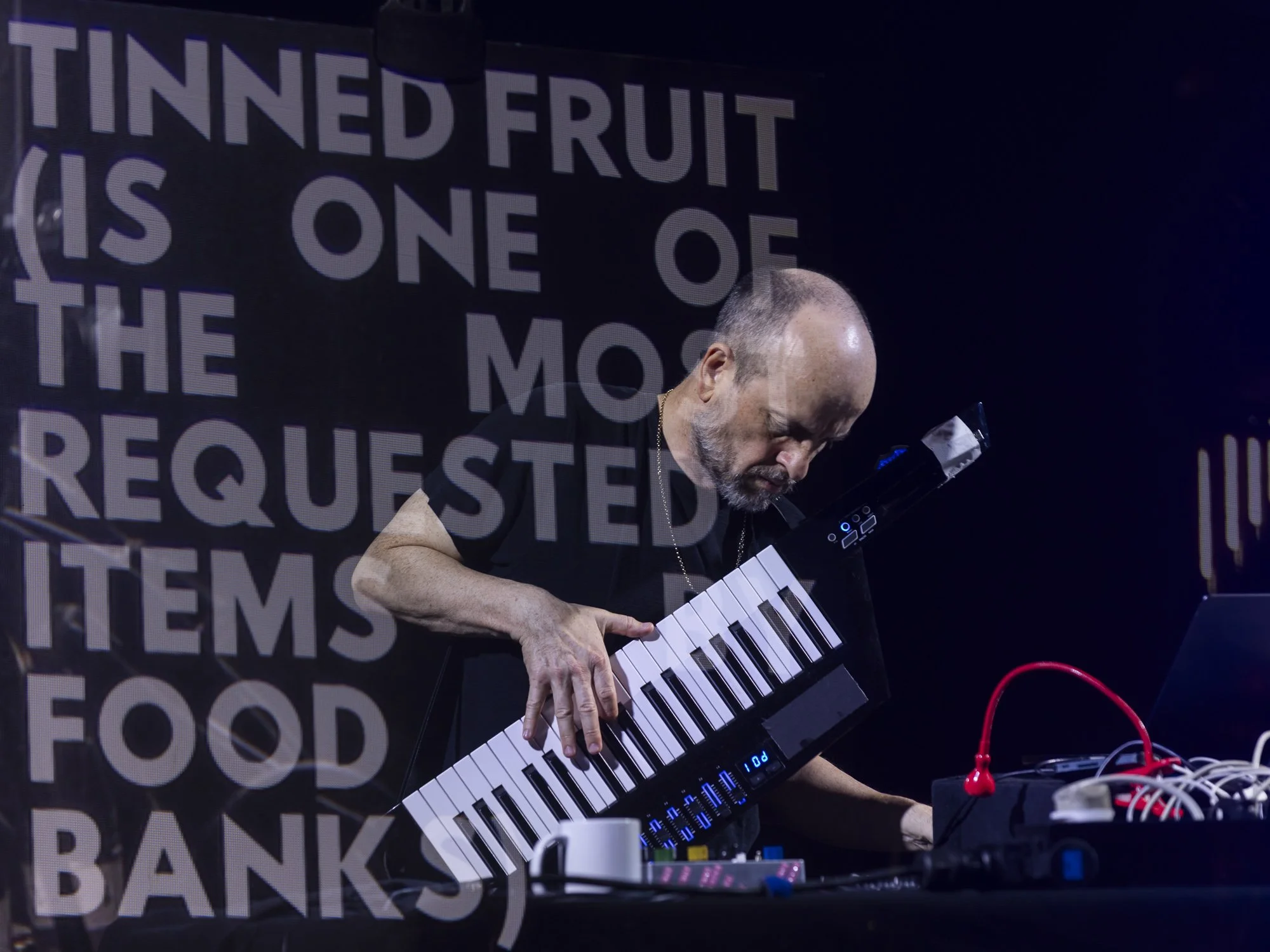
Matthew Herbert followed with theukhasmorefoodbanksthanbranchesofmcdonalds.com, a title that doubles as a thesis. In 2000 the United Kingdom counted zero food banks. Today it counts more than 2,800, while British billionaires grew from around 30 to around 150 over the same years, a gap Herbert ties directly to fifteen years of austerity. The album is built entirely from samples of products handed out at food banks: pasta, cereal, tinned fruit, nappies, toilet paper. Rattling packets and dented tins turned into rhythm and grain, a dance record assembled from the contents of an emergency parcel. The title works as a real URL, where listeners can download the album for free after making a donation or writing to their MP. The first single, "pasta (is not a luxury)", came out on 14 August, and the full record arrives in October 2026.
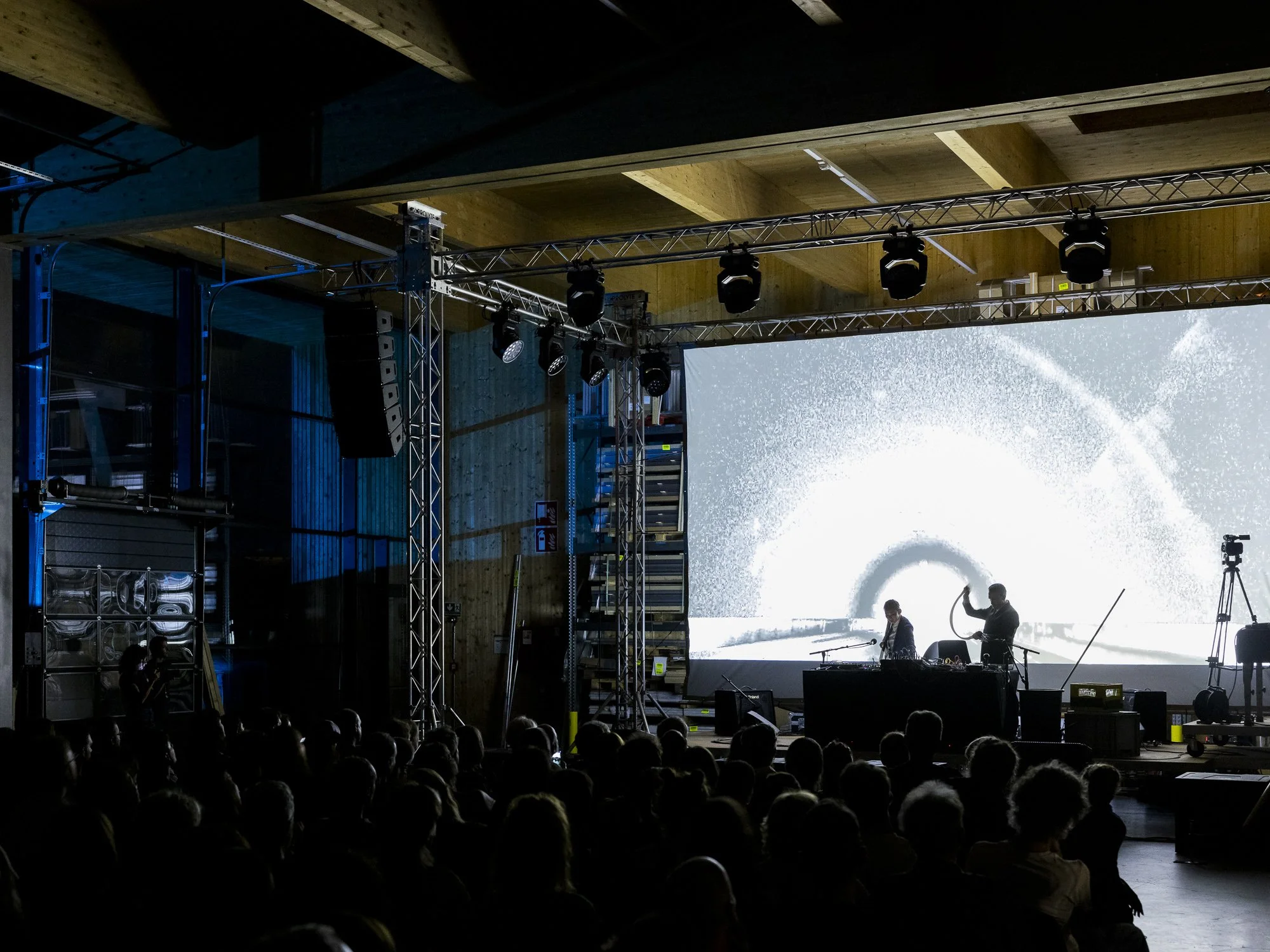
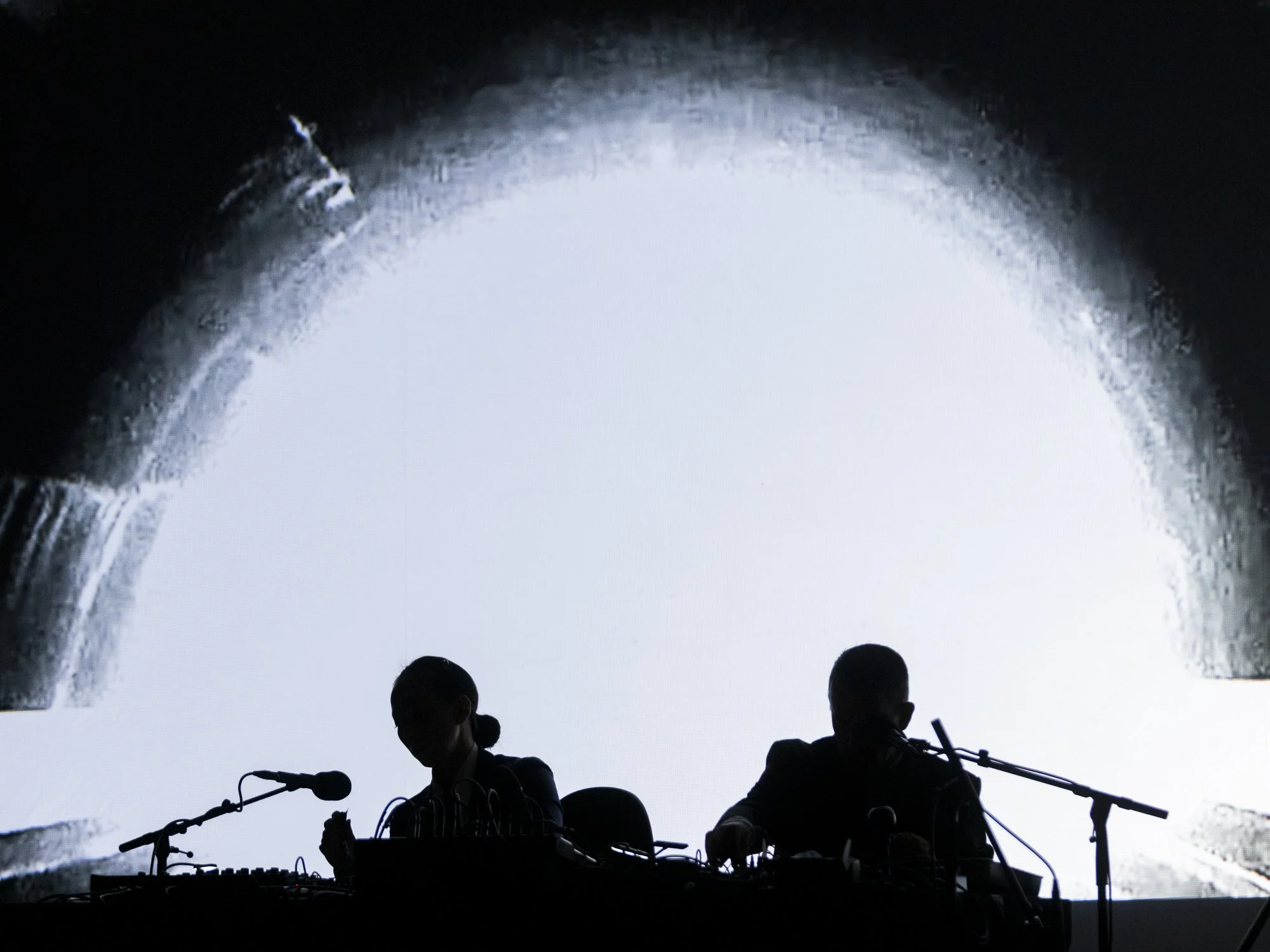
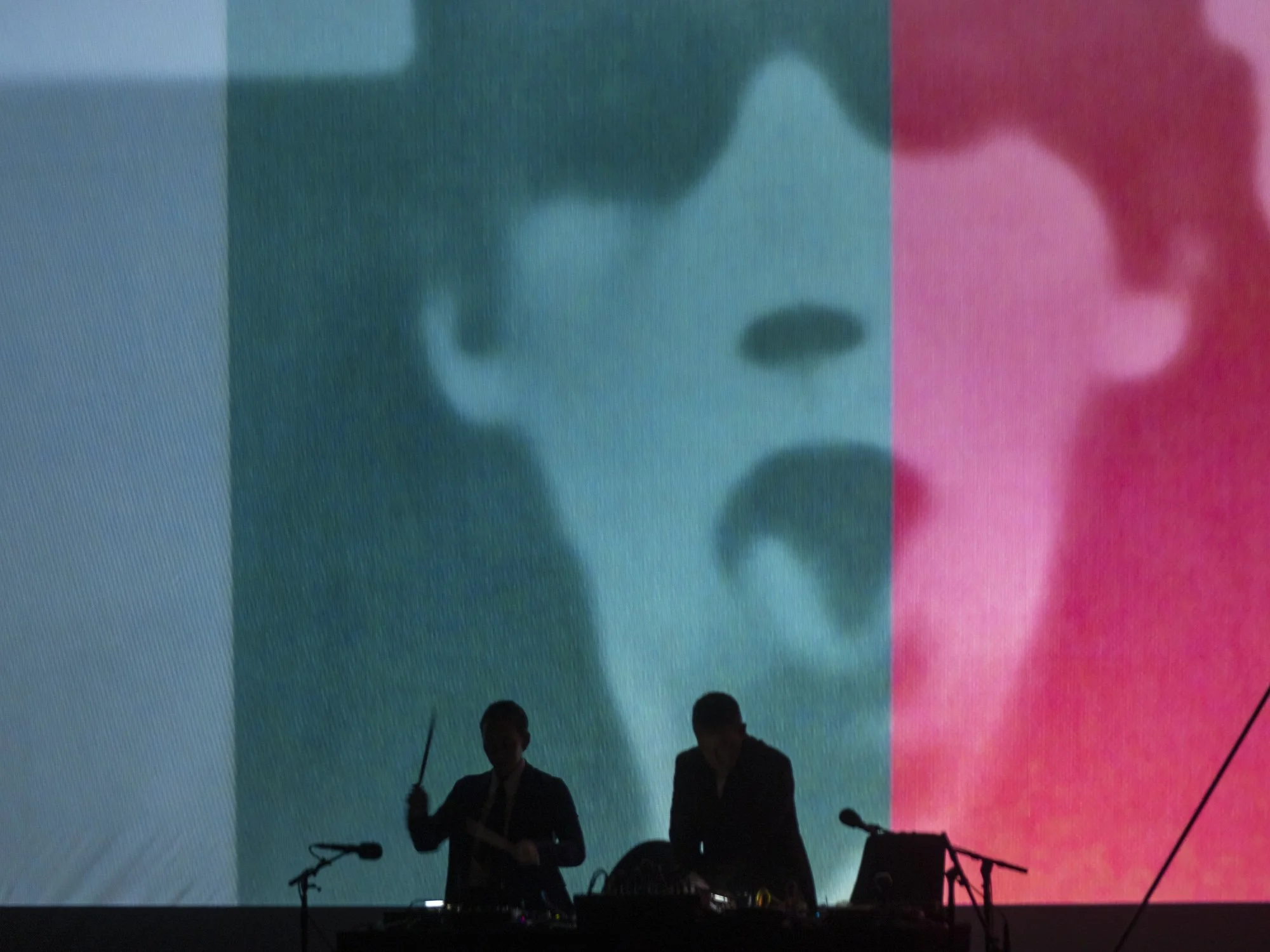
The pairing made sense. Xiu Xiu have spent two decades taking their music from Kazakhstan and Lebanon to the Guggenheim and the Centre Pompidou, and their recent move from Los Angeles to Berlin has pushed their sound somewhere rawer. Herbert, with more than 30 albums behind him, from Bodily Functions to ONE PIG, has long treated found sound as evidence. He scored the Oscar-winning A Fantastic Woman, directs The Radiophonic Institute and recently completed a PhD on the ethics of composing with sound. In Kurtatsch, both acts asked the audience to listen closely to what usually gets ignored: the hiss beneath a film, the crinkle of a donated bag of pasta.
Photography by Tiberio Sorvillo
Words by Donald Gjoka
What to read next