‘WHOLE’ by Clusterduck
Clusterduck is an interdisciplinary collective of creatives, researchers, and media workers navigating the chaotic overlap between internet culture, new media studies, design, and transmedia. Born from a shared obsession with untangling the clusterfuck of online life – communities, memes, propaganda, post-truth, symbols, digital subcultures – they've spent the last seven years turning field research into exhibitions, datasets and memetic operations that blur the line between IRL and URL.
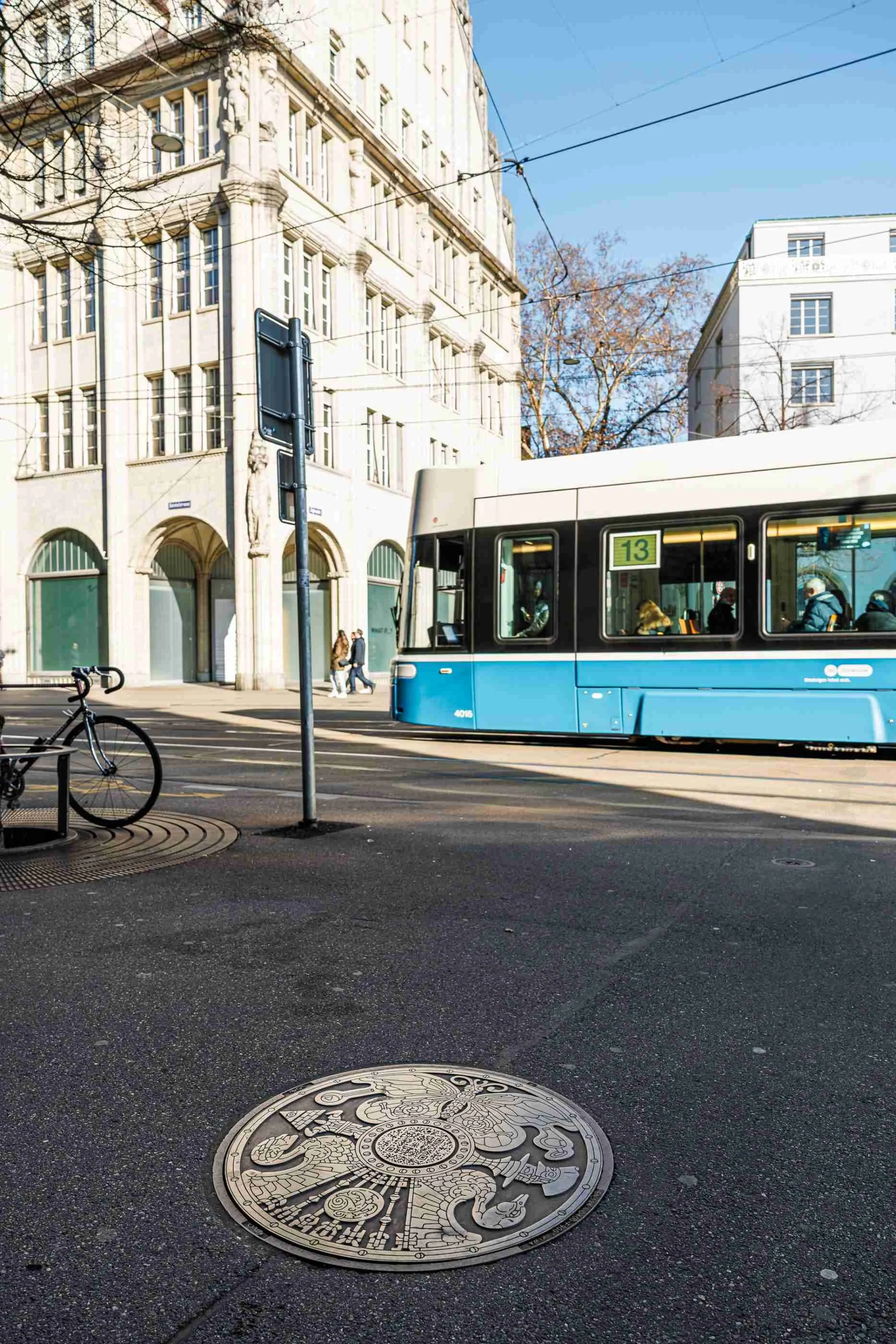
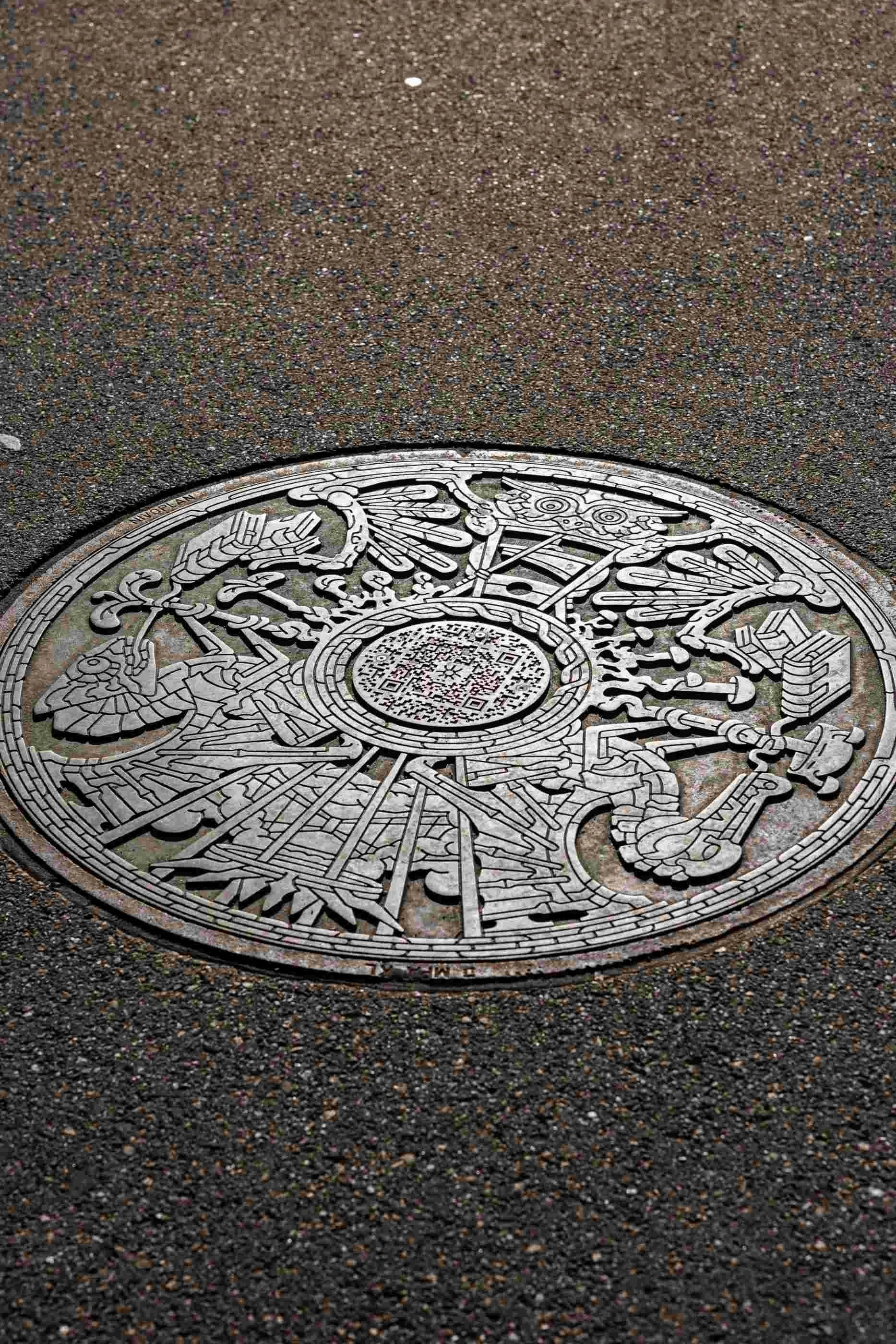
Six years ago, we sat down with Clusterduck to decipher internet culture with all its clusters and bubbles, memes, propaganda and post-truth – in short, the whole mess. A lot has changed since then. The internet got worse, the stakes got higher, and Clusterduck kept digging. Their latest project, (W)HOLE, commissioned by the city of Zürich, takes the rabbit hole literally: six bronze-cast manhole covers, an augmented reality layer, a digital atlas, and a repository of tools for anyone who wants to reclaim the internet from the hands of those currently running it into the ground. We caught up with them to find out what they found at the bottom.
How did the work start? What is the origin?
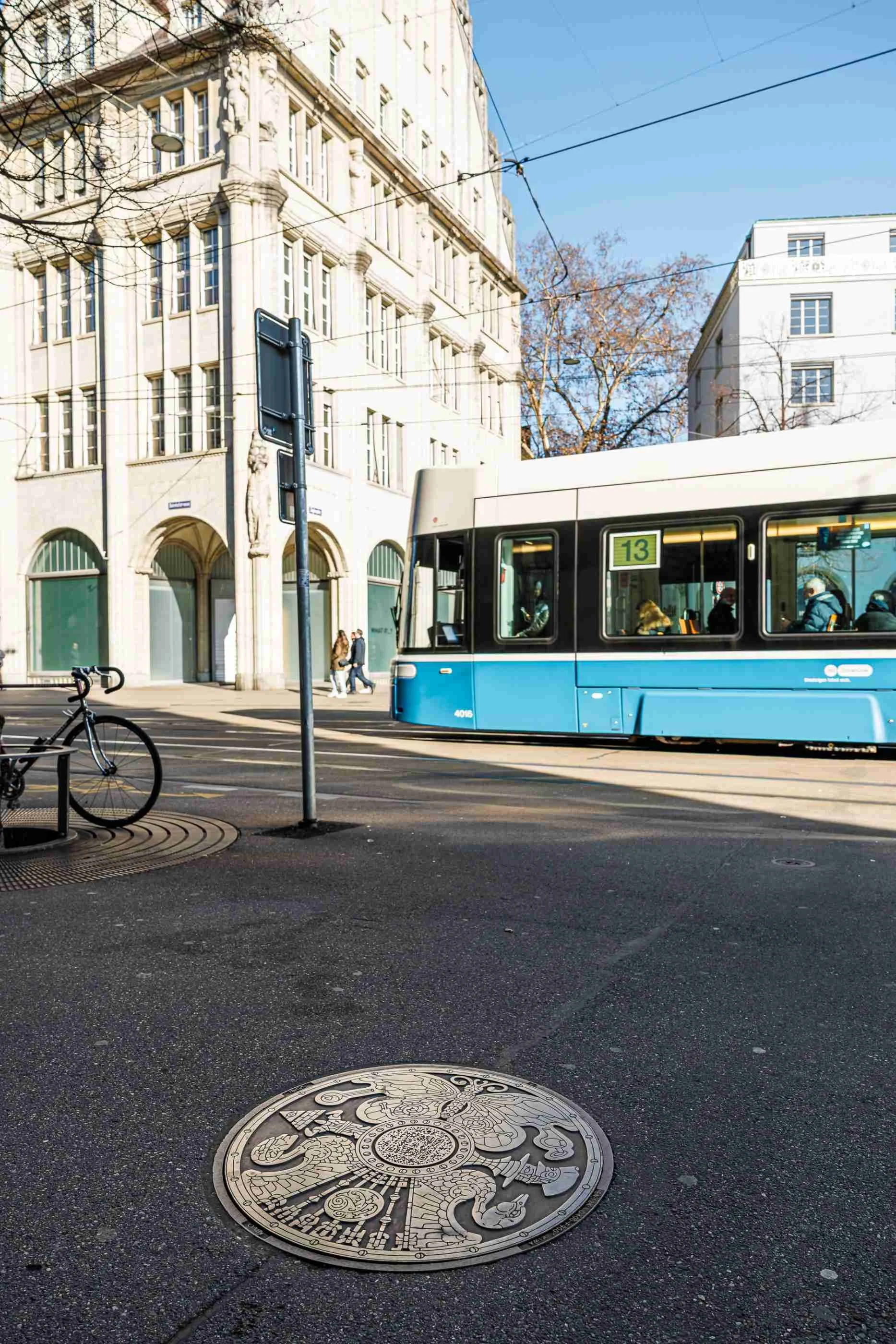
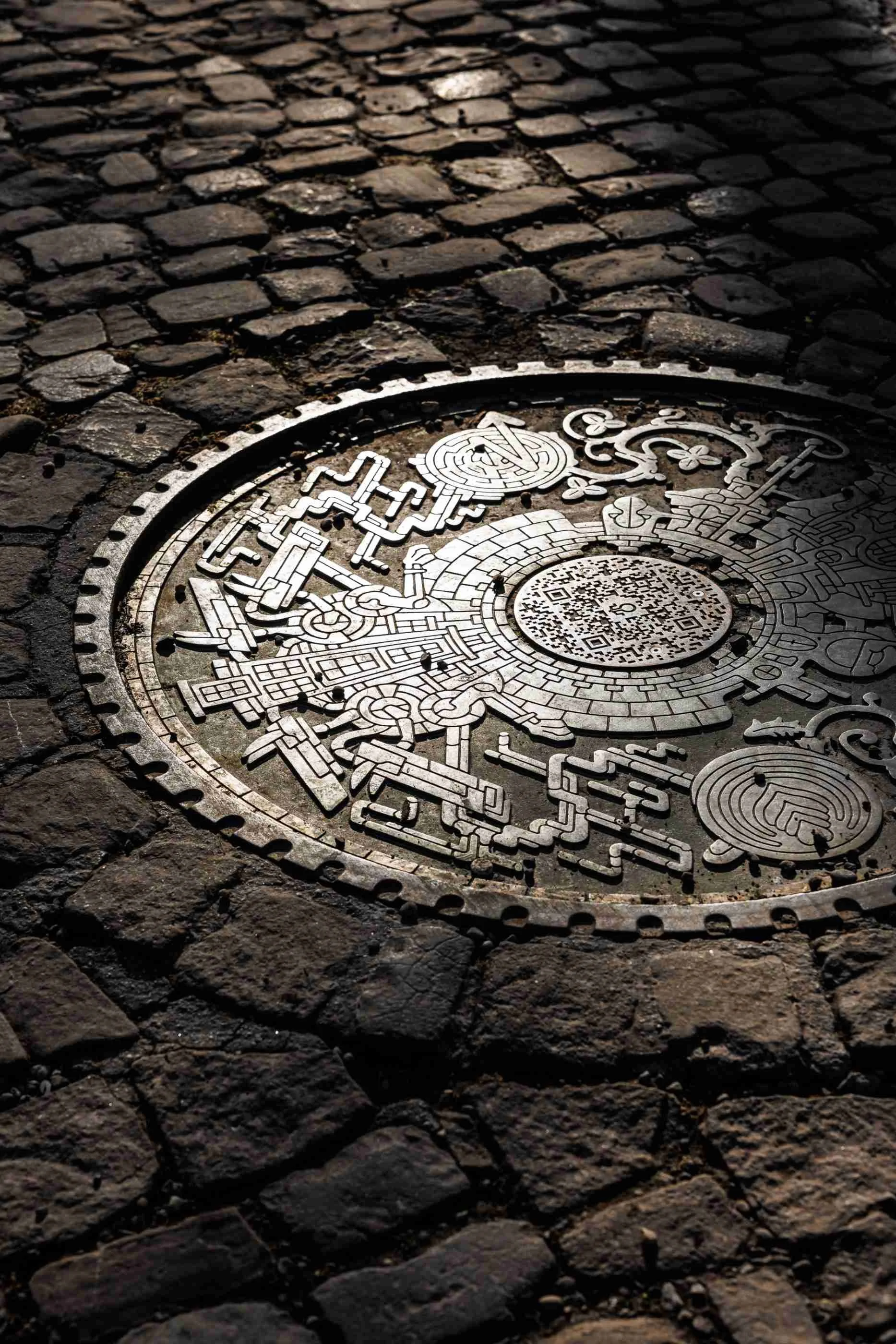
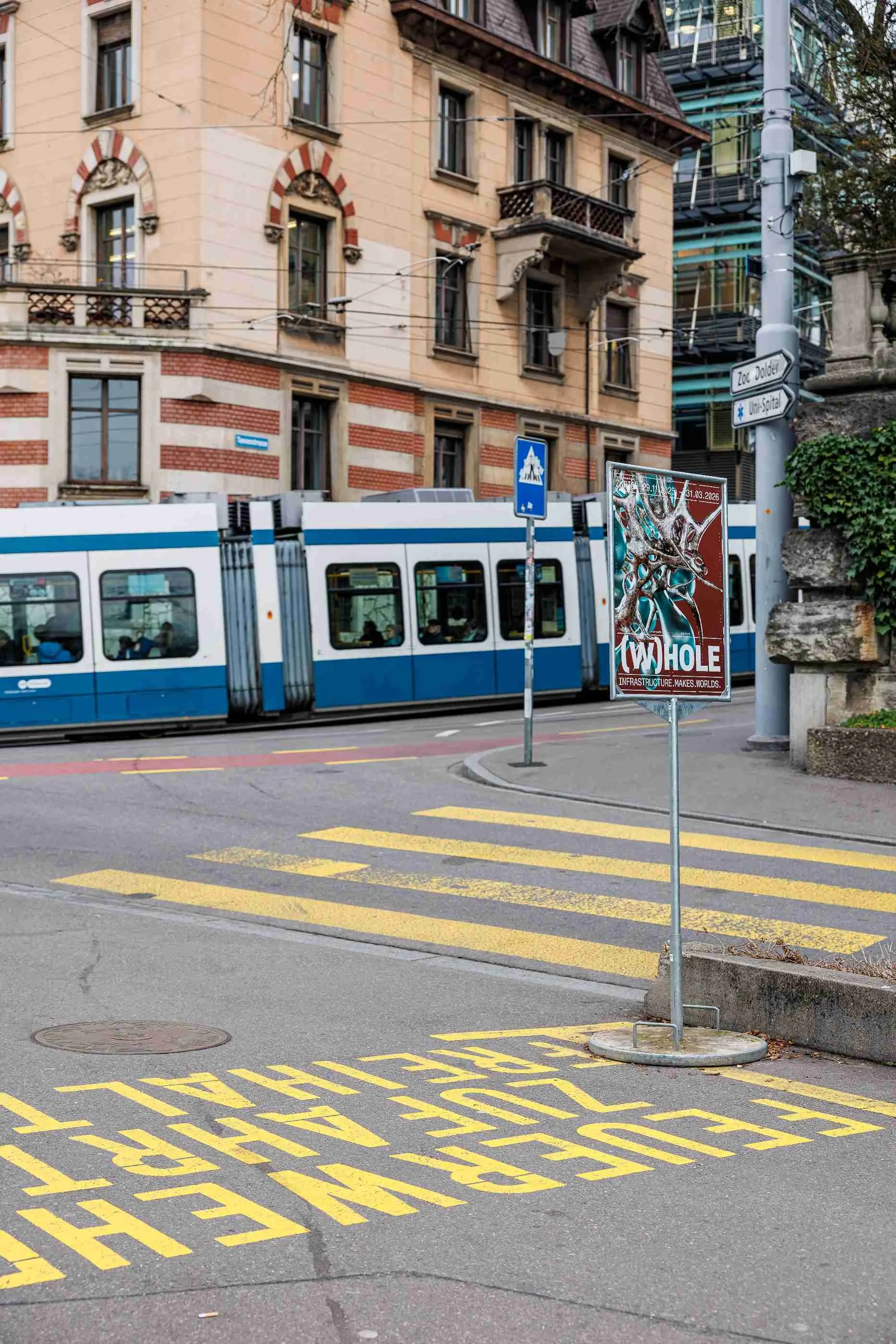
In 2025, the city of Zürich decided to commission a set of works on the topic of digital infrastructures, with the aim of highlighting their impact on urban space. We were among the chosen artists contacted by the city’s agency for Art in the Public Space, KiöR (Kunst im öffentlichen Raum). As a starting point for our investigation into the topic we chose an almost archetypical symbol of urban infrastructure: the manhole cover. Often overlooked, these urban fixtures became both the physical anchor and the central metaphor of the entire project: portals to an unseen world that sustains contemporary life. From that humble object, we started building a whole architecture of meaning (pun intended).
What hooked you to infrastructures? What is your take on it?
For us, the hook is the paradox: the more essential an infrastructure is, the more invisible it becomes. Digital networks, undersea cables, server farms, protocols – these systems shape every aspect of modern life, yet they mostly operate outside of public consciousness. To unveil them is a political gesture: if these infrastructures remain hidden, they remain unquestioned. And unquestioned systems tend to serve private interests rather than collective ones.
You have always worked with and within digital ecosystems. But the city is where we post from. So, this time you are embracing the full stack indeed. Tell me about the cosmology you have built.
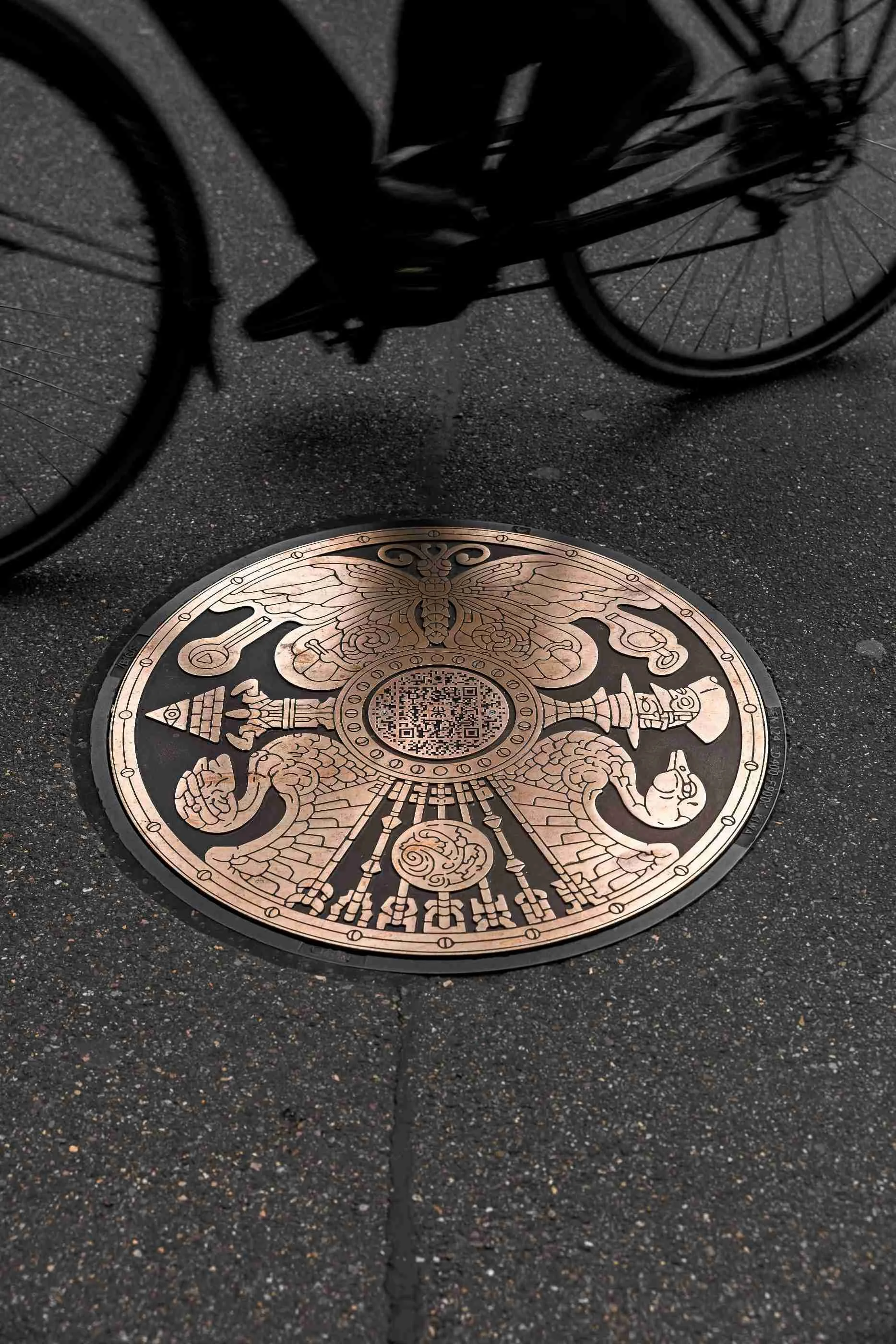
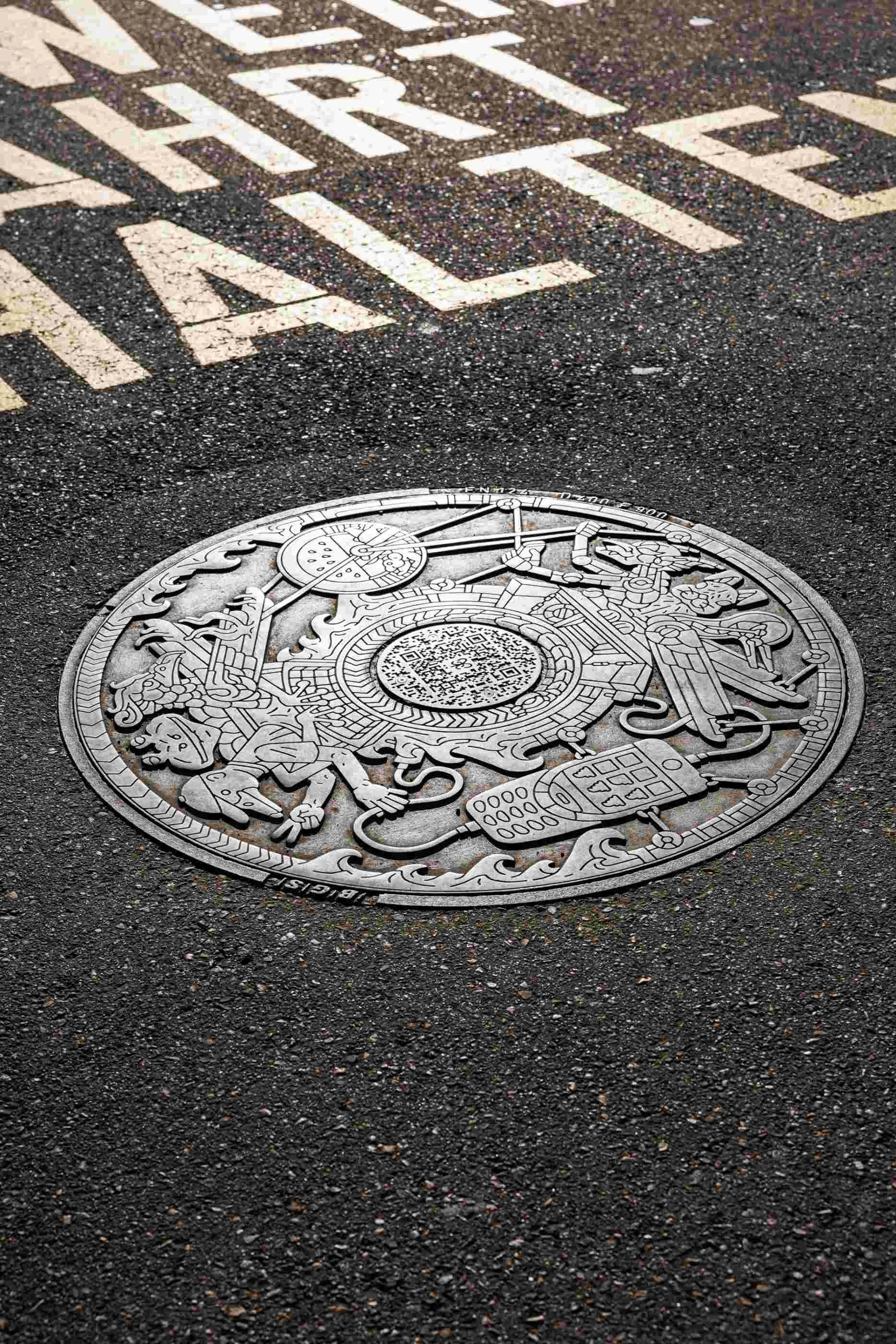
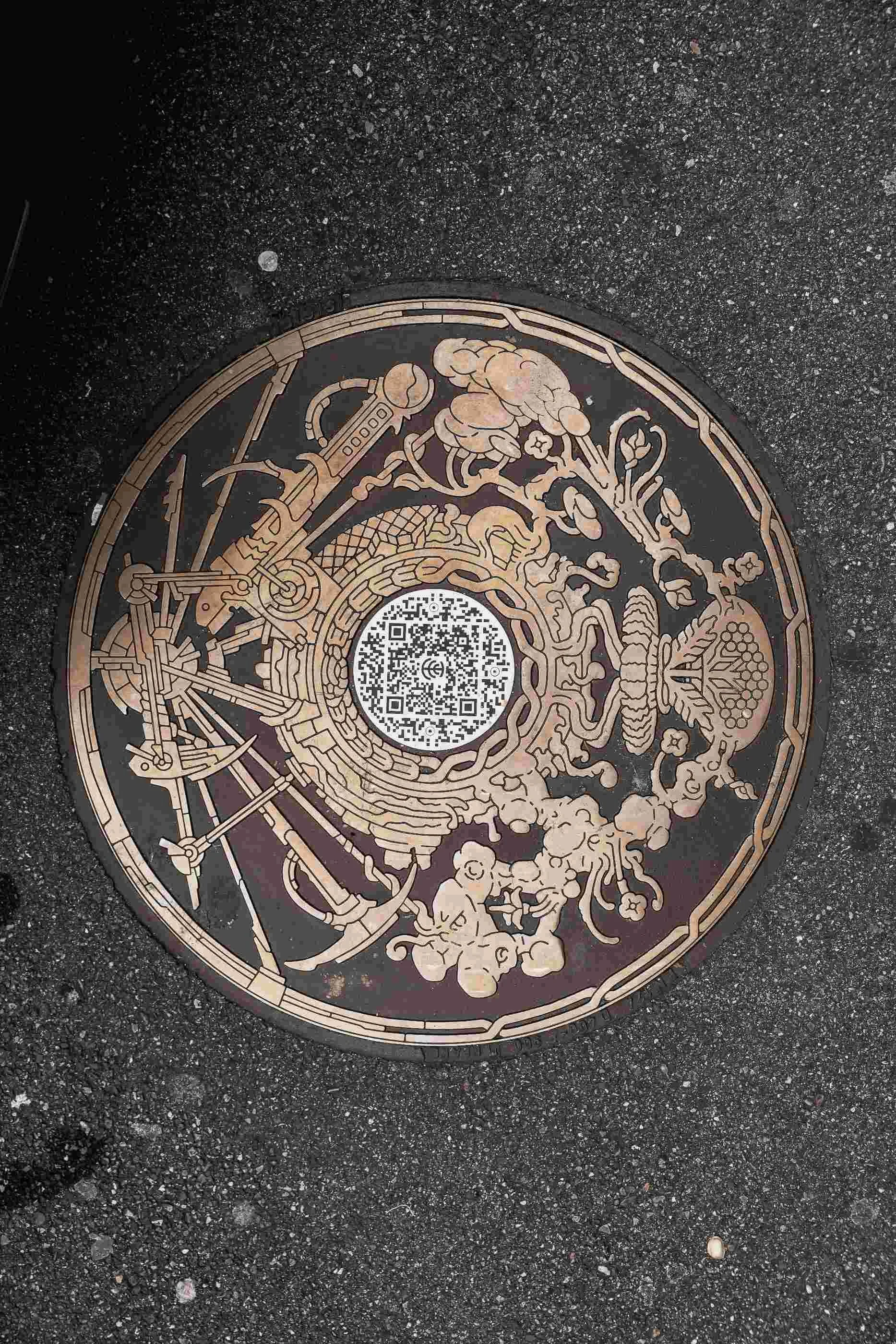
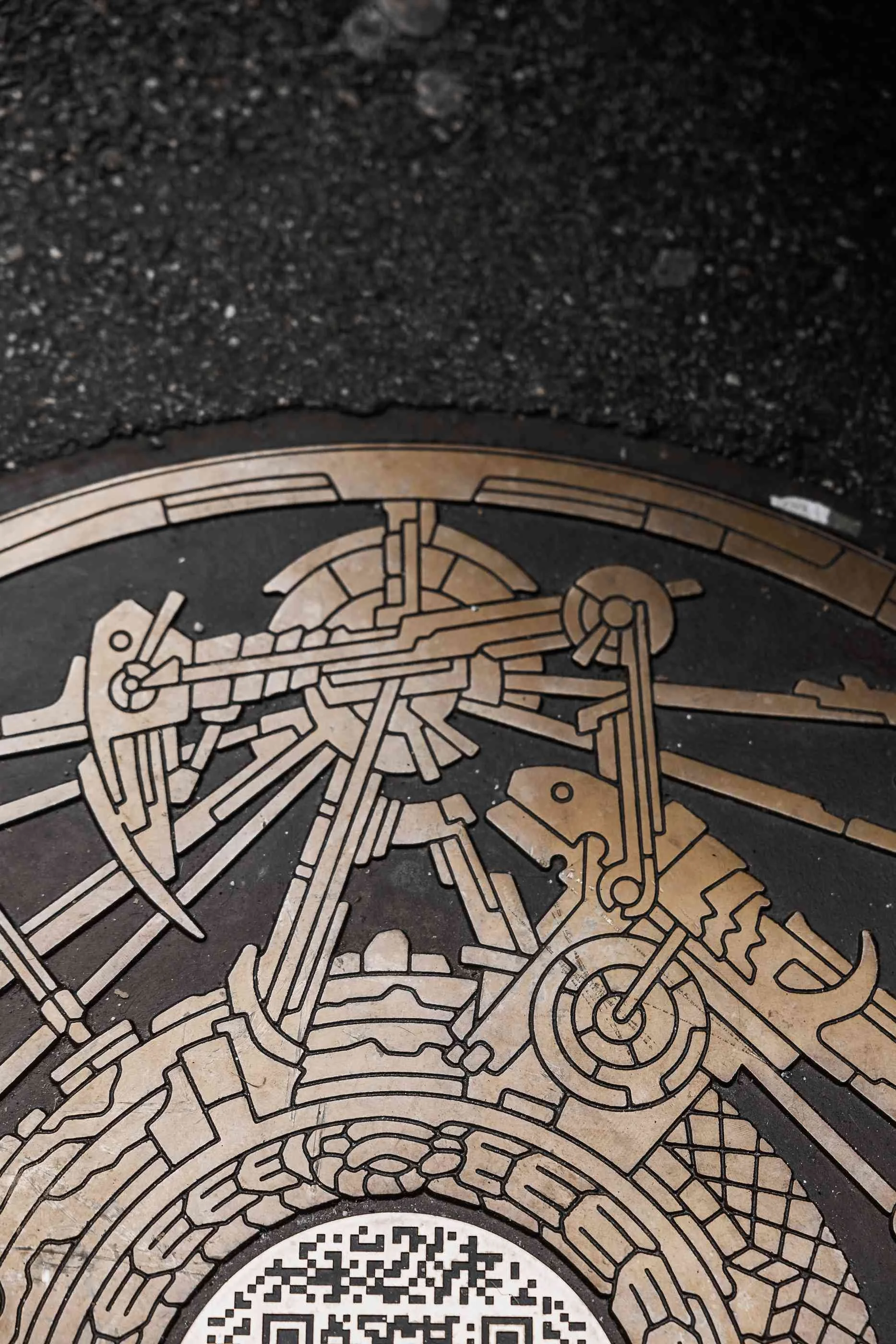
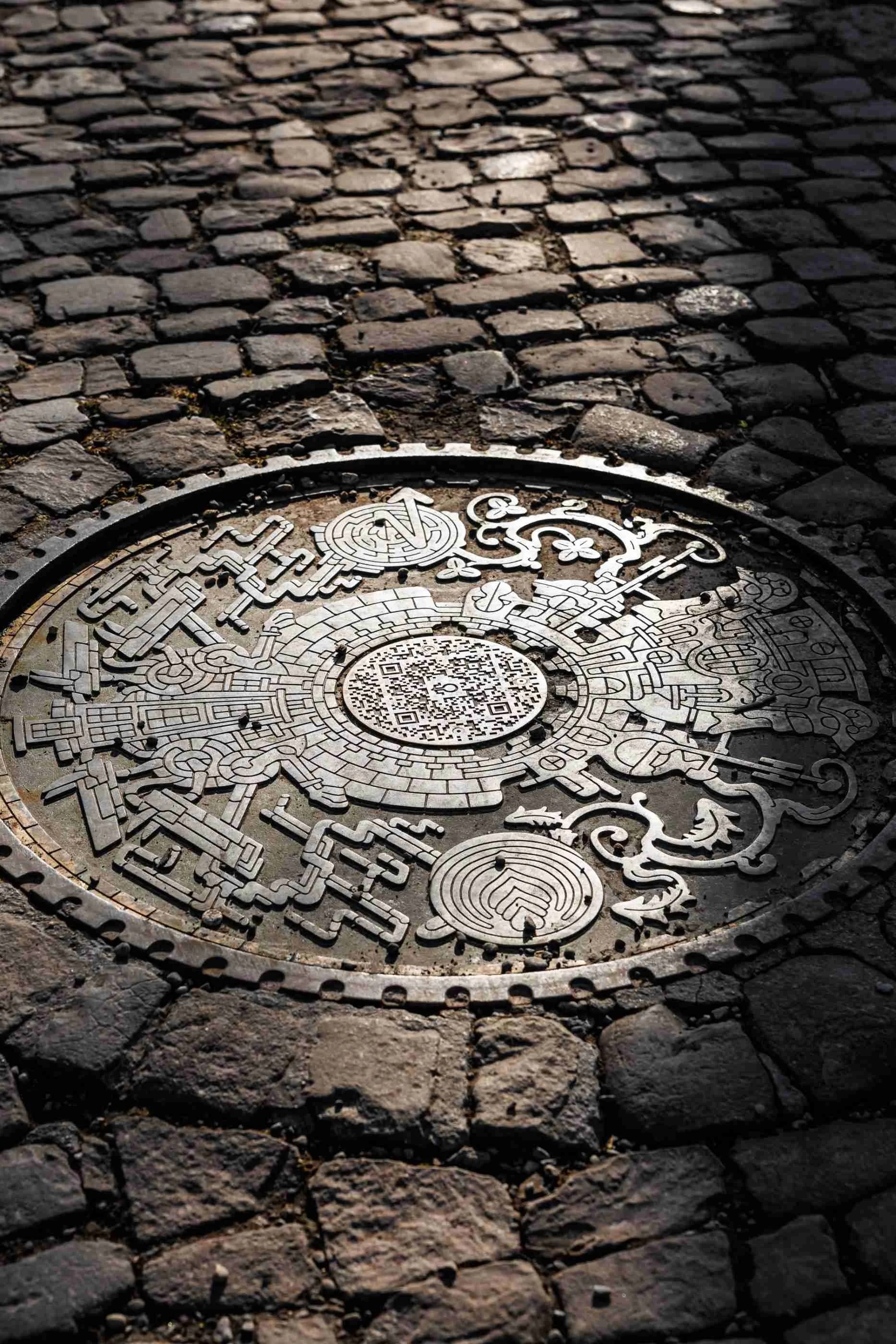
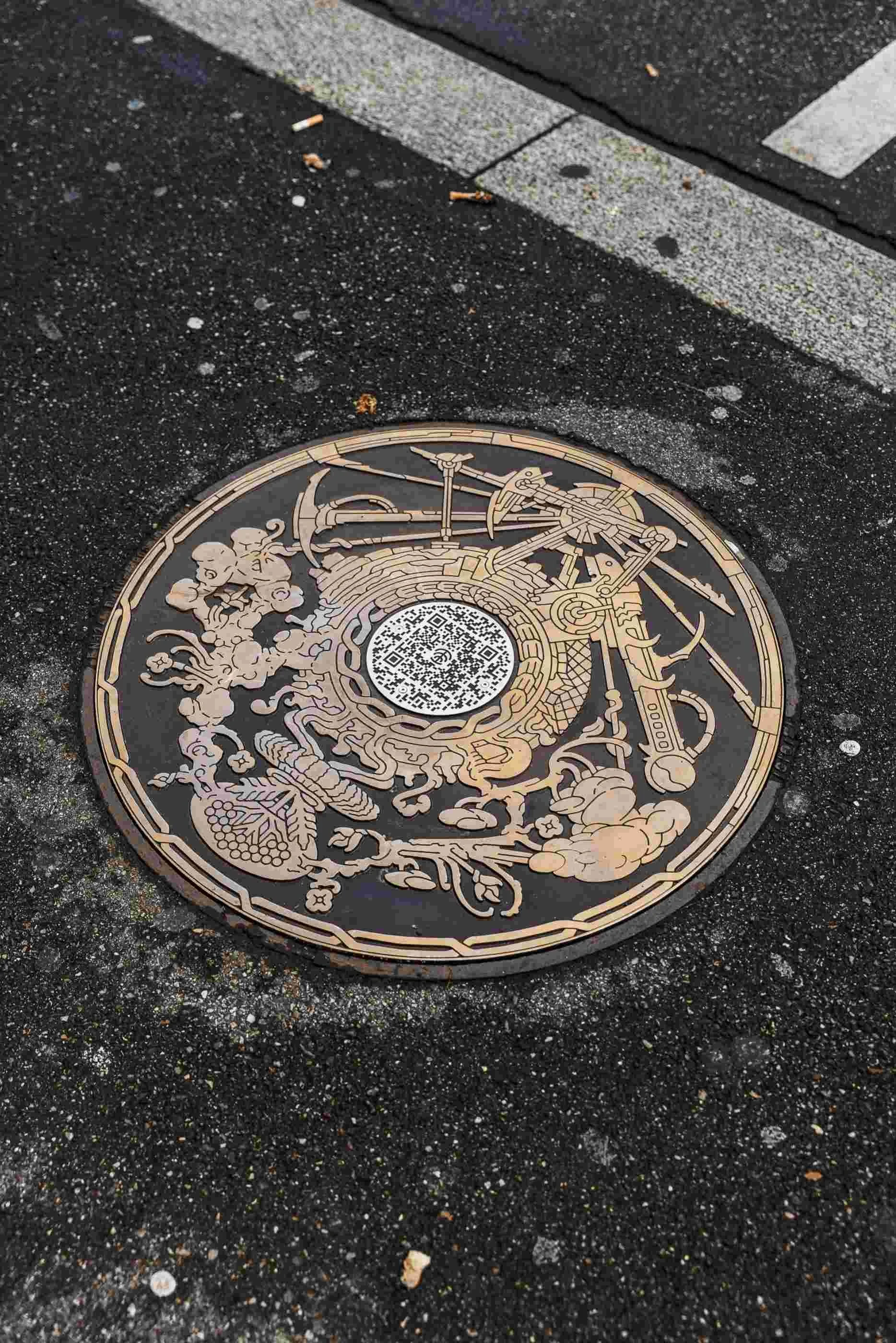
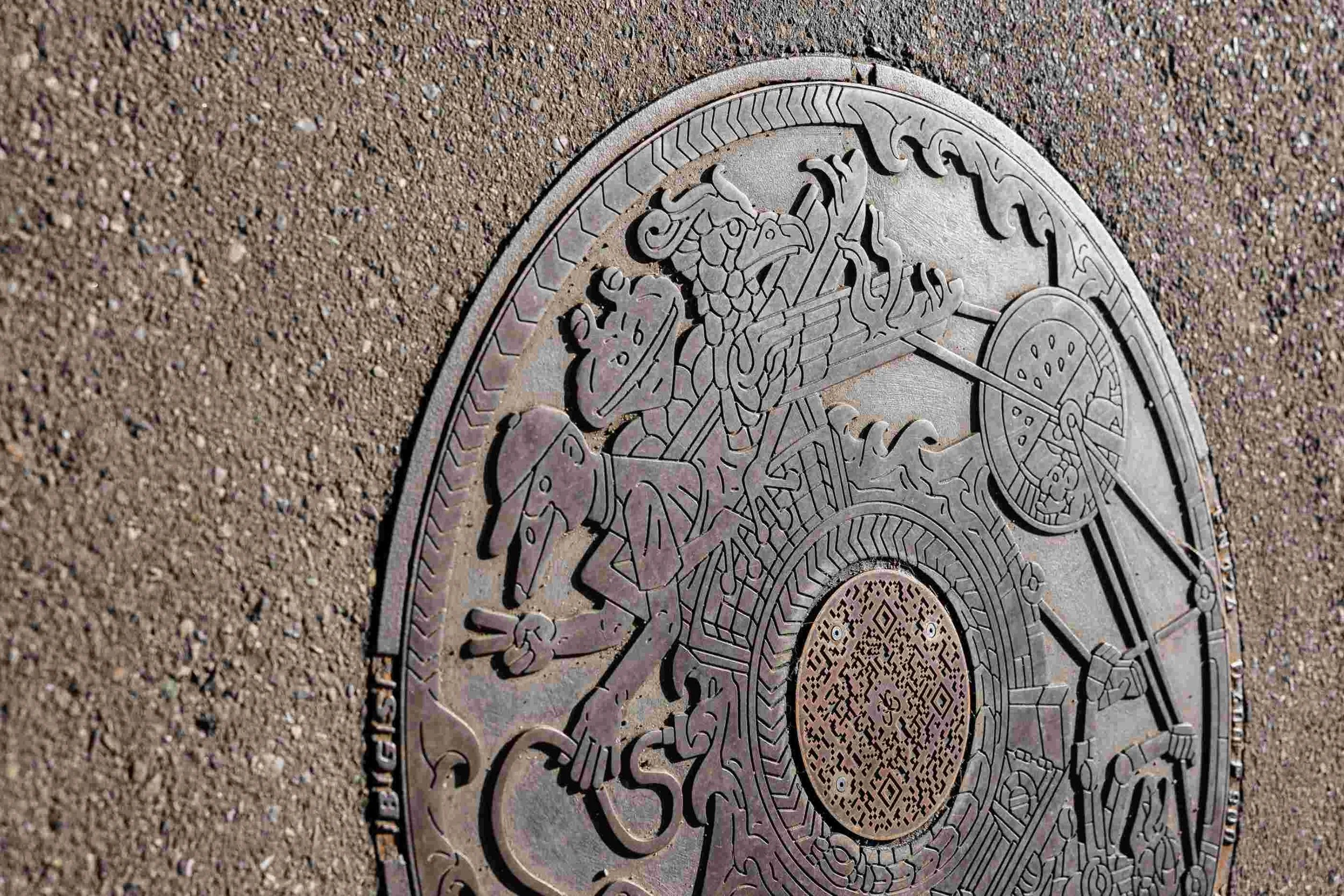
In order to treat such a complex topic, we searched for a theoretical foundation, and we found it in philosopher Benjamin H. Bratton’s concept of “the Stack”. Bratton describes digital infrastructures as a complex, globe-spanning system that is structured through six levels: earth, cloud, city, address, interface and user. We appropriated Bratton’s concept and freed it from its hierarchical mold, using it as a starting point for a world-building exercise. Six bronze-cast manholes, one for each level, are decorated with a set of symbolic images we created together with illustrator Miro Thiebe. The manholes function as access points to an augmented reality experience, which works as a poetic representation of the hidden world of digital infrastructures. The project is further complemented by a website with a digital atlas, explaining the symbols in each level, and a participative digital repository, containing a curated set of resources to understand and act upon digital infrastructures.
So much different media, so many different outputs (mediamaxxing). This work made me dizzy. How did you navigate such a vast amount of production? What was the process in giving each fragment the form it had to embody?
We see Process Design as a fully legit form of Design and we take into account very dearly the productive implications involved in our projects, so first of all thanks for asking. The (W)hole production of the project was indeed a challenge – all puns intended – and we’re happy to dive into detail regarding our choices and process.
Each medium in (W)HOLE was chosen because it could do something the others couldn't. The bronze-cast manhole sculptures exist in physical public space, touchable, walkable, permanent. Augmented Reality opens an immersive layer accessible through the same object, unfolding 3D sculptures and soundscapes. The digital atlas and interactive website allow for navigation and deeper reading. And the repository goes furthest, transcending observation and offering tools and resources that empower citizens to act. The logic was always: how deep do you want to go? Every layer works in itself, while also containing an invitation to go further. It’s up to the viewers where they want to stop. We’ve also been blessed to work with high profile professionals that helped us a lot in articulating a process with the common goal of making it as pleasant as possible.
(Whole Earth Catalog and Access to tools.) In your past works you have often reappropriated other’s strategies, saving them from doom (reappetite).
This time too it seems that you are offering an internet POV that has long gone. Towards and against what are you generating awareness?
The more technofascism tightens its grip on our lives, the more the memory of what the internet used to be fades away. It’s not about buying into the promises of a better future made by tech-oligarchs – these have long proven empty, and meanwhile they don’t even try to pretend otherwise. We have gone from Google’s “don’t be evil” to Palanthir’s and Peter Thiel’s apocalyptic visions of a hypermilitarized, authoritarian AI-state. Under the rubble of our cyberpunk present, we feel that it is our duty to keep the flame of a different internet awake. A place made of wonder, discovery and community. But we have also grown up, and today we know that the only way to keep hope alive is to reclaim the means of communication: in other words, digital infrastructures need to be de-privatized.
The hole is a powerful symbol. Void and pleasant. You have been working with rabbit holes your whole career. Getting lost feels good and dangerous. What did you encounter in the rabbit hole of this work?
What was different this time is that we made a deliberate choice not to simply fall, but to map the descent. As we learned more about digital infrastructures, we mapped every link we followed, documenting and organizing them by topic. This process of curation became the base of the repository itself.
But beyond the architecture of it, what we actually found down there was genuinely surprising and, honestly, hopeful. The rabbit hole of digital infrastructure led us to an incredible ecosystem of organizations, researchers, and collectives who are actively working, often quietly and without much visibility, to make the internet a more just, safer, and more democratic place. That discovery felt important. The void wasn't empty. It was full of people already building something better. That is one of the main problems of our present condition: not the absence of solutions, but their invisibility in mainstream public discourse.
Meta-time. The infrastructure behind your work. Tell me the behind the curtains.
The invisible infrastructure behind the project was the collective collaboration itself.
For months we worked together with amazing creatives across different fields: design, 3D modeling, AR development, typography, sculpture production. Coordinating this network of people required patience, trust, and continuous dialogue.
Much of the work consisted in brainstorming very small details. Those discussions may seem trivial, but they are the place where shared understanding and thus human connection emerges.
In that sense, the project’s real infrastructure was the infrastructure of care: care for the ideas, for the collaborators, and for the collective process itself.
You all come from marketing, as you often say. I do too. There is a clear layer of graphic language that wraps the work.
Design operates as a translation layer. Infrastructures are complex systems that often remain inaccessible to non-specialists, and graphic language allows us to translate those complexities into symbols, forms, and narratives that people can intuitively encounter.
For (W)HOLE we developed a symbolic language drawing from multiple sources, from cybernetic diagrams to Art Nouveau ornamentation and perceptual psychology, for instance the Bouba–Kiki effect. The goal was to create a visual vocabulary capable of holding both critique and imagination.
In many of our projects we also use a brand identity approach.
Because of the transmedia aspect of our work, branding helps us maintain visual coherence across different channels and mediums. In (W)HOLE we pushed this aspect quite far, designing the user experience across several layers: the figurative storytelling engraved on the manhole covers, the dreamlike AR environment built through collage aesthetics and point-cloud treatments, and the more minimal visual system of the website and repository. The collaborators were chosen for their expertise within each of these areas.
At the same time, the way we credit work is political. Coming from the creative industries, we know how titles such as director or lead tend to centralize authorship and visibility. Within our collective we try not to reproduce that structure. Instead, we describe contributions through processes, research, concept development, visual language, writing, production, thus acknowledging participation without establishing a hierarchy. Being horizontal in our practices is of course a huge fatigue sometimes, but it’s also central for us in defining our role as artists and our perspective on our projects. For us, authorship remains a shared process that belongs to the collective.
(W)HOLE was developed by the collective’s co-founders, Tommaso Cappelletti, Silvia Dal Dosso, Francesca Del Bono, Arianna Magrini, Noel Nicolaus, who worked collaboratively on brainstorming, briefing, copyrighting, brand identity design, video editing, client management, content curation, photogrammetry, account management, location scouting, team coordination, executive production, UX design, social media planning, and whatever else artists are expected to do nowadays.
Gaia Cionnini - Jewelry development
Jules Durand - Symbol design, typography consultancy
Gabriele Guarisco - 3D modelling
Gregorio Magini - Web technical support
Art Foundry St. Gallen - Manhole production
Nicolas Paries - Frontend development and web implementation
Pietro Parisi - 3D World Builder and AR integration
Vlad Storm - AR integration and AR Consultancy
Miro Tiebe - Manhole’s Design and Project Illustrations
Beatrice Zito - AR support onsite
Matteo Zoppi - Sound design and composition
Interview by Luca Napoli
What to read next