Becky Tucker

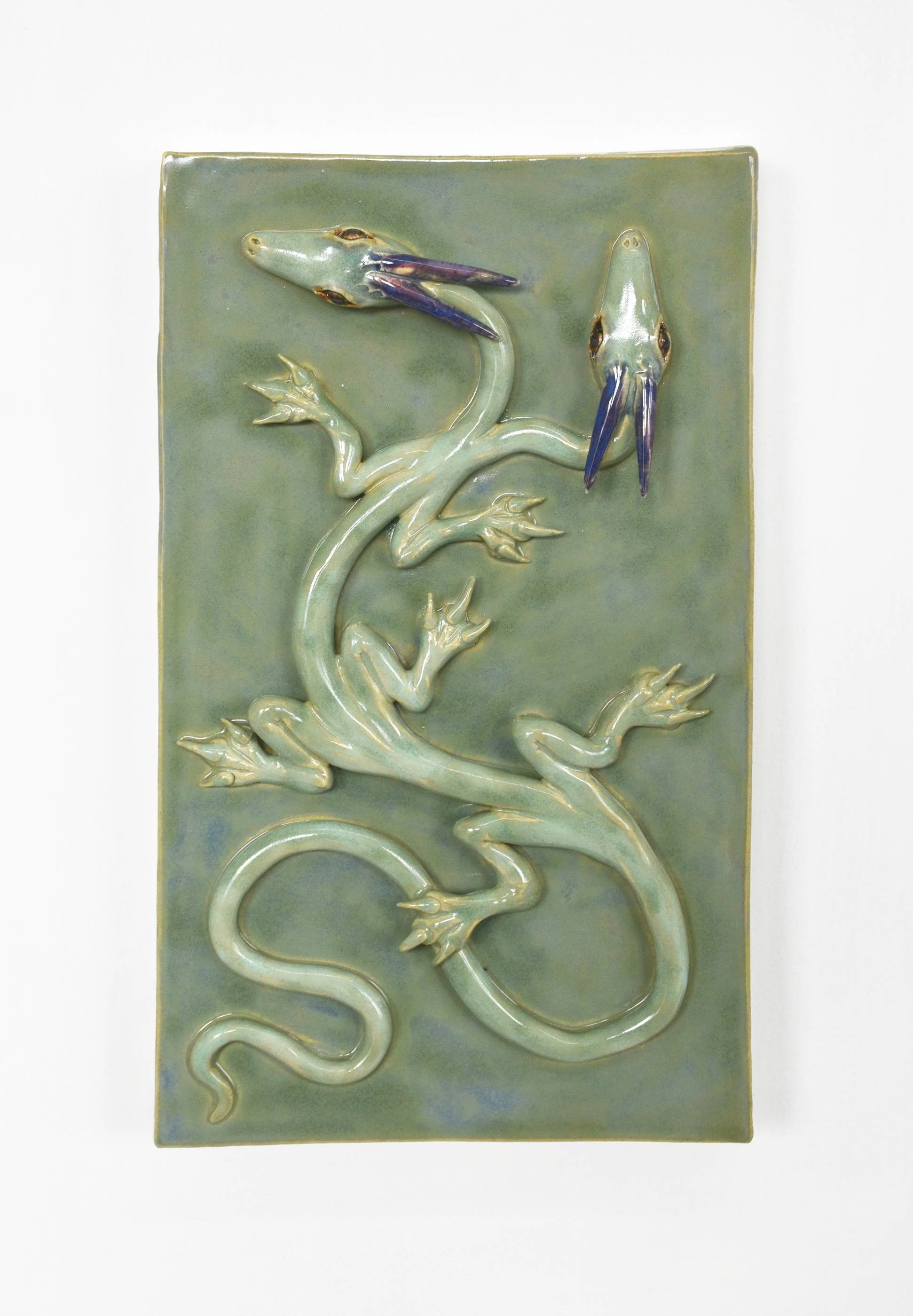
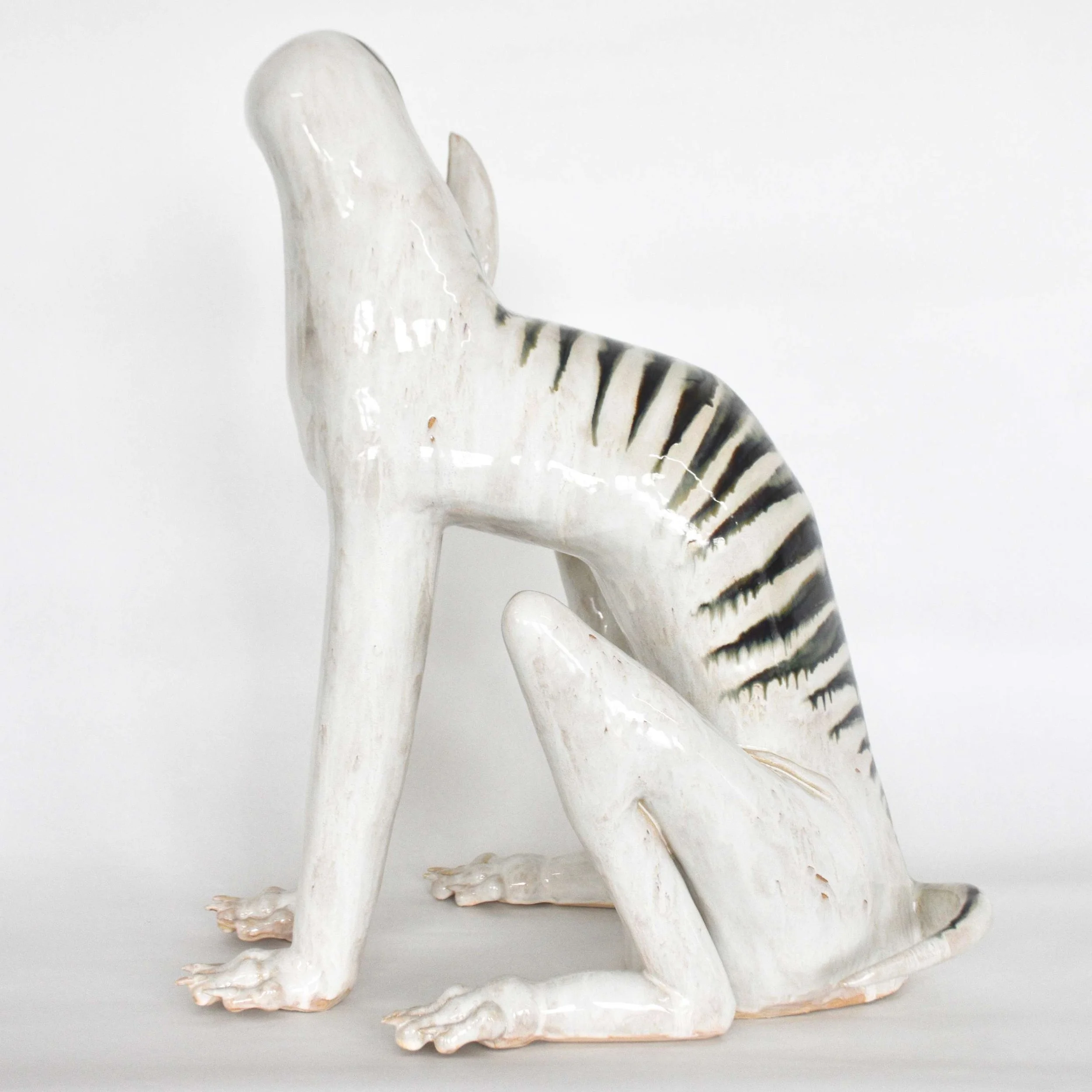
Visual artist and ceramic sculptor Becky Tucker invites us into a parallel world where the shadows of ancient civilizations meets futuristic horror. Based in Glasgow, Tucker's uncanny sculptures challenge viewers to reflect profoundly on the symbolism embedded within her work, urging us to delve deeper into our own psyches.
A graduate of the Edinburgh College of Art in 2017, Tucker now creates from her studio just outside Glasgow, where her career has grown increasingly. After her solo exhibition at Five Years in London in 2023, she has participated in numerous group exhibitions, including notable shows at Steve Turner Gallery in Los Angeles and OHSH Projects in London, affirming her place within the contemporary art scene.
Tucker’s sculptures can be described as anachronistic artifacts, steeped in historical ambiguity as they draw inspiration from a diverse array of source materials. This deep research and exploration of mutable symbols shows her fascination with images that hold different meanings across cultures, adding a layer of timelessness to her work that invites open-ended interpretation. Tucker participated in the Sanctuary Slimane Residency in Morocco, adding to an impressive list of accolades, including the Hope Scott Trust Visual Arts Grant and the VACMA Emerging Artist Bursary.
Chatting with Becky Tucker exclusively for COEVAL, we discover the deeper motivations behind her work. As a reflection of our future, Tucker’s sculptures encourage us to confront the aspects of our own existence while pondering the legacies of those who came before us:


Your sculptures are described as anachronistic artifacts. Can you describe your creative process for designing these pieces, and how you decide which historical elements to incorporate?
Usually, I’ll come across an object that I don’t know much about or a book that particularly resonates with me and the research just sprawls out from there. There’s not really a particular process about what to incorporate, it’s so different for each work, but it always feels like there’s a logic - to me at least.
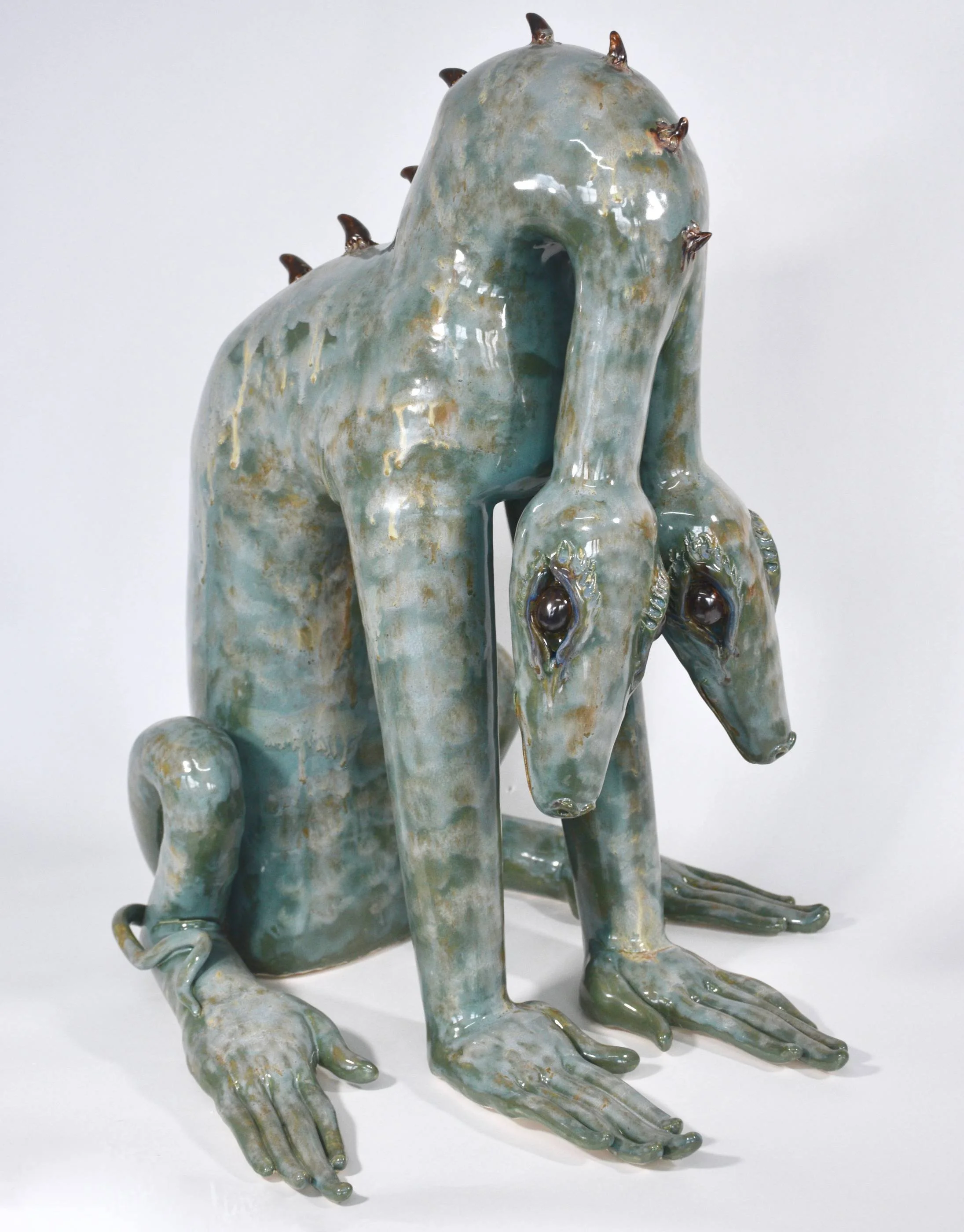

You mentioned that your style evolved from “very bad and boring” creations to your current distinctive pieces. What specific changes did you make in your creative practice that helped facilitate this transformation?
It’s not that I made any specific changes, after art school I had no shows, no one was looking at what I was doing. I gradually stopped making what I thought I was supposed to make and just followed what really interested me. There’s a lot of freedom in feeling invisible.
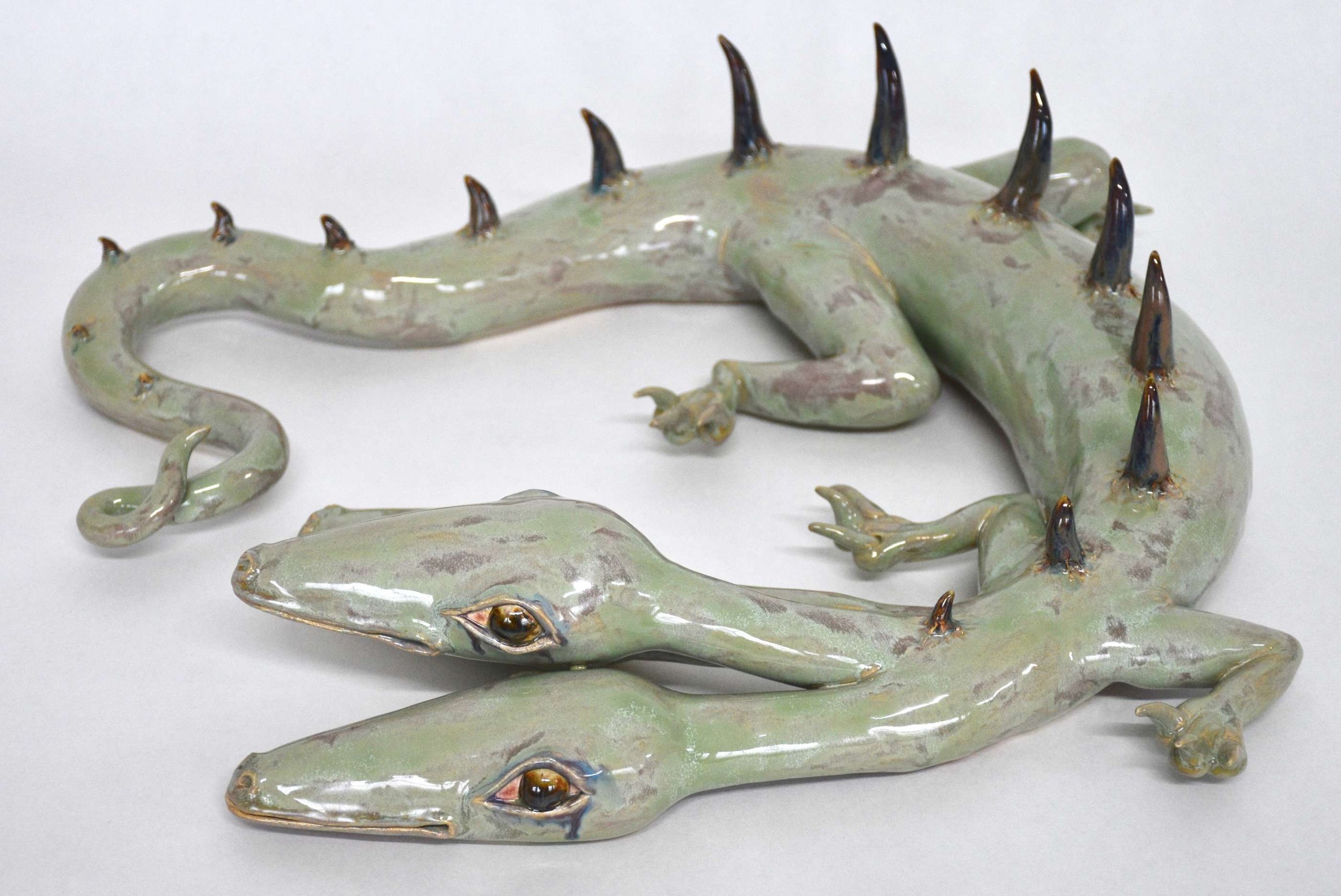
In your sculptures, how do you utilize symbols like the lion, griffin, and snake? Can you share your approach to selecting these motifs and how they inform the narrative within your work?
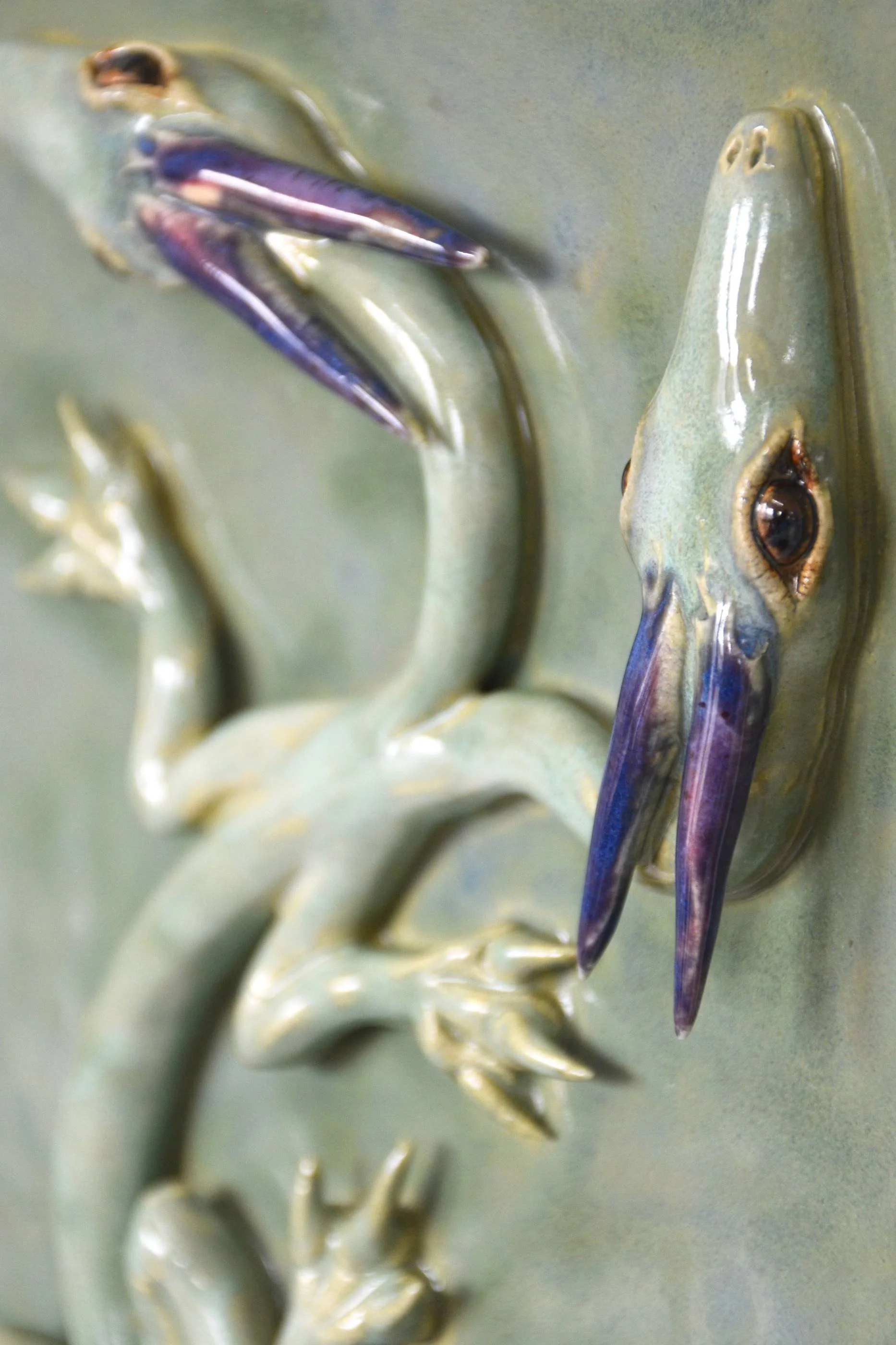
These motifs appear less directly in current work, but I’m drawn to symbolic imagery that appears across different cultures and periods with vastly different meanings. The snake/serpent is always a great example, with highly varied symbolism globally. Its meaning can shift between duality, fertility, sexual desire, cunning and evil. Across many cultures there seems to be this link to transformation and eternity which I often explore in the work.

Blurring the lines between the animate and inanimate is a key aspect of your art. How do you approach this concept during the creation process, and what materials do you find most effective in expressing this duality?
I think it’s inevitable when dealing with figurative work, that there’s a conversation between an inanimate object and sentient being. My works are of course not realistic, they are objects. But there’s a suggestion they are paused, playfully rendered to suggest they could move or might have once moved. I think about this a lot in relation to fossils, remnants of something that was once living, now static, but still able to tell a story. I’m working in clay a lot at the moment, its expressive possibilities are limitless.
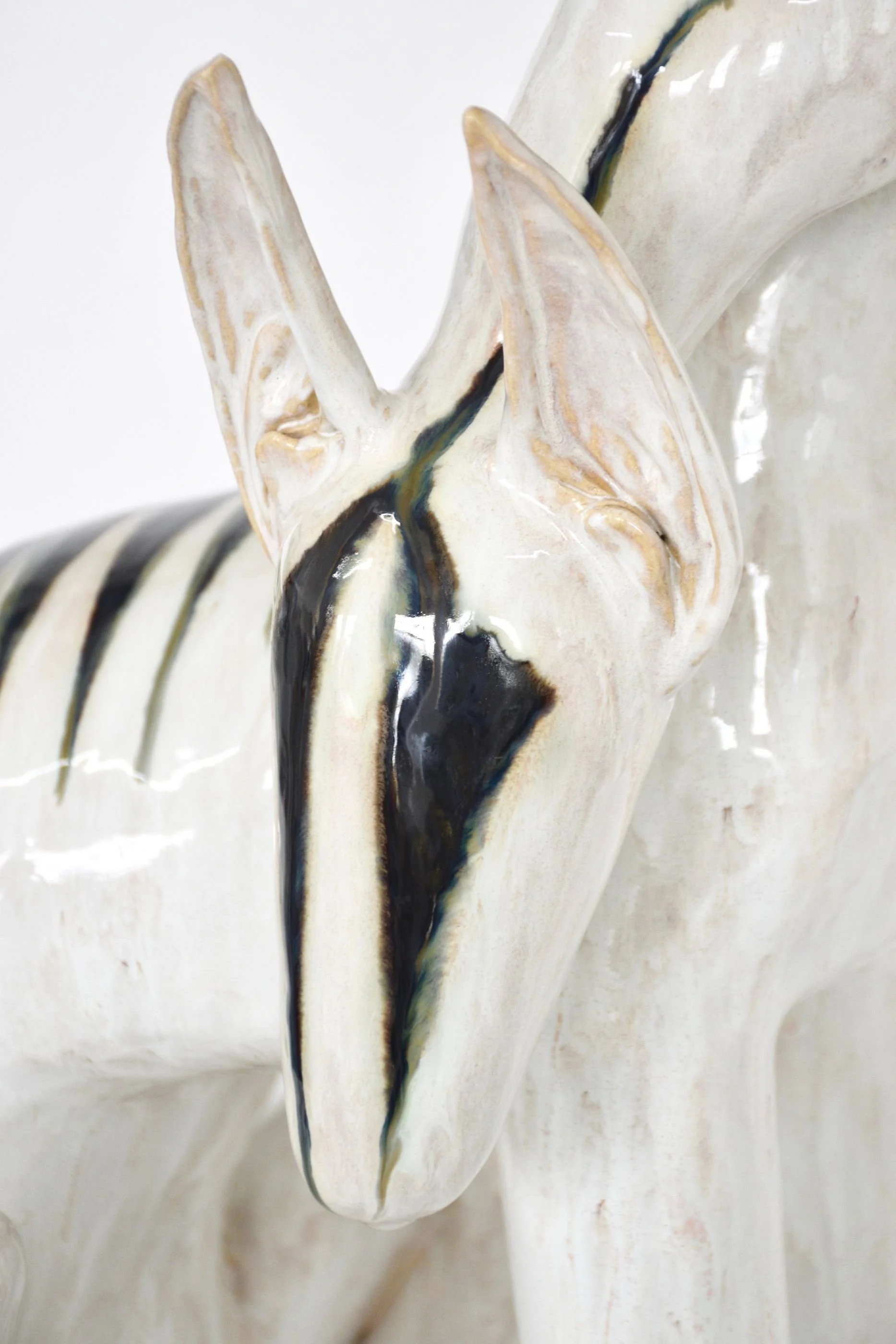
Your recent exhibitions span cities from London to Los Angeles. How does exhibiting in different cultural stages affect your artistic practice and the themes you explore in your work?
I haven’t been working in a site-specific way, so it hasn’t really been about making work for a particular cultural landscape. I’m making the work in Scotland, so maybe it’s more about offering a slice of my context and seeing how it sits with people. It has an impact if I get to go to where the show is - getting to see collections I’ve only seen pictures of, travelling, eating, exploring…it all feeds back into the studio.
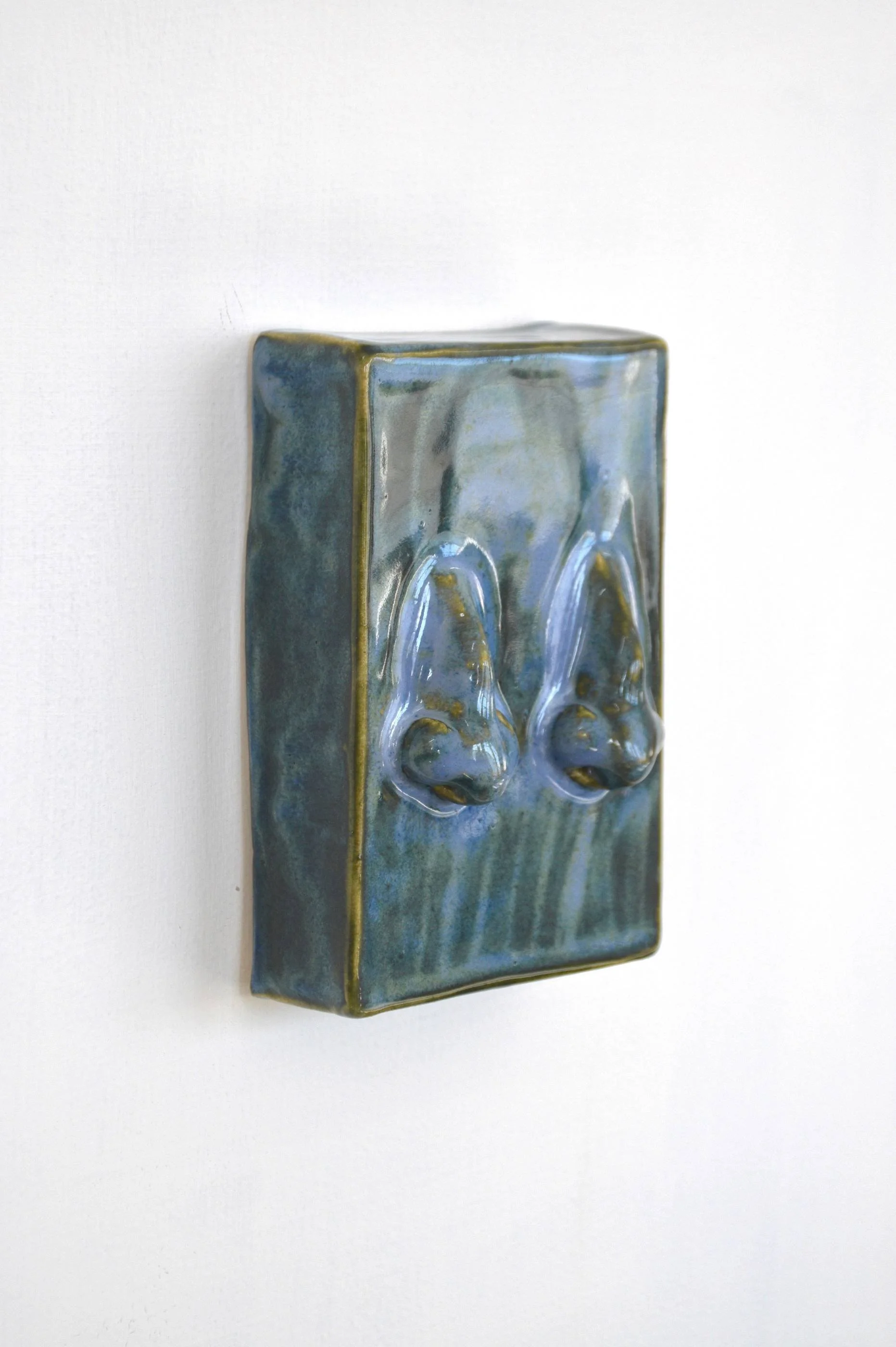
How did the Sanctuary Slimane Residency in Morocco change your artistic vision? What unique inspirations or insights have you gained from immersing yourself in such a cultural context?
It’s such a beautiful country, there’s a vibrancy and energy to it that I think about all the time. I started working differently with color when I was there. I was using this gorgeous red clay from the residency site which led to me trying other clays at home. I also got really obsessed with doors while I was there. There are hundreds of metal doors all painted brightly with diamond shapes, stars, geometric patterns, I’ve got an album on my phone just full of Moroccan doors. I don’t know what it means yet but there’s something sticking in my mind about doors, portals, passages and adornment.
Receiving awards like the Hope Scott Trust Visual Arts Grant and the VACMA Emerging Artist Bursary has undoubtedly impacted your career. Can you share how these recognitions have influenced your practice and opportunities as an artist?
Yeah, I mean having someone say here’s some money to keep making is great. It changes the scope of the work, allows you to be more ambitious, to take risks. It’s like having any support, whether its funding, a show, a residency, a kind word - it’s someone saying they trust you and your work, that you should keep going.
During your creative process, how do you balance the influences of various sources, such as film, architecture, and ancient artifacts? What role does research play in your artistic decisions?
Research is the foundation of the work, it can be very focused and deliberate, other times it’s something that gathers passively. I don’t really think about balancing influences, I trust that whatever I’m looking more at during a particular time is the right thing for the work.

You’ve talked about the importance of the mutable nature of symbols in your art. How do you explore the concept of change and interpretation in your creative work?
Well, I think that by using symbols that are so changeable means they are open to different interpretations. I’m not prescriptive about what people do or don’t interpret from the work. If a piece is hard to place, if people come to me with wildly different references they see in the work, I think it’s been successful. By making an object that can exist across multiple frameworks, I think I’m exploring mutability.

When developing a new piece, what steps do you typically follow from initial concept to finished sculpture?
It’s so variable, for some I just get some clay and start making, see what happens, others I have a clear idea. Mostly I’ll just do a scribble to remember an idea, but the larger works require more planning as there are more technical elements. Most works are bisque fired then I spend quite a lot of time on glazing, endless testing, inevitable failures, eventual results.

Reflecting on various artistic experiences, such as participating in residencies or exhibitions, how do these opportunities shape your creative approach or inspire new ideas within your practice?
It’s unique to each experience, I suppose generally shows help me figure out what has worked and what hasn’t, a big challenge with sculpture is always installation. I’m learning more about what I want from that with each show. Whereas being in a new space like in a residency can inspire a different perspective or line of enquiry, even a conversation with a stranger can lead to a new thought.
A note to your future self.
Keep going.

Interview Mira W.
What to read next