Clara Hastrup Hands MATTA Over to the Wind
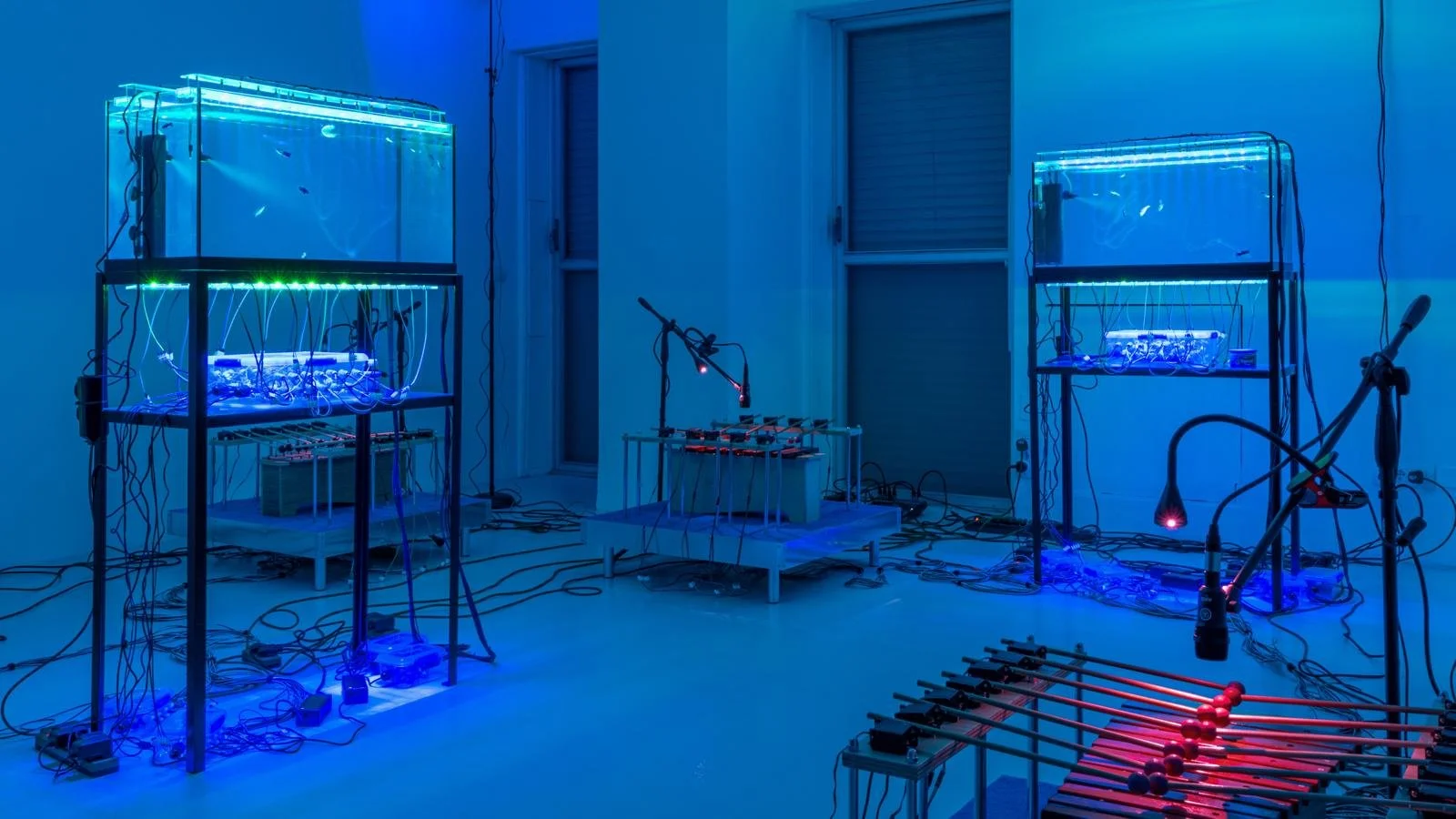
Clara Hastrup was born in Aarhus in 1990 and lives in London, where she makes sculpture, sound, moving image and photography out of the objects most of us keep in a kitchen or a cupboard. She opens them up, adds sensors, pumps and motors, and hooks them to forces far outside the room, so whatever happens in the gallery depends on what happens in the sky. Remote Control, open at MATTA on Via Privata Giacomo Favretto until 14 November, marks her return to the gallery two years after Fishphonics: Accelerando, her first solo show in Italy, which COEVAL covered at the time.
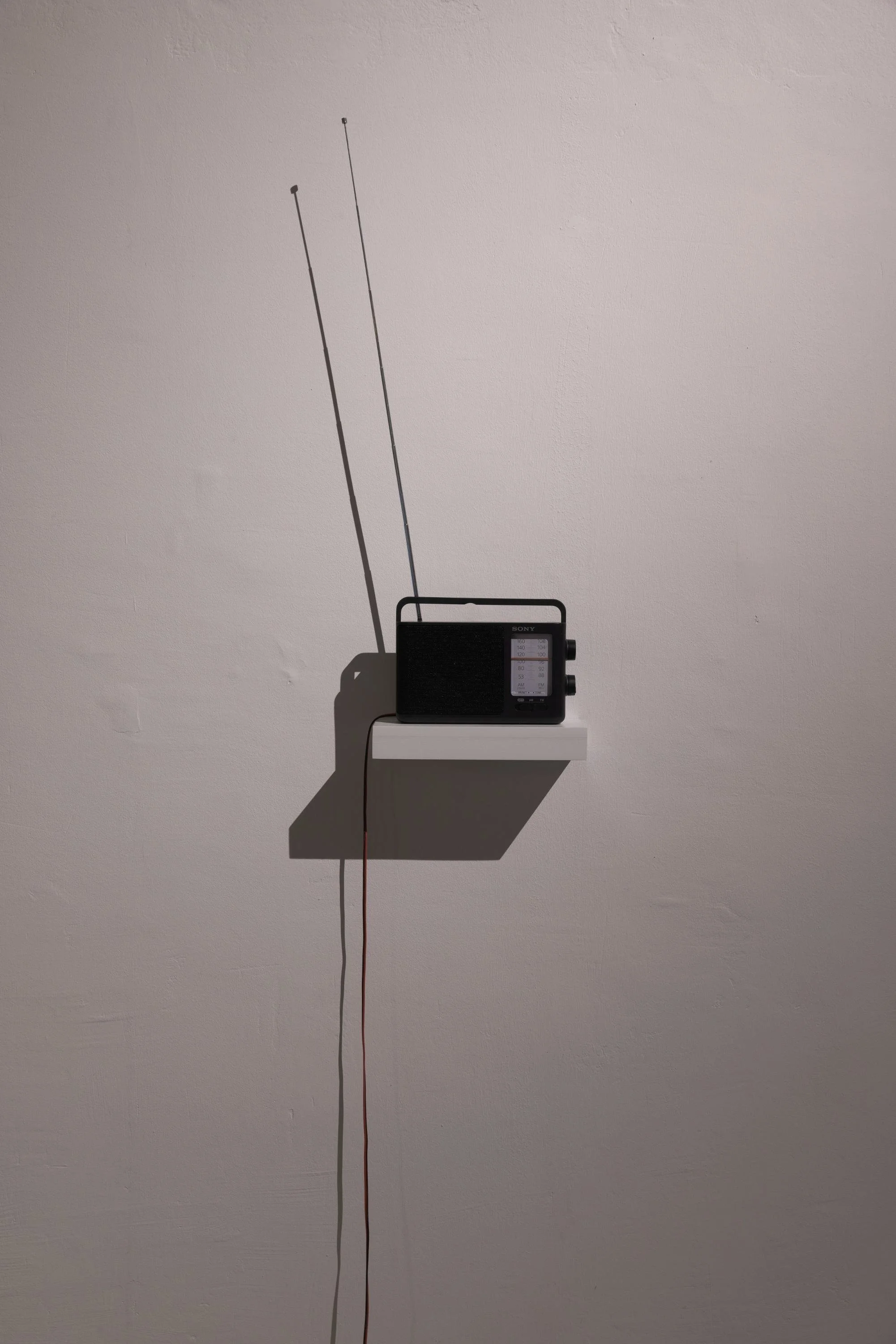
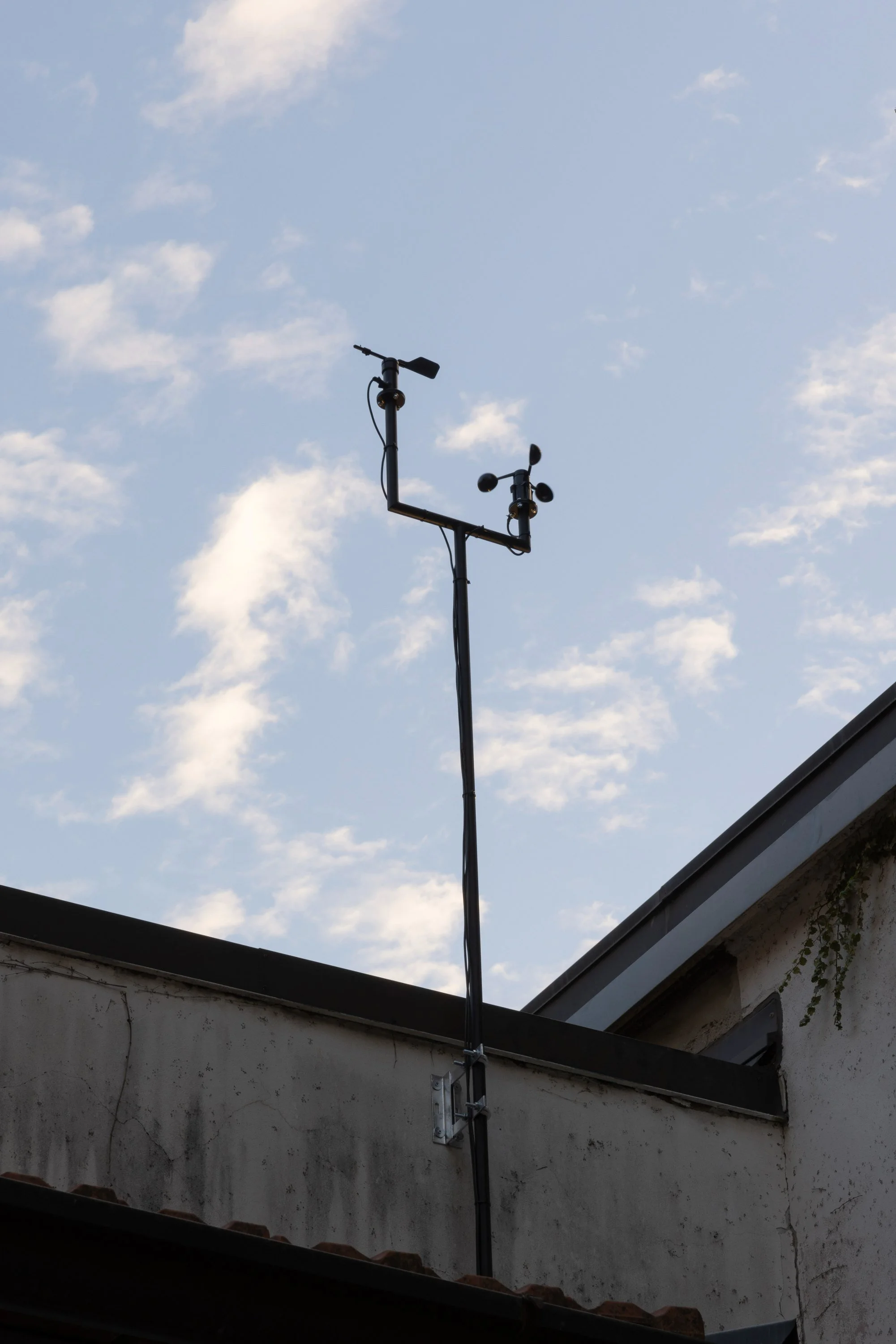
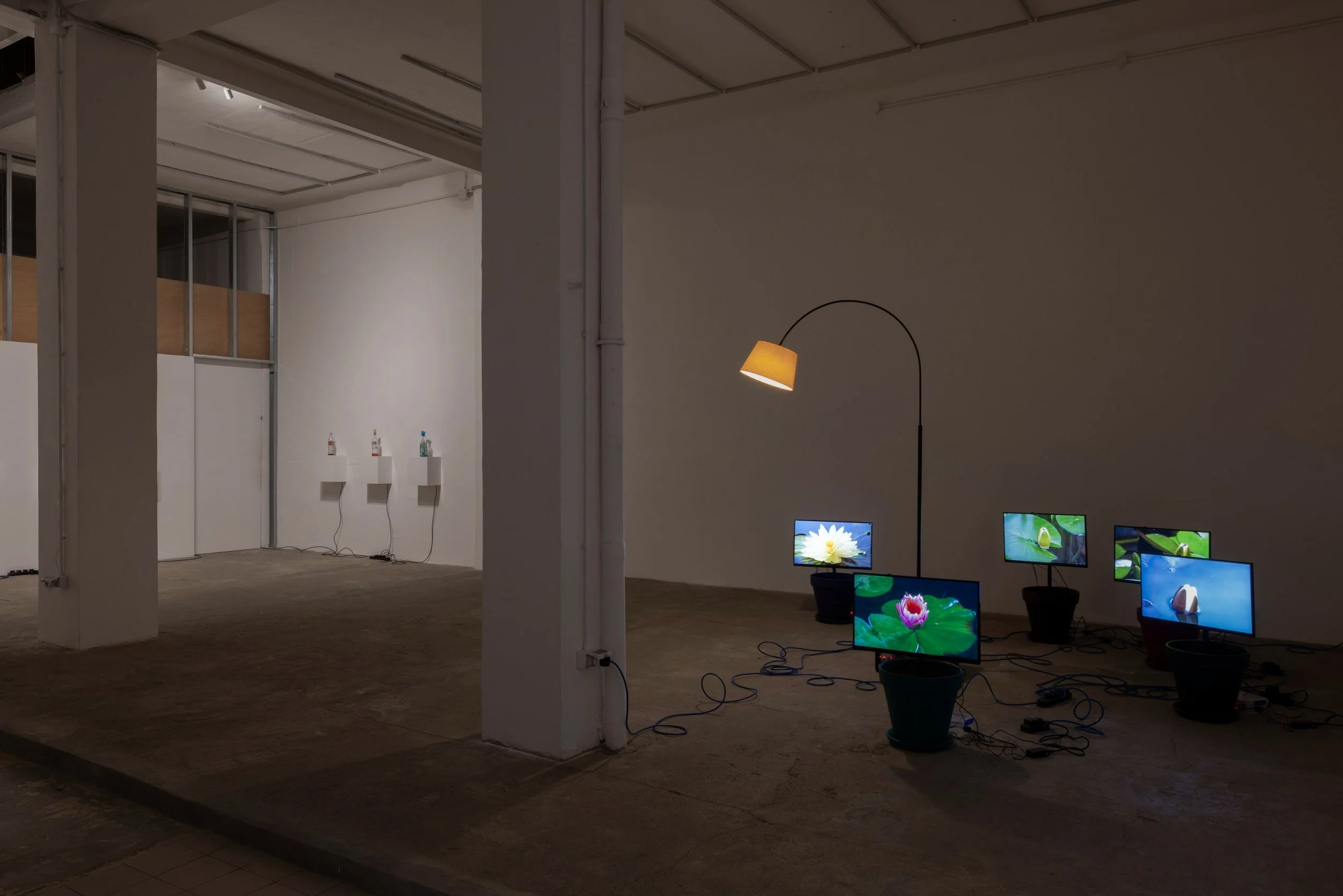
The first voice in the room belongs to Wind Radio. A modified portable Sony radio, mounted on a lacquered wooden shelf, plays an instrumental version of Stevie Wonder's I Just Called to Say I Love You. An anemometer outside the gallery sets the playback speed in real time: a still afternoon slows the song to a drawl, and a strong gust pushes it forward in a rush.
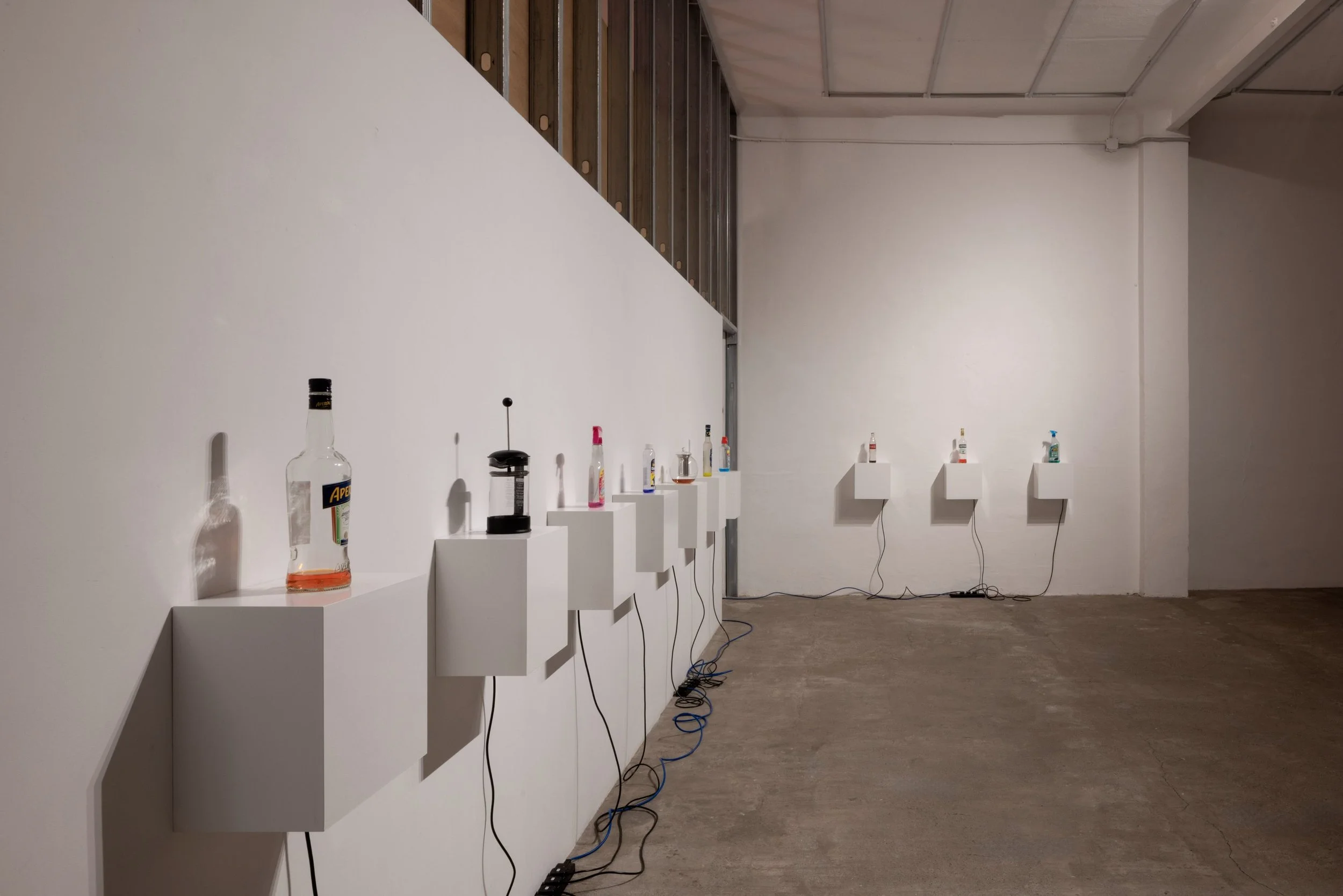
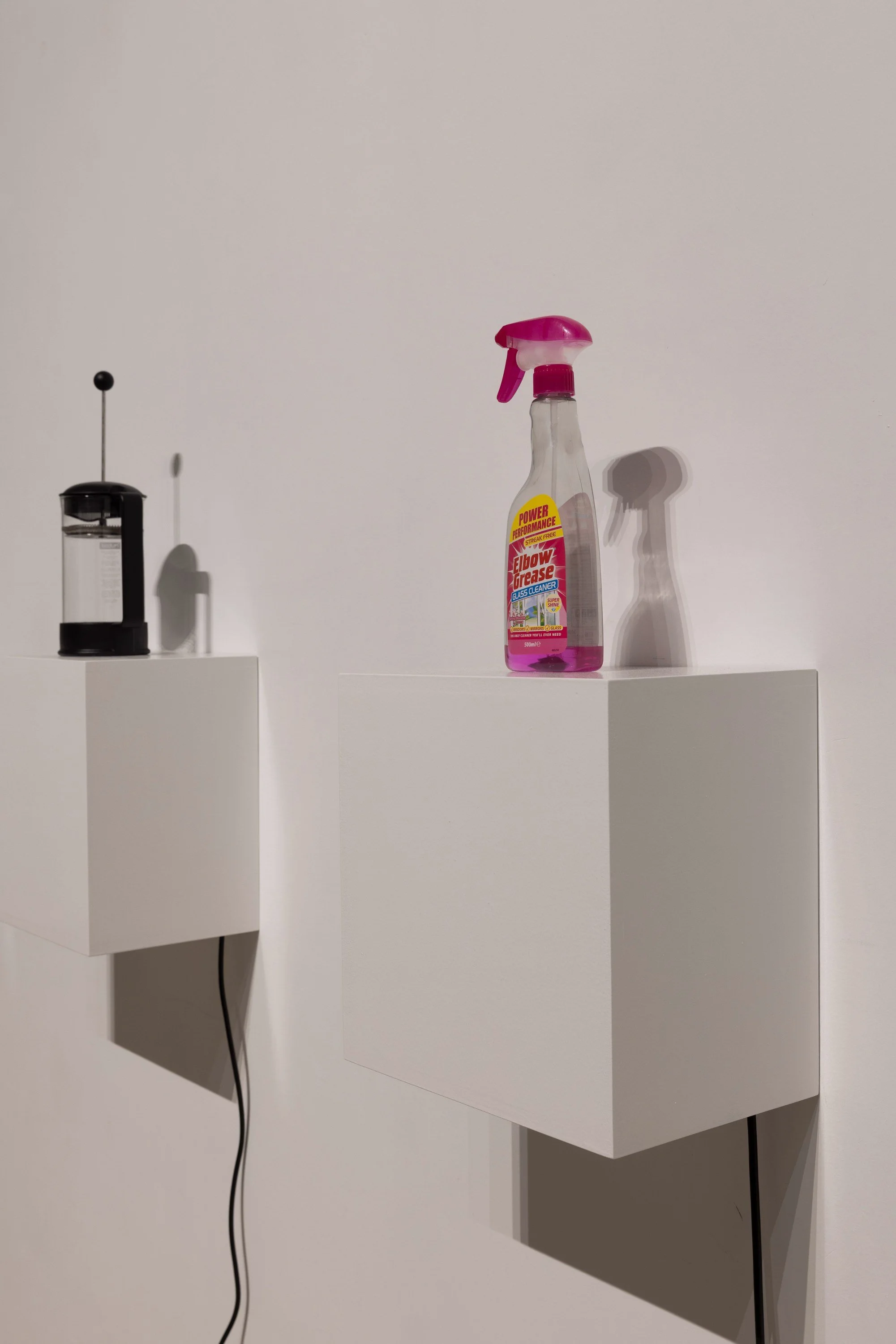
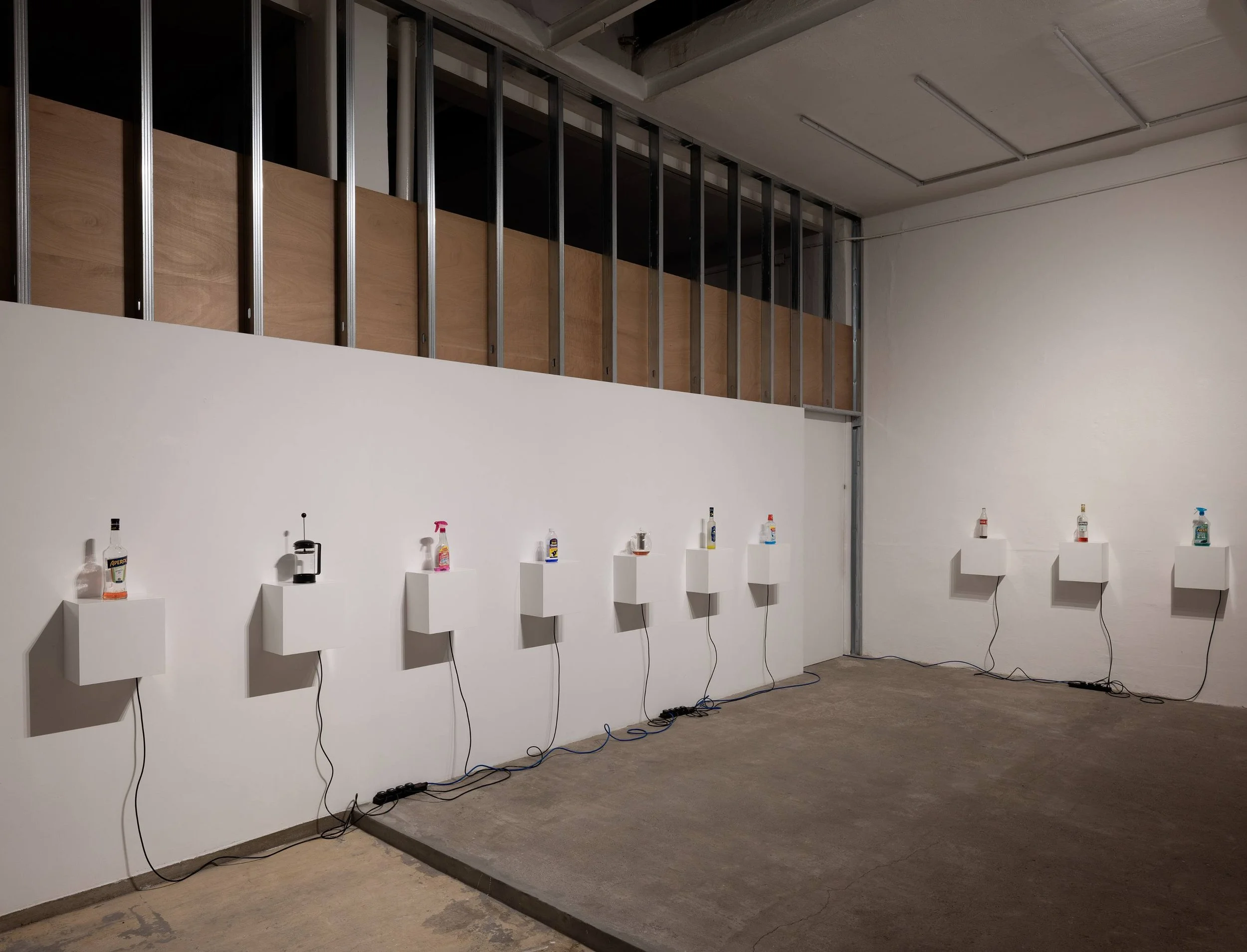
Across the floor, Tidal Range lines up five vessels: a bottle, a coffee pot, a detergent container, a French press and a teapot. Each one holds coloured ink and water. Peristaltic pumps and weight sensors, fed by live tidal data over Wi-Fi, raise and lower the liquid in step with the tide, scaled to the volume of each container. For this show the vessels follow the level of the Venice Lagoon, which means a teapot in southwest Milan rises and falls with the water in Venice.
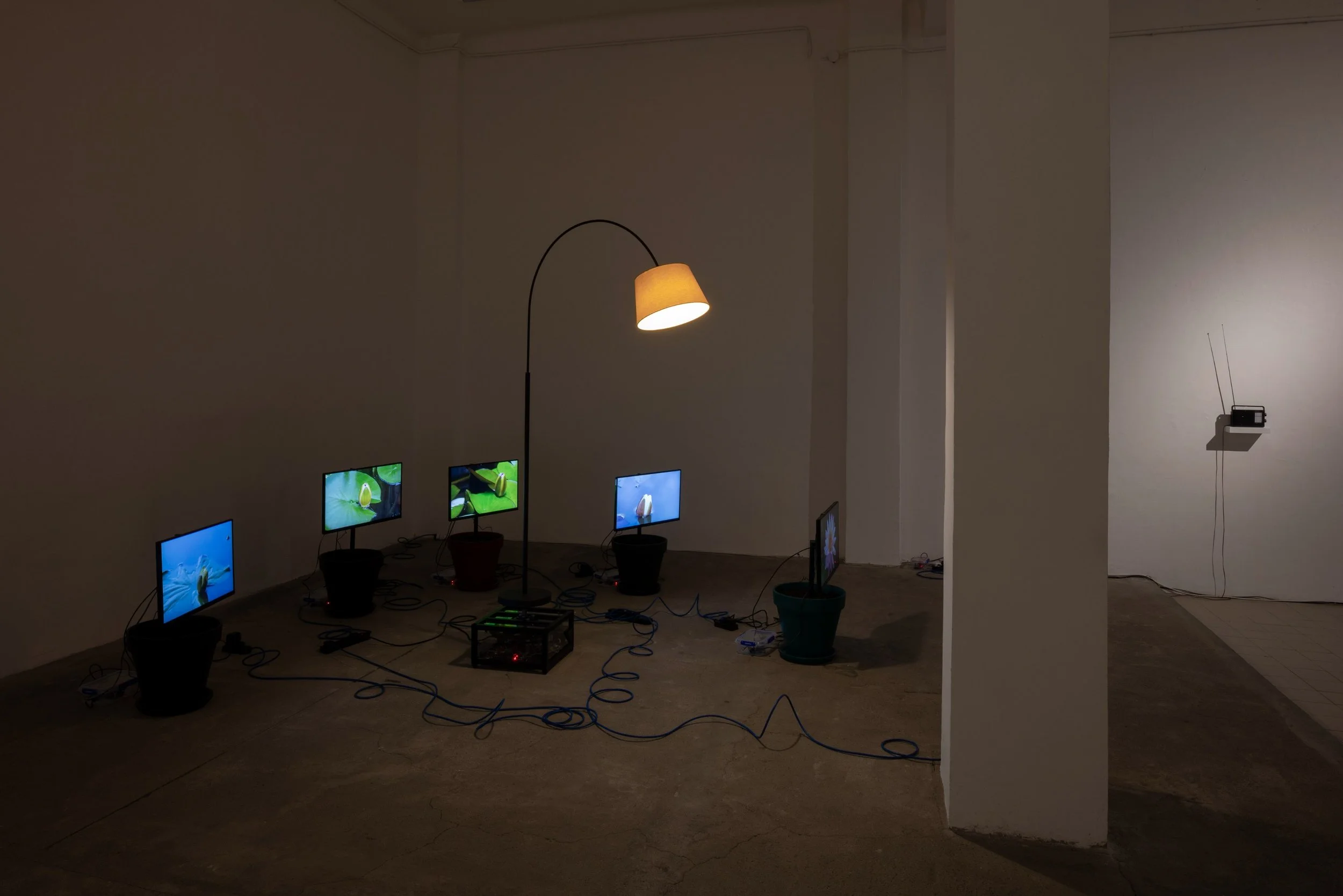
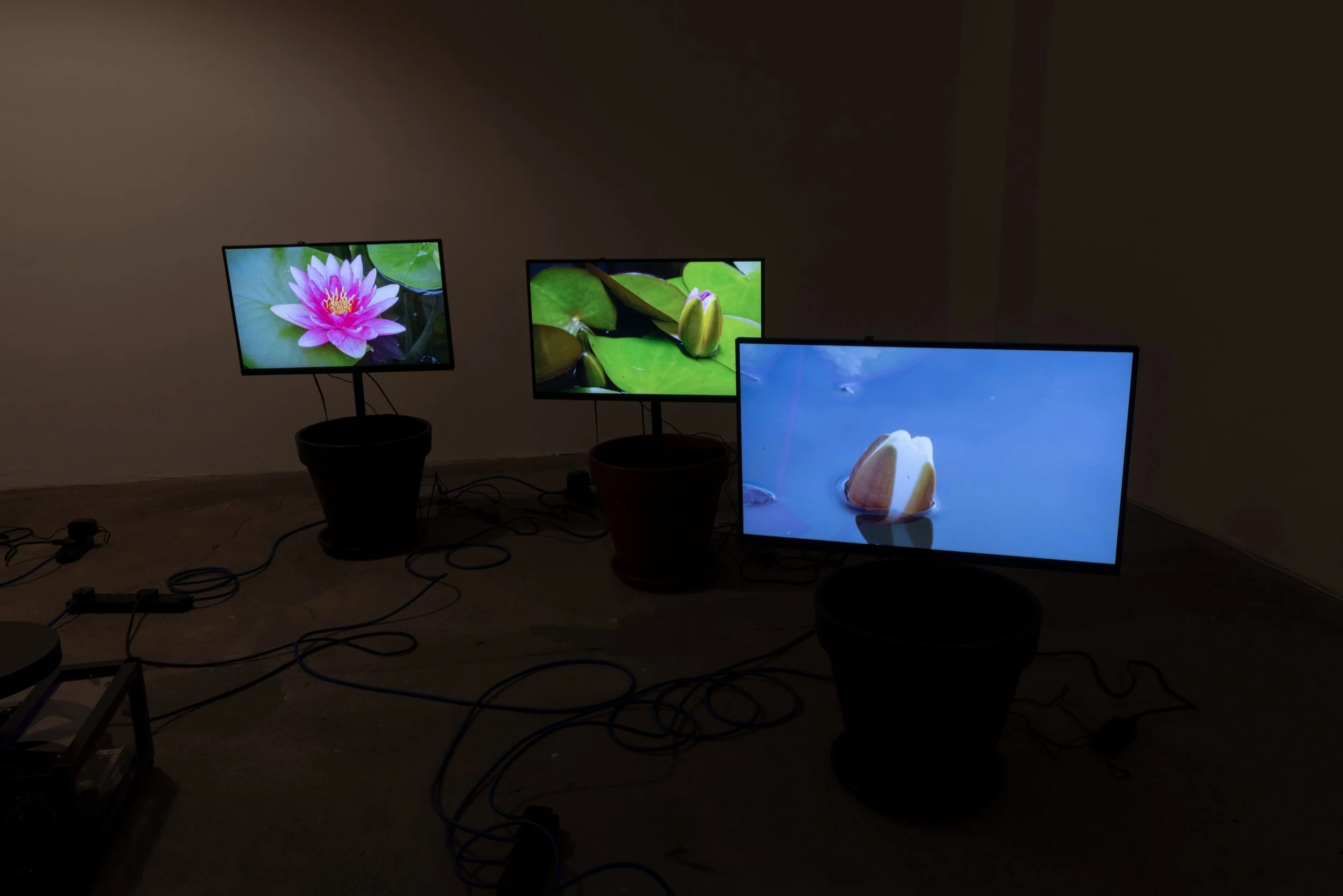
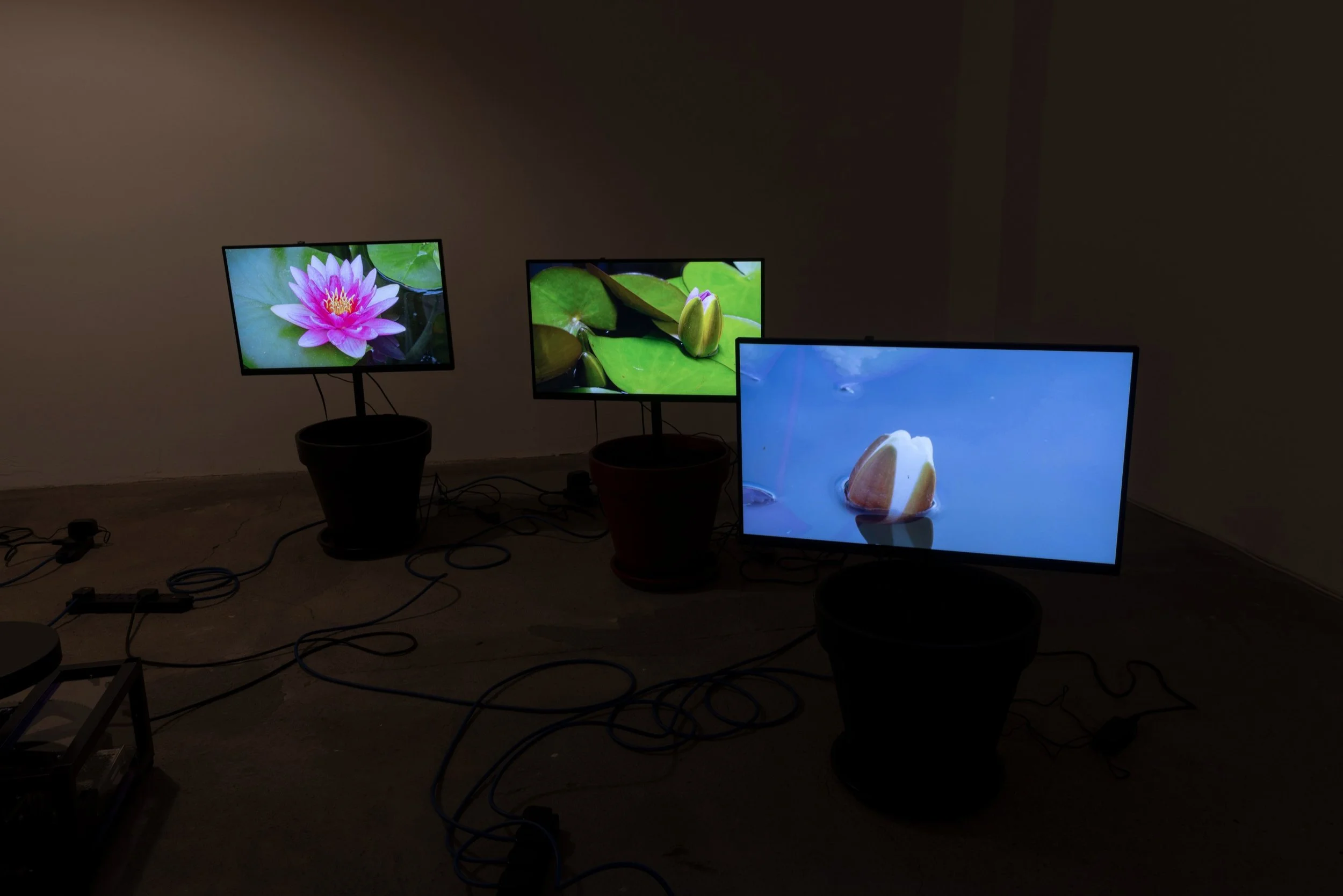
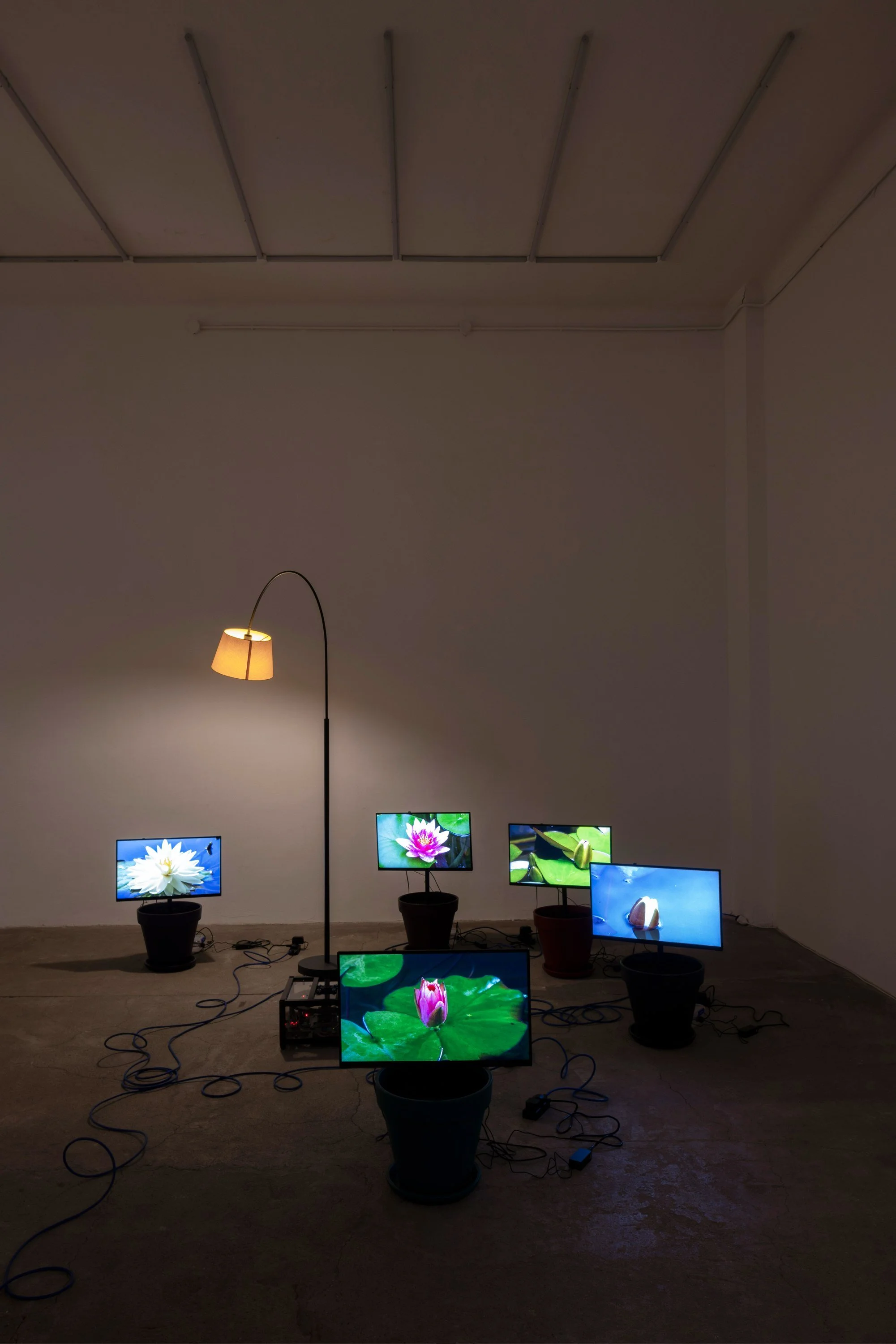
The largest piece, Weather Lamp with Flowerpot TV, takes up an area of three metres by three. A floor lamp on a motorised frame turns to face the direction of the wind, read by a low-inertia vane outside the gallery. Around it, monitors planted in pots of real soil show a water lily, and light sensors track the brightness above each screen. As that light grows stronger, the lily opens. When the wind swings the lamp toward one of the screens, its beam can be enough to make a flower bloom.
Gallery co-founder Pier Francesco Petracchi wrote a short story for the show, and it reads like a night spent inside the installation. The radio, the lamp, the vessels and the flowers talk among themselves about wind and rain, and about whether any of them are alive. When the last flower asks if this is the silence, the radio gives the answer: "It's what we get."
Hastrup sets the rules of each system and leaves the rest to the sky over Milan and the water in Venice. A bright, windy day brings a faster song and a room full of open flowers, while a grey and still one slows everything down. In December she opens a solo show at Tate Britain as part of ART NOW, with a newly commissioned sculpture based on the same idea of connected elements answering the environment in real time.
Words by Donald Gjoka
What to read next