Fredrik Paulsen
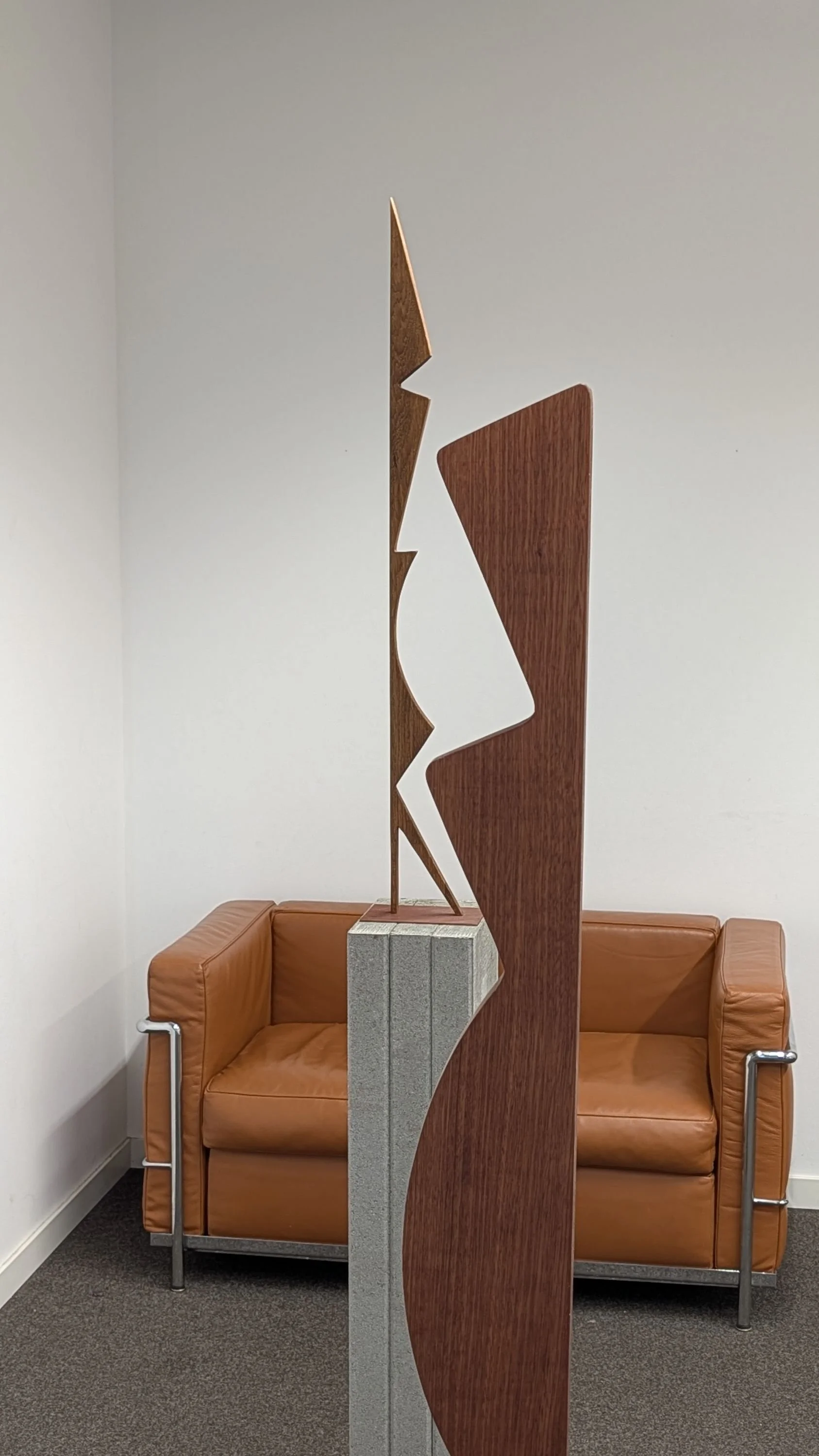
Fredrik Paulsen’s design education started well before Beckmans or the Royal College of Art. It started on a childhood street in the Swedish countryside, where he had to invent every obstacle himself because proper skateparks were scarce. That early habit of reading architecture for its hidden potential, rather than its stated purpose, still runs through his work today: the collages, the standardized metal and wood, the refusal to let any single material feel too precious.
With JOY OBJECTS, the brand he founded in 2021, Paulsen builds a world around his objects rather than simply putting furniture into the market. Chairs, tables, and events all come from the same instinct: pop culture, music, and design belong in the same sentence, not separate categories.
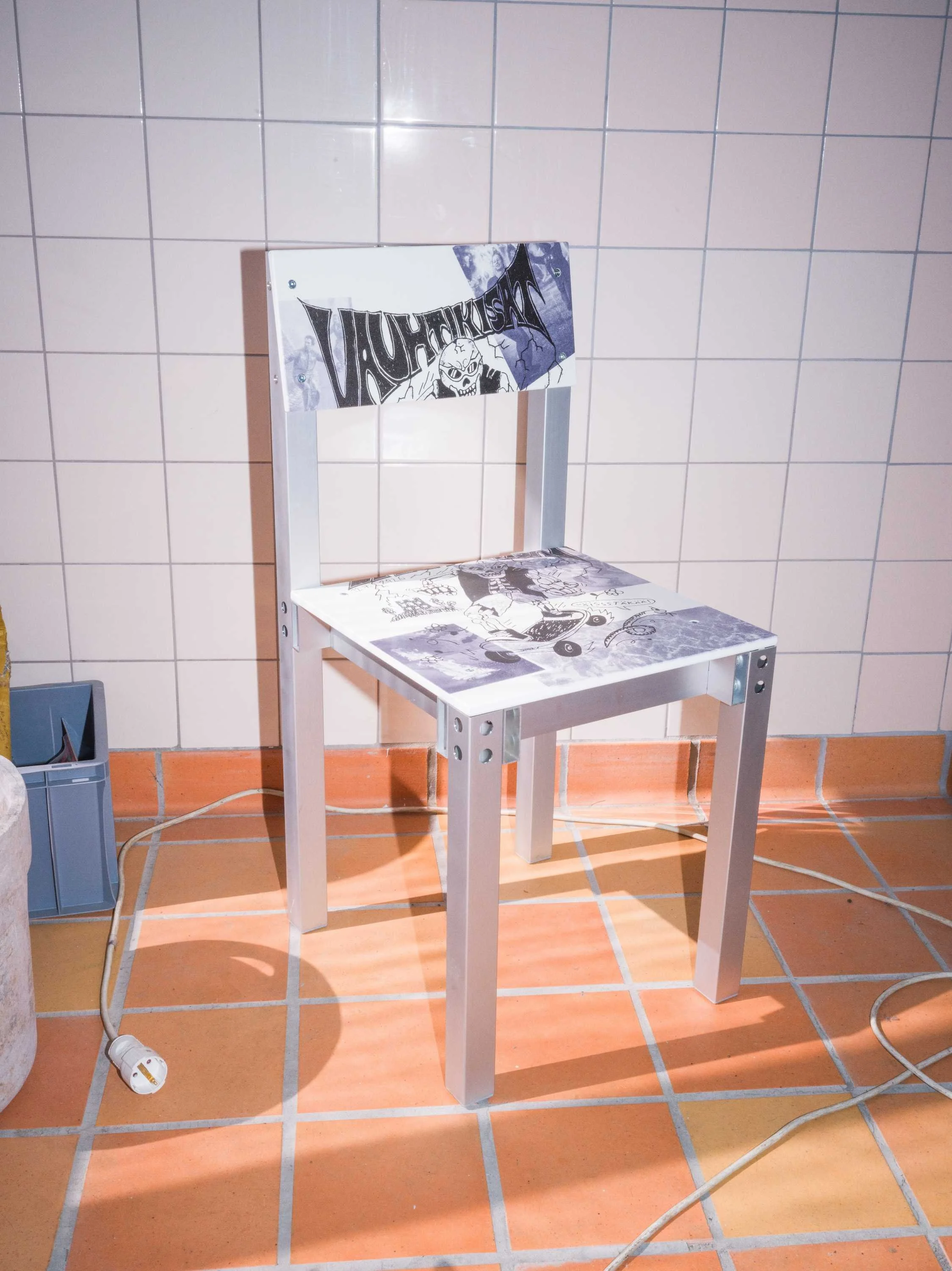
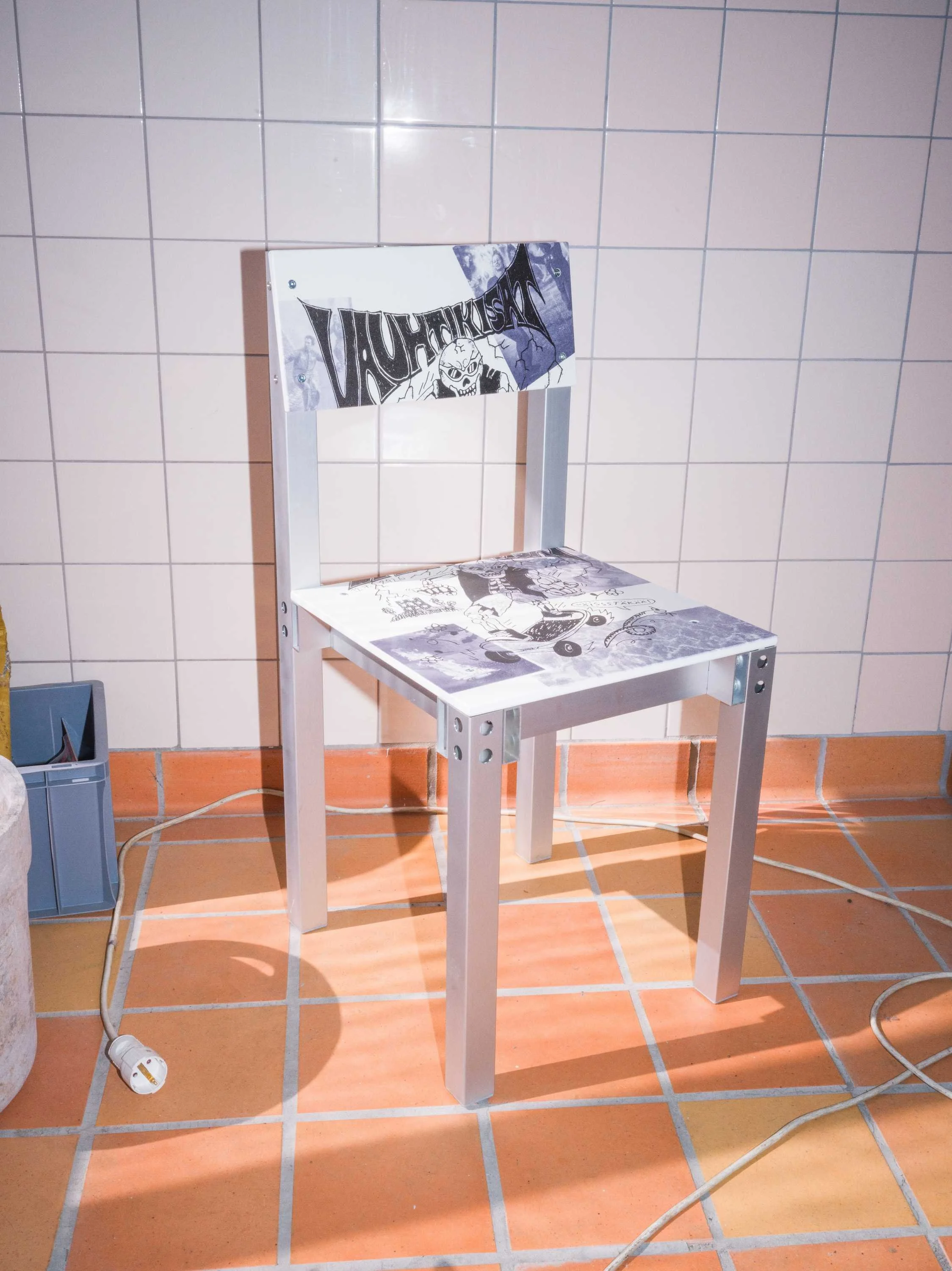
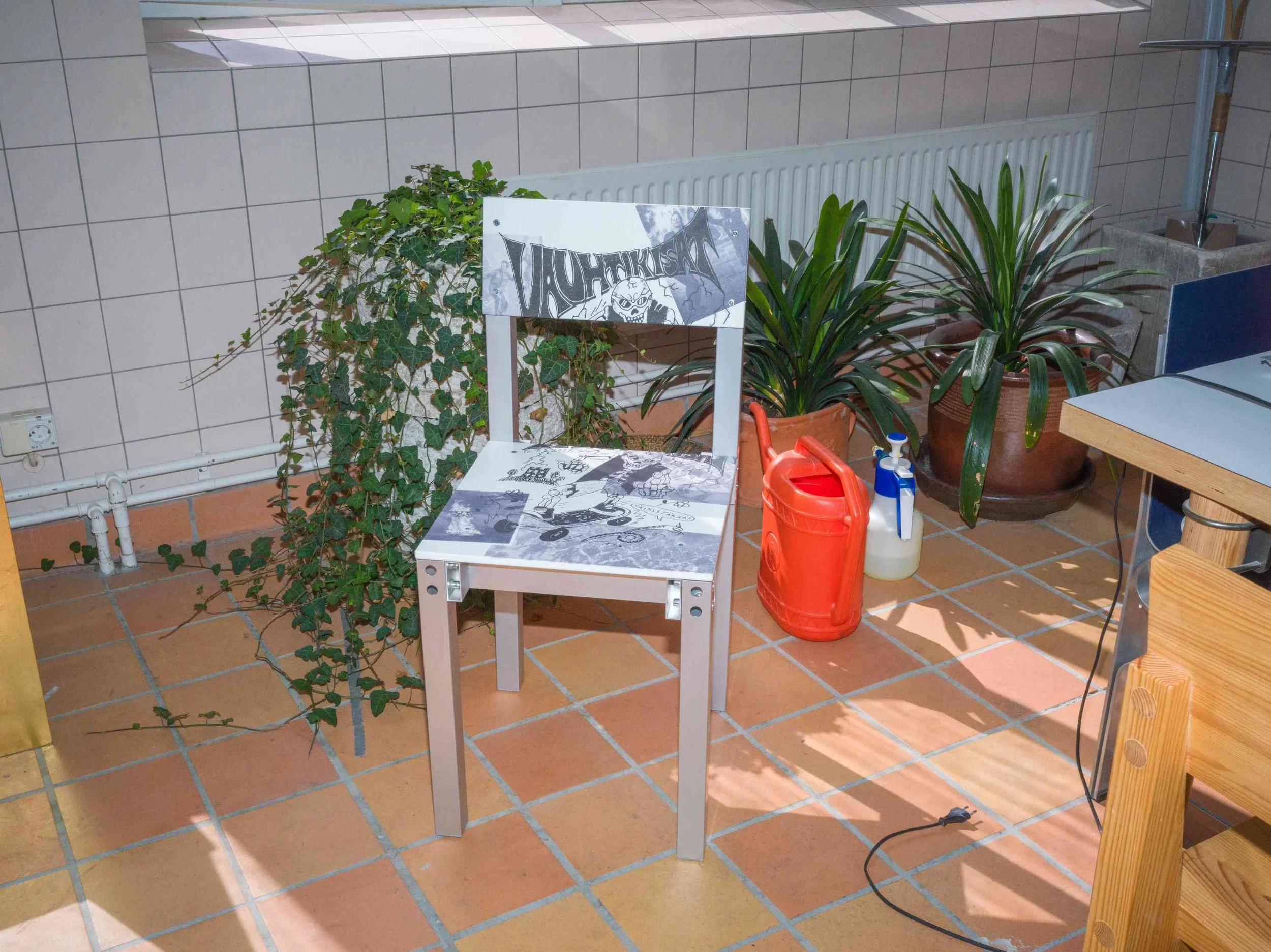
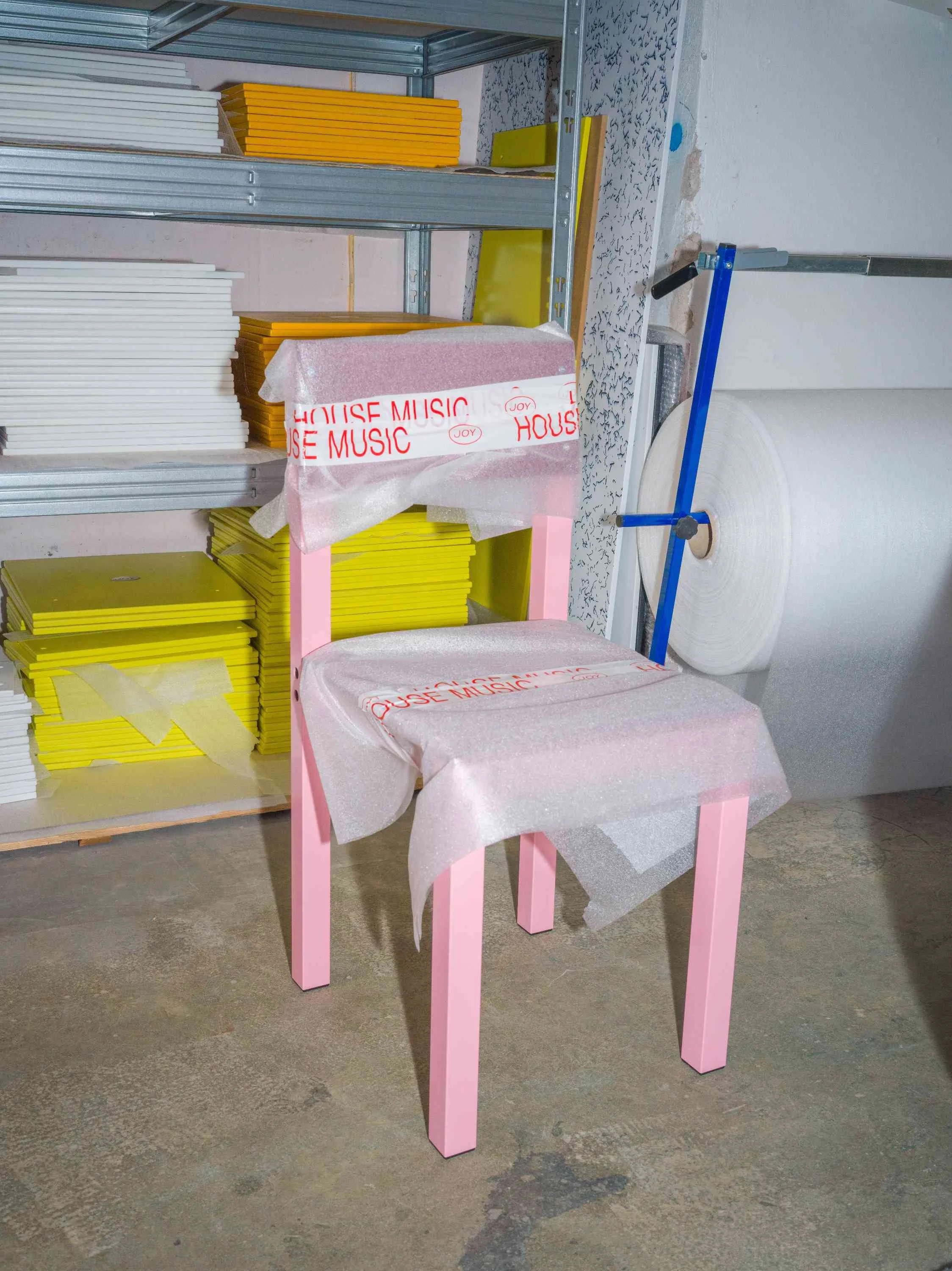
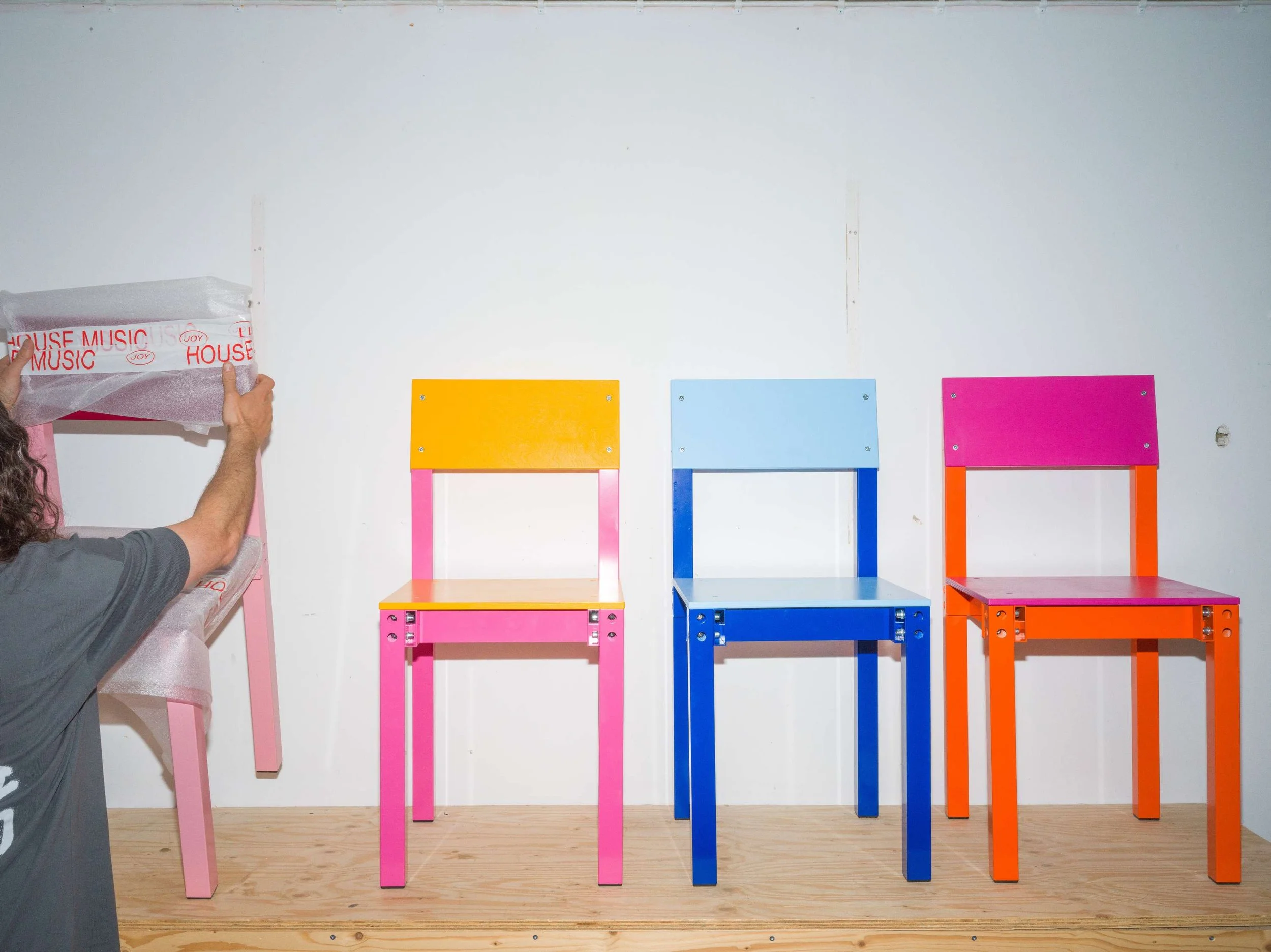
His latest piece, Chair One for Vauhtikisat, closes a loop that started decades ago. Vauhtikisat, the DIY skateboard gathering that began in Helsinki in 2014 and now draws thousands to the city’s steepest hill, gave Paulsen the same kind of energy he grew up chasing. Working with Finnish Design Shop, he built a chair carrying the event’s own illustration, a piece meant less for a living room than for a crowd. Five exist. One goes to a stranger, the winner of the day’s competition, rather than to a collector.
The result is a rare kind of object, a piece of furniture asked to survive a skate run before it survives a sale.
You have said skateboarding was the starting point for everything you do. Most designers describe an influence. You describe something closer to a training ground, building your own obstacles as a kid because none existed around you. Looking back, what did skateboarding actually teach you about designing objects, not aesthetically, but as a method?
For me it starts with energy and attitude, but more importantly it’s about curiosity, a way of reading the world. Skateboarding trained that early on. Growing up in Sweden, where skateparks were almost non-existent, I had to constantly search for spots, which meant learning how to interpret architecture and public space in terms of potential rather than intention. You begin to see structures not only for what they are, but for what they can become. That way of recontextualizing what already exists still defines how I approach design today. It’s less about form, and more about use, perception, and possibility.
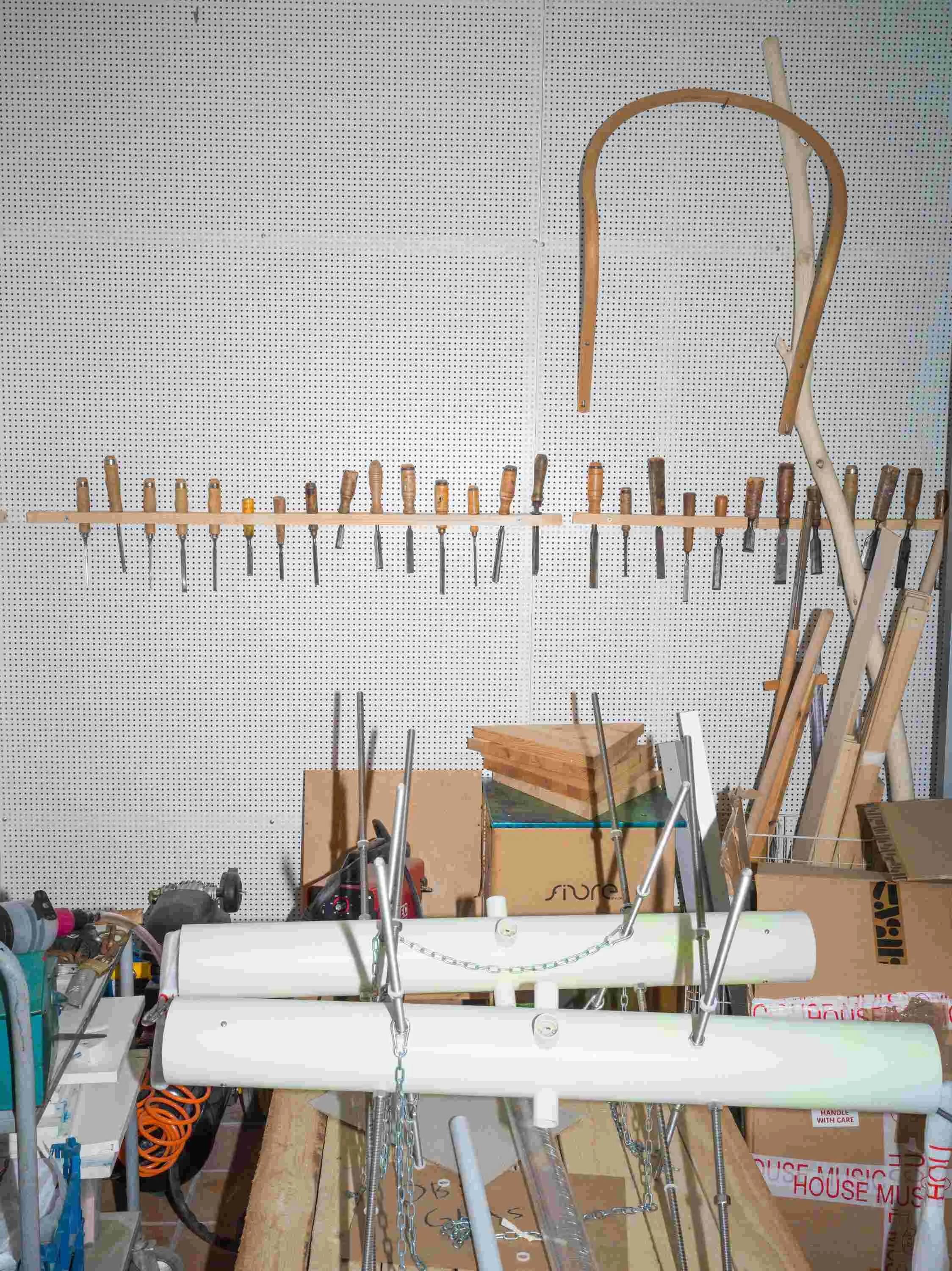
Your work sits between minimalism, maximalism, and a kind of brutalism, and you have talked about wanting to challenge the preciousness built into design as a field, which is partly why you work in standardized sections of wood and metal. Is that constraint a way of staying close to the DIY logic you grew up with, or has it become its own discipline, separate from where it started?
I’ve never been interested in operating within a fixed discipline. Working with standardized sections began as a practical decision, they were cheap and accessible, but it quickly evolved into something else. These materials usually exist in the background, hidden inside construction, so bringing them forward became a way of questioning how value is created in design: what is considered refined, what is overlooked, and why. Rather than a constraint, it became a tool for shifting perspective.
JOY OBJECTS came out of wanting to make things that were useful, affordable, and unapologetically pop-culture. Founding an independent brand is a very different bet than joining an existing house. What did going independent let you say that you could not have said working inside someone else’s structure?
With JOY OBJECTS, the object is never the endpoint, it’s only one part of the work. I’m interested in everything around it: the people, the context, the atmosphere, and the culture it enters. Going independent allowed me to shape that whole environment myself instead of simply delivering a product into someone else’s structure.
I’m not really interested in making objects that just sit nicely in a room. I want them to have a life around them. The events, the collaborations, the imagery, and the references from pop culture, music, and everyday life are all part of the same practice. JOY OBJECTS is less about design as an isolated category and more about creating a space where different cultural layers can collide and where people can participate.
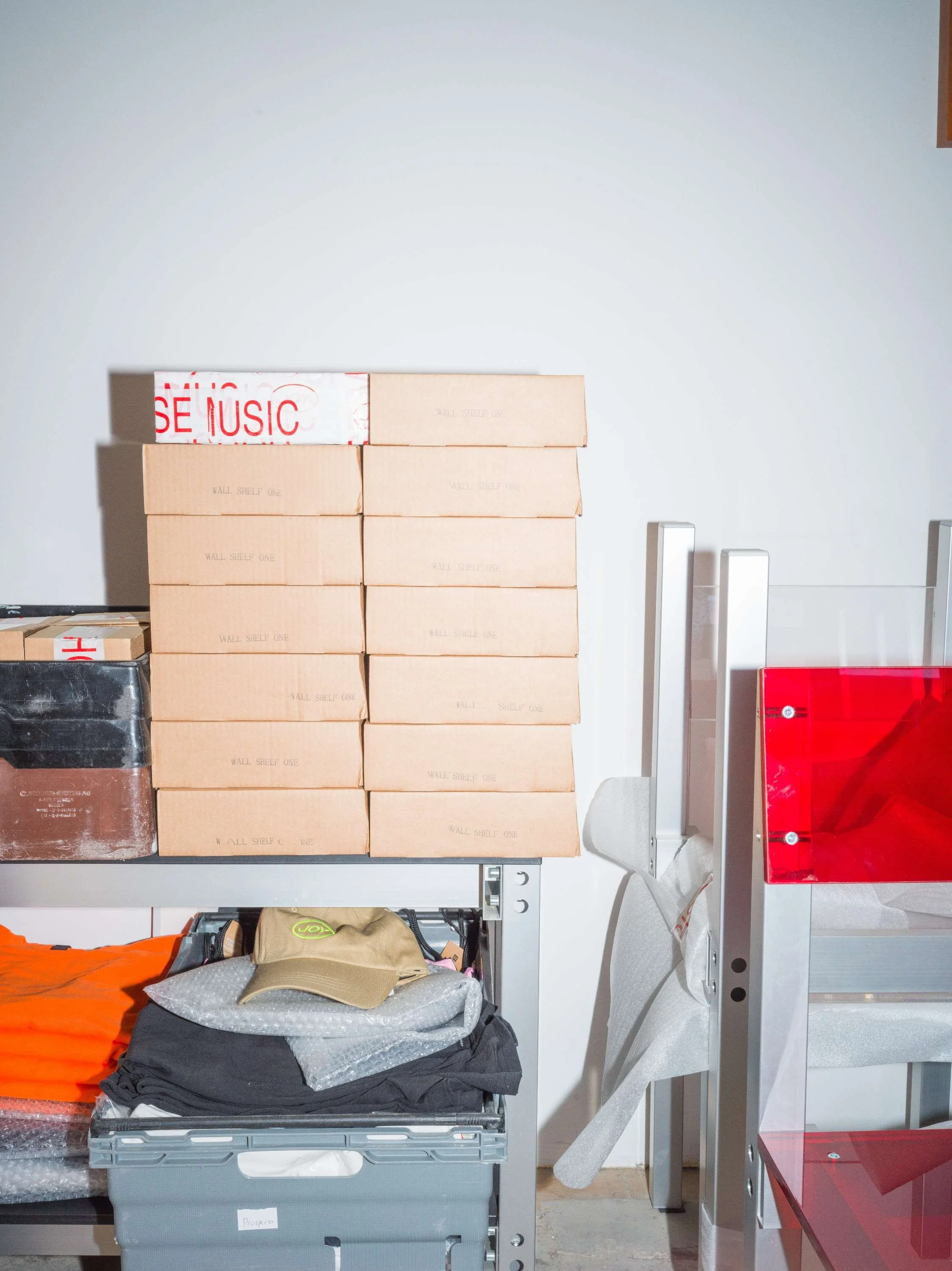
In the space of a few years you have gone from an auction house exhibition in Stockholm to a pine chair for a Finnish outdoor brand to now a chair built to be skated. Do you think about audience differently for each of these, or is there one idea of who a JOY OBJECTS piece is for that holds across all of them?
I don’t really separate audiences in that way. The work stays consistent, but the context shifts. Whether it’s a gallery, a brand collaboration, or something more informal, I’m interested in how the same object can move between different worlds and still remain relevant.
JOY OBJECTS is a way of following those connections and creating a space where different references and communities can meet. Chair One was never designed to be skated, but I like the fact that once an object enters the world, it can take on new meanings. People can reinterpret it, use it differently, and make it part of their own context. That’s when the object becomes interesting.
Vauhtikisat started in 2014 as a DIY gathering and has grown into thousands of people on a hill in Helsinki without losing that original spirit. What made it feel like the right community to return something to, rather than any of the other scenes you could have chosen?
I’ve followed Vauhtikisat for years because it has a very honest energy. It’s informal, collective, and not overly controlled, it’s people coming together because they genuinely enjoy something. That spirit feels very close to how I think about JOY OBJECTS.
The decision to engage with it wasn’t strategic as much as intuitive. It felt like a natural connection with a community that shares the same values: creativity, playfulness, and a certain freedom to do things without overthinking them. When the opportunity came up, it felt like something that already belonged to the same world.
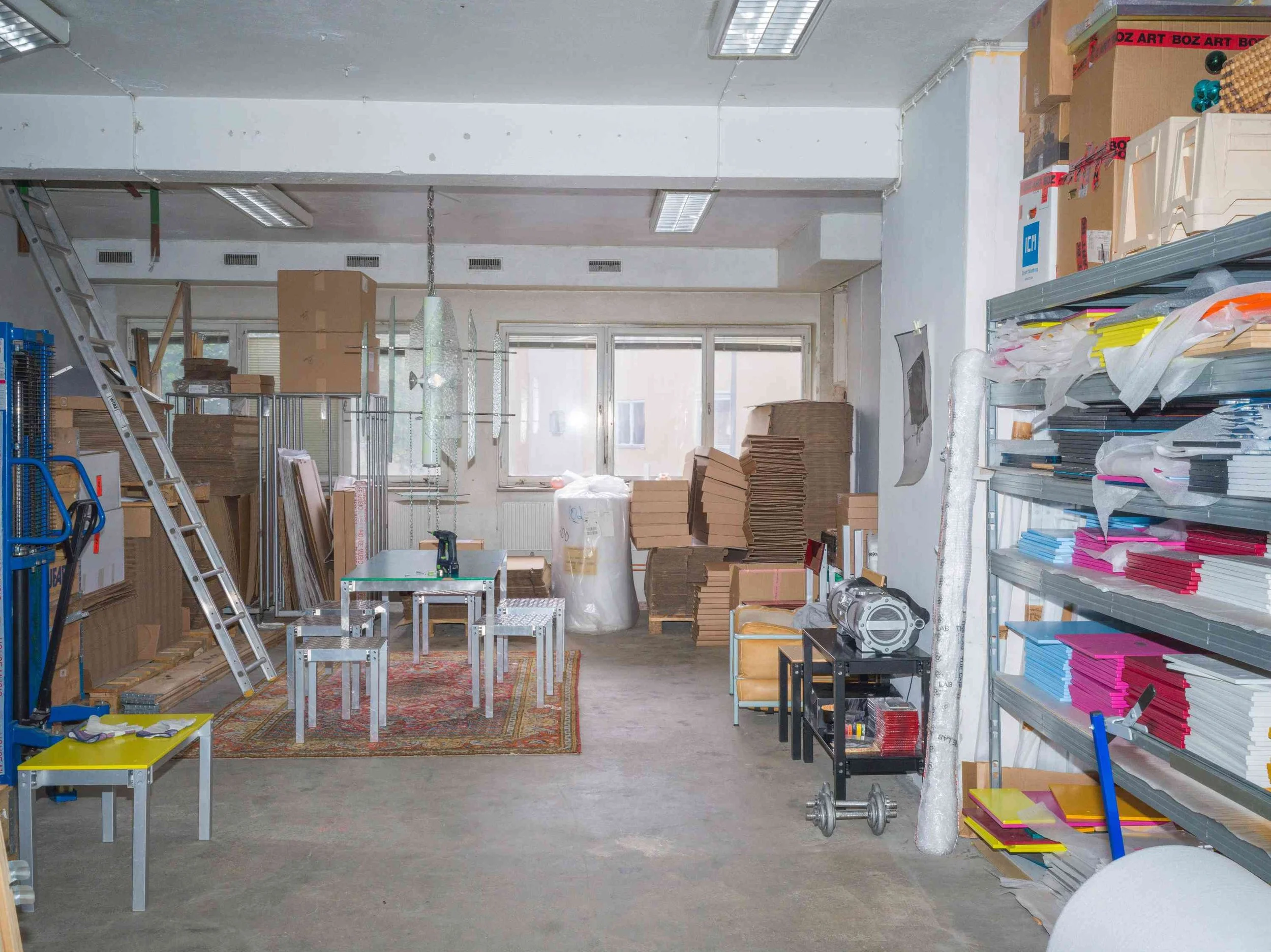
Chair One carries the event’s own illustration rather than an image you originated. That is a different kind of authorship, closer to collaboration than signature. How did you approach designing a piece that has to hold someone else’s visual identity and still feel unmistakably like your work?
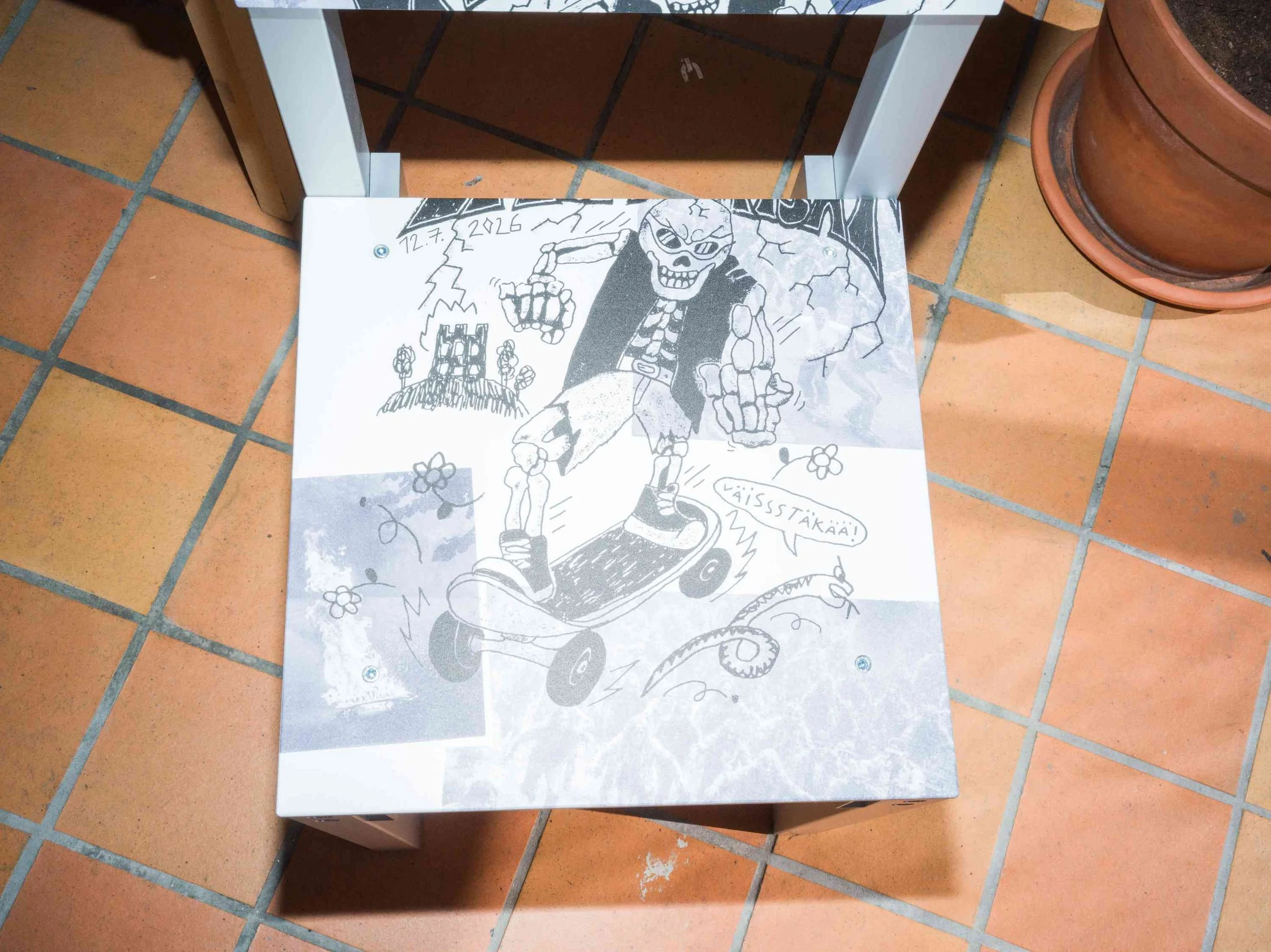
I don’t see collaboration as something that takes away from authorship, for me, it usually makes the work stronger. I approached the chair as a composition rather than a single signature. The starting point was creating a collage using photos from last year’s race mixed with fragments from an old zombie film. When I saw Janne-Juhanni’s illustration, it immediately felt like it belonged in that mix.
I trust my gut feeling and I don’t have much ego around protecting a single idea of ownership. For me, the interesting part is what happens when different references, perspectives, and people come together. The result becomes something assembled rather than imposed, a reflection of the context it comes from.
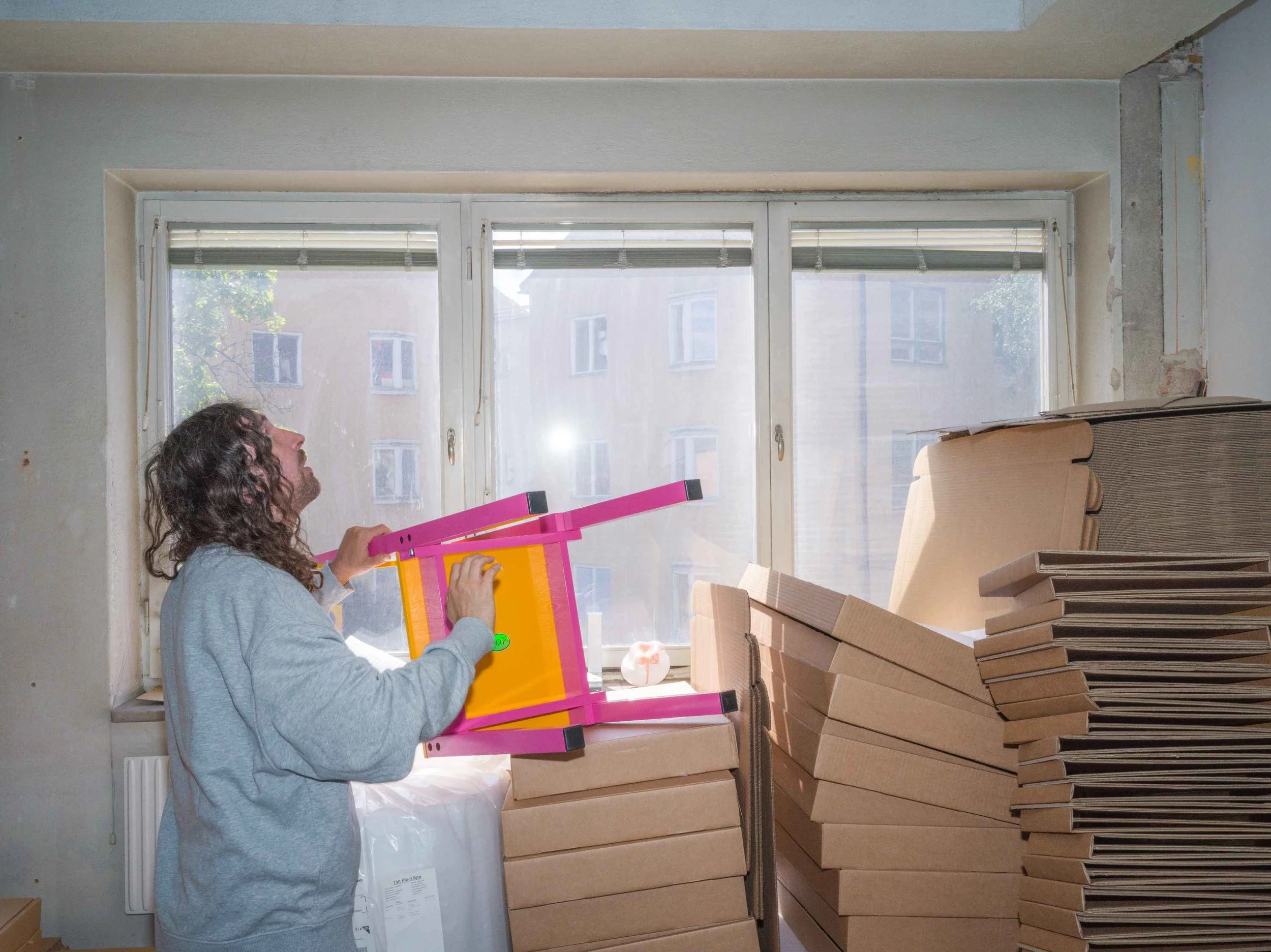
The chair is going to be skated. That is a strange instruction to give an object that is also being sold as a limited edition design piece. Did that change how you built it, structurally or otherwise, knowing its first use would have nothing to do with sitting?
Nothing changed structurally, it’s the same chair we launched four years ago. For the special Vauhtikisat edition, I was mainly curious to see how skaters would approach it and what kind of relationship they would create with it.
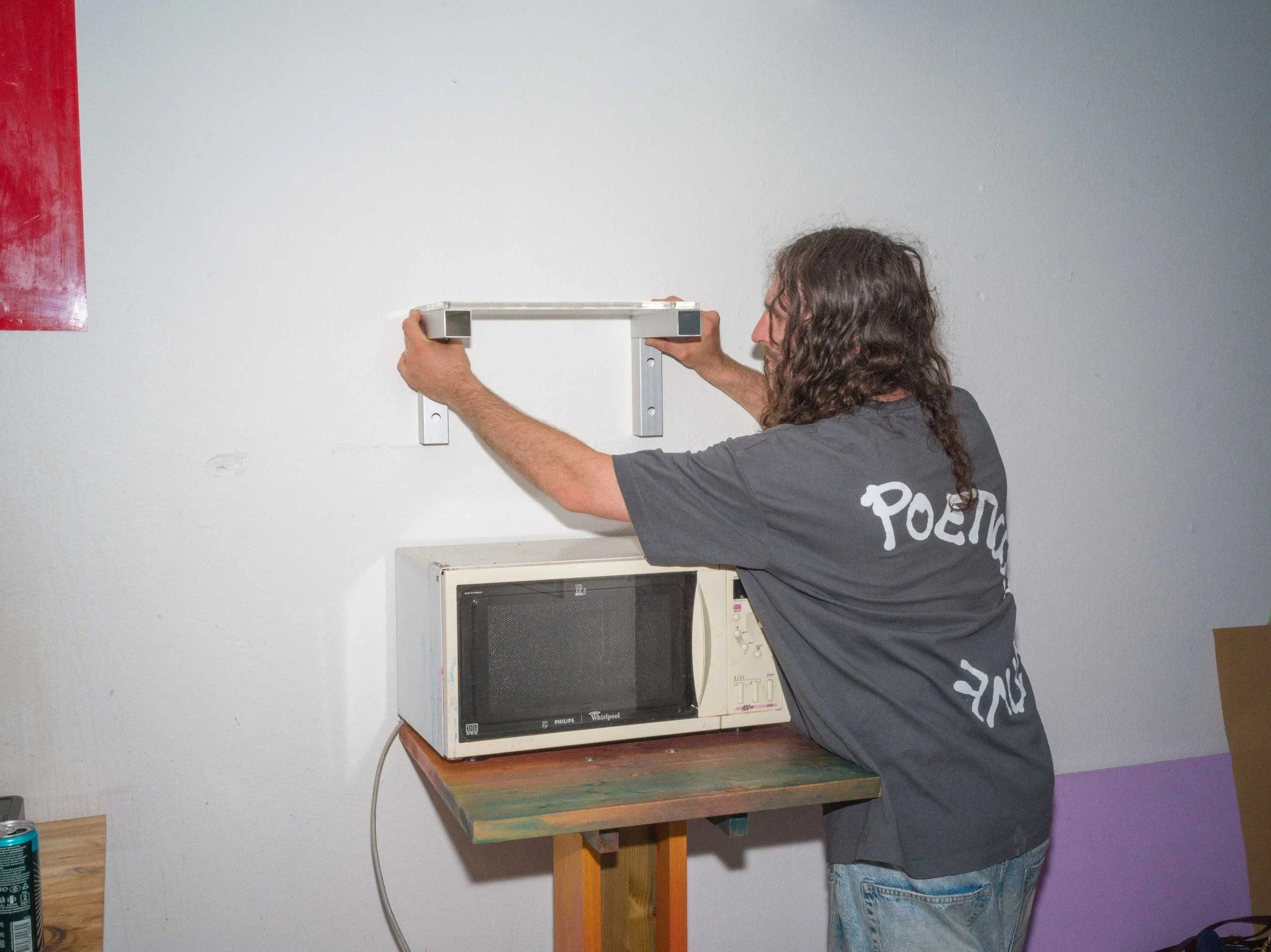
Finnish Design Shop’s Anu Soiniitty talked about not wanting to put your work on a pedestal, about an object only mattering once it is part of people’s lives. Only five chairs exist, and one goes to a stranger who wins a competition rather than to a collector. Does that scarcity sit against her point, or is giving one away the whole argument?
I don’t think scarcity automatically makes something precious, and I don’t think accessibility means something has less value. It depends on the context around the object and how it enters people’s lives.
This edition was never about creating another collector’s piece, it was made to celebrate Vauhtikisat and the culture that shaped me. The fact that one chair goes to someone who actually participates in that culture feels more meaningful than simply placing all of them in collections. The object gains value through the experiences, relationships, and stories that grow around it, not simply through ownership.
Photography by Kristian Bengtsson
Interview by Donald Gjoka
What to read next