3 days of design highlights by Conforma
This year's edition made one thing clear: the conversation in Copenhagen has shifted. What once felt like a sidebar concern, the question of what things are made from and how, has moved to the center of the room. Across pavilions, showrooms and installations, designers and brands arrived not with claims of novelty for its own sake, but with materials that had been studied, tested and respected on their own terms.
Wood appeared again and again, but rarely as a default choice. At Hjemstavn, it carried an entire dinner. At Alpi, reconstituted wood became the basis for an architectural surface system. CPH Wood, part of Project Materia x Mater, treated it as one voice among nine working from a shared circular material. Recycled and bio-based materials had equal presence: Durat's recyclable solid surface anchored Playroom, while Jessie French's newly patented circular, leather-like material gave Latitude one of its strongest statements, proof that alternatives to conventional production can be desirable, not just responsible.
Craft, too, was treated with seriousness rather than sentiment. VÆRKTØJ asked visitors to consider the tools behind every object, while UKURANT MAKES ROOM let natural materials guide technique rather than the reverse. Even A-POC's plissé demonstration, decades after its debut, felt newly relevant: heat and fabric, process made visible. What tied these presentations together was a shared refusal to separate sustainability from quality. Nothing felt like compromise. The objects on view were not asking to be excused for their material choices, they were simply better for them. If this year's design week proved anything, it is that the most forward-looking work in Copenhagen right now is the work paying closest attention to where things come from, and what happens to them next.
Ukurat
Curated by Larke Ryom, Kamma Rosa Schytte, Josefine Krabbe and Kasper Kyster of the Royal Danish Academy.
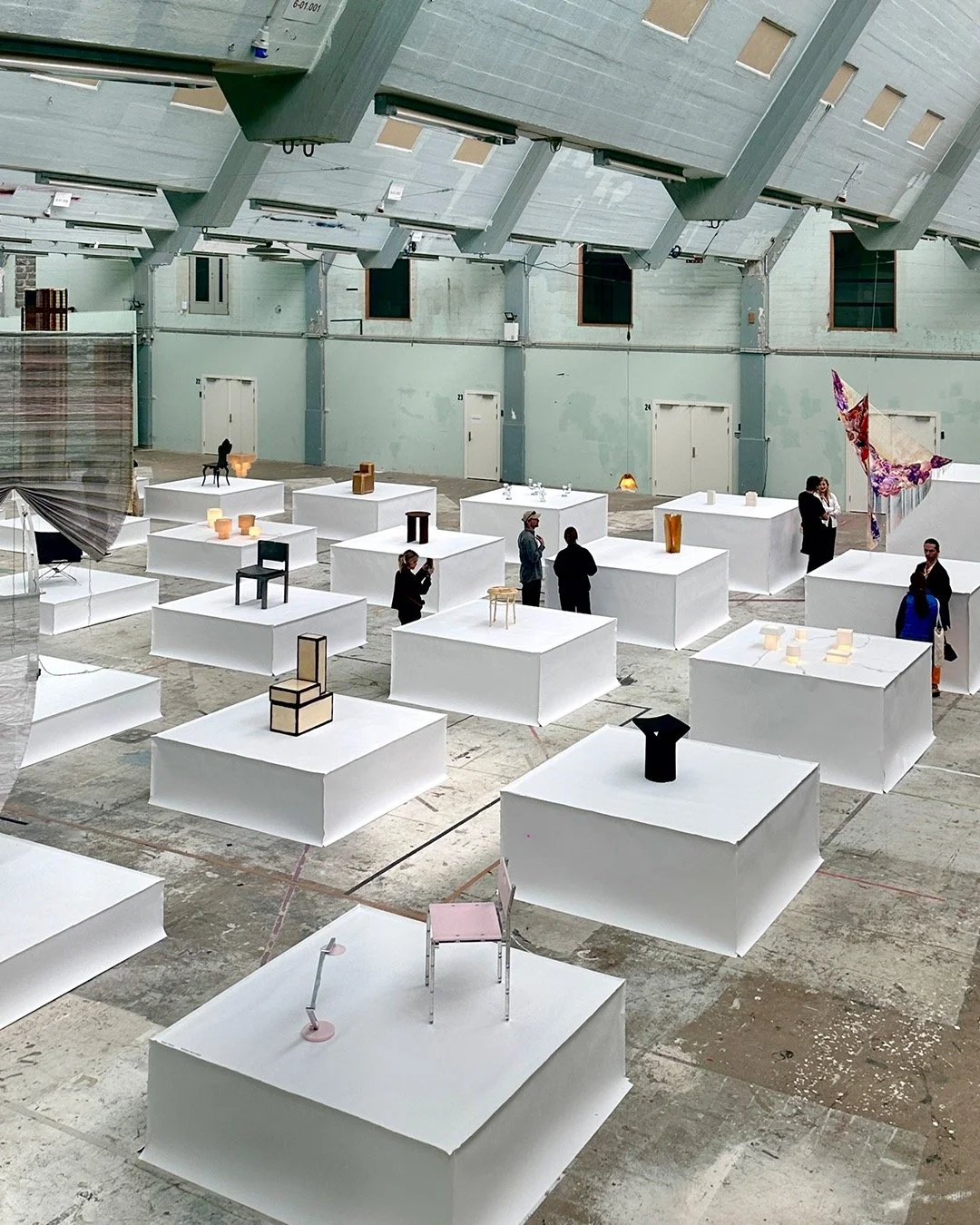
UKURANT MAKES ROOM gathers a generation of designers whose work begins not in the studio but in the field, the forest, the quarry. Each piece on view carries the trace of its origin: a grain, a fiber, a mineral residue that refuses to be smoothed away entirely. Rather than disguising the raw character of their materials, these designers let it speak, building techniques around what wood, clay, stone and plant fiber already want to do.
The result is an exhibition that feels less like a showcase and more like a conversation between hand and substance. Craft here is not nostalgia. It is research, carried out with patience and a willingness to fail many times before succeeding once. Visitors encounter objects that look both ancient and entirely new, pieces that could have been made a century ago or might define the next one.
Stellar Works
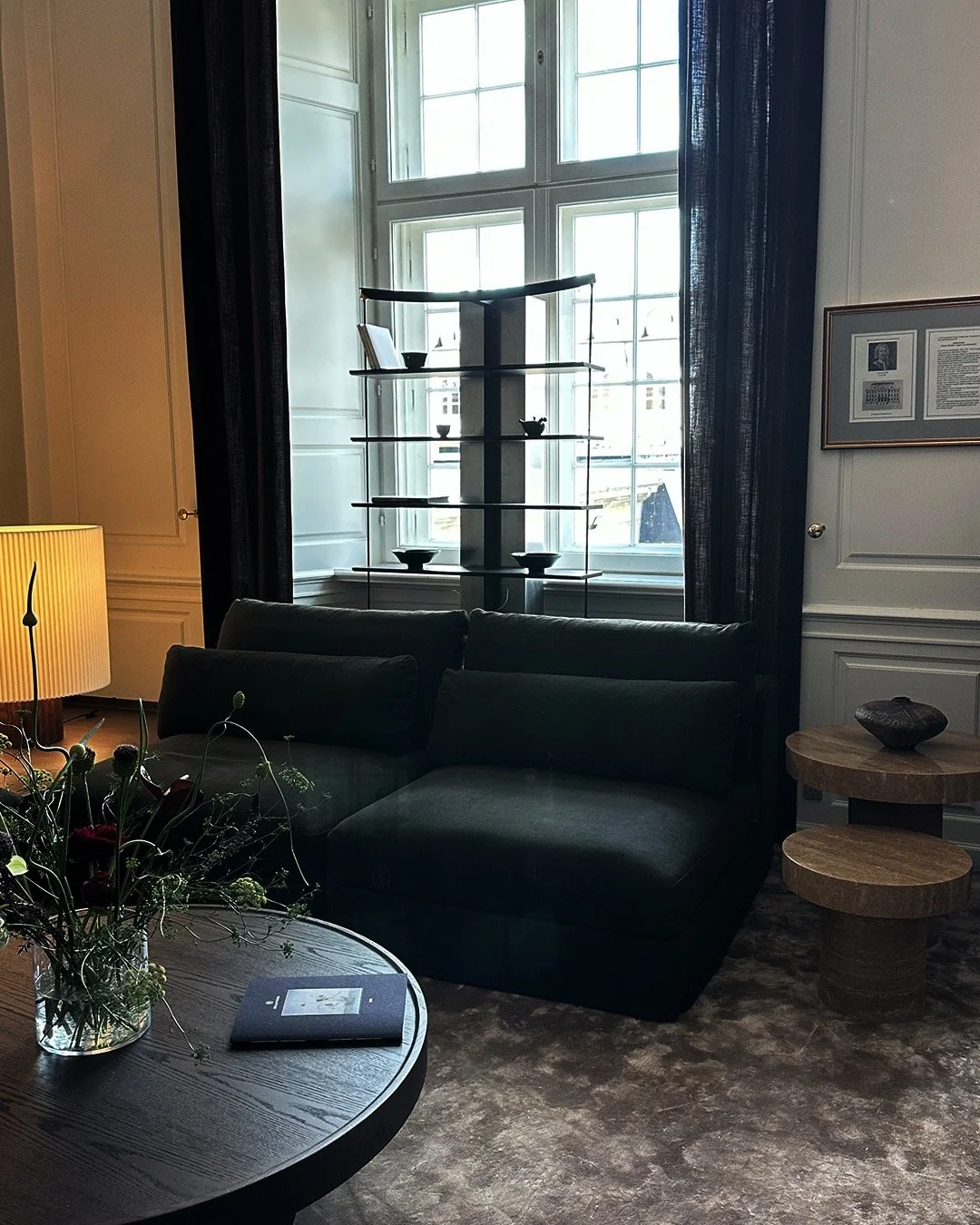
THOUGHT/FUL at FRAMING finds Stellar Works working across two adjoining environments, each distinct but sharing a common sensibility around atmosphere, materiality and human scale. The installation reflects the brand's particular position: a Japanese furniture house with operations rooted in Shanghai, working across borders while maintaining a coherent design language throughout.
Room THOUGHT represents the continuation of Stellar Works' long-running collaboration with Space Copenhagen, a partnership that has produced some of the brand's most recognizable pieces. This room introduces new additions to the Atelier sofa system, presented alongside a curated selection of furnishings. The overall feeling is one of restraint, nothing shouts for attention, but also one of richness, materials chosen for their depth and quality rather than their immediacy.
What emerges is an interpretation of hospitality that prioritizes texture, form and composition over more obvious gestures. The space invites lingering rather than admiring from a distance. Each piece within the Atelier system has been considered in relation to the others, creating a sense of cohesion that feels assembled over time rather than designed all at once.
Iittala
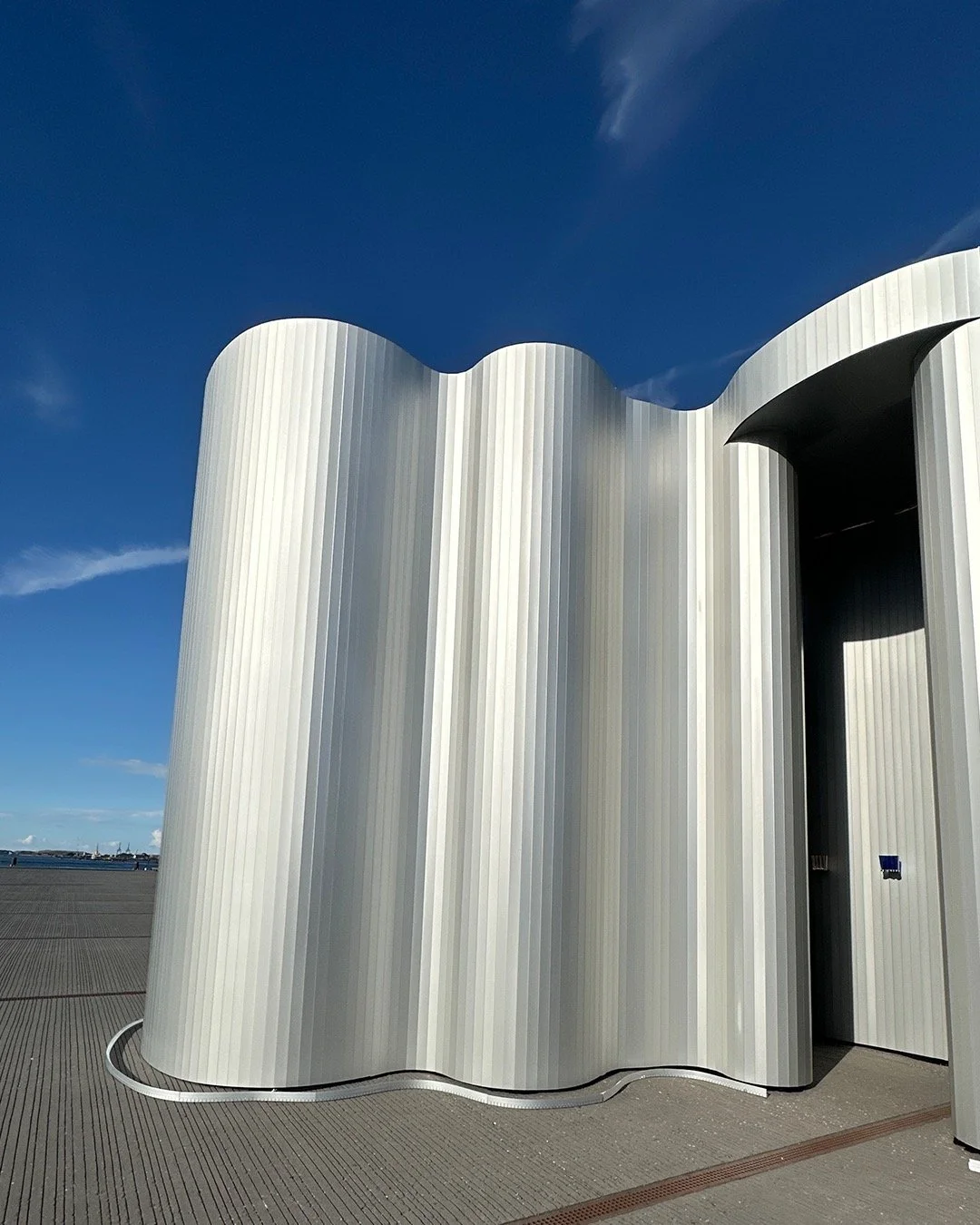
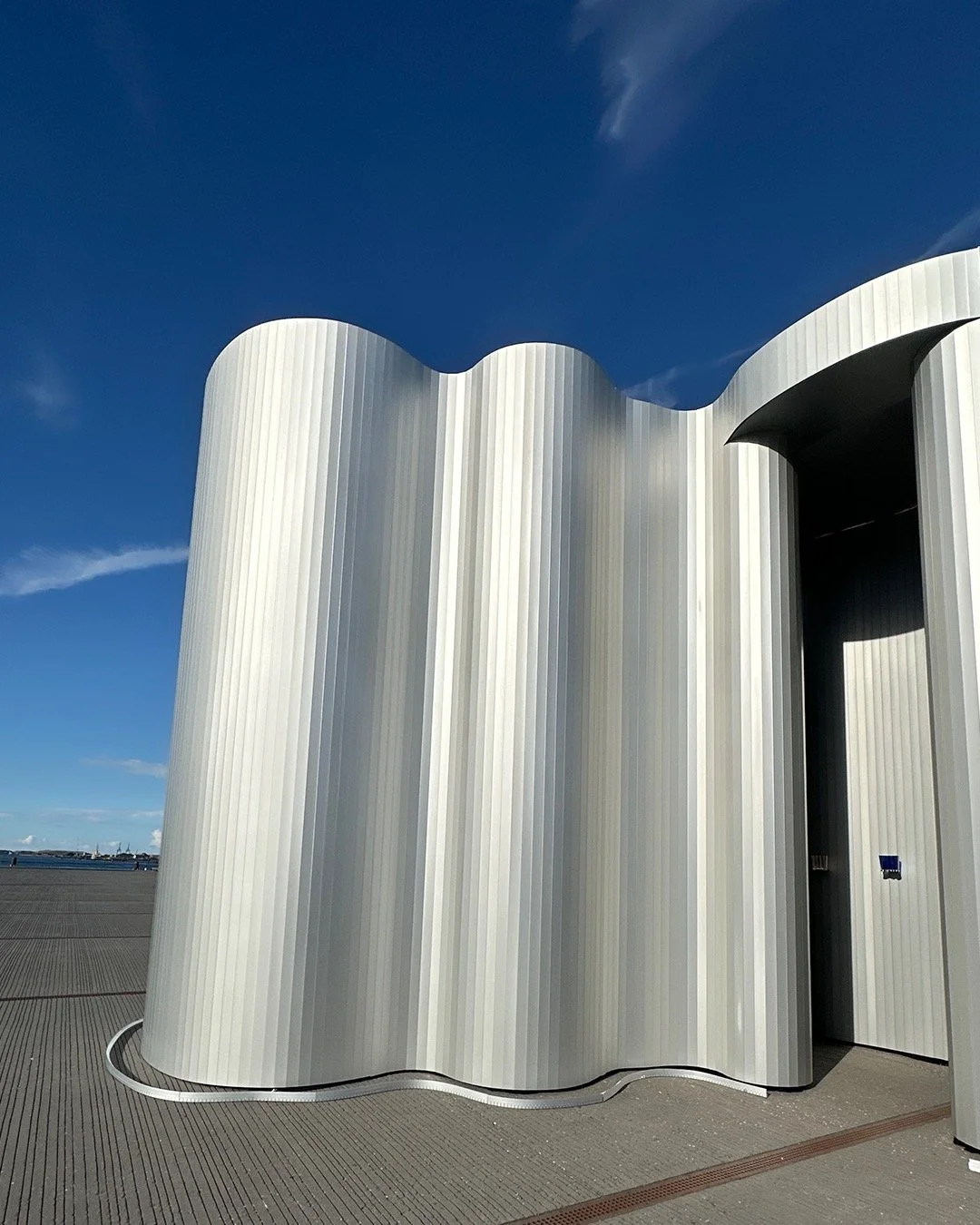
The Aalto 90 Pavilion at Ofelia Plads.
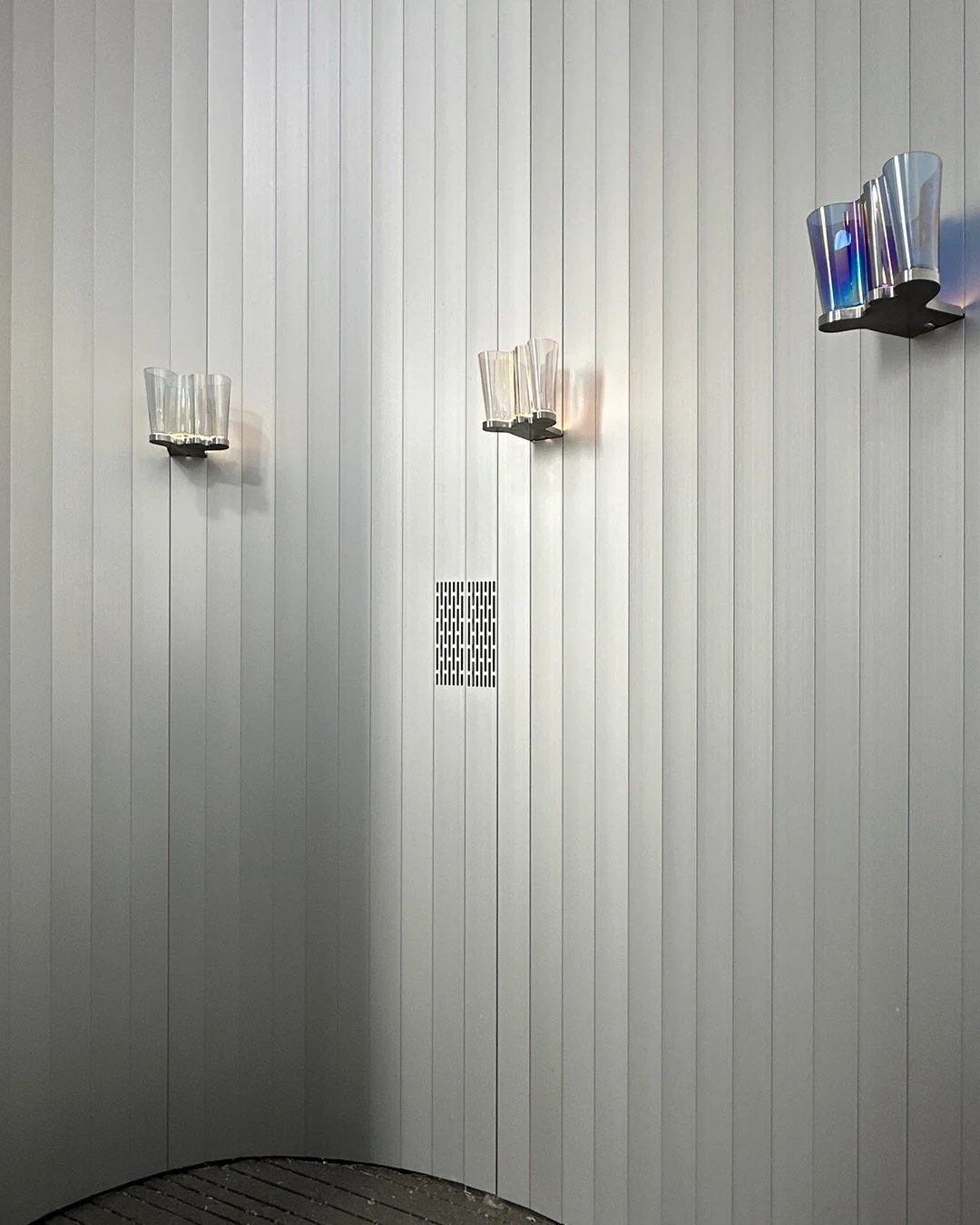
The Aalto vase is one of design's most recognizable objects, its flowing, asymmetrical curves instantly identifiable even to those unfamiliar with its history. For its 90th anniversary, Iittala chose to honor the vase in an unexpected way: not by displaying it, but by building it, at a scale large enough to walk through. The Aalto 90 Pavilion at Ofelia Plads takes the vase's contours and translates them into architecture. Visitors do not look at the vase from the outside. Instead, they move through its shape, experiencing the same curves that have made the original object so distinctive, but now at a scale where the body itself becomes part of the experience.
This shift in scale changes how the form reads entirely. At its original size, the Aalto vase's curves feel organic, almost like something found in nature, shaped by water or wind. At architectural scale, those same curves become spatial, creating areas of compression and openness, shadow and light, as visitors move through them. For an object as iconic as the Aalto vase, this kind of reinterpretation carries some risk. Scale things up incorrectly and the magic can disappear. But the pavilion succeeds precisely because it does not try to recreate the vase as a building. Instead, it extracts the essential quality of the form, its flowing line, and lets that line define a new kind of space, one that honors the original by inviting people into the form rather than simply looking at it.
Durat
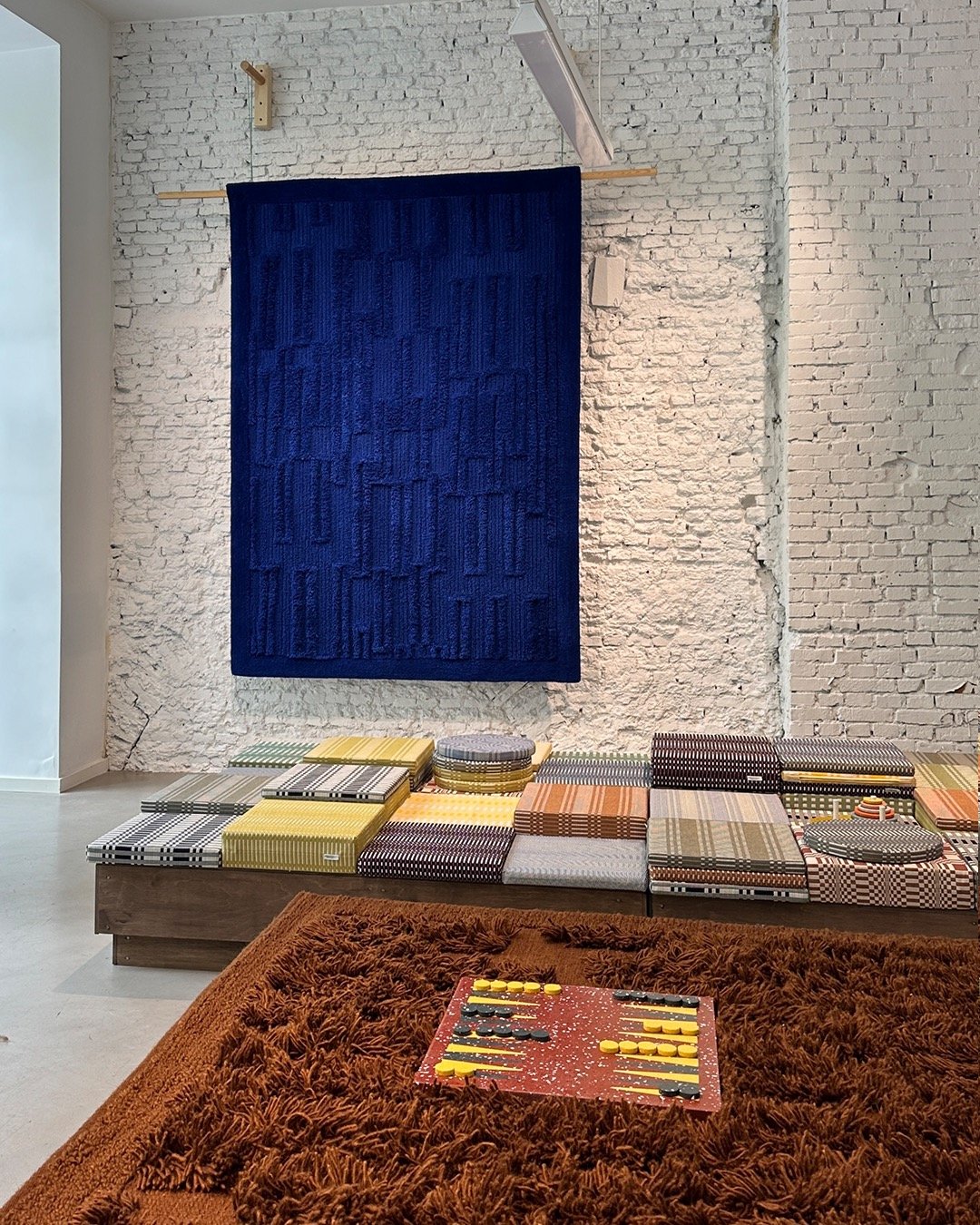
Playroom opened in the best possible way, with a lunch prepared by wild food expert Samí Tallberg, setting a tone of warmth and informality that carried through the entire exhibition. Concept and design came from Architects Nemo, with communication and production handled by Juni Communication, and support from Finnish Design Info and Helsinki Partners.
At the heart of the exhibition is Durat, the Finnish brand known for its solid surface material made from recycled post-industrial plastics, fully recyclable at the end of its life. Playroom brought Durat into conversation with Finarte and Johanna Gullichsen, spanning textiles to furniture, with each contributor approaching material as a starting point for play rather than a constraint.
The collaborative spirit of the exhibition felt genuine rather than staged. Pieces from different brands sat together comfortably, suggesting shared values around material responsibility and a willingness to experiment. Durat's material, with its distinctive flecked surface born from recycled plastics, provided a kind of common ground, a reminder that sustainable materials can also be visually striking and full of character.
By framing the exhibition as a Playroom, the organizers gave themselves and the participating brands permission to take risks, to try combinations that might not work in a more formal commercial context. The result was an exhibition that felt alive, full of texture and color, anchored by Durat's commitment to circularity but expanded through collaboration into something genuinely exploratory.
Latitude
Curated by Claire Delmar. Part of ‘Other Matter’
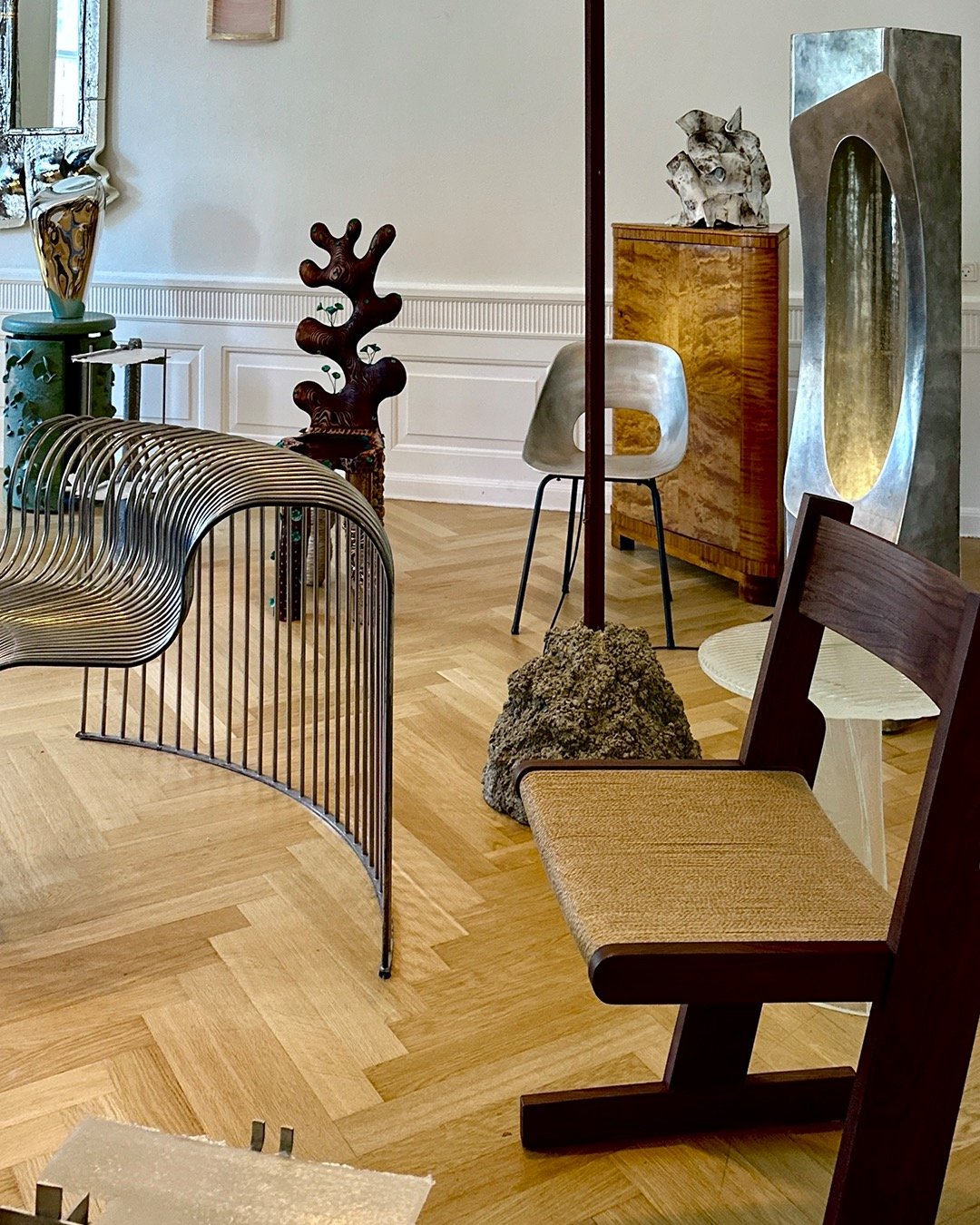
Latitude offers something genuinely distinctive within the busy landscape of design week presentations: a focused look at contemporary design from Australia, curated with care by Claire Delmar. The exhibition brings together both established and emerging names, creating a snapshot of a design culture that often receives less international attention than it deserves.
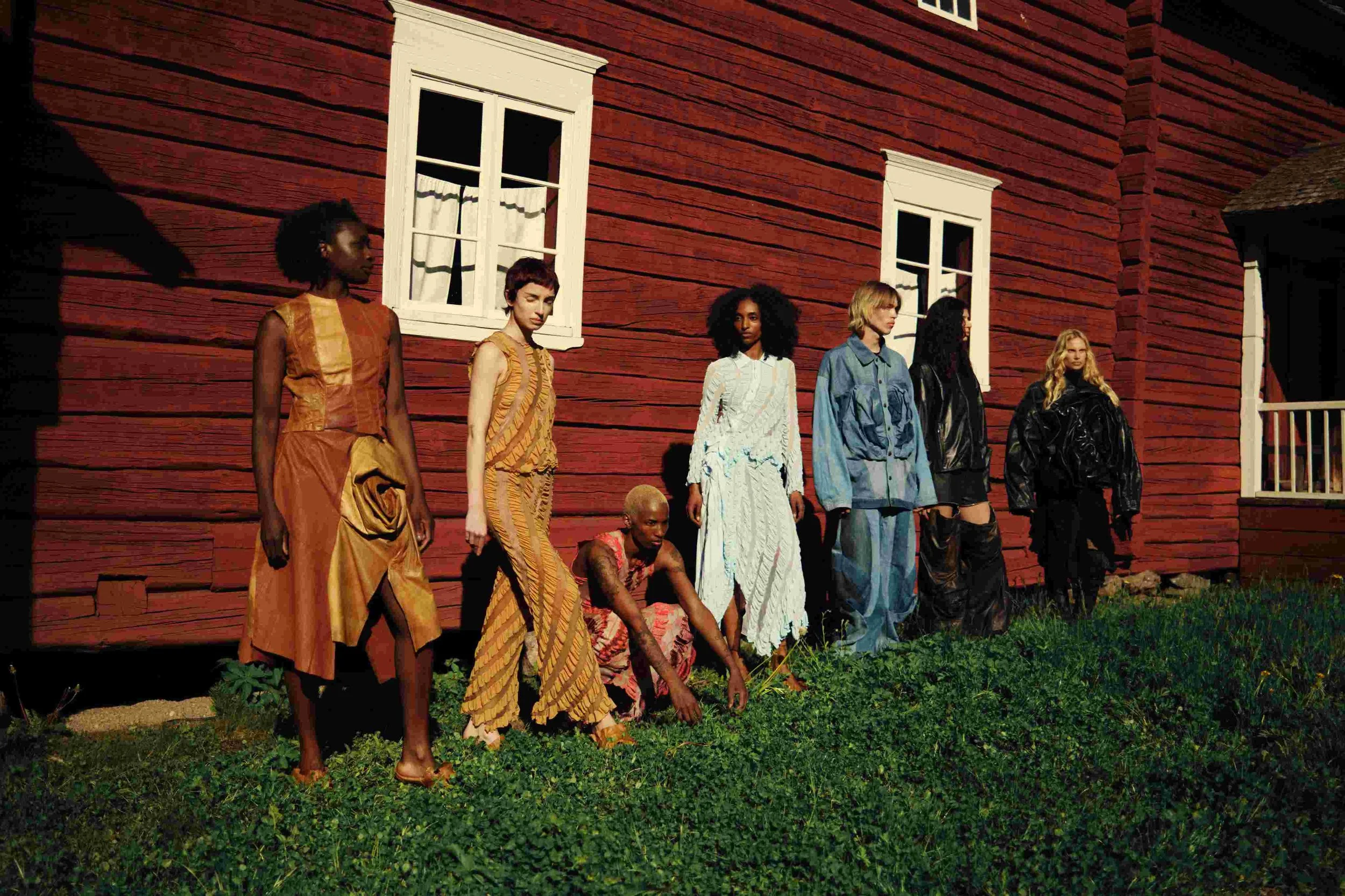
Among the highlights is new furniture by Jessie French, made from a circular, leather-like material developed by French herself and recently granted a patent in Australia. This material represents years of research into alternatives to conventional leather, achieving a similar tactile quality and durability while remaining fully circular in its production and end of life.
French's inclusion also marks the latest chapter in an ongoing collaboration with OTHER MATTER, the Melbourne-based studio she founded in 2020. OTHER MATTER exists specifically to test new materials in real contexts, translating laboratory research into objects, experiences and proposals for how design might function differently. The Copenhagen presentation continues this trajectory, showing the material not as a prototype but as a finished piece of furniture, ready for use.
For Australian design more broadly, Latitude represents an opportunity to be seen on its own terms, not as a regional curiosity but as part of an ongoing international conversation about materials, sustainability and craft. Claire Delmar's curation brings together a range of voices that, together, suggest a design culture confident in its own direction and increasingly ready for global attention.
A-POC ABLE Issey Miyake
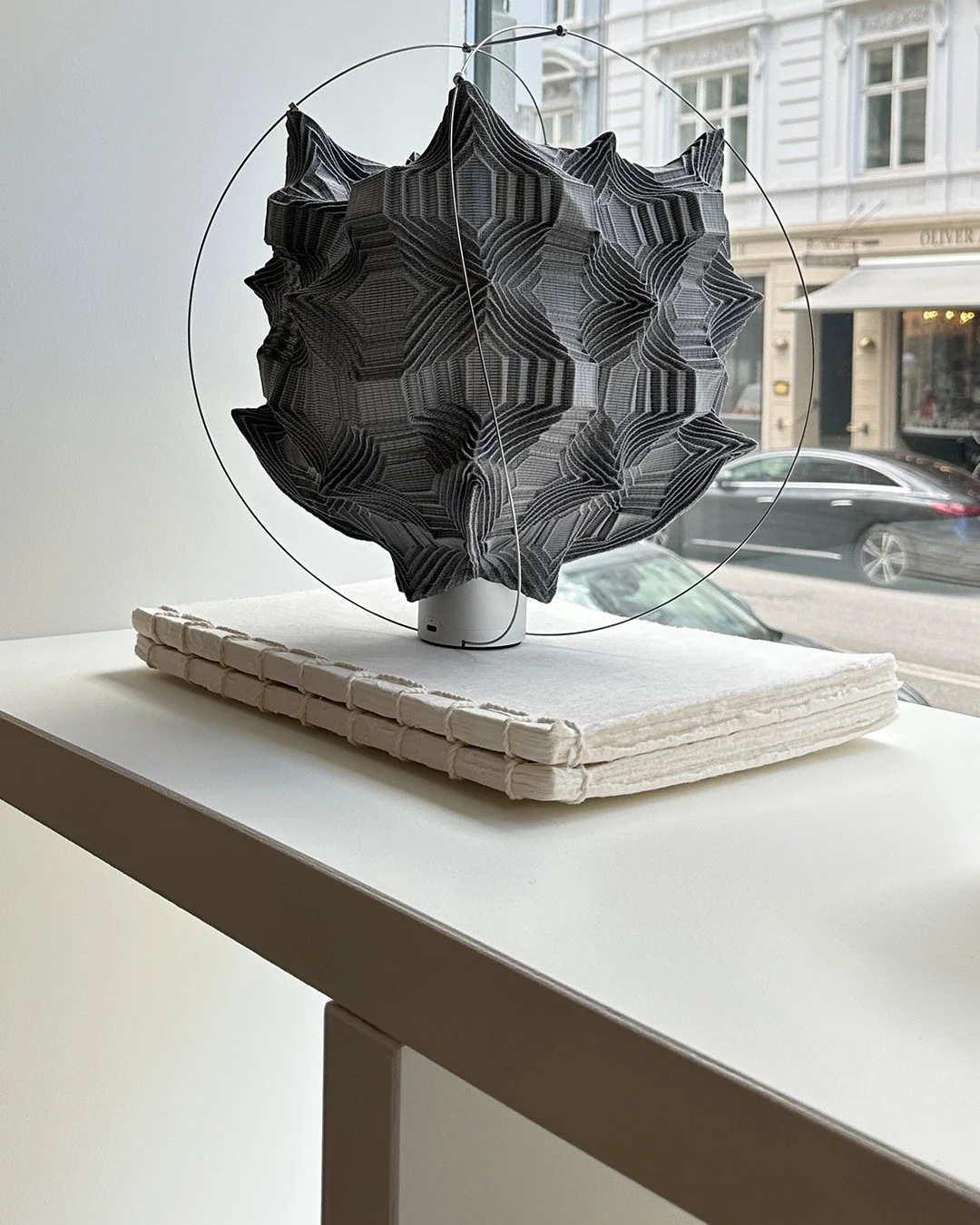
Few names in fashion carry the weight of technical innovation quite like Issey Miyake, and A-POC remains one of the house's most significant contributions to how clothing can be conceived and produced. Introduced in Paris in 1998, the system collapses design and manufacturing into one process: a single piece of cloth, woven or knitted as a continuous tube, from which garments emerge with minimal cutting and almost no waste.
The presentation during ‘3 days of design’ brought the system's most poetic element, its plissé fabric, into direct contact with visitors. Through a live demonstration, attendees saw how heat transforms flat textile into dimensional, pleated form. The fabric did not arrive pre-pleated. It became pleated, in front of an audience, through a controlled application of heat that activates the material's structure.
This kind of transparency is rare in fashion presentations, where finished garments typically arrive polished and mysterious. Here, the mystery was the point, but so was the demonstration. Audiences left understanding not just what the material looked like, but how it came to look that way.
A-POC's continued relevance lies in its refusal to separate concept from production. The idea and the making are the same act. In a moment when fashion is under pressure to account for its processes, its waste, its labor, Miyake's system offers a model that was thinking about these questions long before they became mandatory. The Paris presentation did not simply display A-POC as archive or legacy. It put the system back to work, heat and fabric and audience together in the same room.
Objects of Desire
Curated by Birgitte Due Madsen.
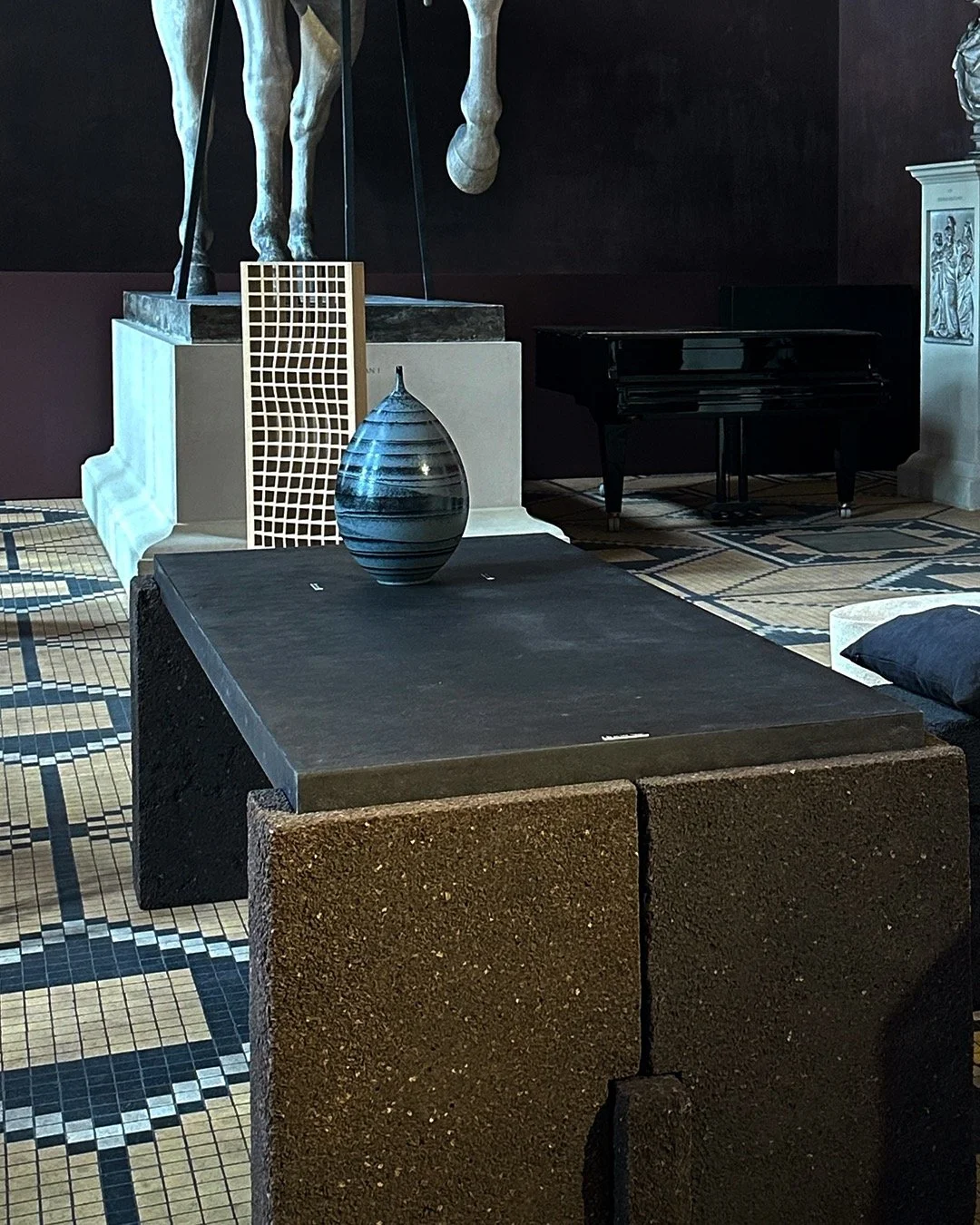
Corkinho @corkinho_world
Objects of Desire takes its title seriously, but not in the way one might expect. This is not an exhibition about glamour or excess. It is an exhibition about why certain objects earn our attention in the first place, and the answer it proposes has everything to do with how those objects are made.
The work on view shares a common foundation: material awareness. Each designer demonstrates an intimate understanding of what they are working with, whether that is a specific wood grain, a metal alloy, a textile weave or a ceramic glaze. This understanding shows up not as a footnote but as the organizing principle of the piece itself, visible in proportion, finish and detail. Production quality runs through every object as well. The exhibition makes a quiet argument that desire, in design, is not manufactured through marketing or scarcity, but earned through the long, often invisible labor of getting things right. A joint that fits perfectly. A surface that responds to light in just the right way. A form that feels inevitable once you see it, though it clearly took many attempts to arrive at.
Design integrity is the thread connecting these otherwise diverse practices. Each piece reflects a process considered from start to finish, with no shortcuts taken along the way. Objects of Desire suggests that the most desirable things are simply the ones made with the most care, an idea both old and worth repeating. We are obsessed by so many pieces, especially this table by Corkinho @corkinho_world
Fat Powder Fruit Sugar
Curated by Noura Residency, installation by Imogen Kwok with Marlot Baus and Köge.
Koge Design
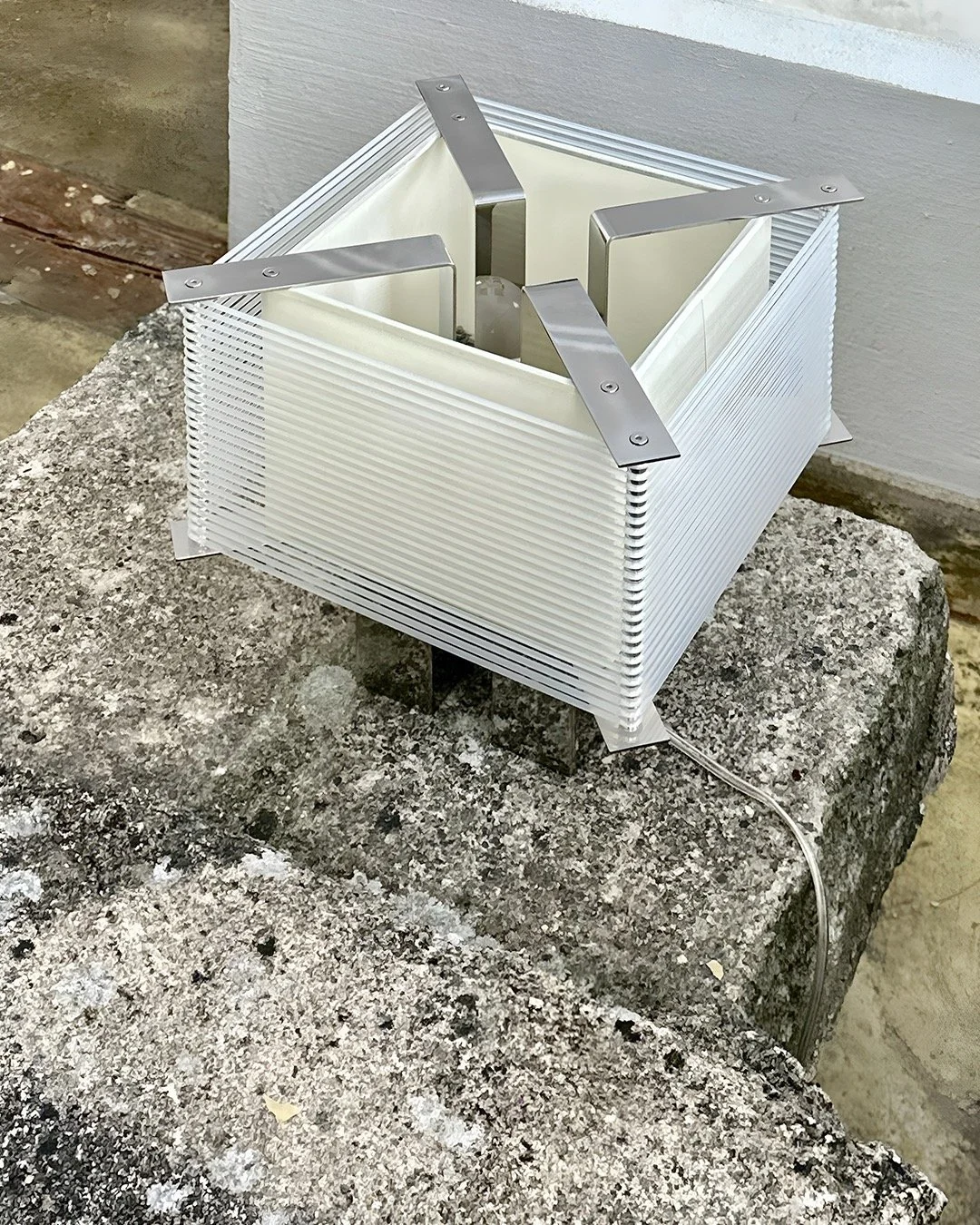
Fat Powder Fruit Sugar had such a compelling space, somewhere between a meal that has not yet happened and one that has just ended. Created by Imogen Kwok in collaboration with Marlot Baus and Köge, and curated by Noura Residency, the installation sets a table that exists in suspension, organic materials arranged with intention, neither fully formed nor fully undone. The work brings together different disciplines around a shared interest in how meaning attaches itself to objects and materials. A table is set, but no meal is served. Forms appear: cones, ovals, spheres, leaves, fat, powder, fruit, sugar, each recognizable on its own terms but placed in combinations that resist easy interpretation. Are these ingredients waiting to become something? Remnants of something already consumed? The installation does not answer this question, and that ambiguity is precisely the point.
What makes the work effective is its commitment to this in-between state. Rather than resolving into either a finished dish or pure abstraction, the installation lingers in the moment just before or just after significance is assigned, the moment when an object is still simply itself, before we decide what it means or what it is for. For visitors, the experience is quietly disorienting in the best sense. Familiar materials become unfamiliar when removed from their expected context. Fat Powder Fruit Sugar asks us to notice this process happening, the exact instant when raw material becomes meaningful object, and to sit with the strangeness of that transition a little longer than usual.
Hjemstavn
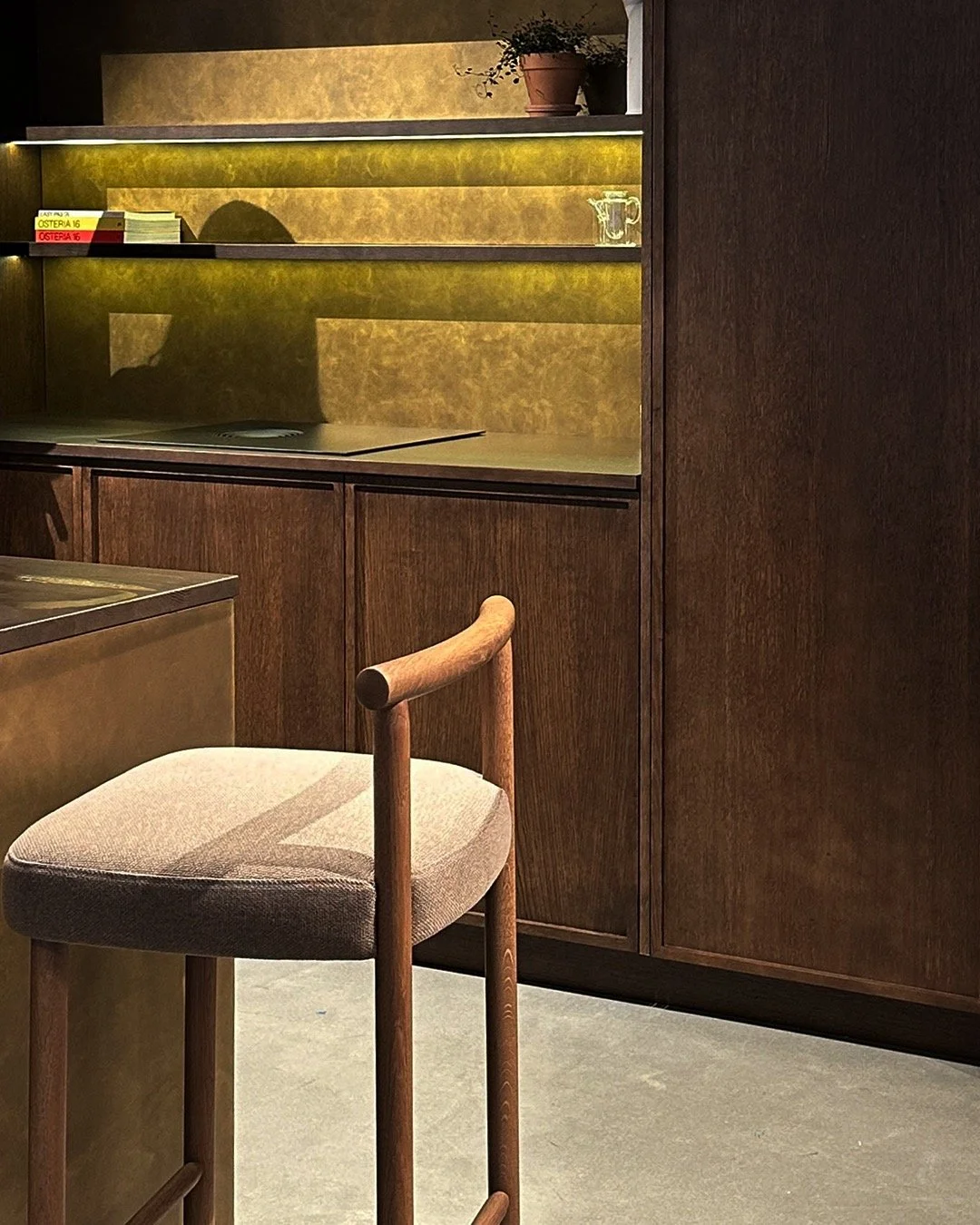
Some of the most memorable design experiences happen not in a gallery but around a table, and Hjemstavn understands this instinctively. Their recent dinner brought guests into direct contact with the brand's work, not as objects to be observed from a distance but as pieces to be used, touched and lived with for an evening. Wood is the clear focus of Hjemstavn's design language, and the quality on display was immediately apparent. Each piece carried the kind of finish that only comes from skilled hands working with a deep understanding of the material, joinery that felt seamless, surfaces that invited touch, proportions that made each object feel right in its setting without drawing unnecessary attention to itself.
What made the evening particularly compelling was the context. A dinner is an environment with its own demands: pieces need to function, to hold up under use, to feel comfortable over hours rather than minutes. Hjemstavn's work met these demands without compromise, proving that exceptional design and everyday usability are not opposing goals. By choosing to present their work this way, Hjemstavn made a statement about how design should be encountered. Not behind glass, not under spotlights, but in the middle of a shared meal, where conversation and craftsmanship can unfold together. The quality spoke for itself, and the format allowed it to be felt rather than simply seen.
Deoron
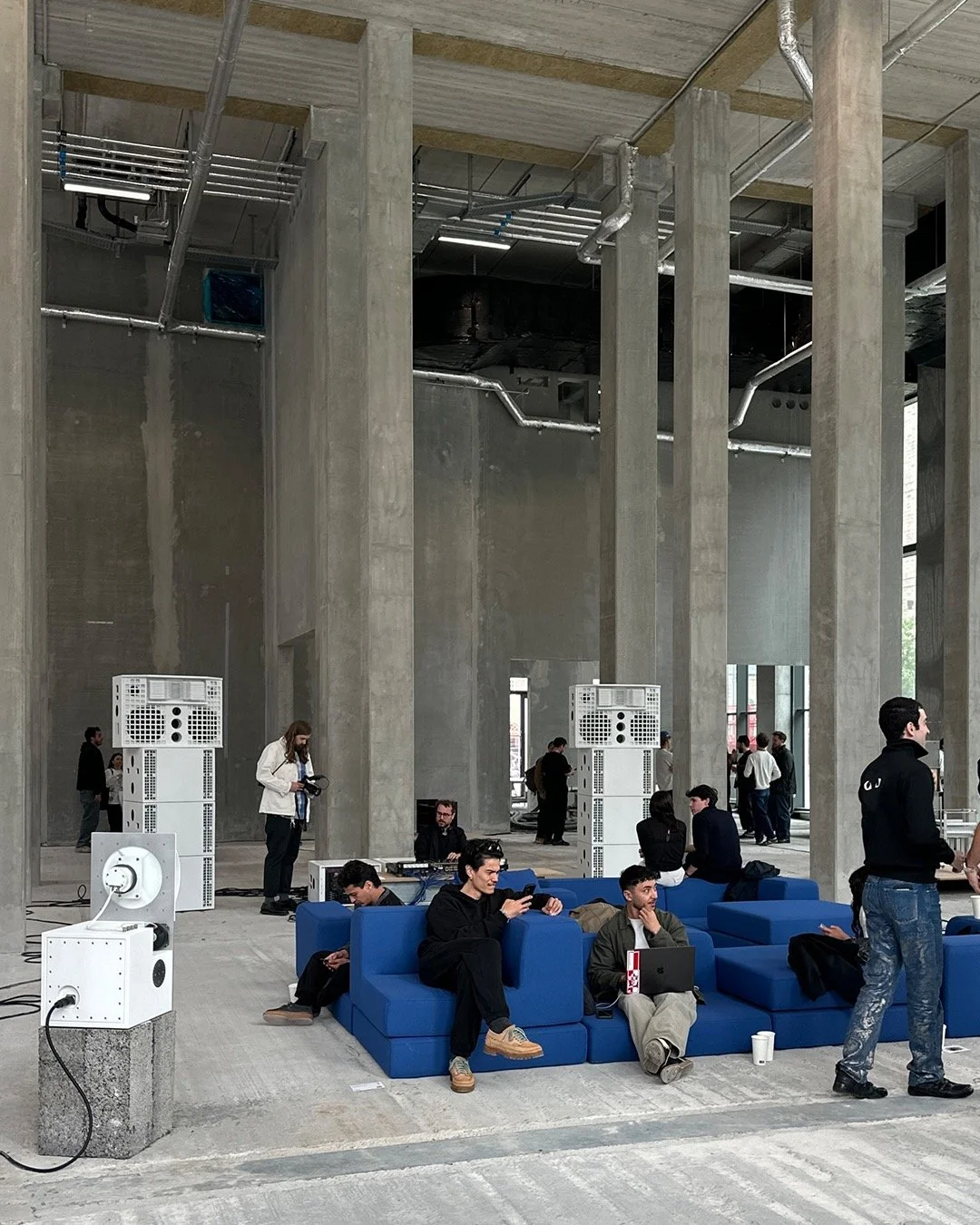
DEORON has built its reputation on a simple but effective formula: identify designers working at the forefront of contemporary practice, and give their work room to be seen properly. Following a successful presentation during Milan design week, the platform brings this approach to Copenhagen, reaffirming its commitment to supporting international talent on a global stage. What distinguishes DEORON's curatorial approach is its breadth. Rather than focusing on a single discipline or aesthetic, the exhibition draws together designers from different backgrounds and contexts, united primarily by a shared ambition to push their practice forward. This range is part of the appeal. Visitors encounter work that does not fit neatly into a single category, which makes the experience feel less like a survey and more like a series of discoveries.
The decision to follow Milan with Copenhagen is significant. Both cities occupy important positions in the design calendar, but they offer different audiences and different contexts. Bringing the same commitment to both demonstrates a kind of consistency that smaller platforms often struggle to maintain, presenting work with the same level of curatorial care regardless of location. For the designers involved, inclusion in DEORON's program represents a meaningful opportunity: exposure to international audiences, placement alongside ambitious peers, and association with a platform that has demonstrated staying power across multiple cities and design weeks. The Copenhagen presentation continues this trajectory, reaffirming that DEORON's interest in emerging talent is not a one-off gesture but an ongoing commitment.
Vipp
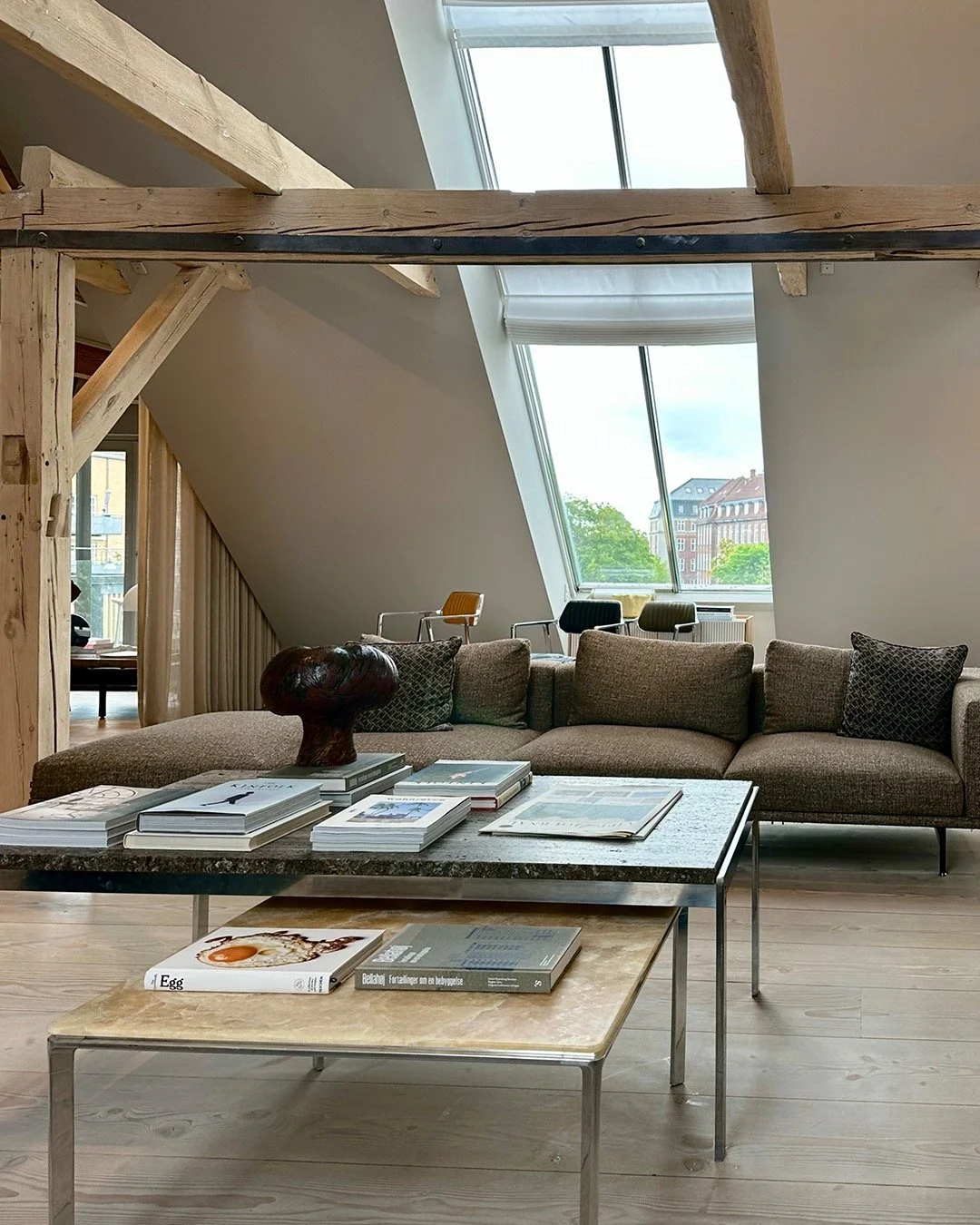
There is something satisfying about an installation that builds its entire concept around a single word, and that is exactly what Mesura has done for 3 Days of Design at Vipp Campus. The starting point is vippe, the Danish word for the tilting motion of Vipp's original pedal bin lid, the small mechanical gesture that gave the brand its name. From this word, Mesura develops a full spatial response. At the center sits a large-scale yellow conversation pit, immediately recognizable as one of the defining gestures of contemporary spatial design right now: a sunken, enclosed seating area that draws people inward, encouraging conversation and proximity in a way that standard furniture arrangements rarely achieve. The color choice, a bold yellow, gives the pit presence without needing explanation.
Around this central gathering space, Mesura introduces movement through a seesaw and a high chair, both directly referencing the vippe motion. The seesaw makes the tilting gesture explicit and physical, something visitors can step onto and feel. The high chair extends the same idea into a different register, a piece of furniture defined by its relationship to balance and tilt. Together, these elements create an installation that operates on two levels simultaneously: a literal interpretation of Vipp's name and history, and a broader commentary on hospitality, playfulness and gathering. Mesura's reading of Vipp Campus as a guesthouse comes through clearly, a space where people are invited not just to sit, but to interact, to tip, to share a moment of lightness. The yellow conversation pit anchors this experience, while the seesaw and high chair give it its sense of humor.
Tableau + Secolo
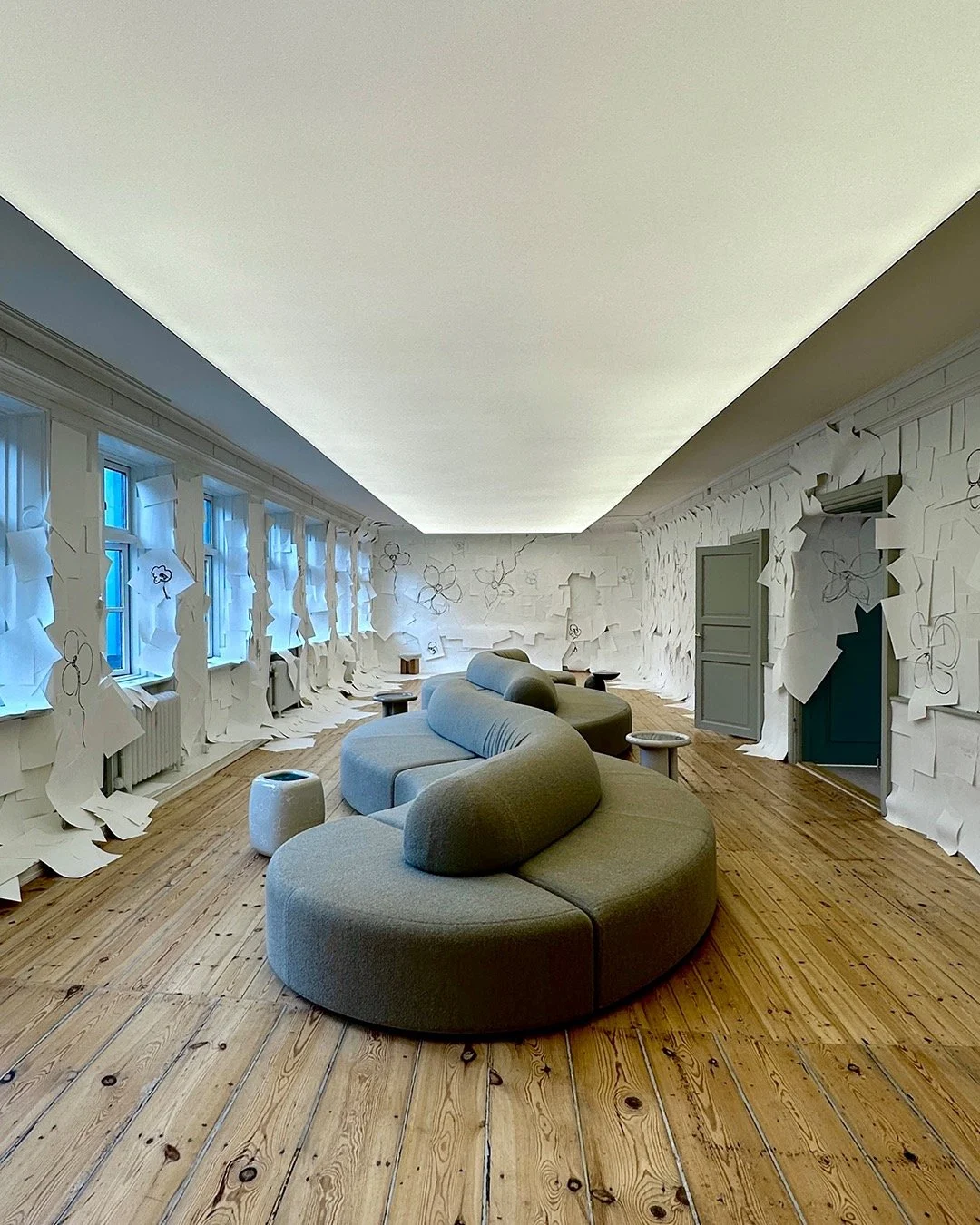
The Drawing Room, a collaboration between Tableau and Secolo, begins from an unexpected source: the unguarded, instinctive marks of childhood drawing. Anyone who has watched a child draw knows the particular quality of those lines, confident, unselfconscious, made without concern for how they will be judged. This collection takes that quality seriously, using it as a starting point for furniture design. The technique of blind contour drawing plays a central role. By drawing without looking at the page, the hand moves according to instinct rather than visual correction, producing lines that feel alive in a way that careful, considered drawing often does not. Tableau and Secolo have taken these kinds of marks and translated them into three-dimensional form, most notably in the Trace sofa, whose silhouette carries the energy of a single, continuous gesture.
What results is furniture that feels personal in an unusual way. These are not pieces designed around abstract concepts of comfort or style, but around the physical memory of drawing, of a hand moving across paper without hesitation. That sense of immediacy translates surprisingly well into upholstered form, giving the Trace sofa and its companion pieces a softness that feels earned rather than applied. Beyond the individual pieces, The Drawing Room is conceived as a space for connection. The collection invites people to gather, to sit together, to share a sensory experience that begins, fittingly, with the simplest tool available to any child: a pencil and a willingness to draw without looking.
Project Materia x Mater
Forever Studio
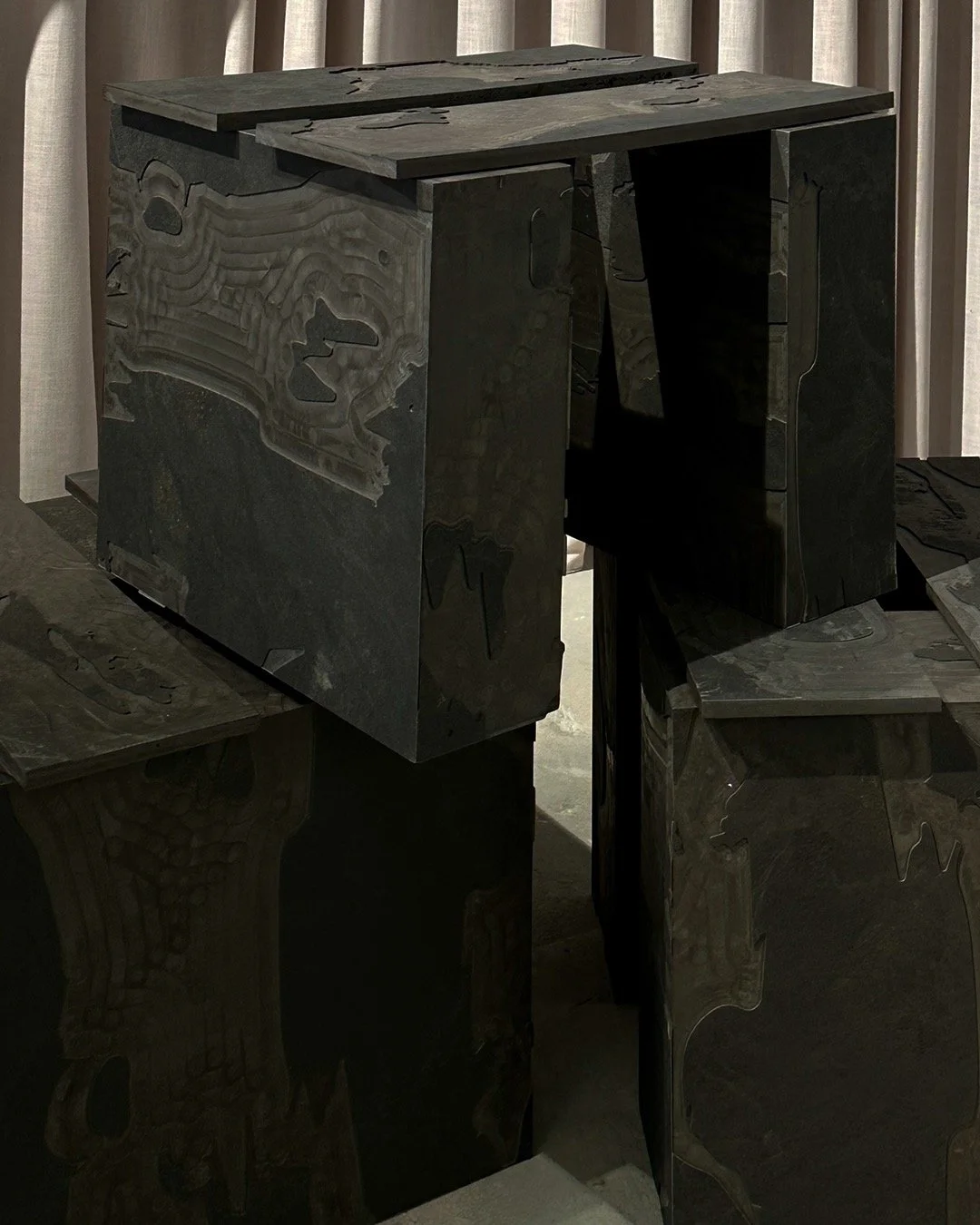
Project Materia x Mater set itself an ambitious task: take a single circular material and hand it to nine different designers, each working independently, and see what emerges. Powered by Tableau and Edition Solenne, the project resulted in nine distinct objects, each carrying the imprint of its designer while sharing a common material origin. The range of outcomes is striking. Catherine Rabe Davidsen's Parsifal, Sophie Dries' Stria Candleholders, Willem Van Hooff's Archive Cabinet, Lea Colombo's Atom Stool, Onno Adriaanse's Pyrite Side Table, Jacob Egeberg's Monolith Table, Forever Studio's Patos, Filippo Andrighetto's Space Invader, and CPH Wood's Rooted each take the shared material in entirely different directions, from sculptural lighting to functional storage to seating.
What makes this project compelling is what it reveals about circular materials more broadly. Often discussed in terms of environmental benefit alone, circular materials here are shown to be genuinely versatile, capable of supporting wildly different design languages without losing their underlying identity. The material does not dictate a single aesthetic outcome. Instead, it provides a foundation flexible enough to support candleholders and cabinets, stools and tables, side tables and sculptural objects, all from the same starting point. By bringing nine designers into this shared framework, Project Materia x Mater demonstrates that circularity and creative diversity are not in tension. If anything, the constraints of a shared material seem to have sparked unexpected solutions, each designer finding their own answer to the same essential question.
Fanzi
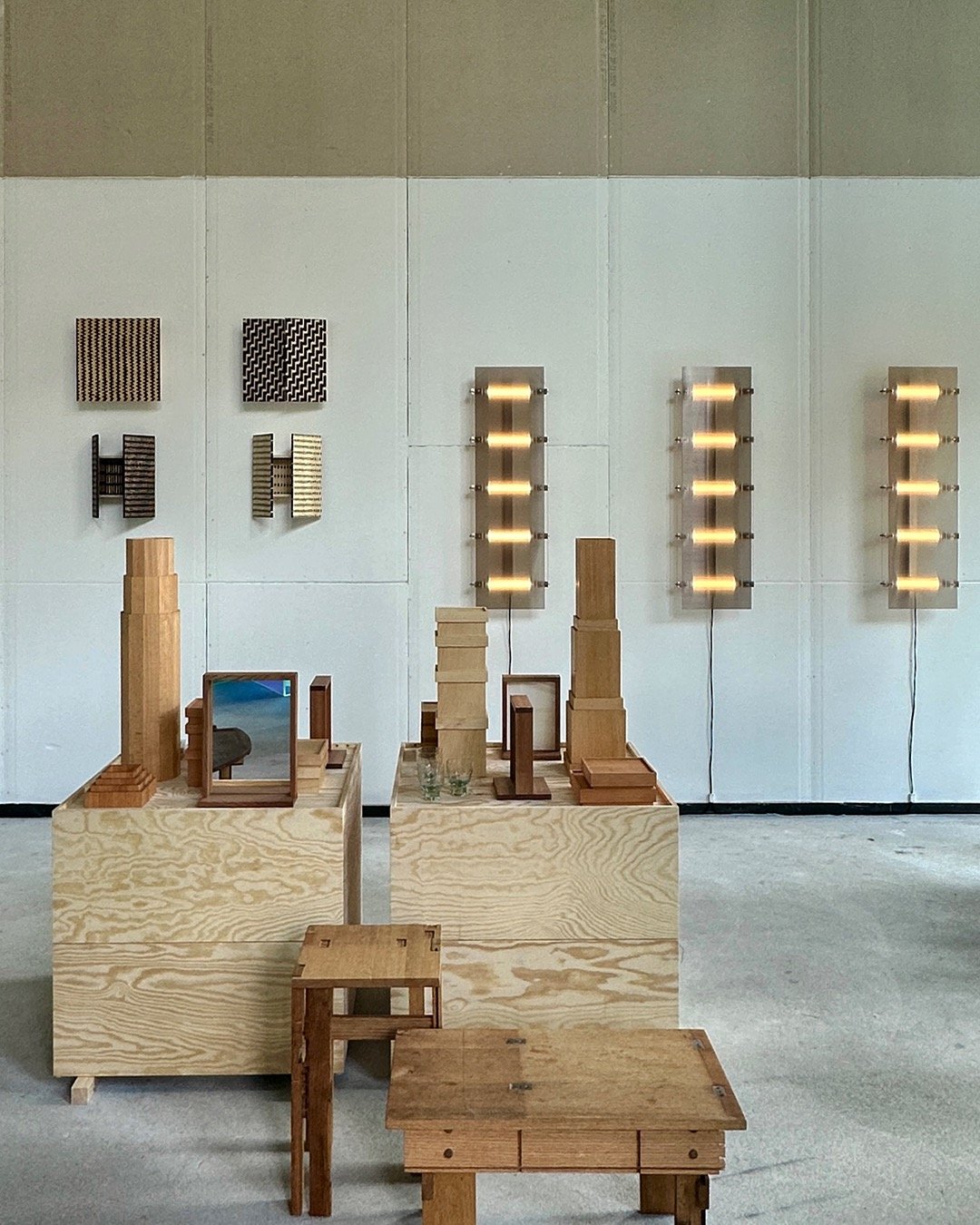
Most exhibitions during 3 Days of Design compete for a few minutes of attention. FANZI's "Welcome. Slow Down." asks for something different: time, and the willingness to spend it without rushing toward the next thing. The presentation takes the form of a glass pavilion, transparent enough to feel connected to its surroundings while creating, inside, an entirely different pace. An Eastern Garden occupies this space, with live calligraphy and tea rituals running throughout the days. These are not staged demonstrations performed for visitors. From this quiet center, the main gallery opens into something more dynamic, though no less considered. European and Asian designers meet here, and the resulting dialogue runs along clear material and historical lines: wood against metal, classic forms against contemporary ones. Rather than smoothing these differences into a single style, the gallery lets them sit side by side, each pairing generating its own small friction and resonance.
The list of participating designers, AOIDOl, Damonart, Elisabeth Seidel, Intra-Intra, Jannis Schaefer, Kai Ping Liu, LMW Studio, Madeleine K. Wieser, Marie-Louise Hestbo, Mo&A, Normal Objects Factory, NORIEN, Noah Corban, Shun-Hsiung Hung, Stack, Studio Boyo, Studio Coby, periodsart and Xiezideren, reflects this same range, voices from different traditions placed in proximity rather than merged into one. Daily talks, tours and music round out the program, reinforcing the central proposition. "Welcome. Slow Down." is not a detour from the week's main event. For those willing to stay, it might be the part worth remembering most.
Layered x Massproductions
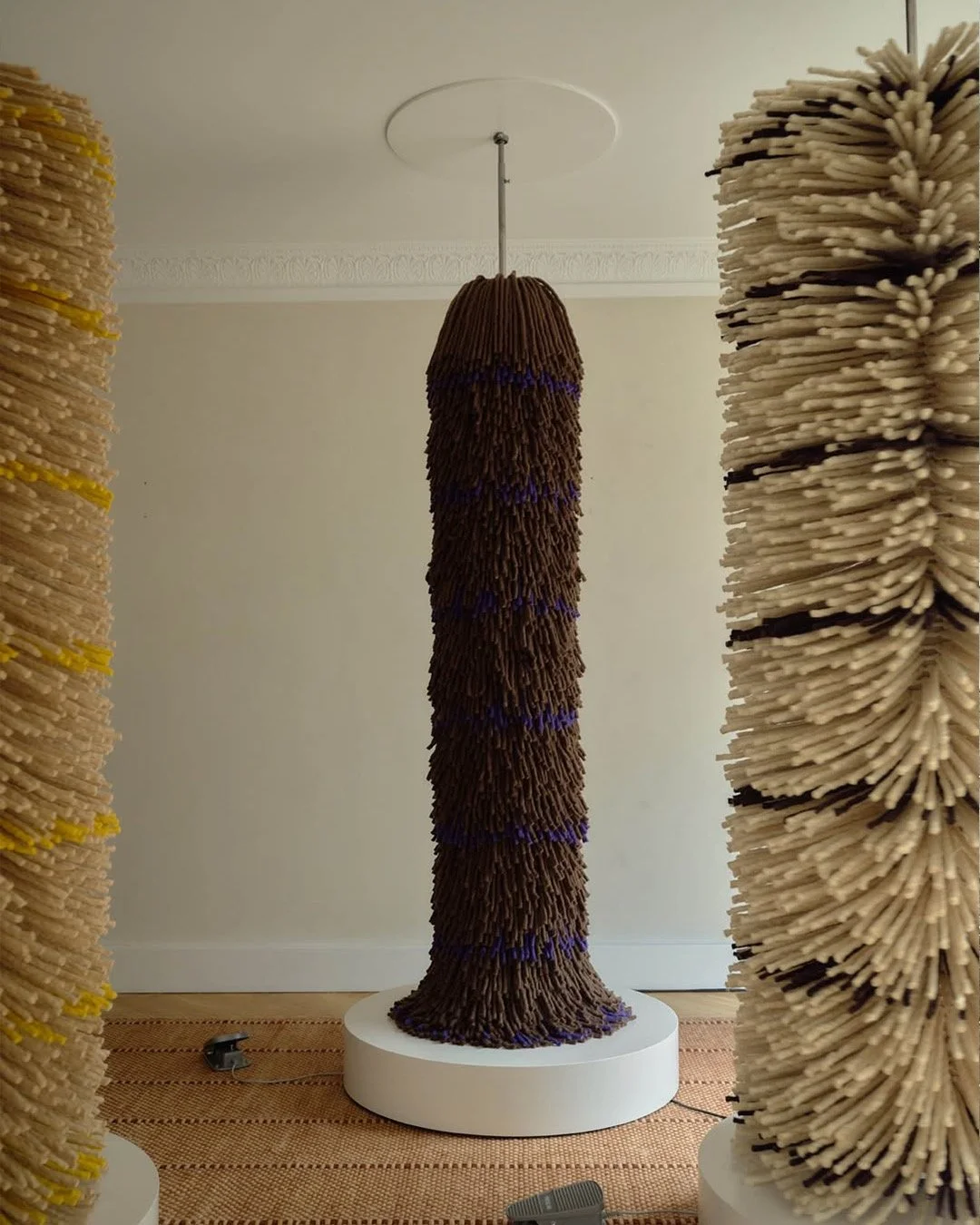
Industrial Choreography brings Layered and Massproductions together around a single, evocative idea: that the rhythms of industrial production carry their own kind of choreography, repetitive, precise, almost musical, and that this rhythm can be brought into a gallery space as both sound and movement. The installation's central feature is a series of rotating pillars, each clad in heavy wool yarn. As they turn, these pillars introduce motion into the space, a slow, continuous rotation that draws the eye and establishes a kind of visual rhythm. This visual element is paired with sound recorded directly from looms in Bhadohi, the recordings capturing the actual mechanical patterns of weaving as it happens in production.
Together, these elements create an installation that operates at the intersection of industrial rationalism, the logic and repetition of mechanized production, and living craftsmanship, the human hands and traditions that still drive much of textile production even within industrial contexts. Rather than presenting these as opposing forces, Industrial Choreography treats them as partners in a kind of dance, each informing and responding to the other. Layered's identity as a studio rooted in Stockholm, designing handcrafted centerpieces for interior spaces, brings a particular sensibility to this collaboration. The brand's interest in how design elements transform interiors into curated environments finds new expression here, where sound and slow movement become part of that curation, turning the gallery itself into a space shaped by rhythm as much as by object.
Vaerktoj
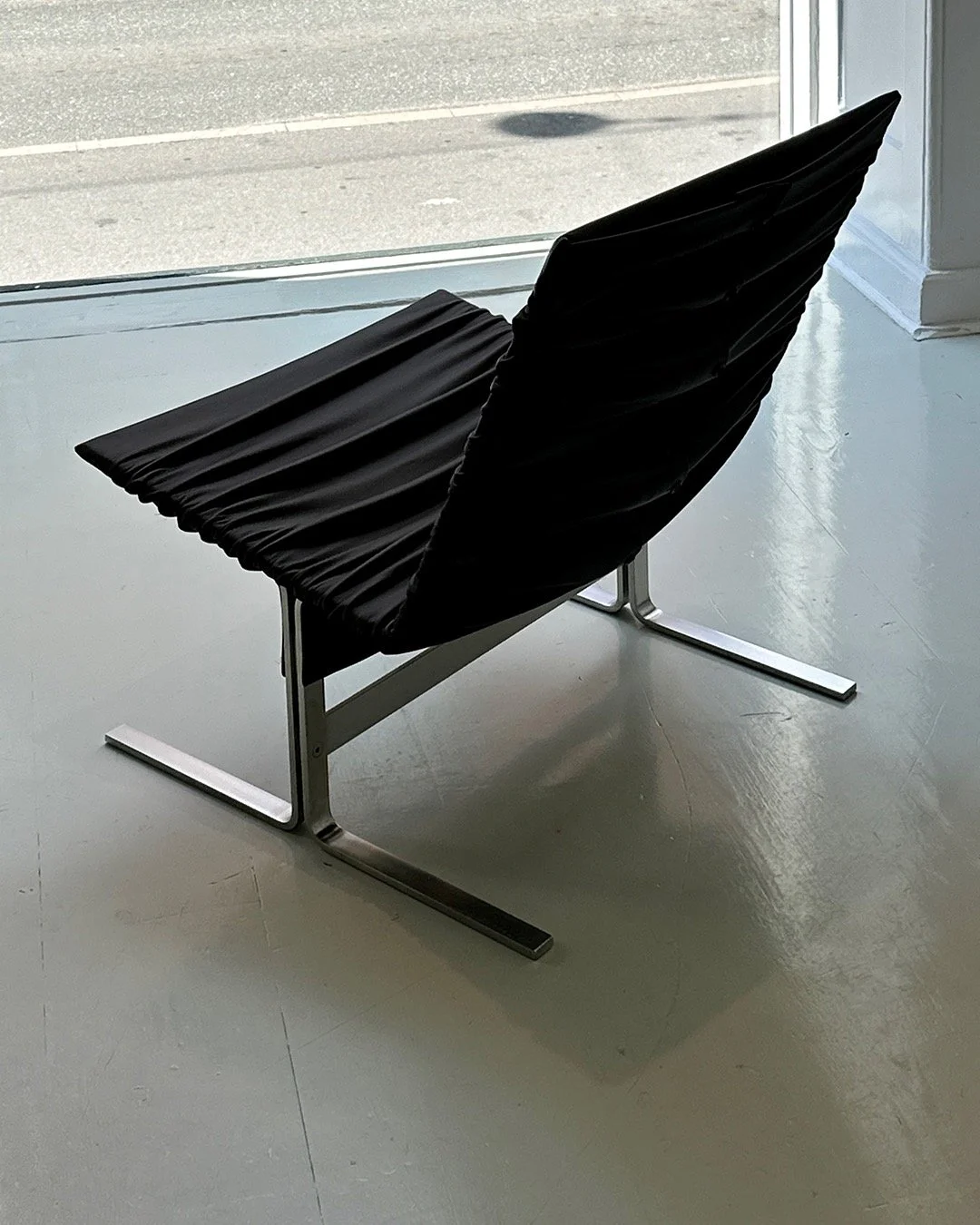
Vaerktoj takes an unusual but rewarding angle on design: rather than focusing on finished objects alone, it turns attention to the tools that made them possible. The exhibition's premise is that tools are never neutral. Every chisel, loom, lathe or machine carries its own logic, its own limitations and possibilities, and that logic inevitably becomes part of the final design. Throughout history, tools have determined what humans could make and how quickly they could make it, from the earliest stone implements to the complex machinery of industrial production.
For designers, the choice of tool is rarely just practical. It is also an expression of identity. A designer who works primarily with hand tools develops a different relationship to material, time and error than one who works with digital fabrication. These differences show up in the final objects, in their textures, their tolerances, their character. By making this argument visible, Vaerktoj offers a refreshing counterpoint to design narratives that focus only on outcomes. It reminds us that every object has the fingerprint of its making, and that understanding those fingerprints can change how we look at design altogether. Tools, in this telling, are not just instruments. They are collaborators, quietly shaping every decision a designer makes.
Alpi
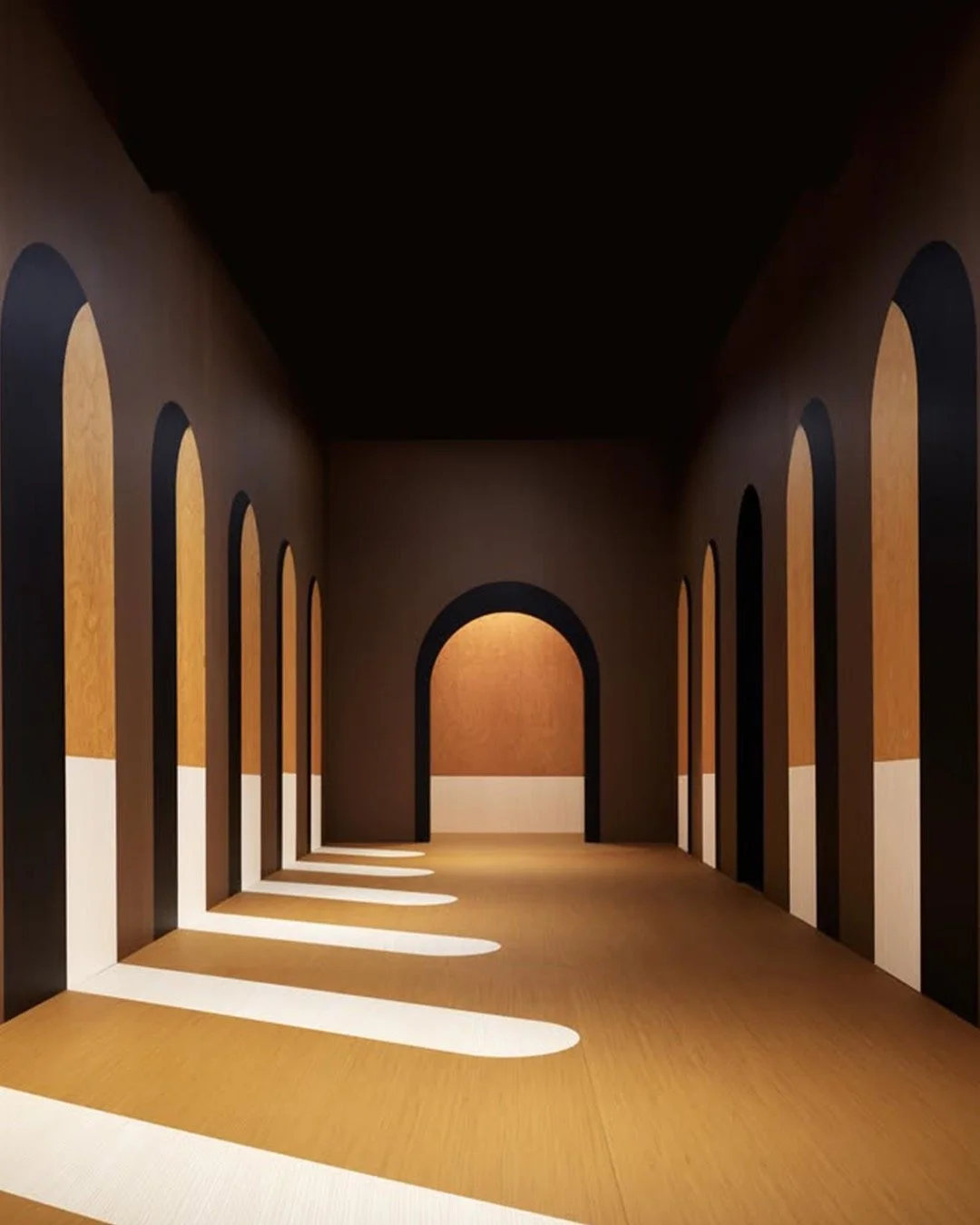
Piazza Interiore, Perceptual Landscape brings together Alpi and Gamfratesi in an exhibition that treats wood surfaces as something closer to terrain than material. Alpi has long been recognized as a leading manufacturer of decorative surfaces made from reconstituted wood, a process that allows for a level of consistency and creative control impossible with natural timber alone, while Gamfratesi brings a design sensibility attuned to spatial atmosphere and perception. The exhibition's title gives a clue to its approach. A piazza is a space defined by openness, by movement, by the way people occupy and move through it. By framing the installation as an interior piazza, Alpi and Gamfratesi suggest that surfaces themselves can create this kind of spatial experience, that the right material, applied at the right scale, can generate a sense of place rather than simply finishing one.
Reconstituted wood gives Alpi a particular advantage here. Because the material can be engineered with precision, patterns, grains and textures can be developed and repeated in ways that natural wood cannot easily replicate. This opens up possibilities for surfaces that feel both familiar, recognizably wood, and unfamiliar, arranged in patterns or scales that wood does not typically appear in. The result is an exhibition that asks visitors to perceive surfaces differently, not as backdrops but as active participants in how a space feels and functions. Piazza Interiore, Perceptual Landscape demonstrates that Alpi's technical mastery of reconstituted wood is not just a manufacturing achievement, but a design tool capable of shaping entire environments.
June 10-12, 2026
Copenhagen
Words by Donald Gjoka
What to read next