RAGE BAIT BY EVA & FRANCO MATTES
Concurrent with Biennale Arte 2026, RAGE BAIT is a dual venue Venetian exhibition by Eva & Franco Mattes. Occupying the historic Palazzo Franchetti and Le Cabanon in Giudecca, the project examines how digital infrastructure optimizes human emotion for raw attention.
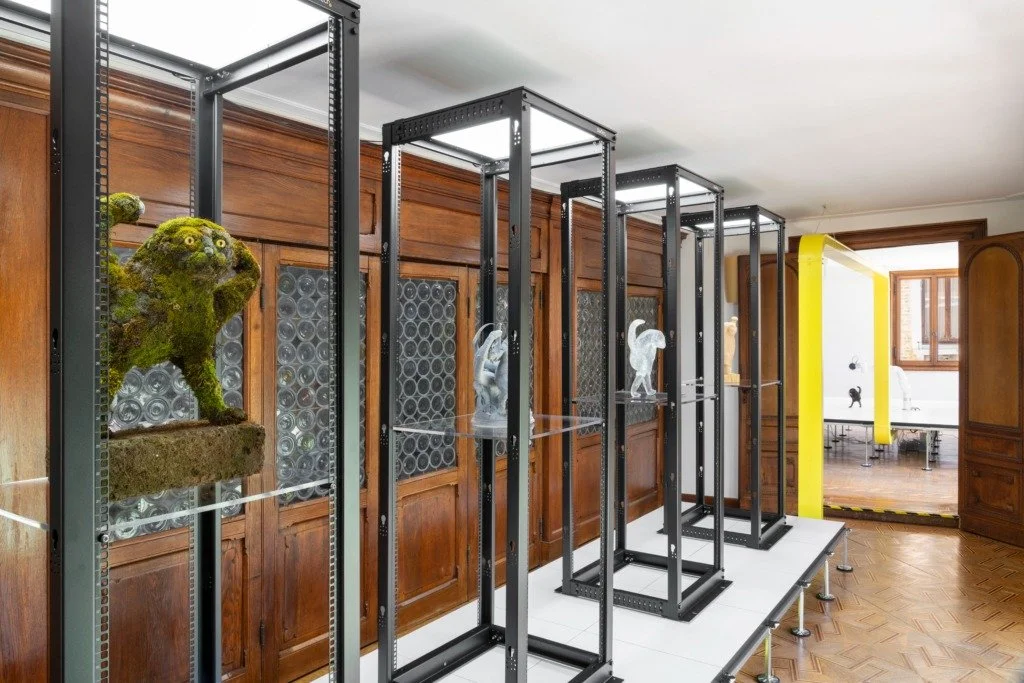
The artists employ sculpture, generative AI, and video installations to position networked systems as feedback loops engineered for visceral reaction. At Palazzo Franchetti, industrial cable trays and raised flooring subject 16th-century rooms to the sterile aesthetic of a data center. This infrastructure supports new works tracking the reliance of AI models on human data, transforming internet memes into physical forms through wood, glass, and plastic-working techniques. At the Giudecca venue, a video installation features content creators mimicking non-player character behavior for online profit, framing the phenomenon as a monetization of the self.
Beneath the sleek conceptual framework lies the duo's signature wit. Eva & Franco Mattes deploy a sharp, satirical irony that initially disarms the viewer, only to reveal the macabre reality of the web phenomena they have investigated for decades. This potent combination of digital absurdity and systemic grimness ensures the exhibition lingers in the mind, capturing the viewer long after they exit the loop.
Which platforms do you prefer for your research? What criteria do you use to select the trends and viral images you analyze?
The Internet we knew when we started making art online in the mid-1990’s no longer exists. Today, trends, memes and viral images are increasingly shaped by algorithms, and often generated by them as well. That said, we still enjoy wandering through the internet’s remote corners, spending time on 4chan, the darkweb and other digital backwaters. But, believe it or not, most of the internet phenomena that inform our works come to us from word of mouth.
Contrary to what one might expect from an exhibition focused on AI and web dynamics, Rage Bait features a significant number of sculptures. Where does the digital end and the analog begin? How do you balance the relationship between local craftsmanship and digital material?
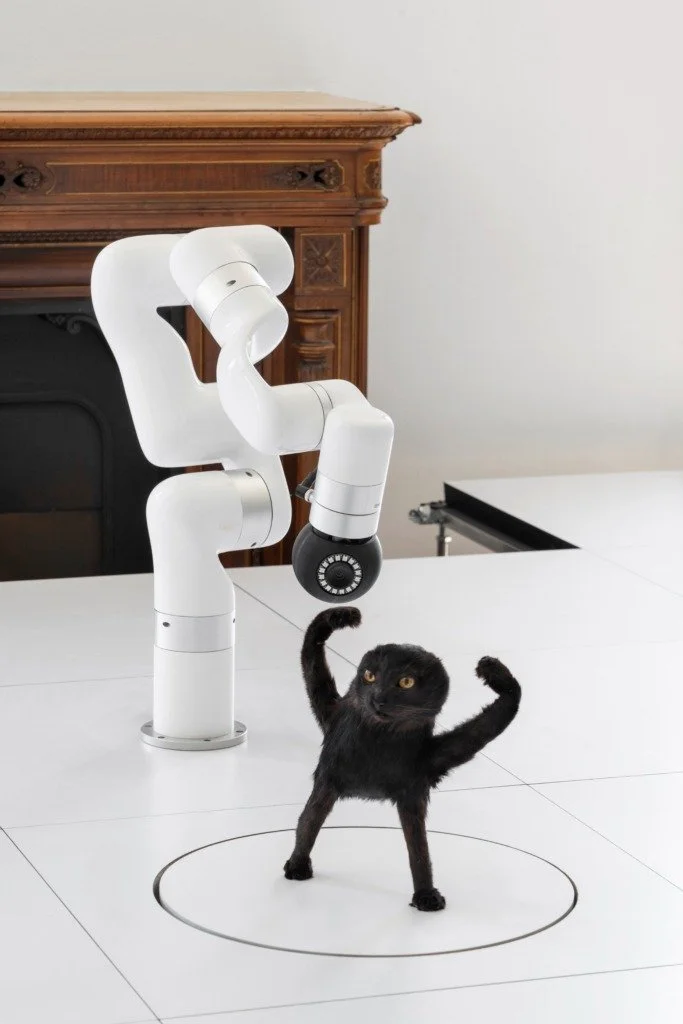
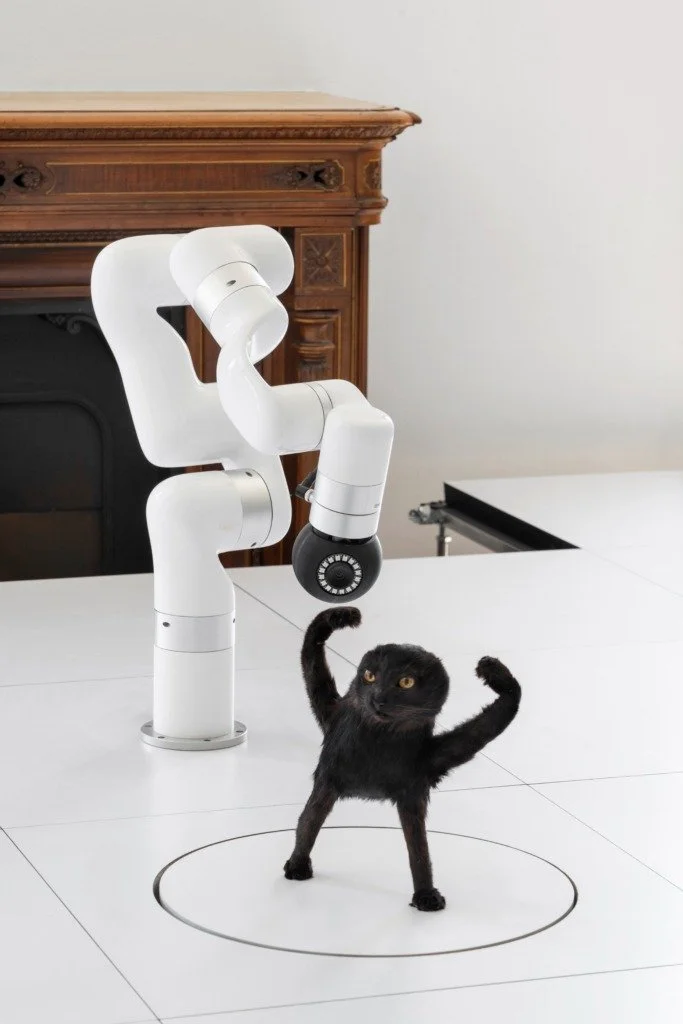
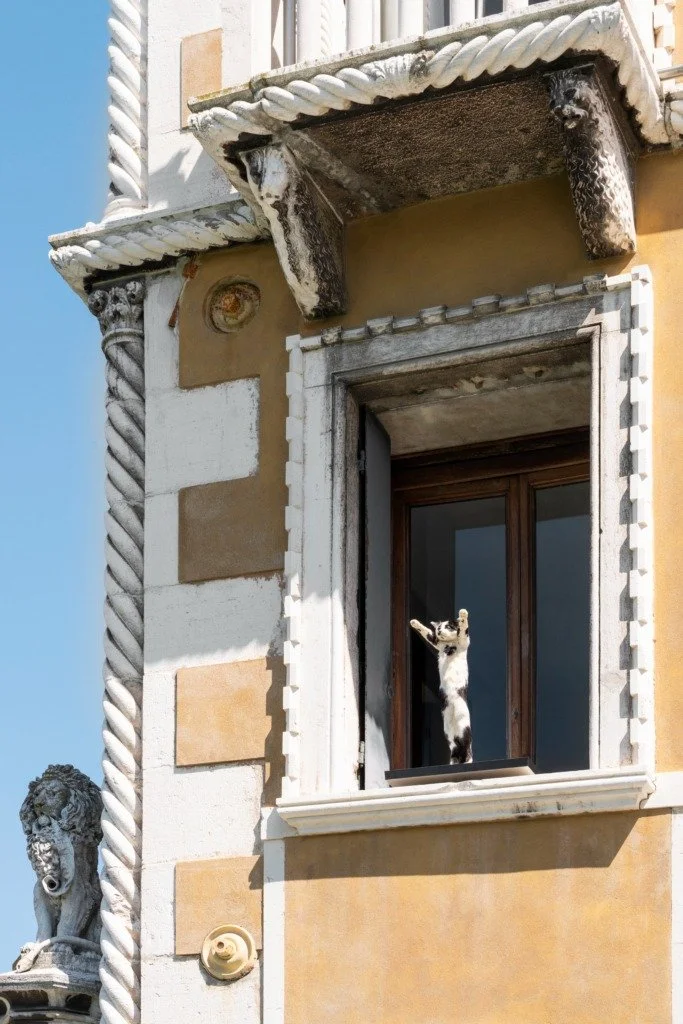
Part of our exhibition RAGE BAIT is an AI model we trained on our Cursed Cat sculpture, a physical incarnation of the well-known internet meme. It’s a black, earless figure caught between exaltation and rage. Visitors encounter this uncanny character posing for a moving camera mounted on a robotic arm which also captures them in the background.
The ever-evolving AI model is a generative system that constantly spews out versions of Cursed Cat, distributing them on the internet where they may eventually be absorbed into future AI training datasets. The idea is to inject a new mythological figure into generative image streams, to subtly contaminate the imagination of AI. In other words, to turn Cursed Cat into a ghost in the machine, liable to reappear unexpectedly, regardless of a user's prompt.
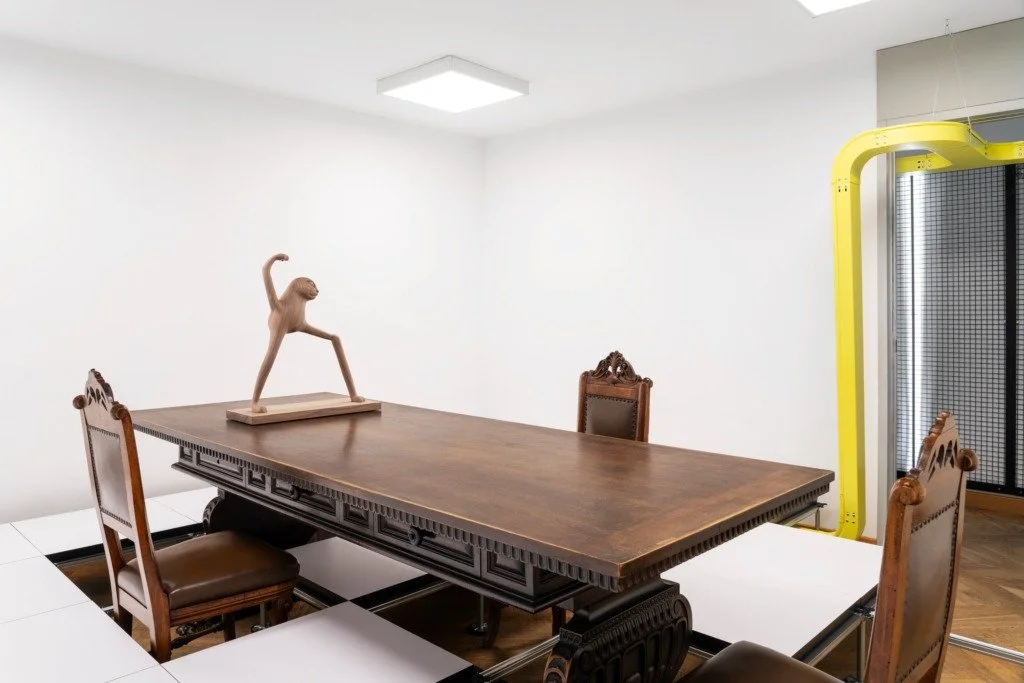
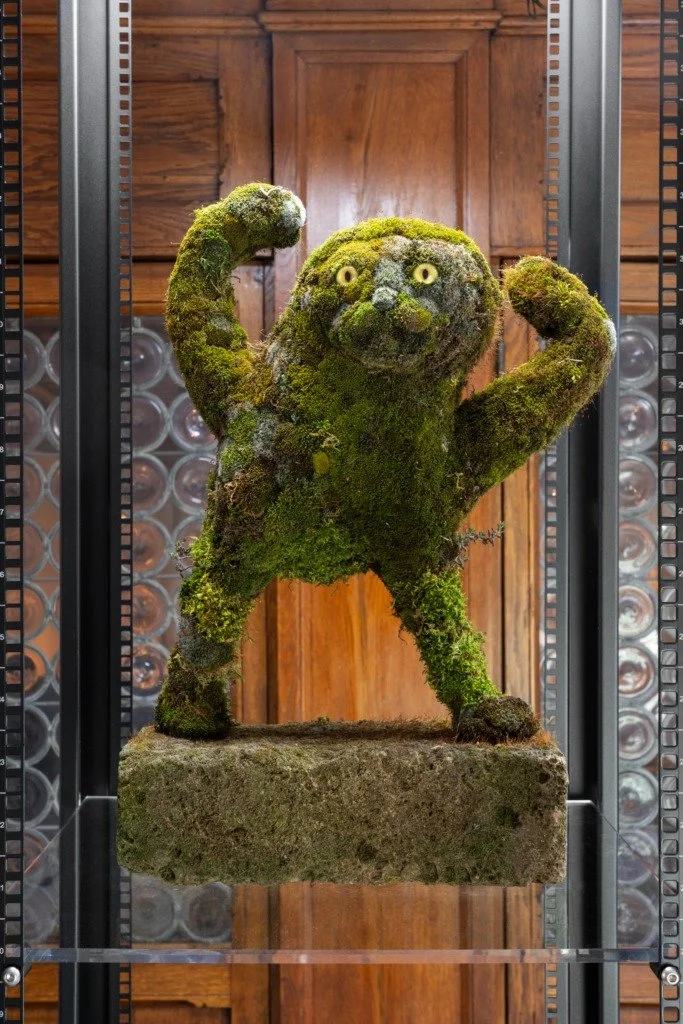
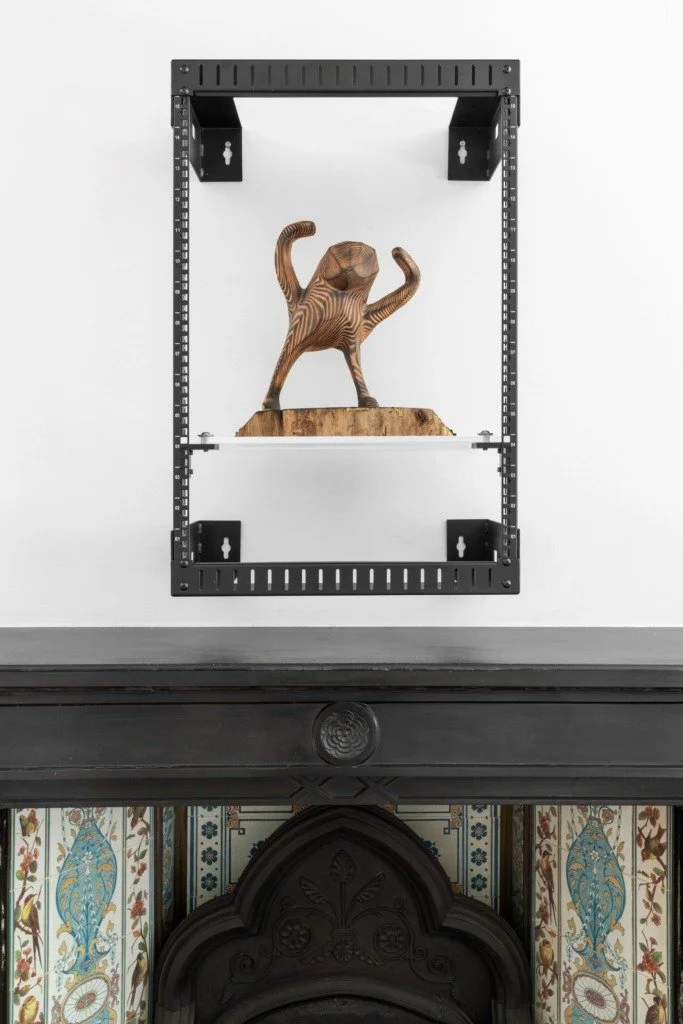
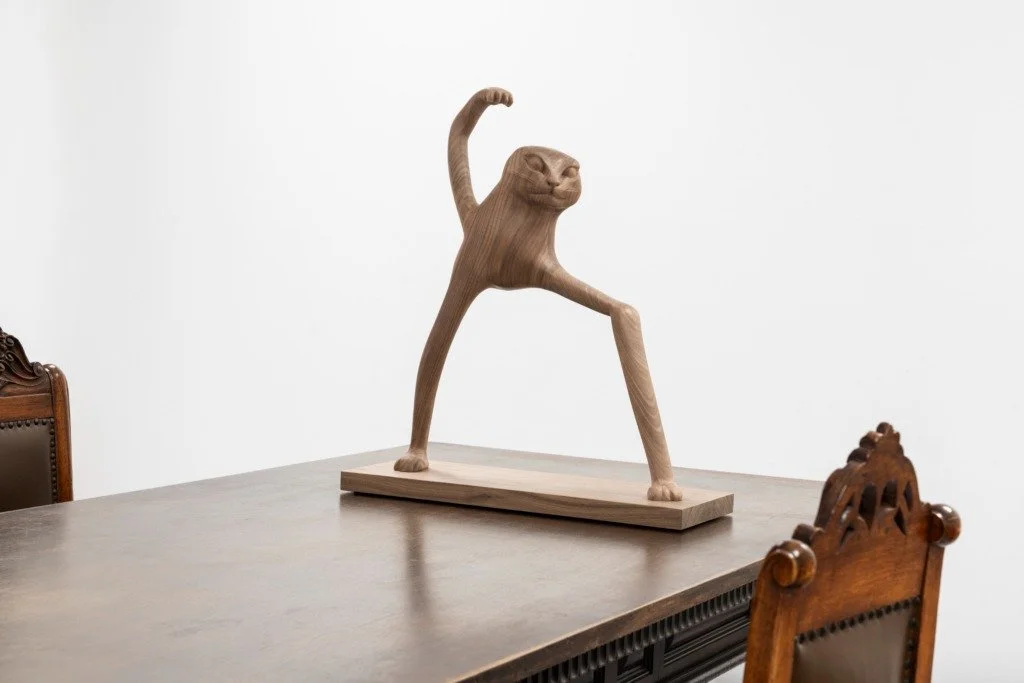
At the same time, we wanted to slow down the speed of memes and AI slop by turning these images into physical sculptures. AI-generated versions of Cursed Cat were “devirtualized” into wood carved in the Dolomites, glass forged in Murano, and Japanese plastic food replicas. These craft traditions embody forms of collective knowledge accumulated and transmitted across generations, a stark contrast to contemporary AI systems, in which knowledge is extracted, centralized, and privatized.
““Memes no longer simply spread, they mobilize. Today, memes wage wars.””
The common thread running through your exhibition practice in recent years has been the site-specific installations Yellow Tray and Monumento Connettivo, through which you create continuity between the artworks in space and physically engage with the visitor. Could you tell us more about the use of these cable trays and raised flooring systems in your exhibitions?
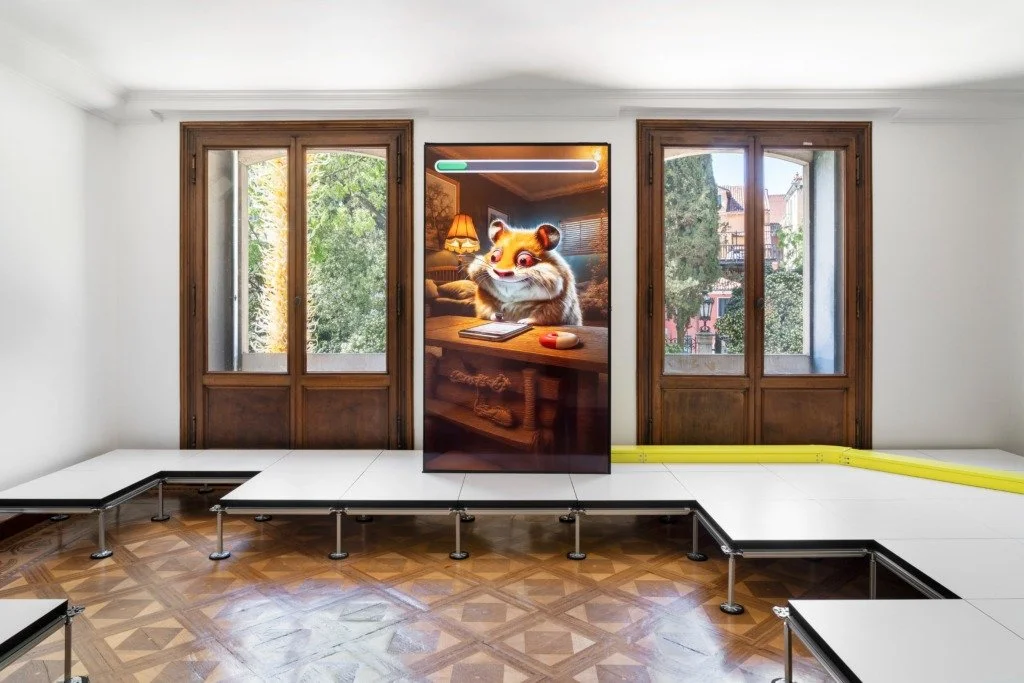
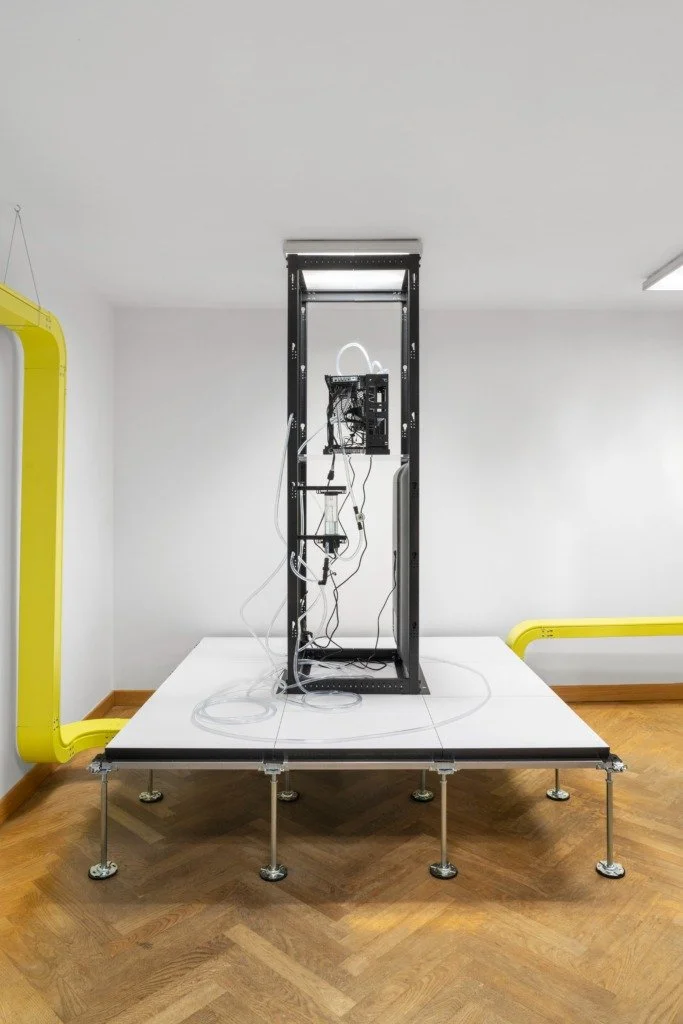
Both the tray and raised floor are architectural elements borrowed from data centers. At Franchetti the Yellow Tray winds throughout the exhibition, connecting all the works. Made of lightweight industrially produced steel, these modular units are traditionally joined together and suspended from ceilings to corral the cacophony of wires that otherwise snake through office spaces and data centers. Cable trays belong to an infrastructure typically designed to remain invisible.
In the exhibition, this logic is reversed. The Yellow Tray directs the circulation of visitors, weaving in and out of rooms and wrapping around doorways. By navigating real space and contending with the pre-existing architecture of the Palazzo, the tray “reprograms” the space, to borrow architect Rem Koolhaas's expression, concretizing the otherwise abstract flow of information and power. Here it channels only physical movements, but of course technology shapes much more: our behavior, emotions, memories, dreams and fears.
All the works are installed on a white floating grid of the raised floor, which also functions as seating for the visitors. In the first room the grid appears only partially covered by white tiles, resembling a videogame level that has not fully loaded. The title Monumento Connettivo references to Monumento Continuo, a visionary project developed by the Italian architecture collective Superstudio between 1969 and 1971. Monumento Continuo imagined an immense white, gridded megastructure extending across landscapes, cities, mountains, oceans... Superstudio used the project to question modernist planning, unchecked urbanization, and technological optimism. Today, that immense grid might be understood as the internet: an invisible yet pervasive infrastructure that connects places, people, and machines profoundly shaping how we experience the world.
““Technology shapes much more than data: it channels our behavior, emotions, memories, dreams, and fears.” ”
Fascinating yet deeply concerning, the web and software, characterized by constant development and mutation, continue to evolve into forms that are increasingly difficult to imagine. How has your artistic production system adapted from the beginning of your career up to Rage Bait?
Back in the 1990’s the Internet was very DIY. Artists didn’t just make content, they built their own tools, coded websites, and hacked software in unexpected ways. Today, the equivalent might be “going upstream”: developing tools, curating datasets and training your own models rather than simply using off-the-shelf platforms. In a way, it might be a return to that early internet mindset, where the process mattered as much as the final result.
In works like Are you still there? and But I Love Human, you shed light on some of the grotesque backstories of social media and AI, highlighting the dehumanization of the user. Do you present these works to the public from a critical standpoint, or from a meticulous objective study of how these systems actually operate?
Are You Still There? is a series of AI-generated videos in which “Italian Brainrot” characters restage real conversations from a suicide prevention helpline. The conversations come from a publicly available dataset of murky origins. Although they predate AI, they have been used to train the very chatbots people now treat as substitutes for a psychoanalyst. Back in 1966 computer scientist Joseph Weizenbaum observed the so-called “Eliza Effect”, the tendency to project emotional understanding onto machines that merely mirror our words. Today, the Eliza Effect is no longer an exception, it has become infrastructure.
The internet itself functions as a giant mega-Eliza, algorithmically optimized to provoke emotions like rage, indignation, and hatred. Because these emotions are measurable, they can be exploited for profit and political manipulation. Memes no longer simply spread; they mobilize. Today, memes wage wars.
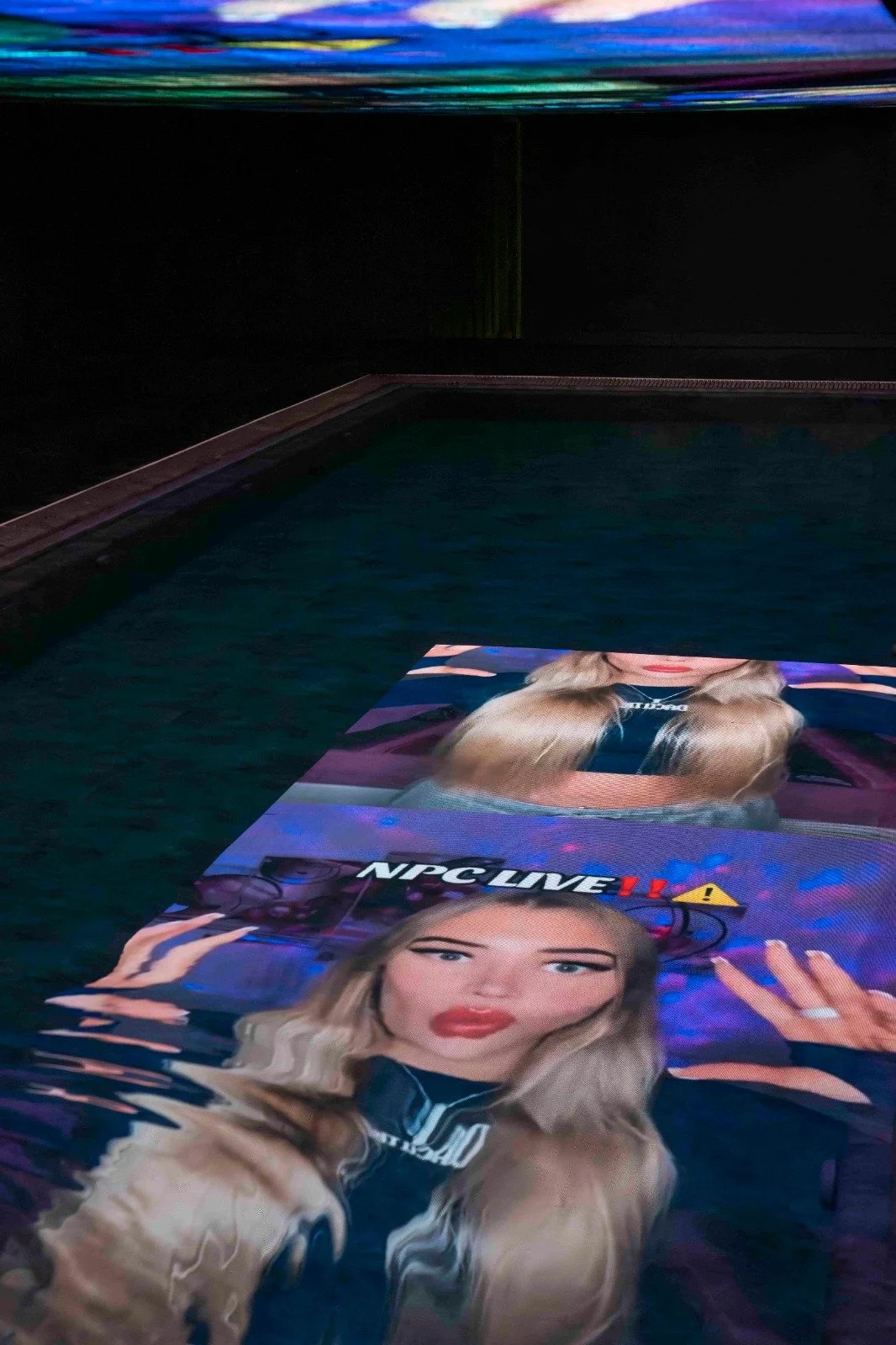
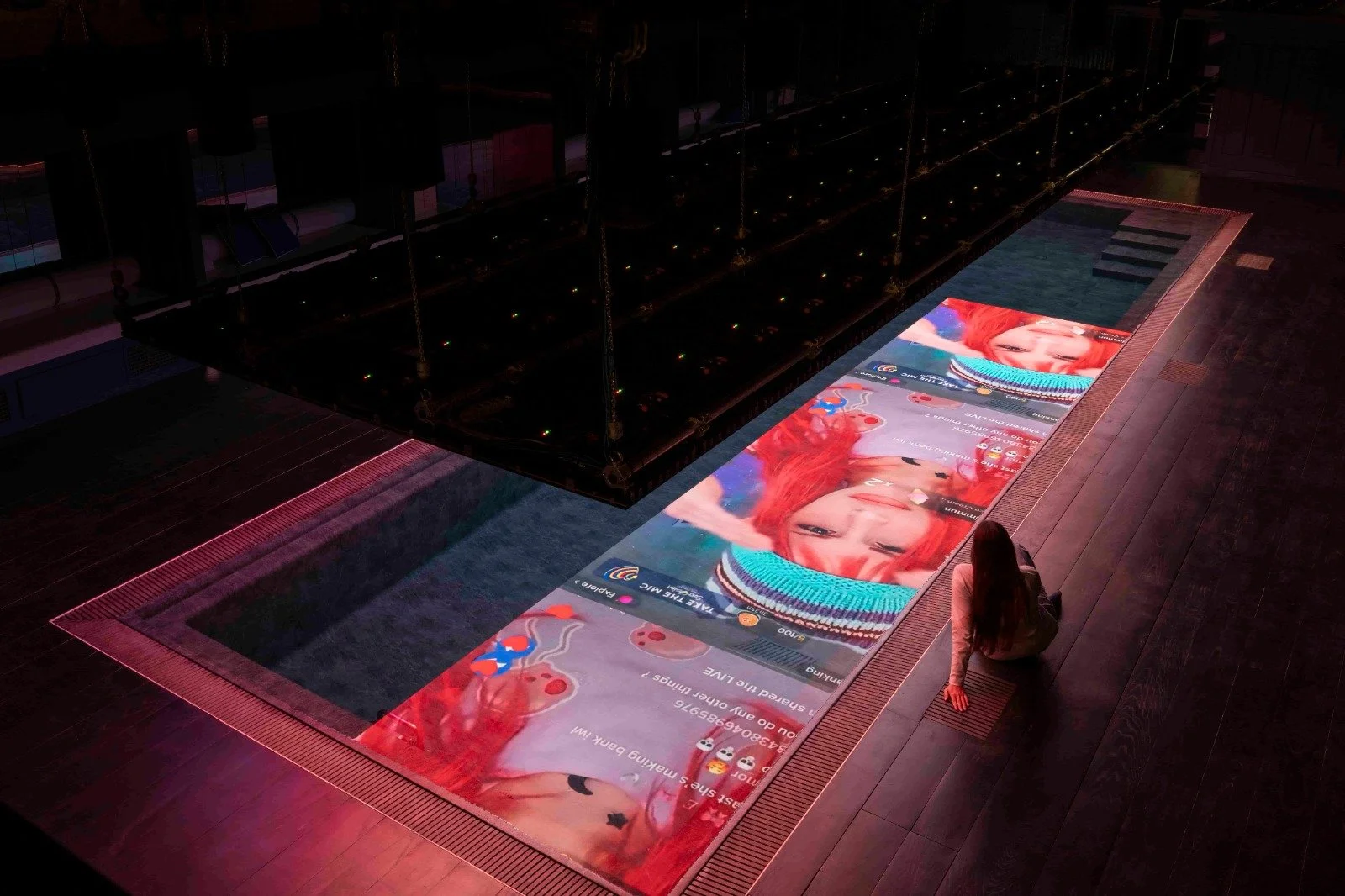
But I Love Human is presented at the second venue of Rage Bait, in a private swimming pool located next to Palladio’s famous Redentore church. It’s a monumental site-specific video installation where pool water ripples with reflections of a large horizontal LED screen suspended above it. The work echoes the myth of Narcissus, who vainly fell in love with his own reflection. The ten-minute video is a supercut of NPC performers who mimic videogames ‘non-player characters’ during livestreams, repeating mechanical gestures and scripted dialogue for online audiences, often for pay.
The work frames this practice as a symptom of a culture increasingly shaped by algorithmic demand: content produced to juice the algo. Today’s assembly lines include platforms like TikTok where the focus of automation is not only labour, but one’s own self. I'm afraid it is too late to escape these loops. But artworks can make them visible, reflecting them back, like a pool that refuses to settle into a stable image.
Photography by Melania Dalle Grave
Interview by Marco G. S. Mambelli
What to read next