Smooth Operator: On the Ambiguities of Comfort with Villiam Miklos Andersen

Within the spaces of Fondazione Elpis, ordinary objects, functional devices, and service architectures are transformed into ambiguous presences, revealing the subtle continuity between pleasure and control, intimacy and infrastructure.
In this conversation, Andersen reflects on how his work emerges from observing environments designed for efficiency, transit, and standardization, but also from the possibility of moving through them in unexpected, deviant, queer ways. Smooth Operator unfolds within this very friction, showing how even the most anonymous spaces can hold forms of desire, tension, and reconfiguration, and how comfort, rather than a stable condition, becomes a political terrain to be questioned.
In Smooth Operator, comfort never feels entirely neutral. When did you start to see it as something ambiguous, rather than simply a form of well-being?
That awareness comes from growing up in a landscape where systems of production were very visible. I grew up on the headland of Asnæs in western Zealand, surrounded by pig farms and monocultural agriculture, with heavy industry nearby. Comfort was always present, but it was clearly produced, by labor, by infrastructure, by systems of optimization.
Early on, that made me think of comfort not as something natural, but as something constructed. And if something is constructed, it can also exclude, regulate, or suppress. What interests me is how comfort in welfare societies is tied to logistical systems, distribution, standardization, efficiency, that shape not only how we live, but how we behave and relate to each other.
So rather than seeing comfort as a stable condition, I see it as something constantly negotiated, maintained, and unevenly distributed.

Many of the works begin with ordinary, almost anonymous objects and structures. What draws you to that kind of functional, low-profile aesthetic?
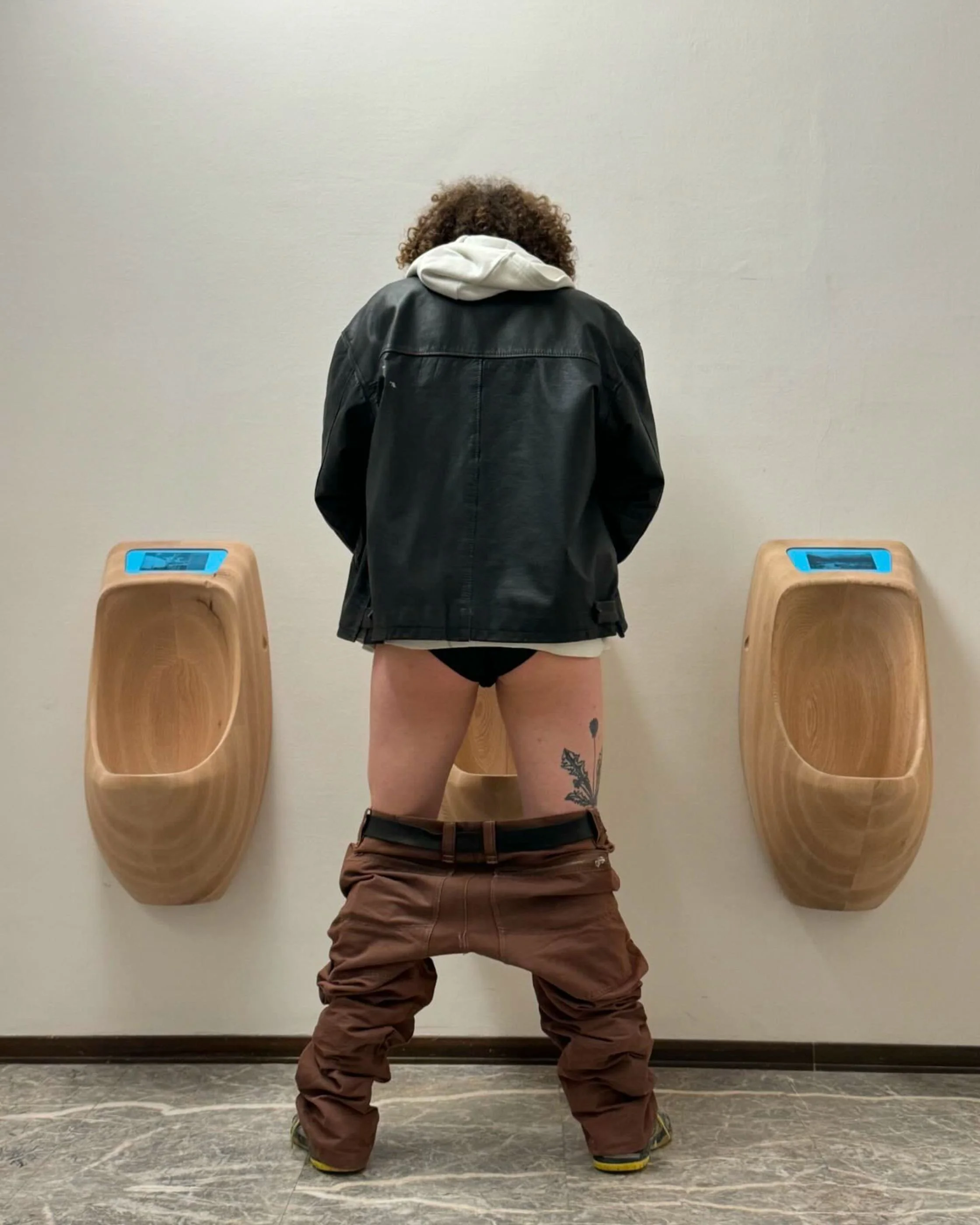
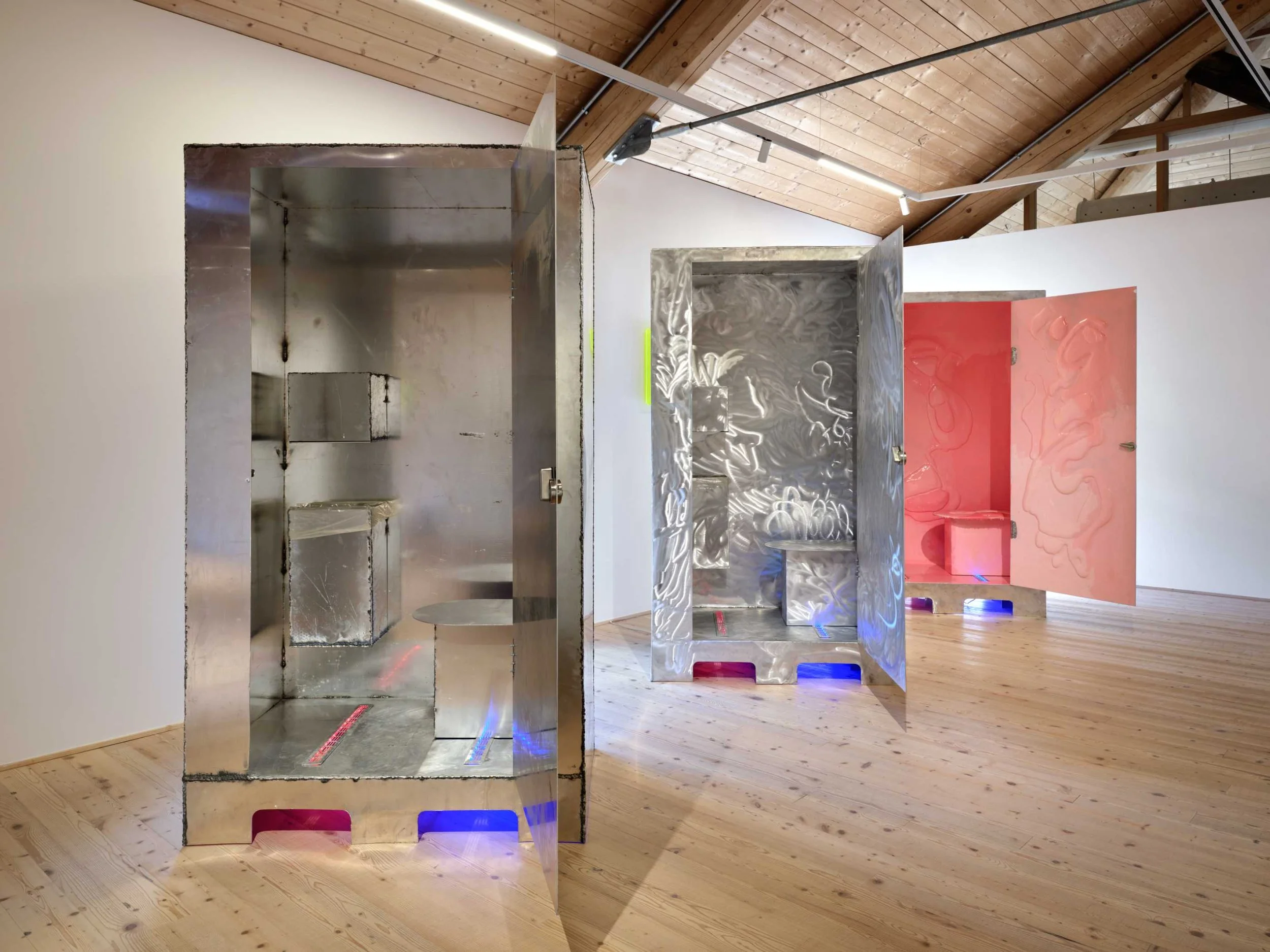
I’m drawn to objects already in circulation, things designed to disappear into use. Shipping crates, rest stops, urinals, water coolers. They are not meant to be looked at, but they quietly structure behavior.
Besides my work as an artist, I’m trained as a truck driver, and I’ve spent a lot of time on the road across Europe. I’m interested in these male-dominated work environments and so-called non-places, spaces designed for transit and efficiency, often with a kind of denial of the body. Materials like plastic and steel erase individuality and produce sameness across borders.
At the same time, these spaces are often reappropriated within queer subcultures, through cruising, sauna culture, or kink environments, where they are re-eroticized or re-romanticized. They begin to host encounters that are only legible to those who are attuned to them.
I think of my method as a kind of logistical cruising, moving through these systems and subtly shifting their material and aesthetic codes.
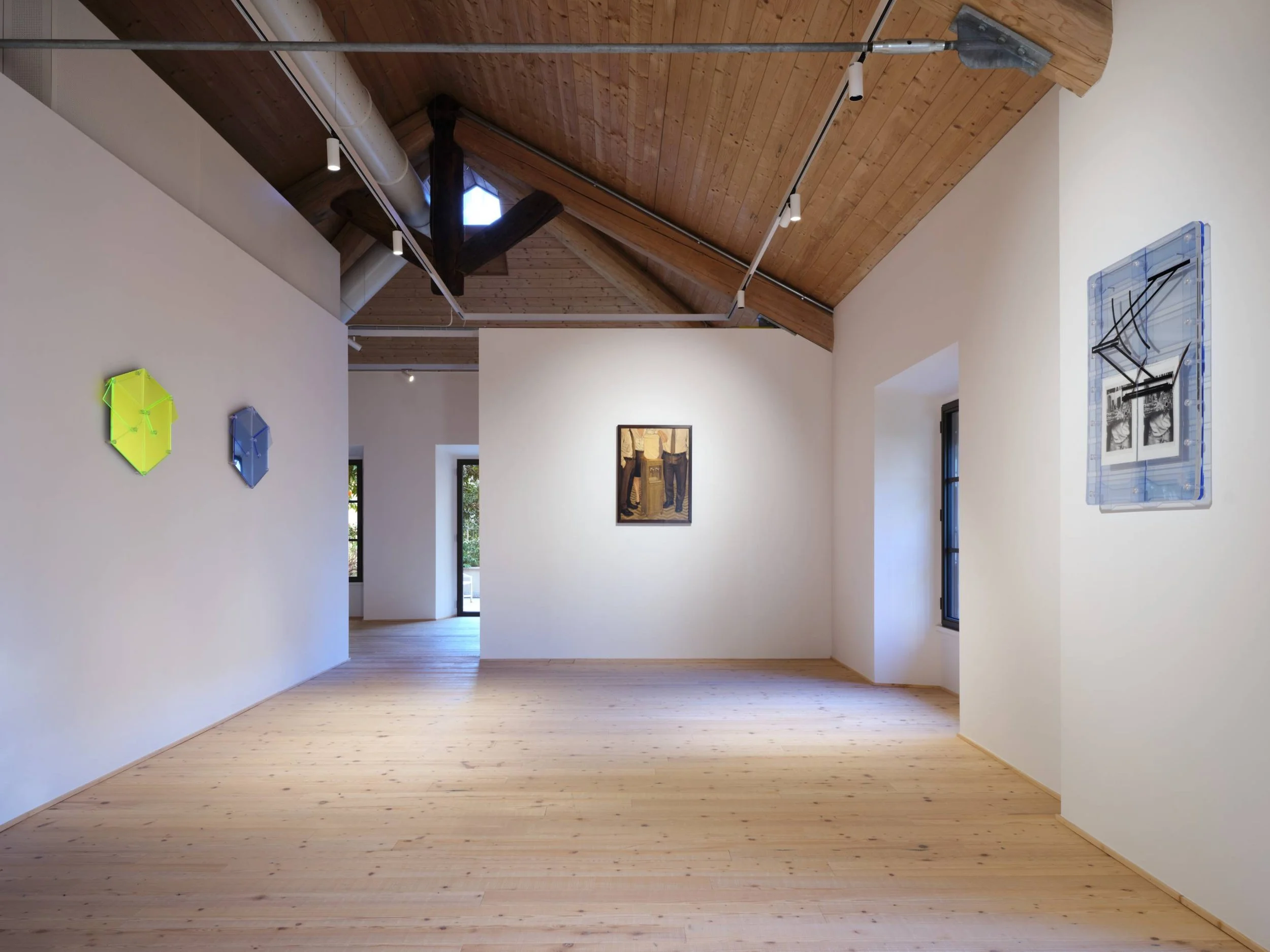
In the Water Sports series, I reproduce a standardized urinal, normally made in plastic at Central European rest stops, in solid oak inspired by Scandinavian shipbuilding traditions. By translating it into a tactile, sensuous material, the object shifts from something purely functional into something ambiguous, even intimate. It points to how these hyper-standardized environments already contain other forms of use and desire, even if they are not officially acknowledged.

The title is quite loaded. Who is a “smooth operator” to you today: someone seductive and efficient, or someone more troubling?
For me, the “smooth operator” is someone, or something, that moves frictionlessly through systems. That could be a person, but it could also be infrastructure, logistics, or ideology.
There is something deeply seductive about that smoothness. But it is also troubling, because it often depends on a kind of emotional detachment, on the ability to move through environments without being affected by them, or without taking responsibility for the conditions that make that movement possible.
This type of behavior is not just valued, it is rewarded in a neo-capitalist context. You see it in trading floors, boardrooms, architectural offices, spaces where efficiency, control, and resilience are prioritized, often at the expense of sensitivity or care. These environments act as filters. They exclude those who cannot, or refuse to, operate within that logic.
So the “smooth operator” becomes both an aspirational figure and a critical one. It is a model of success, but also a symptom of a system that privileges detachment over relation.

Throughout the exhibition, care, service, rest, and performance seem to occupy the same space. Was that overlap something you were trying to make visible from the start, or did it emerge through the work?
It was there from the beginning, but it became clearer through the work. I was interested in how spaces of care, like saunas, rest areas, or workplaces, are never just about care.
They organize behavior. They come with expectations, rhythms, and forms of participation. So care and service, rest and performance, begin to collapse into each other. You are never just resting, you are also part of a system that structures that rest.
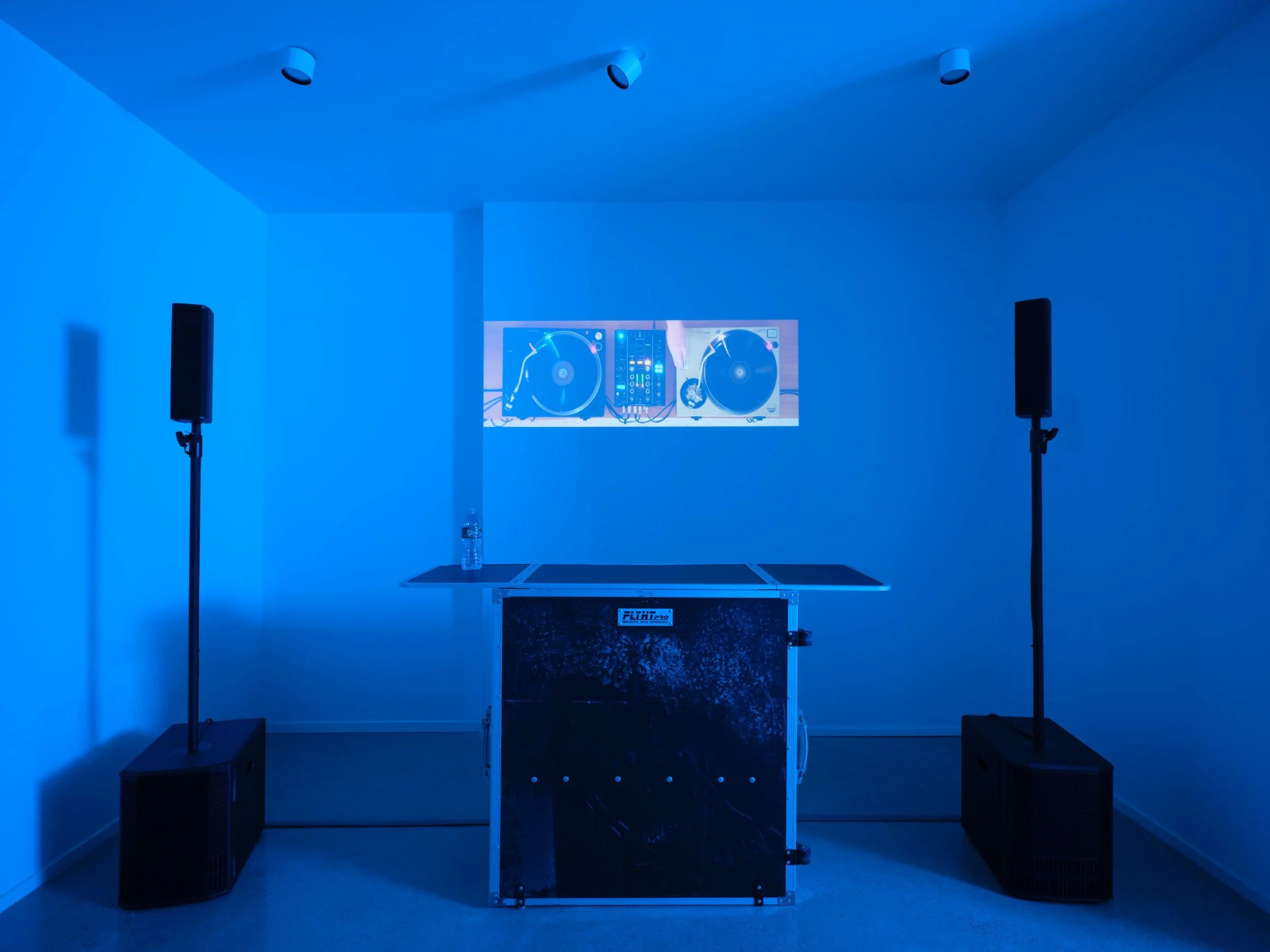
The exhibition mirrors this. It moves between office, logistics center, and nightclub, each with its own choreography, but all connected through these underlying dynamics.

There is a constant shift between what comforts and what regulates. Are you interested in working exactly at that point where support starts to look like control?
Yes, that is exactly where I am working. I do not see comfort and control as opposites. They are often two sides of the same mechanism.
A system that supports you also organizes you. It defines what is possible, what is acceptable, how you move, how you relate to others.
So I am interested in that threshold where something feels pleasurable or safe, but is simultaneously shaping you, sometimes in ways that are not immediately visible.

The mobile sauna (Verkstadskärra 3 (Ångenhet)) is one of the works that lingers, especially because of the tension between relaxation and its military origins. How did that piece first take shape?
It started with the vehicle itself, a military personnel carrier built from Kiruna steel. I became interested in the material history embedded in it, and in how that material is tied to larger geopolitical and economic structures.
The sauna became a way of thinking about the Scandinavian welfare state as something built on very concrete underlying assets, raw materials, extraction, and global trade. There is a persistent tension between welfare and warfare that is often overlooked, even though the two are deeply entangled.
The same infrastructures that enable comfort and care are tied to systems of protection, exclusion, and control. The Scandinavian welfare model, for example, promotes solidarity internally, but it is also highly selective, almost like a closed club. Access is restricted, and the system is sustained through participation in global economic structures that are far from neutral.
In that sense, comfort is not innocent. It is produced through positioning, through access, through the ability to benefit from systems that operate elsewhere.
So when you sit inside the sauna, you are in a space of warmth, intimacy, and care, but you are also inside a machine that carries this entire history. The piece is not about resolving that contradiction, but about sitting inside it.


Infrastructure is everywhere in the show — corridors, booths, devices, spaces of transit. Are you interested in the idea that desire today increasingly moves through organized systems?
Yes, absolutely. Desire does not exist outside of systems. It moves through them.
In the Transactions series, I worked with images I took at Rungis, Europe’s largest food distribution center outside Paris. The works focus on hands performing small gestures within a highly optimized logistical environment. These gestures are intimate, almost tactile, but they are ingrained in a system designed for speed and efficiency.
I translated these images into photorealistic intarsia works in collaboration with Dayananda Nagaraju in Mysore. Each piece is composed of multiple wood species and is embedded in its own shipping crate, carrying traces of its circulation.
Even these moments of contact, touch, exchange, handling, are structured by infrastructure. Desire is not free-floating. It is shaped, directed, and sometimes constrained by the systems it moves through.

Many elements in the exhibition operate on a sensory level — light, atmosphere, rhythm, even smell. How important is it for you to work on that physical, almost non-visual dimension?
It is very important. These systems often operate on a sensory level before we become aware of them intellectually.
Light, temperature, sound, smell, they shape how we feel, how we move, how we interact. In the basement, for example, the blue neon light creates a space where bodies become less legible, allowing for different kinds of encounters. In contrast, other areas are more exposed, more visible.
I am interested in how these conditions can choreograph behavior without explicitly directing it. The exhibition becomes something you experience with your body, not just something you look at.

The exhibition leaves open the question of whether comfort is still something to long for, or something to scrutinize. Where do you stand now?
I think it is both.
Comfort is something we need. It creates space for care, intimacy, and connection. But it also has a cost, and that cost is often displaced or hidden.
So, the question is not whether comfort is good or bad, but what it is built on, who it includes, and who it leaves out. For me, the task is not to reject comfort, but to stay with it critically. To look at its conditions, and to push it toward forms that are less controlled, less standardized, and maybe more open to difference.

Interview by Ritamorena Zotti
What to read next