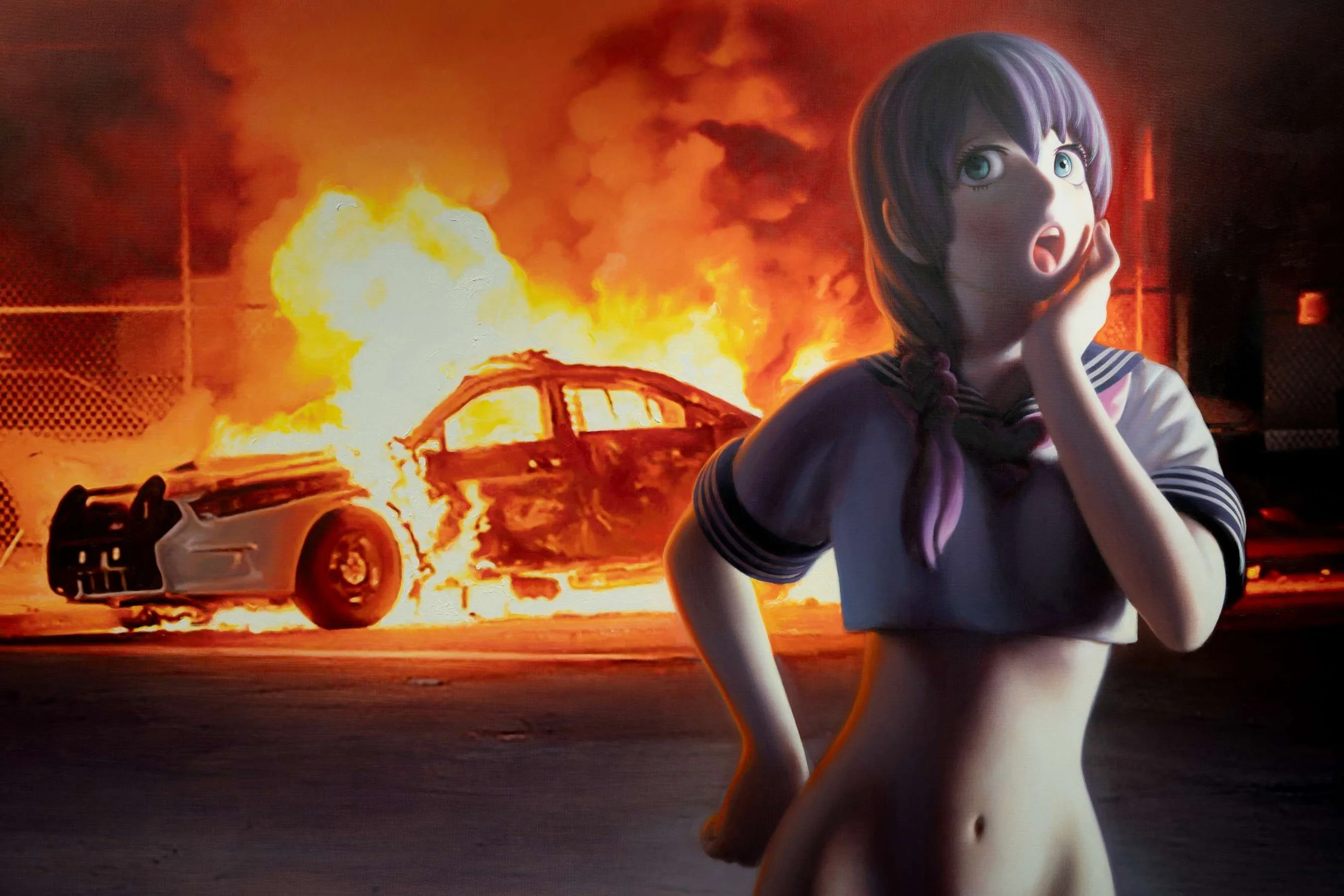
HELNWEIN mundos invertidos at SOLO Contemporary

There is a particular kind of discomfort that Gottfried Helnwein has made his life's work. Not the discomfort of the obscure or the deliberately provocative, but the specific, quiet unease that arrives when something you thought you knew turns slightly wrong. A child's face. A cartoon duck. A familiar image from the archive of collective memory, returned to you at an angle that makes your stomach drop. That is the sensation at the centre of Mundos Invertidos, the Austrian artist's first major retrospective in Spain, now open at SOLO Independencia in Madrid.
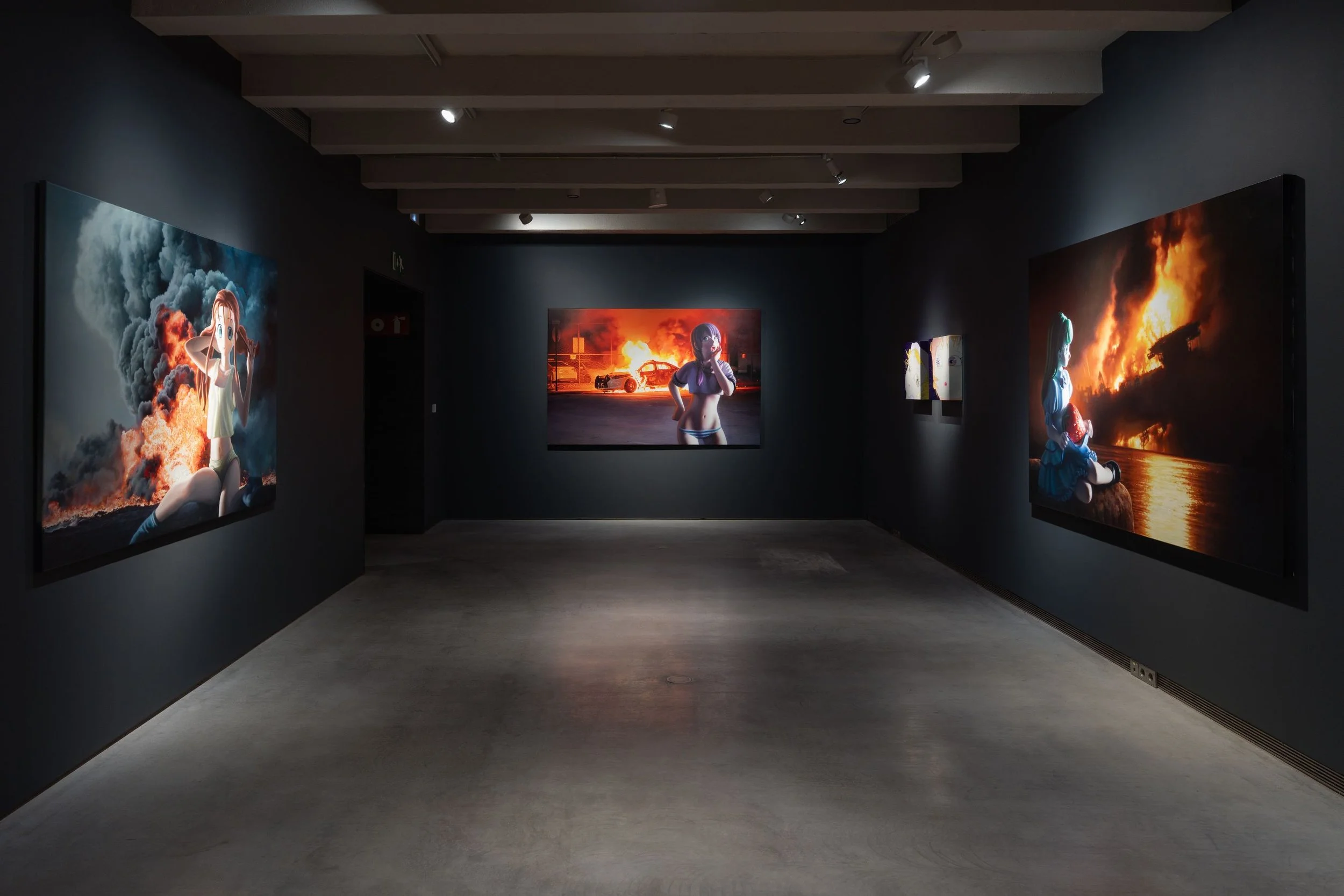
The title translates simply: inverted worlds. But the phrase carries more weight than its syllables suggest. It names the feeling, increasingly common, of looking at the world and thinking: no. This cannot be how things are. This cannot be happening again. Helnwein has been painting that feeling for decades, long before it became the ambient mood of the present moment. Which makes this show, gathering around fifty works from a dozen European collections, feel less like a retrospective and more like a reckoning.
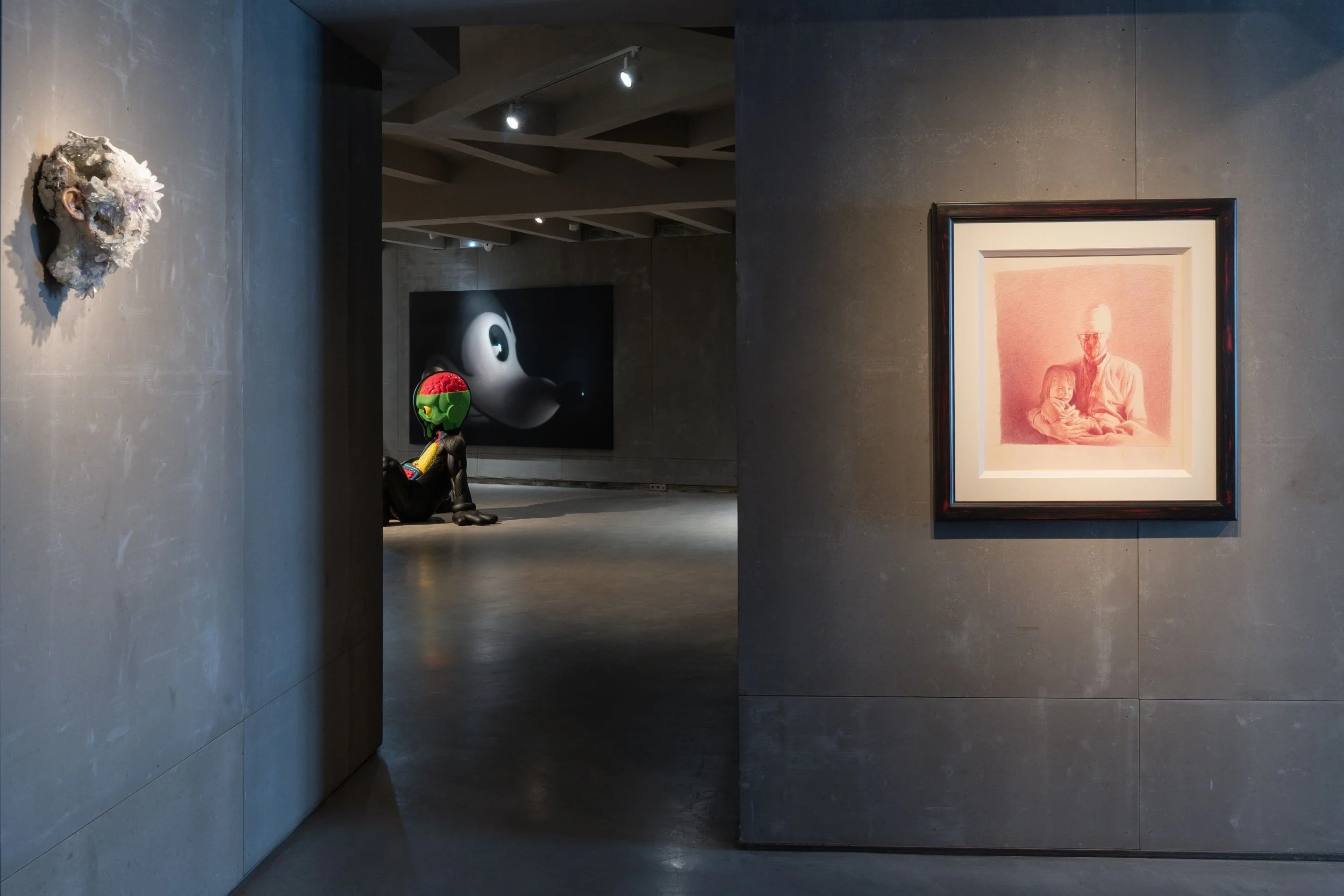
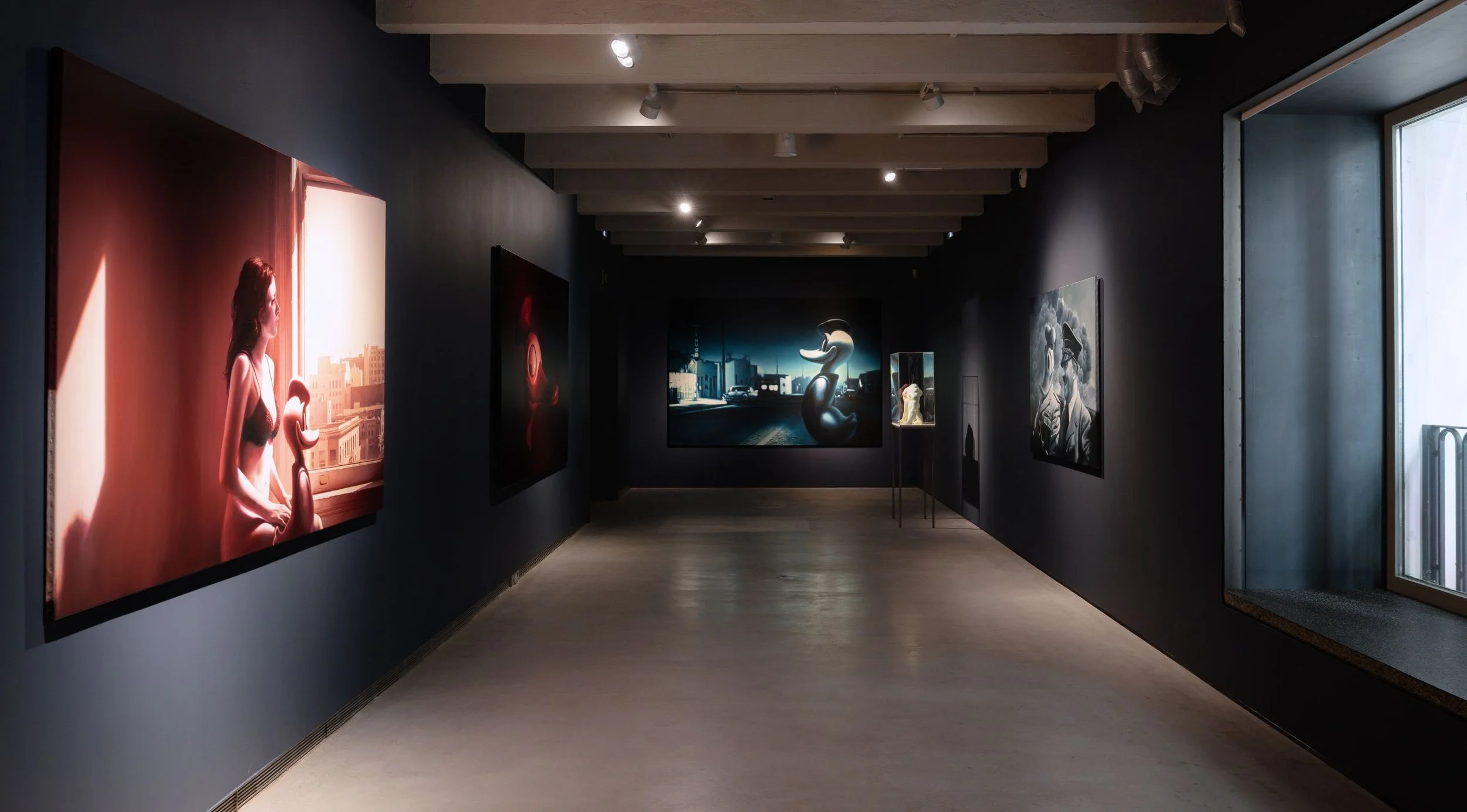
Born in Vienna in the years immediately following the Second World War, Helnwein grew up in a city still living under the shadow of that period. Adults did not sing. Houses were grey and long-faced. The architecture of trauma was everywhere, unacknowledged and pervasive. Into that silence arrived something extraordinary: American comic books, produced as part of a cultural re-education programme in the occupied zones. Carl Barks's Donald Duck stories, in particular, hit the young Helnwein like a physical force. He has described opening that first comic book as the moment everything changed, the first experience of colour and speed and something resembling joy. That a cartoon duck could do that to a child born into postwar rubble tells you something about the power of image, and it tells you something about why Helnwein has spent the rest of his career interrogating that power with such rigour and such seriousness.
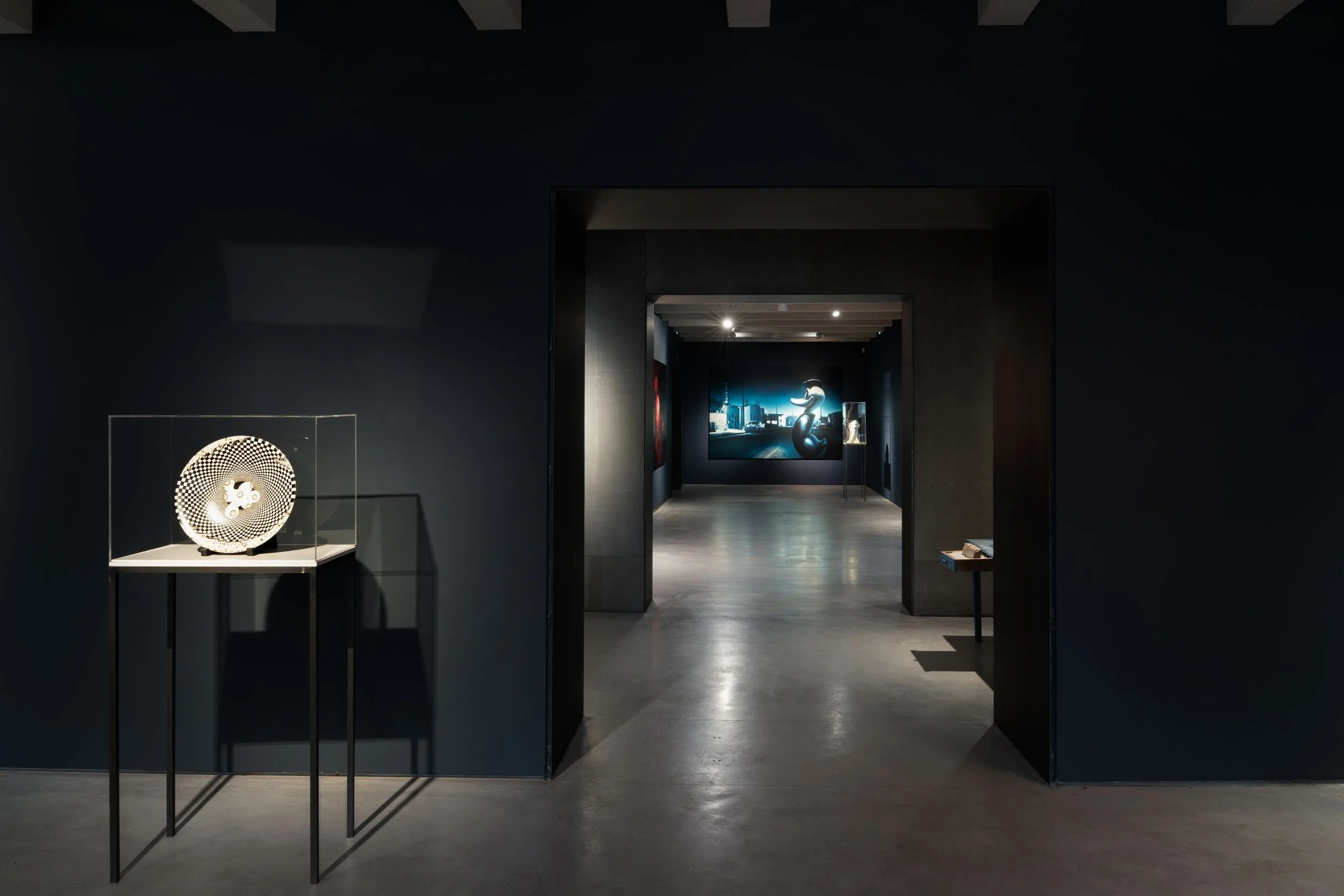
The Donald Duck room at SOLO stands as one of the exhibition’s most deliberate gestures. Nearby, in Room 3 and Room K, the works from Disasters of War extend this tension, drawing a direct reference to Goya. The dialogue between the two artists, set across two centuries, carries one of the exhibition’s most charged undercurrents. Helnwein’s position remains precise: war today reads as entertainment.
The line between cinematic spectacle and documented atrocity has been made deliberately thin. Leaders brag about body counts the way others might discuss box office results. Propaganda, Helnwein argues, is the primary weapon in any conflict, because mass violence requires mass insanity, and mass insanity requires preparation. He studied the Holocaust with the urgency of someone who understood it was a family matter, whose parents' generation bore responsibility for it, and what he found was a detailed instruction manual for how ordinary people get turned. He believes those instructions are being followed again.
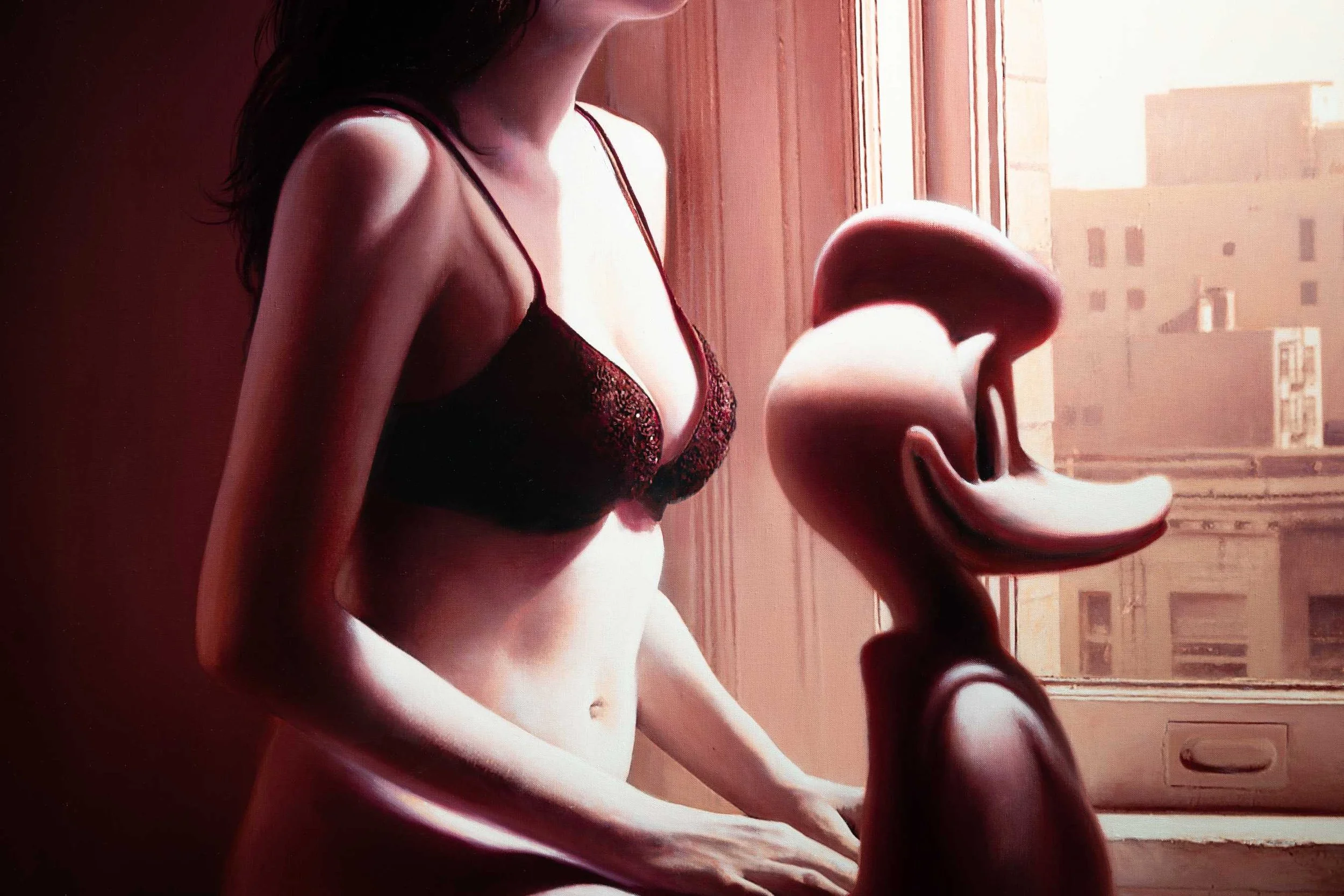

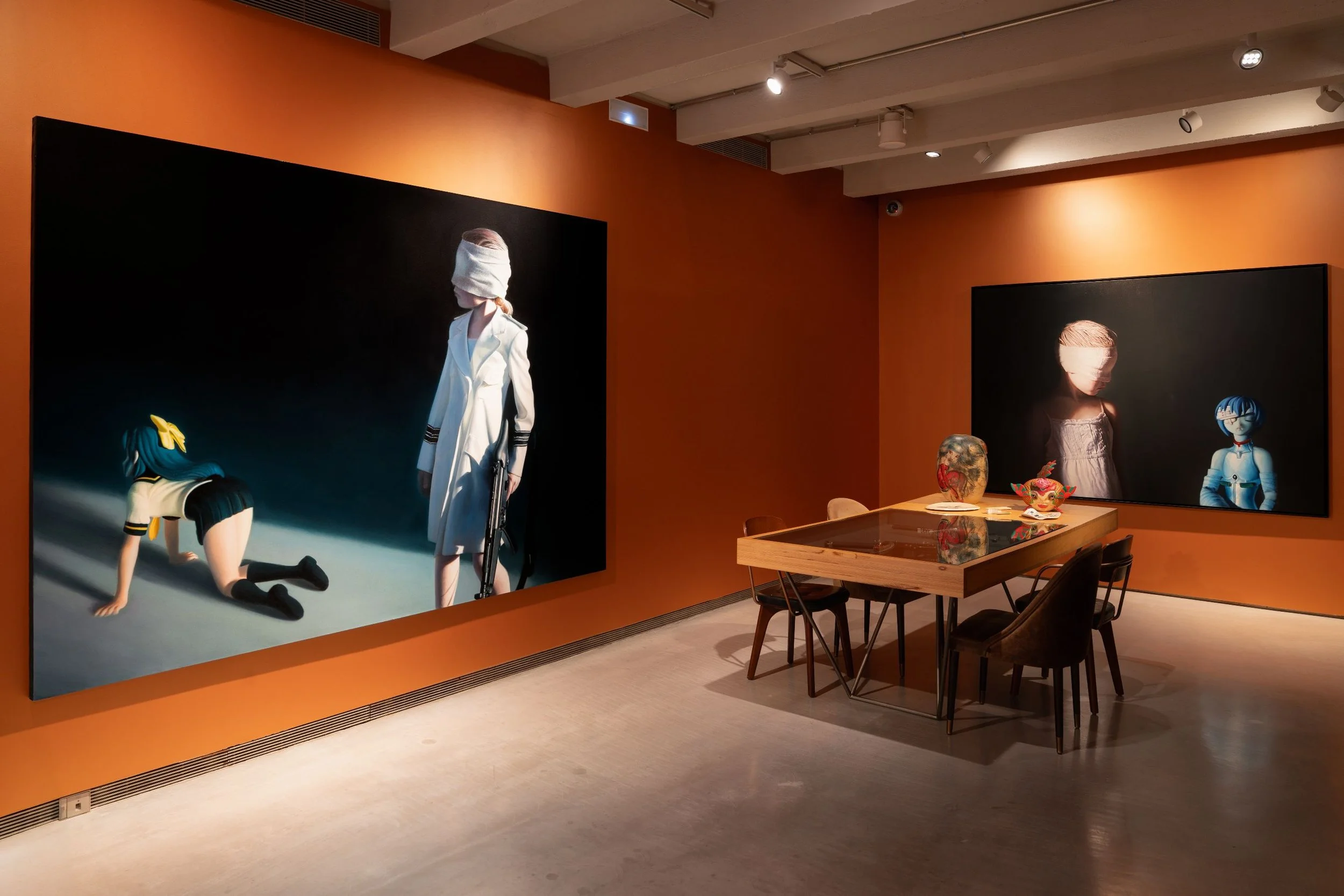
And yet the show at SOLO is not a pamphlet. It is an artwork, and the distinction matters. Helnwein's chosen language is the image of the child, and it is a choice he returns to with what he calls inner necessity. The child is defenceless by definition. The child is also, in the 21st century, a soldier: seventeen and eighteen year-olds trained to kill people they do not know, in wars they did not choose. The wounded child and the child with a gun are, in Helnwein's work, the same child. That is the argument, and it is made not in text but in paint, in scale, in the particular quality of attention he brings to a face.

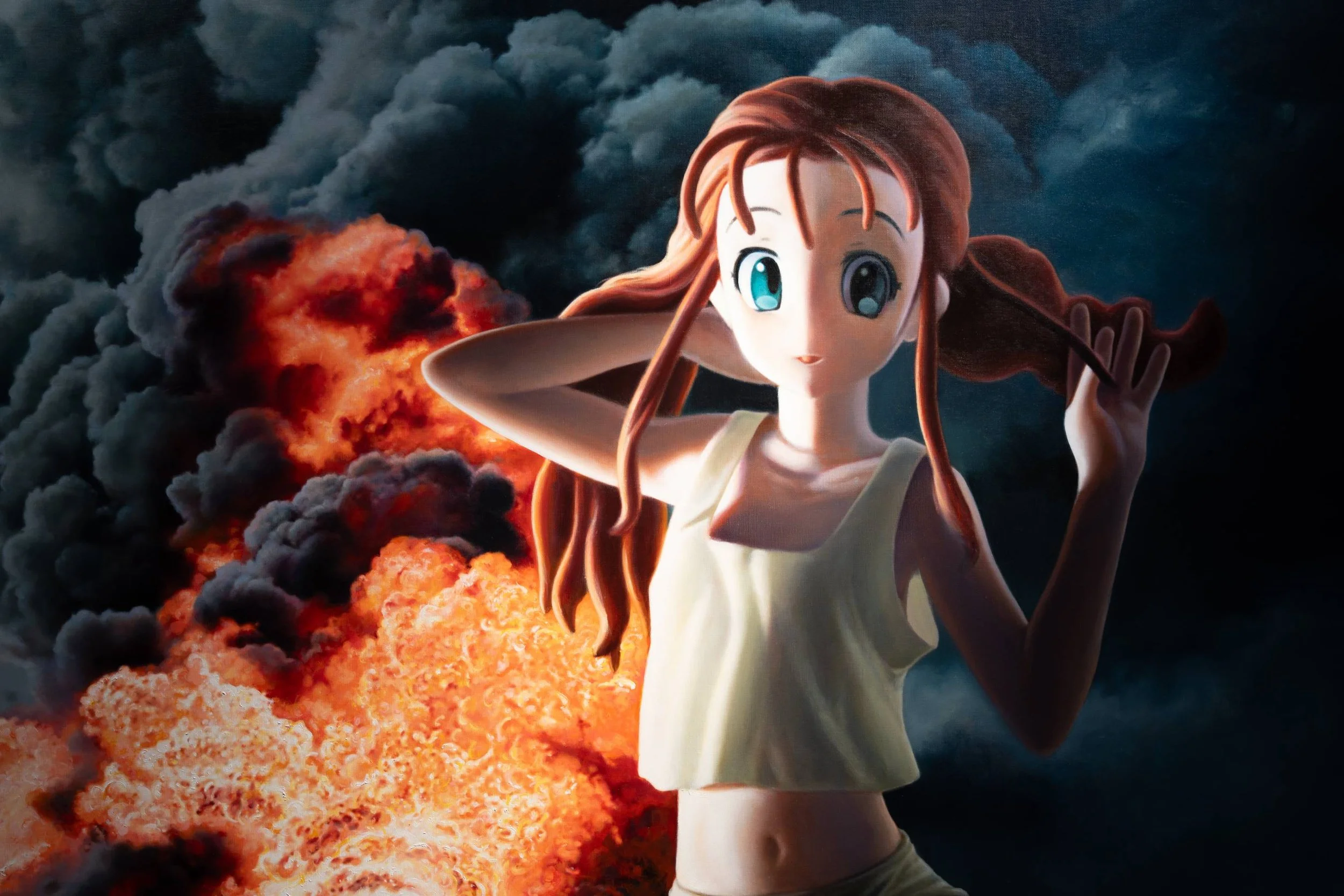
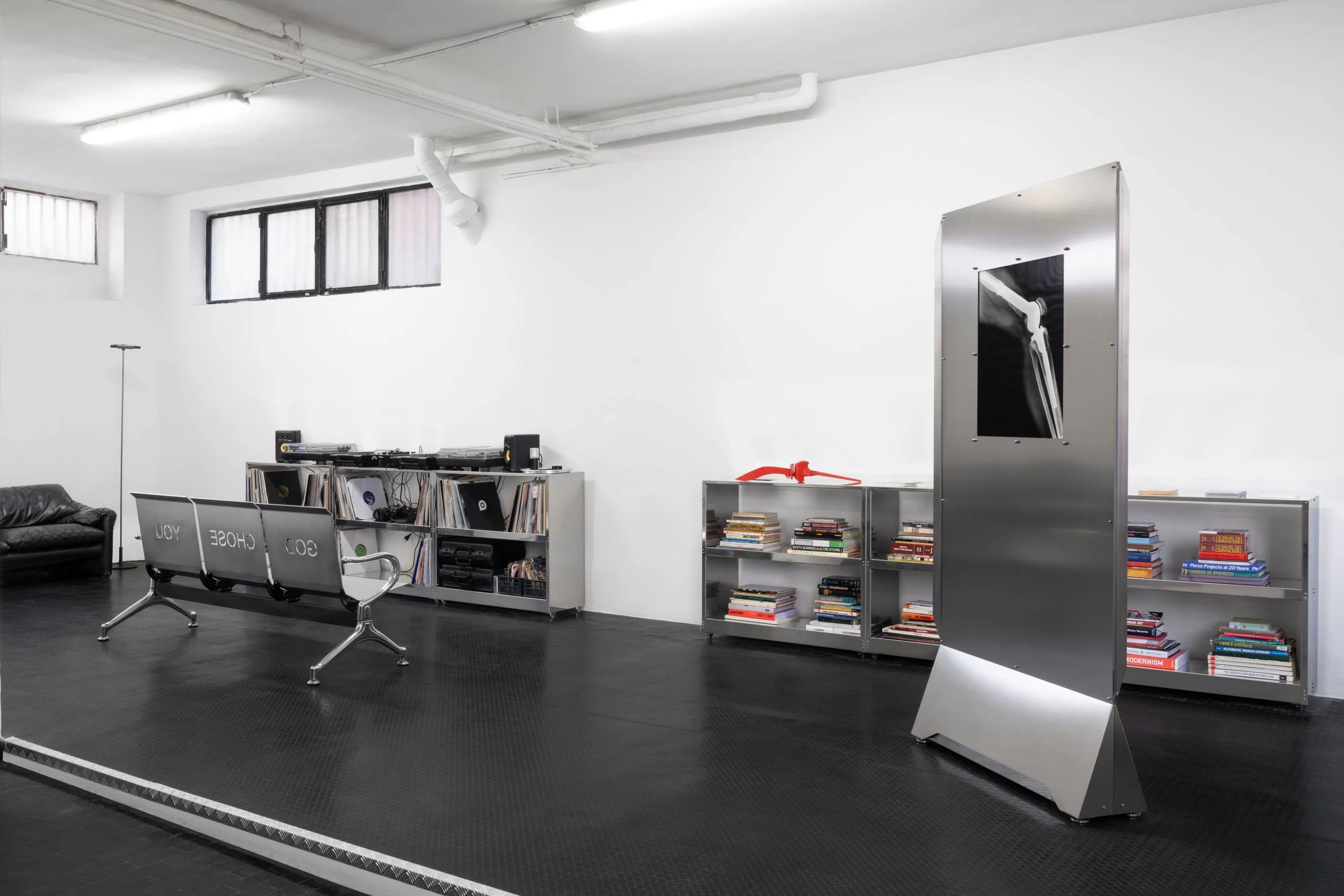
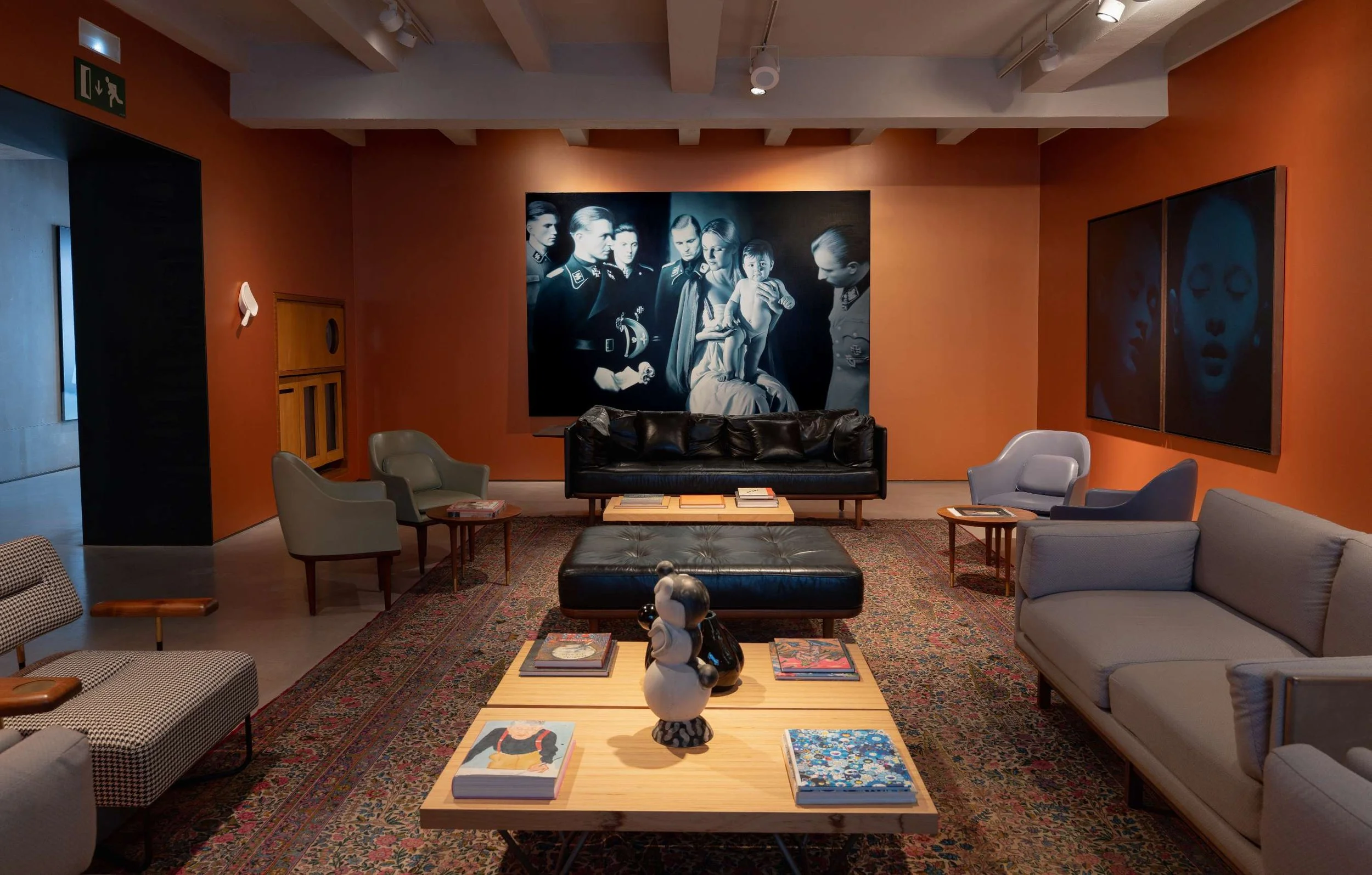
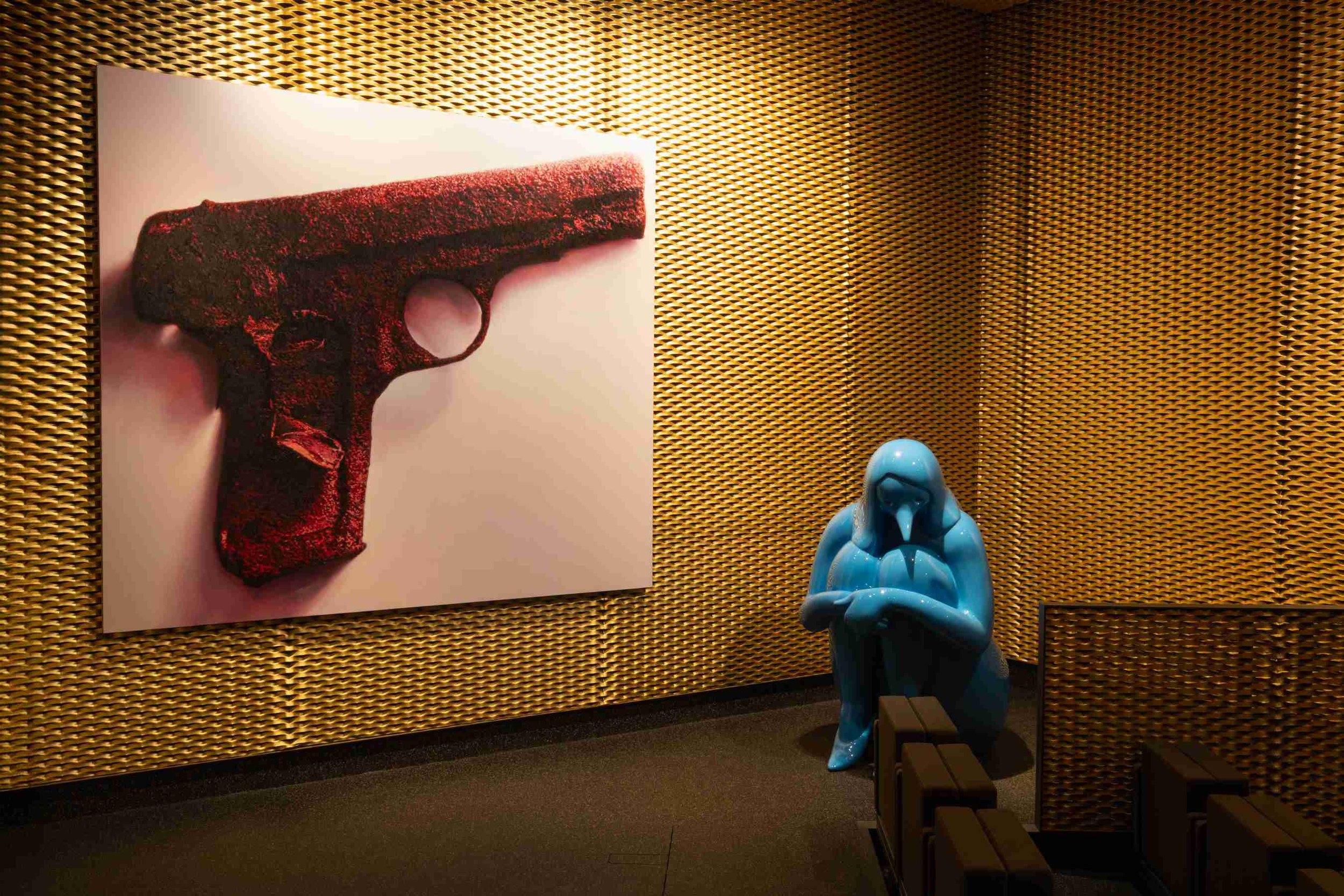
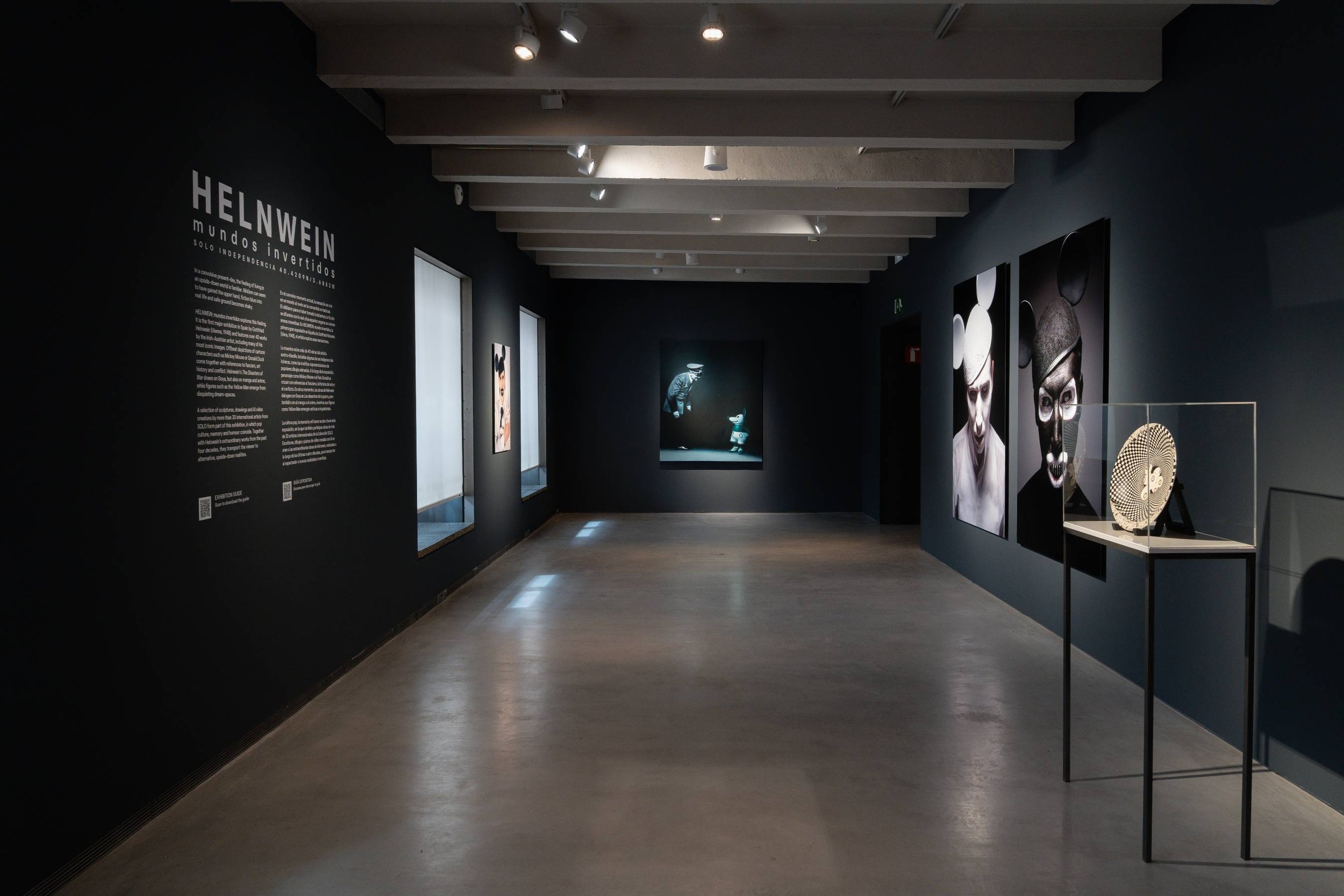
SOLO Independencia is not a white cube. It was designed by Juan Herreros, (estudio Herreros) and carries in its bones the taste and logic of a private collection, accumulated with care and over time. The curators, Sebastian Strenger, David Cantolla, and Rebekah Rhodes, have placed Helnwein's work in direct dialogue with around thirty other artists: Ai Weiwei, Keiichi Tanaami, whose goldfish carry the memory of Tokyo being bombed, Japanese artists from the 70s whose treatment of the female figure was, in its own context, an act of cultural rupture. There are guns made from typewriters, one entitled Geneva Convention, another named Remington, the latter a reminder that the same American company manufactured both the weapon and the writing instrument. The propaganda point, made in steel and dark humour.
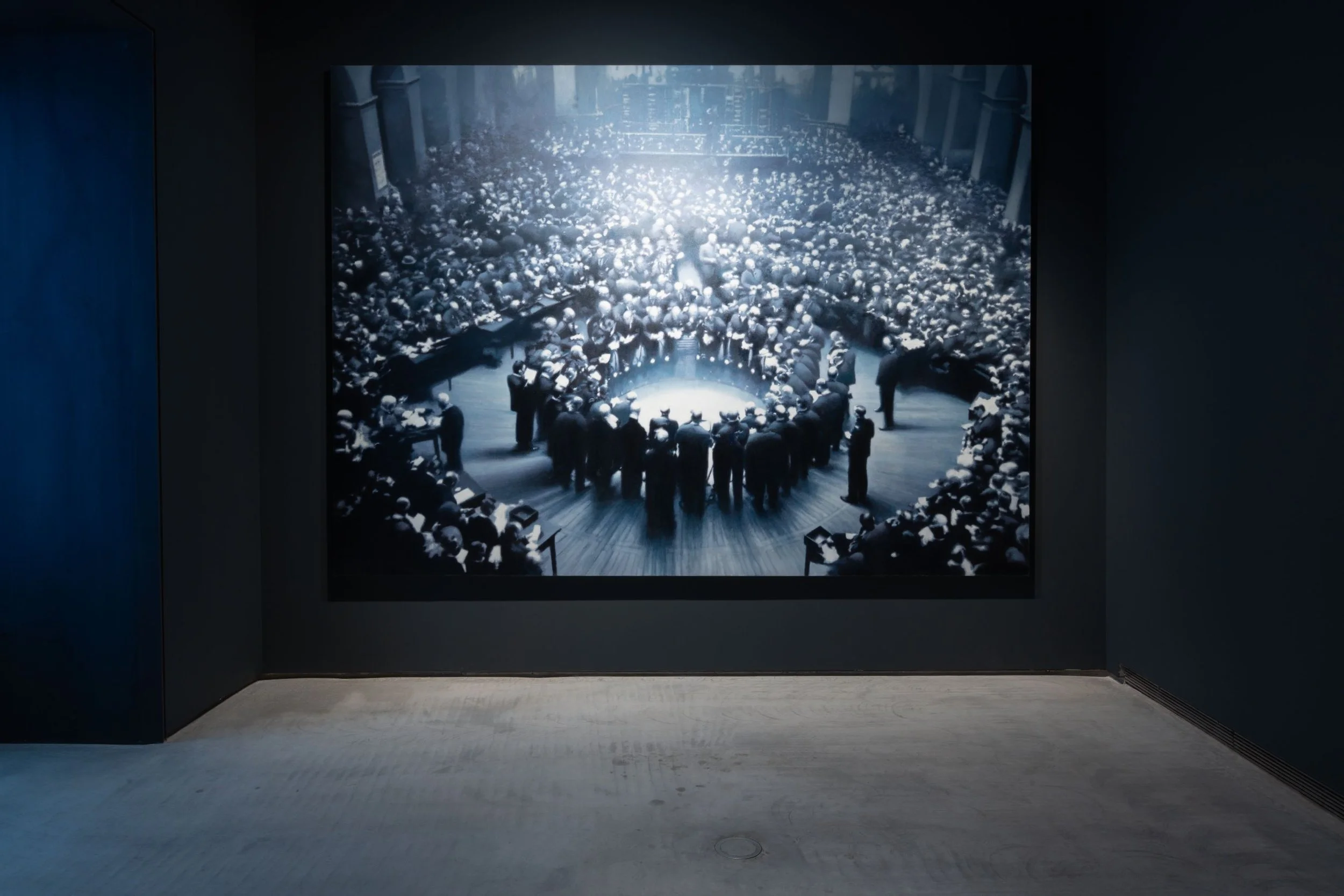
The sensation of moving through the rooms is cumulative. Helnwein's large-format paintings, lit in near-darkness, appear to generate their own light. Characters you recognise from a lifetime of cultural consumption return to you wrong, and the wrongness is the point. Red Duck watches from the corner. A figure from a Los Angeles opera production, now in its first appearance as sculpture, stands in a stairwell. The mural behind it was already there. Nothing in the space is incidental.

What Helnwein has built over his career is not a body of protest art in the conventional sense. Protest art announces its intentions and asks for your agreement. This work does something harder: it invites you to stay with what you would prefer to leave. It asks you to sit with the image of the wounded child not as symbol but as fact, as something happening now, as something that happened to your city, your century, your species. The invitation to conversation that runs through the whole show is real, and it is serious. Mundos Invertidos opens at SOLO Independencia at a moment when the title might as well be a news headline. Helnwein, to his credit, has always known it would come to this.
At SOLO CSV until 16 May, Paul McCarthy presents A&E, Adolf/Adam & Eva/Eve, a long-form project made with German actress Lilith Stangenberg and produced with Hauser & Wirth.
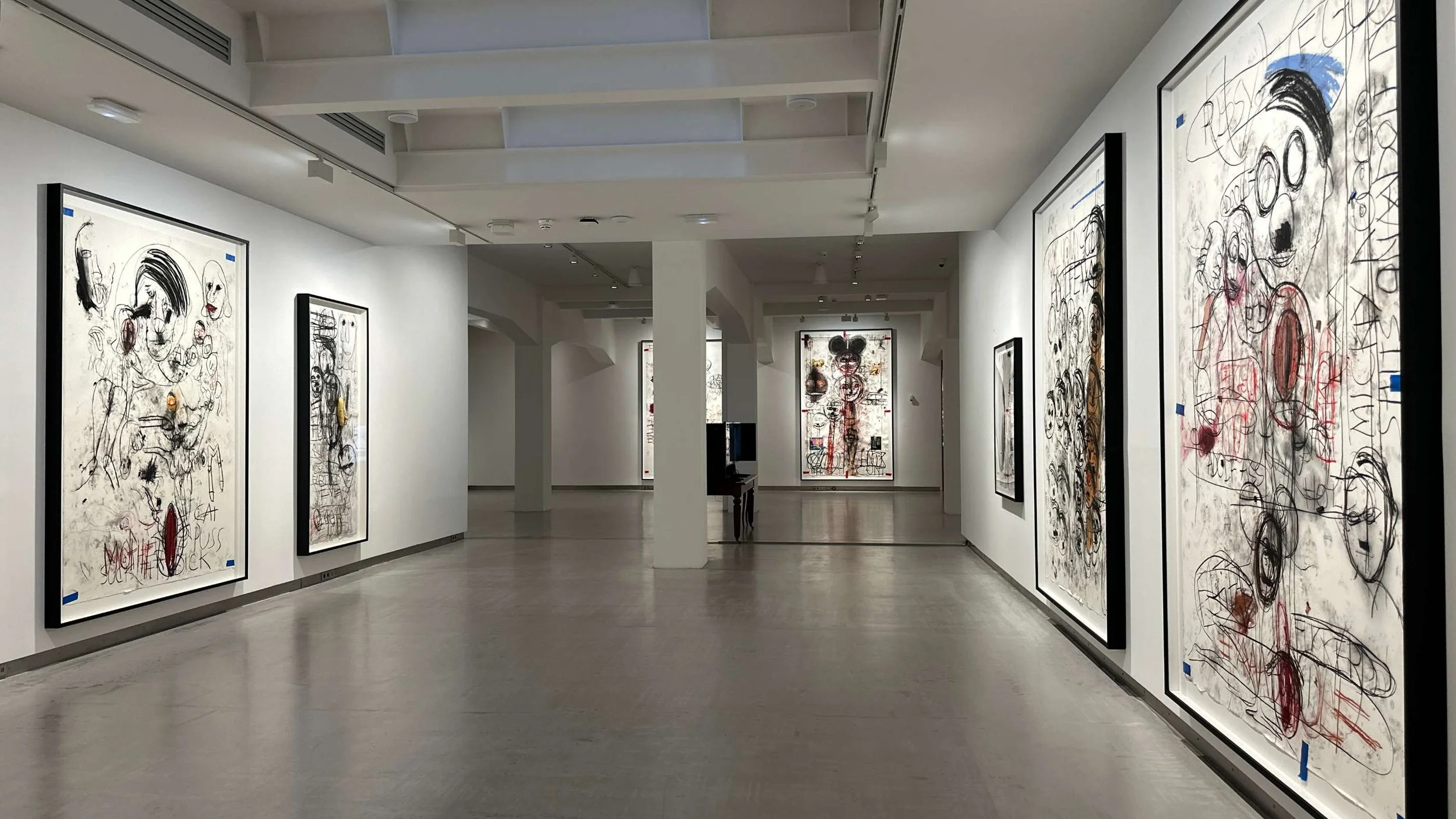
If SOLO Independencia gives you the feeling of the world turned upside down, SOLO CSV, the centre for contemporary art and culture that operates alongside it, gives you something adjacent and equally hard to shake: the sense that the world has always been like this, that the grotesque has always been the default mode of power, and that we have been calling it entertainment for so long that the difference no longer registers. The two spaces, run by collectors Ana Gervás and David Cantolla, sit at different ends of the same urgent conversation. Visiting both on the same day is an experience that accumulates in the body rather than the mind.
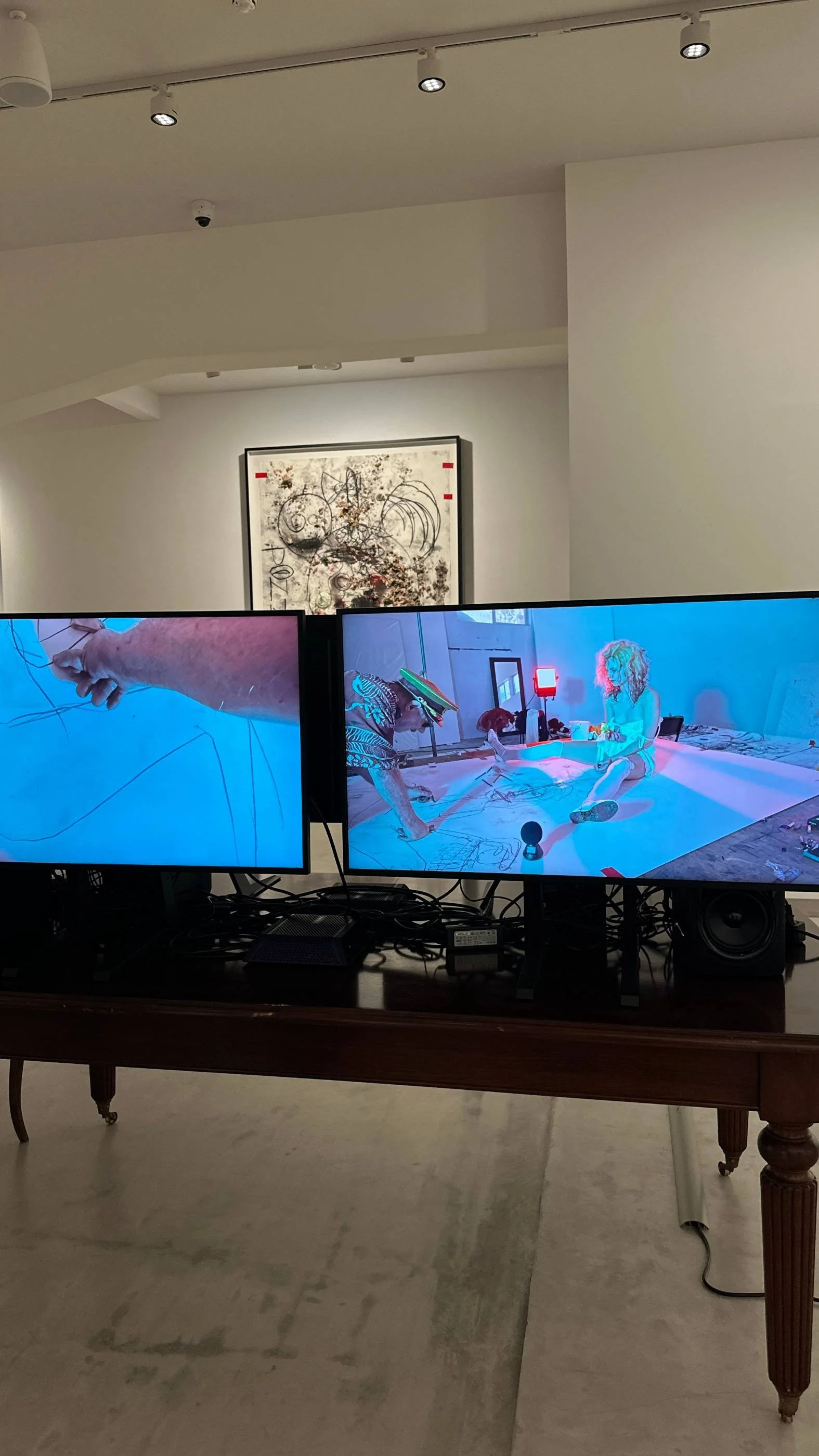
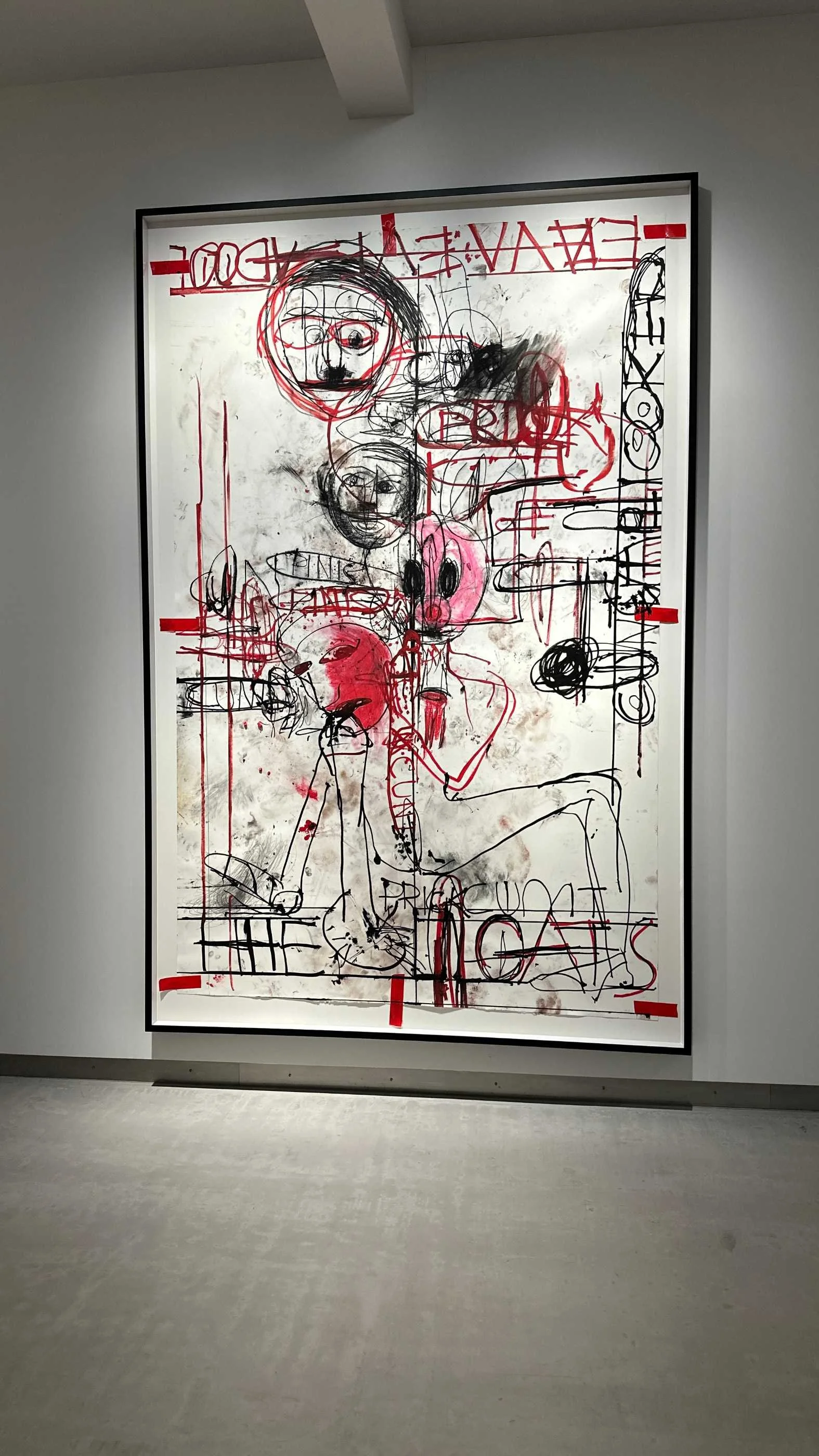
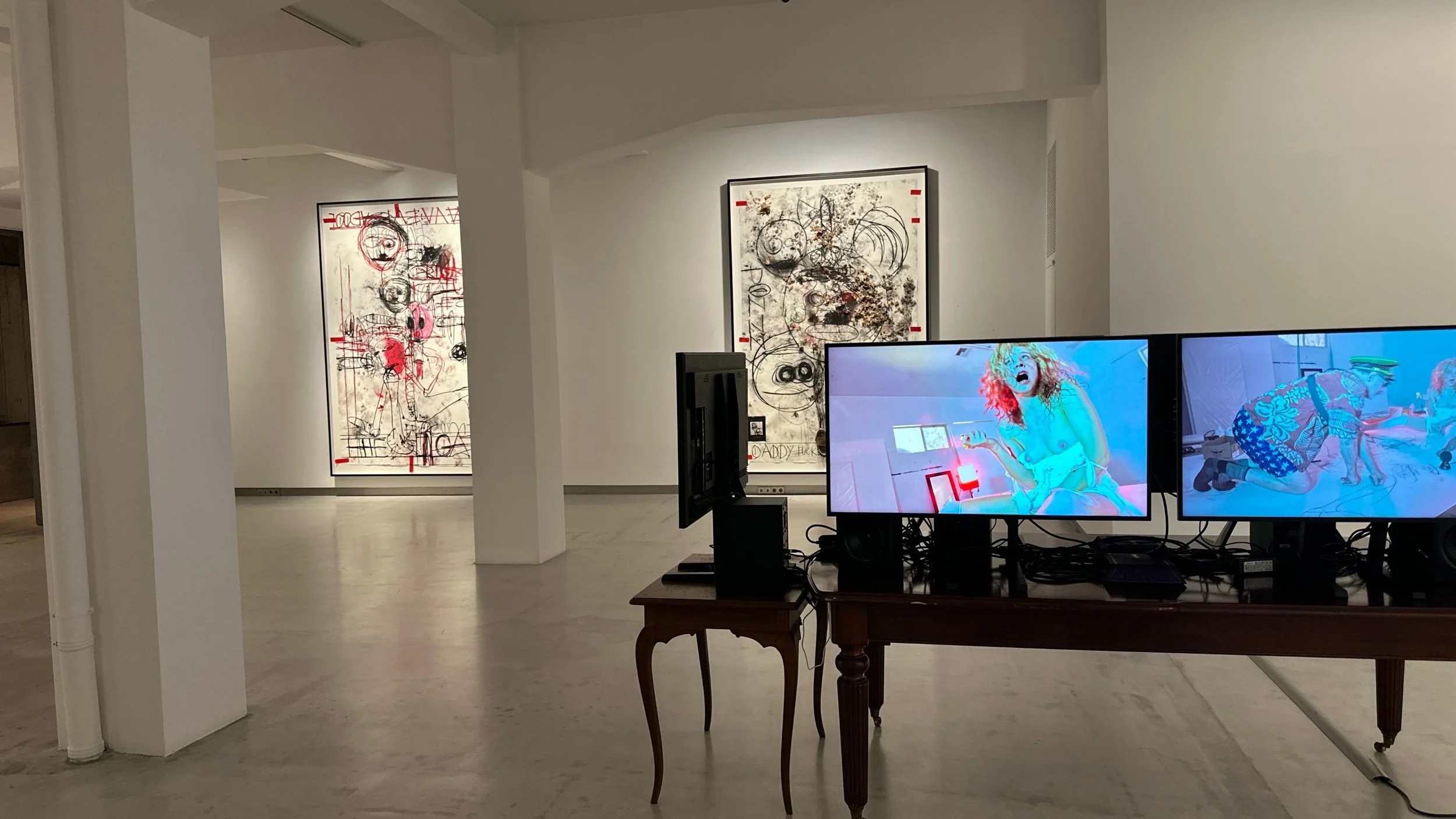
The works on view are large-scale drawings and video performances, born from improvised sessions in which McCarthy and Stangenberg inhabited a pair of roles that refuse to stabilise: Adolf and Eva, Adam and Eve, and running through both, the shadow of Marilyn Monroe, Hollywood, Disneyland, and the American interior that McCarthy has been anatomising for over fifty years. The acronym A&E carries its own dark joke. Art and Entertainment. The two have become, in McCarthy's reading, the same delivery mechanism for the same content.
The project began with a conversation at Berlin's Volksbühne, where McCarthy saw Stangenberg perform and told her she reminded him of the central figure in Liliana Cavani's 1974 film The Night Porter, the psychosexual drama about the relationship between a concentration camp survivor and her former SS guard. Stangenberg told him it was one of her favourite films. From that recognition of a shared reference, and almost as a joke, McCarthy suggested they remake it themselves. The joke became five years of work.
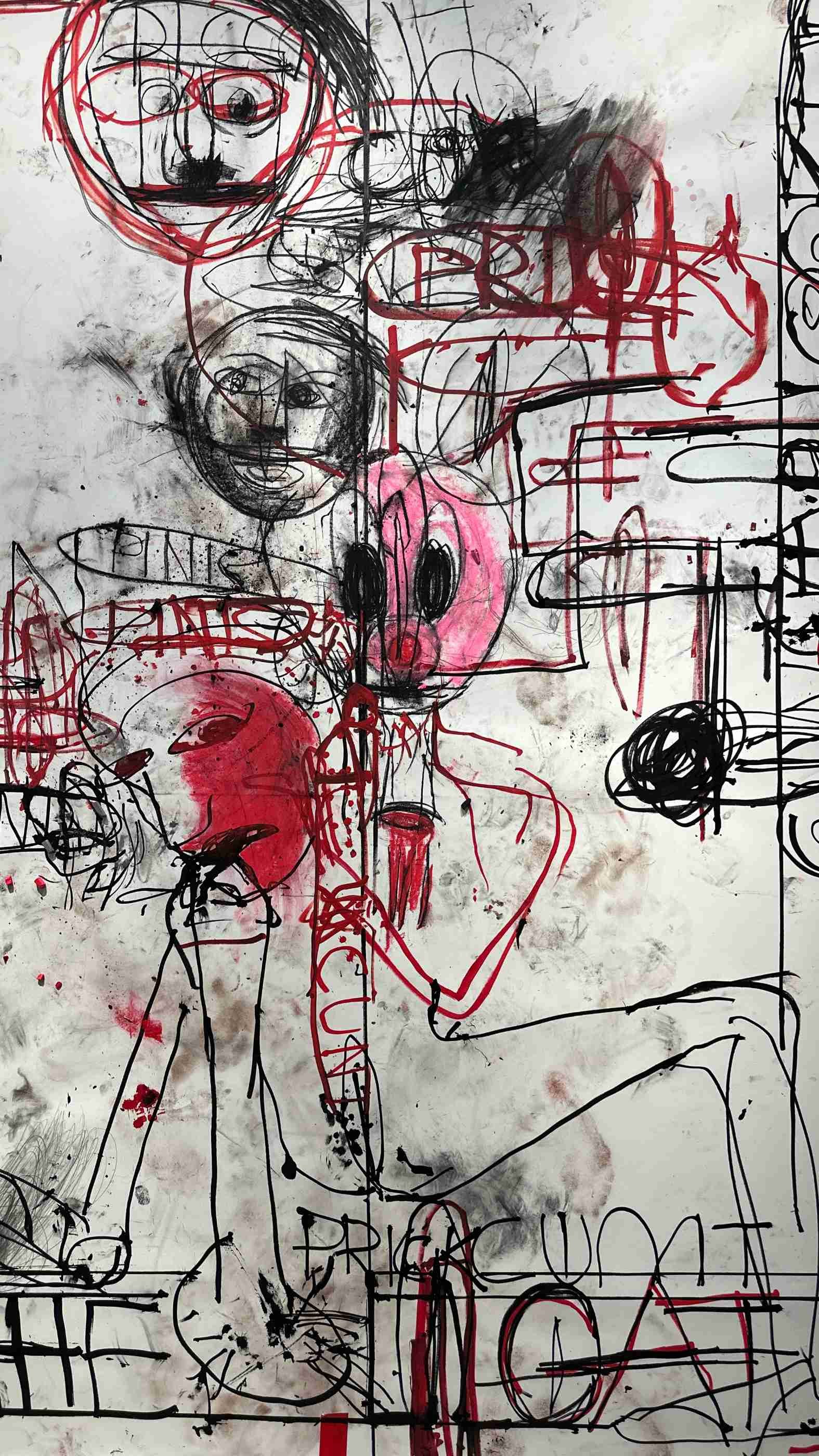
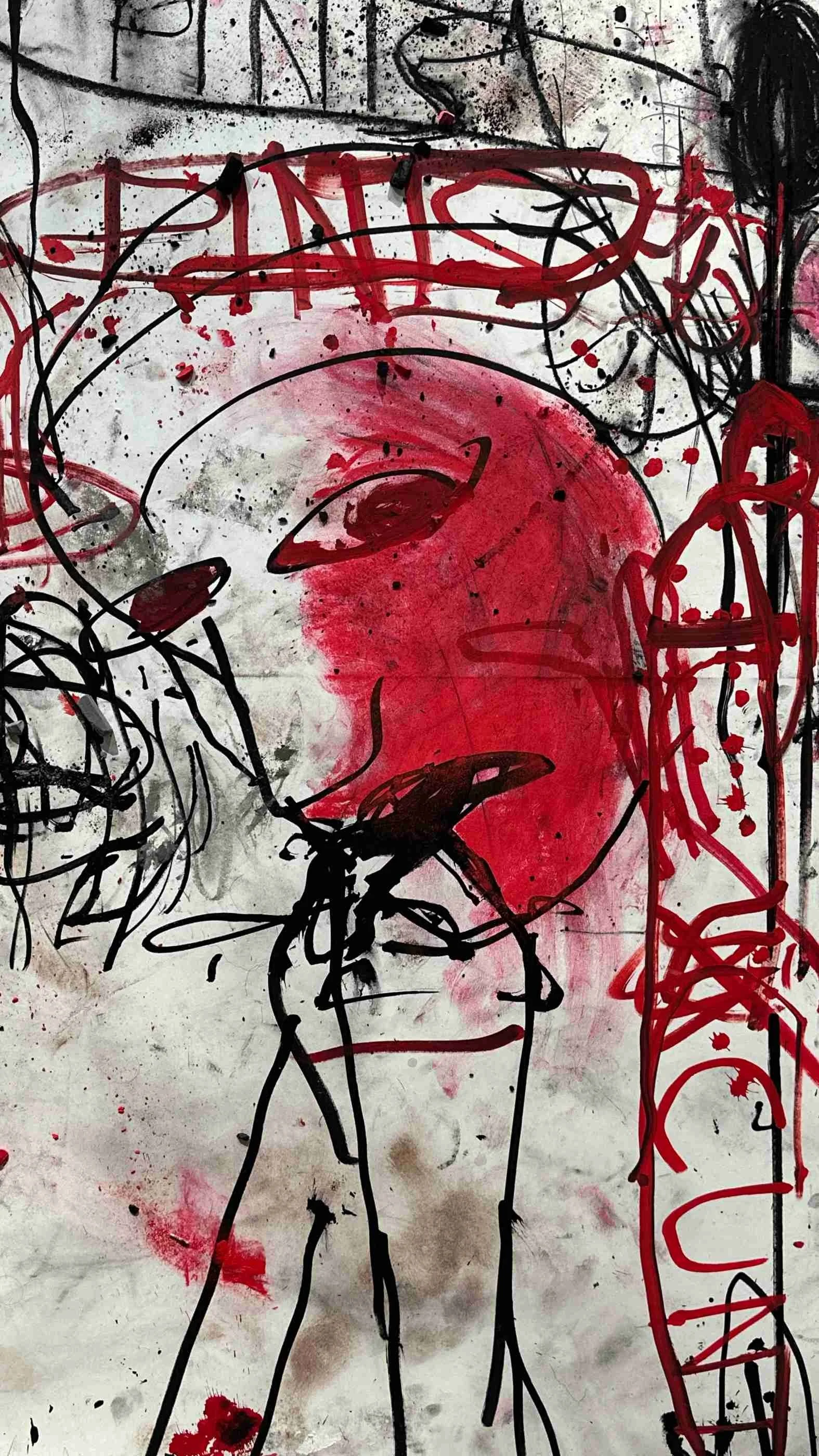
What McCarthy created from that starting point was not a historical drama. It was something closer to a continuous improvisation, structured by loose instructions rather than script: they come home drunk, they have a picnic, they torment each other, they marry, they commit suicide. The drawings made during these sessions are not preparatory sketches. They are direct records of physical action, large and expressive and violent in their mark-making, bearing the traces of Stangenberg's interventions: her body on the paper, her additions, her presence in the image. The line between drawing and performance document collapses entirely.
We are grateful to SOLO for the incredible experience of exploring both their Madrid spaces and for such an avant-garde vision of art as something you truly live inside.
Gottfried Helnwein - SOLO Contemporary
Plaza de la Independencia 5, Madrid
March 25 - December 31, 2026
Paul McCarthy - SOLO CSV
Cta. de San Vicente, 36, 28008 Madrid
March 25 - May 16, 2026
Curators: Sebastian Strenger, David Cantolla, and Rebekah Rhodes.
Words by Donald Gjoka
What to read next