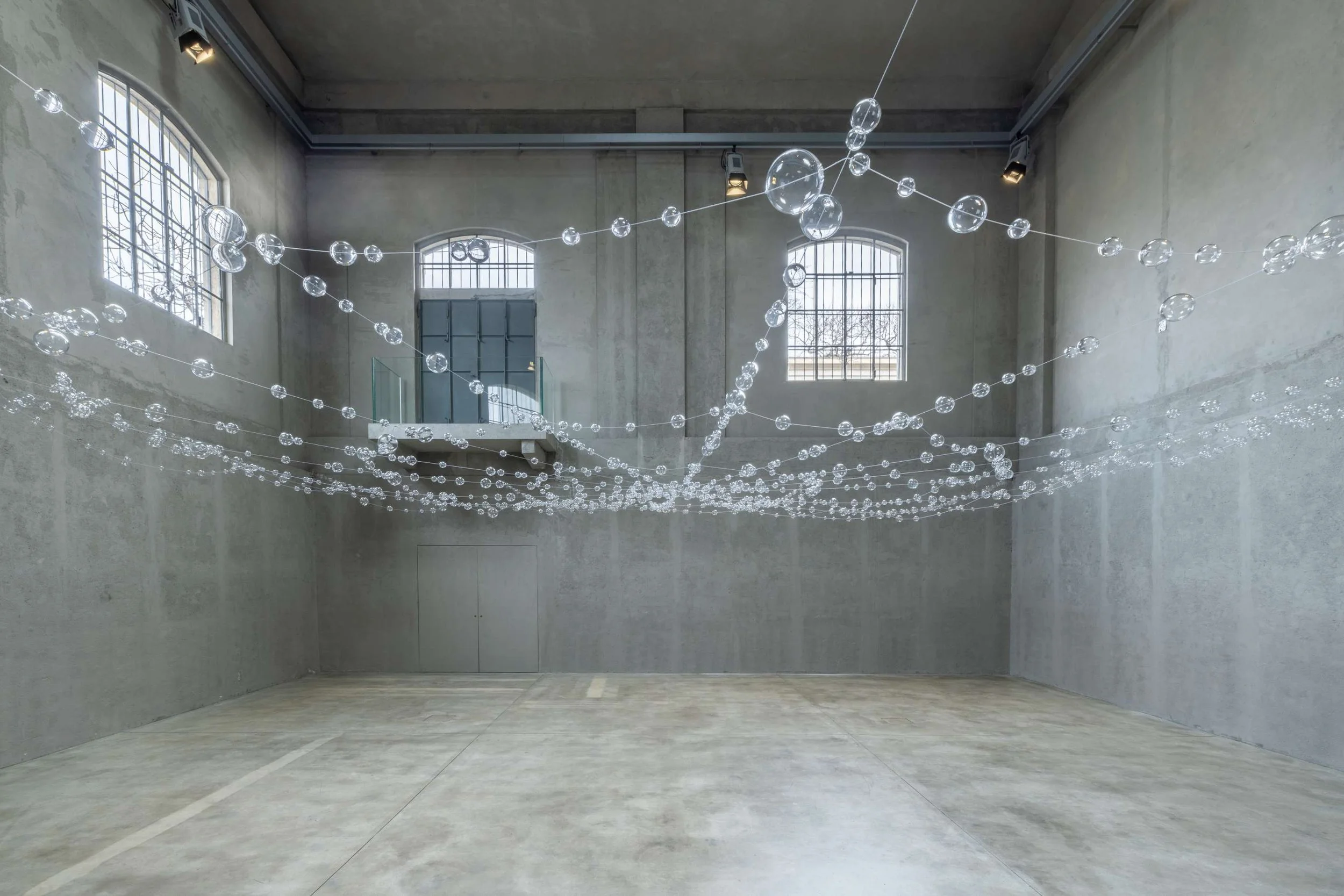
Mona Hatoum at Fondazione Prada
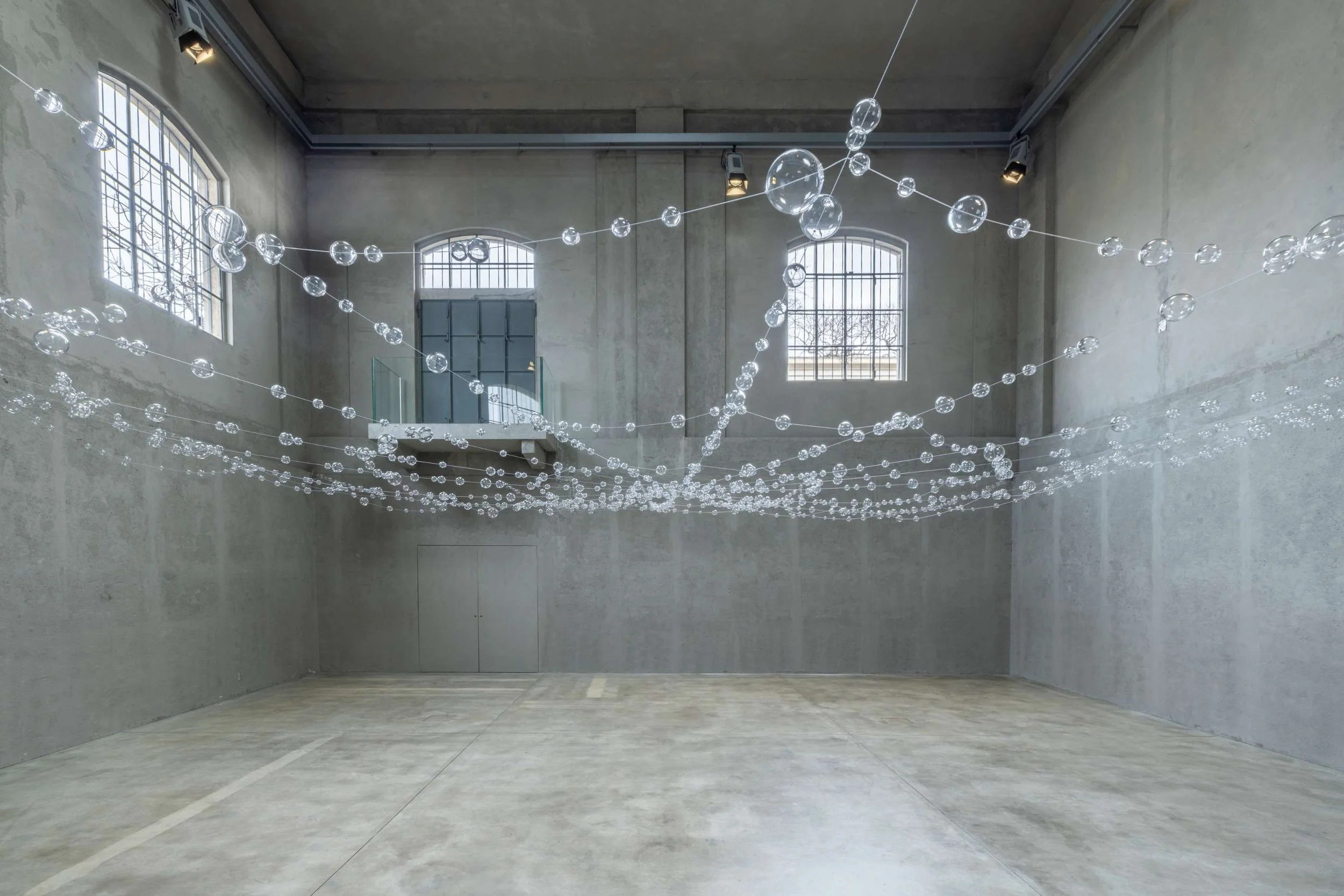
Mona Hatoum selected the Cisterna for her solo exhibition at Fondazione Prada. The building dates to 1909, when it was constructed to house three distillery storage tanks. That industrial function has long since disappeared, but the architecture remains: three imposing rooms with high ceilings and thick walls. Hatoum has installed one major work in each room.
The exhibition takes its title (Over, under and in between) from the physical relationship visitors form with the installations. The phrase points toward the body, toward movement, toward spatial awareness. Hatoum wants viewers to notice not just what they see but where they stand and how the work surrounds them.
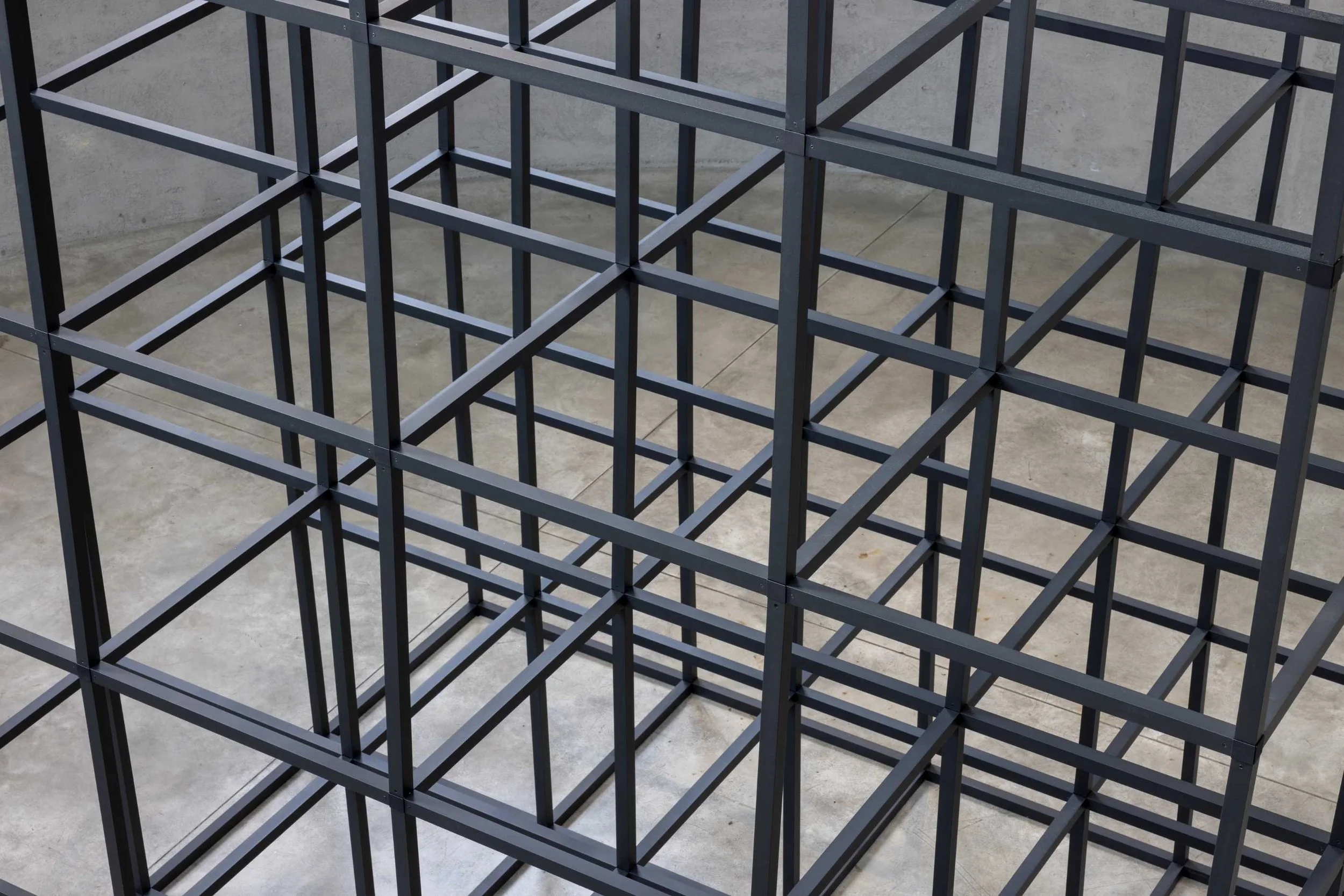
Her shift from performance and video to installation and sculpture happened in the early 1990s. Since then, she has worked with geometry and minimalism: cubes, spheres, grids. She builds systems through repetition and seriality. The works often look clean, elegant, visually appealing. But they also suggest danger, discomfort, vulnerability. Hatoum describes her practice as an "open system": something viewers must interpret themselves. She resists fixed meanings. She wants the work to hold paradoxes, contradictions, multiple readings. She wants flux, not closure.
““I want to create a situation where reality itself becomes a questionable point.””
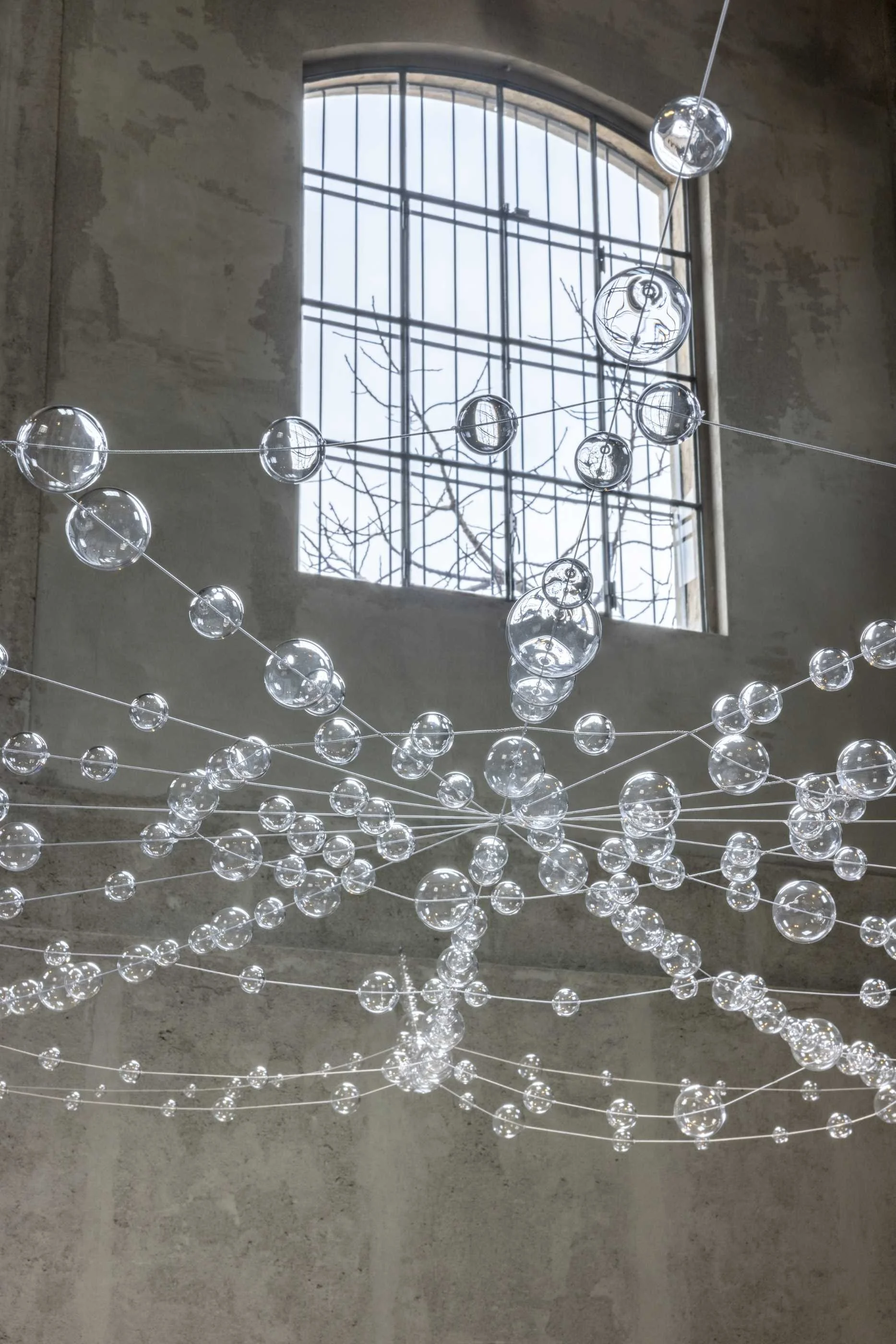
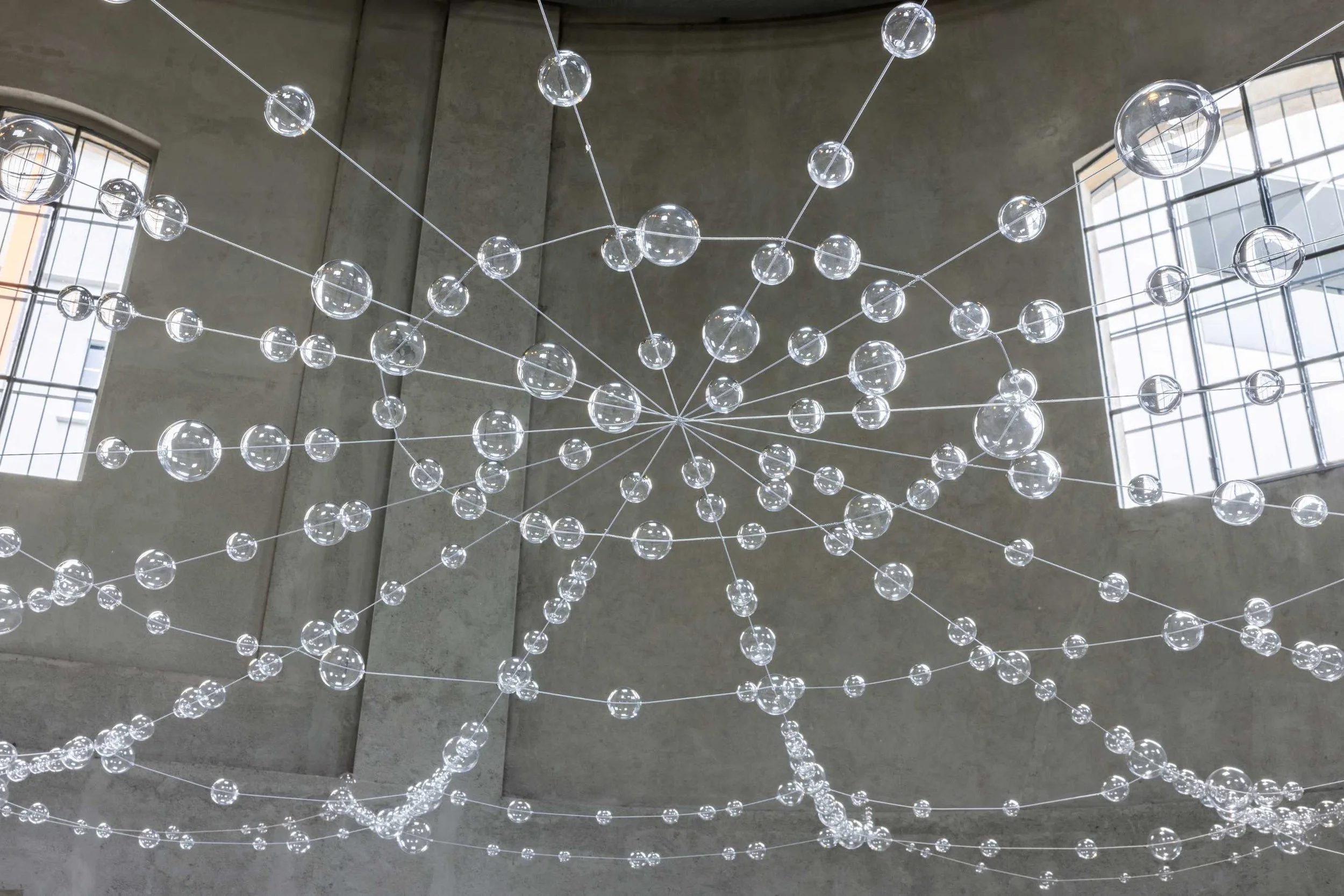
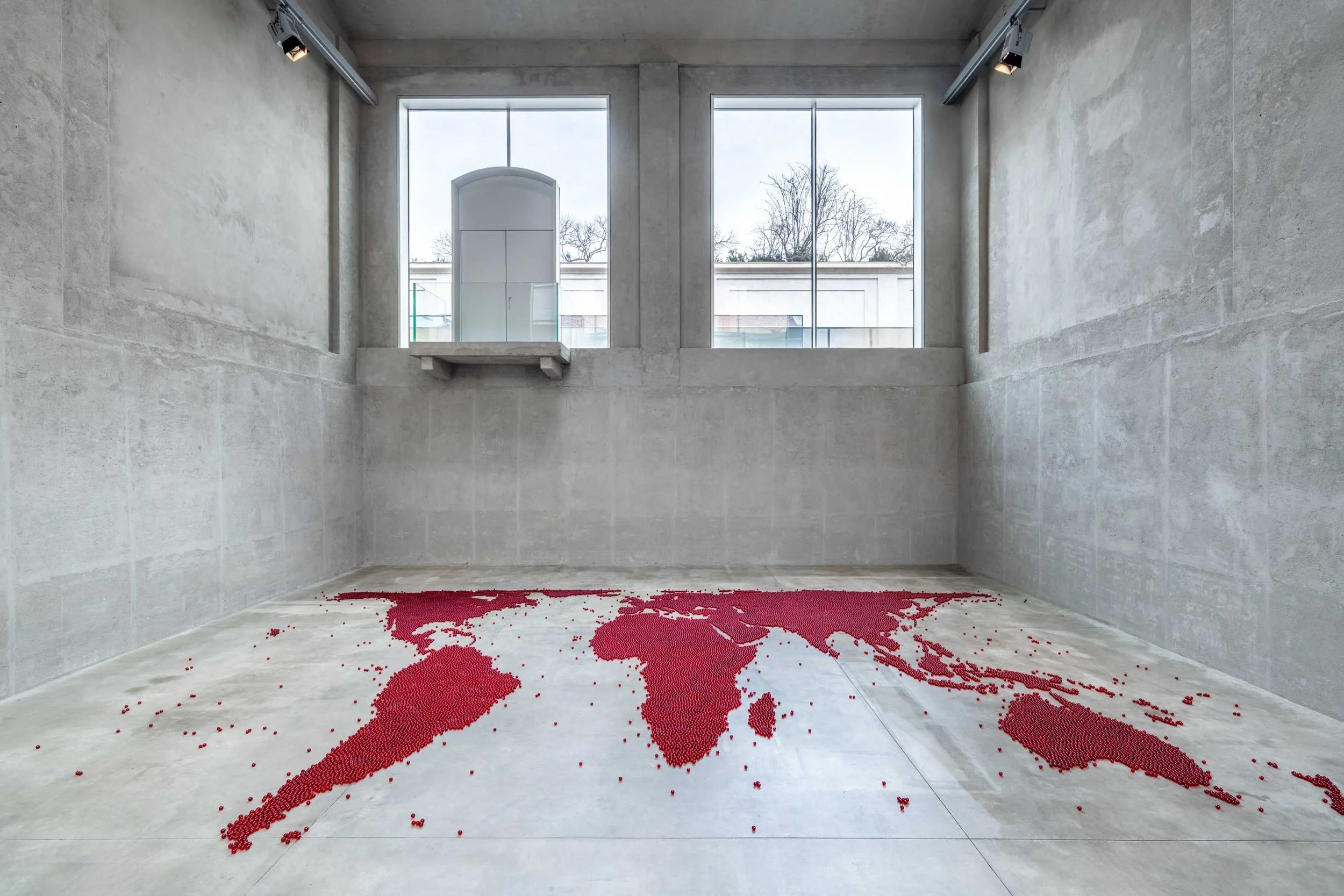
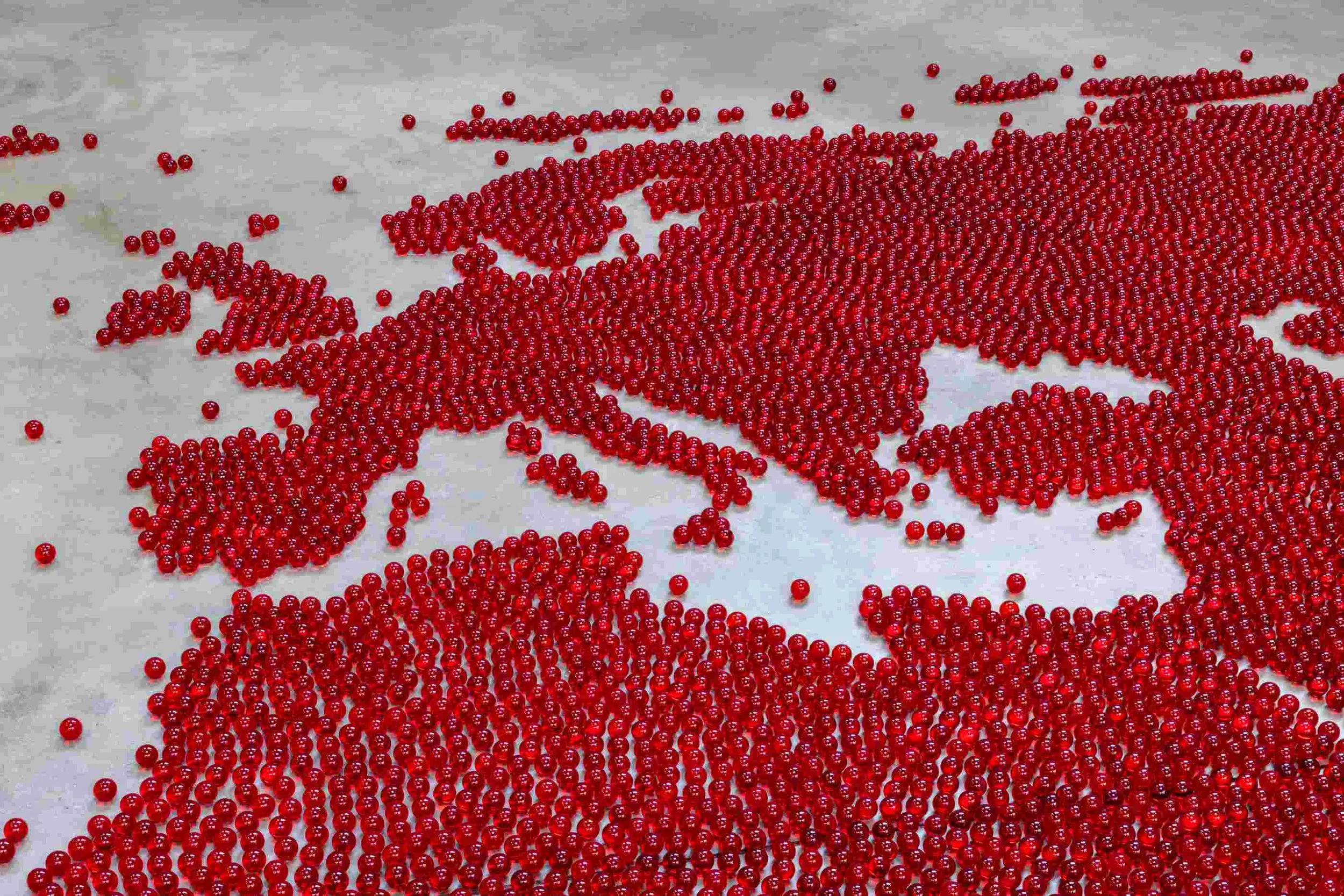
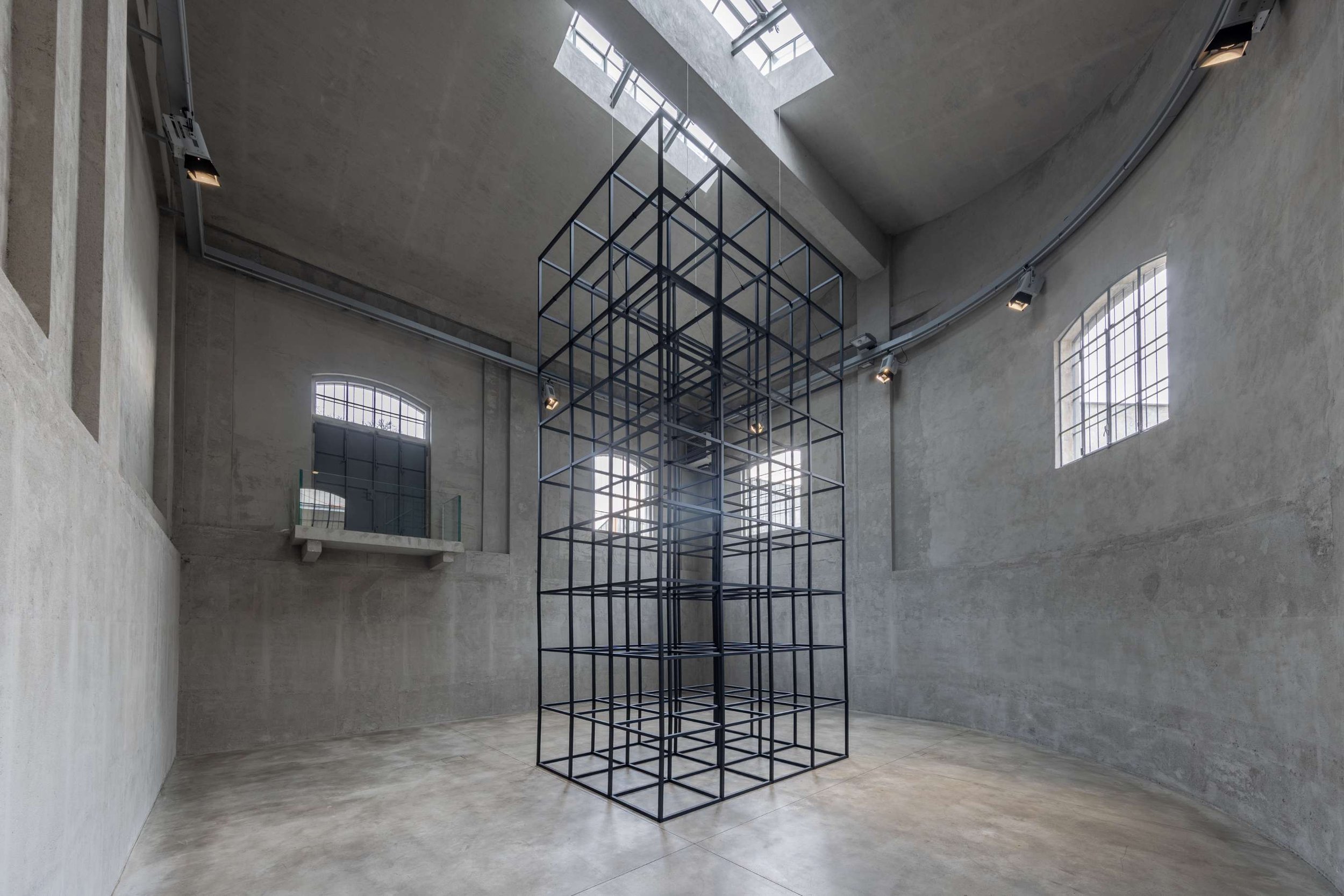
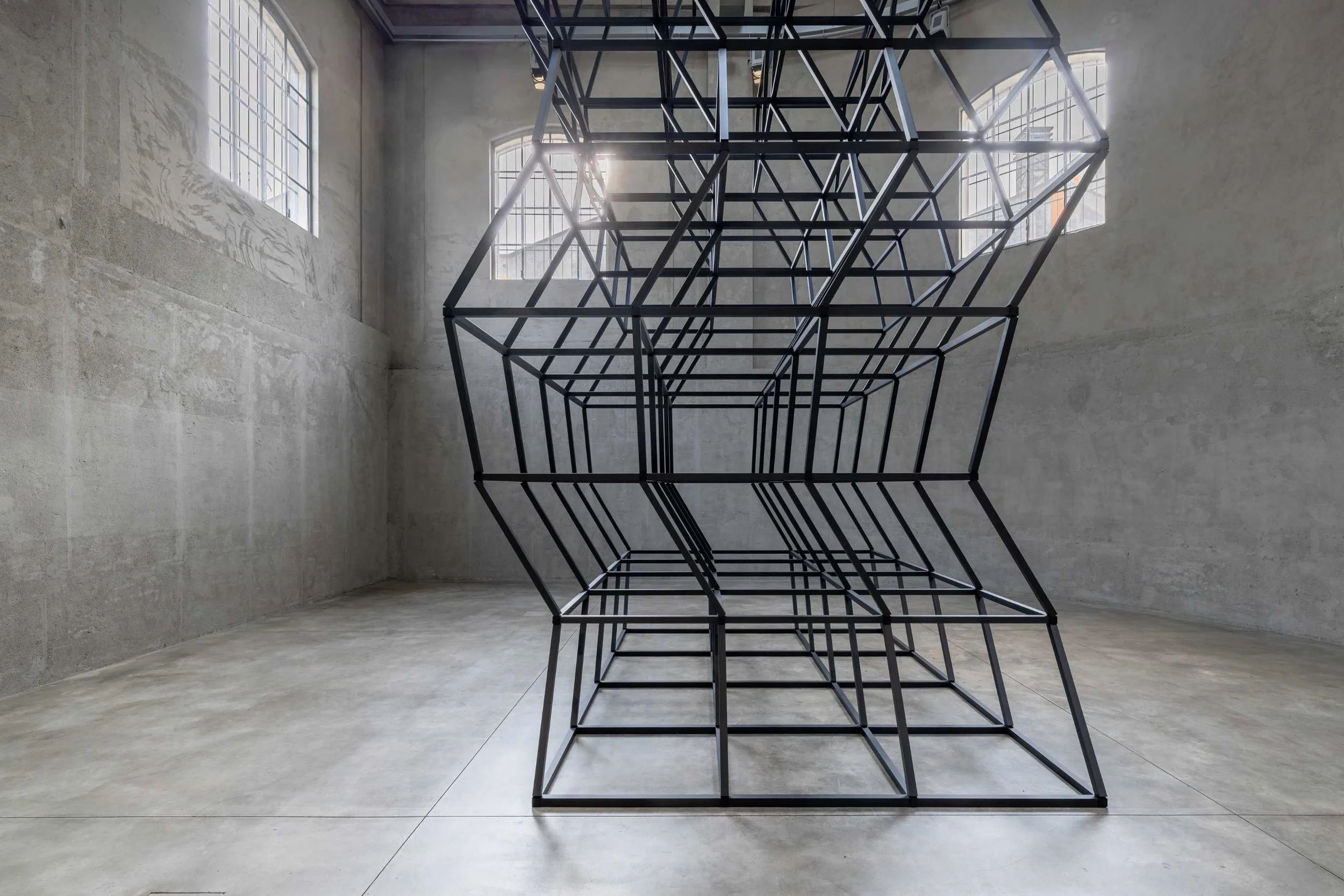
The first room of the Cisterna contains a web made from hand-blown glass spheres. It hovers above visitors like a constellation. What should represent entrapment instead becomes something celestial, luminous. The second room holds a map of the world constructed from more than thirty thousand red glass balls laid across the floor. The continents appear unstable, fragile, ready to collapse. In the third room, a metallic tower rises and buckles in a repetitive cycle, accompanied by mechanical sounds that echo through the space.
Web, map, grid: these are Hatoum's recurring elements. They organize information. They impose structure. But Hatoum uses them to create environments that produce unexpected tension. She wants strong formal presence (clear visual impact), but she also wants the physical experience to activate psychological and emotional responses. "I want to create a situation where reality itself becomes a questionable point," she explains. In the Cisterna, surrounded by glass and metal and geometry, reality does become questionable. The floor feels uncertain. The air feels dense. The space refuses to settle.
Words DONALD GJOKA
What to read next