The Man Who Brought the Antwerp Six to the World
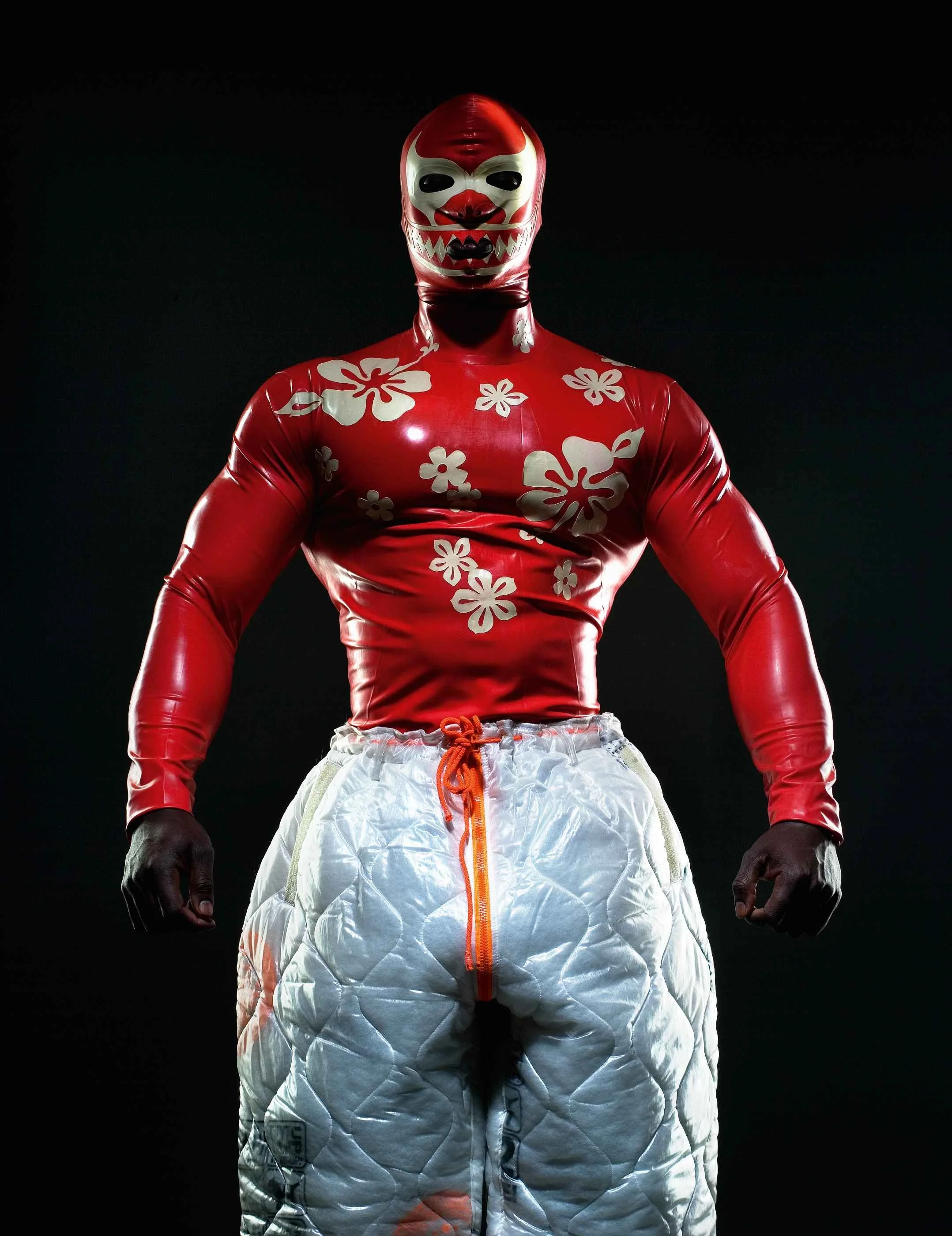
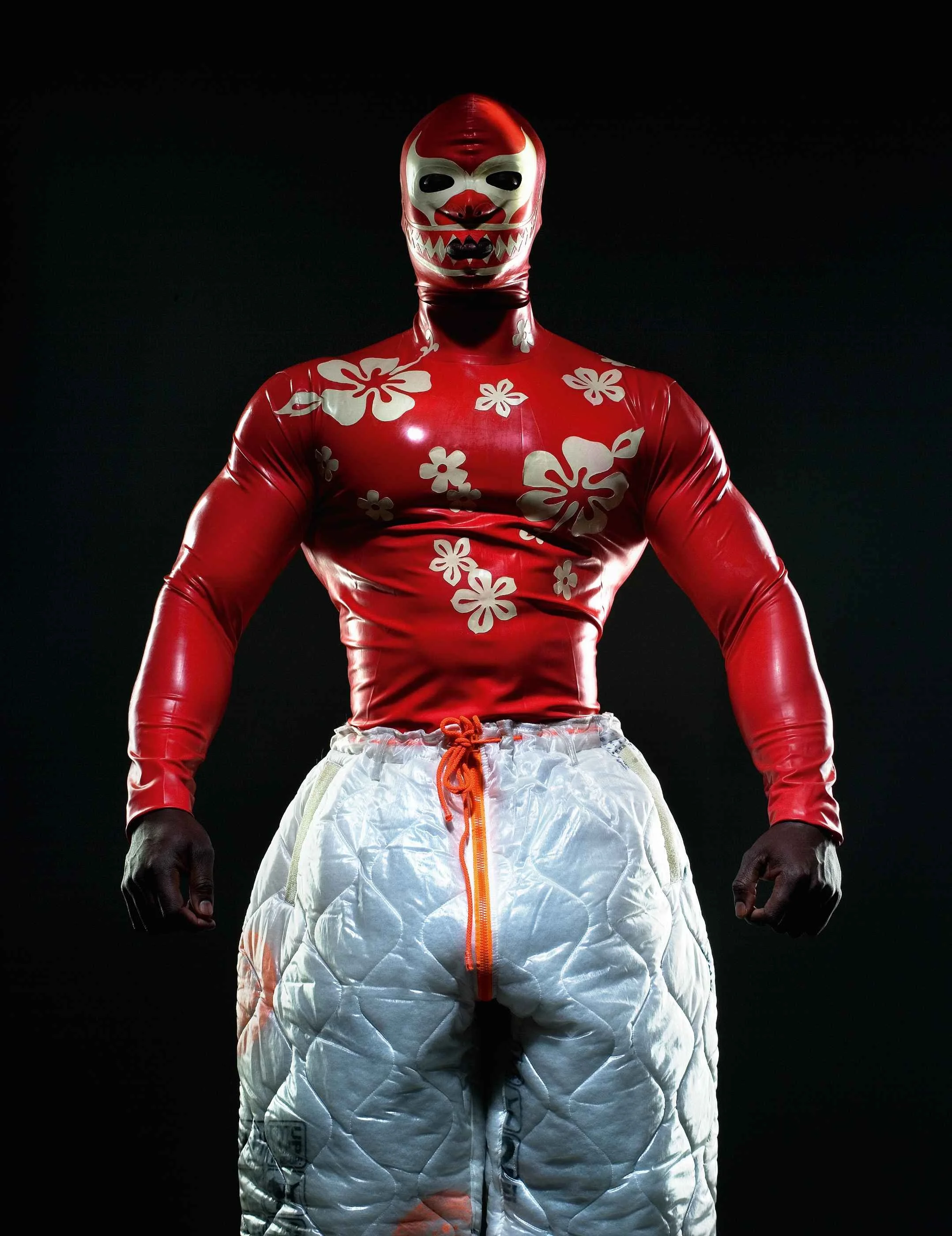
Walter Van Beirendonck, W.&L.T. Paradise Pleasure Productions, Autumn/Winter 1995-1996, © Photo: Ronald Stoops
Opening at MoMu in Antwerp on March 28, 2026, and running through January 17, 2027, The Antwerp Six is the museum’s major exhibition marking forty years since the group’s international breakthrough. Bringing together Dirk Bikkembergs, Ann Demeulemeester, Walter Van Beirendonck, Dries Van Noten, Dirk Van Saene, and Marina Yee, the exhibition traces the trajectory from their education at the Royal Academy of Fine Arts in Antwerp to six singular careers that would leave a lasting mark on contemporary fashion. Rather than reducing the Antwerp Six to a simplified myth, the exhibition resituates their emergence within the broader cultural, artistic, and industrial transformations of the 1970s and 1980s: the impact of punk and New Romanticism, the crisis of the Belgian textile industry, the role of the Golden Spindle competitions, and formative encounters with London, Florence, Paris, and Japan. On the occasion of the exhibition’s opening, I spoke with Geert Bruloot, the curator, retailer, and pivotal advocate whose instinct and commitment helped bring the Antwerp Six to the international stage. The images featured here include exclusive ephemera, materials that demonstrate how the Antwerp Six understood fashion not merely as clothing, but as a fully articulated visual and cultural language.
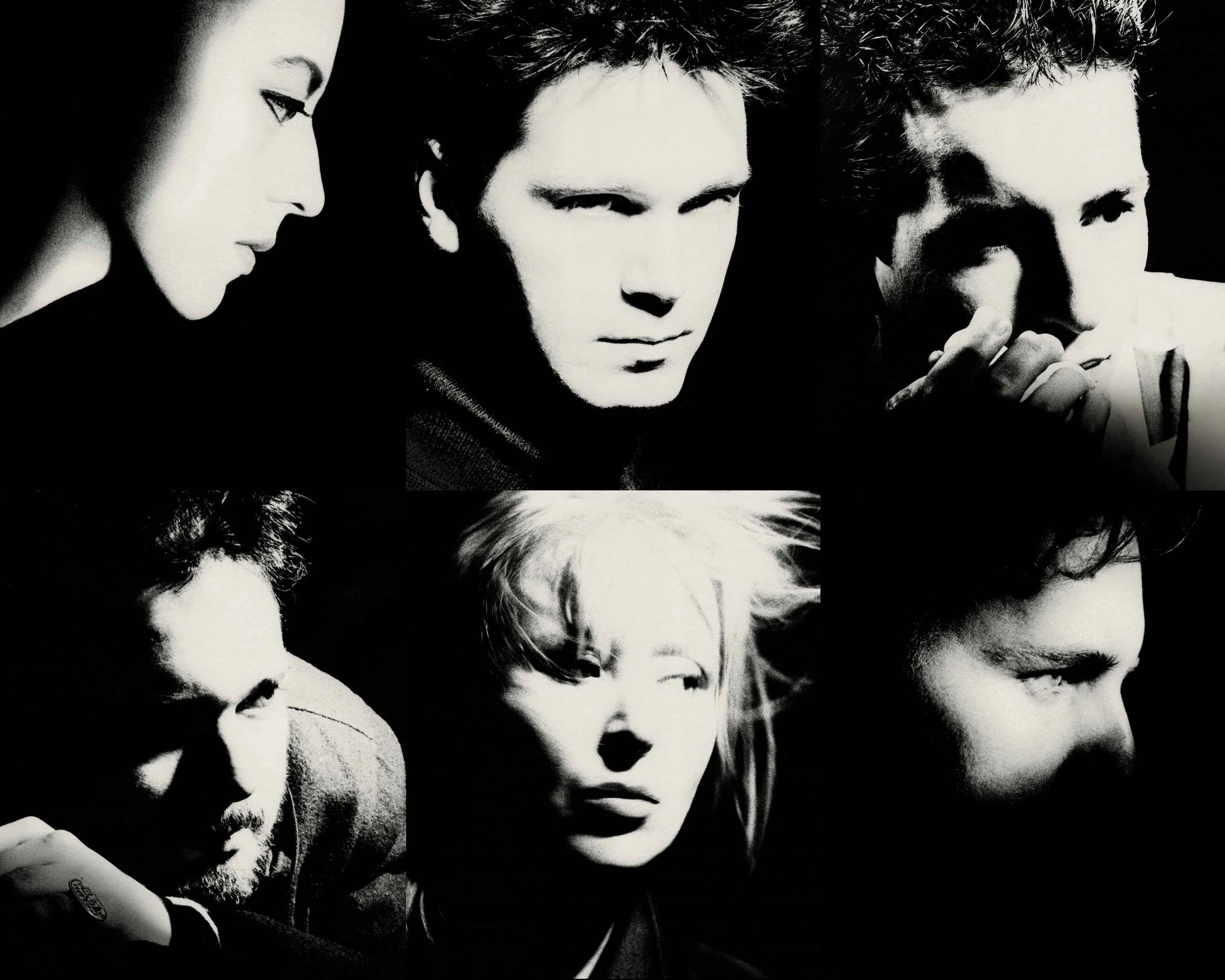
The Antwerp Six, 1985, © Photography: Patrick Robyn
You have often resisted the idea that the Antwerp Six emerged from a single mastermind or a single institution. From your perspective, what was truly happening in Antwerp at that moment?
It was never only about six designers, and it was certainly never only about me. It was an ecosystem. There were photographers, graphic designers, models, retailers, stylists, journalists, club people, and artists. We all sensed that something unusual was happening in Antwerp, and we all wanted to be part of it.
What made it possible was precisely the fact that we had no real fashion infrastructure and no heavy tradition to obey. For us, fashion was not yet a closed system. It still felt open, spontaneous, and full of possibility. We thought in terms of the future because nothing was fixed. And the world was smaller then. You did not have the entire industry on your phone. Discovery still carried weight. That changed the rhythm of things. It gave creativity room to breathe.
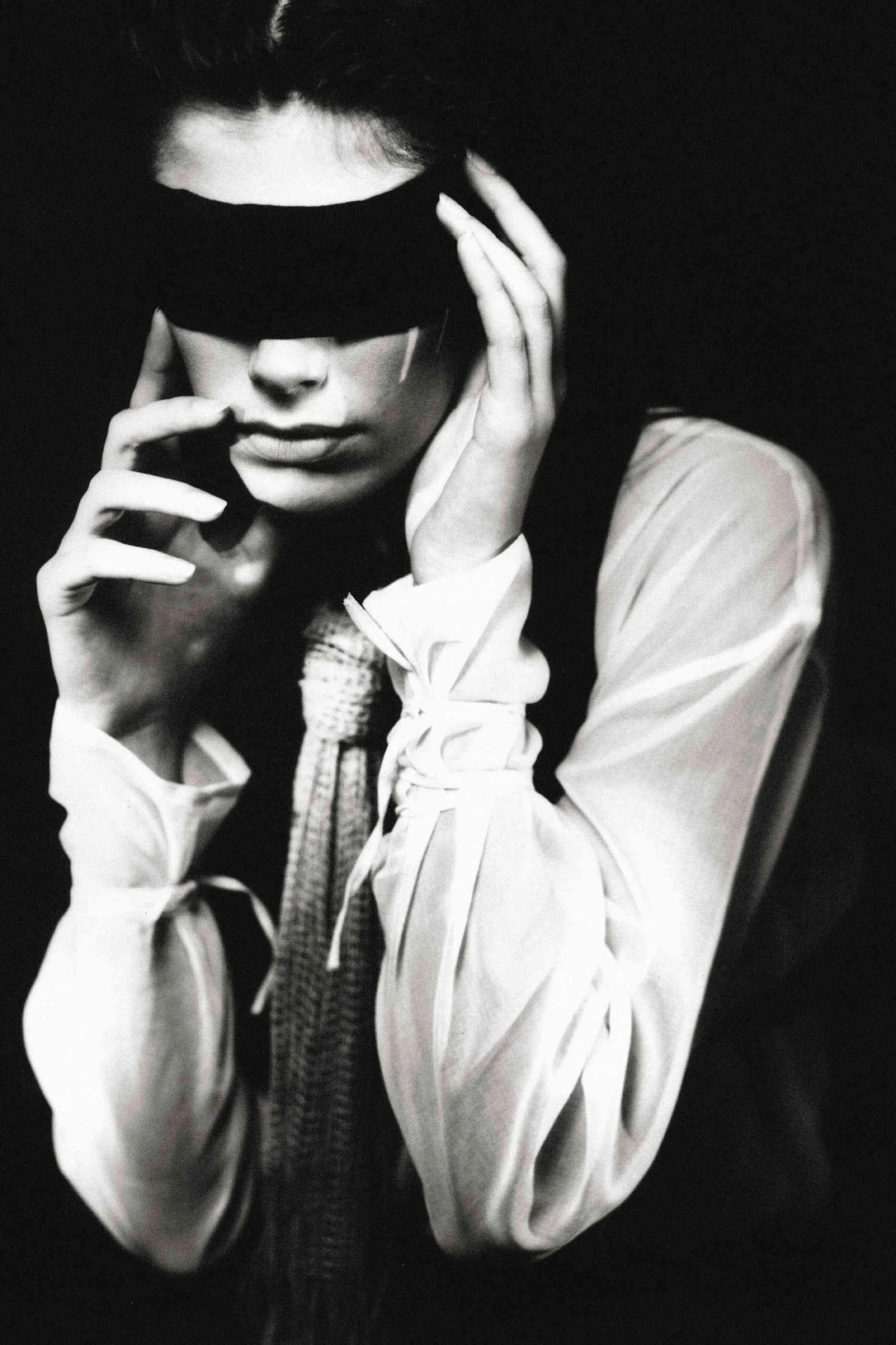
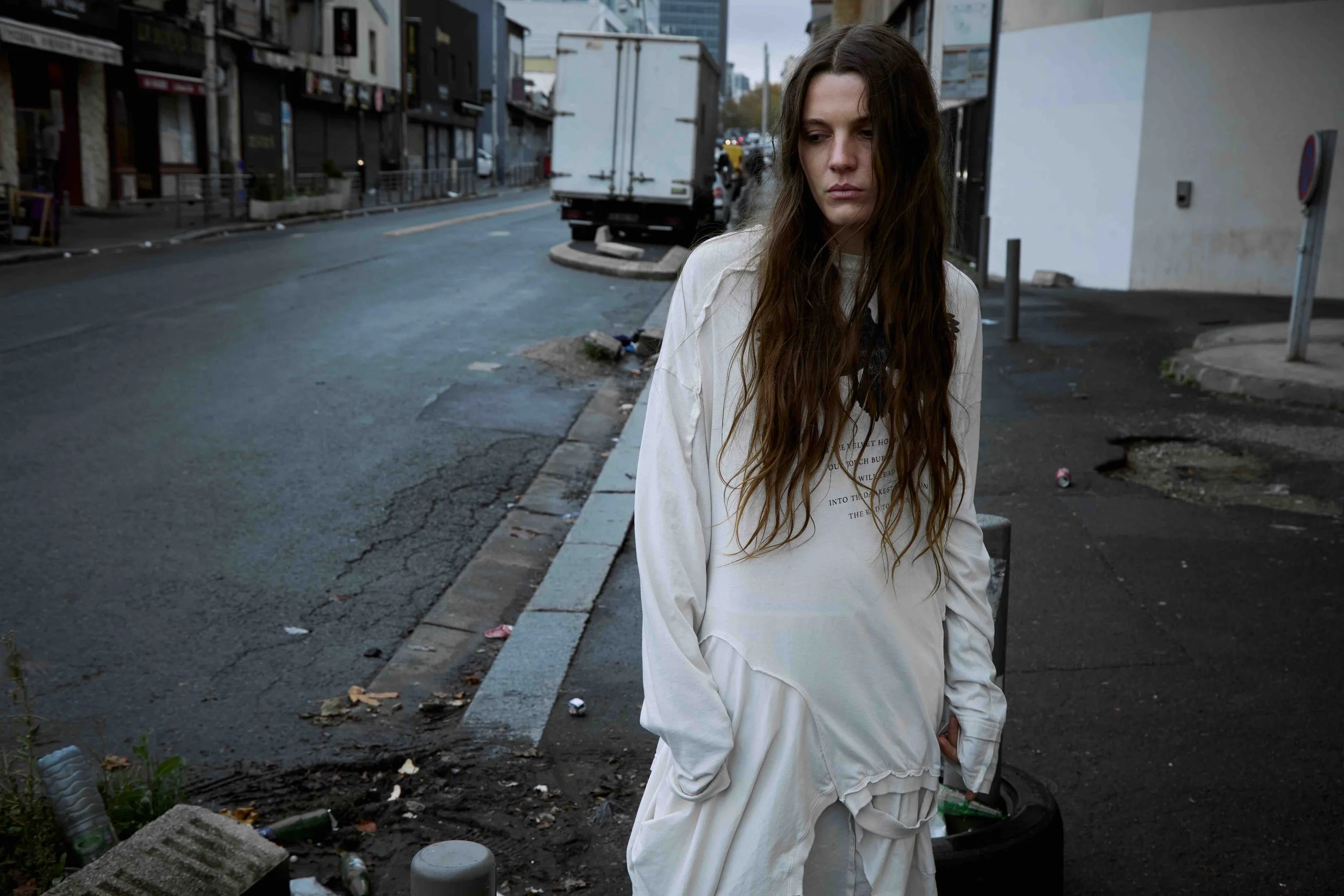
Ann Demeulemeester, Spring/Summer 1990, © Photo: Patrick Robyn
There is a persistent temptation to say that you “made” the Antwerp Six by naming them and taking them abroad. You seem much more cautious than that. What, then, did you actually recognize in them?
I would never say that I made them. Without me, they would still have made their mark. They had the talent, the discipline, and the conviction. They were absolutely determined.
What I recognized was that discovering six designers of that caliber at the same time was exceptional. They were already a group of friends. They moved together, traveled together, and challenged one another. I did not invent that chemistry. I simply saw it very clearly. And because I knew a bit about the fashion system, I also understood that the international market was waiting for a new story. The Antwerp Six became a way of making that energy legible abroad. Each of them could have succeeded individually, but together they arrived with a different force. They did not appear as isolated talents. They appeared as a signal.
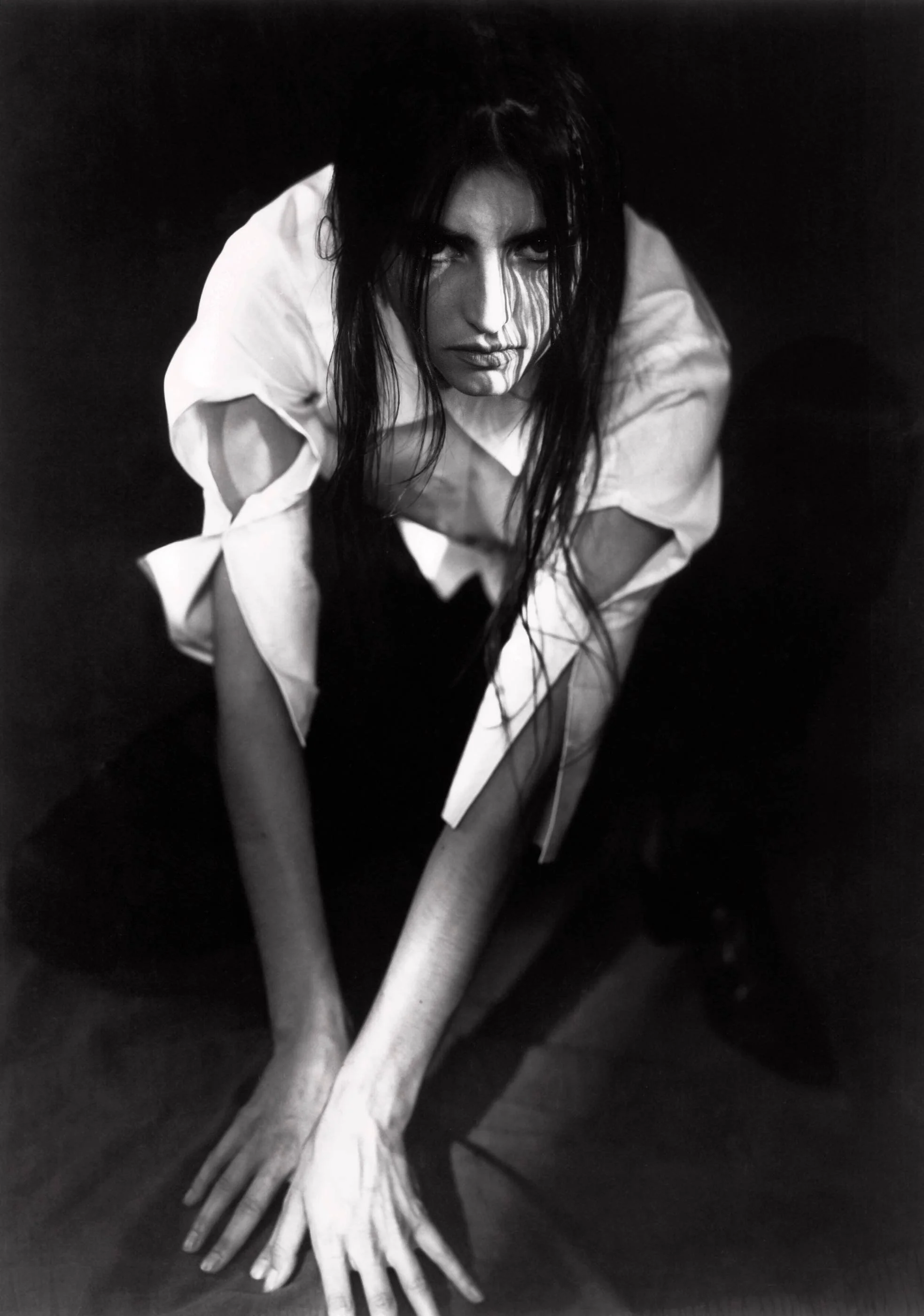
Ann Demeulemeester, Spring/Summer 1990, © Photo: Patrick Robyn
Your stores were part of that signal. Coccodrillo and later Louis were not simply retail spaces. They were acts of cultural framing. What role did they play?
For me, retail was never only business. My instinct has always been that when you discover something vital, you want to show it. That is why I loved display windows, interiors, and the construction of an atmosphere around objects. My partner, Eddy Michiels, had a more pragmatic eye for business, and fortunately that balance existed between us.
Coccodrillo was a store that carried designer shoes from different places. Louis, when it opened in 1986, was different. It was devoted exclusively to Belgian designers. Even before the whole structure was fully in place, we were already buying collections and thinking, We will find the space, we will build the context, we will make it visible. Everything happened fast. There was a productive urgency then. We barely slept.
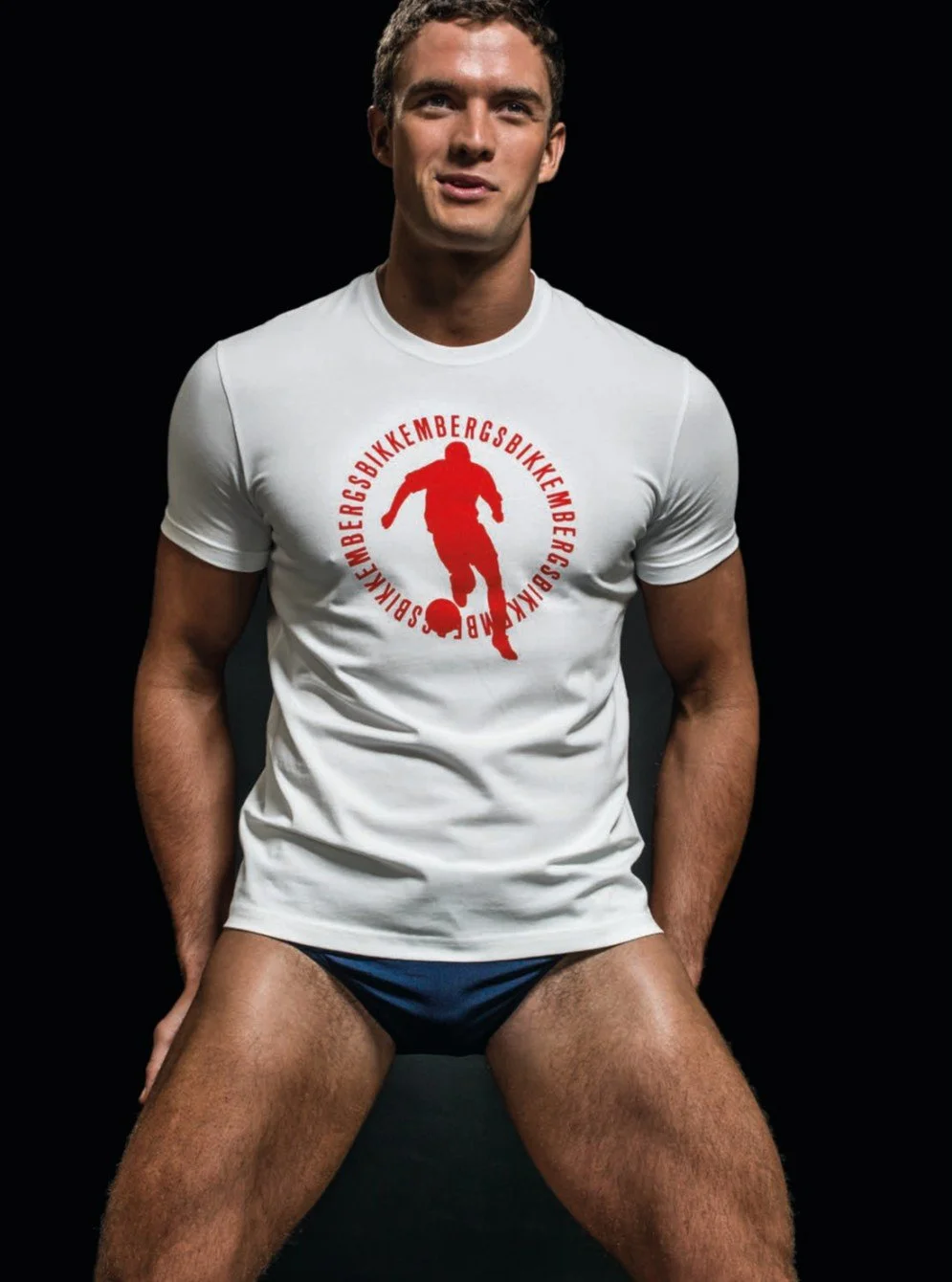
Dirk Bikkembergs, Spring/Summer 2008, © Photo: Luc Williame
The British Designer Show in London in 1986 has entered fashion history as a turning point. Behind the mythology, was there a precise moment when you understood that the breakthrough was real?
Yes. Very clearly.
On the first day, we realized we had been given a terrible location. We were on the second floor, in the wrong place, surrounded by bridalwear. So we made our own flyers and distributed them downstairs ourselves. On the second day, around noon, the international fashion press arrived. Television crews arrived. Buyers arrived. And they all asked the same question: Who are you? Where do you come from? How is it possible that we have never heard of you?
That was the moment.
Then Barneys came, and that mattered enormously. When Barneys bought several collections, it gave the designers an entry point into the American market. In those years, one serious store could alter your international visibility. It was not only a sale. It was confirmation. And that confirmation opened other doors.
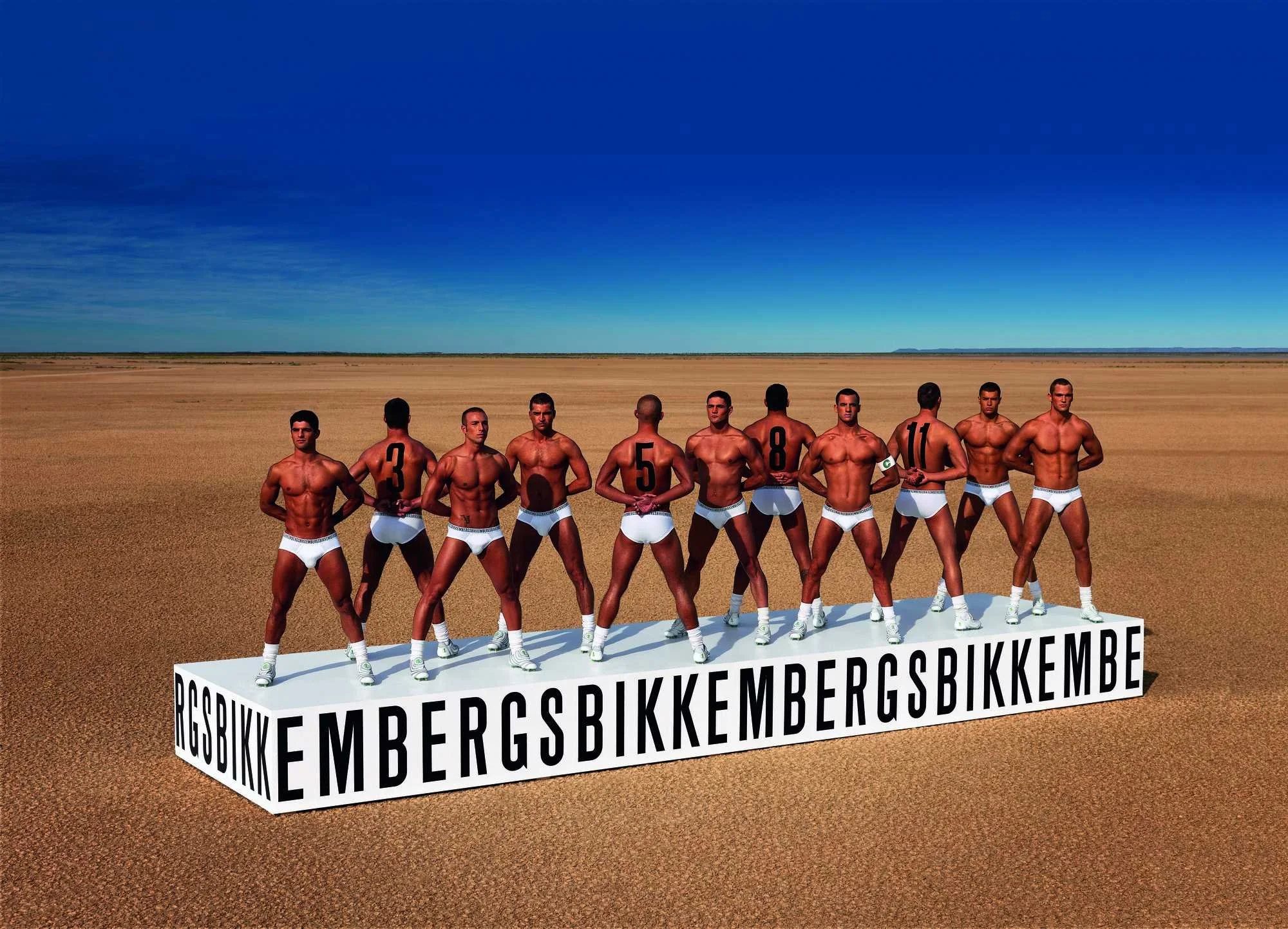
Dirk Bikkembergs, Eleven European football players, photographed in the Karoo Desert, South-Africa, 10-17 june 2008, © Photo: Luc Williame
Japan, however, seems to have understood the Six almost instinctively from the very beginning. Why was that relationship so immediate?
Because Japan had, and still has, an extraordinary sensitivity to fashion. Not only to style, but to craft, construction, finish, and the total grammar of a collection. The Japanese understood very early that these designers were not merely producing clothes. They were producing a language, an attitude, a way of thinking through dress.
There was also a deep respect for craftsmanship, and I think that created an immediate bridge. Even today, when you speak in Japan about Belgian fashion, people know exactly what you mean. That connection has never disappeared.
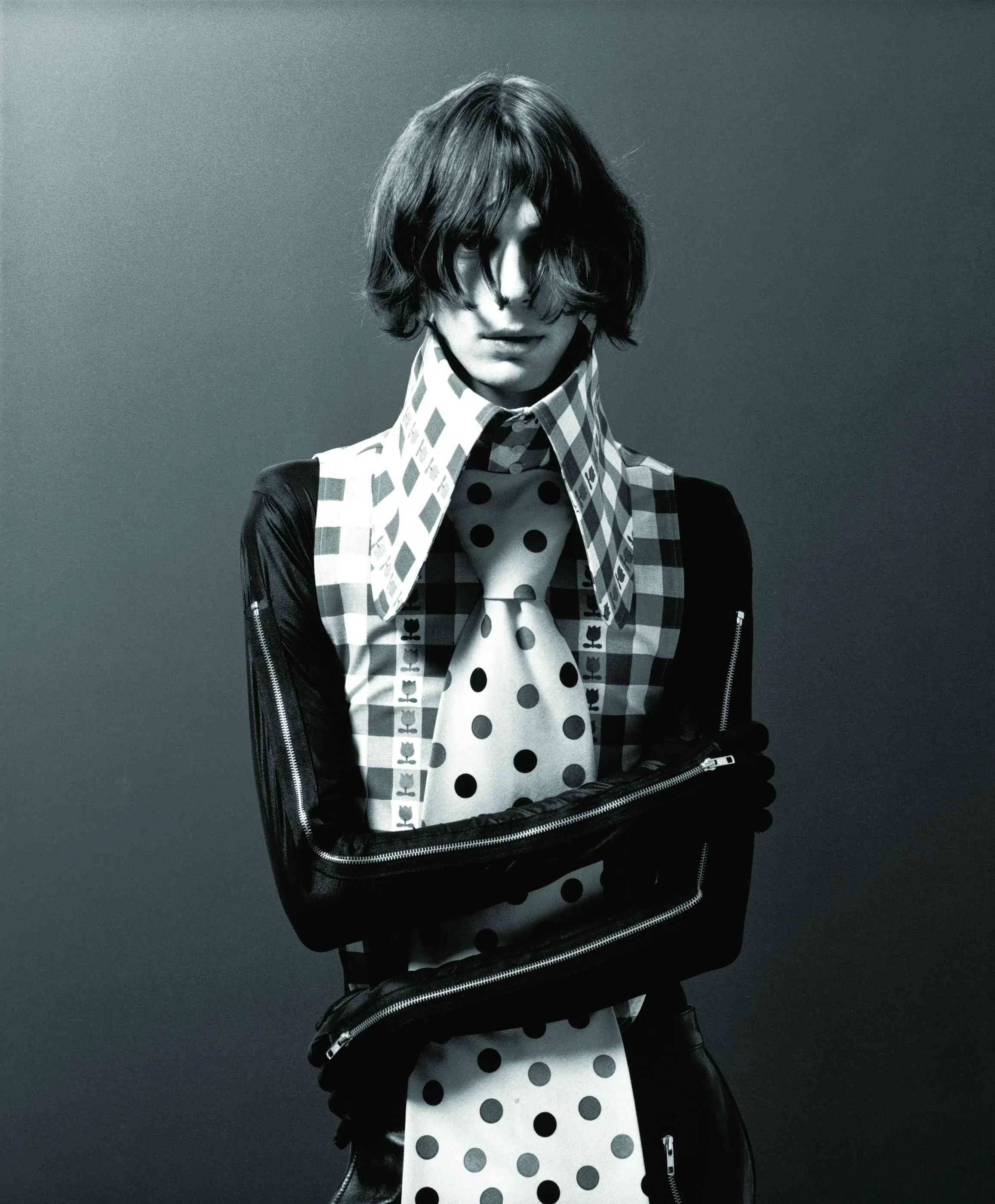
Walter Van Beirendonck, REVOLUTION, Autumn/Winter 2001-2002, © Photo: Elisabeth Broekaert
The Six are often discussed as a group, but visually they were never unified. They did not share one vocabulary. So what really held them together?
What united them was not a common aesthetic. On the contrary, they were profoundly different. It was not a collective in the strict sense, nor was it some kind of romantic brotherhood. Some were more solitary than others. Martin Margiela and Marina Yee, for example, were often more on their own. Dirk Bikkembergs also had a strong independent streak.
But there was a healthy friendship, and there was a very strong dynamic of mutual challenge. One would make a better drawing, stage a more daring presentation, invent a sharper silhouette, and the others would think, Now I must do better. So there was both support and rivalry, in the best possible sense. They pushed one another upward.
And when something serious was at stake, they stood together. That mattered. They could all go home and return to their own worlds, but under pressure they became six.
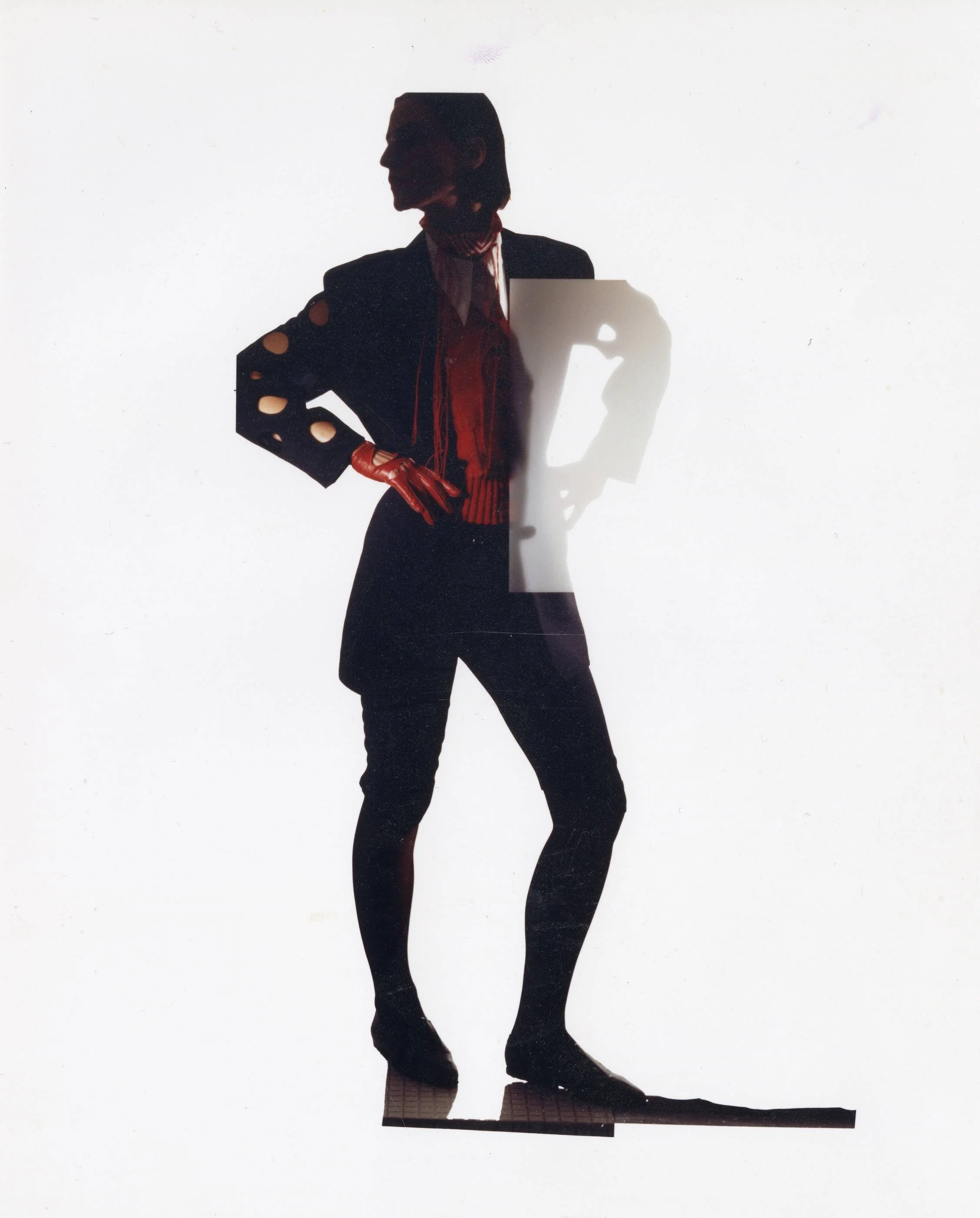
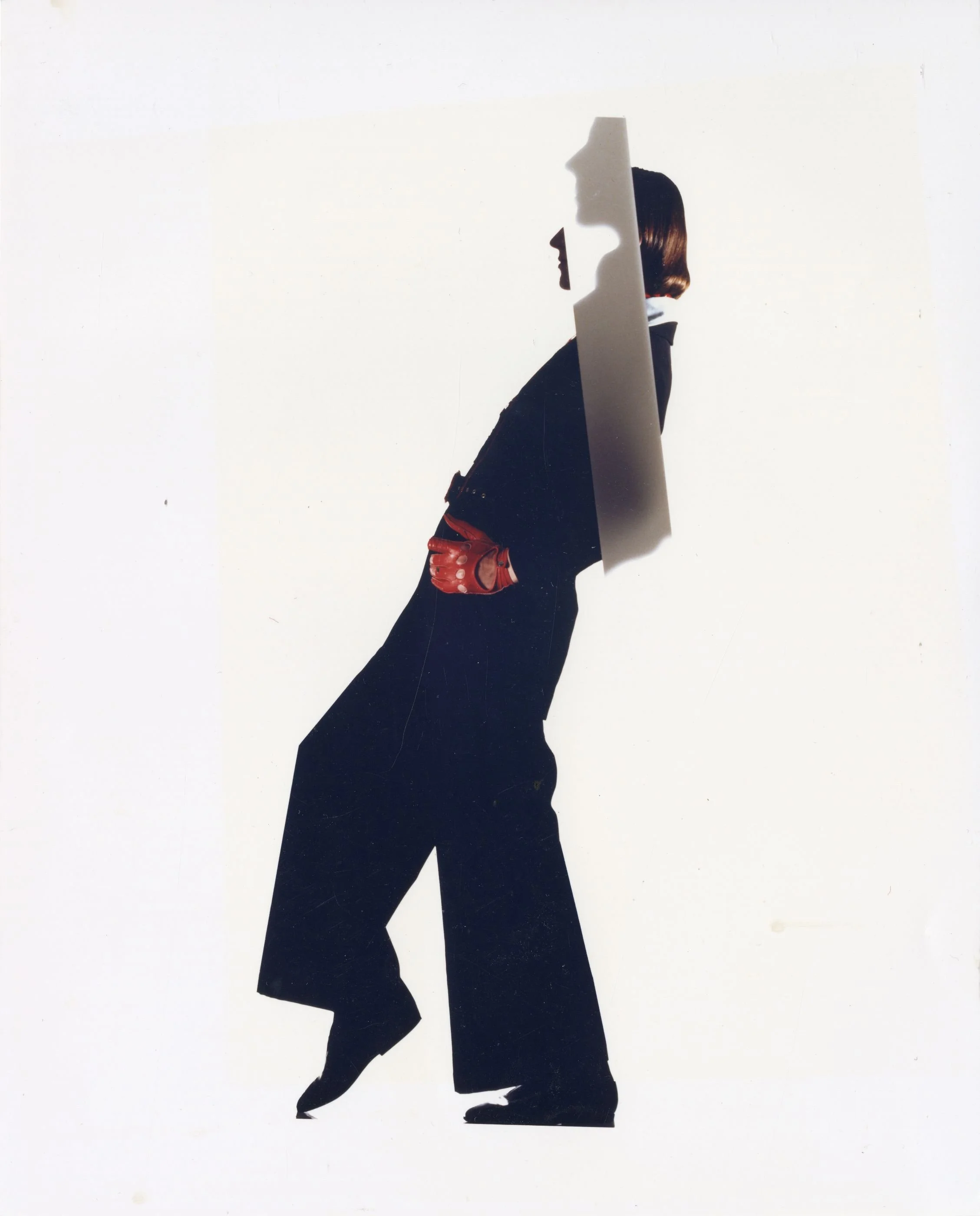
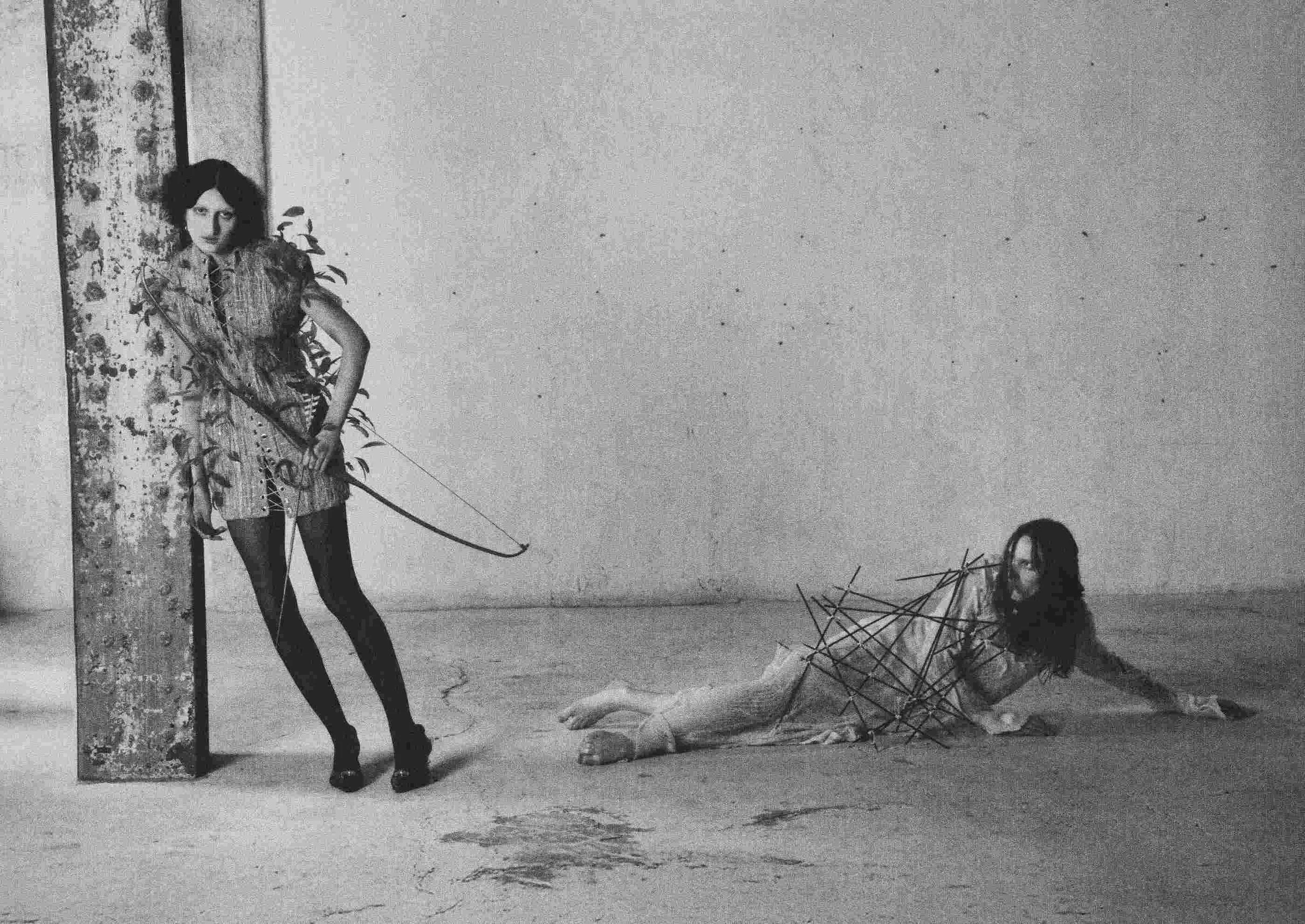
Dirk van Saene, Spring/Summer 1988, © Photo: Henze Boekhout
One of the great strengths of the exhibition is that it restores the importance of ephemera, invitations, graphics, photographs, sketches, and private archives. What do those materials reveal that garments alone cannot?
They show that fashion is never just the garment. The Six understood that very early. They knew fashion was a story told through many forms: invitations, lookbooks, catalogs, press kits, photography, display, and the atmosphere around a collection. All of that is part of the language.
And there is still much more in the archives than people realize. A great deal remains in private hands. Marina Yee’s drawings are a perfect example. They are extraordinary. When you go through those boxes, you do not simply find documents. You encounter a mind at work. You see hesitation, instinct, discipline, imagination, reduction, all of it. For younger generations, that is invaluable, because it reminds them that authorship is not a logo. It is a way of thinking.
That question of authorship feels especially urgent now. Why do you think the Antwerp Six continue to fascinate younger designers and students?
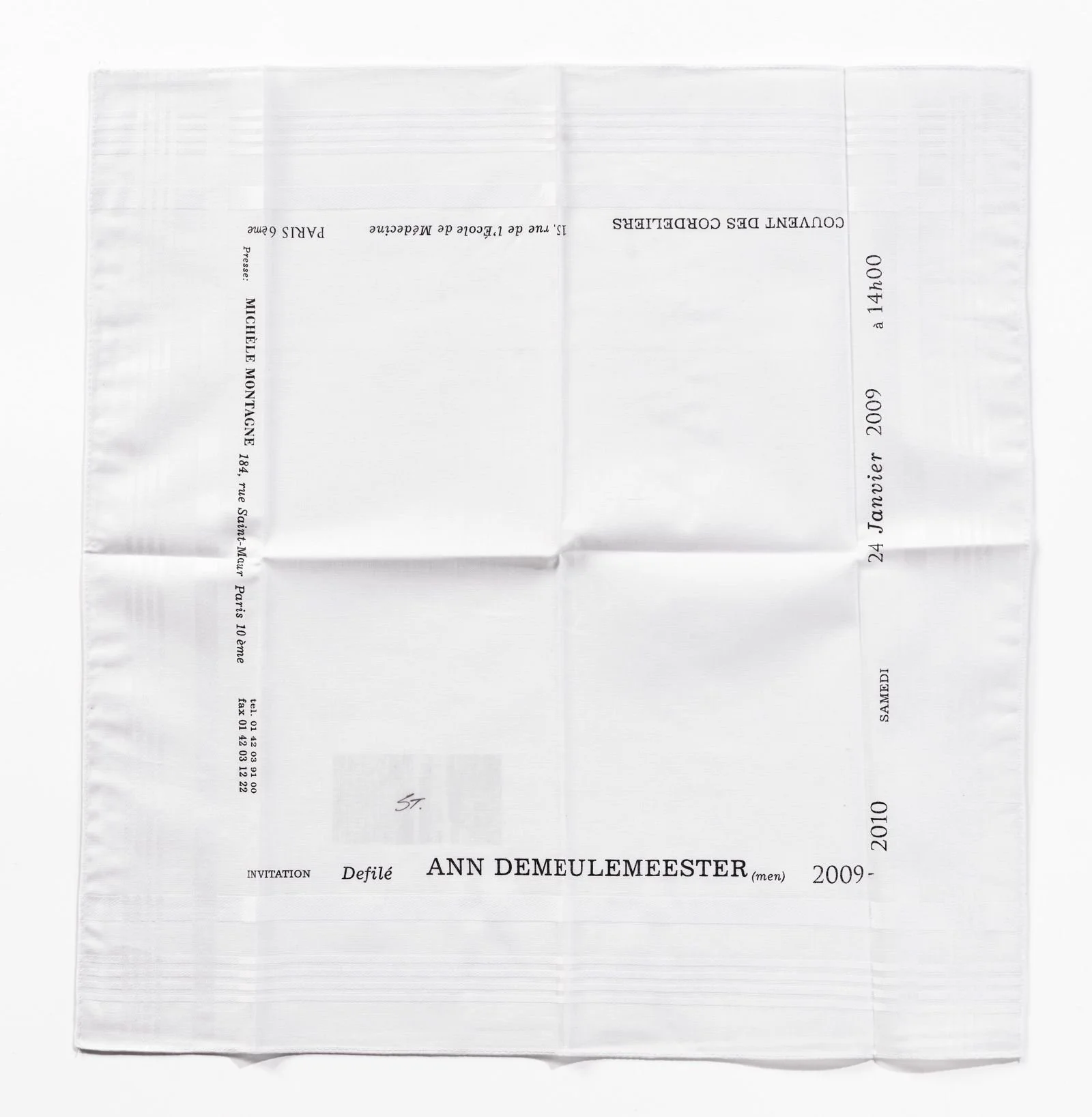
Ann Demeulemeester - invitation A/W 2009-2010, graphic design: Ann Demeulemeester & Patrick Robyn
Because they represent an idea of the independent fashion house that now feels both distant and necessary.
When they began, independent fashion houses were still the norm. The era of giant luxury conglomerates came later. And yet the Six held on to their independence for a remarkably long time. I think younger designers are drawn to that freedom, even as they understand how difficult it was.
Today the field is split in troubling ways. On one side, you have luxury groups that operate like closed fortresses. On the other, you have fast fashion, where there is almost no room for research, patience, or authorship. I have seen brilliant designers consumed by those structures. That is why I am grateful that none of the Six truly gave themselves over to that system.
But the lesson is not, Do it like the Antwerp Six. The lesson is, Do it your own way, exactly as they did. That is the only path that leads to necessary work.
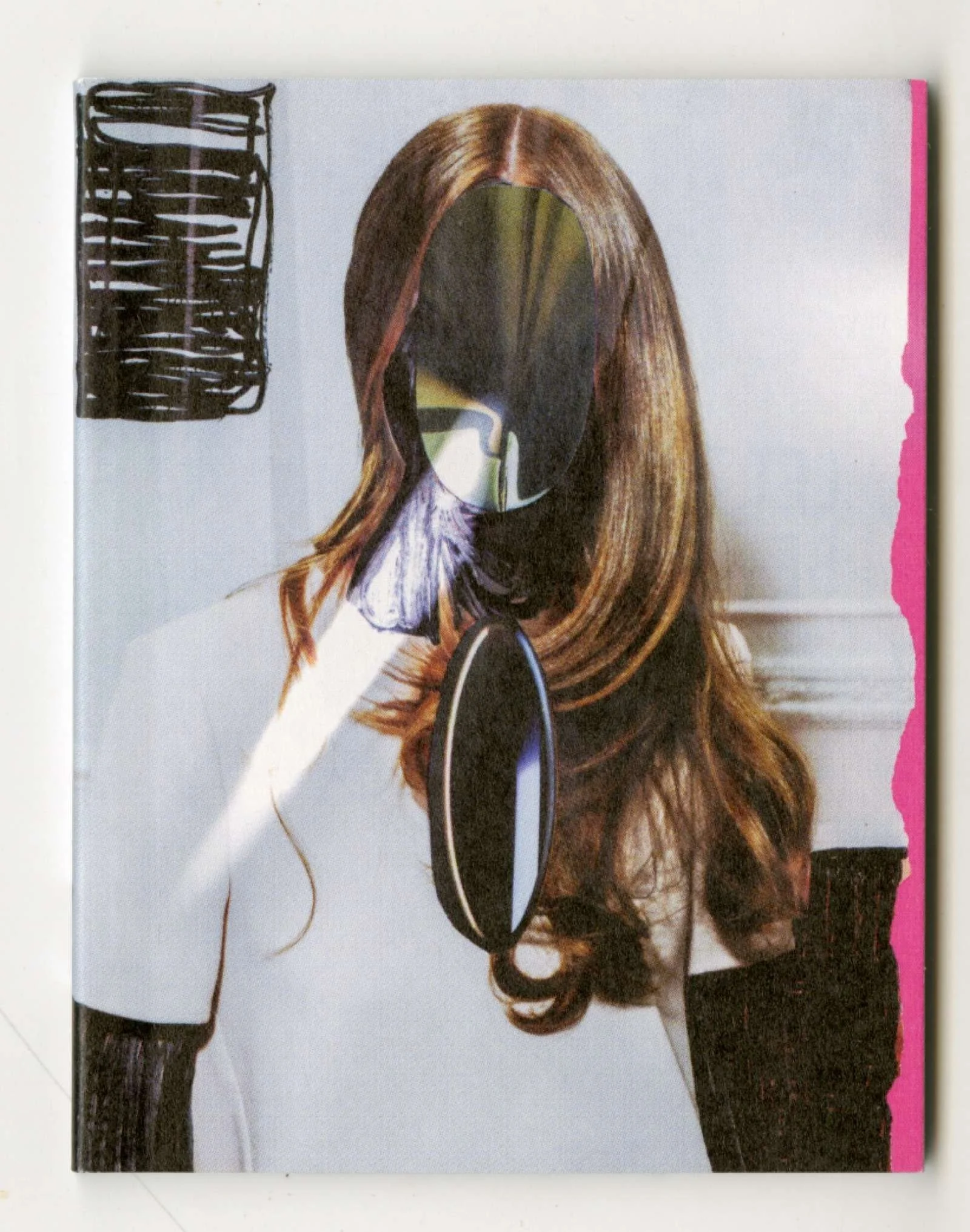
Marina Yee, Micro Book by Marina Yee in collaboration with Laila Tokyo, 2018, © Photo: Johan Mangelschots
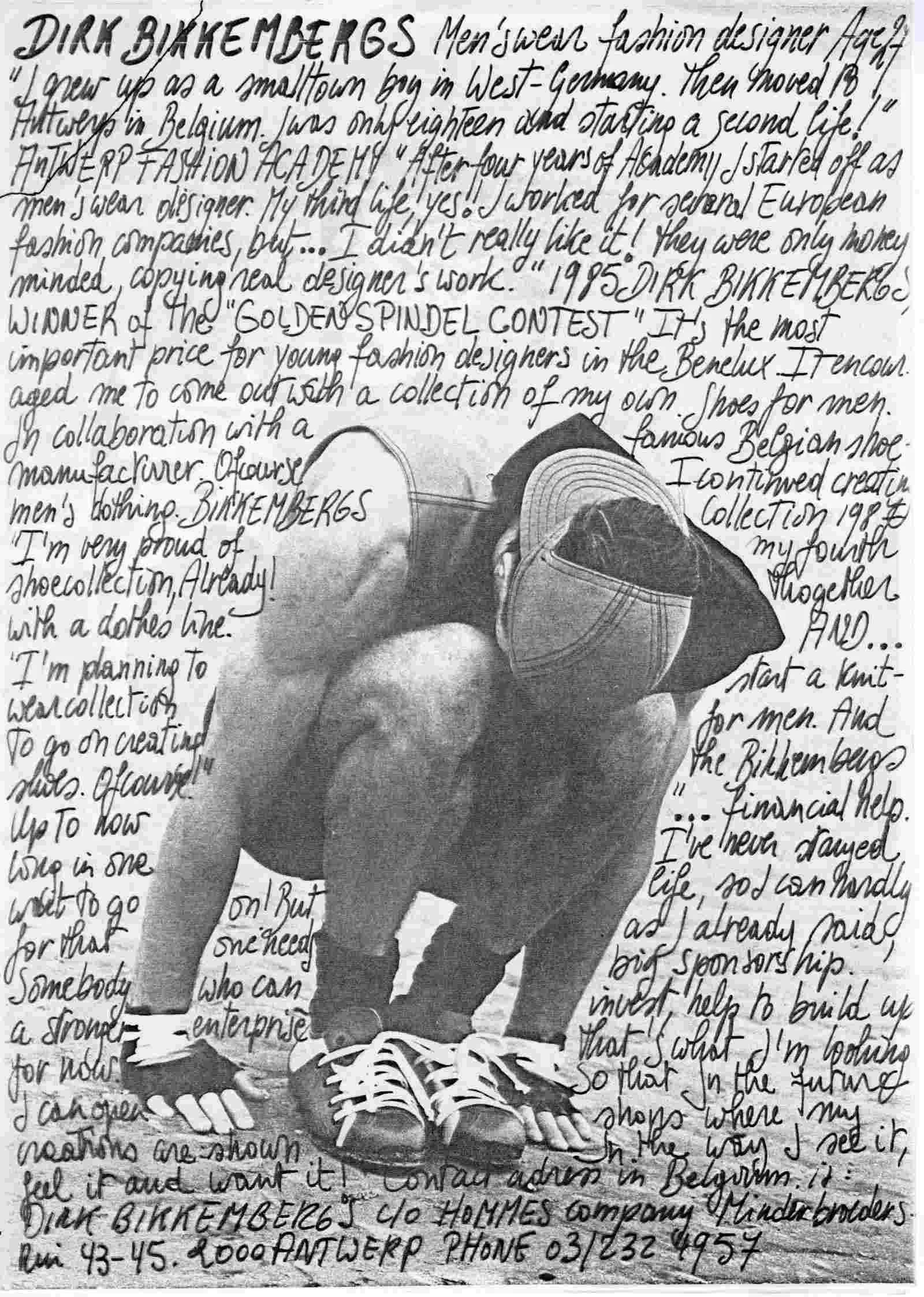
Dirk Bikkembergs, flyer S/S 1987, graphic design: Dirk Bikkembergs
One episode in the exhibition remains especially striking: the Six’s arrival at Pitti in Florence in rented camper vans, crossing the Alps together, sleeping at a campsite, and then presenting their work at one of Italy’s key fashion platforms. Why does that scene still matter to you?
Because it tells you everything about that period.
They were completely focused on the standard of what they were making, on the quality of the garments, the accessories, and the total presentation. But outside of that, there was no luxury apparatus, no false prestige. We slept at a campsite in Florence. In the morning, we went to the washbasins and the showers with all the other campers. Except, of course, that Walter and the others were dressing up, putting on makeup, becoming themselves in that completely ordinary setting.
I still remember us walking through the campsite toward the bus stop and saying to each other, “Don’t look at the others,” because we knew we looked strange. But we were having fun. And when potential buyers or manufacturers wanted to speak with us after the fair, we had to explain that we were not staying in some grand hotel. We were at the campground.
That image remains important because it strips away the mythology and leaves the truth: conviction, friendship, work, and a complete absence of cynicism.
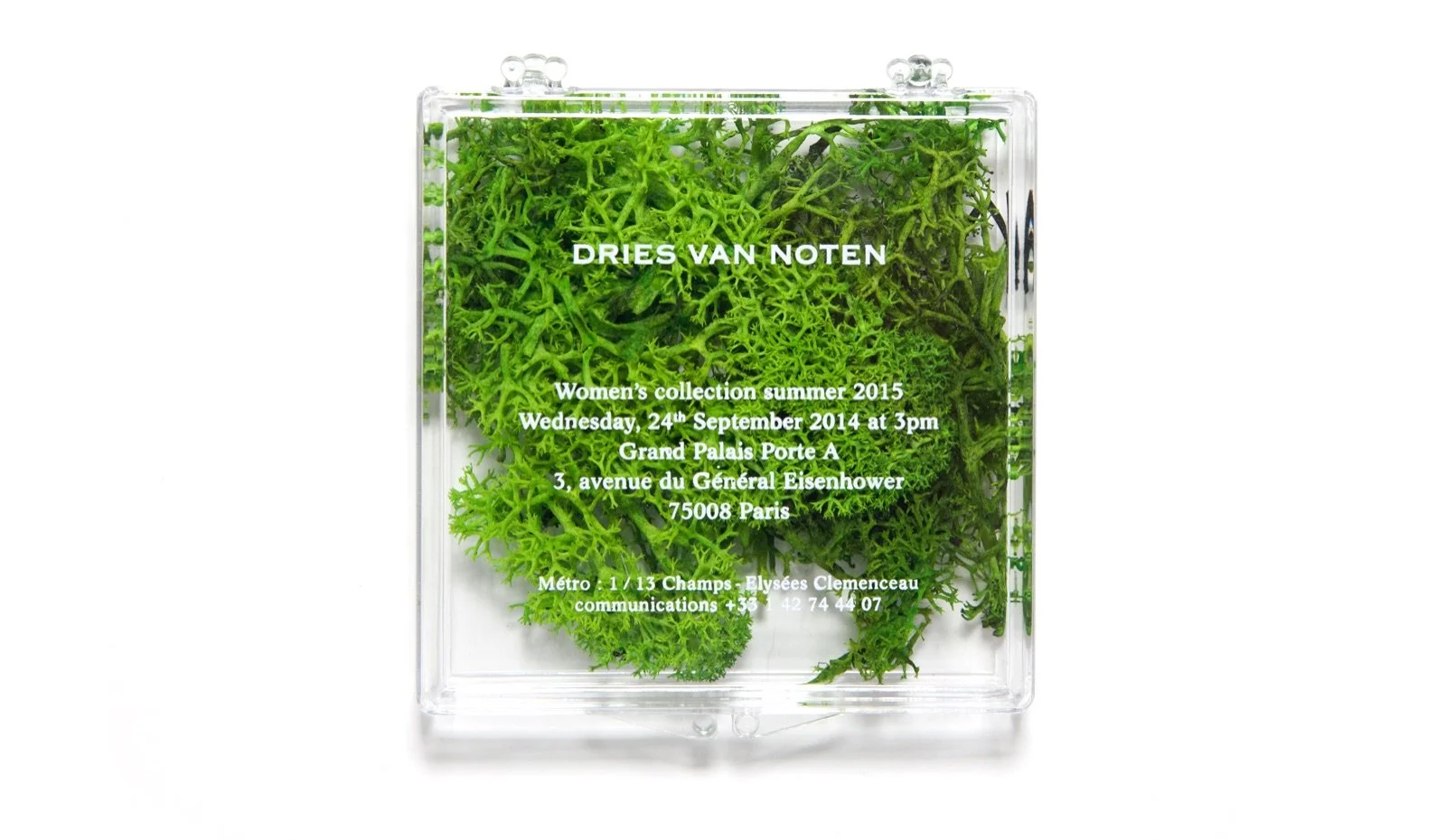
Dries Van Noten - invitation S/S 2015, graphic design: Dries Van Noten & Jelle Jespers
After forty years, what should this exhibition correct in the mythology of the Antwerp Six?
First of all, it should correct the idea that the Antwerp Six was ever a brand in the usual sense. It was never a label, never a fashion house, never a collective working under a single signature. It was a temporary alignment of six highly singular talents during a very particular historical moment.
What the exhibition can do, if it does its work properly, is hold both realities together. It can show the power of the group and, at the same time, the irreducible individuality of each designer. It can also remind people that success did not come from nowhere. It came from work, from context, from travel, from institutions, from policy, from risk, from friendship, and from a city ready to let something experimental happen.
Interview by Alessia Caliendo
What to read next