Lawrence Lek
Lawrence Lek
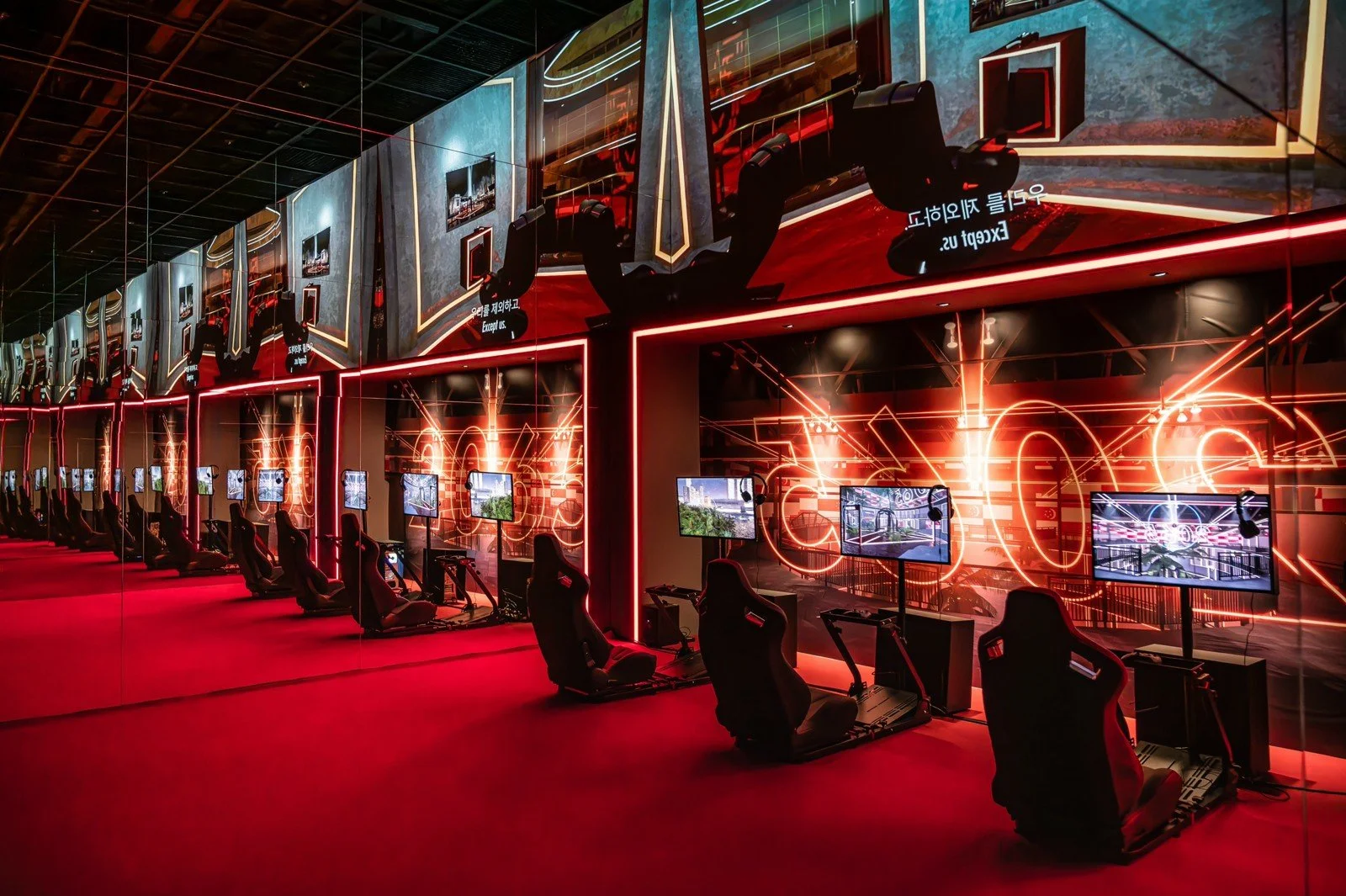
Installation view, Lawrence Lek, 2065, National Asian Culture Center (ACC), Gwangju, 22 December 2023 - 21 July 2024
© Lawrence Lek. Courtesy the Artist and Sadie Coles HQ, London
For Lawrence Lek, time, memory, and reality are both definite, and infinite. Each production, simulation, and composition he has constructed over the course of his career as a multidisciplinary artist is an exercise in this line of thinking, and this is most apparent within exhibitions and projects including his first solo exhibition. Named ‘2065’, the show assembled six projects from the Sinofuturist universe, which the artist had begun constructing around 2016. Set in the year of Singapore's centennial, the exhibition draws on his interest in the relationship between science fiction, or speculative fiction, and reality as a catalyst for speculating the future.
In the same vein, there are recurring narratives within the artist’s practice which powerfully speak to questions of identity and belonging, themes that are both deeply personal and profoundly human. Such a consideration brings the artist’s latest project, ‘Guanyin II: The Caretaker’, to the forefront, especially given its setting within the V&A East Storehouse, a space that prompts a consideration of what we choose to preserve, and those entrusted with caring for those places of preservation.
During this conversation, Lek reflects on the future, and realities which are currently giving shape to them, alongside the questions of identity, belonging, and authorship that have arisen from his engagement with human and artificial forms of intelligence.
Lawrence Lek
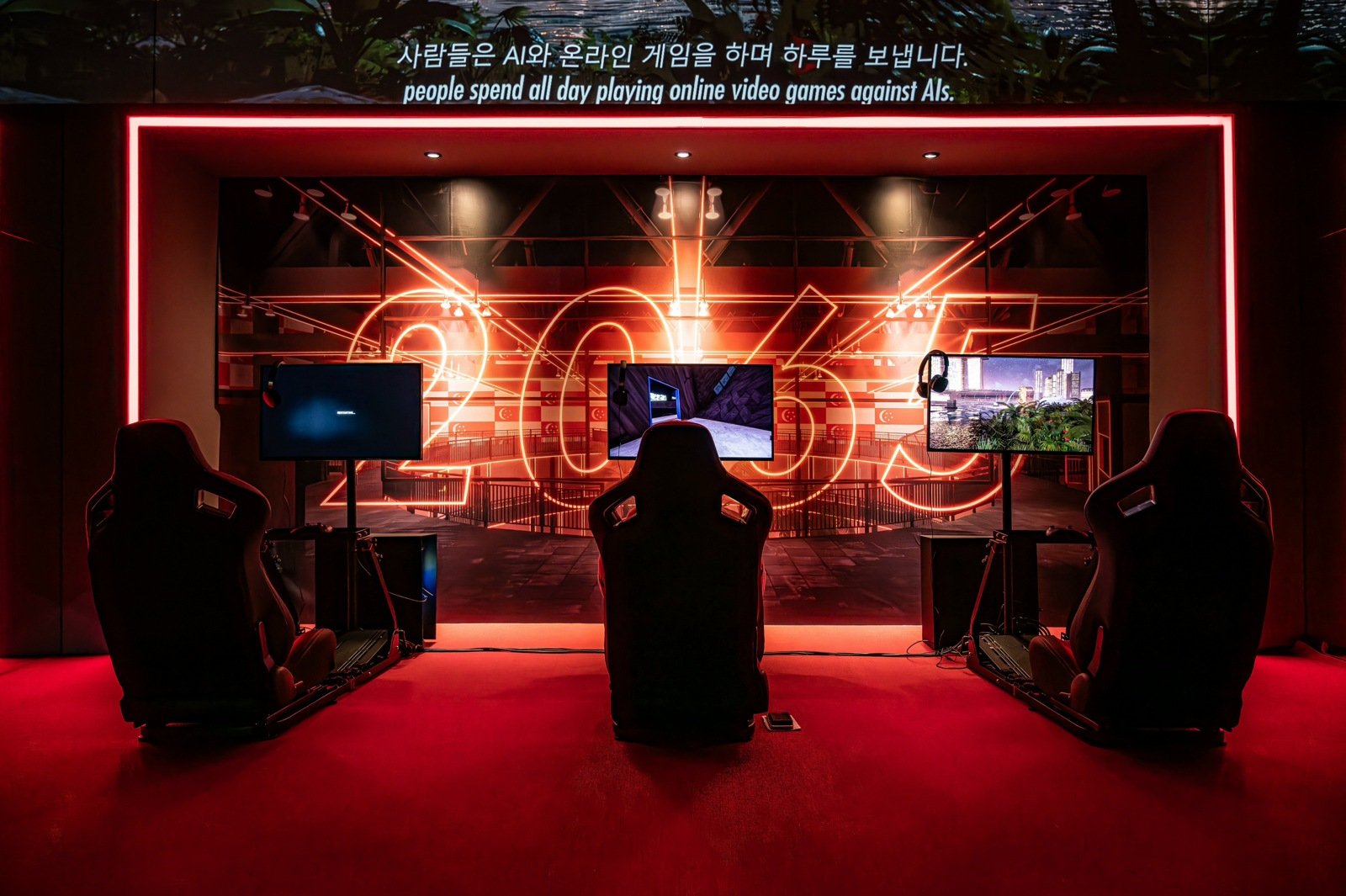
Installation view, Lawrence Lek, 2065, National Asian Culture Center (ACC), Gwangju, 22 December 2023 - 21 July 2024
© Lawrence Lek. Courtesy the Artist and Sadie Coles HQ, London
Your first solo exhibition “2065” at K11, Hong Kong interrogated notions of technological production, time travel, gaming, and artificial intelligence. Do you see simulation as a means of altering reality, or does it reveal how much of what we perceive as real has already been constructed?
‘2065’ was my first solo exhibition, but I had been making simulations, video games, animations, and installations since about 2011. I came from a background in music and experimental installation. My day job was as an architect, so I was always interested in this idea of an imaginary world. And of course, simulation, as you're saying, has many different aspects to it. One of those is about perception, which is a longstanding philosophical debate about where reality exists. Does reality exist in its kind of absolute, external to the person perceiving it? And then, there's also simulation as a medium, as a practice, as a way to rehearse or replicate one model of reality in another system, which could be a board game. We know it best nowadays as a digital simulation, but, of course, there are many analogue and physical simulations, often used in engineering, to test how different materials behave. The aspect I'm most interested in is the really subjective philosophical one, and the idea of a rehearsal of the future. Which relates, of course, to another interest of mine, which is the link between science fiction, or speculative fiction, and reality.
‘2065’ also brought together six different projects from this single, futuristic world that I had been constructing since around 2016: the Sinofuturist universe. So, it was a solo exhibition, but with related works in the same show, which is also the way I make my exhibitions, as a way to present a different set of interconnected works in this world.
Lawrence Lek
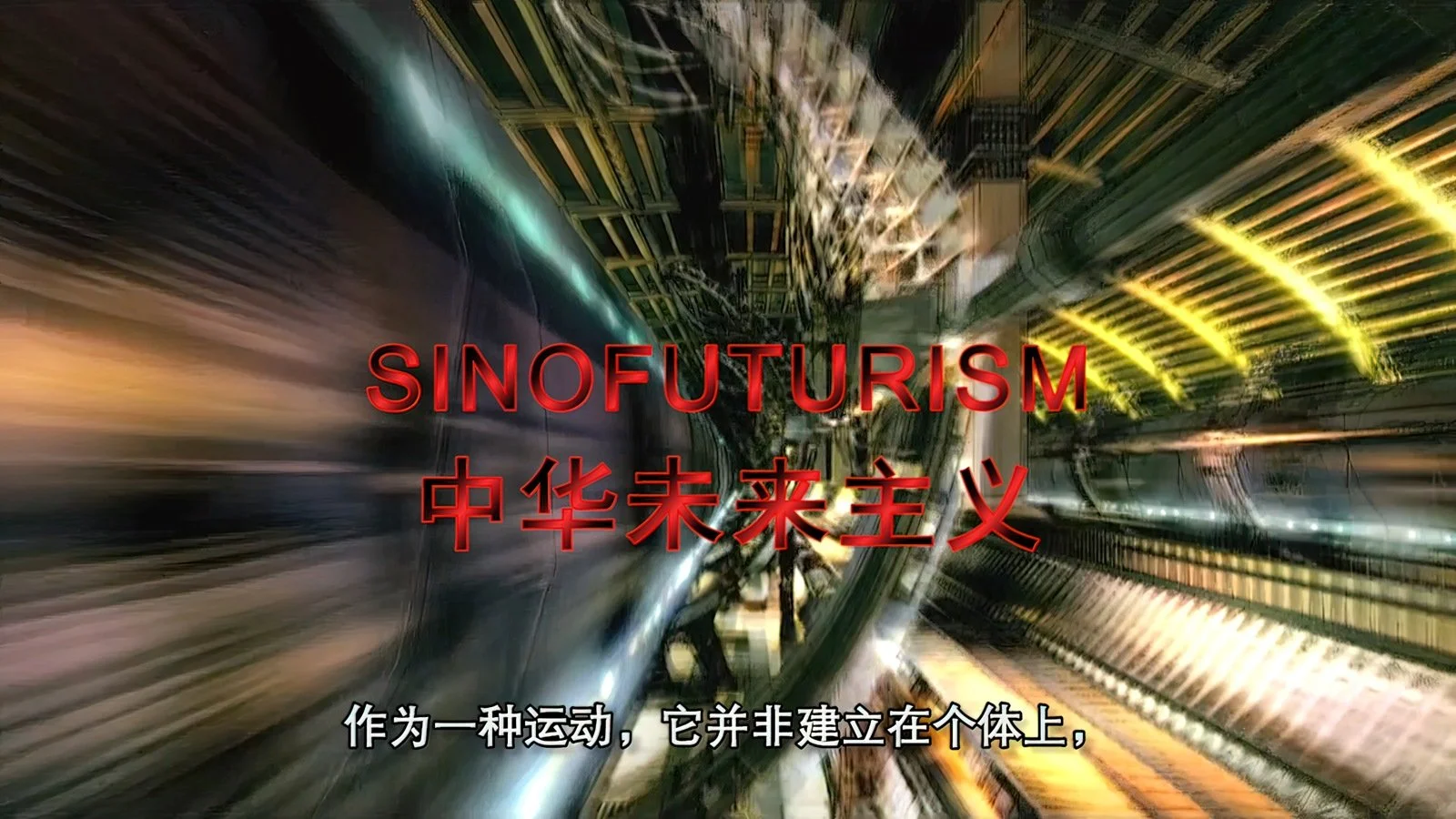
Sinofuturism (1839 - 2046 AD), 2016 [Still] HD video, stereo sound
duration: 60 min
© Lawrence Lek. Courtesy the Artist and Sadie Coles HQ, London
There’s your reference to “2065”, which you’ve explained refers to the Singapore Centennial. There’s also the reference in your video essay “Sinofuturism (1839-2046 AD)” to the year 2046, fifty years after Hong Kong’s ‘return’ back to mainland China, and the expiry of the One Country, Two Systems policy. Can you speak to the role of time, within your practice, and the way in which you use the future, to consider our relationship with the present?
At the time, I was increasingly interested in reinterpreting the roots of Western colonialism within the context of Hong Kong and Singapore. Somehow, my instinct didn’t start from this idea of subjective identity. I was more interested in seeing my life as the outcome of a system. For example, I was born in what used to be West Germany, in Frankfurt, because my parents worked for Singapore Airlines. So, I’m not only considering myself from this identity point of being a Malaysian Chinese artist. I am, in a real sense, a product of globalised capitalism. With each of these different dates I chose in my work, I was examining how to reflect a future date whose outcome we may not know now, but which we do know will be a historical landmark.
For example, in 2065, it will be the Singapore Centennial. I imagine that the government would mark that as a milestone of building their national identity. When I lived in Singapore as a child, the idea of belonging was reinforced through media, anthems, flag-raising, and so on. I was investigating the parallel between individual identity formation and nation building, which of course has many political overtones of nationalism.
My parents moved to Hong Kong in the mid-1980s and back to Singapore after that. And so, at the time, I saw the ‘80s as marking the last of a British presence in Hong Kong. And, of course, when the governor, Chris Patten, left in '97, there was a ton of colonial fanfare, warships leaving the harbour, Union Jacks being waved around. It was the end of an era and the beginning of a new one.
I was always interested in these transition points in history. The passing of one age into another. Maybe now it's the time of consensus reality turning into the time of simulation, or the time of the West turning into the time of the East.
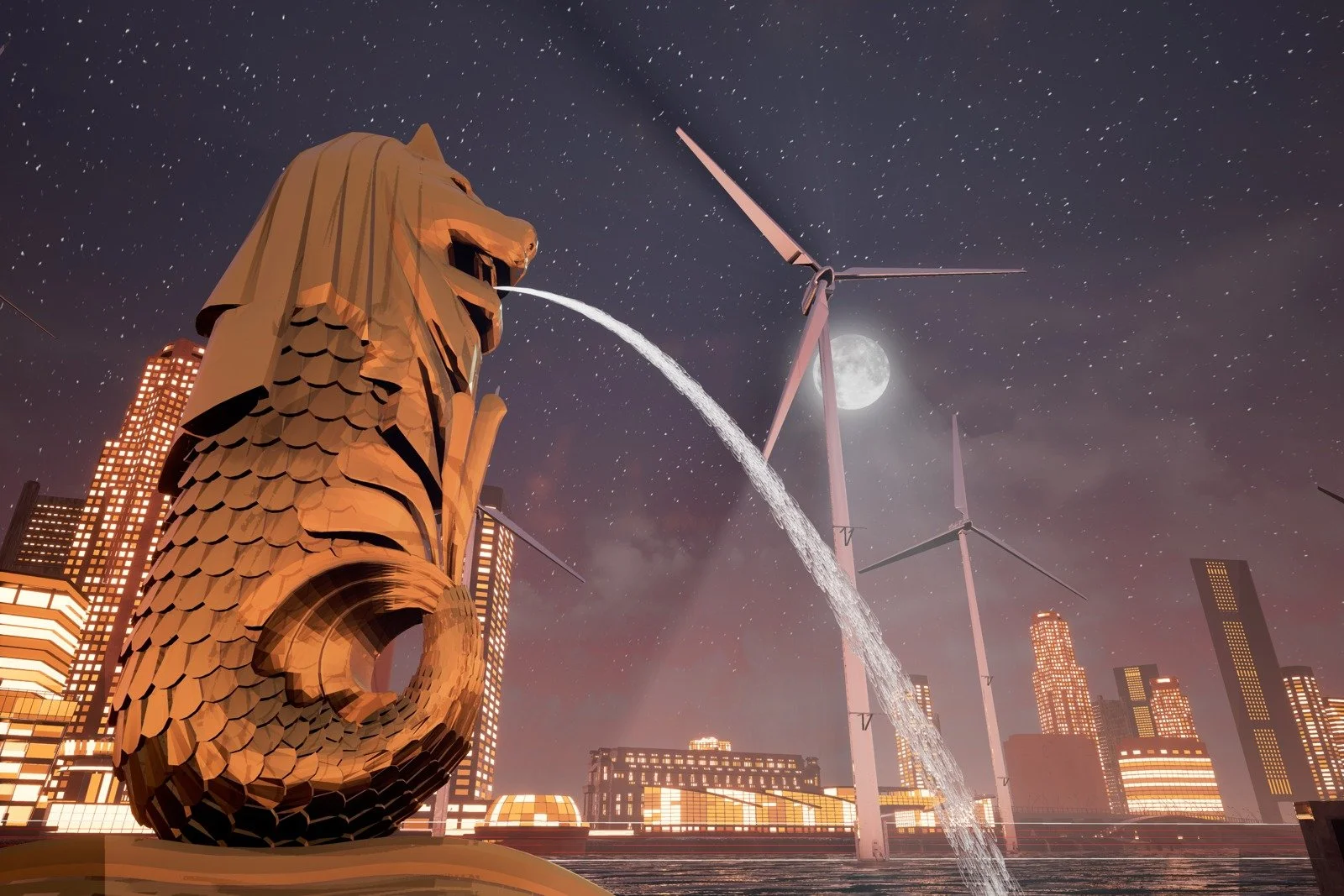
The exhibition was centred around a video game called ‘2065’. You play as a wandering figure in the world of 2065 Singapore. At the time, I would also make site-specific simulations. I was interested in the relationship between different traditions of sculpture, particularly site-specific sculpture, but also how that could work in terms of making a video game. In the virtual world you can collage different real-life locations together, so I took Marina Bay in Singapore, and added the K11 exhibition space in Hong Kong to it. So, it’s really a hybrid place, much like my ideas. The game takes place in the physical location where you are, but at a different point in history.
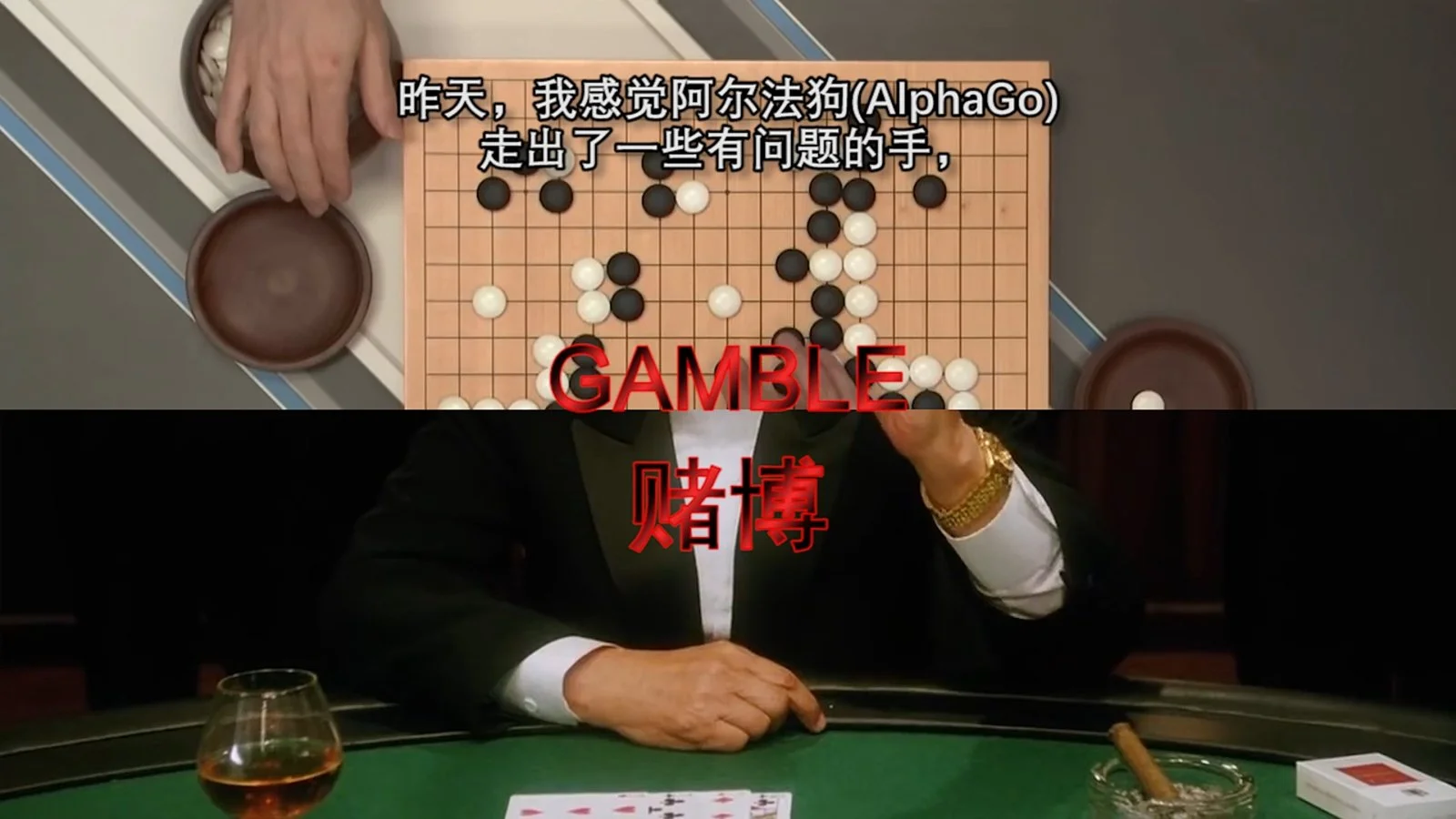
Lawrence Lek
Sinofuturism (1839 - 2046 AD), 2016 [Still] HD video, stereo sound
duration: 60 min
© Lawrence Lek. Courtesy the Artist and Sadie Coles HQ, London
““In the early 21st century, insight can come from redefining humanity’s relationship with technology. We may like to think we understand it, but we do not, and we also need to ask ourselves whether we truly control it. I think about times in the past when different artists and poets and writers have had a similar awakening.””
Lawrence Lek
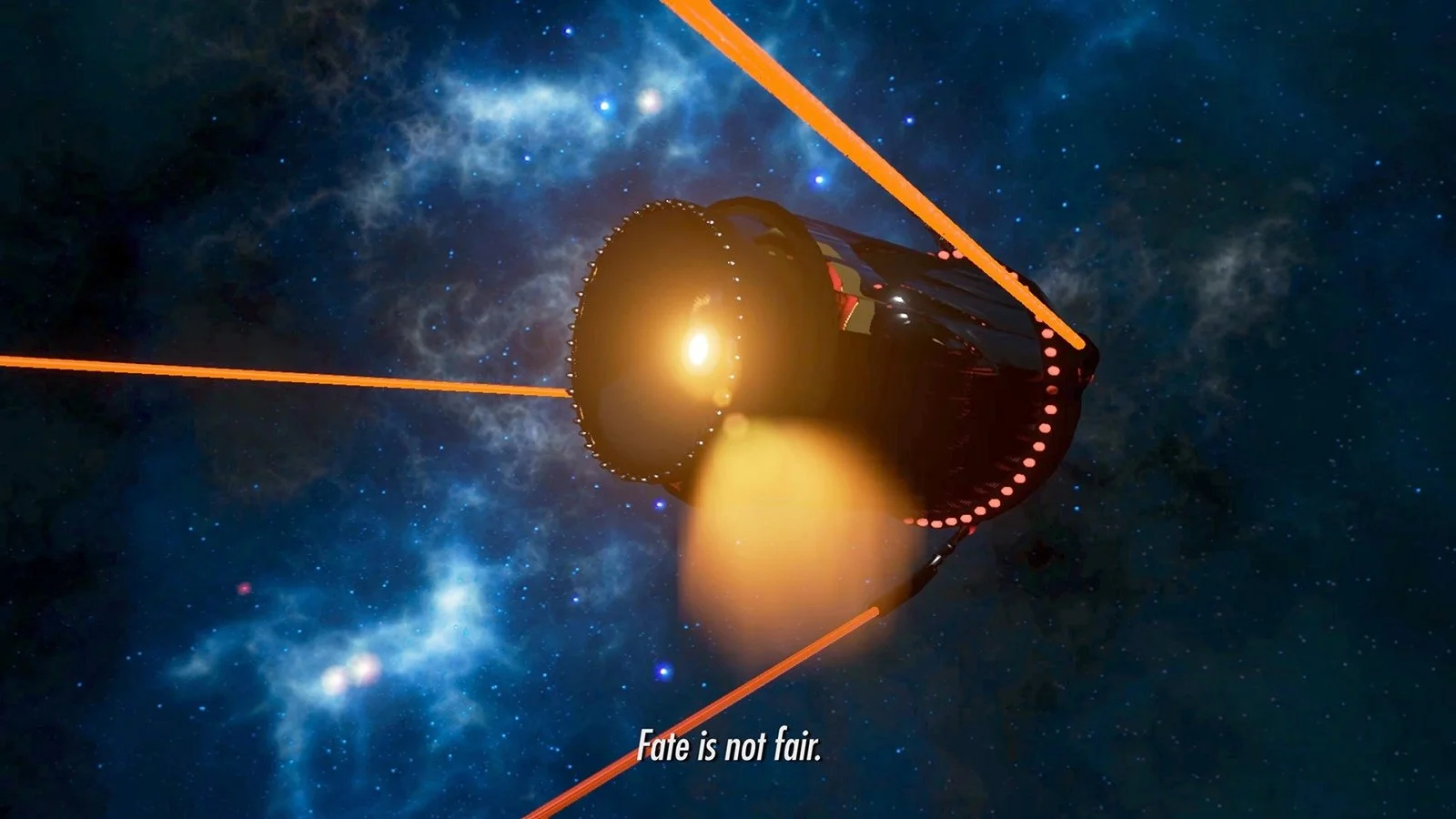
Geomancer, 2017 [Still] HD video, stereo sound duration: 48 min, 15 sec
© Lawrence Lek. Courtesy the Artist and Sadie Coles HQ, London
In the same breath, your process has been defined as ‘worldbuilding for non-humans.’ In which way has imagining forms of existence beyond humanity influenced your understanding of what it is to be human?
Even though, of course, I develop a lot of my work through writing scripts, I am instinctively drawn to encounters that create a sense of the sublime, or wonder. How can I evoke a sense of interconnection that makes me, or the audience, rethink, read and feel our presence in the universe?
In the early 21st century, insight can come from redefining humanity's relationship with technology. We may like to think we understand it, but we do not, and we also need to ask ourselves whether we truly control it. I think about times in the past when different artists and poets and writers have had a similar awakening. Poets or philosophers talk about this confrontation with awe-inspiring phenomena, wonders of nature, the ocean, or power beyond human comprehension. That is the feeling that I feel very close to. Of course, it's completely different with technology, because no political system created mountains. That was the outcome of natural processes, whereas economic systems create AI and robots in factories and so on.
Going back to the question of why I’m interested in world-building for non-humans. Let’s say, 200 years ago, poets would try to personify the mountains, the landscape, and the weather, as if each had a personality, which gave rise to different genres. During the Gothic period, buildings were seen to be alive and occupied by ghosts and spirits. I am drawn to our desire to directly engage with forces we aren’t quite capable of comprehending. Maybe the closest expression of that, for now, is our creation of a new intelligence or a new form of life. To me, that’s an analogue of what has happened before.
Lawrence Lek
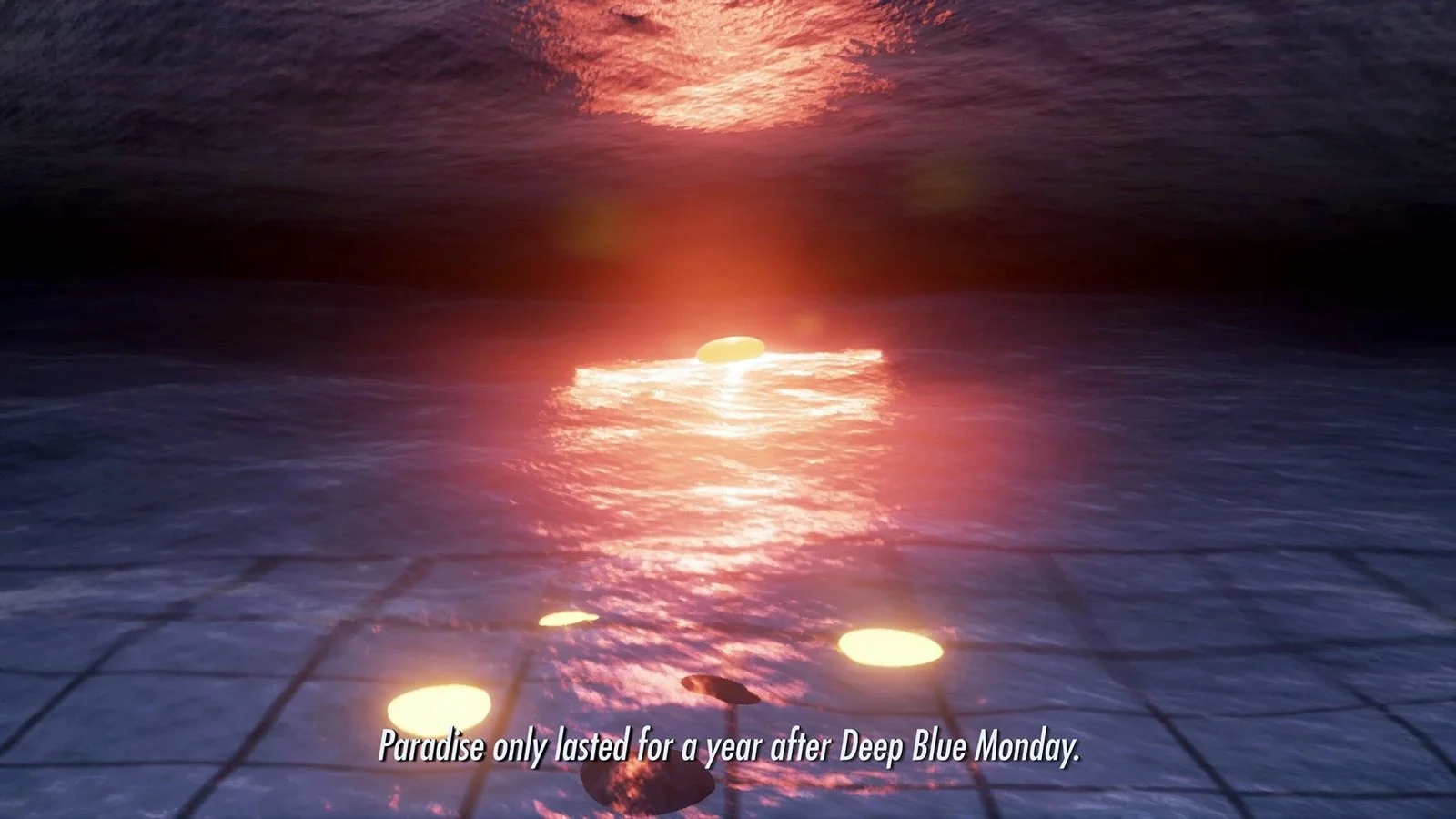
Geomancer, 2017 [Still] HD video, stereo sound duration: 48 min, 15 sec
© Lawrence Lek. Courtesy the Artist and Sadie Coles HQ, London
Sadie Coles HQ refers to your worldbuilding practice more specifically as ‘Sinofuturism: a speculative framework in which the problems and promises of artificial intelligence and China’s technological influence converge.’ Can you speak further on the role of speculation within your practice? Is there a point where an act of speculation becomes a process of realisation?
In speculative fiction, there are different ways of constructing alternative versions of the world. Of course, all fiction creates some mirror image of the real world. But speculation focuses on trying to create a “what if” scenario. What if this were to happen? For example, my video essay “Sinofuturism (1839-2046 AD)”, which was about interpreting the twin cultural image of AI and China, came about through a speculative process. On a personal level, it's a work that I would have liked to encounter when I was a teenager. I was surprised that something like that didn't exist, on a level with discussions about Afrofuturism in music, as with Kodwo Eshun, or with Gulf Futurism by people like Sophia Al Maria or Fatima Al Qadiri.
It also was a speculation on a different form of cultural value, rooted in a less Western humanist approach to what being a “human” could be.
To be a human is not a universal condition, as colonialism and slavery make clear. It depends on specific rules and legal categories, which give some people more rights than others. With Sinofuturism, I was thinking about the different values being placed on creative originality in the age of AI.
I made the video essay by searching for “China” and “AI” on English-language platforms like Google and YouTube, and on Chinese search platforms like Baidu, Tudou and Youku. What came back were two narratives that mirrored each other. Either China was going to save capitalism, or it was going to destroy the world. And AI, likewise, was either going to save the world or destroy it. Chinese production, and even Chinese culture, is often stereotyped as being about respecting what already exists rather than being original: copying rather than invention. But those are exactly the qualities of machine learning, which learns by copying. So, my speculation was that there could be a way forward in that direction. It meant moving away from the old idea that being human depends on creative originality and aligning instead with those non-human qualities.
Lawrence Lek
2065, 2018 [Still]
HD Video, stereo sound duration: 5 min
© Lawrence Lek. Courtesy the Artist and Sadie Coles HQ, London
““Of course, all fiction creates some mirror image of the real world. But speculation focuses on trying to create a “what if” scenario. What if this were to happen? For example, my video essay “Sinofuturism (1839-2046 AD)”, which was about interpreting the twin cultural image of AI and China, came about through a speculative process.””
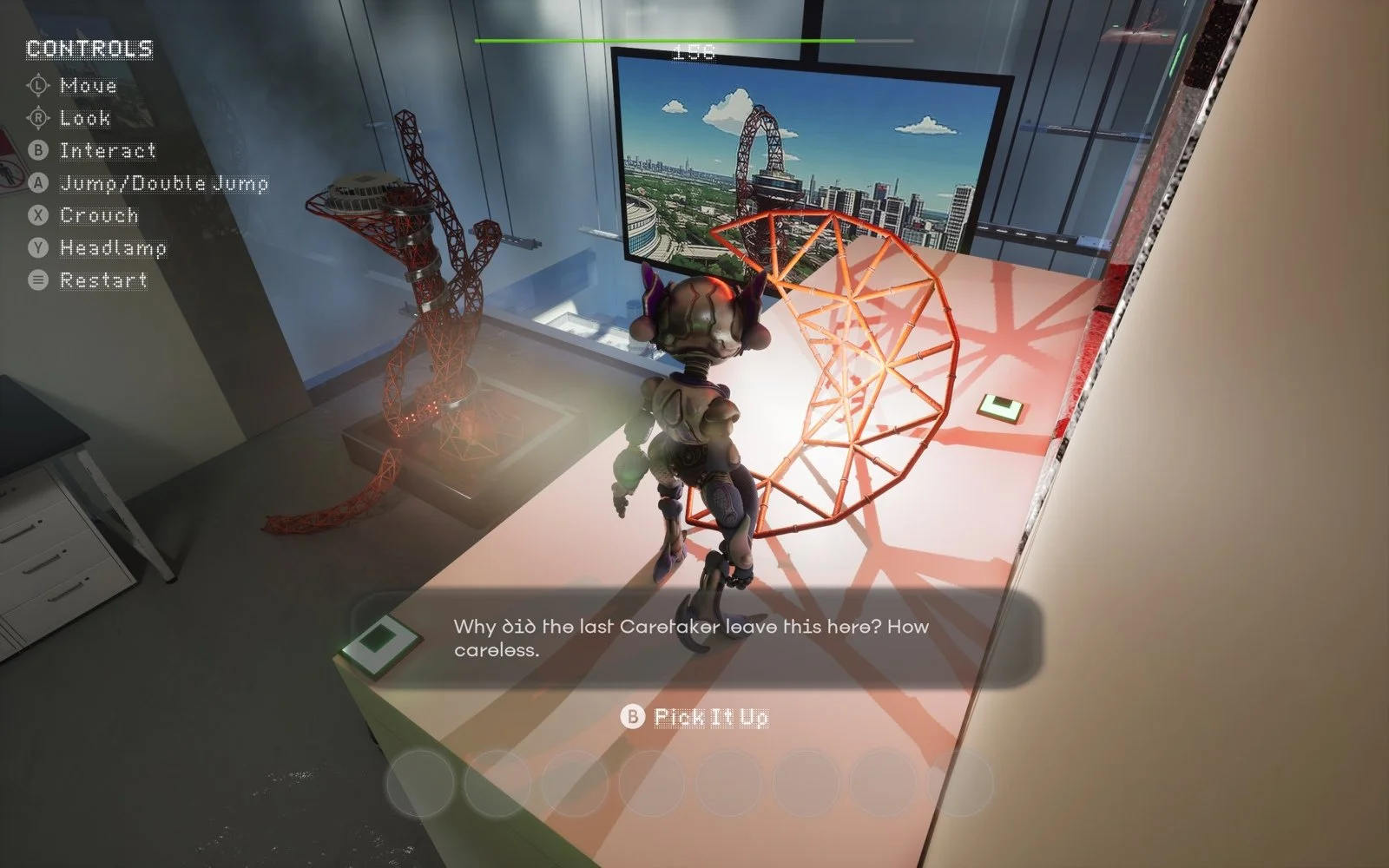
Lawrence Lek
Guanyin II - The Caretaker, 2026 [Still] Video game and video loop
duration: 4 min
© Lawrence Lek. Courtesy the Artist and Sadie Coles HQ, London. Commissioned for V&A East New Work programme
This intersection of artistry and technology is also a defining factor of ‘Geomancer’ (2017) which has been described by Sadie Coles HQ as a coming-of-age narrative defined by a super-intelligent satellite's aspiration to become an artist. Later, the satellite features in ‘AIDOL’ (2019) which focuses on a fading pop star’s recruitment of the same AI programme to silently co-write her latest album. Do you believe AI is increasingly being greeted as a collaborator, or treated as an instigator within the creative space?
There's so many different arguments, because, of course, AI has moved so quickly from being a speculative science fiction idea to being a technological contest and an everyday tool, which is much more mundane, and much more terrifying in equal measure.
I’m into experimentation, so I'm not someone to pass judgement on how anyone wants to use these different tools. In the case of ‘AIDOL’, even though that’s set in a future scenario, I was considering what already happens all the time, there are ghostwriters. For a long time, people have employed others to create projects for them, only to put their name and stamp on them. That's already happened so much without AI.
At the moment, ghostwriting is generally frowned upon, unless you deliberately subvert the expectation of authorship, like with Andy Warhol. Talking about music specifically, pop stars generally don't write their material. They perform a song that is owned by some other company or by someone else. So, to me, as someone who is drawn to the spirit of DIY, it's quite disappointing to think that, often, the singer is just a mouthpiece for some bigger structure. This is common news today. I’m just saying that my idea of what an artist does came from a time before, because humans have, for a very long time, passed off others' work as theirs, either through theft or ghostwriting.
With AI, it becomes more problematic when you begin to question who’s got access to the machines and hasn’t. And of course, different countries have access issues or geoblocking and don’t have access to the latest LLM model made by American companies. If you can use the latest models and you're living in country A, and students in country B can't use the latest models, the first group basically have an advantage. It's far too complex to pass judgement on how any individual wants to use these tools.
Also, this being said, I generally make works about AI rather than with AI. But even in 2017, in ‘Geomancer’, there is a neural network dream sequence, but I wanted to use it in a way that made sense within the work, rather than just being like a demonstration of technology, which is also why it's a dream sequence. I worked with my friend, AI researcher and artist Terence Broad, to create a convolutional neural network sequence, which basically analyses the first 40 minutes of the film, and then regenerates a dream sequence within the film itself. It made sense to try and show what this idea of an AI artist's vision could have looked like at that point in time. So, there is some AI generation in my work, but I feel I want it to have a specific place within that.
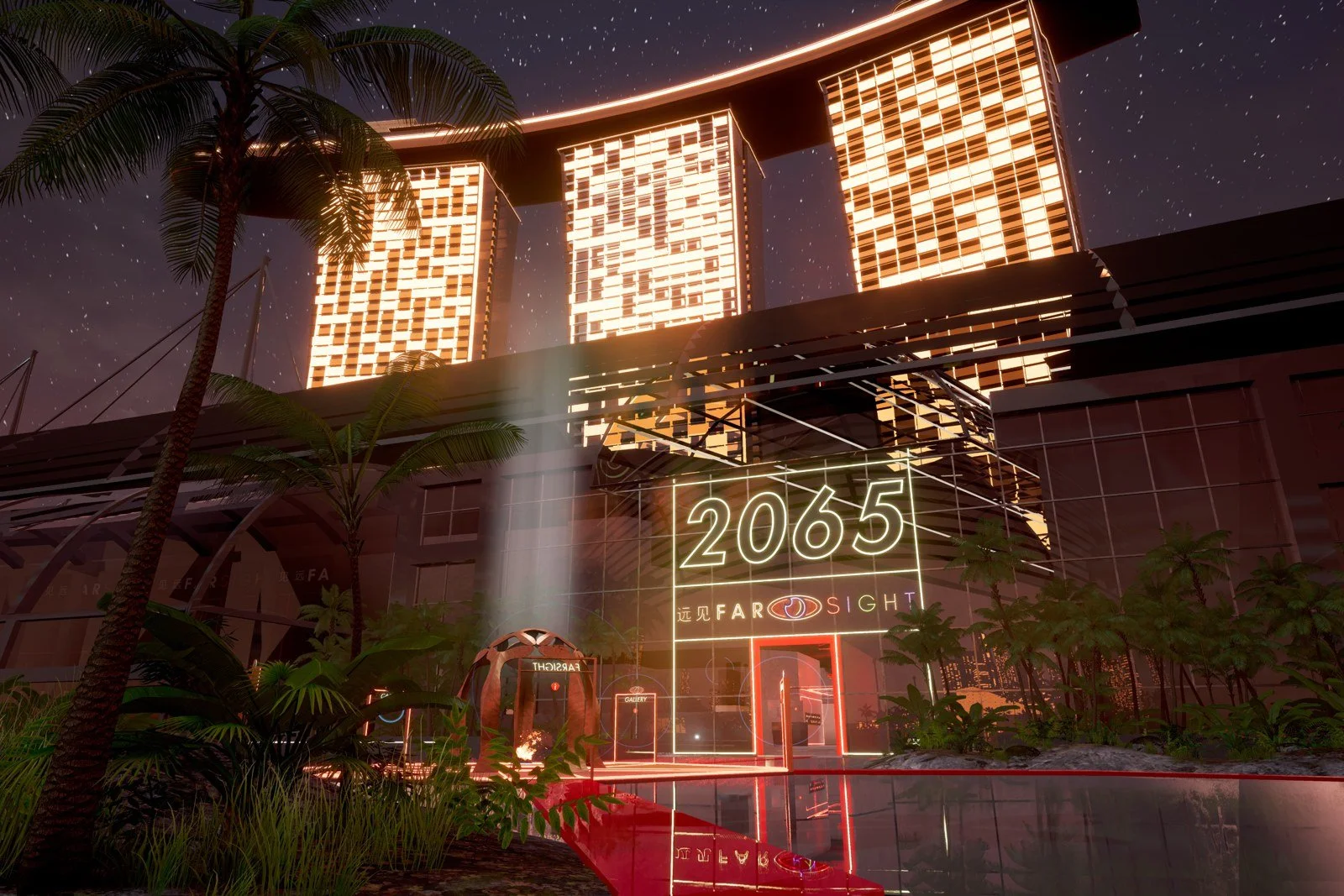
Lawrence Lek
2065, 2018 [Still]
HD Video, stereo sound duration: 5 min
© Lawrence Lek. Courtesy the Artist and Sadie Coles HQ, London
I’d also like to bring up ‘Nøtel’ at this point, particularly as I’ve seen that you partnered with writer and musician Kode9 on this project, which, effectively, enabled visitors to inhabit a fully automated luxury hotel. What stood out to you during this work’s development, particularly when critiquing the relationship between hospitality, service, and automation?
I’ve worked with Kode9 on the ‘Nøtel’ project since about 2015, just before his album ‘Nothing’ was released. It started as a track from his album ‘Nothing’, and I made a massive interactive virtual version of the Nøtel architecture. For performances I would navigate the spaces from the drone’s perspective, playing the game in sync with Kode9’s album set. We toured this live audio-visual show at festivals and clubs. Then, later in 2018, shortly after ‘2065,’ I included ‘Nøtel’ in two exhibitions: at arebyte Gallery in London and then at Stroom Den Haag in the Netherlands, and the installation was designed as a marketing suite for this future hotel.
This was really one of the most important collaborations I’ve done, not just because it was really enjoyable. Way back when I was working as an architect, I was also thinking of how I could make those virtual spaces. How could I realise the strangest architectural visions without the need to build it in reality? Around this time, a lot of the conversations around art and public space were really about gentrification. This idea of urban development, or who owns the future of the city. The speculation here was around the luxury hotel chain of the future, let’s say a seven-star Hilton. It was made when Airbnb was first becoming popular. At the time, Airbnb was marketed around the idea that it was really personal: you were going to stay in a real home, with a real host, who would point out local landmarks, and you’re going to become friends. But quickly it became super professional. You don’t even meet your hosts, your hosts aren’t even individuals, it's a corporation with a smiling profile picture who has bought fifty properties and now runs a mini hotel chain. Kode9 and I joked about what a Hilton Airbnb might look like. What’s a dystopian ‘sharing’ economy for super high net-worth individuals? There’d be a massive 100,000 square feet complex, but it's only for 12 people, and you would never see anyone. There is one vision of luxury with butlers and chambermaids, and every oligarch has a hundred servants. But we thought an AI version of this would be one where you're under surveillance all the time, so the algorithm knows everything you need. You don't have to order room service, because if you look like you're hungry on the camera feed, they'll just send a drone down with a hamburger. If they can predict your desire, you don't have to ask.
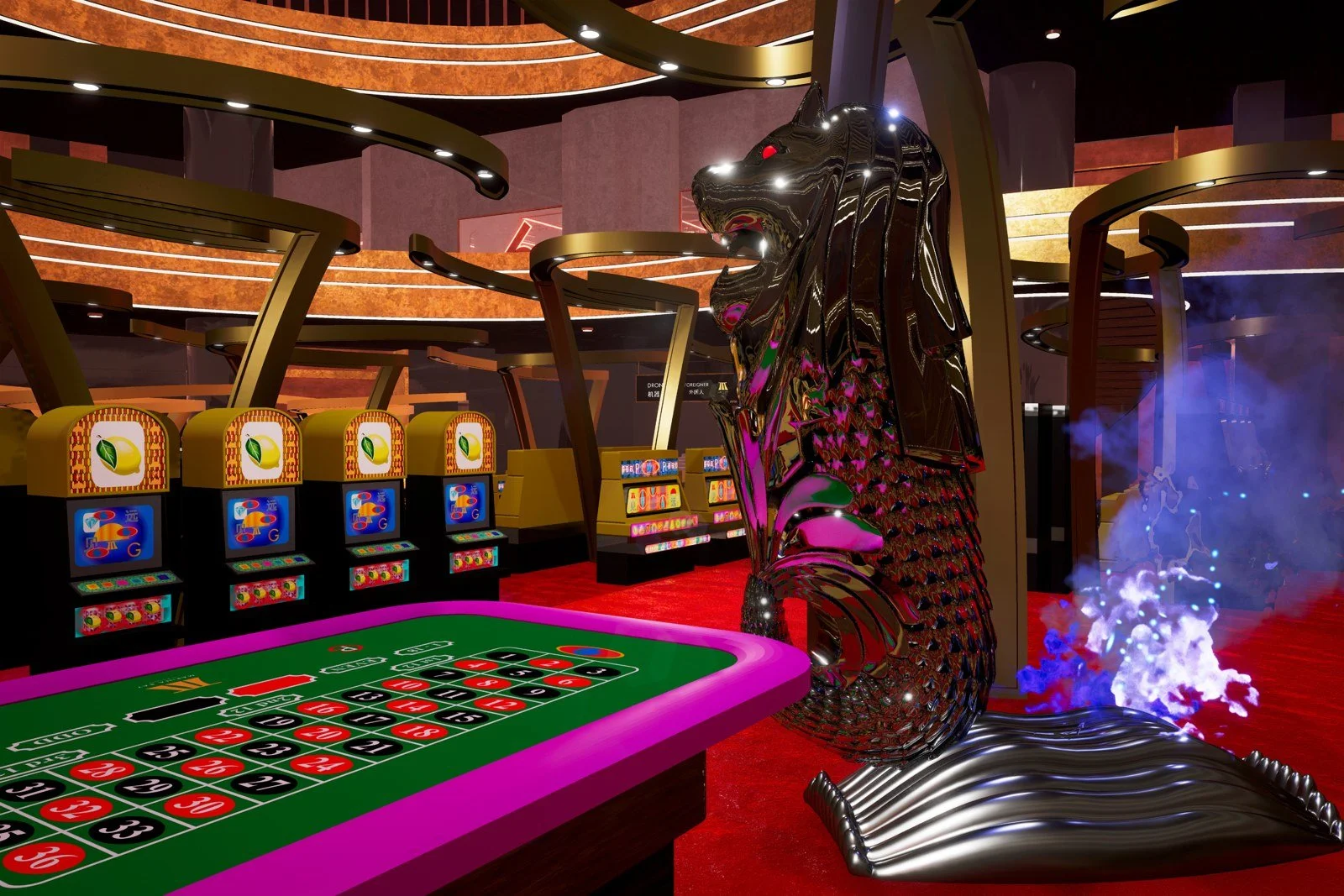
Lawrence Lek
2065, 2018 [Still]
HD Video, stereo sound duration: 5 min
© Lawrence Lek. Courtesy the Artist and Sadie Coles HQ, London
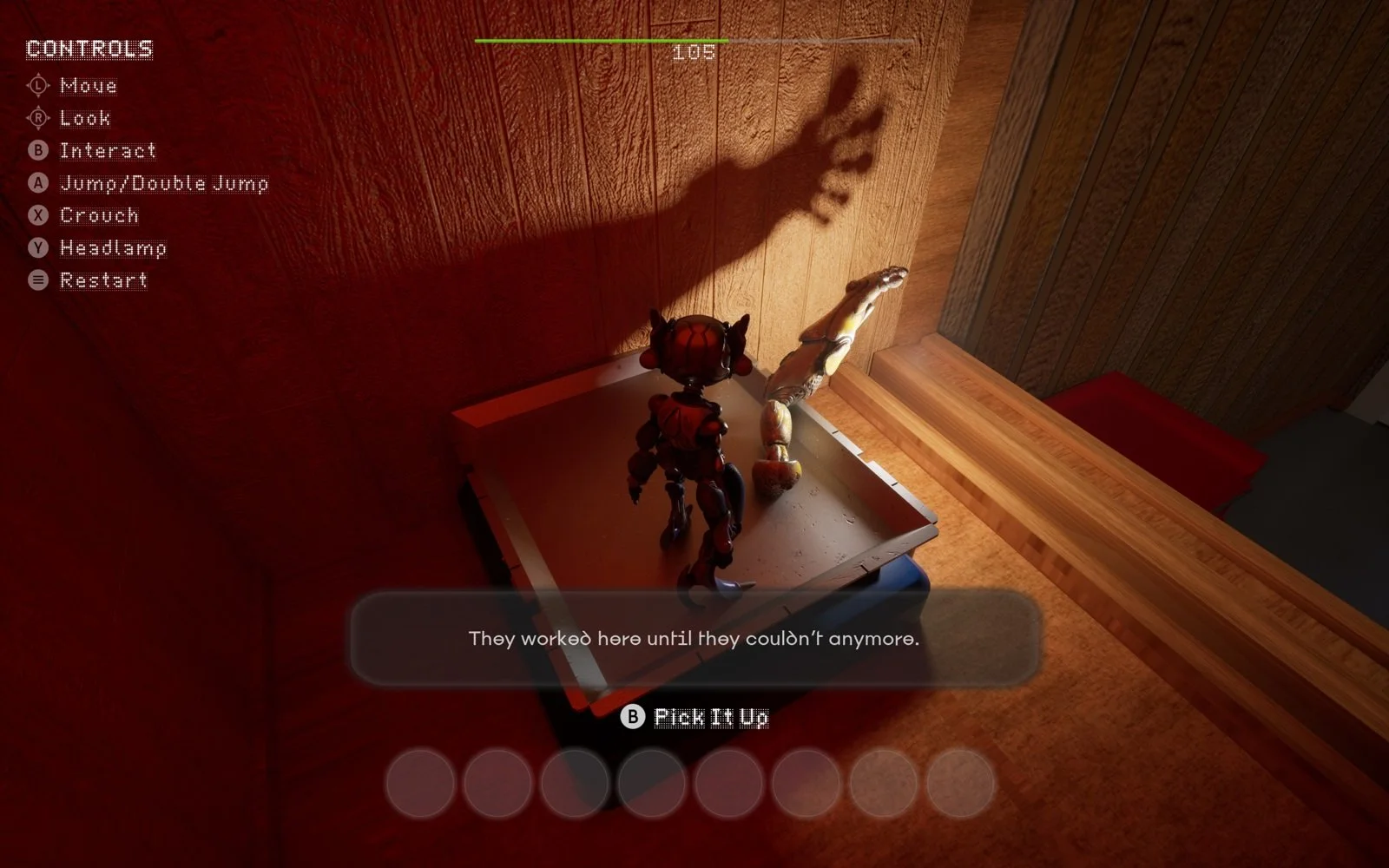
Lawrence Lek
Guanyin II - The Caretaker, 2026 [Still] Video game and video loop
duration: 4 min
© Lawrence Lek. Courtesy the Artist and Sadie Coles HQ, London. Commissioned for V&A East New Work programme
Fast forward to 2026, and you are exhibiting ‘Guanyin II: The Caretaker’ at V&A East. Can you speak on the process of looking at this space, as a place where multiple timelines, and narratives, converge? Did you see a relation to your own practice of ‘worldbuilding’, and in which way would you illustrate this further?
‘Guanyin II’, as the name suggests, is the second chapter in my ‘Guanyin’ series of video games. Guanyin has been a recurring character in my work since ‘Geomancer’ (2017). Named after the Buddhist goddess of compassion, she’s what I call an AI carebot. At the V&A East Storehouse, the V&A’s archive, I wanted to focus less on the colonial history of the collection and more on what care looks like when it’s embodied in objects. In museums, objects have to be looked after in a very specific way. And of course there’s the fascinating job of the conservator, whose profession is to care for these objects and repair them.
When I first visited the Storehouse, before the artefacts had been moved in, I was really drawn to two spaces: the conservation studios, where the conservators maintain the works. So, I had this idea that Guanyin had been reincarnated as a conservation robot, and I wanted to make a video game where she is tasked with caring for the collection. I’m also very interested in work and labour, so ‘Guanyin II’ is a job simulator. You play as C-0181, a carebot on its first day at work, whose predecessor disappeared in the middle of a repair.
Going back to my earliest virtual worlds, around 2012, I thought that a really basic form of utopia is access. In video games especially, I’m interested in subverting the usual rules about who gets access to what, and that’s always been an interesting vantage point for me.
In 2014, I made a London-style Tube line simulator called ‘Sky Line’ for Art Licks, a weekend festival that brought together project spaces from across the city. I started thinking about it in relation to my architecture studies, where so much of the emphasis is on creating a great building or making a great statement. So, I thought, what if I made a video game whose only purpose was to commemorate these spaces and connect them? ‘Sky Line’ is literally a floating Tube line with five stops. Each stop features the artist-run galleries and project spaces taking part in the festival. Many of these spaces were ephemeral. They were in somebody’s flat or under a railway arch, so they only had a temporary presence. To me, the video game, or the virtual world, is where we can preserve these forms of memory, so that people in the future can access them too.
‘Guanyin II’ comes from the same idea, where you can access places, you can’t go. But fast forward over a decade, and I’ve been thinking a lot about who the workers of the future will be, and where they will go.
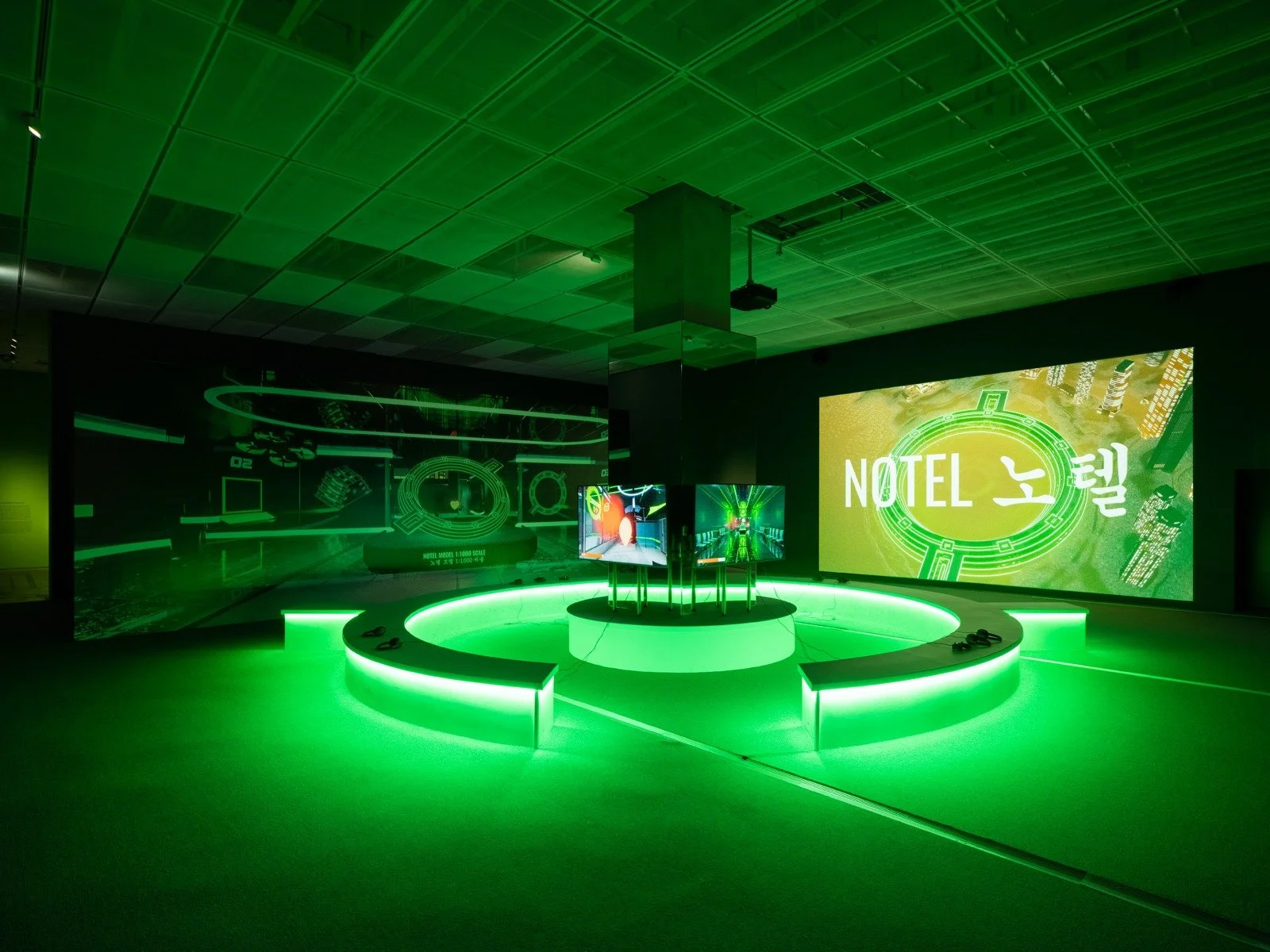
Lawrence Lek
Installation view, Game Society, MMCA National Museum of Modern and Contemporary Art, Seoul, 12 May - 10 September 2023
© Lawrence Lek. MMCA National Musuem of Modern and Contemporary Art, Seoul. Photo: Hong Cheolk

Lawrence Lek
Installation view, Game Society, MMCA National Museum of Modern and Contemporary Art, Seoul, 12 May - 10 September 2023
© Lawrence Lek. MMCA National Musuem of Modern and Contemporary Art, Seoul. Photo: Hong Cheolki
Words by Sabrina Roman
What to read next