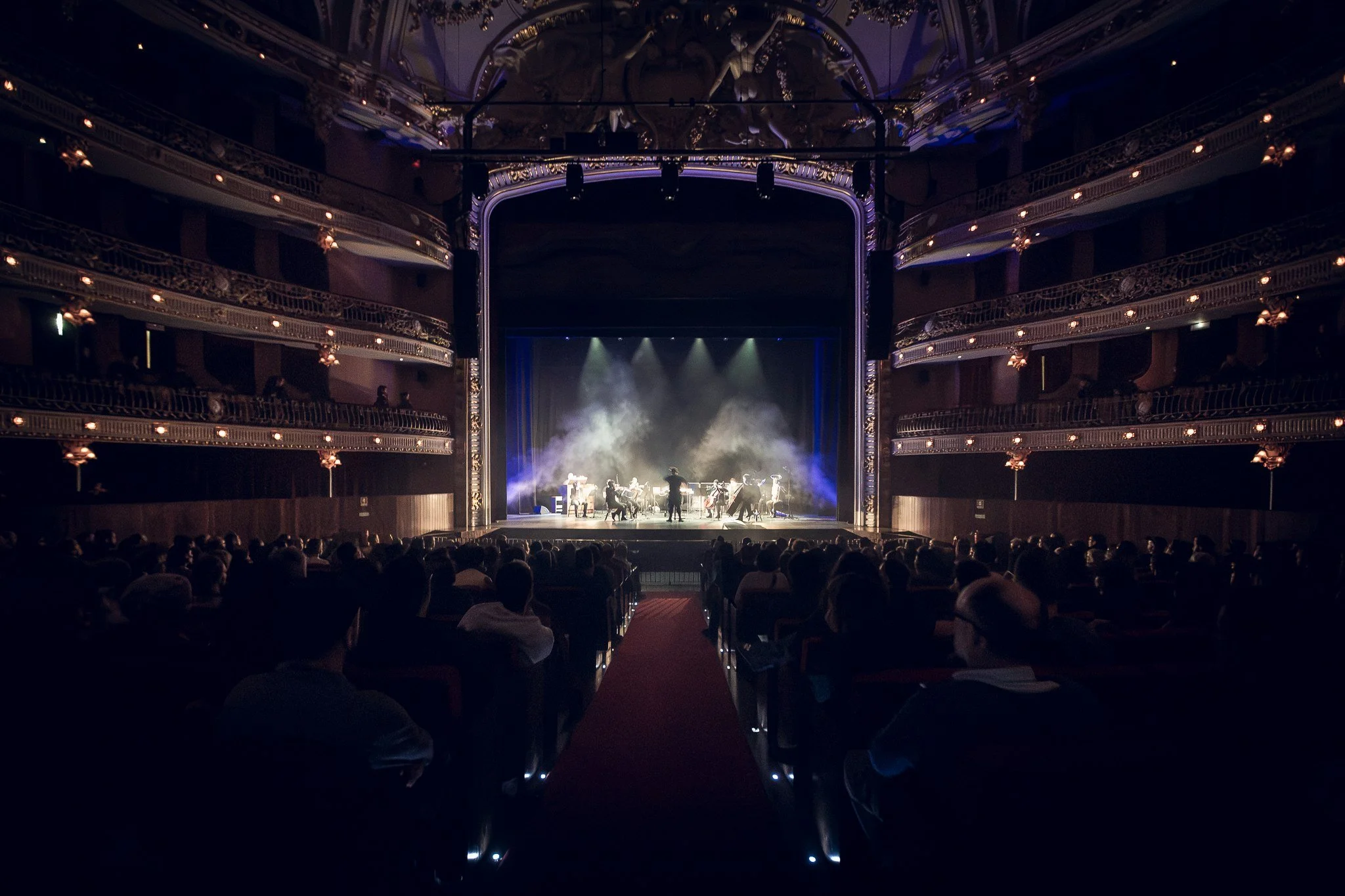
Re-imaginings, Kaari Upson and Jannis Kounellis at MASI Lugano
Re-imaginings. Mai-Thu Perret and Una Szeemann
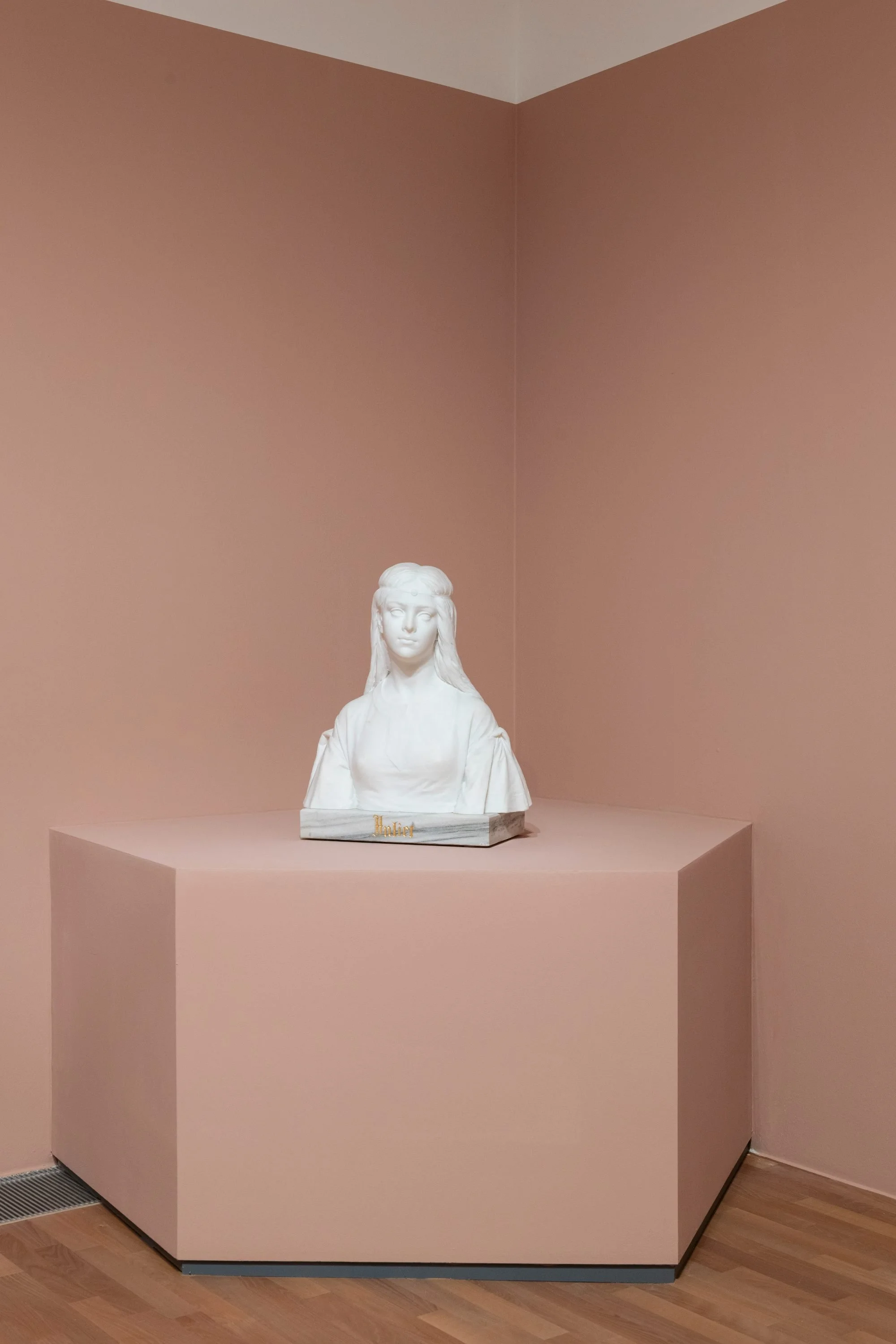
Re-imaginings opens Letizia Ragaglia's tenure as director of MASI. The project pairs two solo exhibitions, by Mai-Thu Perret (Geneva, 1976) and Una Szeemann (Locarno, 1975), in a single hall at LAC. Ragaglia has long invited contemporary artists to work with the holdings of the museums she leads, and here each artist chose works from the MASI collection to show beside her own, 25 in total. The choices read like portraits. Perret reached for mythology and archaeology. Szeemann, who grew up near Locarno, picked works tied to Monte Verità and the Ticino landscape.
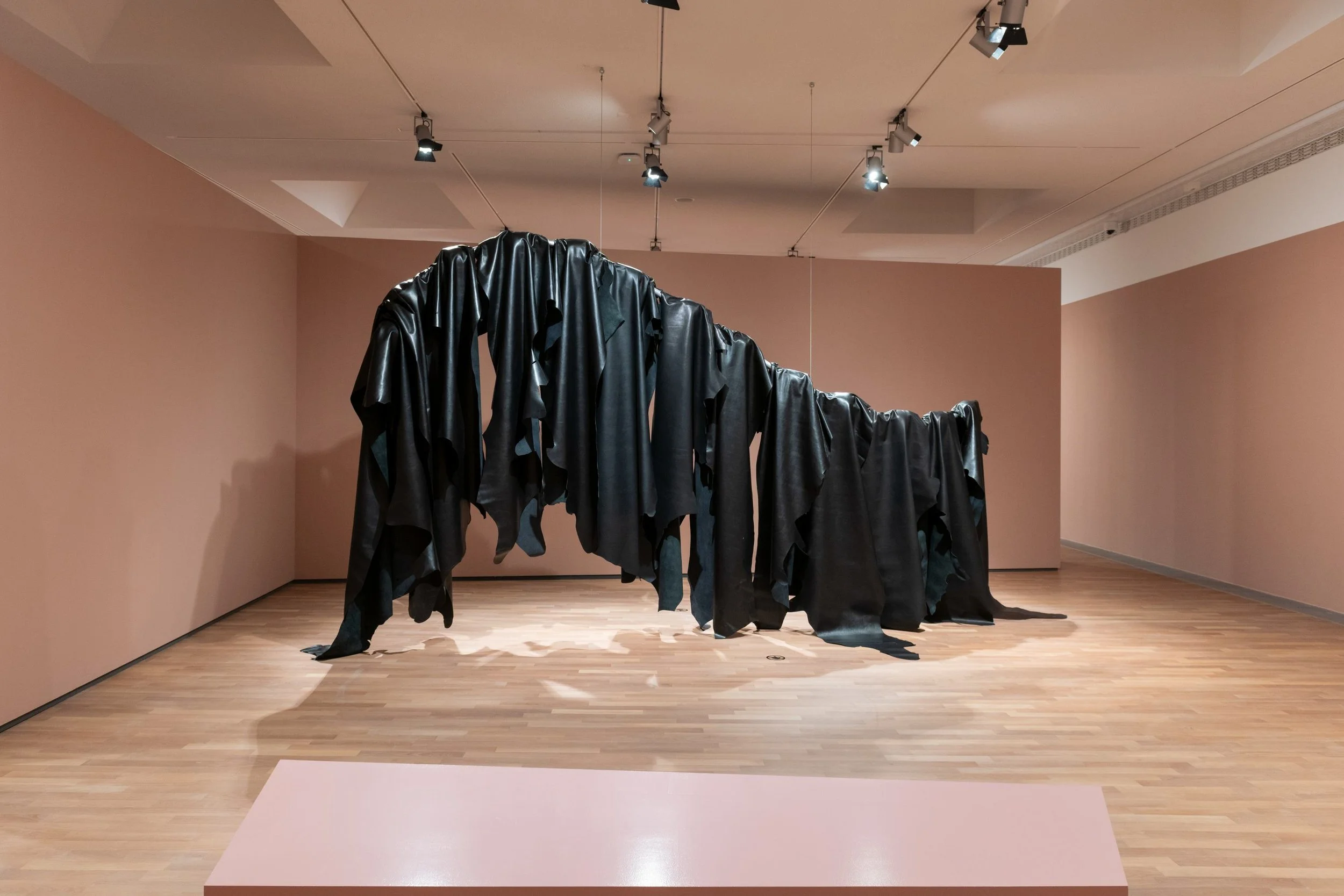
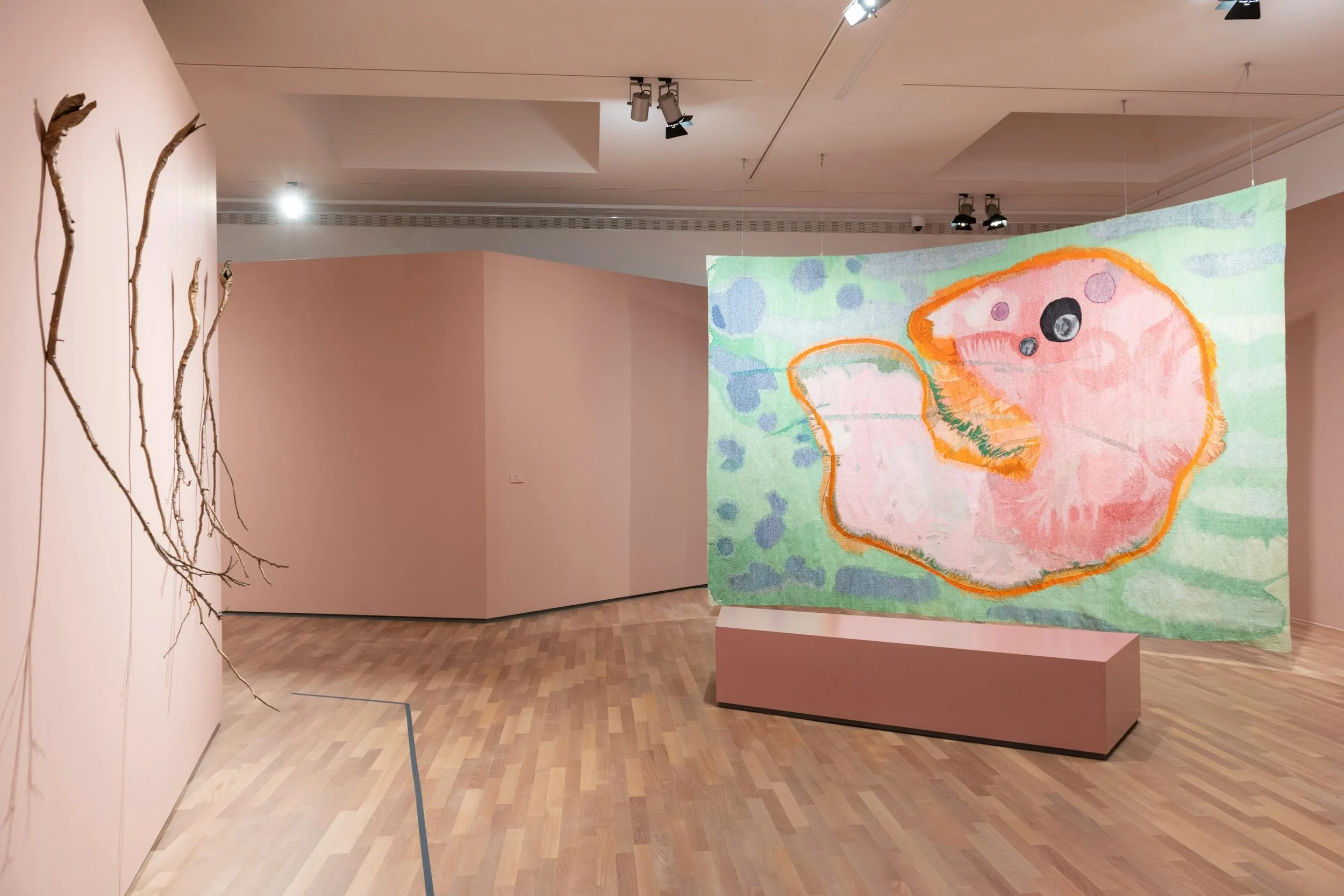
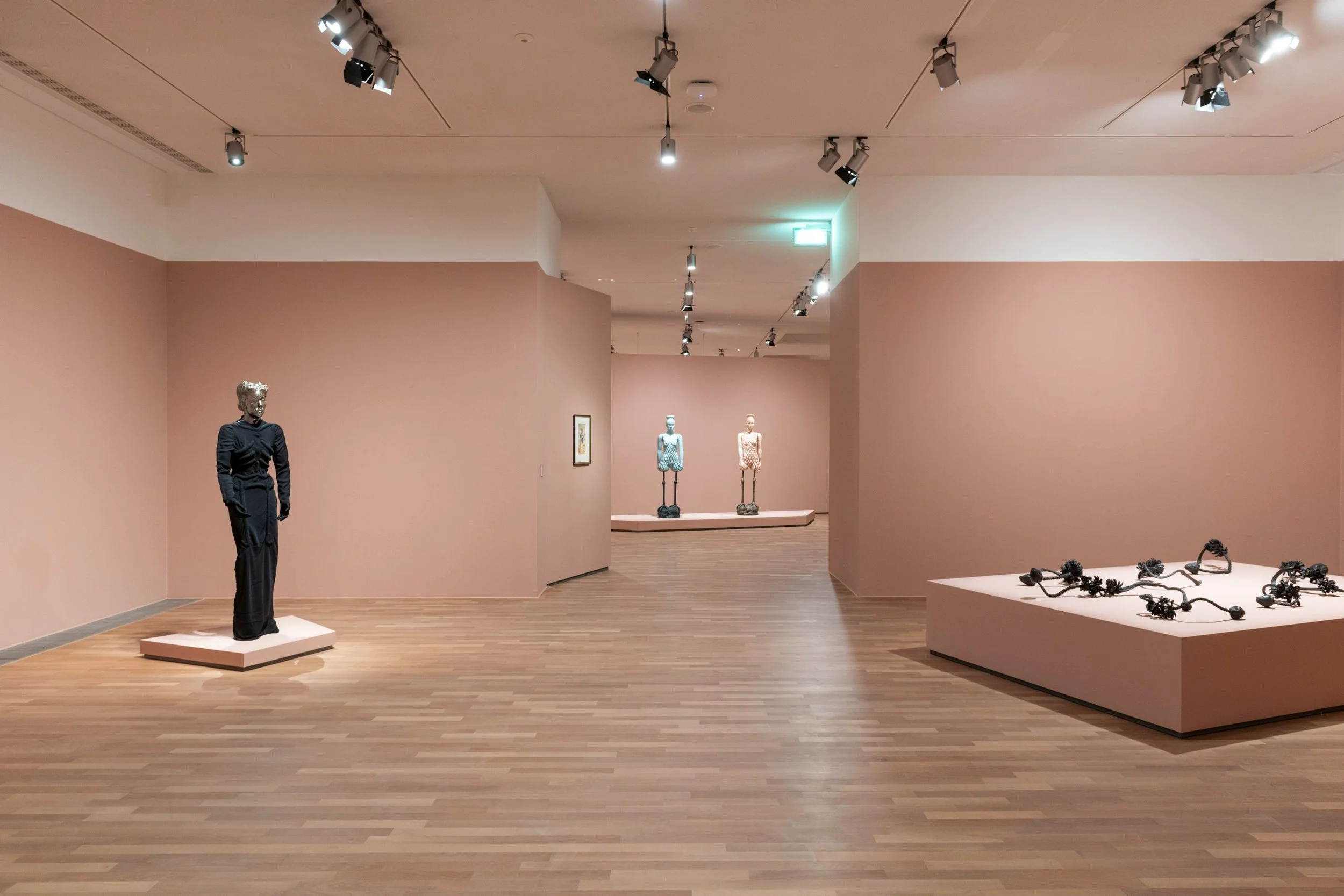
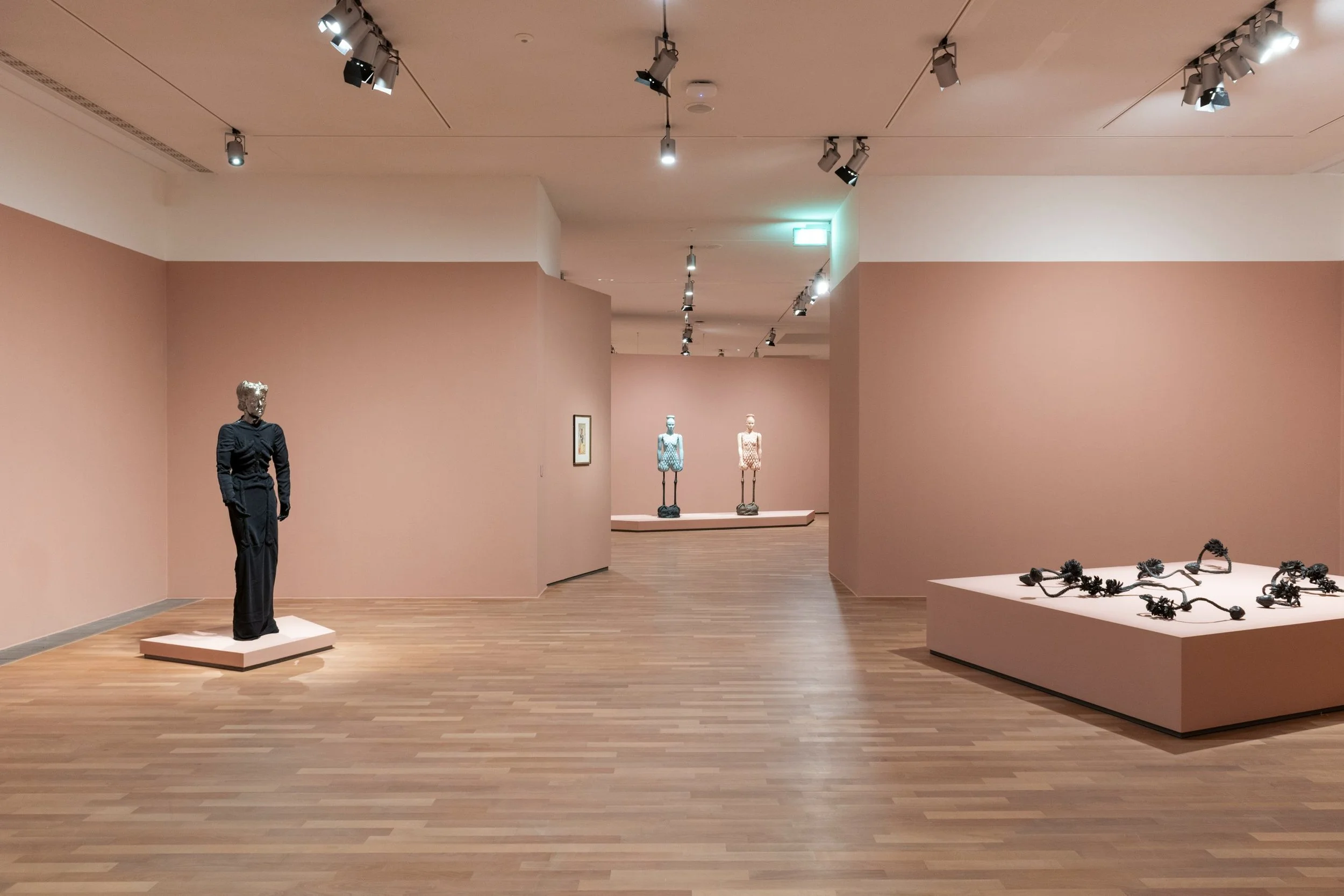
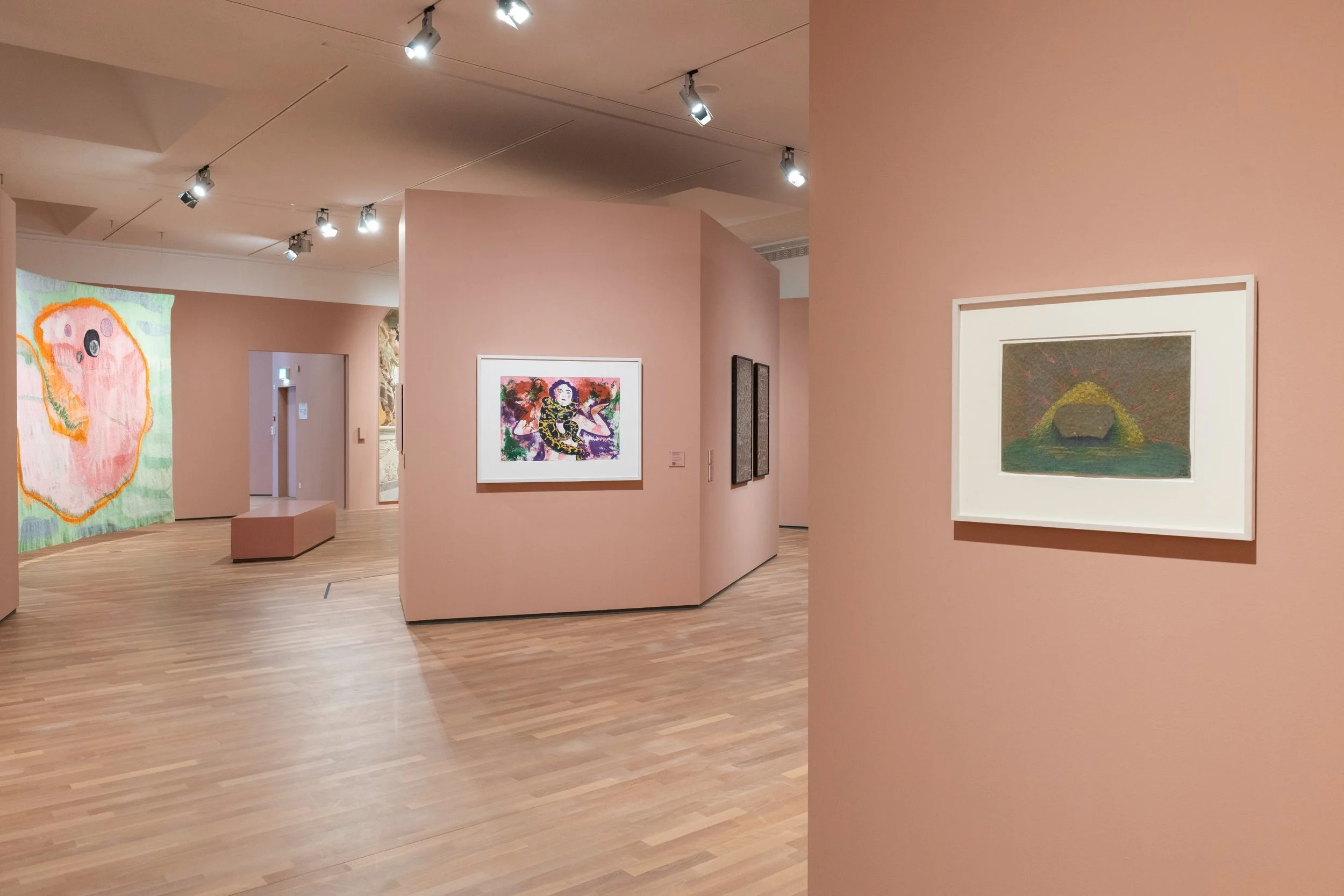
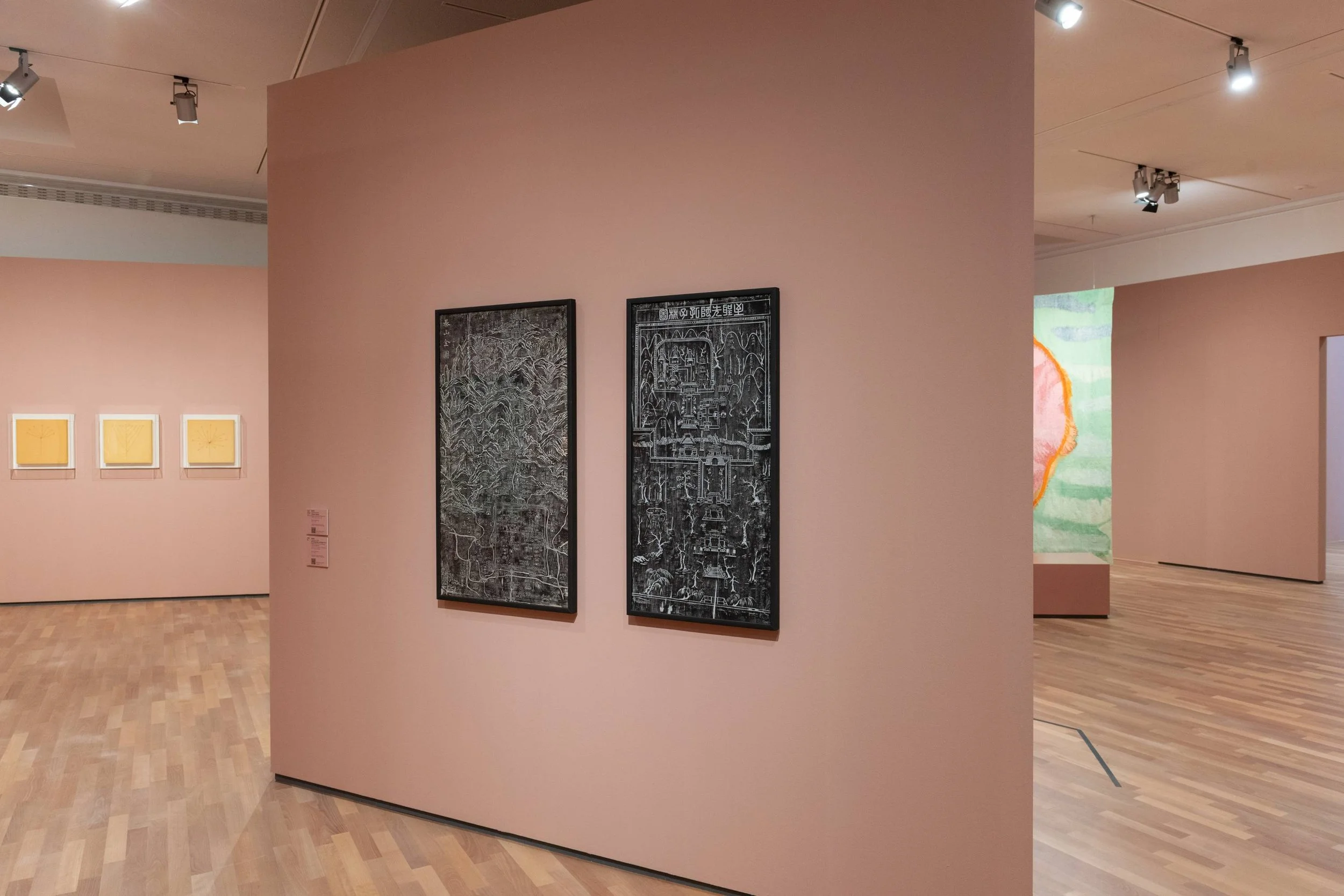
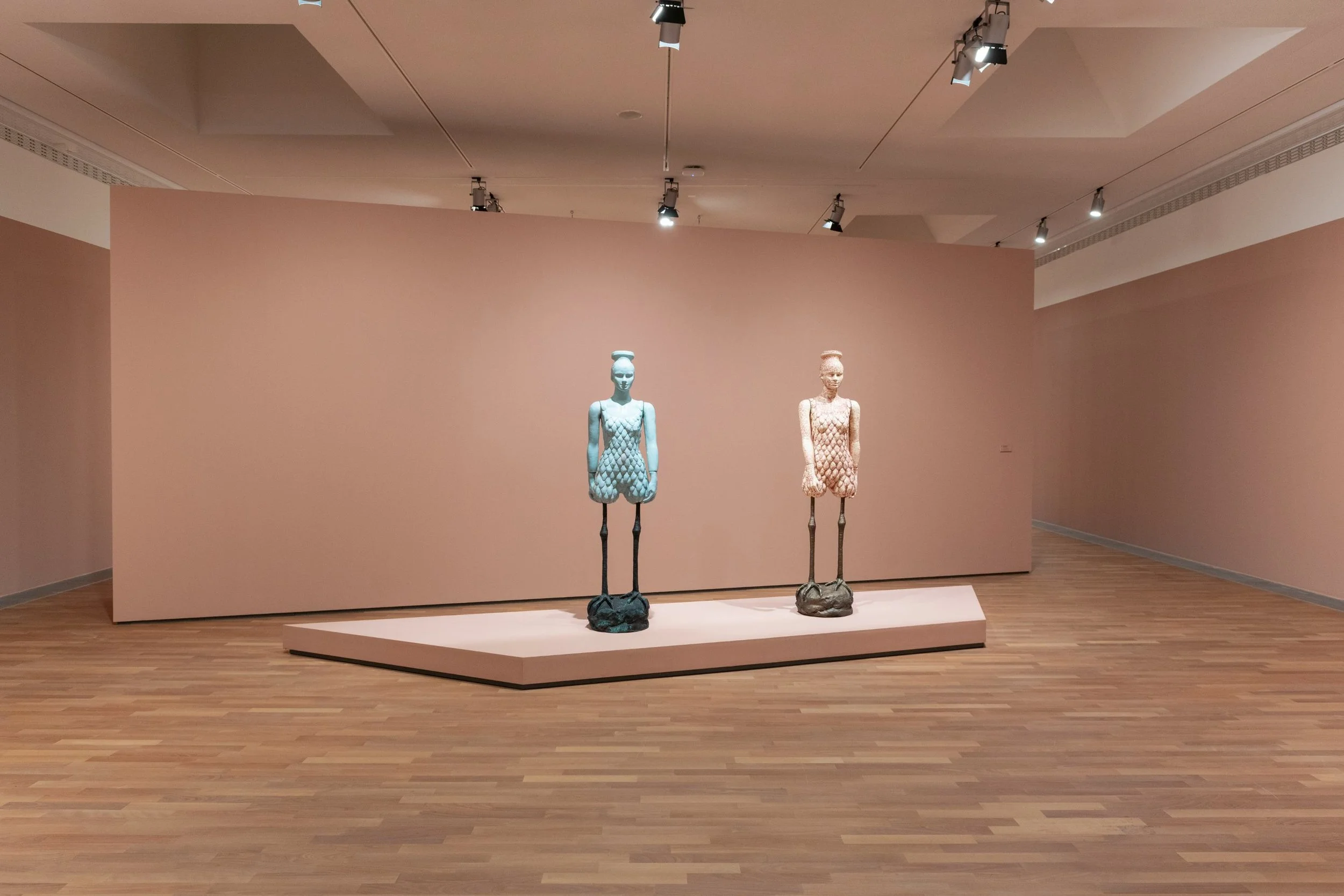
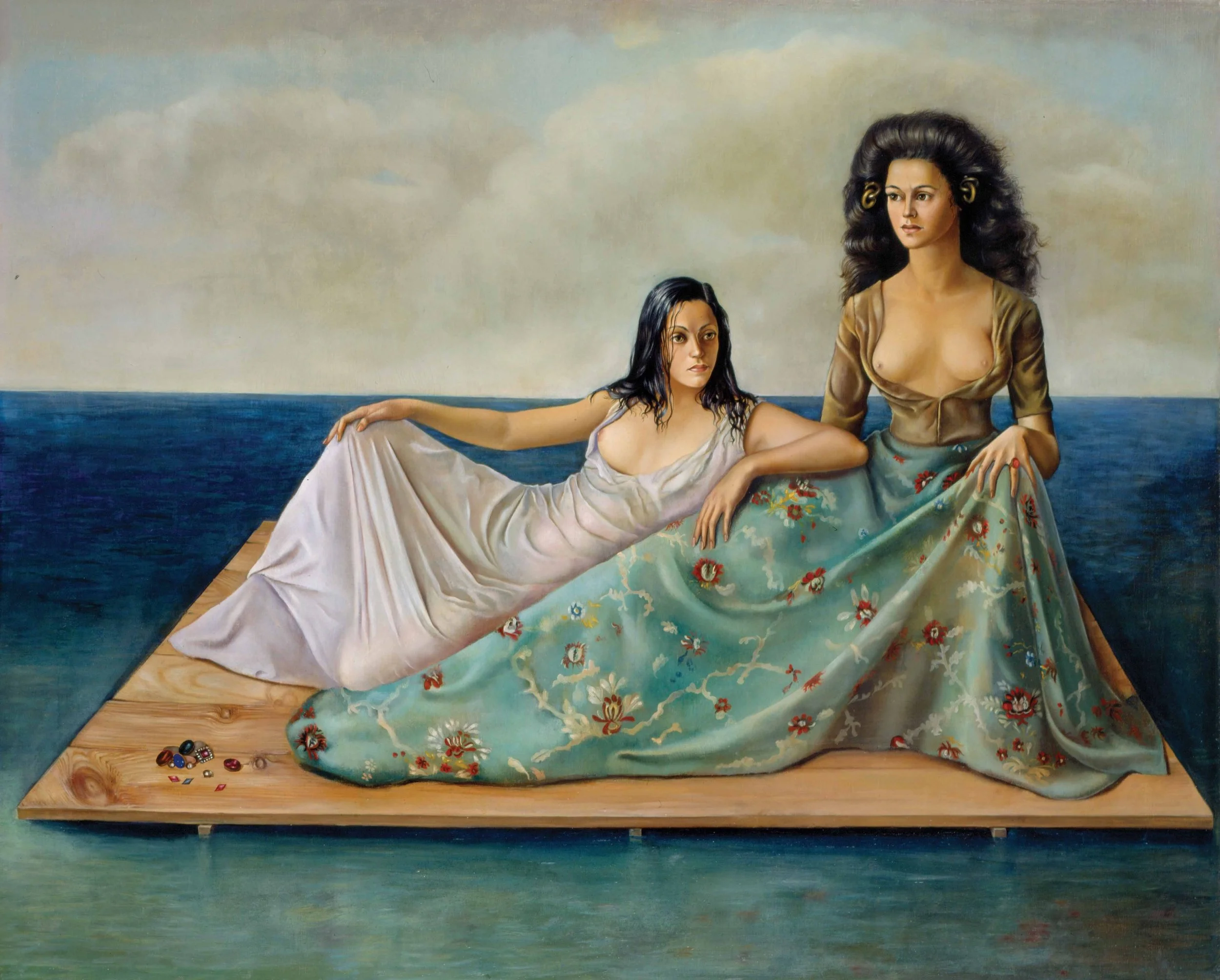
Marco Palmieri Studio designed the setting against the straight lines of the original room. Angled walls draw a triangular geometry, perspectives tilt, and visitors zigzag from one work to the next, each work set in its own carved-out space. A single earthy, flesh-toned colour, drawn from the palettes of both artists, wraps the whole hall. One painting appears on both lists: Le radeau by Leonor Fini. Two women look straight at the viewer, proud and self-possessed, perfectly able to save themselves. It sets the tone for a show where both artists build on female iconography and a female point of view.
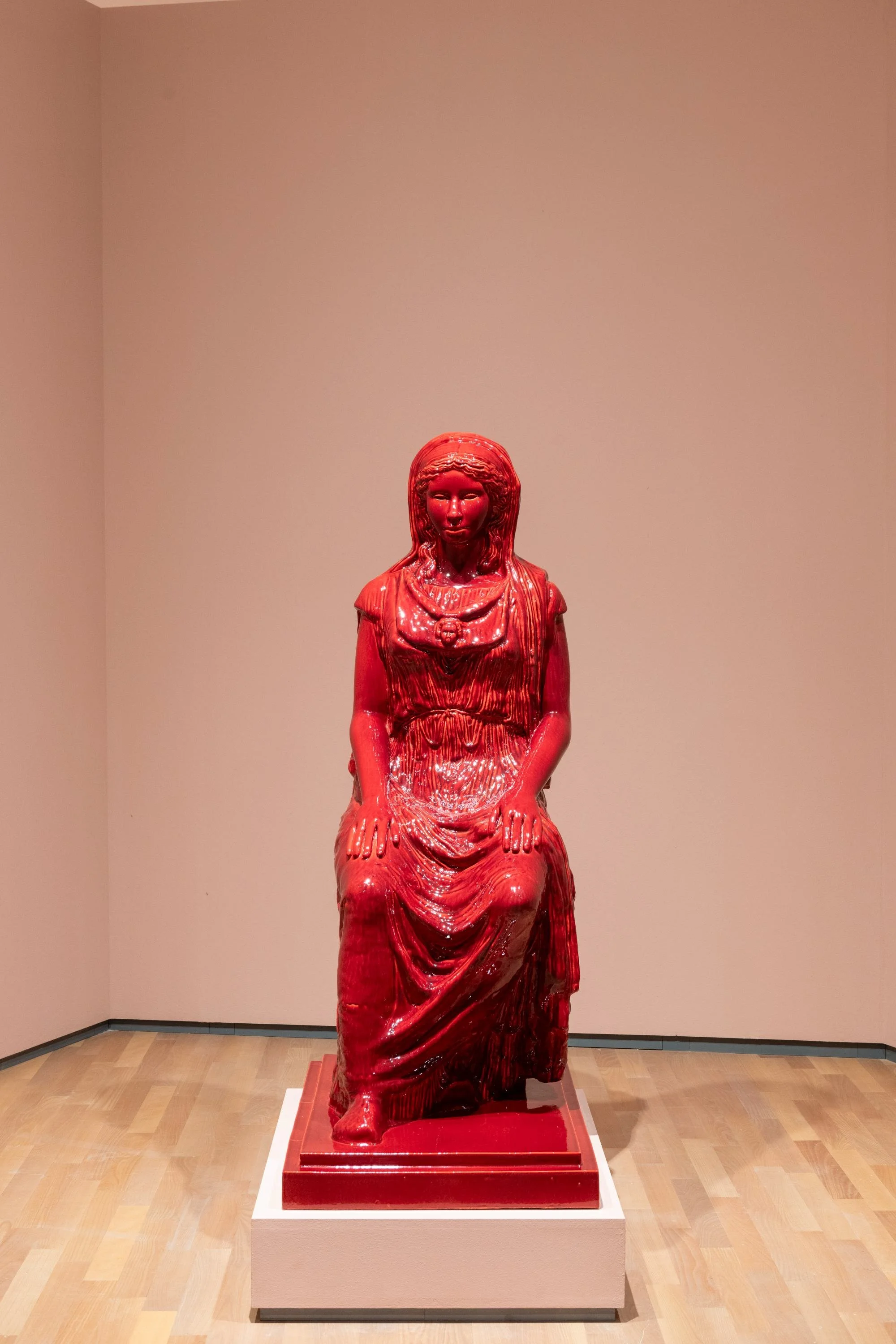
The first room belongs to Perret's Flow My Tears I, made for the 2011 Venice Biennale. It grew from her 2010 film In Darkness Let Me Dwell, in which the performer Tamara Barnett-Herrin wears a replica of the skeleton dress Elsa Schiaparelli designed with Salvador Dalí and descends into the underworld, like Orpheus, in search of release. The sculpture folds a male and a female figure into one hybrid body. Perret presents five works in this vein, sirens and goddesses drawn from myth and archaeology, figures that take apart the patriarchal tradition that shaped how women were seen for centuries. Nut, the Egyptian sky goddess, swallows the sun each evening and gives birth to it again each morning. Perret renders her as a spare, almost architectural structure, a body that holds the cycle of time.
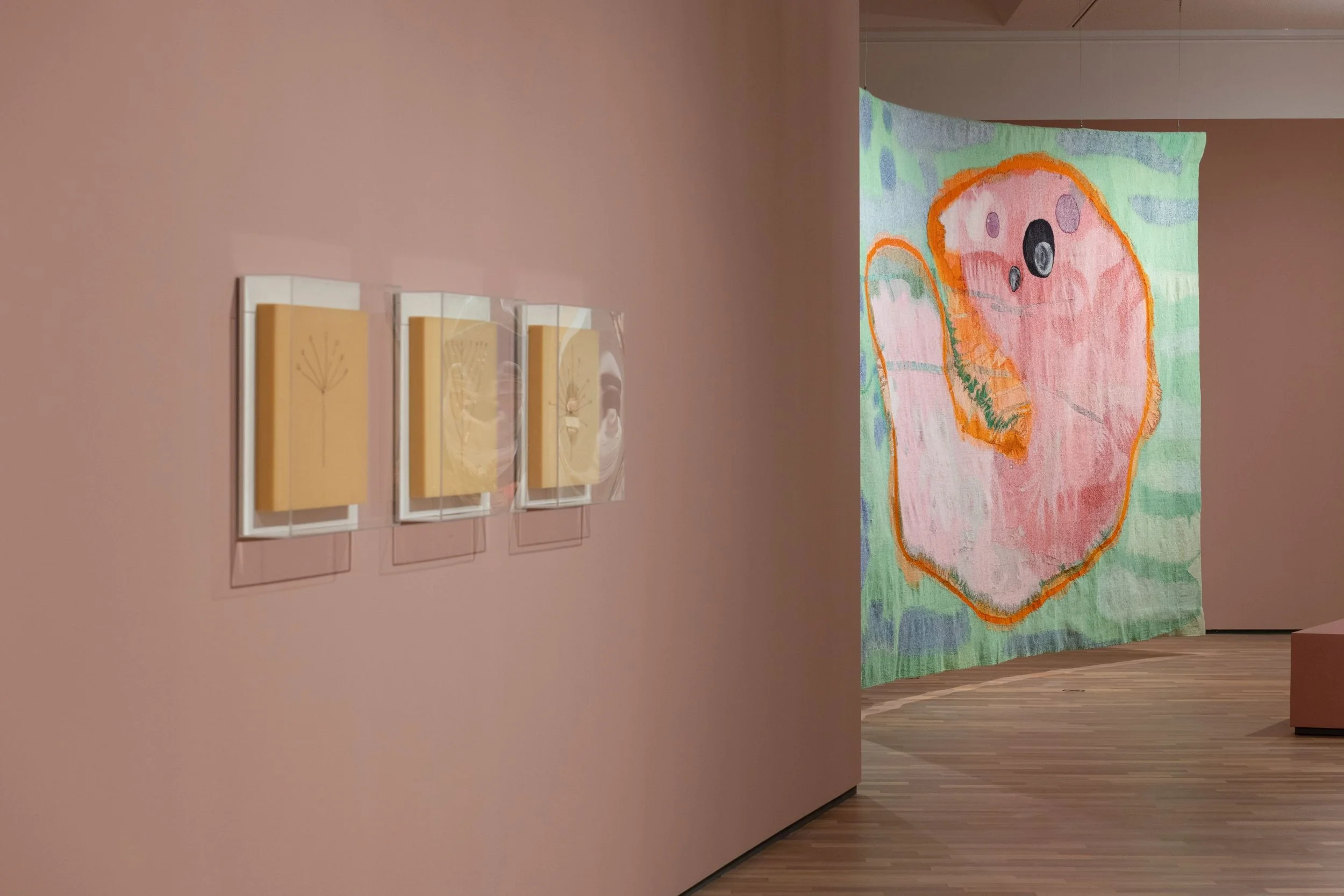
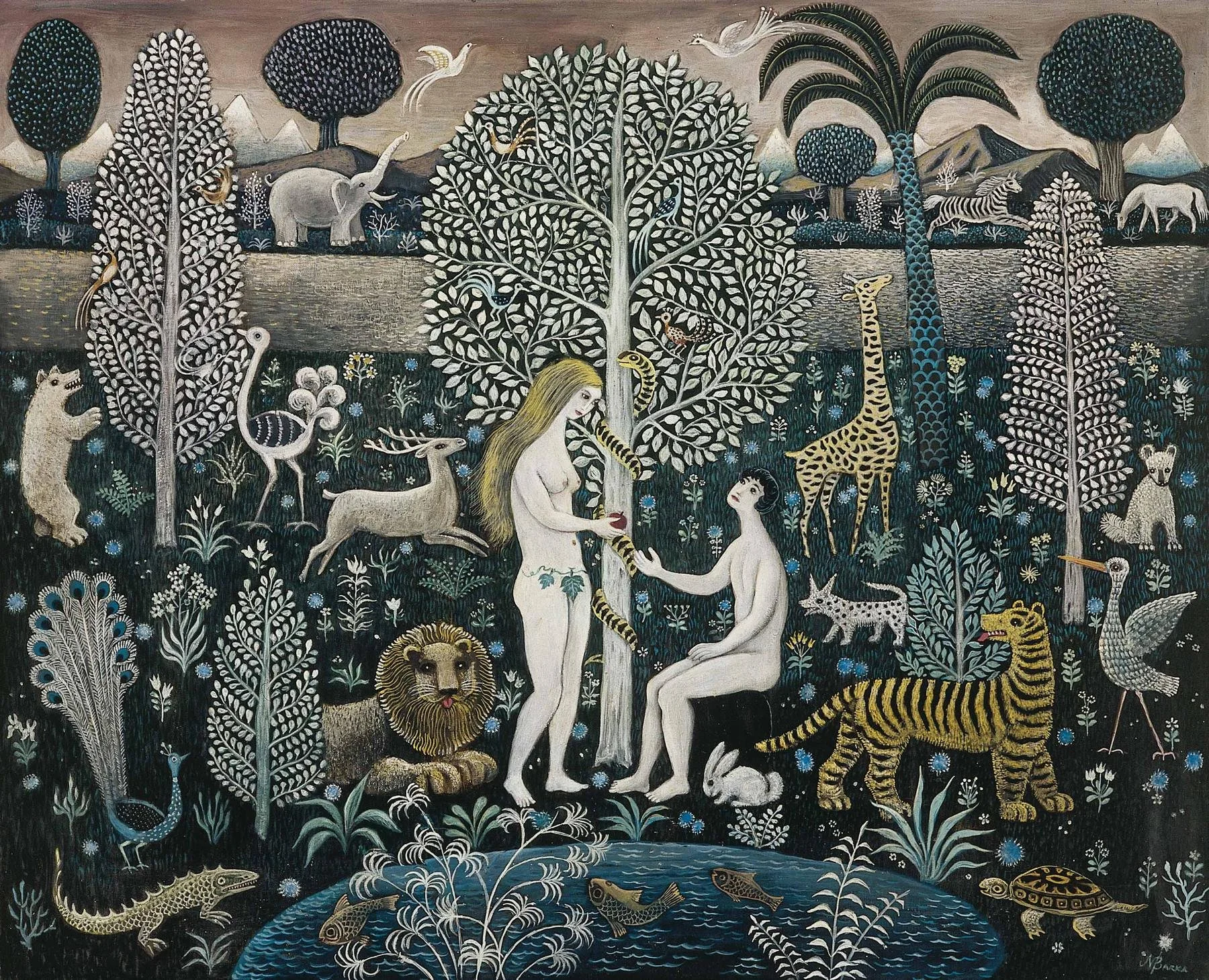
Szeemann works on another scale, from the microcosm to the cosmos. Her series The Birds Said You Move casts banana flowers in bronze. The title comes from a legend in Myanmar, where people say they learned to eat bananas by watching birds: knowledge handed from animals to humans. She places the casts as offerings to the gods. Nearby, branches of chestnut, ash and lime from her garden in Ticino, cast in metal, recall lightning bolts and witches' brooms. They point to pre-Christian Europe and to the rituals linked to Monte Verità, the hill above Ascona where theosophists and utopians gathered in the early twentieth century.
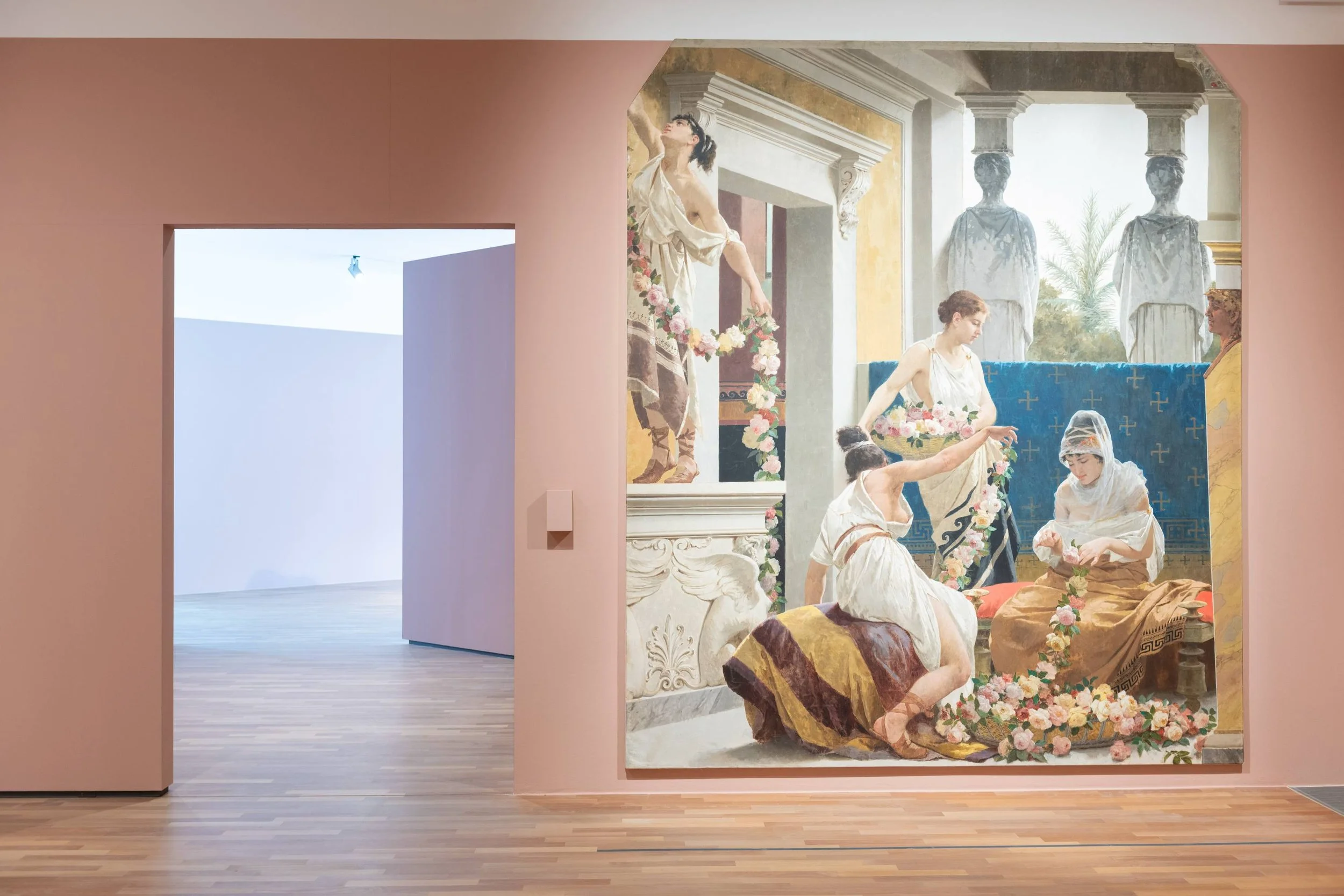
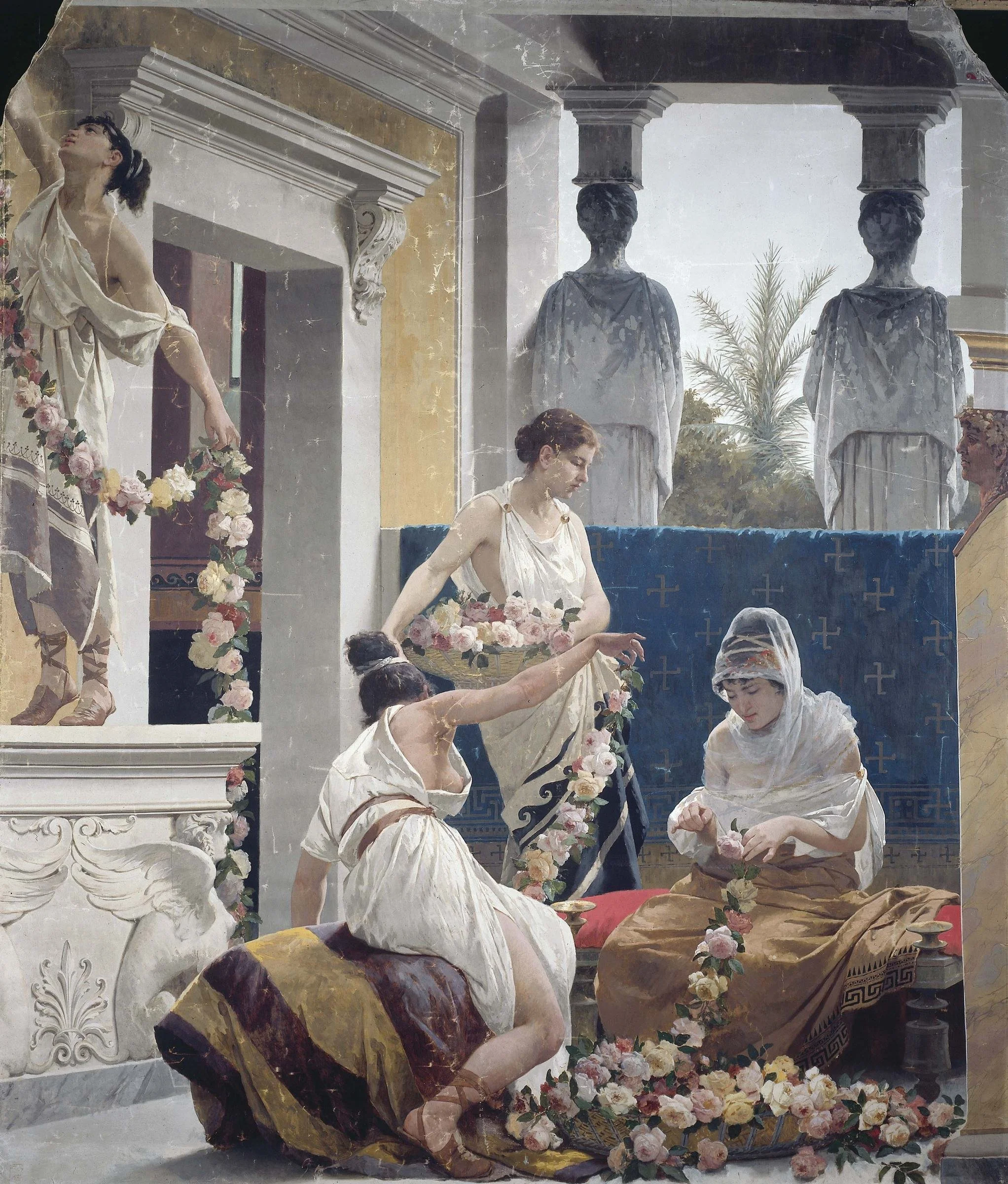
The ties run deep. Szeemann is the daughter of Harald Szeemann, the Swiss curator who devoted a landmark exhibition to Monte Verità in the 1970s. The hill also lies on the Insubric Line, the geological seam where the African and European plates meet, and Szeemann speaks of a magnetism there that she wants to carry into her work. Her selection from the collection follows the same pull, and includes a fresco from a villa in Lugano, shown here for the first time.
The two artists speak different languages, yet their works answer each other across the hall. Perret looks to myth to rewrite the female body; Szeemann looks to nature and ritual to connect every scale of life. Ragaglia's first exhibition at MASI makes that conversation the point, and lets the collection take part in it.
Artists: Mai-Thu Perret and Una Szeemann
Curated by Letizia Ragaglia
Kaari Upson. Dollhouse
In the underground galleries of LAC in Lugano, MASI gives Kaari Upson (1970–2021) her first major posthumous retrospective. Curated by Francesca Benini and Taisse Grandi Venturi, Dollhouse closes a touring project produced by the Louisiana Museum of Modern Art with Kunsthalle Mannheim, and gathers fifteen years of work around a single monumental house.
Upson came to art late. She trained as a scenic painter in New York, painting sets for film and television, then enrolled at CalArts in her mid thirties. Her career lasted around fifteen years and ran at full speed. Benini prepared the show with Michael Benevento, a Los Angeles gallerist and close friend who worked almost as Upson's studio assistant, and who spent two weeks in Lugano for the installation. Through him the curators learned how Upson worked: ten pieces in progress at once, each one feeding the next. The exhibition follows a loose chronology in five sections, from When Kaari Met Larry to Body, Memory, Decay, a gentle guide for a public meeting her for the first time, and the open rooms keep the threads between projects in plain view.
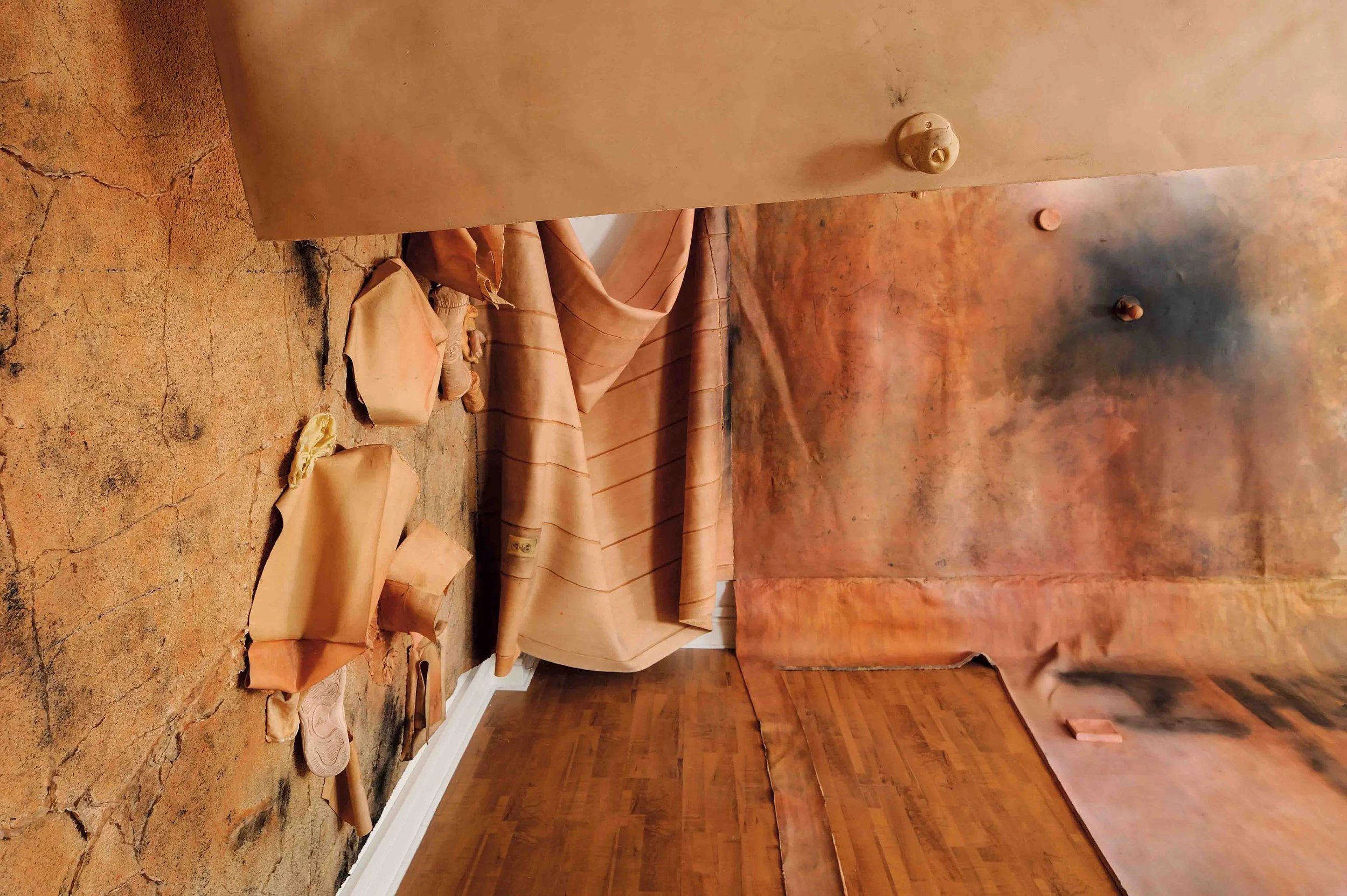
The first room holds the Larry Project (2005–2012), begun while Upson was still at CalArts. Larry lived across the street from Upson's parents in San Bernardino, in a McMansion run on the Hugh Hefner model, famous in the neighbourhood for loud parties and gunshots. Upson knew him only through stories. In 2003, after a fire left the house damaged and abandoned, she slipped inside and took what she found: boxes of diaries, photographs and documents. From these she built a whole persona, and wherever the record went quiet, she filled the gap with her own memories. "It's much more about herself," Benini says. Larry is still alive, and still unaware of the project.
Recollection Hysteria (2012), a room of his house rebuilt in her studio and coated in liquid latex, opens the show as a peeled skin. It is a copy of a copy, with floor, ceiling and walls turned topsy-turvy, close in spirit to Heidi Bucher and to the material freedom of Louise Bourgeois and Eva Hesse. Beside it lies the first of Upson's mattresses. Squatters had left one in every room of the house, along with graffiti reading "I hate life". A latex cast of a fence, Trespassing, marks the line she crossed between private and public. Her Kiss Paintings (2007–2008) grew out of a puppet of Larry that she photographed, filmed and embraced: a self-portrait and his portrait, pressed together while the paint was still wet, then pulled apart, one face melting into the other. In the video As Long as It Takes, Part 1: The Head (2008), Larry becomes a body she empties and wears like a second skin. Untitled (Charcoal Figures) (2009), made of wax and charcoal and cracked over the years as she expected, marks her attempt to close the obsession for good.
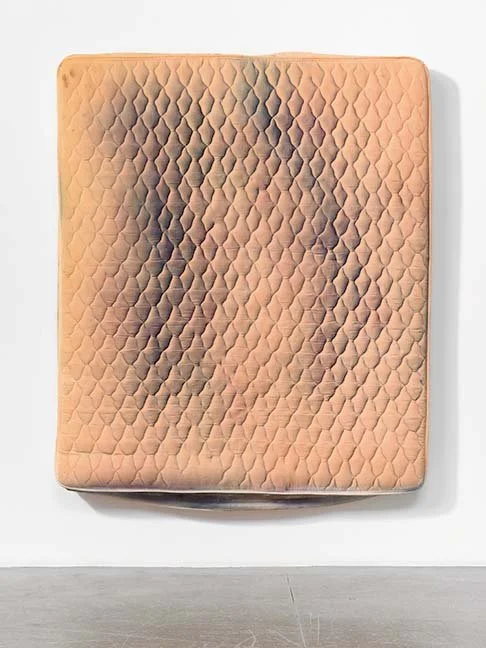
The next phase turns to furniture. For Upson the home was the place where identity takes shape, with its gender roles, its values and its traumas, and mattresses and sofas were the objects closest to the body. In a conversation with Paul McCarthy she spoke about the "yuck" of somebody else: intimacy feels fine as long as it is yours. She took soft latex molds of old mattresses and sofas found on the streets of Los Angeles and cast them in polyurethane and silicone, letting gravity pull the forms out of shape, and the casts kept whatever the originals held. Brown Recluse, named after a Californian spider, carries a mask of Angelina Jolie, along with hair and dirt lifted from the source sofa. On the mattress 192, charcoal and pigment trace the imprint of two bodies. Upson poured colour straight into the material, so painting stayed at the heart of every cast, and she welcomed the accidents. Benini puts it simply: Upson was after the gaps between real life and its copy.
At the centre stands THERE IS NO SUCH THING AS OUTSIDE (2017–2019), first shown at the 58th Venice Biennale. In Lugano visitors can walk all the way around it, which the curators believe is a first. Upson scanned the dollhouse her mother made for Upson's daughter, then cut its contents in wood with a CNC mill, the machine's grooves still visible on every surface. Among the pies and tarts she slipped in other things: objects from her daughter's childhood, pills from her cancer treatment, Larry's wig. Each time the house travels, the objects can be rearranged.
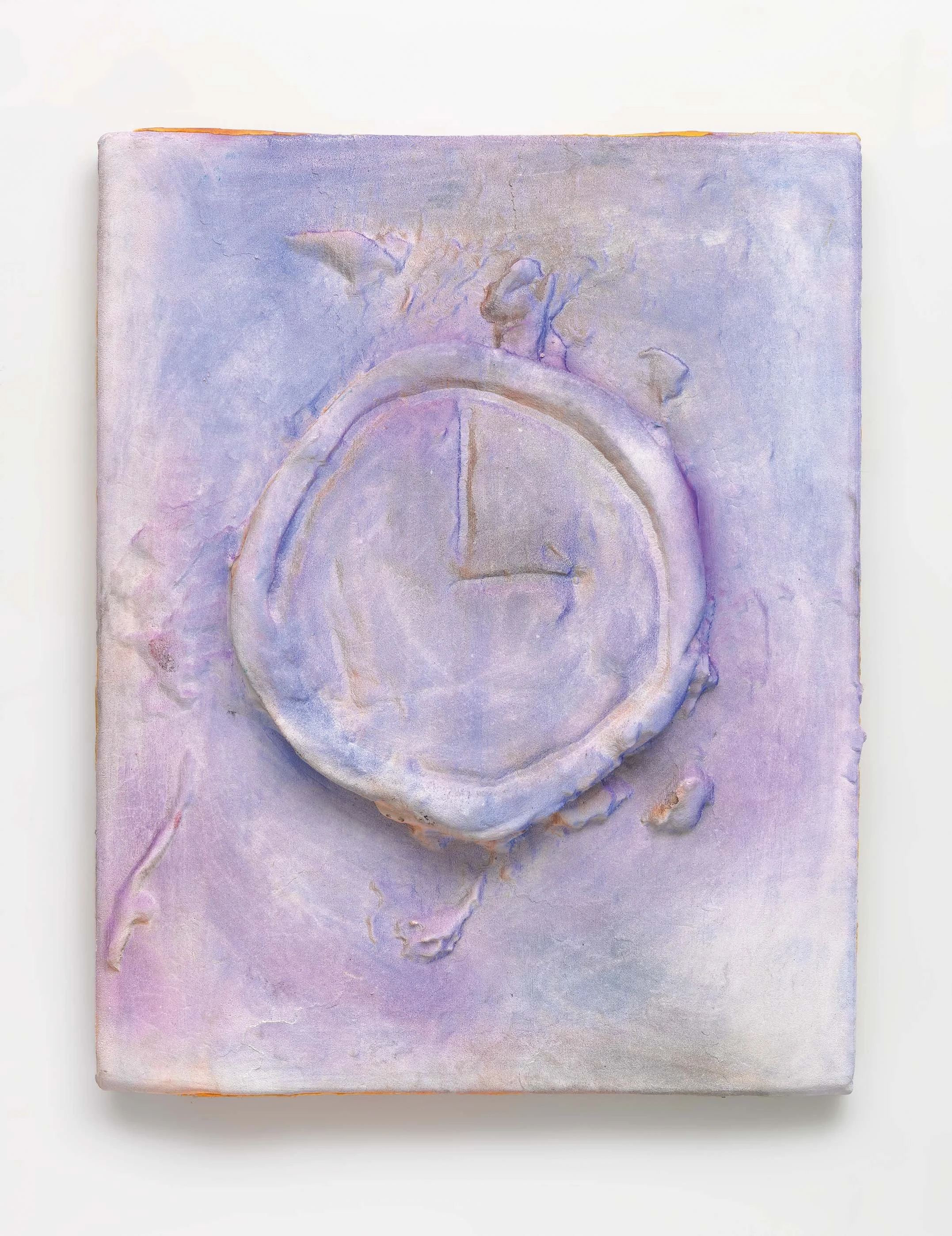
The later rooms bring in her mother, a German immigrant who became more American than the Americans. Upson modelled puppets on her clothes, stacked them on shelves like goods at Costco for her 2017 show at the New Museum, and filled works with Pepsi cans. She also gave the puppets to friends as cushions for their cats, and the cat hair is still there.
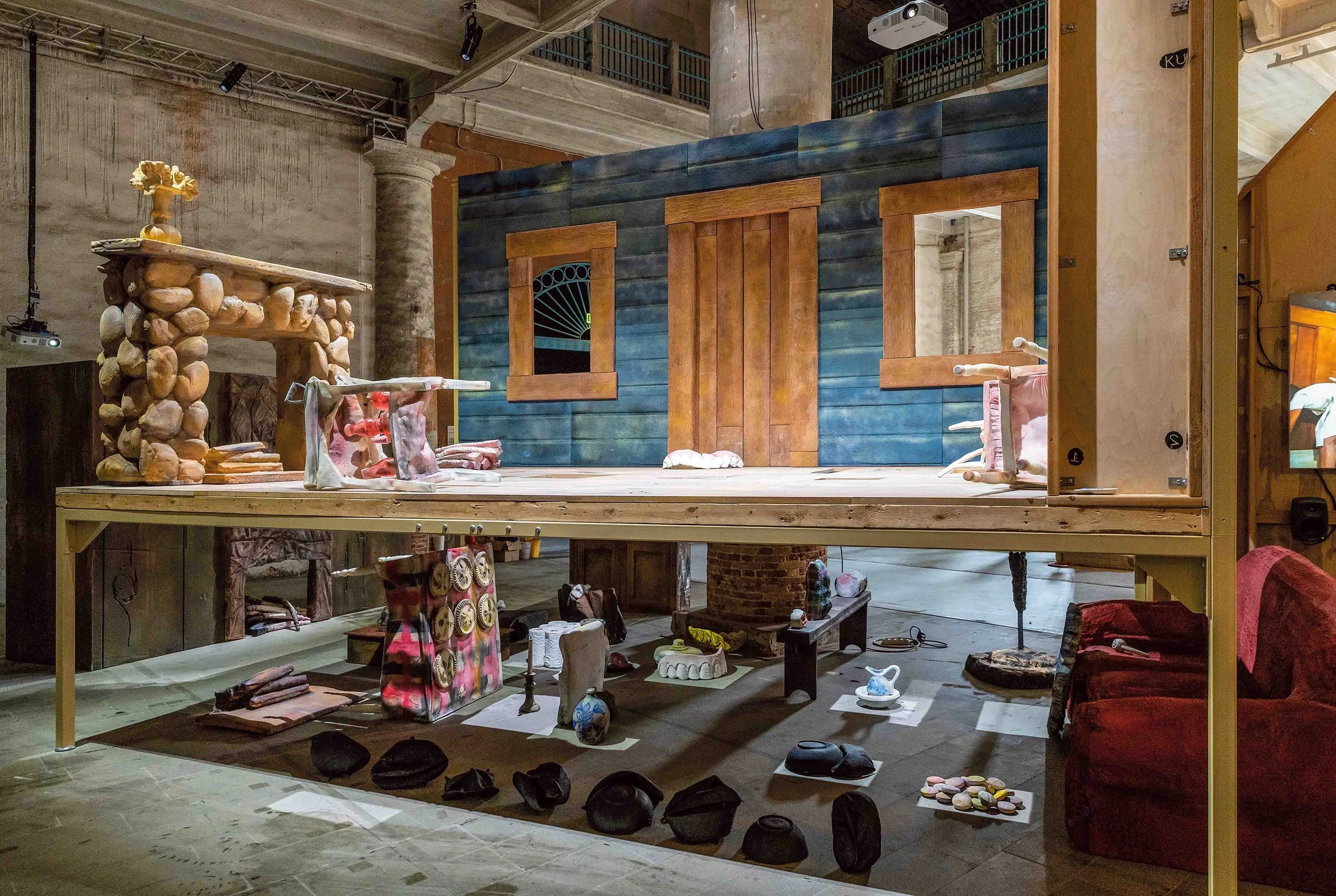
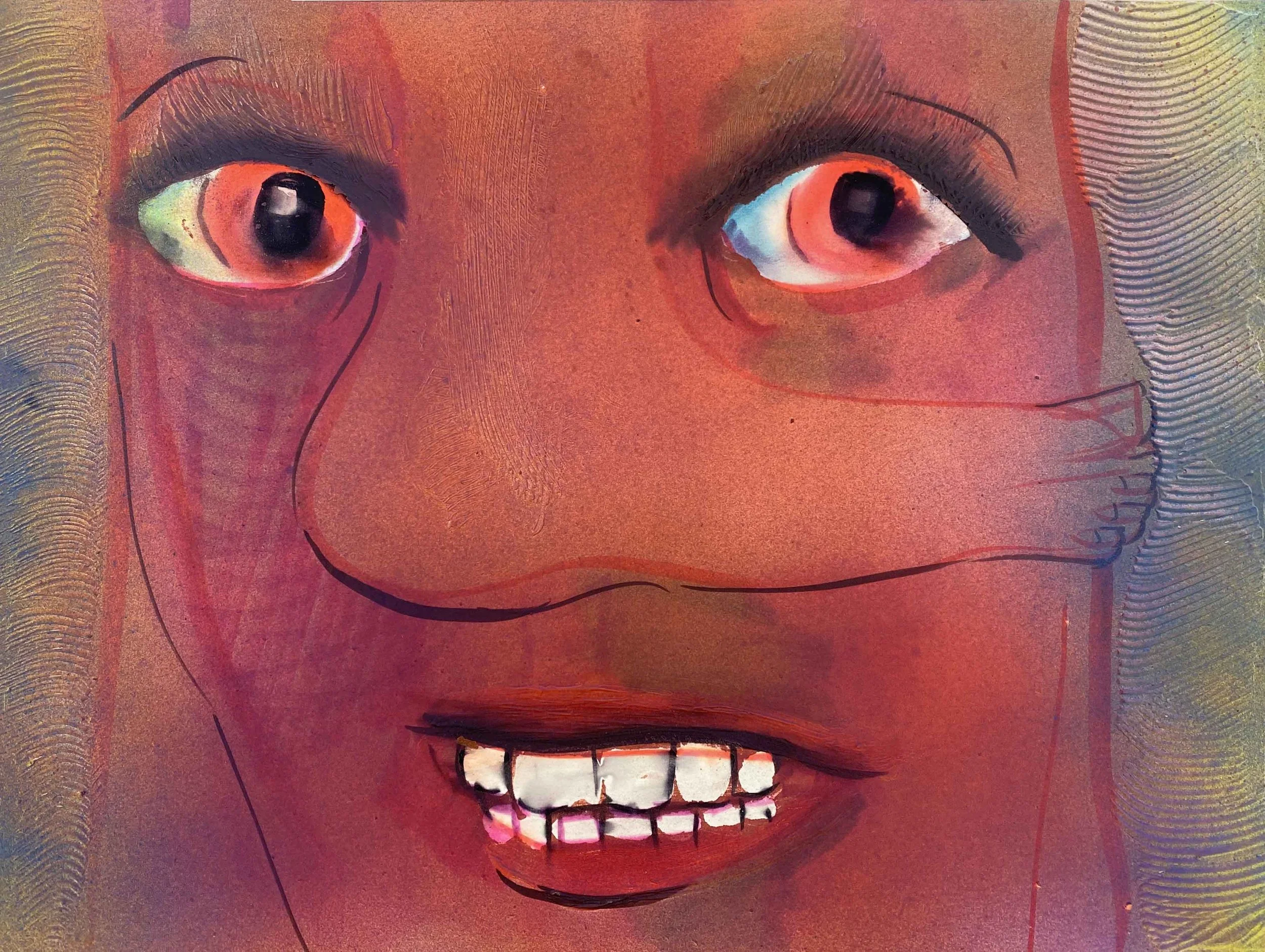
In the final section, Body, Memory, Decay, her own body takes over. Mother's Legs hangs a forest of legs from the ceiling, cast from Upson's knees and from the trunk of a tree that once grew in her parents' garden. The forms recall carcasses in a slaughterhouse and, at knee height, the comfort of a child clinging to her mother. Benini calls the effect "this mixture of attraction and repulsion". The Foot Face Paintings (2020–2021), shown here for the first time, close the show: 140 works on paper, one a day, each a wide-eyed face half covered by a foot. Upson planned a full year of them. Her death in 2021 cut the series short, and the drawings now read as a diary of her final months.
Artist: Kaari Upson
Curated by Francesca Benini and Taisse Grandi Venturi
Jannis Kounellis: Io sono un pittore
"Io sono un pittore." Jannis Kounellis (Piraeus, 1936 – Rome, 2017) said it often, and Vincenzo de Bellis takes him at his word. At the Collezione Giancarlo e Danna Olgiati in Lugano, the curator builds a whole exhibition around painting as the key to an artist better known for installations and live horses. Kounellis painted on canvas for only a few years. For the rest of his life he painted with iron, coal, fire, jute sacks and the smell of coffee. Organised with the Archivio Kounellis in Rome and with loans from GAM in Turin, the show brings together more than 35 works from the late 1950s to 2014. The catalogue, published by Mousse Publishing, gathers an introduction by Giancarlo and Danna Olgiati with essays by de Bellis and Bruno Corà.
The title carries a second layer. Greek has two words for painter, one for the man who paints houses and one for the artist: zographos, the one who writes life. The rooms follow that idea through four themes, painting as language, as matter and weight, as memory and silence, as scene and icon, with works from different decades answering each other across them. The setting adds a further echo. Last year the Collezione Olgiati showed Alberto Burri and Enrico Prampolini, two artists who pushed non-traditional materials toward abstraction. Kounellis loved Burri, and took materials in another direction, for the history and social weight they carry.
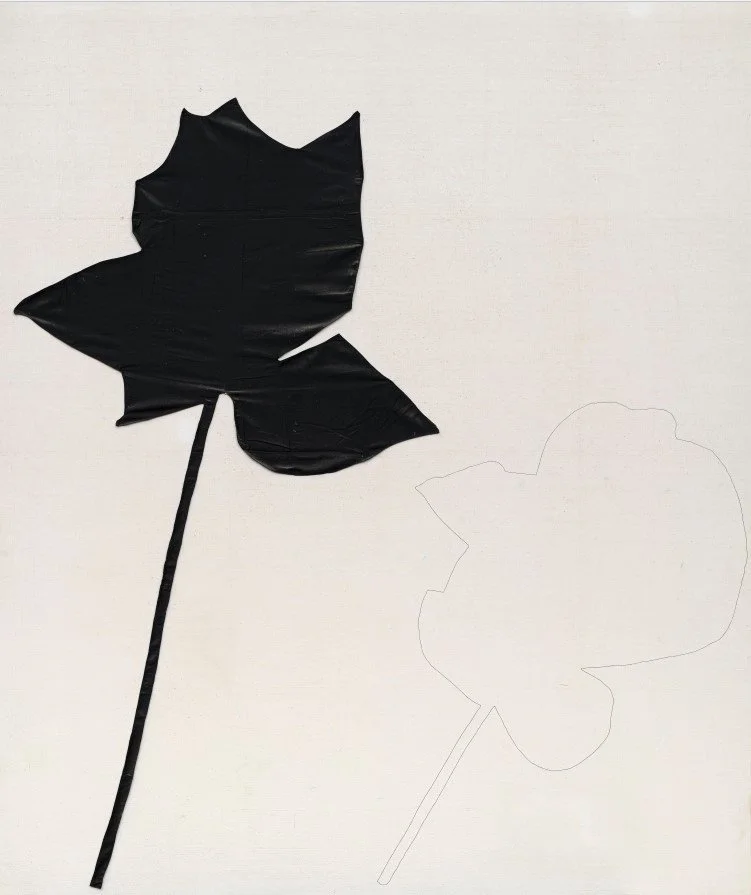
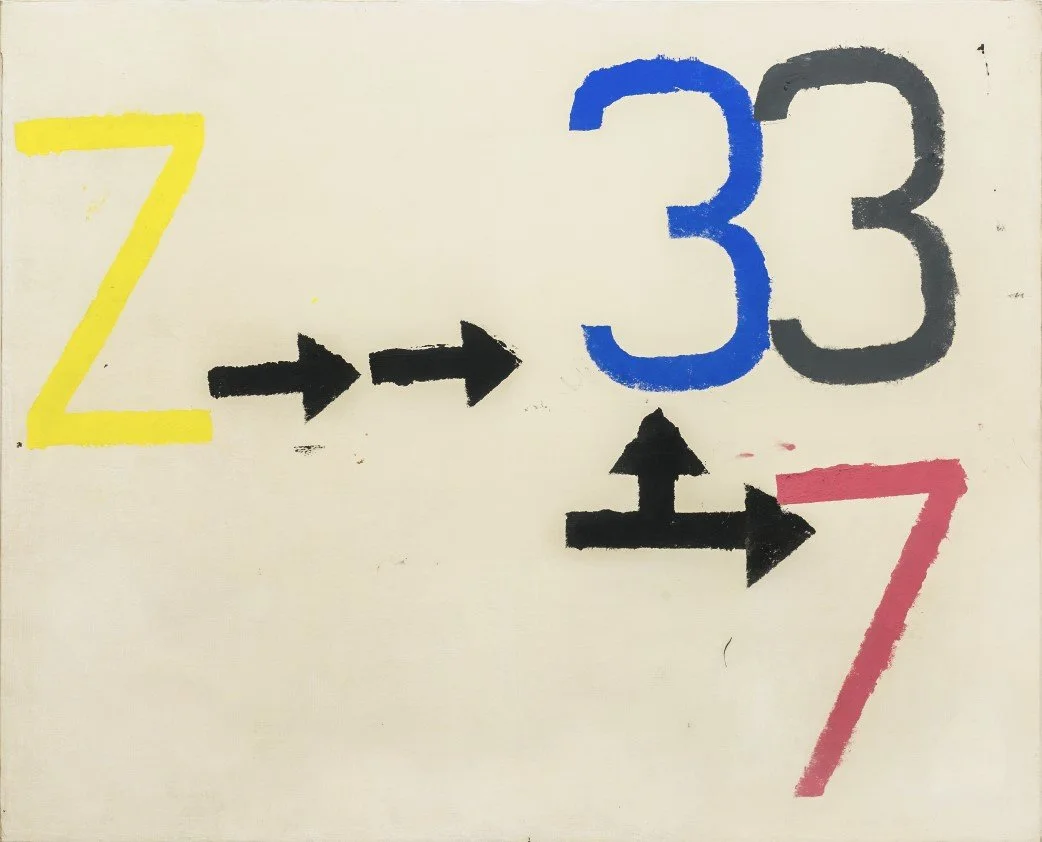
The first wall holds a work on paper from the late 1950s, made by a very young Kounellis, and it already contains the whole show: the yellow square that nods to Van Gogh and Malevich, written letters, the human figure and its cancellation. Kounellis arrived in Rome in 1956 and studied at the Accademia di Belle Arti under Toti Scialoja. The Alphabet paintings that open the exhibition set signs taken from the city streets on bare canvas, a formal reply to American Abstract Expressionism and a salute to Suprematism. A large black square painted straight onto the wall stands beside enamel panels from 1958 carrying shop signs and numbers: Malevich's zero point of painting meets the streets of Rome. Even a rose becomes a sign here. Four works from the Roses series include the monumental Red Rose (1966–1967) and a Black Rose on paper with a silver spray-painted ground (1966), on view for the first time. Rome by then had changed since the years when Piero Dorazio went looking for news of the international scene. Cy Twombly lived there, the city felt modern and alive, and Kounellis kept one eye on the present and the other on Caravaggio, whose paintings he went to stand in front of again and again.
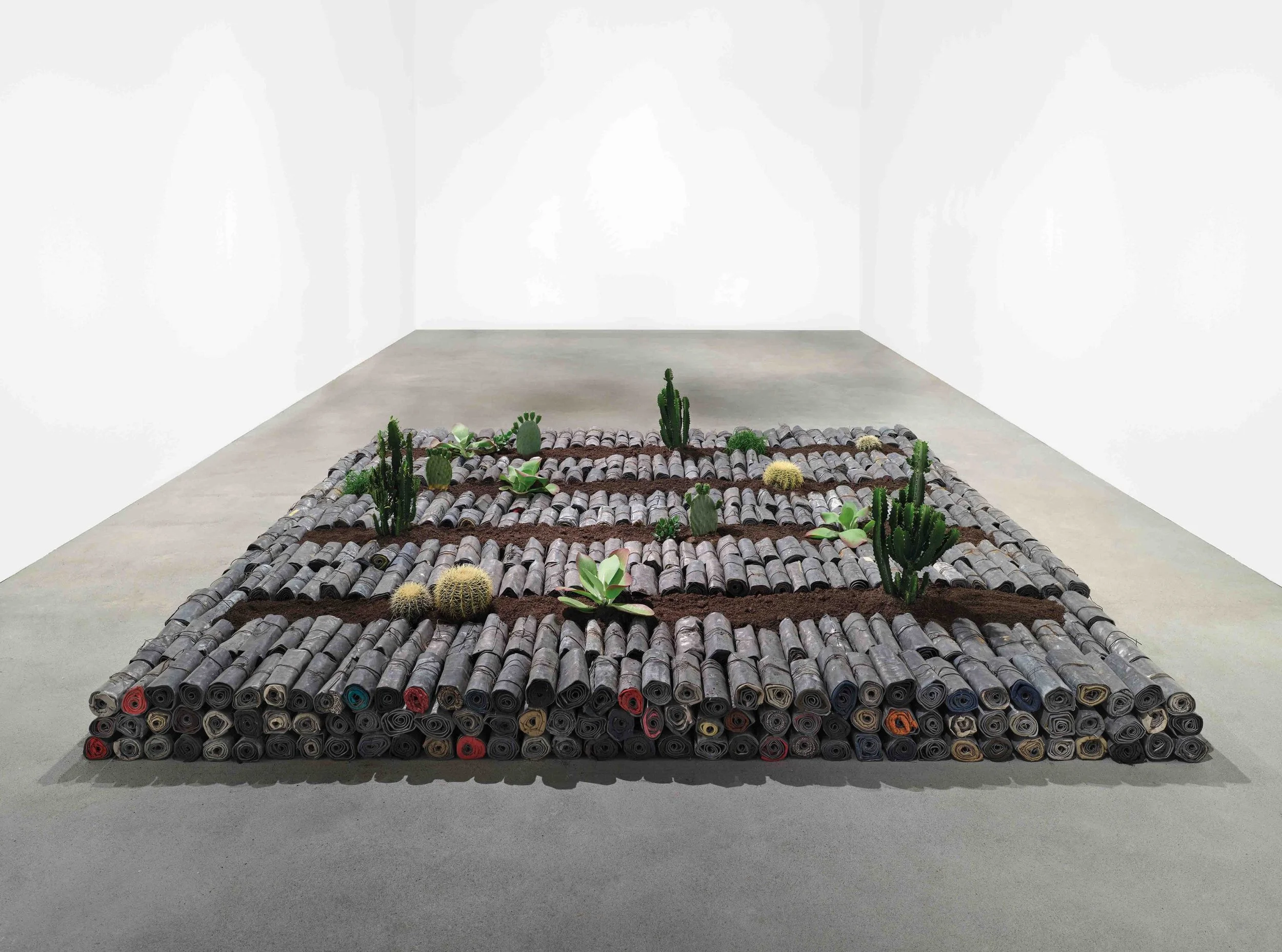
The middle rooms trace his place in Arte Povera. Germano Celant, who named the group in 1967, borrowed the term from Jerzy Grotowski's poor theatre, a stage stripped of scenery and fixed scripts, where the fourth wall falls and actor and audience meet directly. Kounellis took the lesson literally. An aquarium of live fish answers centuries of still lifes in which fish were always painted dead. Matter itself carries the weight: in a work from 1967 four jute sacks take over a white canvas, and in 2005 a field of cacti grows inside rolls of lead. Jute sacks speak of farming, trade and transport, the economy of the South, set against iron plates and lead that stand for the North. Kounellis saw himself as a cultural migrant, and that tension between South and North runs through his work for decades.
Other rooms show how close his thinking ran to that of his peers. Untitled (Homage to Van Gogh), 1991, lines a twelve-metre corridor with iron sheets cut to the exact dimensions of Van Gogh's paintings, some pierced so that light seeps through, as from a Byzantine icon. The work plays with tautology, an idea Kounellis shared with Pino Pascali, and recalls Richard Serra splashing molten lead into the corners of a gallery in the same years. The yellow returns, too. Kounellis saw in Malevich's Black Square the gold of Orthodox icons, so every yellow in his work points back to it. Coal brings Van Gogh in again, the young preacher among the miners of the Borinage. Across the exhibition the references pile up, always toward artists who gave art a moral and political charge. A boat from 1978, set against yellow pigment, carries the theme of travel and exodus; Kounellis's own family had moved from Greece to Italy. In the last section, Painting as scene and icon, a coat folded on a hanging chair with a hat and a pair of shoes (Untitled, 2007) stands in for a self-portrait.
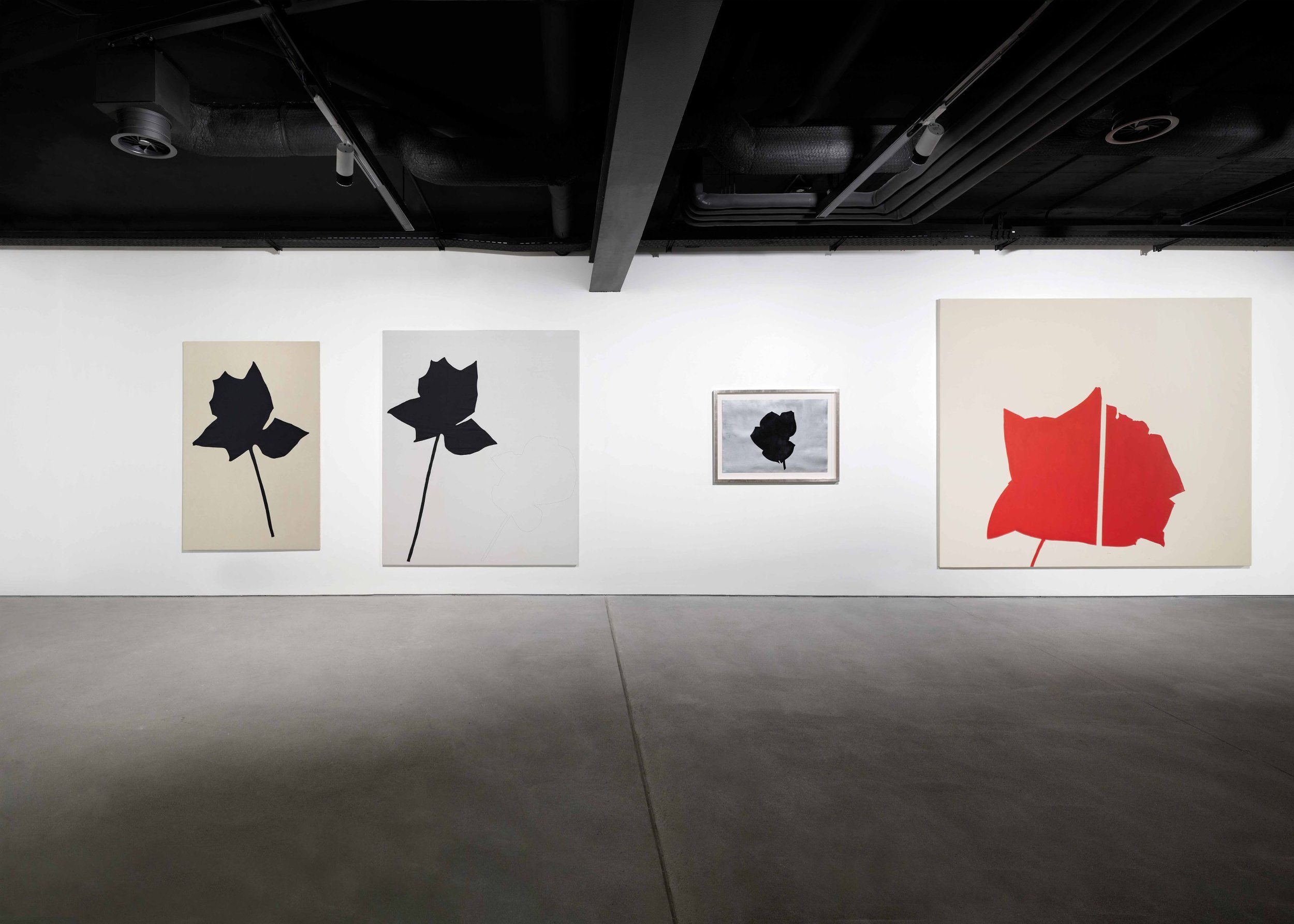
Theatre remains the thread. Kounellis wanted to bring the epic and the tragic back into art, against the closed world of bourgeois drama, and to open a direct, political exchange with the public. Leaving the canvas, for him, meant leaving a single unified picture for a world in fragments, and architecture became the last possible collective act.
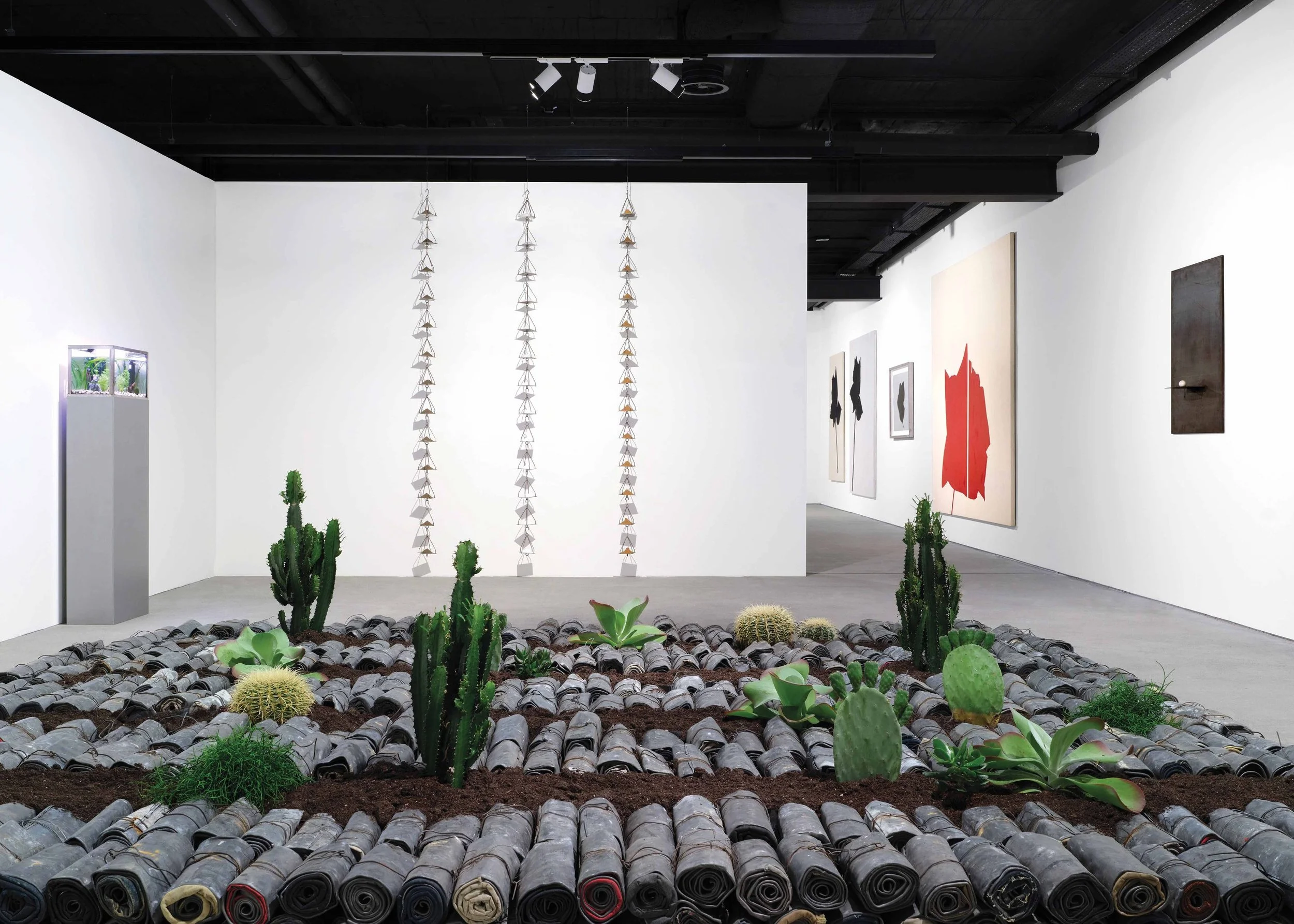
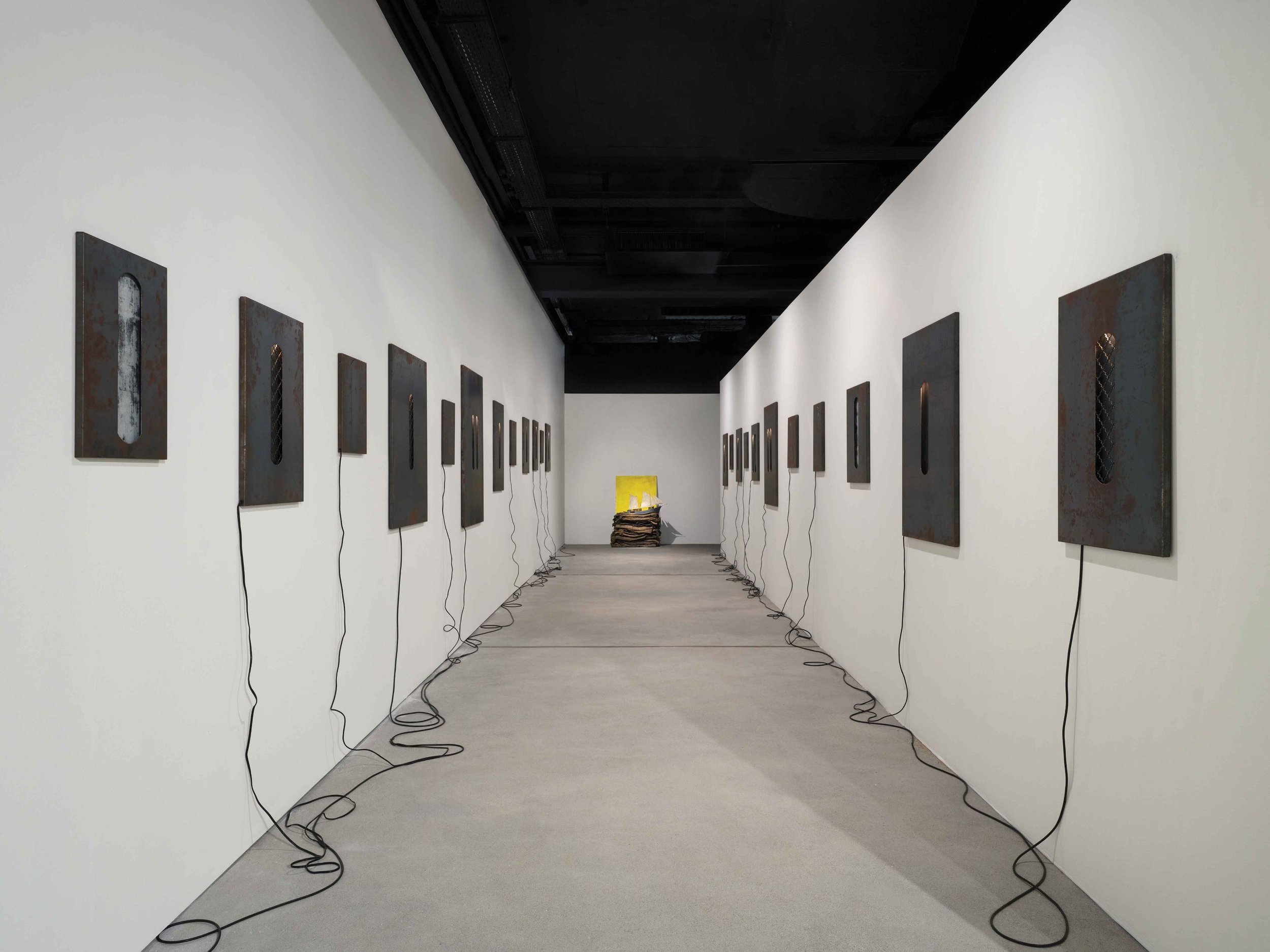
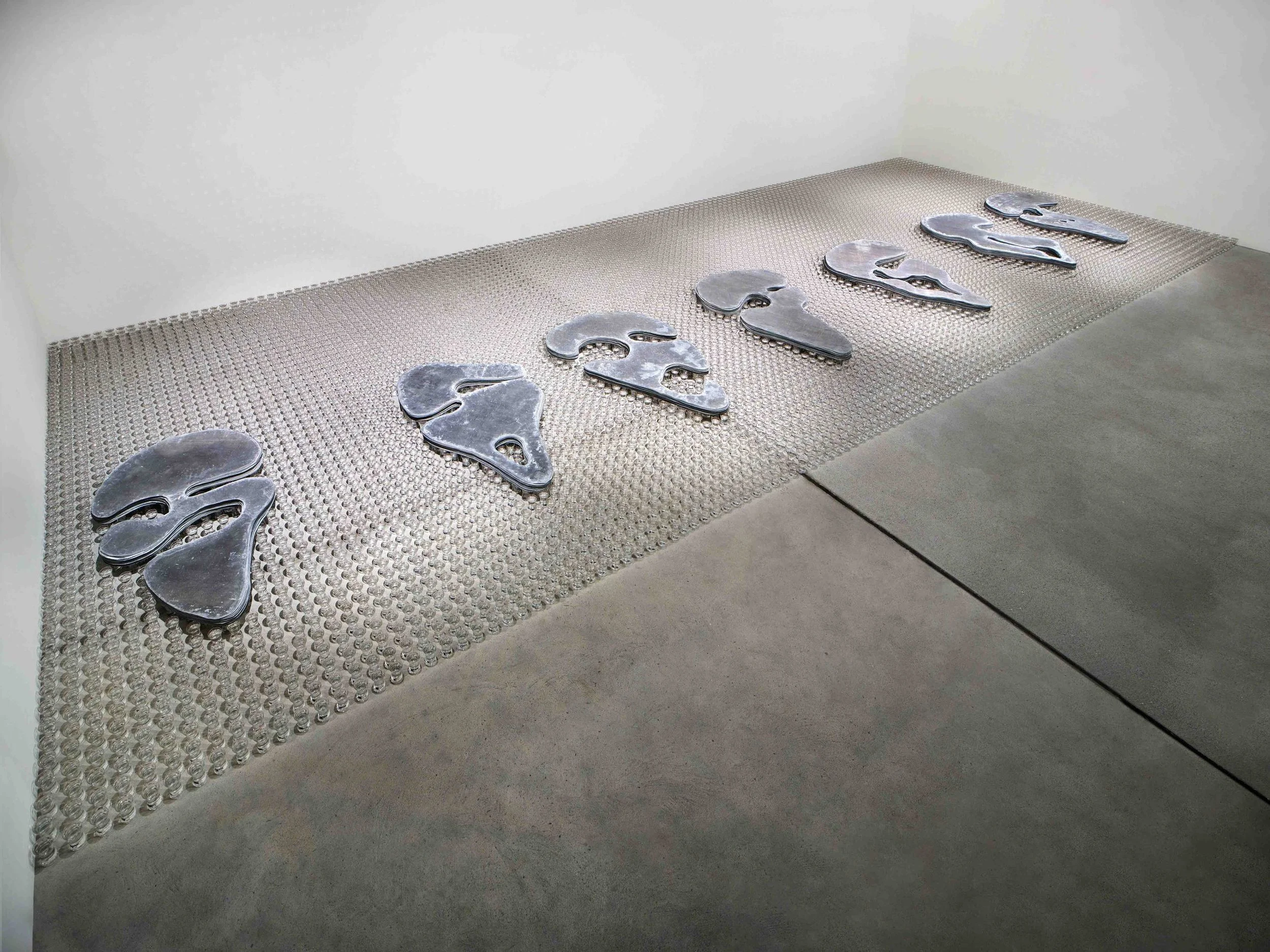
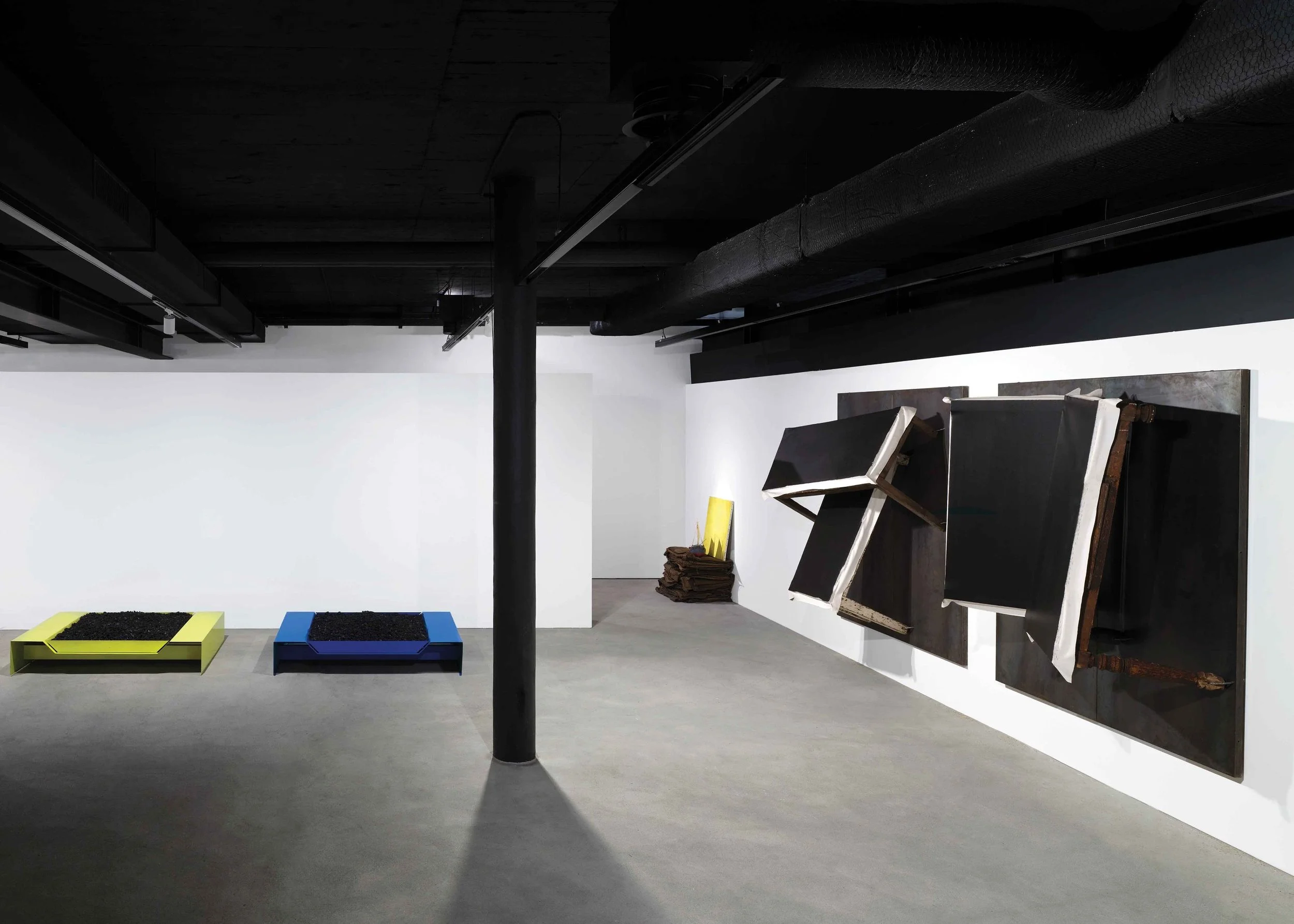
The final rooms close the loop with Burri, through metal stretcher points left visible on the canvas, and with a black painting from the Olgiati collection that answers Malevich once more. The last work, from 1988, reaches the nose before the eye: hundreds of glasses filled with grappa, crowned by lead shapes that echo Hans Arp, a nod from the collectors to Switzerland. It appears here in its complete version for only the second time, and de Bellis calls it "a painting that no longer wishes to stand still". The painter, it turns out, was there all along.
Artist: Jannis Kounellis
Curated by Vincenzo de Bellis
Collezione Giancarlo e Danna Olgiati, Lugano
Founded by collectors Giancarlo and Danna Olgiati
Words by Donald Gjoka
What to read next