K-Now MASI Lugano

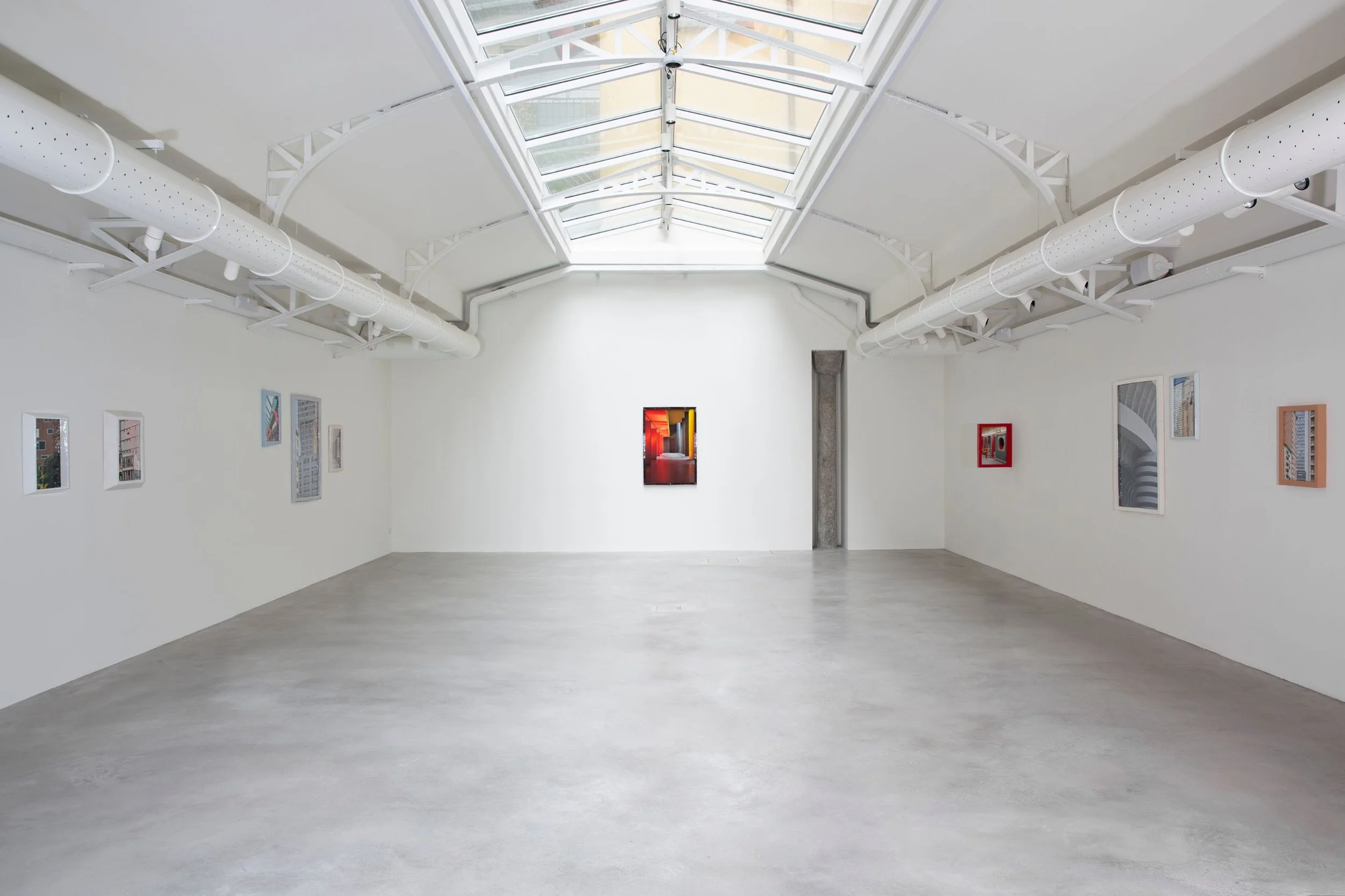
A window into the contemporary South Korean scene through video art: this is the ambition of the exhibition K-Now: Korea Video Art Today, on view until 19 July 2026 at MASI, the Museum of Art of Italian Switzerland in Lugano. Witnesses to an unresolved war and caught in the midst of rapid transformation, the video works of eight selected young Korean artists and one collective narrate, across three thematic threads, the relationship between technology and bodies, the country's memory and its traditions, and the aftermath of migration in a world of work increasingly shaped by demands for optimised, performance-driven acceleration.
The two curators, Francesca Benini of MASI and Je Yun Moon, Deputy Director of the Art Sonje Center in Seoul, specifically selected artists born between the 1970s and the early 1990s, a generation that witnessed Korea's transition from authoritarianism to democracy and was shaped by the rapid assimilation of digital technologies. What follows is an account of the thinking behind bringing a major survey of video art to Switzerland, and of the contextualisation this choice requires.

It is Je Yun Moon who explains how, with the title,
"We wanted to play a little with the recognisability of this prefix, which has been used, let's say, to label many cultural products, if you'll allow the word, exported from Korea. I'm thinking of K-Drama, K-Beauty, K-Pop, there are really quite a few of them now. In our case it is clearly a provocation."
The exhibition aims to offer multiple perspectives on shared themes capable of speaking to a much broader audience about a culture in rapid and remarkable expansion. Video art in particular holds a special significance for South Korea, with a distinct genealogy rooted in history, politics and economic context. Unlike other art forms or craft traditions, it has never been tied to a specific place; from the very beginning it carried a transnational character. The three macro-themes are "Historical Memory," "Digital Technological Imaginaries," and "The Screen as Informational Space." "Together," in Je Yun Moon's words, "these three vectors, historical memory, technological images, and performative states, do not form a linear narrative but intersect and overlap. What connects them is not a stylistic convergence, but a sensibility of instability, of mediated perception, of bodies that do not feel at home in the present they occupy."

In South Korea, the rise of the video medium coincided with the nation's rapid modernisation and democratisation, following colonial modernity and the division that came after the Korean War (1950-1953). Cinema first entered Korean cultural life as an imported spectacle technology, and during the post-war decades of reconstruction and authoritarian rule it offered an imaginative escape from political isolation. Film clubs and cultural centres served as alternative spaces of education and advocacy. Bong Joon-ho stands among those who opened windows onto global modernity. Introduced in the late 1970s and spreading through the 1980s thanks to consumer camcorders and VCRs, the rise of video coincided with a global surge in democratisation movements and the emergence of an activist visual culture operating outside the traditional circuits controlled by the state. Retaining the term "video art" foregrounds the tension between material obsolescence, inevitable as technologies evolve, and the conceptual persistence of the promises of immediacy, accessibility and circulation that the medium continues to evoke.
In just sixty years, South Korea has undergone an epochal transformation. After a turbulent twentieth century, the late 1980s and the 1988 Olympic Games opened the path toward democratisation, and Korea emerged as an economic and technological power. It was from the 1990s onward that Korean artistic and popular culture began spreading across the world, a phenomenon known as Hallyu, or the "Korean Wave," following the opening of the technology market and the export of electronics. We are particularly familiar with the rapid rise of television series, pop music, beauty culture, and gastronomy. The art market, too, has followed suit, with Frieze choosing Seoul as the site of its newest edition in 2022, a relatively recent development, alongside other international fairs. Younger generations of artists and creatives must contend with the liberalisation of both means and thought, and this tension between the local and the global is very much alive here in Lugano, at MASI, which offers a cross-section of current artistic thinking through video art. Unlike the country's older and more traditional artistic languages, video art manages to refresh and sharpen a hyper-contemporary vision. This exhibition thus addresses the transnational, technological colonialism, and violent memories, but also dystopias and the gig economy. It problematises the future and the question of one's own identity.
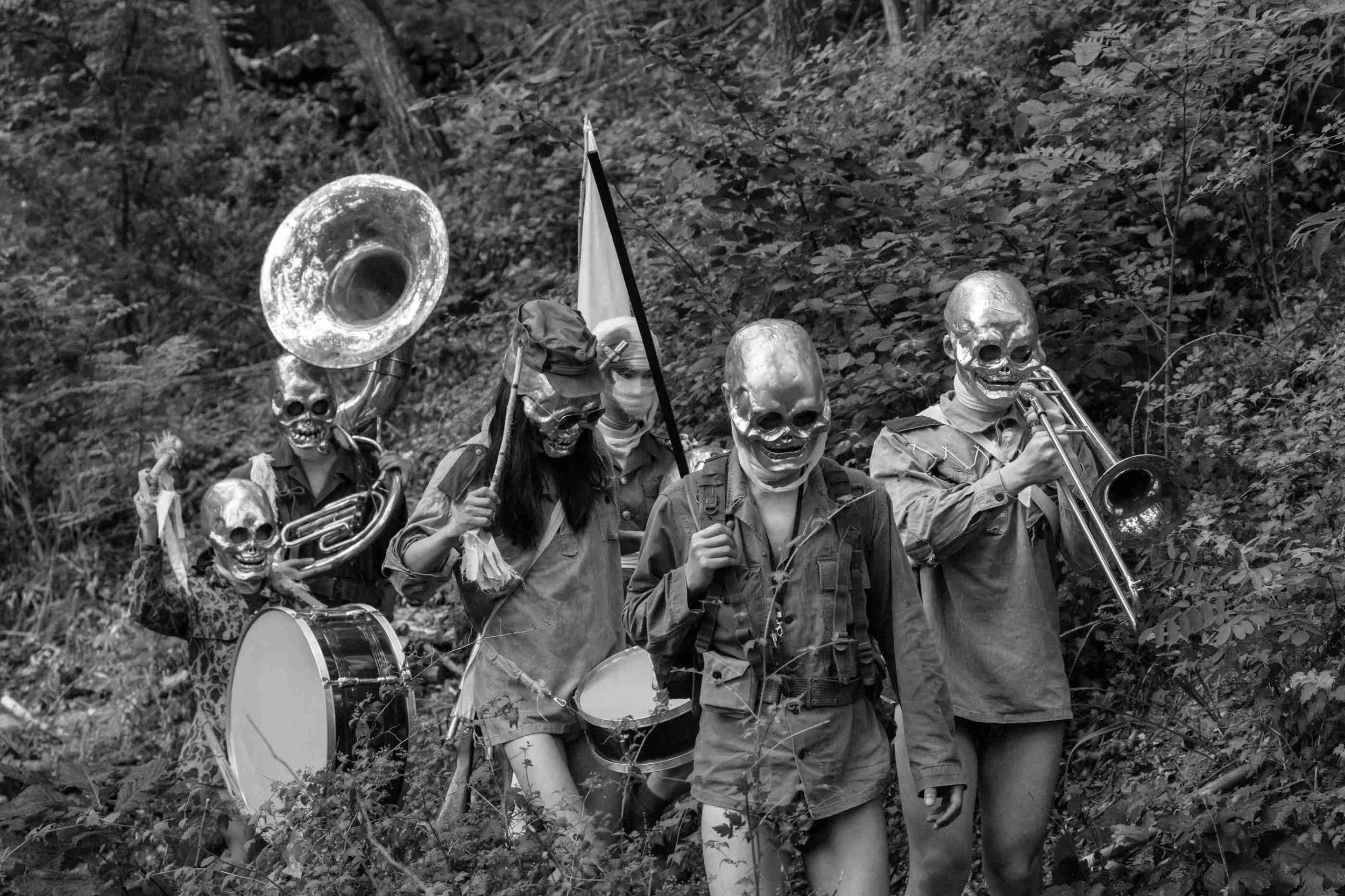
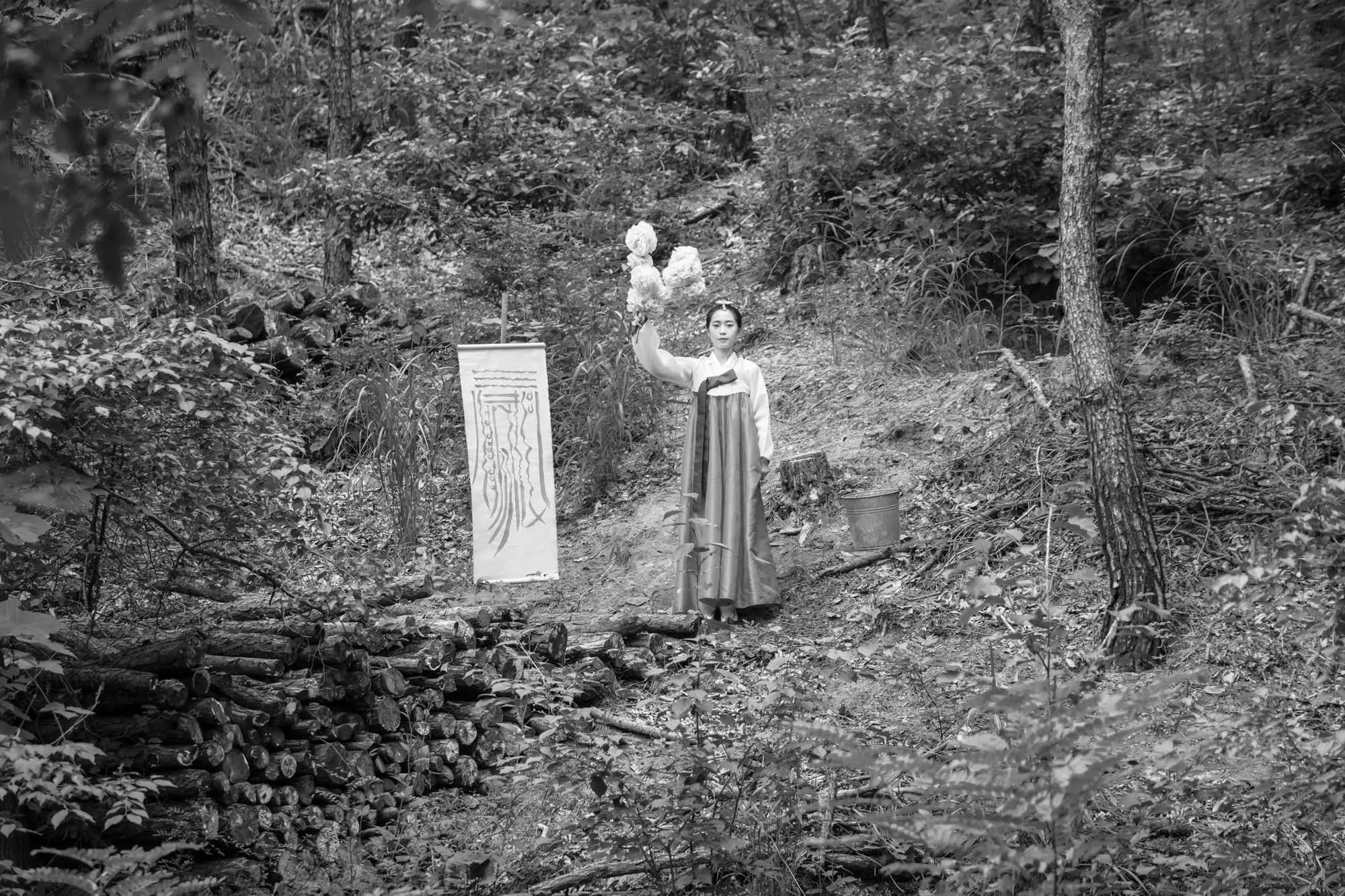
This critical stance toward a violent past is apparent from the very first work, chosen to open the entire exhibition. “Citizen's Forest” (2016) by Chan-kyong Park is a large-scale multichannel installation that invokes ritual as an act of collective mourning. Its video format recalls the horizontality of the unrolled scrolls used in traditional Asian painting. By reimagining the shamanistic ceremony as a form of recovery, and by invoking the shaman's mediation between the living and the dead, the artist (brother of acclaimed filmmaker Chan-wook Park) allows the past to inhabit the present. In an interview, Chan-kyong spoke of the collaboration between the two under the name PARKing CHANce, a project that allowed them to make short films together and proved generative for both in developing new creative ideas.
The deeply rooted and long "submerged" traumas of the Korean peninsula are the subject of artist Jane Jin Kaisen, whose double projection presents "submerged" imagery through underwater footage to trace the memory of the Jeju Massacre of 1948, an event that the government suppressed through the revision of textbooks and the manipulation of historical language. Over the centuries, many men died at sea or in war, and women gradually took over the practice of diving. The women we see in the videos are the Haenyeo, free-diving fisherwomen who serve as custodians of memory and figures of individual resilience.
The exhibition begins, in fact, even before entering the main galleries, in the MASI lobby, where Sojung Jun presents “Green Screen”, a video filmed along the Demilitarized Zone (DMZ) between the two Koreas, restoring a place saturated with history and prompting reflection on geographical borders.
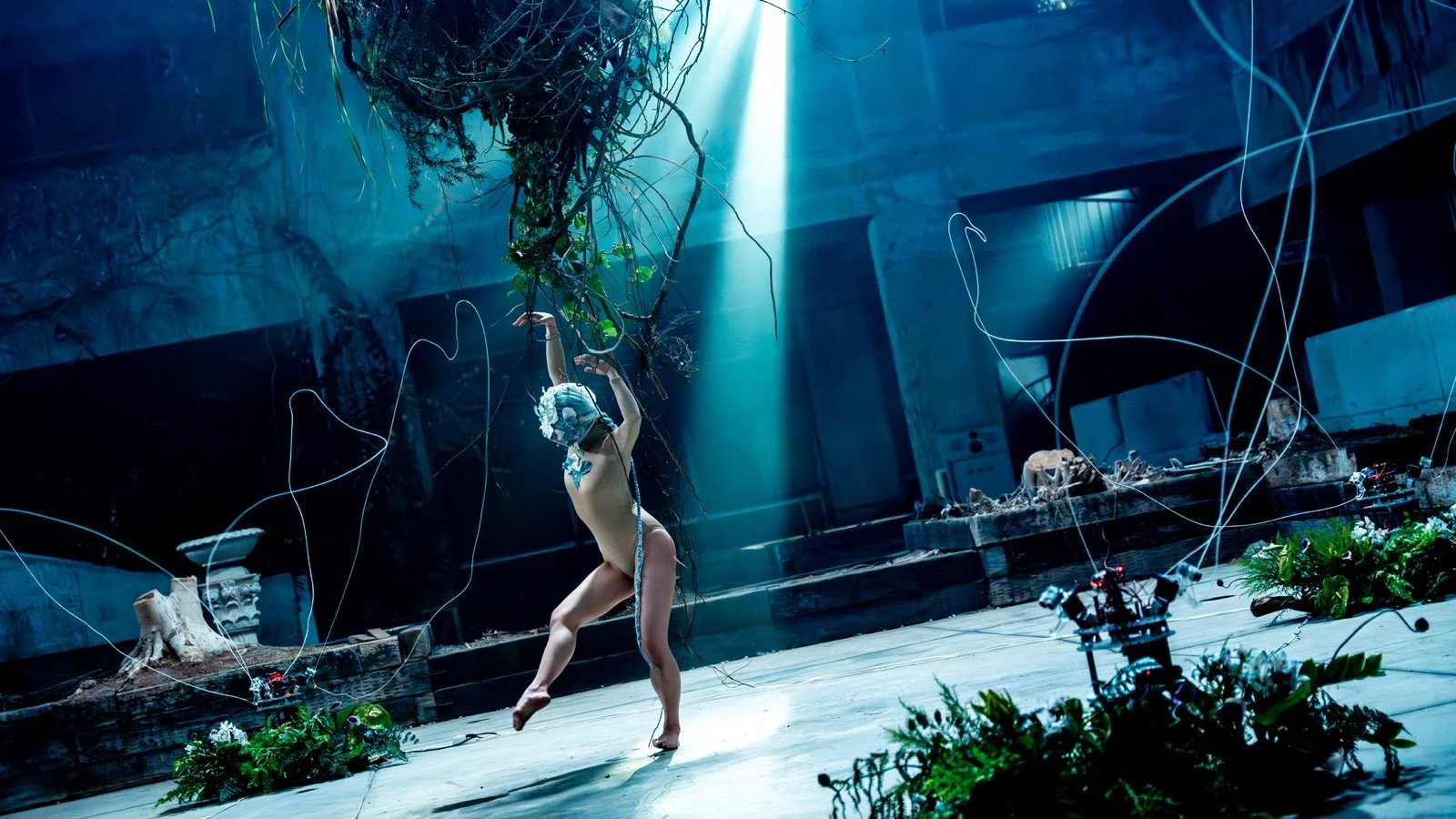
Two videos explore speculative and post-technological aesthetics to probe the intersections between algorithmic logic, urban manifestation, and the bonds operating within neoliberal systems. Their works reveal how digital technologies simultaneously expand and fragment the notion of the self.
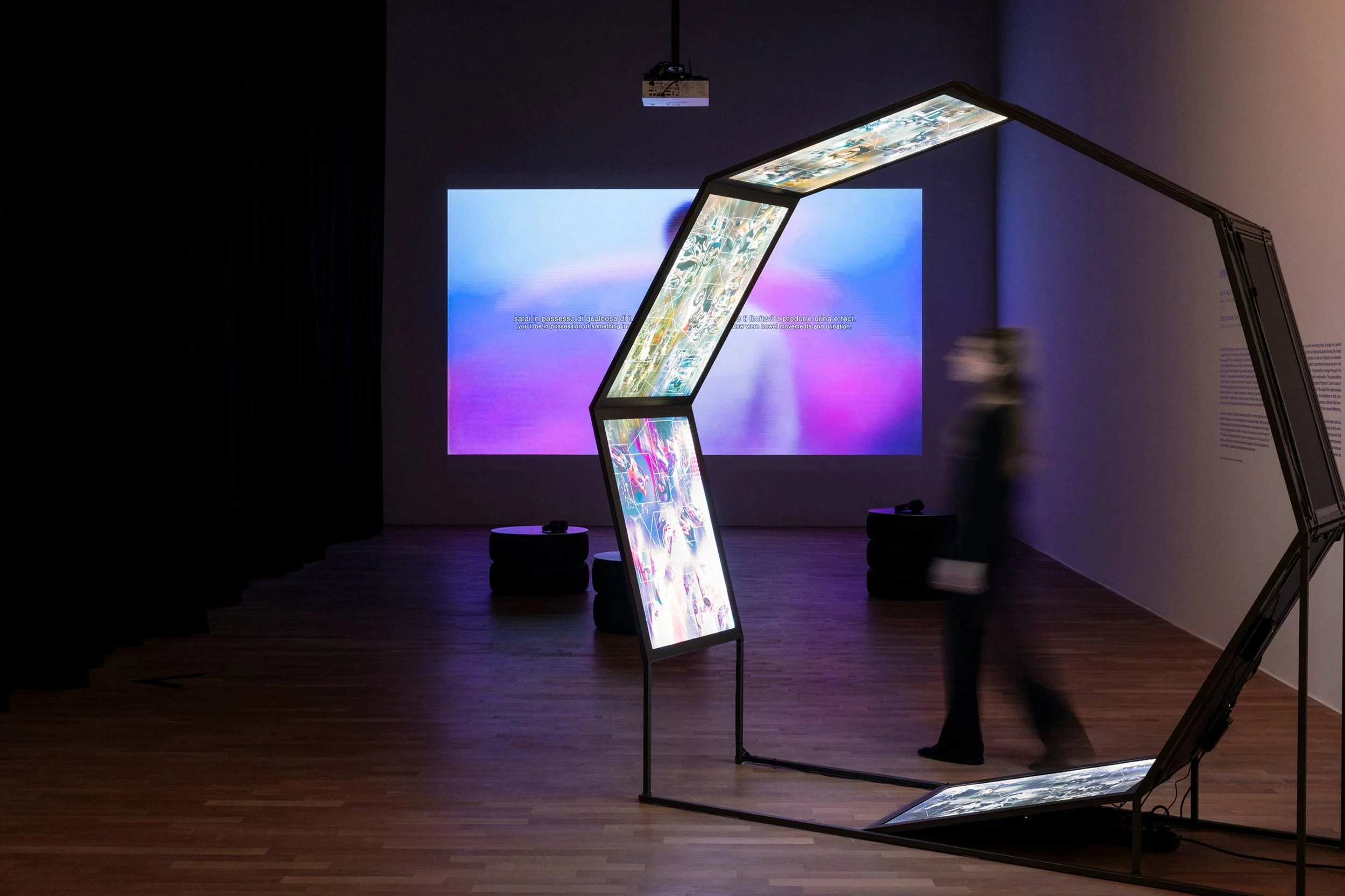
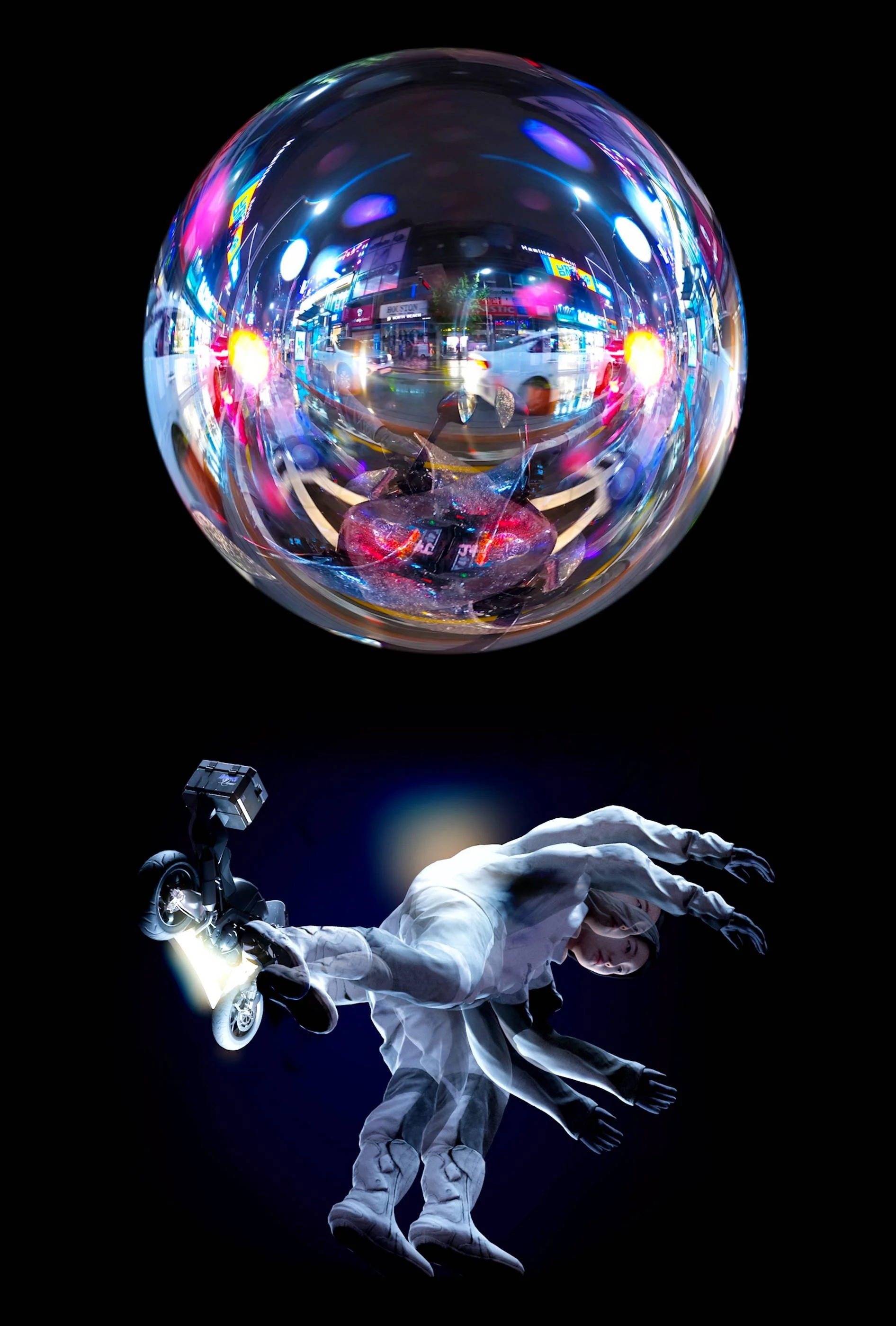
Central to the exhibition is Ayoung Kim's “Delivery Dancer's Sphere” (2022), which chronicles the motorcycle journeys of a young courier through a Seoul transformed into a dazzling algorithmic landscape. The protagonist is a rider speeding through the city when a glitch in the delivery system she works for splits her across two parallel timelines, causing her to encounter her own counterpart. Made during the Covid-19 pandemic, the work invites reflection on the gig economy, a system built on temporary labour, and a world of work that is increasingly accelerated, performance-driven, and optimised.
The works of the collective eobchae all begin in digital format and develop through code, sound design, and video reproduction. The piece they present in the exhibition explores a future in which humanity attempts to adapt to a world stripped of fossil resources. The human body becomes an optimised machine in the name of efficiency, transformed by an ecologist sect into a hybrid, self-sufficient system capable of generating its own energy.
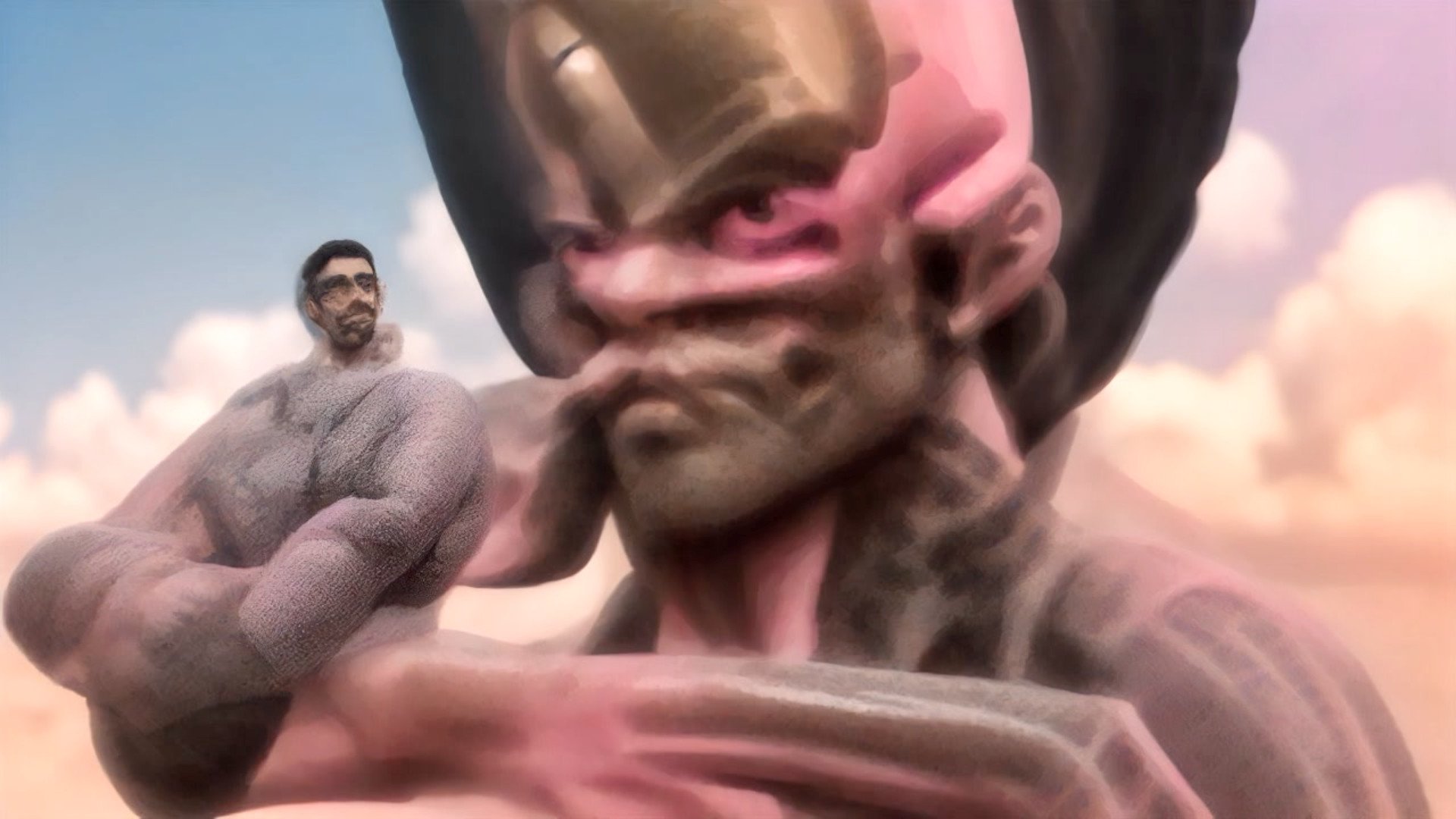
In “Ghost1990” (2021), artist Heecheon Kim presents a video experienced through a virtual reality headset, following a dialogue between the past and present self of a powerlifter who has suffered an injury.

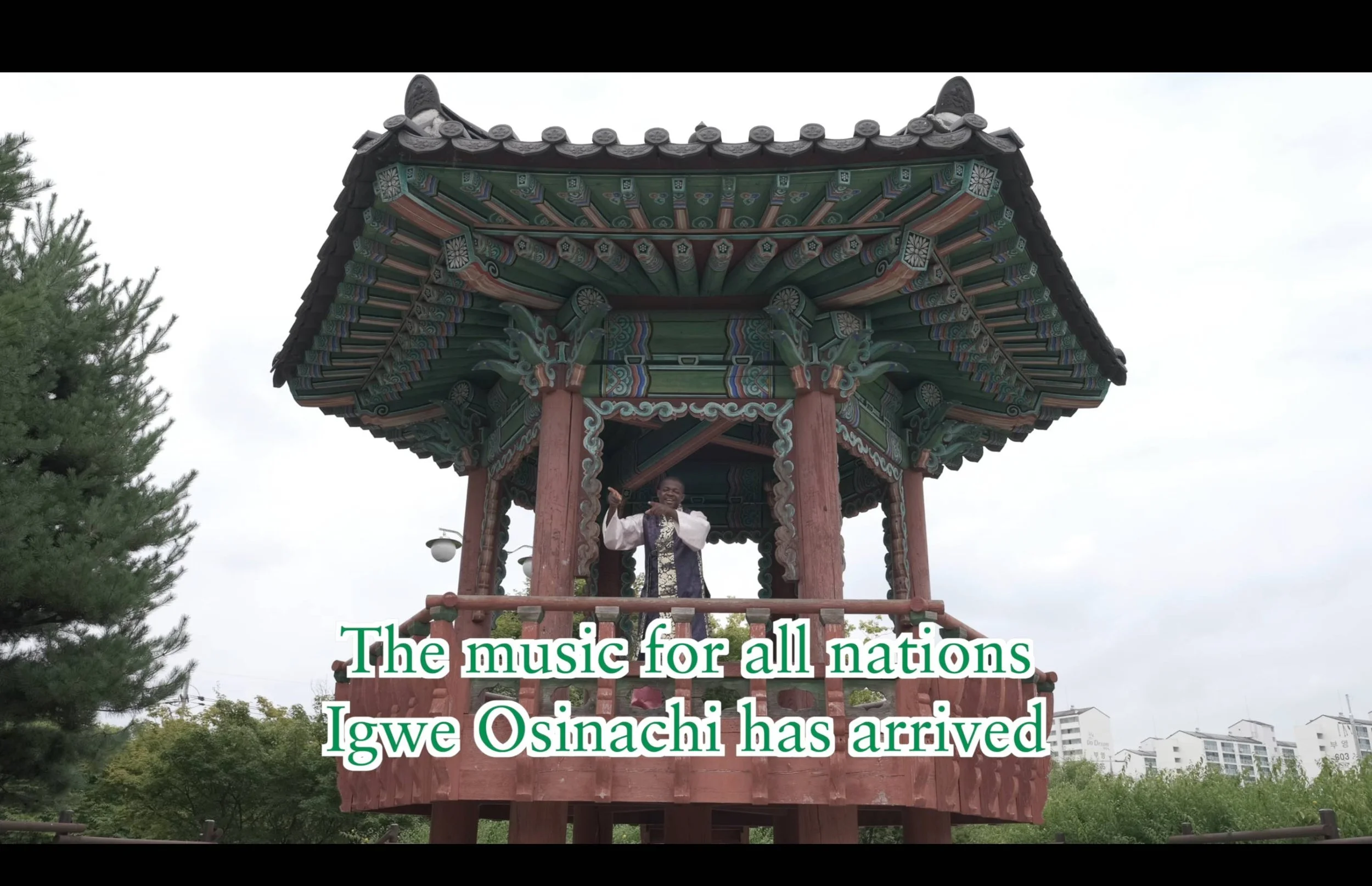
In other works, the screen becomes a site for the staging and negotiation of identity, and for the celebratory "song" of one's mixed origins, born of globalisation, migratory history, and colonial legacy.
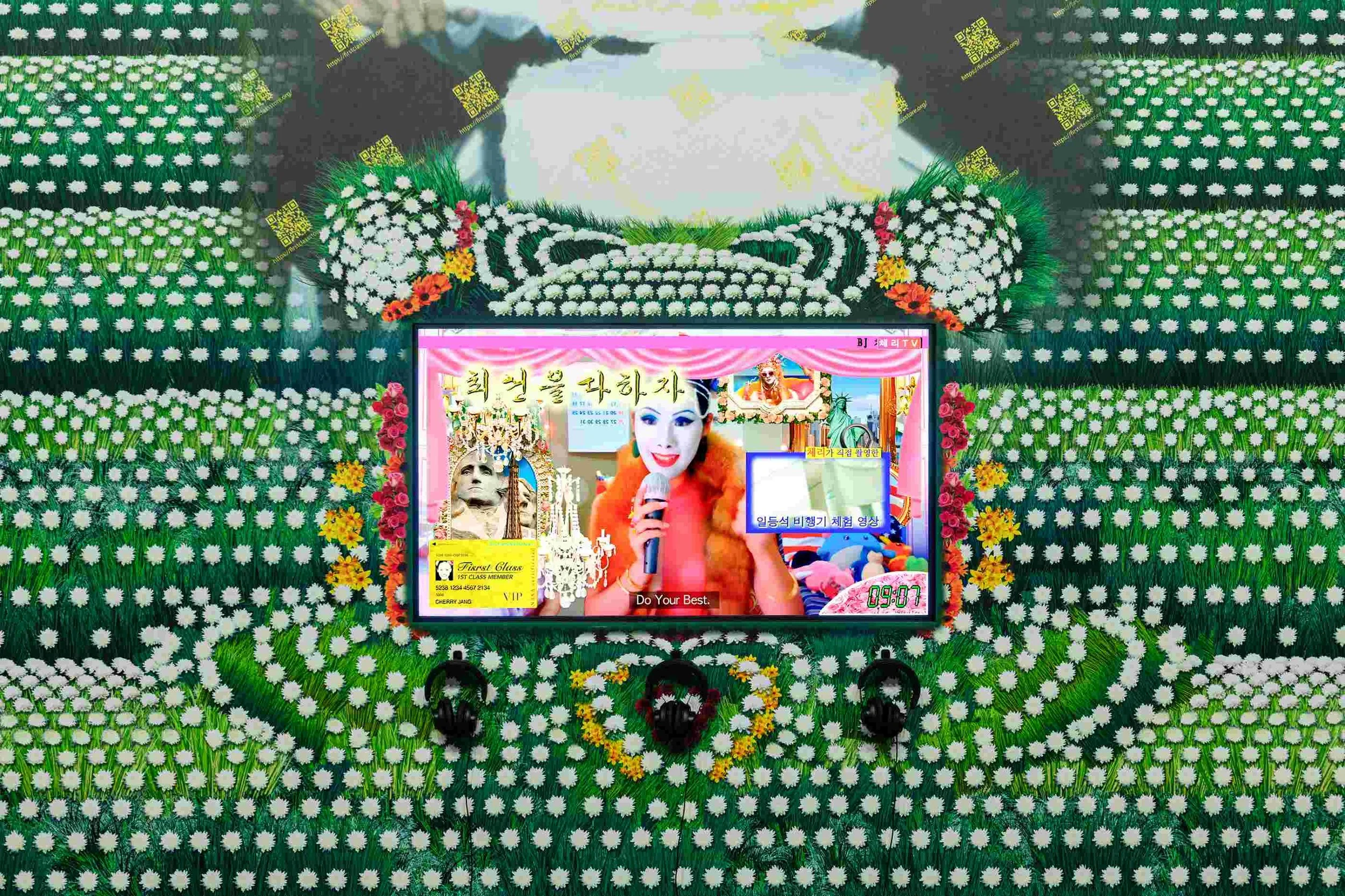
Grotesque satire, content creation, and popular television formats: the series “BJ CherryJang 2018.9” (begun in 2018 and still ongoing) by Sungsil Ryu stages a fictional character navigating the hyper-consumerist, screen-saturated landscape of contemporary Korean society within a capital-driven economy. In a wall-mounted video surrounded by cartographic imagery, the series follows a fictional live-streamer who offers a satirical commentary on various Korean cultural phenomena, petit-bourgeois desires, codes of belonging, discount channels, and pop-up events.
“Made in Korea” (2021) and “No Pain No Gain” (2022) by Onejoon Che are projects developed within the AfroAsia Collective, founded by Onejoon and curator Sun A Moon, which grew out of the community in Seoul that formed around a United States military base and the cultural exchanges that followed the African diaspora. The works explore the underexamined connections between Korea and Africa, tracing the ways in which Cold War ideologies, labour emigration, and visual propaganda linked the two regions. For Che, video is a medium capable of revealing how we structure our perception of the culture we inhabit and of the hybrid influences that shape it over time.

What the works in this exhibition share is not a unified aesthetic or a single ideological position, but a common awareness of the body and of the country's history as contested territory. The body submerged in the waters of Jeju, the body accelerated by the algorithmic logic of the gig economy, the body hybridised and optimised for post-fossil efficiency, the body split across virtual time: in every case, the body becomes the point of collapse between collective history and individual subjectivity. In this sense, video art is not, for South Korea, simply an expressive medium but an epistemological device. Born outside the circuits controlled by the state, it has historically embodied the possibility of another kind of vision, one that is alternative, lateral, and unauthorised. Today, in an era of visual saturation and algorithms that continuously reshape perception, it inherits that tension and carries it forward, subjecting it to further scrutiny. The geographical distance does not neutralise the content: the labour dystopias, the erased memories, the diasporic identities narrated on the screens of MASI belong to a global imaginary that concerns us all, a laboratory in which the contradictions of late modernity manifest with particular intensity and clarity.
Words by Matilde Crucitti
What to read next