Lorane Hochstatter
Lorane Hochstatter captures humanity and technology as both reflections and progressions of one another. The photographer, who honed her eye at institutions including London’s Central Saint Martins, developed this narrative through an early relationship with cinematic productions and digital cultures, which introduced her to worlds beyond her own. Growing up in a small community in Switzerland, she became increasingly drawn to the lives we see, and the ones we choose to engage with. This relationship between experience and expectation later became encoded in her MA project, ‘Empty Rooms’, which interrogates how digital presence shapes identity, anticipation, and an individual’s sense of self.
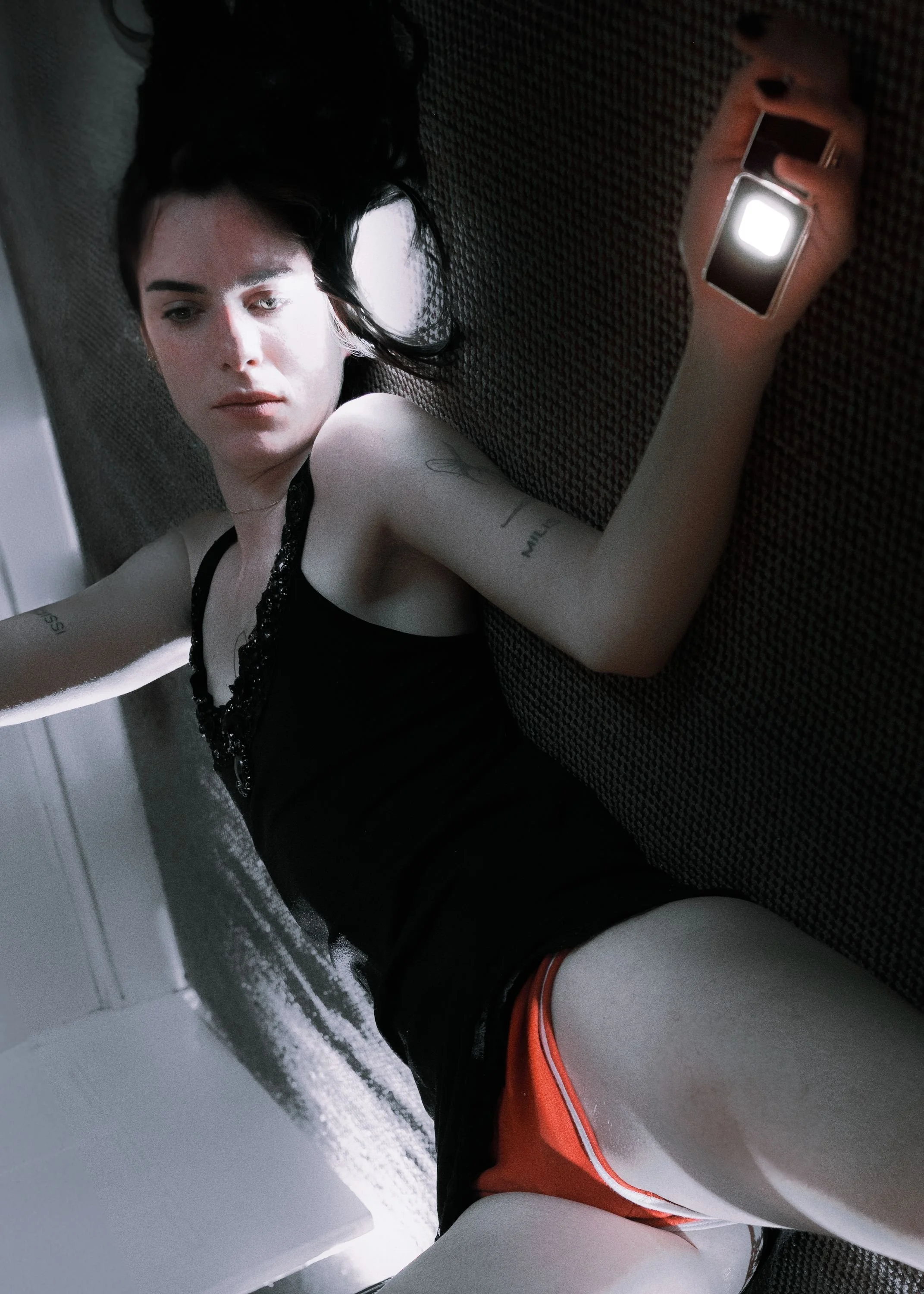
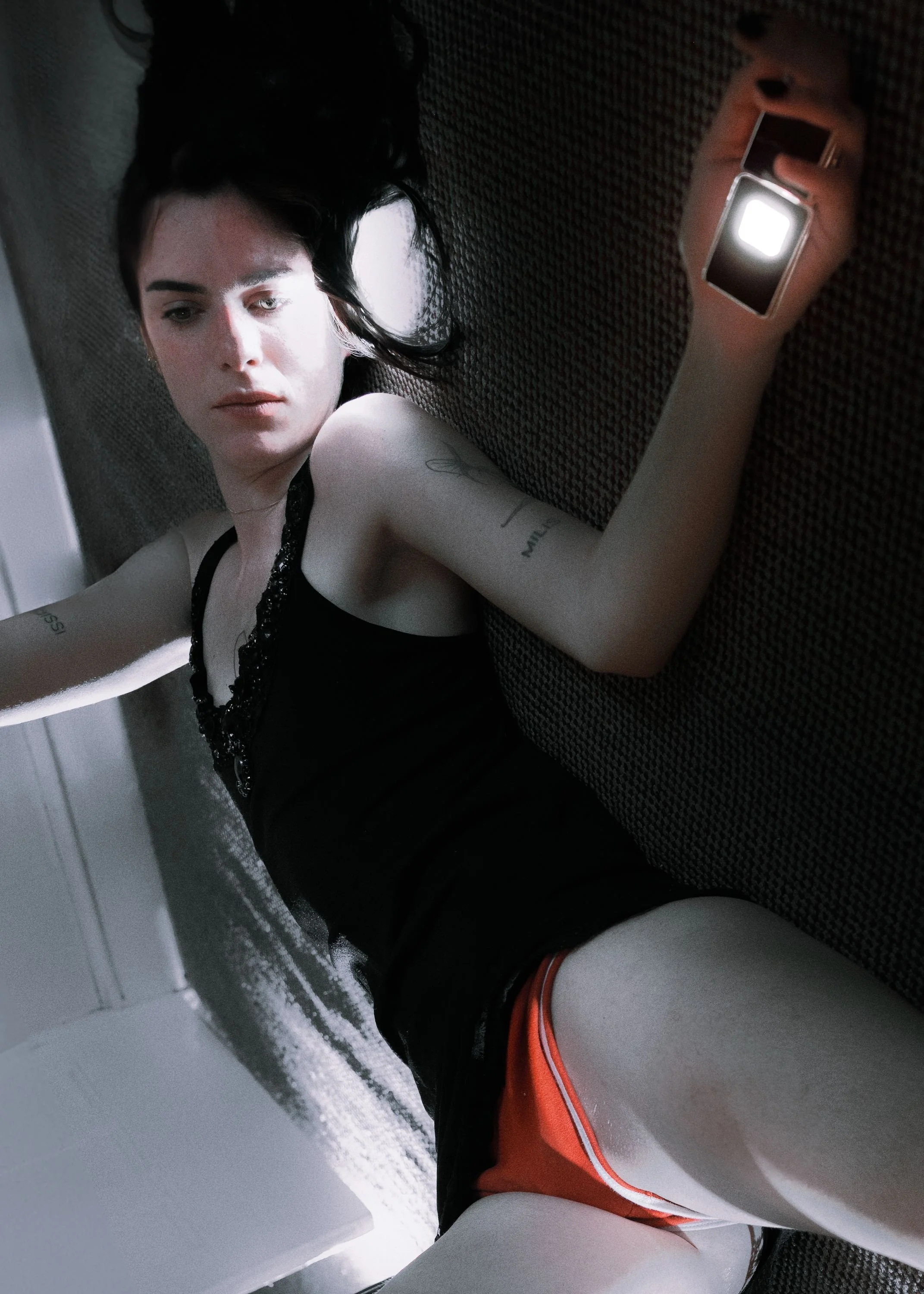
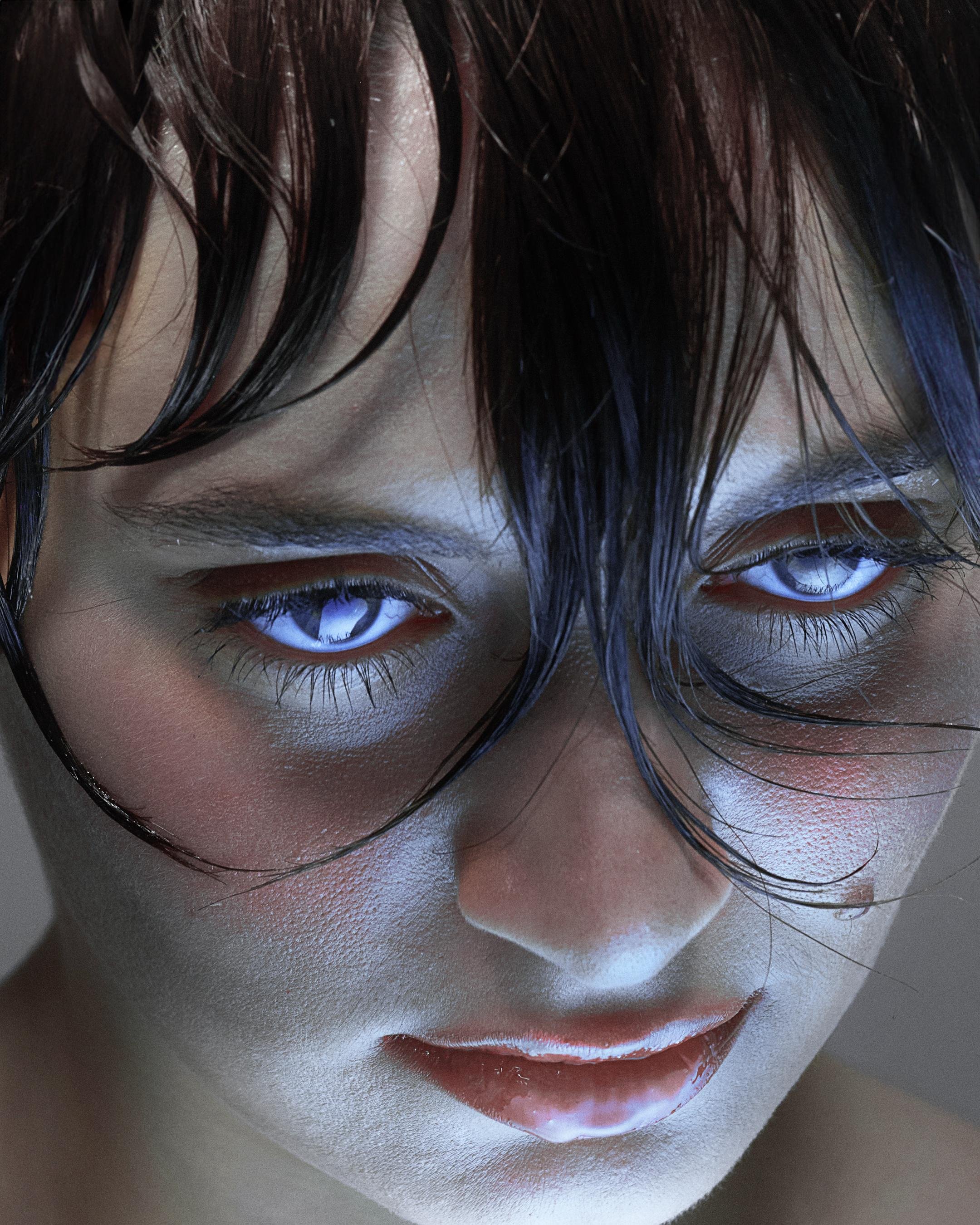
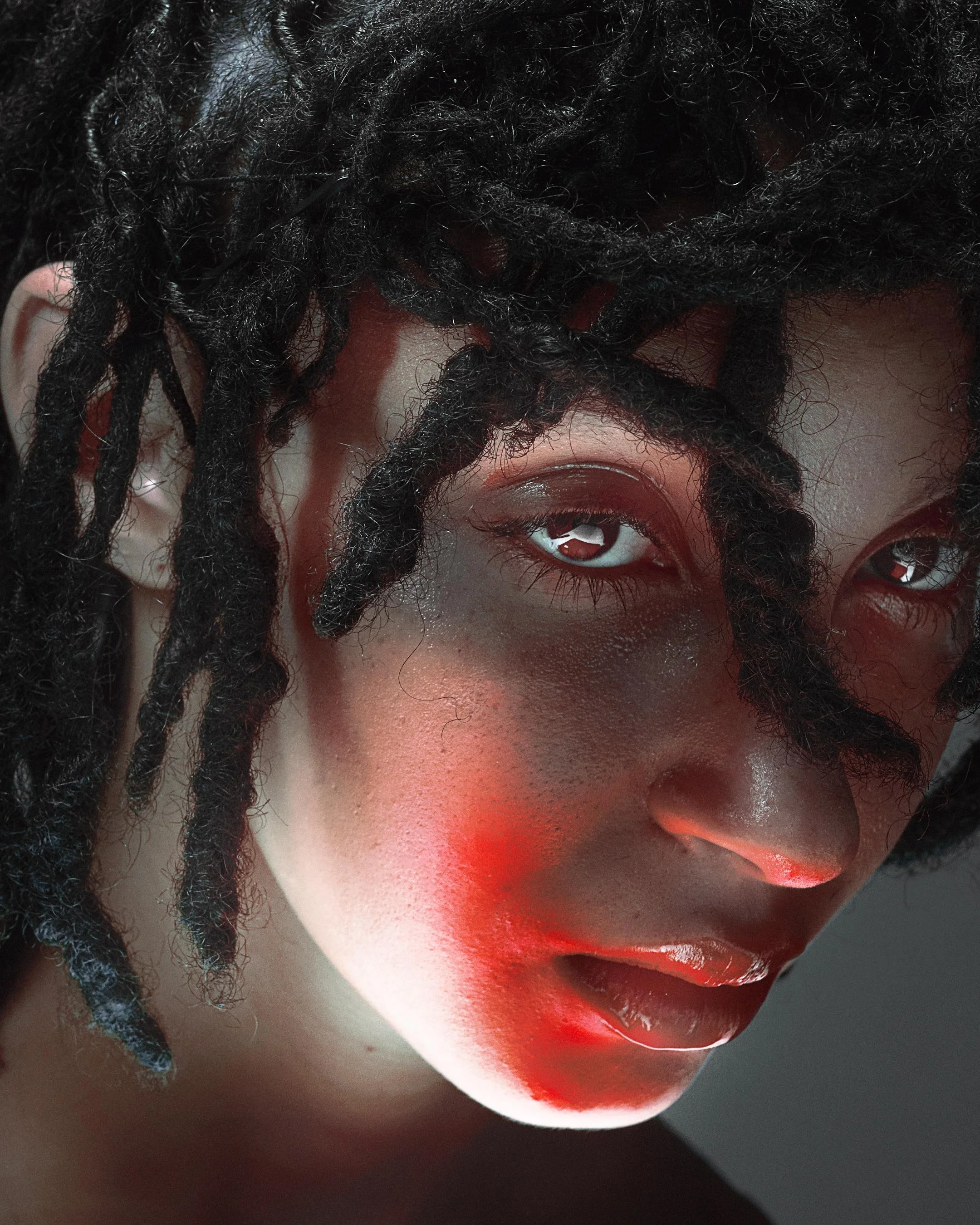
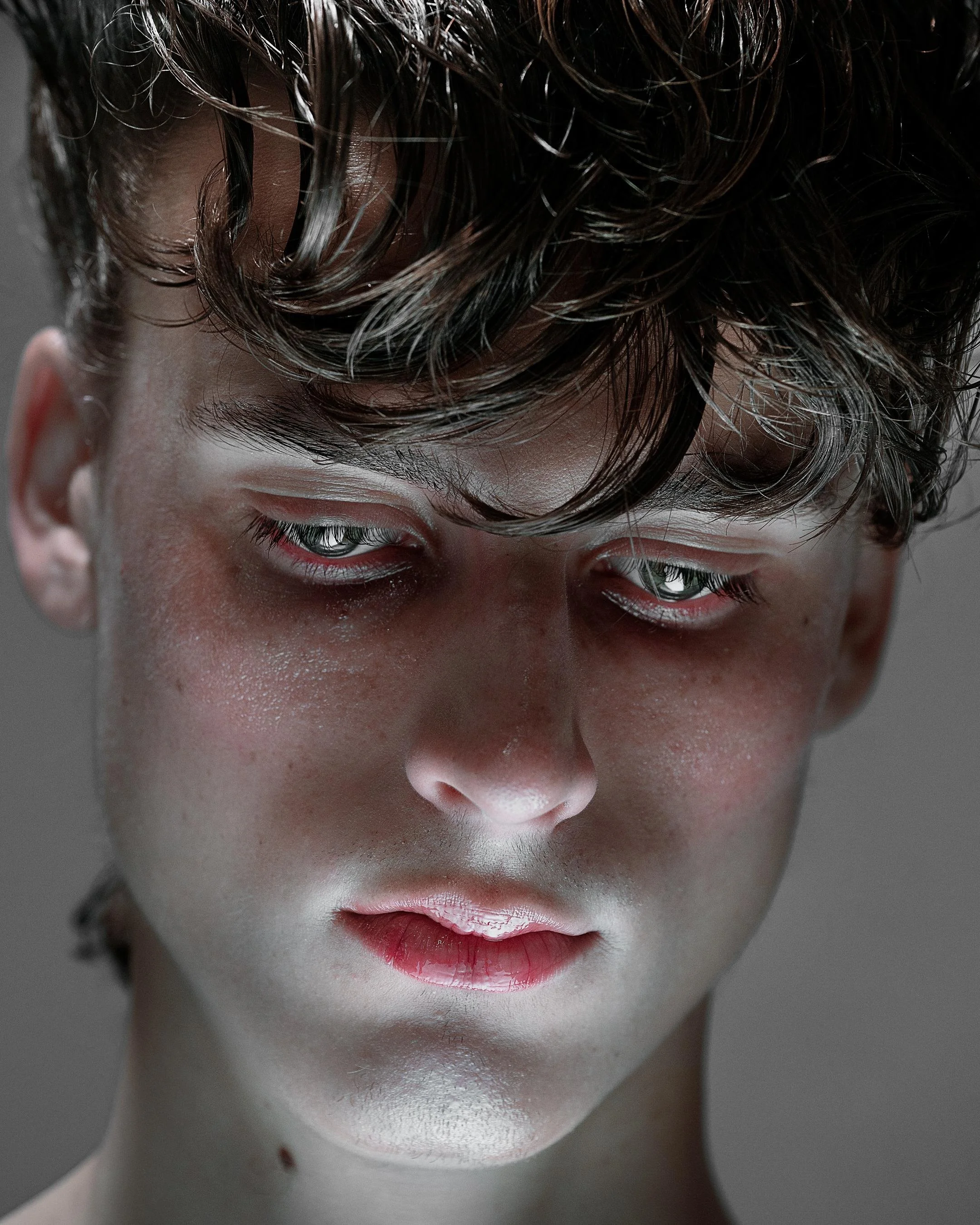
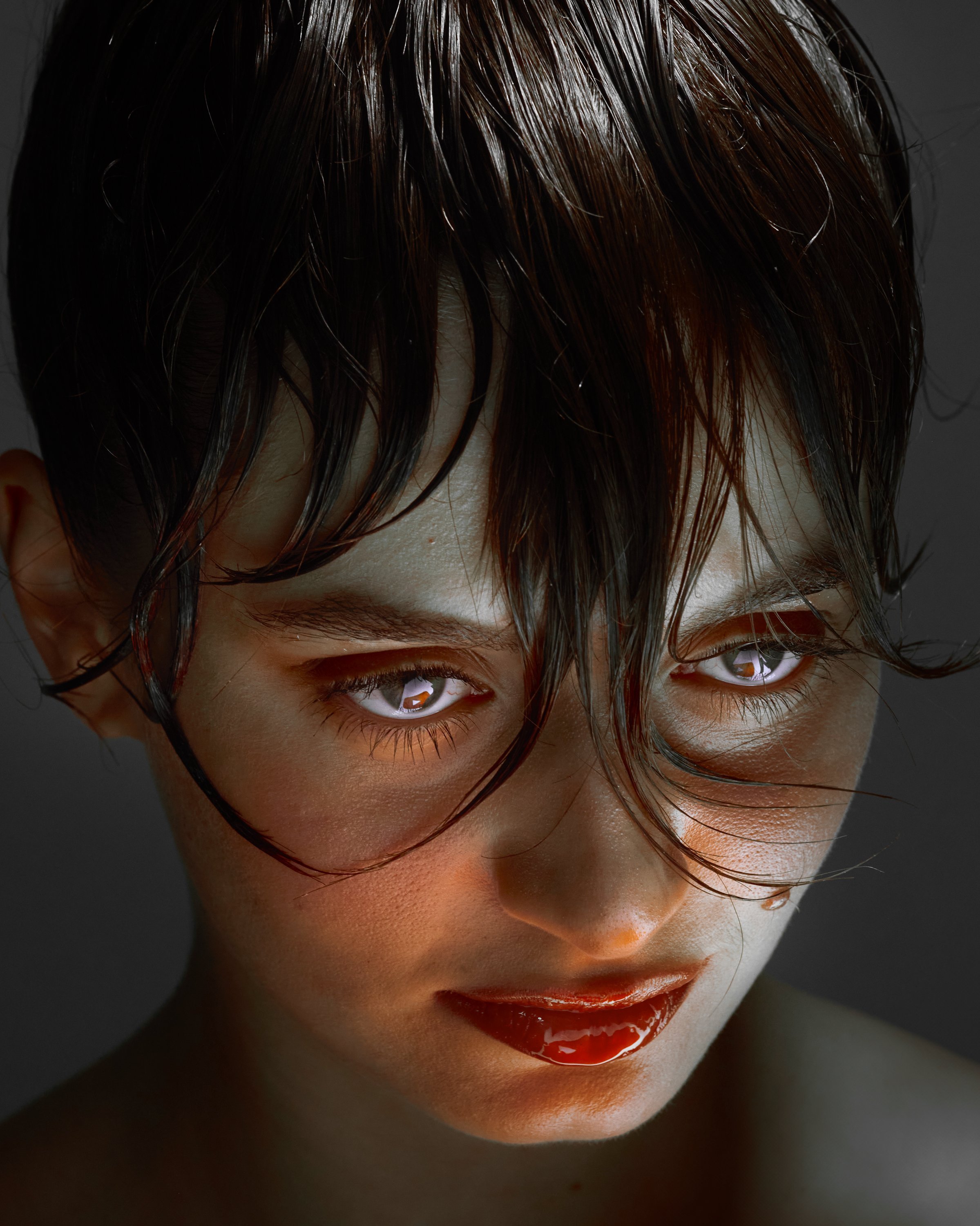
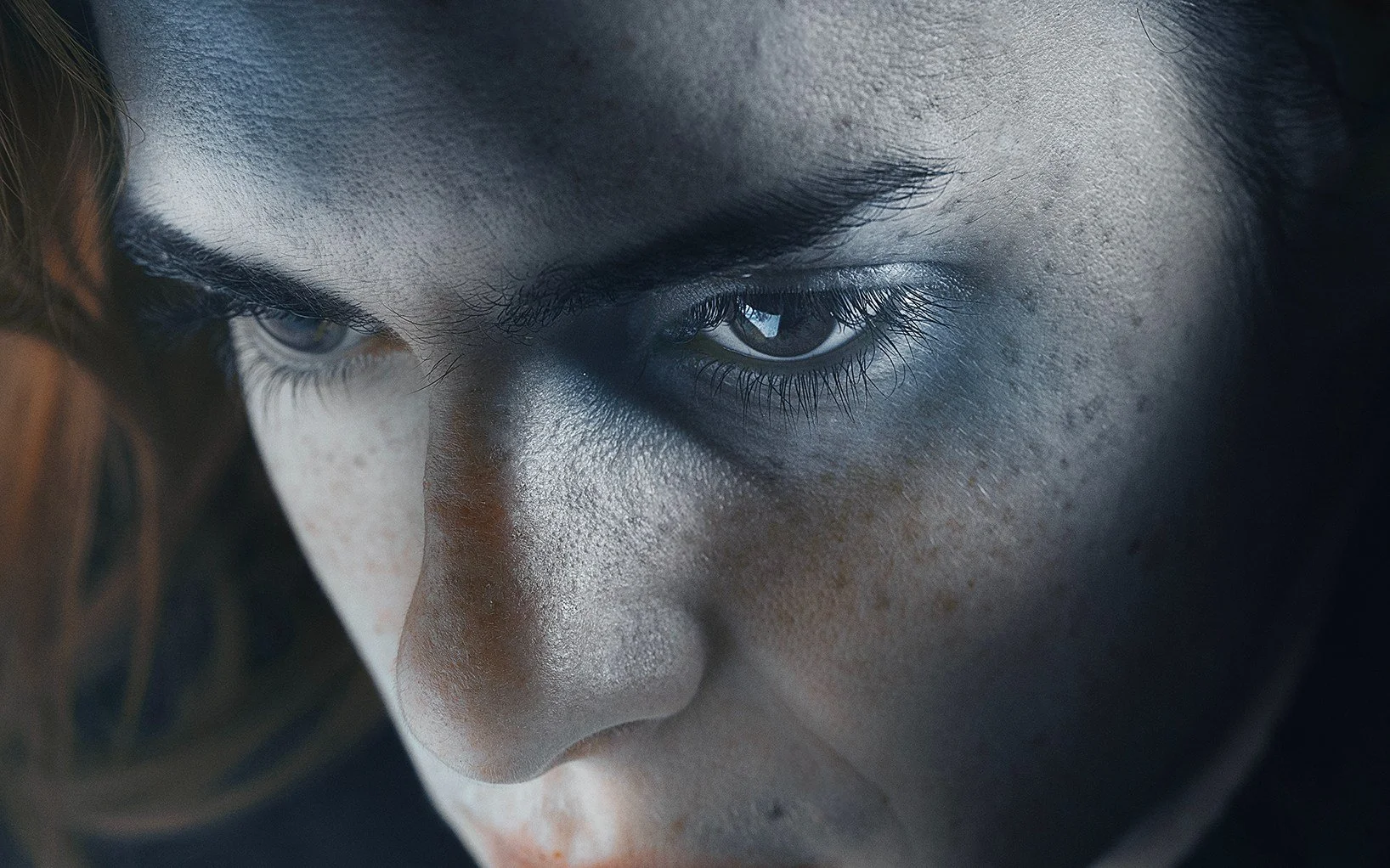
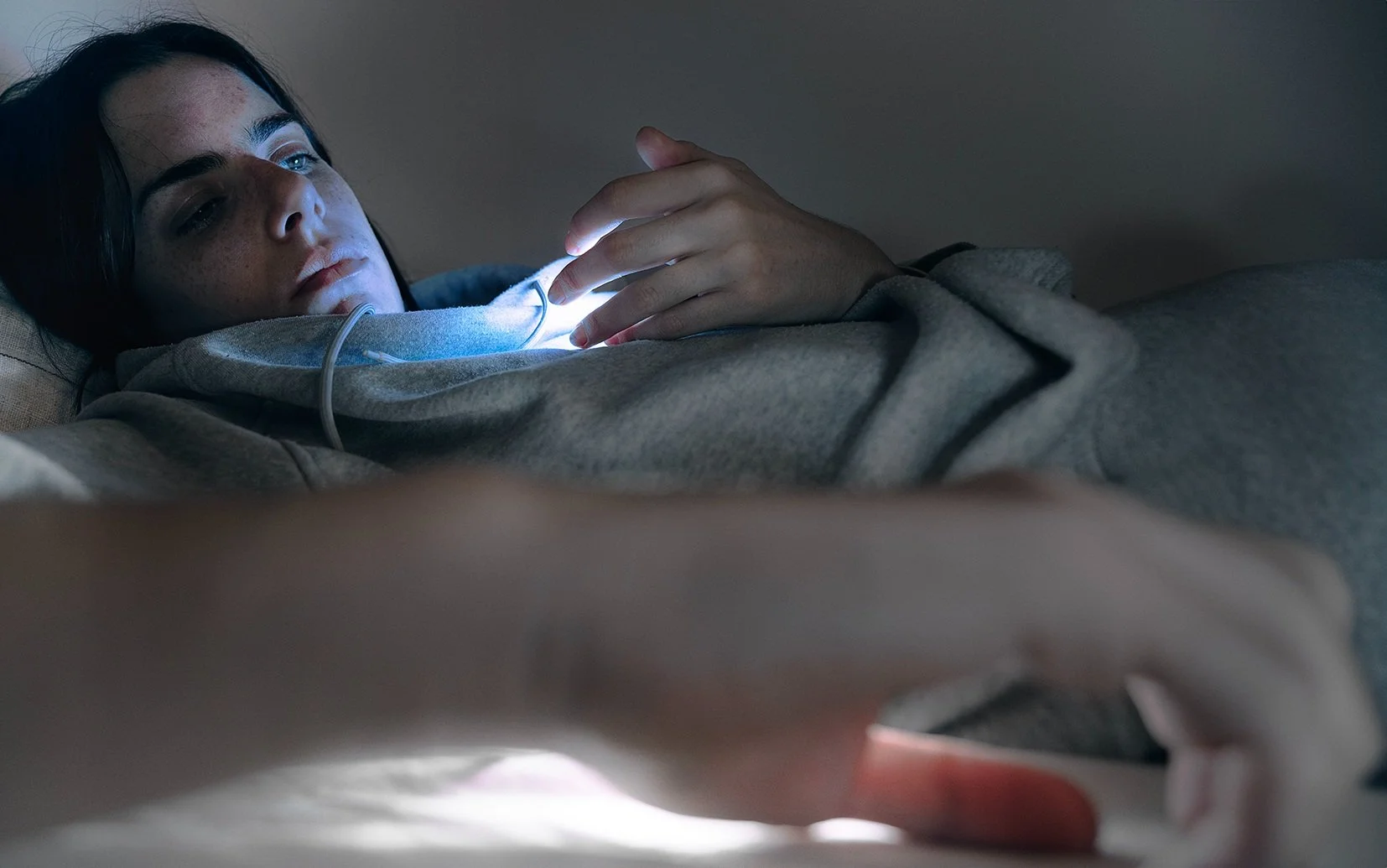
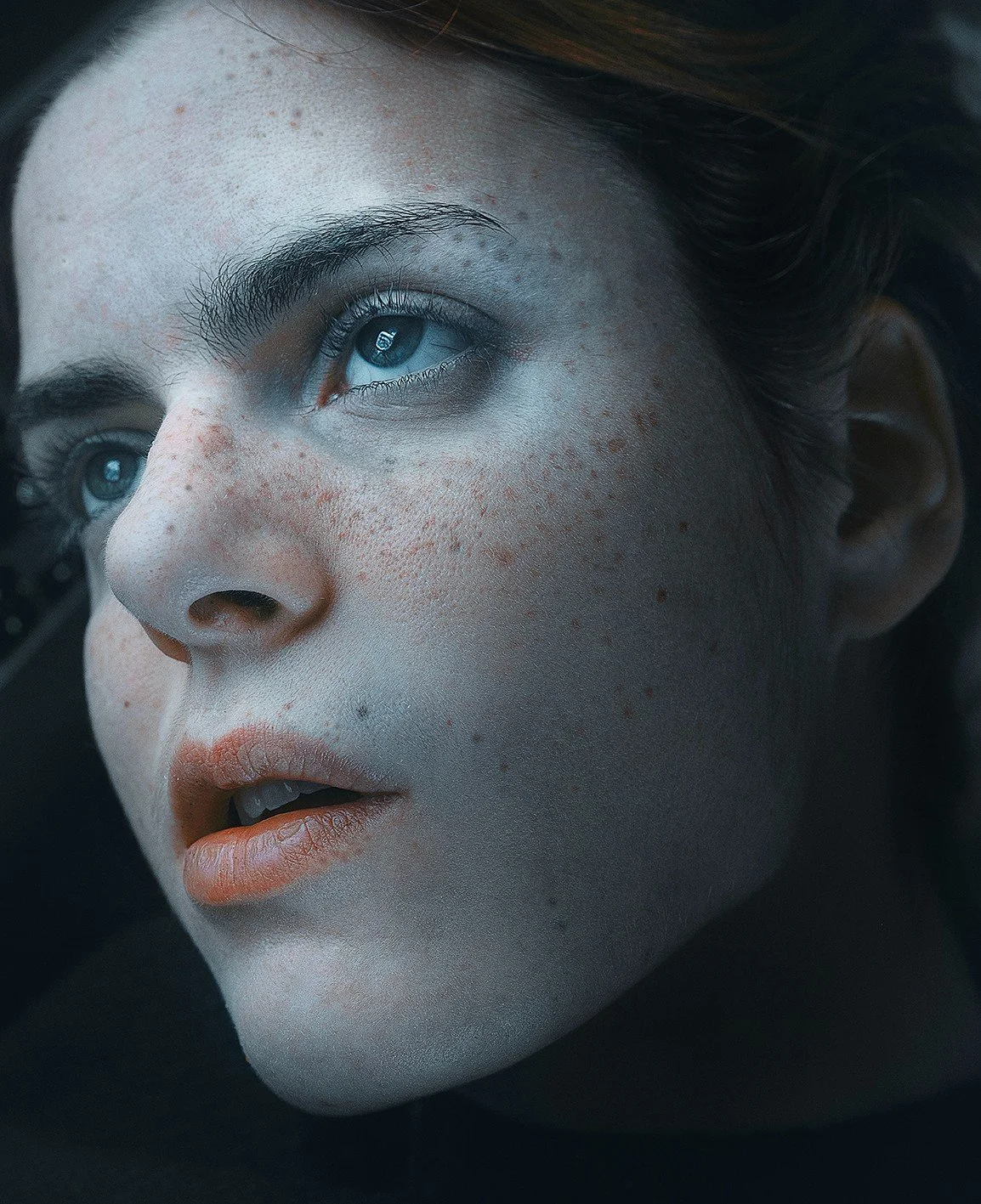
Working largely within domestic landscapes, which she sees as central to any notion of human expression, she places friends and herself within surroundings that are both recognisable and yet beyond our recognition. The incorporation of various lighting techniques, most of which are screen-based, brings this into sharp focus. It is also the subject of ‘Byte’, her latest project, for which screen light is employed as both a subject and a surface. Used to illuminate the faces of those photographed for the series, the screen light alters their contours and conceals specific features, while emphasising others. Through this interplay between light, image and the human figure, she considers the extent to which our expressions have become impressions of a digitally focused age.
You studied at Central Saint Martins, where your relationship with photography developed alongside your experience of living in London. How did that period shape the way you came to see the world around you, and what did you begin to understand about photography that you hadn't before?
Before moving to London, that was, two years ago, I did my BA in photography at ECAL. So, I’d formed a relationship with photography before. Technically and visually, my language was already developed in its own way. For me, it was important to develop the fashion aspect. When I started my MA, I always had a really strong visual language, which revolved around using a lot of harsh light. I had my colour palettes ready, but I think I was shy about it. I did not really understand that it could become my visual language, that it would be accepted as well in the industry. So when I started my MA, I tried to adapt to a visual language that wasn't exactly mine, because I thought that was what fashion was about. To have something that would be received by as many people as possible. My MA was amazing because I was really able to explore my identity and how I wanted to show my work.
What interests you about the distance between the lives we see represented and the lives we engage with? Where do you see your own work sitting within that relationship? To me, your final major project for your MA at Saint Martins really comes into play here, especially as you’ve illustrated it interrogates the “subtle ways digital culture shapes identity, anticipation, and perception.”
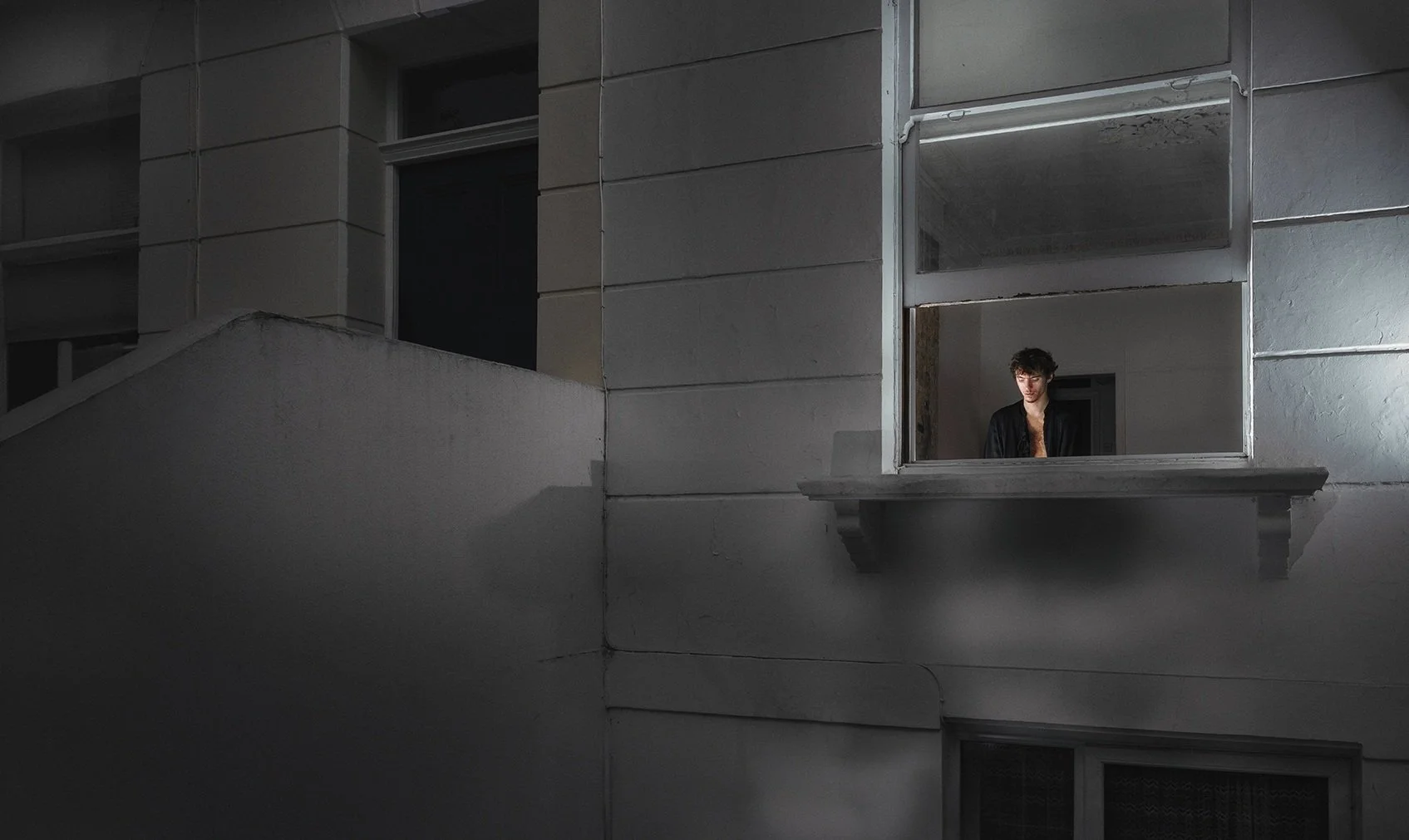
I'm from 2001. So I really grew up surrounded by a large amount of digital imagery: films, cinema, showcases, cities elsewhere, because nothing was filmed back home in the small town I grew up in, in Switzerland. So, for me, I always dreamed of having a life that was linked to all the imagery I was seeing. And I cultivated this fantasy in my head, thinking that if I moved here, I would find it and be able to be this cool kid I'm seeing everywhere on social media. It gave me a lot of hope for what I wanted to achieve and where I wanted to be, but it also just stands to remind me quite a lot of what reality was, and that was still when I was back home. My entire MA project was about that. It's about how I can navigate through these mental landscapes. But there is this projection of yourself into someone else's life, and you face what you don't have and what you like in your own life. This project is only pictures, including self-portraits. I capture a lot of self-portraits, but also pictures of my friends, and I shoot a lot in my house or around my area to really recreate the scenes that were actually in my everyday life, but also have them in between reality and this projection.
Can you speak to your own digital engagement? Which app, for instance, do you dedicate the most, or none, of your time to? Are you a habitual doom-scroller? How have you considered the ways in which these encounters influence your cultural perception?
Before talking about Instagram and social media platforms, growing up, I always watched a lot of movies. That was mainly the first influence I had on my own digital world. Growing up, I wasn't on social media as much because the access we had back then was not that big. Now, I'm mainly on Instagram. Growing up as an artist, you always have this imposter syndrome all the time, and I always knew that I wanted to become an artist. But I spend most of my time really looking at what other people are doing. People on Instagram choose what they post as well, so the entire digital world there is so spectacular.
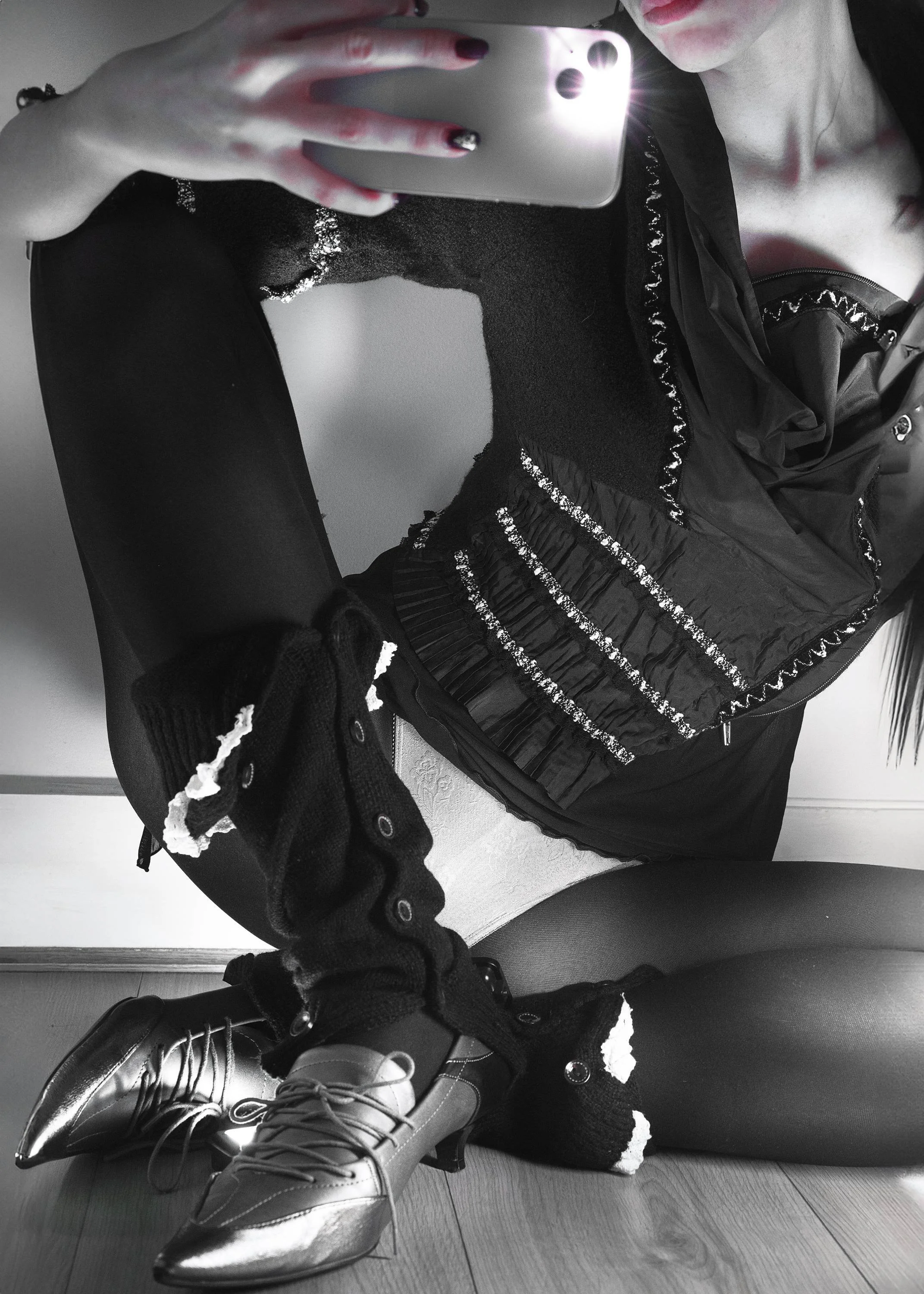
In your opinion, has the act of looking become a more active or passive exercise? Has photographing the world changed the way you experience it, compared with being present within it?
The answer would be in between these two. I think at the end of the day, after a lot of scrolling or a lot of images going around me, I could feel overwhelmed and anxious, and I would not even know where that comes from. Your brain looks actively at the images, because it makes me compare myself or project without actually realising it. And I think this is where it becomes difficult for me. When you look back at why this anxiety could be here, it's because of everything you've seen or heard throughout the day. Looking is not even in action anymore. It's part of you. It's part of your everyday life, but you still see everything deeply.
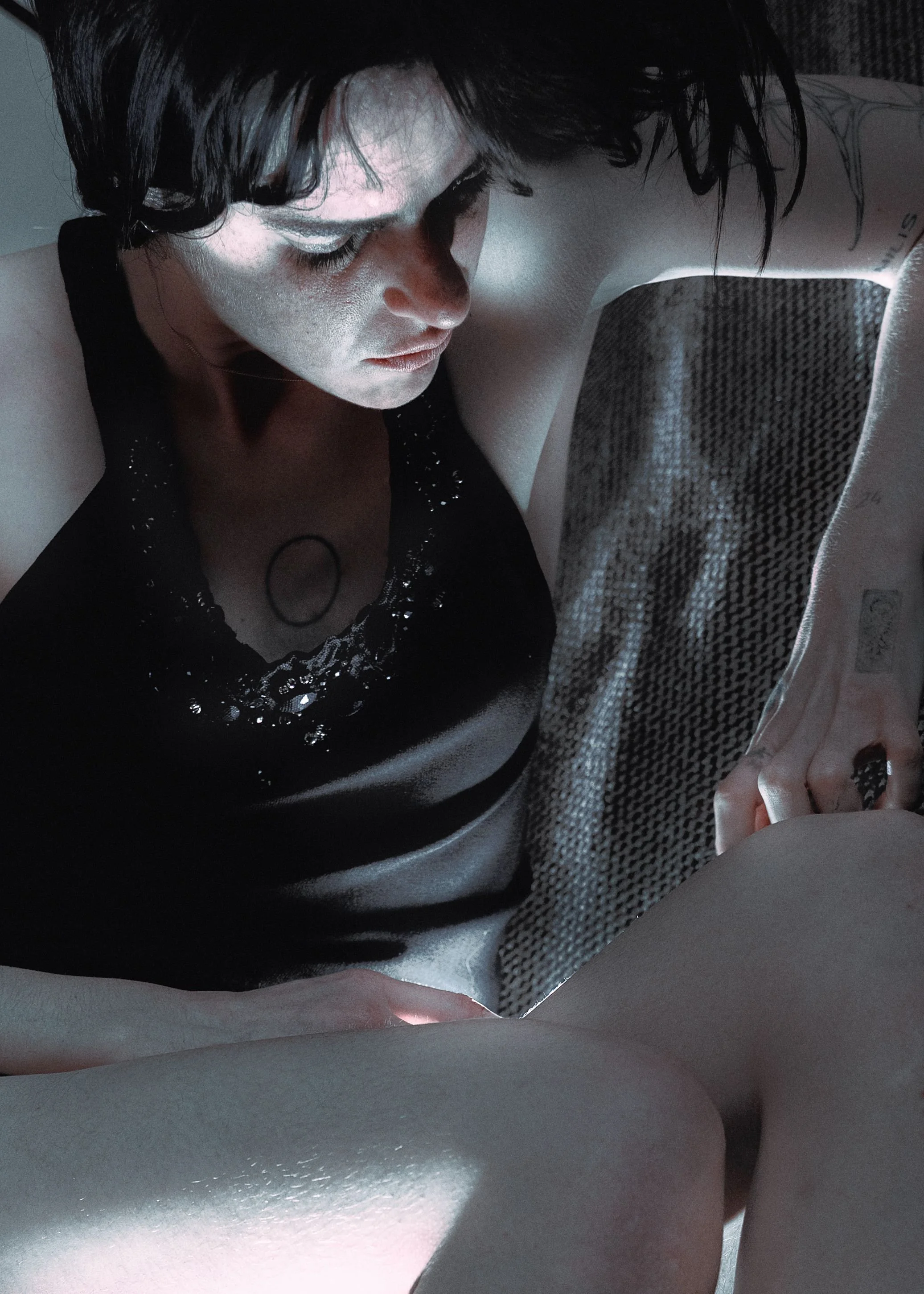
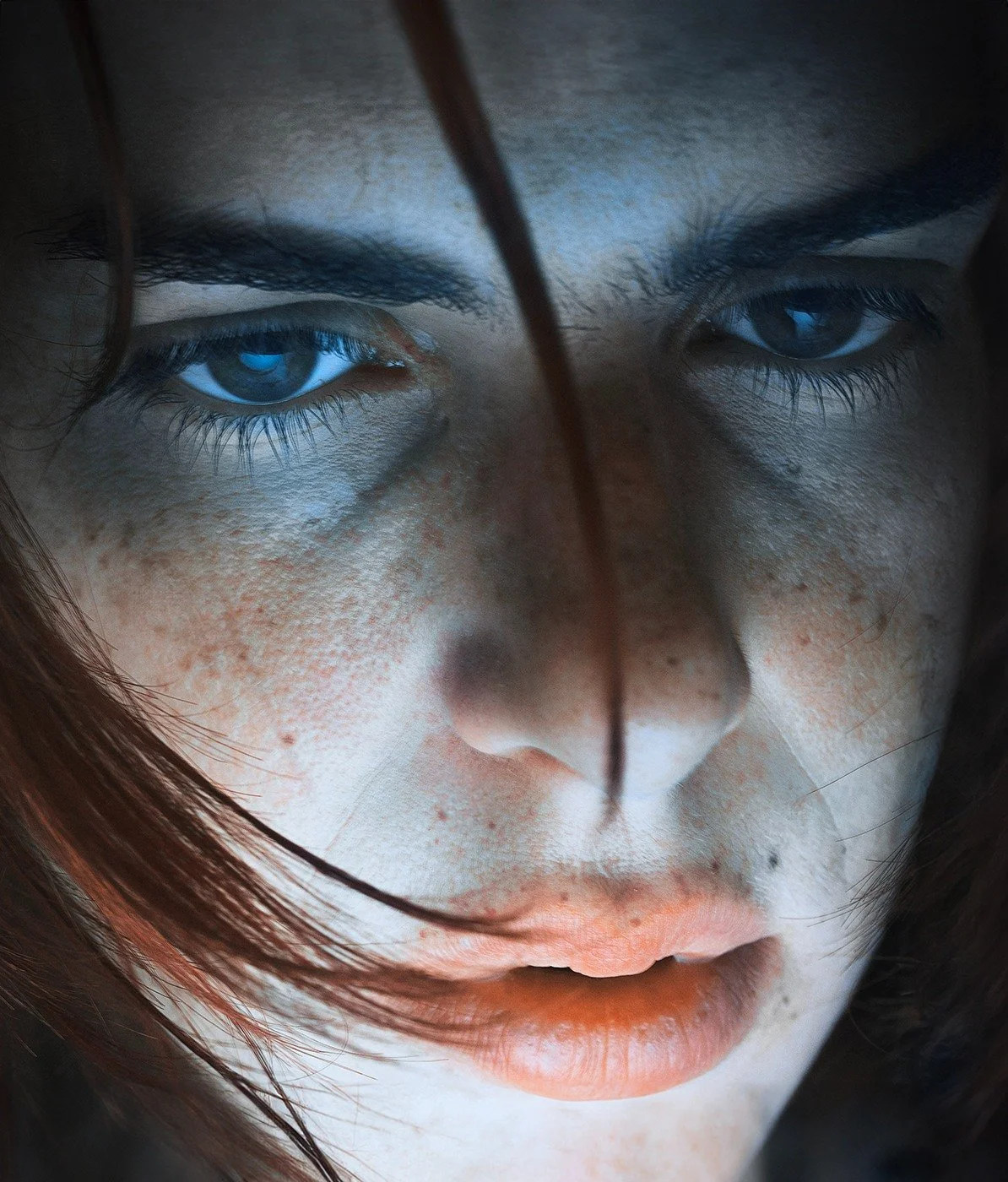
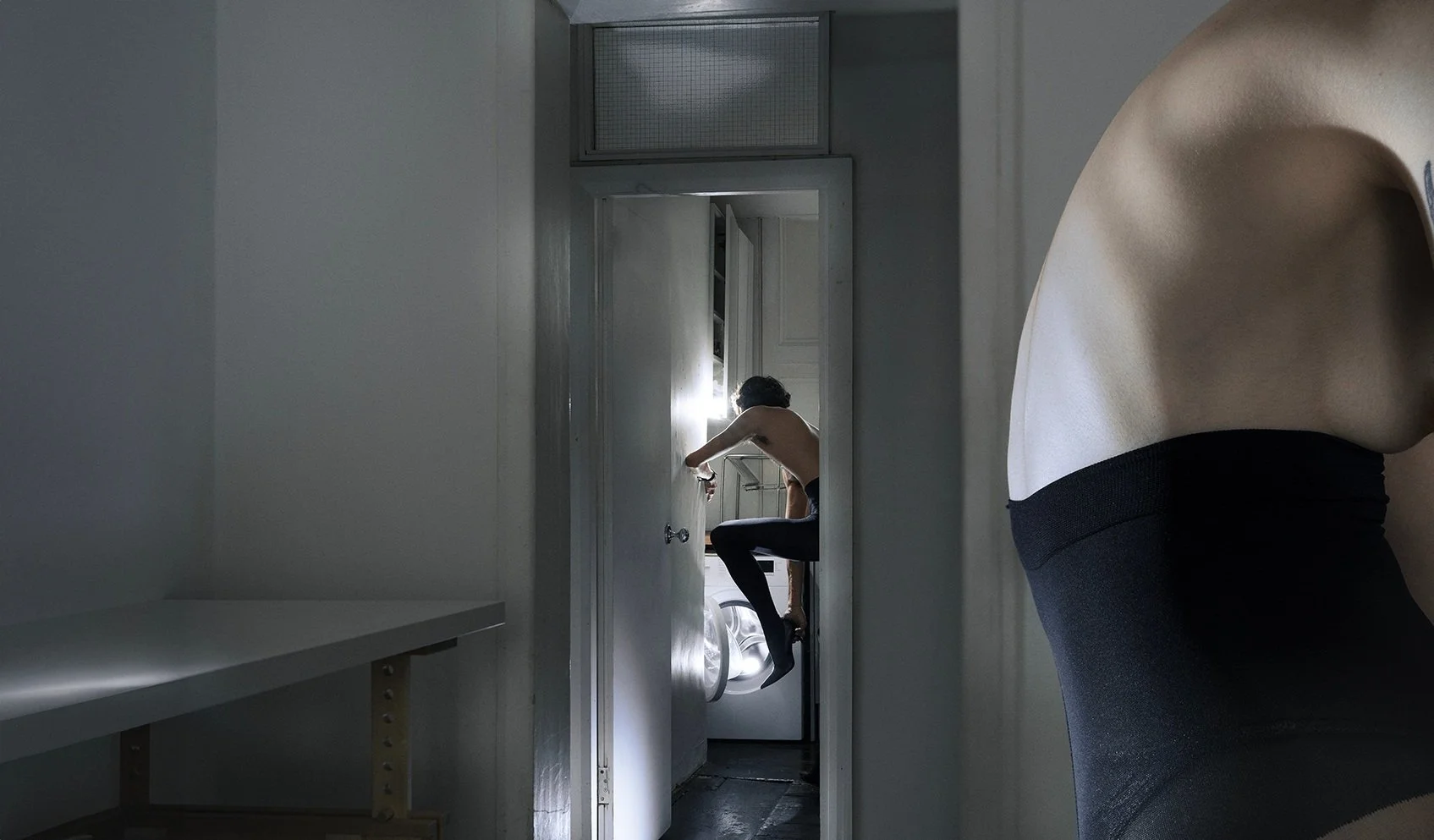
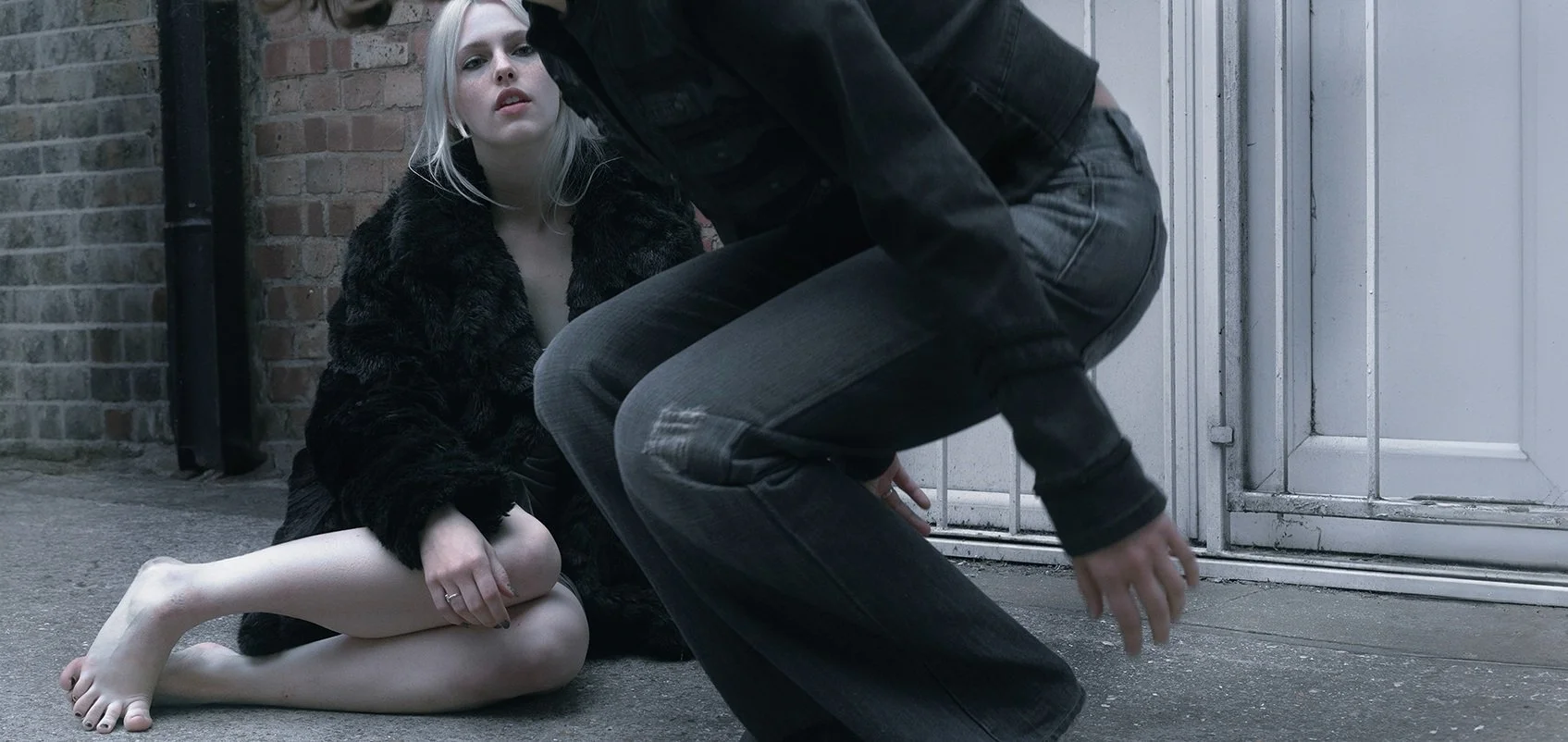
The home context within ‘Empty Rooms’, to me, is very telling, especially the scene where we encounter two figures sitting in the kitchen space, while the back door has been left open, in such a way that it evokes a sense of infiltration, or of something that has a presence, but is not explicitly present. Is it an intentional commentary on the way screens have begun to infiltrate our experience of domestic life, even when they are no longer in view?
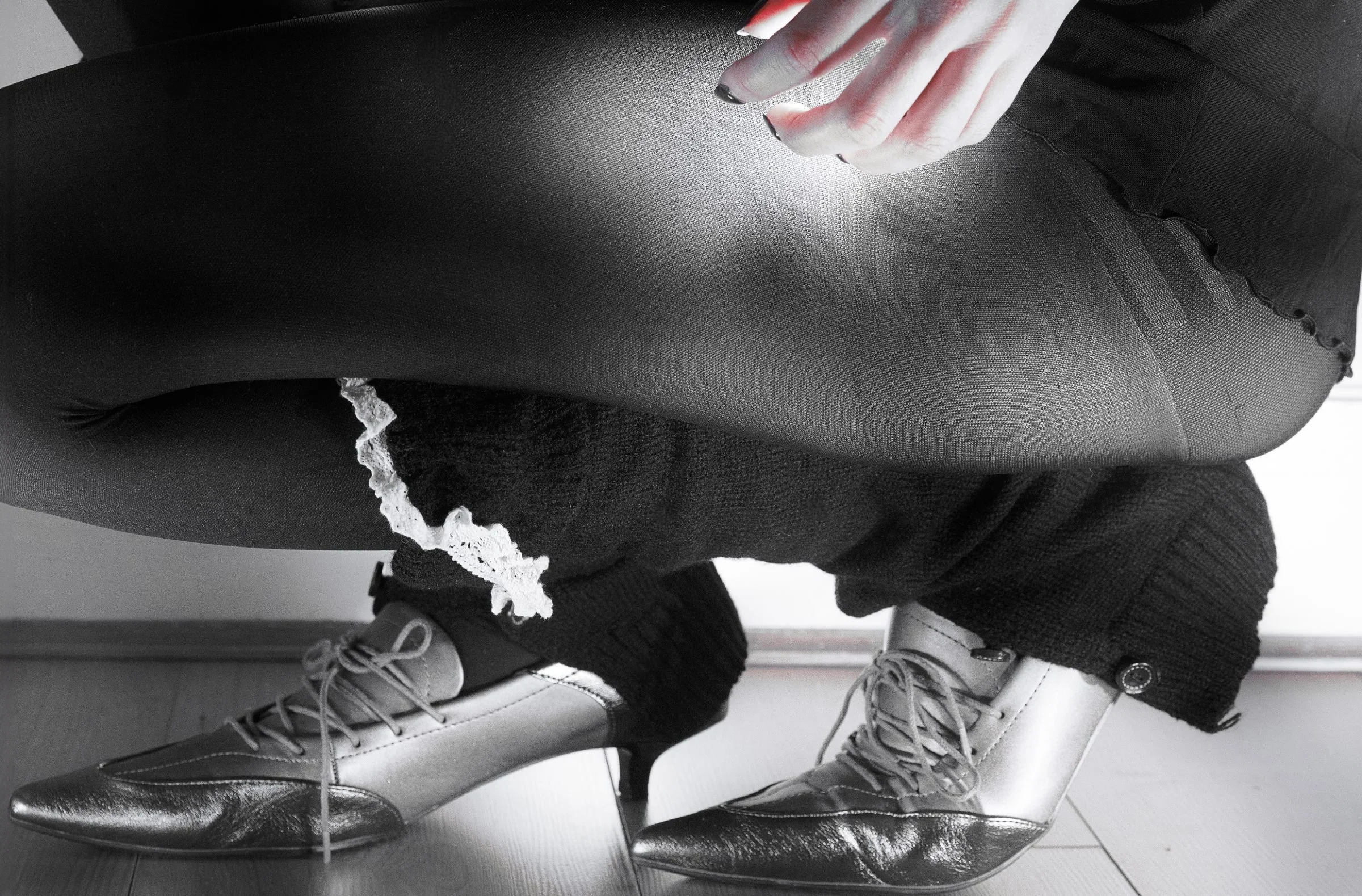
We're talking about being passive or active in situations, and I think most of the time, we are passive in what we do, how we experience everyday life, or the world in general. You talked about this image in particular, but in most of my images from this project, I think it became important for me to have a focus beyond the frame. And that, no matter what it is, you can link it to screens or the digital world. I don't think it was initially, necessarily, the idea itself. I work a lot in domestic spaces. For me, this is the centre of identity as well, and all my work speaks about identity. In this series, most of my friends are also actually lit by screen lights. I have flashes, LEDs, but also a lot of different screens, and every image is lit by at least one or two screen lights. For me, it’s important to always link my images to the digital world as if they were just out of the screen.
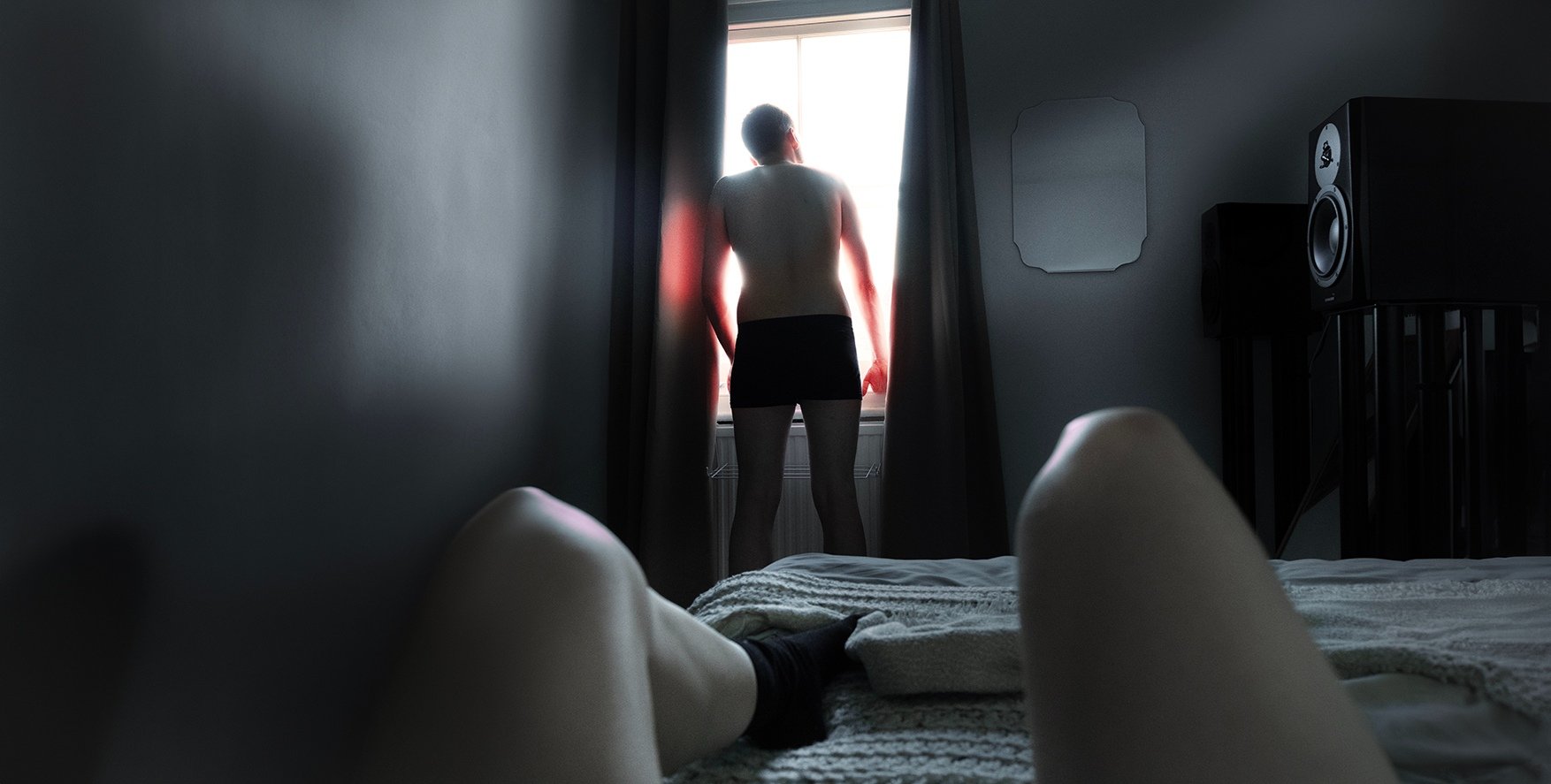
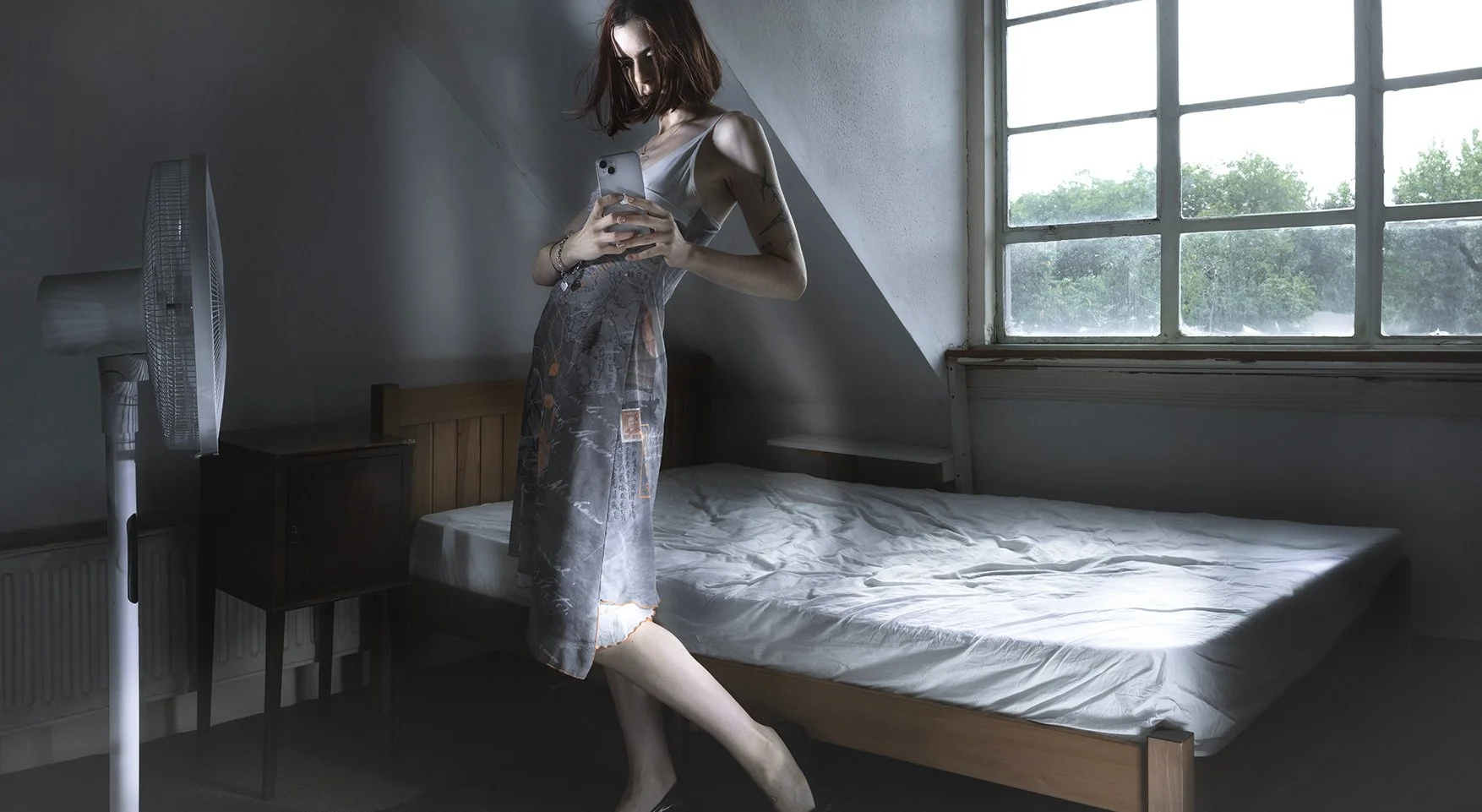
Your subjects often appear simultaneously recognisable and beyond recognition. Can you speak to how photographing a figure alters its legibility, and how you approach the tension between what feels familiar and what remains elusive in your work?
I'm really interested in the space in which the model will be, so I try to highlight or hide certain details, in a process that uses light. So I really take my light as a subject itself. A subject is a subject, but it's also a surface in a way. My story is my story. And my photographs are more concentrated on the storytelling than on people. In that sense, they can become less recognisable, because it's not just a portrait of someone where you see all of the details of skin.
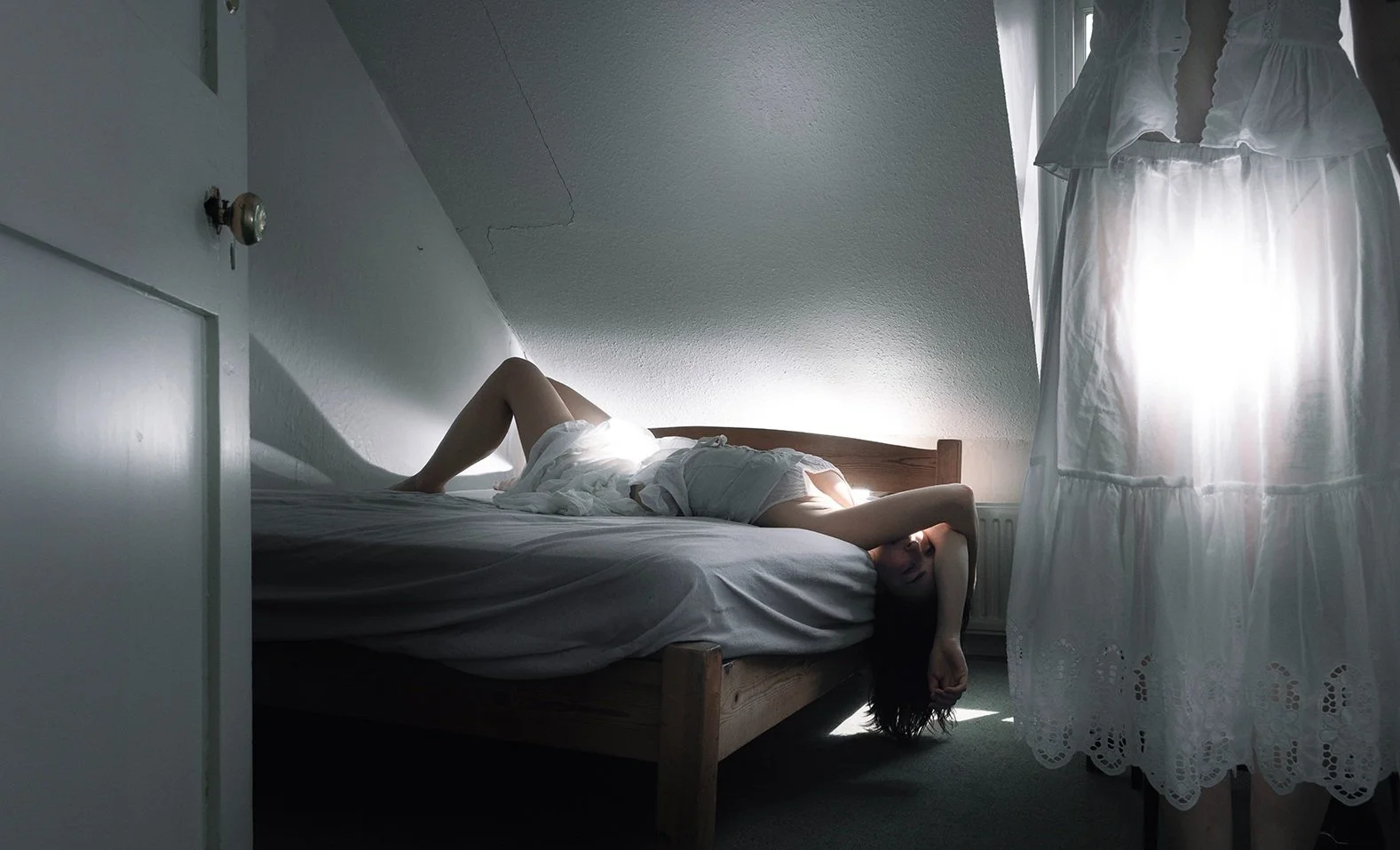
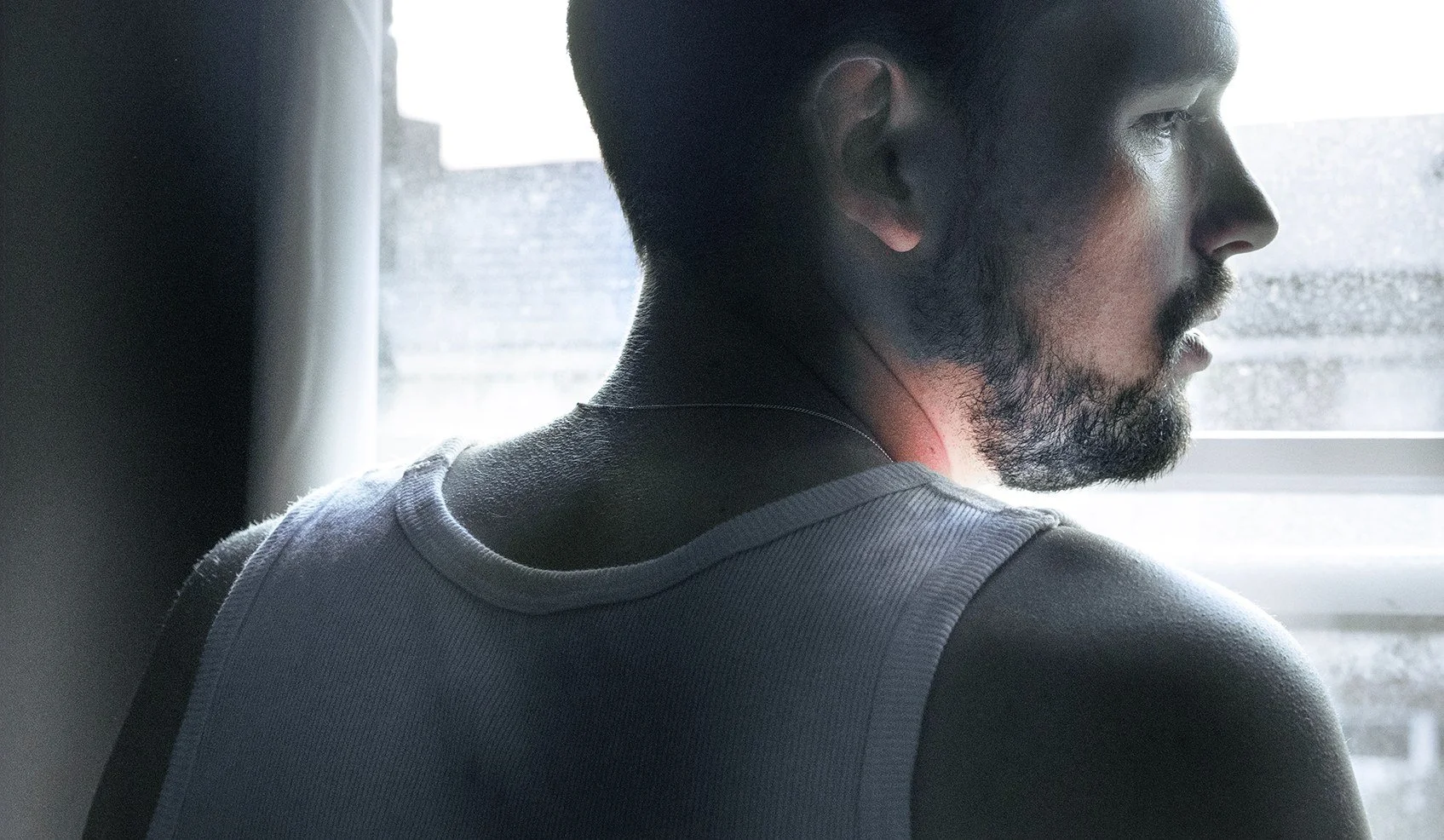
This also sets us up for your next project, ‘Byte ’, which has focused on making screen light ‘both a tool and a subject’ that ‘leaves traces on the skin, alters perception, and redefines how faces are read.’ Are there elements of ‘Empty Rooms’ which have been encoded here, and in which way are you looking to reprogram this focus?
‘Empty Rooms’, for me, really was a starting point for my practice, in a way, because it comes from a place which is really personal, as well. By doing something that personal, I also realised my implication in the digital world. I did not understand it that clearly before. So it really challenged me to understand that. Through this project, ‘Byte’ came afterwards. We constantly have this really cold light on our face, and it becomes a part of us. With ‘Byte’, it speaks about the same questions. I started talking about it in ‘Empty Rooms,’ but in a more direct way, because it's entirely based on my screens, nothing else. I used YouTube, for example, for the red, and I think in one of the eyes, you can actually see the logo.
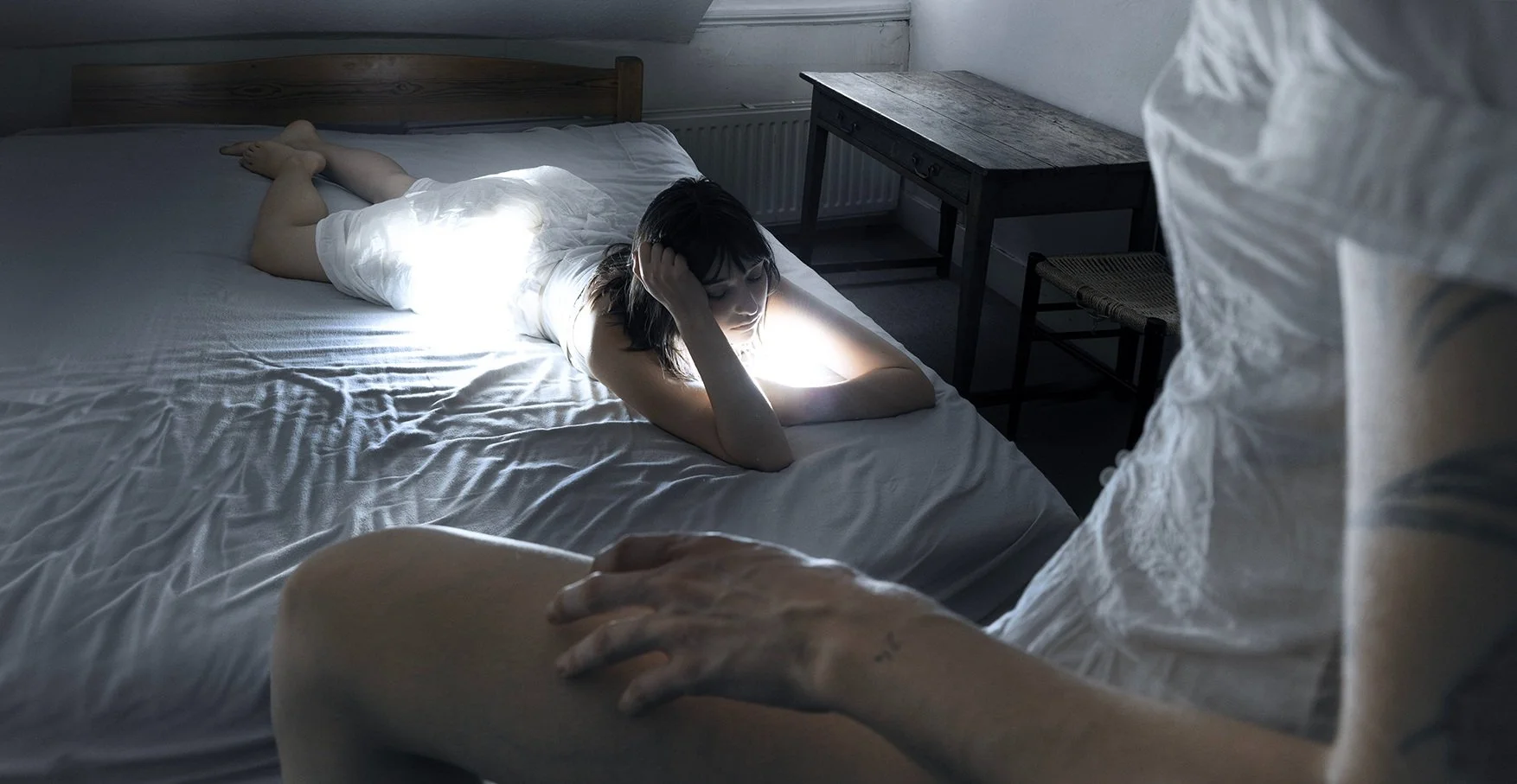
The screen and the face seem, to a certain degree, inseparable here. How do you approach the relationship between humanity and technology, and in which way has light been used to mediate this relationship in ‘Byte’?
Me playing with these codes as well is an expression of how intrigued I am by this. If you look at my aesthetic and my use of lives and screens, I think it's a good time for me to explore these boundaries as well; everything is starting to become too advanced for us to cope with. My images are not really happy or sad - it’s an in-between, a massive mystery, an interrogation point.
The title ‘Byte’ itself invokes the language of digital information, bringing to mind the ways in which human experience is translated into data, pixels and code. Do you see the face as something that can be digitally reconfigured, through data, pixels and code, or is the work more concerned with the limits of technology in representing human experience?
For me, it's so important to work with real faces, and I would hate for those details to all get replaced by code. My pictures are really high in their resolution, and I emphasise this even further. This is where I'm also interested in digital boundaries: where I can, I don't want to push my image so far that it is still just digits. I want pixels to have more detail, more definition. But this definition will actually reveal the imperfections of my skin.
This is where it becomes interesting. If I create a face, I would have fixed it; it would be a perfect face. My face isn't perfect. I change my volume using light, because if I put it behind or in different ways, it can change the volume of a face. But it's still a face, and it's still a real face. I'm always trying to keep the imperfections as well, because, for me, it's important to talk about real humans. I'm talking about everyday life. I'm talking about something mundane, domestic, and all of this is really close to human beings. So, even if I use a lot of technology and talk about the digital world, I think that my work still remains fundamentally human.
Lastly, what do you hope your work prompts us to see differently, whether in the images we consume, the faces we encounter, or the realities we come to expect?
When I answered the first question, I was talking about how I projected myself into a better life because I felt that my own life wasn't enough, or that I wasn't cool enough. I mentioned the “cool kids”, but I think this made me feel so lonely. So lonely as a human being, so lonely as a teenager, and so lonely as a creative as well. Talking about these struggles, and about the digital world from another perspective, rather than making it all wonderful, or taking it as an influence, is important to me. It's also a way to connect, because everyone can relate to it. Everyone has imposter syndrome, I'm sure of it. Everyone is projecting themselves into something else, comparing their lives to someone else's and thinking that they aren't enough.
Interview by Sabrina Roman
What to read next