Global Antiquity by OMA/AMO at Fondazione Prada
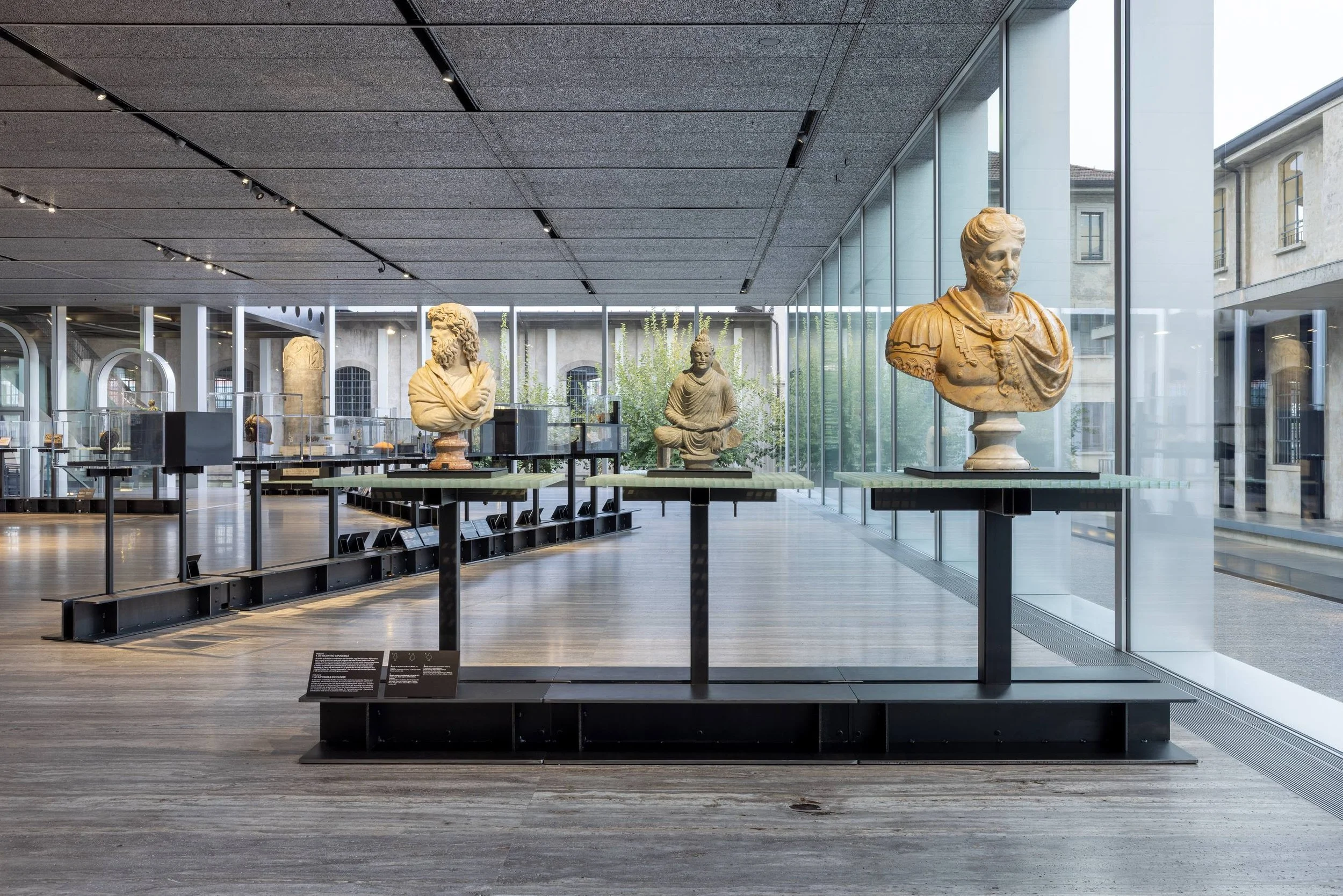
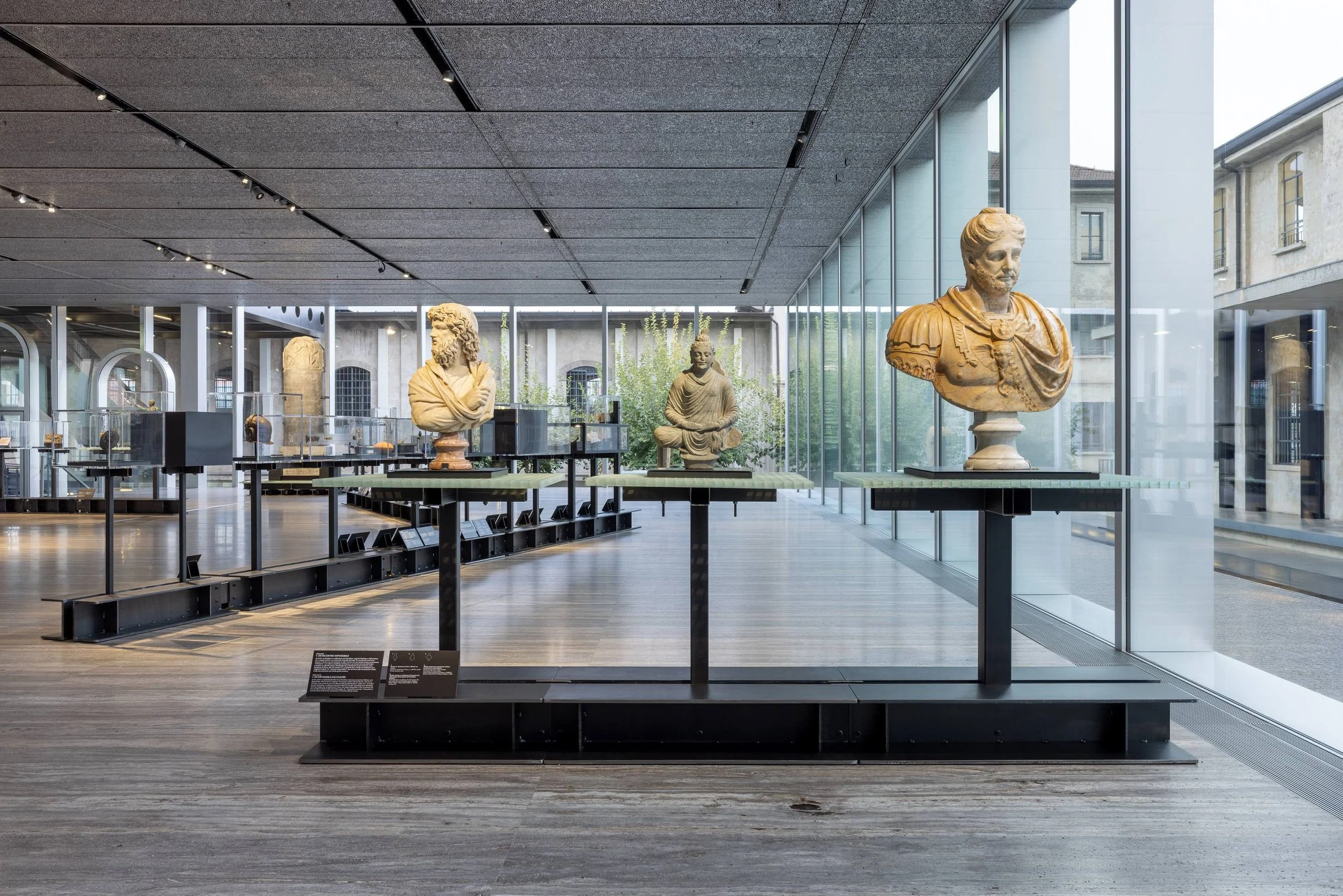
From 5 November 2026 to 1 March 2027, the Podium of Fondazione Prada in Milan hosts "Global Antiquity", a research project curated by Salvatore Settis, Anna Anguissola and Chiara Ballestrazzi, with an exhibition design by Rem Koolhaas and AMO/OMA. The show covers roughly 600 BCE to 1000 CE and looks at the ties that linked the cultures of the Mediterranean to those of Asia, across continents and seas, well beyond the routes we know as the Silk and Spice Roads.
It is the closing chapter of a long investigation into the ancient world. The series started in 2015 with "Serial Classic" in Milan and "Portable Classic" in Venice, and continued in 2022 with "Recycling Beauty". Here coins, chess pieces, astrolabes, textiles, drinking horns, jewelry and statues arrive from lenders as far apart as the Vatican Museums, the British Museum, the Samarkand State Museum-Reserve and the Mongolian Academy of Sciences in Ulaanbaatar. Each object counts twice: for the place where it was made and for the place where it was found.
Giulio Margheri, who worked on the design with Koolhaas and the AMO/OMA team, gave that thesis a physical form. His layout turns the curators' map of connections into a centrally planned landscape of iron beams, Plexiglas cases and fiberglass tables, with every object placed at the same height and no fixed route through the room. We met him to talk about the research behind the trilogy, the choice of materials, the rooms built around the Podium and what may come next.
"Global Antiquity" is the third chapter of a series that began in 2015 and continued in 2022. How did the research develop into this final episode?
This exhibition closes the series. When the collaboration between Salvatore Settis, Rem Koolhaas and the OMA studio began, there was no precise idea of when the exhibitions would happen or what they would be. There was the idea of working on contemporary themes through the ancient world. It grew over the years, with no time frame and no broad plan, more the sense that this was an interesting theme that could be articulated and developed. Salvatore and his curatorial team define the hypothesis and the physical pieces of the checklist that support it. With Rem and the studio, we work mainly on the exhibition design, which becomes an exercise in how space can amplify and support the thesis.
How does that dialogue with the curators shape the design?
It becomes a very interesting project because there is a close collaboration with the curatorial team and, of course, with the Fondazione. The point is how to turn an intellectual idea into a spatial experience. Each time, the form of the exhibitions has been very different, in spatial strategies and in materials. In the end, this has always come from the search for the best way to represent the idea and the hypothesis of the exhibition, never from a starting assumption that it had to look different. Every exhibition had a different theme, every theme was represented in a different way, and so each one led to a different design. The process itself is very interesting: we start from the question of how to turn this idea into something tangible that people can experience inside the exhibition.
What was the starting point for "Global Antiquity"?
When we started working, the curatorial team showed us their hypothesis and their idea. It was a very big idea: to show that a network of exchanges, of ideas and of goods, already existed in antiquity. It was a big statement, and the way to illustrate it was to find a series of many stories that would compose this narrative. The world of archaeology works like this. Working with large numbers or with data is difficult, so you work on the fact that if certain things have been found, it means something was happening. If you find a soldier's helmet, it means that at some point there were hundreds or thousands of those soldiers. So, to illustrate this global network, the idea was to find stories showing how, in many parts of the world, there had been syncretic moments shaped by many influences.
How do you give spatial form to such a large statement through such small objects?
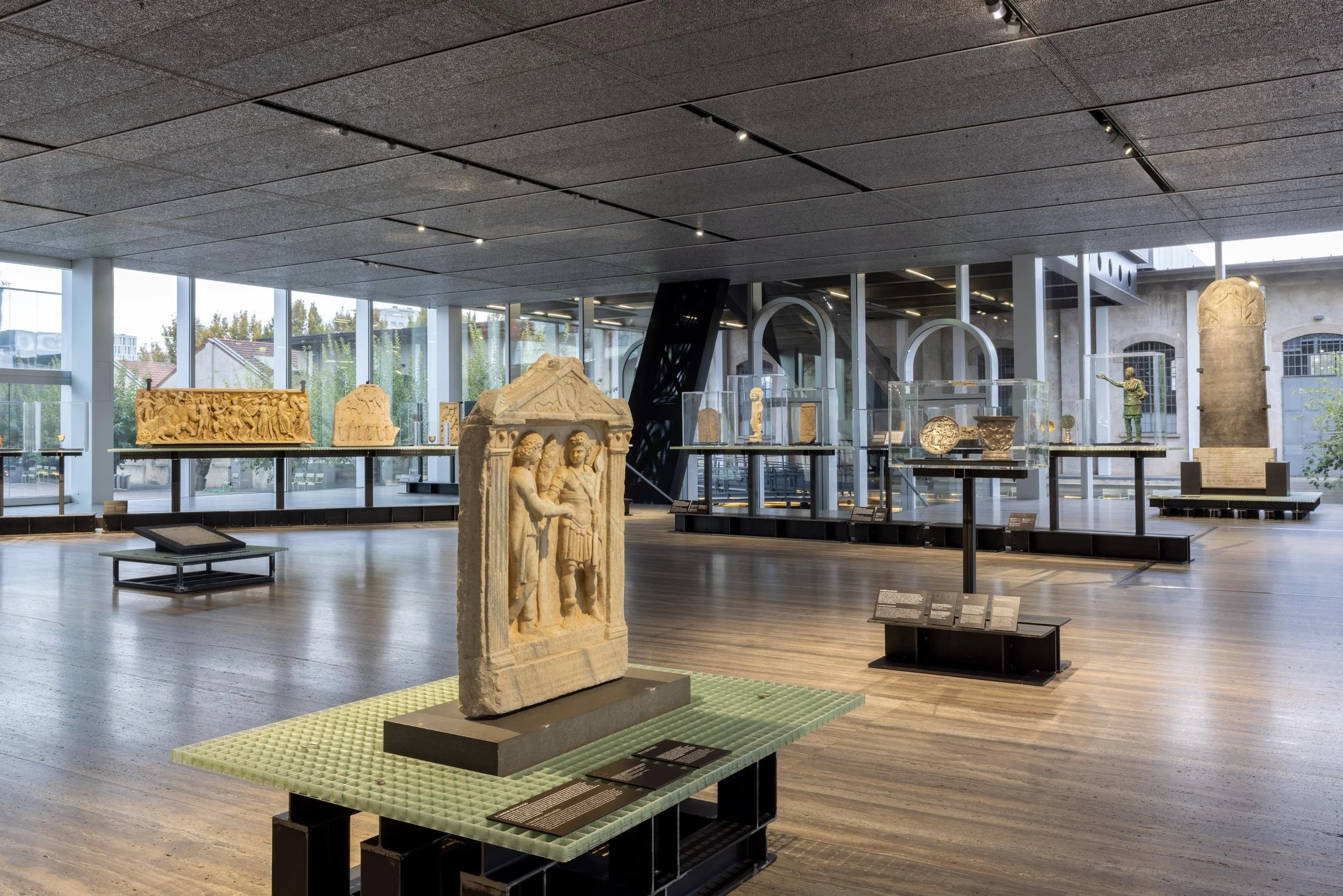
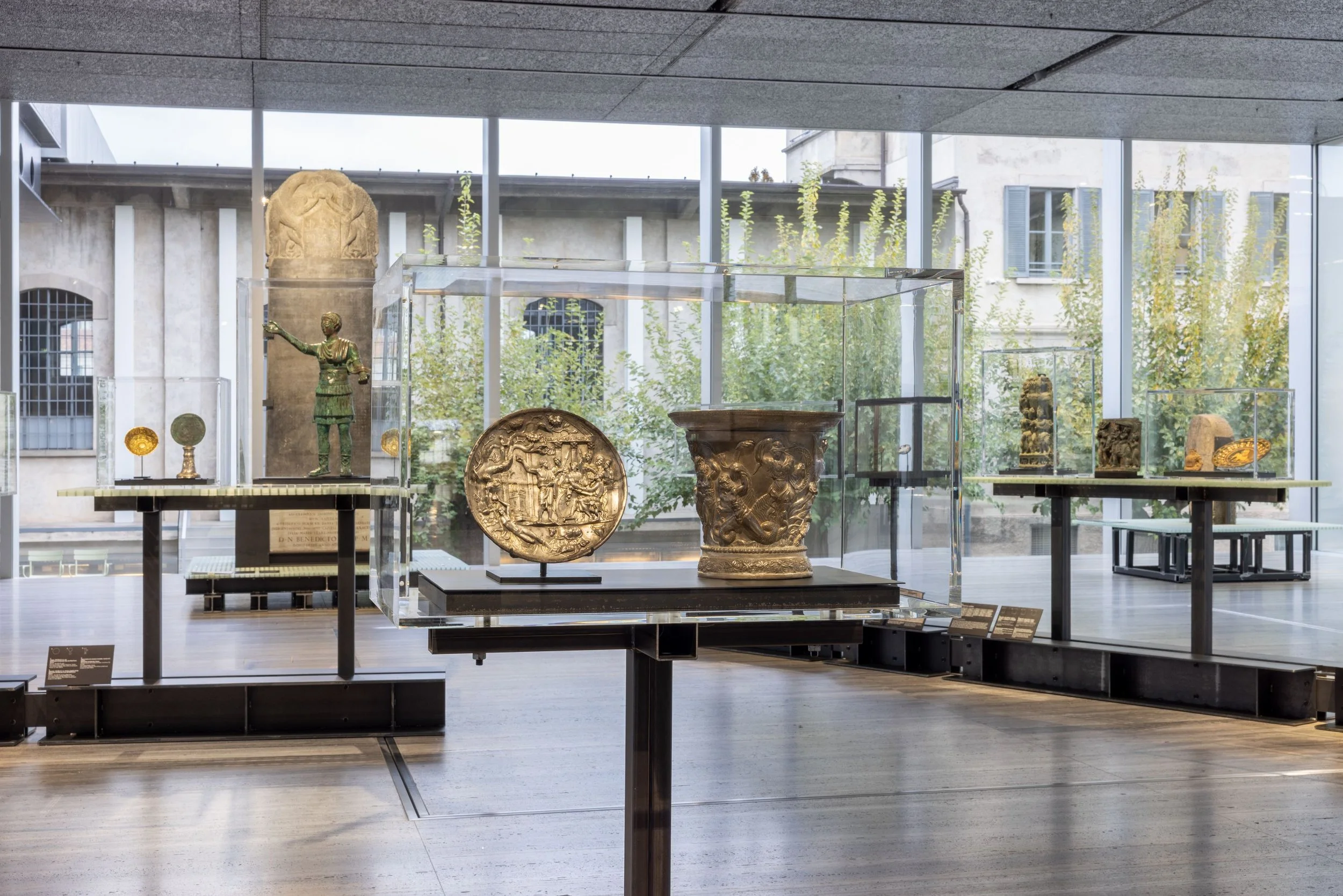
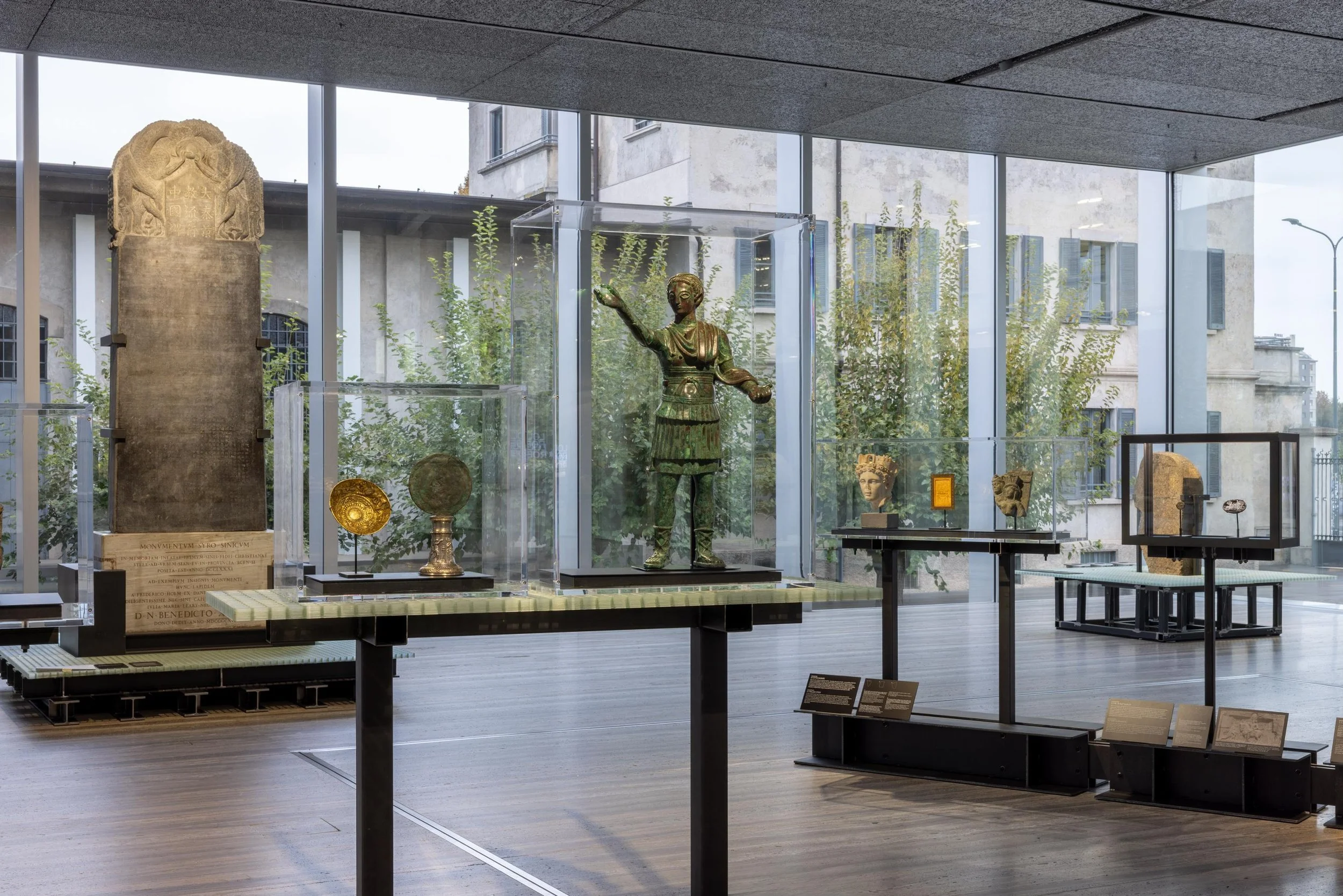
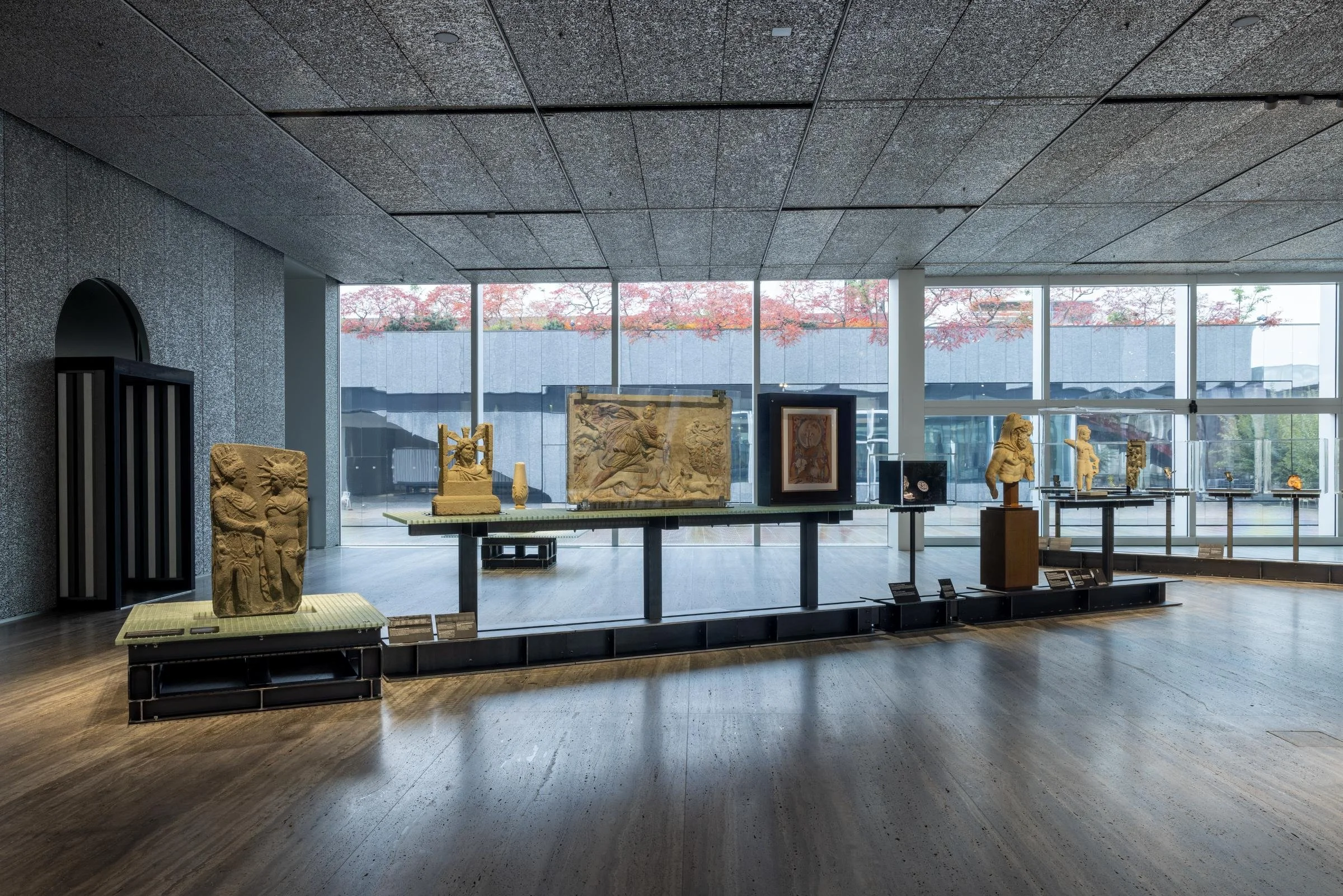
The spatial exercise was how to represent a single idea starting from many small episodes. Sometimes these episodes were small in their physical form too: a coin, a doll, a necklace. It was a big statement on a very small physical scale. From there, we worked on how to bring everything into one system, perceived as a single installation, then divided into the curatorial chapters and the individual narratives. In its final form, the curatorial themes are represented by the main beams. Each theme is supported by a number of narratives, so each beam is physically divided into a number of smaller beams that stand for the different narratives. Some narratives are told through one object, others through a collection of objects.
So the display follows a kind of grammar.
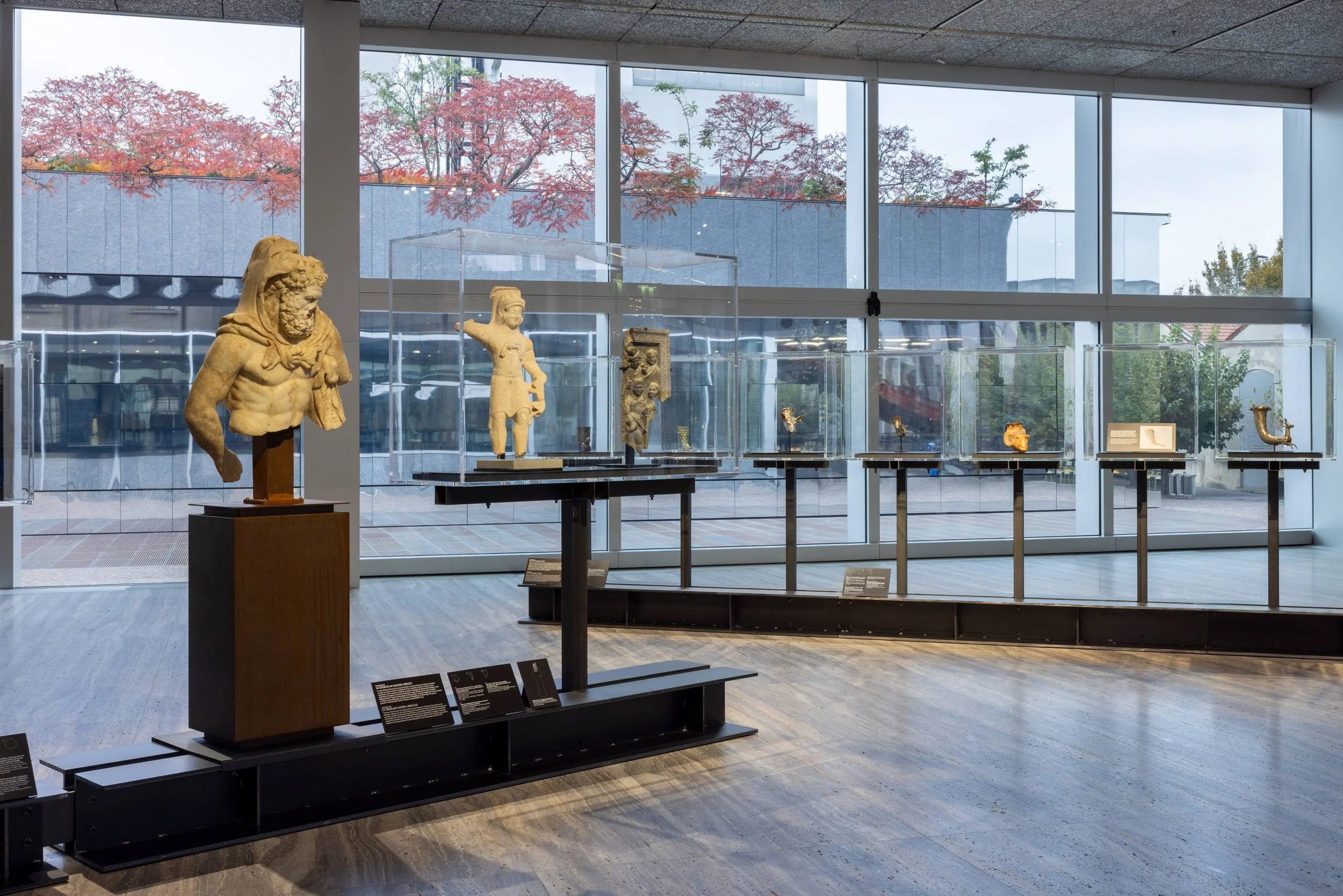
Exactly. In this display grammar, the bases follow one design that unifies everything. What happens above them adapts each time, since the quality and type of the objects always change, to the needs of the display and to the requirements of security, lighting and conservation.
Is there a hierarchy, or a set route, through the space?
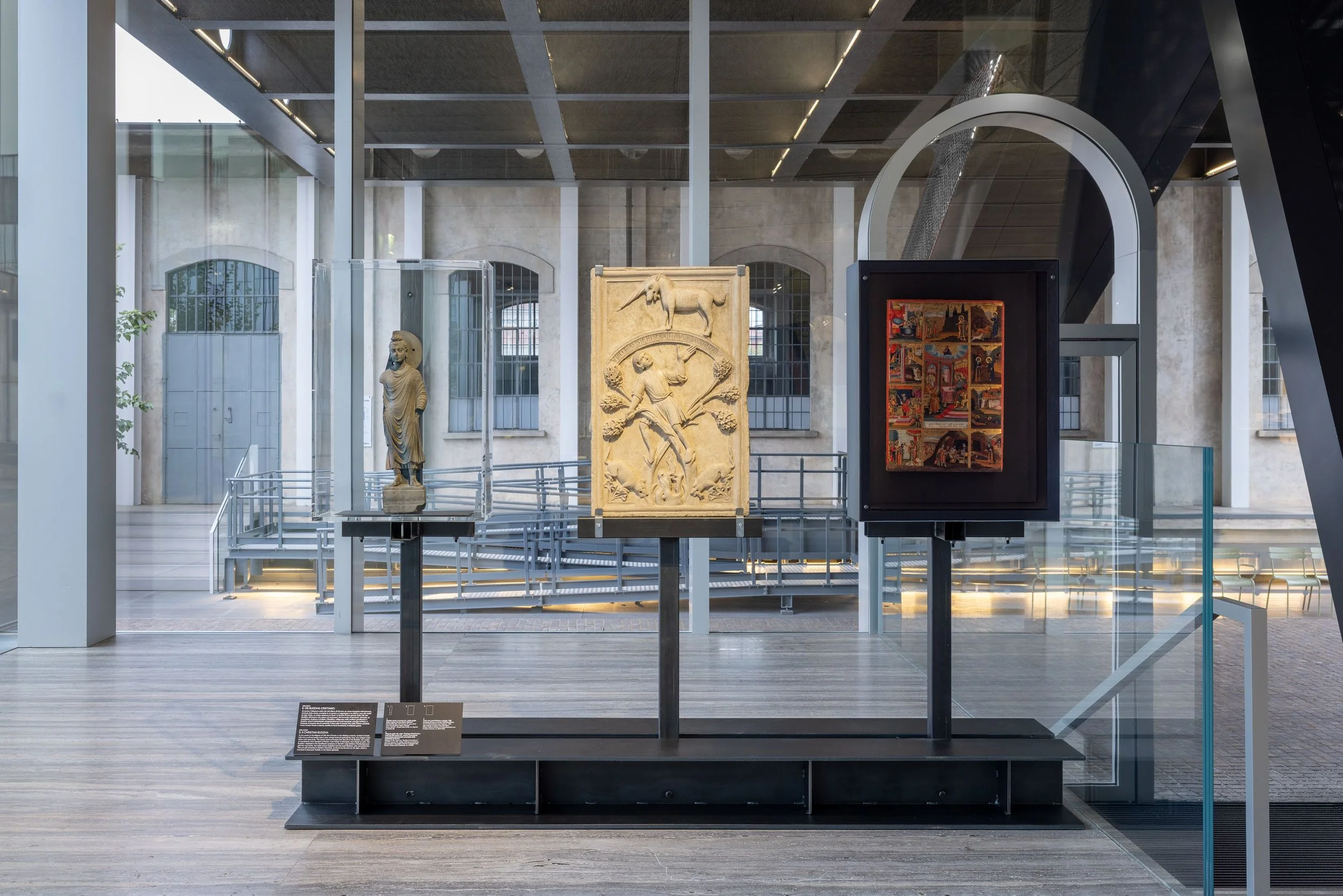
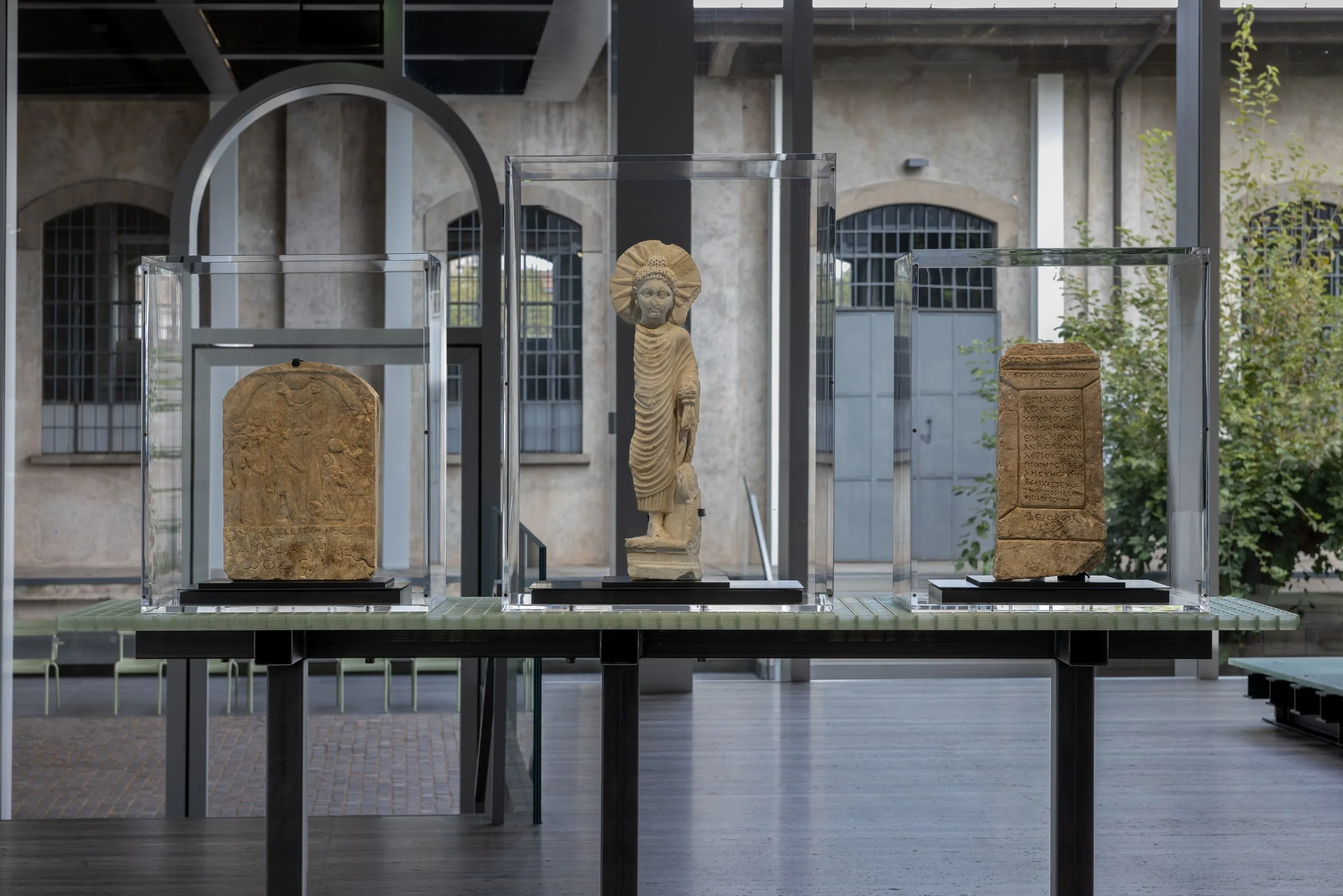
Another choice was to avoid any hierarchical subdivision within the space and within the narratives, because all these stories contribute in some way to composing the idea. So we worked on the idea of a single horizon. All the works are displayed quite high, deliberately, and all at the same height, which made the whole thing democratic: everything is shown in the same way. There is also no sequence. The curatorial idea is that all these narratives contribute to forming the thesis, so there is no chronological or sequential order, and visitors can move freely. The space became a series of beams that compose one single space together, yet each of them is independent, and you can walk freely through all of it.
What image guided the overall layout?
What formed in the end was a kind of abstract geography within the space, holding all the objects around a central space. It is a centrally planned installation: once you stand in the middle, almost all the objects face the center, and this creates a series of overlaps and connections between them. That was exactly one of the themes and one of the main images we used in our conversations: a map with many points and many lines, giving the idea of this network and this constant influence.
The beams below and the cases above seem to form a grid. Why did you choose these materials and these forms?
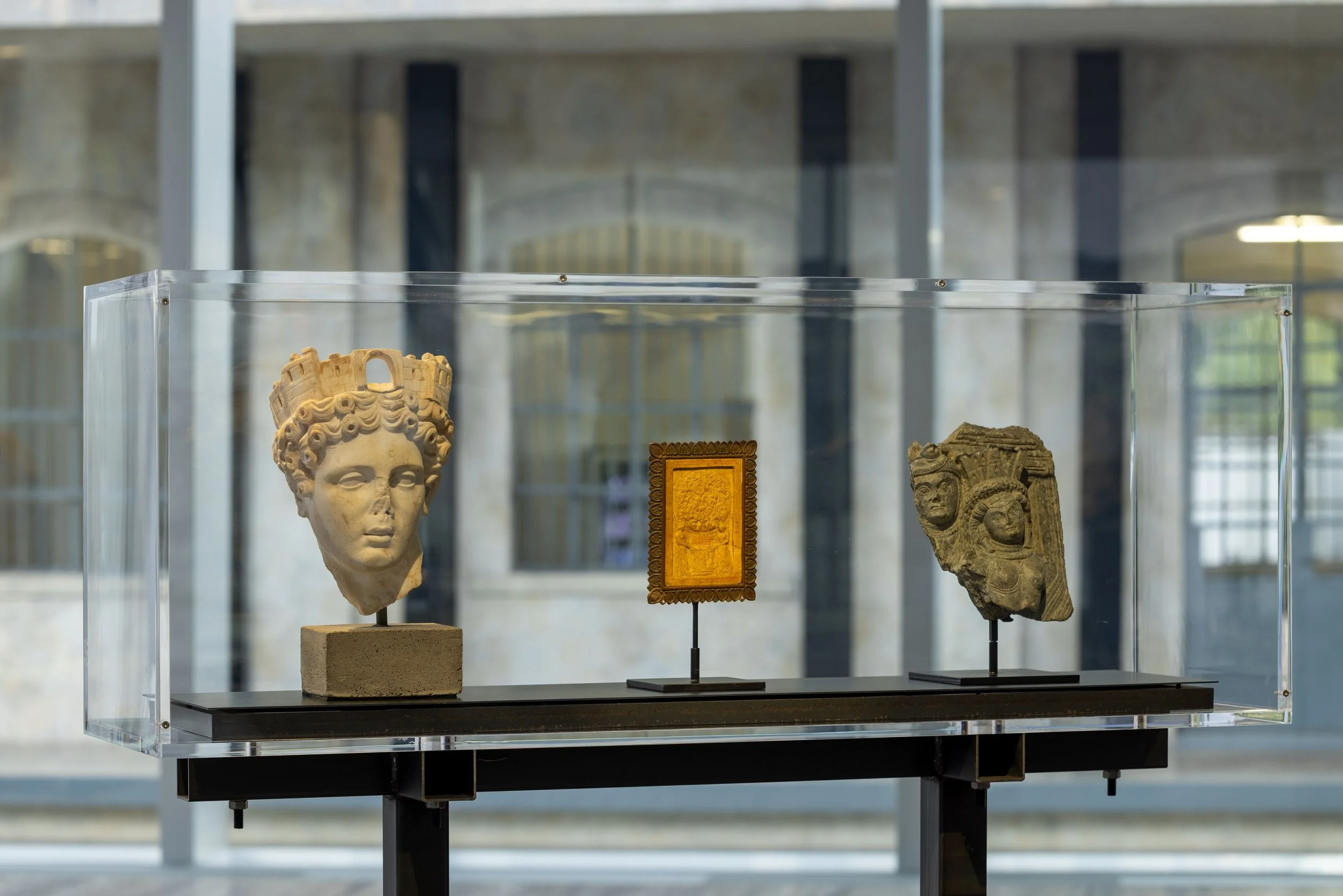
Each exhibition has also been a study of different materials and different spatial experiences. Here the idea was a more solid infrastructure, which we turned into almost industrial pieces: beams with industrial profiles that support the objects. They are iron, untreated, so they have this dark, burnished surface. They are left raw, unpainted. On top, the beams support different elements, mainly many Plexiglas cases. We had already used Plexiglas in our previous exhibitions, as bases rather than cases. It works very well because it keeps the details extremely clean: you can barely see the joints of the boxes. Many objects were very small and still had to be enclosed, and we wanted all the attention on them, with the box in its purest form and no added details.
Then there are the tables in green fiberglass. Having worked with the material before, you already knew how to handle it.
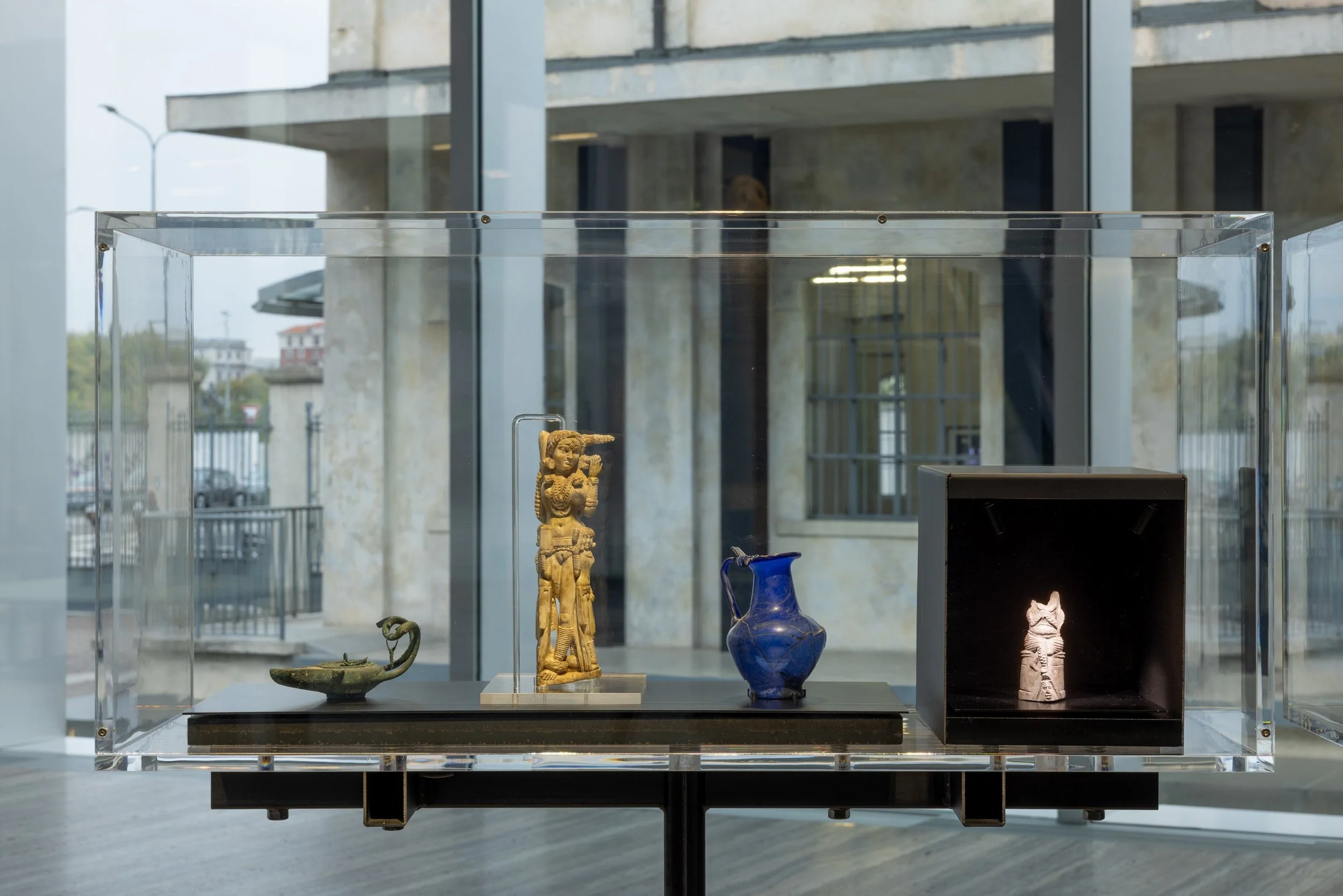
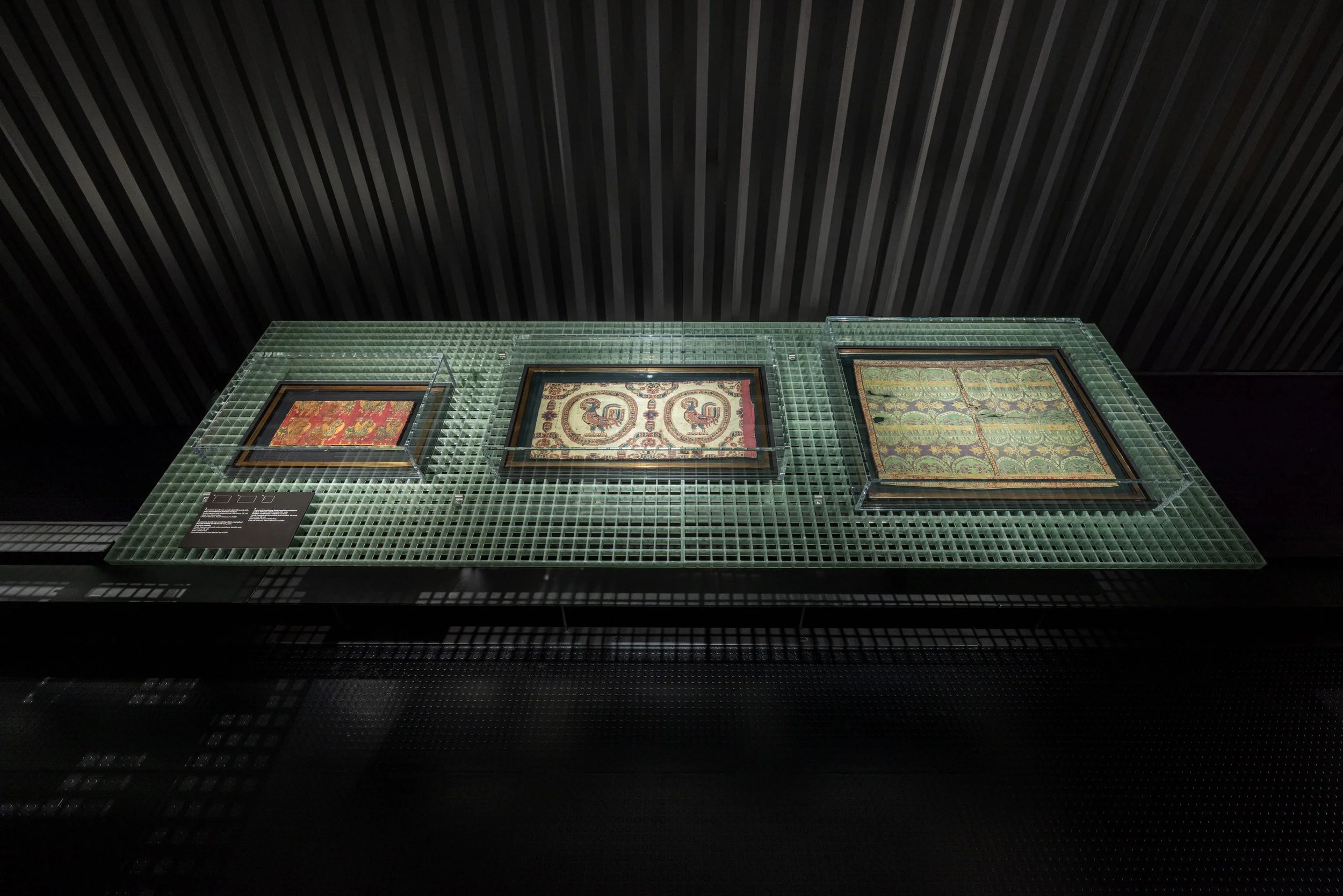
Yes. In some cases there are what we call tables, surfaces where families of several objects could be shown together. We wanted them to stay discreet, to keep a good balance between the quality and the differences of the objects, so we worked on something partly transparent and partly perforated. That led us to a material we had used on other projects, this fiberglass with its green tone. The green returns: in "Recycling Beauty" we used green MDF, a color that worked well both with ancient stone and with the materiality of the Podium. So the color came back as a point of reference, in a new material for this context. Fiberglass is also strong and resistant, so we could rest the objects on it and anchor them with a fixing system.
How does the installation relate to the rest of the Fondazione?
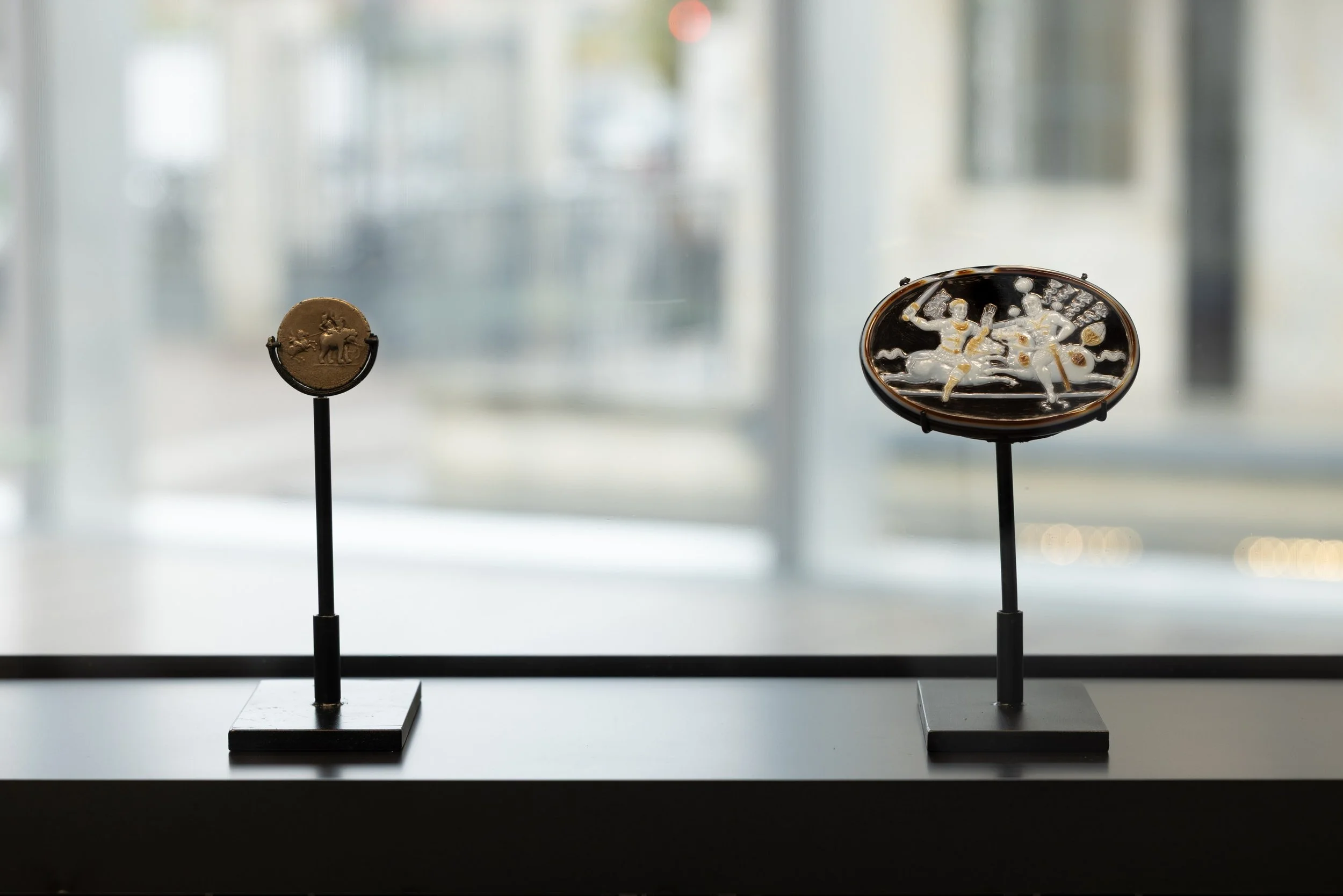
At the spatial level, another strategy was to use the open space of the Podium as a large window onto the Fondazione and the whole compound. Part of the exhibition is visible from outside, with this abstract geography of beams and themes. We then used the wall that holds the entrance as a series of accesses to other rooms, each a focus with its own specific qualities. The entrance became an introduction space: on one side the institutional text, on the other a large map, key to introducing geography as the main theme of the exhibition. The whole idea is a global movement, and therefore geography. There you see all the objects of the exhibition turned into geographic lines moving through space. The first statement was to bring geography to the attention of every visitor.
What happens in the other rooms?
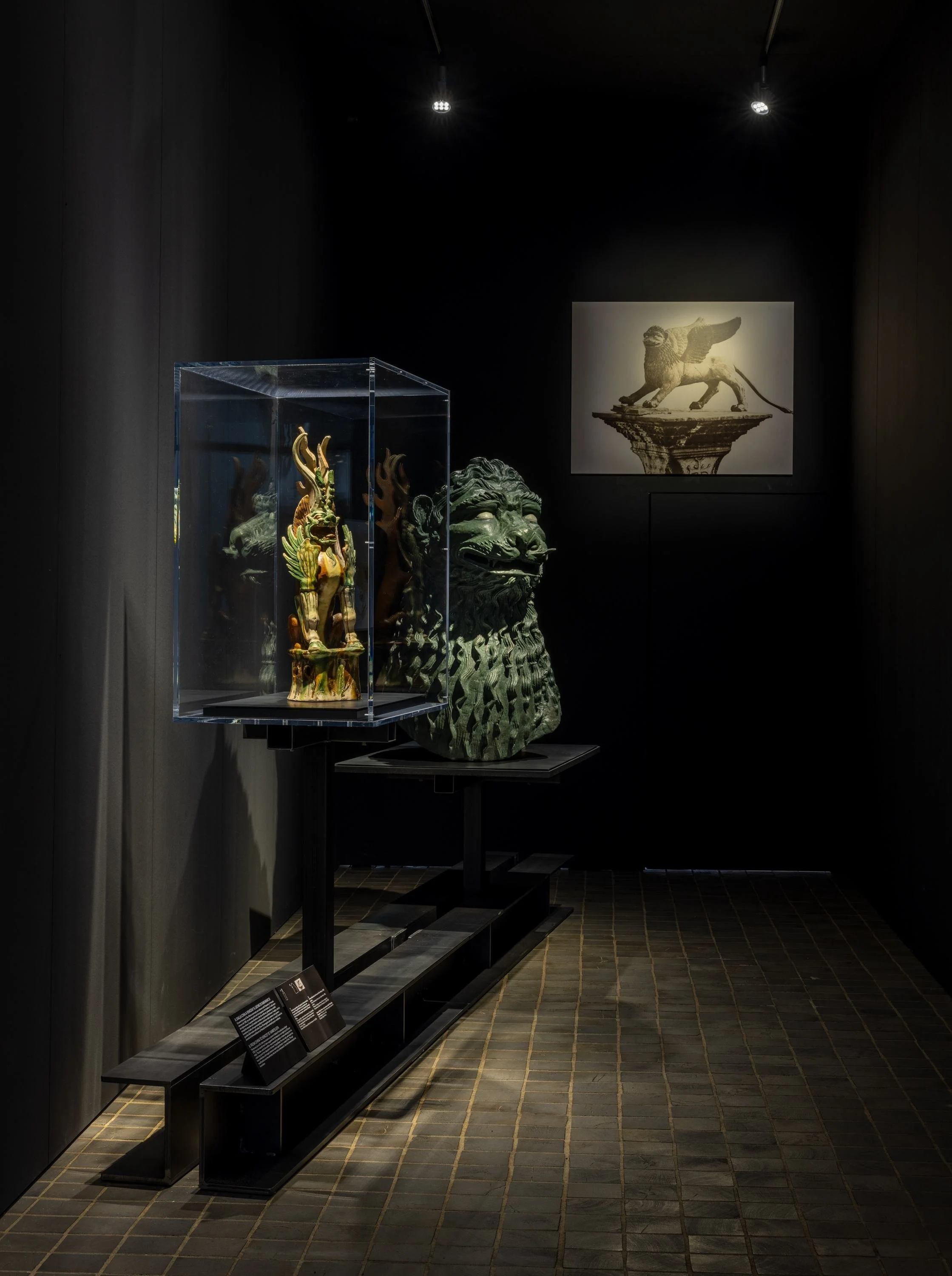
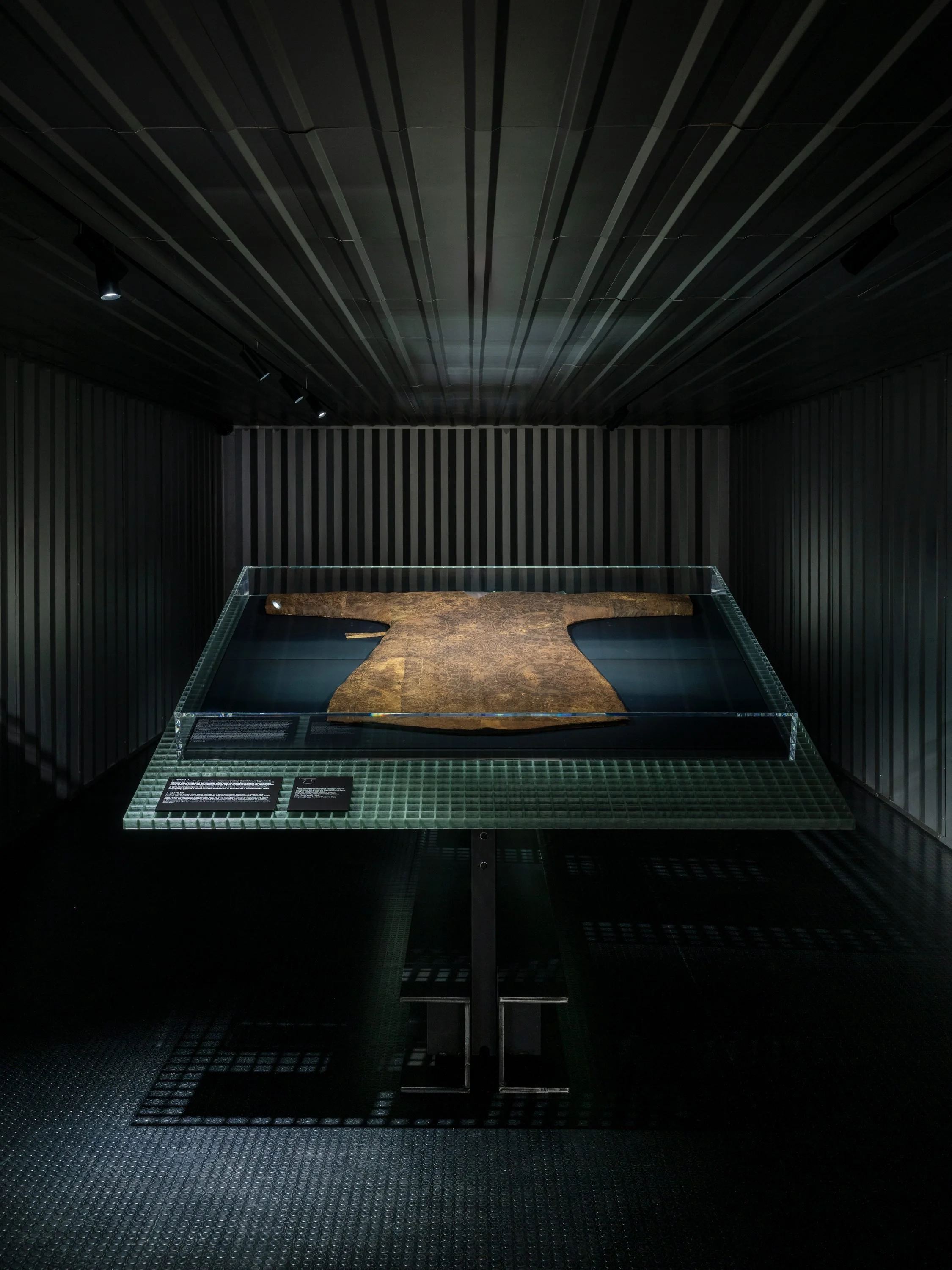
One room, carved out of a space of the Fondazione, is dedicated to the Lion of Venice, with a composition of two objects and a photograph. The other is dedicated to the tapestries, and it needed a very controlled lighting system for the textiles. There we added a new object to the Fondazione compound, a structure of containers grafted into the space. We worked on an object that openly declared this insertion and created a very dark room, with the technical conditions of light and humidity needed to show the textiles. So the overall scheme became this large central space with a series of rooms attached to it.
You almost have to work out how to move through it to find those rooms. Reaching them is less immediate, right?
Yes, and that was also a way to get to know the space and its possibilities. One of the things we did with these exhibitions was to test how the Fondazione could be used. The first exhibition used the Podium and the floor above it. For the second, we used the Podium and the Cisterna, which had very different spatial qualities, because we were working with the Colossus, this monumental statue, and with architectural pieces placed at a height closer to their original position. This time we worked with much smaller objects that needed more technical spaces, so we tried to extend the spaces of the Podium. These were also experiments, almost at the scale of the compound, on how exhibitions can be organized within the Fondazione.
The curators speak of an exhibition that brings countries together, in a present marked by conflict. Many of these objects turn out to come from places far apart, sometimes on opposite continents, yet connected in some way. What do you think of this idea?
Clearly it is an exhibition that looks at the past and speaks about very current issues. The idea of travel, of living in a much more globalized and much more connected world, was put to the test by the exhibition itself. Part of its ambition, and of its success, was having pieces arrive from many geographies, and in some cases it was impossible to have certain pieces, given the current global situation. This system in which we can now travel freely is tested when works of art have to move and cross certain parts of the world. That was one of the general themes of all three exhibitions: taking the ancient world to speak about themes that are extremely contemporary and current.
It feels very much of our time.
Exactly. The curatorial team is extremely aware, careful in the selection of the theme and aware of how it projects onto everyday life, especially today. Salvatore said this himself in his opening speech.
Should we expect something new after this closing trilogy?
Salvatore said that the trilogy closes, which does not rule out other exhibitions. This idea of working on themes of the past in a contemporary key could now lead to ideas on how to turn these three episodes, and this collaboration of more than ten years, into a single project. I do not know what form it could take, but I think it would be beautiful to bring them together as a system because, as I said, they were not born as a system, yet they developed into one. A good project could be a way to sum it all up, putting all these pieces together. On the other side, maybe there will be other ideas and other exhibitions that take a different form or open a new line of work.
Interview by Donald Gjoka
What to read next