SPIRITS: Richie Hawtin and John Gerrard in Paris for Reference Festival

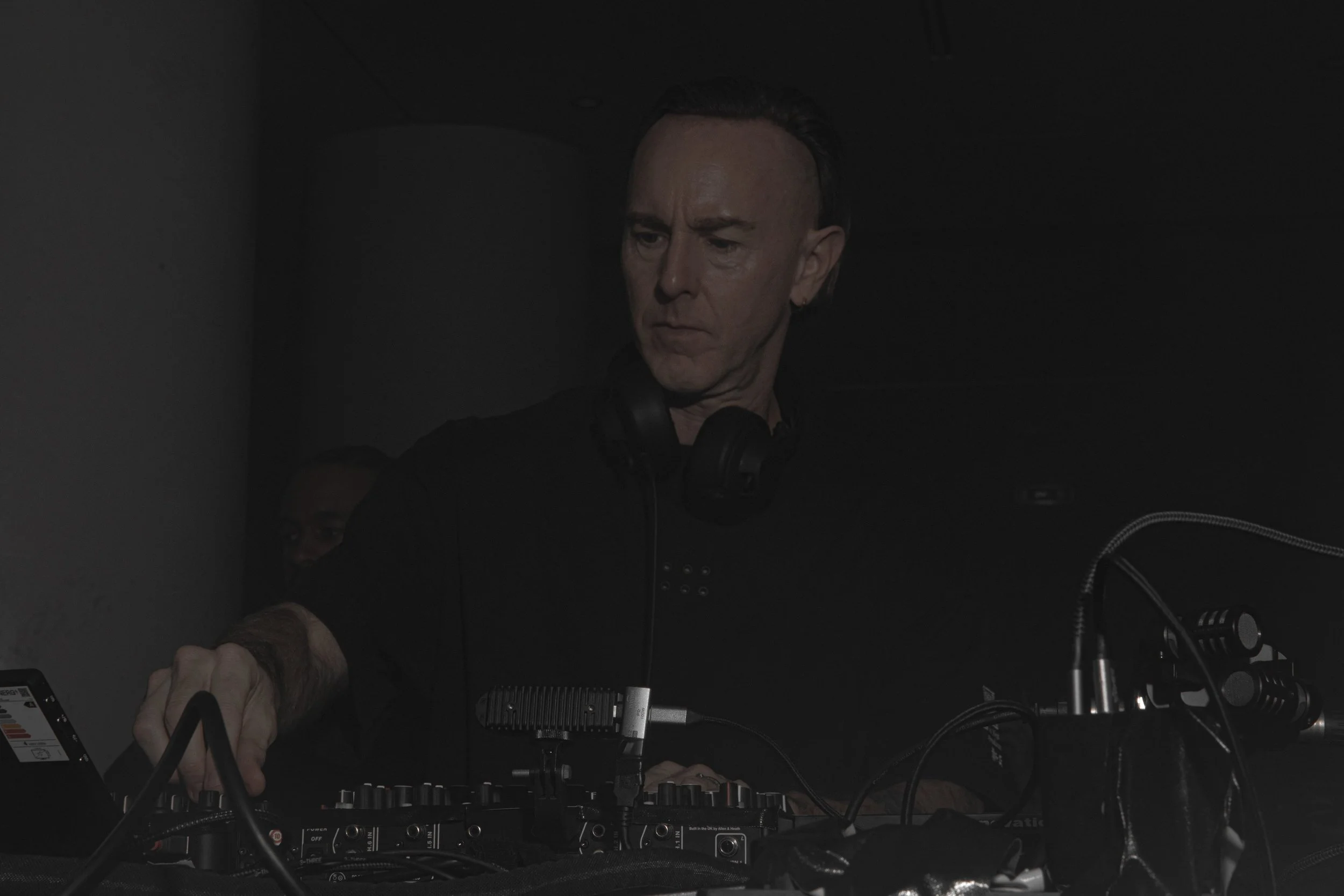
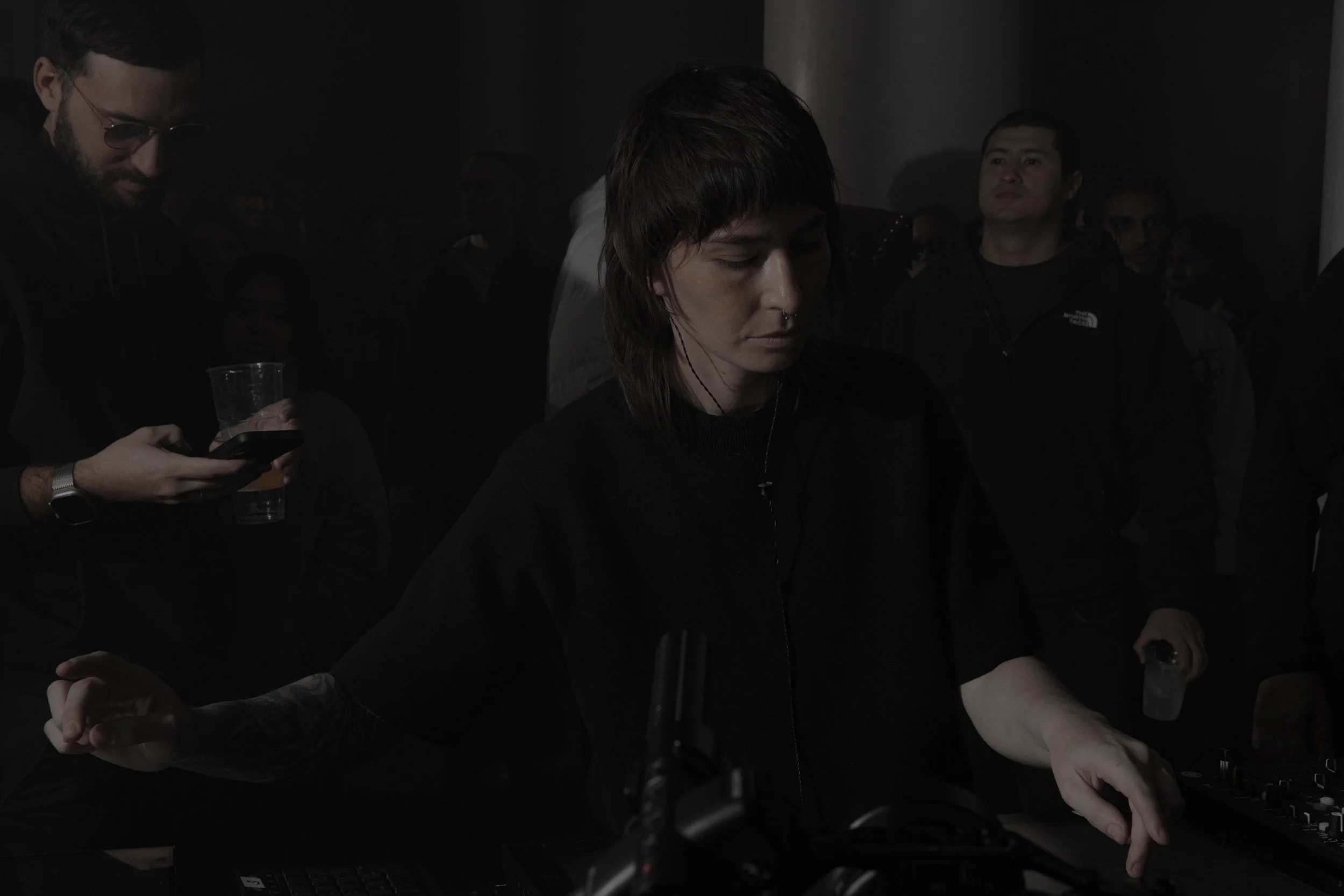
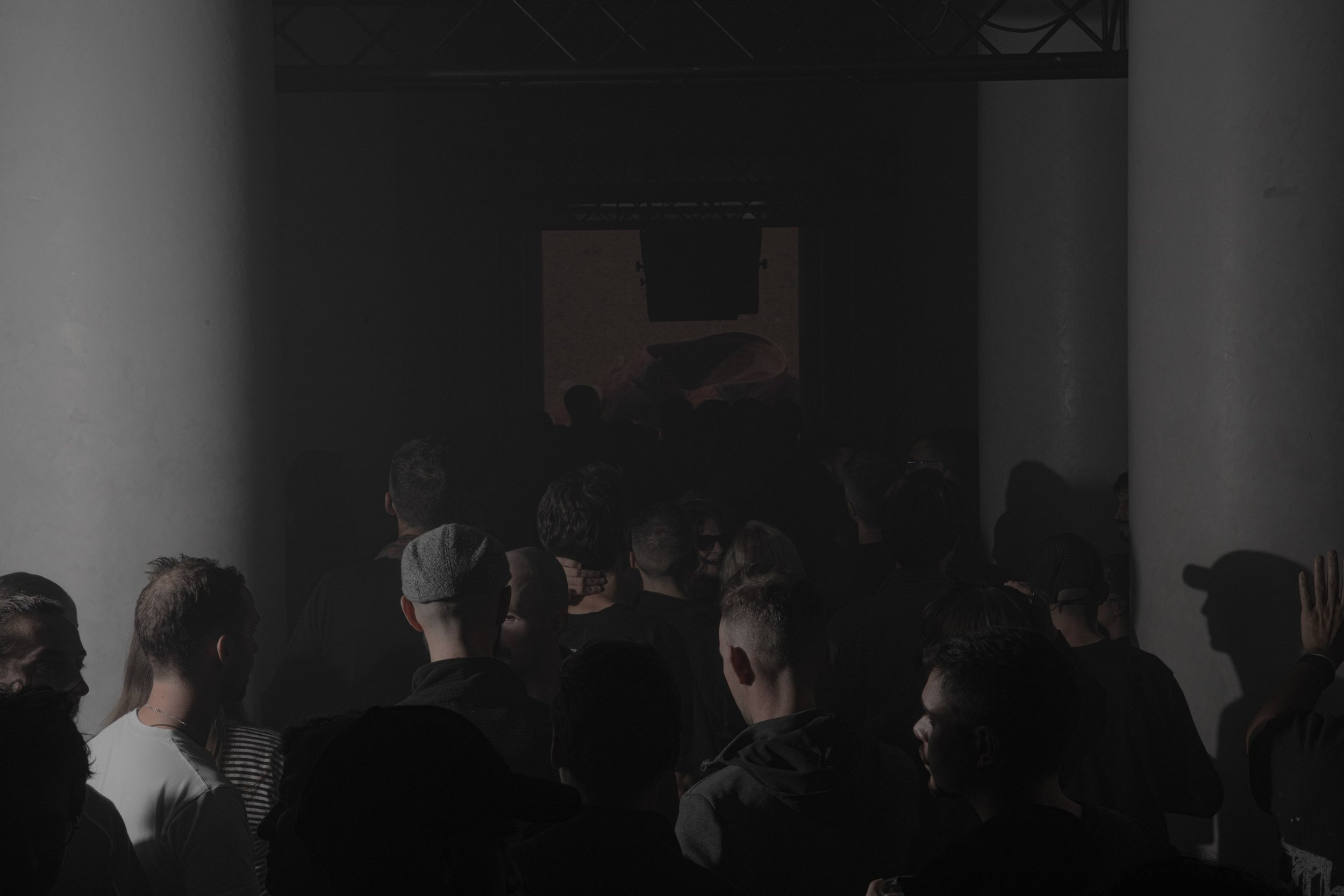
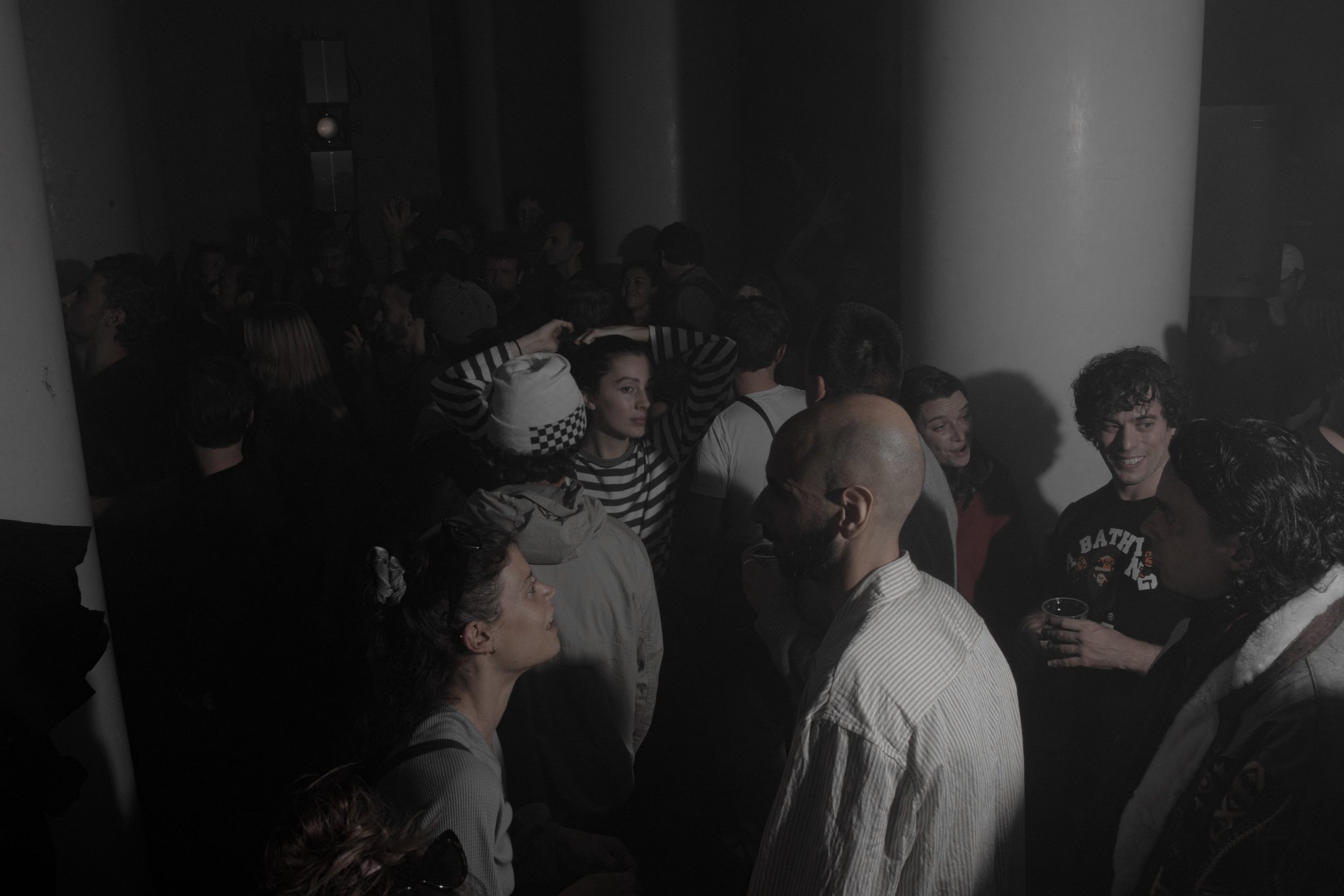
During Art Basel Paris, Richie Hawtin and John Gerrard took over for twenty-four hours, from noon on Saturday 24 October to noon the following day, as part of the first Paris edition of Reference Festival. The daylight half belonged to infin.1.iridescent.stream, Gerrard’s iridescent python tracing a figure of eight across a simulated solar year, scored by Plastikman and continuously recomposed through Bronze.ai. At midnight the club switched to MINUS+, a twelve-hour night curated by Hawtin, while SPIRITS, the browser-based work Gerrard created for LACMA, was performed live in the middle of the room.
We met both artists on Saturday night, half an hour before Hawtin went on stage, to talk about solar cycles, plastic shoes washed up on four oceans, vinyl as oil, and what comes next for Minus.
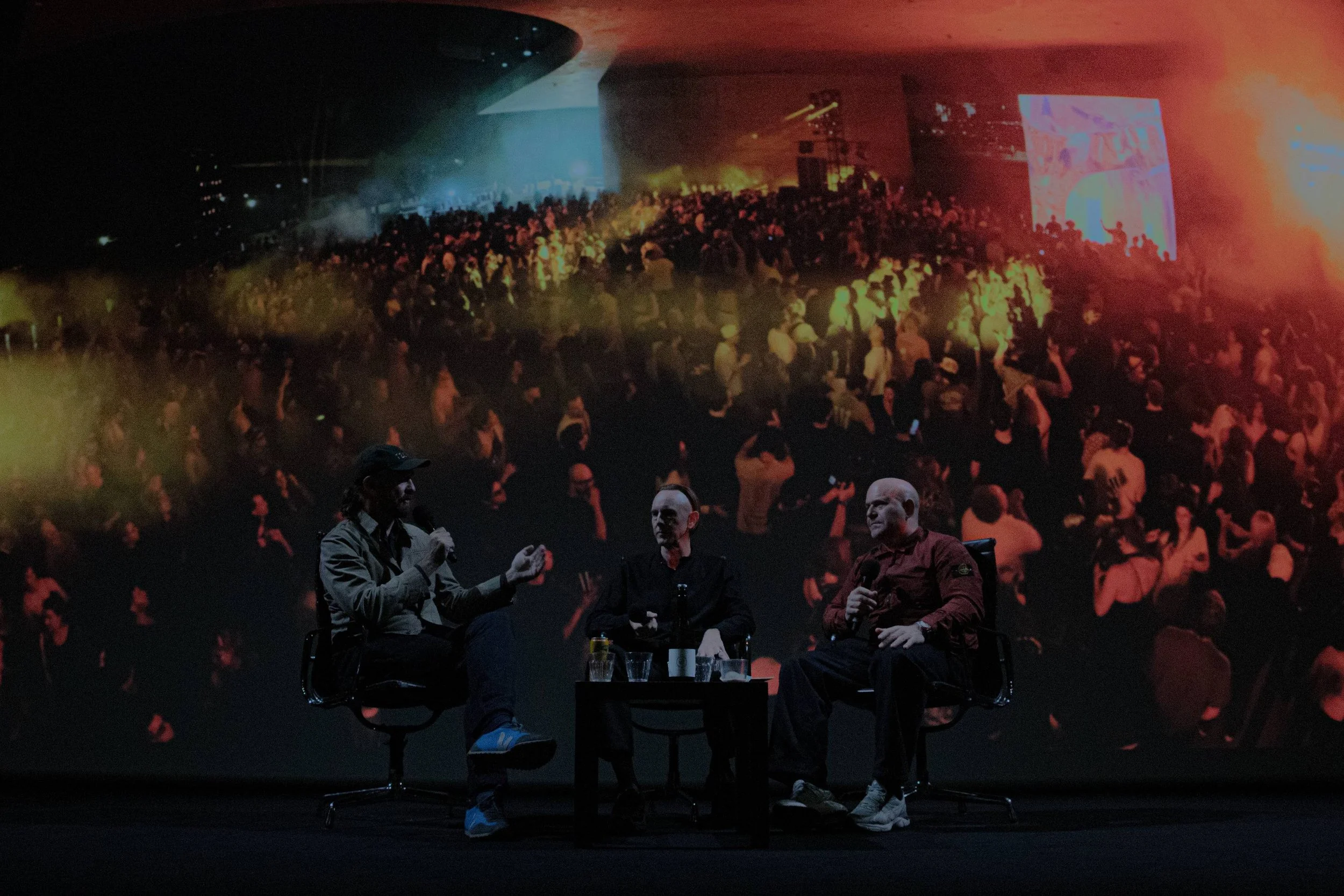
The programme at FVTVR runs for twenty-four hours, from noon on Saturday to noon on Sunday, meant to be lived through a full cycle of day and night. How did the concept start?
Richie Hawtin: The shape of the event comes straight from John’s work, which normally follows a 365-day cycle. One night could never hold 365 days, so we chose a twenty-four-hour event to show how John’s work changes over time, and actually how both our works change. My audio component and John’s visual component come together and create different moments depending on the time of day and the date of the year, all connected to the solstice.
John Gerrard: Richie and I worked together in 2021 on a beautiful iridescent python called infin.1.iridescent.stream. Then we talked very closely about SPIRITS, a piece for the Los Angeles County Museum of Art, and Richie came in for the audio. We did a big summer solstice event, the SPIRITS Summer Solstice Dance at LACMA, under the new Geffen Galleries on 21 June, and it was really beautiful. Richie performed, SPIRITS was performed live, it was great. Then Richie called and said, we’re gearing up this thing for Paris, consider bringing the python for twelve hours and consider integrating SPIRITS into the evening. That’s really where it began, and now we’re here.
Richie Hawtin: Our collaboration grows out of an intersection, because we have both been very inspired by each other’s mediums. At the start it was more about the medium than about each other. I was very interested in contemporary art, John was very interested in electronic music and acid house, and we met in the middle, wanting to understand how contemporary art and music can inhabit the same space, what that becomes, and who it can attract.
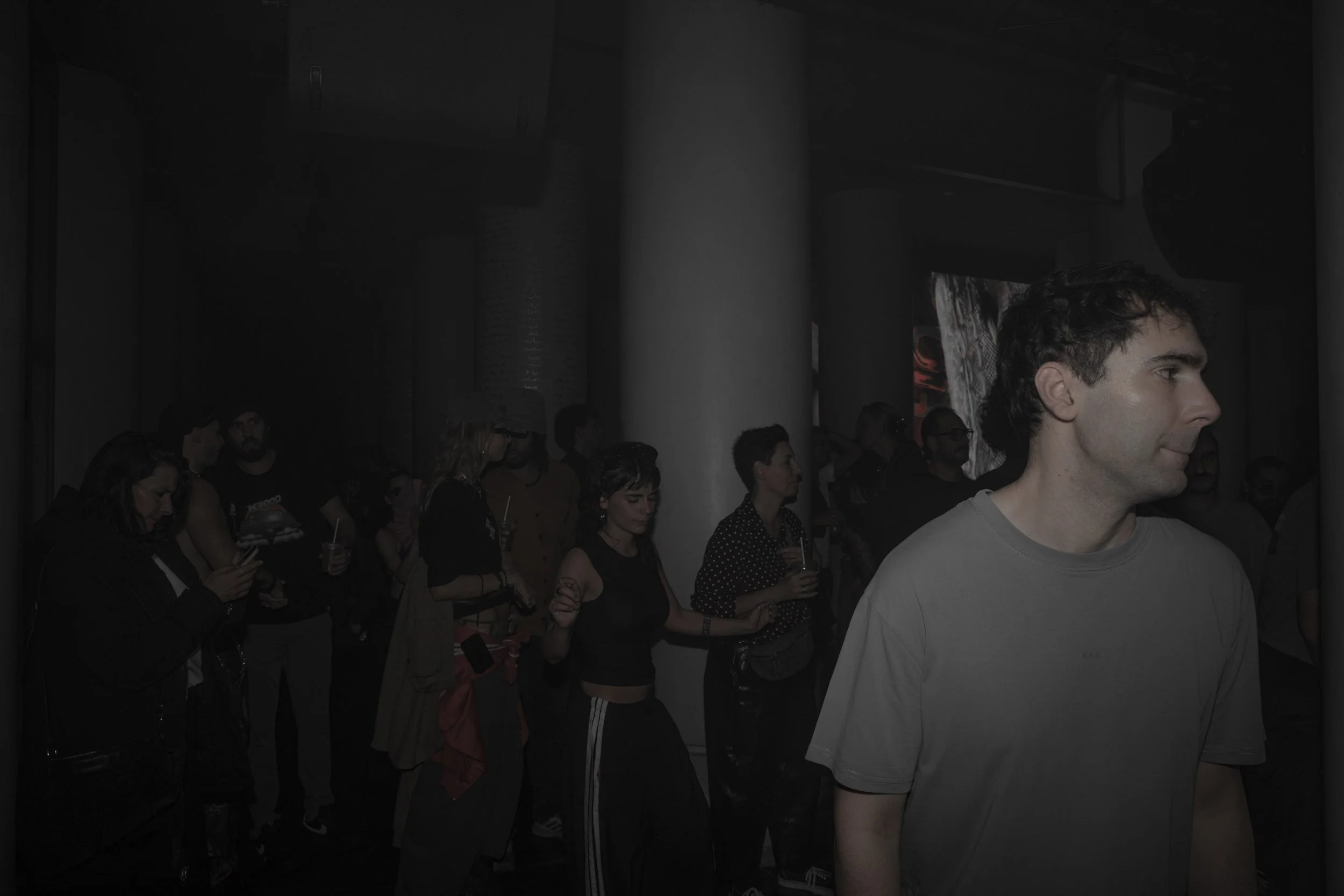
Because this is Art Basel, and because over the last three or four years I’ve always come to play some kind of show at FVTVR, it felt like the right moment in Paris to take that concept further. The idea was to bring the people from the art world who are here for Art Basel together with the FVTVR ravers, in celebration and in curiosity, on a dance floor that is also, in a way, a gallery space, an exhibition, and to blur all those lines. That’s exactly what you experienced at the beginning, with Anastasia performing John’s works. Later I’ll play while she performs visually with them, and a dialogue happens, very performative, very spontaneous. John and I are playing with two different senses, hearing and sight, and when you bring them together, we both believe magic happens.

Let’s talk about the technology behind it. Everything responds to touch, so she can intervene live during the set. What kind of tool is she playing?
John Gerrard: It’s basically a game engine. A small one that runs in the browser, using a technology called WebGL. The object itself relates to AI, because it’s a Gaussian splat, a kind of dimensional image derived from a neural network. We developed a system that unites WebGL, a JavaScript sound library called Tone.js, and Gaussian splatting, so she can perform the world and perform the sound at once. I worked with a composer, Jonas Hammerer, on some of the sounds, and he generously oversaw them and responded to them. And Richie was our acid advisor, a very specific role. It’s quite challenging: she performs image and sound simultaneously, with one layer of background sound and two layers on top.
Richie Hawtin: What’s interesting is that the original SPIRITS works you see on screen, the ones Anastasia is manipulating, were presented by John as artworks you enjoyed and interacted with online, on your smartphone or in your browser. John puts an interaction forward, and then it’s up to the audience how they experience it. I find that very close to DJing. In electronic music, on the dance floor, everyone participates. You play music, you watch the crowd dance, and their feedback helps you decide the next move, at least in a classic DJ sense. So there are a lot of similarities in what John and I do. For Anastasia, John and his team went deeper into this interaction and built what is basically a contemporary art audiovisual DJ system, so the work could be performed in front of an audience. The idea came together while we were working on the LA show, and John and his team took it one step further, closer to the dance floor.
John Gerrard: At LACMA the setting is beautiful. Peter Zumthor’s building looks like a highway bridge, and underneath there is a commons, a big LED wall, a beautiful deck for Richie and four big lights. Anastasia and the second performer, also from LA, were there, but they were almost in the position of a DJ, a little stepped back, so people could barely witness what they were doing. Here we pulled them right into the centre, and you could see everybody wondering, what is this? That was a real pleasure for me, because we have been working on SPIRITS for almost two years now.
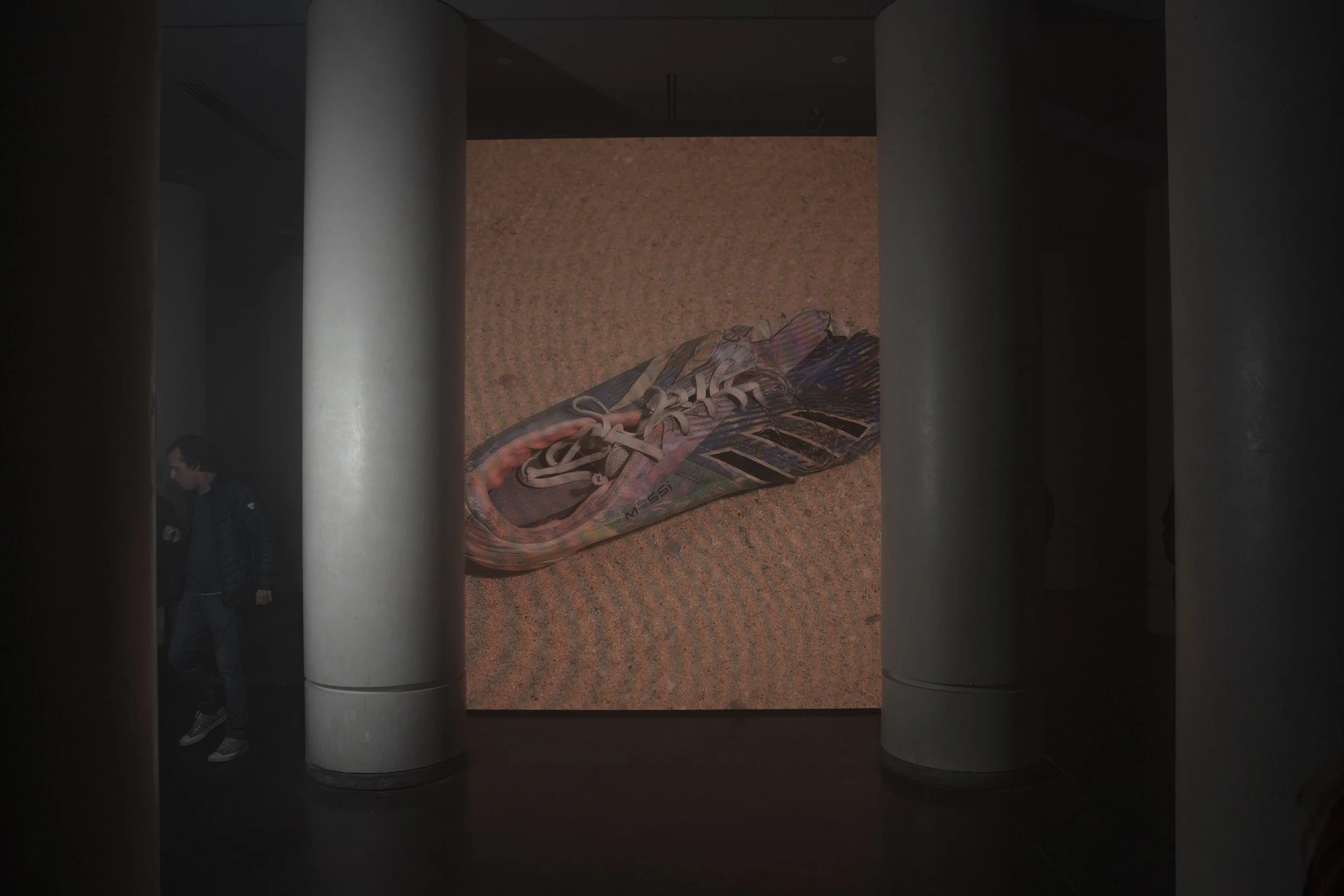
On the screens at FVTVR, the room is filled with shoes: worn sandals, slippers, sneakers, each one turning slowly under the light. Where do these objects come from, and why did you choose them as the heart of SPIRITS?
John Gerrard: It’s four oceans, and each ocean is full of plastic, and strangely, on the shores, you find these lost plastic shoes. I picked up twenty-four shoes on each ocean, the Pacific, the Atlantic, the Mediterranean and the Indian, and they became the basis of the work. That’s why it’s called SPIRITS: in each ocean they are twenty-four ghosts. Real people wore these shoes, maybe tourists, maybe workers, maybe migrants. The story remains unknown, so each one holds the spirit of a story and the spirit of a person. And if you look closely, plastic is made of oil, so we pull histories and stories of oil from within those objects.
And Plastikman, is there any connection?
Richie Hawtin: The connection is indirect for now, but I believe it’s getting closer as John and I think about our collaborative future. The name Plastikman came from deep hallucinations and strange events we ran in Detroit, plastic-clad warehouse parties. In 1994 I released an album called Recycled Plastik, and the further I go along my timeline, looking back at what I did and at some of the names and terms I used, the more I reflect on where we are with the planet, with climate change, with how we’ve polluted. I have a little girl now, so I think about the future even more.
Then I met John, who is so deeply invested in petroleum and plastic, and I feel a synergy with what Plastikman was, or should be. We talk a lot about vinyl culture. What is a piece of vinyl? Basically oil. So many of the things that entertain us and let us enjoy life come from it. There’s an amazing book about how the vinyl record helped music spread. Petroleum fuels our entertainment, petroleum fuels techno, so there is a synergy there, and a further question that needs to be discussed.
A fascinating topic, especially in the context we’re living in now. I’d like to go back in time for a moment, and then forward. I’ve been a huge fan of Minus since the beginning. The constant in your work has always been research and talent scouting, and you brought all of it together over the years. How did that evolution happen? Naturally, I imagine.
Richie Hawtin: I think it was natural. My curiosity about music and technology, and the way they’re entangled, grabbed me when I was a kid, and something new always comes out of that entanglement: new music, new tech, new people, new relationships. That keeps inspiring me and somehow connects me to really wonderful people, which leads to new projects and new ideas. I believe that’s simply how life evolves. You have to plan, but you also have to allow life to present opportunities and follow your instinct towards the people you resonate with.
The world resonates on so many different frequencies, and at certain moments in your life you find harmony between them, in projects, ideas, people, food, drinks, everything. When you can navigate and glide through the moments that vibrate together, maybe that’s the best we can do.
Completely agree. And the collaboration you started on SPIRITS, what comes next? Do you want to develop it into something else, or bring this format to other places?
John Gerrard: I’d say SPIRITS was a conversation, while the python was a true collaboration. The conversation around SPIRITS, and certainly the experience of being here, matters a lot to me. I come from art, from museums and galleries, but I’ve been a dancer my whole life. My starting point in technology was actually on the dance floor in Manchester and places like that, even though I’m Irish. Today Richie and I finally talked about coming back together. I bring a lot of art, Richie comes strongly from music and is also extremely visual, and I like to think I’m musical too. We’re dreaming about what to do and how to do it, so we’ll meet in January or February and think it through.
Richie Hawtin: I think John is trying to change the paradigm of how contemporary art can be enjoyed, how it can be distributed, even how value can be added to it, and that’s very close to my own experience in the music industry. In my lifetime, music went from records and CDs, physical objects sold, traded and collected by fans, to digital assets, which feel a little intangible. John is working on the same shift from the contemporary art side. What is that intangible experience? How can it come together? How can we find a new way to bring our ideas to a connected audience around the world?

We’ve talked a lot about art. Could each of you name an artist, a visual artist mostly, who has inspired your work, now or in the past?
John Gerrard: Personally I’d point to Pierre Huyghe, the French artist. He is absolutely extraordinary, and he keeps hitting it, in this strange, eerie way. It’s a very rich body of work. So for me, Pierre Huyghe.
Richie Hawtin: I mentioned him today in our talk, and John said he resonated with him too: Robert Irwin, an artist from the West Coast of America, part of the Light and Space movement. Even now, people probably still struggle to grasp what he was trying to accomplish. James Turrell, who also works with light, belongs to the same thinking. Where is the artwork? In the light, or in the installation and the architecture the light uses to create the experience? Those artists remind me of sound, because sound is very tangible, nearly physical, and at the same time invisible. Walking through their exhibitions in the 90s was pivotal for my inspiration, and for understanding what I wanted to try to do sonically.
One last question on Minus. You mentioned it is evolving into something new?
Richie Hawtin: Yes, next year we start a project called MINUS+. It’s still in development, but some of the music is already finished and ready to go. This night at FVTVR is a first glimpse of it. The idea is to bring back some of the original Minus artists and put them next to a new generation of producers and performers, people with their own way of thinking about sound, technology and the dance floor. Minus was always about finding those voices early and giving them space, and MINUS+ continues that, with the same curiosity and a wider frame.
Photos courtesy of the artists
Words by Donald Gjoka
What to read next