Ultracinema Art Festival 2025
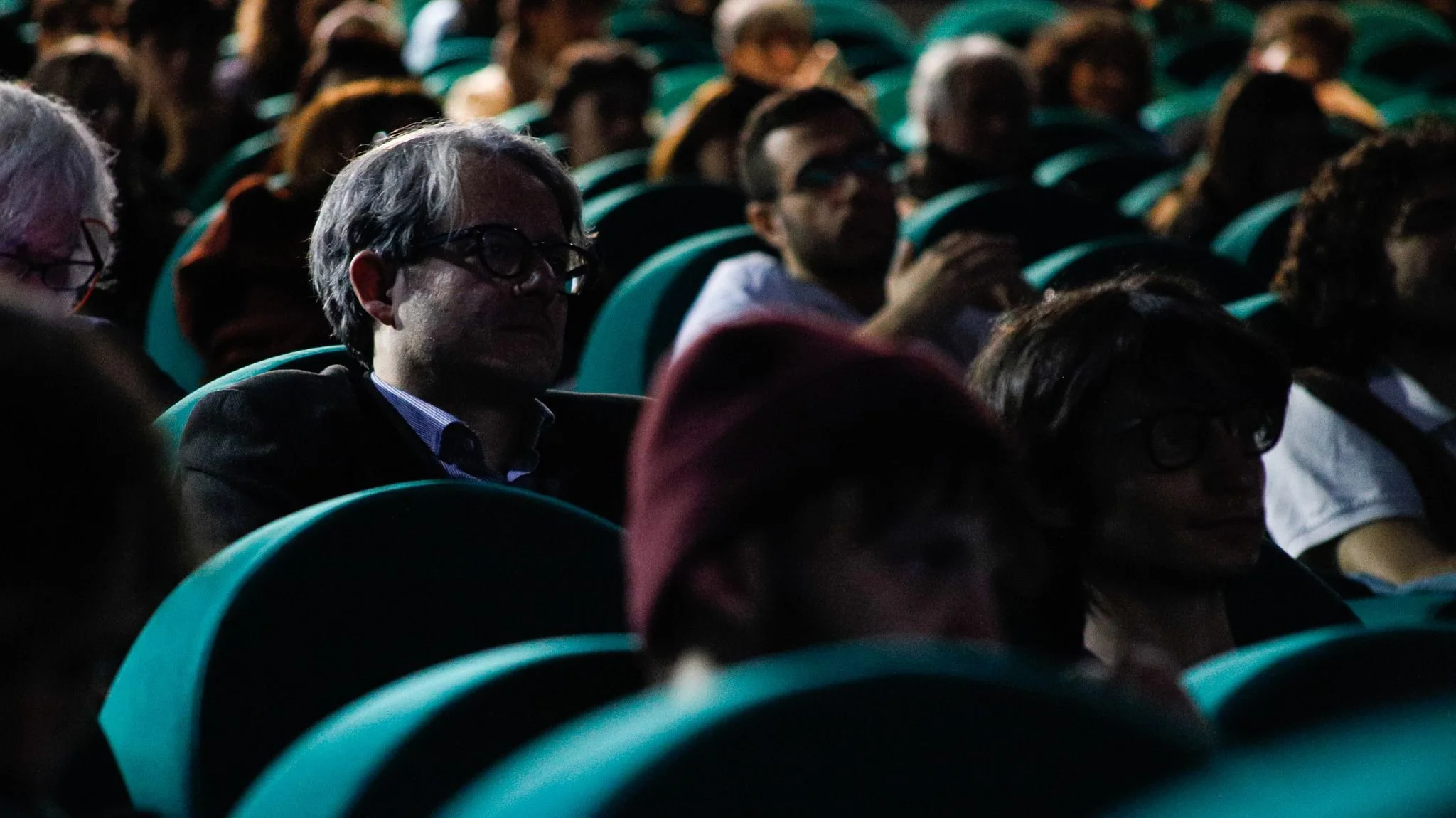
Ultracinema Art Festival 2025 satisfies the expectations set by its own manifesto, garish in a rugged way. Between ten and twenty films are screened daily; during its three days of programming at the Apollo Cinema (a four-hundred-seat theater just few steps from the beautiful Piazzetta Isacco Lamporti, the heart of Ferrara).
The festival reveals itself to be exactly what it claims: a "dirty" event with all the positive connotations that term can have for a film festival. It inserts itself into the national circuit by explicitly aiming for "incorrectness" and, without fear or shame, confronting its counterpart: commercial cinema. As the manifesto itself states, commercial cinema justifies itself as an art that acts out of respect for the audience, when in truth it is confusing, or deliberately inverting, the word "respect" with "contempt".
CATHERINE BREILLAT
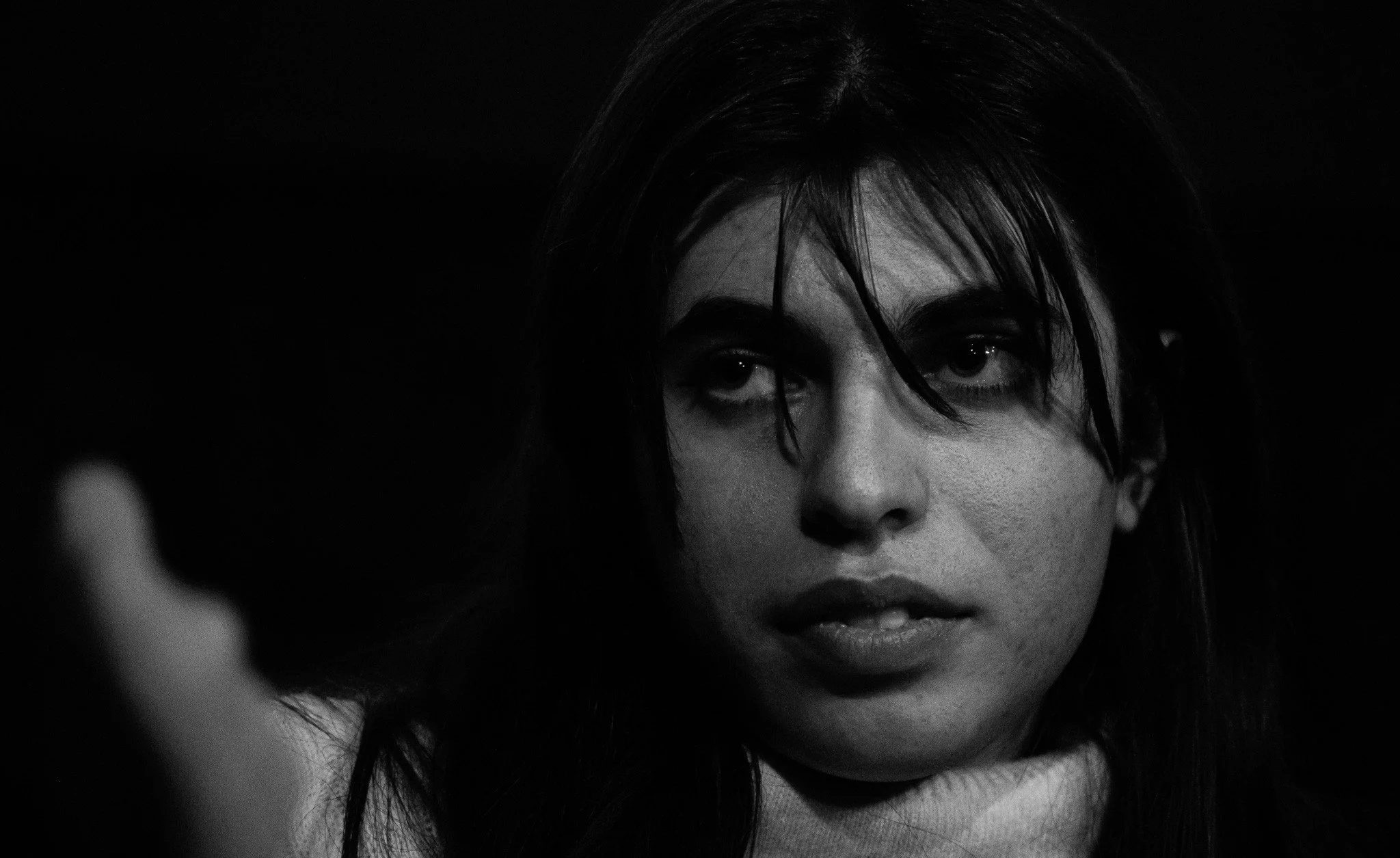
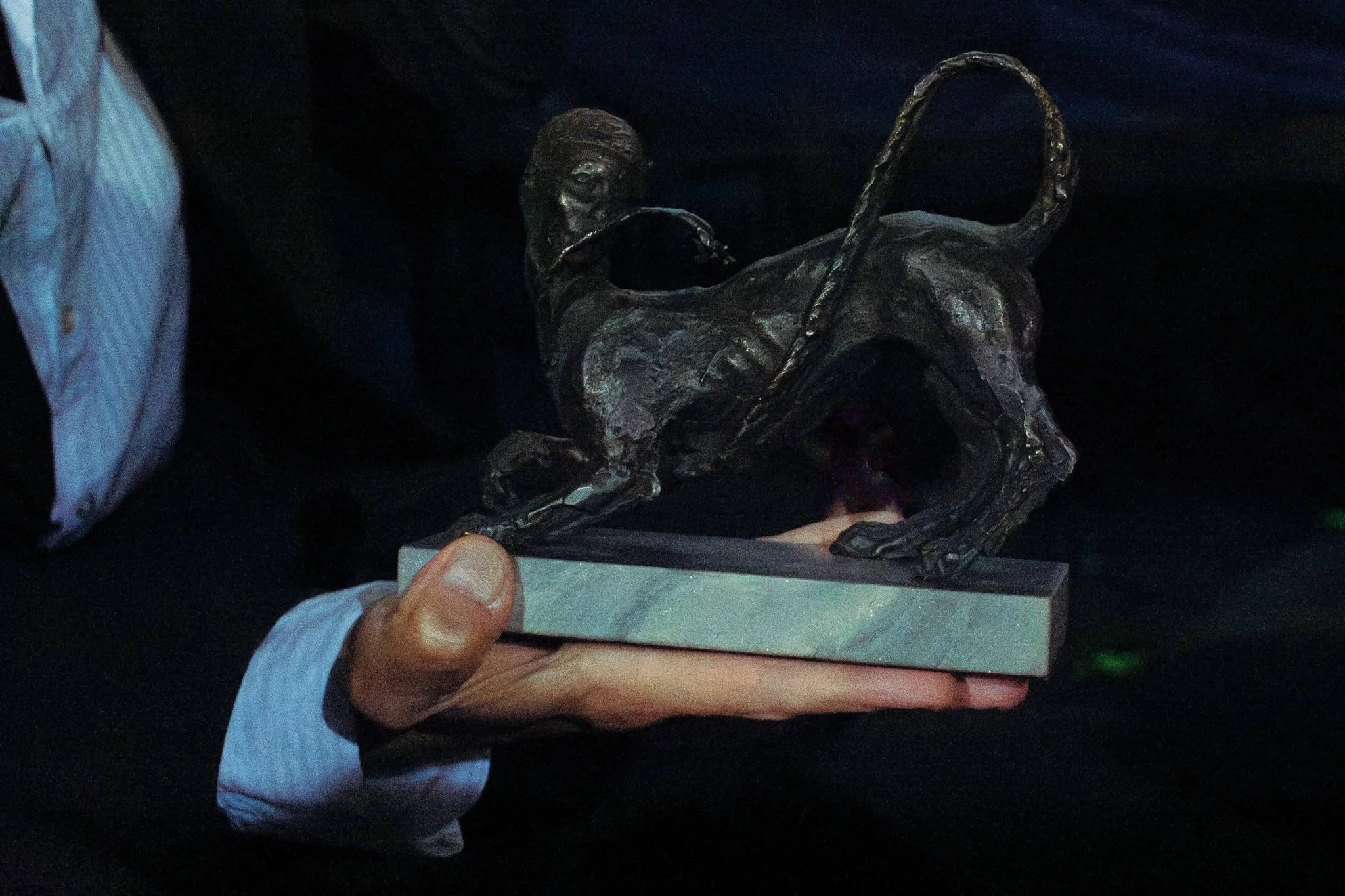
"It is a grisly and bastard event!" Just as the language it adopts is bastard. Just as the Worbas is bastard, the mythical beast of Ferrara and work of Nicola Samorì, which transitions from the festival’s logo to a small sculpture awarded as the Ultramaster Prize 2025 to Catherine Breillat (though "prize" might not be the best word). This honors the career of the French director whose feminism has, for years, spoken out against the bourgeoisie of the "politically correct" through a form of artistic activism that repels any ideological or political positioning.
It is Catherine herself, here at the Ultracinema Art Festival via video link with artistic director Jonny Costantino (who defines her as one of the greatest godmothers of cinema, an investigator of the feminine obscene and of ultra-intimacy), who revisits her apolitical role in cinema. She does so by citing Pasolini before answering the interviewer with this maxim: "Art is the answer to unasked questions". These words fit perfectly within the framework of a festival that proudly proclaims itself to be against competition, defining it as a "demented concept".
As Catherine couldn’t be present, three of her films are being screened: the French, Italian, and Portuguese productions Sex is Comedy, a metacinematic fiction from 2022; À ma sœur!, the scandalous 2001 work; and Tapage Nocturne, originally made in 1979 and presented here in its newly restored version, shown for the first time worldwide.
BODY, by Petra Seliškar
The festival's first edition begins on December 10th with the intimate documentary Body by Petra Seliškar. A 2023 Slovenian, Croatian, and Macedonian co-production, it is financially supported by Eurimages, the European fund for the co-production and distribution of audiovisual works.
The film traverses twenty-three years of the physical ordeal of the pianist, and friend of Petra, Urška Ristić, whose life is upended by a series of rare autoimmune diseases, such as encephalitis, which causes her to lose memory of herself and her loved ones. What remains of the woman is a fragile physique in constant remodeling and transformation, filmed and interwoven with naturalistic photography of great wonder and narrated without ever softening her pain. It is in the worsening of her condition and in the total rejection of "sugarcoating" that the film, moreover, takes on the role of the festival's preface, presenting its intentions without the need for them to be explained in words.
Daniele Cabri
A work that emblematically depicts the essence of Ultracinema Art Festival is screened on December 11th when the event reaches the midpoint of its journey (and rather than "journey," it would be better to say "crossing"). It is a work consisting of two 1999 short films by the artist Daniele Cabri, both achieved through the posthumous handling of a filmic mixture obtained by literally throwing old footage shot on Super8 film into the drum of a washing machine. This was done by Cabri himself, who otherwise would have thrown the footage into the trash out of a sense of repulsion toward his own work.
L'ultima Umanità (The Last Humanity)
L'ultima Umanità (The Last Humanity) is a visual montage, viscerally worn out, layered, and unsettling, in which the deterioration process of the Super8 film overlaps, nervous and frantic, with the slowness of footage that instead appears to be recorded on magnetic tape. From this stratification (which is auditory as well as visual), the intermittent voice-over account of someone who has suffered brutal abuse by soldiers emerges. Each voice message begins with the words: "Sono ancora viva ma quando troverete questa registrazione sarò già morta". Intensely loud, the woman's repetitive voice often makes reference to her Muslim faith and, perhaps, to the wars in Yugoslavia. But it is like a message that the television of the past, the one being watched, intercepts from the afterlife of a future in which humanity has been wiped out by a final war.
La casa dell'Amore (The House of Love) by Luca Ferri
The first is La casa dell'Amore (The House of Love) by Luca Ferri, considered by many to be the best film of this edition and already showcased at the 2020 Berlinale. Supported by the MIT (Trans Identity Movement), the film chronicles the life of Bianca Dolce Miele, a thirty-nine-year-old transsexual woman who has lived in Milan since 2009 and works as a prostitute. Bianca is followed by the director's eye, a gaze that remains tender even toward the most morbid facts, representing her on screen in an almost sacred manner, exclusively inside the apartment she shares with a black cat and her girlfriend Natasha, who is currently in Brazil. "There is no profound reasoning on gender identity, but it is a film about an angel," says director Luca Ferri, responding to a question asked about the film.
Closing the second day of screenings is Pharos of Chaos by Wolf-Eckart Bühler and Manfred Blank, from 1983. It is a German-produced documentary-profile on Sterling Hayden, the celebrated American actor and former Marine who, under the name John Hamilton, was very active on the Yugoslav front during World War II. Following his ties with the Communist Party of the United States, he turned himself in to the House Un-American Activities Committee, naming many people who were subsequently grilled and blacklisted. This marked his career and personal life, leading him to depression and to undertaking long crossings by boat. The film presents discussions held with Hayden himself, who recounts his story, shameful yet also contemptuous toward his illustrious Hollywood star career, interviewed directly on board the barge in France where he lived at the time of filming, as an alcoholic and smoking a great deal of hashish.
The meeting with screenwriter Hella Kothmann, to answer questions about the film, closes the second day of screenings.
BLOW UP ACADEMY SEVEN ARTHOUSE SHORT FILMS
On the third and final day, seven short films are screened (works that coincide with vastly different but heterogeneous approaches) created by the students of Blowup Academy. The Emilian Academy of high cinematic specialization is the organizational, collaborative, and creative partner of the Festival.
Among these, the following stand out:
Lo Stato Del Silenzio by Manuele Benati: A harsh and radical depiction of "toxic" chamber music/cameralism pushed to the brink of parody and the grotesque. Set in a State Police training center for student agents, it presents a fascist, absurd, and violent environment that surpasses even the atmosphere of Full Metal Jacket.
Blendung by Fabio Bertaso: A black-and-white short film that seems to attempt an exorcism of submission to a toxic masculinity, culminating in a final escape.
In Heaven by Matteo Lusvardi: A black-and-white audiovisual "bad trip" drawing inspiration from the cinema of Robert Eggers and Jonathan Glazer. Cryptic and abstruse, it wanders through neo-expressionist and Lynchian architectures, evocative of the "White Lodge" in Twin Peaks 3.
I Corpi Degli Altri by Gabriele Piccolo: This film also explores toxic masculinity. At a party, a man (perhaps a latent homosexual) makes a clumsy pass at a male Friend. Later, the homophobic Friend goes to bed with a female friend. The scene shifts to a possible accident involving a child or a dog. The Friend screams his frustration while heavy metal music blares from a car stereo; he eventually digs a grave and lies inside it alongside the creature he hit, now hidden under a blanket.
Silent Light by Davide Roca: An abstract and contemplative work where a young woman’s body is reflected in both the immaterial space of silence and light and the material space of water.
L'enfer Est Réel by Lorenzo Saiani: Featuring music by the director's father (who is also the main actor), Saiani stages his own obstructive nude body without shame or fear. His mind drifts toward Philip Seymour Hoffman in Synecdoche, New York. The title of the work is taken from his father's band name, and the sequence of portraits projected onto the director-performer's penis is described as brilliant.
Strani Attrattori by Beatrice Conte: Described as the most beautiful of the selection, this is a colorful stop-motion animation. It is characterized as a "putrid and decaying" abstract horror nightmare, reminiscent of the short films of Jan Švankmajer. Its only flaw is its brief duration.
The following translation covers the final program details of the Ultracinema Art Festival, specifically focusing on the 2024 production A Fidai Film by Kamal Aljafari.
A FIDAI FILM (2024) by Kamal Aljafari
A work of extraordinary power is undoubtedly A Fidai Film by Kamal Aljafari. A 2024 production involving Palestine, Brazil, France, Germany, and Qatar. According to the author of this text, it is the most interesting film seen not only at this festival but in the last five years.
It is a cinematically disconcerting work that opens the final day. It is a film about the fragmentation of a looted memory, the memory of a looted people. It is a film that structures itself, fundamentally, on the themes of ruin, dismantling, and reconstruction.
The historical context and framework in which it was created are fundamental:
1965: The Palestine Liberation Organization (PLO) establishes a center in Beirut for the collection and archiving of Palestinian cultural documentation, known as the Palestine Research Center.
The Archive: Over decades of colonialism and conflict with Israel, this audiovisual archive grew to include diverse fictional and documentary materials, primarily concerning abuses during conflicts.
1982: During the Israeli invasion of Lebanon, this archive was raided, devastated, seized, and kept secret in Israel.
The Attack: The building containing these documents later became the target of a horrific terrorist bombing, one of the worst in Lebanon's history, where a car bomb destroyed the entire center, specifically striking the visual archive.
Director Kamal Aljafari, having tracked down this material, reconstructs it into a montage that is not cinema vérité but something "Other". He intervenes manually on various types of film material, from Super8 to 16mm, from magnetic tape to digital, remodeling the visuals and sound into a cohesive whole.
It is cinema of informal impact: A Fidai Film (Fidai means "one who sacrifices himself," in the sense of a Martyr). It is "stripped" cinema, bold cinema. Kamal manually intervenes on the film, using vivid red to censor the names and faces of the people filmed. This is done, on one hand, to preserve their privacy and safety, but on the other, it acts as a way of branding them. It is a gesture in which an intrinsic resentment can be felt.
WHISPERING PAGES (1994) BY ALEKSANDR SOKUROV
The film screened is a 1994 Russian-German co-production, Pagine Sommesse (literally "Subdued Pages," but titled Whispering Pages in English, which is truly beautiful).
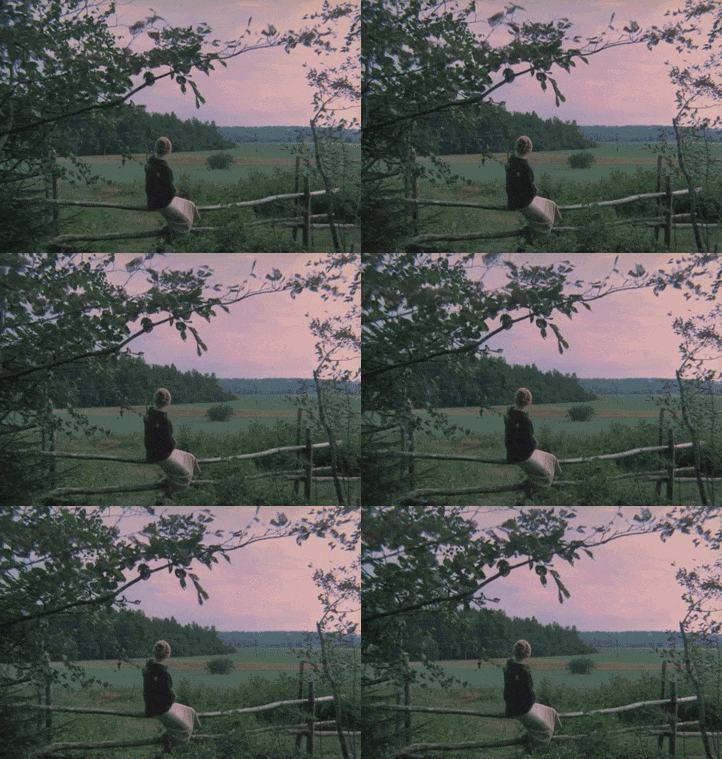
It is a film that revisits Dostoevsky's Crime and Punishment in a deeply personal key. It is slow, built on sounds, and both dramatized and dramatizing. It is emphasized, both visually and dramatically, through the use of distorting lenses, acid-toned photography, and intentional blurring. Very slow long-takes within spaces, scenery that is perhaps as majestic and immersive as it is squalid and deteriorated, anticipate the framing of the characters, highlighting their appearance. This is especially true for the character Sof'ja, who, unlike in Dostoevsky's novel, never takes on a redemptive quality.
The film’s sound is perpetually extra-diegetic; the mixing of the foley/sound effects is not synchronized with cinematic realism but is instead a score of an abstract and anti-naturalistic nature, taking the place of the role that would otherwise be held by extra-diegetic music.
The film is introduced by Francesco Cattaneo, professor of aesthetics at the University of Bologna, lecturer at Blowup Academy, and one of Italy’s most respected voices in film criticism. He authored the first Italian monograph on Terrence Malick and La guida per i perplessi, a book-length conversation with Werner Herzog that later reached cult status, edited and translated by Cattaneo himself. The version screened here is a new director’s cut from 2012. As Cattaneo explains, Sokurov views cinema as a work in continuous motion, a form that remains open to revision and rethinking over time. A film shifts alongside the author’s inner state and in response to social change, echoing the conceptual direction running through this festival edition.
Sokurov began making films in the 1970s. Despite the support of Tarkovsky, a figure close to a mentor, his work faced severe obstruction. Until 1987, his films were censored in the Soviet Union under the Brezhnev and Andropov years. The regime regarded his cinema as excessively formal, spiritual, and detached from the ideological function assigned to art, which was expected to serve socialist glorification and propaganda. A long silence marked his career. With Gorbachev’s arrival, and the reforms of perestroika and glasnost, space gradually opened for artistic expression beyond rigid doctrine. From that moment, Sokurov returned to sustained production. Cattaneo also recalls Sokurov’s distinction between philosophy and art. Philosophy, he argued, moves horizontally, guided by logic, sequence, and causality. Art moves vertically. It rises, freed from argumentative obligation, seeking to summon the invisible through the visible, until the visible itself begins to resonate with what remains unseen.
ELEGY OF ENEMY (2024) BY FEDERICO LOBOLI AND CARLO GABRIELE TRIBOLI
An exploration without judgment, Elegy of Enemy is the work of Federico Loboli and Carlo Gabriele Triboli. An Afghanistan-Italy co-production from 2024, it is screened here in its world premiere. It is truly hard to believe how they succeeded so well in filming a subject as controversial as the daily life of the Taliban in today’s Afghanistan, doing so with a gaze completely devoid of judgmental rhetoric. It is an honest, absolutely objective gaze.
It is not a journalistic reportage. it does not reinterpret the history of the Taliban. It absolutely avoids the rhetoric of sensationalism and does not engage in Manicheism.
In varying measure, anyone engaging with such a subject would inevitably project a personal judgment onto the images and the final edit, even at an unconscious level. This film resists that mechanism. Credit belongs to the filmmakers for meeting the filmed reality directly, face to face, with their bodies present in the field of action. The screening opens with a short video message sent to the festival by the two directors. They explain that the footage was shot in 2022, during the first anniversary of the Taliban’s return to power in Afghanistan. Taking advantage of the occasion, they traveled there to encounter the Taliban in person, figures long cast within Western culture as the absolute enemy. The visit coincided with a moment of self-celebration, marked by collective euphoria. Within that climate, the Taliban appeared more willing to be approached, filmed, and questioned by Western filmmakers, and to speak about themselves.
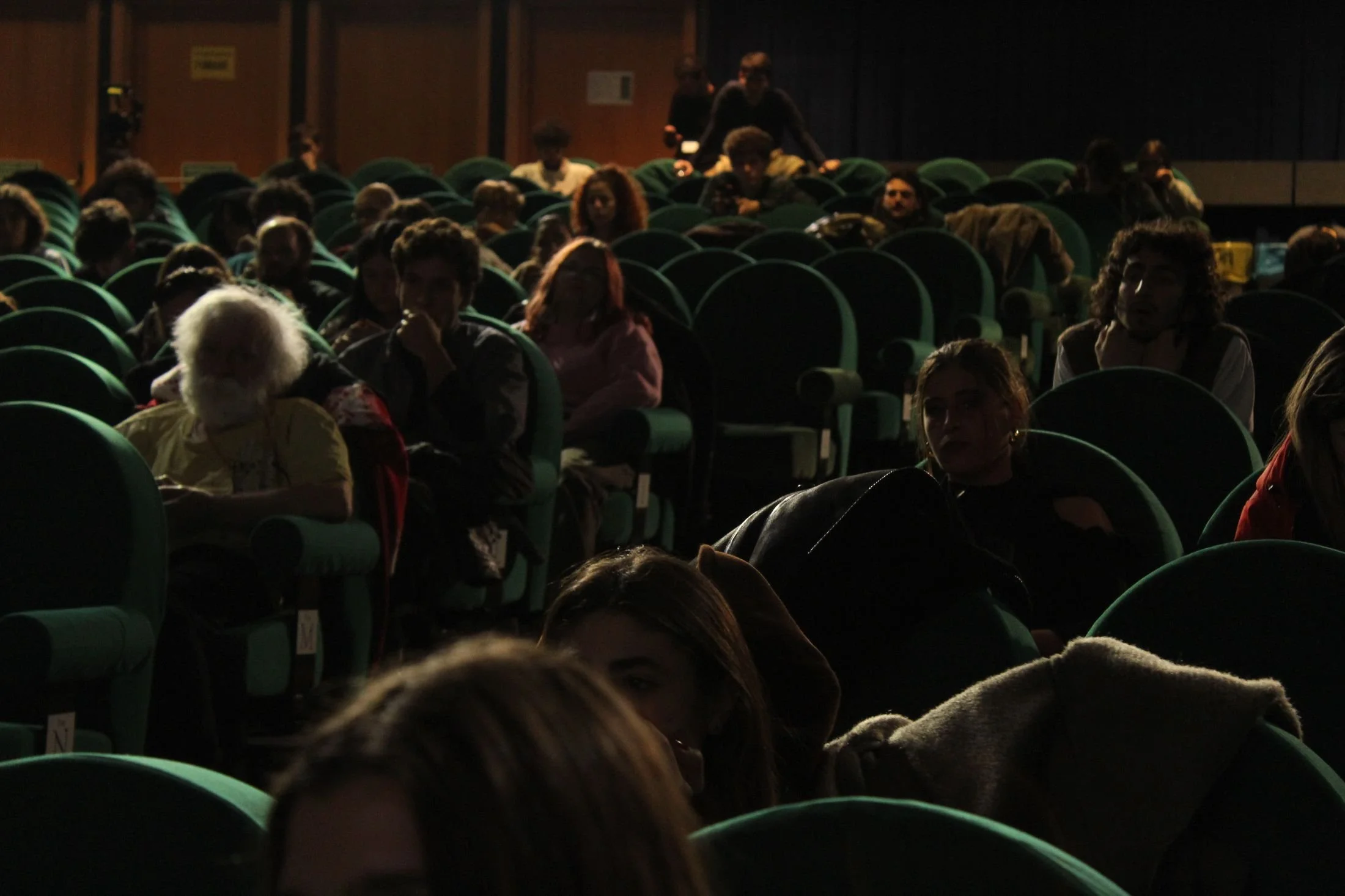
Ferrara, December 15, 2025 — Shortly after midnight, the inaugural edition of the Ultracinema Art Festival drew to a close. The event successfully navigated its debut, establishing a clear and defiant identity through a non-judgmental lens focused on the "hybrid body of bodies", a vision documented and staged entirely outside the boundaries of commercial conventions.
While a first edition naturally encounters minor growing pains, such as the need for more "decompressing" sequences to offer a reprieve between demanding viewings, the overall impact was undeniable. As participants, we can assure readers that the festival overflowed with the palpable passion of its creators and organizers. The dedication of everyone working both on-stage and behind the scenes was evident in the structural integrity and conviction of the project.
In today’s cultural landscape, such uncompromising commitment is rare and deserves profound recognition. It is for this reason that one cannot help but become a devoted supporter of the Ultracinema Art Festival. We extend our highest praise and best wishes for its future iterations.
An "Ultra-good luck" to the road ahead. A huge thanks to the entire Ultracinema Art Festival team for letting us be part of this incredible first edition.
Words by Enea Boccazzi
What to read next