01 OF A KIND: JAGUAR AT ARTISSIMA
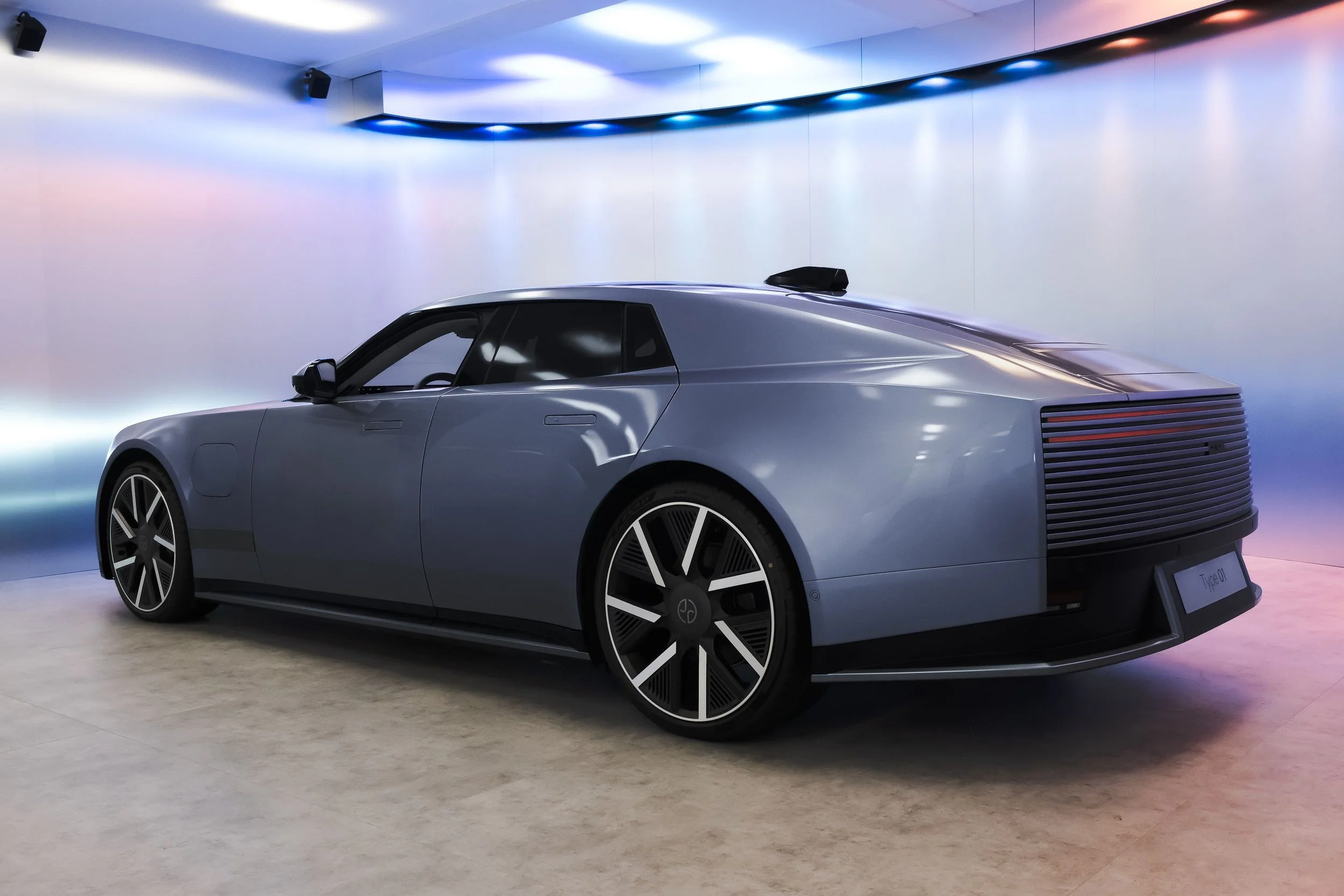
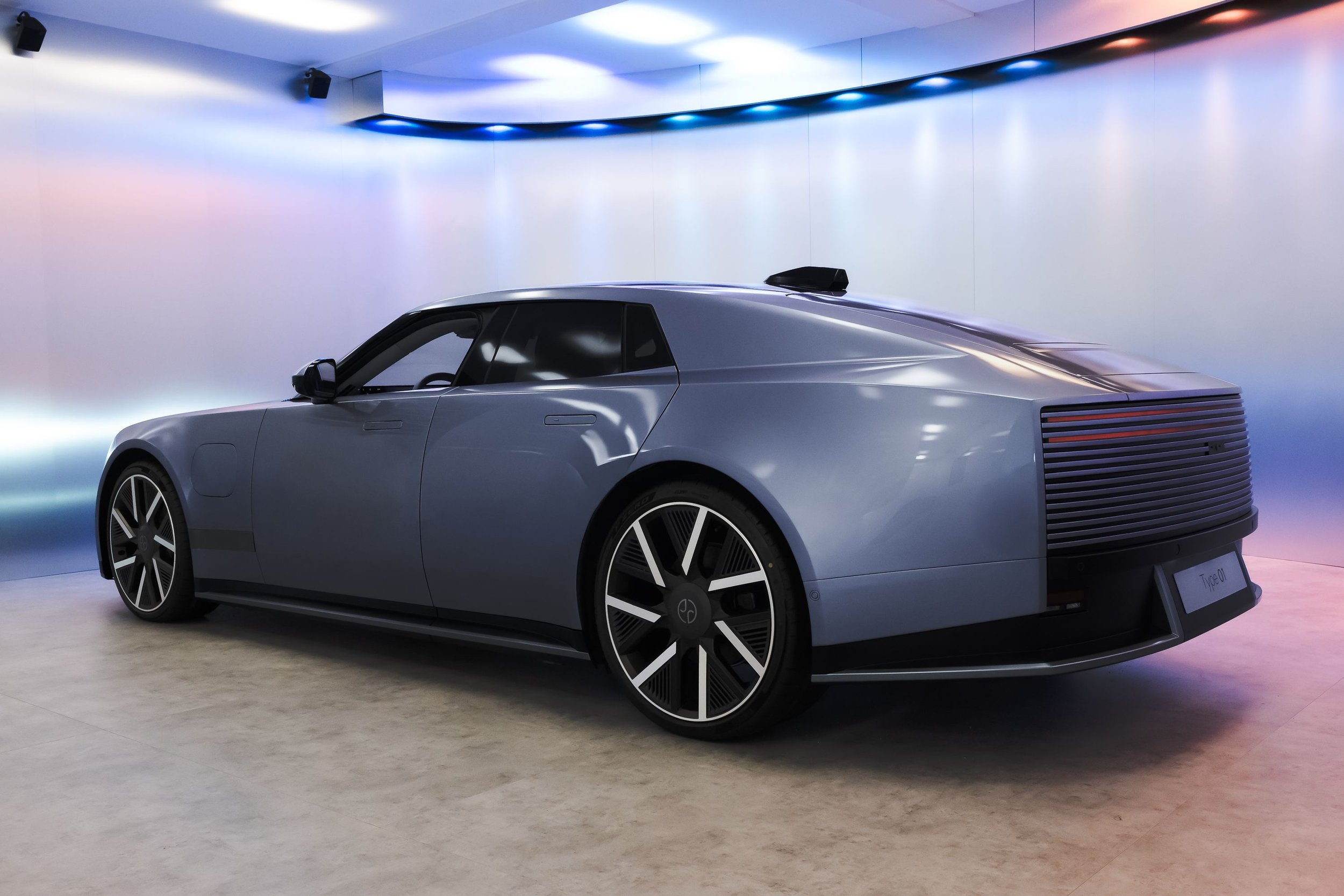
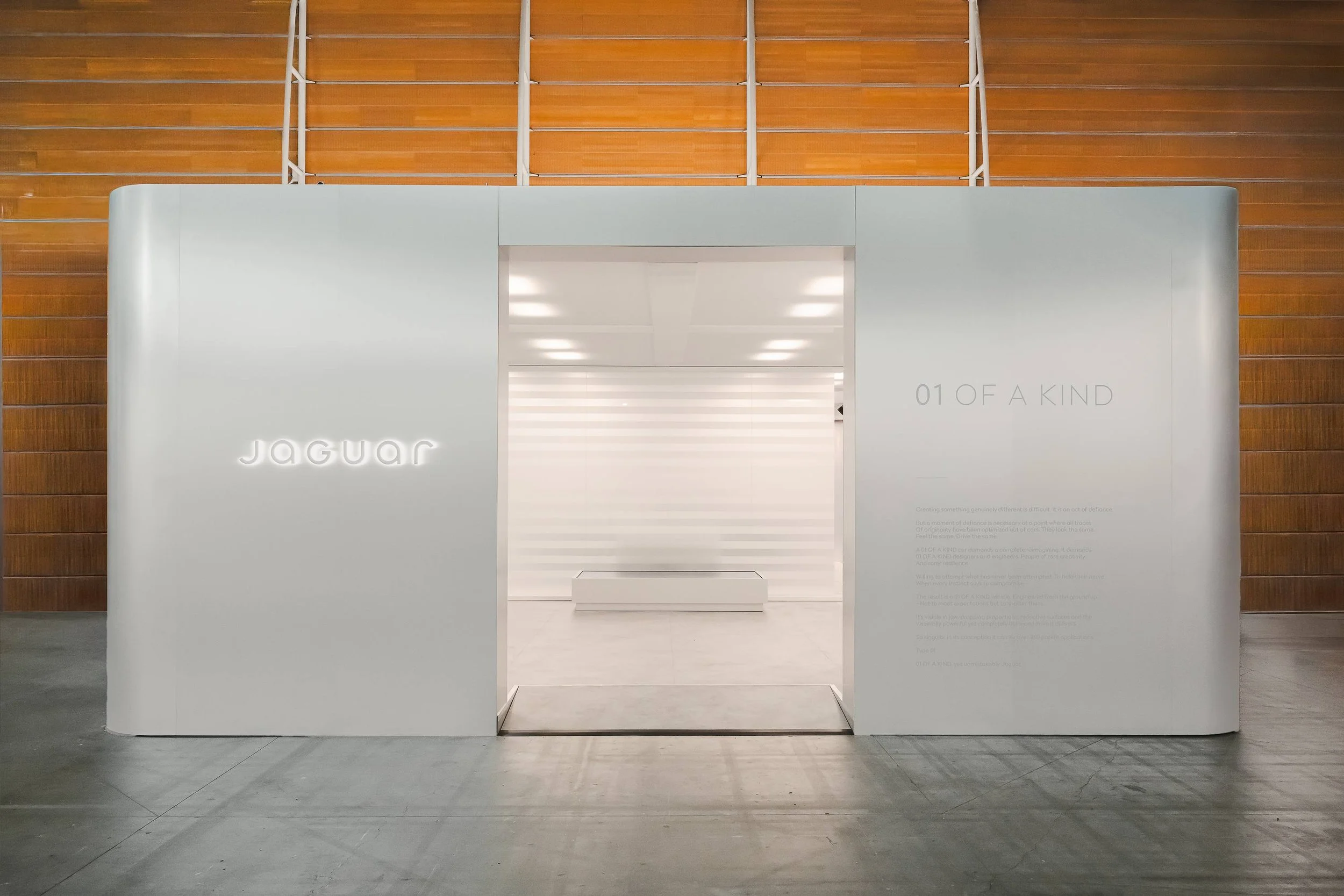
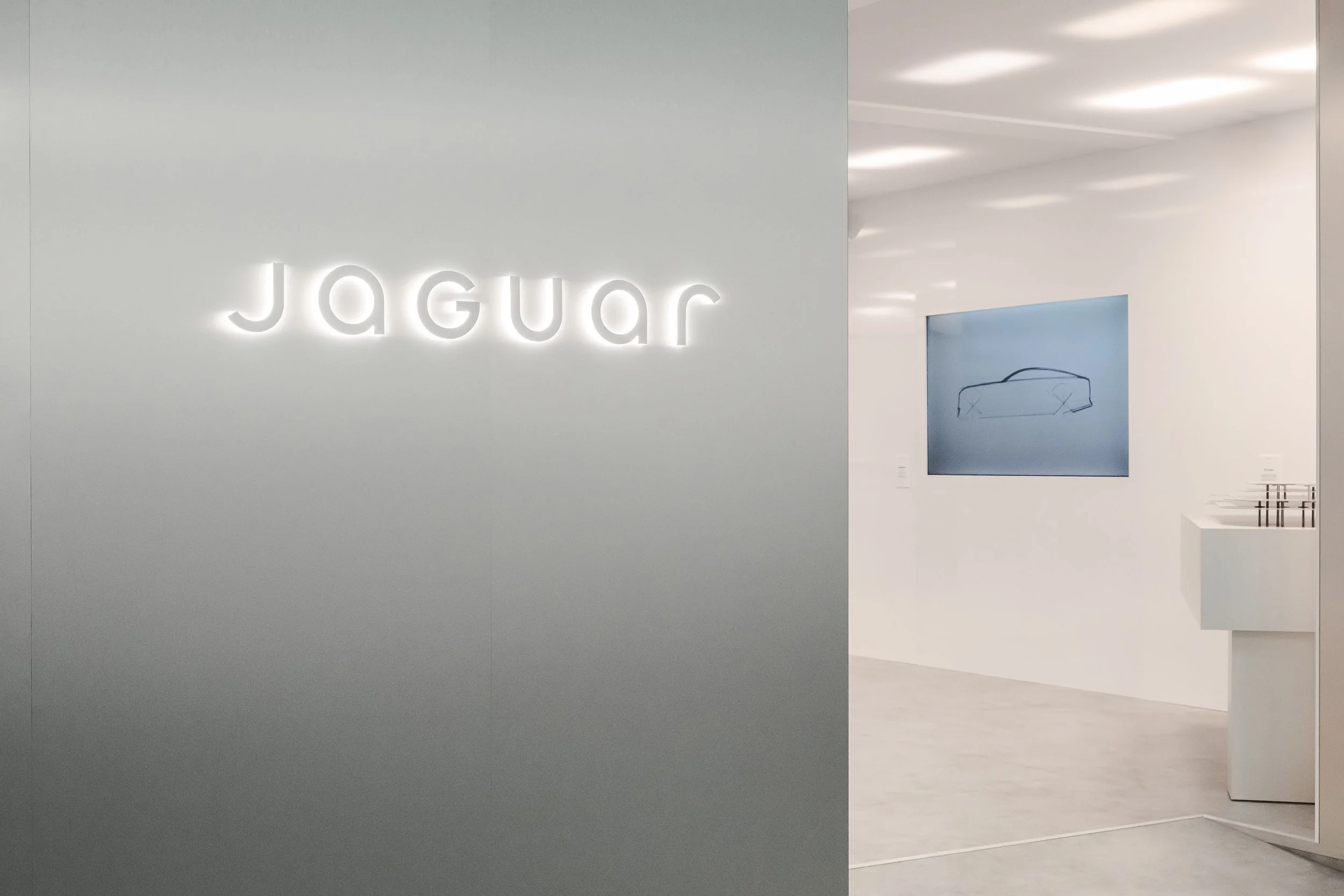
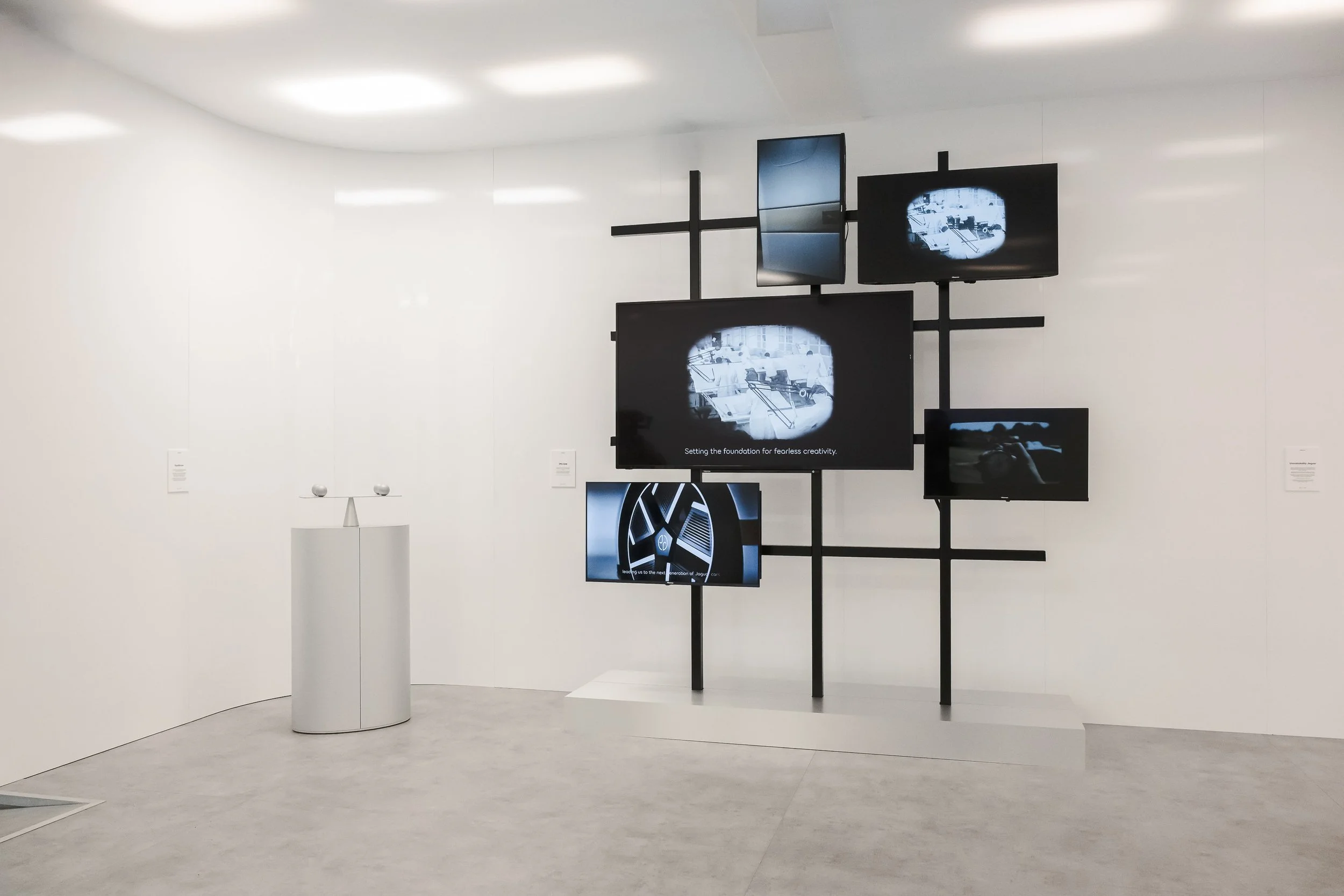
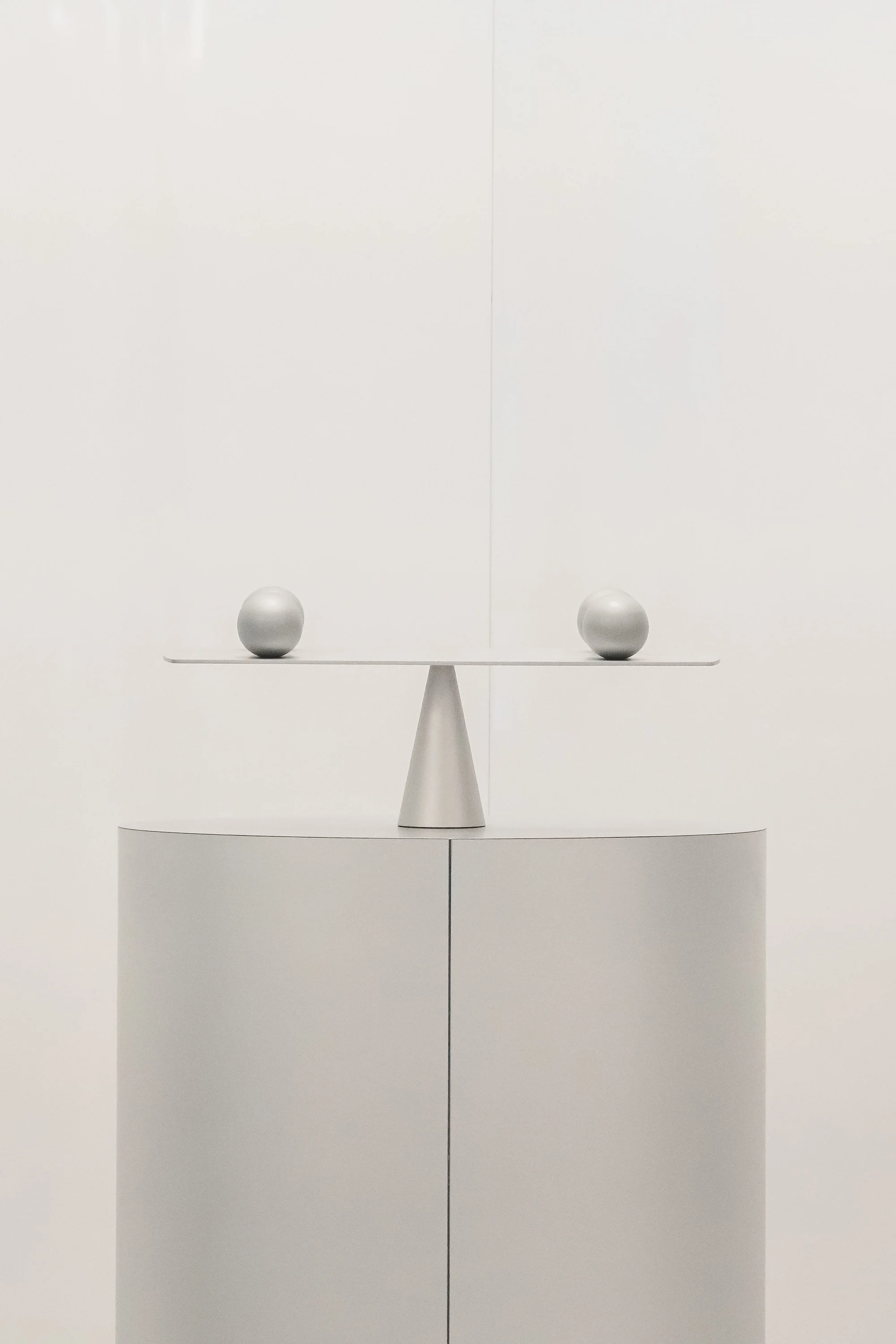
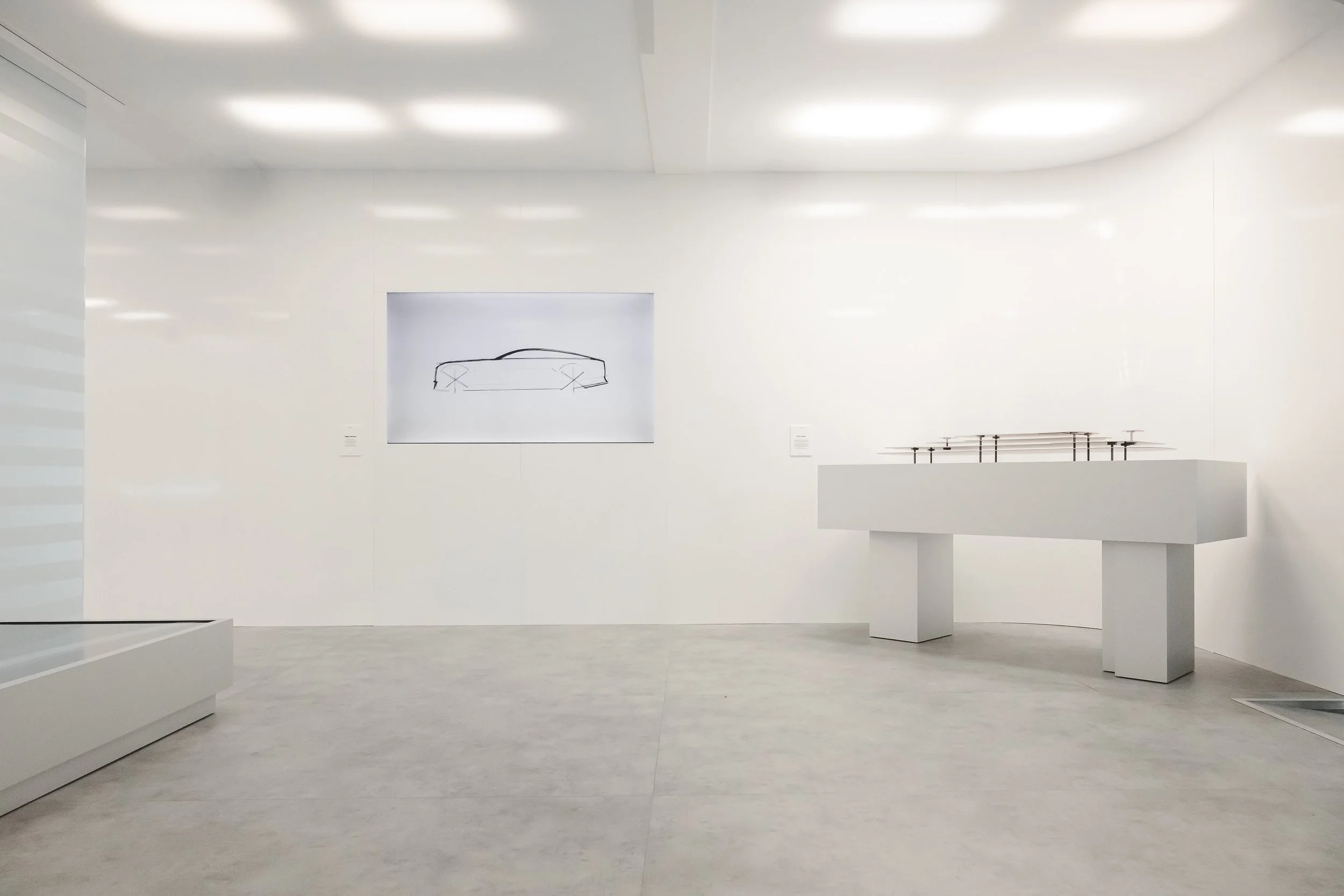
Turin was the first European stop for the Jaguar Type 01, after its world premiere in New York and the opening of a brand store in London. The car arrived at the 33rd edition of Artissima, Italy's only fair devoted entirely to contemporary art, where Jaguar was Official Partner of an edition that gathered 183 galleries from 35 countries. Inside 01 of a Kind, an installation created for the fair, the car stood among brushed steel-effect surfaces, glossy white lacquer, frosted glass and concrete-effect finishes, surrounded by artefacts from its development.
The name works as a small code. "Type" points to the Jaguar heritage, "0" stands for zero tailpipe emissions and "1" marks a fresh start. The car began with a single line drawn on a white page and grew into a four-door luxury GT, 1.40 metres tall, on 23-inch wheels, with more than 360 patents behind its clean surfaces.
Over two conversations, Alexey Andreev and Marc Lee went back over how it all came together: the buildings that shaped its silhouette, the Type 00 as a parallel expression of the same language, the engineering that keeps passengers low and safe, and a single sheet of aluminium that rewrote the physics inside the engineers' software.
Yesterday we talked a lot about details, performance and design. Today I would like to go into inspiration. Cinema, music, books: what shaped the final car?
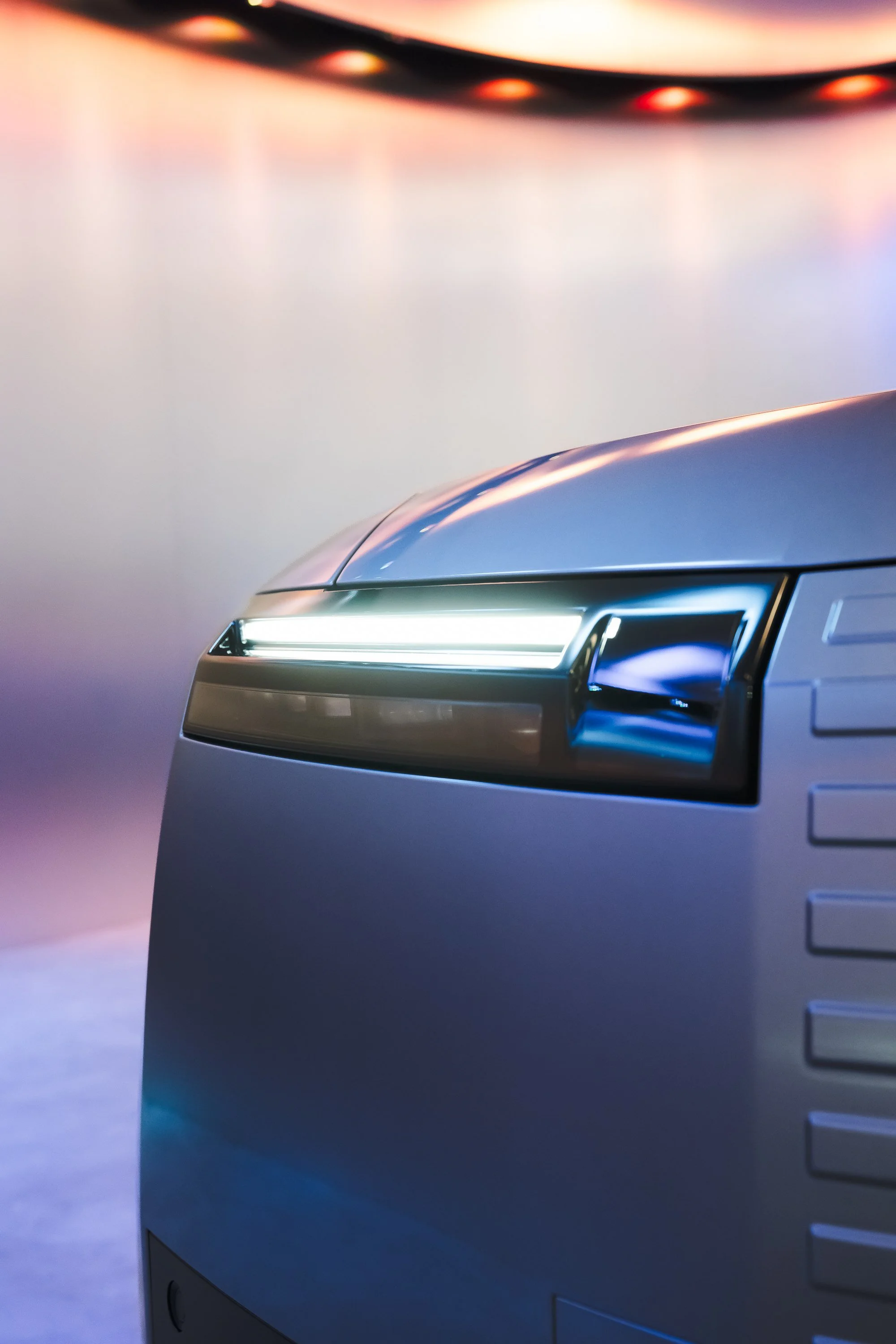
Alexey Andreev: There is no single reference. One thing we definitely did was look outside the automotive world. A great example is architecture, which we looked at a lot. What inspires me about architecture is that it is ultimately about the big picture, about the silhouette. Most iconic buildings are quite clean and simple, and you recognise them from a distance by that silhouette. That really inspired our thinking on this car. We focused on proportion and silhouette first, then took some of the surface language from the same place. We think in block graphics: the lamps and the details are drawn in a very simple way, so they are easy to remember and you see them from far away. That is probably the biggest inspiration.
You also mention product design. How does that logic work on a car this emotional?
Alexey Andreev: Architecture and product design teach you to have a logic behind everything you do. It is quite interesting, because the car is very dramatic and very emotional, yet as designers we think in a very logical way. When we put a line in a particular part of the car, we ask why it is there and what it is doing for us visually. Sometimes an element is there for function, like the extra line on the spoiler that lets it deploy, but I am talking about visual function. Take the brass-inspired fender finisher. It emphasises the luxury gap, the distance from the front door to the centre of the front wheel. It is a detail, yet it brings your eye back to the big picture, which is the proportion. Every element on the car has a visual purpose like that. Logical thinking applied to a car that is all about drama and expression: that mindset is what we took from product design and architecture.
What about the mood inside the team? Is there a shared soundtrack or feeling while you work?
Alexey Andreev: A strong design team is a group of people who naturally share the same instincts. I used to wonder how it all works: a director picks some sketches, all the designers are sketching, and everyone is different. I describe it as a band or an orchestra. Different people, yet our natural taste as designers aligns, so we get inspired by each other's work. When it comes to music and visuals, there is a big spread. Some designers look at fashion more, some listen to film scores, some to very fast-paced music. Similar taste, interpreted from different sources: that balance is really important for a good design team.
Before the Type 01 there was the Type 00, a concept that shares many details with it. How did one lead to the other?
Alexey Andreev: Most manufacturers show a concept car to the world, and then the production car tries to emulate that concept exactly. We worked differently, with an additional internal design competition. We set the vision for what Jaguar needs to be, and that is the car you saw yesterday. It has stayed almost the same: we added mirrors and made a few small adjustments, never more than eight millimetres. While we were developing it, we wanted to show the world a glimpse of the new language and the new direction in the most dramatic way, and for that we made the Type 00. The two cars are deliberately different. Same family, same language, yet side by side you can see they have different characters. We never took parts of the Type 00 to put into production. We were already working on the production of the Type 01, and the Type 00 was an expression of that language, a glimpse of what we were doing.
How did it feel when people first saw the Type 00?
Alexey Andreev: My favourite moment was when the Type 00 came out and people asked how we were going to do this or that in production. We felt great reading those comments on our phones, because we already had the production car in the works. We knew we were going to do 23-inch wheels. They were there from the start.
Marc, to me this is one of the most innovative processes I have seen in the automotive world. What feeling does the car give to the driver?
Marc Lee: The car is truly innovative because the design came first, and then engineering asked: how should it drive? Five or six years ago, the team first drove all of the best Jaguars to understand what makes a Jaguar a Jaguar. Speed was never in question, with more than 1,000 PS. What they found in those cars was a certain refinement. Then came all the engineering: separate rear motors, so we can do torque vectoring instantly, a perfect 50:50 weight distribution, and battery cells taken out so we could lower the front seats. You are placed right at the centre of gravity, and you would be amazed at what that does when you drive.
Where did you first drive it?
Marc Lee: I was privileged to drive it first on a racetrack at Gaydon, our testing ground. What impressed me most, though, was driving it on normal roads around our engineering centre at the Nürburgring in Germany. Those roads are very curvy, up and down, and small. As a petrol head, I was completely convinced. It feels small, very nimble and quick, and you end up driving faster than you should because you hardly feel it. It is a GT, so it stays comfortable even when the roads are rough. I would never have believed I would get out of a car so emotionally touched. I think this car has a soul. It gives you something when you drive it, and I wish everybody could experience it today.
Beyond comfort and elegance, there is also a strong sense of protection. How did you achieve it?
Marc Lee: There are so many innovations made to keep the design intact. It is a four-door GT with a maximum height of 1.40 metres. In an EV you normally put the high-voltage components under the rear bench, which raises the passengers, and Alexey would have had to lift the roof. We wanted to keep it low. As an industry first, we moved those components in front of the bulkhead, which is outside the usual crash zone. So we engineered what we call a tripod A-pillar, internally the Eiffel Tower, because the structure on the side looks like one. It is super safe, and it lets rear passengers ride low and comfortably. We also carved out the battery pack to make room for their feet, what we call a foot garage. These are all innovations to have comfort and safety and still enable the design. And for performance, there is double wishbone suspension and the dual motors. It is an unbelievable car.
Design, engineering, performance. What were the biggest challenges in making the three work together?
Alexey Andreev: What made this project special is that we set out the design vision and the whole might of the company got behind us, engineers included, to make this car exactly as it is. So in any meeting, for example on how to make the car more aerodynamic, everybody in the room, designers and engineers alike, agreed that the design would stay. The question became how to solve the problem together.
Aerodynamics is a good example. How did you get there?
Alexey Andreev: This is the most aerodynamic Jaguar ever. I was surprised when I first heard the figures: of every Jaguar you can think of, the Type 01 is the most aerodynamic. We took a full-size clay model to a full-size wind tunnel in Germany and worked with the aerodynamicists and engineers on slight adjustments, a surface a couple of millimetres rounder here and there. Done all over the car, that has a profound effect. We never changed the design by more than about eight millimetres in total, yet we went from a car that was poorly aerodynamic at the start to the most aerodynamic Jaguar we have ever made. For an electric car, that really matters. Changing everything would have killed the point.
The 23-inch wheels and that low line look hard to reconcile.
Alexey Andreev: To deliver the 23-inch wheels and keep this line as low as it is, a normal suspension was out of the question. When we showed the engineers what we wanted, they worked really hard to create a suspension system that fits into that distance. It is still air suspension, and it is a very comfortable car to drive in. Refining elements like that is what takes the time.
Then there is the panel you call impossible.
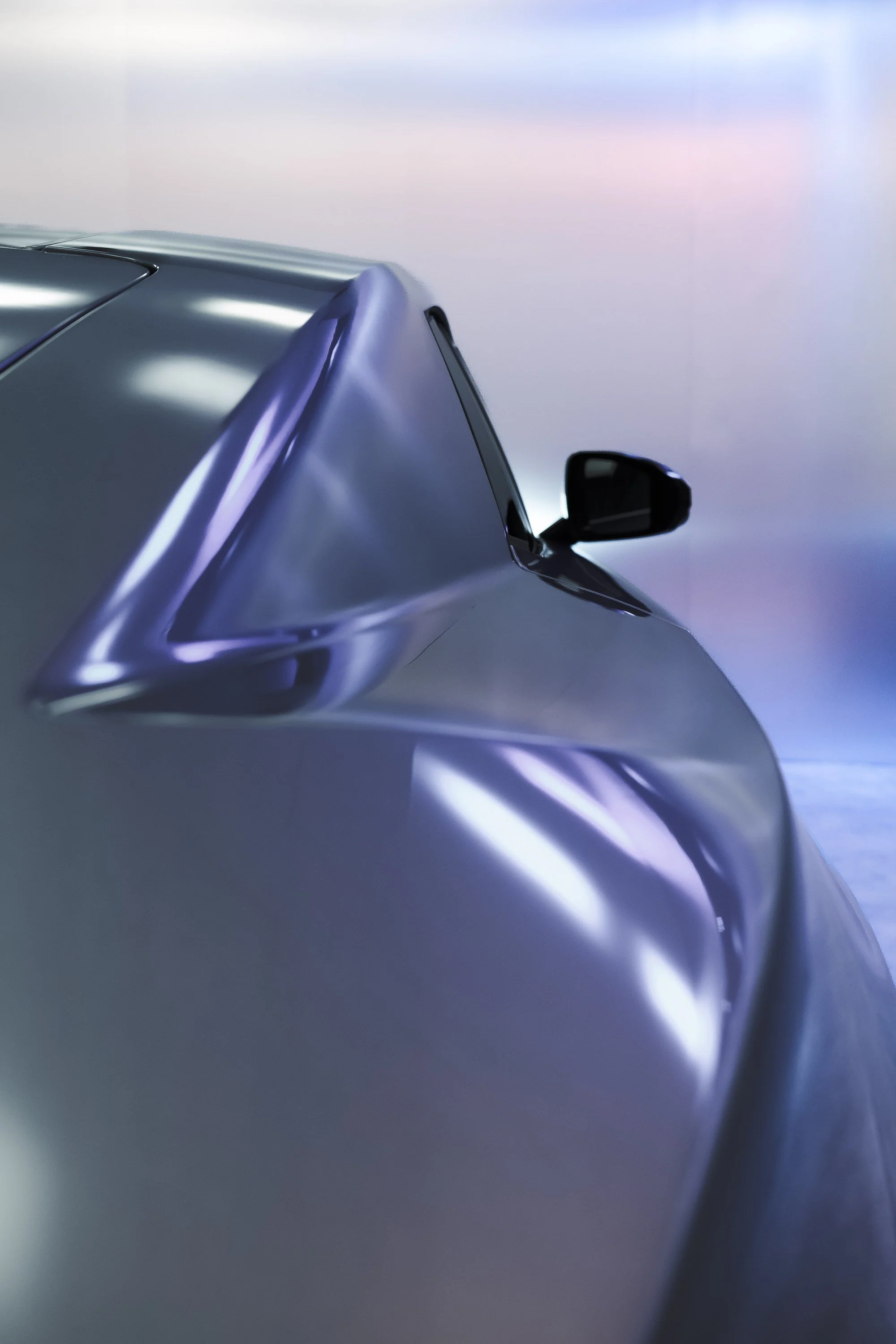
Alexey Andreev: Imagine one single piece that starts as a sheet of aluminium about 0.9 millimetres thick. Everything you see here comes from that one panel, stamped with something like 2,500 tons of force. Traditionally you would put a split line here and make two separate parts. These lines are so important to the design that we wanted to keep them whole. We need split lines for the doors, so we wanted to avoid breaking the surface up again. Before we did this, it would have been considered impossible. That is why we call it the impossible panel.
Did technology help in the process, AI or other digital tools?
Alexey Andreev: On our side, we never used AI for this car, and I doubt the engineers did either. One thing I do know: when they first put this panel into their software as data, the computer said it would be impossible. They have now updated the physics inside that software, because this car proved it can be done. All throughout the car we had to think in a different way.
How long does the creative phase take compared with the engineering?
Alexey Andreev: The creative part we do quite quickly, and that is important. You need spontaneous creativity. Otherwise the idea changes so many times that you never reach the level you had in mind. That first sketch is always the best thing, and that is probably true for any creative. The time goes into engineering and refining, and in the last few years it is real millimetres you are checking and adjusting.
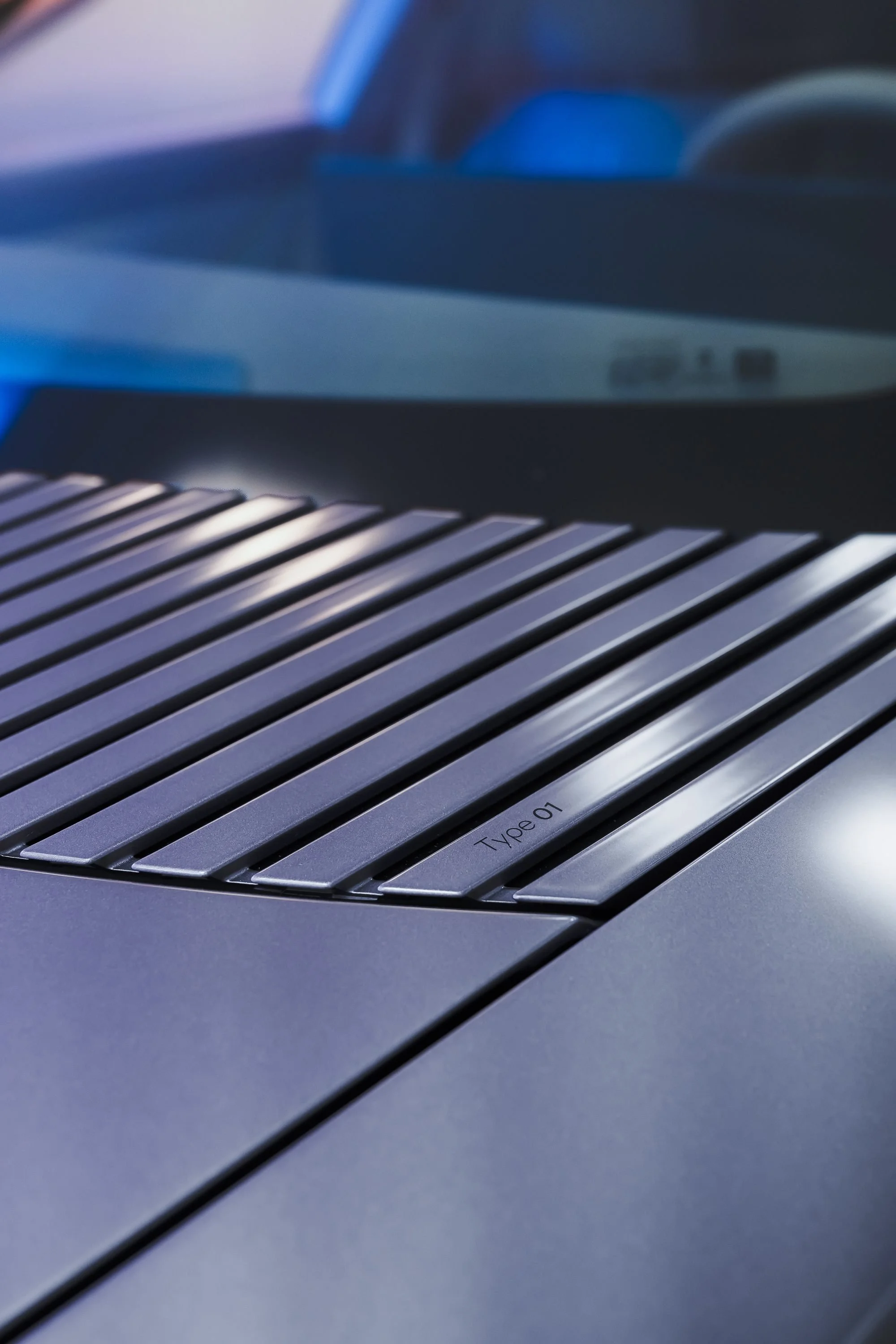
Even the cameras look designed.
Alexey Andreev: At the back we have two cameras, one for the rear-view mirror and one for parking. Around them we put horizontal slats, two millimetres by two millimetres, all the same length, so they speak the same language as the camera and help integrate it. The same grid continues onto the roof and into the interior. That is how we think about every aspect of the design.
And at the front?
Alexey Andreev: Behind the wordmark panel there is the radar that lets the car brake automatically, which is important for safety. Traditionally that panel has to be black, which is why you often see a black square on cars. We used known technology in a different way, so this part can be silver. A black element on a light-coloured car would create a kind of nose, and we want you to read the face through the lamps.
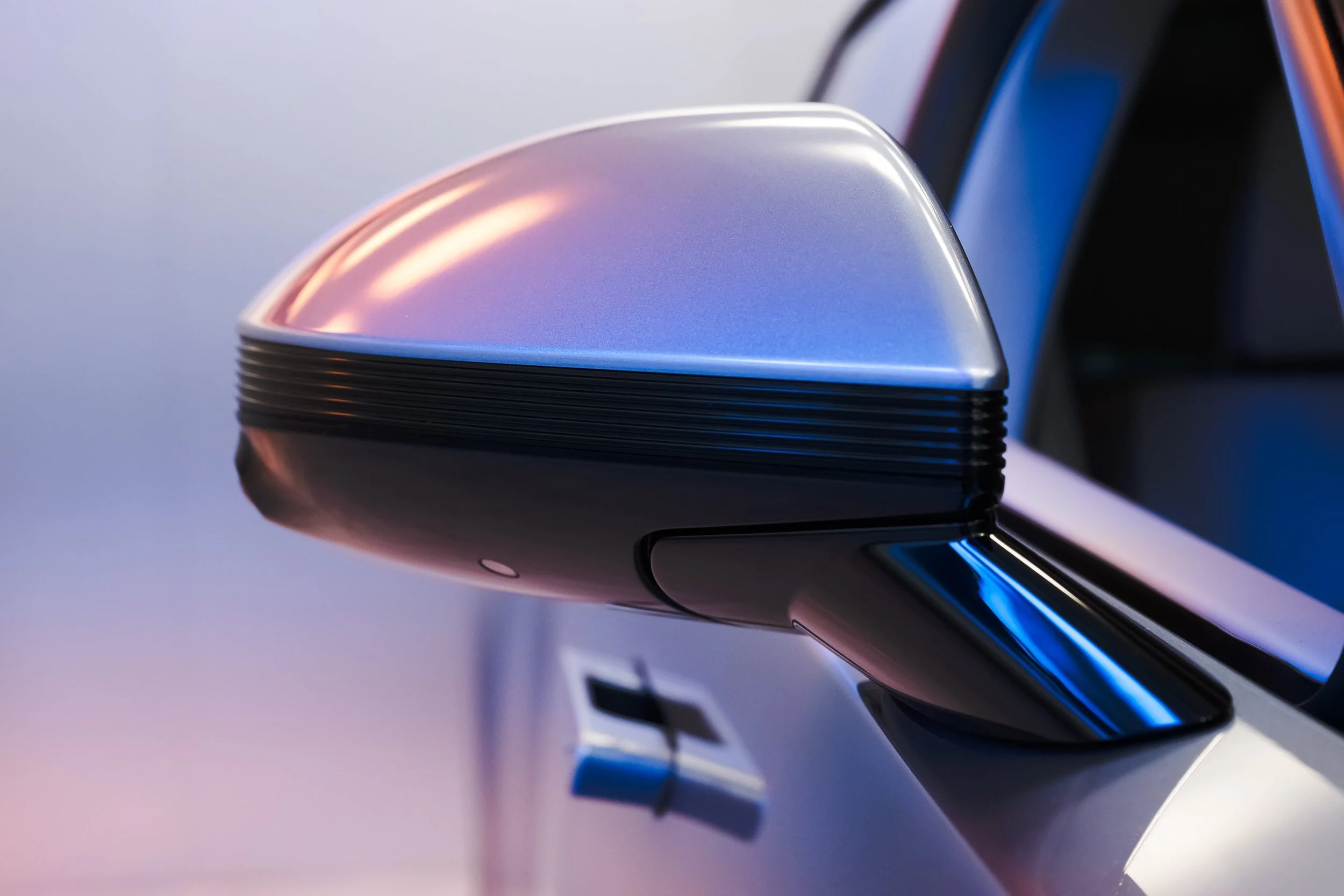
It is a big car. How does it handle tight spaces?
Alexey Andreev: It is about 5.23 metres long and just under two metres wide, similar to a Range Rover or a Defender. But it has four-wheel steering: when you steer, the rear wheels turn too, so the turning circle is like that of a small city car. With all the cameras around, it is also easy to drive in tight spaces. The integration of the sensors allowed us to deliver this proportion and still make a really comfortable car to use.
Do you remember your first ride in it?
Alexey Andreev: When we launched the car in New York, some of the test drivers drove me back to the hotel, and I was in the front seat. That is a moment I will never forget. I remember thinking how comfortable the car was on those quite rough streets.
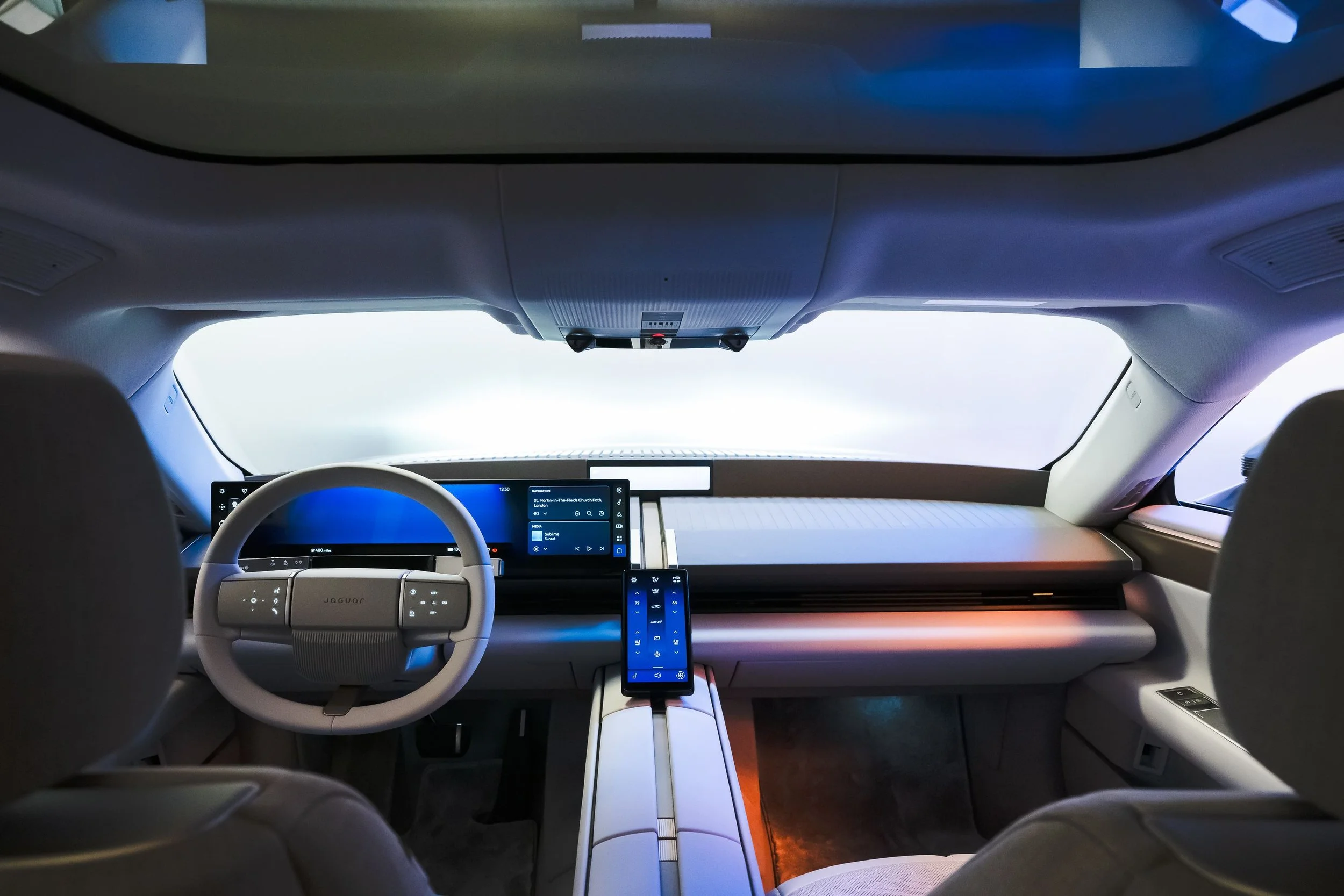
Alexey Andreev, Lead Exterior Designer, Jaguar
Marc Lee, Brand Director Jaguar Europe
Photos courtesy of Jaguar
Words and Interview by Donald Gjoka
What to read next