CAKE By Ben Raz at Boulding Gallery
Courtesy of Bolding
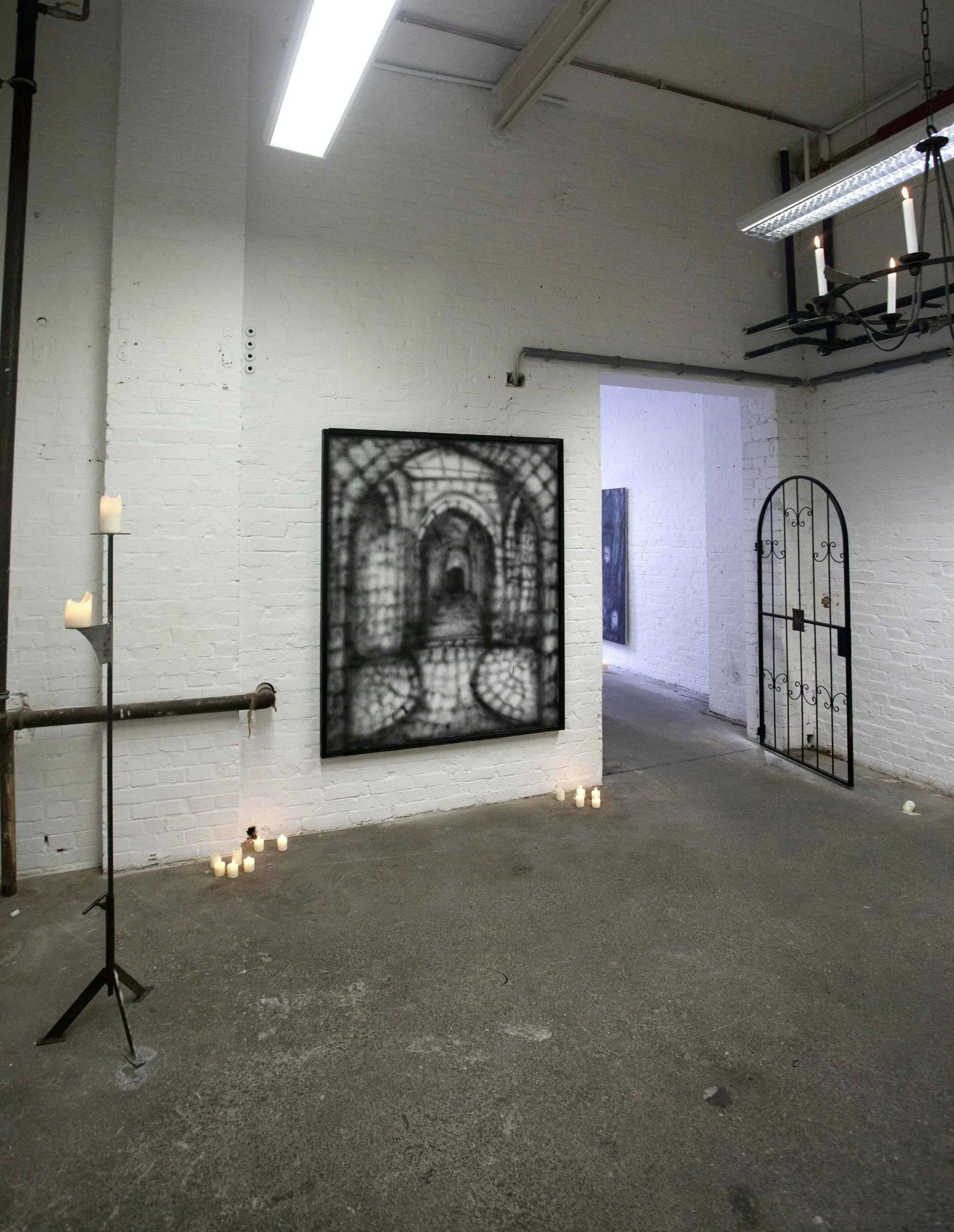
Sauntering the streets of Marleybone on a Saturday, one can find Alfie’s Antiques Market emerging from the veil of the London winter gloom. Weaving your way through various art deco furniture stalls, rare jewelry collectors and rails of sample clothing from the mid-twentieth century, you’ll be struck by surprise when you eventually come across the giant white shark statue suspended above the pond that sits in the centre of the ground floor and marks the entrance to Bolding Gallery Marleybone. On this particular Saturday, you could also find Ben Raz there, installing his next show CAKE.
During the installation of CAKE, we stole Ben away for a quick moment. Sat on the royal blue carpet of Bolding, he guided me through the narratives winding through the works presented in CAKE; his practice and creative tendencies, and desire and megalomania.
Courtesy of Bolding
Let's start by introducing yourself and where you're at in your career and practice.
Yeah, so I'm a painter who works in oil paints. I have been living and working in London for about 10 years now.
I studied at a Slade school for fine art and since then, I have been continuing making paintings of very different kinds. There's a real variety of images that I make.
What is this latest series of work? What does it focus on?
All of these paintings synthesise varied interests: modern decadence, the clandestine, desire, are all common themes. A lot of them are paintings of fictional characters in different situations that really vary.
What made you decide to focus on firstly, fictional characters, but also desire?
Desire, I think, underpins so many of the paintings that I make, just because it's such an intense emotion. And particularly with this group of paintings, they feel very much about what's happening in the culture now. And desire is obviously underpinning that as well.
And then in terms of fictional characters, I am just obsessed with fiction. In terms of how I work, I imagine paintings and build paintings in my mind over a long period of time. Then I use sketches, images I've taken or harvested to create and realise these scenes.
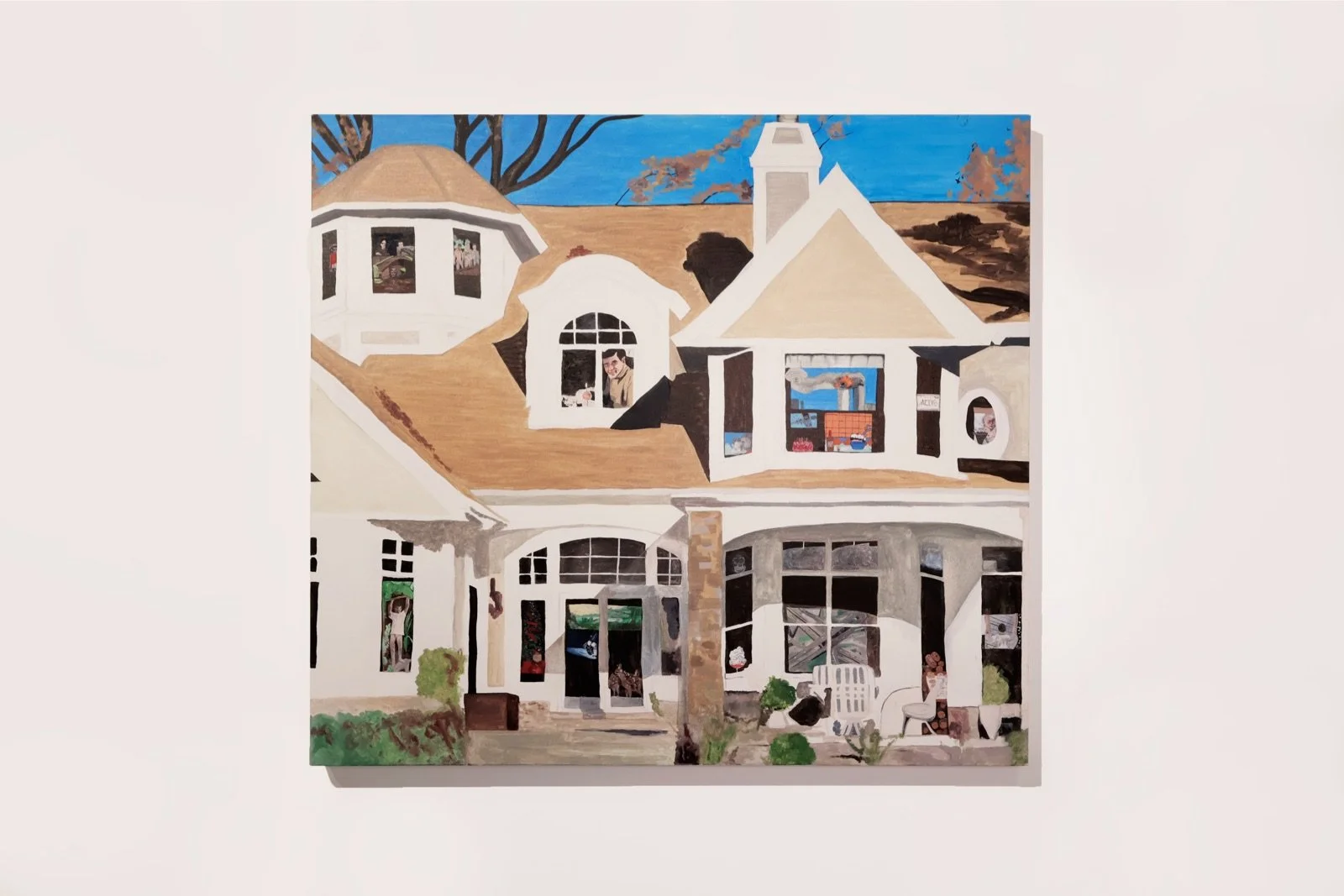
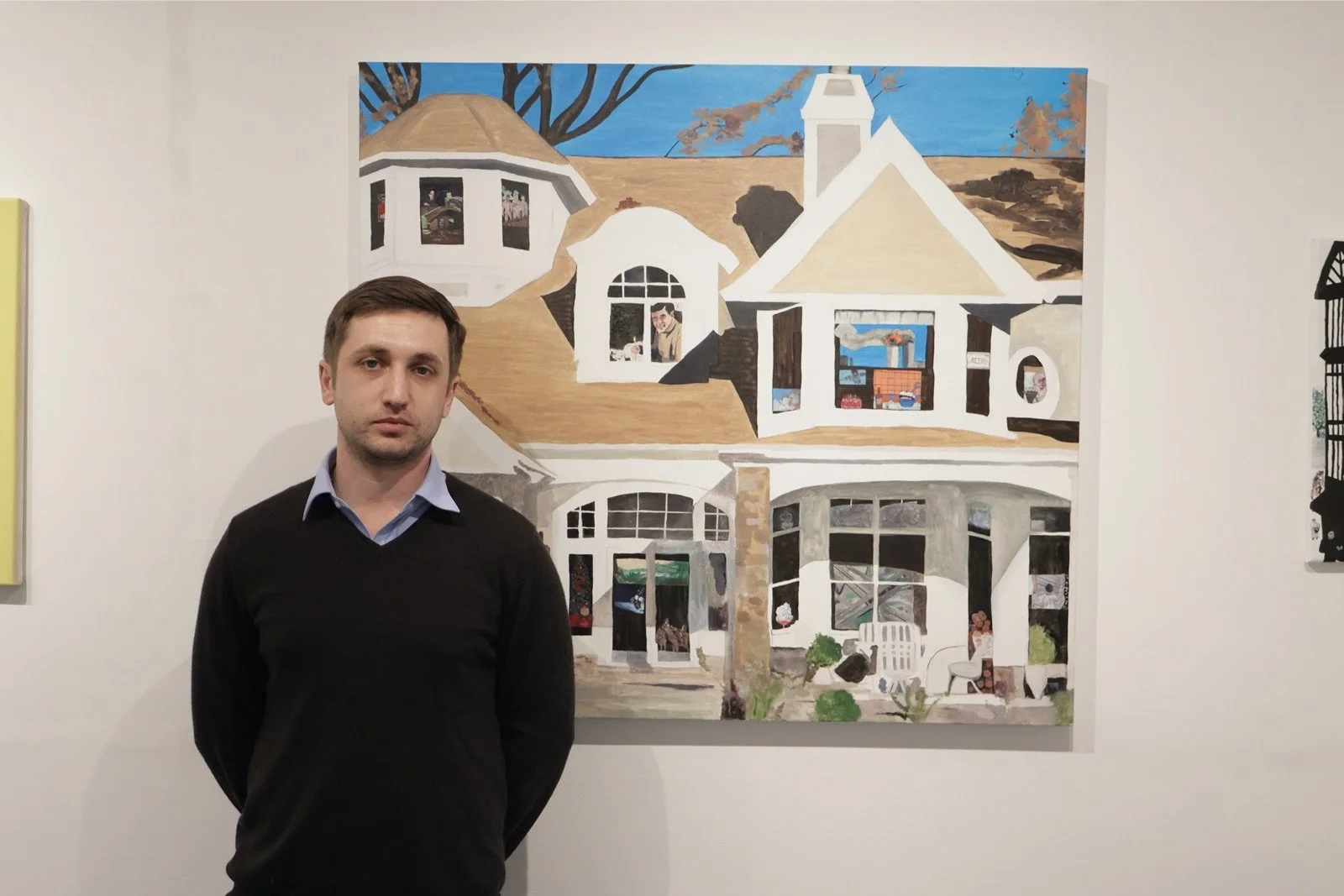
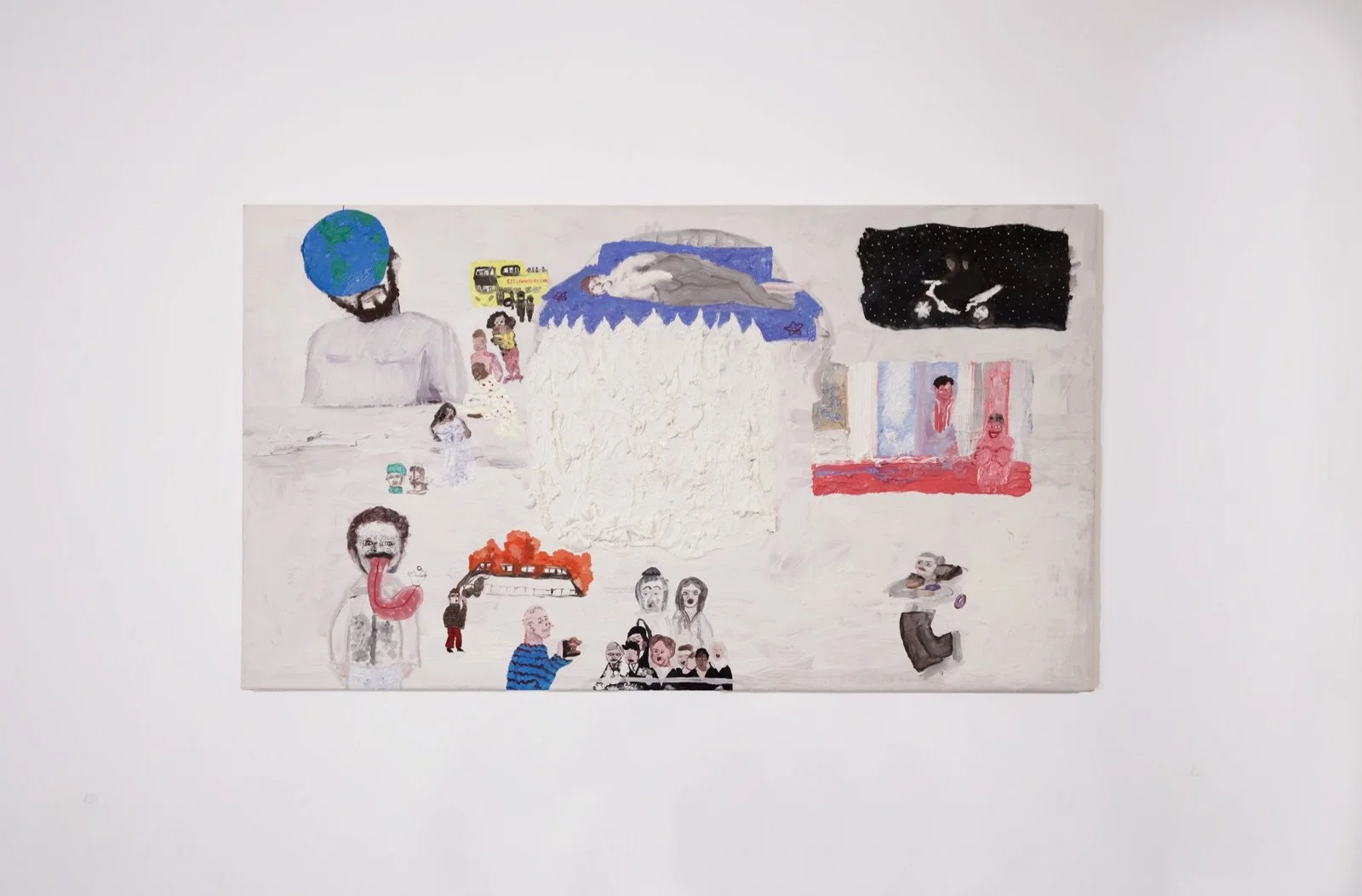
So looking around, I feel like scale is clearly something that you put a lot of thought into. What informs the scale of each figure? This one, if you look into each room, it's almost like there's another little world happening in that room. But then this one, you've got much smaller figures in detail, contrasted with the largest figure, who stands more as an outline.
So I think with this painting in particular, all of these images are... They're images and then there's a central character through the middle window here. All of these windows suggest these kinds of obsessions with different ideas, different media, different experiences.
Courtesy of Bolding
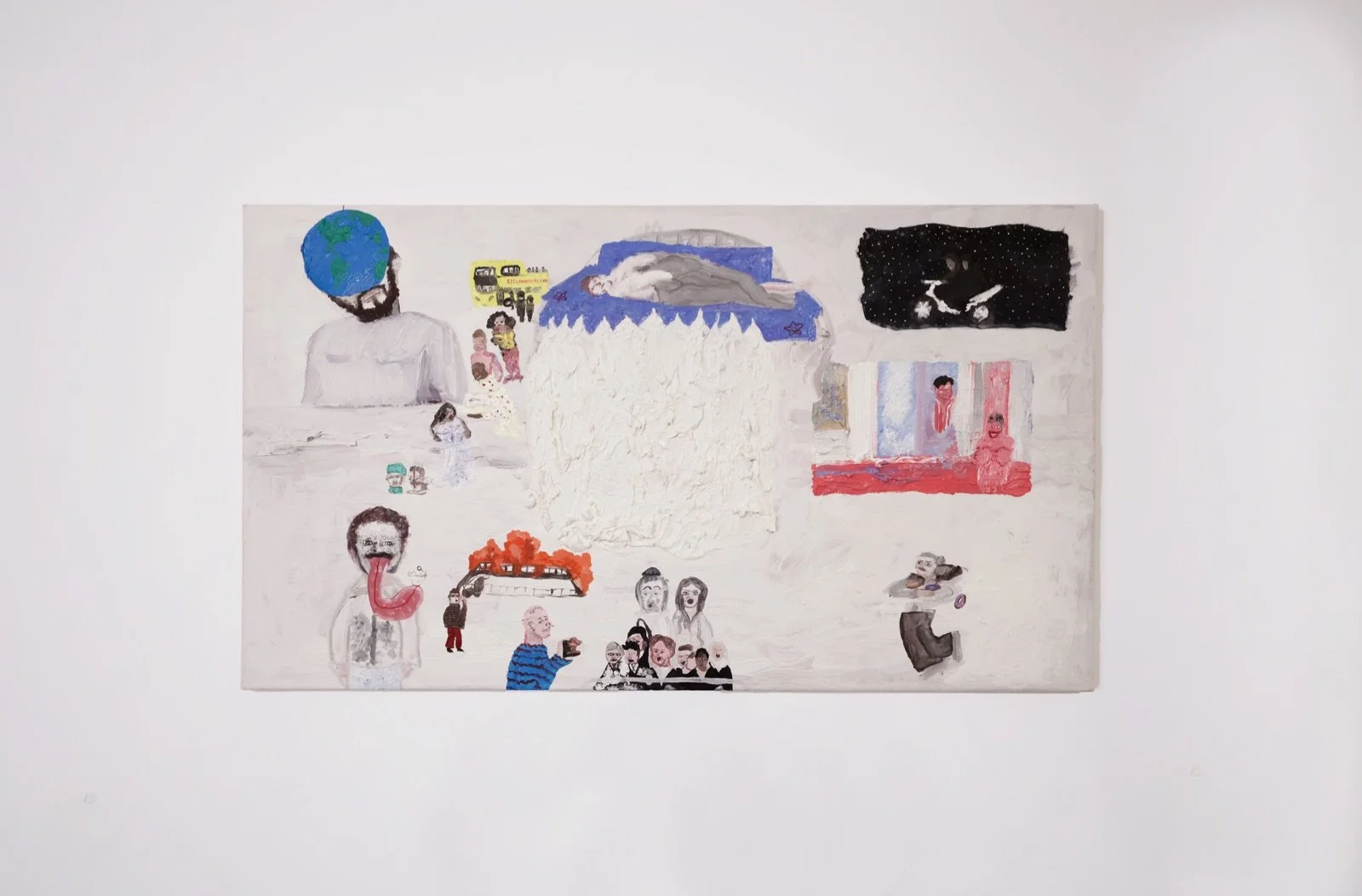
And then in terms of this painting, the different scales are aimed to create this really kind of uncomfortable experience for the viewer, I think. The different scales really add to that.
In terms of the actual scale of the canvas, a lot of that has been dictated by finance. It's just more convenient making smaller paintings, but smaller paintings also have an intensity to them that I really like. They also force people to look at them closer up. So there's an intimacy to that, which I think is interesting.
I think it also works well in this space because it's a smaller space with these interesting different features. And the smaller paintings lend themselves to showing in a space like this.
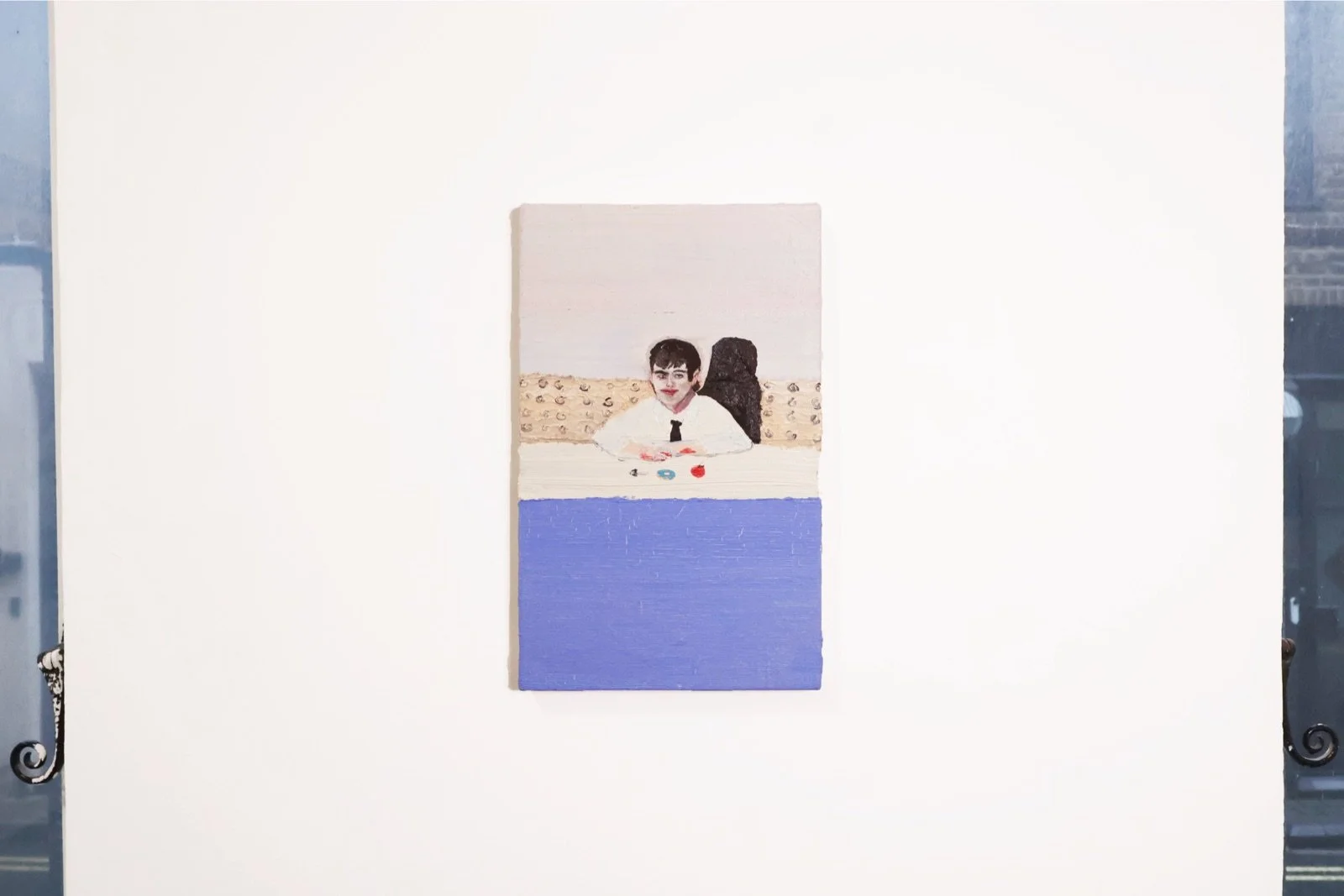
Along the same lines, it feels like texture also plays a big role. So, for example, particularly in this one, the layering of the paints. And then even this one, where it's smoother, but the brush strokes are clearer in certain parts than others. How do you use texture to further illustrate the narrative?
So, yeah, texture is obviously very important to any painter. And experimenting with those different textures; different ways of applying the paint, it keeps the process really engaging for me. Then also, for the viewer, it just creates more of an interesting and impactful image, I think. And, yeah, there's different tensions between the thinner use of paint and then the thicker paint layered on top. It creates these kinds of deep caverns of paint, which I think are really interesting.
Courtesy of Bolding
Courtesy of Bolding
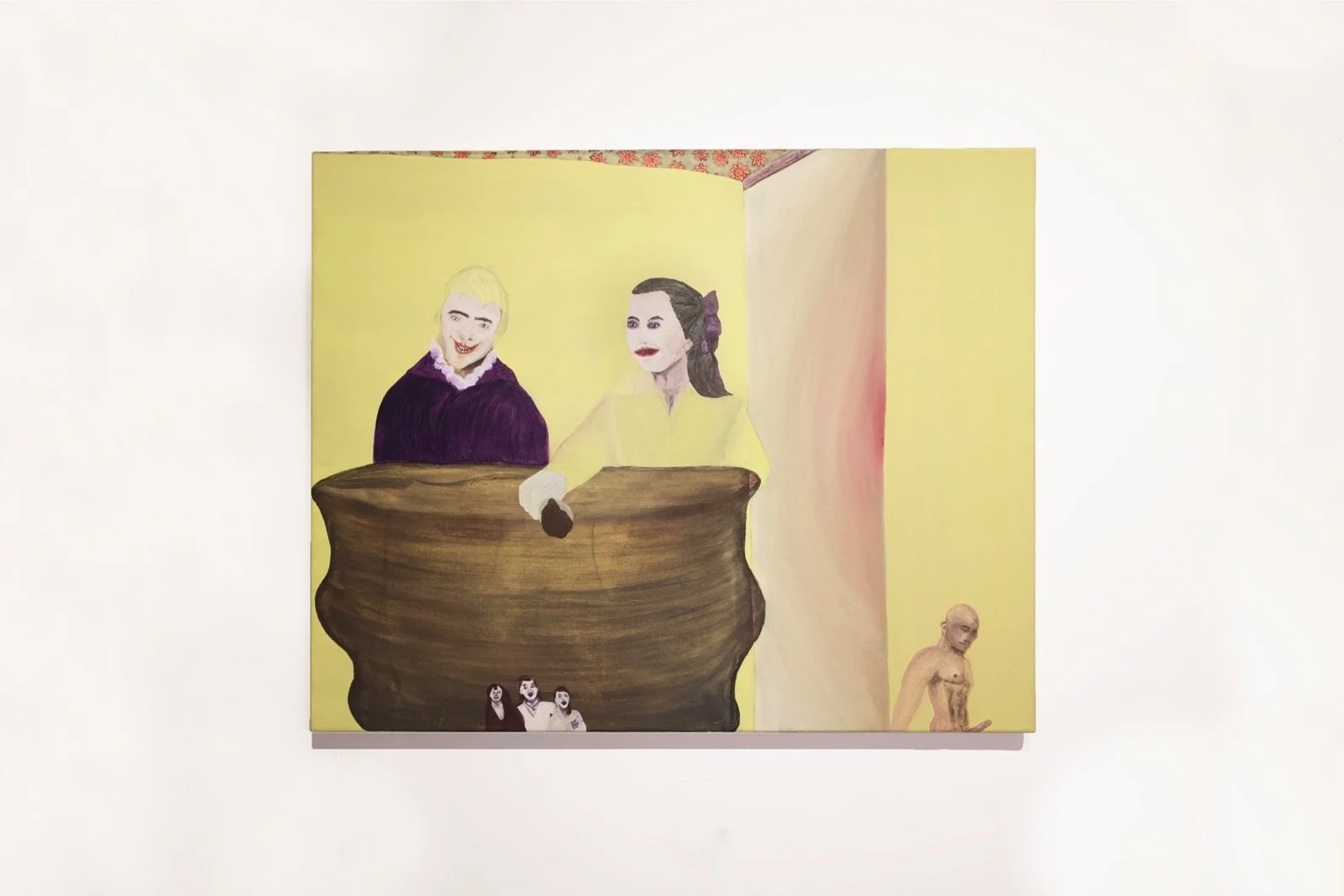
I really like this yellow painting. So can you just talk to me a bit about that?
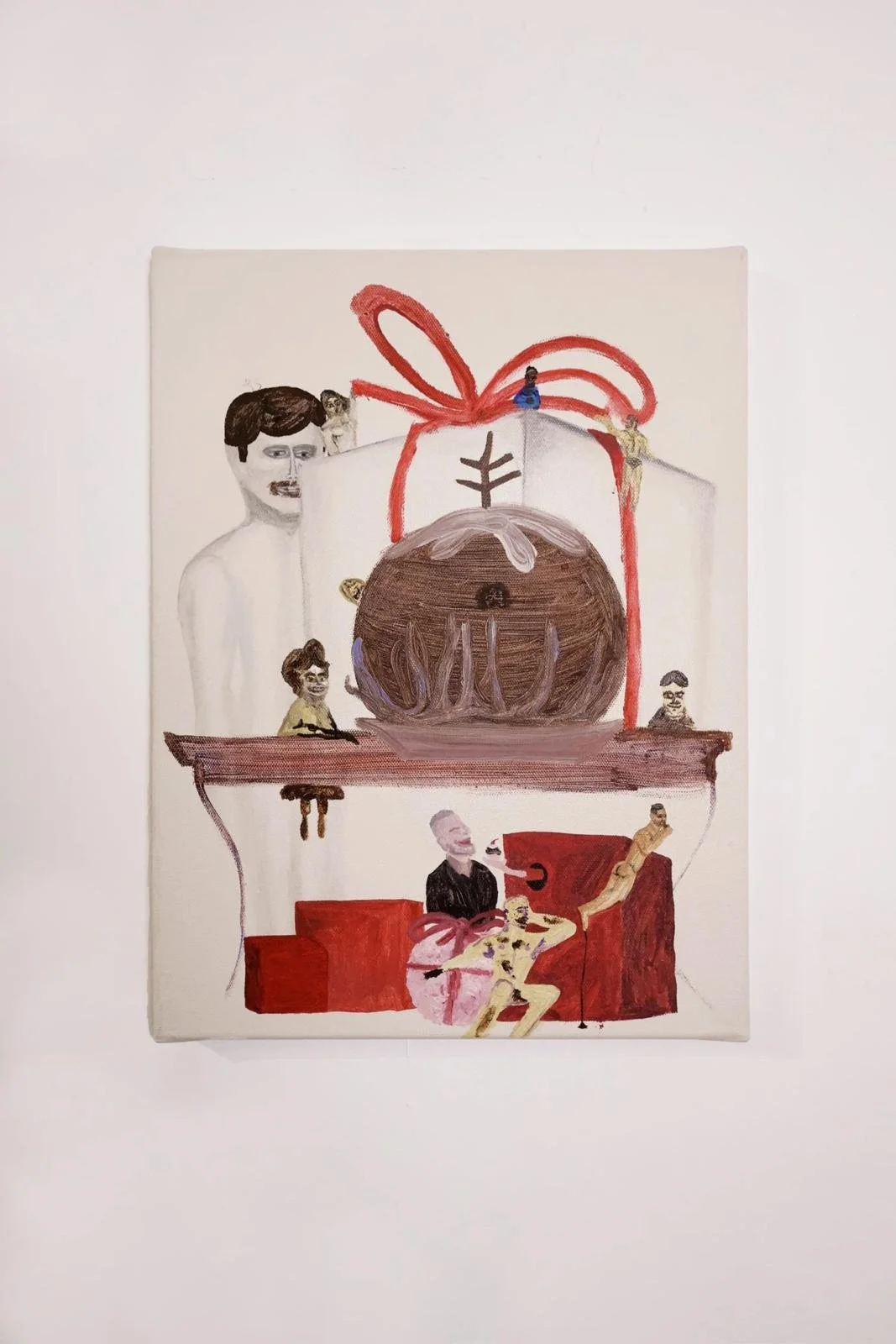
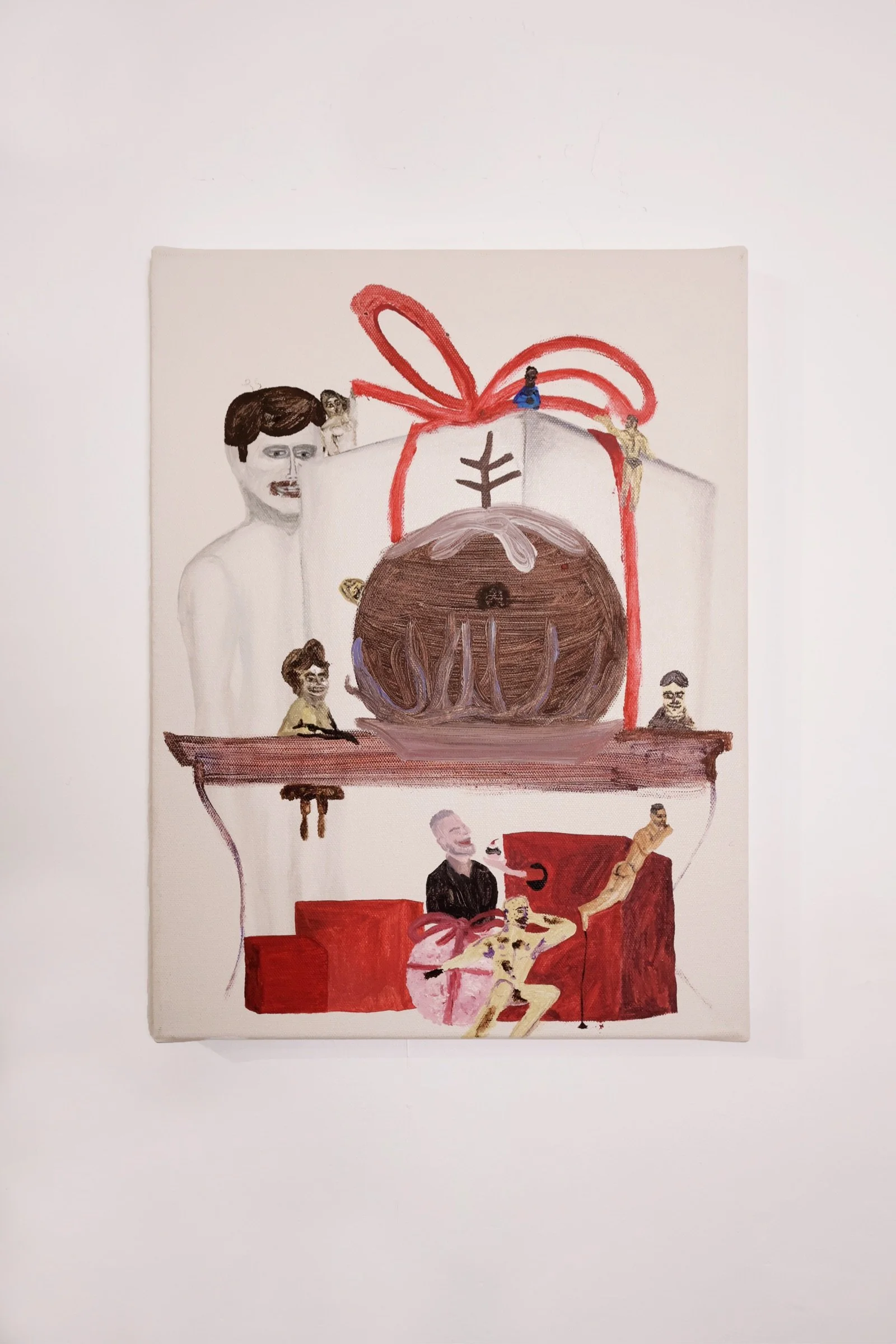
So, yeah, the boner - I've always debated taking it out. I really like it. The whole painting is extremely kind of repulsive, but also seductive at the same time. And I really like those tensions, particularly within this group of paintings. Like it's a tension that I really encourage and kind of waded in.
With this painting in particular, you have these two larger characters that are feeding this pudding to these diminutive figures at the bottom. And it speaks to this like megalomania, or these crazy power dynamics within this very shallow room.
A lot of the images I think about as kind of anchors for a certain kind of atmosphere or emotion. I'm really trying to create a visceral experience more than anything else, I think. They aim to be emotionally complicated more than anything else.
Courtesy of Bolding
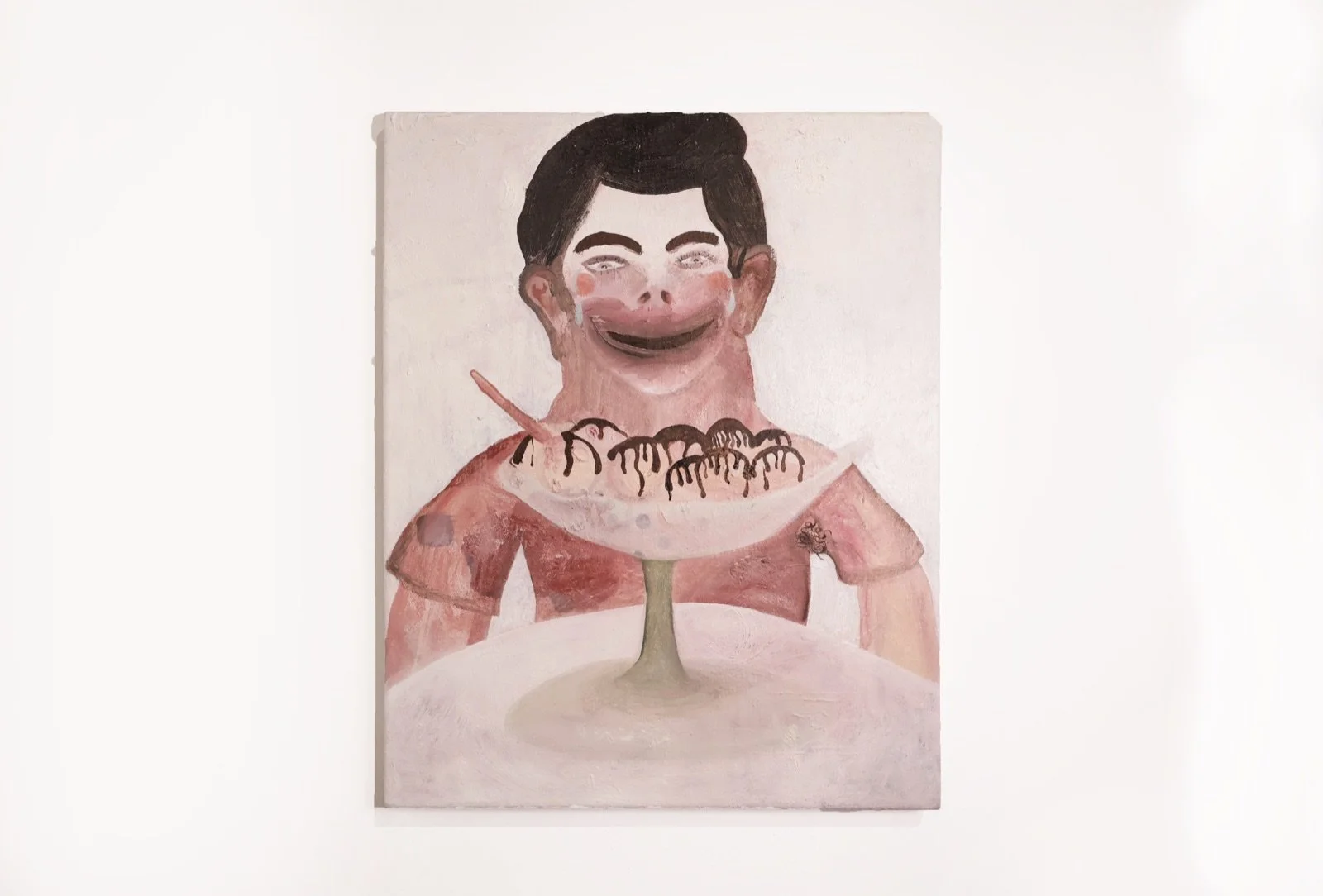
I feel like amongst all of the paintings, there's a theme of dessert, but quite specifically puddings as well. Would I be right in assuming that that's a reference again to desire?
Yeah, yeah, yeah. So I like to force symbols in my paintings and cake has become this, for me, this perfect symbol of these beautiful objects that are also tasty, but disgusting and overindulging them. They're sickly, and that feels like a perfect kind of metaphor for contemporary culture.
Did you create work specifically for the exhibition or is it more of like a collection of work that you already have?
So I've been working on this group of paintings for about five, six years.
The first painting I made of this group was this painting which was this coming out party. You had all of these figures throwing around cake and engaging in different actions. That was kind of jumping off point.
Since then, I've been making the odd painting for this group. And Esme [Bolding Gallery] likes this group of paintings. And it felt like a good time to show them, like they started to take off. I was working on them more. And then some of them are made specifically for this show.
Then the rest of them have been worked on for, some of them, for multiple years. Like I like to work on a painting for a little bit and then put it away and come back even a year down the line. It also kind of takes the pressure off of the individual paintings, working on multiple paintings at the same time over multiple years. I like to work in that very low pressure way.
What feels like it's next? I guess it sounds like you don't quite work in a super linear way.
So I work regularly, but I like to fire off in a lot of different directions. I like a variety of different kinds of paintings, different images, and a lot of different themes within my work. And then when it comes to having a show, then I really kind of hone in and focus on an album of pictures that revolve around a particular theme or idea.
So in terms of what happens next, I can see myself making more of these kinds of paintings. I also have a show with Tarzan Kingofthejungle. I've got a show with him and I'm showing very different paintings, like these landscape paintings that are populated. Night paintings as well, with content hidden within the dark spaces of the painting.
Courtesy of Bolding
Interview KATE KIDNEY BISHOP
What to read next