Climate as Material: ACG's Research Mission in Moab
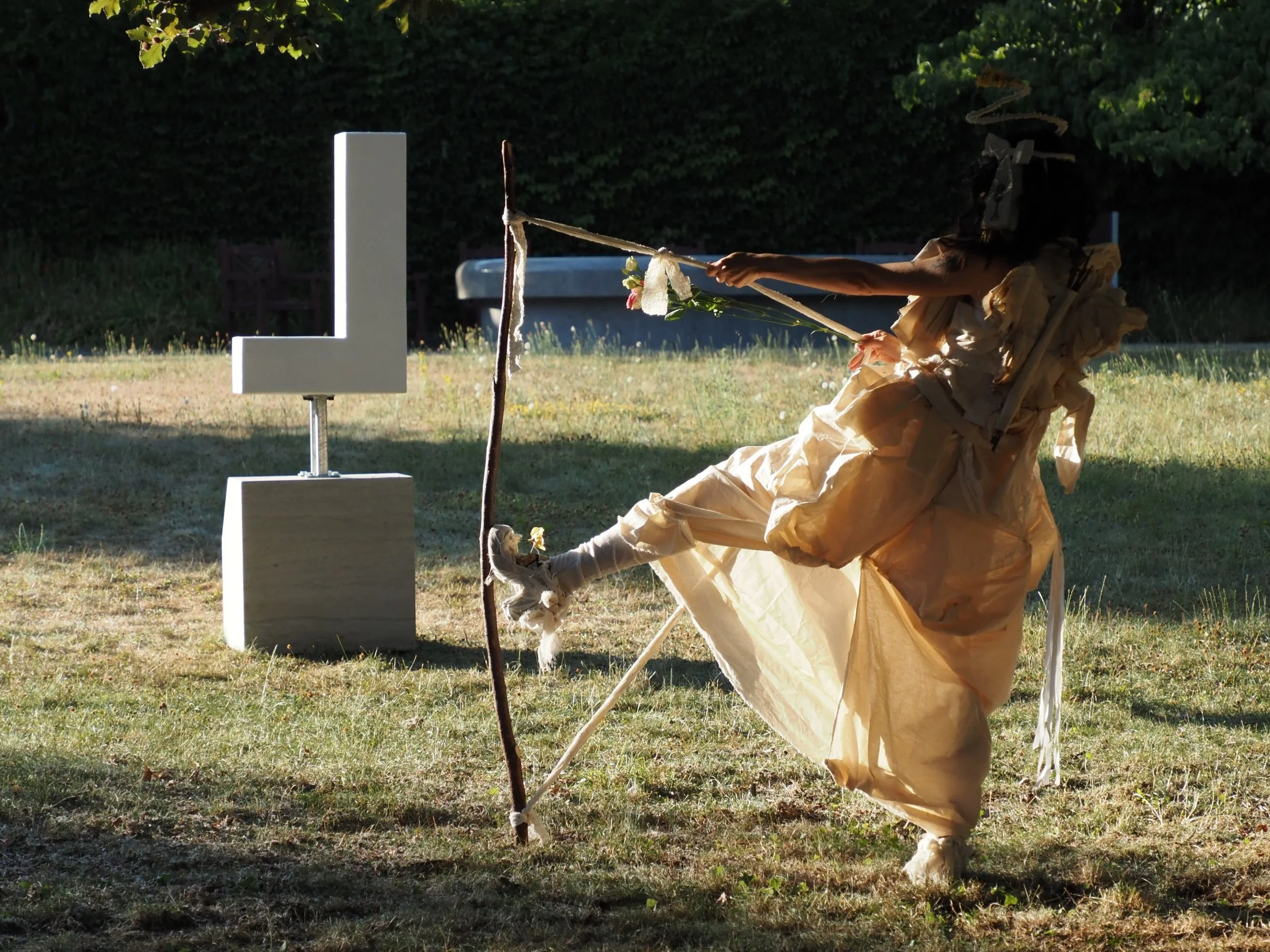
In He Sun’s Conduit, presented at the Centre National de Littérature in Mersch as part of Mudam Luxembourg’s Dodeka, 12 works for 12 cantons, the gesture is at once ephemeral and monumental. A bow fashioned from a branch is drawn and released, yet it is a flower that travels through the air. It falls towards the ground, towards the sky, disappears into the distance and sometimes returns towards the audience as if giving something back to the viewer’s gaze. The performance crystallises a particular form of intimacy, allowing everyone to be alone and simultaneously together.
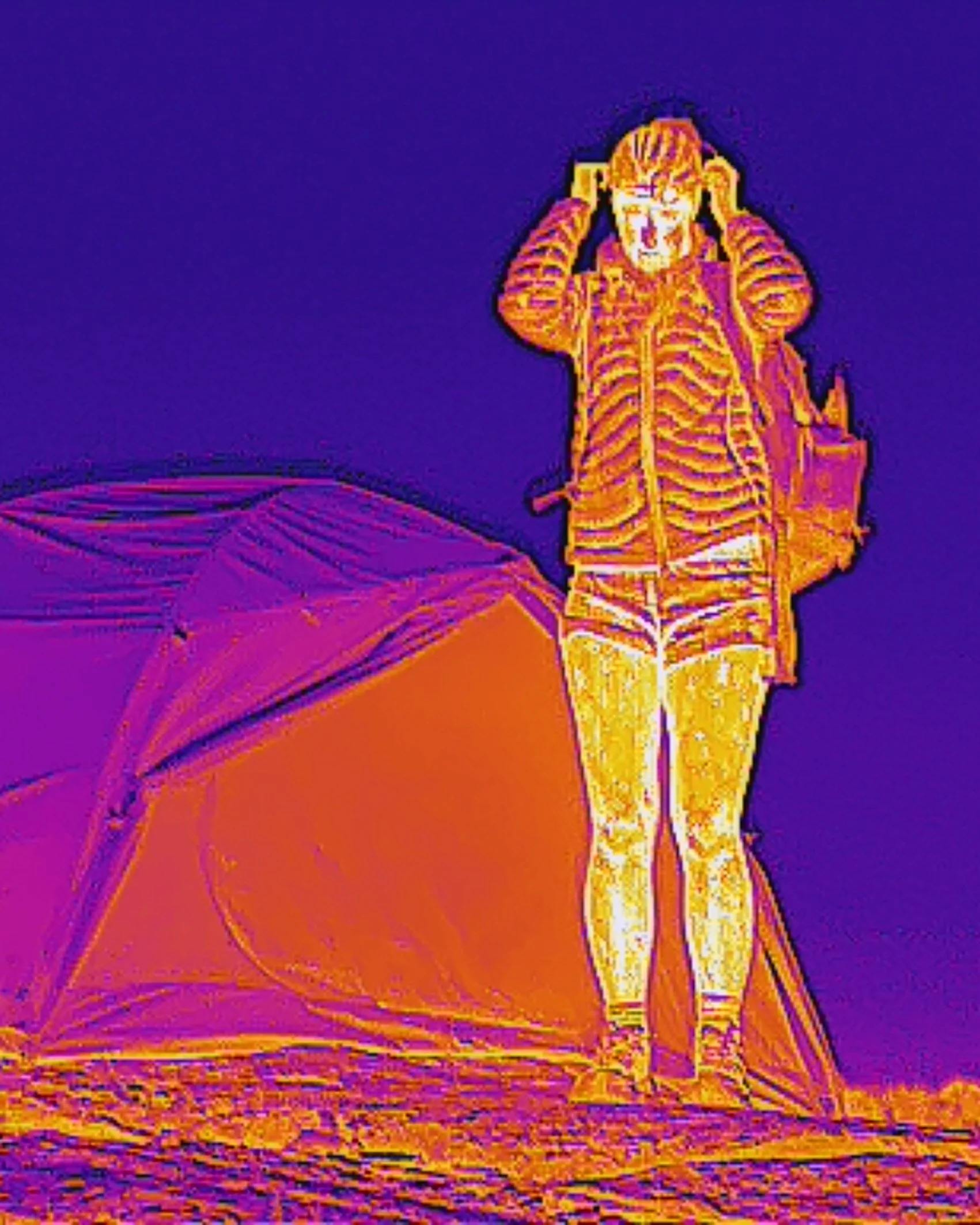
Temperature has become a design material. Thermal cameras taught us to read a room or a street as a map of warm and cold zones, and architects now draw with those maps. Philippe Rahm has spent two decades arguing that climate should shape a building before form does, with convection and radiation as the real tools of the trade. His Jade Eco Park in Taichung lets visitors walk through zones engineered to feel cooler and drier than the city around them, and his Natural History of Architecture rereads the whole discipline as a long answer to heat and cold. In cities that grow hotter every summer, the thermal reading of the places we live in has become a daily concern.
Whilst looking at Conduit, I kept thinking of Ursula K. Le Guin’s The Carrier Bag Theory of Fiction. Le Guin imagines the container, rather than the weapon, as primordial technology, re-writing a patriarchal history founded on the violence of conquest through the acts of reunion and storytelling. The carrier bag — a container for seeds, food, children, medicines and stories — offers another way of thinking about being together, emphasising the collective act of learning. Conduit is built precisely around these small acts of carrying. The flower becomes a vessel, a form of transmission devoid of any pre-determined message. In these rituals of temporary belonging, the wilderness of the garden never becomes separate from the self, nor from the others present. In the end, flowers cover Sun’s face. The body slowly disappears into the landscape. On the threshold between ambivalence and wonder, the question remains open and shifts to another medium. This continuum is precisely where the museum can be reimagined through Le Guin’s metaphor as if to ask: what happens to a museum when its works leave the museum?
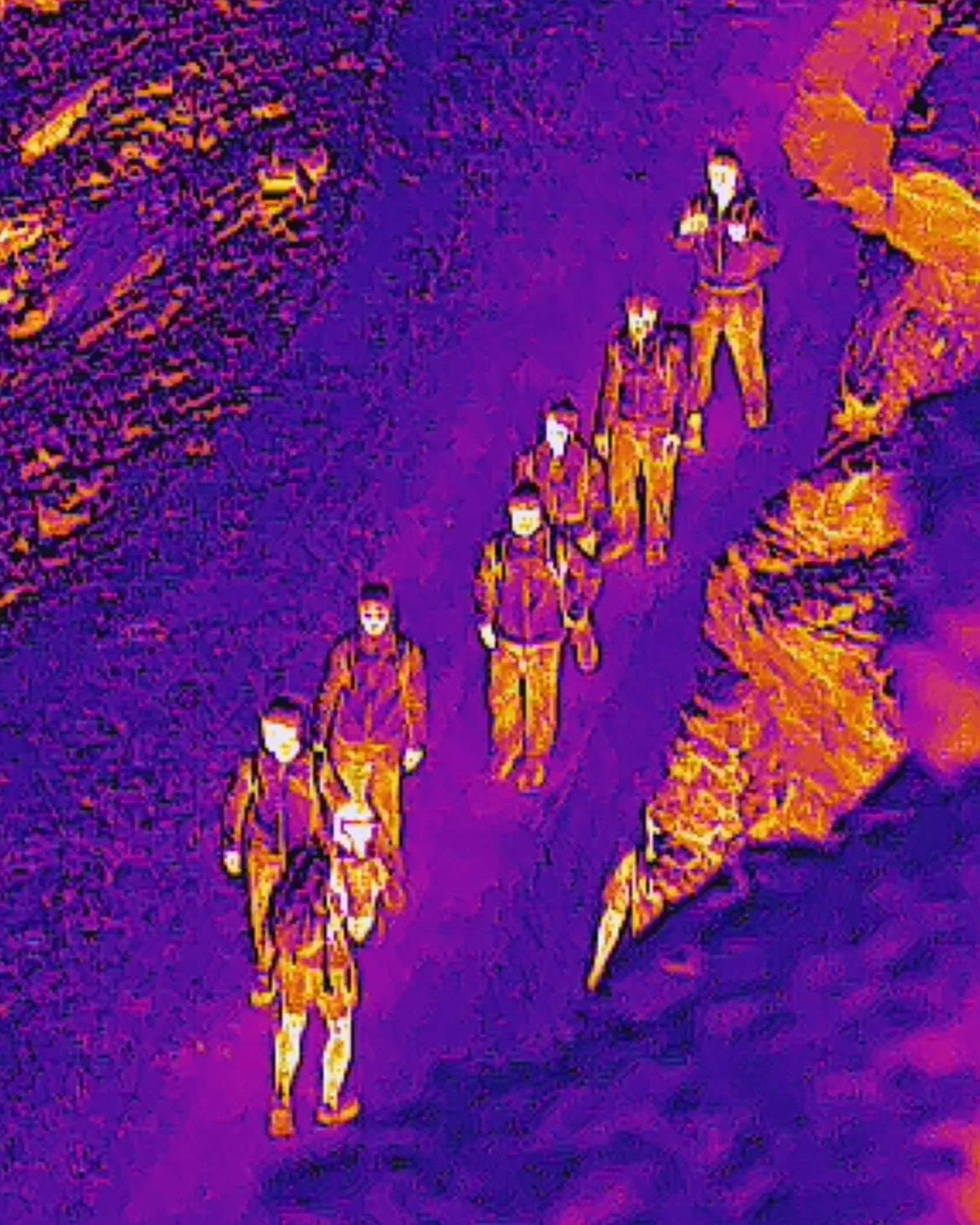
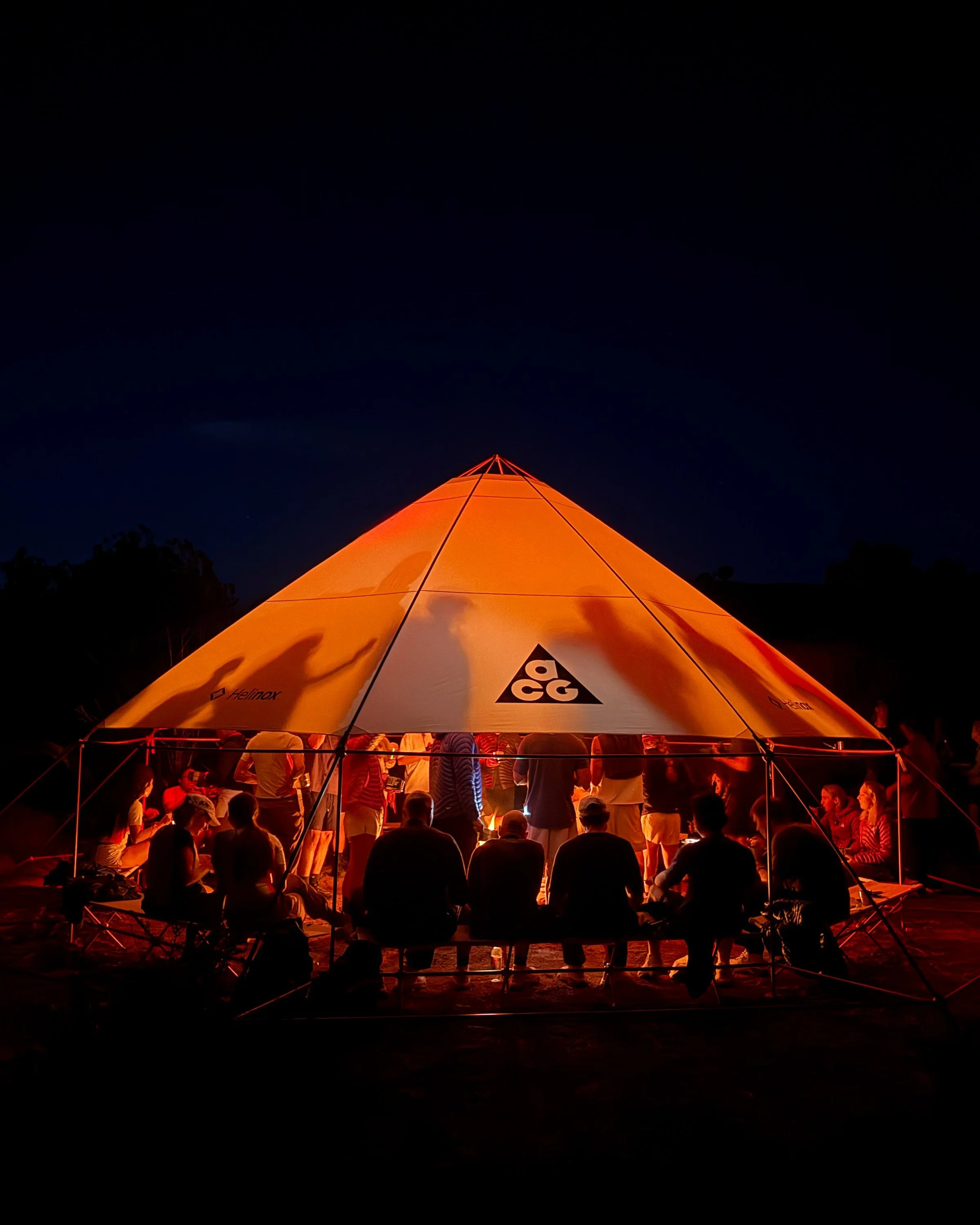
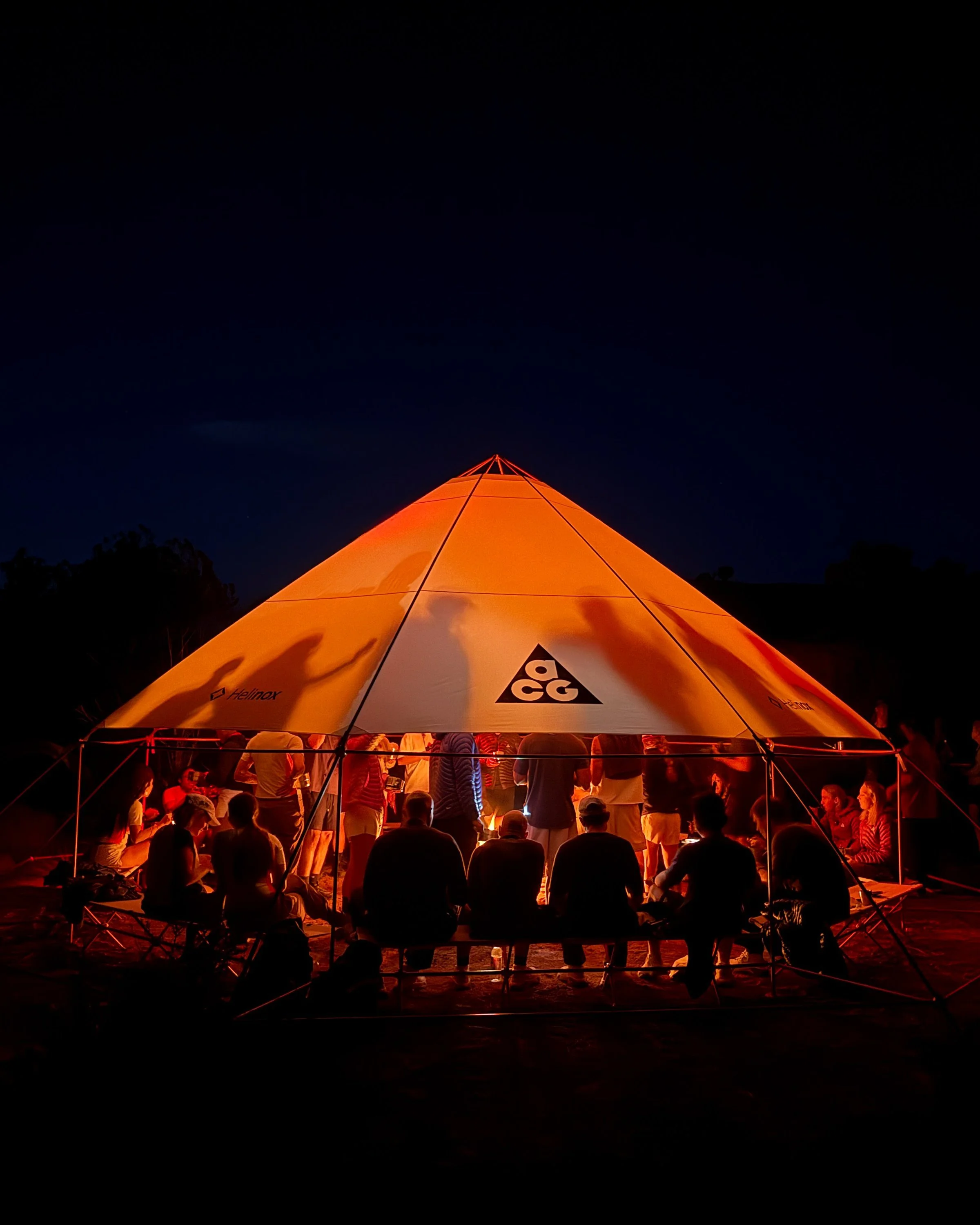
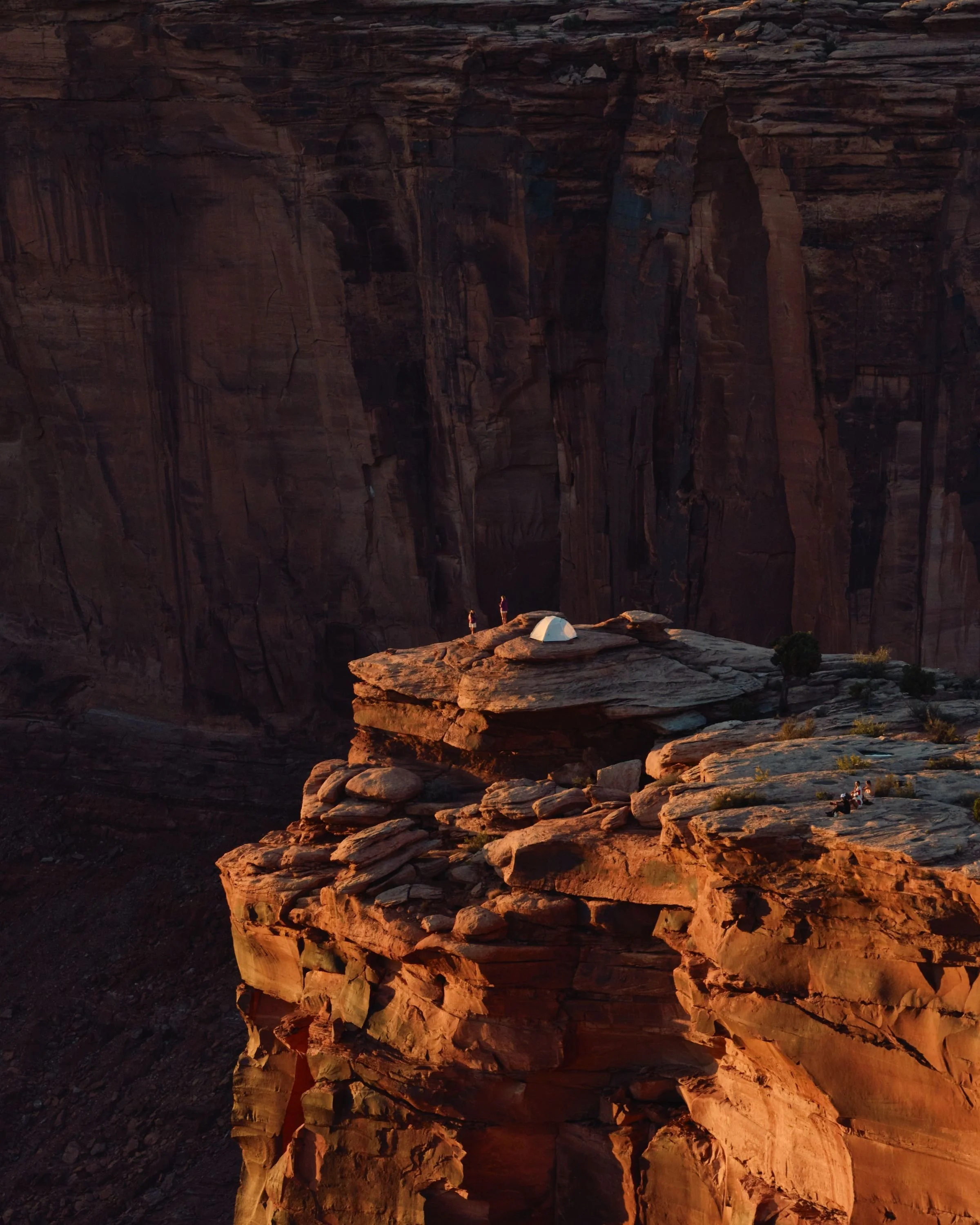
Nike ACG has taken the same reading outdoors, to Moab, Utah, a place that runs hot and cold within the same day. The sun cooks the slickrock through the afternoon, then the heat escapes into a clear desert sky and the temperature falls fast. Nike ACG chose this ground for the first of its Research Missions, a format that pulls one piece of gear out of the lab and hands it to people happier sleeping on rock than reading a spec sheet. The first edition was called The Big Drop.
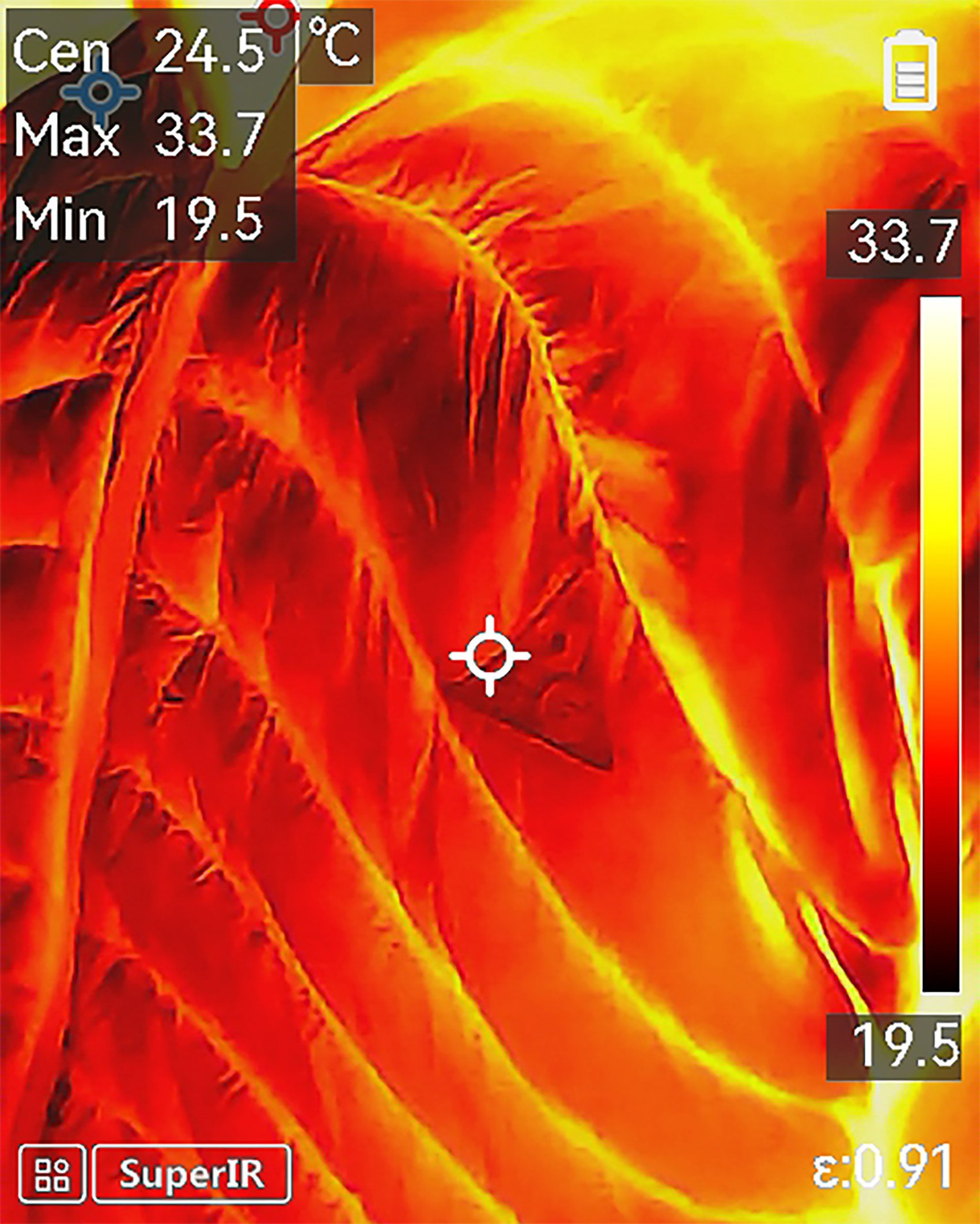
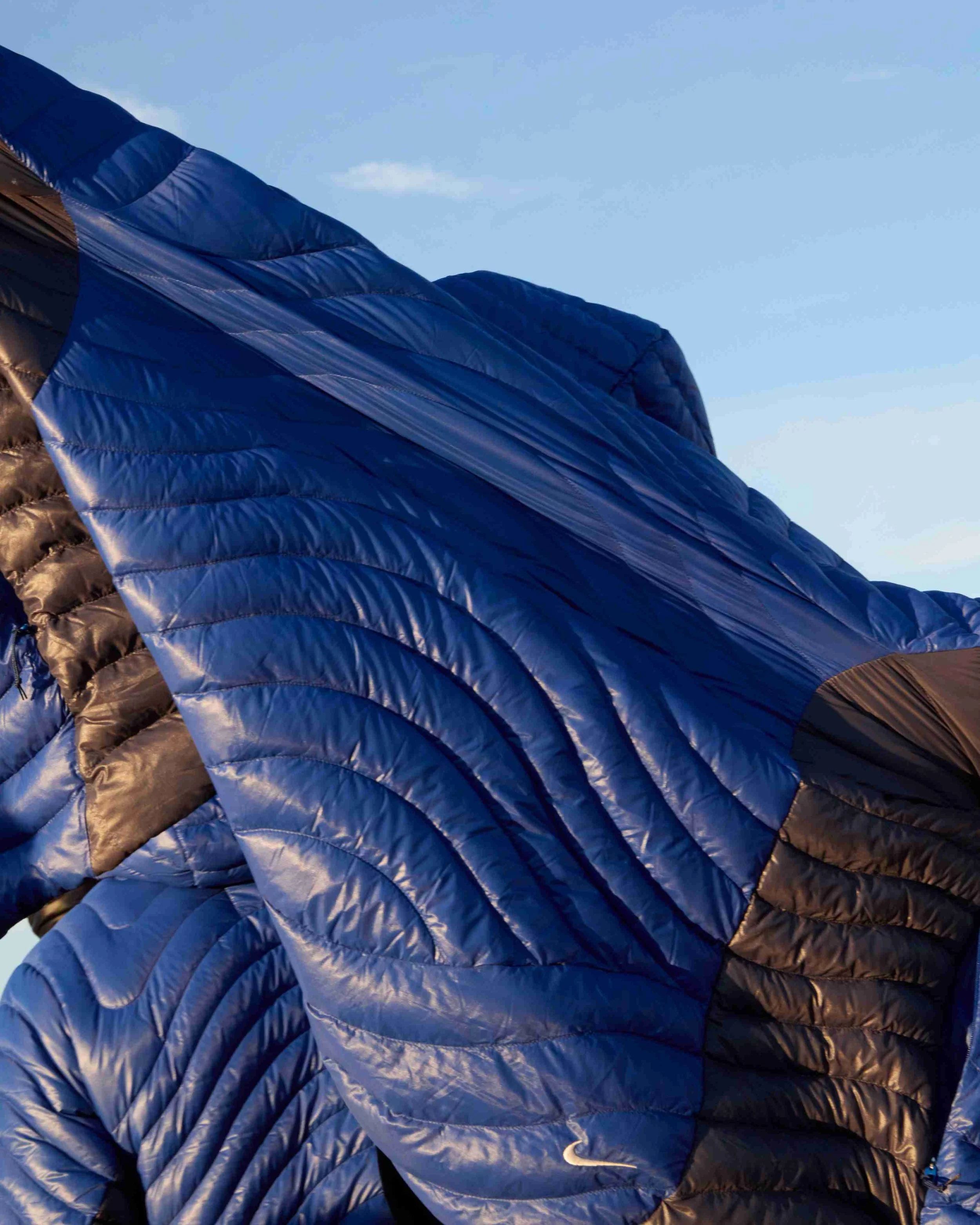
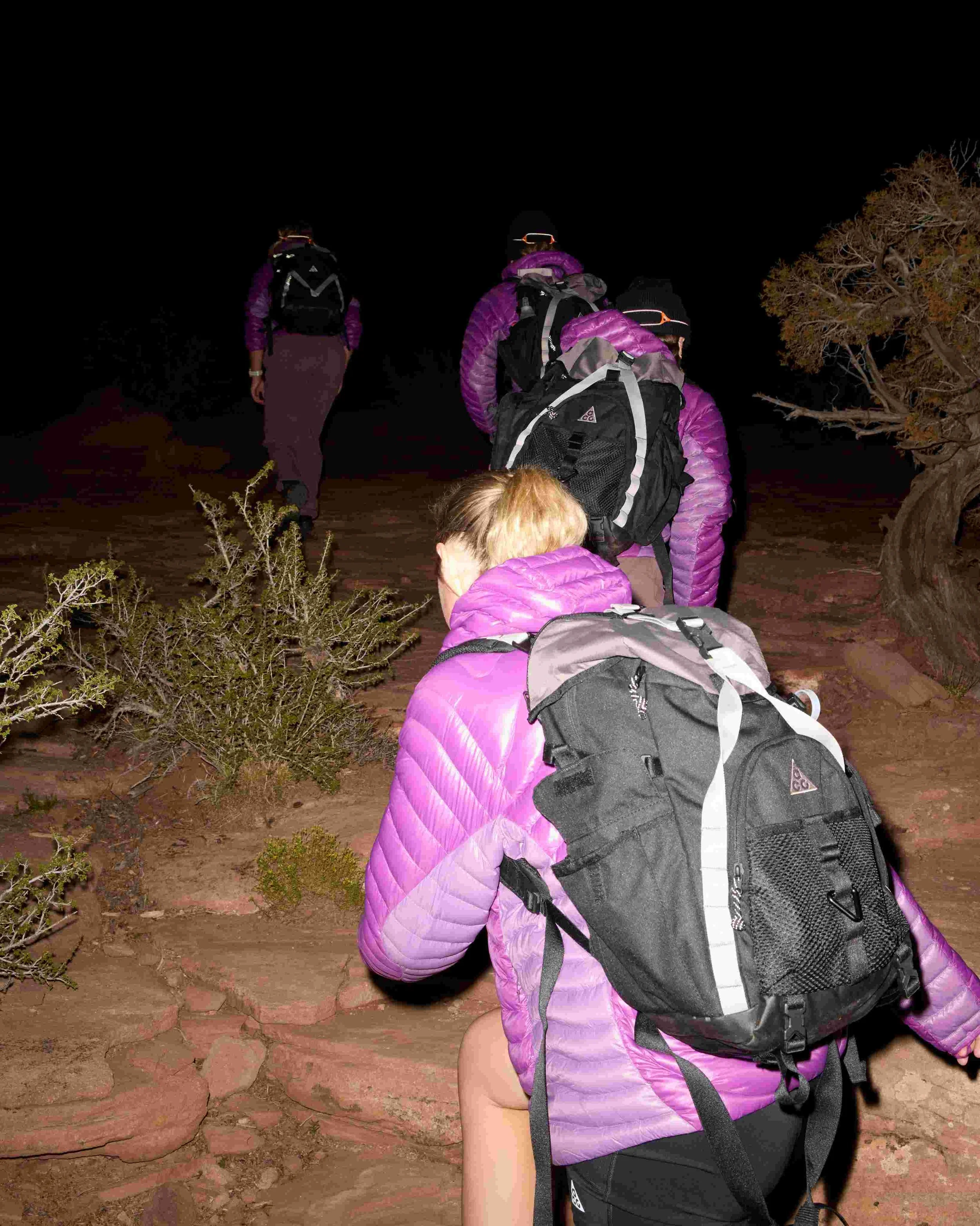
The gear in question is the ACG Lava Flow Ultralight, a down layer that weighs under 280 grams and folds into its own pocket, ending up smaller than a one-litre water bottle. Each of the 35 participants received one, along with a headlamp and a temperature log. The brief was simple: within 48 hours, record your highest high and your lowest low.
The encounter between Jessica Diamond and PJ Horny at hqLX takes this question in another direction. Jessica Diamond’s I Hate Business (1989) dates from a moment when the relationship between art and the market could still be framed as an explicit conflict. Conceived as a site-responsive intervention, the words “I Hate Business” were painted directly onto a wall, their scale and execution responding to the architecture of the space. The work’s criticism echoes within the exhibition space, using the blunt language of graffiti to bring those contradictions into the institution itself.
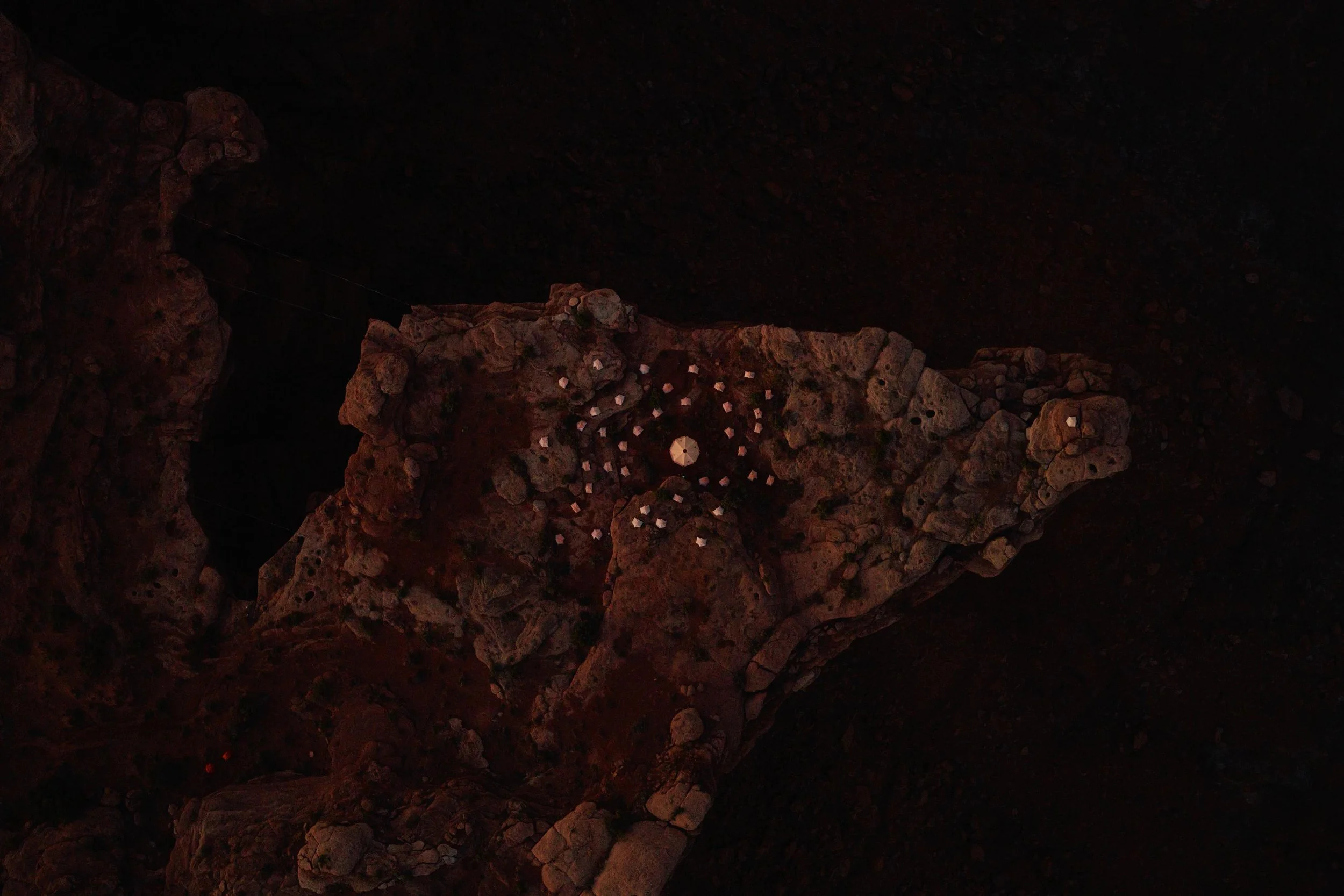
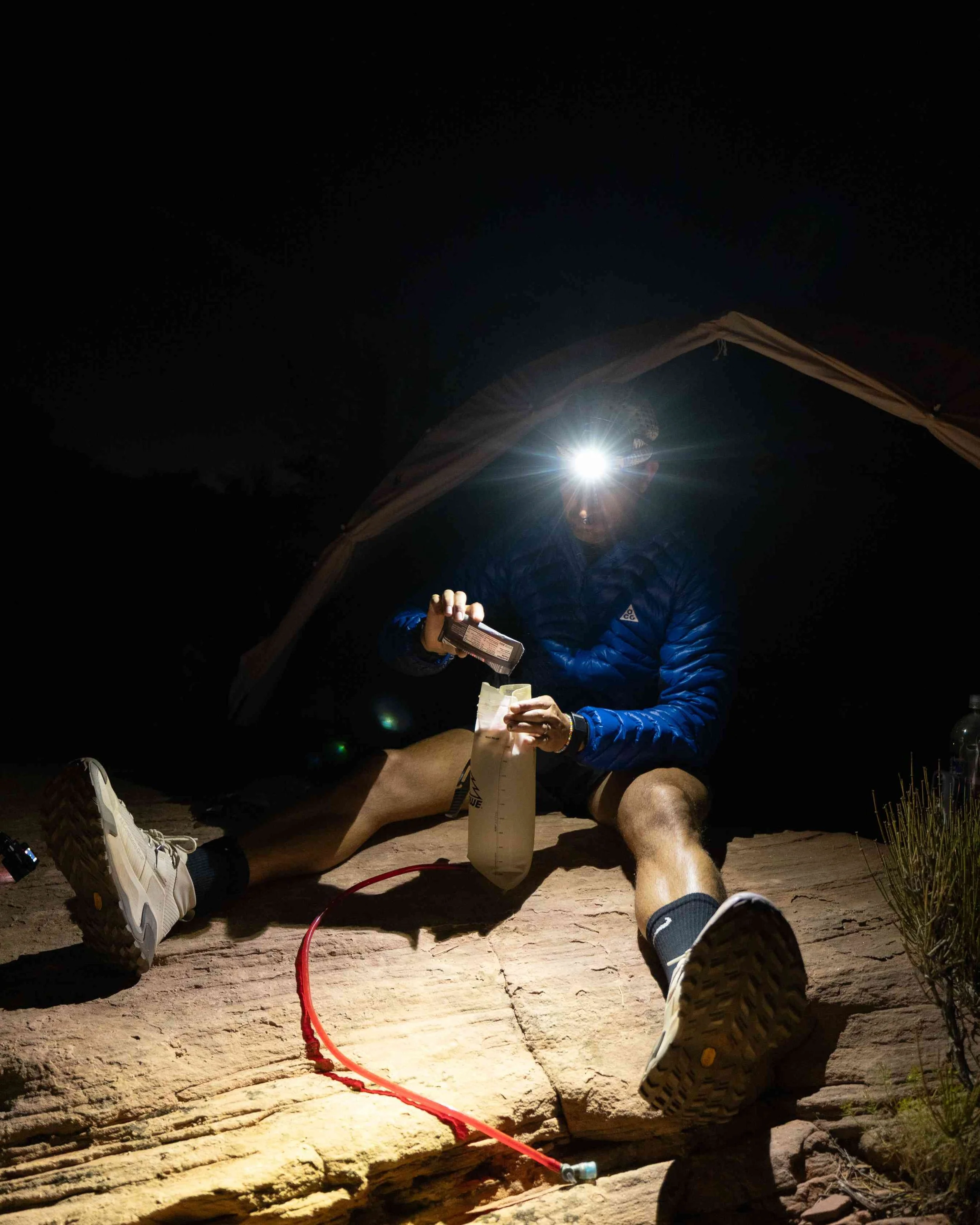
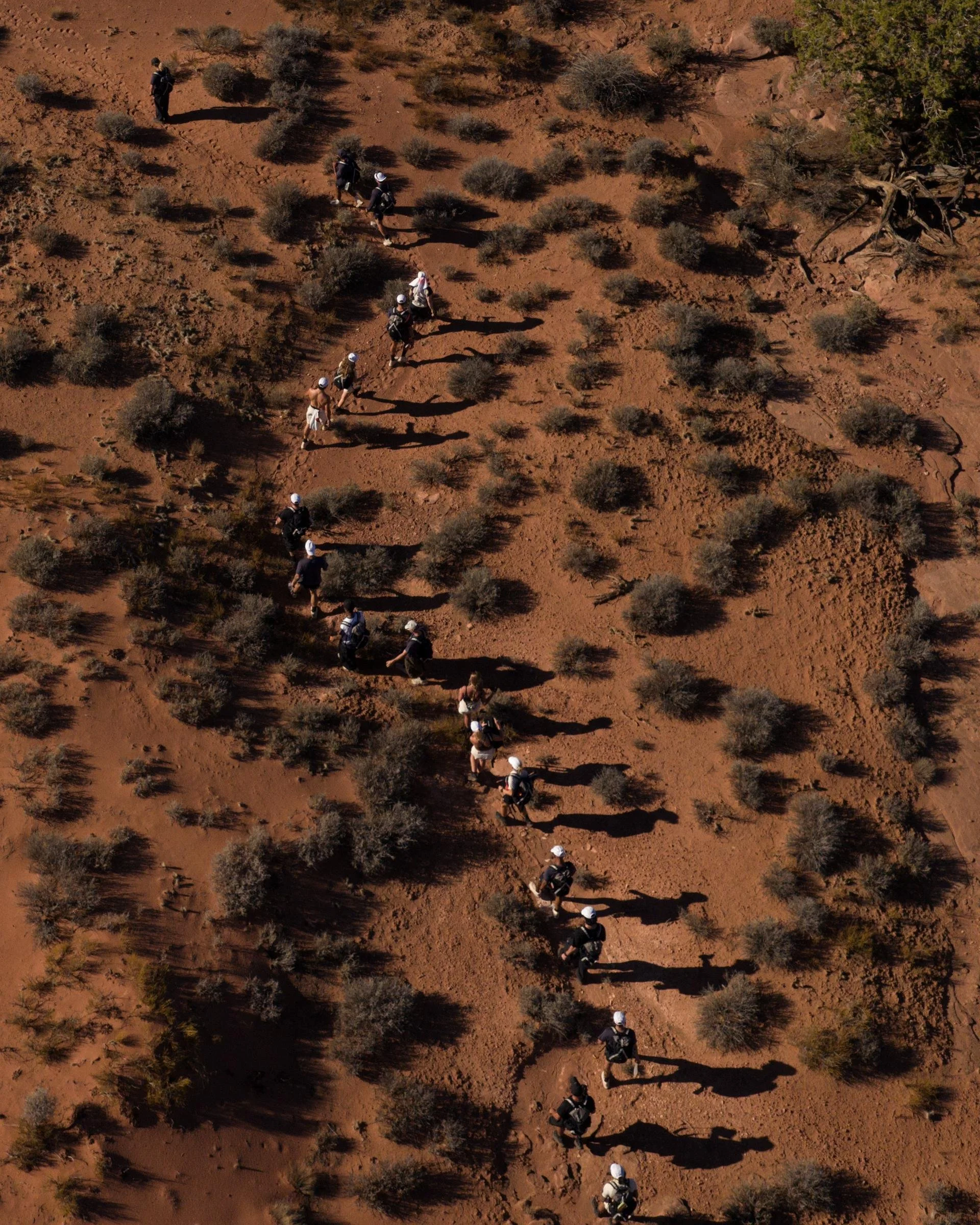
By day the crew crossed exposed slickrock and dropped into canyons, hunting for pockets of trapped heat. The highest surface reading reached 107°F, close to 42°C, and the jacket stayed packed. After sunset the search reversed. Headlamps on, the group walked into the night and made an open-air camp under the stars, where the desert hit its low in the early morning hours: 37°F, around 3°C. Jackets on. A swing of 70 degrees Fahrenheit across one stretch of desert.
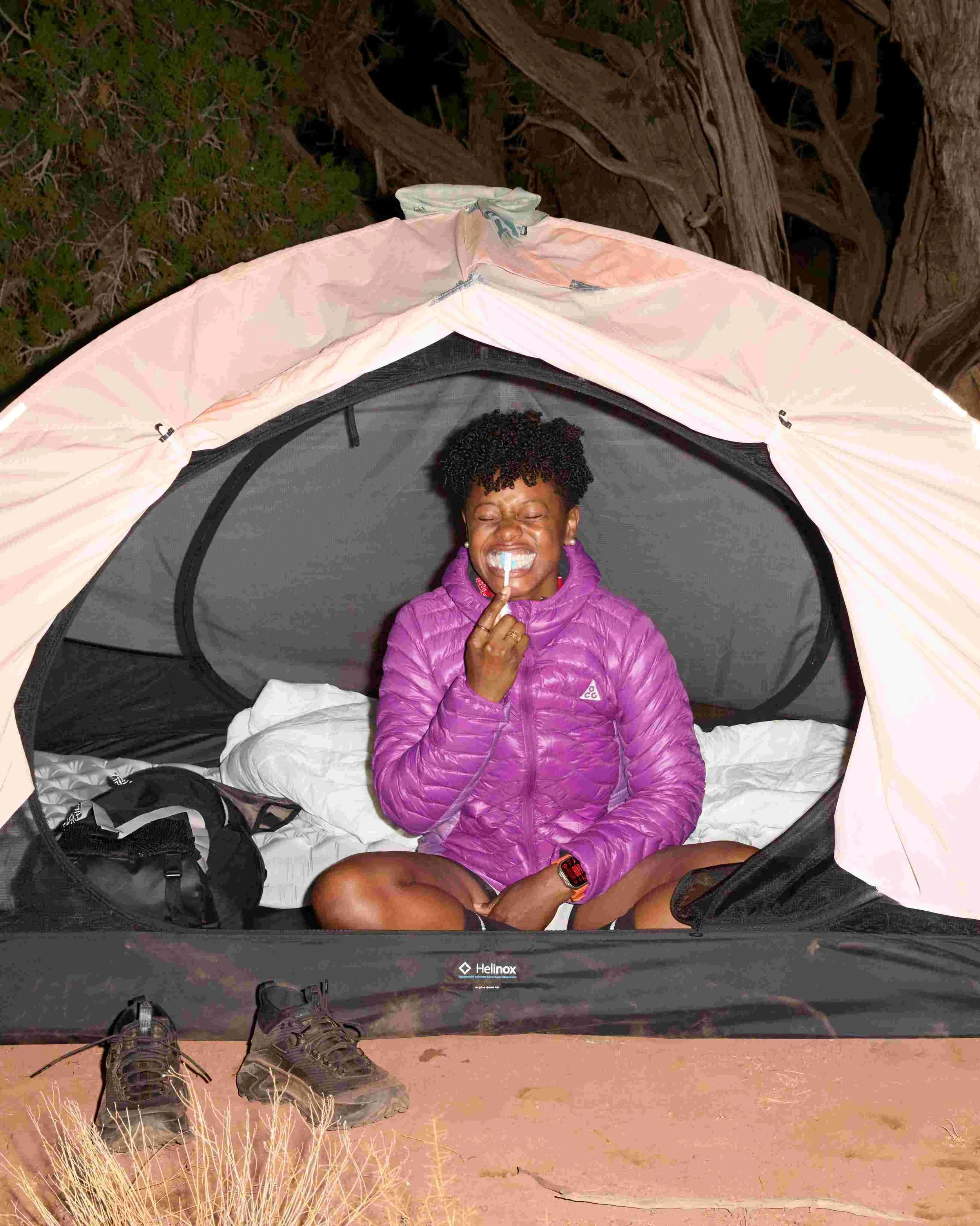
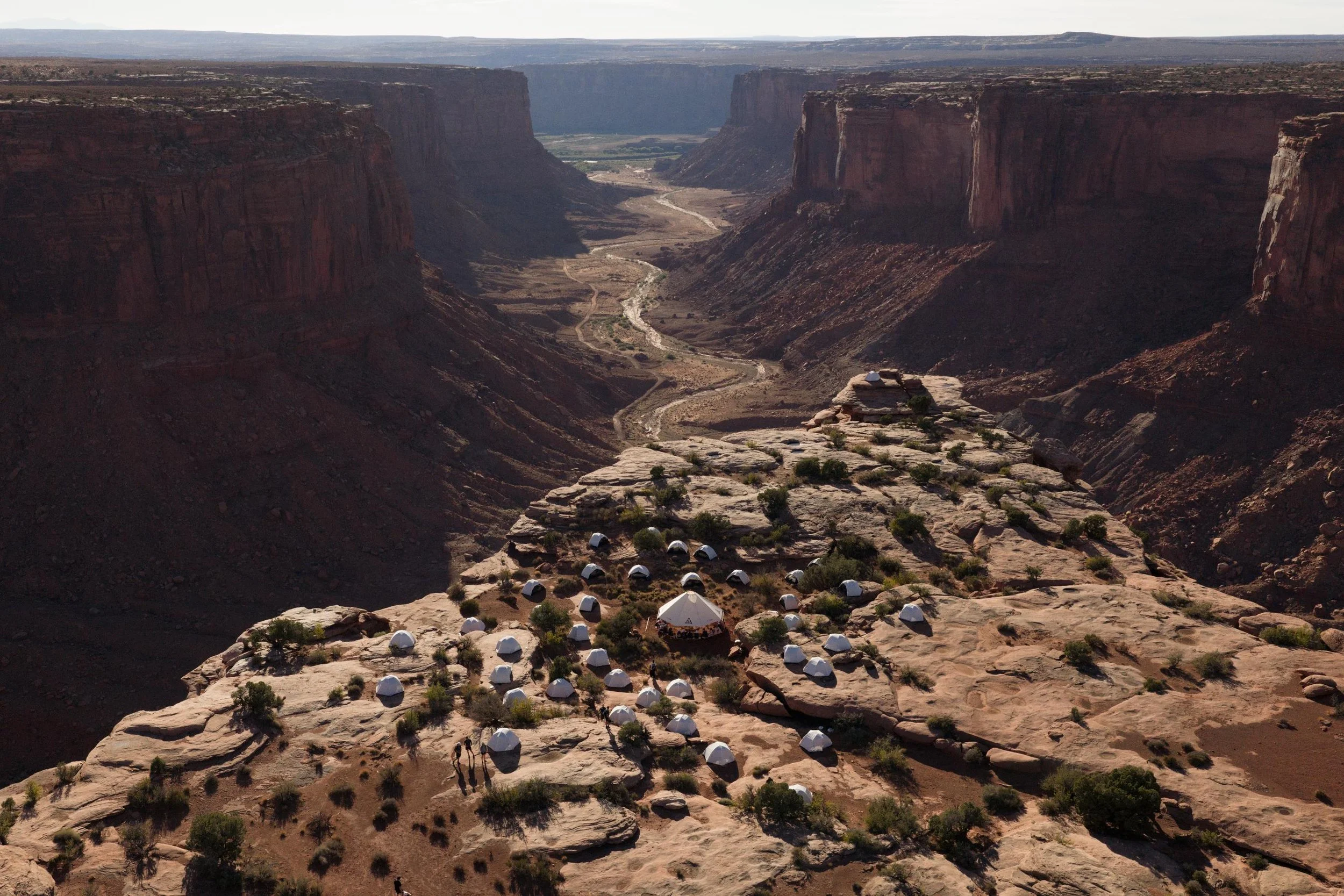
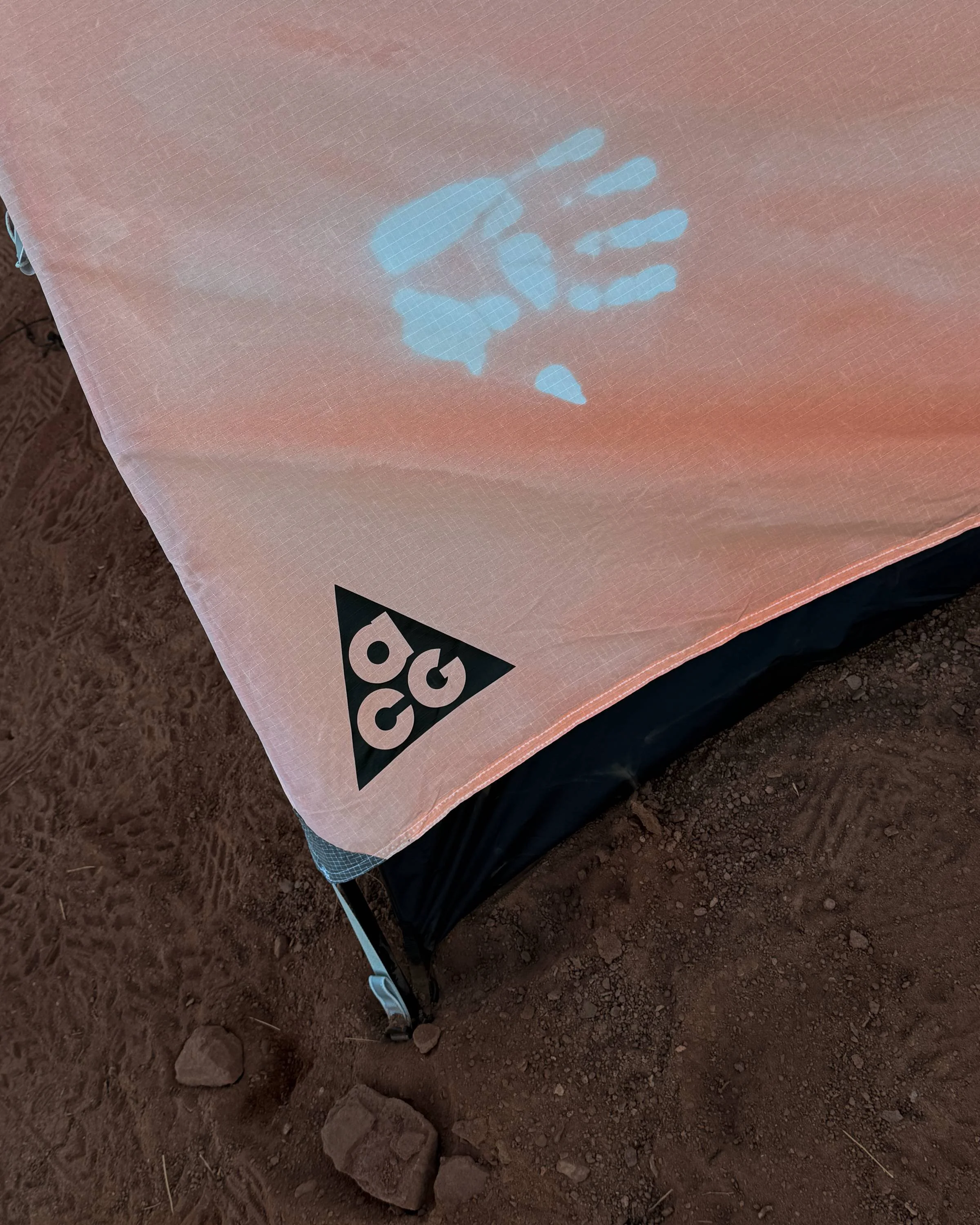
Base for all of it was the Research Station, a camp built on a mesa above the Green River. ACG wrapped it in a thermochromic skin that reads white in the heat and turns orange as the cold arrives, so the whole structure worked as a giant thermometer. It is the most Rahm-like gesture of the project: a building that shows its climate on its own surface. Missions started there, findings were compared there, and it doubled as a classroom. The teachers were Moab's Landkeepers, locals who have spent years walking these canyons and know them far beyond the lines of a map.
Every jacket left Moab marked with its owner's two numbers, a field record kept on the object that went through it.
The Lava Flow Ultralight is the lead piece of ACG's Holiday 2026 apparel collection and holds the best warmth-to-weight ratio the line has produced. Its chambers are filled with 1000 fill power ExpeDRY Gold: goose down bonded with recycled gold recovered from electronic waste, a treatment that keeps the down from clumping when sweat or humidity get in. Therma-FIT ADV and a water-repellent shell do the rest. A men's medium weighs 255 grams, a women's small 217.
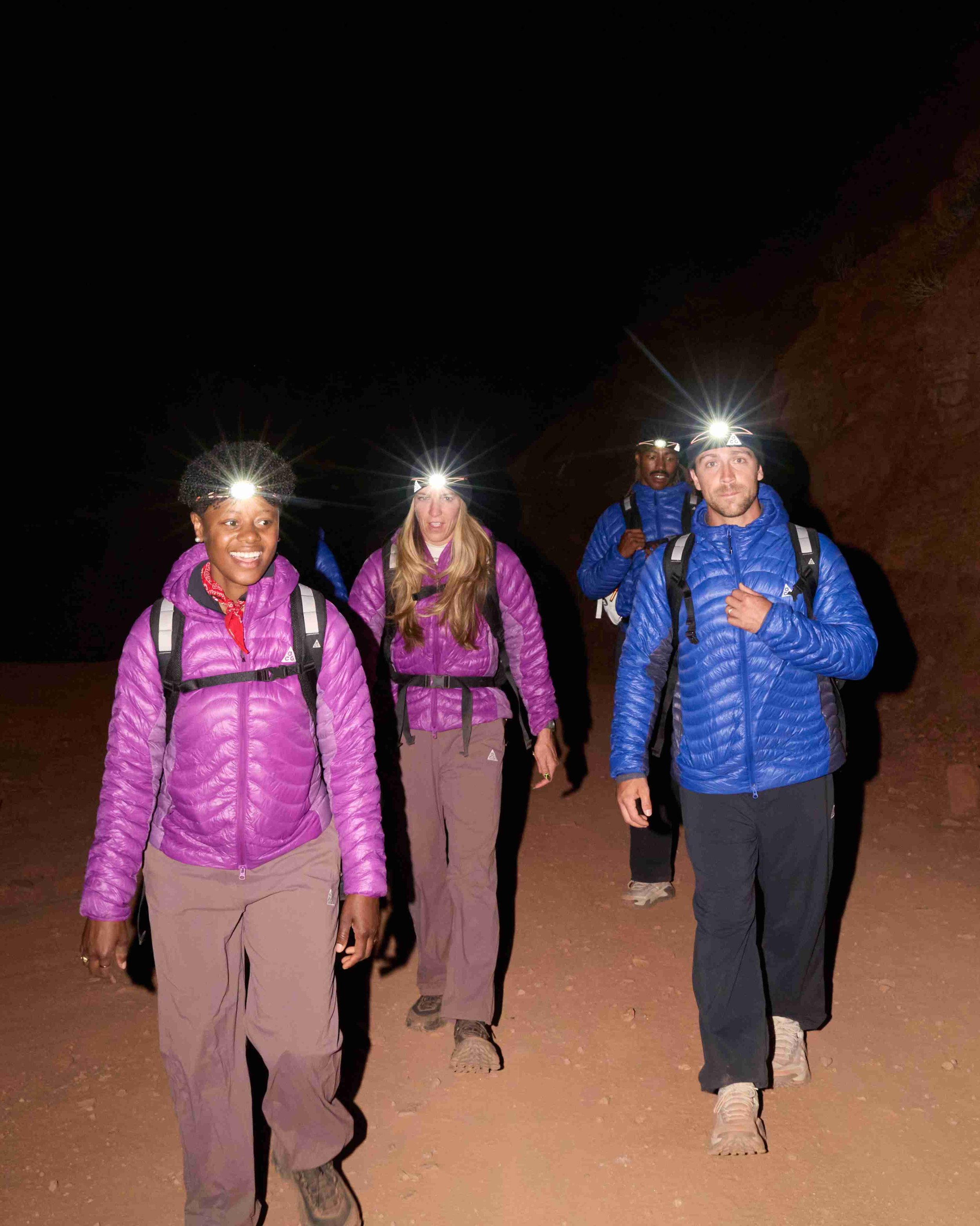
The wider collection grew out of time the ACG team spent in the mountains of Yunnan, China, around the village of Yubeng, in rain, snow, ice and high-altitude terrain. Its palette takes cues from granite, limestone and alpine skies, lit up by ACG's Safety Orange and a bright purple. Alongside the Lava Flow come the updated Misery Ridge GORE-TEX jacket and a new pair of matching pants, a three-layer shell system made for the wettest days.
ACG's logic is that gear tells the truth at the edges. Moab offered two of them in a single day.
Images courtesy of ACG
Words by Donald Gjoka
What to read next