The Museum Elsewhere
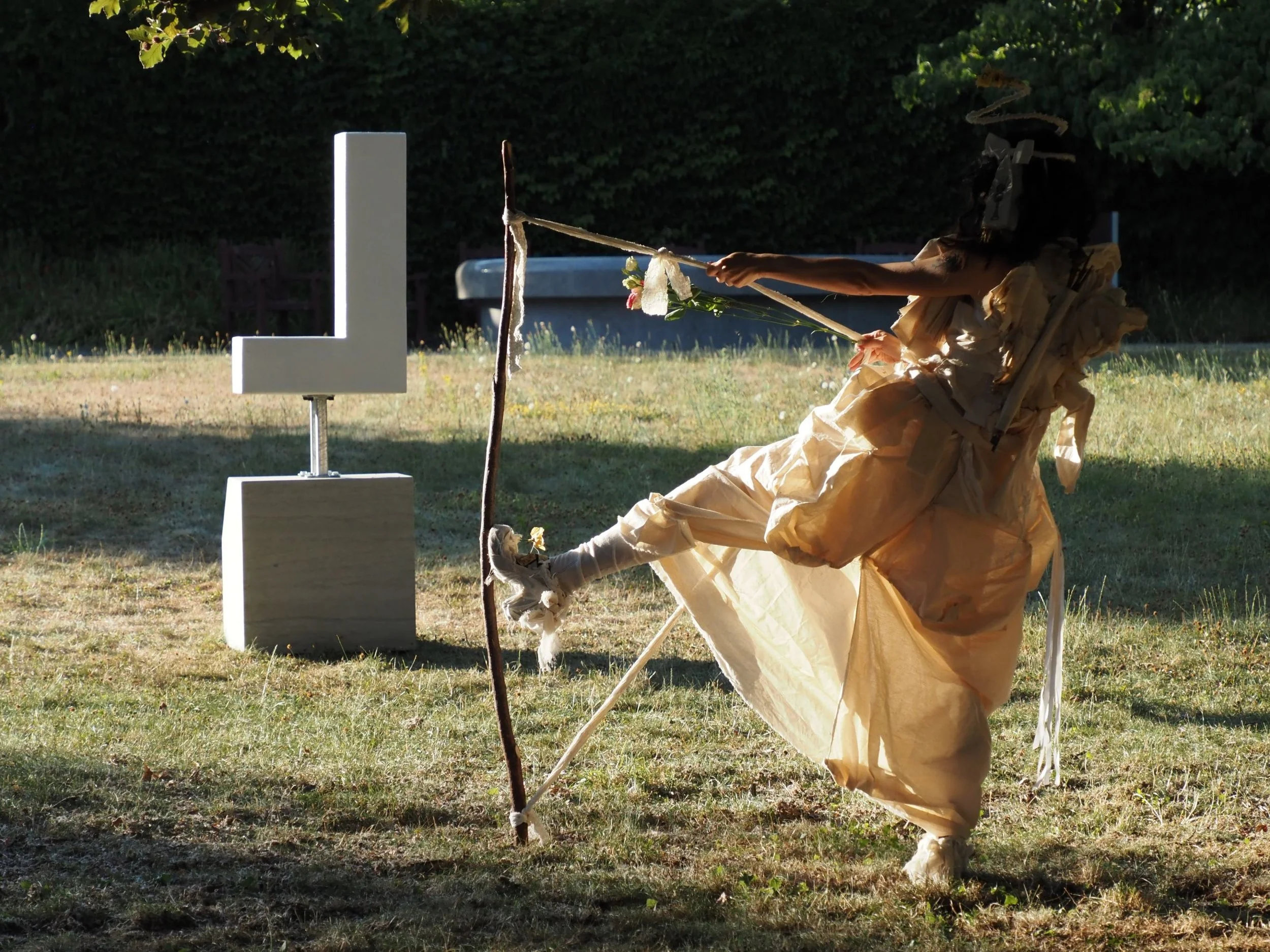
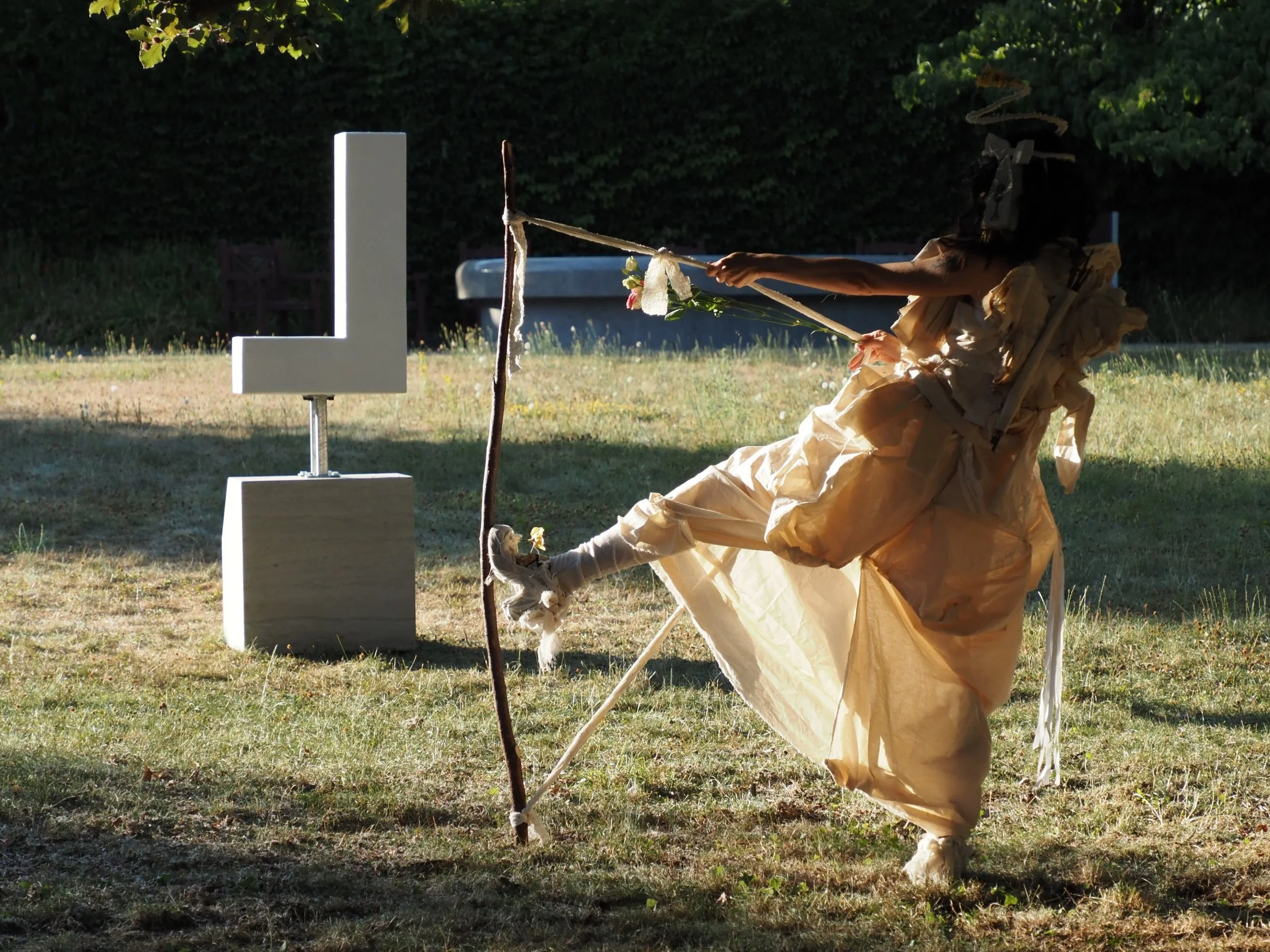
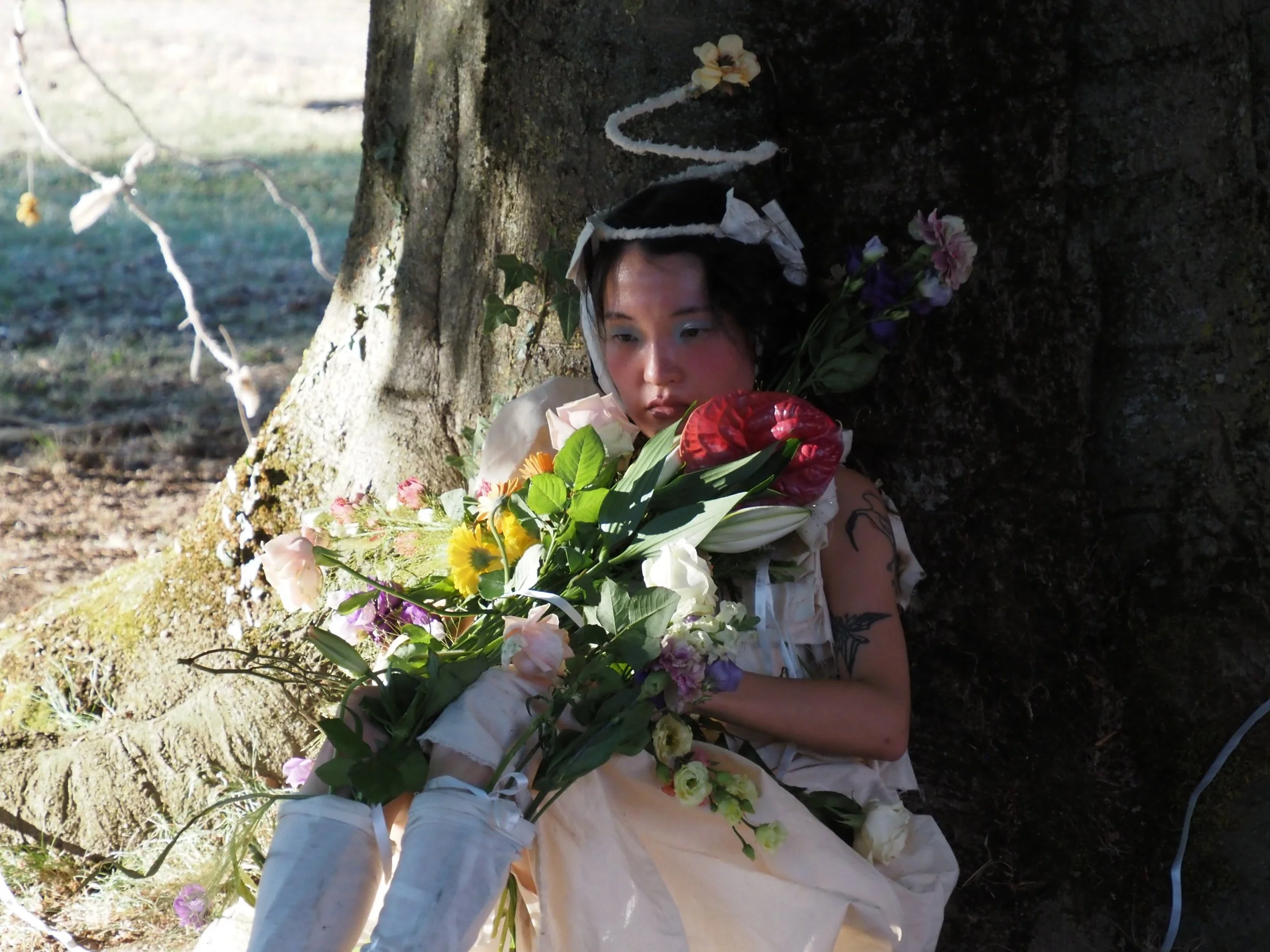
He Sun, Conduit, Photo: Pascal Seil, CNL
In He Sun’s Conduit, presented at the Centre National de Littérature in Mersch as part of Mudam Luxembourg’s Dodeka, 12 works for 12 cantons, the gesture is at once ephemeral and monumental. A bow fashioned from a branch is drawn and released, yet it is a flower that travels through the air. It falls towards the ground, towards the sky, disappears into the distance and sometimes returns towards the audience as if giving something back to the viewer’s gaze. The performance crystallises a particular form of intimacy, allowing everyone to be alone and simultaneously together.
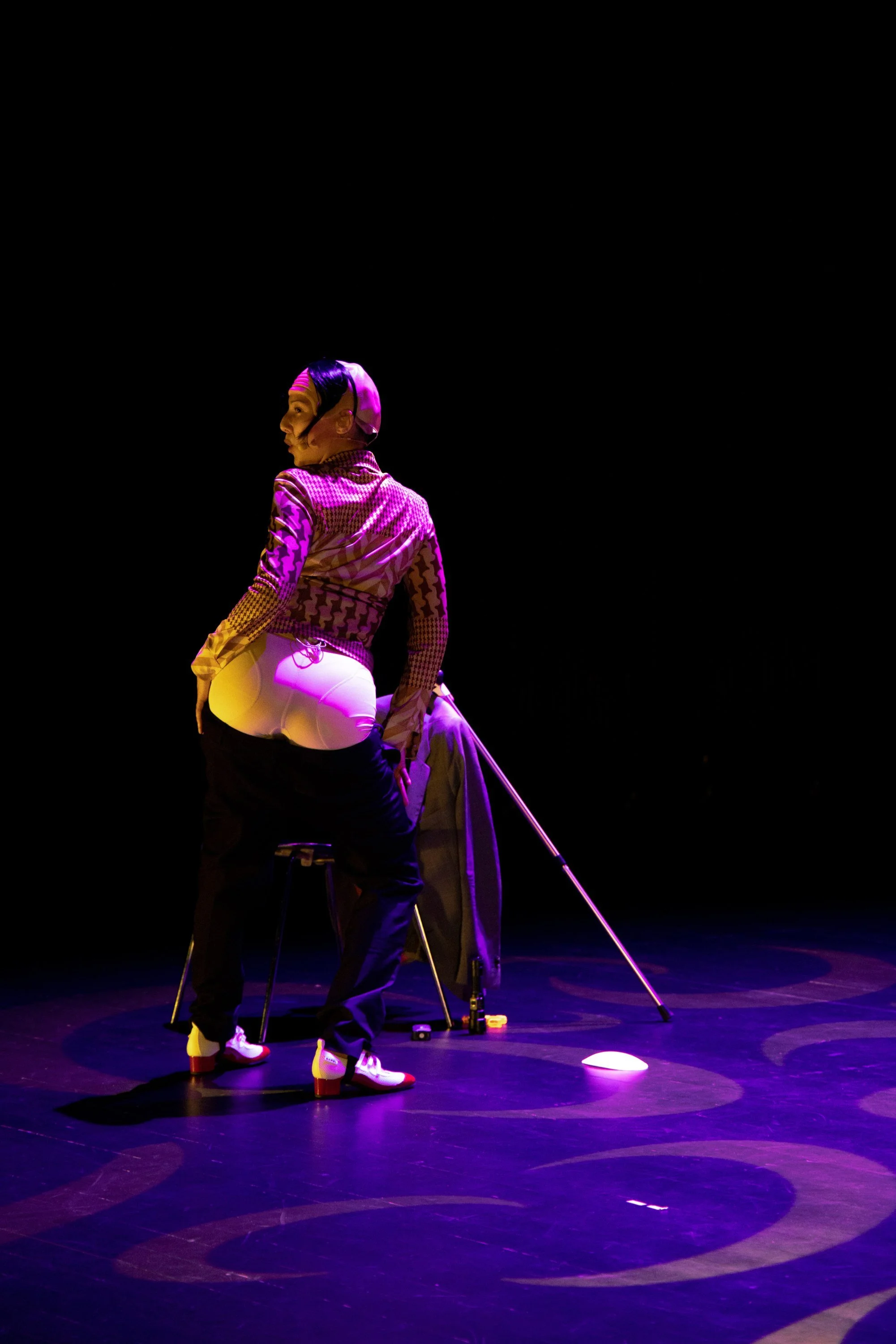
PJ Horny, Personnage Principale Photo: Binta Kopp
Unfolding through movement, primordial times and yet-to-come futures overlap with the realm of subjectivity. A question shifts from the scale of civilisation to personal memory and oblivion. In proximity to Etel Adnan’s Untitled, a small leporello from 1965 in which words and watercolour unfold across a continuous surface, Conduit extends the ways in which poetry is carried within the body. He Sun, a performer and poet who also collaborates with Young Boy Dancing Group, creates objects from ephemeral materials: from the garments she wears to a mirror made of flowers, branches and candles. In the glimpses of reflection, as the audience and the artist are mirrored back to one another, these materials acquire an almost magical connotation.
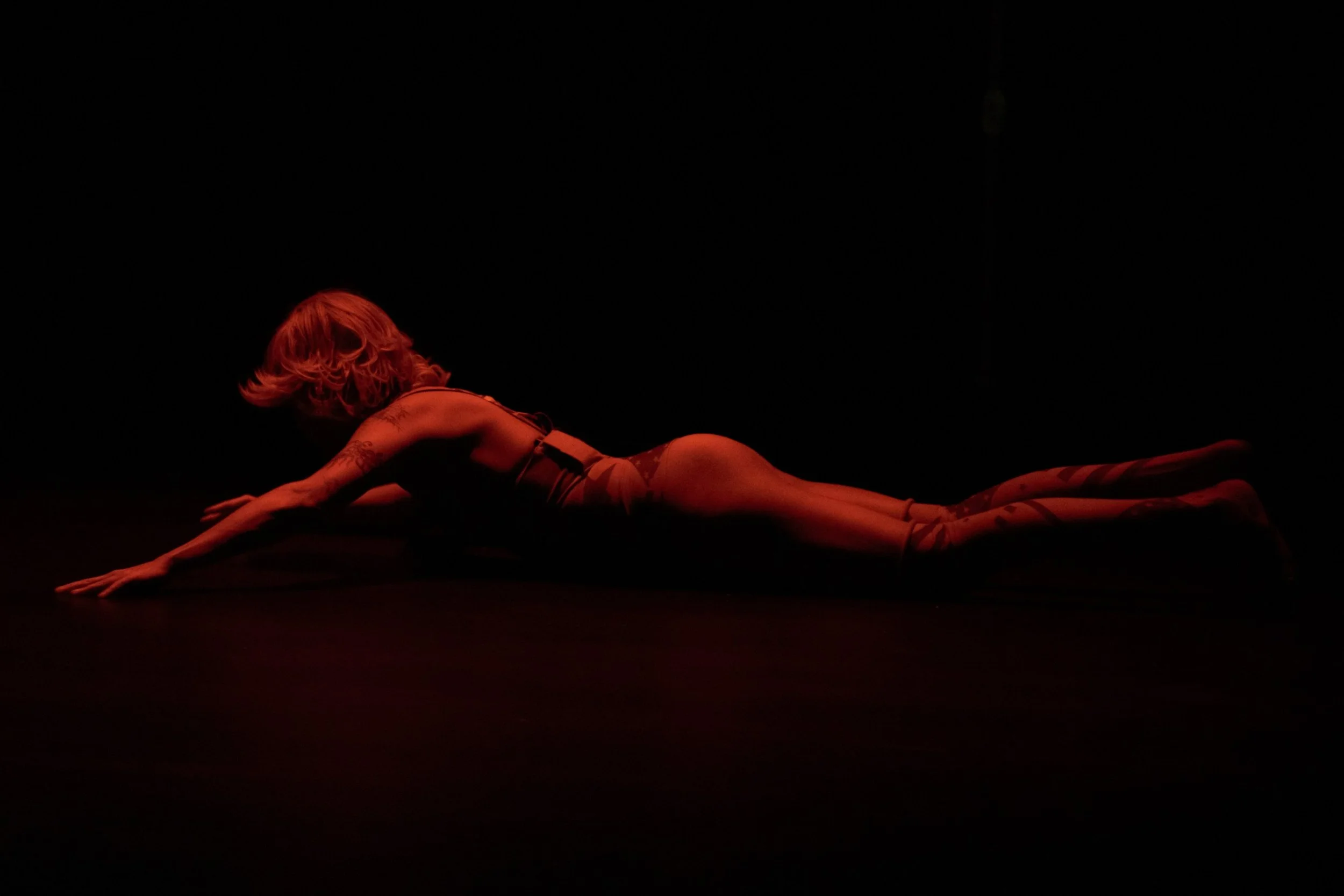
PJ Horny, Personnage Principale Photo: Binta Kopp
Whilst looking at Conduit, I kept thinking of Ursula K. Le Guin’s The Carrier Bag Theory of Fiction. Le Guin imagines the container, rather than the weapon, as primordial technology, re-writing a patriarchal history founded on the violence of conquest through the acts of reunion and storytelling. The carrier bag — a container for seeds, food, children, medicines and stories — offers another way of thinking about being together, emphasising the collective act of learning. Conduit is built precisely around these small acts of carrying. The flower becomes a vessel, a form of transmission devoid of any pre-determined message. In these rituals of temporary belonging, the wilderness of the garden never becomes separate from the self, nor from the others present. In the end, flowers cover Sun’s face. The body slowly disappears into the landscape. On the threshold between ambivalence and wonder, the question remains open and shifts to another medium. This continuum is precisely where the museum can be reimagined through Le Guin’s metaphor as if to ask: what happens to a museum when its works leave the museum?
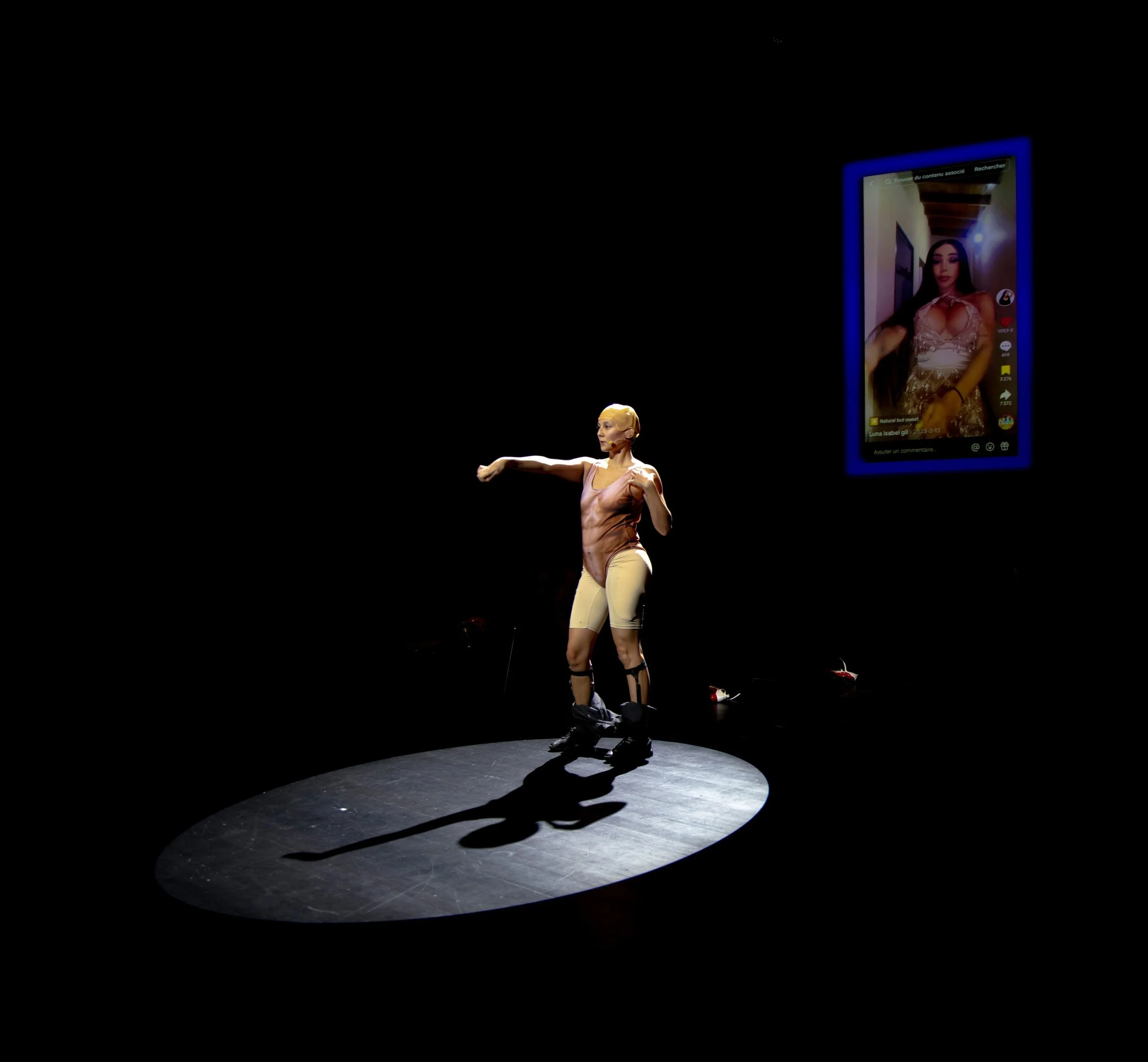
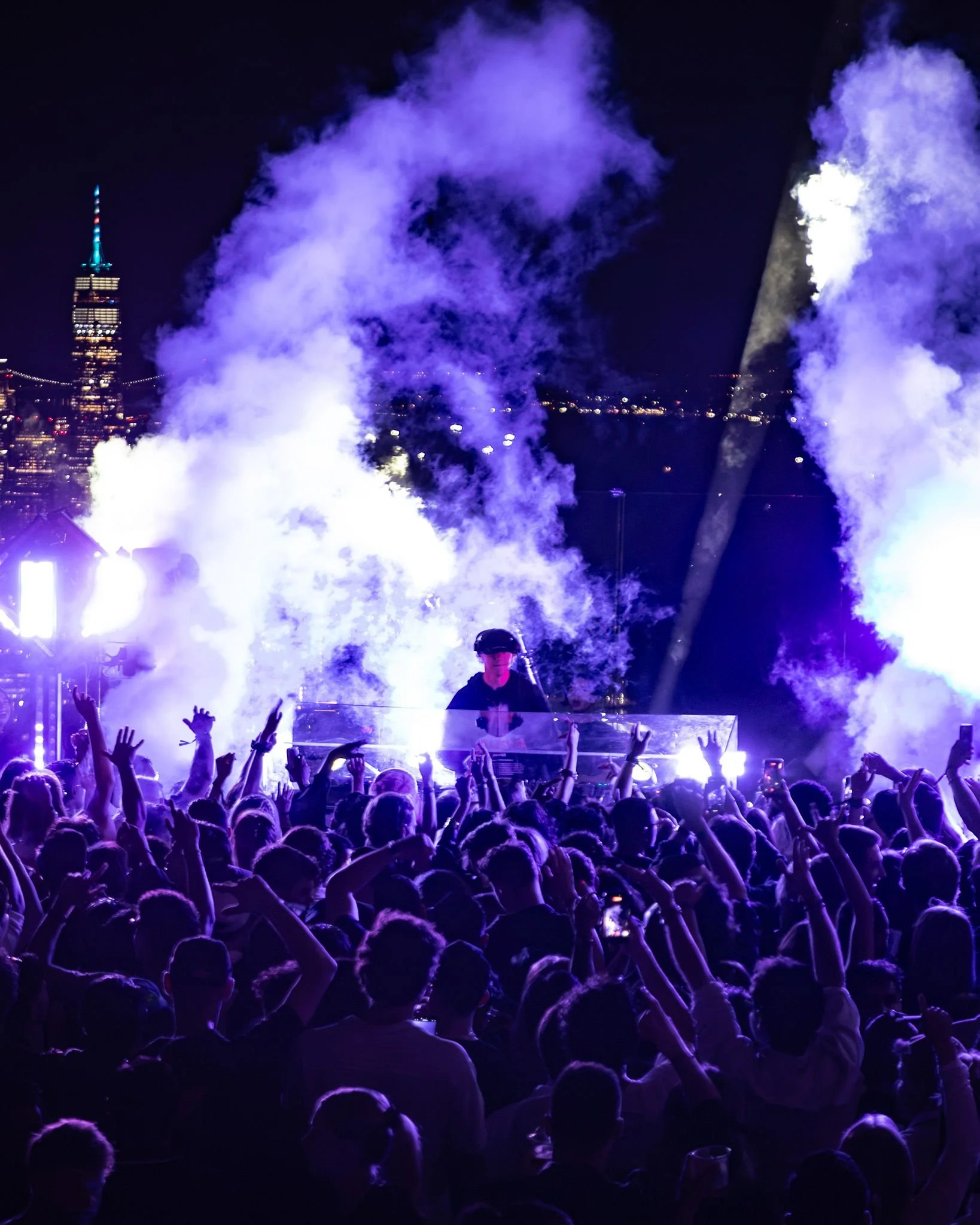
PJ Horny, Personnage Principale Photo: Binta Kopp
To mark its twentieth anniversary, Mudam has chosen to scatter its collection across the country through ‘Dodeka’, curated by Bettina Steinbrügge and Adèle Wester. From May to October 2026, twelve works toured the twelve cantons, accompanied by performances, lectures, concerts and other events shaped in relation to their temporary surroundings.
Traditionally, the ‘white cube’ relies, at least in part, on controlling the conditions surrounding a work of art. Dodeka, on the other hand, introduces variables that the museum cannot fully control: the idiosyncratic architecture of a venue, its own acoustics, local history and an unfamiliar audience. At Clervaux Castle, Wolfgang Tillmans’s Mami (1994), a life-size photograph of the artist’s mother, enters the charged space of a historic castle. At Kinneksbond in Mamer, Sin Wai Kin’s The Universe (2023) encounters a performing-arts context, where its shifting characters and unstable temporalities resonate differently from within a museum gallery. The possibility of something unexpected — even slightly mischievous — becomes part of the encounter itself. When it travels to another place, the artwork enters a different network of relations, altering the meanings that may emerge. Dodeka’s elsewhere is a space of trembling, where works begin to shift and become present again.
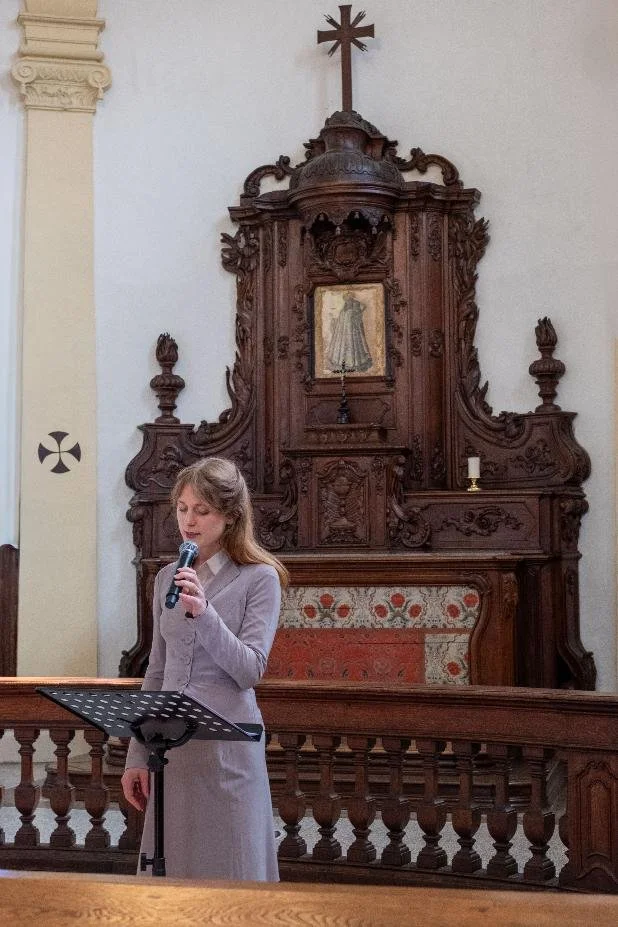
Camille Clair Ambitus, photo: Edurne Errazti
Another form of displacement emerges in the Loretto Chapel in Clervaux with Camille Clair’s Ambitus, a lecture-performance moving through memory, oblivion and the persistence of matter. The history of Clervaux Castle continues to resurface as a trace, even when it has become almost imperceptible. Somewhere between poetry and science, forgetting becomes a form of transformation. Destroyed and rebuilt, the castle retains haunting traces of what it once was, while what has been lost becomes part of the conditions from which the future can emerge. As Clair asserts, “To recognise something, however briefly, and release it again into the miasma. That is time.” Time, then, does not follow a linear trajectory; what seems to have disappeared may reappear elsewhere, in another form.

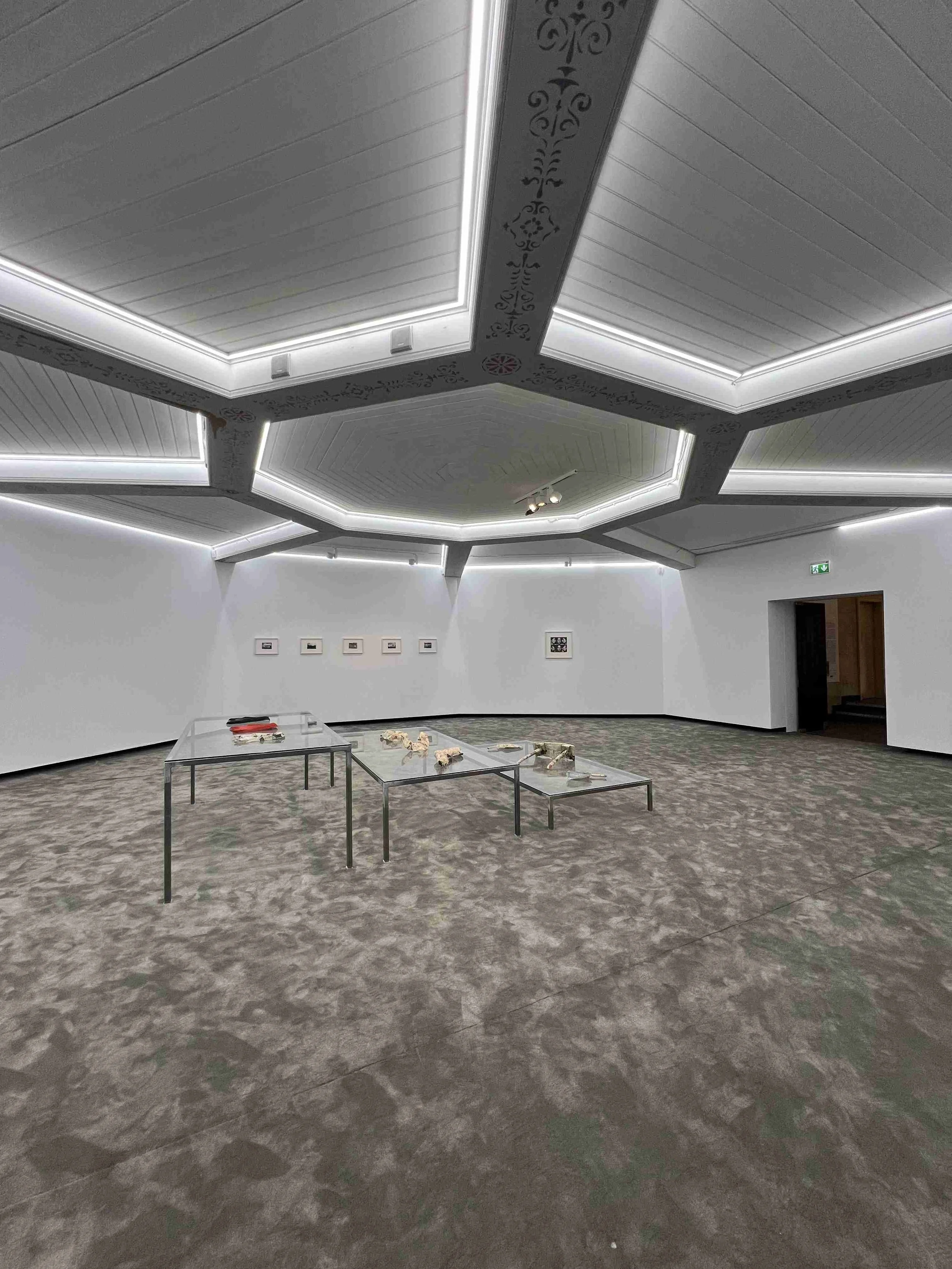
Exhibition view Dodeka, 12 works for 12 cantons, 16.05 — 04.10.2026,
Centre national de littérature, Mersch
Photo: Mike Zenari © Mudam Luxembourg
The encounter between Jessica Diamond and PJ Horny at hqLX takes this question in another direction. Jessica Diamond’s I Hate Business (1989) dates from a moment when the relationship between art and the market could still be framed as an explicit conflict. Conceived as a site-responsive intervention, the words “I Hate Business” were painted directly onto a wall, their scale and execution responding to the architecture of the space. The work’s criticism echoes within the exhibition space, using the blunt language of graffiti to bring those contradictions into the institution itself.
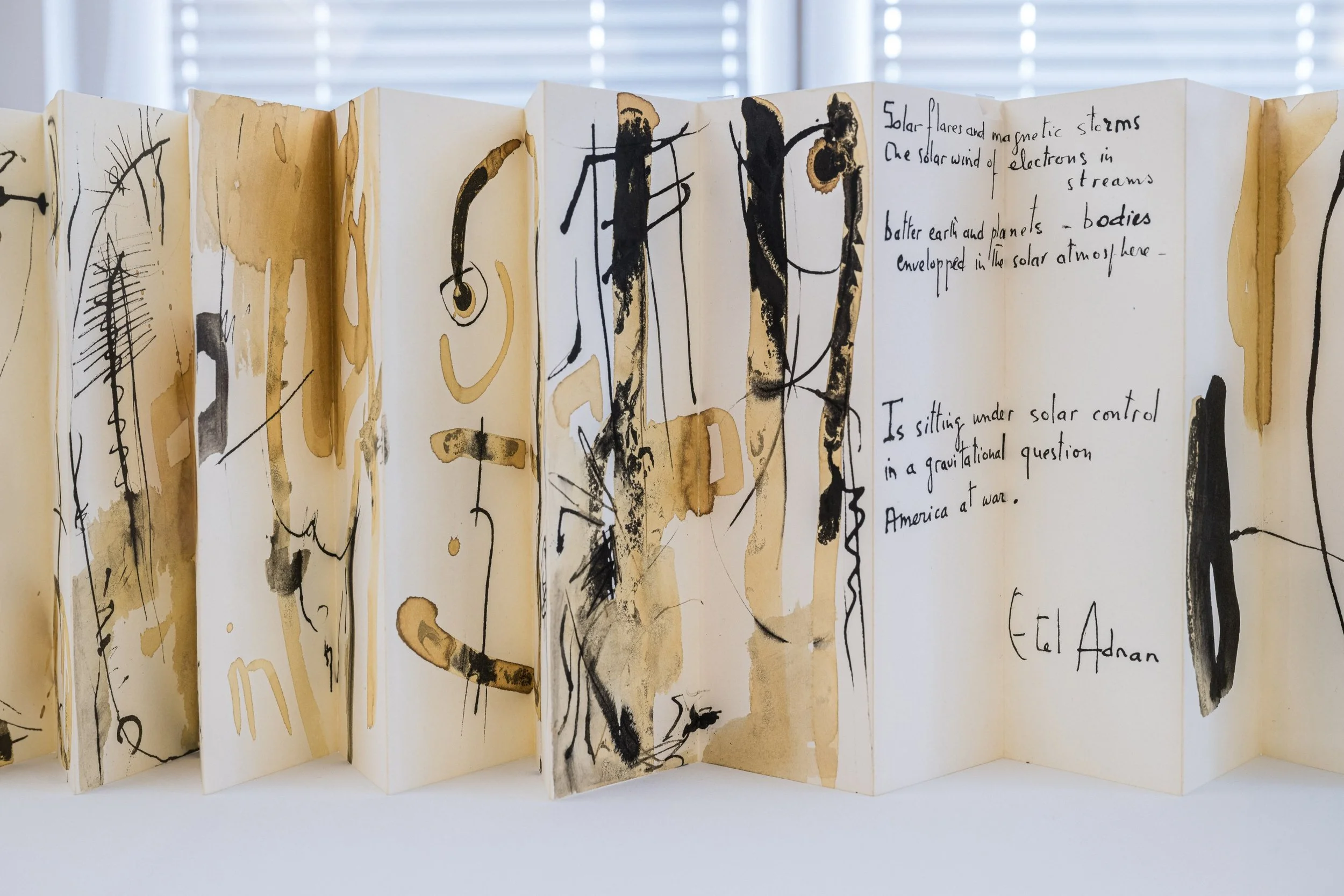
Exhibition view Dodeka, 12 works for 12 cantons, 16.05 — 04.10.2026,
Clervaux Castle, Clervaux
Photo: Mike Zenari © Mudam Luxembourg
The connection between Diamond and Personnage Principale by PJ Horny is revealing: the system Diamond confronted has become harder to locate. At the threshold of cabaret, drag and glitch feminism, Garance Eva Oliveras’s alter ego PJ Horny works precisely within this ambiguity. By embodying the mannerisms of social media and taking them to extremes, the artist employs irony and autofiction to bring out their performative dimension. In Personnage Principale, seduction, viral semiotics, bodily transformations and clownish gestures become strategies to challenge the symbols of power, glamour and pop culture.
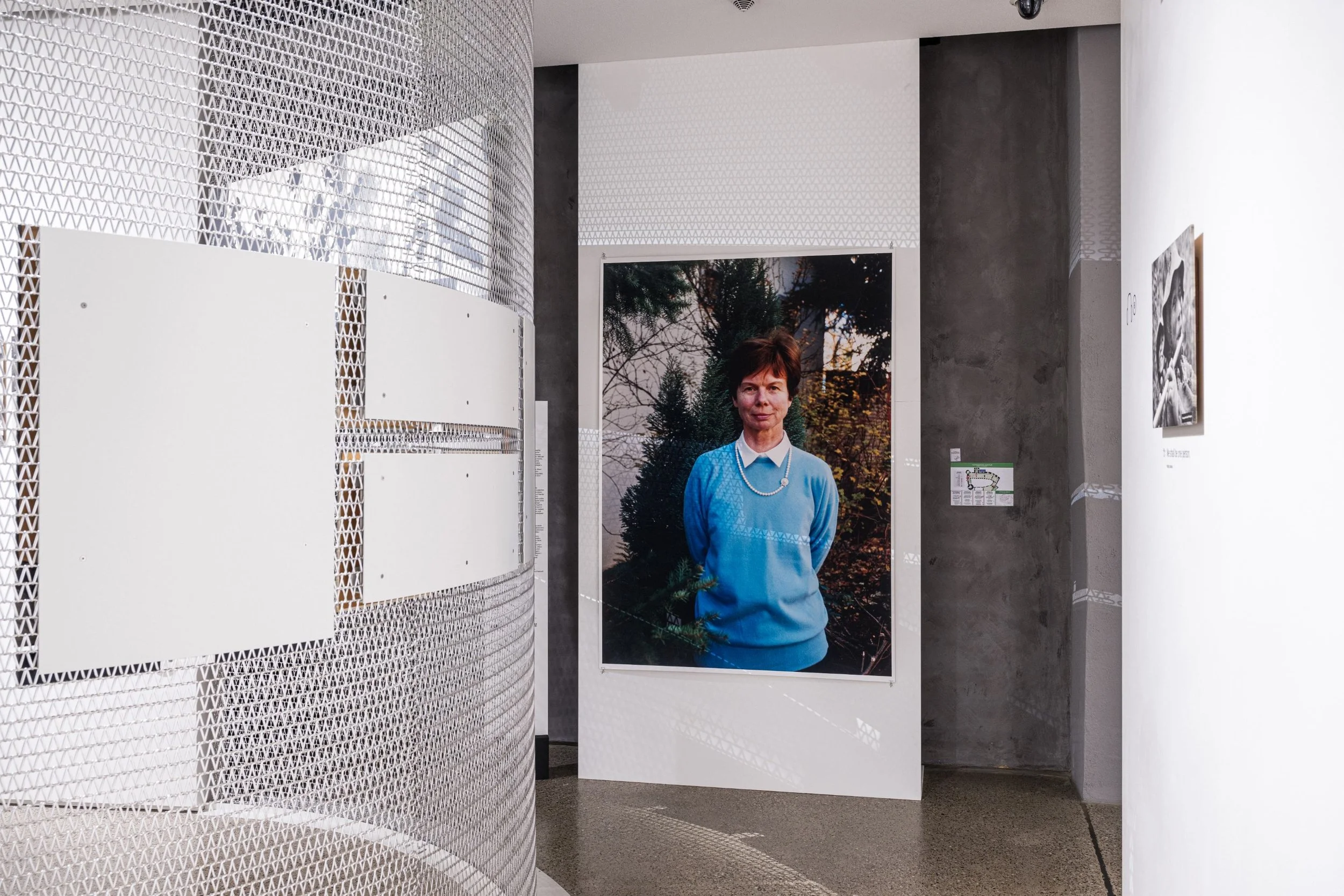
Exhibition view Dodeka, 12 works for 12 cantons, 16.05 — 04.10.2026,
Clervaux Castle, Clervaux
Photo: Mike Zenari © Mudam Luxembourg
Whilst I Hate Business highlighted the conflict between the artist and the market, PJ Horny depicts a moment in which the attention economy has become inseparable from the construction of the self. We are no longer merely exposed to commercial images: we participate in their production, imitate them, distribute them and, in doing so, turn ourselves into commodities.
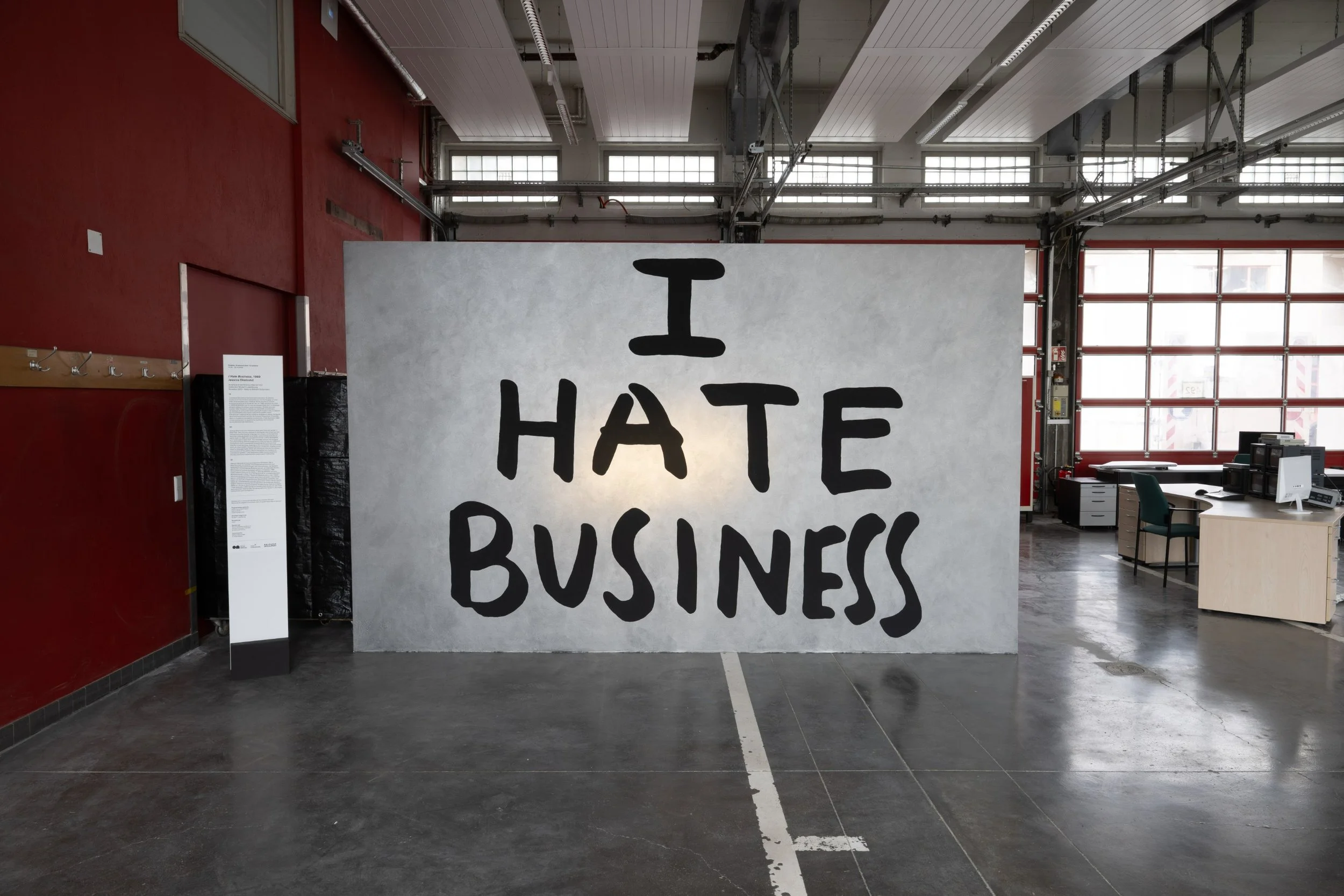
Jessica Diamond, I Hate Business, 1989
Collection Mudam Luxembourg – Musée d’Art Moderne Grand-Duc Jean
Donation 2023 – Gaby and Wilhelm Schürmann
The institutional critique takes shape through repetition, misquotation, metamorphosis and excess. A gesture that might last only a few seconds on screen — a pose, a dance, a form of seduction — takes on an almost uncanny awkwardness once prolonged on stage. What appears to be infinitely replicable online becomes, once again, a body, in front of specific people, within a particular setting. Perhaps the museum unfolds elsewhere whenever a work becomes temporarily unfamiliar to itself.
He Sun, Conduit, Photo: Pascal Seil, CNL
Words by Alice Minervini
What to read next