Federico Hurth
The devil is in the details in Federico Hurth’s photography. He approaches the worlds of fashion, music, documentary and lifestyle with the same discipline, the portrait series always being at the center of his work, that has already produced several publications and established a consistent, uncompromising visual language.
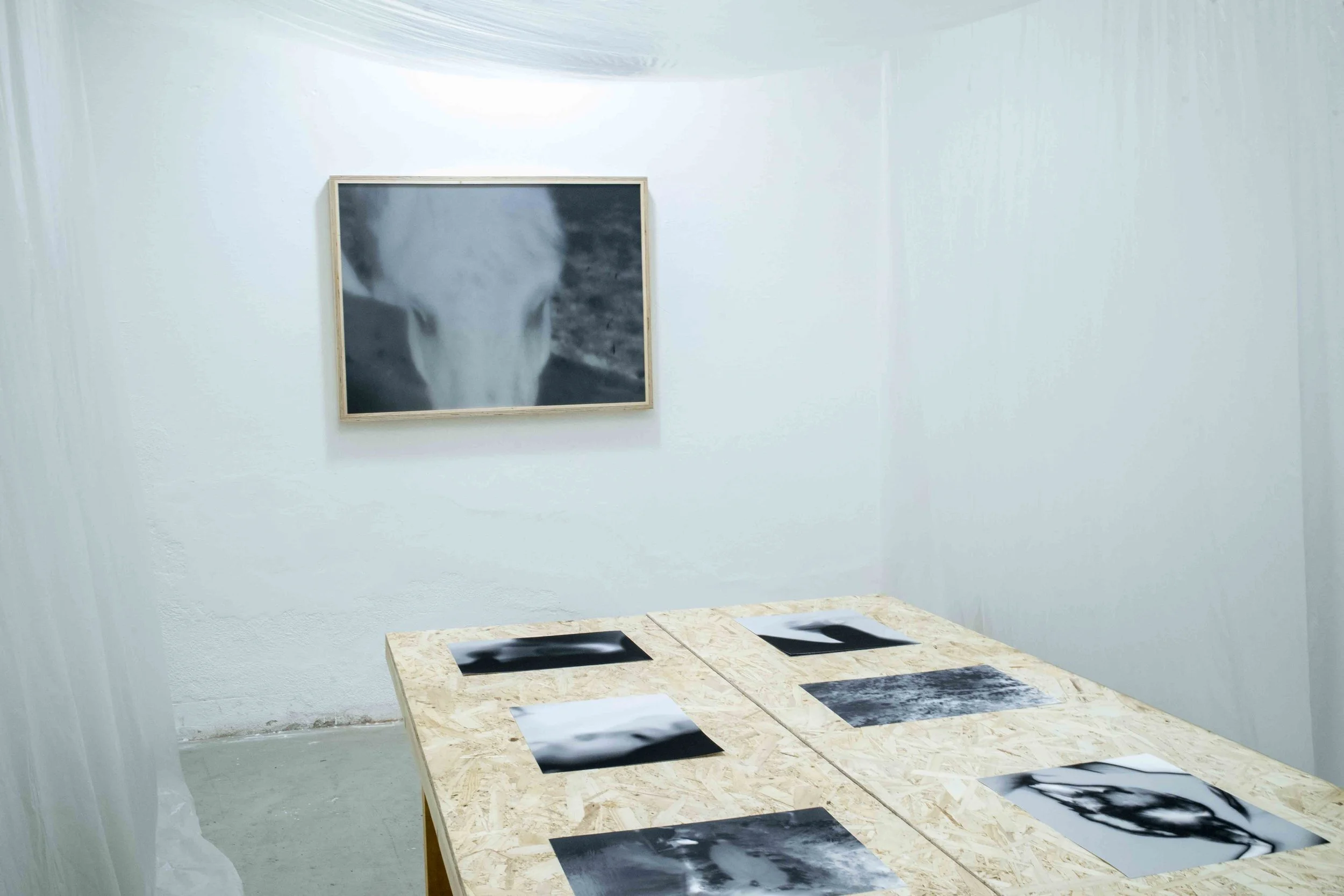
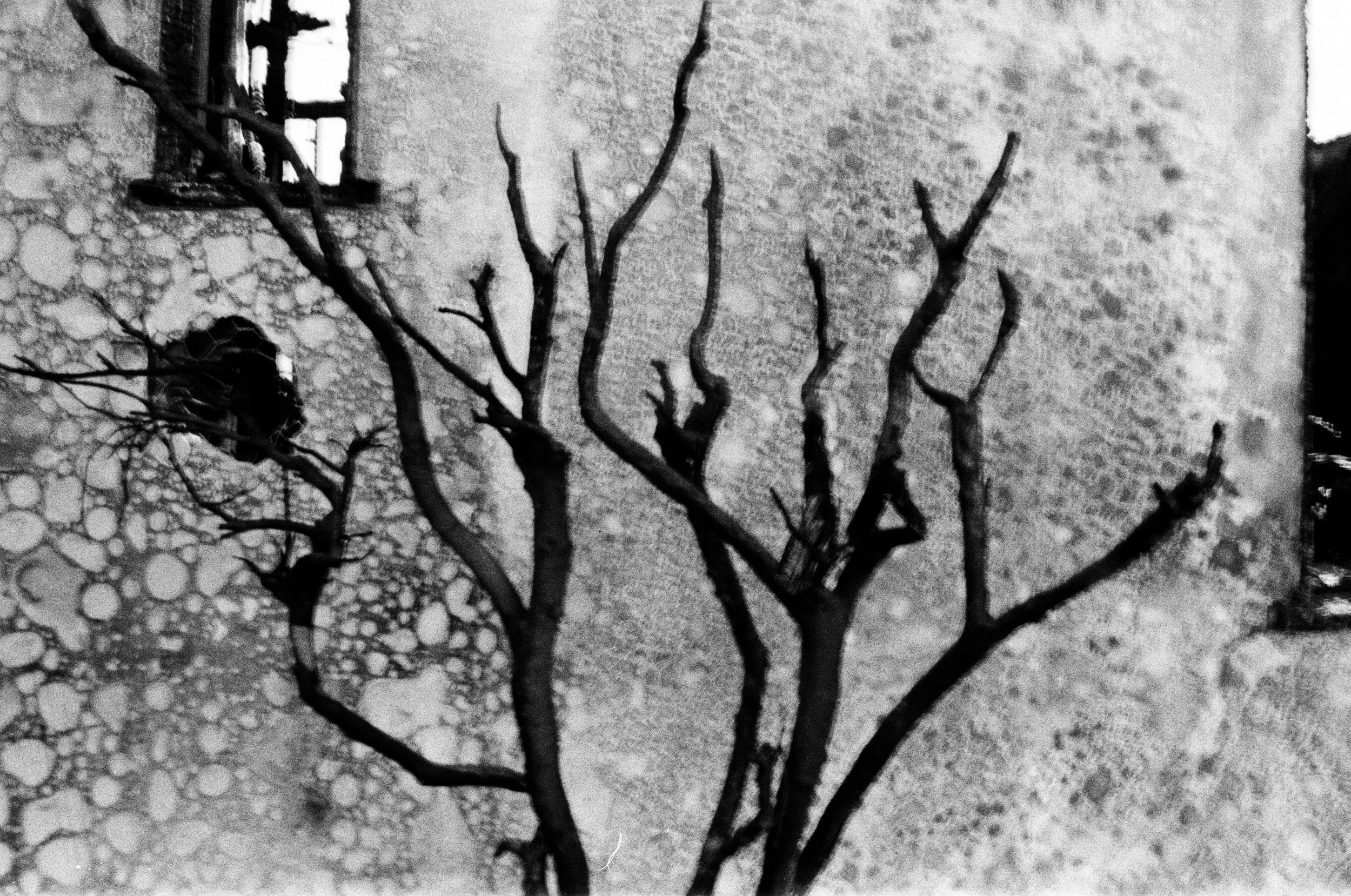
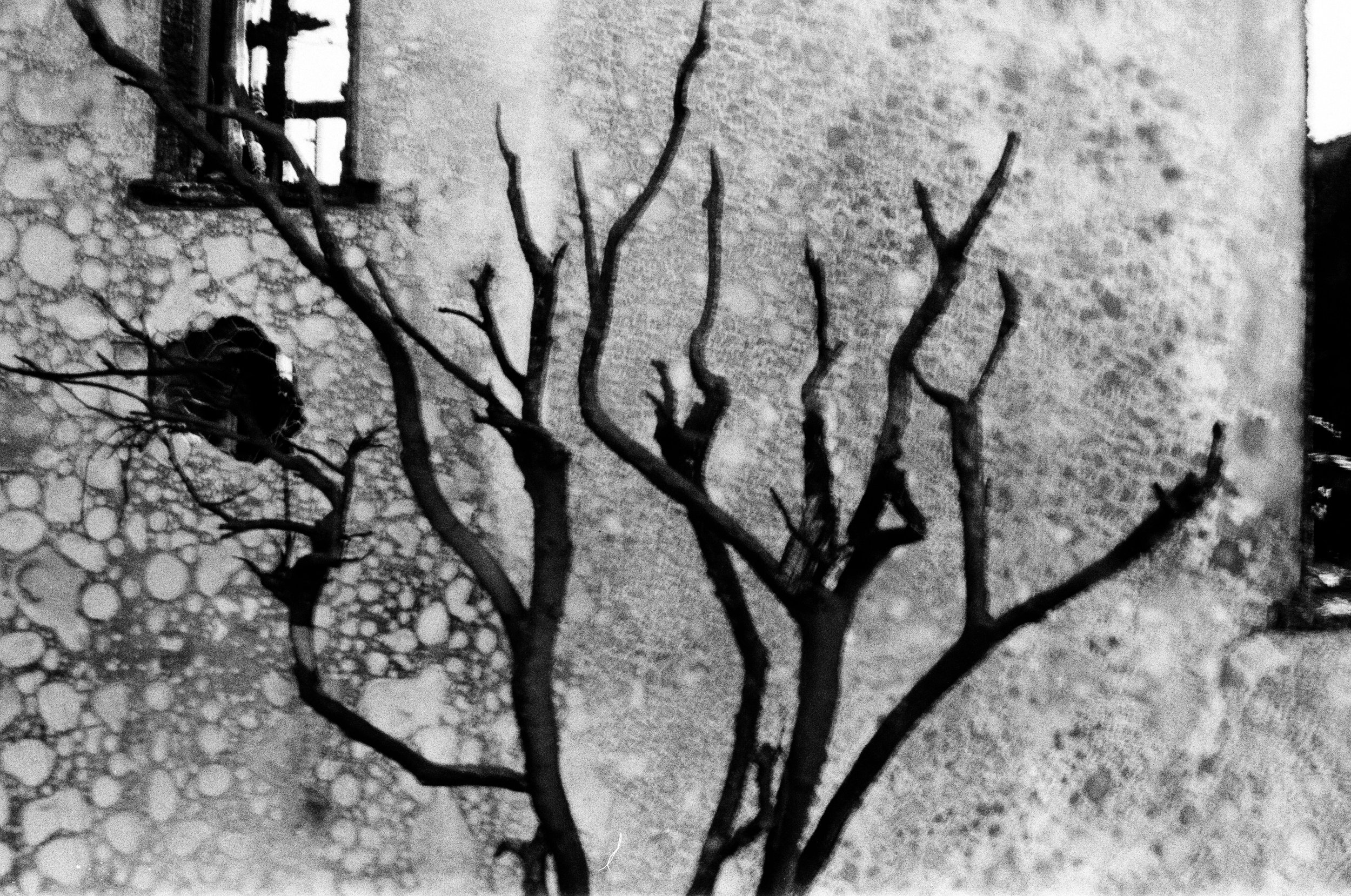
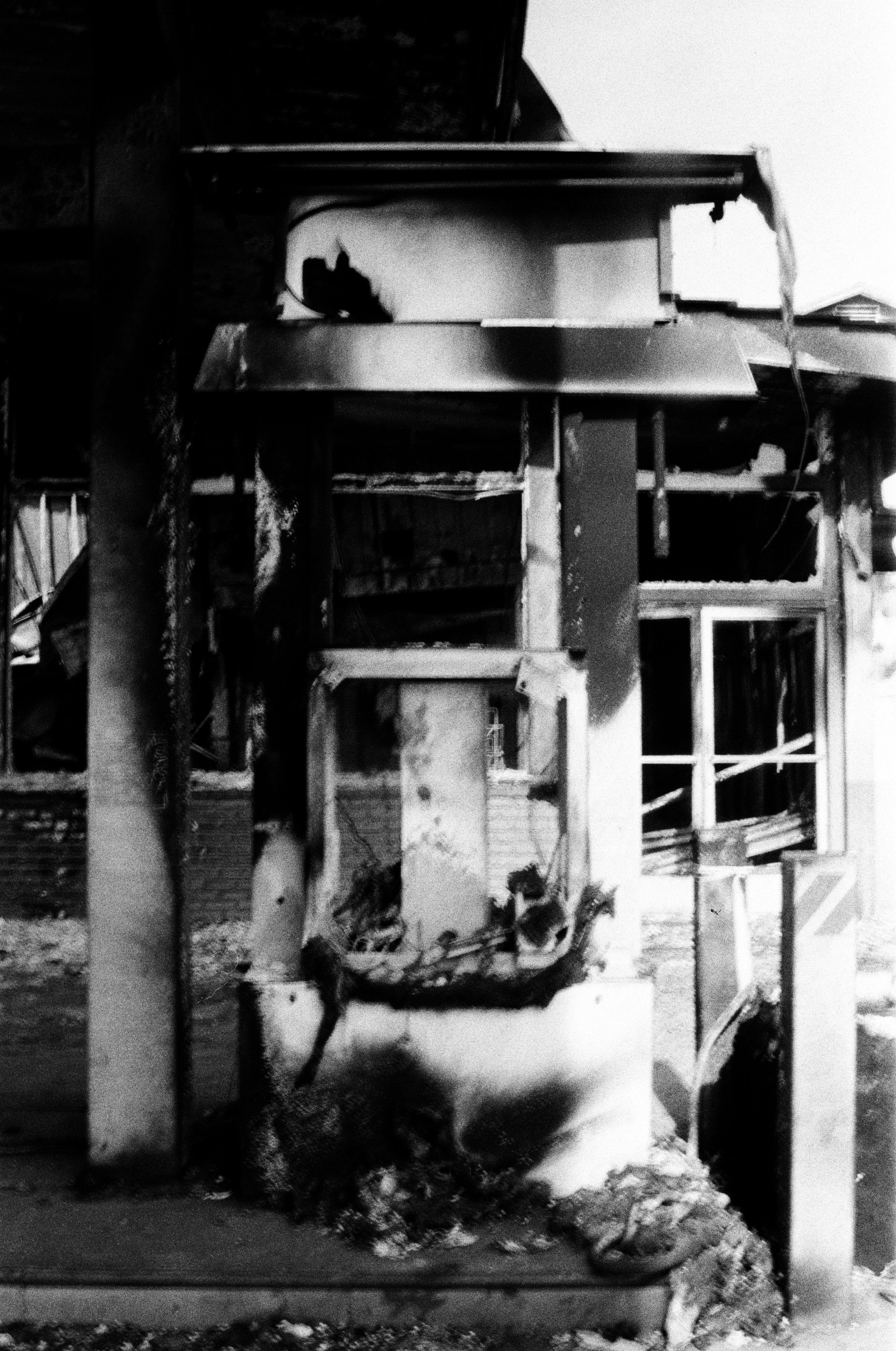
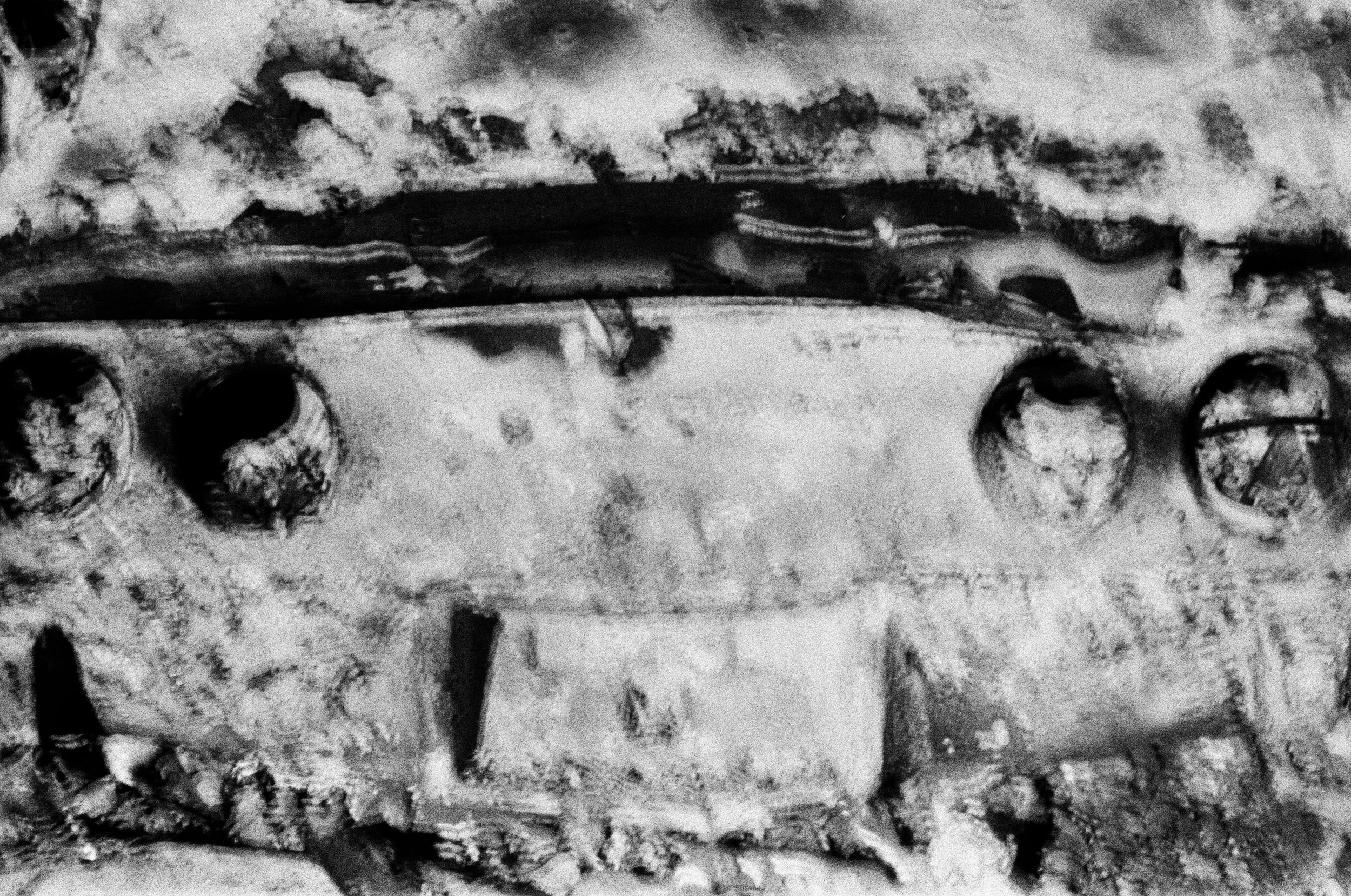
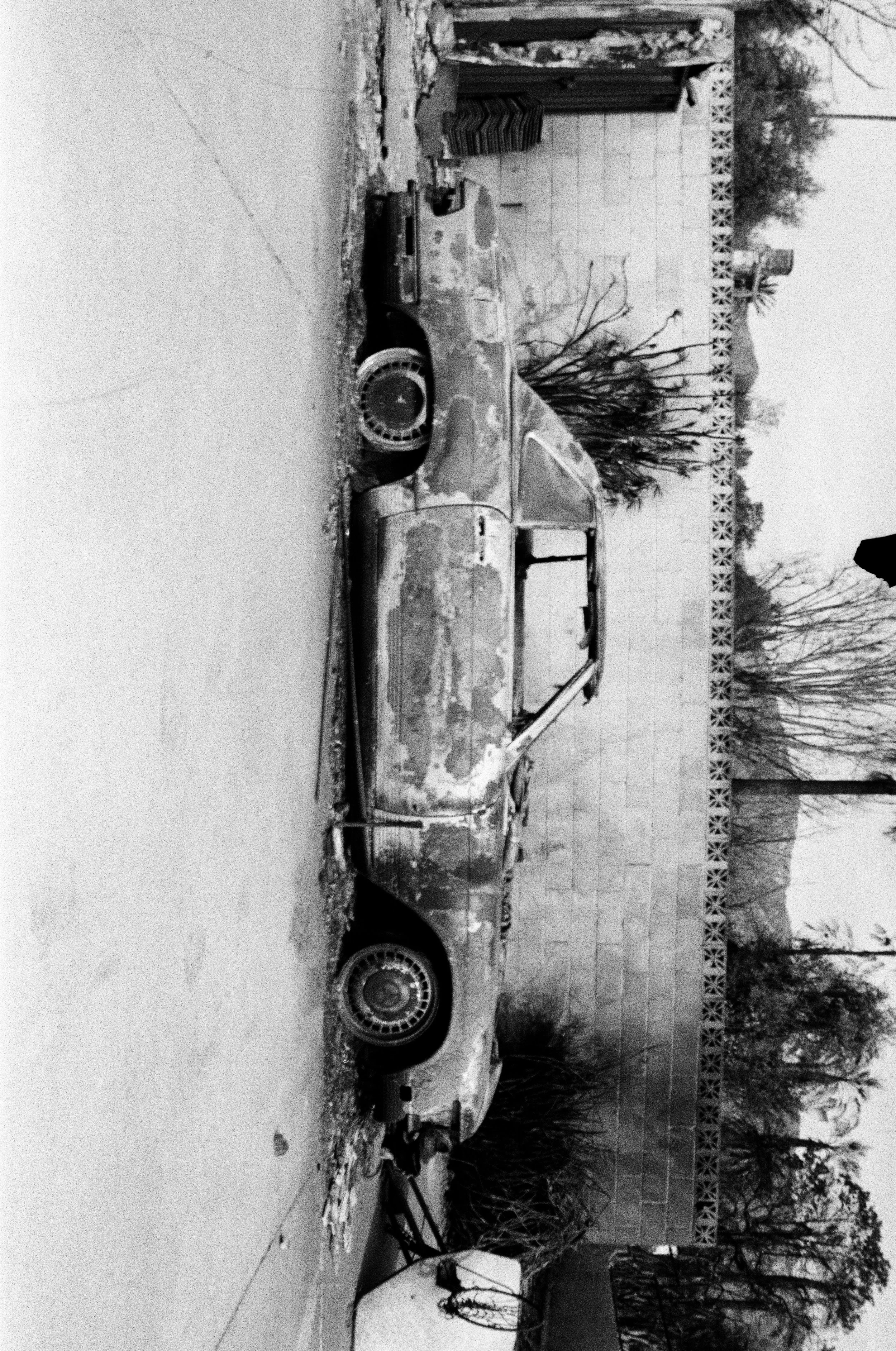
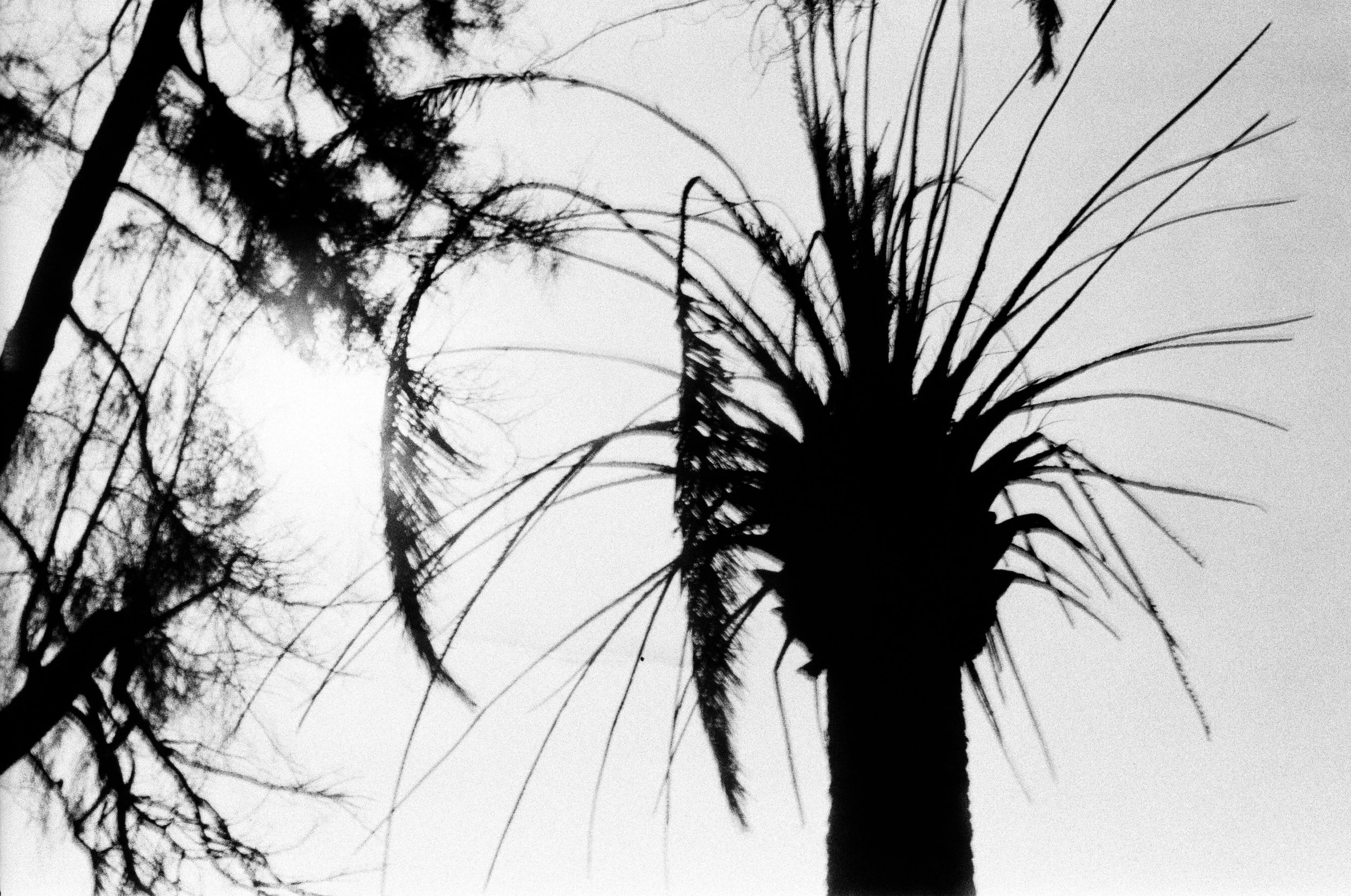
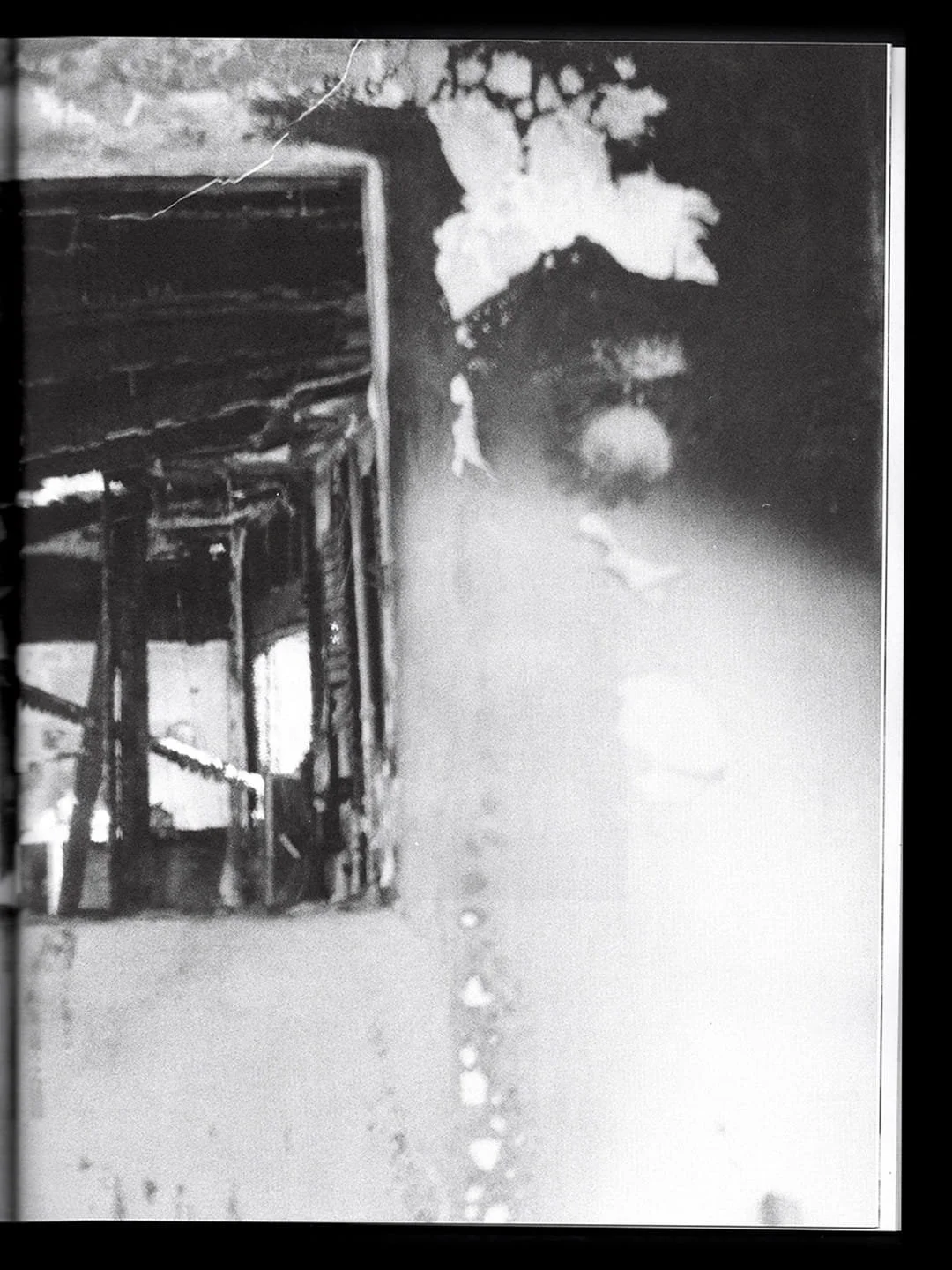
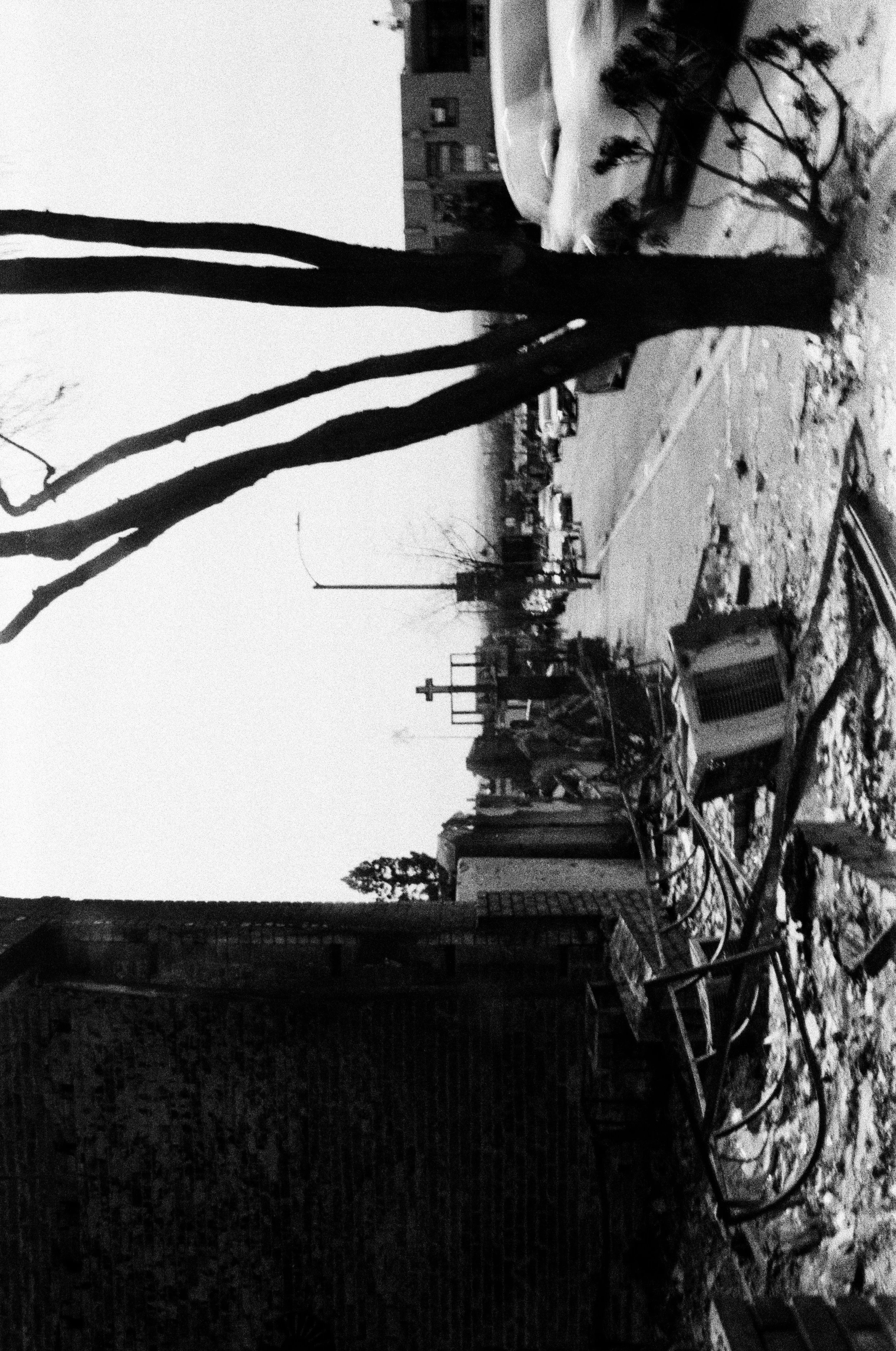
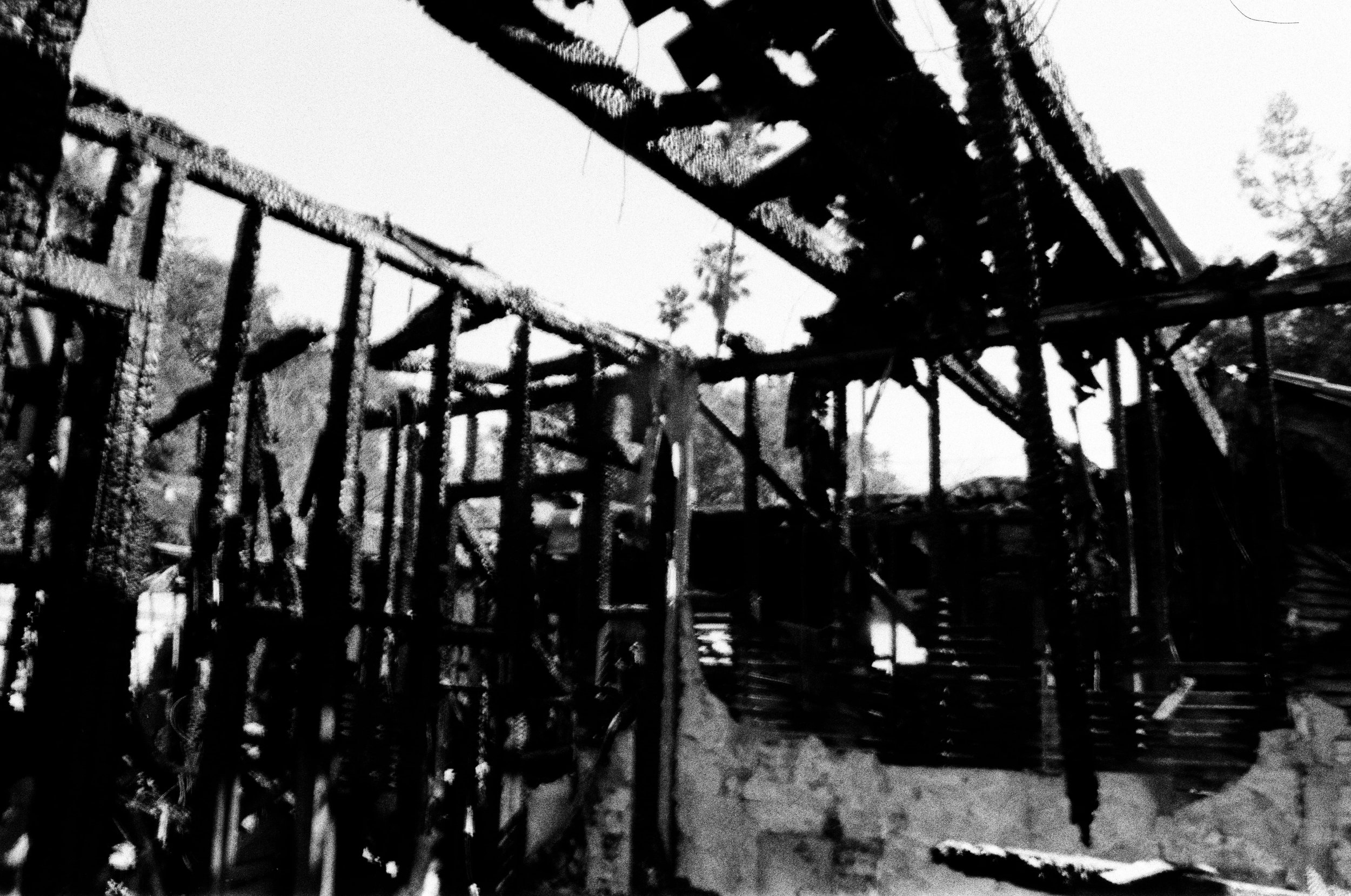
His latest project Sourland is a body of 84 black and white analog photographs made in the aftermath of the 2025 Los Angeles wildfires. The images are almost forensic, each one carries the particular weight of something that has just stopped burning. Chaos is present, but it has been compressed into silence.
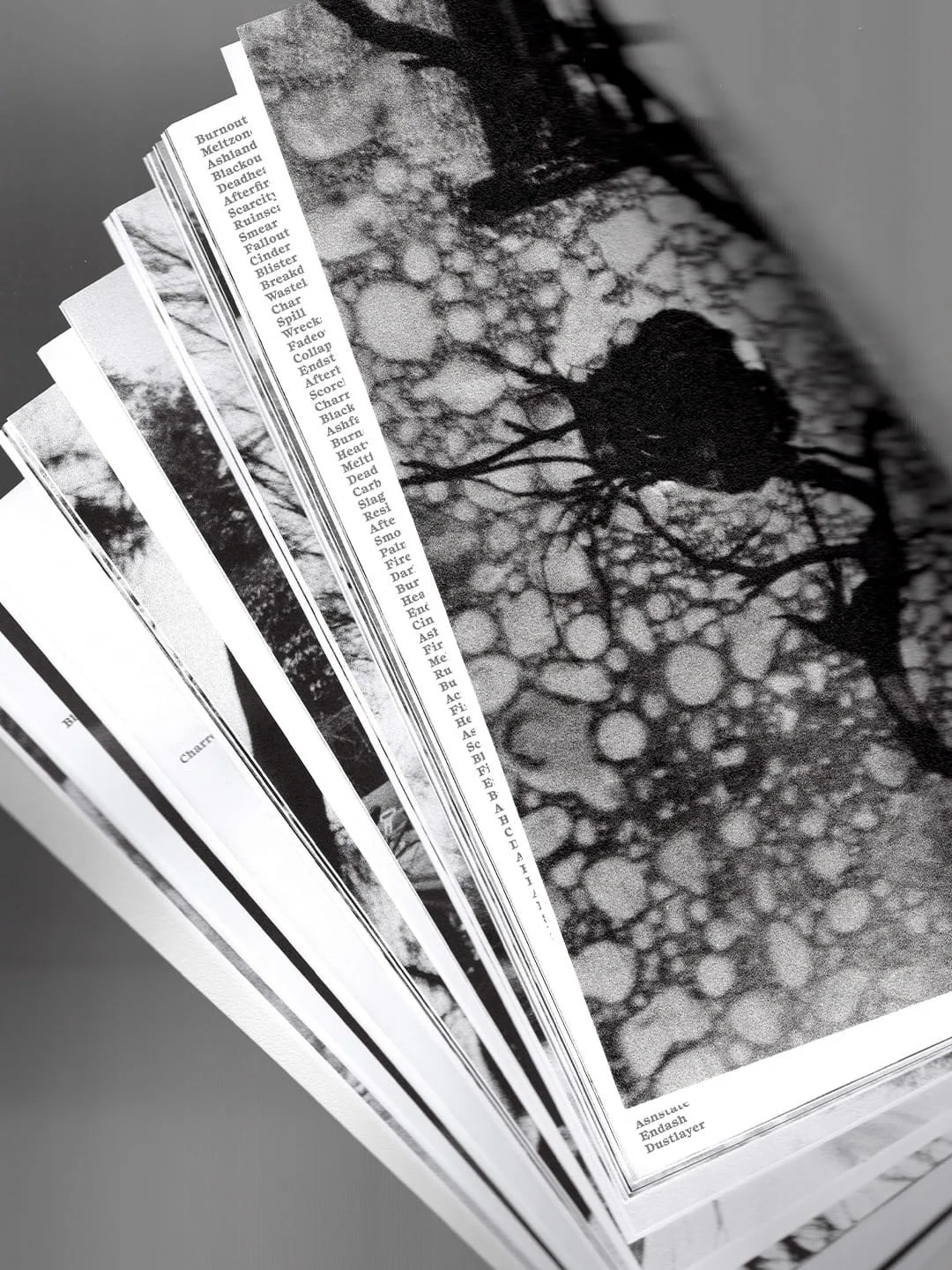
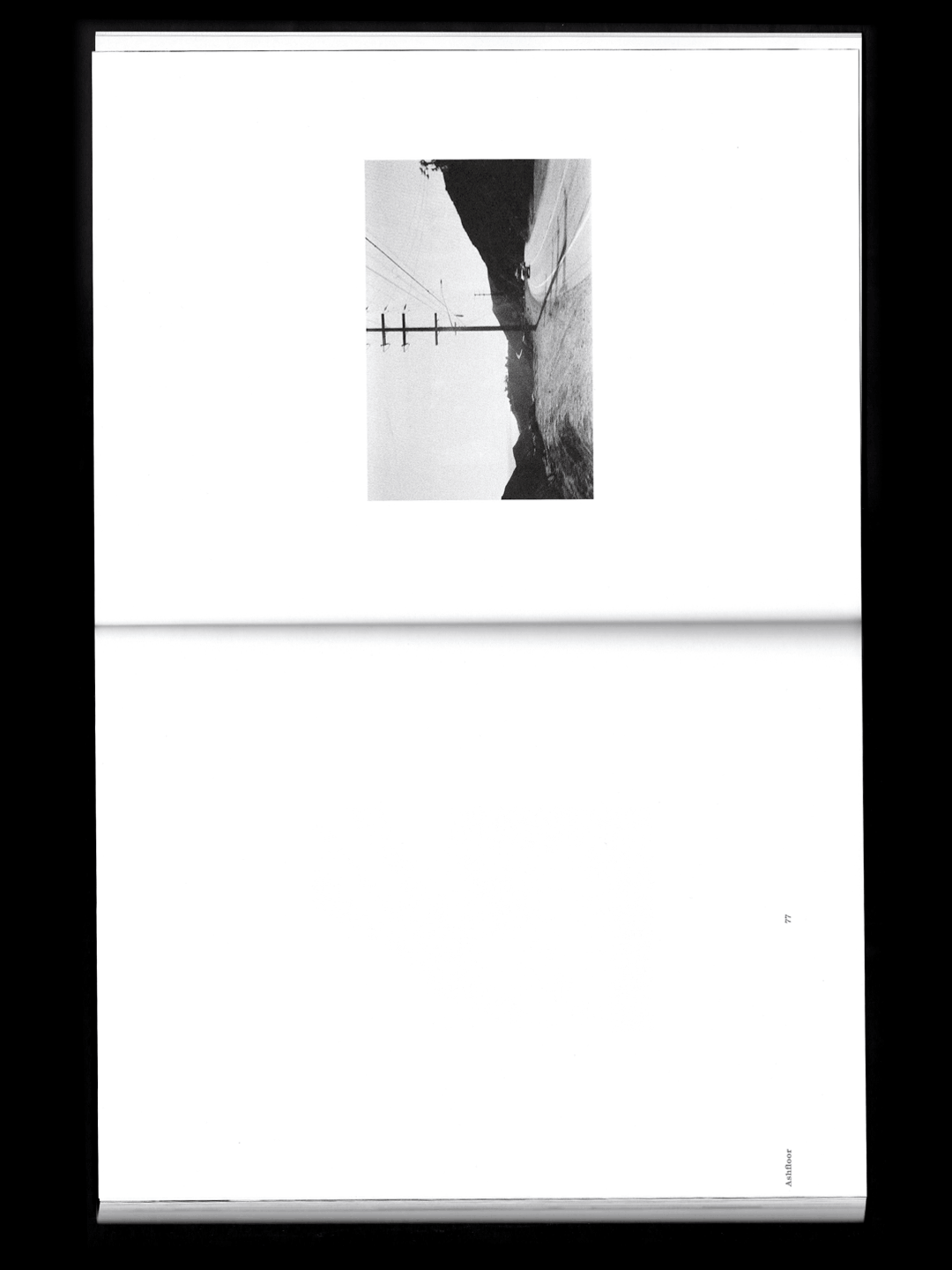
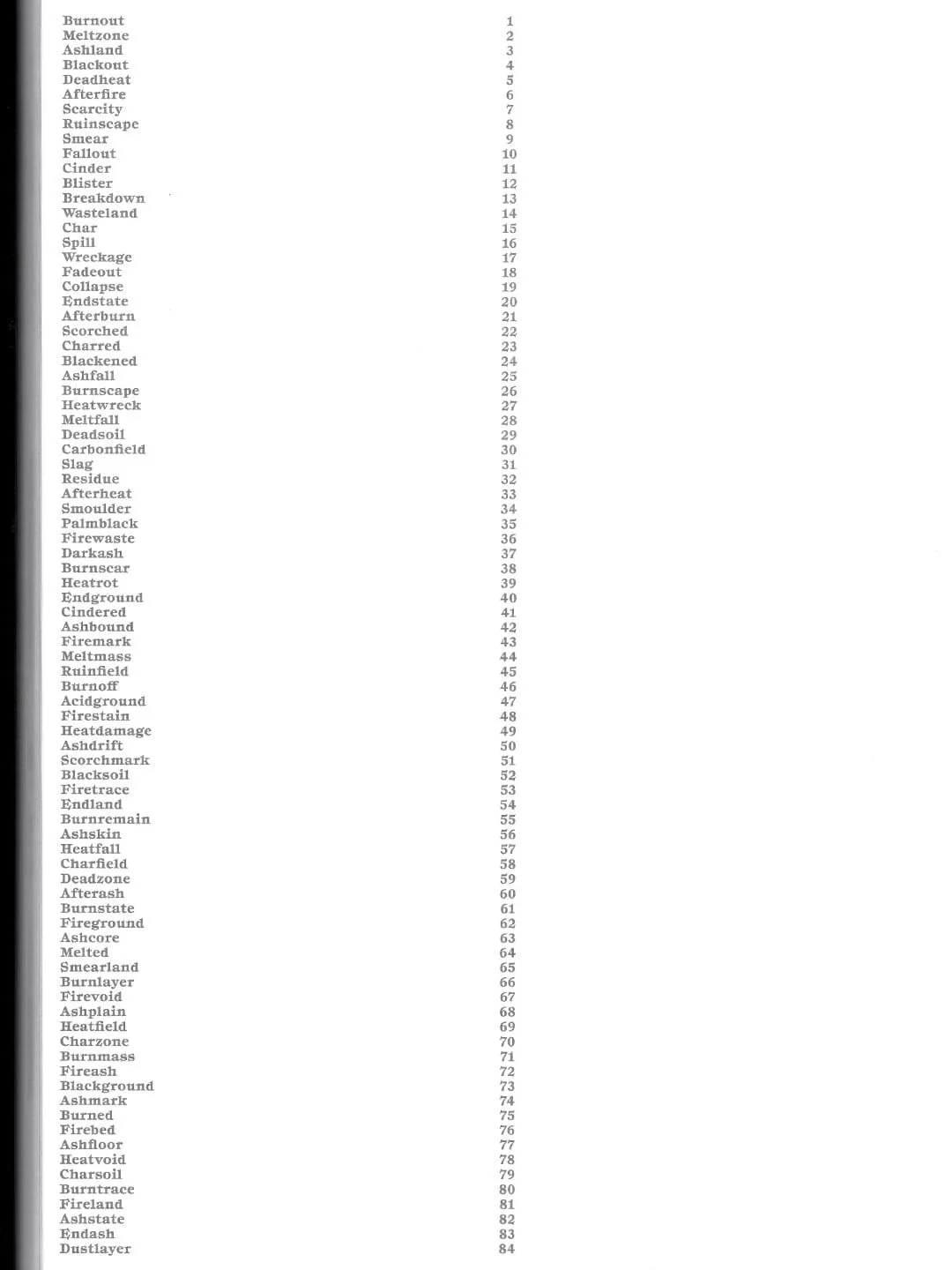
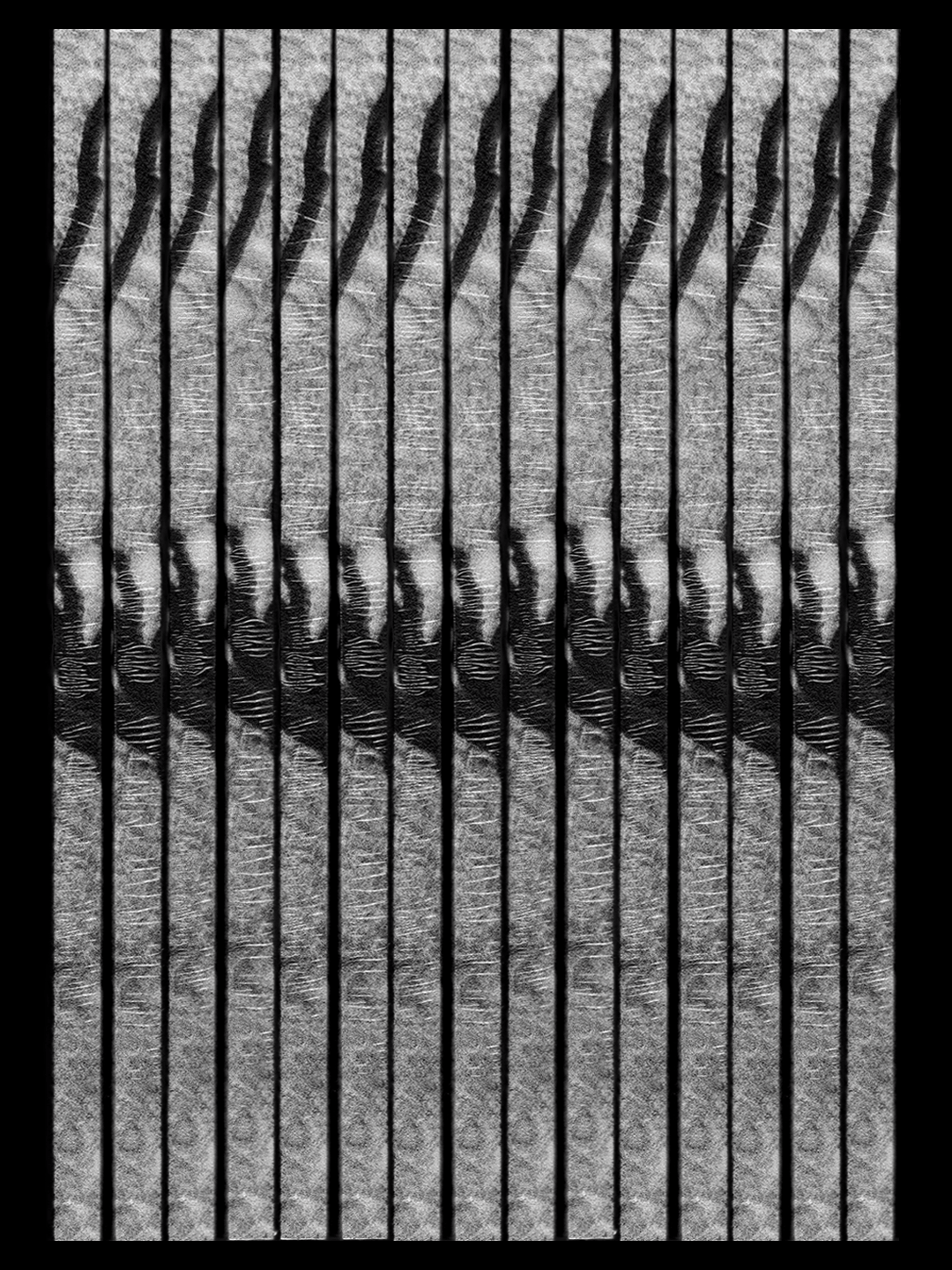
The book's pagination reinforces this logic: the sequencing and the captions move from top to bottom, tracing the arc of a fire dying out. Designed by Giga Design Studio, the object itself is conceived as an archive. Sourland launched during Milan Design Week at Antonioli, accompanied by a spatial installation curated by NM3.
Your book Sourland just came out, can you walk us through its origin, the logic behind the sequencing, and the graphic decisions that shaped it as an object?
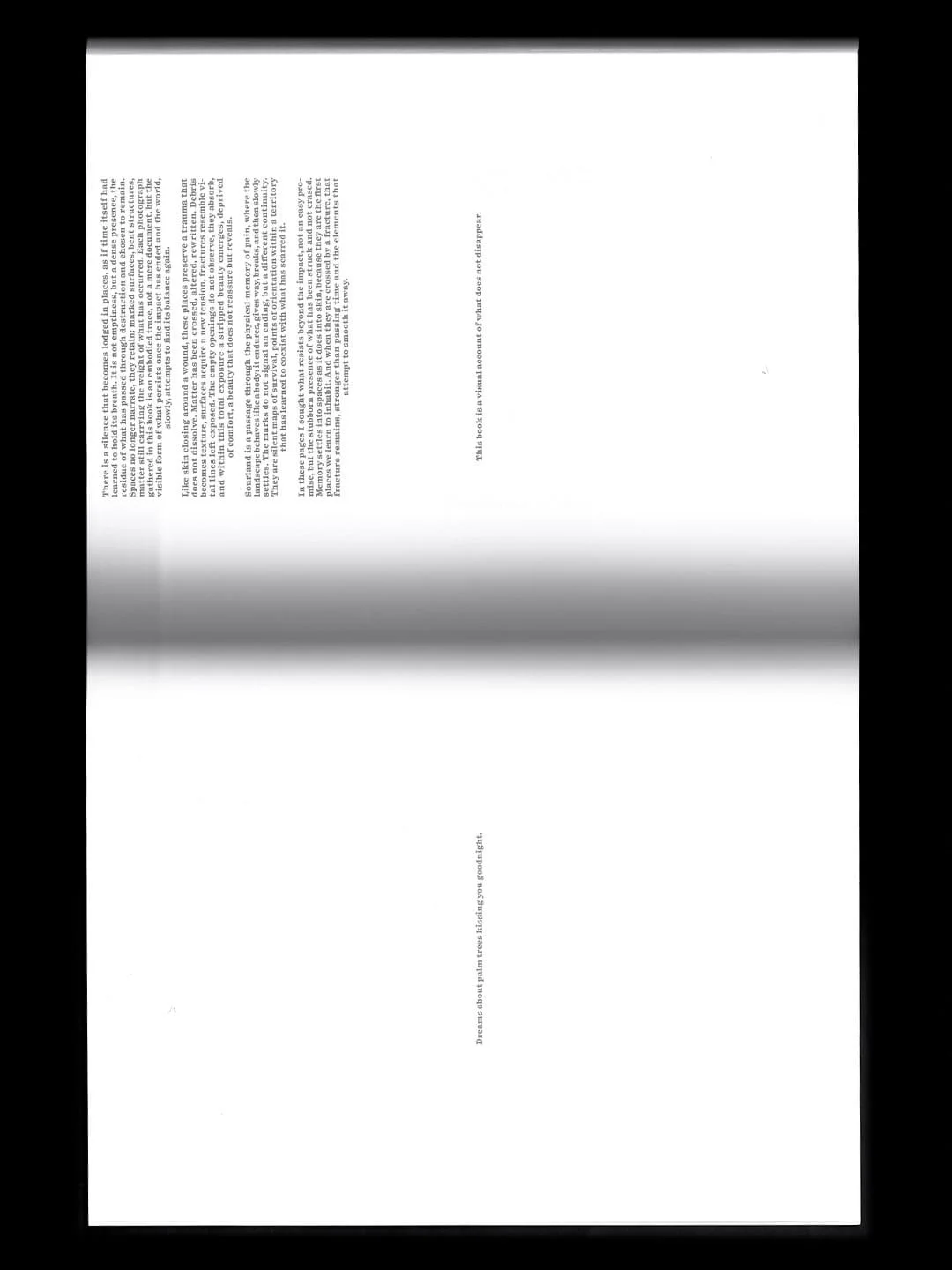
The Sourland project grew out of my desire to capture the traumatic, post-fire aftermath of the Los Angeles wildfires in 2025. I have always been drawn to photographing destruction: material destruction, but also human destruction, mental destruction, the lived experience of something that was once concrete and has become, spiritually, nothing more than a memory. Something that persists through a detail, an object, whatever remains. For me, this was the first project in which I worked exclusively with matter, not with people; which is why Sourland means so much to me. The title refers to eroded land, acid land, forgotten land; land that forgets but still leaves a mark. Something that once existed and now leaves only a trace of decay, of destruction. That is what draws me in.
In terms of the book as an object, the layout was developed closely with the Milan-based design studio Giga Studio. Together we decided on an archive-style pagination. For me, an archive is something that existed and then remains: unchanged across time. What I photographed feels, to me, like something that will remain unchanged. Which is why the sequence of images needed to be laid out almost like small works that can be looked at, but no longer relived. Each caption alongside the photographs is a synonym; words chosen to carry a negative charge of destruction, or perhaps more precisely, a descriptive note on the image itself. Something tied, always, to fire, to destruction, to the final state of matter.
What was it like to step inside those houses, and do you think that physical, emotional experience left any trace on the images themselves?
Entering those houses meant taking the kind of risk I usually take with my projects. In this case, the risk was stepping onto the sacred American private property; which for me was an act of defiance, and a source of adrenaline. Taking that first step inside meant the project could begin. It meant not letting myself be paralyzed by the police or the paramilitary units patrolling the perimeter, because the entire area was off-limits, legally private property, even if very little of that property was left standing.
There was something deeply exciting about going in. I was driven by this internal push and pull: do I go in or don't I ? And I went in. And from there it started, as it usually does: my own sequence of searching, moving through the various houses and across the perimeter of the area itself.
How do you think about the people who lived in those houses before the fires, are they a presence in the work, or an absence?
They are an absence. Because, as I said in answer to the first question, I have always centered my work on people. I would always photograph the person, and more than photographing them, I would look for an interaction first. In this case, their absence became a source of strength for everything that surrounds the Sourland project. But on a personal level, there is a great deal of absence for me too. I miss the human figure, and I miss that form of interaction and respect that I always set as my primary intention when I go into a project.
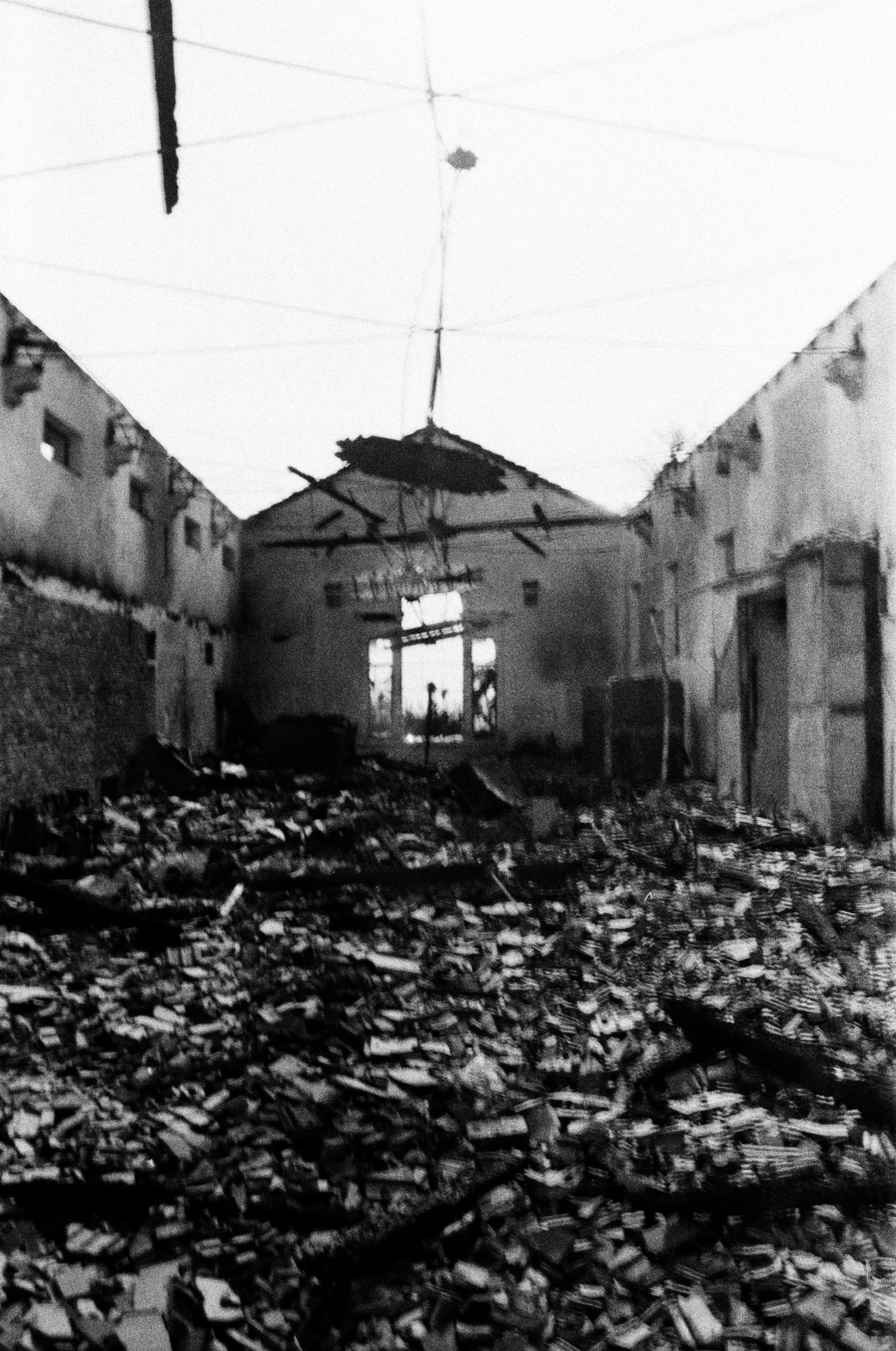
There’s something deeply private about these photographs, as if they weren't made to be seen. What made you decide to bring them out into the open?
What pushed me to make them public comes down to the fact that I am quite selfish with my projects. I am very dependent on this risk, on these images, not just from Sourland but from everything I do. It's as if this dependency pulls me away from the rest of the world. Not in terms of disrespect, I always communicate, as I mentioned, I always engage with the person in front of me, I try to position myself respectfully, and I always try to understand their needs and their wishes.
In this case, what I was dealing with was something that wasn't alive, or rather, it is alive in the sense that it exists as a photographic subject, but in that moment it was, for me, an inanimate object. Immovable, in every sense of the word. So morally (not legally, to be clear) I felt I had a kind of permission to shoot and to publish. But more than anything, what drives me to make a project public is a need to share. It satisfies me. Showing what I am capable of doing. That, in itself, is enough.
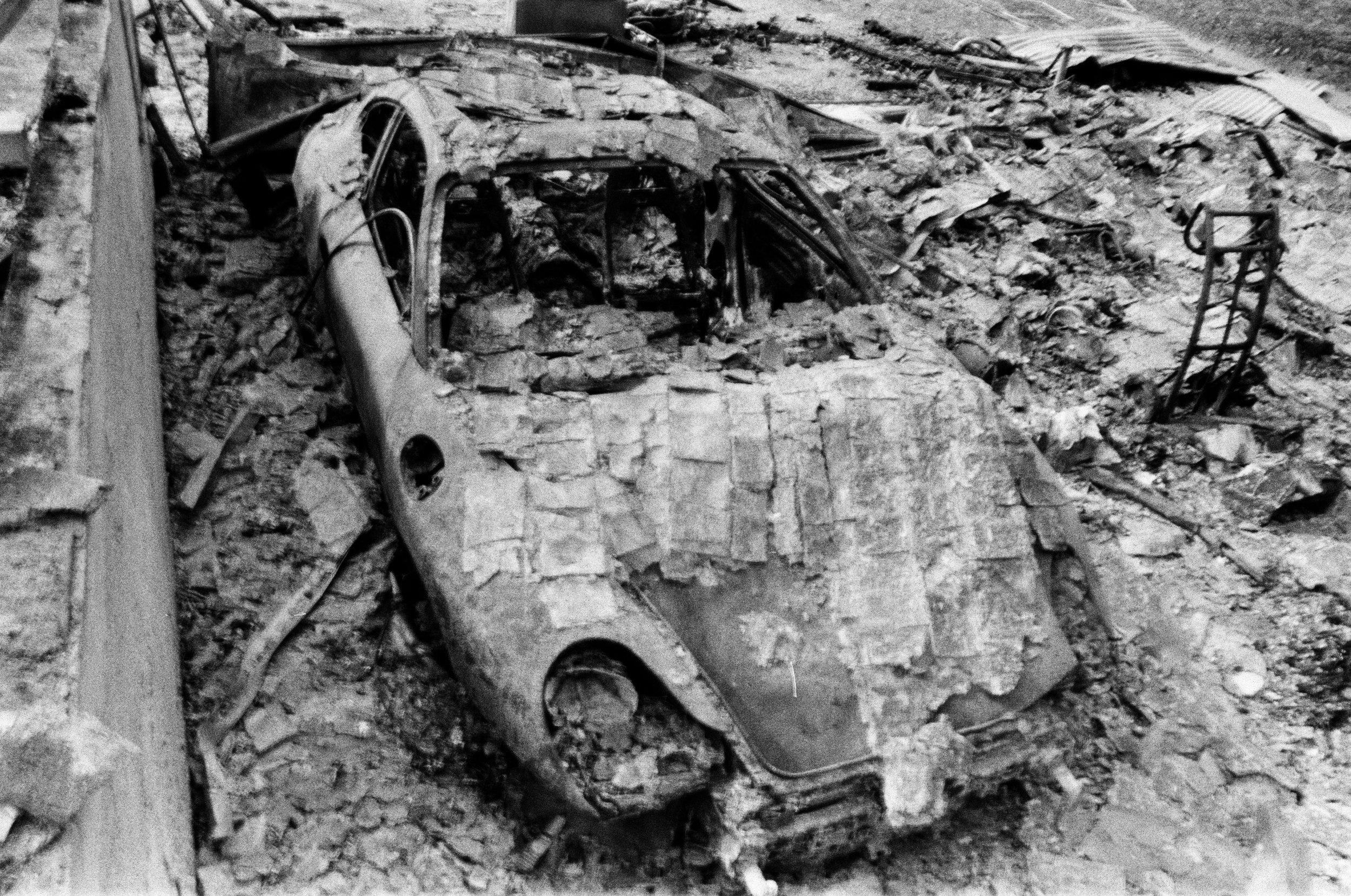
Your work is largely built around the human face and figure. How did you navigate a project where people are entirely absent?
I managed it well during the shooting itself. But I struggled enormously during the film development phase, and even more so during the layout process, precisely because tzhese photographs, like the project itself, are wrong in a certain sense. They were not taken correctly. There was something (perhaps this lack of full respect on my part) that affected the shots, that meant they weren't made the way they should have been. So it wasn't inexplicable, in my view. And yet the project came out better for it, because that wrongness became a point of strength. It pushed me to find something much deeper than a destroyed house or an object charred by flames.
What helped, indirectly, was something Monica Bonvicini said to me. She told me that looking at my photography through her eyes as an artist - she had already made a book, I believe around 2015, in a graphic style with very iconic captions, about the houses that burned in Los Angeles, so a decade earlier - she told me she liked my photographs very much because, where they were out of focus, while the black and white itself was precise and sharp, they reminded her of something still alive. As if within the final state of what I had photographed (the ash, the carbonized matter) the blur suggested a fire still moving through it. So the post-fire was, in her reading, still inhabited by the living element of fire, still burning inside the wreckage. And that stayed with me.
What is your relationship with the people you photograph on the street ? Do you have a particular way of making contact, and do any of those encounters last beyond the moment?
When I meet someone on the street, I work with two approaches. The first - and the one I would call my most defining - is to establish an immediate sense of closeness. I do everything I can to make the person feel at ease, especially when what I'm asking of them goes beyond the ordinary, or touches something emotional, something that might feel exposing. I build that rapport without forcing anything. For me, things have to come out as naturally as possible.
The second approach is to steal the shot: the classic one shot, one kill. It's a concept I used more in the past than I do now. It was about taking a moment before it disappeared. I still do it, but I've come to understand that the higher the stakes, the more that stolen moment only works after some form of trust has already been established within a community. I work a lot with communities rather than with isolated individuals, that’s been a consistent thread across my projects.
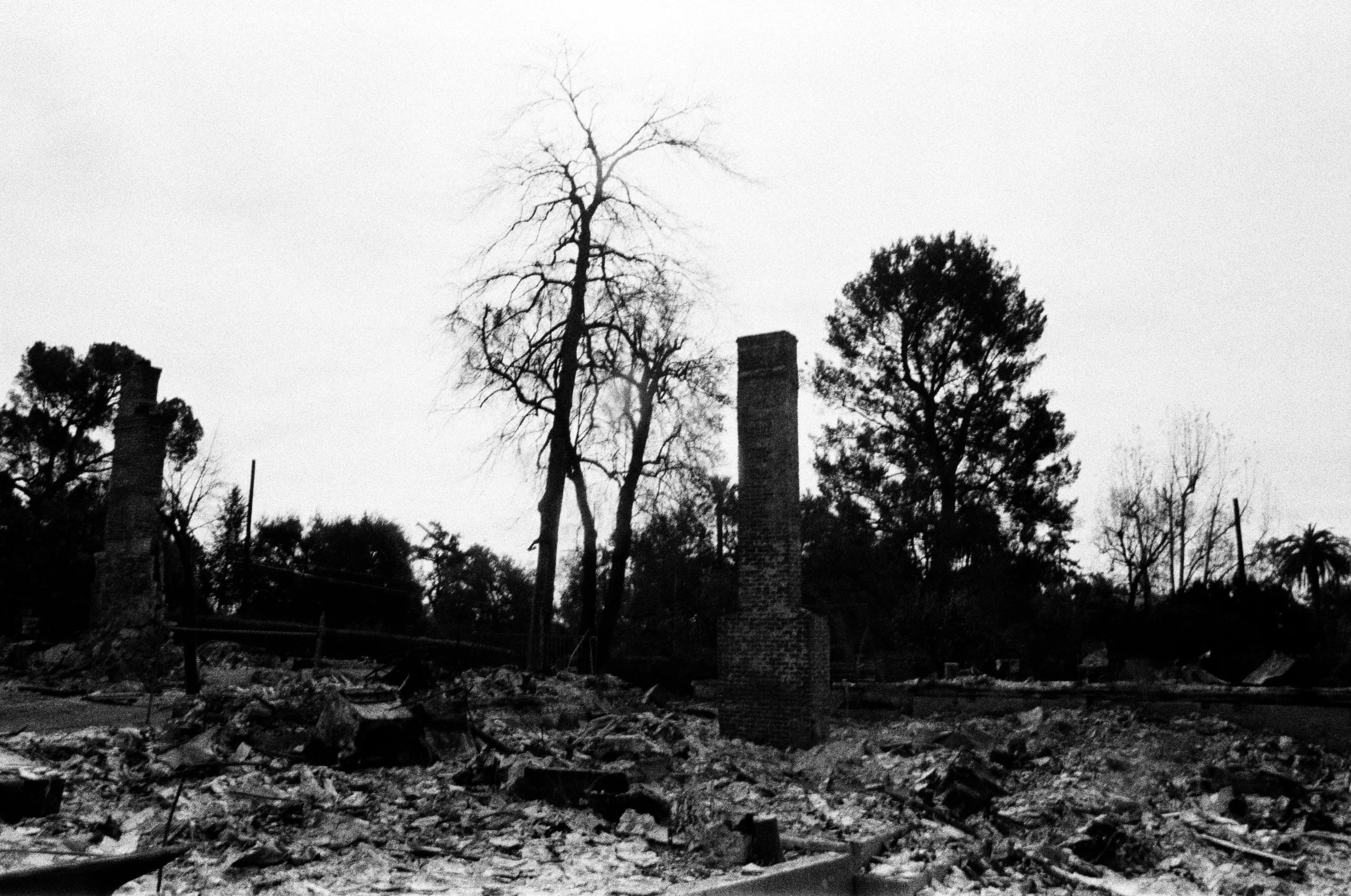
Is there a specific encounter or instant from your time working on the street that has stayed with you?
Honestly, no. And this brings me back to part of the previous question I didn't fully answer: the idea that a shot stays with you after you've taken it. The truth is, I shoot out of necessity. That's not a comfortable thing to say, but it's accurate. In the moment, I see the project as the end goal, and I never dwell on the memory of what I've made. Perhaps when I look back at the frames, something comes up, but not in the form of reflection, compassion, or excitement. It's simply a memory in the most literal sense: I remember that moment, I remember that scene, I remember that I was about to take a risk, I remember that we laughed. There is nothing nostalgic in it. It is purely mnemonic.I am quite apathetic in that regard.
What does a photo need to do to earn its place in your work?
Photography is something I am dependent on, that much is clear. But I am still at the beginning: I am on an upward path, if you can call it that, and I am nowhere near where I want to be as a street photographer. The photographs I make, and this connects back to your first question, excite me at the level of the final result, how they come out after development. I carry the memory of how I took them, and what thrills me is that moment when I go to collect the developed film and think: I wonder if it worked. And when it has (when it comes out exactly as I had imagined it in the moment I pressed the shutter, which might have been two weeks earlier) that's when I can say: we did it, it's perfect. But I remain dependent on the situation, on what happens, on the photograph itself. It's never a question of whether a photograph will make it into the project, the selection process is genuinely difficult for me because they all call to me, if they've all come out well. And then there are the many times when most of them are simply not good enough, and I have to work out how to play what I have. That happens less often than it might, because in my projects I don't shoot a great deal; I shoot what I'm confident I can deliver. So in a sense, the selection has already begun before I even raise the camera.
Is there a tension between the beauty of an image and the weight of what it depicts? How do you sit with that?
Absolutely, yes. And in this case it's less about material things like buildings or spaces, and more about people. Around 90% of the time, the people I photograph carry a story behind them, or have an immediate visual presence that would unsettle even the most cold-hearted, cynical photographer at the level of pure empathy.
There are situations where you think: I shouldn't photograph this. And yet you do, because the adrenaline that a single person generates in a street photographer goes beyond empathy, beyond compassion, beyond any other consideration. A selfish adrenaline takes over, I am aware of that. It may not be a comfortable thing to say, but absolute honesty is, in my view, always the most reliable form of communication.
What does the street look like to you on a day when you're not working? Do you ever fully stop seeing it as a photographer?
The streets I walk every day - through my other work in fashion and music, or simply living - I look at them with ordinary eyes when I'm not in project mode. I always have a particular attentiveness to what surrounds me, and that doesn't have to be the street specifically; it can be any kind of environment. I am drawn to photography, and I preserve my photographer's eye even when I'm not carrying a camera. There are days where I deliberately leave everything at home, I only bring equipment when I've decided to work on a project. There are entire weeks where I am completely off the camera.
I don't feel the need to photograph something that hasn't yet convinced me. Which brings me back to what I said earlier: I only shoot what I'm confident I can shoot. Better to go in with a sure hand than to fill yourself up with material that becomes forced. For me, forcing it is the worst possible outcome.
As for the street itself (especially in the places where I live) it feels, as I imagine it does for anyone, more familiar, more habitual. So what presents itself tends to feel less strange, less particular. The extraordinary is harder to find on your own doorstep.
Any upcoming projects you’d like to share with us?
There are two or three projects in the works that should come out within the next few months, or perhaps over the course of the next year. They are all rooted in street work and in direct interaction with people. One focuses on Rio de Janeiro, specifically the gangs of Rio. Another deals with the traumatology and traditional rituals surrounding the Calcio Storico Fiorentino. And then there is a third, which will be a follow-up to a project I completed two years ago called OPP: On Parle Pas, the name I gave to a fanzine I made about the gangs on the outskirts of Paris. That book will have a second part, which I think will be the first of the three to come out.
What to read next