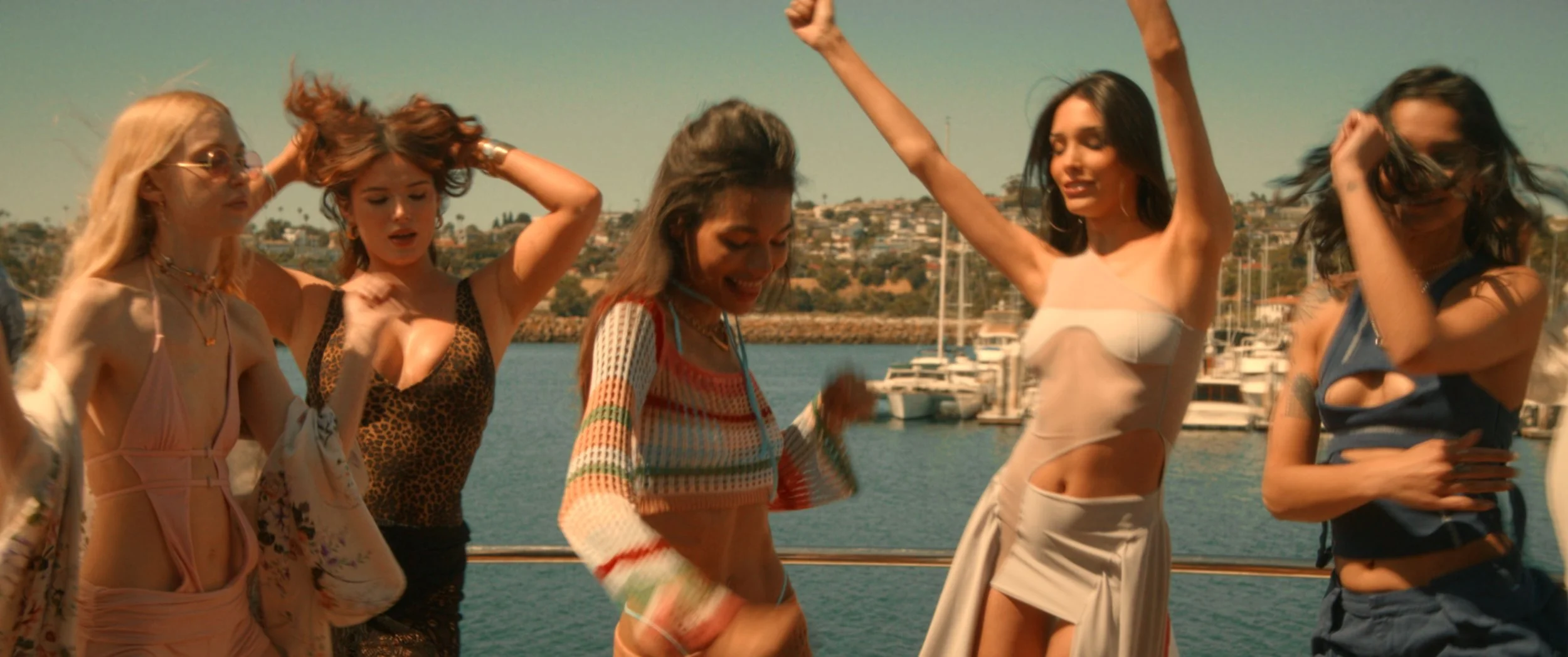
‘Find Your Friends’ by Izabel Pakzad
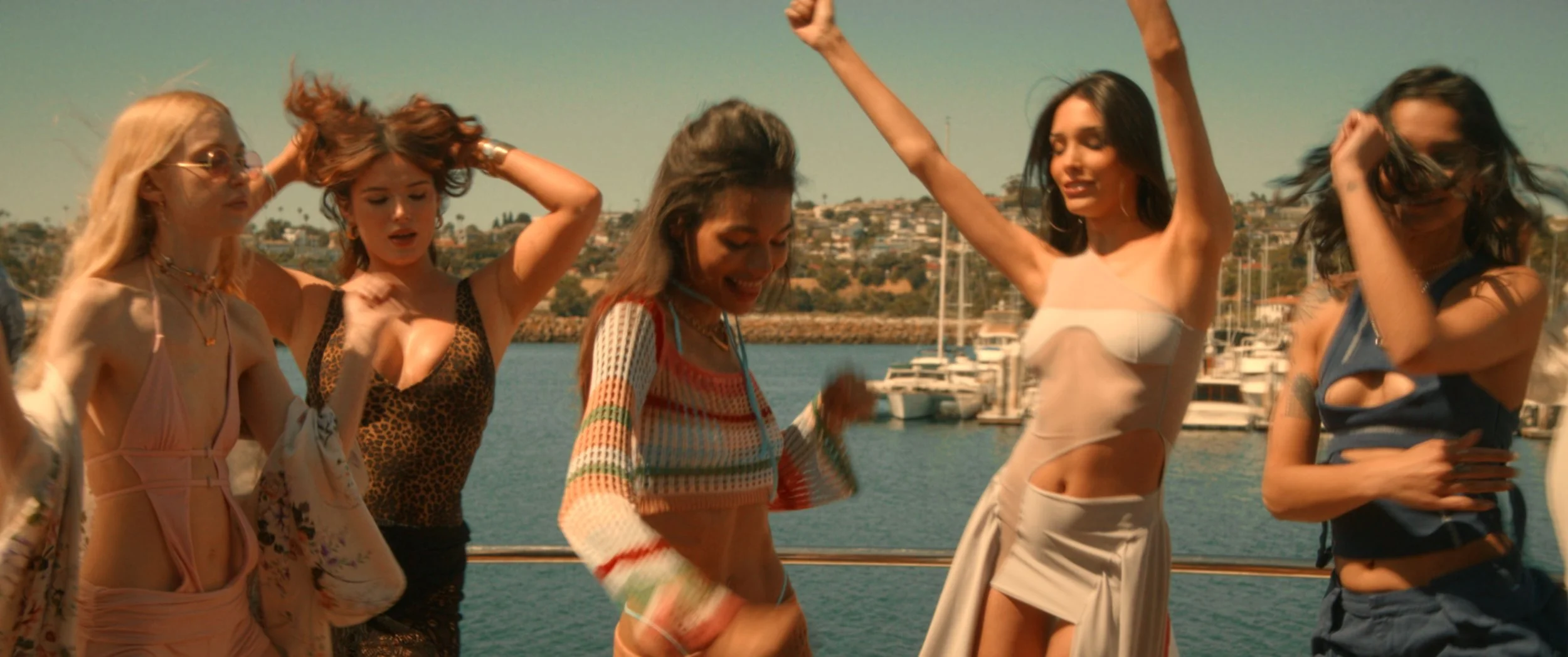
Find Your Friends is a film about what it costs women to be believed, and what it costs them not to be. Izabel Pakzad's debut feature follows a group of young women on a weekend trip to Joshua Tree that turns dangerous in ways both external and interior, a real threat from outside and a quieter reckoning happening within the group itself. Pakzad wrote the film from experience. A real girls weekend, a real creeping sense of being unwanted, and a real car chase down a dark desert freeway with a stranger who blocked their exit and then refused to let them go. She escaped. Years later, she made a movie out of it.
What separates this from autobiography is Pakzad's understanding of genre and her refusal of its most comfortable rules. The final girl in Find Your Friends is not sweet or restrained. She is messy and loud and complicated, and she survives anyway. That is the film's central argument: that young women rarely get to be all of those things on screen without being punished for them. Pakzad puts that punishment somewhere else entirely. She came to directing through acting and through years of genuine directionlessness. No film school, no industry background. Just a clear vision and six years of refusing to let it go.
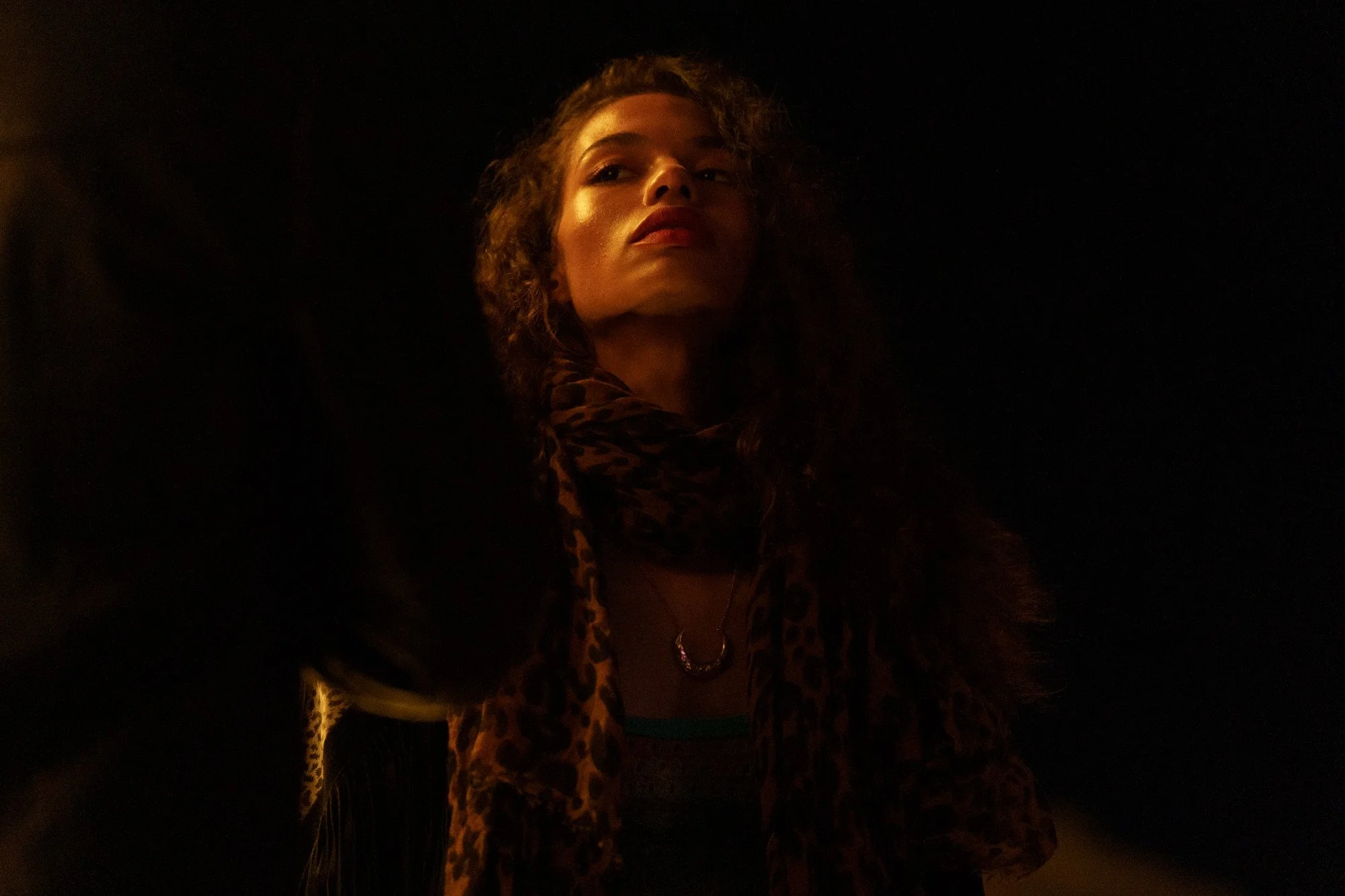
I watched the film last night at the premiere and loved it. Can you tell us about the real experience that inspired it?
The short version is that me and my best friends went to Joshua Tree for a wild girls weekend for the first time. From the moment we got there, something felt wrong. We had this weird neighbor who kept appearing, being really creepy, and we kept having strange interactions with some of the locals. It felt like we weren't wanted.
Then one night, around two in the morning on a Saturday, I had to drive back to Los Angeles. One of my friends was with me. Keep in mind, we are not in the city. The desert is very quiet, very desolate, there is no one around. I pull out of the Airbnb driveway, which is on a dead end street, and there is a green Mustang parked outside with its lights off. As I pull out, he turns his car on and blocks me into the dead end. I knew immediately it was premeditated, so I drove right over the neighbor's lawn to get around him.
Then we got into this seven, eight, maybe ten minute car chase on the freeway, with him trying to swerve into us and run us off the road. We were trying to call the police but had no service. We could not get hold of anyone. Eventually there was a car in the distance, we honked and waved until we got their attention, and then he drove away. His license plate was fake, written in letters and numbers. It was one of the most terrifying experiences of my life.
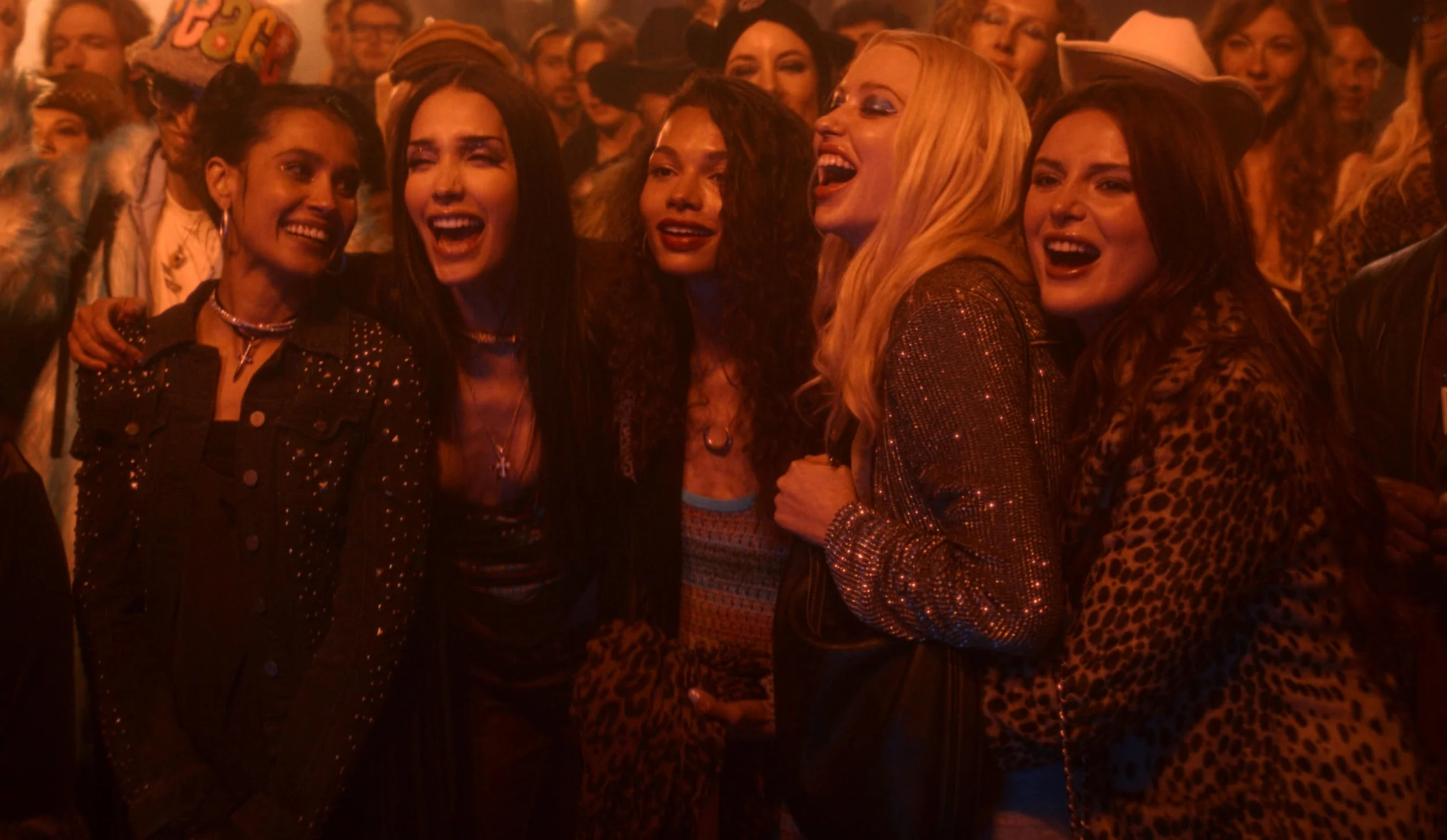
That sounds absolutely harrowing. How did that personal trauma translate into the film's tone and its exploration of violence?
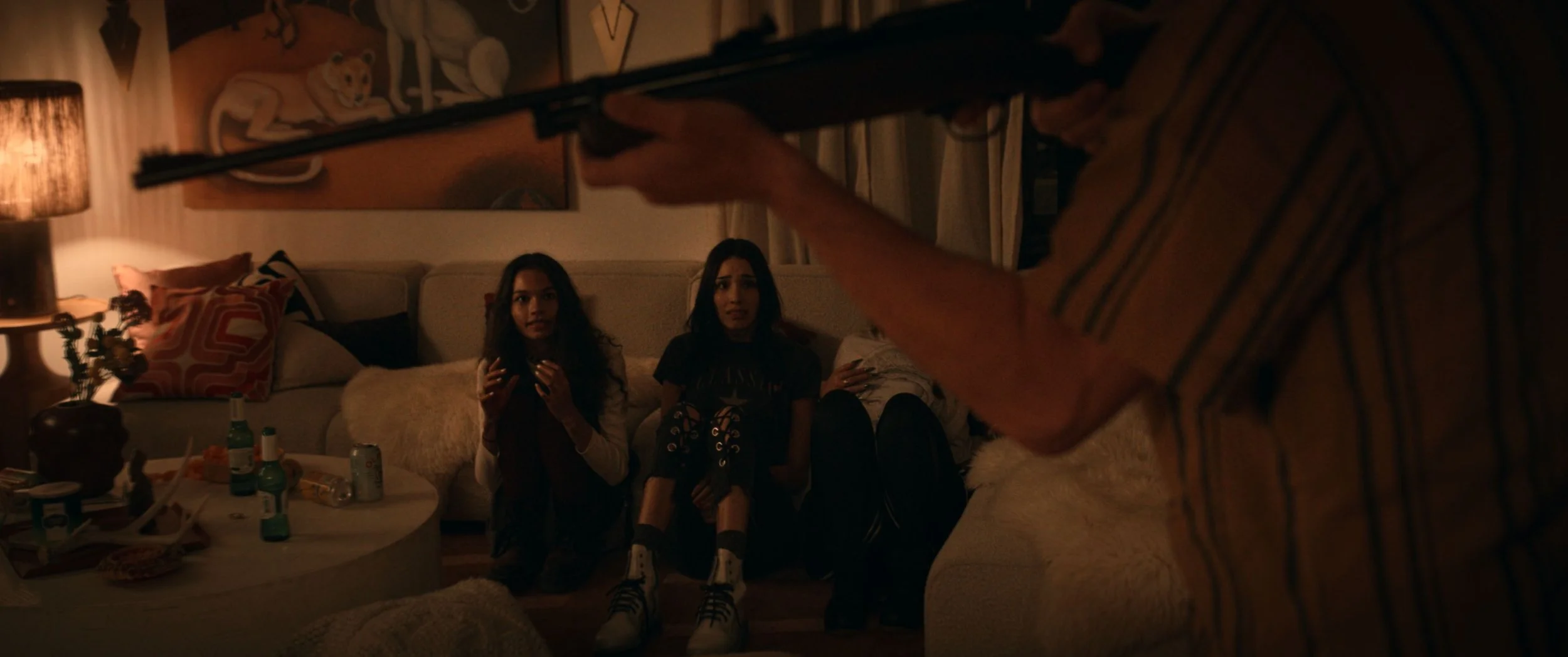
I wanted to make a genre film where the scary feeling does not come from jump scares like a traditional genre movie, but from what is realistic, from that real brush with danger that women feel sometimes in these scenarios. I wanted to shine a light on that, and also on frat culture and the real danger that exists there too, because we are taught to brush things off and not ruffle feathers. The film walks the line of showing how women feel in these situations, whether in the desert or at a crazy college party. I tried to emulate that feeling as honestly as I could. Obviously, it is still a genre film so I am pushing things to extremes, but even when it goes to extreme places, I think a lot of it is rooted in truth.
How much did your work as an actress shape your approach to filmmaking?
I went to college and studied writing, but I never knew I wanted to be in filmmaking or acting. I was really lost in my life, similar to Amber's character in the sense of not knowing where she wants to go. I went to a really crazy American party school where drinking was the thing to do and people get really lost in that bubble. That was me for a long time. I was very directionless for a while, and then I felt this need to shake myself out of that haze and do something with my life.
I moved to Los Angeles. I had always loved movies and watched films with my dad growing up, all the David Lynch films, and that was a really important time for me. It made me love cinema, but I never really knew how to be a part of it in a way where I could work and pursue it. My family is all in construction, so I never knew it was an option.
So I moved to Los Angeles, worked a normal job, then started taking acting classes and thought, I love being creative. I want to perform, I want to do something in this business. I just didn't know it was possible. I ended up taking some directing classes too at the UCLA extension, and then I just felt this urge to do it. Having the perspective as an actor made me more sensitive as a director. It made me feel like I could connect to actors in a way that maybe I wouldn't have known how to do if I had just jumped straight into directing.
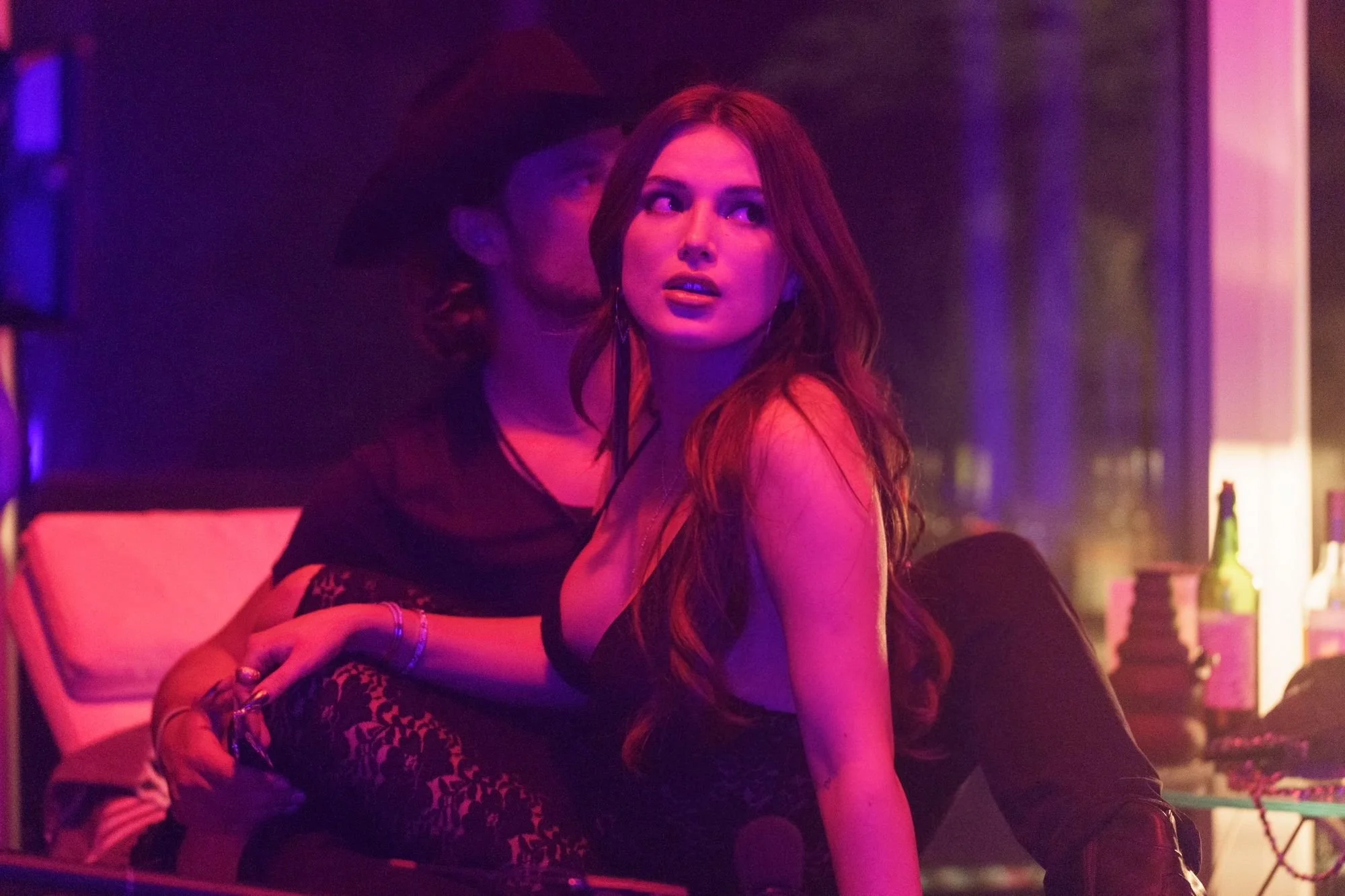
We noticed a cameo of you appearing in the film as an actress. What was your reference point for that, and why did you choose that particular role?
There was no deeper meaning, honestly. It was one of the last days of shooting and I just wanted to be in the movie. I wanted to have fun and be funny. Especially at the end of the shoot, everyone was letting go a little, leaning in, and it felt like the perfect time for me to do the cameo. It is kind of an intense one, to be honest, but we were all so close at that point that it felt completely organic and free.
How long was the shoot, and how long did the entire process take overall?
The shoot itself was 21 days, not super short but not super long either. The whole process, though, took about six years. We shot around a year and a half ago, and then came the editing, the sound, all of that. It feels crazy to look back on it now.
Where did you shoot the film?
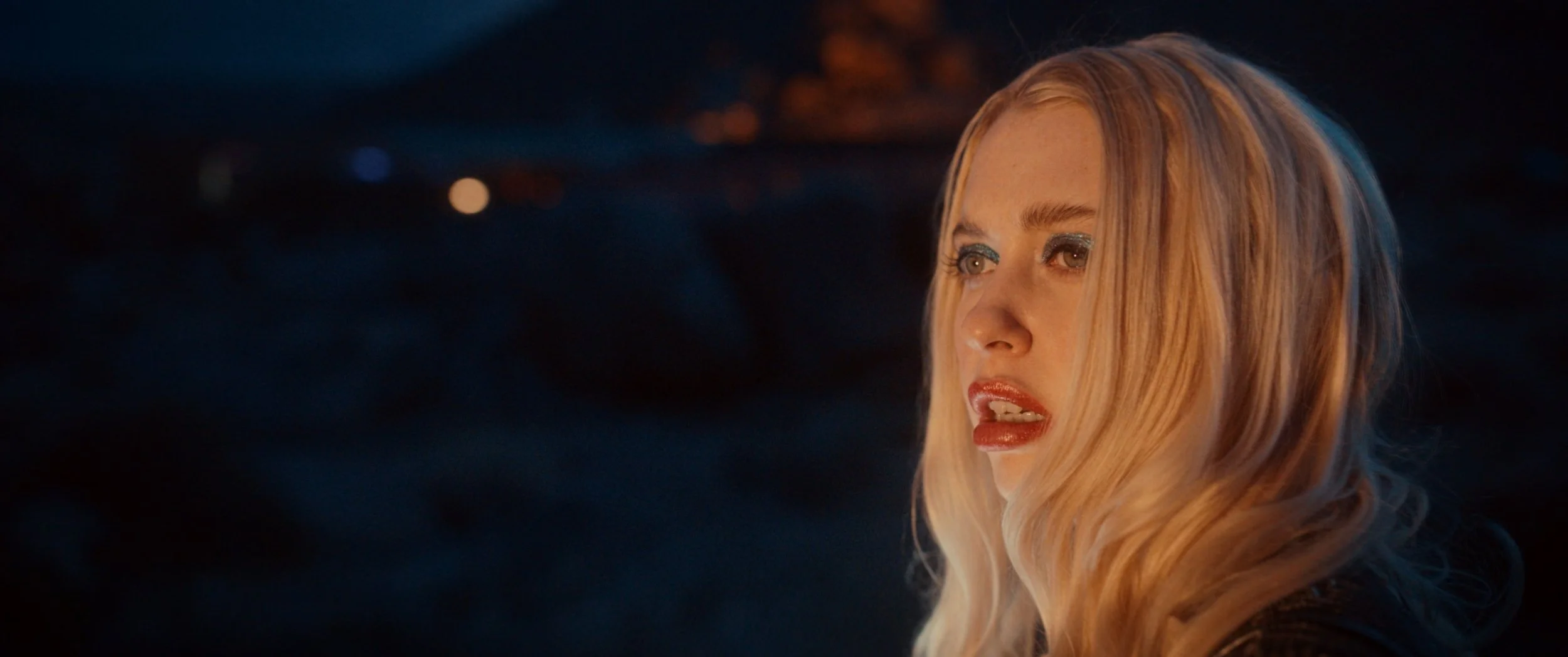
Joshua Tree. We went to the real-life location where everything happened. We shot in the National Park, at the Invisible House, which is a landmark there, a really big deal in Joshua Tree, and in some really special local places that are authentic to the area. I worked really hard to secure those locations because it is not easy. You need a lot of approvals, people have to get behind your movie, and the owners have to be okay with it. But it all worked out.
Is this the kind of filmmaking you want to continue exploring, pushing boundaries and working in genre?
I am open to everything, but I am definitely interested in making films that feel important, bold, and unapologetic. Those are the filmmakers I respect, and those are the kinds of films I want to make. Who knows, maybe in ten years I will want to make a romantic comedy, but right now, that is not where my head is.
What were the biggest challenges you faced in financing the film?
Raising money is just so hard when you are making your first movie. You have nothing to show for yourself other than a short film, and people have a hard time trusting you and investing in you. So you have to hustle and convince people to believe in you, which takes a lot of hard work: putting the right cast together, making it make financial sense, showing people you are capable of taking their money and putting it to good use. It is a lot of pitching, a lot of selling yourself, which feels very separate from the creative side, but it is essential because you need money to make a movie. With this film in particular, because it is such a bold project, it can be scary for some people. But I tried my best to be as convincing as I could and eventually it paid off.
How do you see the generation of young people today in relation to the themes of the film? The characters are dealing with a sense of being lost, with excess, with danger.
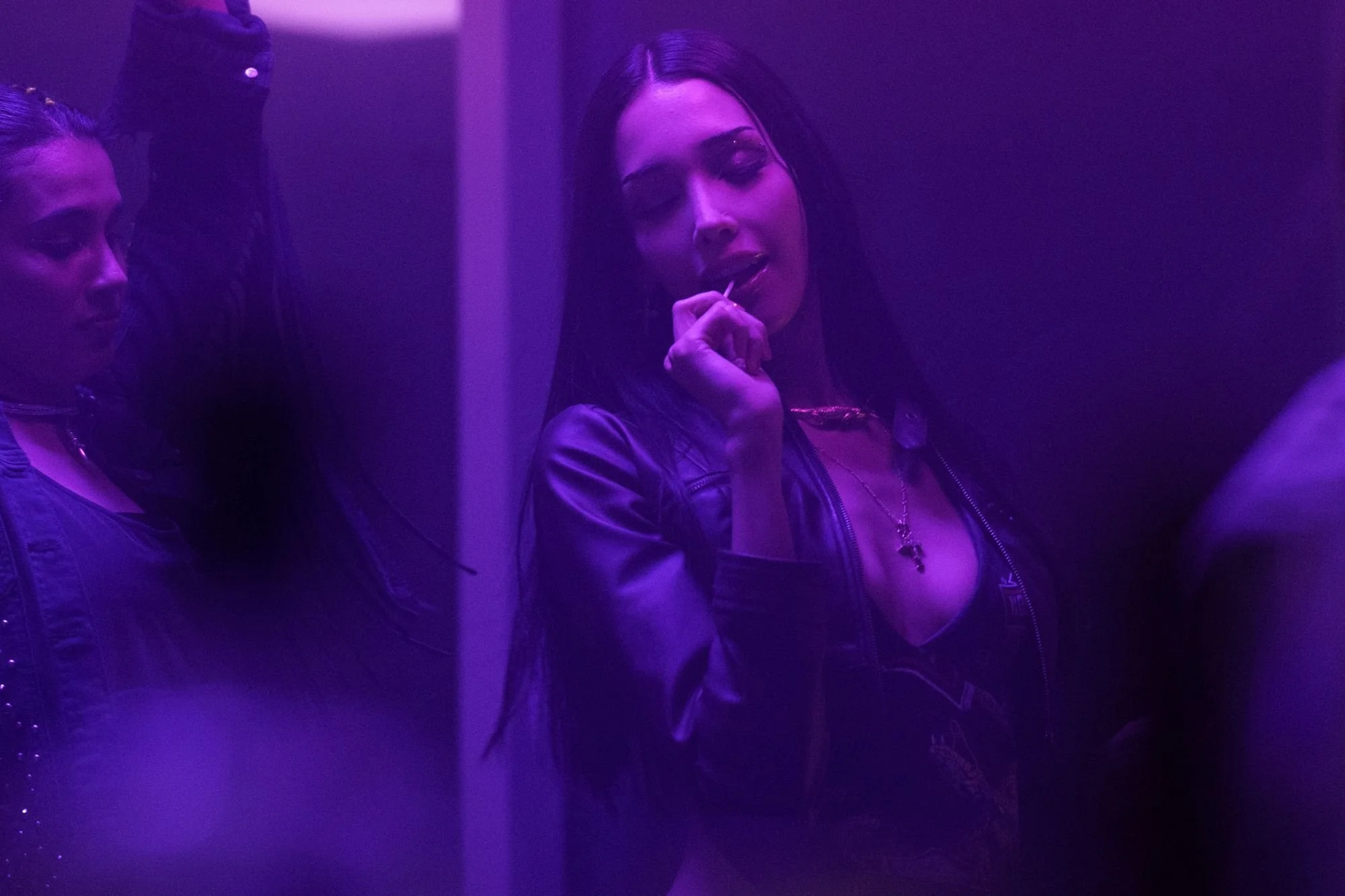
I am a millennial, so I am not sure how much this speaks directly to Gen Z, but I was very lost at a certain point in my life, very wrapped up in college life, drinking, partying, being aimless. I always look back and think, I wish I had known what I wanted to do sooner. My advice to young people would be to find your passion as soon as possible and pursue it, because when you have meaning and purpose, life just feels so exciting to live. During that time when I had no idea what I wanted, it was actually a dark period, even though it was masked by all the fun and partying. But at the same time, I would not have made this film. So everything works out for a reason in some way. Find what you love and go for it.
On a practical level, what were the main challenges of directing the film itself, from production through to the editing process?
I did not go to film school. I went to college, studied writing, and it was unrelated to film, so I was really learning as I went, which was a fascinating experience. You realize how much goes into directing a film. It is your vision, and you have to be so clear with everyone about what you want, the actors, your department heads, your editor, everyone. You have to feel it in your bones.
I was so passionate about making this and I could see in my mind what this movie would be. Having that clear vision made it possible to carry it from start to finish, even with all the hurdles along the way. And I cannot stress enough how important it is to surround yourself with people who are smarter than you, really talented actors, department heads, an editor, sound people, people who can give you honest feedback. Directing is extremely collaborative, and I love collaborating. I was so happy to share my thoughts and get feedback from the people working on the film. The big takeaway was really understanding that it takes a village to make all of this happen
What advice would you give to young directors approaching the industry for the first time?
Believe in yourself and keep going. People are going to say no to you a hundred times and you have to be able to push forward. Take feedback from people who genuinely want to help you, but do not dwell on every critique of your script or whatever it may be. Sometimes I would hear, I do not like this, I do not like that, and I would start to spiral. You cannot let that happen. You have to know what you are making, do your work, and understand that people are going to have opinions. Some will like it, some will not. You just have to keep going.
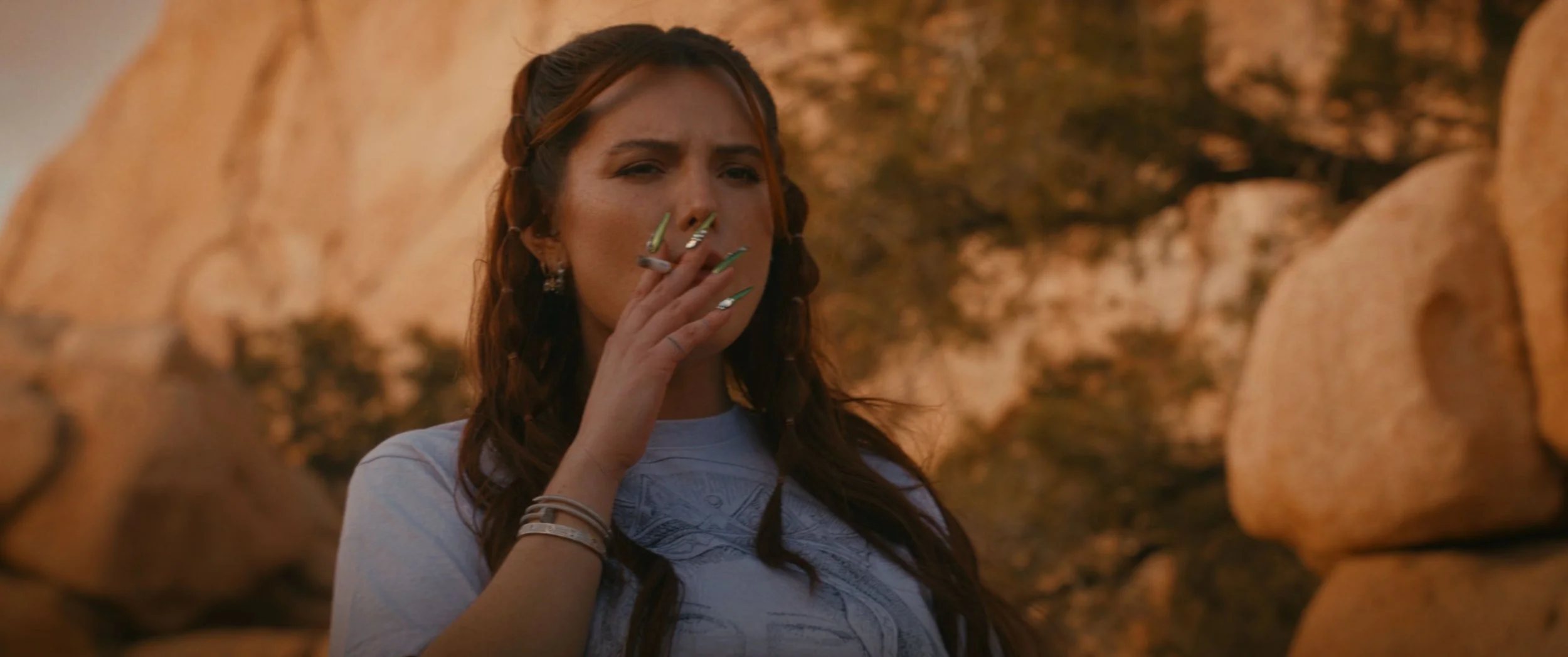
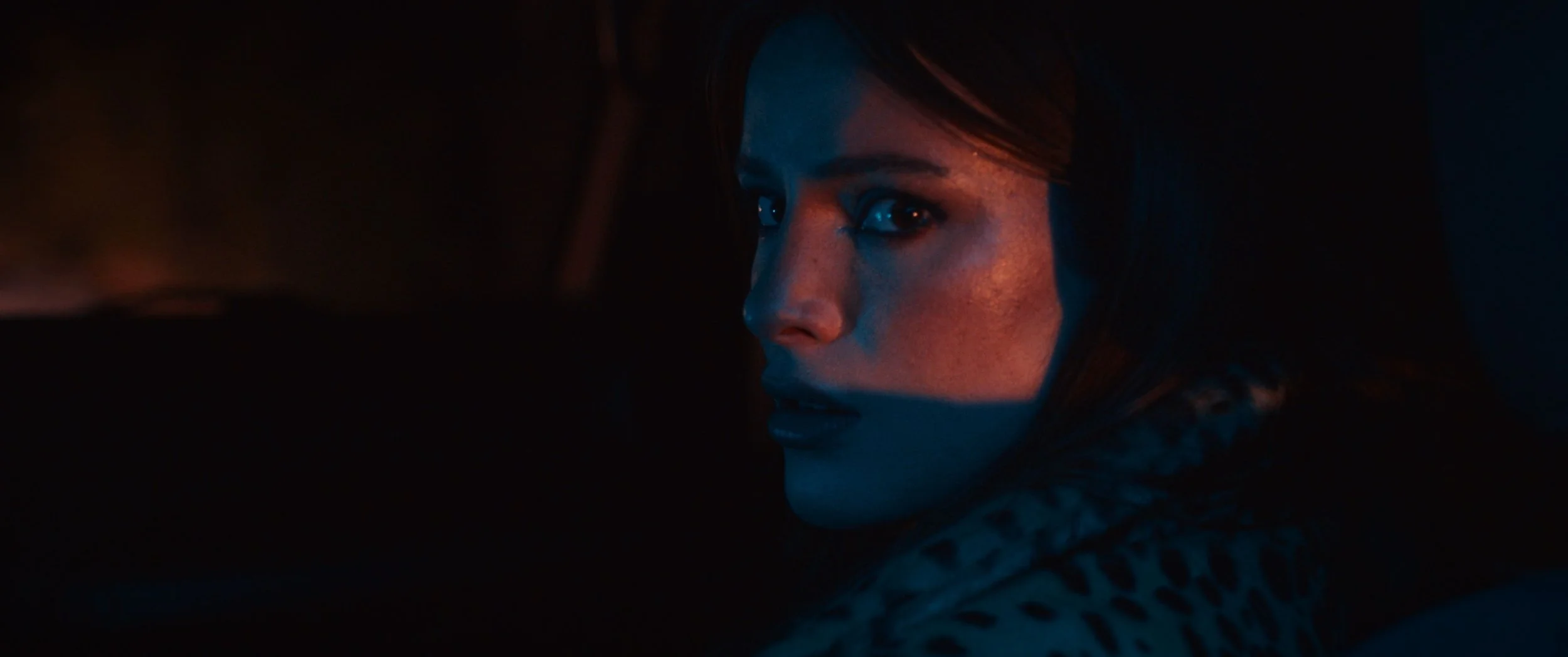
The cinematography is stunning. The colors, the handheld work, the closeness to the actors. Can you tell us about your collaboration with your DP?
He is amazing. He shot three films that I think were Italian productions but from a filmmaker based in New York, Ashambra, Akiara, and Mediterranea, and all three went to Cannes. I watched those films and thought, who is this DP? He had such beautiful handheld work, and I knew that was what I wanted for my movie. We had the best working relationship. We shot the whole thing on a low budget with a five-girl ensemble, and he was able to capture everyone and make it feel like we were right there with the girls. He had incredible ideas about the color palette and we were really aligned on all of it.
Were the actresses in the film people you already knew, or did they all come through the casting process?
I did not know any of them before the film. It all came through the casting process. They are my friends now, though. We get along so well and I love them. What we went through together in Joshua Tree was a wild ride, a truly crazy experience that bonded all of us.
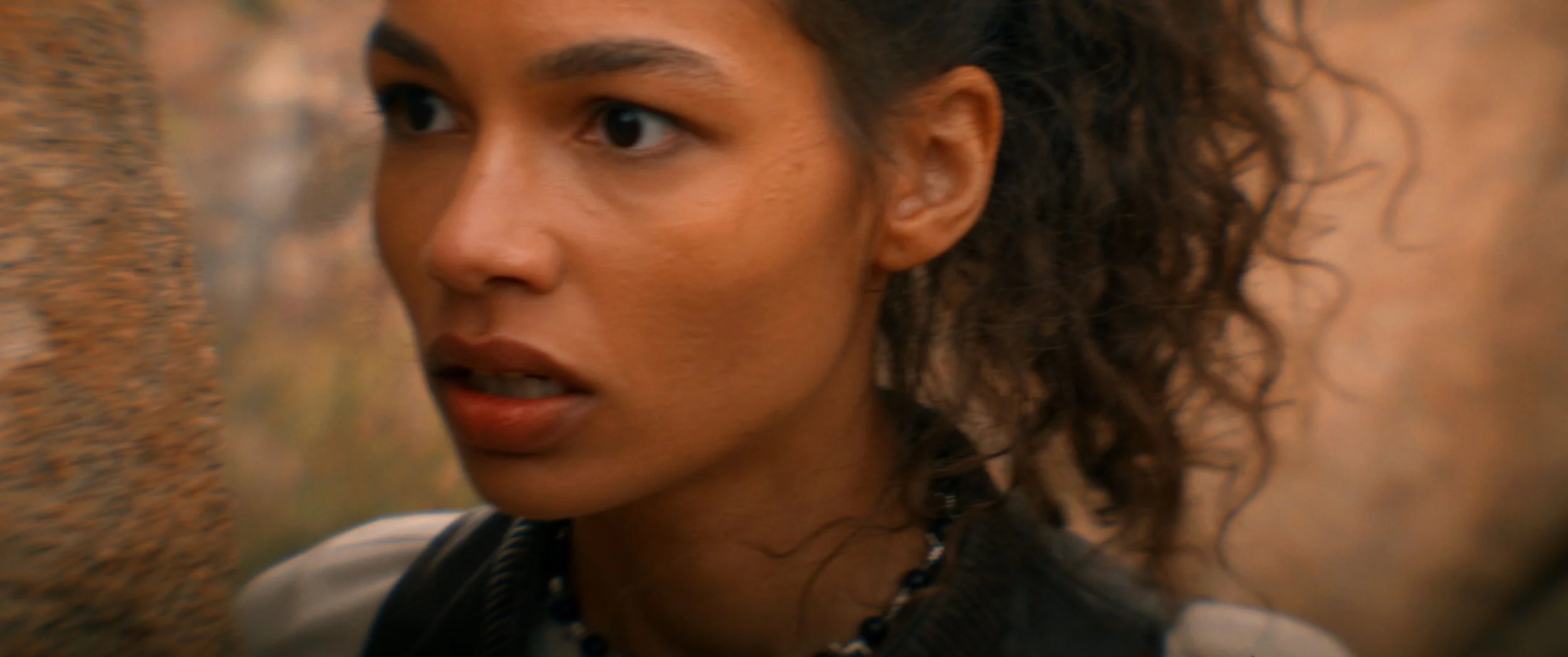
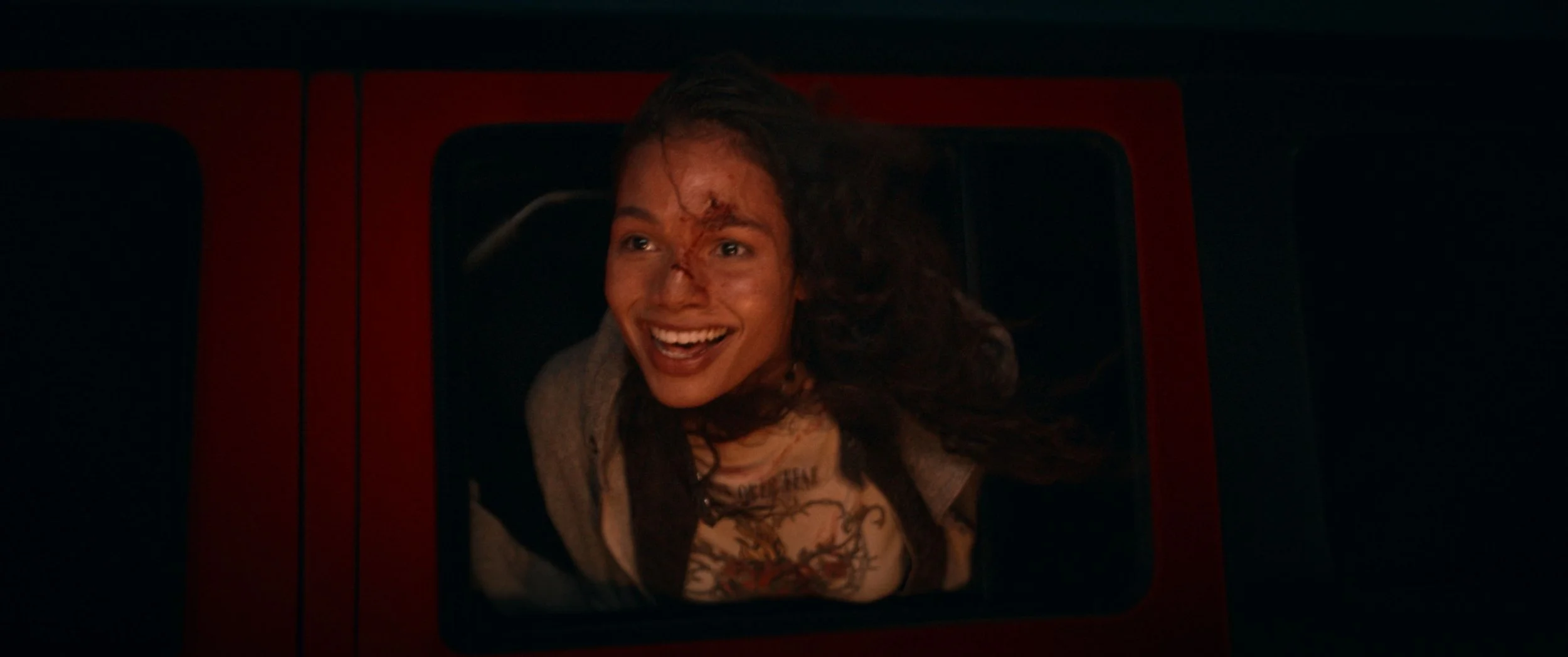
Is there something specific about the film that you feel is important to highlight, something that defines what you were trying to do?
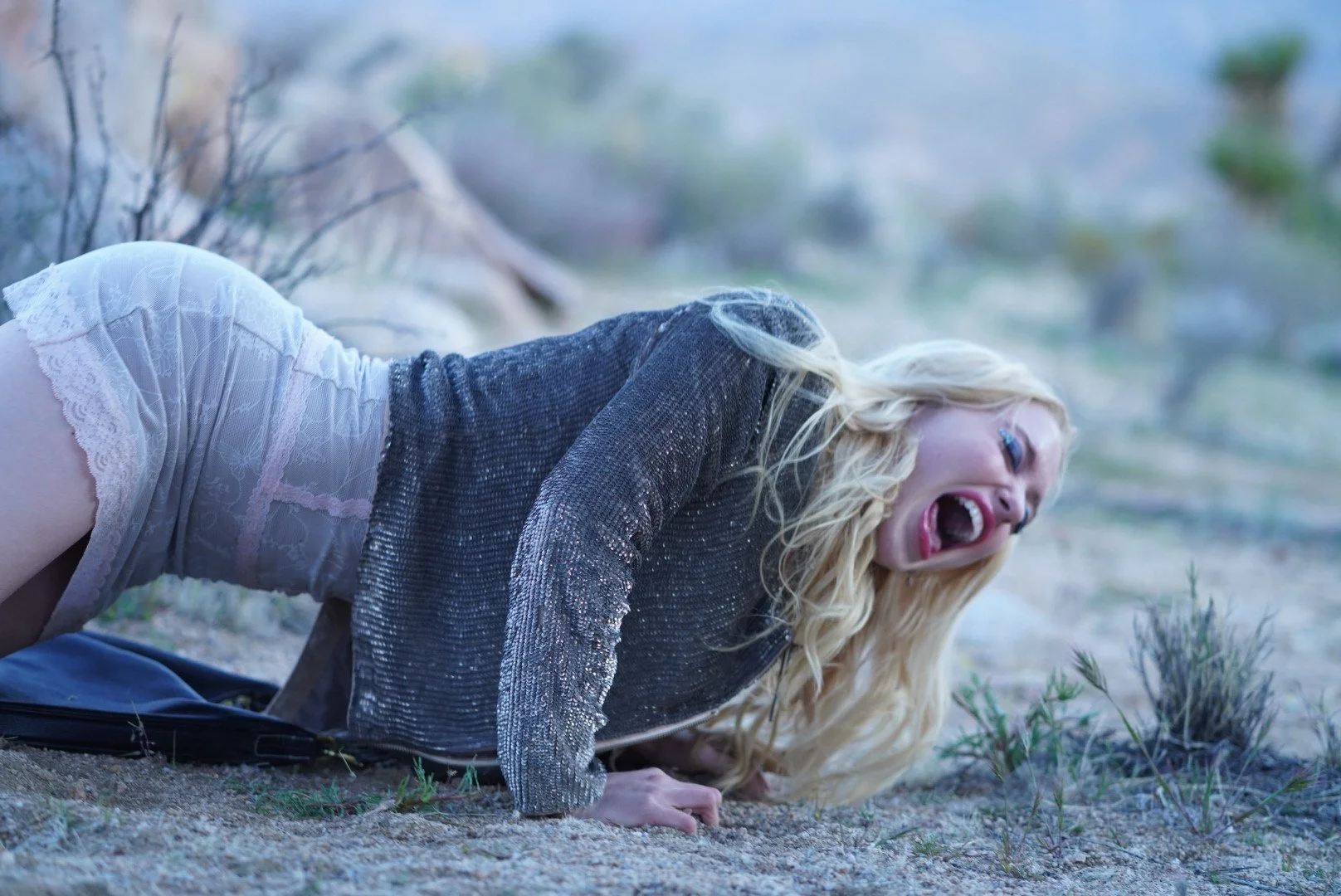
One thing I want to talk about is the final girl trope. Genre movies tend to fall into this pattern where the girl has to be pretty, sweet, and innocent to survive in the end. What I was trying to do with this film is show girls who get to be vulgar, angry, messy, crazy, who have no problem talking about sex, and who still get to survive and take their power back in this badass, complicated way and celebrate it. For me it is about reinventing what the final girl can look like. Young women in films rarely get to have those traits without being punished for them, and I think that is a really important thing this film is doing.
Are there any filmmakers working today who have particularly inspired or moved you recently?
The Substance by Coralie Fargeat completely woke me up. I was blown away. And then there is Gaspar Noe, Harmony Korine, Julia Ducournau, I am obsessed with all of her films. Those are the filmmakers I am excited about right now.
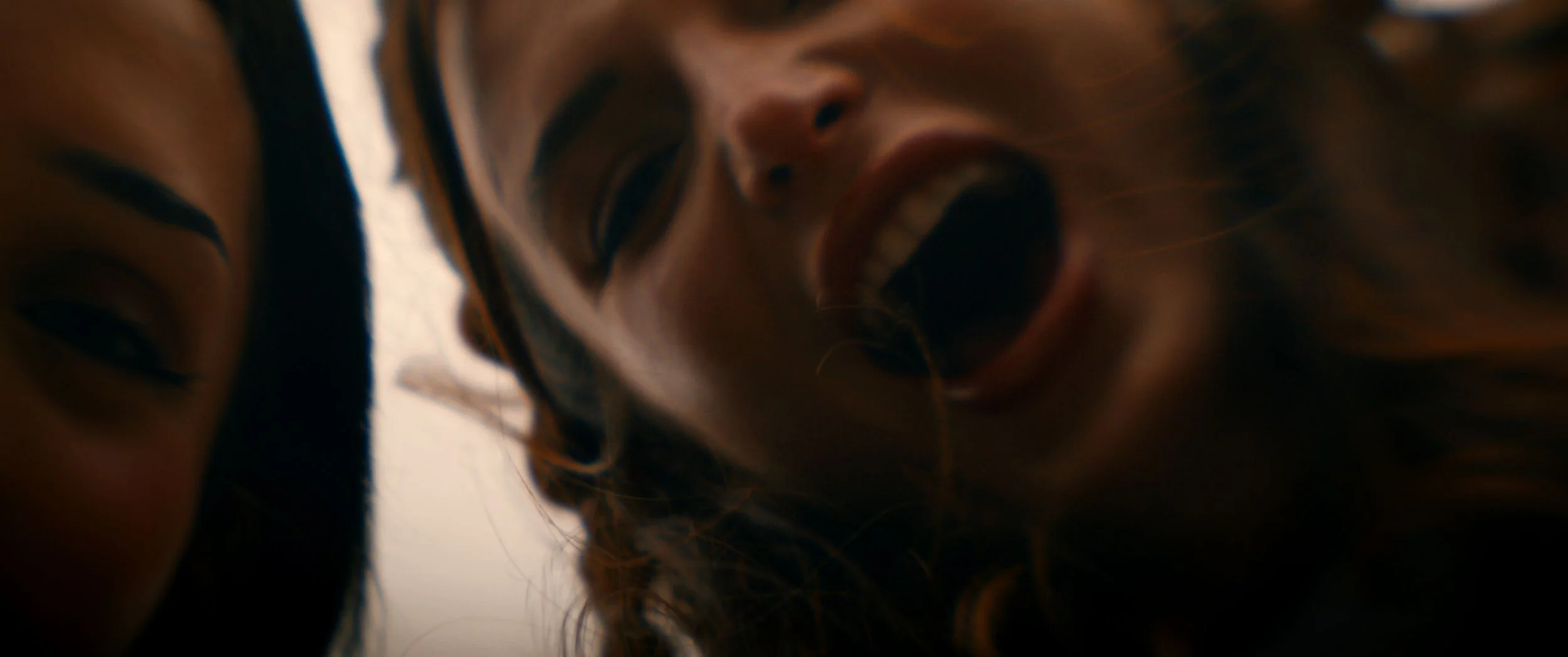
Find Your Friends
Directed by Izabel Pakzad
Interview by Donald Gjoka
What to read next