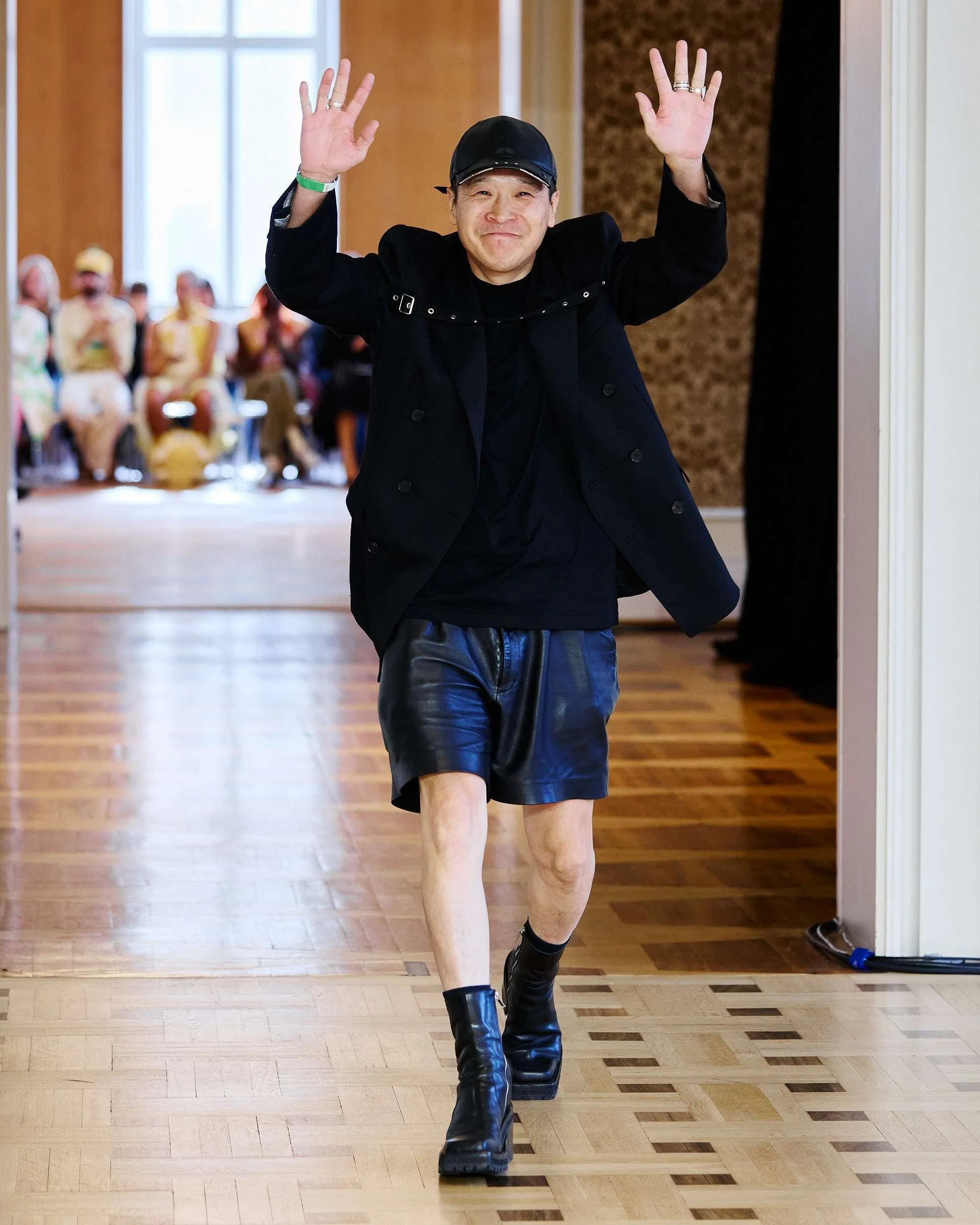
JOHN LAWRENCE SULLIVAN By ARASHI YANAGAWA SS27

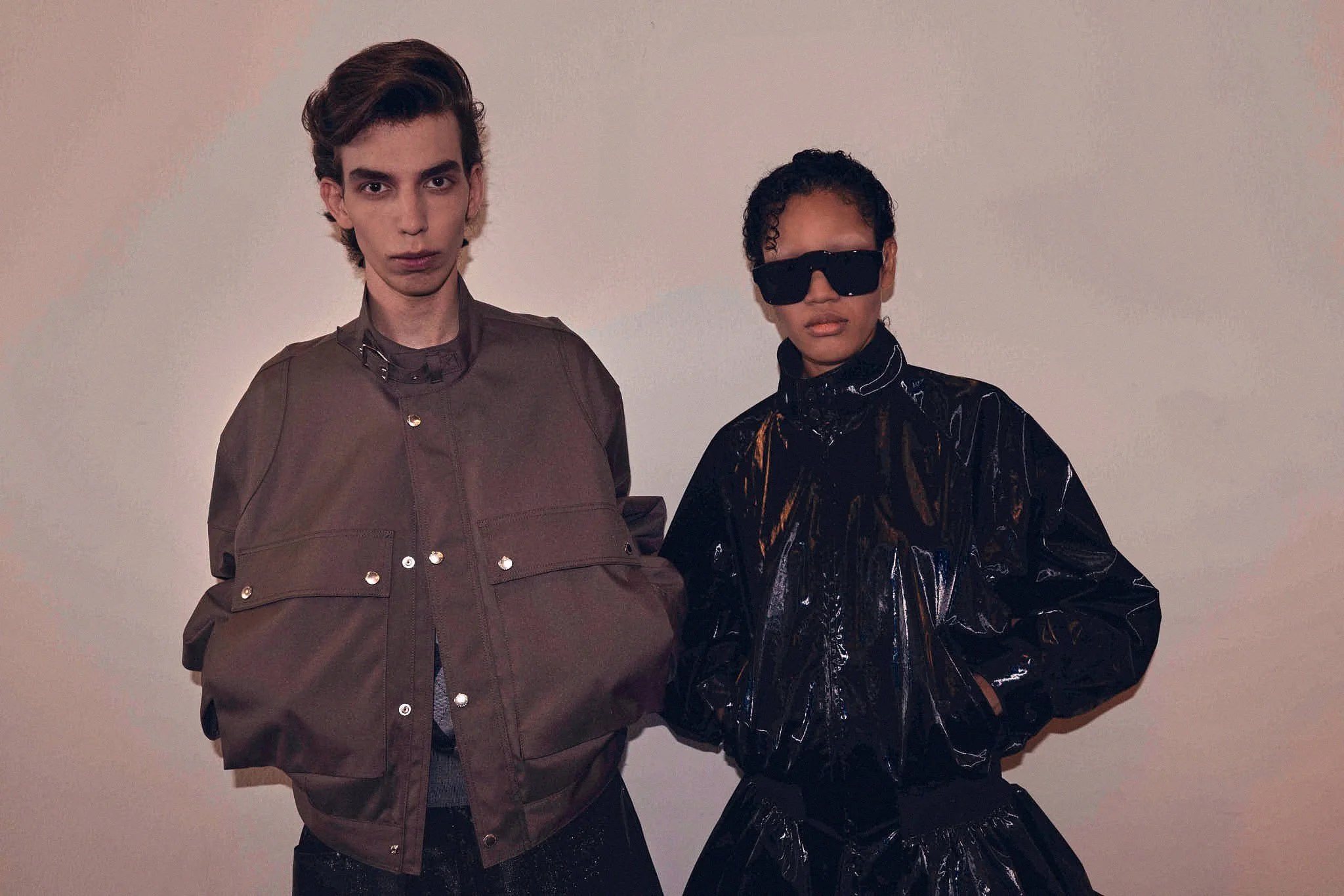
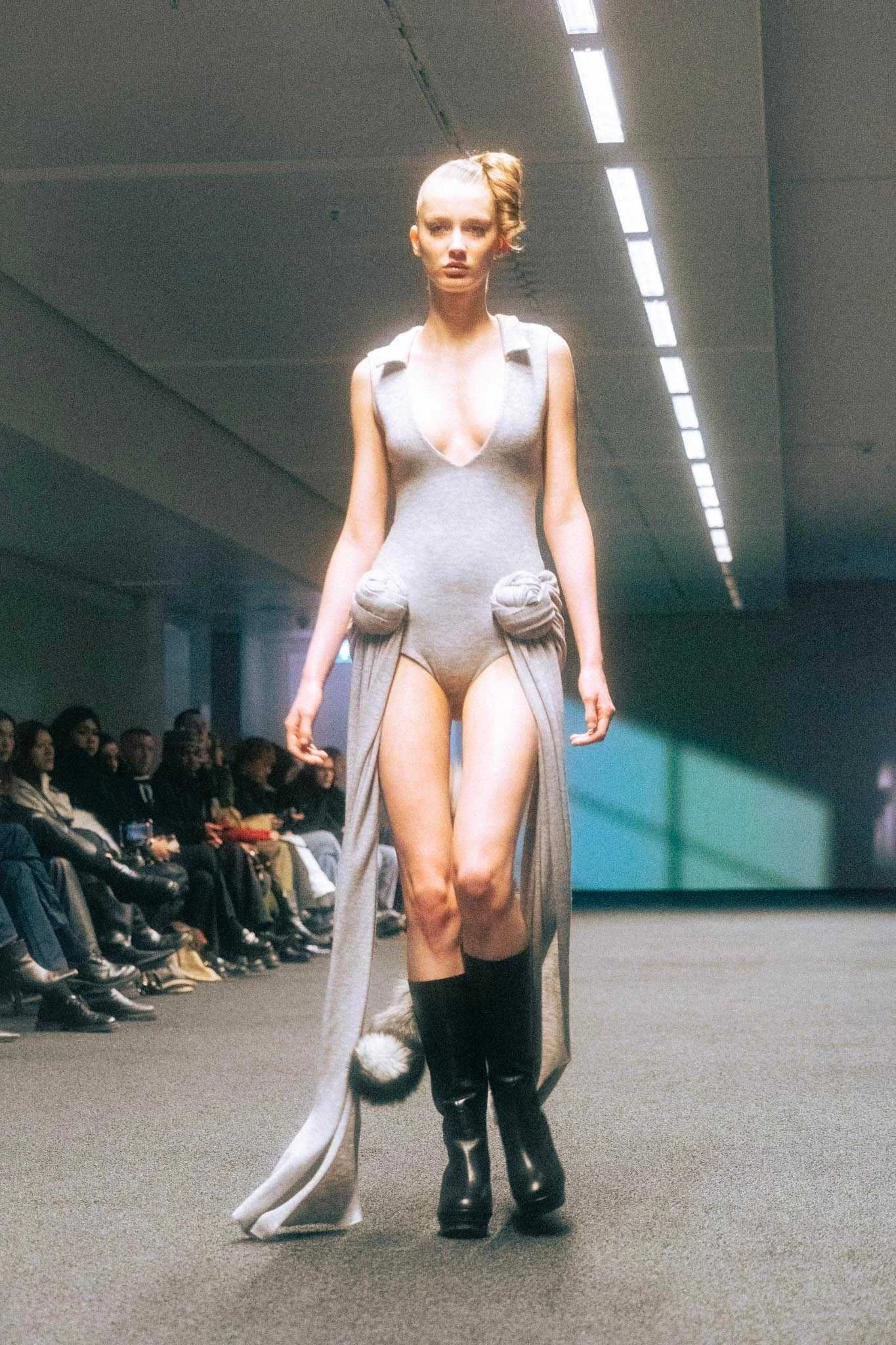
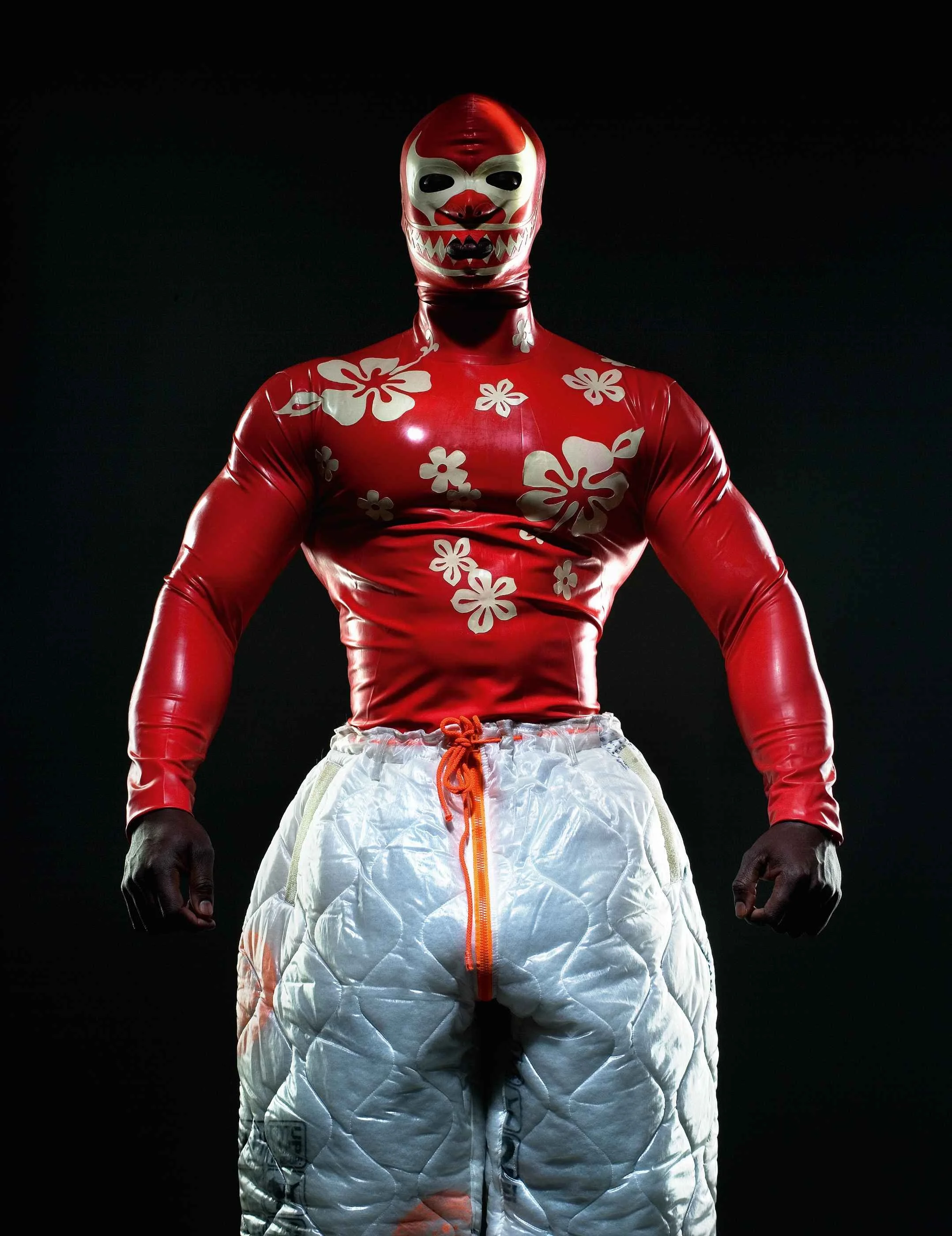
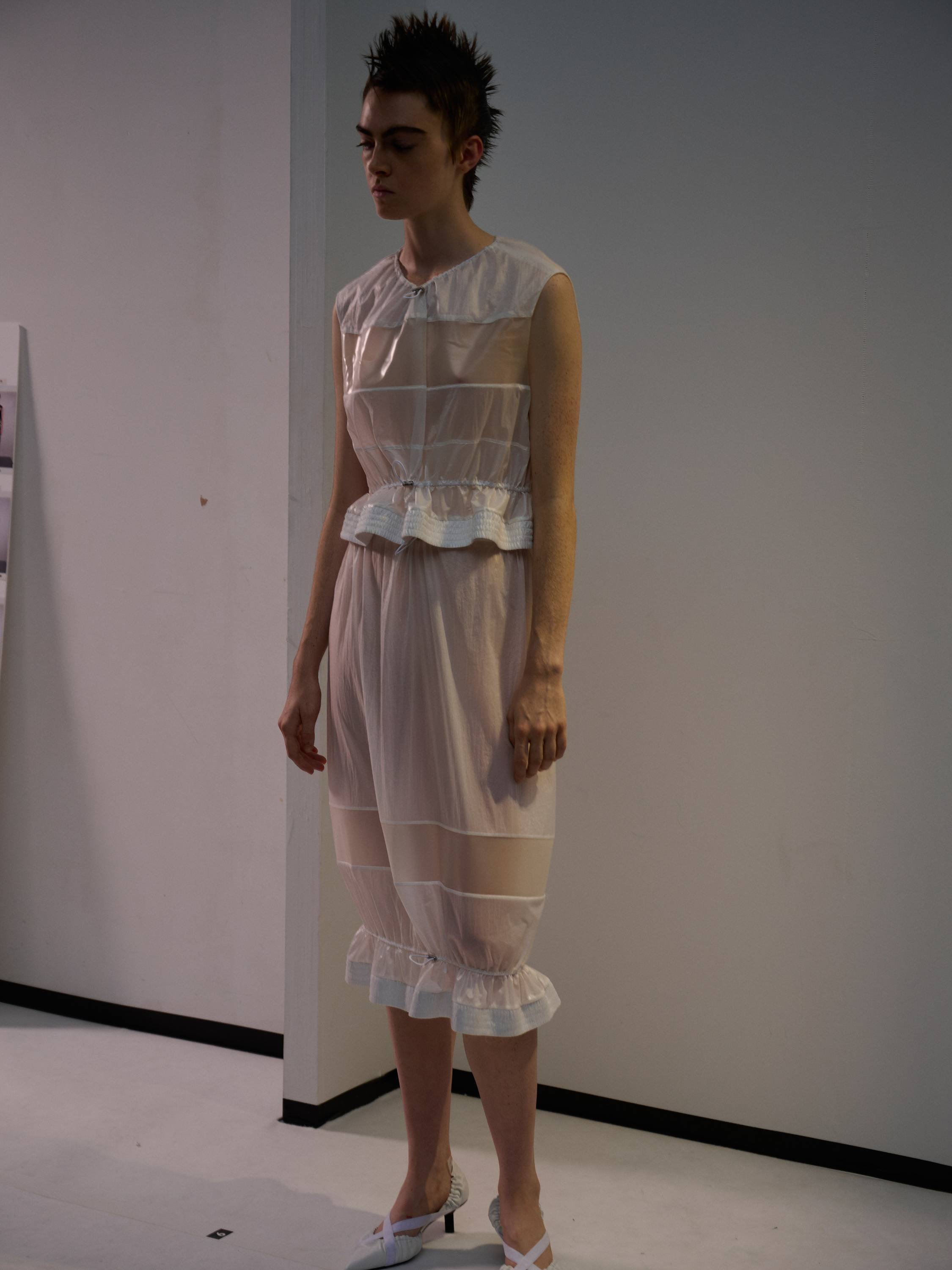
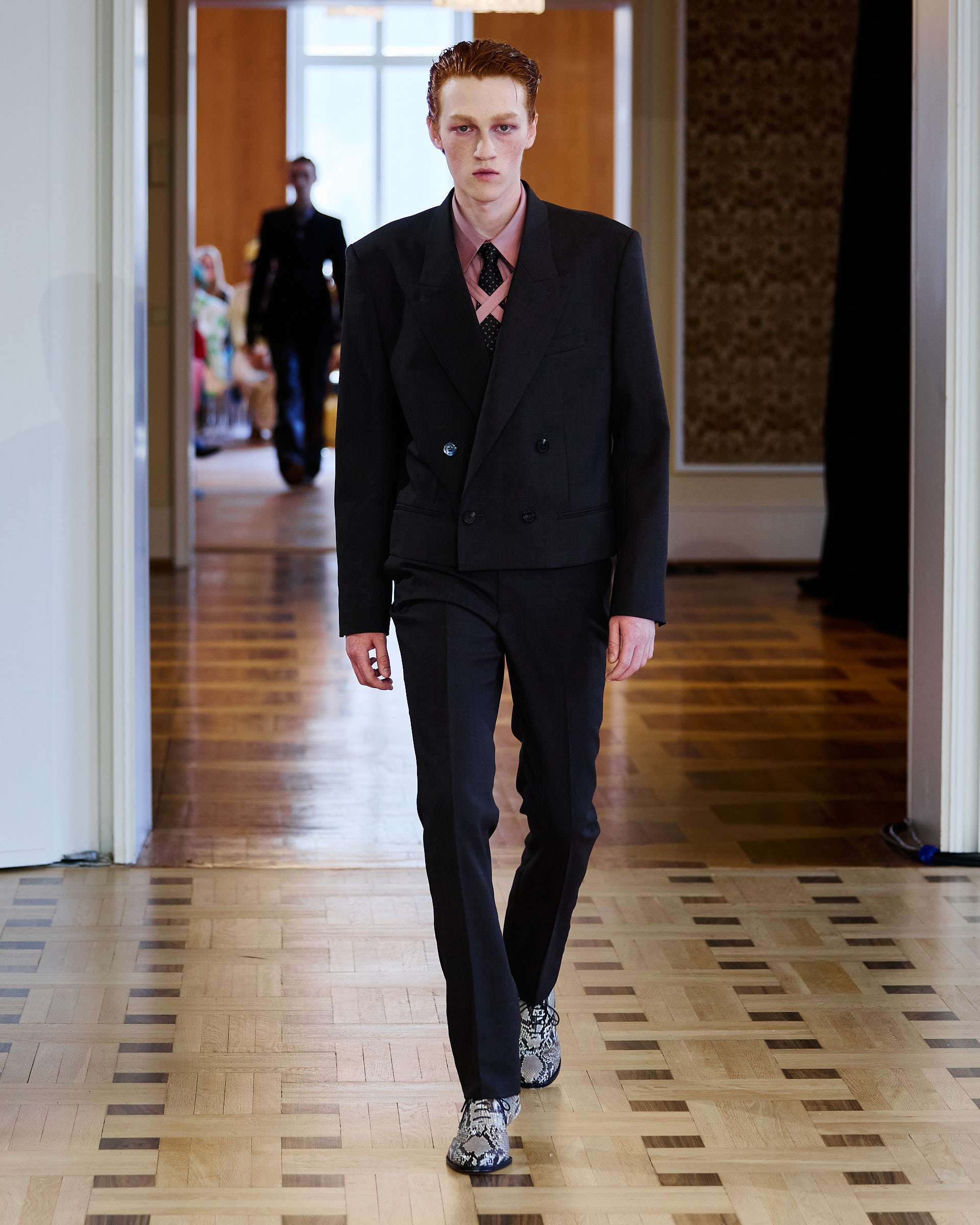
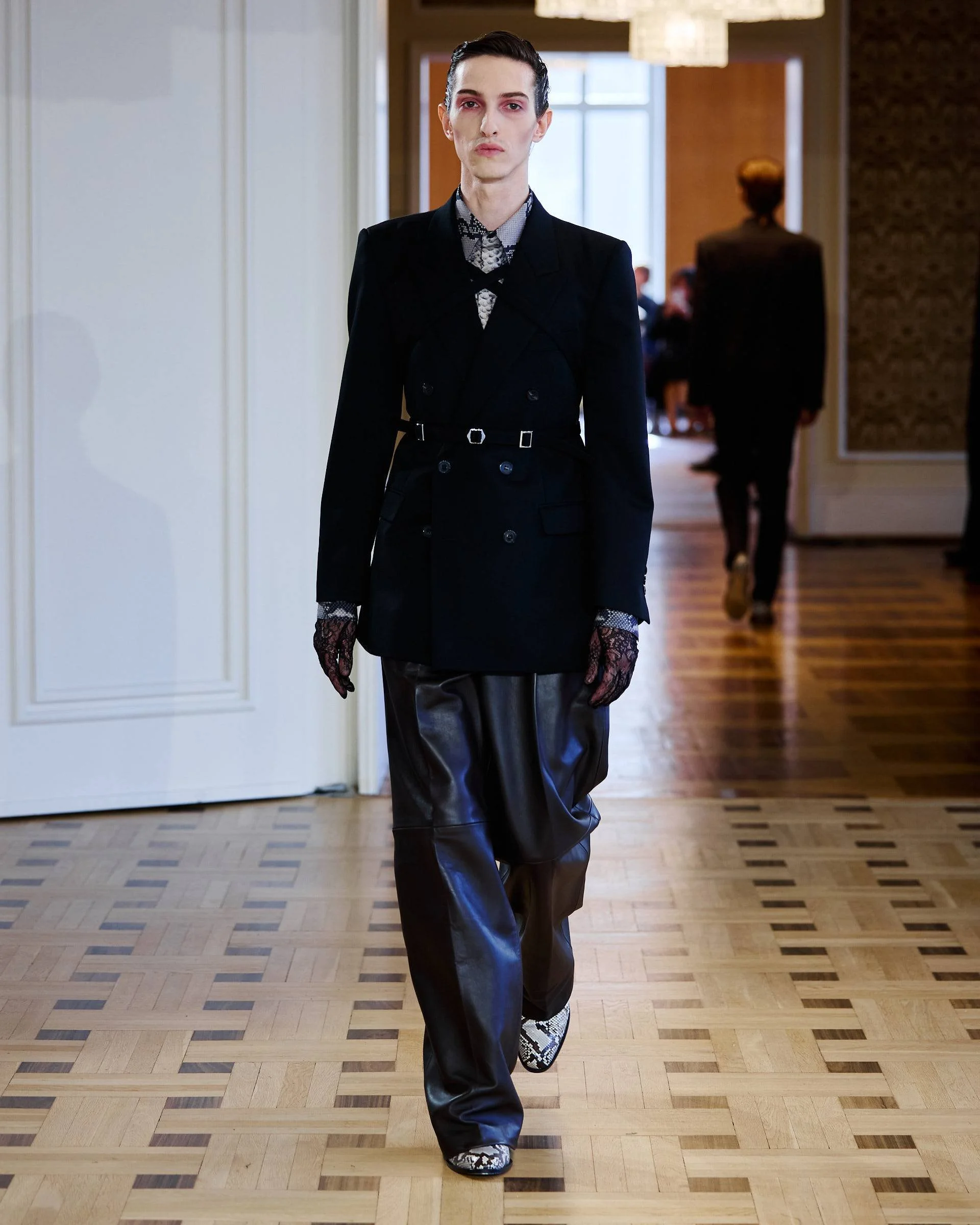
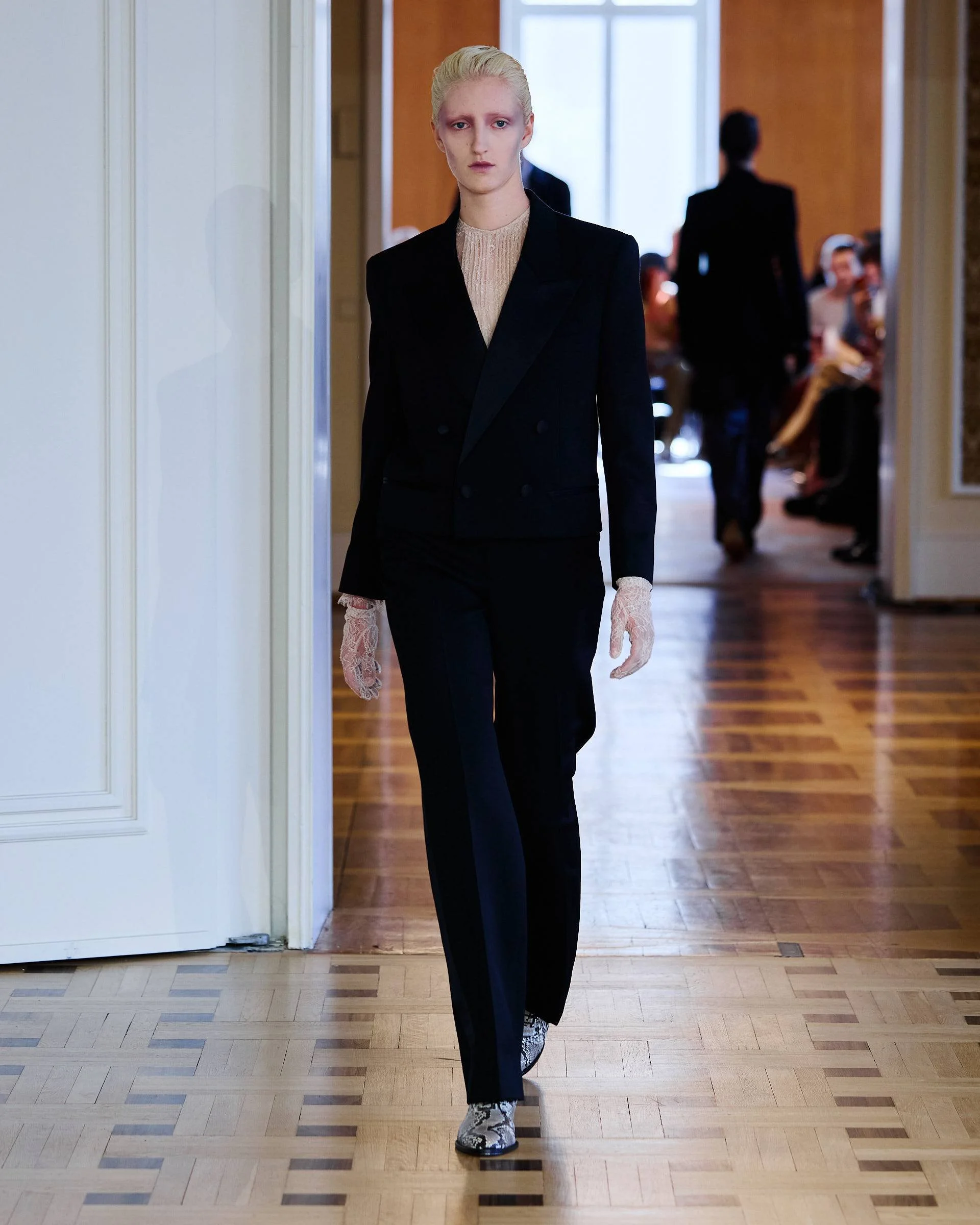
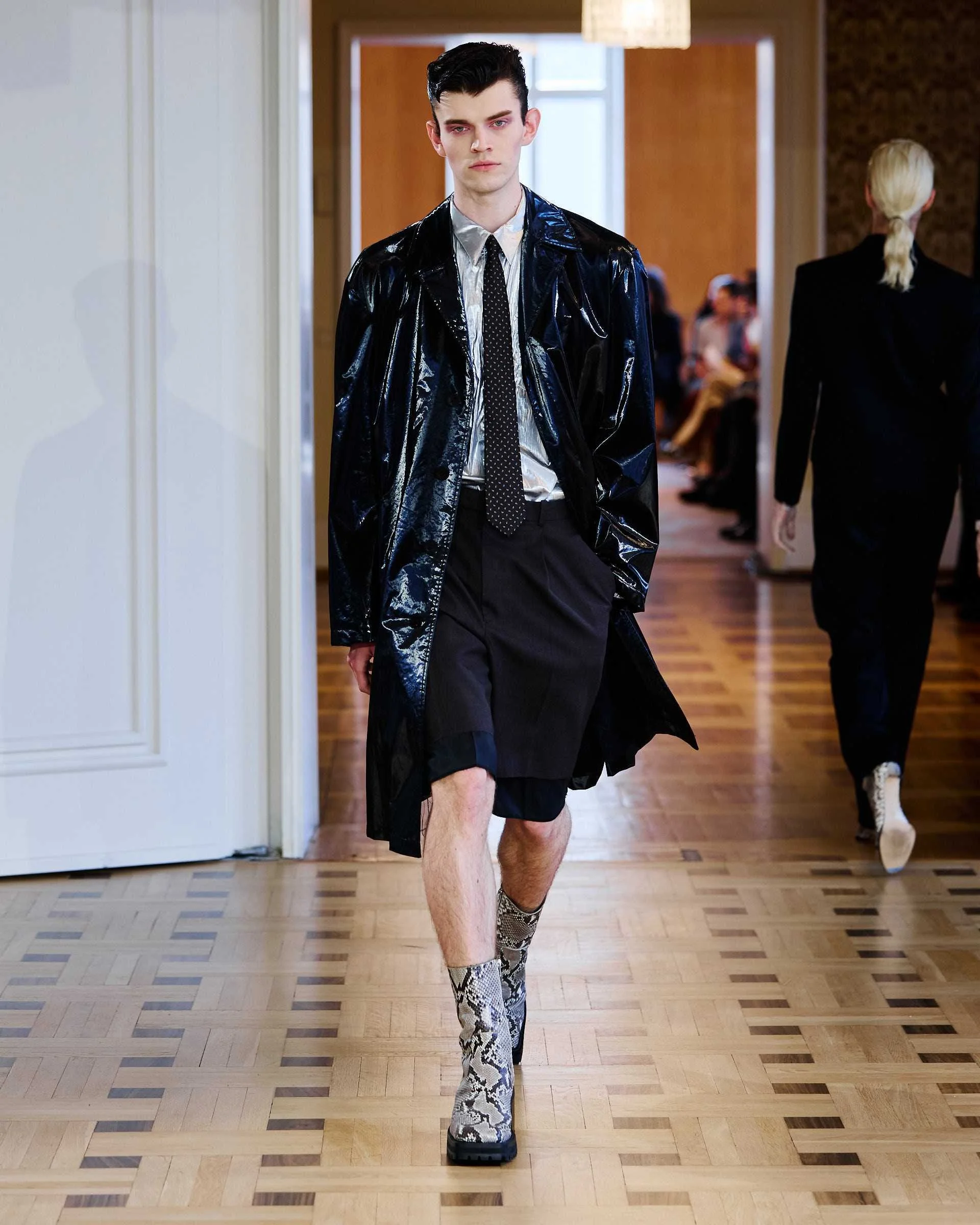
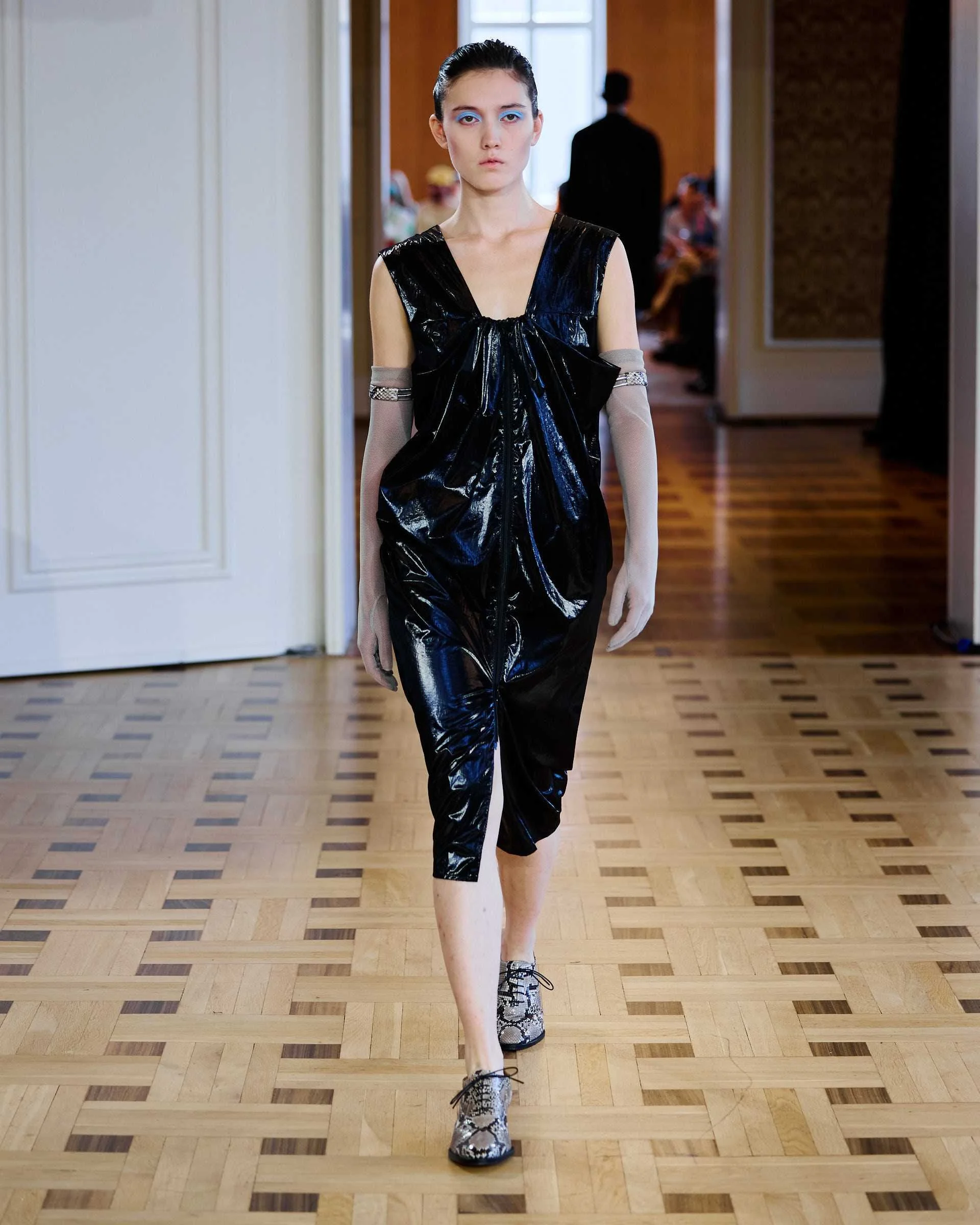
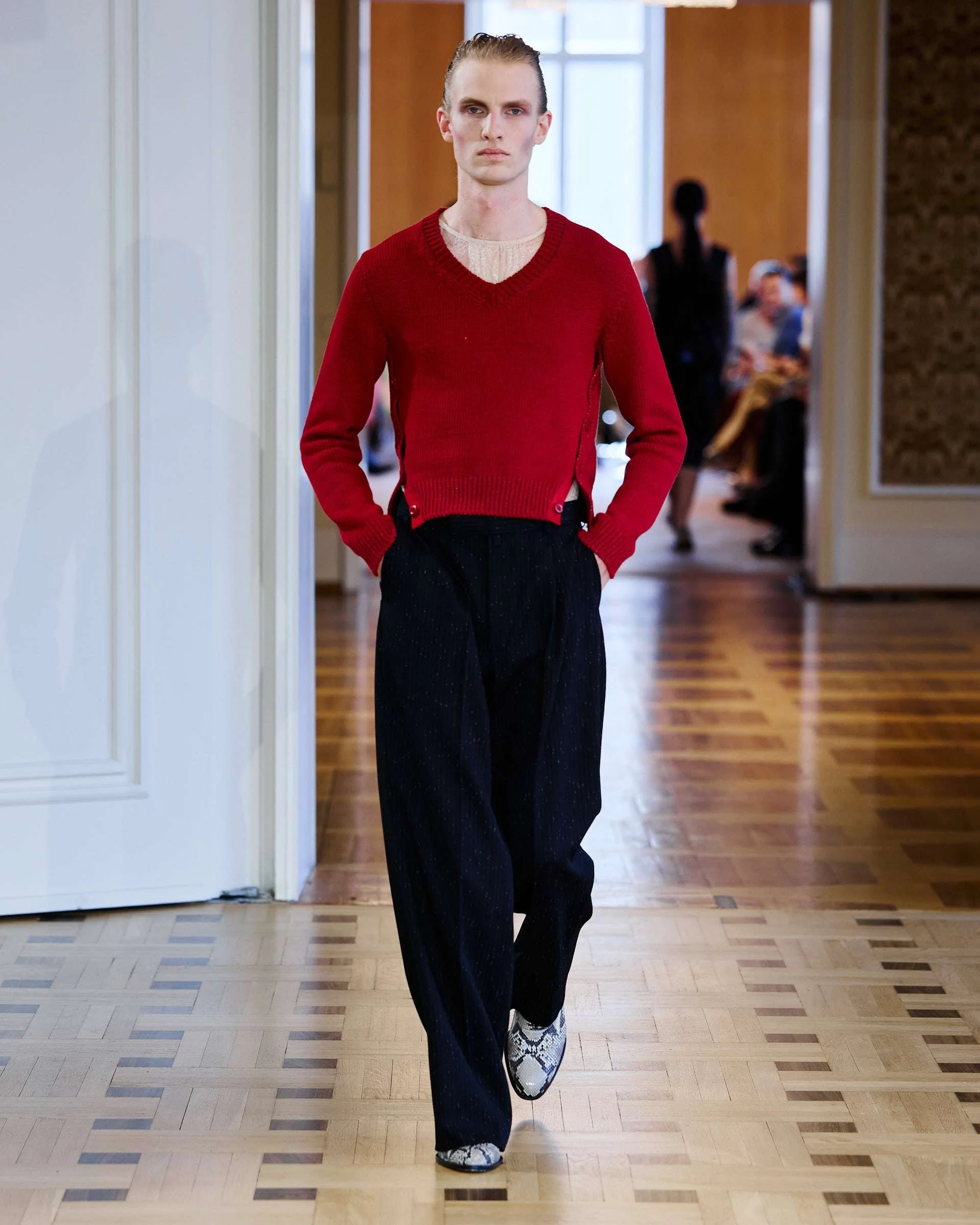
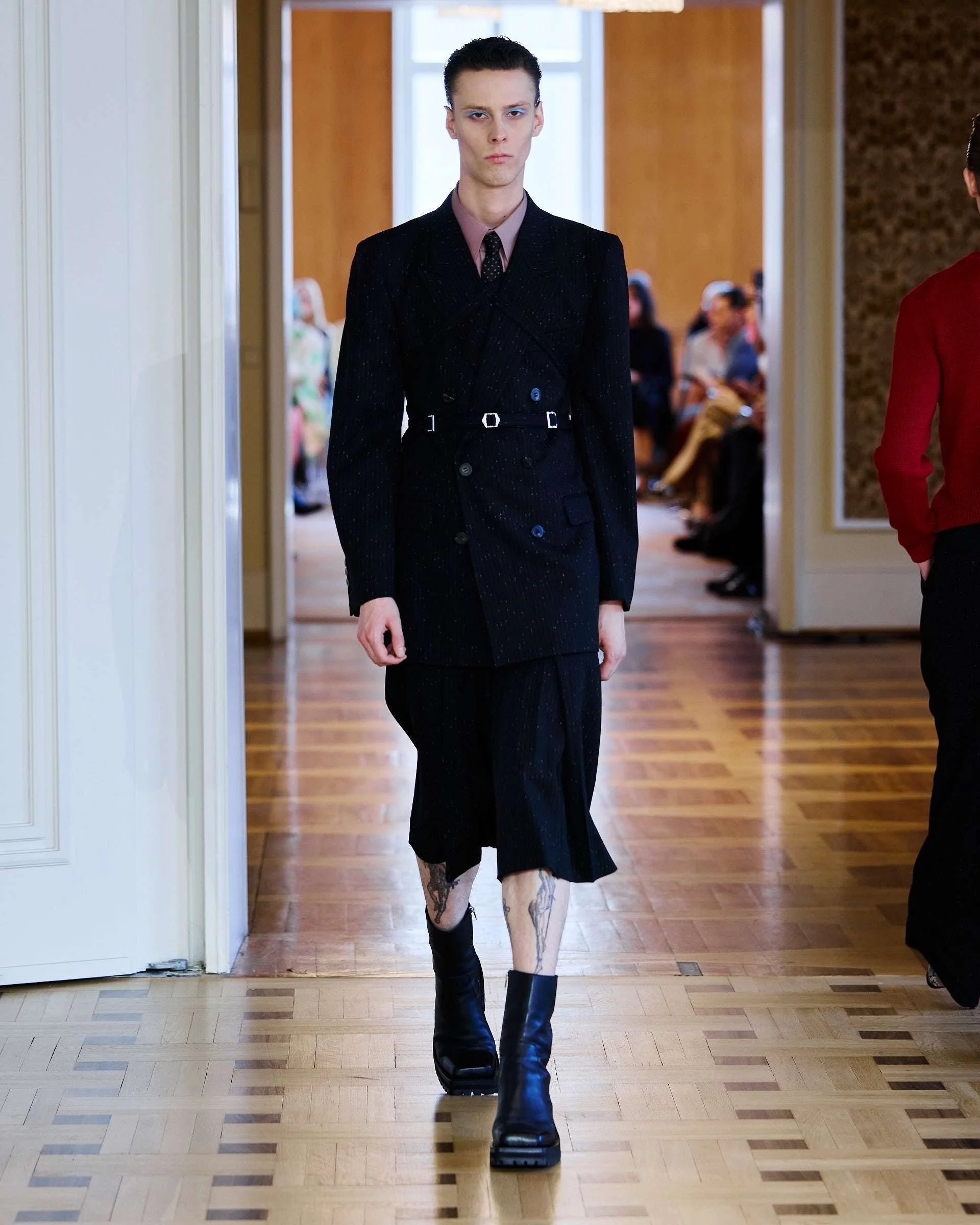
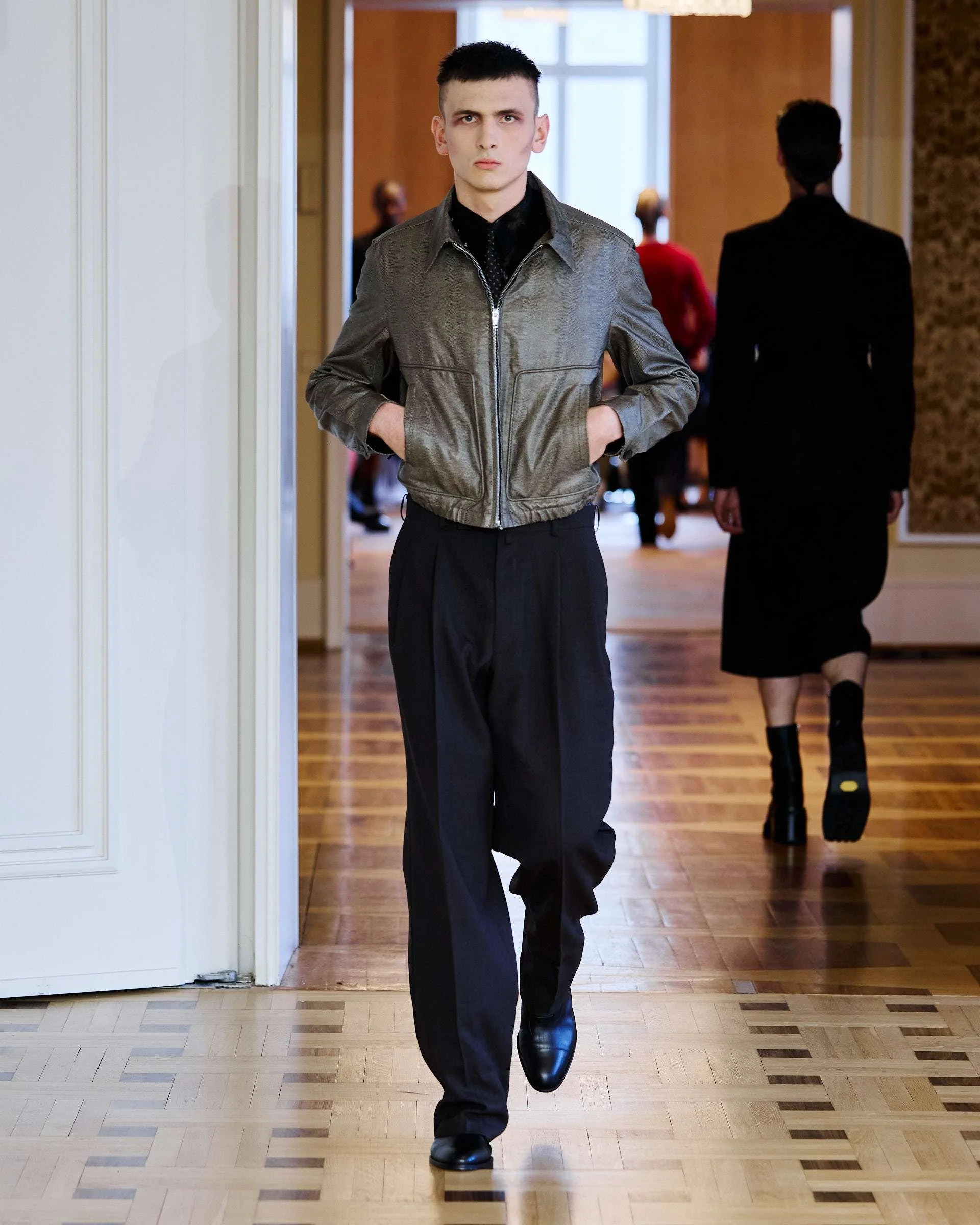
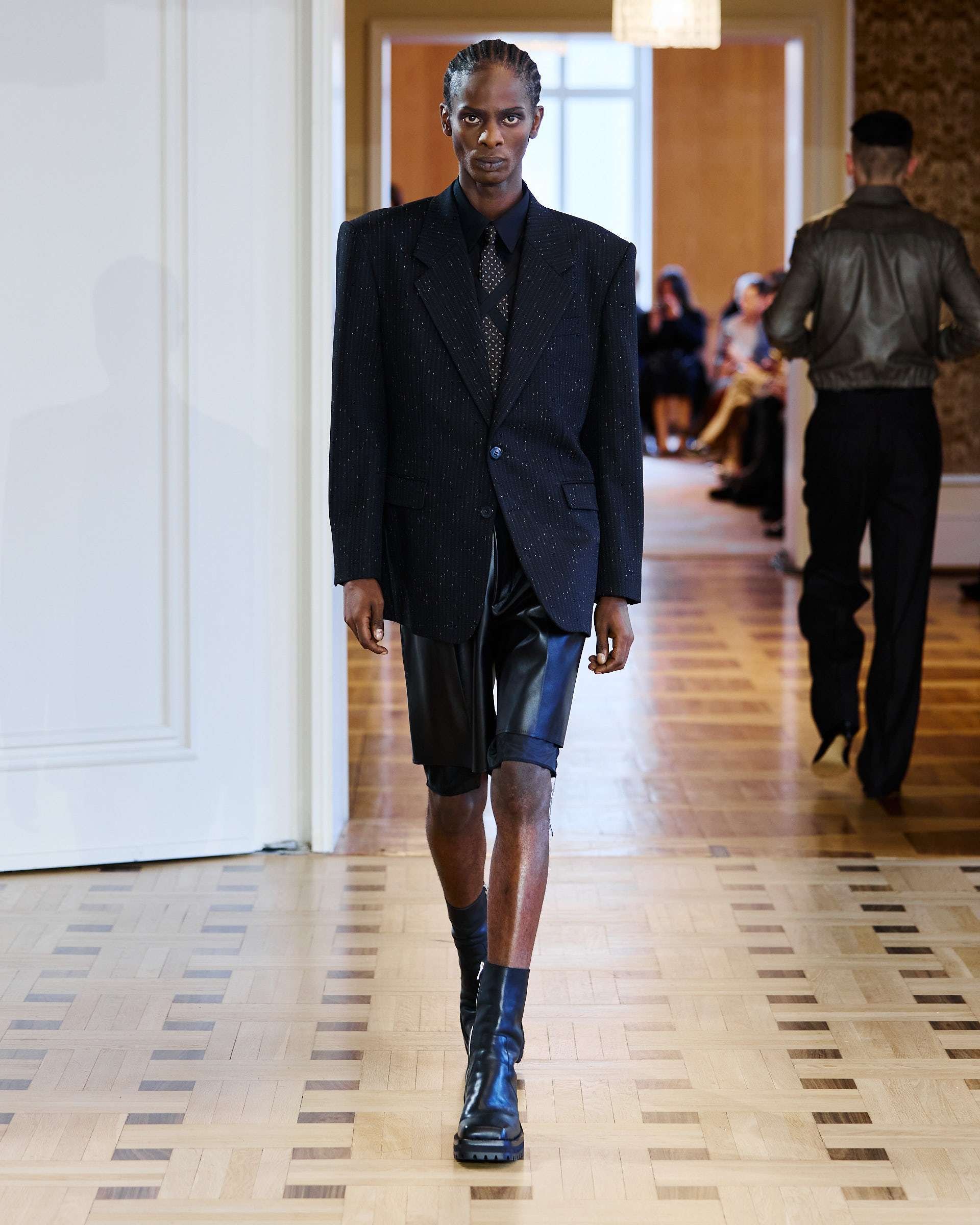
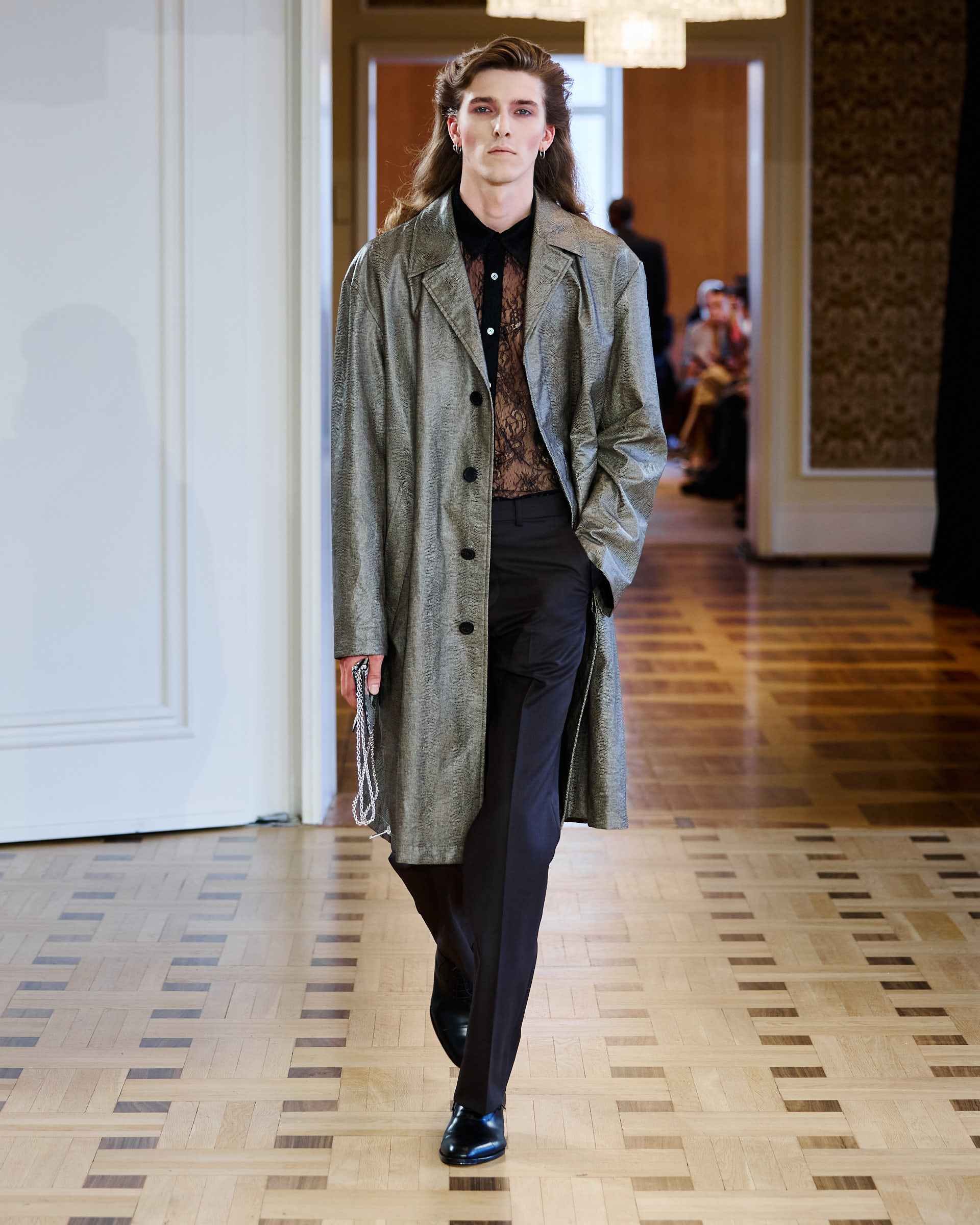
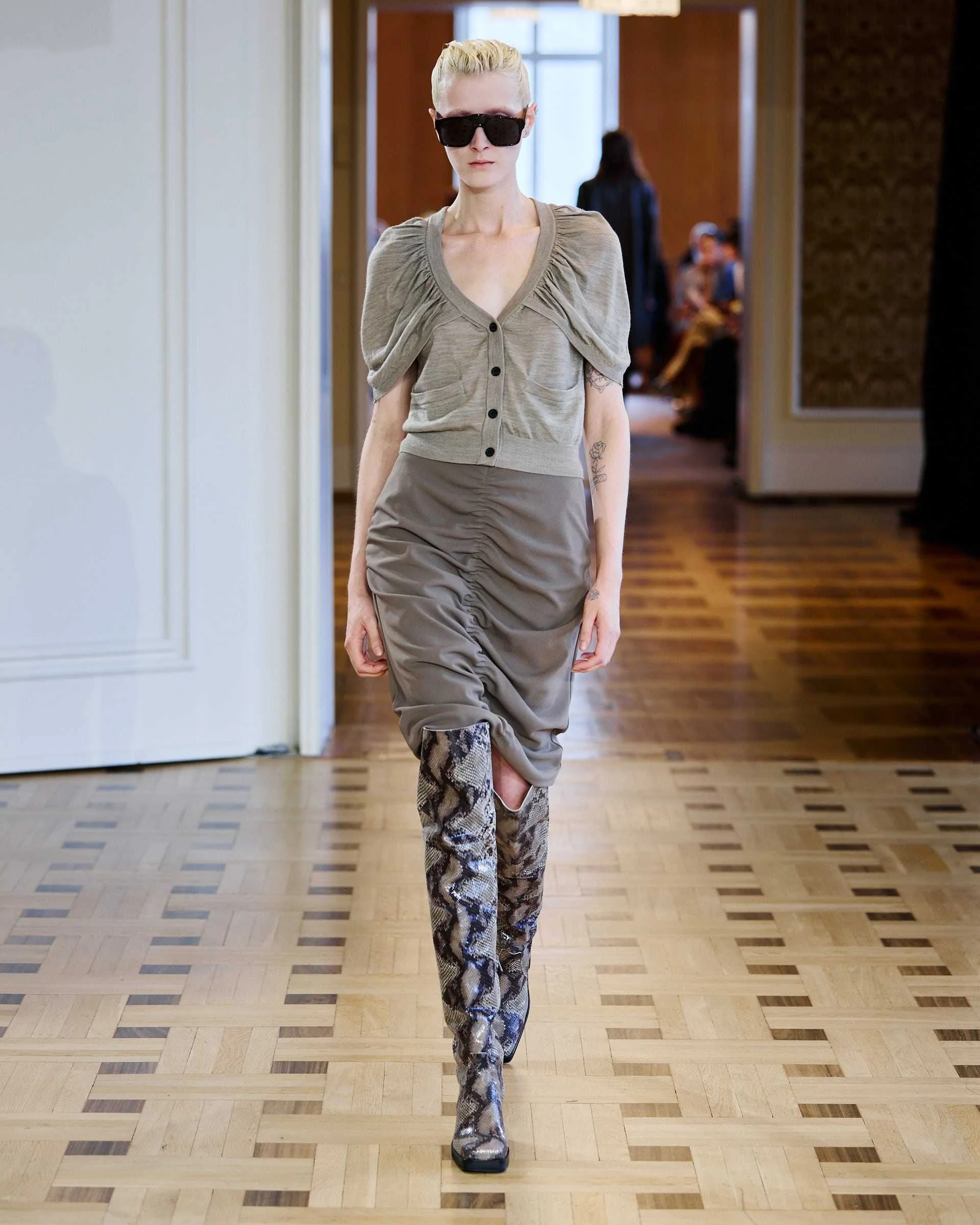
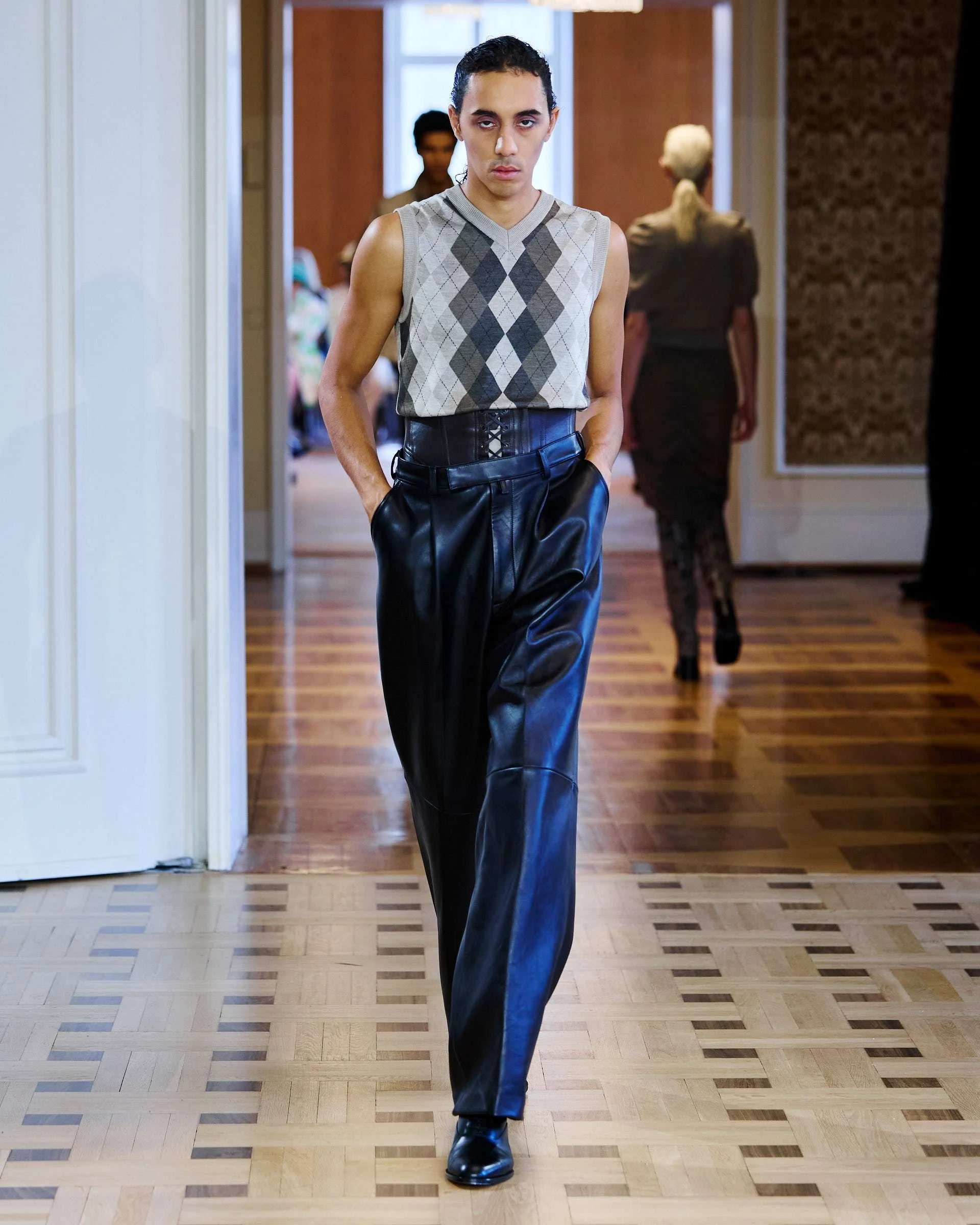
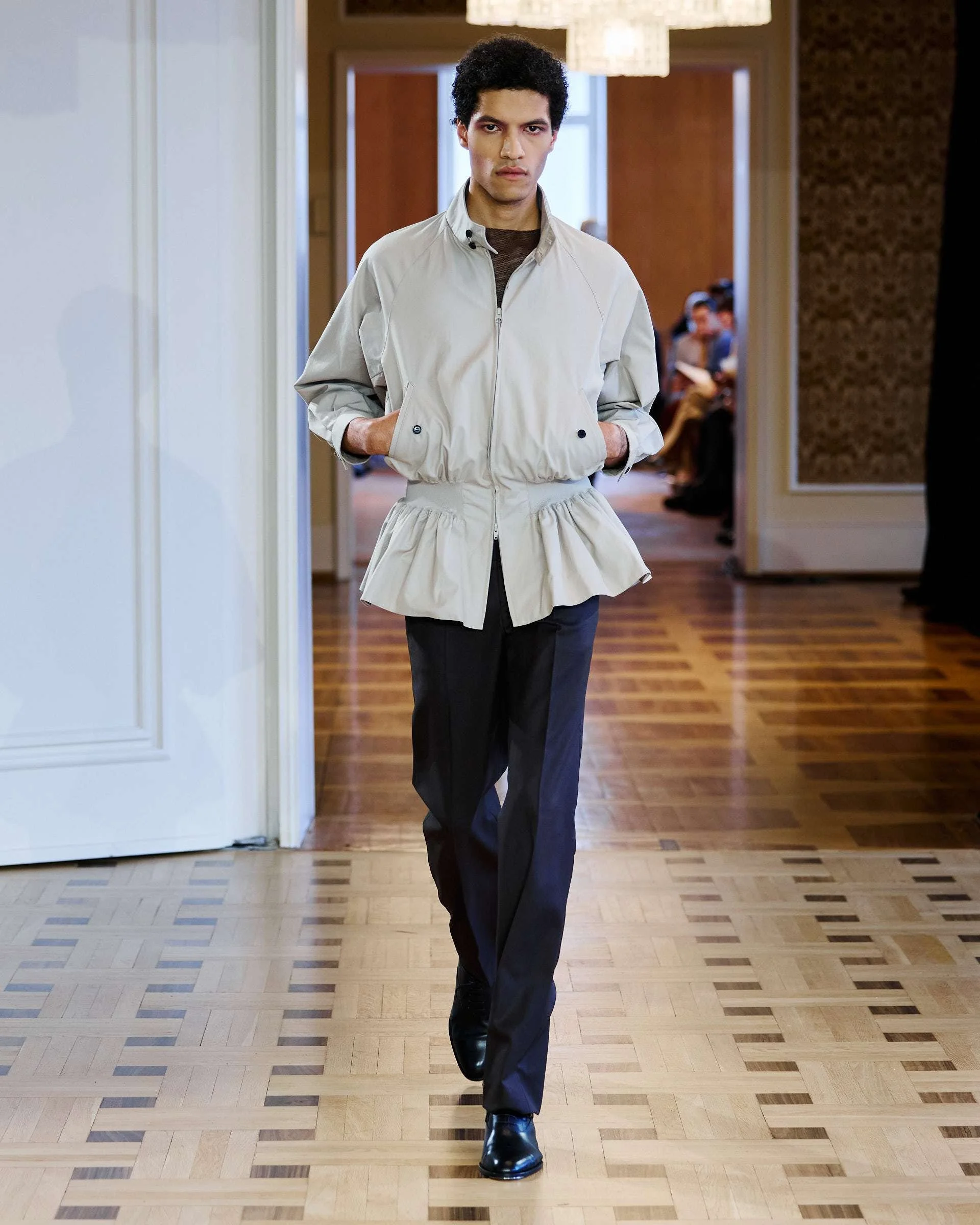
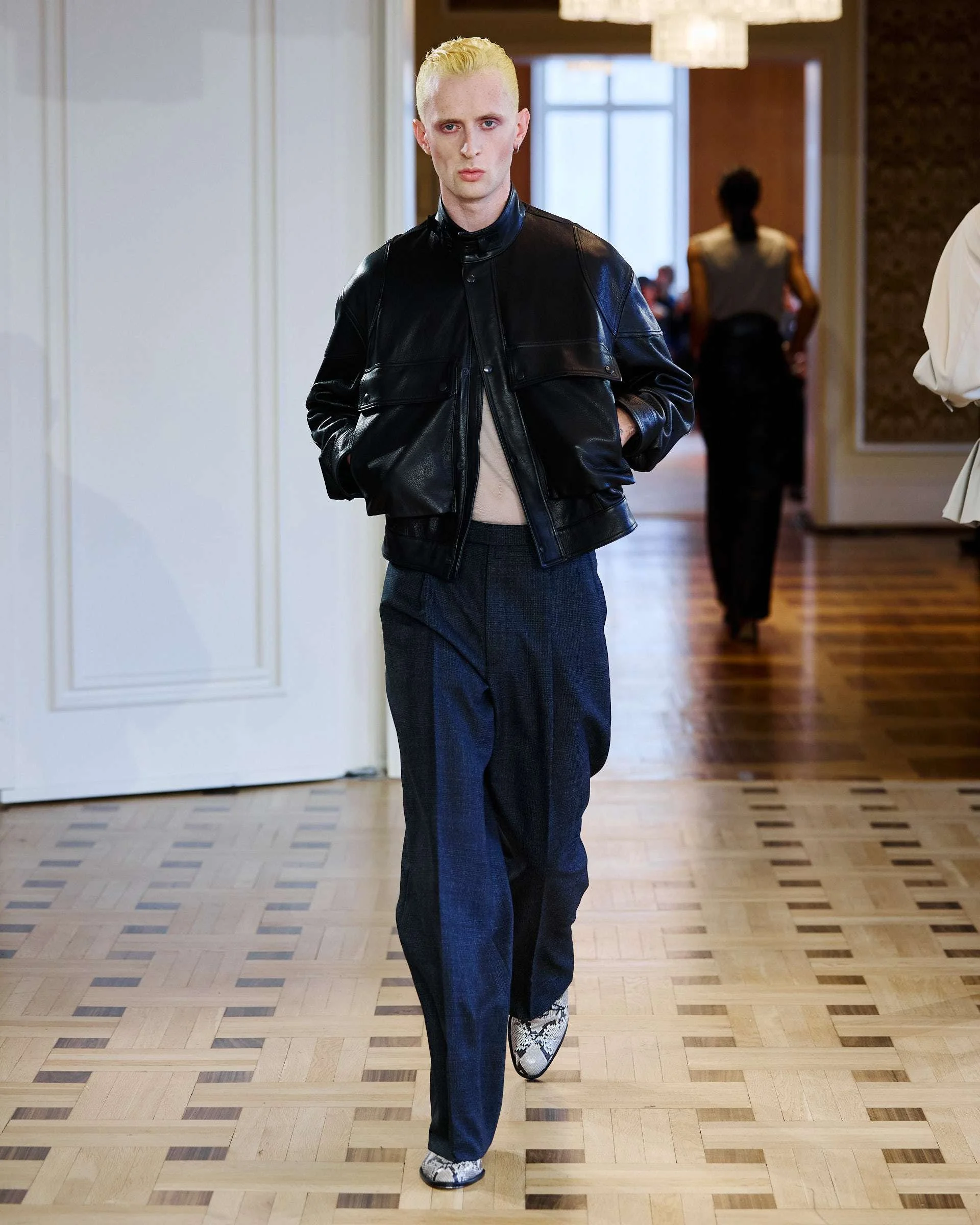
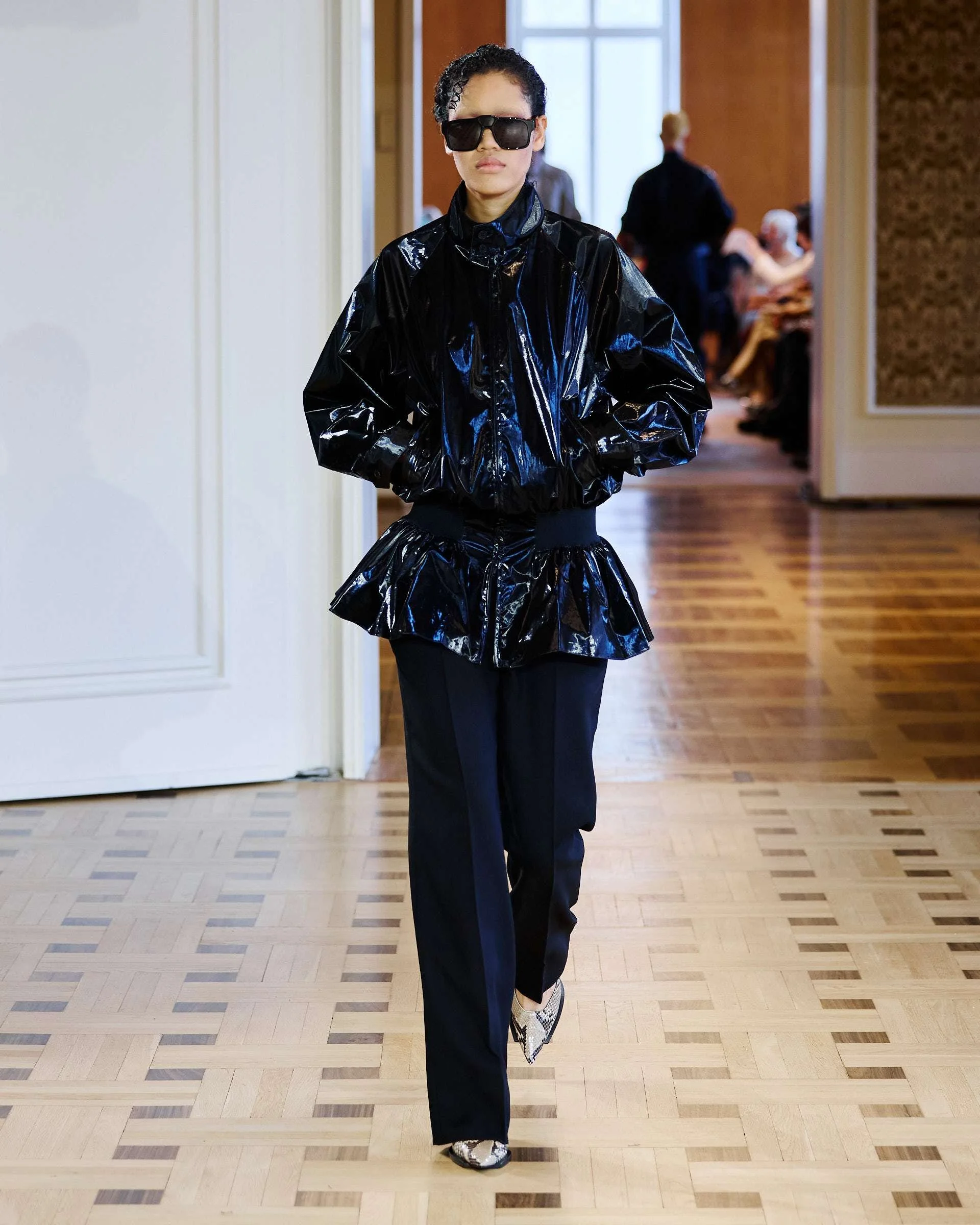
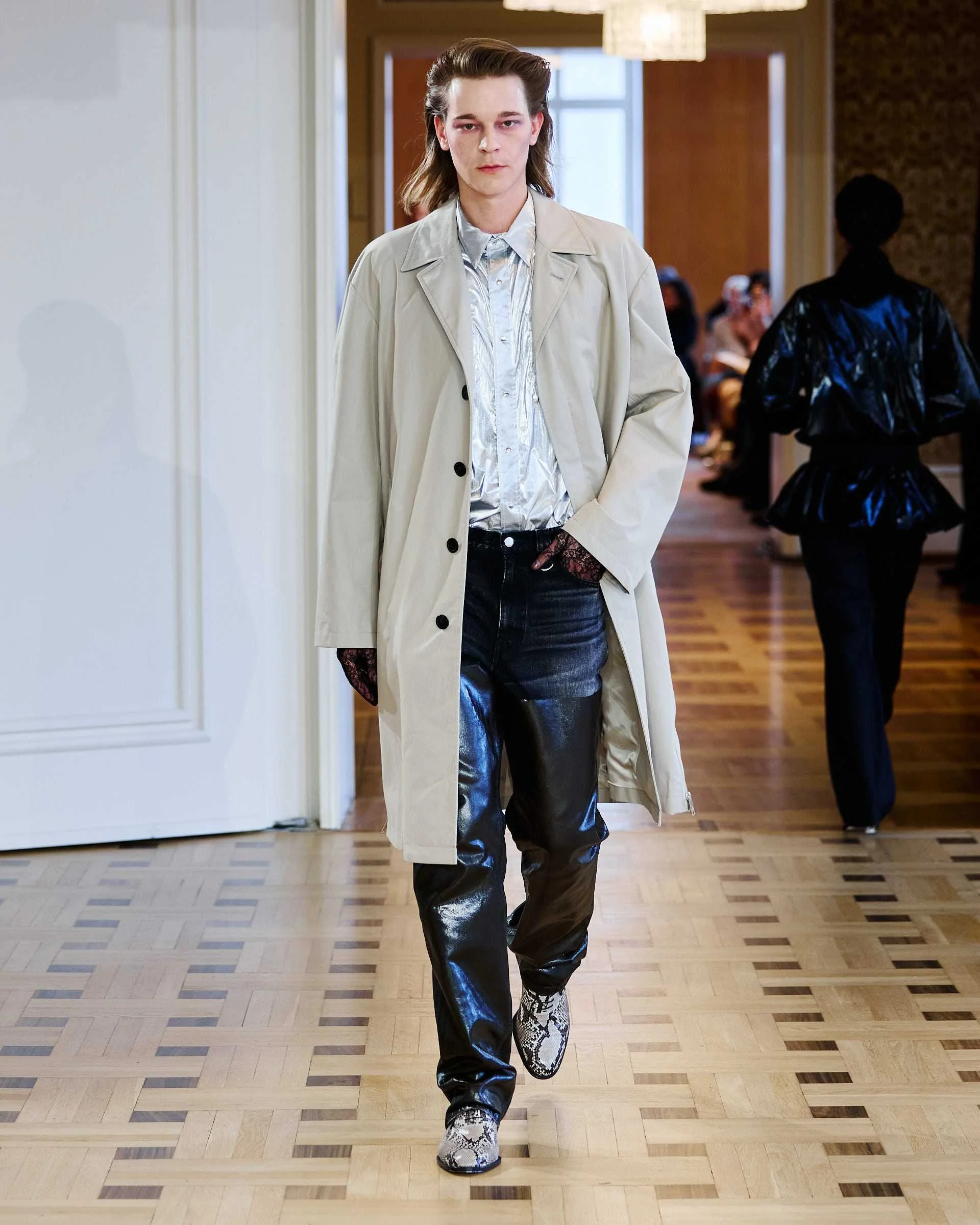
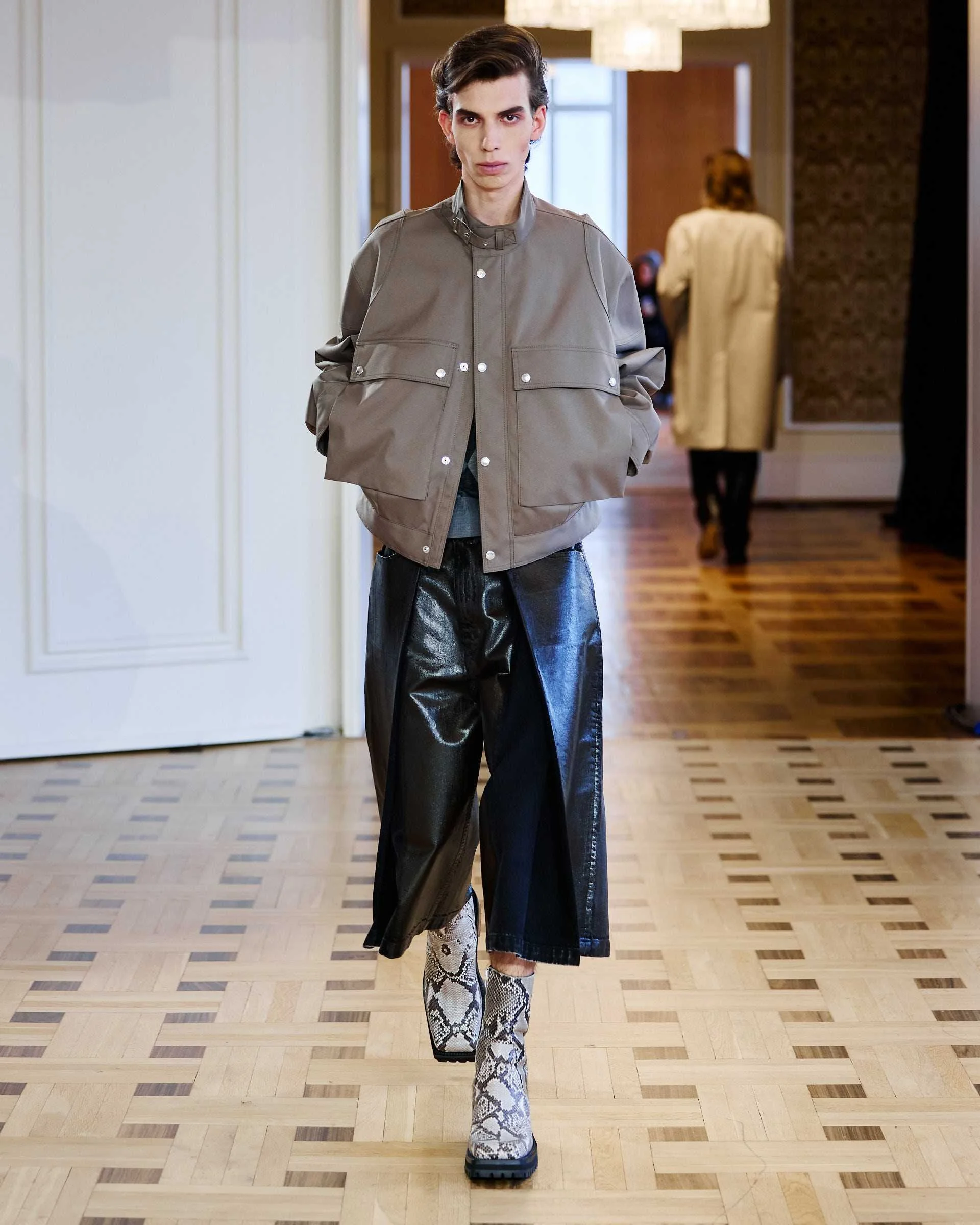
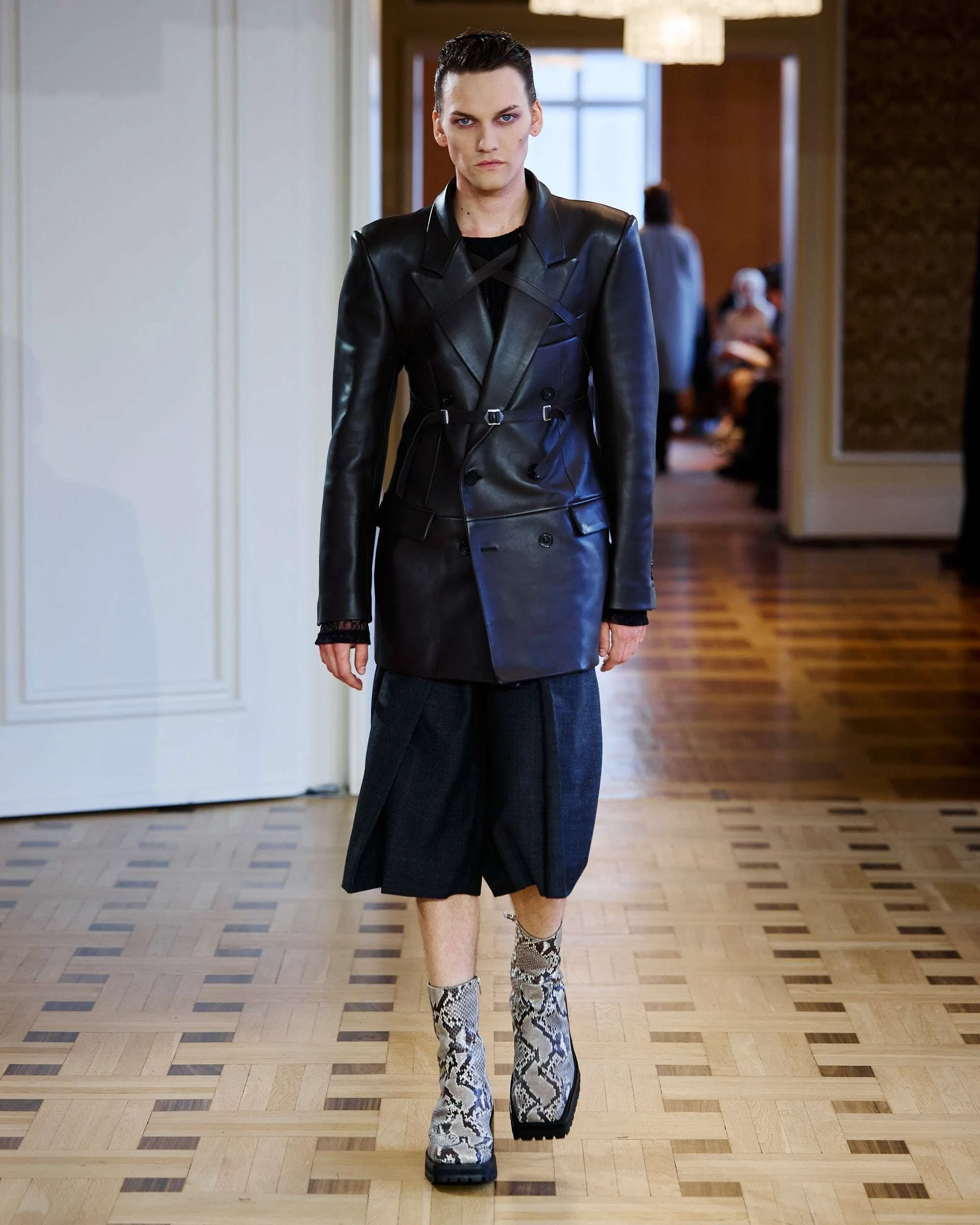
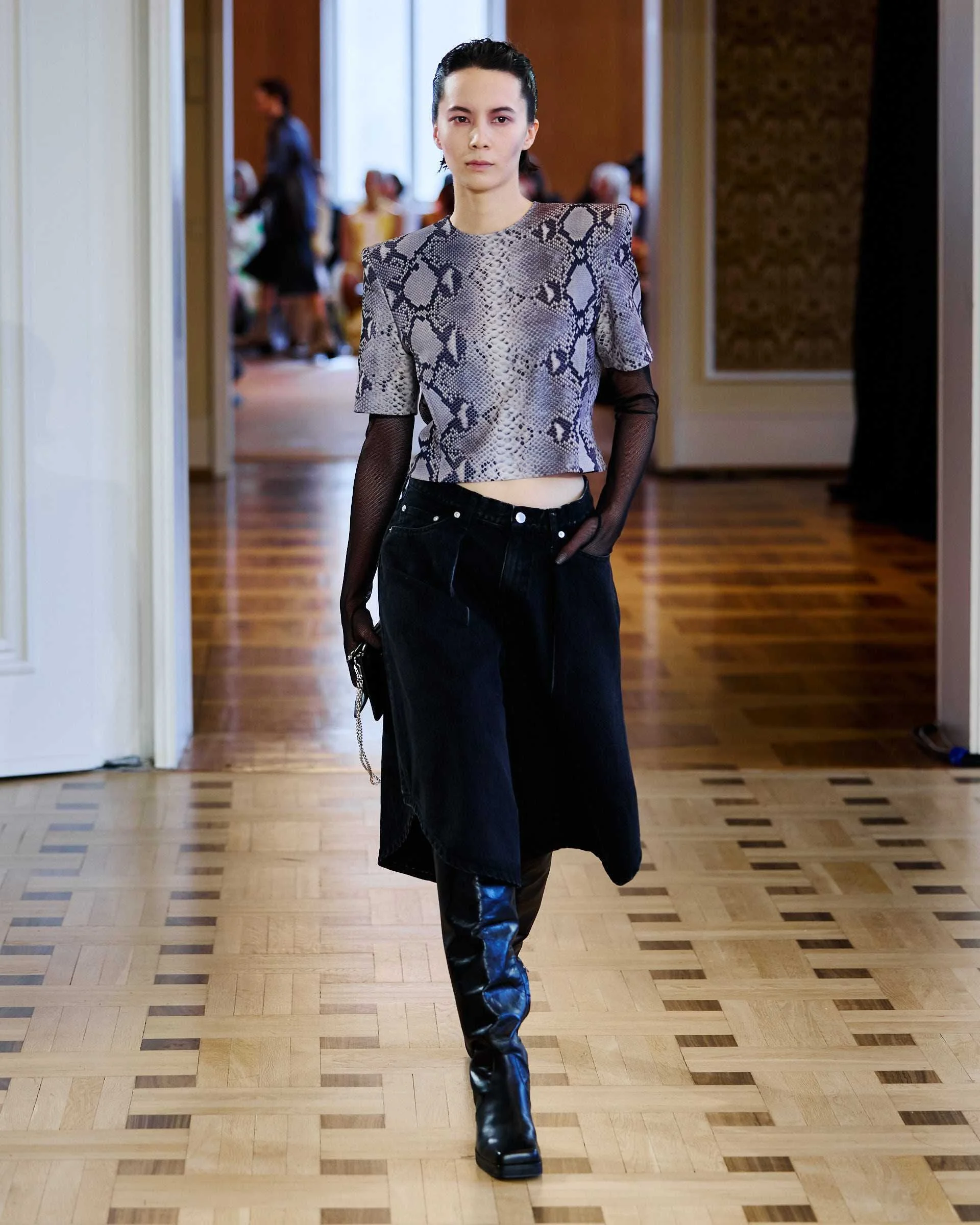
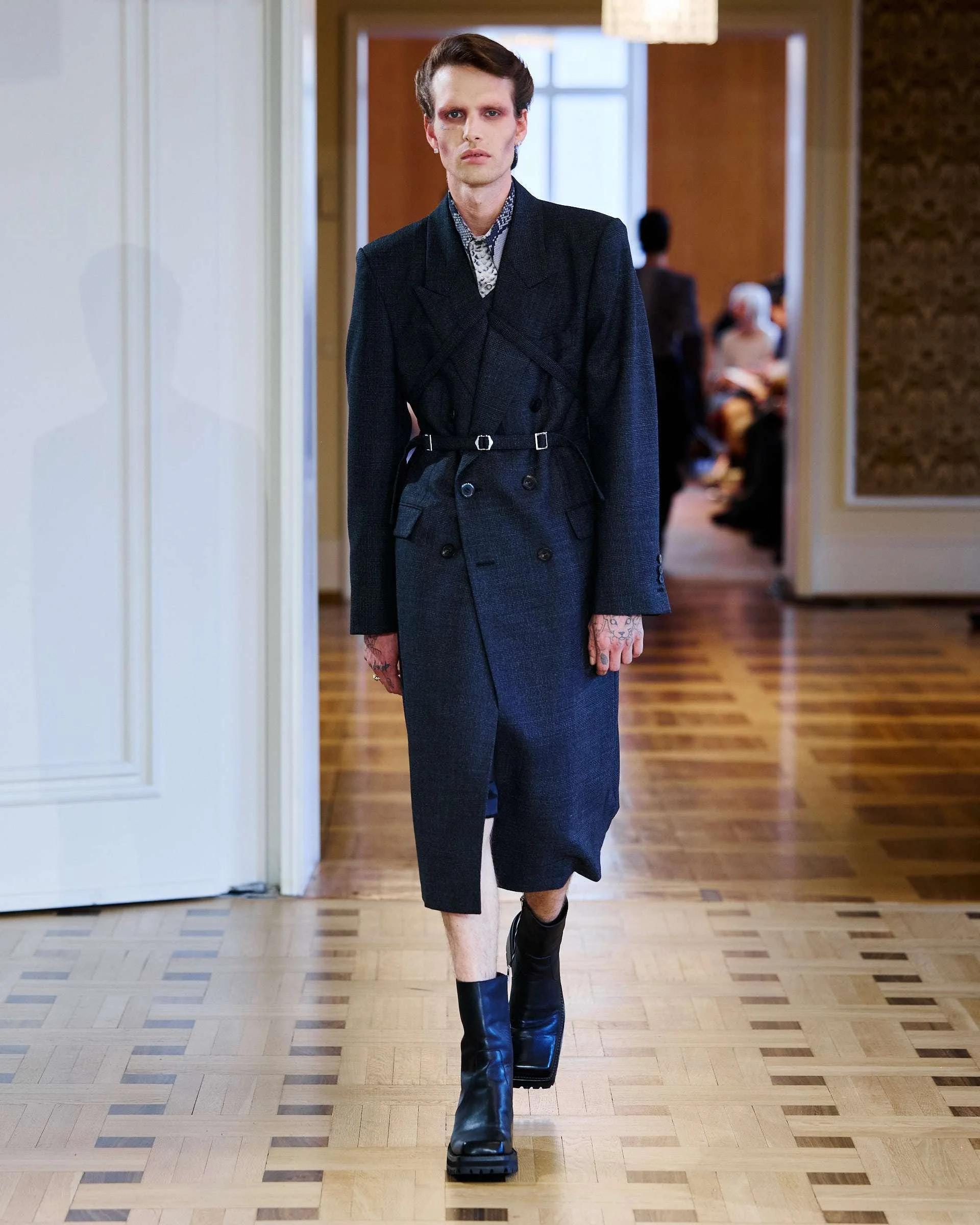
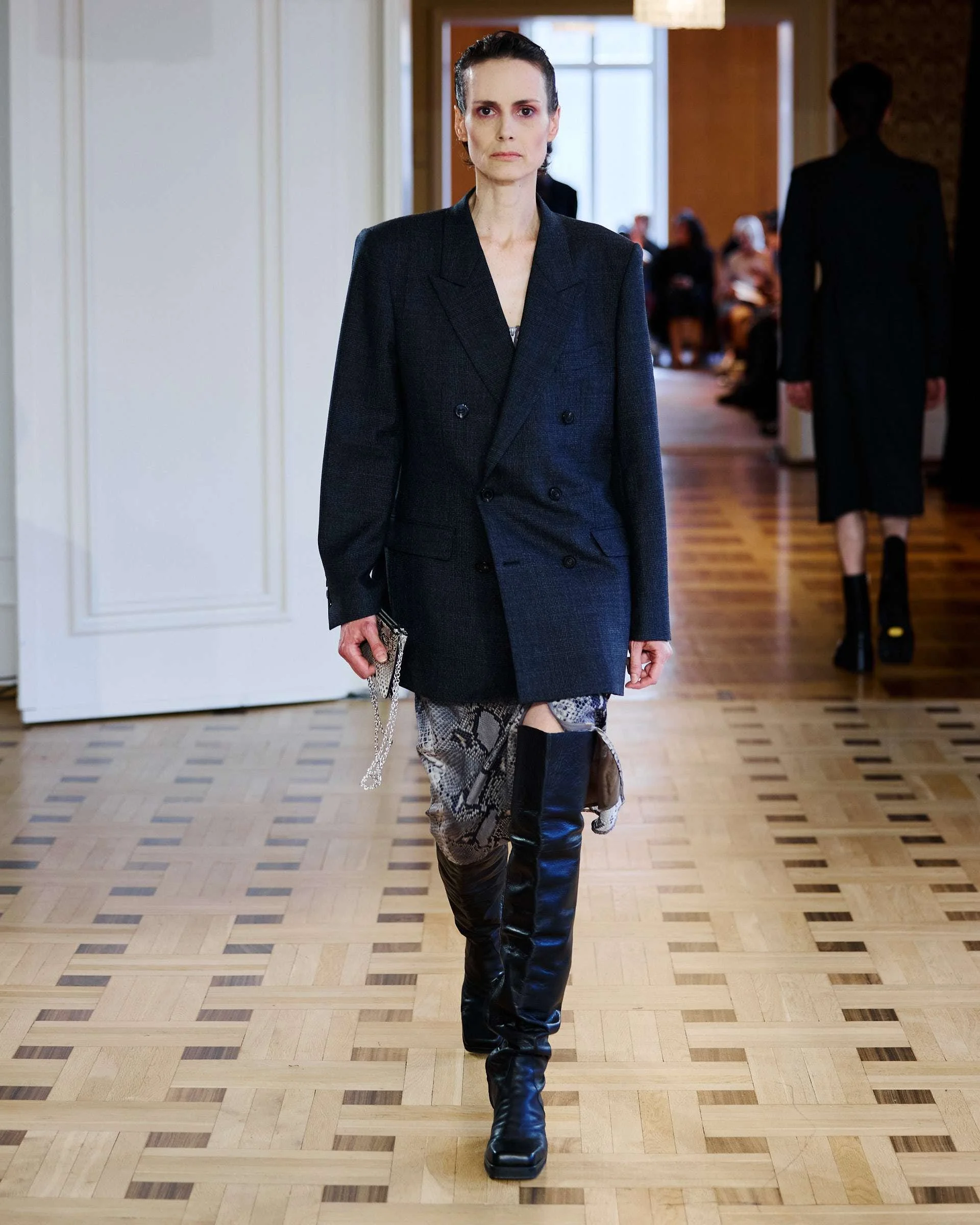
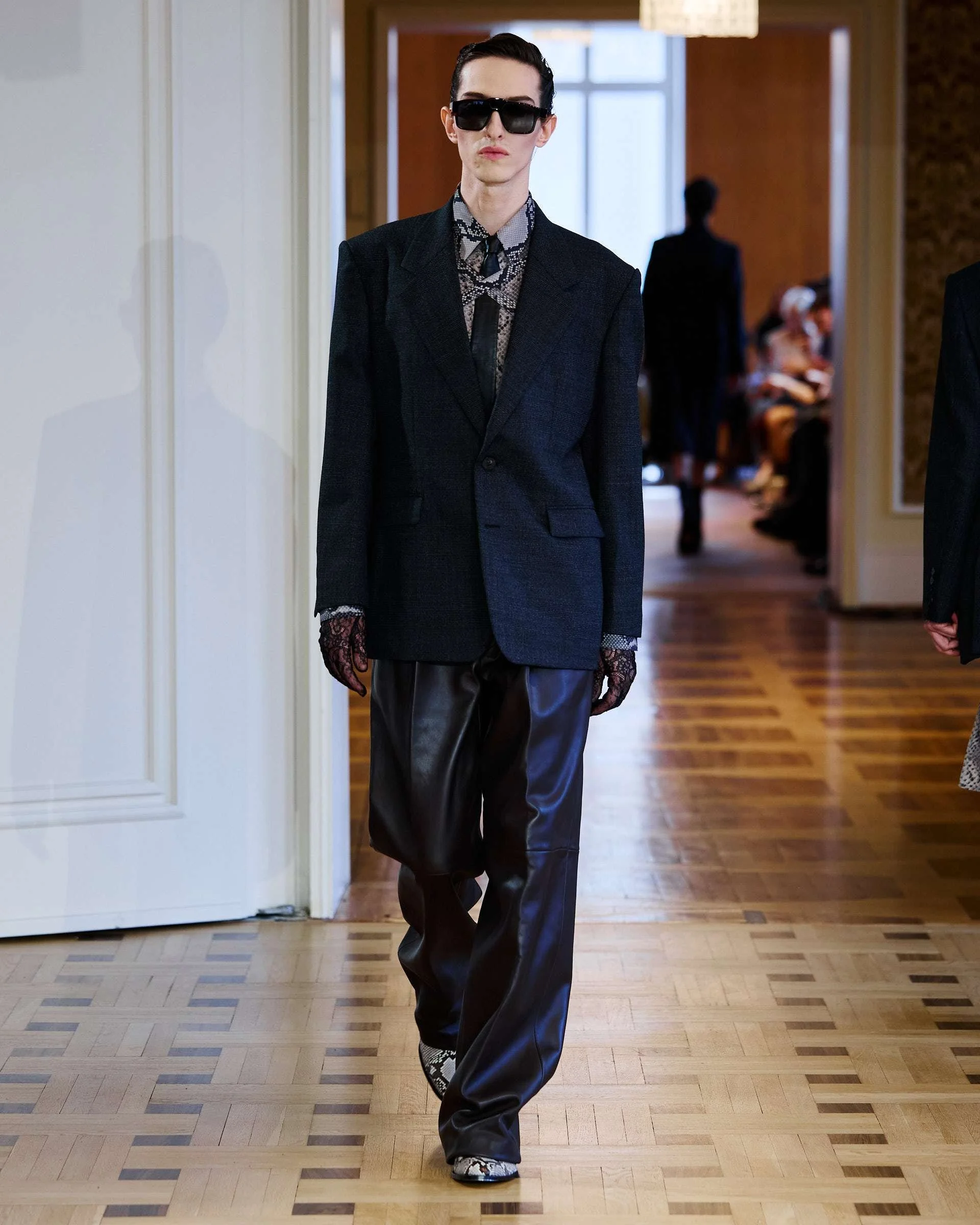
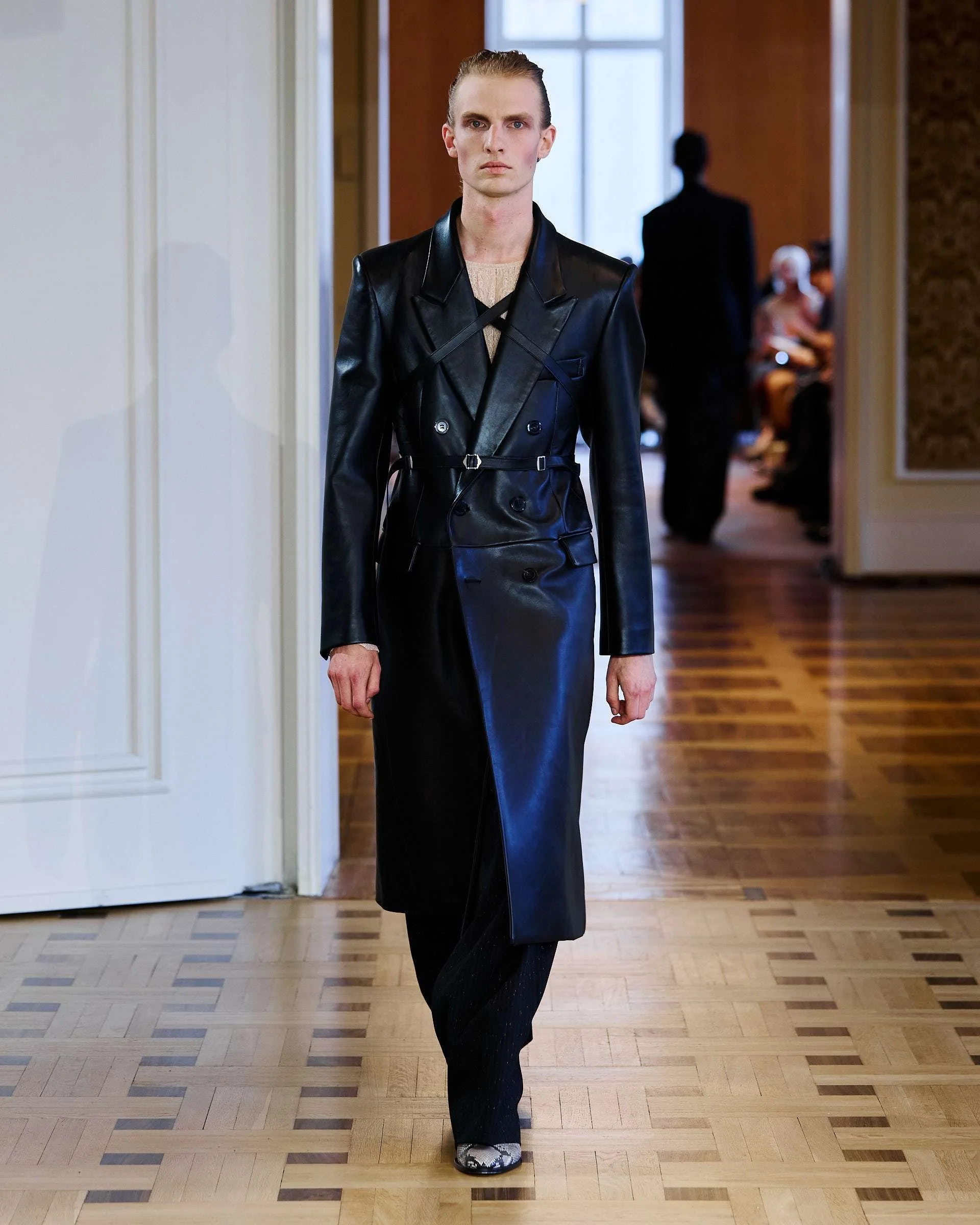
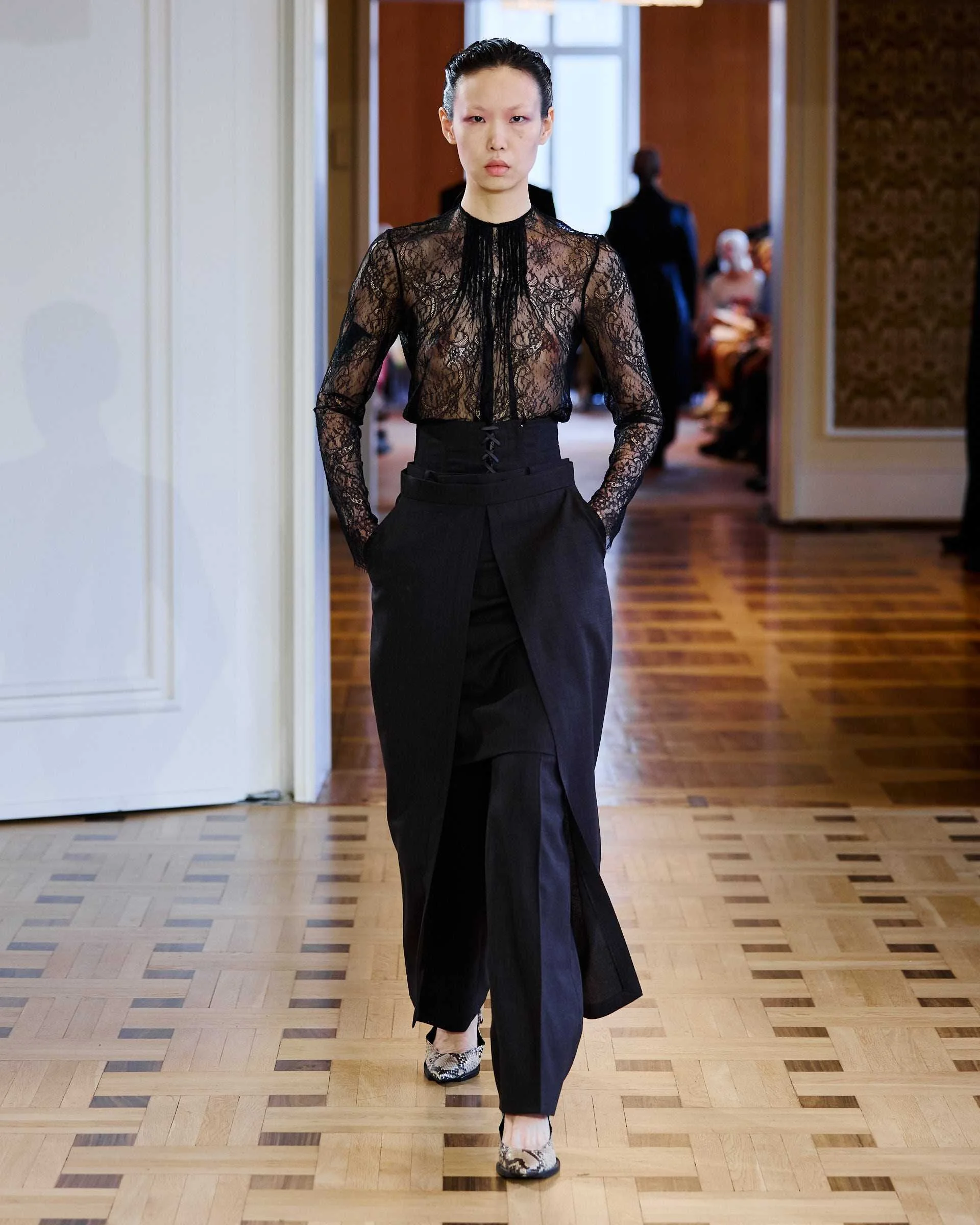
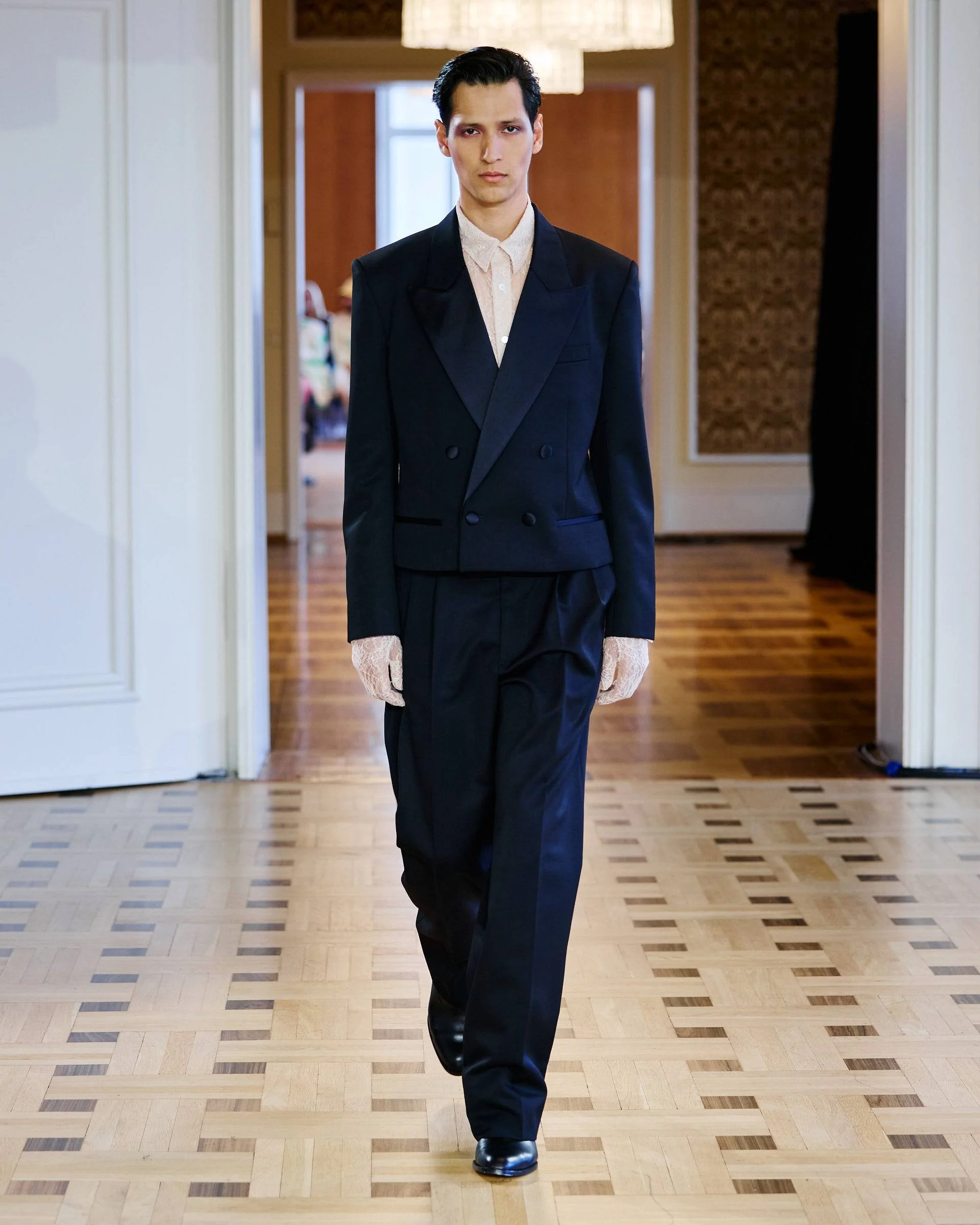
Arashi Yanagawa's SS27 collection took its title from Bettina Rheims's Modern Lovers, a series of photographs where masculinity and femininity exist inside the same body without needing to resolve into one or the other. He built the season around that same refusal. Rather than smoothing the contradiction into something neutral, he let it stay visible: shibari-inspired straps and lacing set against sheer fabric and reptile-look materials, restraint and softness worn on the same body at once. For Yanagawa, ambiguity was never a problem to solve. A man curious about the feeling of a high heel deserves that curiosity without judgment, and this collection was built to hold that thought without forcing an answer.
The season still runs through tailoring, the discipline JOHN LAWRENCE SULLIVAN was founded on. Learned from Savile Row's own grammar of construction, tailoring remains the starting point every season, even as Yanagawa pushes against its constraints to find new balance. That instinct, choosing a direction and testing its limits, traces back further still, to a professional boxing career that ended in his early twenties: three national titles, a broken hand, a retirement that sent him straight to London instead of home. Berlin has become part of this story too, thanks to a partnership with Reference Studios and a fashion community built on cooperation rather than rivalry. Strength, in Yanagawa's telling, has always meant living with contradiction rather than smoothing it away.

You've said a fashion show feels like a boxing match. Where does that feeling show up backstage, right before the models go out?
By the time I’m backstage before a fashion show, most of what needs to be done is already finished. Of course, there’s always some anxiety, but as the show approaches, that anxiety gradually turns into anticipation and excitement.
I felt exactly the same way before a boxing match. In the dressing room, there was always anxiety and fear. But as the opening bell drew closer and I made up my mind to step into the ring, that fear transformed into excitement and the thrill of competing.
In both fashion shows and boxing, my favorite moment is the moment I commit myself. It’s the moment when anxiety and fear become the energy to move forward. I’ve always been drawn to that feeling.

Four years boxing professionally, no big titles. What did you keep from that time that still shapes how you work?
First, during my amateur boxing career, I won three Japanese national titles across three different weight classes and earned a silver medal at the Asian Junior Championships. I also competed in the final Asian Olympic qualifier as part of Japan’s team for the Atlanta Olympics, but I fell short of qualifying for the Games.
After that, I was recruited by a professional boxing gym and made a high-profile professional debut, with a press conference and my first fight broadcast on television. However, I broke my hand in my first professional loss. From then on, I spent four years fighting while struggling with recurring hand injuries, and after my second defeat, I decided to retire.
A few days after my final fight, without telling anyone at my gym, I took my fight purse and went to London on vacation. That trip changed my life. It was there that I decided to dedicate myself to the world of fashion, something I had already been deeply interested in.
If I had continued boxing professionally, I might have achieved a certain level of success. But choosing to retire when I did and pursuing fashion instead has given me a life far more fulfilling and enjoyable than I ever imagined.
The most important thing I carried with me from boxing is the ability to make a commitment. Choosing my own path, fully committing to it, and continuing to move forward without looking back—that mindset still defines the way I create today.

London gave you a way of dressing with no rules attached, so different from Japan at the time. What's the last thing you saw on a street that hit you the same way?
There is no doubt that meeting people at the markets in London and seeing the way they dressed without being constrained by rules was one of the reasons I decided to enter the world of fashion.
Even today, whenever I visit different cities around the world, I continue to draw inspiration from the streets, the architecture, the art, and the people I see. Among them, Berlin holds a particularly important place for me. Every time I come here, I discover something new, and the city continues to have a profound influence on my creative work.

You spent a month circling Vivienne Westwood's World's End before finally going in. What finally got you through the door?
That is simply not true. When I first visited London, I went to Camden, Portobello Market, Savile Row, and World’s End.
I’m simply not that kind of person.

You once ran a shop selling secondhand English leather jackets. Did that change how you think about the people who actually wear your clothes?
The premise of this question is not accurate.
I did not run a vintage clothing shop. Whenever I visited London, I bought secondhand clothes at markets and places like Oxfam, and a friend of mine sold them at his vintage furniture shop in Japan.
Right after I had finished buying, the rack would be filled only with clothes that I genuinely found beautiful, and it felt like a complete world in itself. But as customers bought the pieces one by one, I felt a certain sadness watching the story and balance of the rack gradually fall apart.
That experience made me think that, rather than selling one-of-a-kind vintage pieces, I wanted to create clothes myself. It became one of the major reasons I decided to enter the world of fashion.

This is your third season in Berlin with Reference Studios. What does the city give you that Tokyo or Paris doesn't?
This is actually our second time presenting a collection in Berlin, not our third.
One of the main reasons we want to continue showing in Berlin is Reference Studios. Through their INTERVENTION programme, they consistently select exceptional venues that elevate the presentation of each collection. Beyond the venue itself, every aspect is executed to an incredibly high standard: from inviting an important international audience through their PR efforts, to backstage management, lighting, sound, seating, and the overall production of the show. They are a partner we trust completely.
Another reason is the sense of community in Berlin. Our connection with the city became much stronger when Fashion Council Germany invited a group of Berlin designers to Tokyo. That gave us the opportunity to meet many talented designers and build meaningful relationships.
Now, whenever we come to Berlin Fashion Week, we’re warmly welcomed, and many of those designers come to support our shows. Rather than simply competing with one another, there is a genuine sense that everyone is working together to strengthen Berlin Fashion Week.
The combination of Reference Studios’ outstanding vision and execution, together with the openness and warmth of Berlin’s fashion community, is what makes Berlin such a special place for us.

You're sharing this program with labels like GmbH and Dagger, each with its own idea of Berlin. Where do you feel closest to them, and where do you feel furthest?
I consider both of them to be brands that represent Berlin, so I feel very honored to be presenting as part of the same program.
I do not often think about our work by comparing it with others. Every brand has its own history and philosophy. Rather than focusing on whether we share the same point of view, I respect the fact that we each believe in our own expression and continue to pursue it.
As a Japanese brand, we also want to continue creating something that only we can express.

Anselm Kiefer came up around a recent men's collection. Is Berlin starting to work its way into the clothes themselves?
Rather than Berlin specifically, I’ve long been drawn to Germany as a whole. I have always admired German art, photography, music, film, theater, and even stationery. There are so many things about German culture that I genuinely love.
I think my long-standing interest in and admiration for German culture has naturally found its way into my creative work.
I’ve always built my collections around the things that I genuinely love. Because of that, whatever inspires me at a particular moment naturally finds its way into each season’s collection.

As the label grows, how do you keep the tailoring from getting smoothed out into something safer?
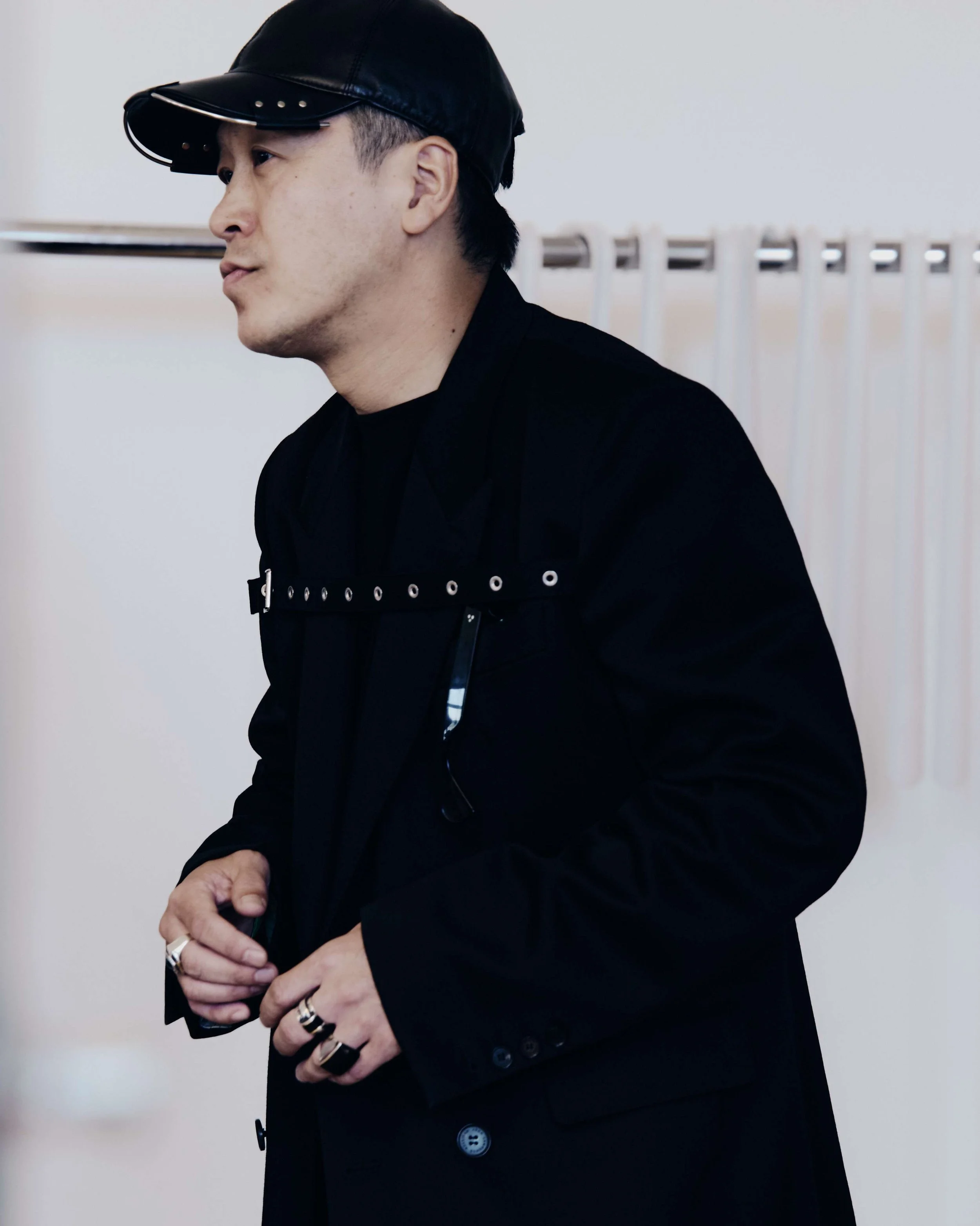
The brand was founded under the strong influence of London markets and Savile Row. That’s why tailoring remains the core of our brand today, and almost every collection begins with tailoring.
True tailoring is built on a long history and a great number of established rules. Those rules can become constraints when you want to introduce bold designs or explore new forms of expression. But I believe those very constraints are what make the creative process so interesting. The challenge is finding ways to push beyond them while creating a new balance.
That’s why I want to continue respecting the essence of tailoring while constantly challenging its possibilities.
What's a rule about menswear you were taught early on that you don't believe anymore?
When I was in junior high school, I learned about fashion little by little by talking to people who worked in clothing stores. They taught me how to wear different garments and the historical background behind each item.
By the time I reached high school, however, I started to feel constrained by those rules and began searching for my own way of expressing myself. Then I visited London, and that feeling expanded dramatically. It allowed me to approach fashion with a much greater sense of freedom.
That said, learning the fundamentals and understanding the history was never wasted. I believe it’s precisely because I understand the essence of those traditions that I can go beyond the rules and express myself freely.

Your SS27 show took Bettina Rheims's Modern Lovers as a starting point and built around androgyny as tension rather than balance. Why did you want the contradiction to stay unresolved instead of blending into something neutral?
When I first saw Modern Lovers, I was struck by the beauty of seeing masculinity and femininity coexist within a single person. I don’t think that exists only in a few people—I believe everyone carries both, to some degree.
That’s why I didn’t want to define it as either masculine or feminine, or resolve it into a single answer. Instead, I wanted to explore that ambiguity and leave it open to interpretation.
For example, a man might simply be curious about what it feels like to wear high heels. I wanted to express that kind of natural curiosity through fashion, without judging it or forcing it into a category.
Since the beginning, our brand has pursued the image of a person who is both strong and beautiful. To me, strength is not about conforming to fixed values or conventions. It is about accepting the contradictions and curiosities within yourself, and having the courage to express them without fear. That’s why, in this collection, I wanted to present that ambiguity and the beauty of coexistence just as they are
That collection brought in shibari-inspired straps and lacing alongside reptile-look materials and sheer fabric. What was it about pairing restraint with softness that felt right for this moment in the label?
The theme of this collection was the coexistence of opposing elements within a single look, much like masculinity and femininity.
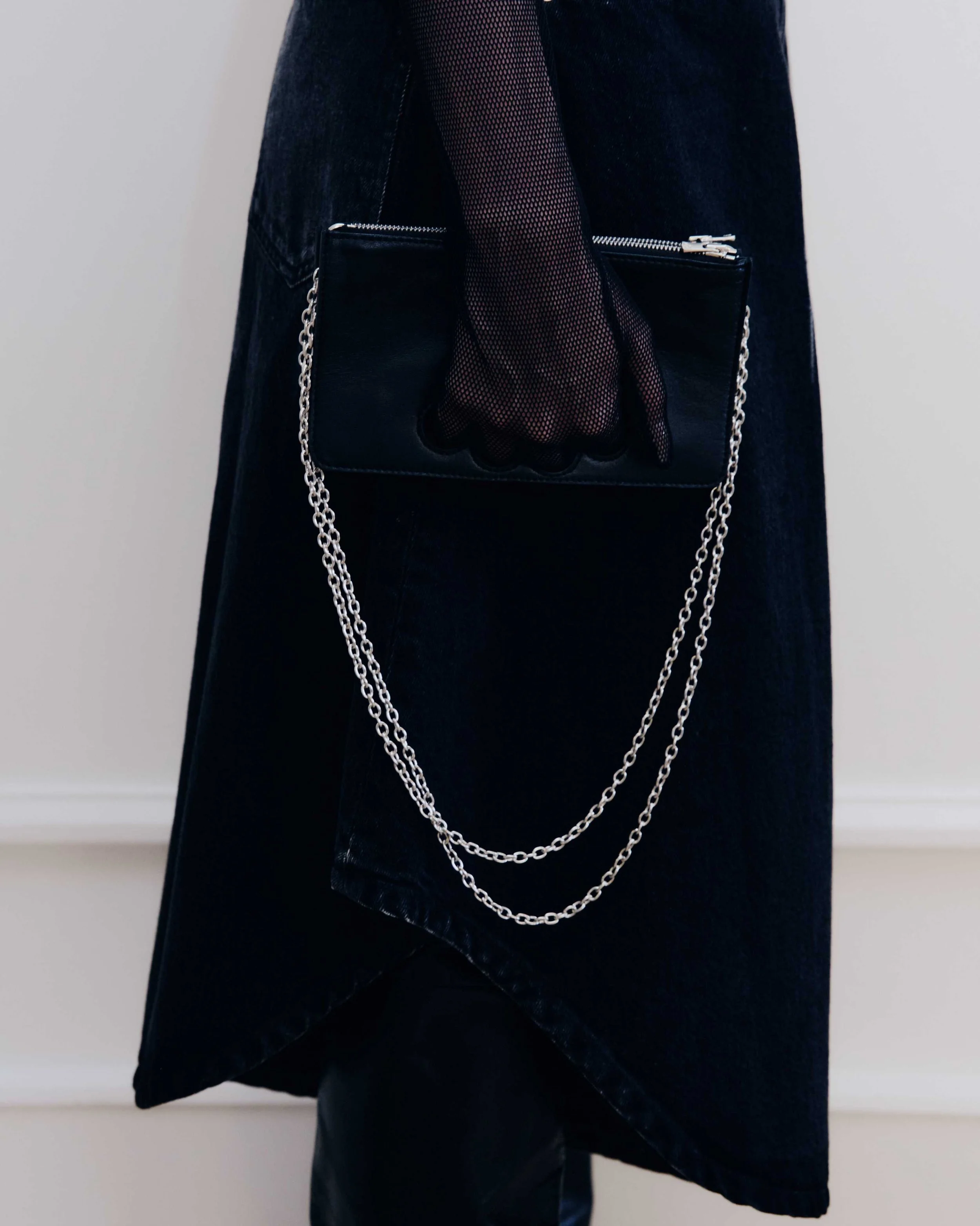
Shibari is part of Japanese culture, so as a Japanese brand, it felt very natural to incorporate that idea into the collection. To me, shibari is not simply about restraint. It also evokes tension and restriction, while at the same time suggesting release and freedom.
By combining sheer fabrics with straps and lacing inspired by shibari, I wanted to bring these opposing elements together within a single look. Through this collection, I explored the balance between rules and freedom.
Backstage photography by Harry Miller
Runway by Finnegan Koichi Godenschweger
Interview by Donald Gjoka
What to read next