LOST (Labyrinth Original Sound Track) is FMR’s Memory Artifact
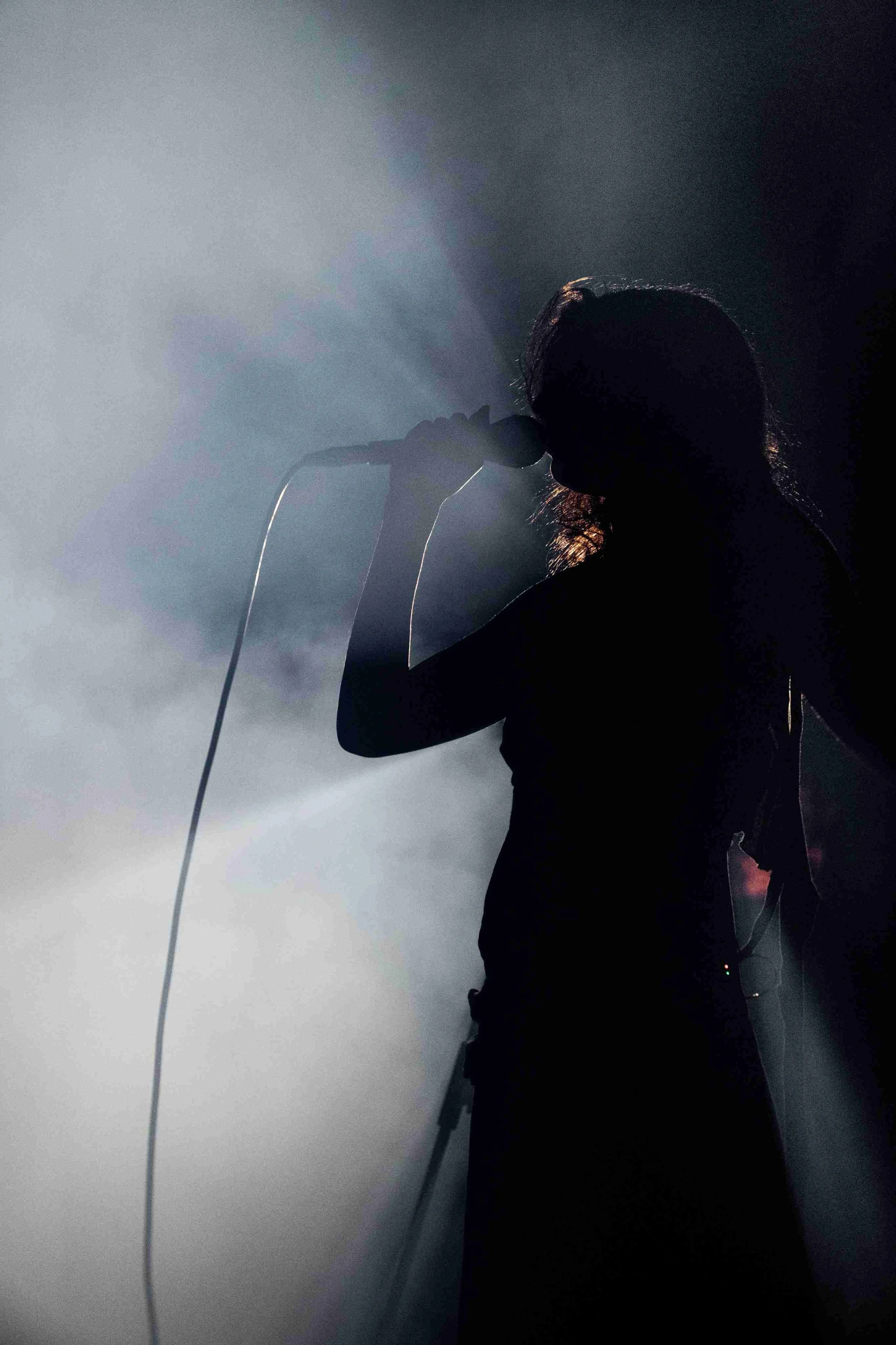
Light Designer Bianca Peruzzi and Curator Luca Giudici are the builders behind LOST. The two met in Milan and started on the Spiritual Sauna series. Their collaborations became a practice that tests the perceptual possibilities of worlds of sound and atmosphere. Every year, they return to the Labirinto della Masone in Fontanellato, near Parma, to awaken it for three days and three nights.
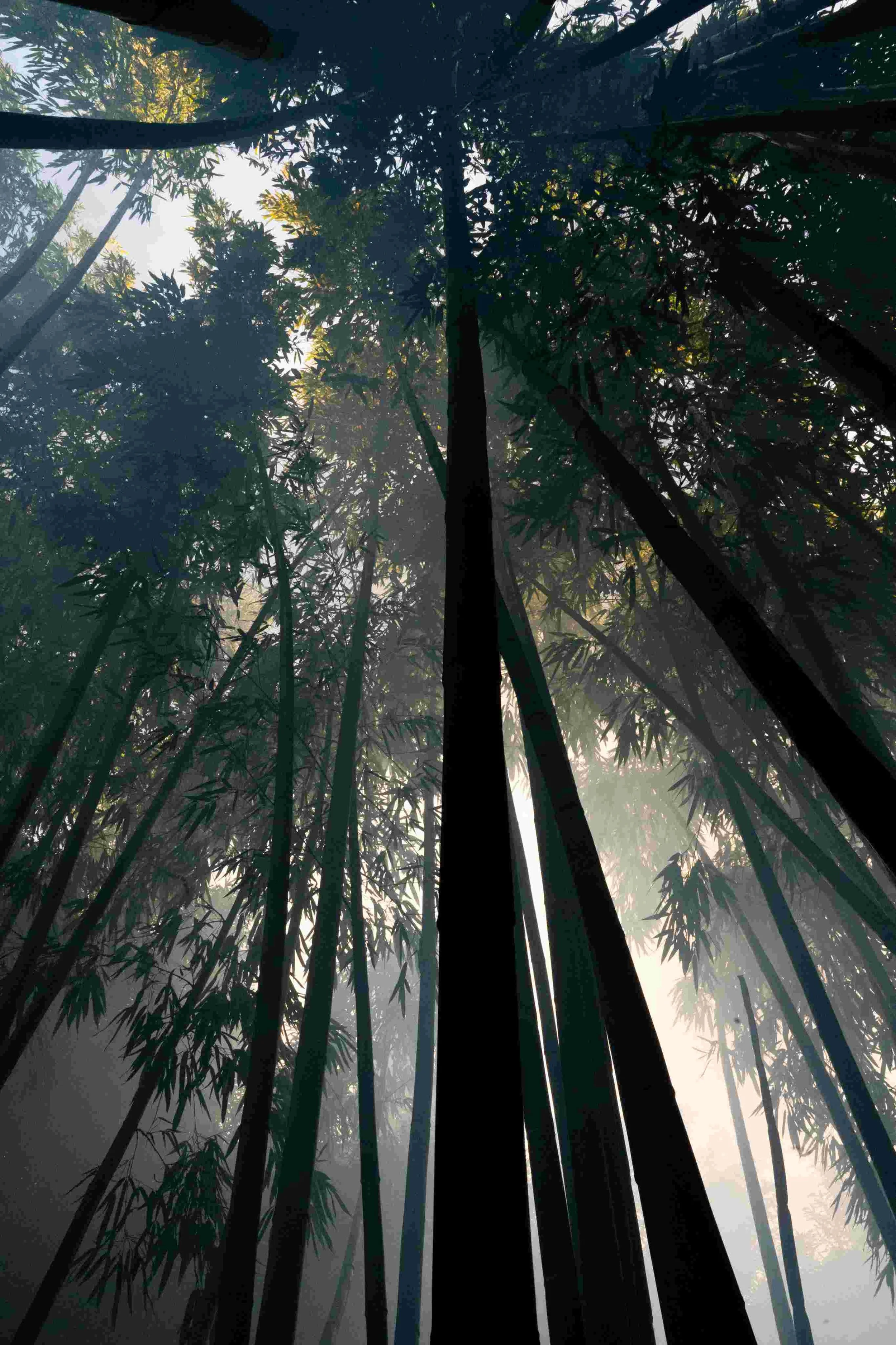
The bamboo labyrinth stands as afterlife of Franco Maria Ricci’s as his last, heretic gesture. The Italian publisher, bibliophile, and art collector who, over four decades, championed a vision of art at the periphery of the canon through FMR magazine; and whose library and collection are now housed within its same walls. Built on a promise Ricci made to his friend J.L. Borges, for whom the labyrinth was a lifelong fixation, the site carries the Argentinian writer's private metaphysics. Peruzzi and Giudici work within that legacy, bridging the experimental, the esoteric, and the eccentric.
LOST (Labyrinth Original Soundtrack) is the name of a single curatorial line and multi-staged dramaturgies across three nights, including performances by Yawning Portal, SUUTOO, Heith & Tarawangsawelas. In this conversation, Giudici and Peruzzi discuss FMR's artistic heritage, light as architecture, and the psychology of a symbol.
““A spectacle is not created to impress but to reflect reality and expand it, to summon wholeness.””
The visual narrative you bring to the shows often develops through intimate conversations with artists as you tour across countries and continents year-round; how does this inform the work?
BP: Front of house gives a privileged perspective on how a public event like the festival is navigated by the people attending it. The world has different crowds; sometimes I like to leave things running and exit the foh, wandering around, with a soft gaze, observing and questioning, in fact, how the socio-political and environmental climate of a country affects the behaviours in space.
For some days, the same community shares a spectrum of emotions, physical experiences and perceptual practices. The way I shape the visual narrative of shows influences this, and it's influenced back by the people's response.
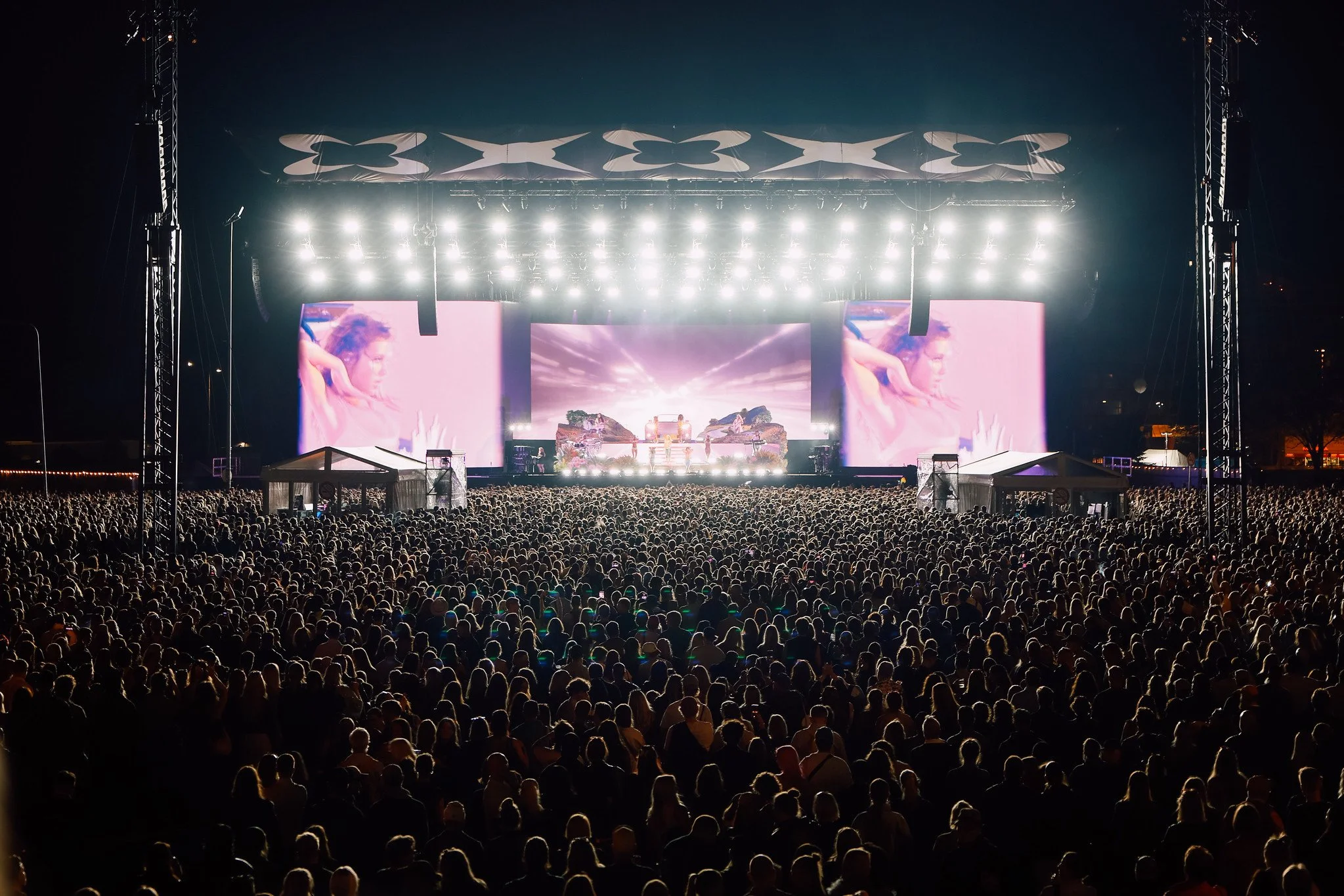
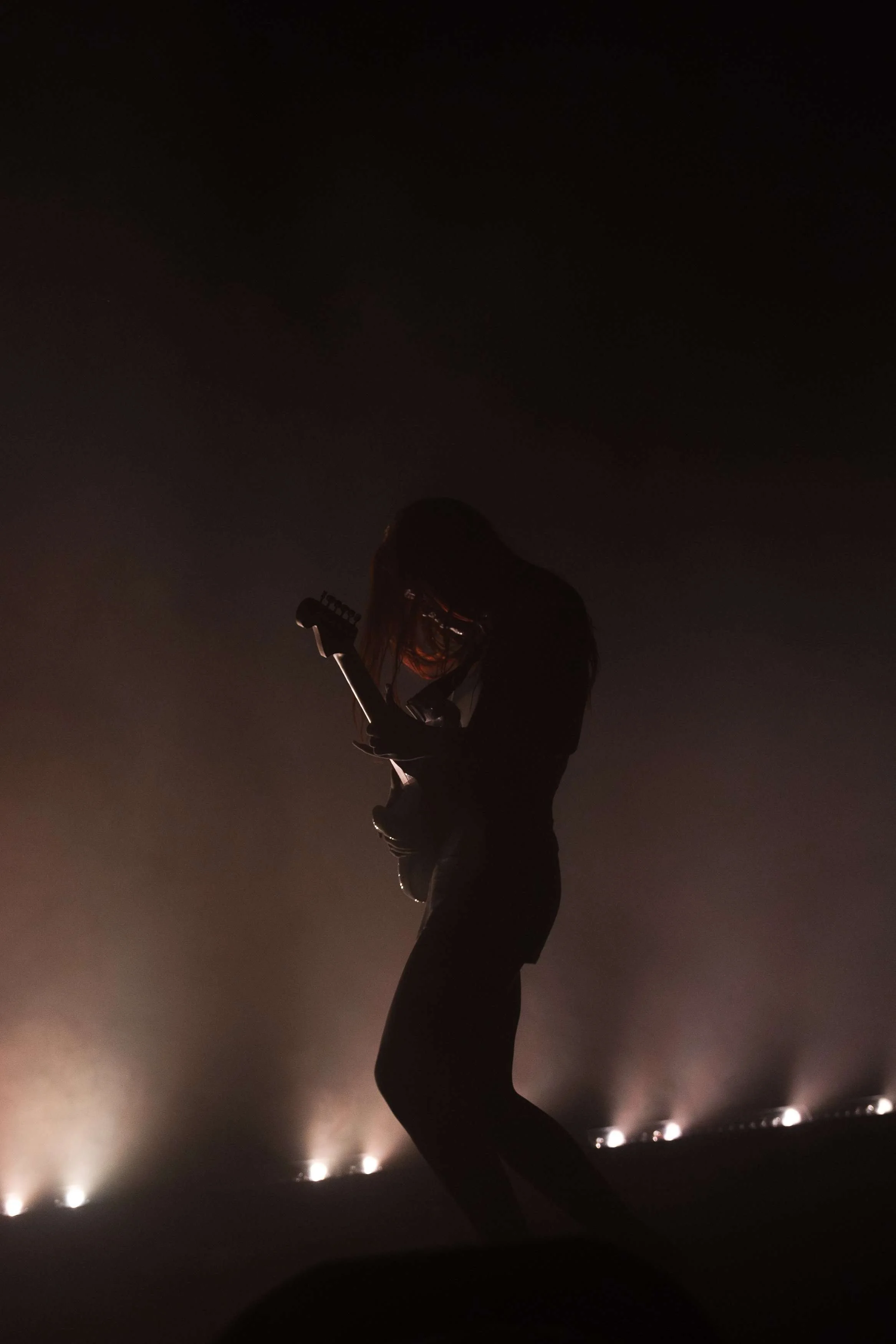
I am convinced that each person is an actor in the play of the festival and the whole journey is a game of giving and taking. A spectacle is not created to impress but to reflect reality and expand it, to summon wholeness. This year there was hope in the inhabitance of the spaces of the labyrinth, and my lights were following along.
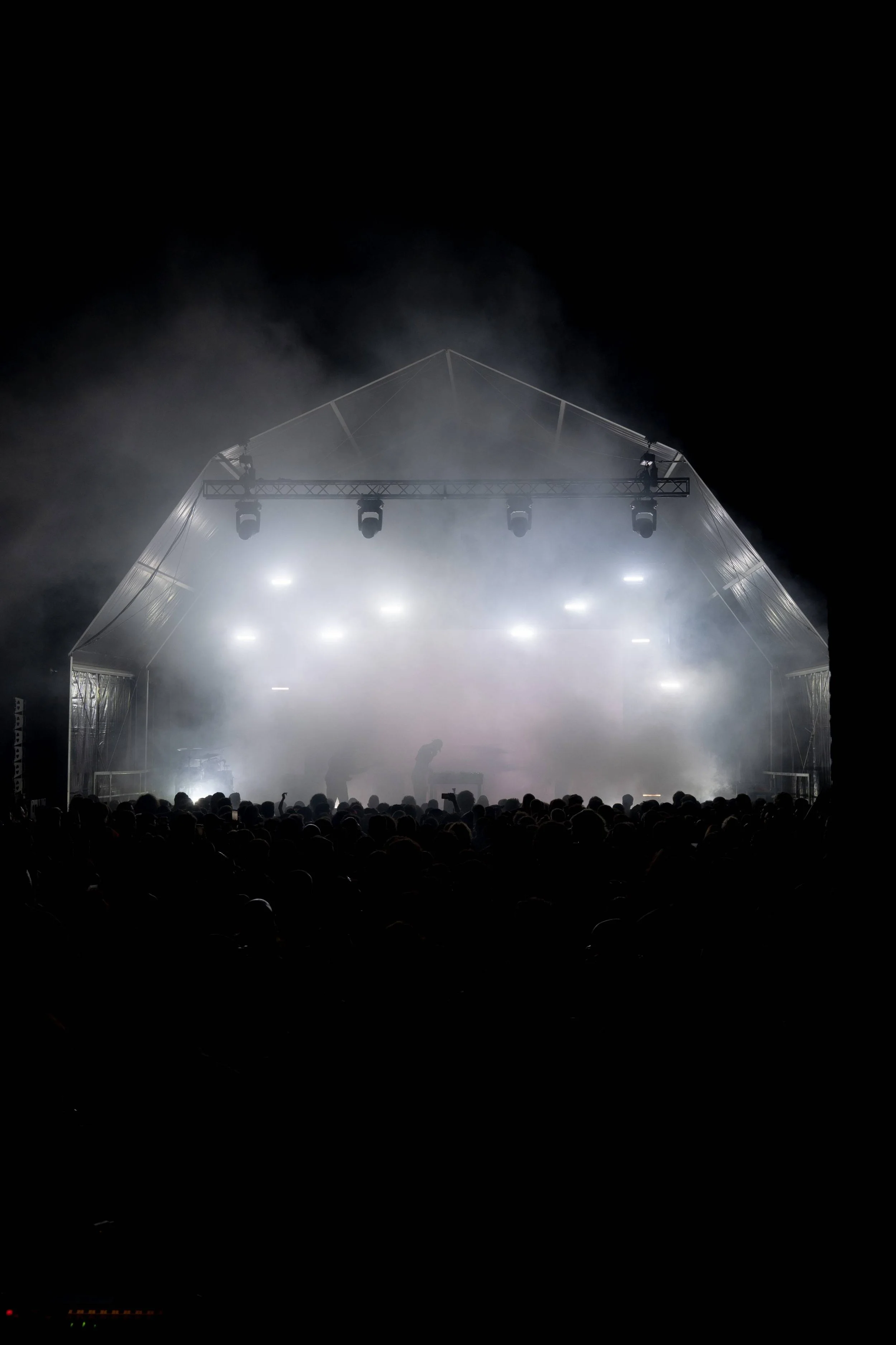
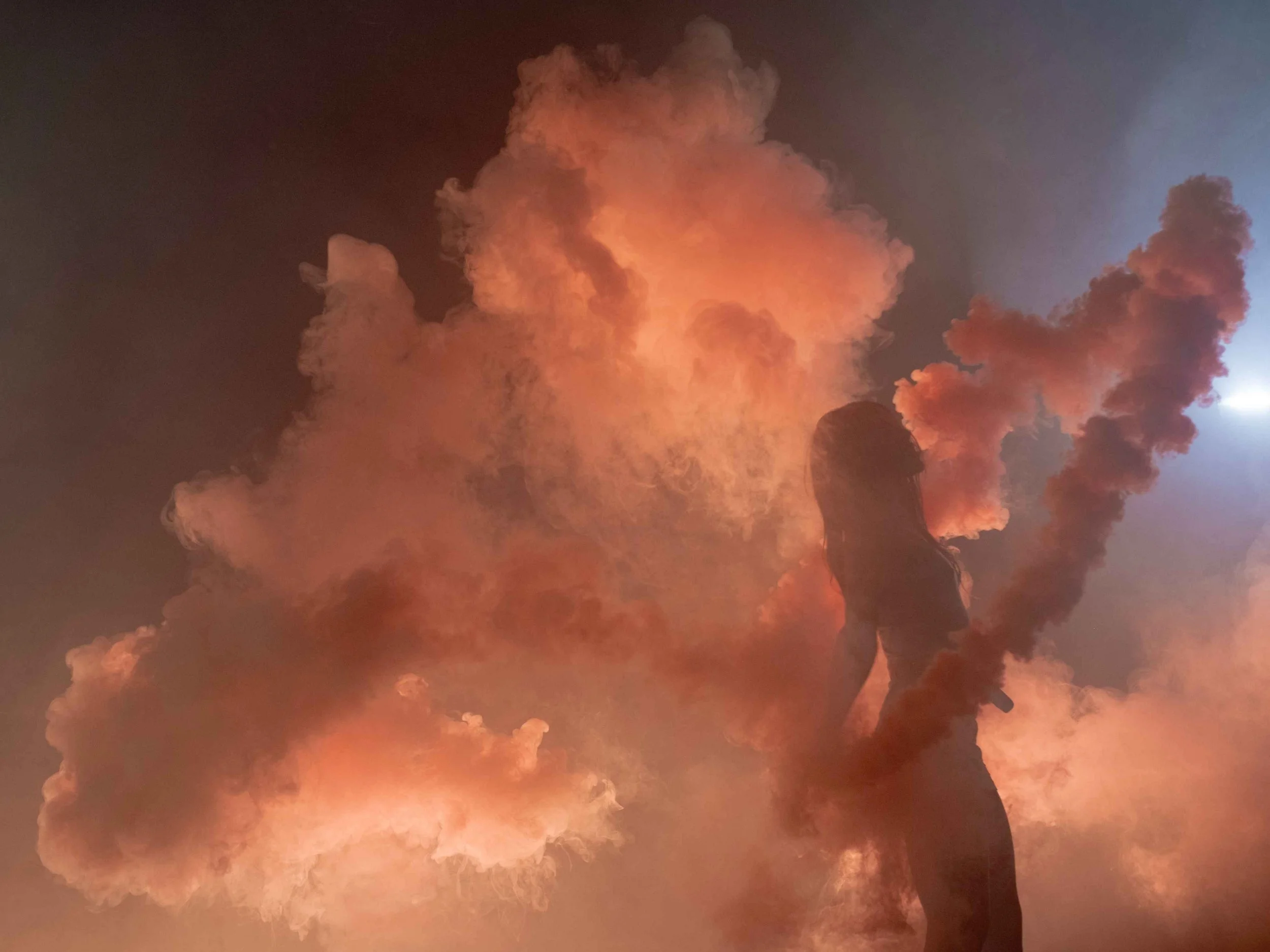
I designed the main stage imagining a constellation, pointing to guidance towards a new path: lights hanging from the roof as fallen stars. From this more sculptural approach, I decided to construct and deconstruct the dramaturges with extreme bursts and explosions, appearances and disappearances of the musicians, as there was always something to be eager for, to look for, to be received.
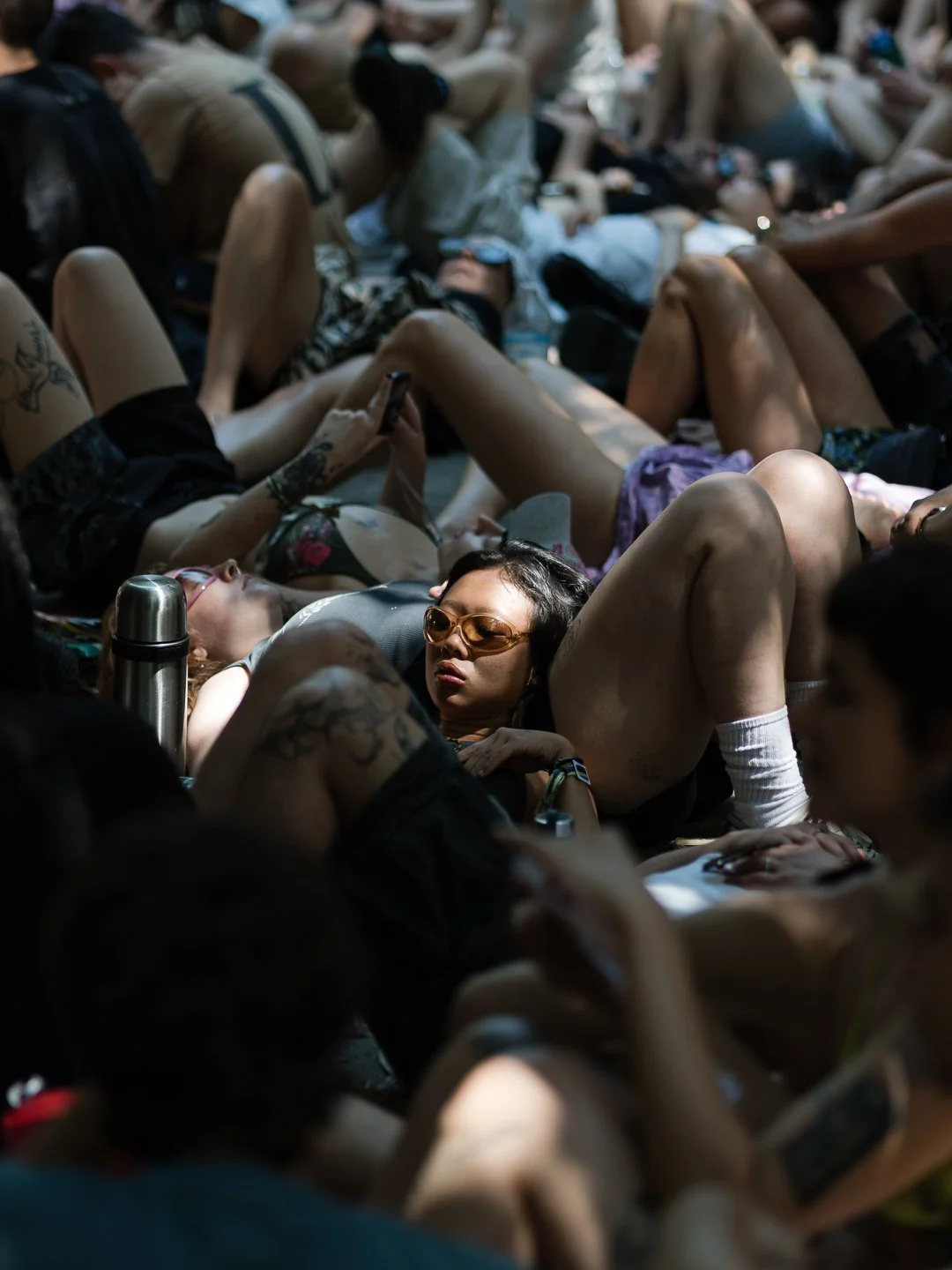
I recall there was one show in particular, at around noon, on the day Bamboo stage (B2), where Heith and Tarawangsawelas were playing under a merciless sun. The music grew the more the sun moved to its most zenith position. The heat was so unbearable to remain still that from a relaxed, lying down configuration of the audience, one by one the people started to stand and move, growing with the music, the music growing with them, in a hypnotic dance of twitches and releases. Later I told Dan that I imagined them as desert wizards, guiding the people to a dance of liberation from the oppressing sun.
Which lines of inquiry — continuing or discussing site-specificity — have informed your curatorial work the most?
LG: I studied architecture, which I think really shaped my understanding of physical spaces, people, and the anthropology of how we gather.
I found the phenomenology of architecture really interesting, a way of thinking coming specifically from the work of Christian Norberg-Schulz. Understanding the "spirit of a place" and how humans physically and psychologically inhabit spaces and this recurs a lot in my thoughts when it comes to curation,
Then even as a kid, visual culture was always my primary gateway into everything. When it comes to my fascination with the esoteric, I'd define it primarily as a visual thing.
Certain subcultures, music genres, posters, and zines acted as cultural codes that most people might define as "extreme" and, by extension, outside the norm.
I was a hardcore fan and player of Magic: The Gathering. If you think about it, that is an incredible level of worldbuilding and definitely esoteric sometimes. The illustrations by some of the artists drawing those cards are still among my favorite references today.
What do you make of FMR's legacy, both within and beyond the Labyrinth, accessible through LOST?
LG: Working with the Labirinto della Masone allowed me to dive deeper into Franco Maria Ricci's world.
Experiencing the labyrinth as a space and "playground" and studying his collection, I immediately started seeing the festival as a direct extension of his interests, especially the more esoteric sides of his research.
That esoteric visual presence has always fascinated me and been part of my background, but inside the maze, I could really see it coming to life: visually and scenographically returning the space to how he originally envisioned it.
LOST might be the truest version of what the labyrinth meant to him, since it is only through music, lights, and atmosphere that one can really activate that specific vision and continue his research.
BP: Light, natural and artificial - has a volumetric physical state - as it articulates spatial perception. That's a dear concept to me as the striking sensation of existing and belonging to that exact existence. Perhaps this is what I attempt to convey through any spectacles, regardless of the amount of preparation time given or my deep diving into a specific artist's journey - that's the common denominator: an offer to embrace/accept the awareness of the nowness.
In my process, I see this in a visceral tendency to let images and dreams emerge over logically finding solutions. I rarely have second Ideas or thoughts; I tend to trust the first sight for its presence in the moment nature that I love so much.
Logic and organised thoughts come after, as I develop, program, or technical design further, but I'd say the final piece is usually very similar or core-ly similar to what the first emerging mental sketches were. It is always like discovering and entering a door to an unexplored world and while navigating it, elaborating its map empirically. The right tools are very important.
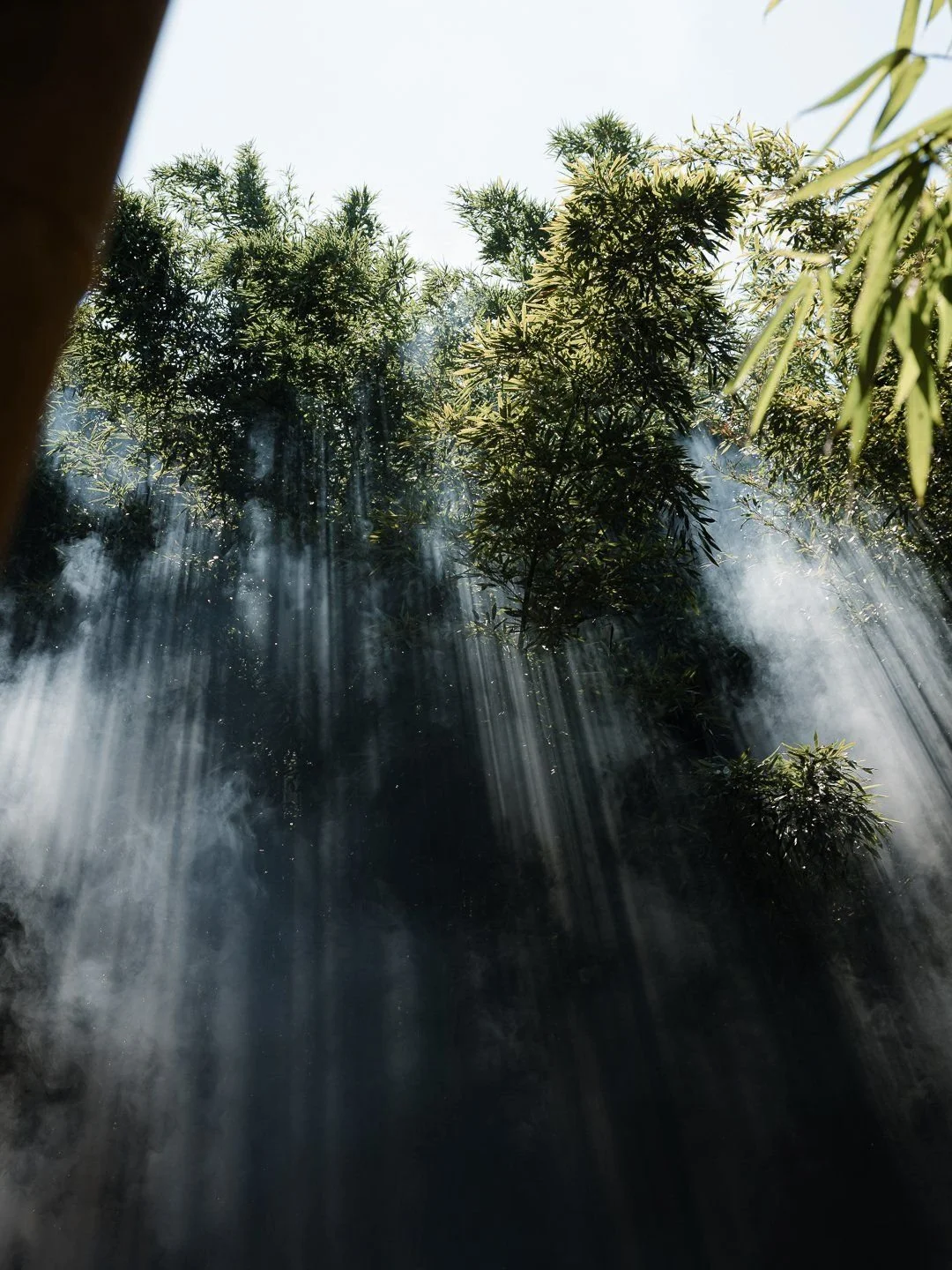
The occurrence is embedded with the Labyrinth symbolism in relation to the human condition and repeats itself in a similar coordinate, year after year. What can you share about this link with psychology?
We ask our attendees to navigate one of the most complicated structures imaginable: a labyrinth. Yet we establish some fixed anchor points like the stages and a strictly non-overlapping schedule to make them feel confident enough just to let go. Curating the festival really comes down to reading the environment and audience, and that's exactly how you create those memory artifacts, by guiding the crowd into specific states of mind: euphoria, nostalgia, or tension.
Alongside the music and FMR / the maze of course, the visual direction I defined for LOST has fundamentally shaped how the festival is perceived and positioned, both physically during the event and online.
What started as a visual research on the esoteric earlier, alongside the sonic narrative, falls straight into the physical experience: the lighting work of Bianca and Peri, but also the artworks that set the tone with Visio, NMR, and, this past year, Nicolò Pellarin complete the worldbuilding of the festival.
Many of the live sets in this edition (Microplastics, 20_14, Secret Guest, Heith and Tarawangsawelas) step from outside their individual projects to present work together, some for the first time — what can you share about this?
LG: FMR mentions his obsession with esoteric and whatever lives "at the margins of the norm. And FMR as an art magazine was exactly that, since it made niche culture relevant. In my own small practice, I've always tried to highlight these margins and bring them to a wider public.
In these uncertain times financially and culturally, new ideas and experiments really struggle to take shape. If we don't take this risk, who's gonna take it?
MICROPLASTICS came up. They don't even really have records out yet, nor at the time we started speaking about it, just one track haha, but their vision was already completely clear to me. And a similar approach for 20_14: I often talk with Rune about new ideas, and doing an improv show with Voice Actor and Felisha sounded like something that could only happen here. At 2 am, in a dark bamboo maze, yes, only here! JOKKOO is multi-faceted, with various projects and directions. Adaptive, scalable freedom that comes from them operating as a collective.
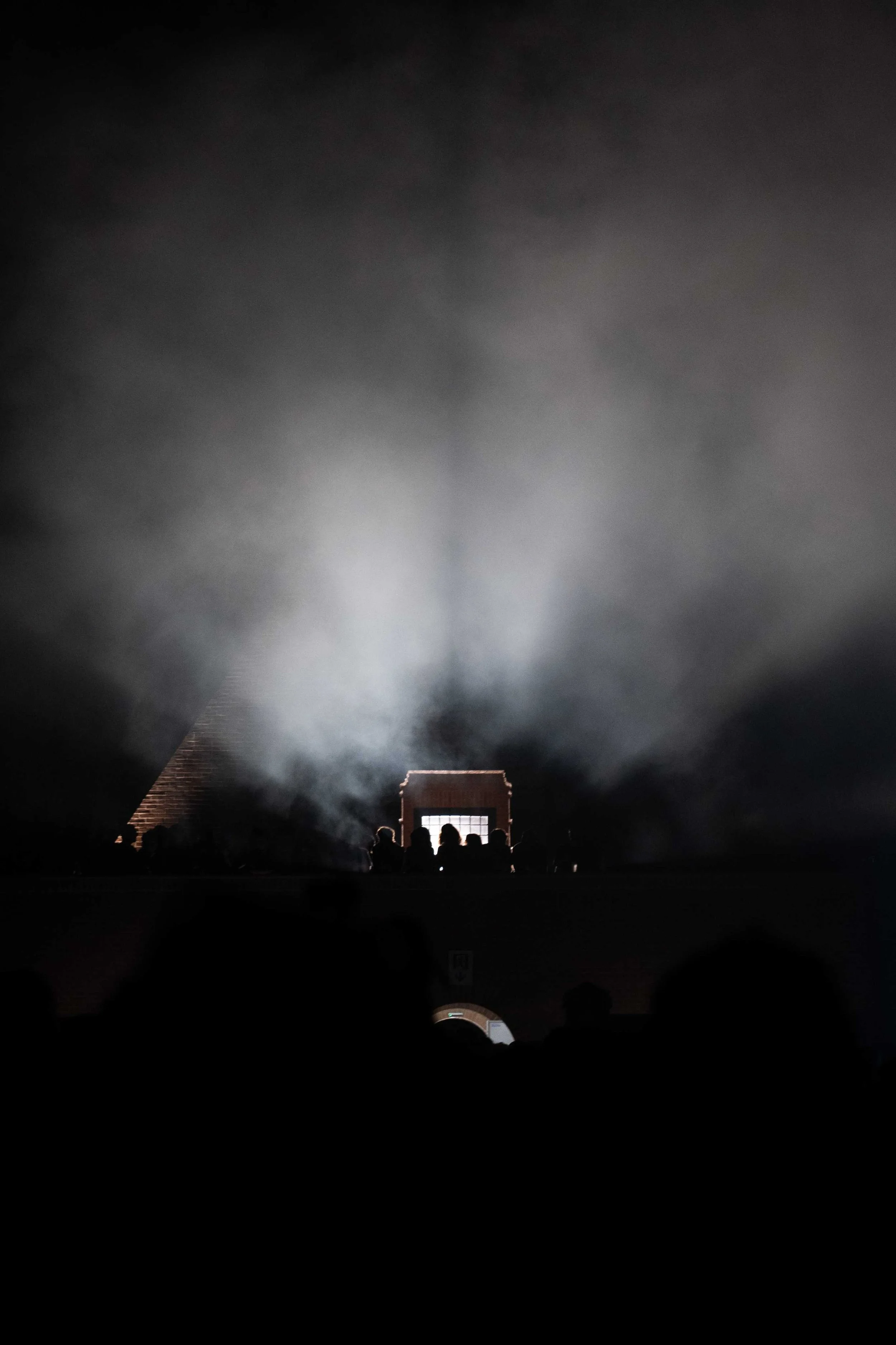
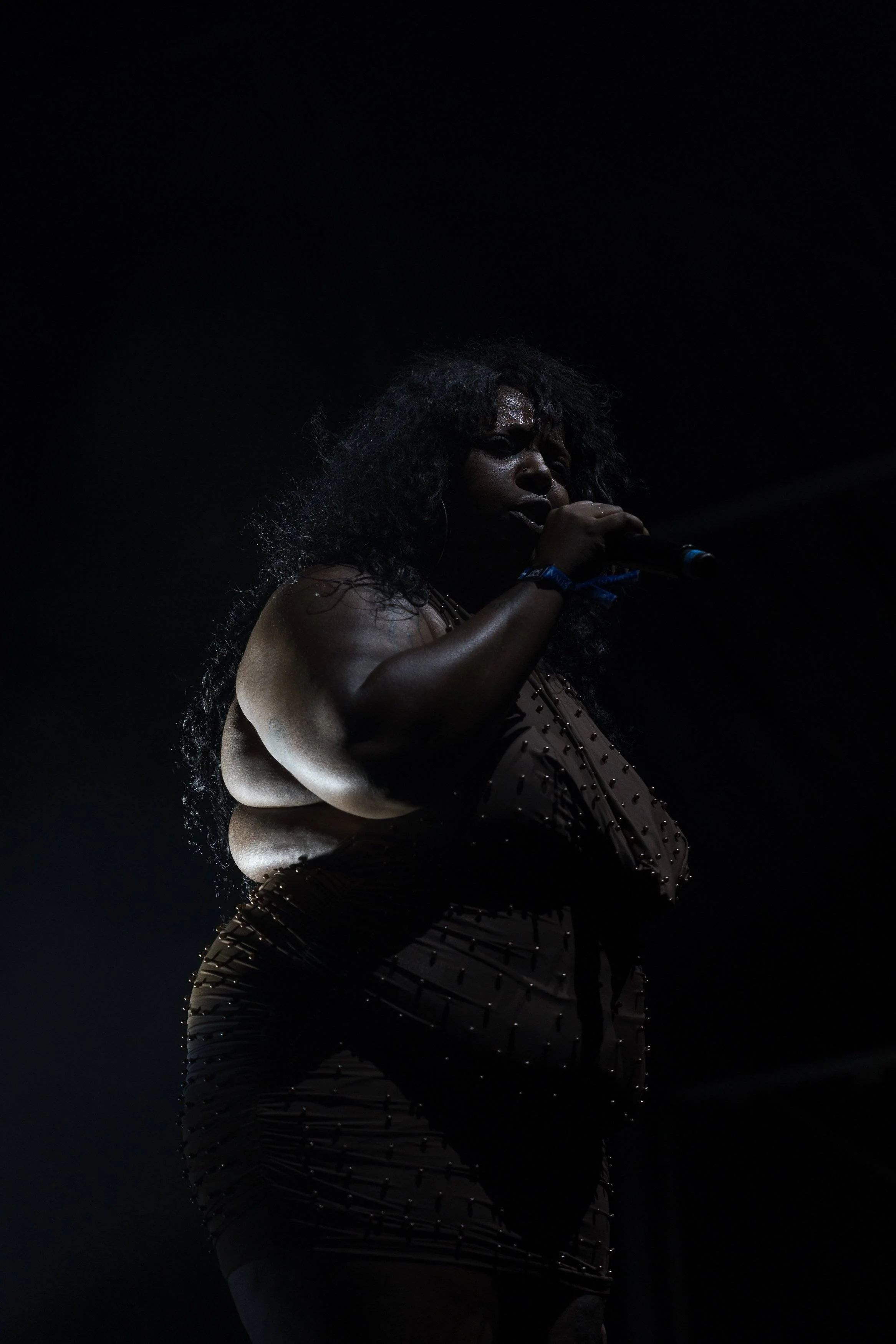
Walk me through the vision for this edition program as a spatial dramaturgy. How does months of preliminary work compare to when you form an impression hours before a show?
BP: The key is to ensure that the spatial intervention of light can convey time-based presence. In LOST, where there are so many different identities, journeys, messages and aesthetics - to create a spectacle for me is to be ready to navigate their universe while it unravels in front of me in real-time, finding my door from where to adopt an explorative and receiving behaviour. Tool-wise, it means having flexible and layered programming to be able to quickly react to what happens on stage.
Both Luca and I esteem preliminary conversations with the artists as privileged starting points, which we evaluate highly within the artistic vision. I had the chance to show the artists the design's play possibilities within a set aesthetic framework, and some reactions were inspiring and stimulating, which led to outlining the structure of the spectacle's dramaturgy as a solid base for improvisation and choices as acts of pure instinctual reaction as presential playfulness.
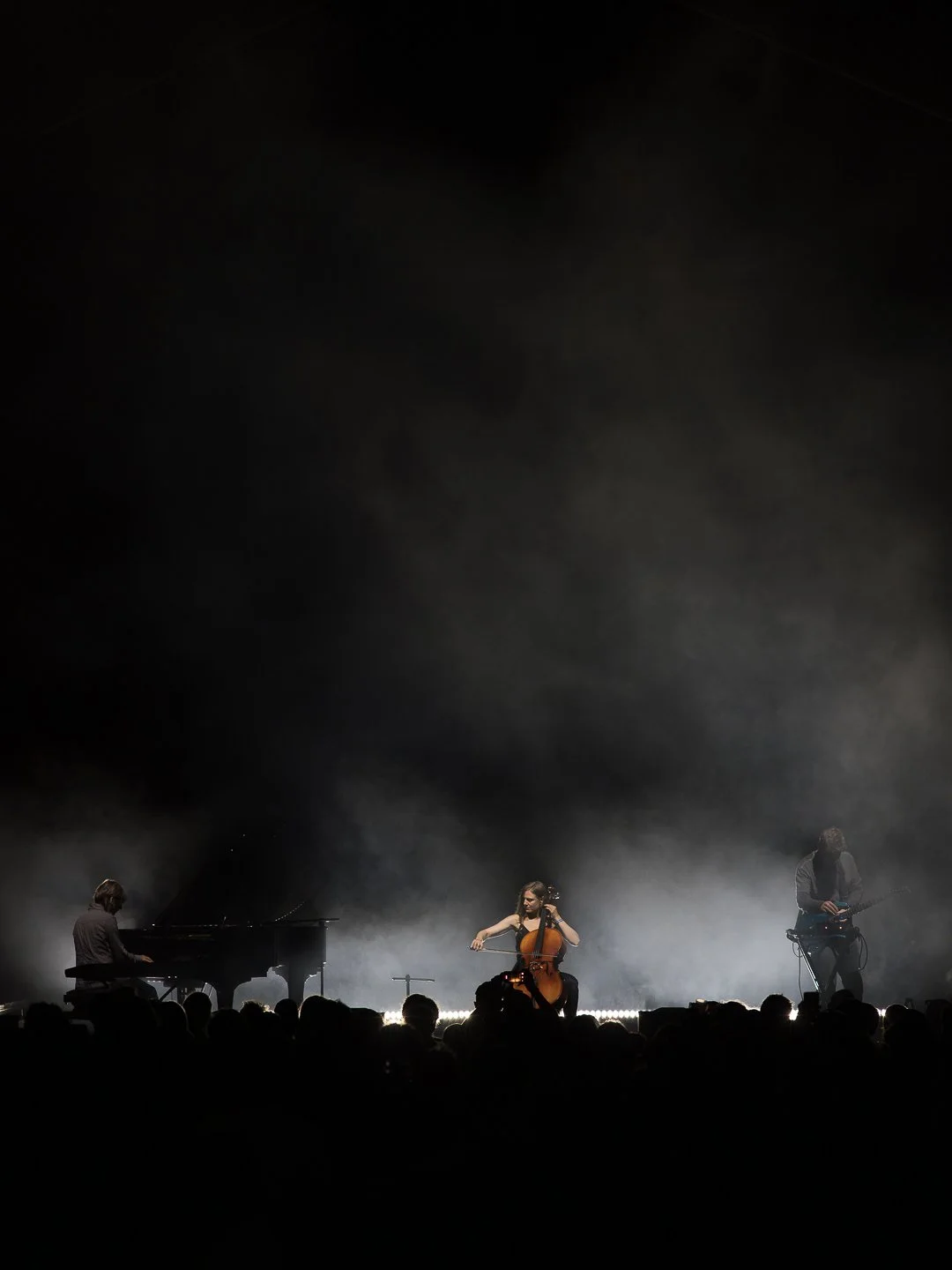
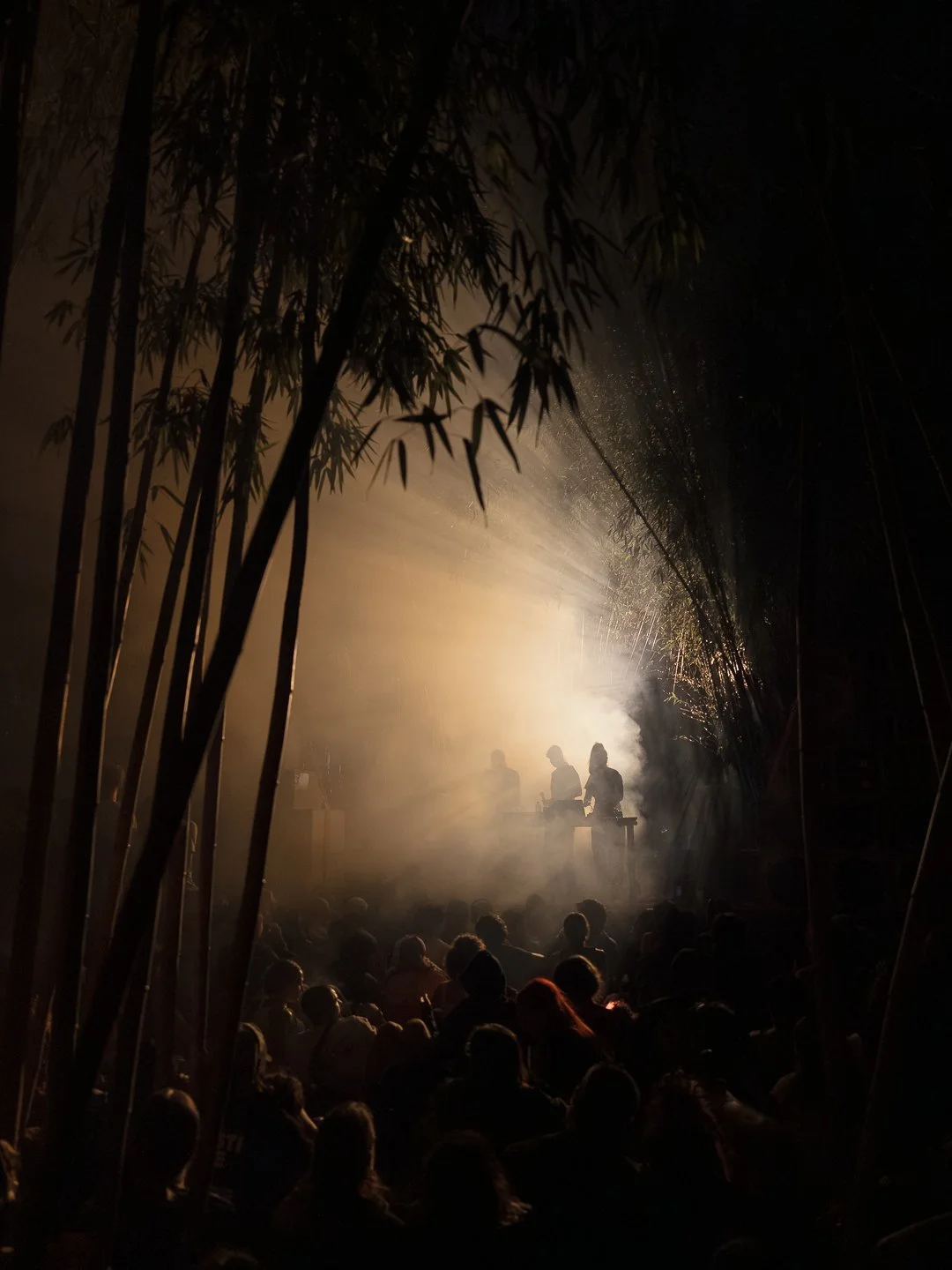
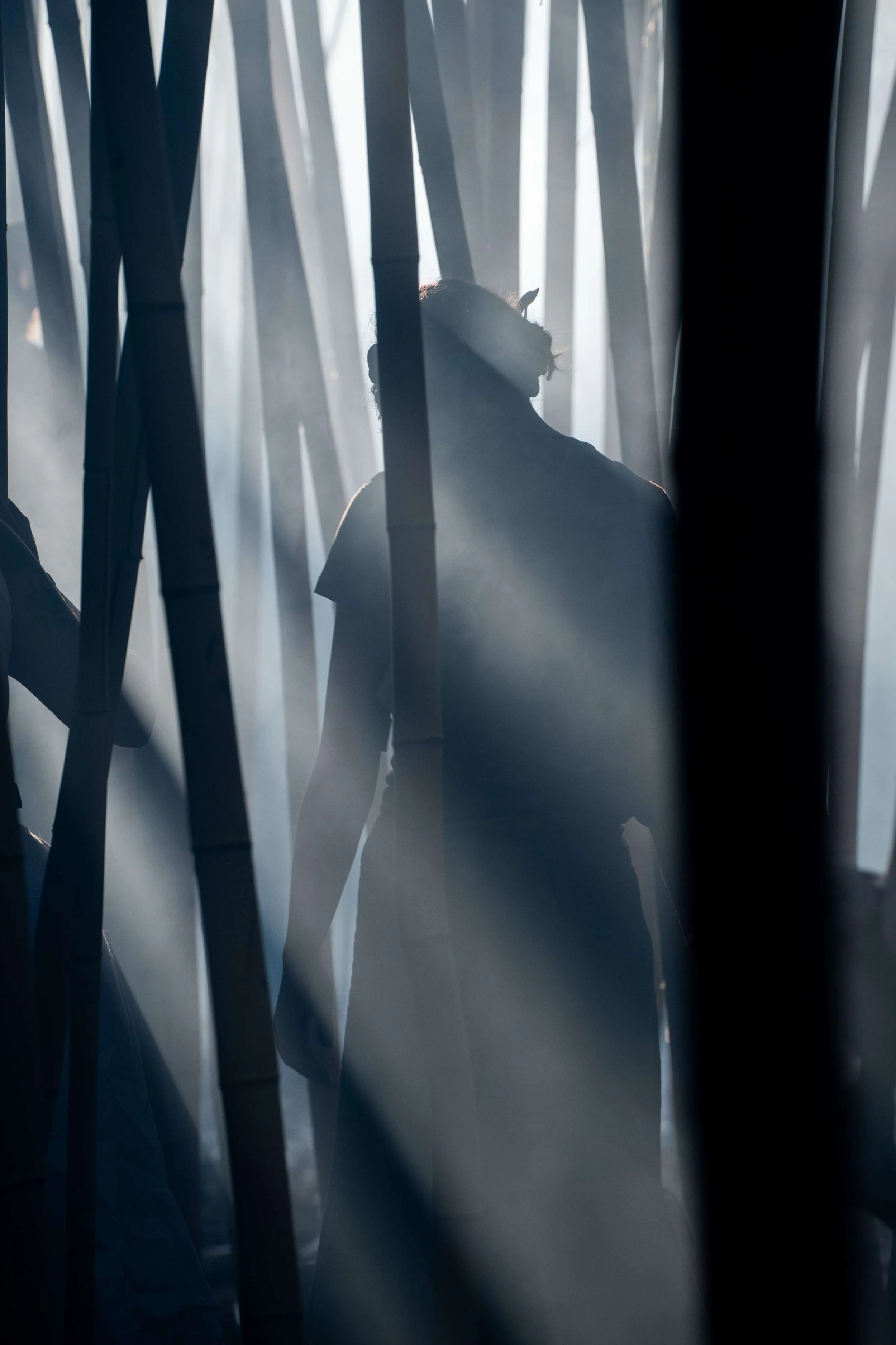
One of my favourite contributions was during Yawning Portal's set immersed in the labyrinth, at 1:30 am. With limited lights, it came to how to reveal elements and subjects following the musical intentions and decisions: I decided to be literal and created a portal. As the sonic scape evolved, a sharp line through the bamboos opened up, revealing the two musicians and their progressive inhabitance of the stage. As it appeared very cinematic, I spontaneously decided to contribute to the set by redirecting the fan system to the bamboos over the stage, simulating a strong, implacable wind.
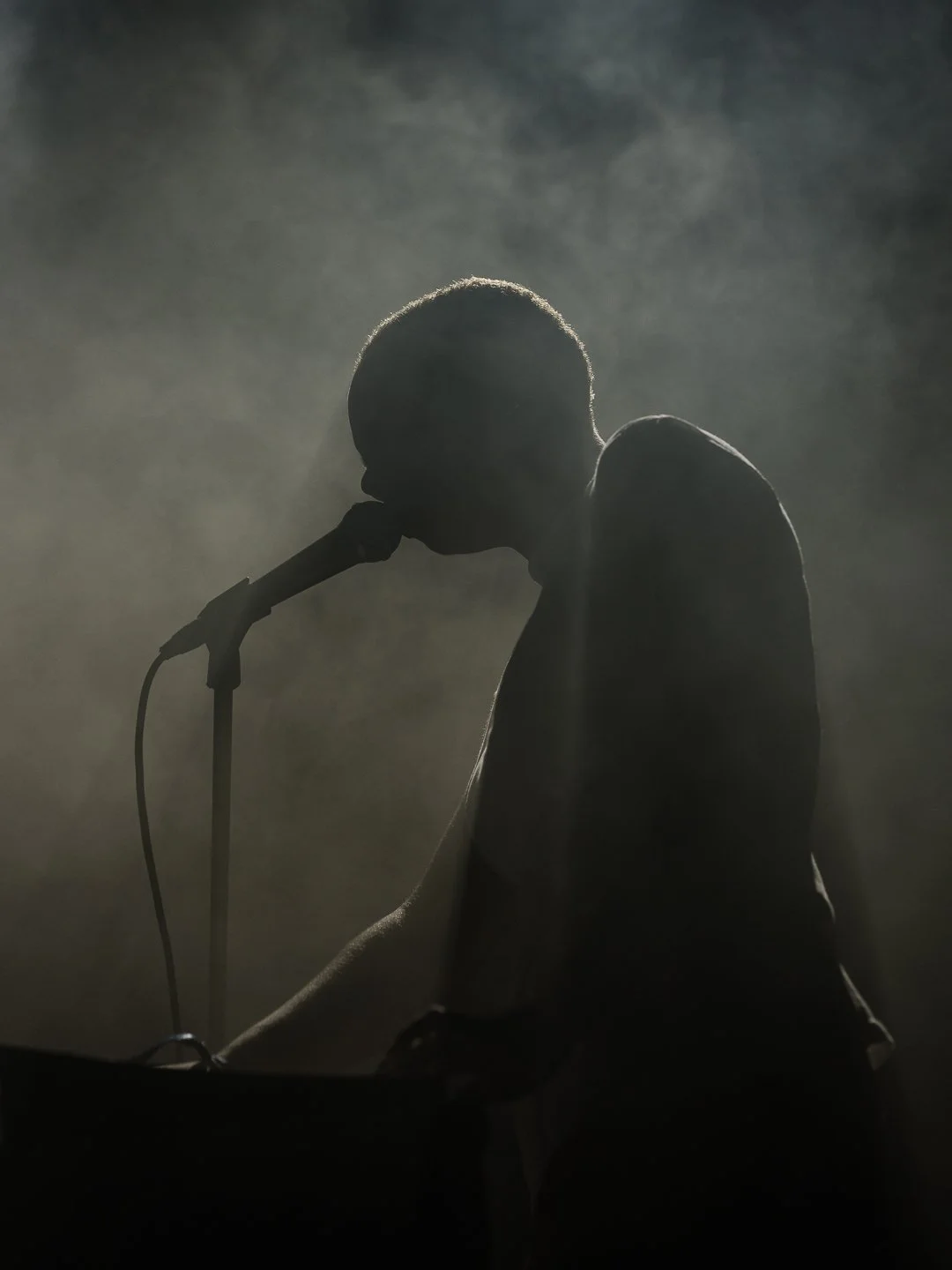
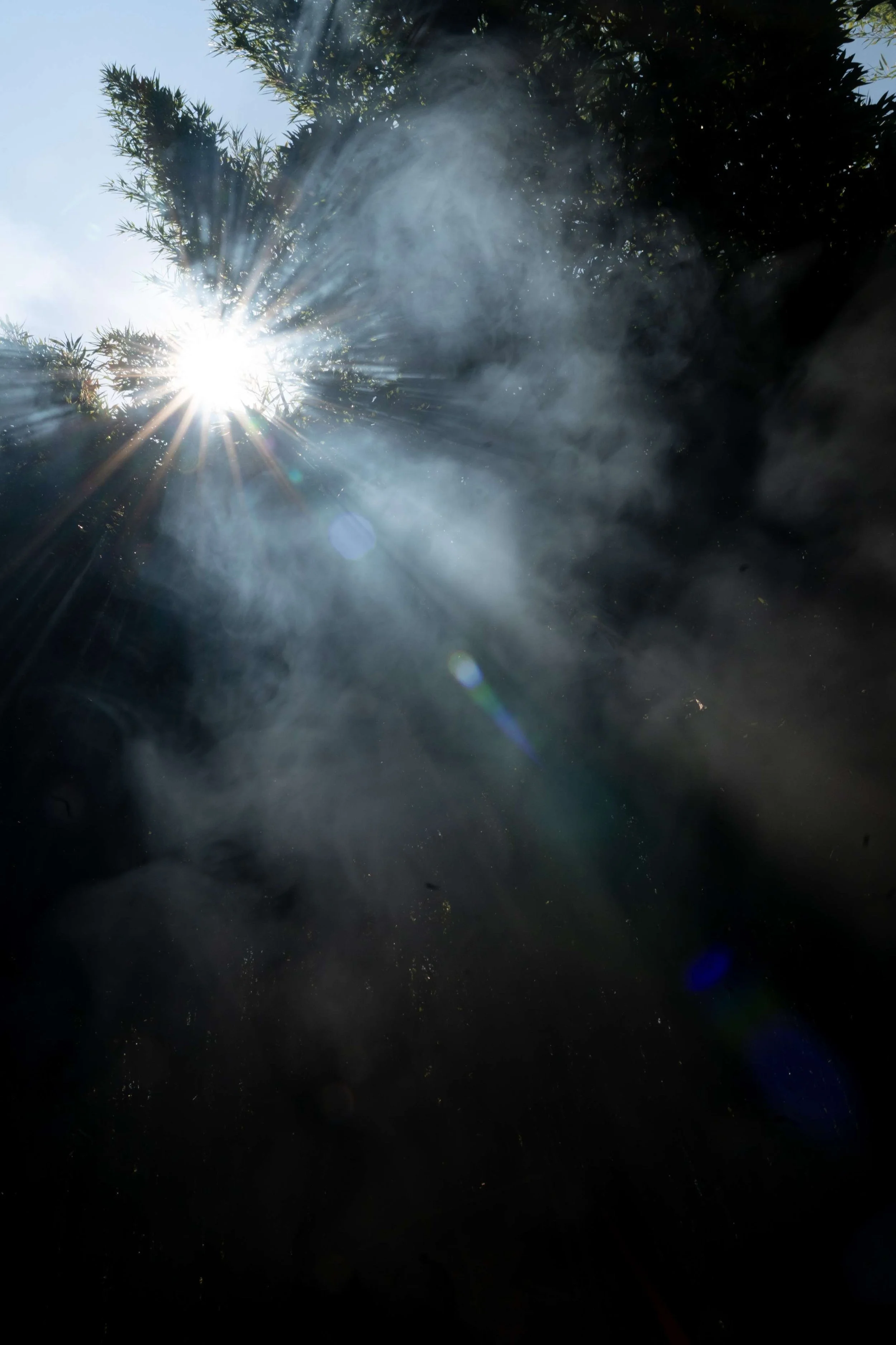
““Each stage and room we have imagined together is not mere the aesthetic research and output they might convey: there is a whole range of worlds we offer to those who might enter them.””
There's one point where two sets run in these stages as fixed coordinates suddenly overlap, suspending the curatorial insistence on a single path — what's behind that choice?
LG: A strictly intentional choice since the beginning, our stages basically never overlap. That's a strong decision I find necessary to avoid the distractions and pressure of having to choose, and it allows the audience to simply follow the curatorial flow of the festival.
Yet, it happens in two precise moments late at night, and I see it as both a physiological and a psychophysiological necessity. Some people physically need to come down and experience something slower, while others need to release and chase the higher BPMs.
So on one hand, JOKKOO delivered an unforgettable release of energy that brought the Gate stage to a new peak energy level. Meanwhile, 20_14 played an improv and spoken word set at Bamboo 1, which, at night, is actually one of my favorite stages. It's what I see as the two souls of the festival, since more dilated sounds and more hard music always lived alongside at Lost; I really love this contrast.
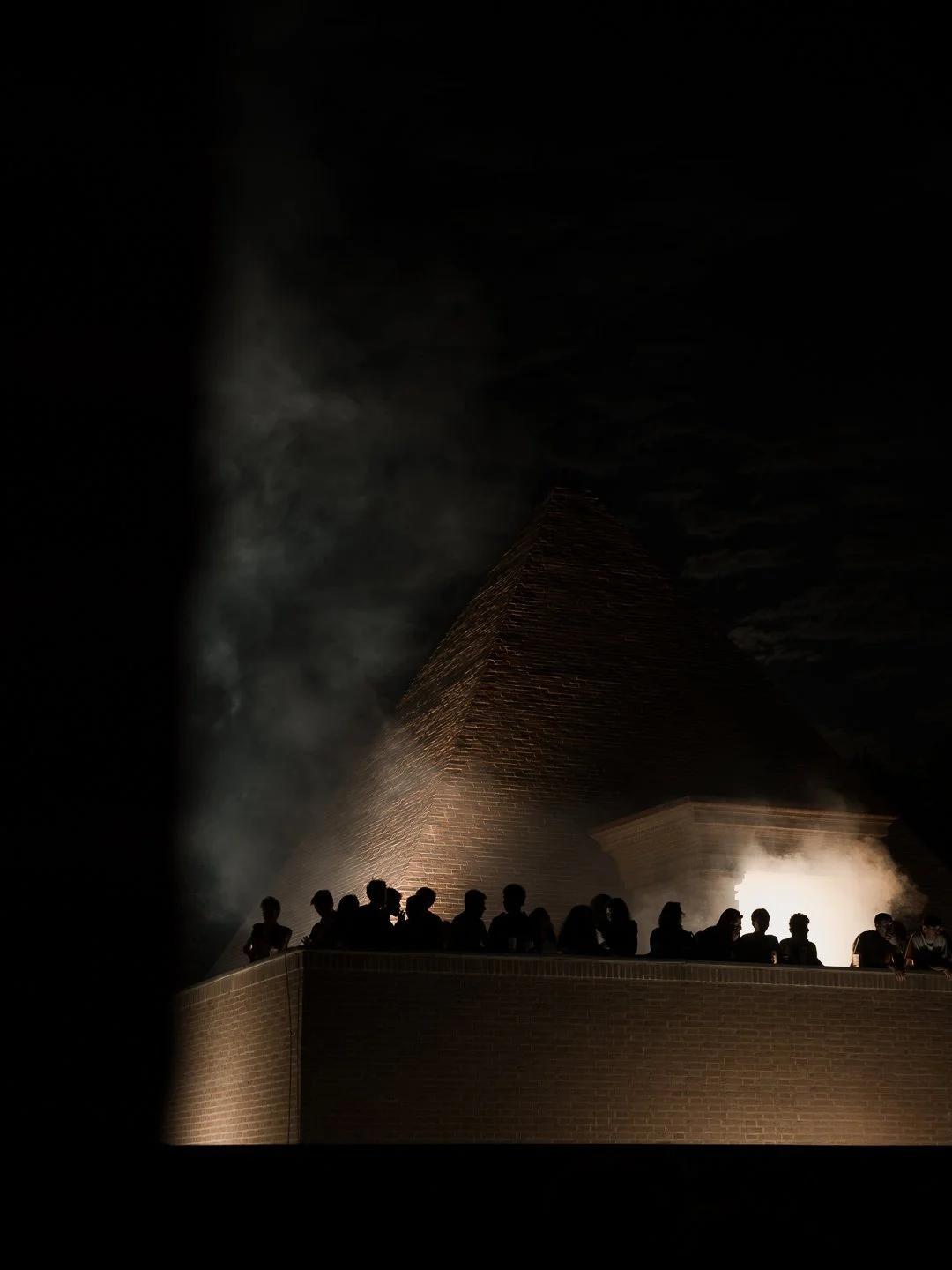
RHR and Kavari's sets at the Gate stage overlapping with a more dilated and soft sound of Yawning Portal's.
This is a part of the job I'm really into: studying timelines and essentially reading the physical needs of the crowd.
(Note: Julieta — I'm reordering the "Spiritual Sauna" question as the final beat since it closes on personal history and reads well as the piece's ending, exactly as it already sits in your draft. Let me know if you want it repositioned.)
You built a shared portfolio for years, including Spiritual Sauna. What is still legible from the first collaborations around Spiritual Sauna in Milan to today?
LG: Bianca has helped me complete the narrative by bringing the vision of the festival directly on the stages. We did our first LOST together in 2024; her impact was immediate, and for the first time the full vision and atmosphere really came to life. Since then, we started working together on every single project I developed with my studio, OEXP--Other Experience; we see things in a very similar way, and we both work incredibly hard and passionately.
BP: We share a passionate drive to find ever-new technical and creative solutions to form spatial narrations. Each stage, room, show/spectacle we have imagined together is never limited to the mere aesthetic research and output it might convey: there is a whole range of worlds we imagine to offer to those who might enter our works.
I understood our deep connection some years ago, when in a cold room we were building the lighting devices for Spiritual Sauna, and Luca played his favourite Imogen Heap tracks. We come from a similar wish of imagining ephemeral worlds.
Our works together are often characterised by minimalistic environments that form, develop, explode and disappear in a predetermined span of existence. I like to think about Luca and me as pragmatic dreamers. Each LOST edition is an anniversary and playground of our shared professional and personal growth.
Probably the common denominator in our shared practice is to give a sense of development of a story: a sonic story of light and space.
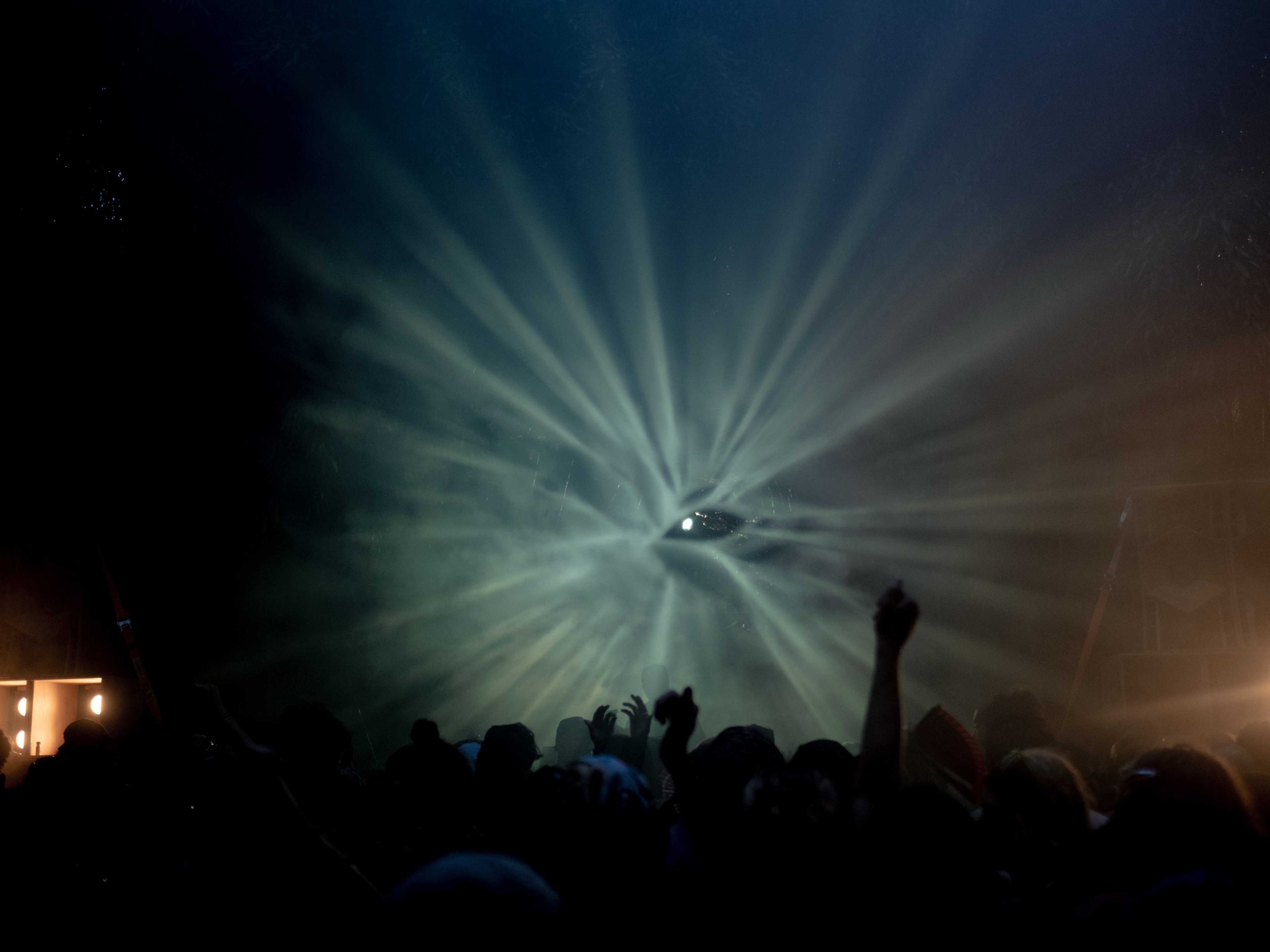
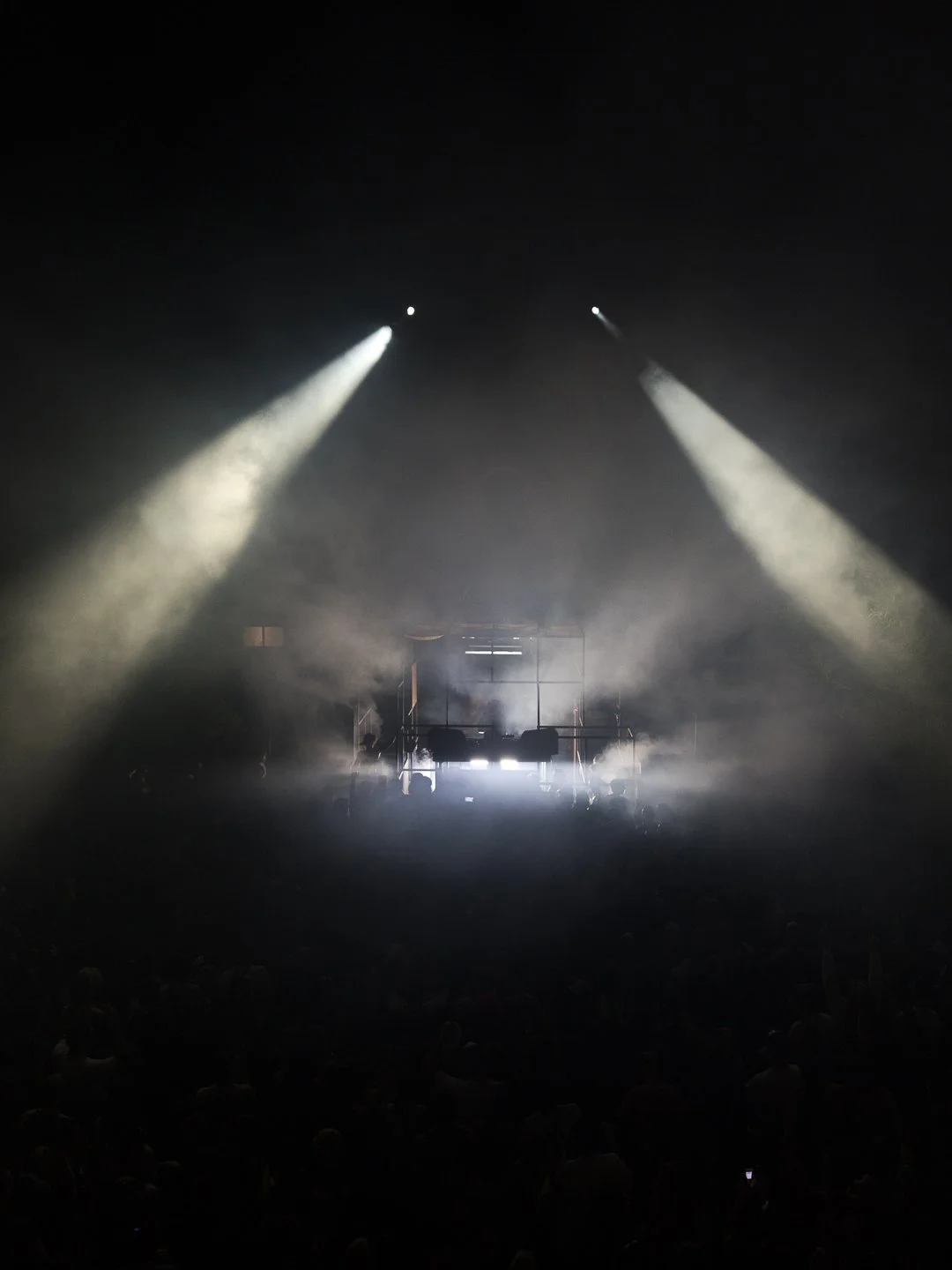
An example of this year was the B1 stage: the first to be activated, started with only one light, static, pure white, guide-like. Slowly through the days, it got more and more complex through other lights and kinds of imagery: low fog, wind, strobes. For Foodman's set at the end, we were non-verbally aligned: a series of warm white blinding lights that weren't yet used worked as a warm sea bathing the audience, amplifying the sun.
The initial white light was visually transformed into a huge net, a sort of Indra's net with an eye in the middle. Both Luca and I were amazed by how our silent communication and wish were fulfilled with a mix of a few elements blending within and out; that's how I like to think our work is together.
Curator Luca Giudici
Light designer Bianca Peruzzi
In conversation with Julieta Colantonio
What to read next