GENER8ION: VISIONS OF 2034
The world explored by GENER8ION: VISIONS OF 2034, a project by Romain Gavras and Surkin (featuring Yung Lean, 070 Shake, Jamie xx, Yannis Philippakis and more), presented by 180 Studios in London, is an exhibition that, rather than telling a story, creates an atmosphere: seven short films, an immersive installation, previously unseen images and fragments of recent and earlier works come together to form an audiovisual universe. Music, of course, plays a fundamental role: VISIONS OF 2034 is accompanied by the new album Love & Tears, and the two projects seem to have been conceived as parts of a single entity. Sound and images feed off one another, to the point where it becomes difficult to determine where the film ends and the musical work begins.
Gavras and Surkin depict a universe populated by students smoking antenna hardware in Leeds, digital replicas of Hollywood actors in Mumbai, internet myths that become propaganda in Idaho, and teenagers living on toxic coastlines in Athens. Running till the 30th of August, the exhibition is a well-executed and carefully conceived body of work: whilst it also serves a promotional purpose, the project highlights a future that does not seem all that distant. This bleak yet familiar futuristic scenario both intrigues and frightens at the same time: is what I’m looking at really the future, or have I been living it for a while now? It lacks the reassuring face of technology that simplifies everything, as well as the now overused trope of dystopia, with its neon-lit cities, artificial intelligence, and bodies under constant surveillance. It is a grittier, physical, and human future that moves to the beat of music. In 2034, young people believe in conspiracy theories, scrape by, seek out unspoilt natural environments, and continue behaving like teenagers.
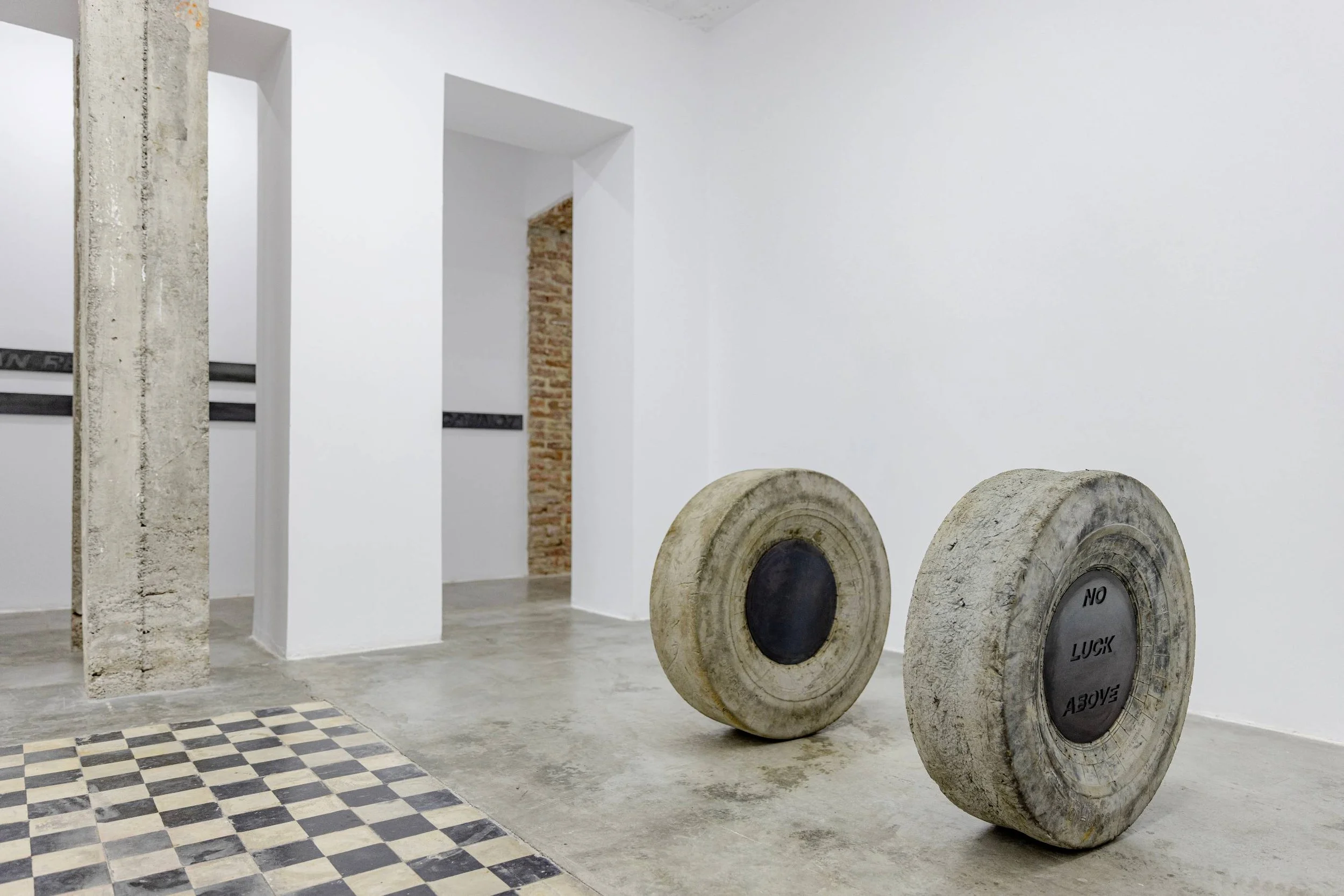
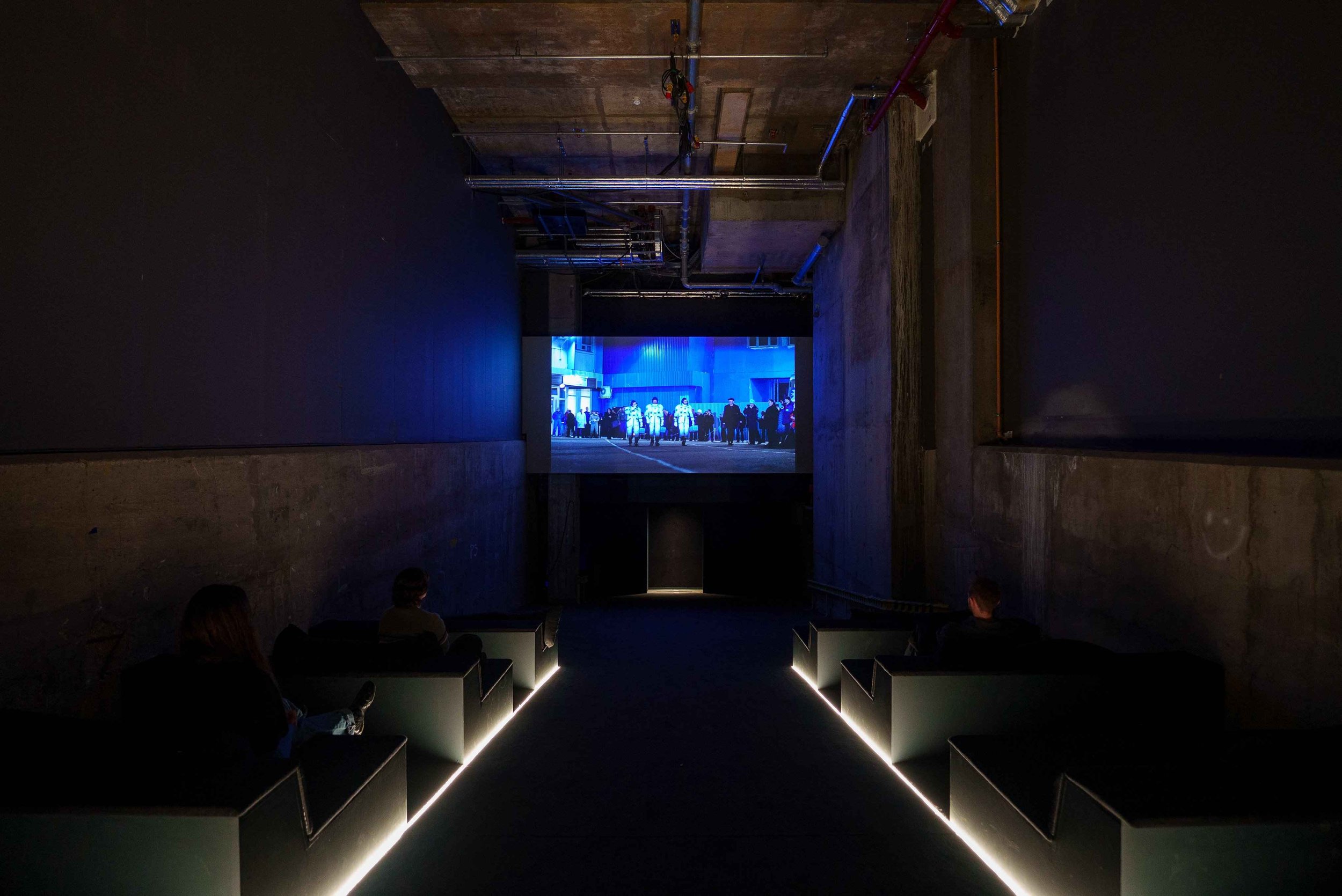
The entrance to the exhibition space already seems to belong to the future that it seeks to imagine: a dark, suspended space where words precede images and construct a familiar yet slightly distorted reality. Jean Baudrillard’s quote, ‘The apocalypse is finished. Only its simulation remains’, introduces one of the central ideas of GENER8ION: in 2034, the future does not truly arrive, but remains in a state of permanent simulation, whilst the world navigates new rituals, outdated beliefs and everyday anomalies. Rather than an apocalyptic vision, it distorts the present: the future appears as something we have already seen, only slightly more extreme. And it is precisely here that the introductory piece prepares the viewer for the paradox: the images do not seem to follow the world, but to arrive before it.
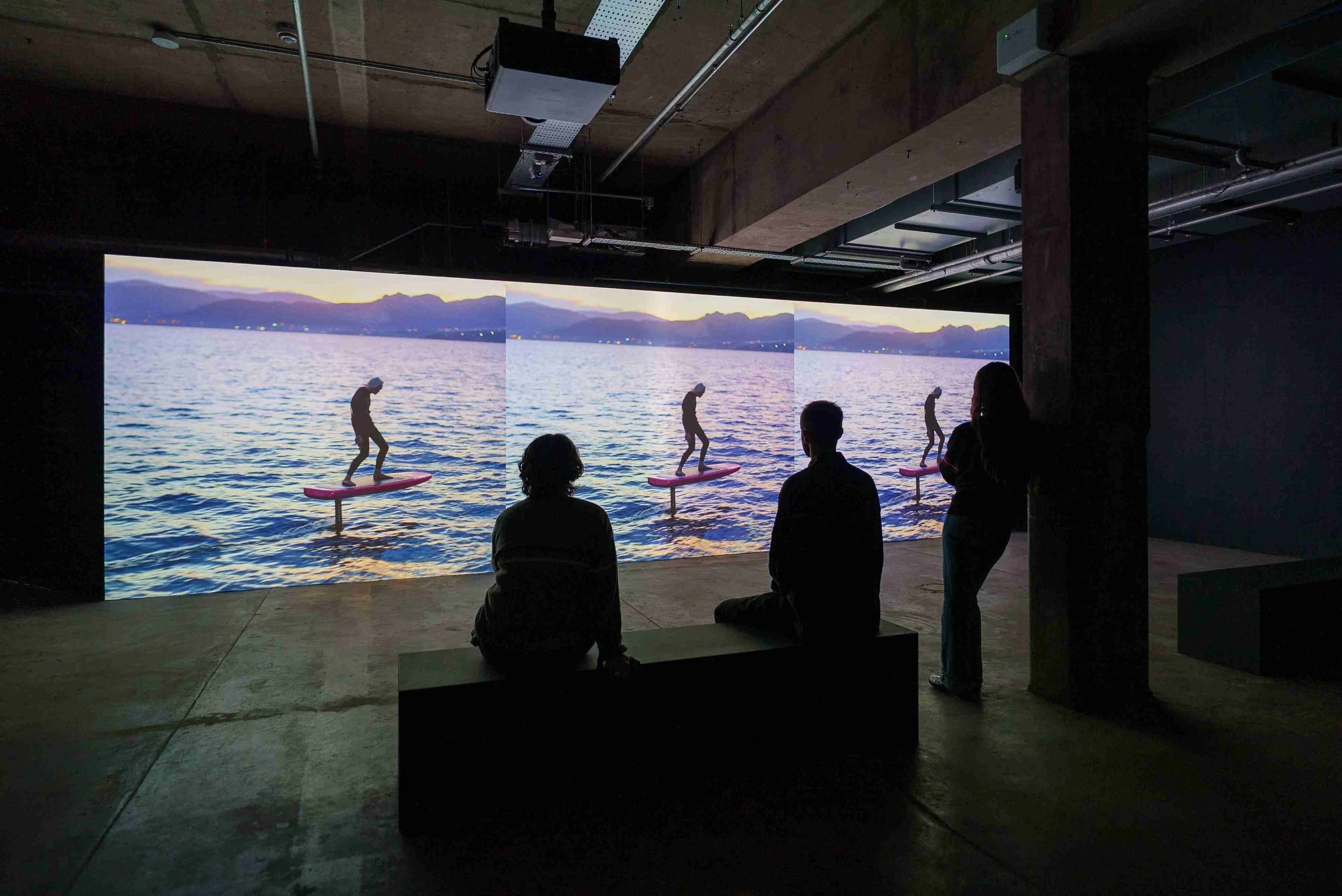
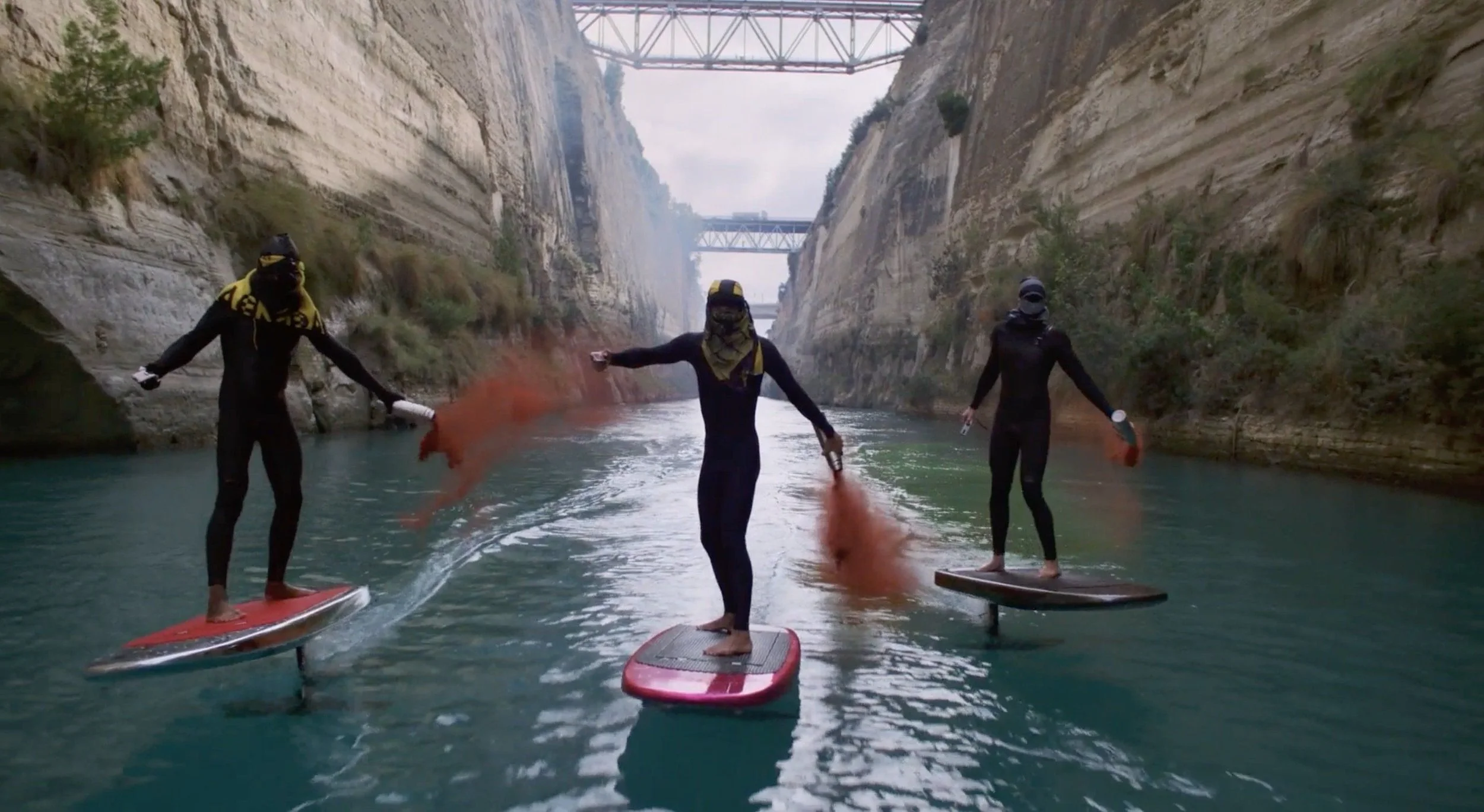
In Neo Surf, Athens 2034, young people play together in an alien and apocalyptic setting. It is a setting far removed from what one might expect: in a forgotten place, survival is achieved through play amidst the remaining ruins and nature reclaiming its place. There are no robots, no technology taking over, but rather a return to a simple, communal, playful, and primordial form of communication and coexistence. Nature also takes centre stage in Volcano, in which the eruption of the Sundhnúkur volcanic hill in Iceland appears to be entirely uncontrolled and beyond any human or non-human monitoring. The viewer seems to accept the physicality of the lava as it bursts forth, underscored by rumbling bass sounds during the eruption.
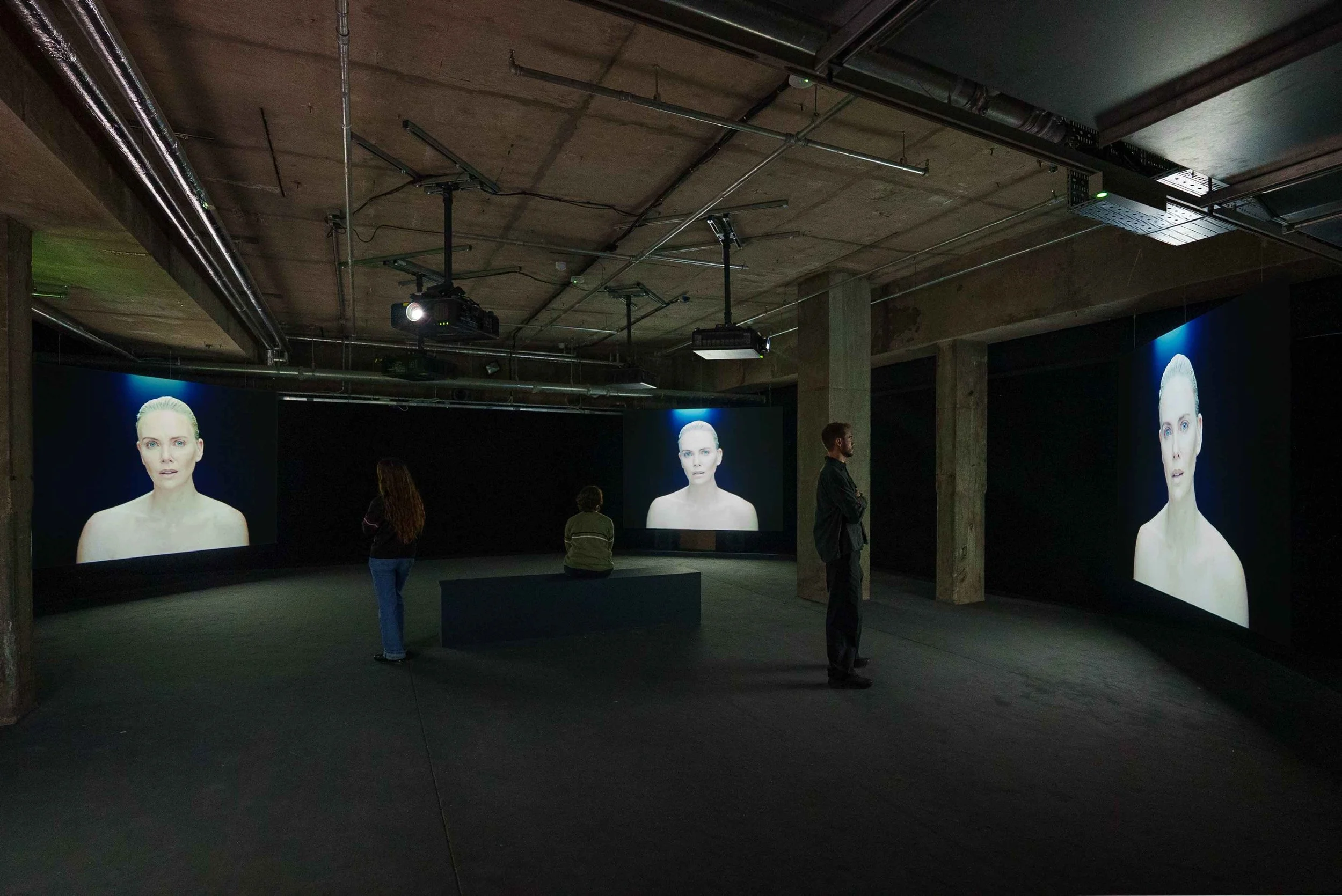
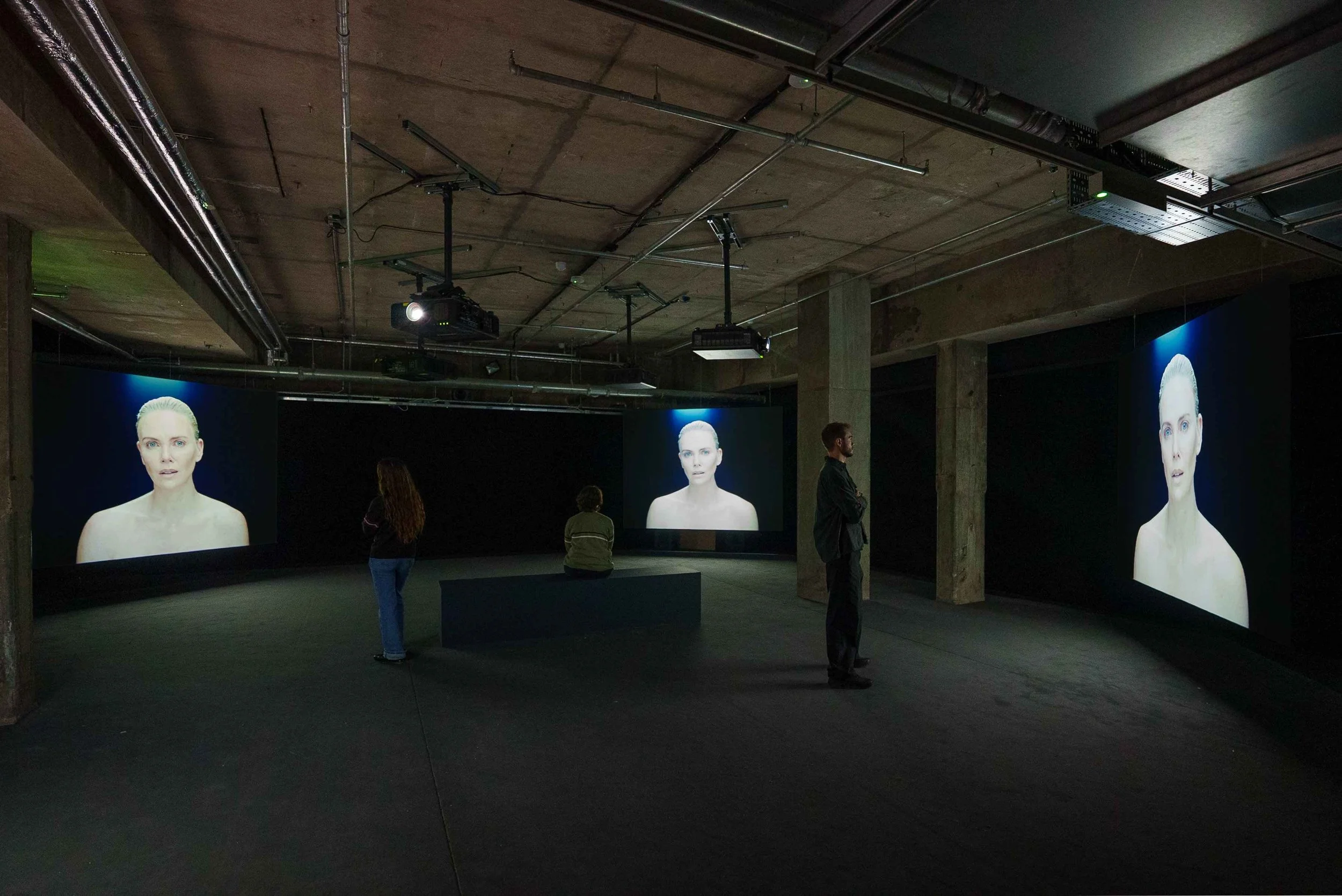
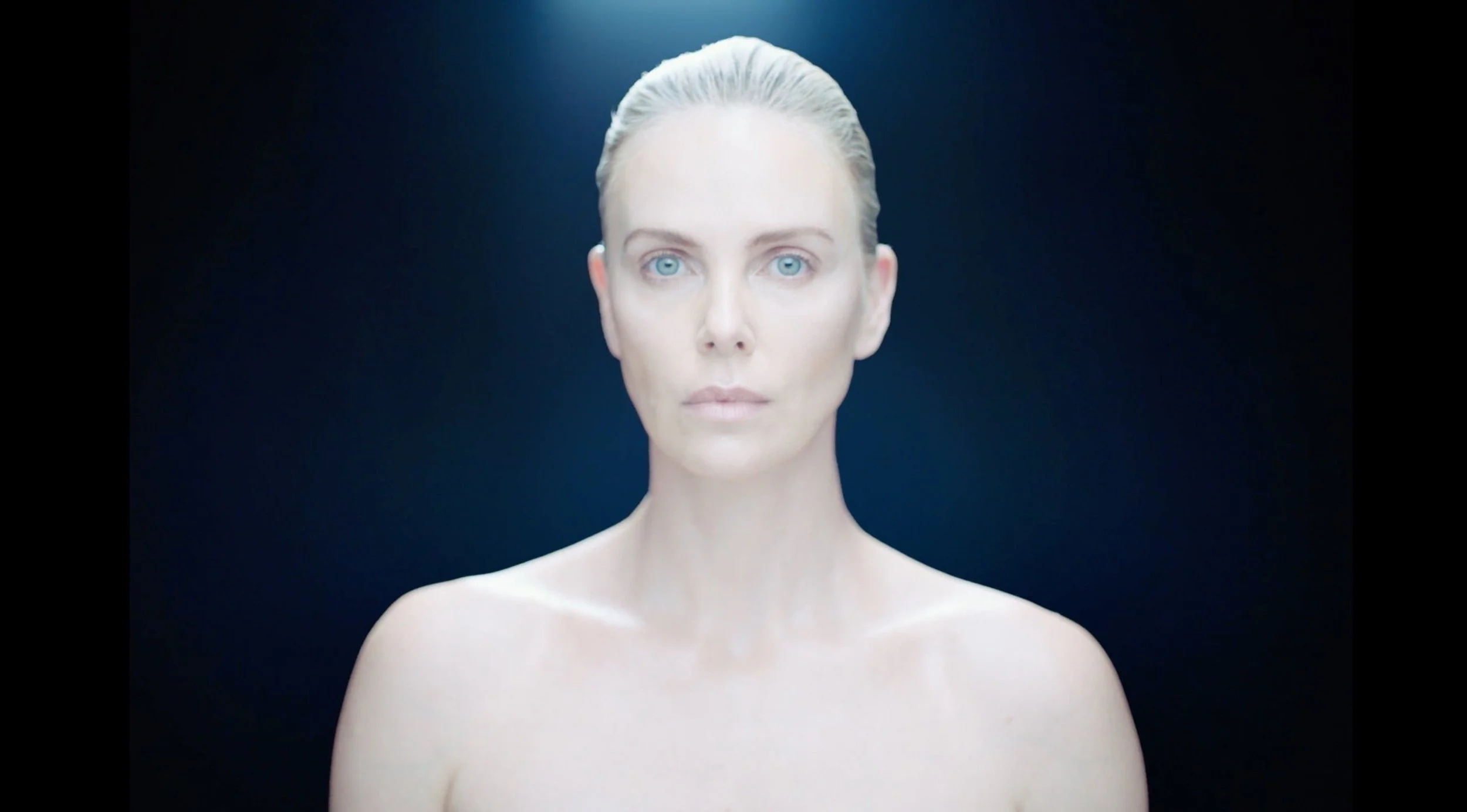
The connection between the city of Mumbai and Charlize Theron is not entirely clear: regardless, with Love and Tears, Mumbai 2034, the viewer is catapulted into a dark room surrounded by the actress’s myriad expressions, recreated using PrimeFocus™ 3D deepfake technology. Facial features are reproduced perfectly, with an endless array of emotions designed to bring the actress to life in a way that makes her seem almost tangible. There is no longer any clear boundary to help the viewer distinguish between reality and fiction, except through the description of the work itself.
Immediately afterwards, the only sculpture on display is an installation by Surkin, Sleep Mode, Shenzhen, 2034, a hyper-realistic wax figure of a security guard slumbering in a chair, yet with a very powerful physical presence. Surrounded by ten synthesisers reproducing the sounds of nature, it seems to be a reference verging on resignation. Is nature reclaiming its place while humanity retreats, or has the guard simply stopped caring about a forgotten future?
Moving on to the Born Free, Los Angeles, 2034 master project: what has happened to M.I.A. recently is probably known only to her, but she remains one of the artists in the Western music scene who have most sharply confronted the contradictions of contemporary society. Born Free does not merely depict violence; it stages it to the point of making it almost unbearable, forcing the viewer to question their own role in the face of these images and their place in society. The hunt for the red-haired youths, the military raid, the beatings, and the final execution construct a visual narrative that explicitly evokes political repression, racism, and the logic of war, genocide, and social cleansing, with clear nostalgic references that have never faded but are only further accentuated. And it is precisely here that the most interesting contradiction arises: the video (an allegory of the extrajudicial killing of Tamil men by the Sri Lankan Army) denounces the spectacle of violence whilst, at the same time, turning it into a spectacle itself. The video offers no reassuring perspective and does not allow the viewer to feel entirely innocent: to watch is also to consume those images, to become part of the mechanism that the video claims to criticise. Violence thus appears simultaneously as a political reality and as a visual product, as something that must be denounced and which, precisely because it is denounced, risks becoming entertainment. This short film aims to disturb, and its significance stems precisely from the impossibility of separating the denunciation from the very act of showing it.
In Gosh, Hangzhou, 2034 (with a little reference to Another Brick in the Wall by Pink Floyd) and God Hates Space, Independent State of Idaho, 2034, the future really appears as something already present, yet distorted: in the former, Hangzhou built as a replica of a decaying Paris becomes the setting for a collective ritual in which children and young people, uniform in their movements and appearance, celebrate an almost prophetic figure; in the latter, set in the forests of Idaho, a community of young people who have fled society builds its identity around the hollow Earth theory and the rejection of space exploration. Both videos transform absurd beliefs, cultural imitations and forms of isolation into highly coherent collective systems: what seems to be madness from the outside becomes a sense of belonging and order from the inside. The most unsettling aspect is that these images seem less like science fiction today than they ought to: conspiracy theories, online radicalisation, and the emergence of micro-communities based on alternative truths have become tangible phenomena. Here, fascism is not necessarily depicted as a historical regime, but as a visual grammar of the crowd, the uniform, the cult and obedience. The future is simply catching up with the images that had already anticipated it.
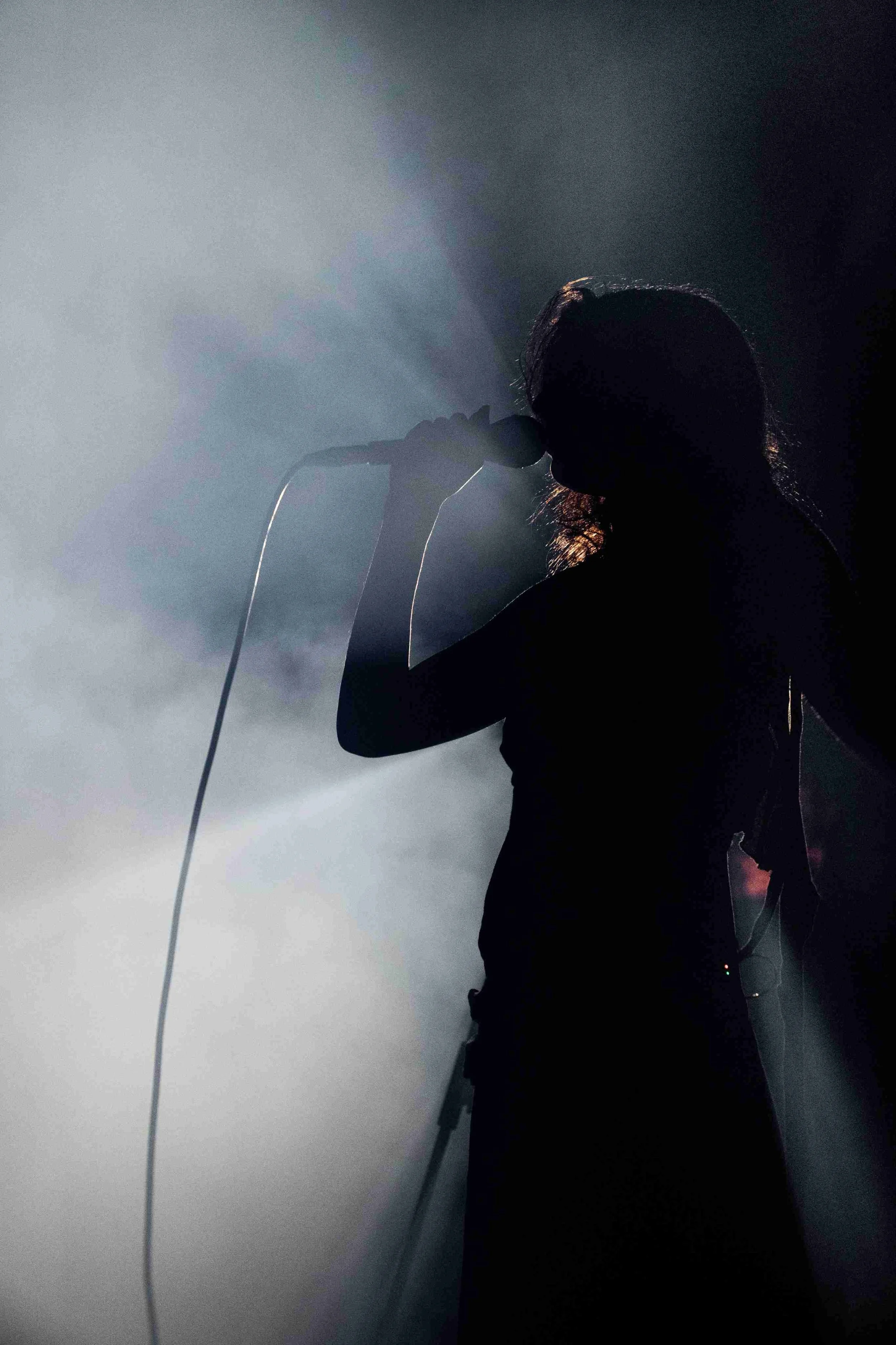
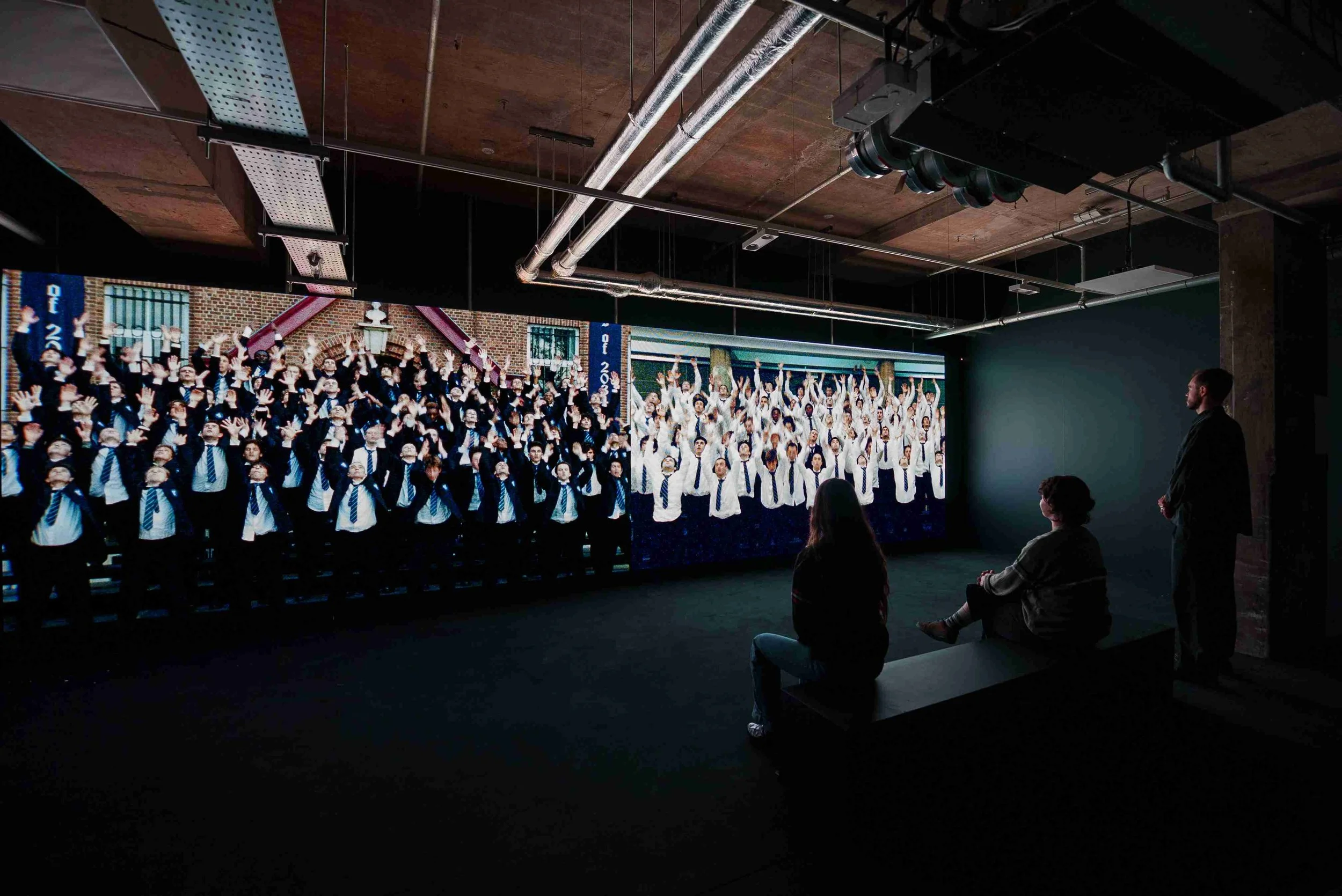
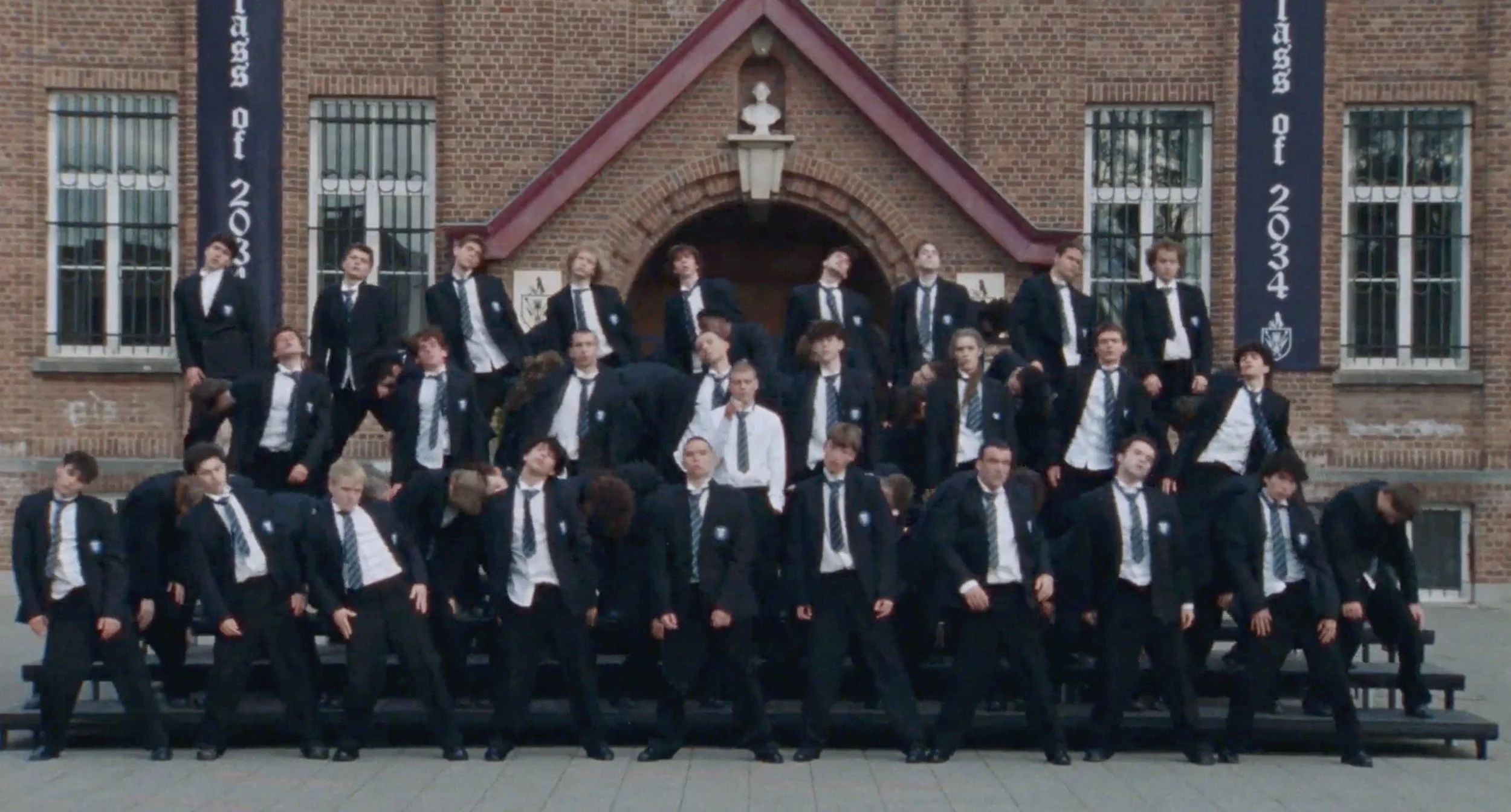
The exhibition concludes with Storm I and II, Leeds, 2034: a perfect ritual of a violent world within the walls of a school. Yung Lean, like a new James Cook straight out of Skins, moving through the video game Bully. Aggression, violence, lawlessness, the villain who ultimately empathises with the school’s outcast: pure poetry. A reflection on the fragility of toxic masculinity (here in its adolescent form and certainly lacking in emotional education) and on the need for boys to constantly demonstrate strength and aggression. It is the final section that transforms individual violence into a collective force, in which the teens move in unison in a shared, ritualistic dance (chapeau to Damien Jalet’s choreography). The contradiction between brutality and beauty becomes a single entity: the school is no longer a place of education, but a space in which the group constructs its own identity through control, violence, and ritual. And maybe the target of the criticism ends up applauding its own portrayal.
180 Studios never fails in the immersive nature of the spaces, which in any case leave you with a very powerful reflection. The quality of the videos, the music, and the choreography is outstanding. But the exhibition inevitably takes an ambiguous stance: whilst being a product of a privileged and, to some extent, promotional system, it calls that very system’s logic into question, entrusting privilege with the paradoxical task of criticising itself. The reflection remains powerful, as does the fear. Dance, music and collective ritual perhaps become the last form of salvation, the only remaining way to return to being a collective body.
Until the August 30th
180 The Strand
WC2R 1EA London
Courtesy of 180 Studios
By Romain Gavras and Surkin
Words by Aurora Piedigrossi
What to read next