Total Broadcast: Su Hui-Yu at Art Hub Copenhagen

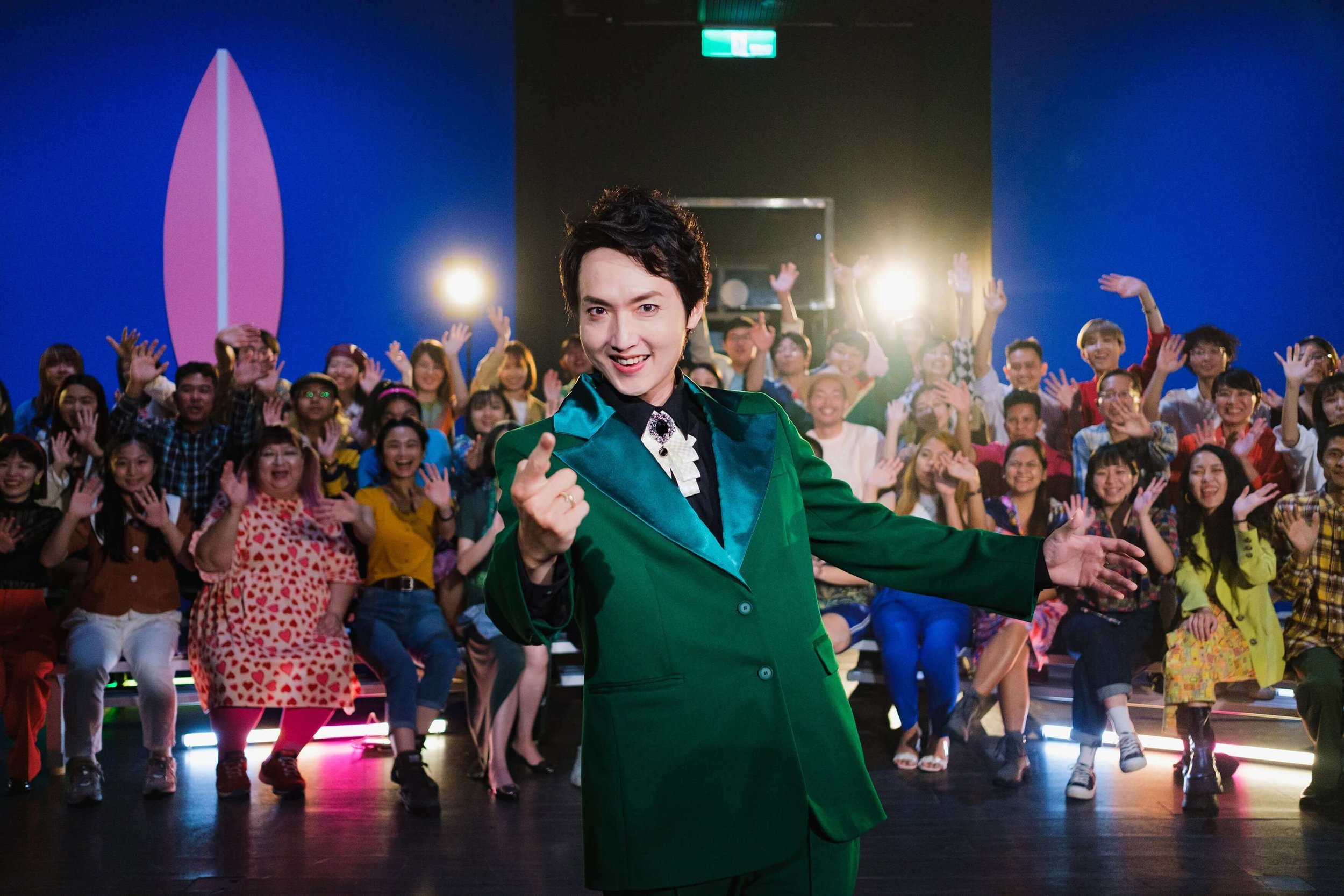
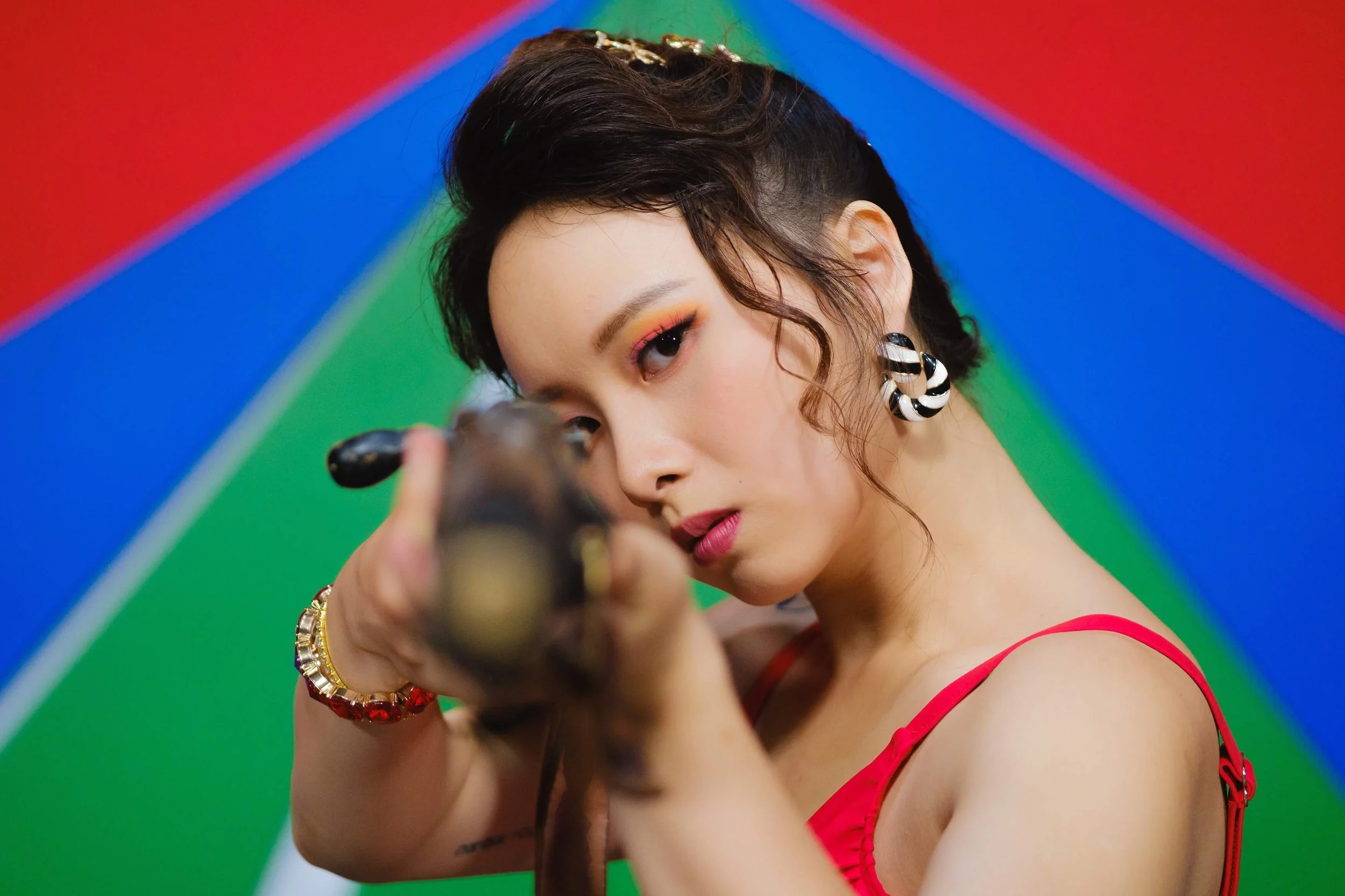
The story starts with an ecstatic TV presenter in a tight-cut emerald suit. Or maybe a drag queen in a towering white wig. Or perhaps a team of beauty queens in fitness bodysuits. In fact, the story has many starts, multiple middles, a couple of endings, all piling on top of one another, depending on which new shots artist Su Hui-Yu adds, which new terrain he ventures into next. It is total. It is participative. It is immersive. It wants everything around it: camera, audience, actors, props. Everything except the fourth wall, that usual divider between stage and spectator. What's left is a set that looks beamed in from 1980s Taiwan, ebullient and technicolour, with a twist of Danish mid-century modernism. Buried beneath this lacquer is the lore of TV entertainment, a satire of last century's mass media that reverberates with the ridicule of our times.

Su Hui-Yu (b. 1976) is one of Taiwan's leading artists of his generation. His work takes as point of departure a fantasized relationship to childhood tv memory, at a time when the island's television culture was under martial law, across nearly four decades (1949–1987) of censorship administered by the unique party policy of the Kuomintang. Hui-Yu digs into the wreckage the Cold War era left behind to unearth archives from old variety shows he updates with his flamboyant style. "I wonder if I possess an old soul, yet it's certainly not rooted in nostalgia." Hui-Yu says, in a 2024 interview with Martin Wendelbo and Regen Li, the two curators behind Tofu Collective. "I hate that term as it implies a longing for the golden years of the authoritarian regime in the past."

Hui-Yu developed a two-fold methodology: reshooting, a term borrowed from cinema production, where a scene is filmed again and again until it comes together, and collective direction, where the entire team, including the visitors, is invited to take part in the filming process. Rather than staging a finished film for a passive audience, he opens up the machinery behind it, inviting people into the rehearsal, the retake, the version that usually gets cut. A process that debunkes the assumed docility of the “bewildered herd” to quote Walter Lippmann’s theory.
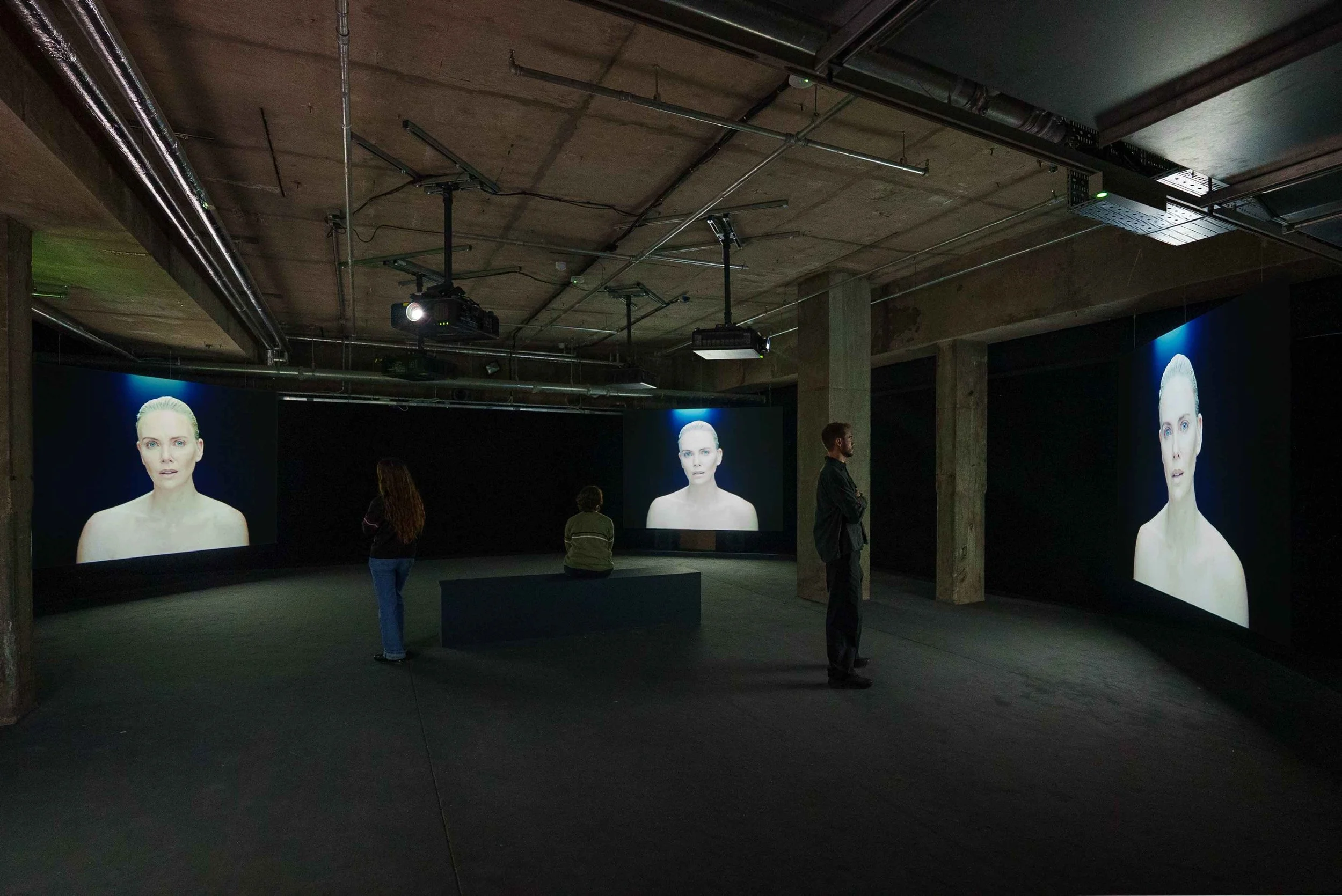
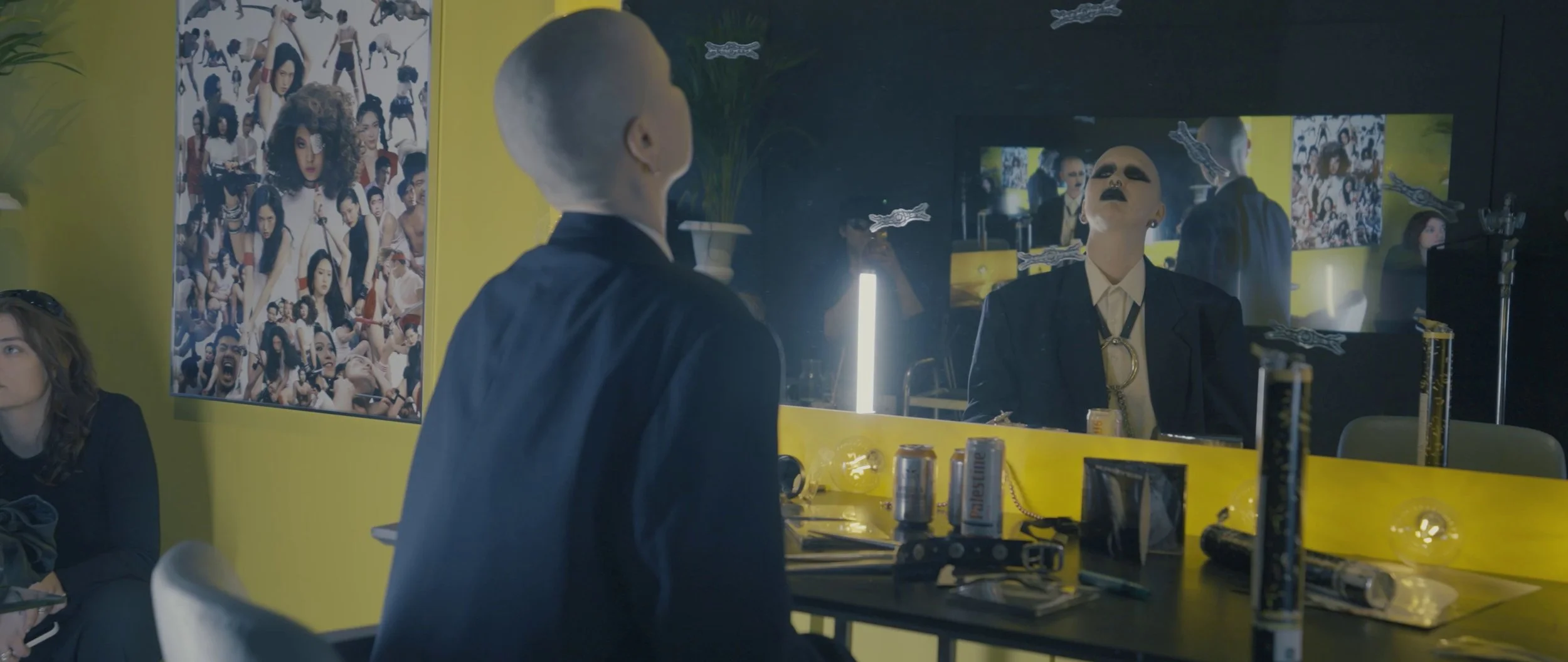
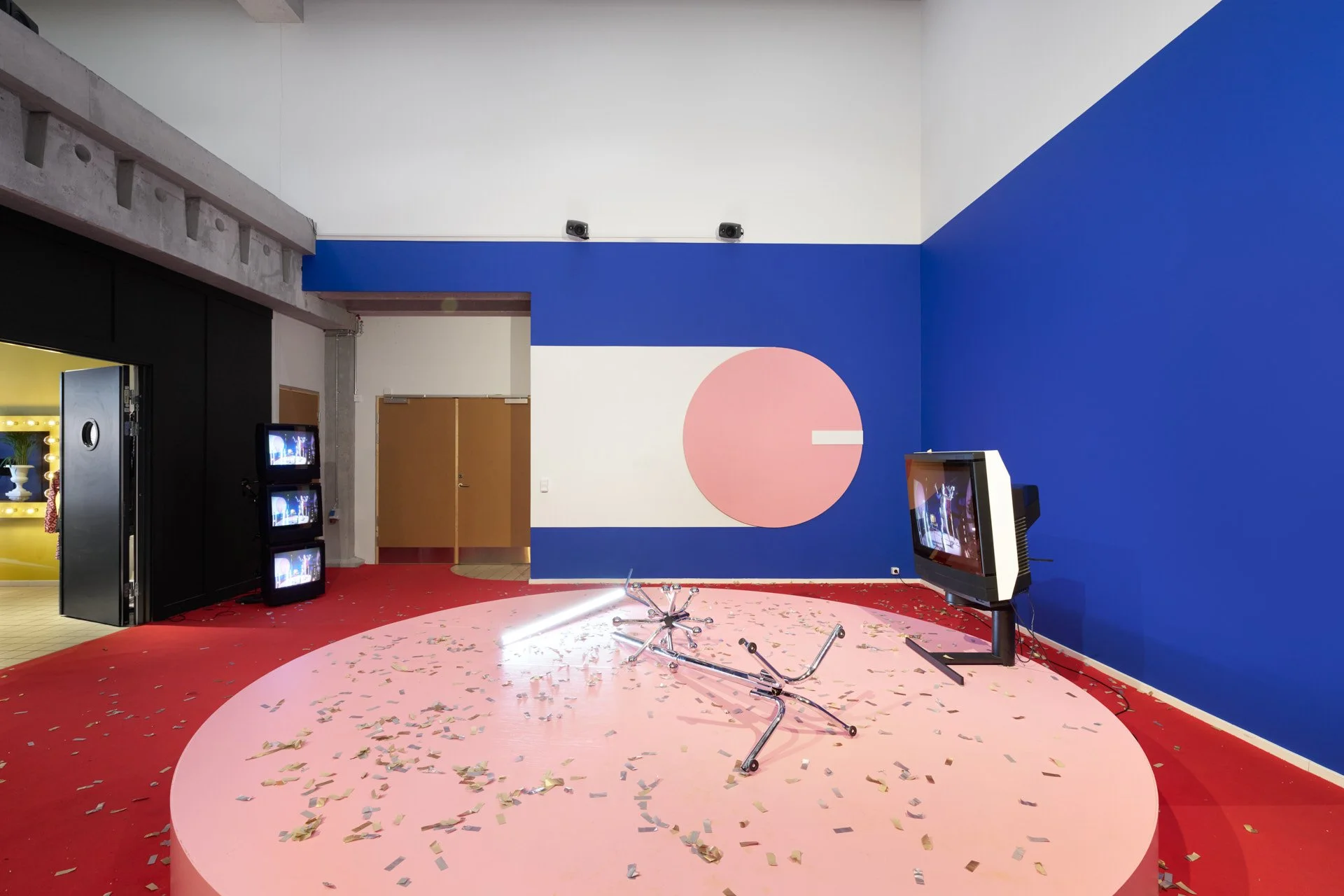
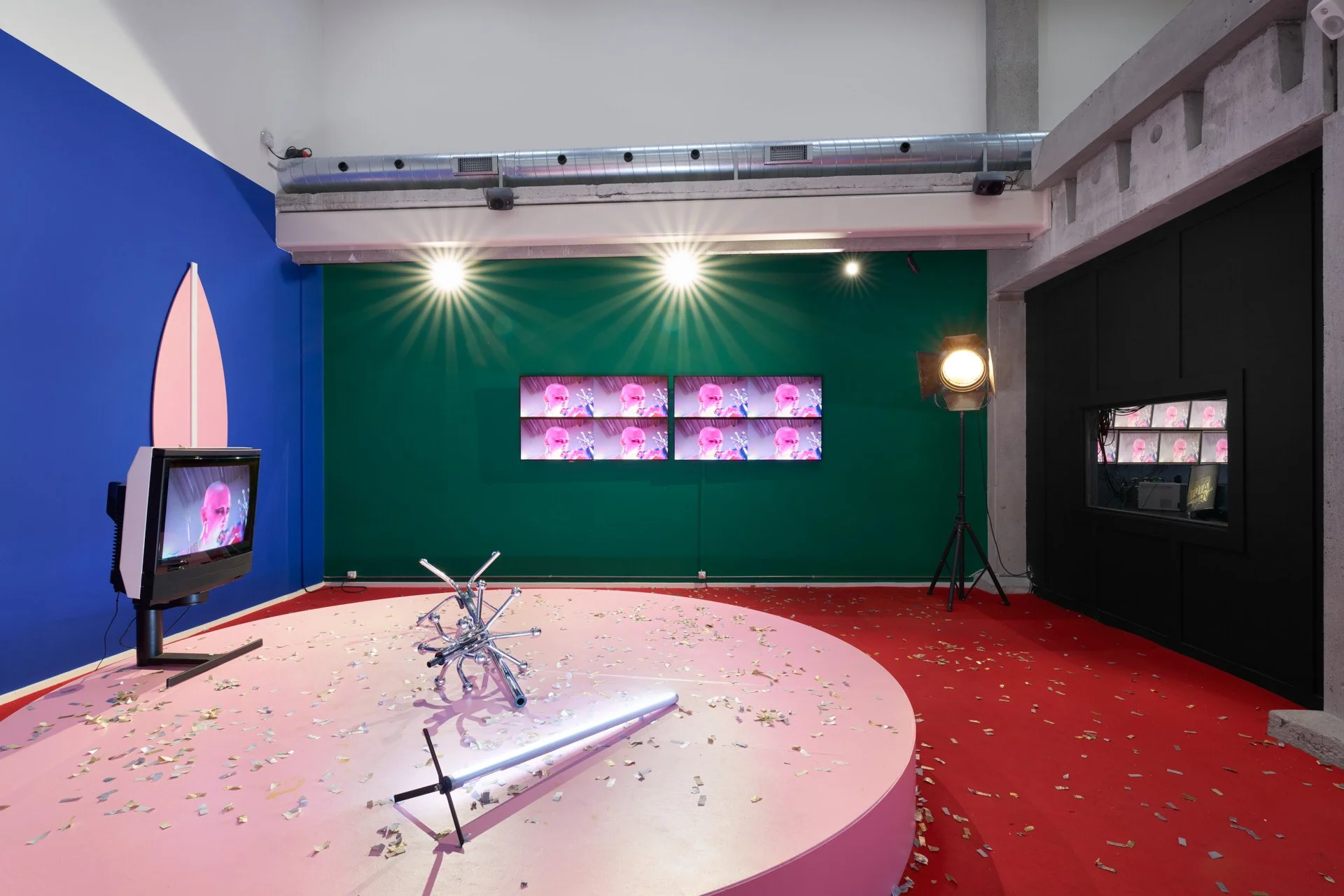
The show, which occupied the whole of Art Hub Copenhagen’s Room Room gallery, is laid out across three rooms arranged voluntarily like a secular trinity: a sun-yellow makeup room, a black-box control room lined with monitors, and a studio floor lit in pink, red and blue. Visitors moved between taking part in the chaotic live broadcast during opening performance hours and wandering the same empty set once the cameras stop, an installation that is, at different moments, both stage and what is left of the stage when the actors have left the room. Like a marathon of moving images, it could take about five hours to view all the video pieces in the show.
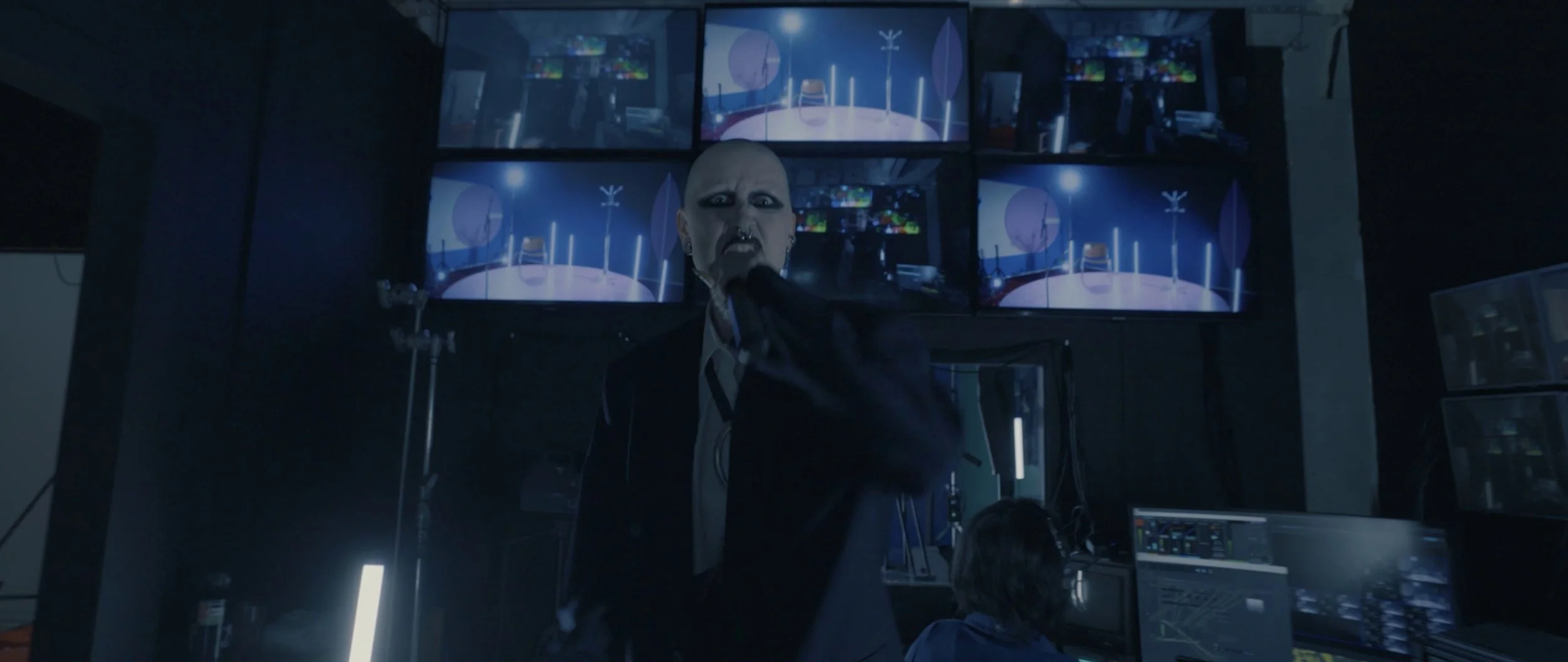
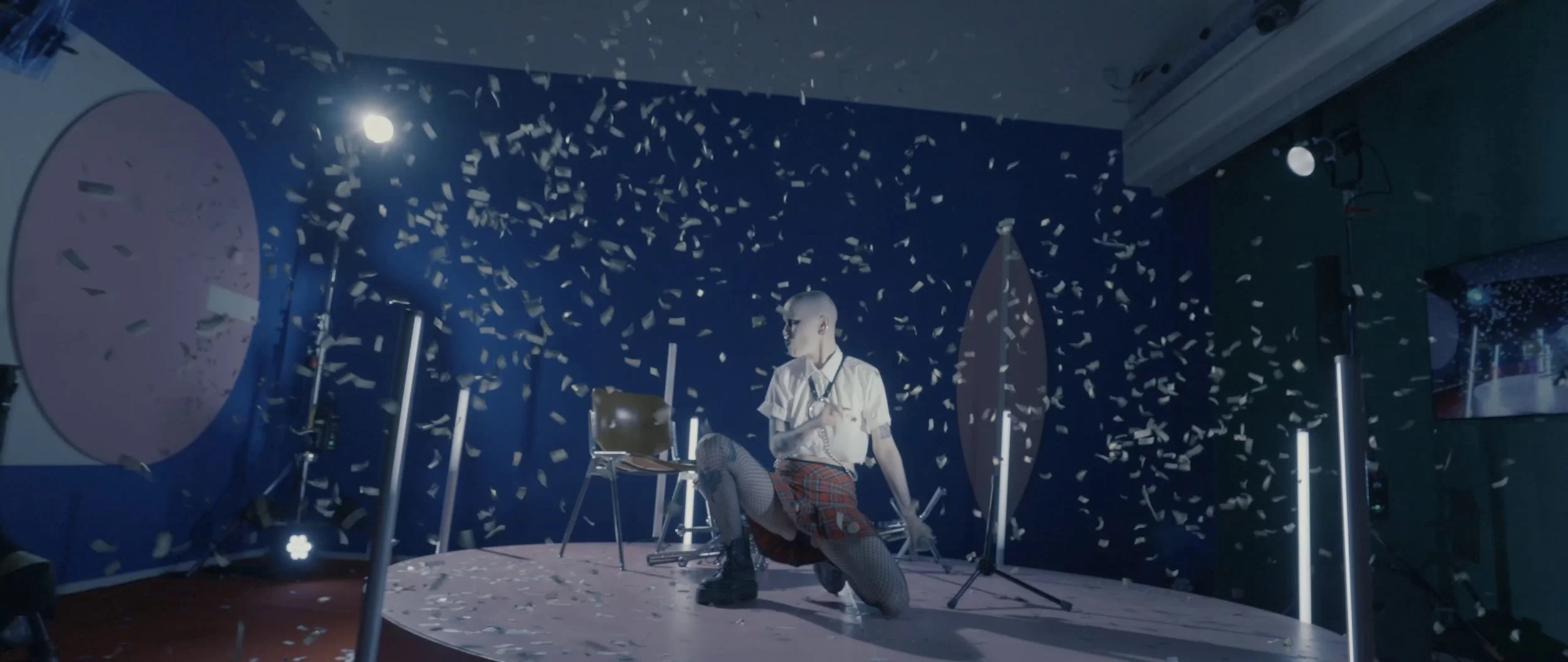
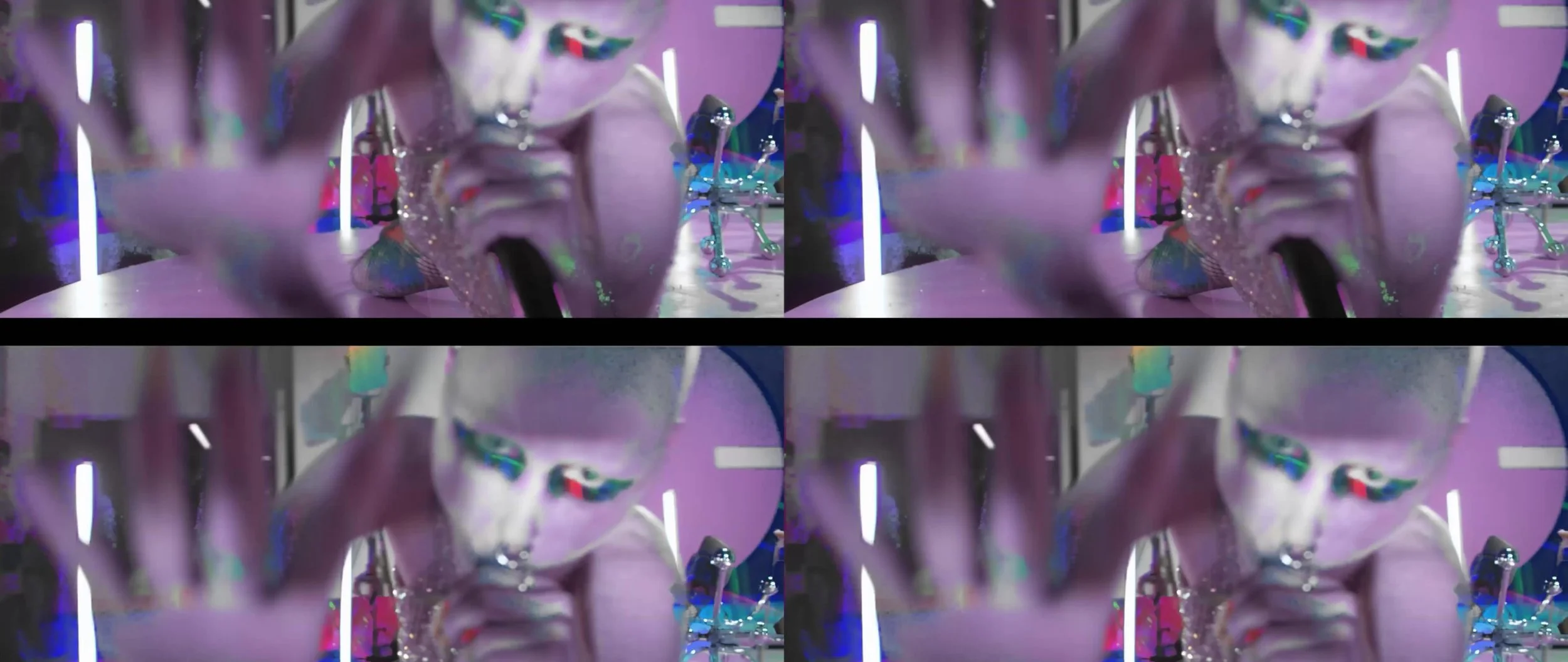
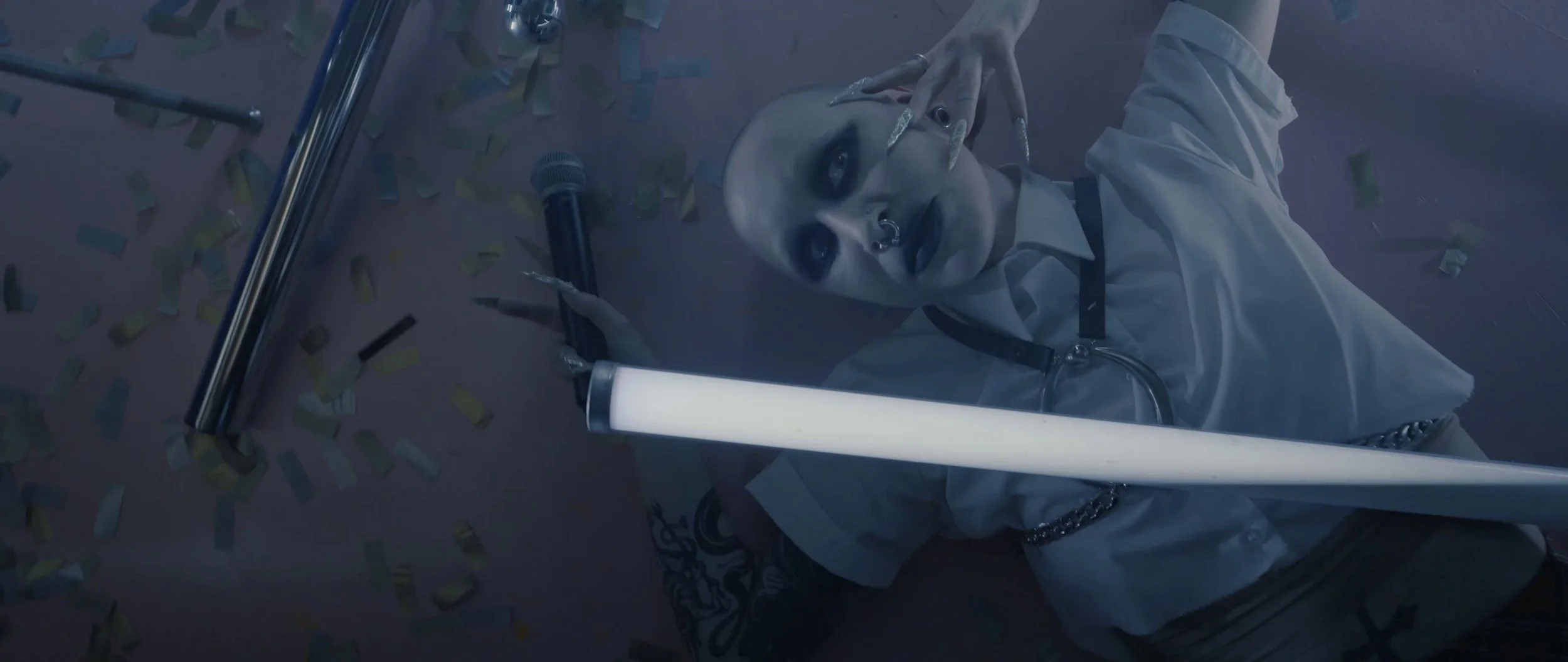
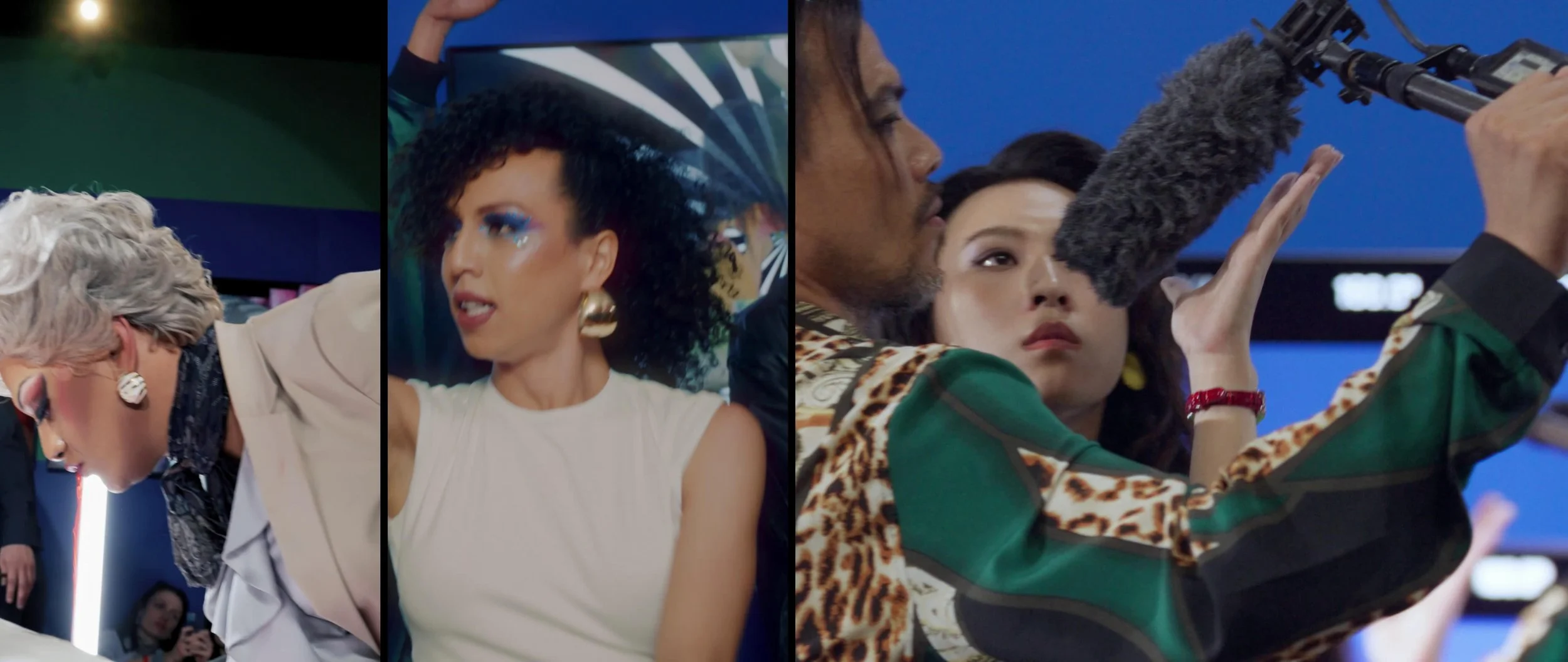
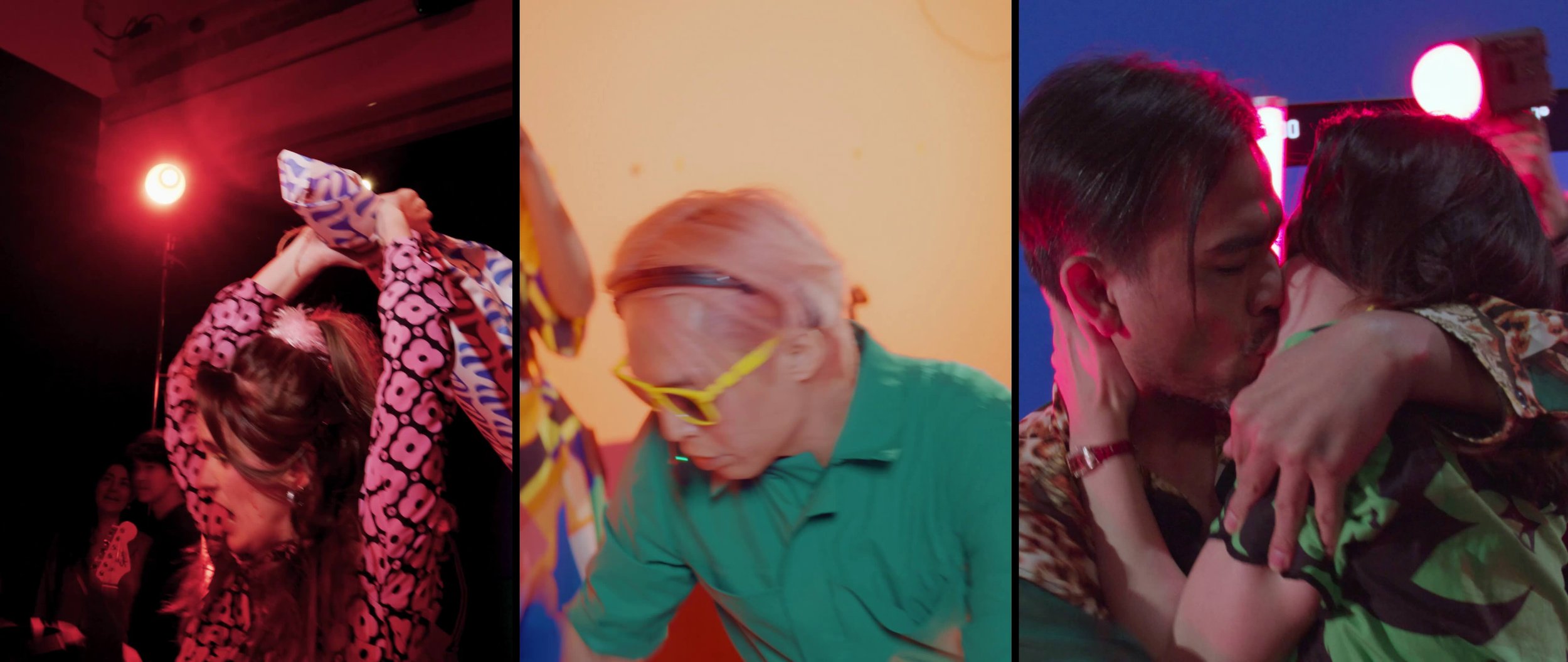
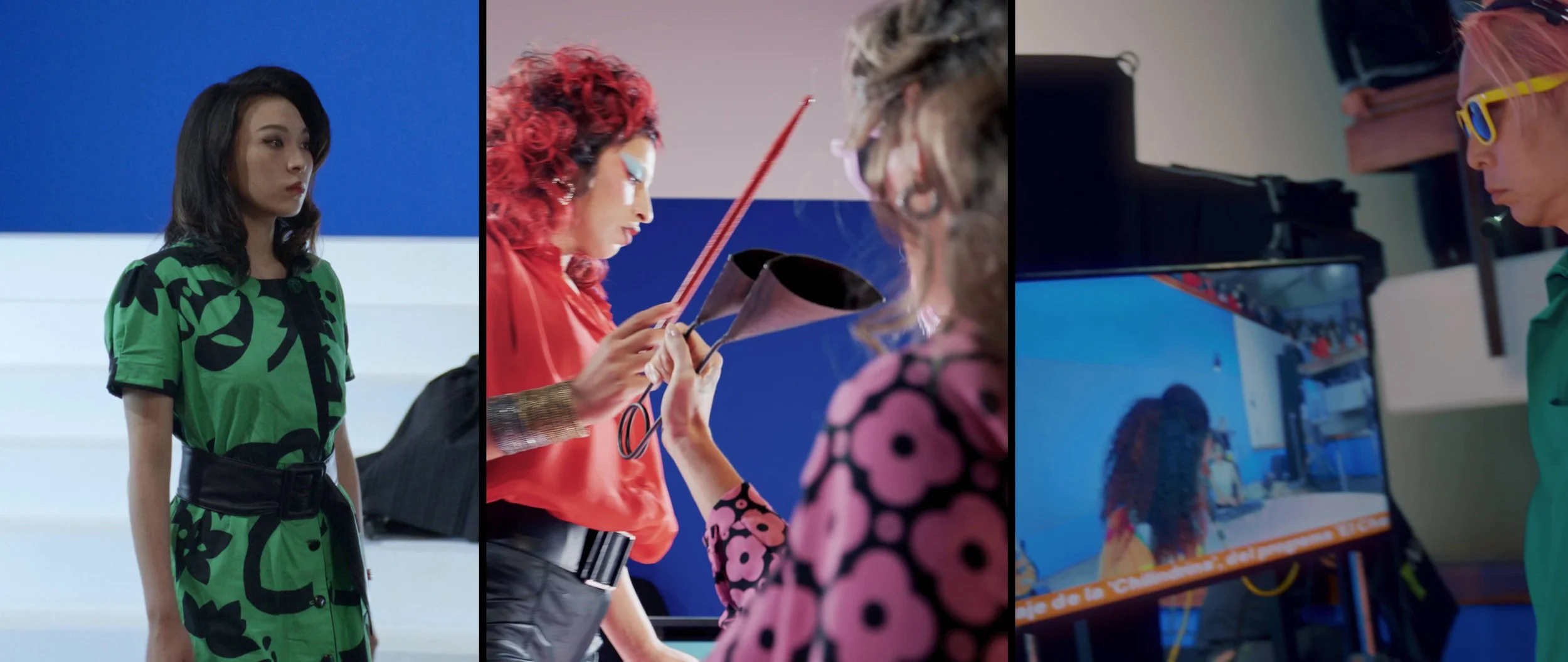
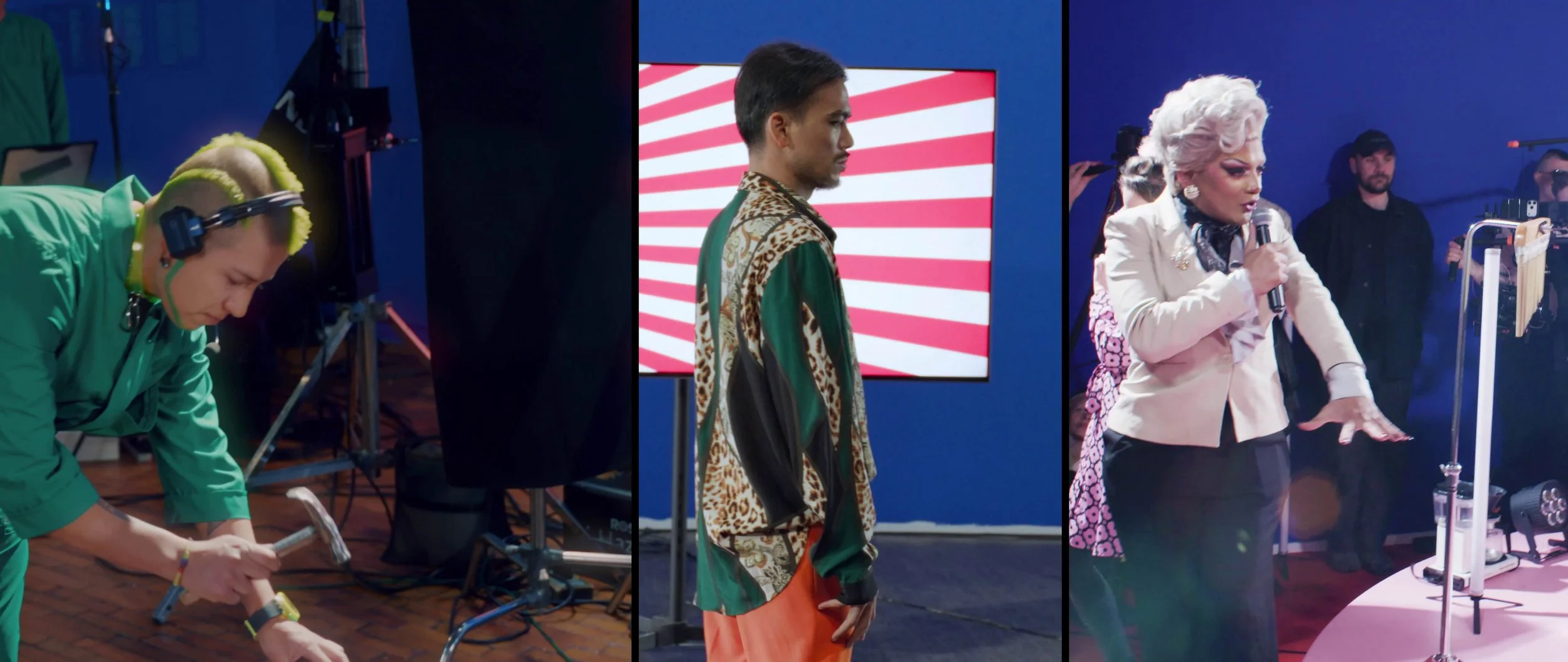
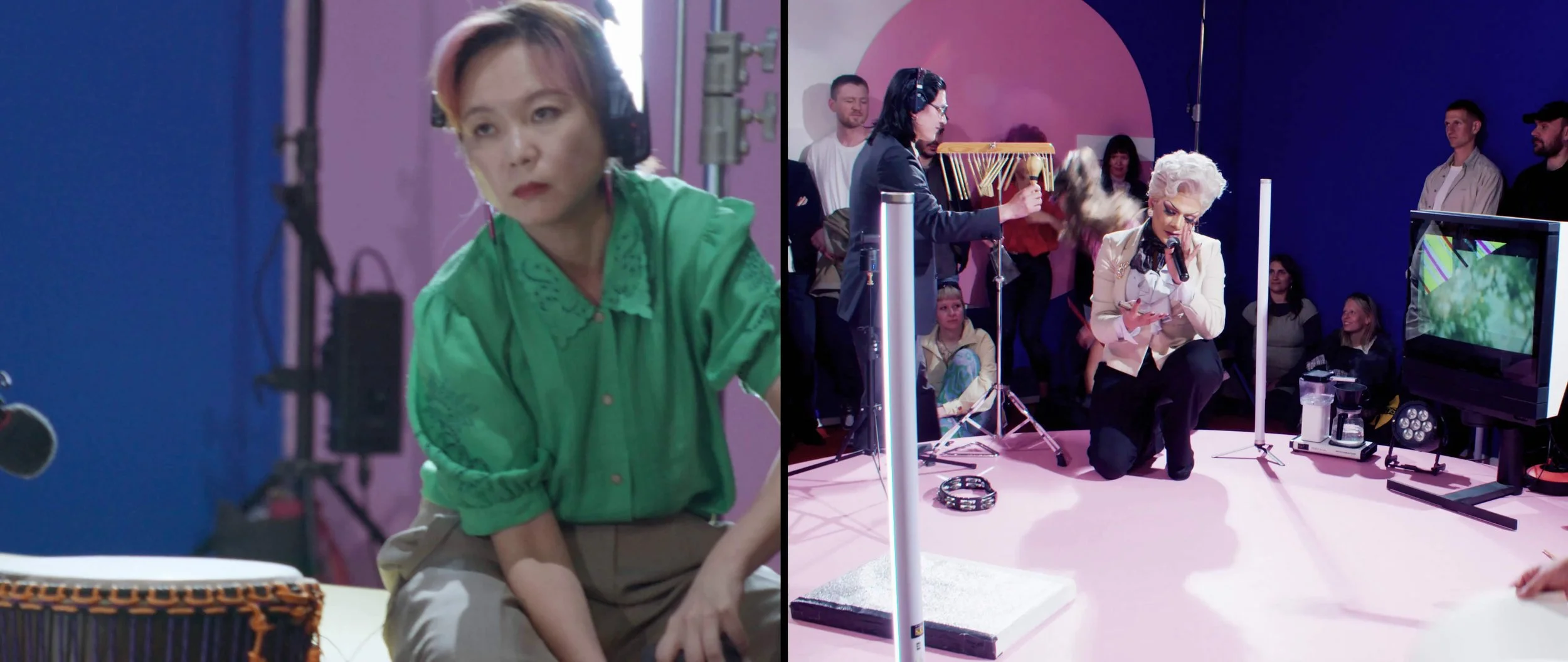
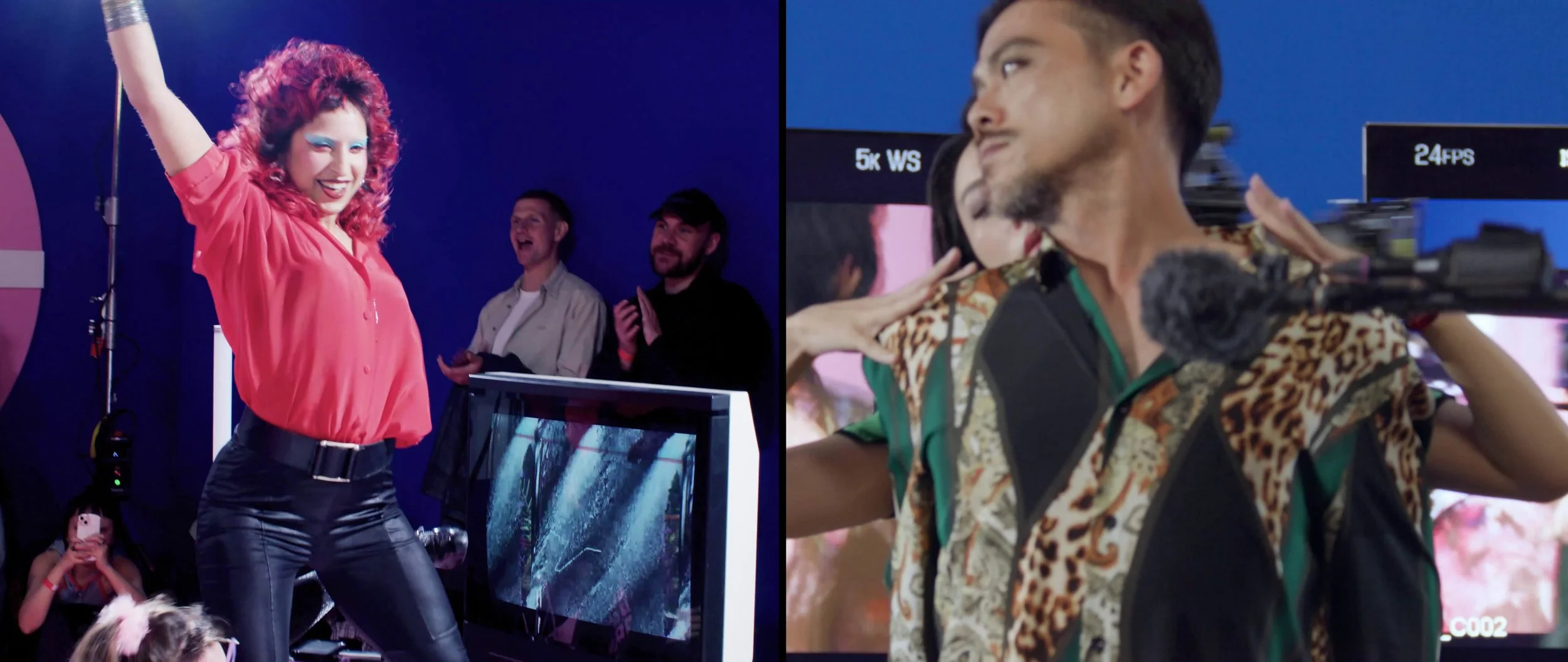
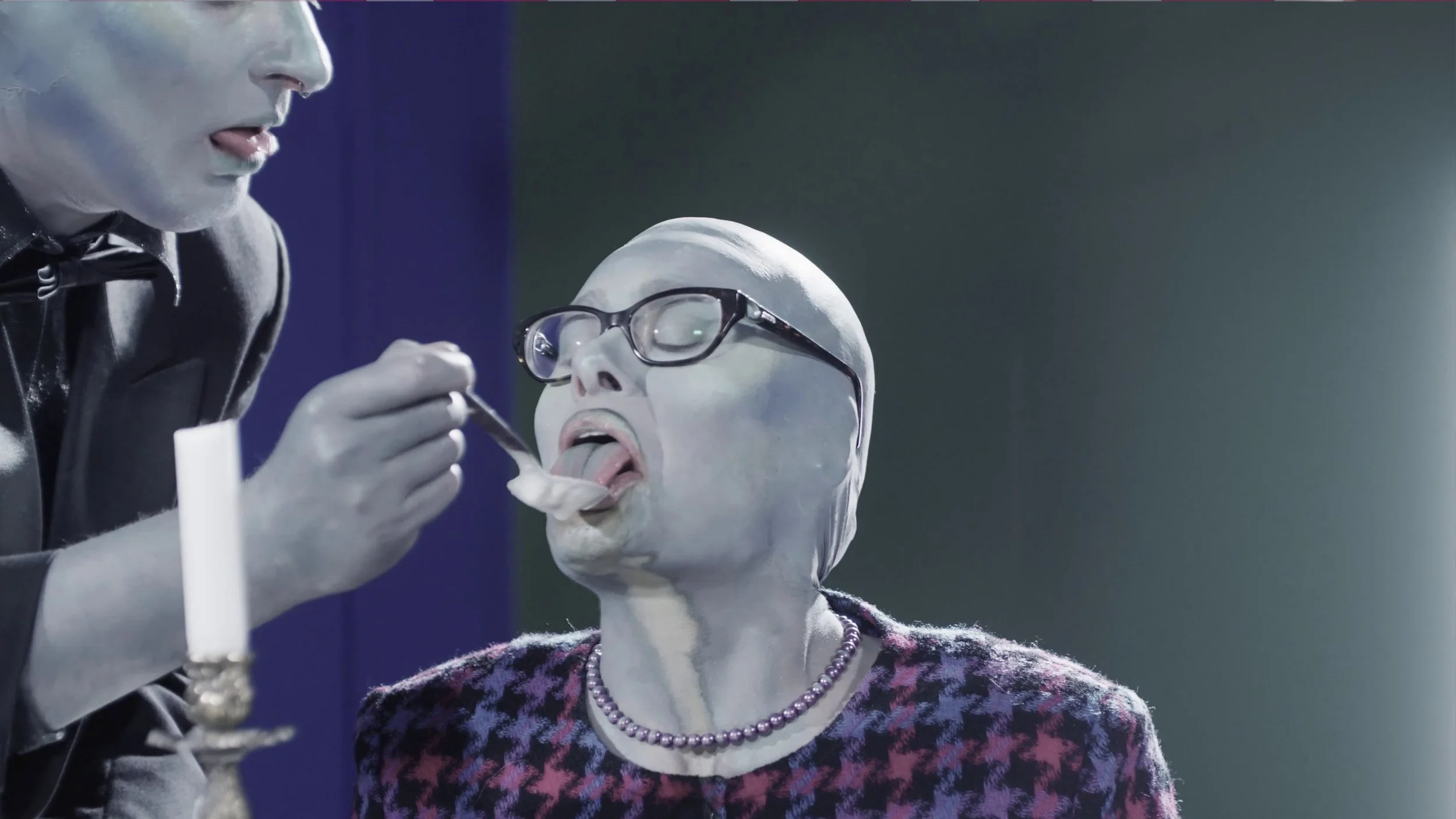
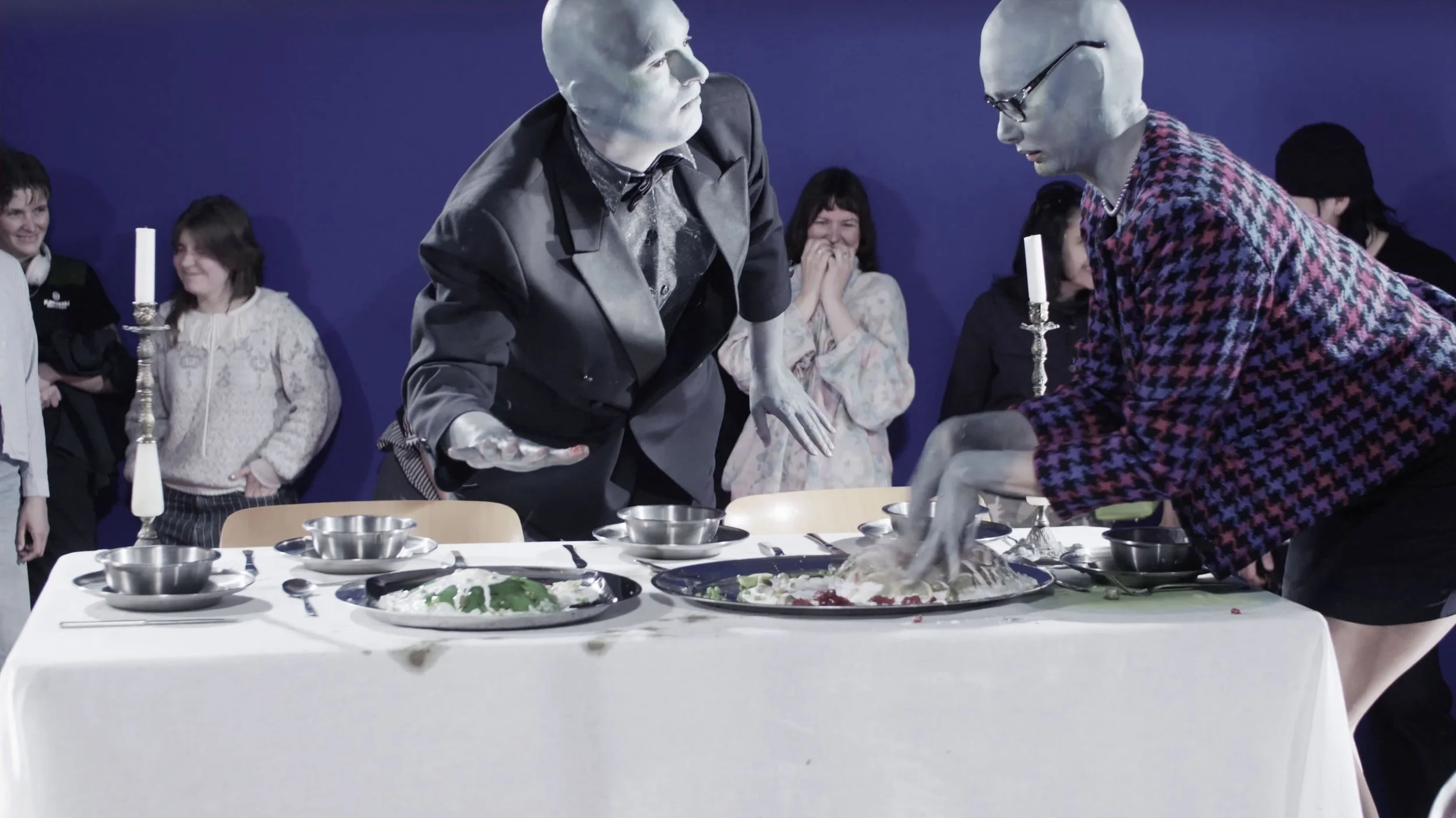
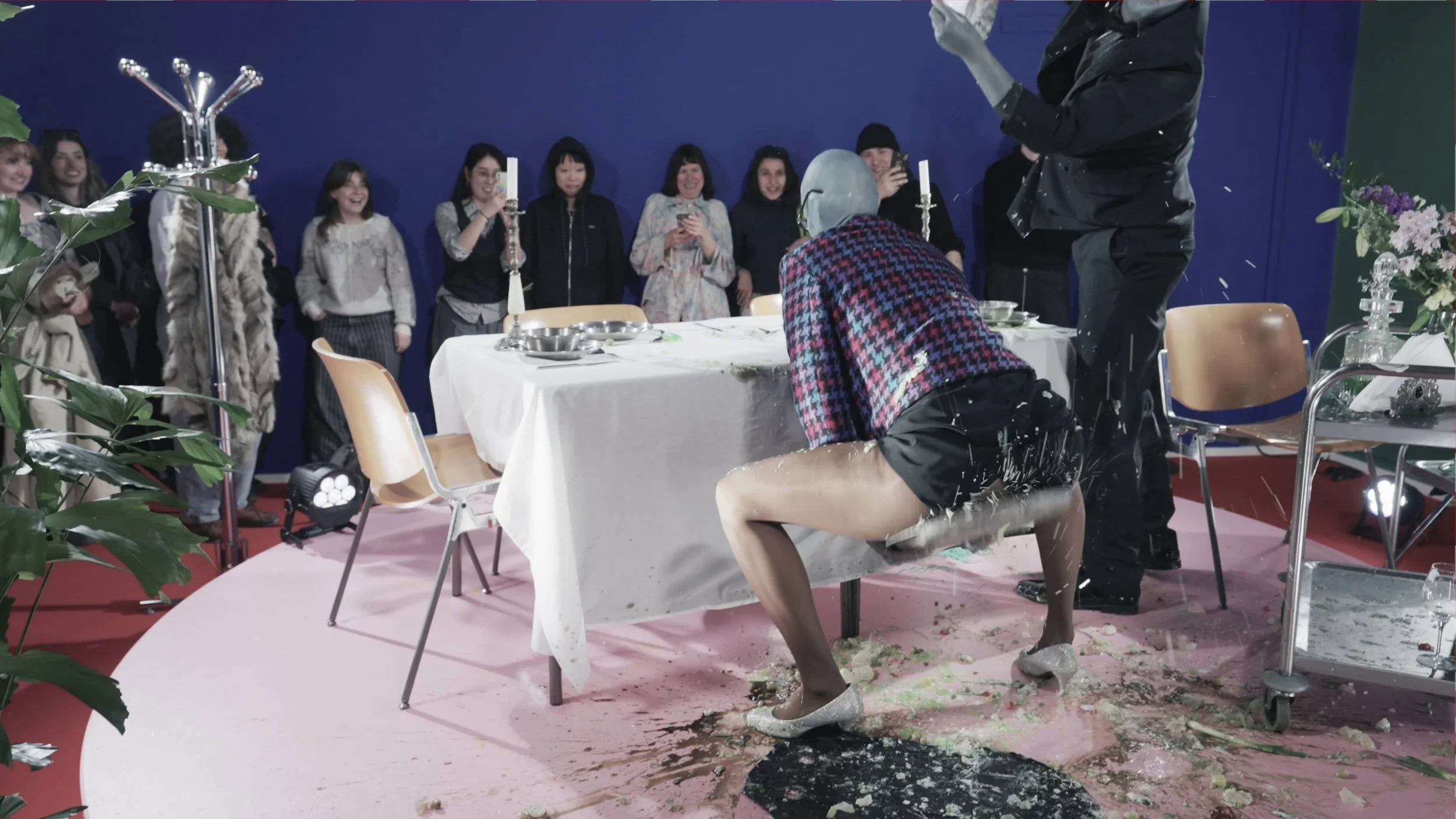
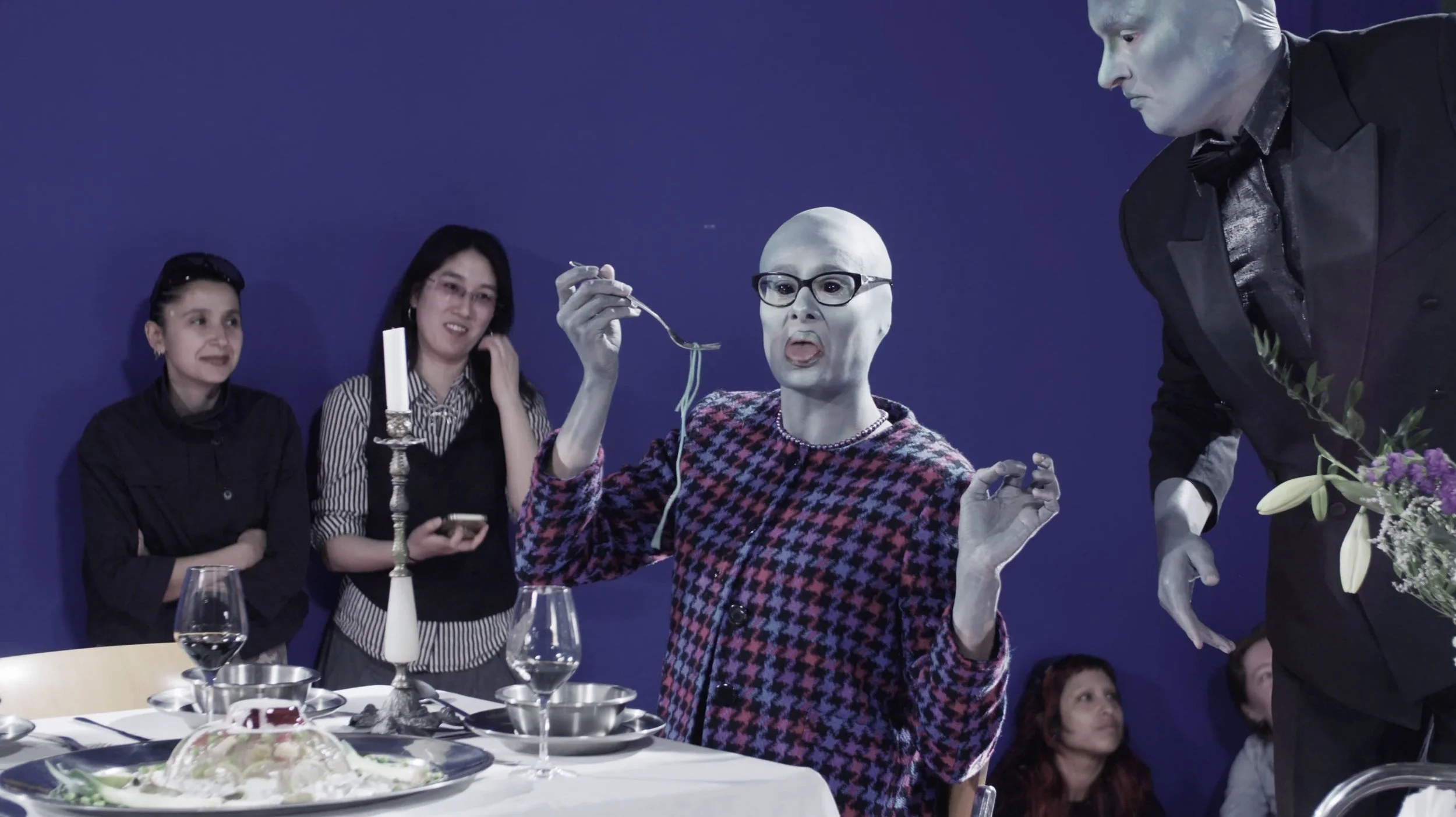
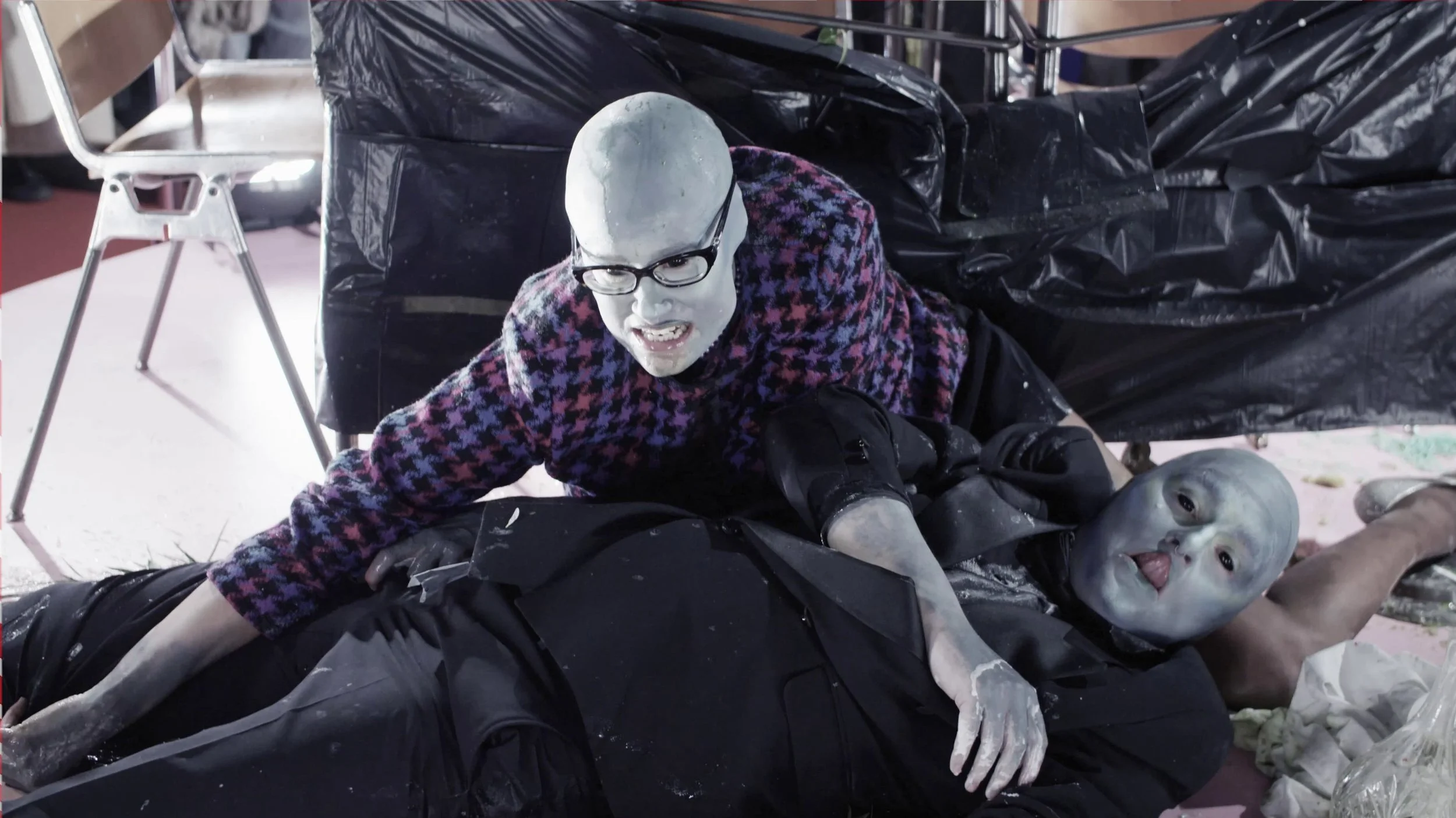
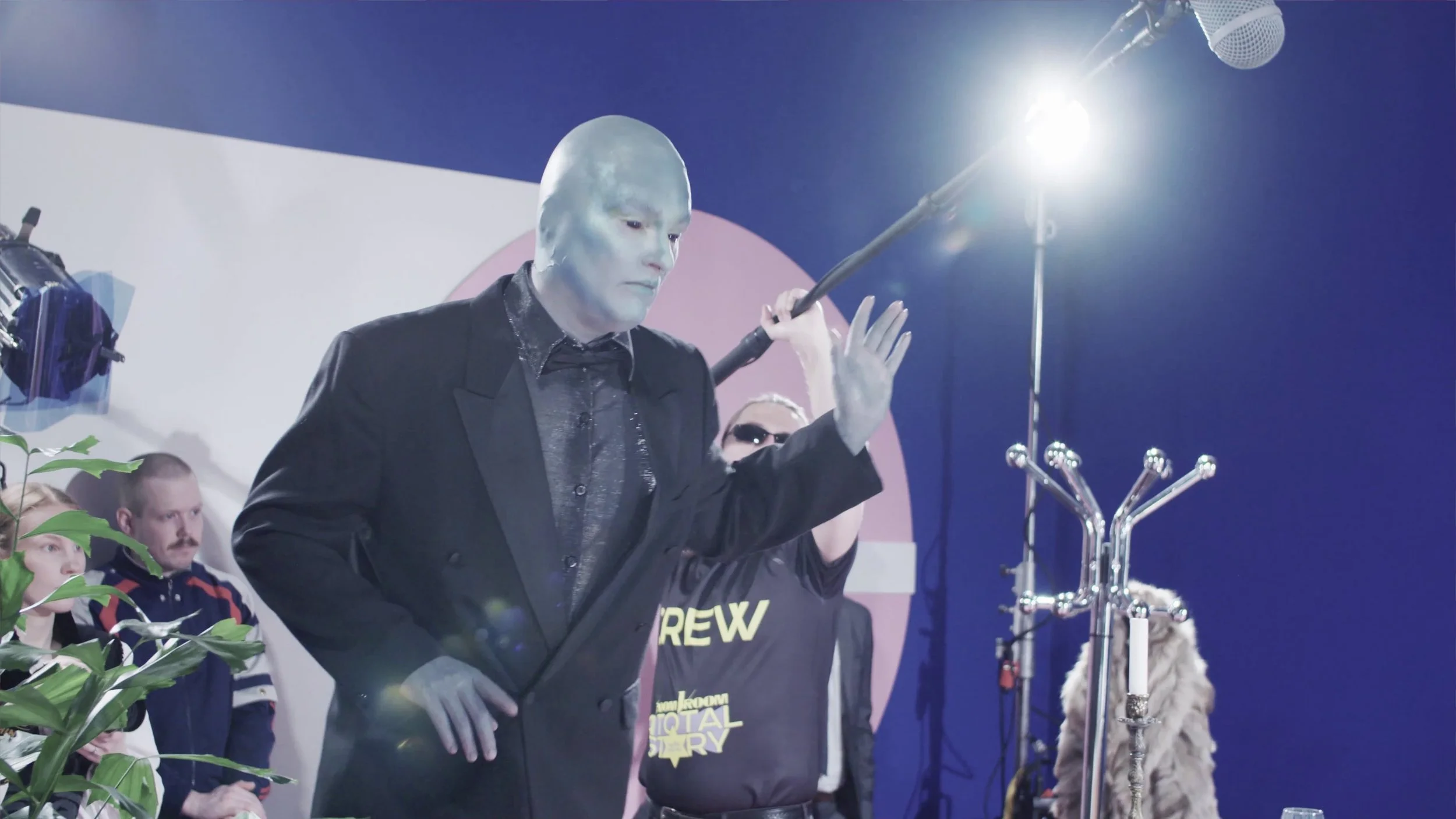
Each zone ran its own television, from analog sets to CRT stacks, looping a mix of Hui-Yu's life-long work such as early pieces like The Upcoming Show (2012, unseen since its original release) alongside the ongoing Trio Hall, a sardonic tribute to Xan Ting (三廳) cinema, the domestic melodrama genre that survived martial law despite censorship. Here again, the number three held strong significance: the living room, dining room, and disco of the genre's name doubled as red, green, and blue, the RGB color model trinity underneath every one of these screens.

Hui-Yu first staged the project in 2023, as an immersive, site-specific exhibition and live film set at MOCA Taipei. The satire takes aim at the resurgence of chauvinism, colonialism, and authoritarian ideals in our own century, except here, dictators like Stalin, Chiang Kai-shek, and Hitler dance together on roller skates, in gaudy costumes. In an attention economy where a story's virality outweighs its veracity, and the media ecosystem grows more fractured and less trustworthy by the day, Hui-Yu's work is a timely reminder to sharpen our critical faculties for today's authoritarian figures wage their battles not on roller skates, but via AI-generated videos.

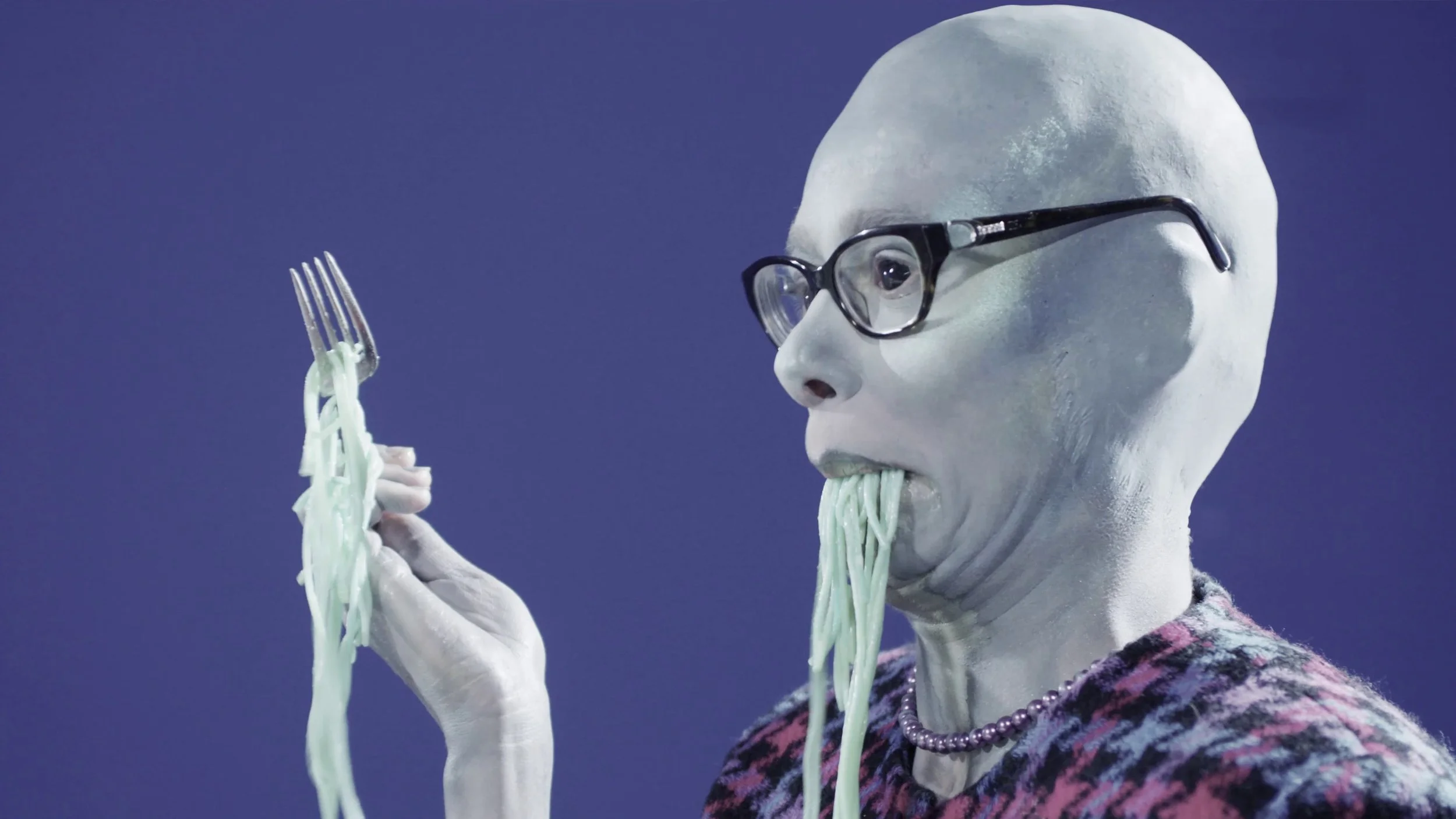
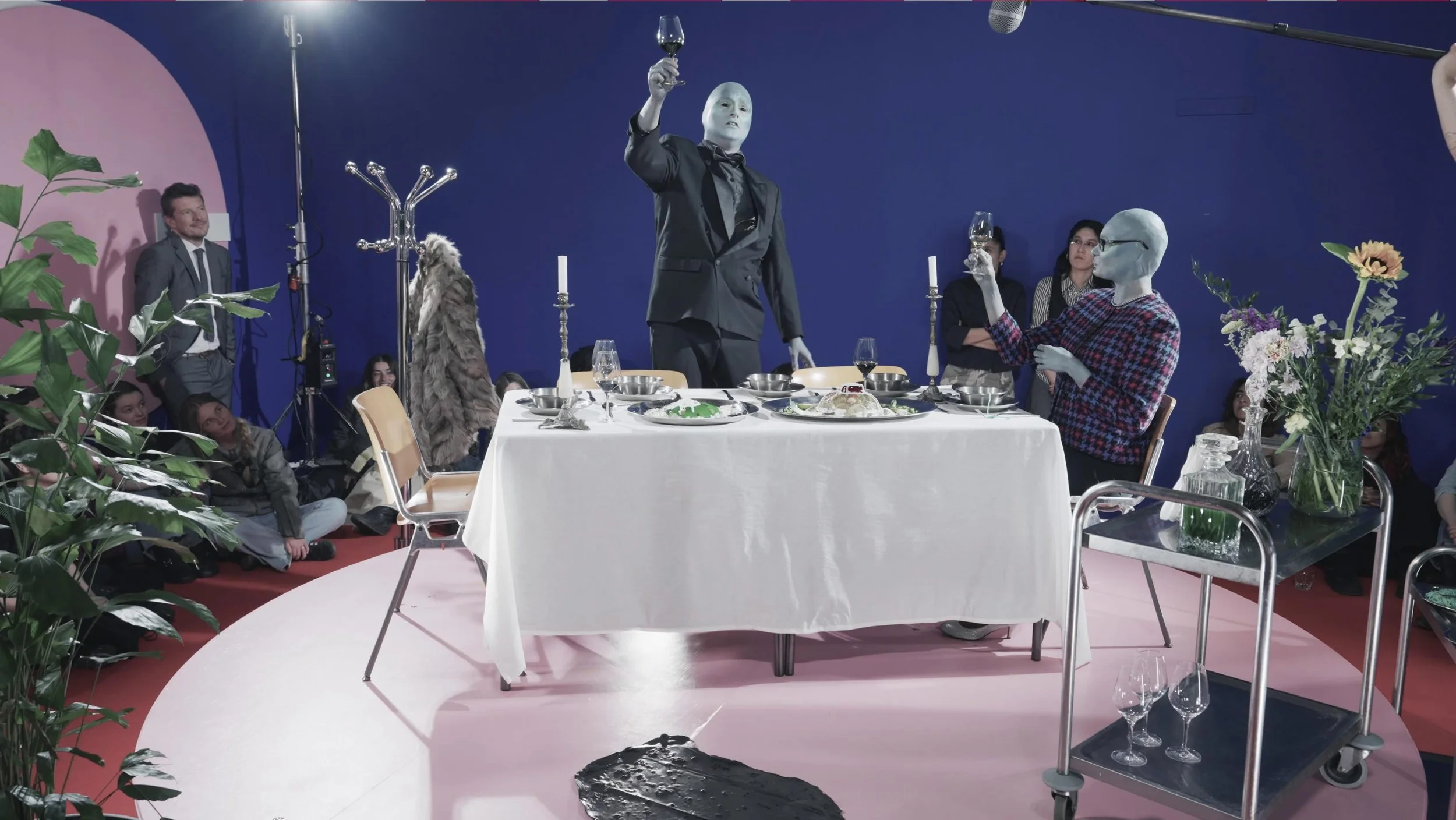
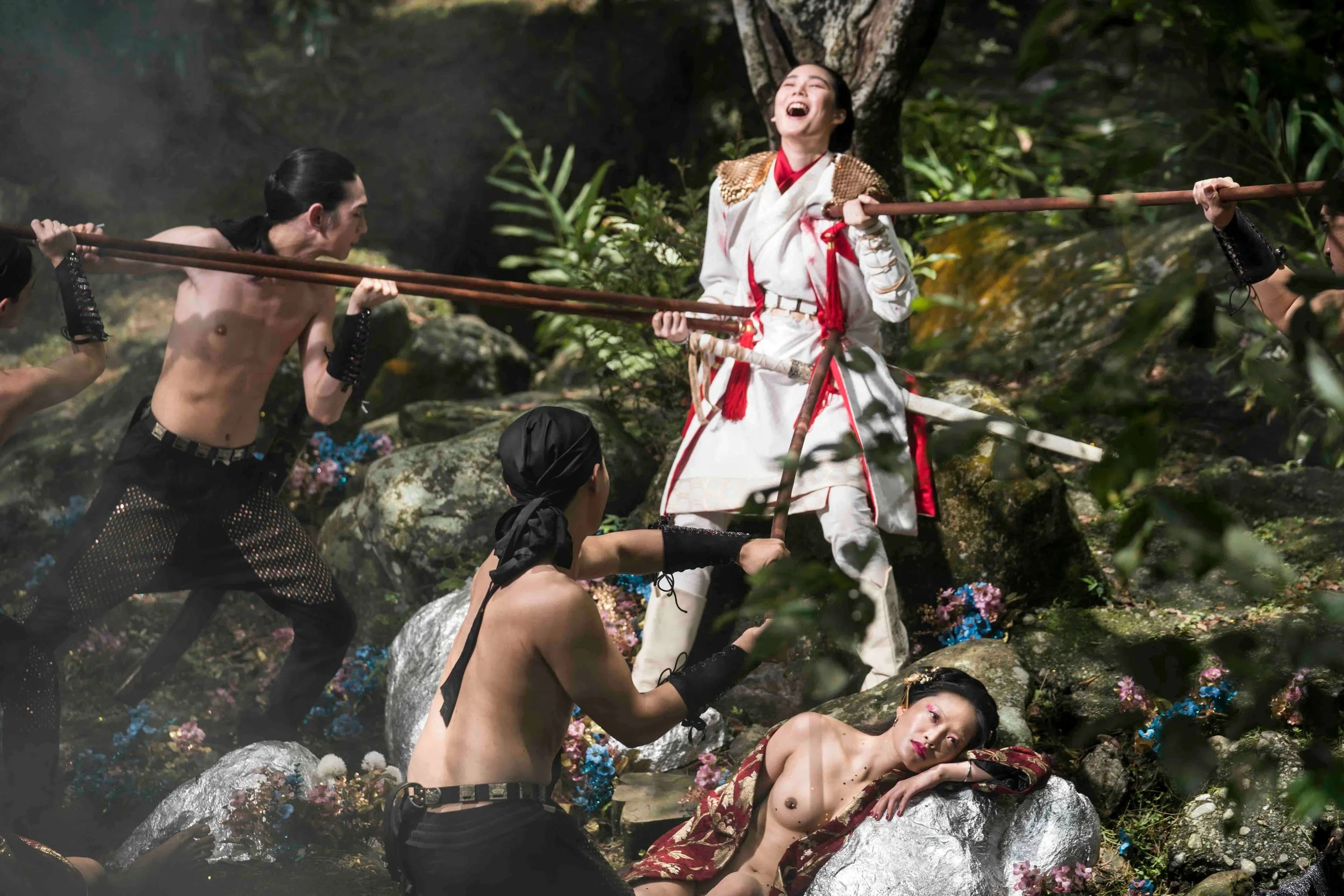
For this Denmark-specific production, Hui-Yu and the two curators spent hours digging in the archives of DR, the national broadcaster, for material to reshoot. The results include a loose restage of John Cage’s Water Walk (1959) in Copenhagen this time, co-directed with Cheng Hsieng-Yu and cast with local talents, including Klara Lopez, Sigrid Stigsdatter, and Lee Praecis, alongside a Blue Man Group-style retake titled The Last Global Supper, starring Alba Greve and Carla Viola. Punk performer Ditte Krøyer was invited as a special musical guest for the variety show as well. These special productions will become part of his feature film The Trio Hall (the first iteration was screened at Berlinale in 2025).
In Cinema 2: The Time-Image, Deleuze describes the crystal-image, a point where the actual and the virtual become genuinely indiscernible, fused rather than confused, like a mirror where the face and its reflection merge into one surface. It's a useful frame for an installation where a live performer stands beside their own filmed image. What you're watching is two temporal registers of the same event circling each other, each one as real as the other.
Hui-Yu's reshootings, in this light, complete a crystal-image that martial-law television always already contained. What was prohibited functioned as the image's constitutive absence, a gap built into the original footage, and Hui-Yu's restagings actualize it, bringing the virtual side of the crystal into view. Because the museum keeps that process participatory and unfinished, the crystal stays open. The "truth" of the martial-law period remains forked, closer to what Deleuze calls the powers of the false than to anything recoverable as fact.
An adult reenacting scenes half-remembered from childhood television is also revisiting what that television was forbidden to show: eroticism, queerness, dissent. For Hui-Yu, mass media works as an interface between personal and collective memory, and it's through his own recollections that he tries to reconnect the two.




There's a way to read his work through Paul Virilio's Bunker Archaeology, specifically his account of the Atlantic Wall's abandoned bunkers as ruins of total control that outlive the ideology that built them, and Tung-Hui Hu's extension of that idea to Cold War infrastructure repurposed as data centres, control becoming cloud. State-era broadcast footage works the same way here: an apparatus built for one kind of authority, still radiating those functions long after it has nothing left to serve. Hui-Yu insists this isn't nostalgia, and he's right to, nostalgia wants the past back. What his work stages is closer to what Hu calls new media melancholy: an attachment to a structure you can't discharge because it was never properly mourned. In other words, Su isn't missing martial-law television. He's still standing inside its ‘bunker’, filming what's left of the signal.
This show stood apart from Copenhagen’s usual arts exhibition by both being immersive, playful yet political. Tofu Collective emerged in 2018, when Martin Wendelbo, fresh off a degree in art history and Chinese studies, decided Copenhagen's art world needed to look further than its own reflection. Regen Li joined in 2023, and together the pair opened a temporary space in a satellite building of the Gammel Strand museum. Since then, they've been responsible for some of the city's most fearlessly alternative projects: stuffing a nightclub, Basement, with hundreds of plushies, turning a municipal art space into a karaoke bar, collaborating with younger artists like Betty Apple alongside icons like Shu Lea Cheang. Vroom Vroom is their most ambitious total environment yet, and the one that comes closest to putting their own methodology on camera.
Art space: @Art Hub Copenhagen@room_room_ahc
Curators: @Tofu.collective@wartinmendelbo @regen.li
Producer: @mimebraad
Photography: Brian Kure @briankurefoto
Guest artist: @chenghsienyu
Performers: @dj.woo.girl, @carlaviolalala, @ditte_kroyer, @klaralopezz,@lee_praecis and @motherbikini
Words by Elia Rosa Guirous-Amasse
What to read next