Post-Traumatic Nolan Disorder
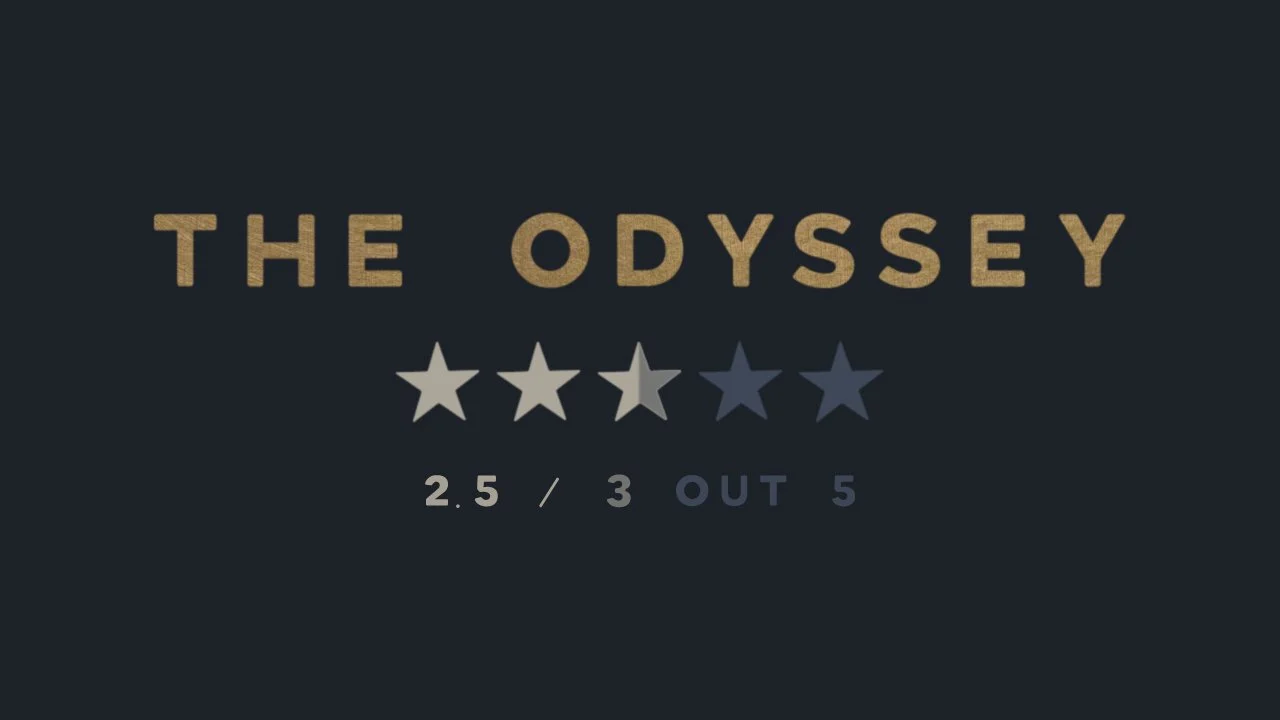
Just because. This is one of those cases where it's worth slapping on a rating in actual numbers. Not even on a scale of one to ten. But one to five, like on letterboxd.
Before its release, I defended it to the hilt from every prejudiced remark of the contrarian haters who called it a woke propaganda piece, refusing to judge it by allegiance rather than by content (because whoever judges by faction never changes their rating!). And right after seeing it in 70 mm, not IMAX, I gave The Odyssey an impulsive 4.5.
Despite the obvious technical problems (one often gets the "impression" of facing a pictures with an unmanageable production) the British director still keeps the viewer's attention alert for three full hours, imposing a temporal fragmentation that this time isn't forbidding and choppy, but fluid and accessible – credit due to having sunk his hands into the Homeric dough from which his entire body of work descends. So the film, structurally, I liked quite a lot. What I didn't like is a certain frigid approach toward the fantastical element.
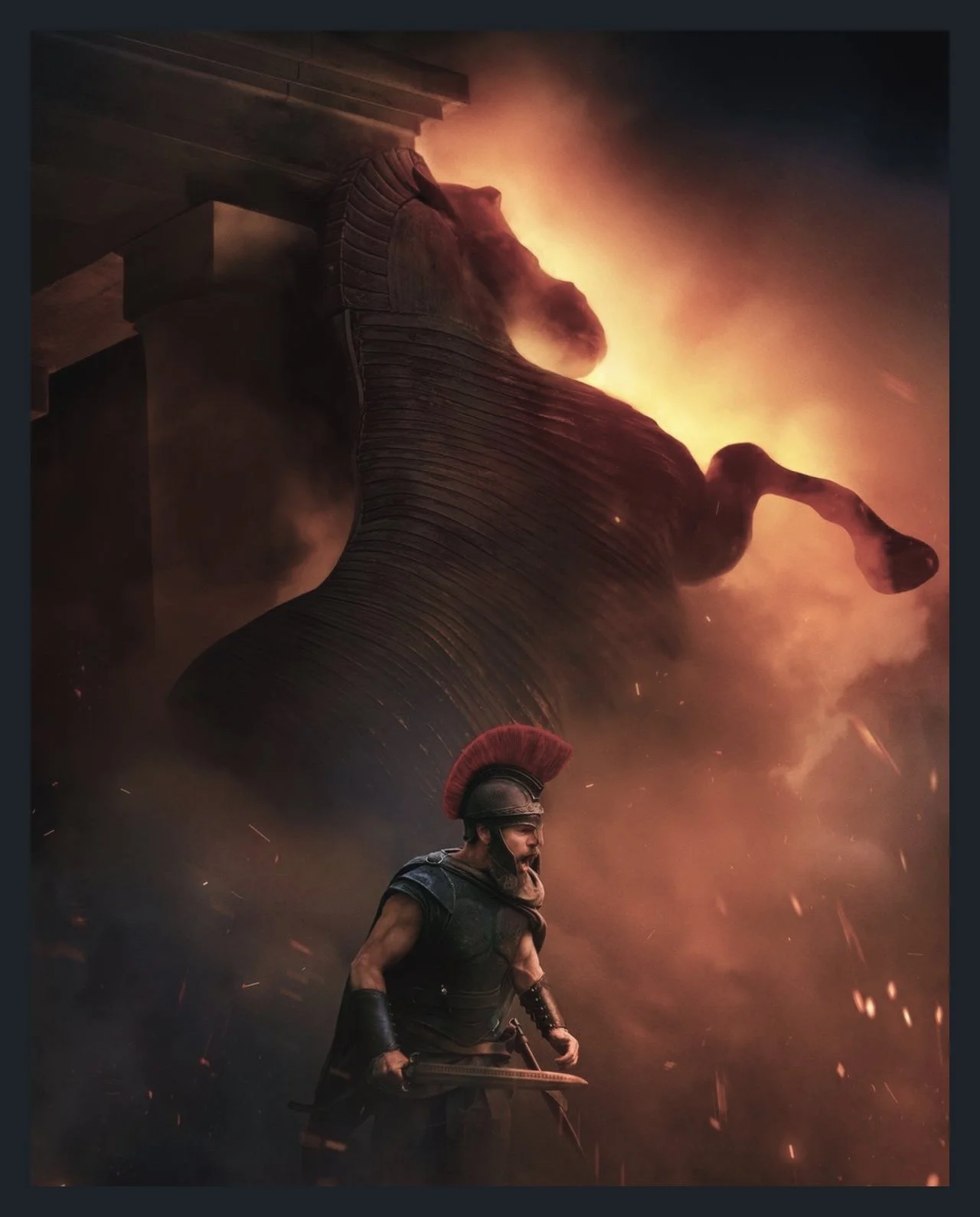
Without pathos and with imaginative disinterest, the metaphysical work par excellence is reread. So as to level out its supernatural potential, the choice falls on a semi-plausible representation on the psychological level of the characters and the sociopolitical one regarding the geographical context of the Homeric age. A representation that remains, in any case, arbitrary and semi-implausible on the level of philological recostruction.
In practice: instead of immersing himself in the myth, Nolan behaves like an author incapable of metaphorizing (primarily through images) and filters everything through theoretical analysis.
Choosing the mythological path, an author ought to let his own rationalizing containment barriers fall, to embrace the undoable and let himself be seduced by the monsters. One ought to speak of the world through monsters. And not speak of monsters through the world.
Besides, the opening premise itself – "In an age of apparent magic" (disrespectful, given that the Greeks really did believe in the gods) – warns us that we're not in the fantastical territory of the poem, we're in the realistic one where the tale was first sung and then written. However, on screen the events unfold under the directives of a filmmaker (and this happens out of hedging more than out of indecision) who never clarifies what we're witnessing: are we in the Odyssey, or in a sociological/pseudo-historical context where the myth is only a narrative, lore, a hallucination brought on by religious indoctrination and psychotherapeutic manipulation with a steady supply of lotus flowers on the beach? Since Ulysses' journey is all laid out through his own recollections, maybe the answer lies somewhere in between. And that's precisely the problem. In fact, thinking it over, I lowered the rating to 3.5. Then to 3. Then I raised it back to 3.5. Then I lowered it again to 3. Now I'm tempted to take it down to 2.5. Sorry, but a film that can't make up its mind about what it is – myth or sociology – produces in the critic the same structural uncertainty.
Whether up or down, the rating will probably change again. This review will be updated more than once.
The fact is, if it's mythology, then it's Fantasy. There are gods, witches, ghosts, monsters and impossible calamities. Of the Homeric work, Christopher Nolan eludes most of the imaginative content (as if toward it he had a performance anxiety blocking him from any sensual approach), gods and goddesses are uttered but not depicted, the Euro-Southern characters become Vikings, the Mediterranean settings are stripped of colour (the naturalistic cinematography is grim – millennial style) and the little supernatural content he chooses to stage (and stage is a bold verb for Nolan – a genius of structure, certainly not of the image) is rethought in cold blood and represented with ambiguous logic: it could be the psychotic distortion of the veteran Ulysses, suffering from PTND – sorry, I meant PTSD. We're certain of it at least where Athena is concerned. That she's a mental projection is verifiable in the final flashback of the raid on Troy. There it's shoved in the audience's face that she, as he will imagine her, isn't really the goddess, she's a damsel of Ilium whom the Achaeans, in the frenzy of war, seized and beheaded for no reason at all.
During this beheading, cross-cutting shows us a further one (again carried out by the Achaeans): that of the statue depicting Athena, symbolizing the goddess of reason losing her head and blah blah blah. Ulysses witnesses both. Don't ask me how – probably his gaze manages to split in two. It's all very contrived. Be that as it may, fusing the two beheadings together, he then visualizes the goddess coming to "advise" him with the very features of the damsel decapitated before his eyes.
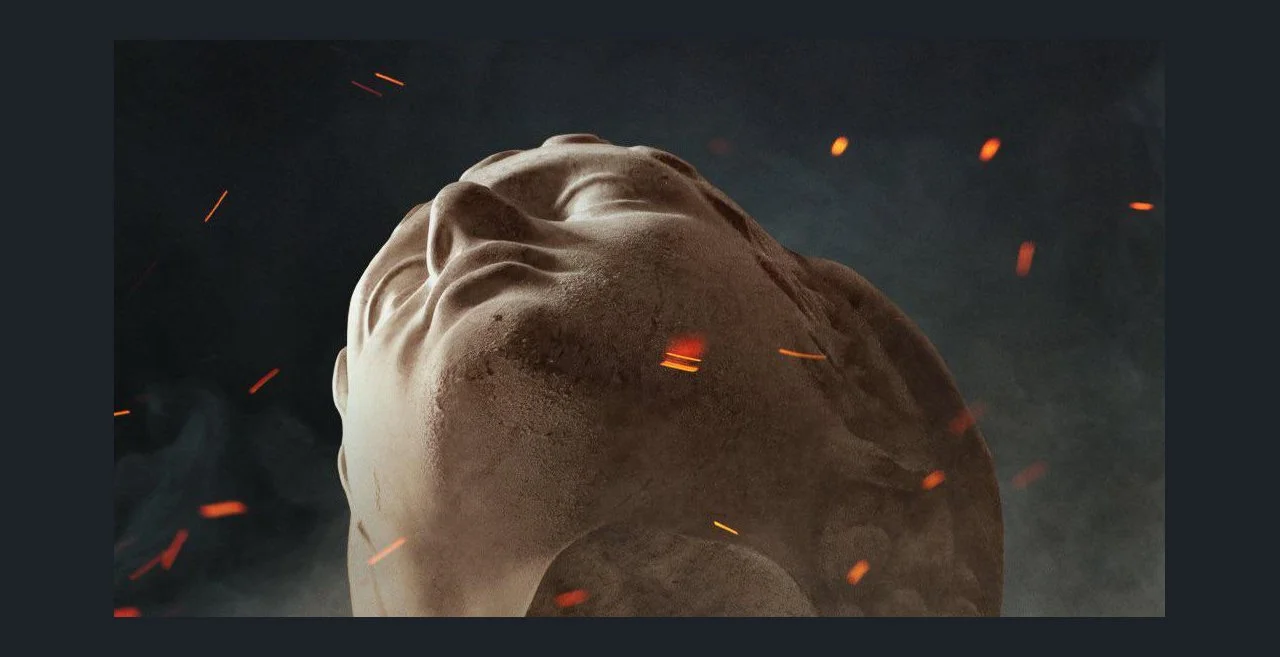
Before that (double) moment, Ulysses – in the full throes of conscience – begins to understand that he's a fundamental part of a strategy which, in being carried out, triggers the progressive decline of peoples. And there's his Hollywood moral epiphany, served up. This is where the Nolanian theory states itself: that decline persists to this day (it's spelled out in Ulysses' interior monologue). The meaning is clear. Too bad it leaves me repelled.
In the end the film says that the progressive decline of humanity is the direct effect of the collapse of civilization. That is, of culture. That is, of the era in which one writes. And again, blah blah blah.
Very well, my noble lord, but I'd like to tell you that maybe that collapse, entailing countless conflicts, the blame for which is pinned on "uncivilized, barbaric and ignorant" peoples, may have depended chiefly on the worldwide export of the so called concept of civilization, carried out precisely by the empires. And since you're a Briton siding with the powers that be (always defending the powerful, in every one of your films!), you'd do well to refrain from moral lessons about social collapses, given the colonial history of the English. Right. This is more ideology than cinema. Cinematically, what I can't defend now is having transported the myth to the material laws of us mere mortals. Going againts The Odyssey is, for me, a moral duty.
This is mythology. And my name is Aeneas (Enea). So there's hell to pay!
Quote: "It's not that we like magic and monsters because we're brain-dead or childish. We like them because we're cultured and we know how to read metaphors. So we have respect for what ought to be a representation of the metaphysical. What's more, the greatest authors of the metaphysical are atheists and materialists."
I couldn't agree more, and for now I don't want to reveal whose words these are. I paraphrased them after hearing them erupt in a video review. They hit me hard. Now, don't get me wrong: anyone can choose to stage an ancient metaphysical text, putting that very aspect under the lens of reason, so as to draw an instructive, socio-cultural parallel of an era, one that can be brought back into the present. But if you do it, then you have to do it all the way! To get a true, unassailable transposition out of it, instead of a false adaptation.
Here Nolan the author stays vague. In the balance. He doesn't leave out the fantastical content entirely: it's barely staged, and without due regard. Hey, no, my friend. However much of it you put in, you have to approach it the way Del Toro and Jackson do, with the imagination walking, running, taking flight.
Our man – who for his part, most probably, wouldn't have depicted the fantastical at all – opts for the half measure of commercial origin, leaving both the fantastical and the reasoning to waver in that fog of doubt which serves not to lose any slice of the audience. It's the first time he doesn't have the balls to say "in this film of mine, this is how things are". From him, I didn't expect the lack of spine.
And at this point along comes whoever cites Joyce's Ulysses – a handy pretext for those trying to defend every author's right to reread the classics however they see fit. That poem – a poem, not a novel – I devoured in Celati's Italian translation. And it says the exact opposite of what they make it say; it does the exact opposite of the film. It distorts the Odyssey beyond recognition, yet it seals its heart. With Ulysses' heart intact in his hands, Joyce inflicts an indelible trauma on the world of literature, having wholly different artistic and philosophical aims than Nolan. What's more, Joyce didn't restage the Odyssey: he absorbed its structure and then recontextualized it into an overflowing poetry in prose where creativity and imagination explode on every page. In The Odyssey, imagination. Where?
Post-Scriptum...
Nolan is a cinematic engineer who reasons (and reasons) in gears, in service of a complicated contraption – and I said complicated, not complex. He's no symbolist. Nor an allegorist. He's a watchmaker. That's why the film's main problem is that it feels more like a transposition of Nolan onto Nolan than a transposition of Nolan onto the Odyssey. In fact, during the screening, I felt like shouting Oh, Nolan, get out of the way, I can't see the Odyssey!
Post-Post-Scriptum...
Critically disappointed, the sniper reaches the end of this text and once again grips his rifle and gets into position; first of all, he takes aim at the format.
Most of us saw The Odyssey in a version where the frame is cropped – you notice it in certain close-ups, medium close-ups and medium shots (actors chopped off from mid-head up). Filmmaker, what did you think? That we'd all get on a plane to reach one of the forty theatres in the world capable of projecting in IMAX 70 mm? Either you took it for granted out of social blindness, or you're a classist who reserves the "real" screening for those who can afford it. That is, for those who don't contribute to the decline of civilization, to put it the way Ulysses thinks in your film – or rather, the way you make him think what you think.
Nolan, if you'd shot in regular 70 mm you'd have saved... I don't know, a hundred million? Certainly enough to let yourself be more shamelessly imaginative. You'd probably have found a way to make that giant puppet speak (a vulvological puppet – the vertical eye in the middle of the forehead, you know the one?). He has a name. Polyphemus. Like every other fantasy character in the text, you sanded and denatured him into a cog useful only for making things happen inside your contraption.
(A display of technical force will never be more important than HAVING RESPECT for the characters of that mythological work, which will always be greater than us. That work which we all have the right to revisit, without feeling superior to it; and this ought to be carved in stone.)
In the Homeric work, Polyphemus talks, talks, talks. In yours he whispers (or rather, mumbles) a single time, and on top of that with his back turned so we don't see his mouth, only because you didn't know how to make it move credibly... I've digressed as usual, changing target more than once. Now I return to the initial one. This time, as I take aim, I press the trigger halfway...
Shooting for a screening that relatively few can see proves that the real cinematic experience of the film is already a compromise for most people. It's not just a wrong technical choice, it's the same hierarchy of values denounced up to now: structure before image; the device before what it ought to show; which is what director Camerini did in shooting Ulysses, a film that crushed you despite being made with ridiculous means compared to today.
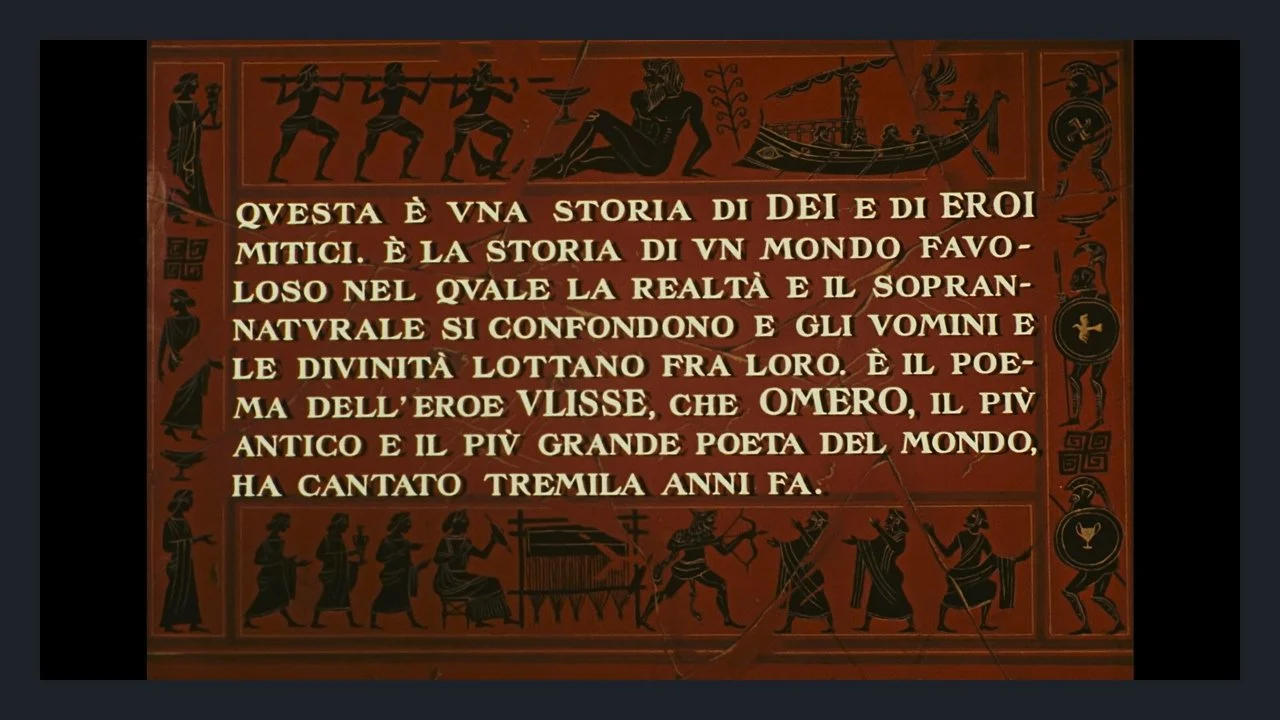
“This is a tale of mythical GODS and HEROES. It is the tale of a fabulous world in which reality and the supernatural blend together, and men and deities struggle against one another. It is the poem of the hero ULYSSES, sung three thousand years ago by HOMER, the most ancient and the greatest poet in the world.” (Note at the end of the article)
Rewatching this picture, I realize what’s behind The Odyssey’s filter of arrogance: essentially a bad film, made for greying nerds.
In Ulysses we find: the lofty respect for the words of the poem, in dramatic contrast with the linguistic gruffness of the Suitors; the chorality within the theatricality; the alternation of tragedy and comedy; the Technicolor that gives vigour to costumes and sets.
And my eyes can finally breathe, thanks also to the sky-blue of the Mediterranean.
There are grapes and there is wine, the blood of the earth. There is stylistic and narrative duality. There is softness and there is muscularity. There is the urge to lose yourself in magic. There is apparent nudity but there is sensuality, sinuosity, harmony of the body.
It's damning that a film from 2026 turns out to be, in every respect, more puritanical than one from '54.
I gave Ulysses three and a half stars out of five and The Odyssey three out of five. Now I'd give the latter one and a half, and I’d transfer the difference to Ulysses, taking it to five, because that Polyphemus of his is enough for me (made, uncredited, by Mario Bava) – at least it had a soul, and it talked... ran its mouth!
Ulysses could have been on at night on turn-of-the-century television, maybe in the room of a pimply teenager, maybe through a 14-inch cathode ray tube. Either way it reached, in whoever watched, that compressed space between the lungs where you, with IMAX 70 mm, don't even come close.
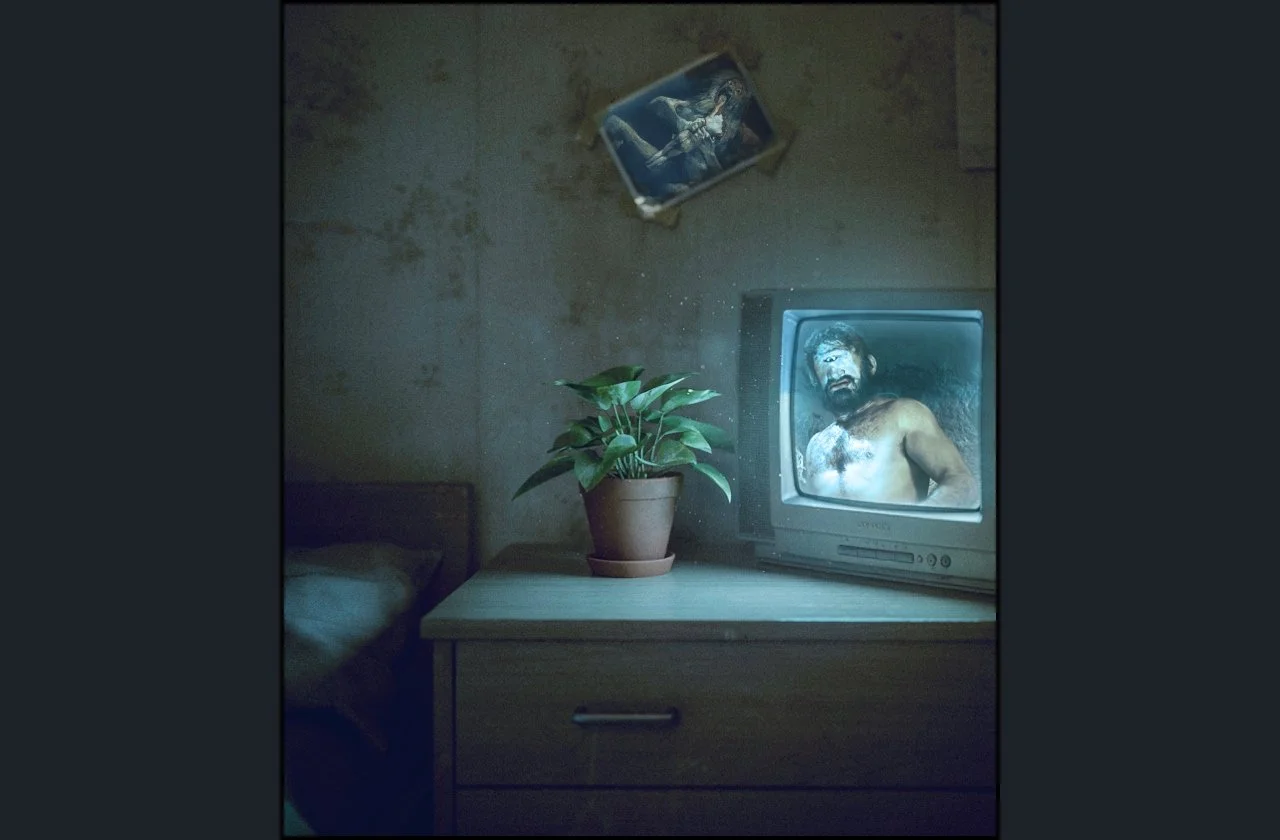
Imagination doesn't need a budget, it needs someone who believes in it.
Post-Post-Post-Scriptum...
(What can I say? This takedown is a work in progress.)
You can see it, hear it, read it: the film has divided sharply. Long after its release, plenty of people are still commenting, panning it, praising it... There are those who applaud and those who turn away, screwing up their face. All positive, anyway.
Among those like me who feel a sense of immense disappointment, some compare it to Tenet – objectively Nolan's least successful film – wondering how, over these years, the aura of the untouchable master could have built up around the director; while on the side of the enthusiasts, some speak of The Odyssey specifically as the consolidation of that aura.
To be clear: creating the cinematic EVENT is dirty work but indispensable; Nolan has taken this immense task upon himself and I'm grateful to him for it, because it SERVES both us in the audience and the entire film industry. The aura we're talking about is a consecution that arrived early, and time will tell whether it's destined to fall into oblivion, since that aura, around the old directors we now call masters, was rarely to be seen in their period of activity.
Let me put it better: if most of the directors we call masters today weren't called that when they were active, then will those we already call that while they're working still be masters tomorrow? If recognition always comes late, the one that comes immediately is supect by definition. And let's remember that the delay is in the recognition, not in the quality. Those directors were masters but nobody had noticed. Hence the inverse problem arises: the directors active today whom we call masters may not be masters at all, and we call them masters because we need to project figures of reference that existed in the past and are scarce now. Our delay, then, is in recognizing their non-quality.
Master or no master, I like more than one of Nolan's films and there are at least two I love: one for substance, one for the form. But with The Odyssey he gets it WRONG on both fronts. Tenet, the film of comparsion, was if nothing else conceptually extreme – the challenge Nolan had set himself on the screenplay was too hard, and led him to see through an incomprehensible movie, therefore unwatchable, which at least I respect. So with The Odyssey he maybe does worse. Maybe.
In a epic film that ought to stretch out and be choral, the technical problems (the blatant inconsistencies in staging, narrative and editing, and above all the actors' loss of bearings) came from the elitist and rhetorically pompous IMAX 70 mm, which allows takes of 3 minutes at most. (As if that camera were consciously vain, arrogant and obstructive toward the actors it captures, because it wants to put itself before them – and this is a golden rule: the eye of the camera is the eye of the director.)
But do you know which other director shot a film with very short takes without letting the actors understand what story was breaking loose around their characters? George Miller when he made Fury Road (a masterpiece!). With one difference: Miller broke up the takes by choice. Having storyboarded the entire film, he acted from the start according to what he needed to bring home the result. Fragmentation as the outcome of a vision already formed. Nolan, on the other hand, directs in bursts out of constraint. Within the same procedure, this means that Miller is the MASTER of his own means, while Nolan is the SERVANT of those tools he chose himself and doesn't govern – or perhaps CHOSE not to govern, who knows! So... the difference in the result doesn't depend on technique, but on the fact that one knew what he was giving life to, the other didn't. Nolan wouldn't have chosen short takes. He chose a format that imposed them on him because that format had to come first (or because WITH that format he WANTED to come first), while Miller, who had no brevity imposed by the format and could shoot for as long as he wanted, imposed short takes on himself as a means in service of his own vision.
And there we've dissected the difference between a director with a vision rich in visions and one with a diagrammatic vision, devoid of images that form, crammed with directional arrows, conceptual connections, geometric blocks and indeterminate obsessions. With a vision like that, you don't touch mythology. This is the point I can least tolerate, and it concerns the filmic substance in relation to the director's conduct: Nolan used the myth not as a place to release the images of the mind, but as a stage to prove how much of a "master" he was.
It’s improbable, but I still hope: that his next film won’t be Aeneid.
Note...
Compared to the Italian version, the one for English-speaking audiences has different opening titles, having opted for an explanatory pragmatism in the captions; that is...
“This is the story of a man, who left his home, his wife and his son to go away to war... He destroyed the city of his enemies and started back home... But Neptune, Protector God of conquered people, pursued him with his anger and kept him wandering for ten years... It is the story of Ulysses, who dared defy the god and continued his journey to Ithaca, his home, where his wife, Penelope, was waiting... and waiting... ”
What’s more, this text scrolls vertically over the hideous footage of a presumed Mediterranean at dawn or at sunset. The caption in the Italian version is instead superimposed over a kind of black Mycenaean hieroglyph, painted on part of a toichos (the inner walls of a temple) in red ochre. The stylisation retraces parts of the Homeric poem.
The American version explains. The Italian one evokes. The visual support confirms it: the Mycenaean “hieroglyph” is ancient writing, a sign that fixes itself, that endures; the text scrolling over a sea sunset is a cruise advertisement.
The Odissey
Christopher Nolan
Words by Enea Bocazzi
What to read next