ORLAN at The Wings of Peace: “Not a Resigned Complaint, but an Active Anger”

Since the 1960s, ORLAN has used her own body as material, questioning identity and social and political conventions. She works with performance, photography, sculpture and video, and more recently with artificial intelligence, robotics and biotechnology.
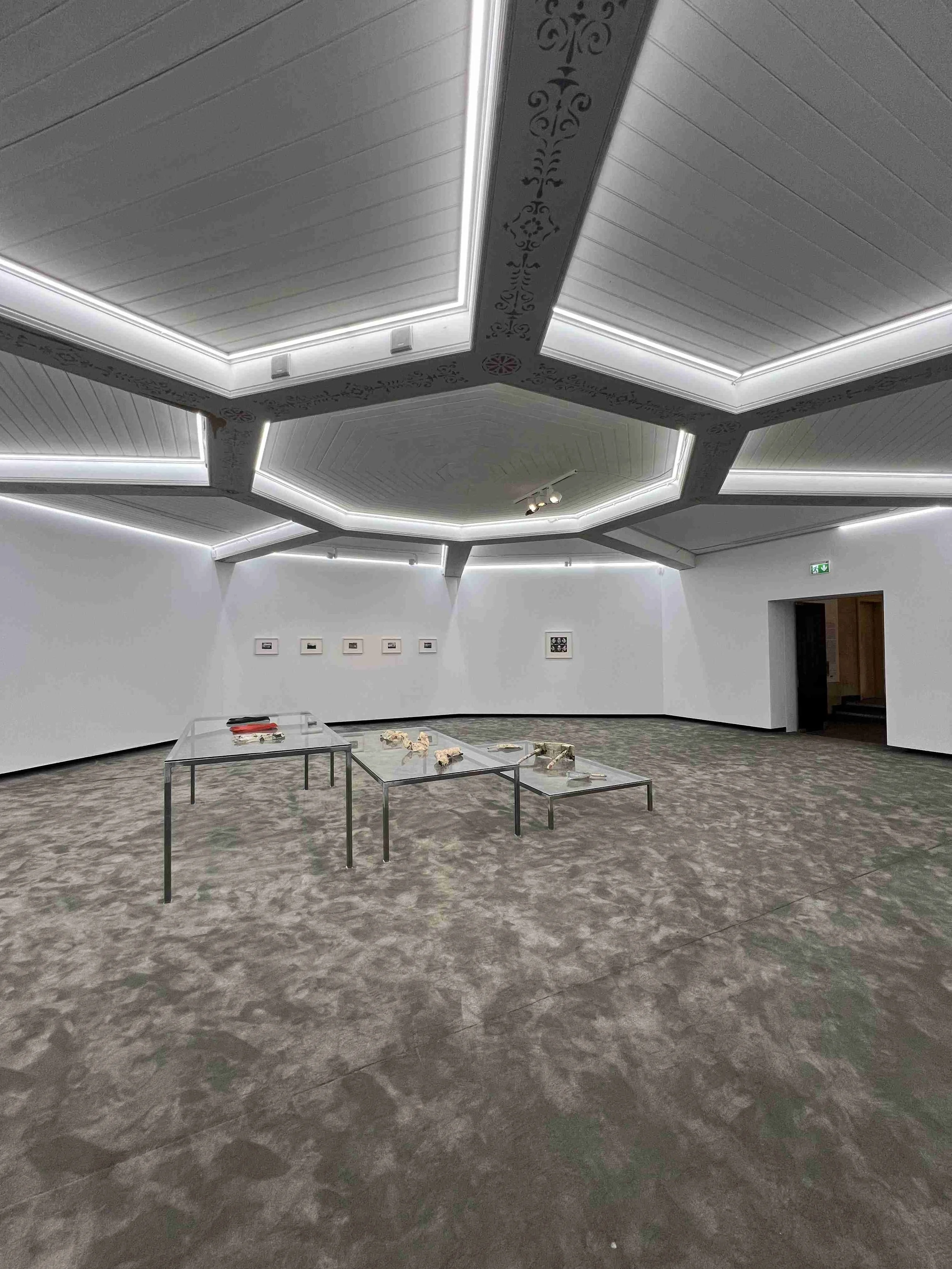
At Vers la paix perpétu-aile(s) / The Wings of Peace, curated by Jean-Baptiste Chantoiseau and organised by Tora and Art Foundation with the cultural platform Bien En Place, ORLAN is one of five artists, alongside Émeric Lhuisset, Esther Ferrer, Léa Le Bricomte and Oleg Kulik, who address the exhibition’s central theme: conflict. The show opened on 19 October at 84 rue de Turenne in Paris and runs until 1 November 2026.
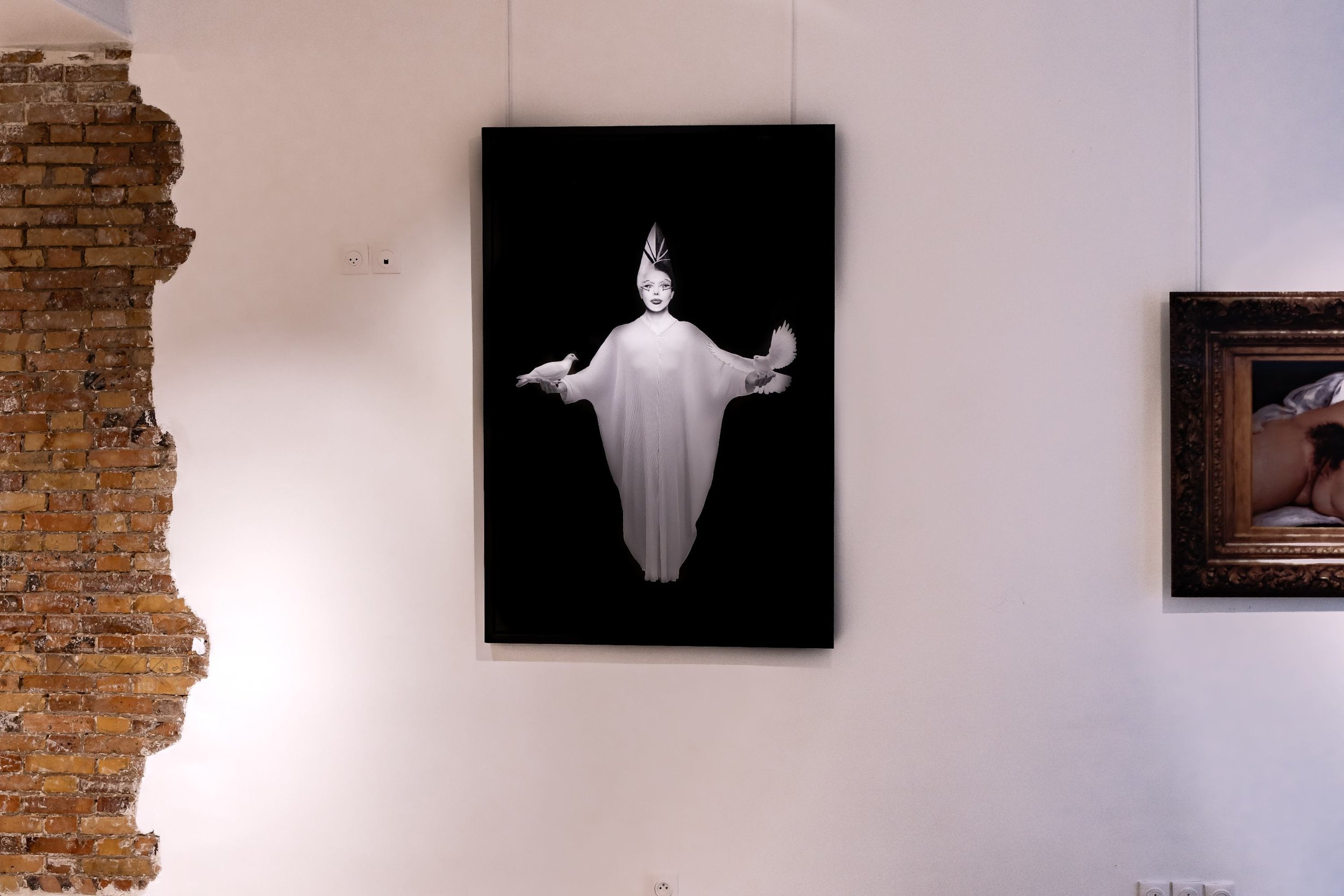
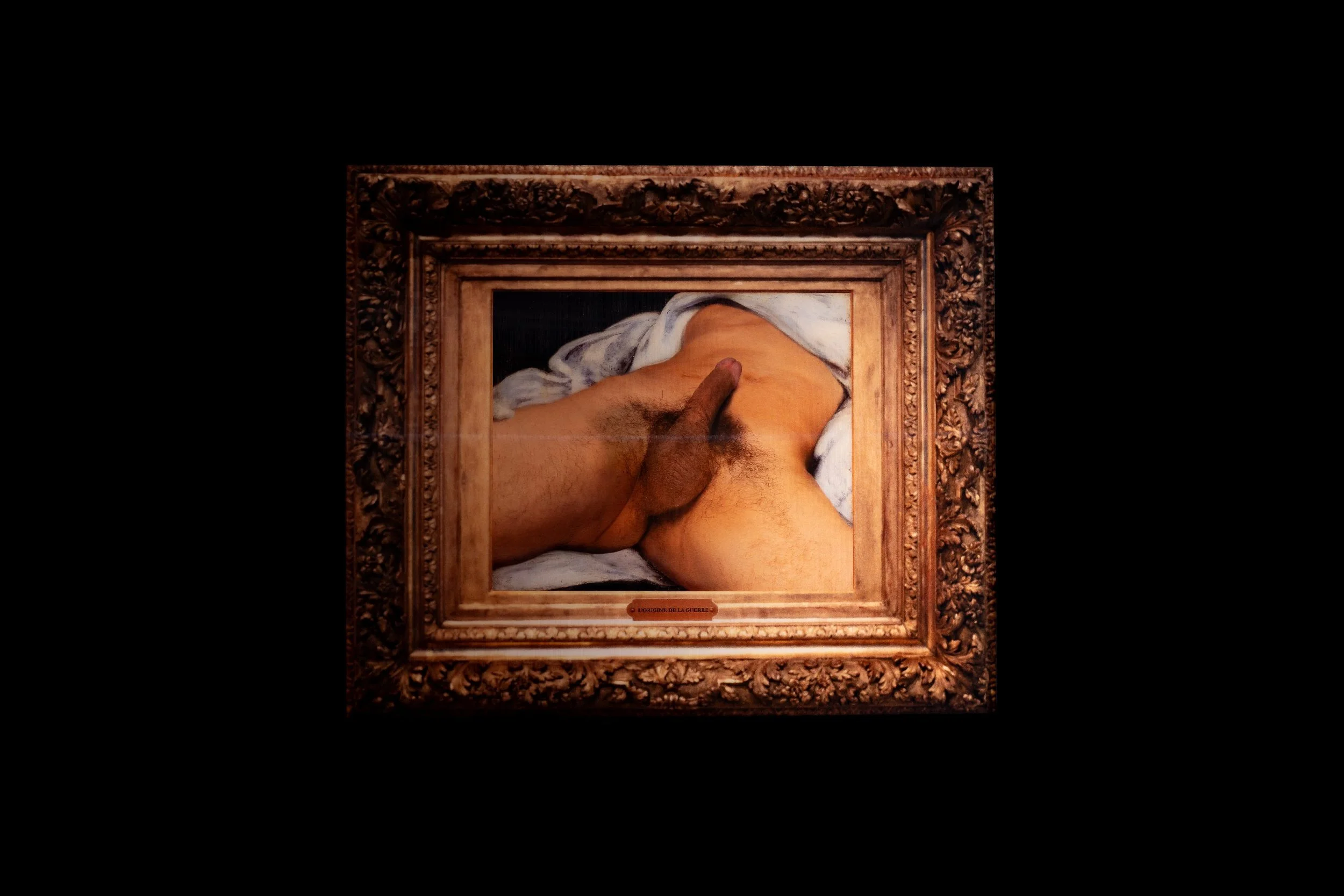
Her works in the show grow out of the third of her Leçons d’artiste at the Louvre, L’art, pierre angulaire de la résistance en temps de guerre et d’oppression (Art, the Cornerstone of Resistance in Times of War and Oppression), in which she spoke about the responsibility of artists and the art world today. She presents a marble-powder dove sculpture, a lenticular reworking of Courbet’s L’Origine du monde and two large self-portraits from her series Nous sommes inconsolables.
We spoke with ORLAN about war and peace, censorship and why the body is still political.
How does the central theme of the exhibition resonate with your artistic practice?
I built my works in this exhibition around the focus of my third Leçon d’artiste, L’art, pierre angulaire de la résistance en temps de guerre et d’oppression, in which I spoke about the responsibility of artists and of the art world in the face of today’s world. We have to be on the other side of the scale, against all the horrors we are witnessing: wars, the rise of extremes, especially the far right, the return of racism, antisemitism, homophobia, transphobia… totalitarianism, Trump, Putin and all those of their kind.
Art is on the side of sensitivity, of nuance, of questioning. We are not on the side of violence, nor on the side of power. We must defend what makes us deeply human and preserve our freedom to think and to create. We are pacifists.
This exhibition is the logical development of all my current work on war and peace. It comes from the same wish to make art a space of individual and collective resistance.
Your work has never stopped questioning established ideas of identity, power and freedom. How do you see these questions connecting with the themes of The Wings of Peace?
I have worked for a state of peace through the image of the dove since 1978, in my series Étude documentaire : le drapé, le baroque, where I posed in black and white, dressed as a Madonna, with a dove perched on my head. This gave the photograph the dimension of a public statue.
Continuing this series, I made a performance in 2022 in Mérida, Mexico. The photographer Pim Schalkwijk had suggested photographing me with a food or an object of my choice from the big market. I chose to buy a dove, which I then released into the air in the middle of the market. I captured this strong, poetic gesture in a series of photographs in 2022, and then in a marble-powder sculpture produced by the workshops of the GrandPalaisRmn, which I titled Pour la paix perpétue-aile(s).
““It is not a resigned complaint, but an active anger, a political anger.””
Alongside the dove, you present L’Origine de la guerre, a work in dialogue with Courbet’s L’Origine du monde. How did this piece come about?
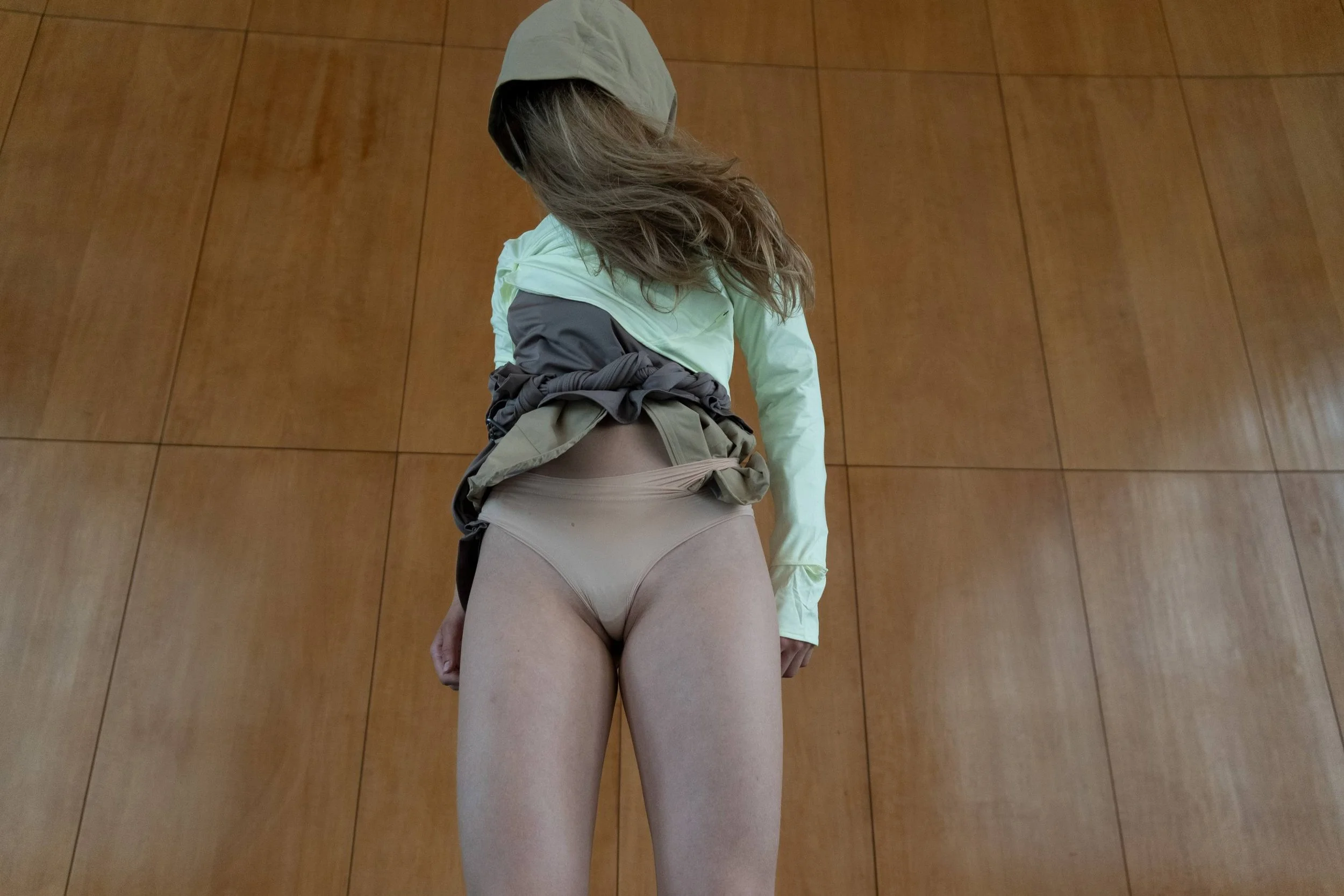
L’Origine de la guerre is a lenticular work that reveals Courbet’s L’Origine du monde, which I consider the most monstrous work in the history of art. In 1866, like a sadistic murderer, Courbet mutilates a woman: he cuts off her legs, her arms, her head; he takes away her identity by reducing her to her role as a child-bearer. She becomes nothing more than a belly, nothing more than a sex.
I decided to see what would happen if the same process were applied to a man, the other half of humanity. So I reproduced the work, first as a photograph, keeping its dimensions and its frame, but replacing the woman with a male model with an erection of average size.
The exhibition also shows two large works from your series Nous sommes inconsolables. How do anger and grief find their place in this series?
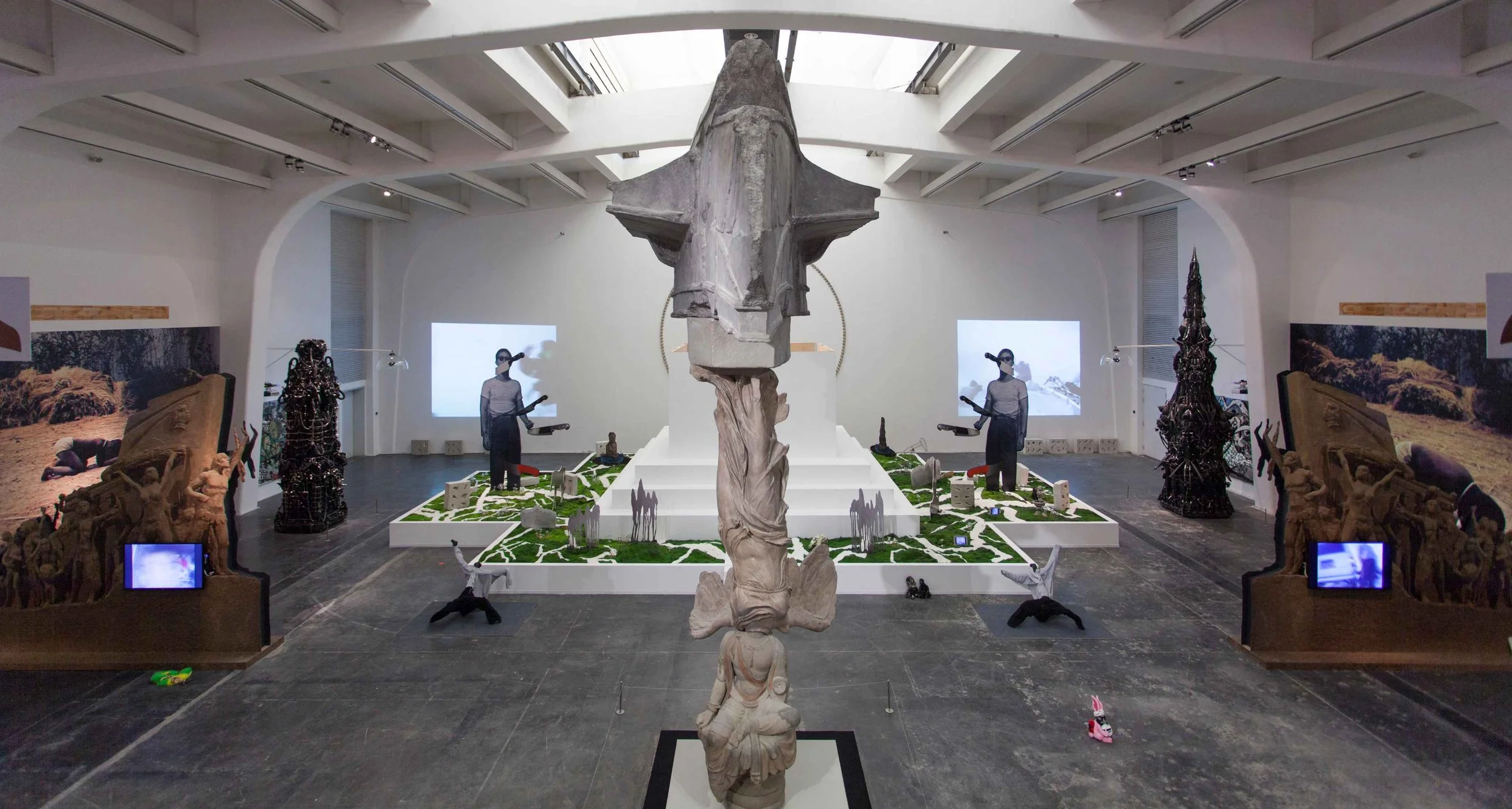
These two works, 2.5 × 2.5 metres each, come from Nous sommes inconsolables (We Are Inconsolable), which is currently shown at the Venice Biennale, at Palazzo Morra, curated by Francesca Carol Rolla and Sara Danielli.
I am inconsolable at the abominable state of the world, which seems to be returning to obscurantism after the hopes raised by the Enlightenment and the rule of law. I made manifesto self-portraits from filmed performances in which I shout, I scream, I cry. It is not a resigned complaint, but an active anger, a political anger. This rage becomes artistic material, a driving force of creation and a gesture of resistance.
The exhibition opened at a tense moment in Paris. How do you see it resonating with current events?
This exhibition resonates strongly with current events, in France and in Paris. One of the windows where I am exhibiting was vandalised, and that has an impact. Reality itself has caught up with the violence I represent in my work.
The exhibition brings together artists of different generations and with varied artistic paths. What interests you in presenting your work in dialogue with other artistic voices?
I always very much enjoy taking part in group exhibitions, because the works enter into dialogue with the work of other artists. This opens up new readings, new perspectives and new angles of analysis.
All the more so because in this exhibition I am surrounded only by friends, whose work I have long admired as much as the wonderful people they are: Émeric Lhuisset, Esther Ferrer, Léa Le Bricomte and Oleg Kulik.
They are deeply committed artists who, like me, question society and take a stand on the world around us. They are not artists who just contemplate their navels, making works to please themselves, works adapted to the market, pretty works that shock no one, works that are there to decorate apartments and make money.
So I am very happy to share this space with them, for the richness of our exchanges as much as for the sensitivity and commitments our works may have in common.
““Art is on the side of sensitivity, of nuance, of questioning. We are not on the side of violence, nor on the side of power.””
Throughout your career, you have used your own body both as an artistic medium and as a space of resistance. Do you think the body remains today one of the most powerful instruments of political expression?
I work on the status of the body in society, on all the cultural, traditional, political and religious pressures that are inscribed in bodies, and especially in women’s bodies.
I show that the body is an artistic medium, that the body is political. It bears the traces of our history, our education, our culture and the norms that society imposes on us. It is at once an intimate territory and a space of confrontation, control and domination, but also of freedom and resistance.
The private is political. Everything we do, everything we don’t do, everything we say is political. Our gestures, our silences, our choices and even the way we inhabit our own bodies are traversed by questions of power. The question is how to take back possession of one’s body, make it a space of expression, emancipation and de-alienation, and affirm, through art, one’s freedom in the face of society’s injunctions.
We live in a time of censorship and repression, so yes, exposing the body, staging it, questioning it is very important!
The body and its representation are constantly subject to prohibitions and taboos. Today we suffer the tyranny of censorship, as in the days when Michelangelo’s masterpieces in the Sistine Chapel were covered up with painted drapery.
How is it possible that you can’t show a body, a female breast, on Instagram or Facebook without the post being deleted or blurred? For me it is truly absurd. If we sided with the censors, we would burn all the masterpieces in the greatest museums!

Curation Jean-Baptiste Chantoiseau
Organised by Tora and Art Foundation with Bien En Place
With Émeric Lhuisset, Esther Ferrer, Léa Le Bricomte and Oleg Kulik
Photography @ankou_photography
Interview by Sofiia Barysheva
What to read next