Xu Zhen

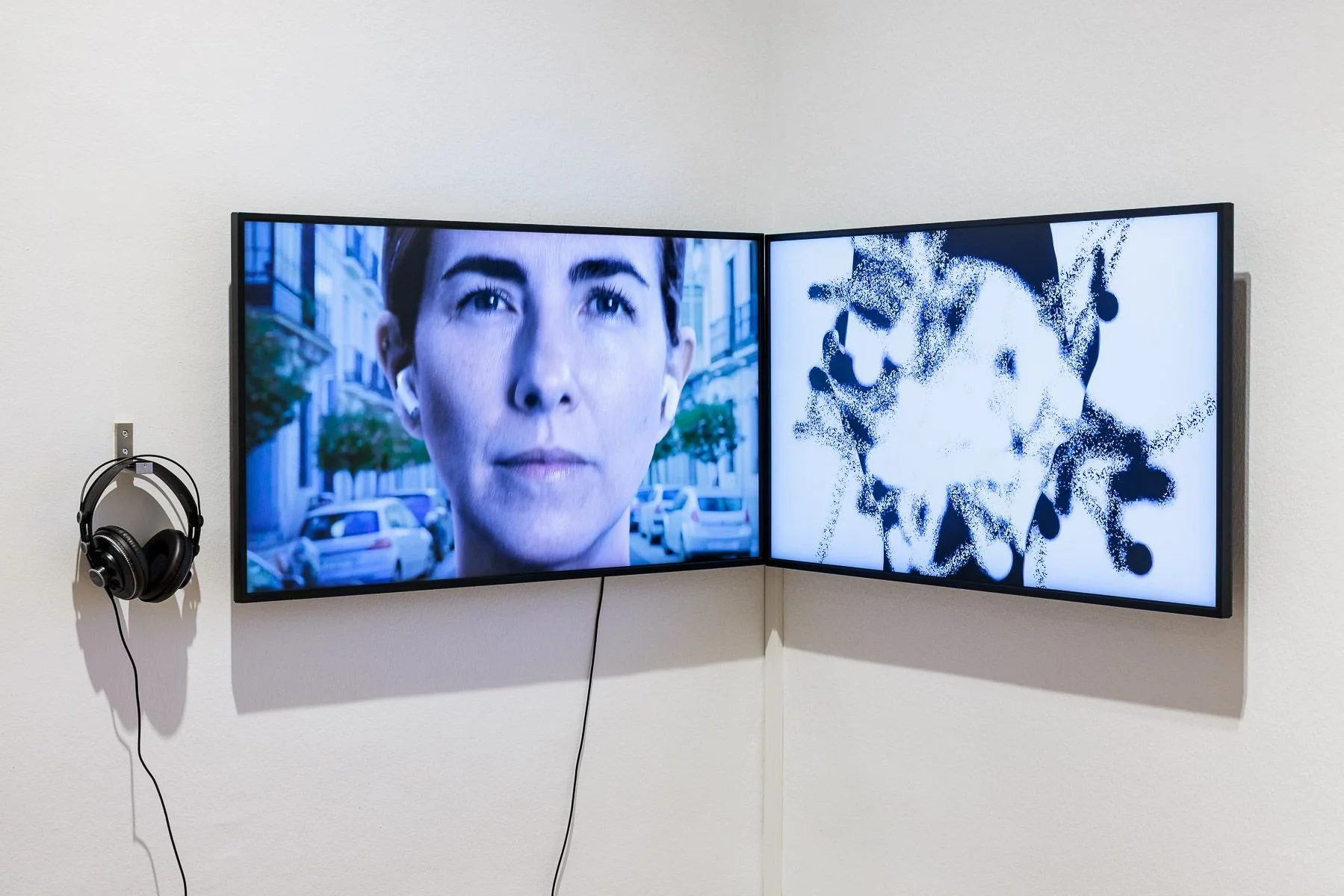
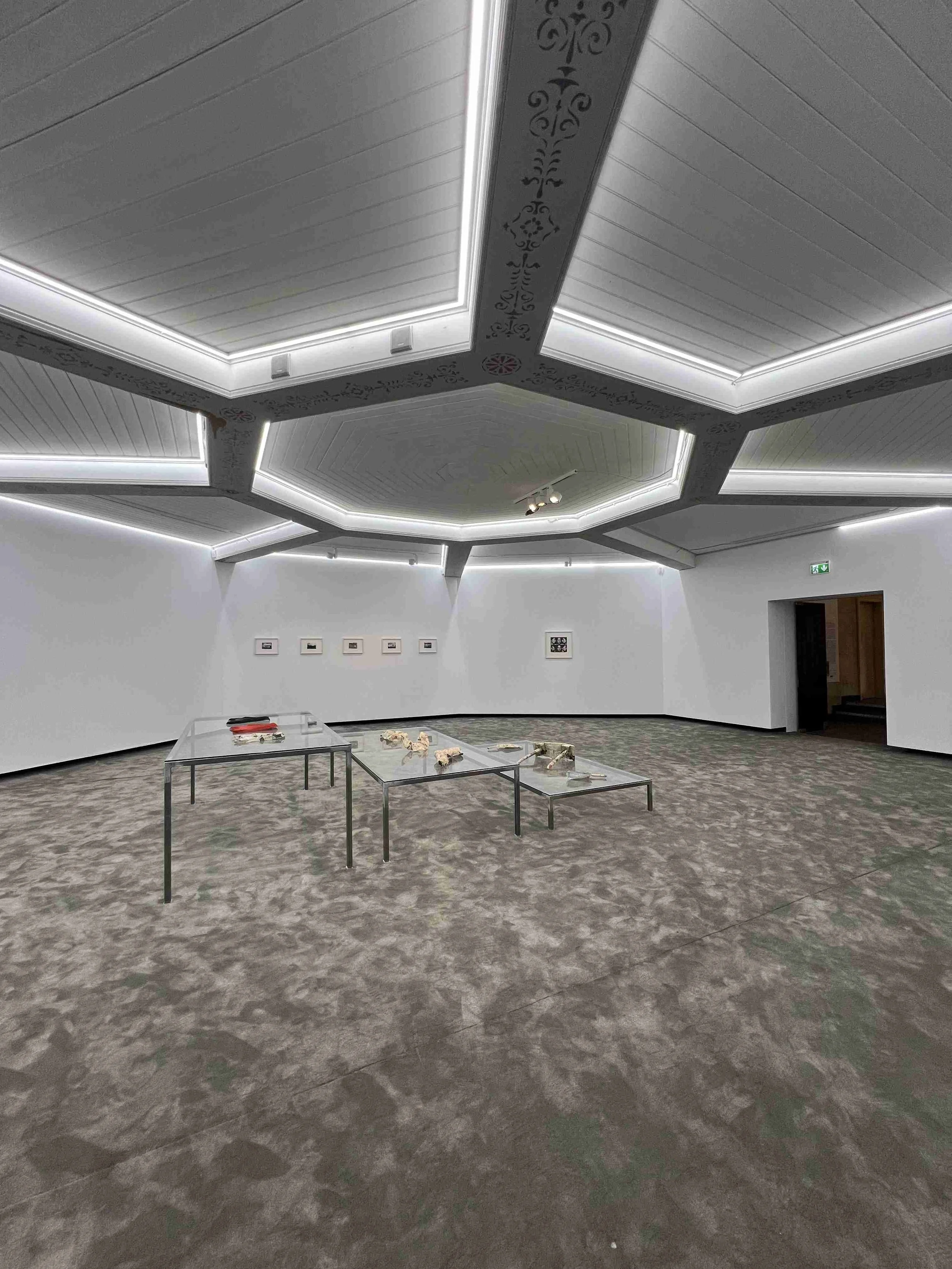
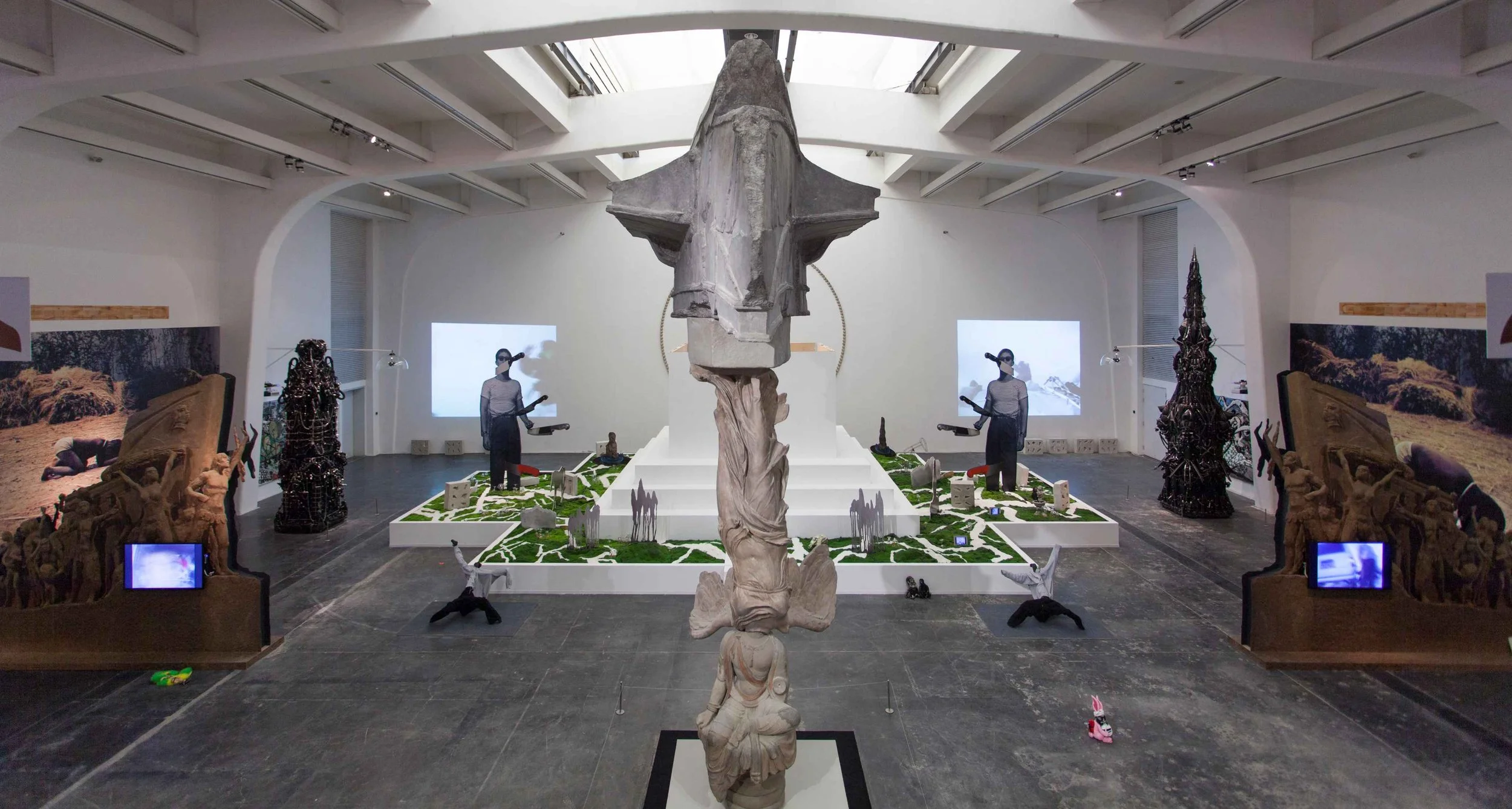
Installation view of Xu Zhen’s Sole Exhibition: Xu Zhen: A MadeIn Company Production , UCCA, 2014, Beijing
Xu Zhen and the art of being many
On dissolving the self, slowing the image, and why art needs legends.
There is a particular vertigo in asking an artist about the beginning and receiving an answer that refuses to behave like one. No origin myth, no wound, no thunderclap. Xu Zhen, asked what he wanted to be before any of it happened, says only that if he could keep making art for the rest of his life, that would be enough to constitute the whole of it.
It is a disarming answer from an artist whose career has been anything but simple. Born in 1977 and based in Shanghai, Xu was at the 49th Venice Biennale in 2001, at twenty-four. In 2004 he won the "Best Artist" award at the China Contemporary Art Award. His work has since travelled through MoMA, Tate Liverpool, the Hayward Gallery, the Guggenheim and the Sharjah Biennial, across installation, photography, video and performance, without settling into any one register and medium.
Making the work and building the ground it stands on have never been separate labours for him. In 1998 he became artistic director of BizArt Center, Shanghai's first independent non-profit art institution. In 2006 he co-founded Art-Ba-Ba, still one of the most active online forums for contemporary art criticism in China. In 2009, he founded MadeIn Company. By 2013, it had launched a brand called Xu Zhen®, so that the artist's own name became something his studio produces. MadeIn Gallery followed in 2014, the MadeIn Art Museum in 2022, and in 2025 a new platform, HOL.
What connects these gestures is a sustained suspicion of the singular self, and of the pressure, sharpened by globalization, to keep innovating. His most recent turn to ink and silk is not a retreat into tradition. He treats Chinese painting as a system of time and attention that might loosen that pressure, and he brings to it the same appetite for provocation that produced Rainbow in 1998 and 8848-1.86 in 2005.
In this conversation he speaks about the early works, the company, misunderstanding as a form of protection, and the satellite's-eye landscapes he now paints by hand. He is often funnier than he appears, and always unhurried. The answers below are given as he gave them.
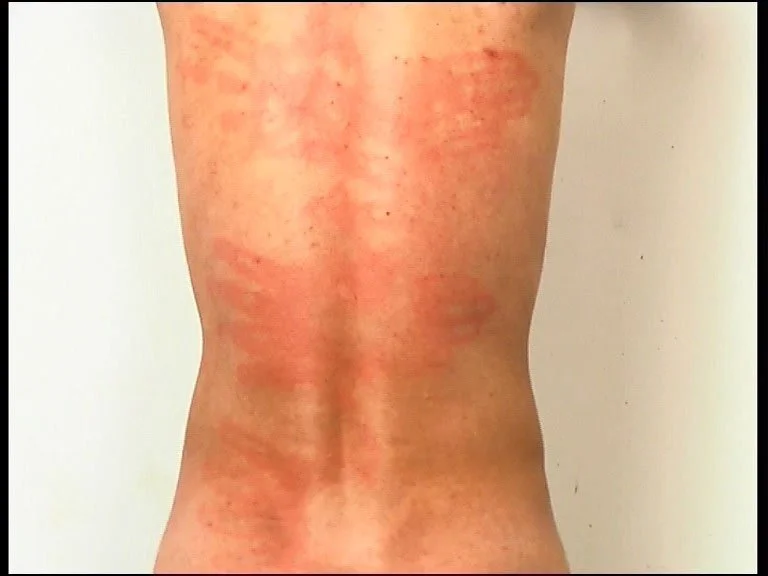
Xu Zhen Rainbow 1998 Video 3'12
You trained at the Shanghai Arts & Crafts Institute and were making video work by 1998, showing at Venice by 2001 in your early twenties. What did you actually want to be before any of that happened?
Before all of that, I thought that if I could keep making art for the rest of my life, that would probably be enough to constitute my whole life.
Was "artist" even the plan, or did it happen to you? What's the story?
When I was very young, my kindergarten teacher told my parents that I had a talent for art. So in a way, things simply unfolded from there. And they have continued that way until today.
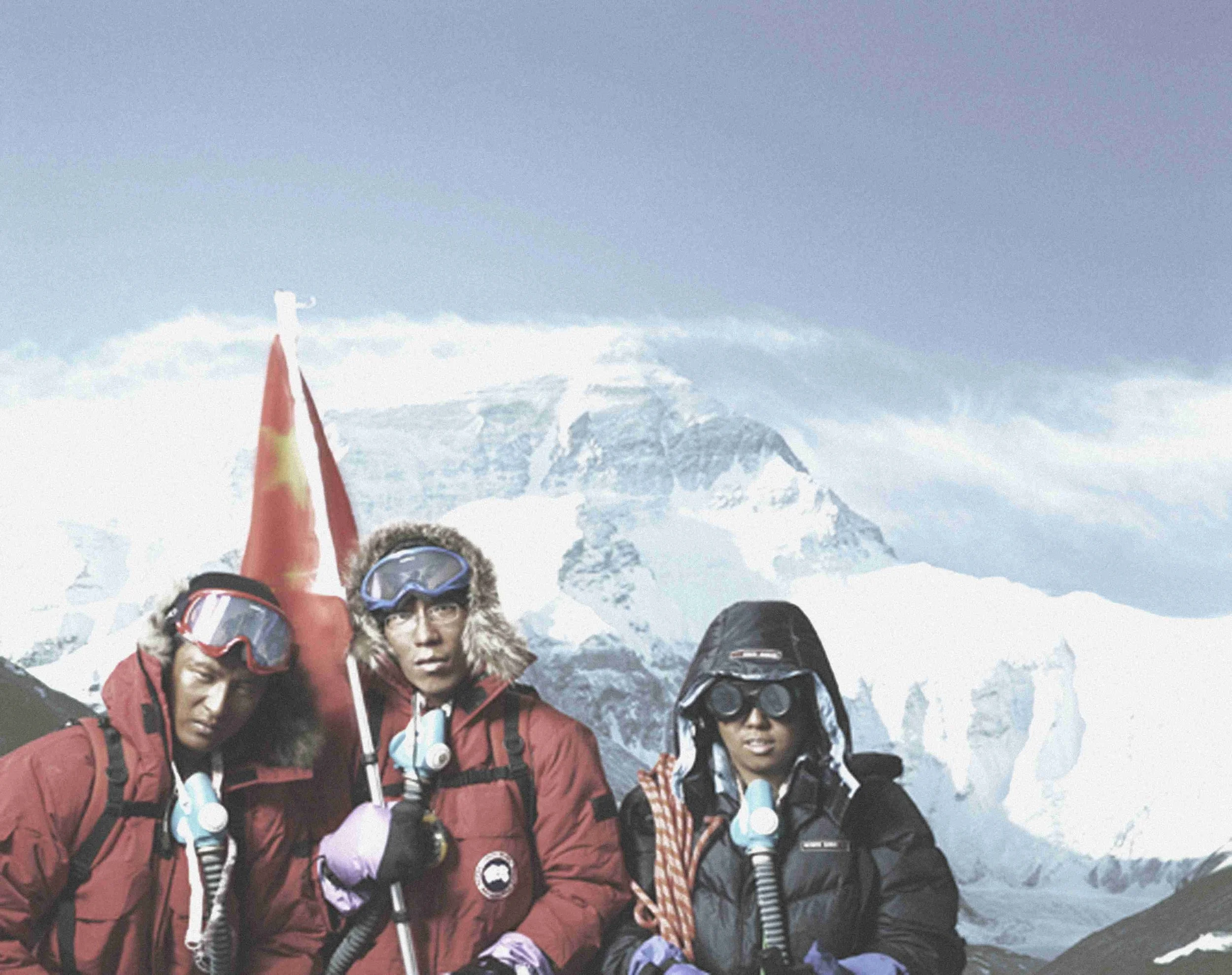
8848-1.86
2005 Single channel video 8’11''
Rainbow, 1998: a whipped, reddening back, the hand doing it erased from the frame. Watching that footage now, decades later, does it still feel like your work, or like something a much younger person made that you're no longer fully responsible for?
Artists do not really repeat themselves. And in fact, they cannot. There is also something wonderful about that experience. When I look at Rainbow today, it almost feels like I am looking at someone else's work. At the same time, I cannot completely push it away from myself. I suppose I could also simply forget that version of myself altogether.
8848-1.86: sawing your own height off the summit of Everest and hauling it down. The Starving of Sudan restaging Kevin Carter's photograph with a real child and a mechanical vulture. Both trade on real risk, real discomfort. Looking back, is there one of these you'd stand behind completely, and one you've made peace with regretting?
I think interesting works often create in the viewer an impulse to want to do something similar themselves. Both of these works managed to do that. For me, even today, I would still stand behind both of them completely.
They share something very important. They do not occupy a moral high ground, and they do not claim to represent justice. They are concerned with something much more fundamental: a certain reality of human nature.
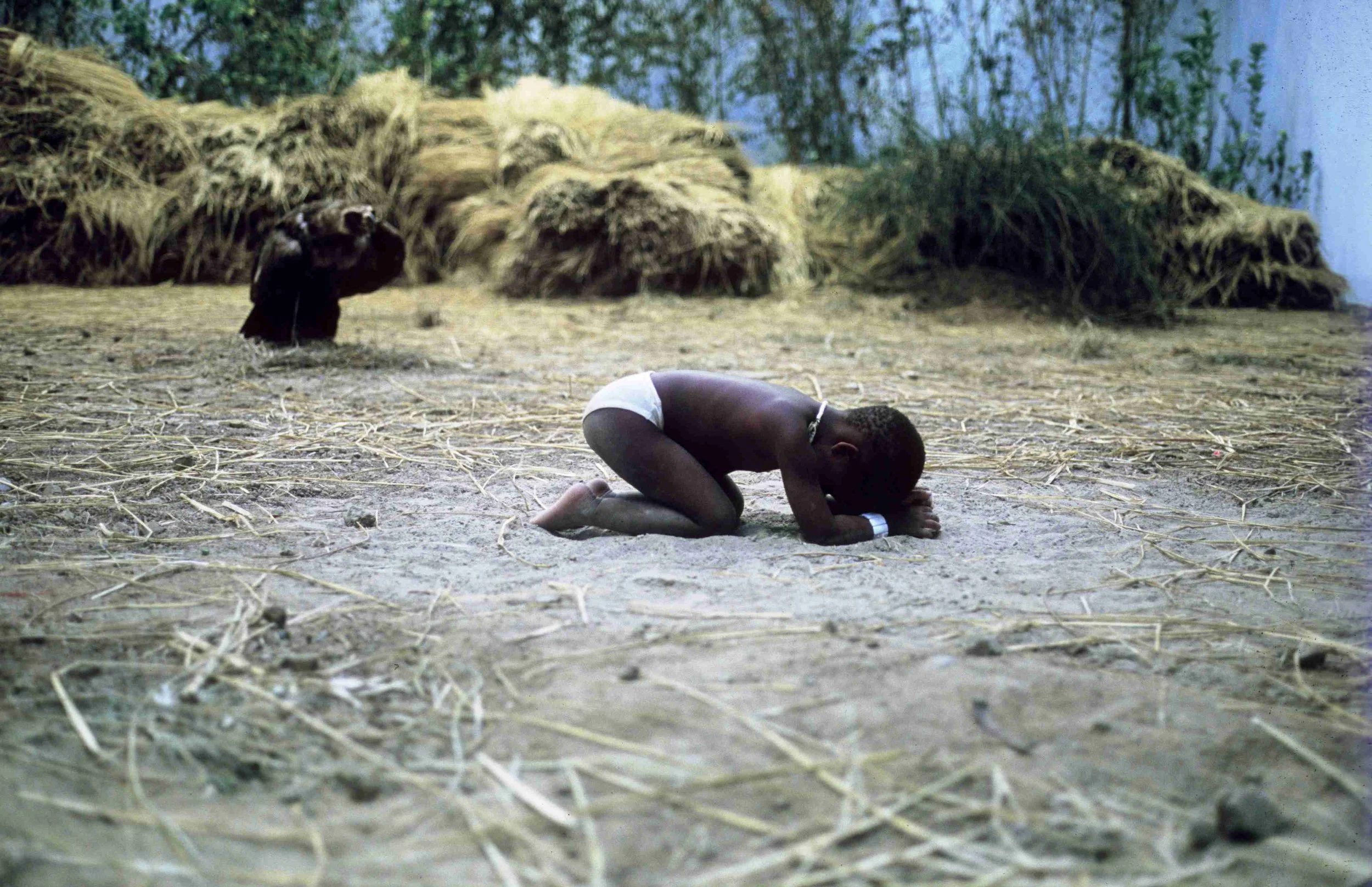
Starving of Sudan
2008 Installation, performance, video, photography
In 2009 you folded your own name into MadeIn Company, and by 2013 "Xu Zhen" had become a brand the company produces. What did it actually feel like, not conceptually, but day-to-day, the year you stopped being an individual artist and became part of an apparatus?
Around 2009, I very genuinely began to feel that I was one component within a larger system. Perhaps it was an illusion produced by the arrival of globalization. The individual had clearly already been deprived of something. So the question became: should this idea of the "individual" itself be adjusted? It became increasingly difficult to define what the self actually was. Or perhaps the very act of defining oneself had already become an obstacle to change and development.
Was establishing a brand a way of proving that individual will could become stronger than commercial logic? Which is potentially more harmful: capitalism or political correctness? Was the company-and-brand model a way of shorting contemporary culture, or going long on it? These were some of the questions behind it.
You won China's top contemporary art prize in your mid-twenties, before most of what you're known for existed. Did that early validation give you room to take bigger risks afterward, or did it raise the cost of failing in public?
Yes, it gave me certain experiences. For example, I began to think: perhaps I really am some kind of genius. You become very confident. At the same time, that confidence also attracts doubt and resistance from the outside.
Eventually I realized that I actually enjoyed the distance created by being misunderstood. Over time, I came to see that this distance can protect artistic practice. When you look at things over a longer period of time, perhaps the desire to be understood is itself a kind of psychological illness.
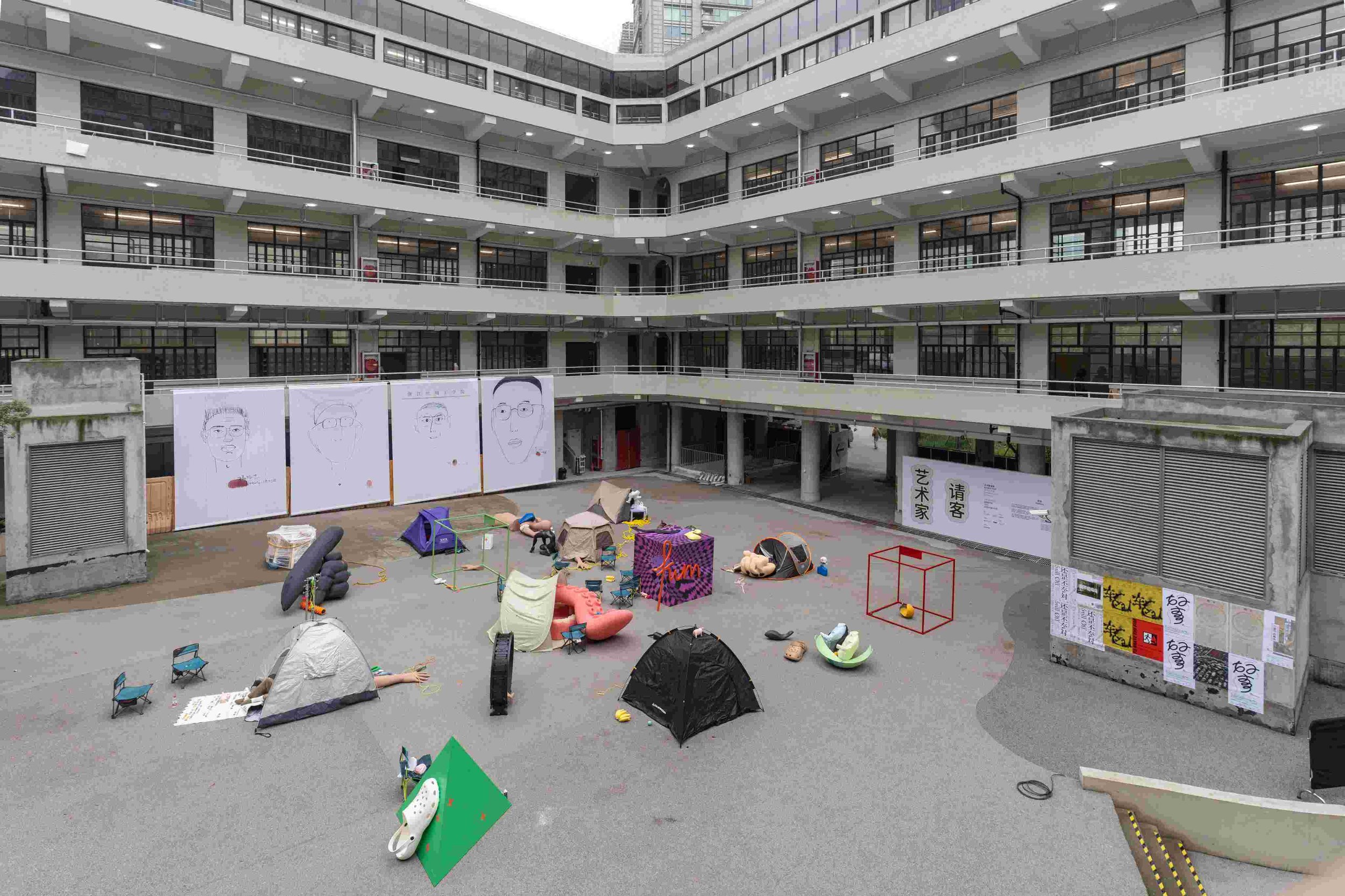
“Artists Treat” is a contemporary art project initiated by Xu Zhen in 2025, curated by Xu Zhen, organized by HOL, and held at the former site of Lagena Primary School in Shanghai’s Xintiandi district.
After decades of factory production, robotics, video, and performance, you picked up ink and silk, a medium that punishes mistakes and can't be redone the way an installation can. What actually pulled you toward it?
Modernism created a particular conception of time built around the demand that one must constantly innovate. Globalization intensified what I would call an anxiety of contemporaneity. What attracted me to Chinese painting was the possibility that the entire cultural system behind it could dissolve or counteract that kind of anxiety.
For example, Chinese painting contains a nonlinear conception of time, a view of nature shaped by the unity of human beings and the natural world, and an emphasis on transformation rather than innovation. The purpose of my new work is not to innovate within a traditional medium. I am trying to treat Chinese painting as a way of thinking and perceiving.
Was there a specific place, painting, or moment, not just a concept, that actually pulled you toward it?
In 2023, I was developing a new body of work called the Drinks series. The basic idea was to transform a Greek Corinthian column into a drinking straw and insert it into objects belonging to other civilizations.
At one point, I wanted to insert this Greek-column straw into a hole in a Chinese scholar's rock. I noticed that Chinese painting contains many depictions of scholar's rocks, so I began experimenting with using traditional Chinese painting techniques to represent this idea. That process opened up my interest in and research into Chinese painting.

“Xu Zhen: Ecosystem as Medium” was held at the Museum of Contemporary Art and Planning Exhibition (MOCAPE) in Shenzhen in 2024 and curated by Wang Yamin.
Your recent landscape scrolls paint the earth from a satellite's-eye altitude, a view no human eye has ever had unassisted, using a technique built on the wandering, embodied gaze of the classical literati painter. Do you feel closer to the earth when you're making these, or further from it?
What particularly interests me in these works is that, as technology develops, satellites give us increasingly detailed and precise knowledge of the Earth. That constantly intensifies our desire to control the world.
Chinese painting, however, contains a quality of xieyi, a kind of expressive suggestiveness or deliberate indeterminacy, which offers a form of ambiguity that is completely different from reality as defined by precision. It creates another kind of imagination, one that operates differently from "control" and "accuracy." For me, this becomes another way of understanding the Earth and the world.
Going to Tibet to make this work, twenty years after you first engaged with it in 8848-1.86, what changed in how you saw the place, seeing it in person this time instead of staging a myth about it?
"Experience" and "imagination" together shape judgment. Both the 2005 work 8848-1.86 and the works using Chinese painting that I exhibited in Tibet in 2024, which explored cultural mobility, were attempts to disturb that judgment. Tibet is a particularly useful place for testing the supposed objectivity and morality of those judgments.
When I made 8848-1.86 in 2005, I was addressing the fragility and illusion inherent in human belief. With the Chinese painting exhibition in Tibet in 2024, I was addressing the absurdity of the ideologies hidden behind what we call "experience."
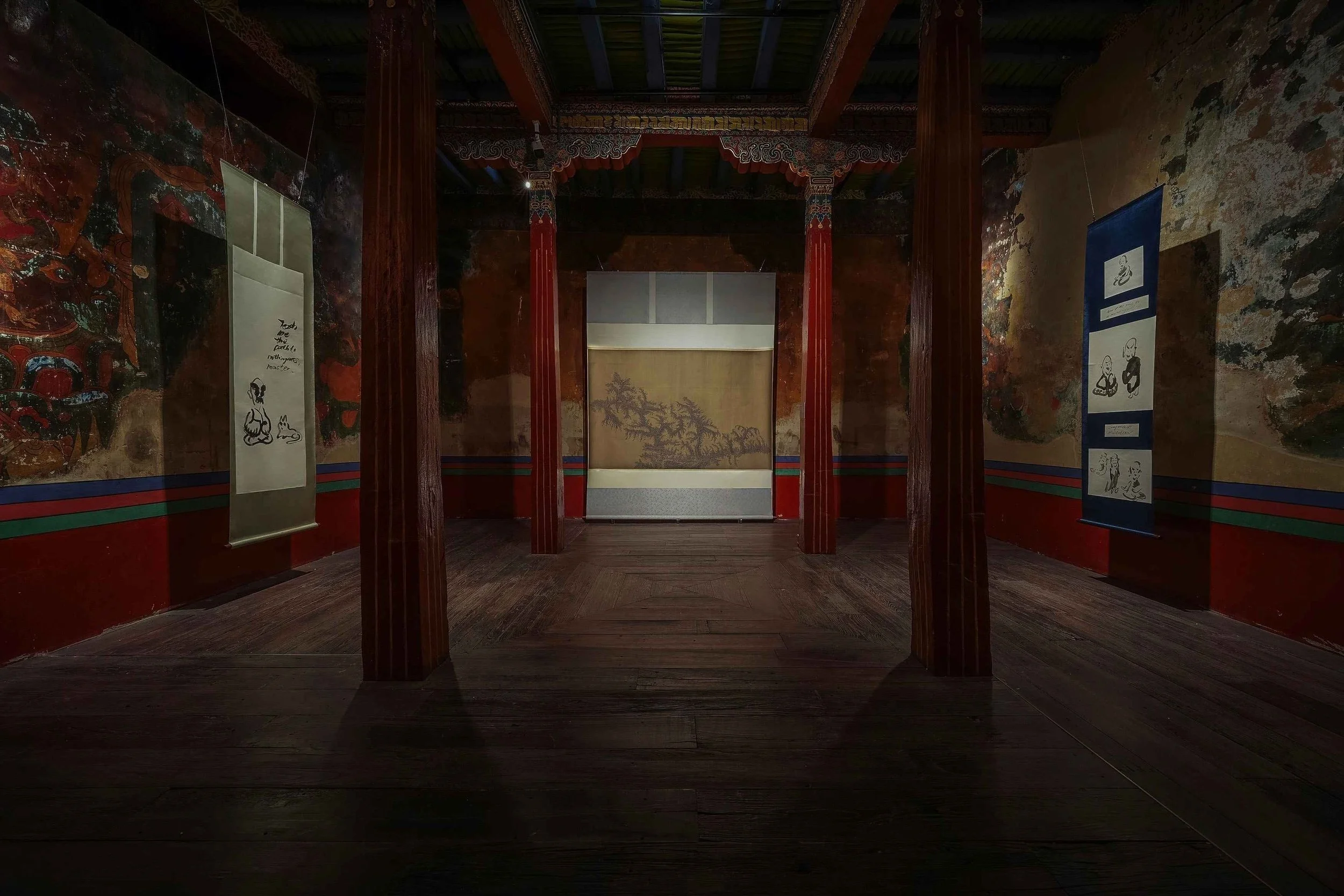
Xu Zhen: Patination by the Globe, Aura of Shan Shui, Jebum-gang Art Center, Lhasa, Tibet, 2024
Your recent meditation paintings are captioned with lines that sound like something you'd actually say out loud, wry, contemporary, almost teasing. Where do those lines come from, and do you count yourself in the joke?
Those phrases come from global news, political cartoons, and satirical images. They emerge from many different contexts and serve many different purposes.
Every day, in our lives and in our work, we occasionally feel that we have suddenly understood something. But who knows whether that realization is actually an awakening, or simply a form of self-consolation? So yes, making fun of myself is also a way of acknowledging the uncertainty of those thoughts.
This year you also launched a new platform, HOL, separate from your existing gallery and museum. What couldn't happen inside the structures you'd already built that made you want to start something new?
I began making art in 1997, and at the same time I also started organizing exhibitions and working with art institutions. Since then, I have continuously been involved in many kinds of activities beyond making my own work. I have always felt that an art ecosystem needs to renew itself periodically, because the environment, the people involved, and the reasons for doing things are constantly changing.
So in 2025, I started the new platform HOL. My hope is that it can become a more flexible institutional form, one capable of continuously changing within the reality of this new artificial intelligence era.
At the moment, it is still in its earliest stage. I am not completely certain what kind of institution it will eventually become. For now, HOL is still a process of experimentation.
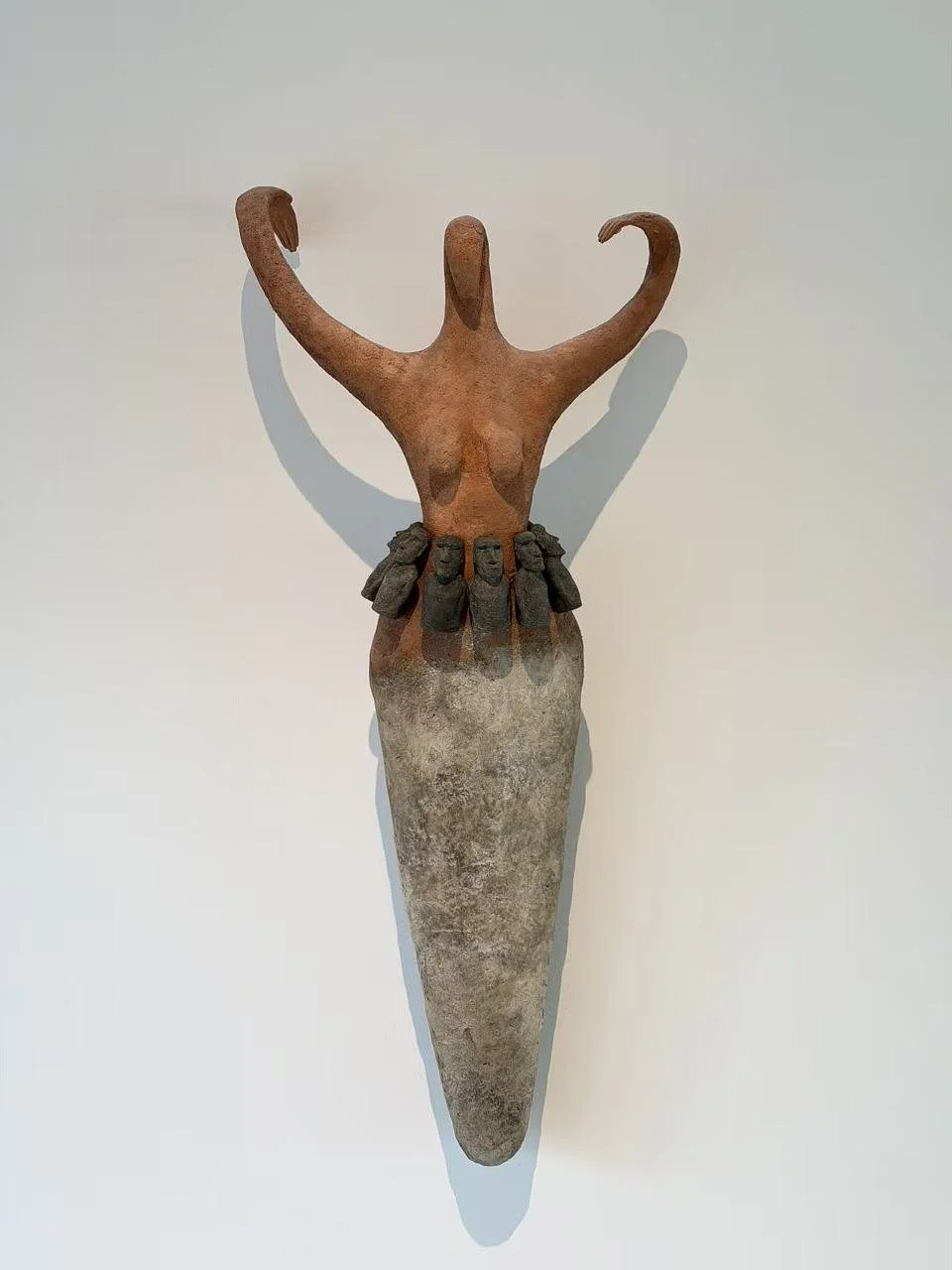
Xu Zhen
Eternity-Female Figure, Moai from Easter Island 2026
Mineral-based composite, resin, mineral pigments 142 x 65 x 40 cm
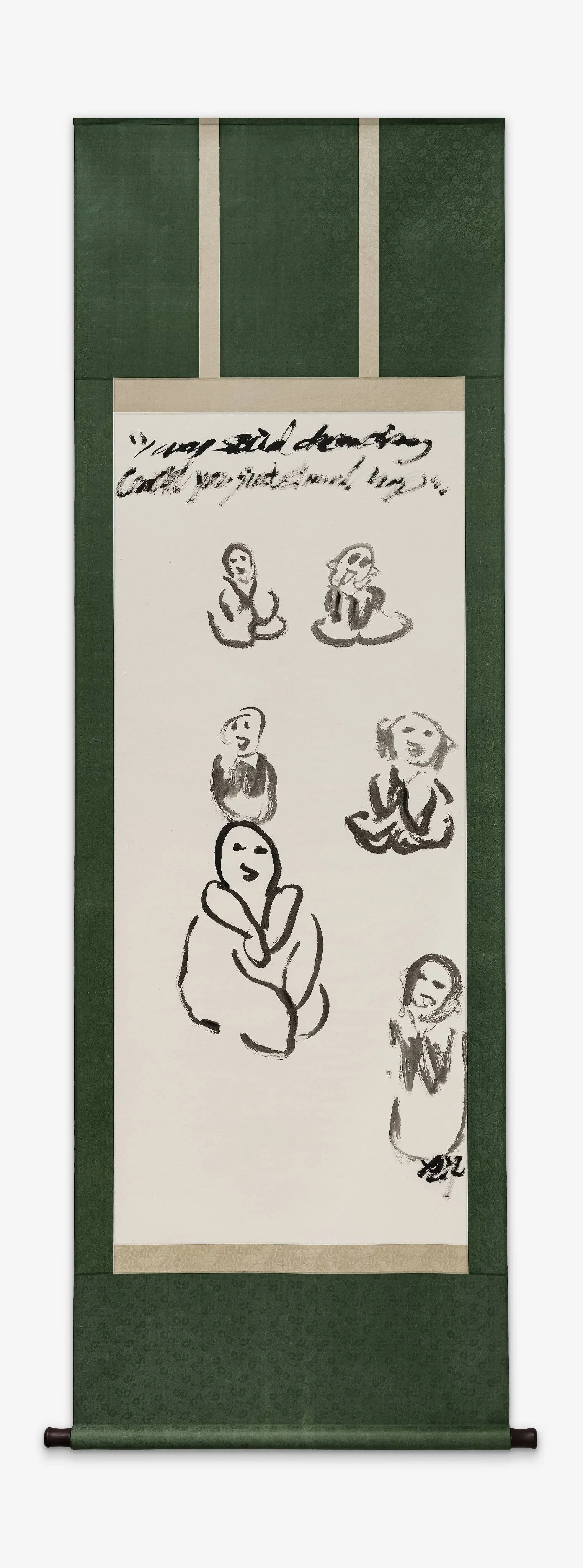
XuZhen
I was social distancing, until you just showed up. 2024
Ink on paper
(without scroll) 57 x 134 cm
(with scroll) 69.3 x210 cm
Lately you've spent as much time giving space to other artists, organizing screenings, curating sections of larger art events, and advising on a theatre production as making your own new work. Does that feed the work, or is it a break from it?
This connects to the previous question. Over time, I have gradually stopped separating the production of artworks from other kinds of art-related activity, curating, media, organization, institutional work, and so on.
Now I understand artistic practice more broadly, as a way of inhabiting an entire artistic ecology and one's own life. It does not need to be limited by conventional expectations or labels attached to the role of the artist. All of these activities can form a small ecology of my own, with each part supporting and complementing the others.
In your own curatorial statement for a recent painting exhibition, you asked whether painting today only exists to drift across social media. Have you answered that question for yourself yet?
I have always been curious about whether art, and painting in particular, can circulate through other systems. We genuinely need more diverse ways of looking. Very often, the way art exists and circulates determines the conditions under which art is made. This question has existed throughout my entire artistic career.
My recent Chinese painting works, for example, are particularly unsuited to social media because they operate according to a completely different conception of time and a different mode of looking. The MadeIn Art Museum that I established on Chongming Island in Shanghai was also concerned with this. It emphasized personal experience and tried to offer viewers a different rhythm of life.
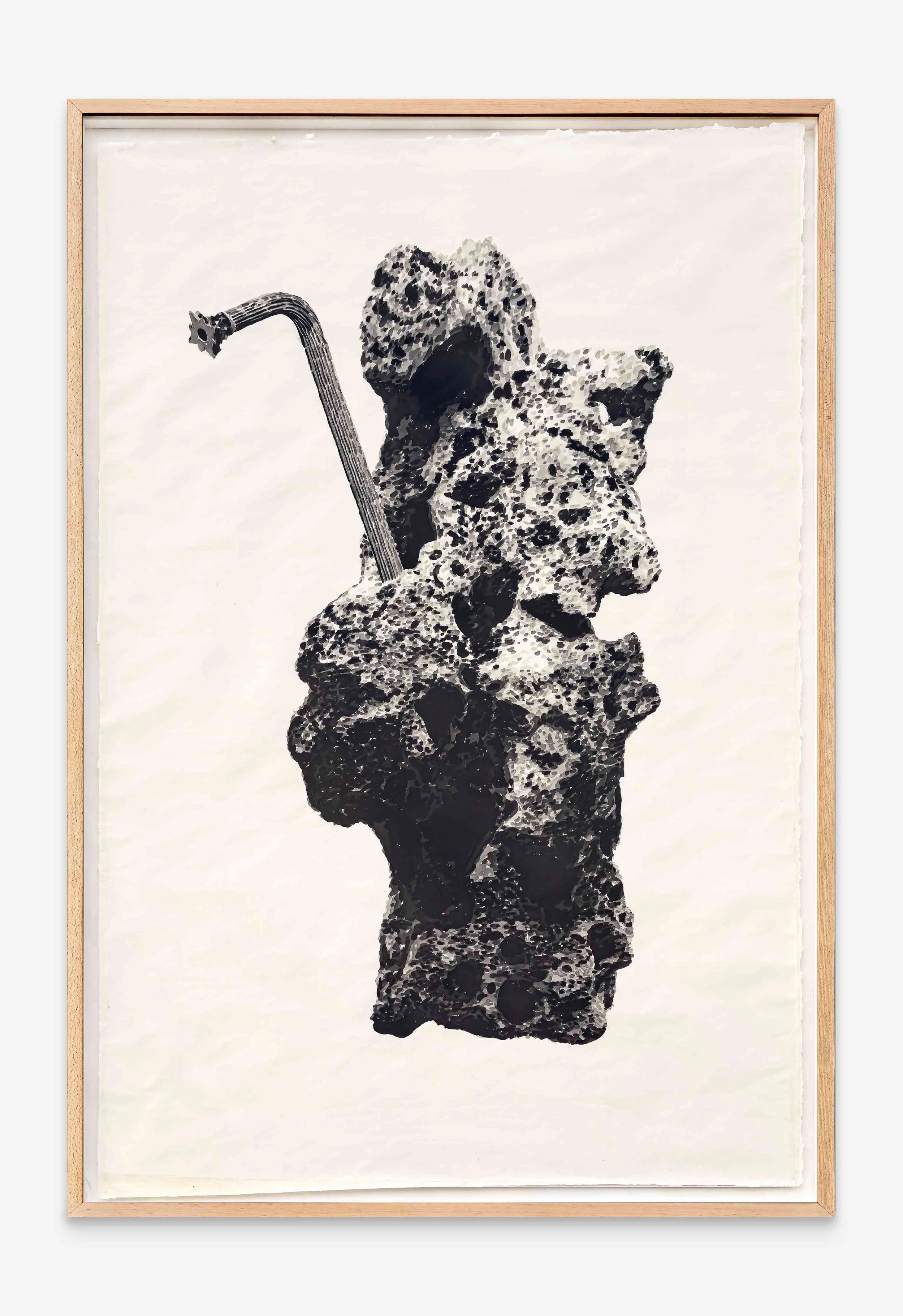
Shan Shui — Beverage (Twelve Chinese Zodiac Animals Taihu Rock in front of the Gate of Dispelling Clouds, Paiyun Dian, Summer Palace, Beijing)
2024
Ink on silk 150 x 225 cm
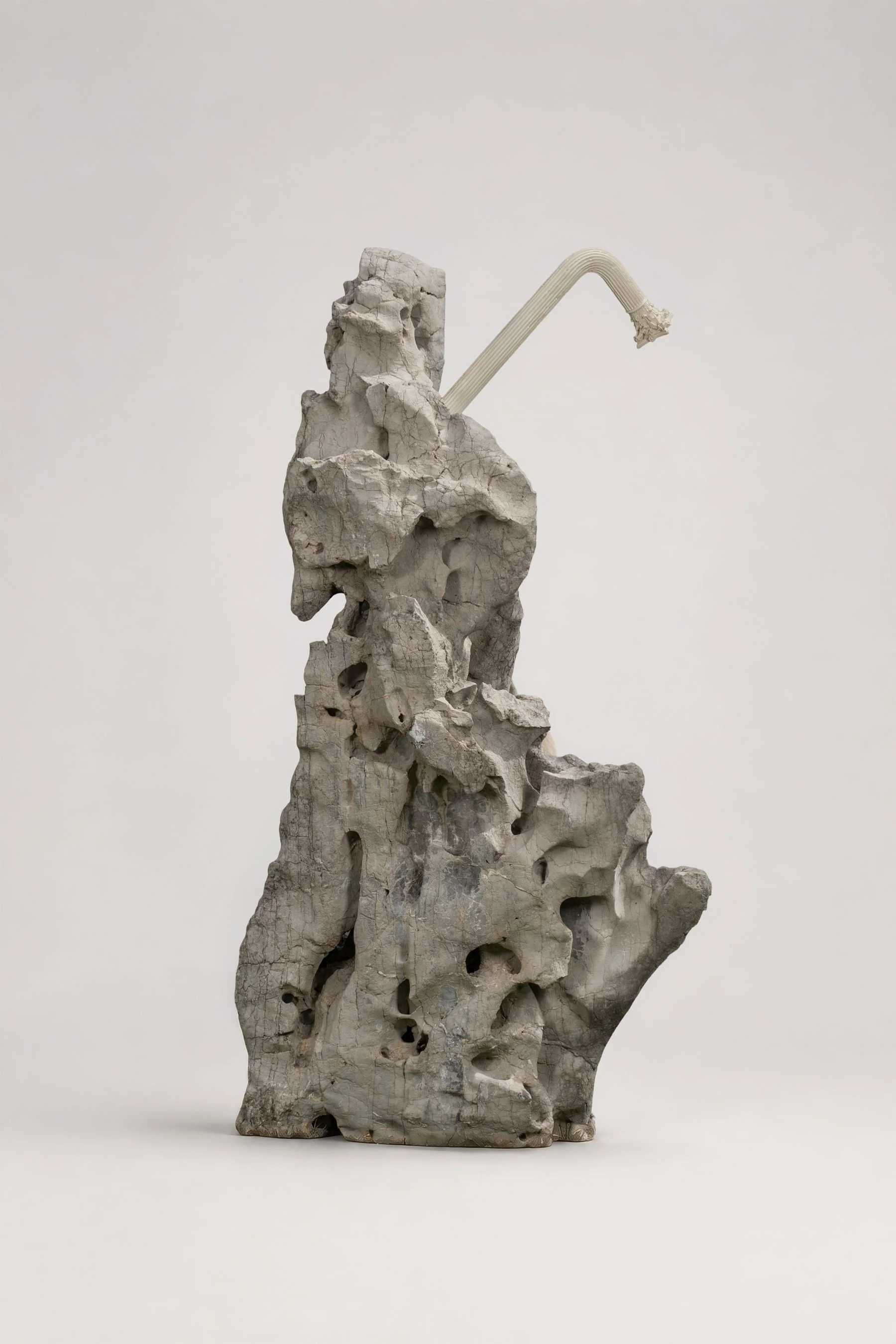
Beverage (Scholar’s Rock)
2026
Qing dynasty scholar’s rock, mixed media
If you had to name the one thing you believe now about art that you didn't believe at twenty, what would it be?
When I was twenty, I often worried that the next day I might suddenly have no inspiration. Today I am certain that I may have no inspiration tomorrow, but by the third day, it will definitely come back.
And is there a version of yourself from before any of this, before your first gallery, before the company, before the brand, that you still recognize?
Almost every day, I can still feel a familiar kind of artistic energy in myself, something very similar to what I had when I was twenty. I cannot really be bothered to decide whether there is a fundamental difference between that person and who I am now.
I also do not think that the earlier Xu Zhen somehow produced or inevitably led to the Xu Zhen of today. I prefer to think that perhaps it is possible to live out countless versions of Xu Zhen.
Art needs legends.
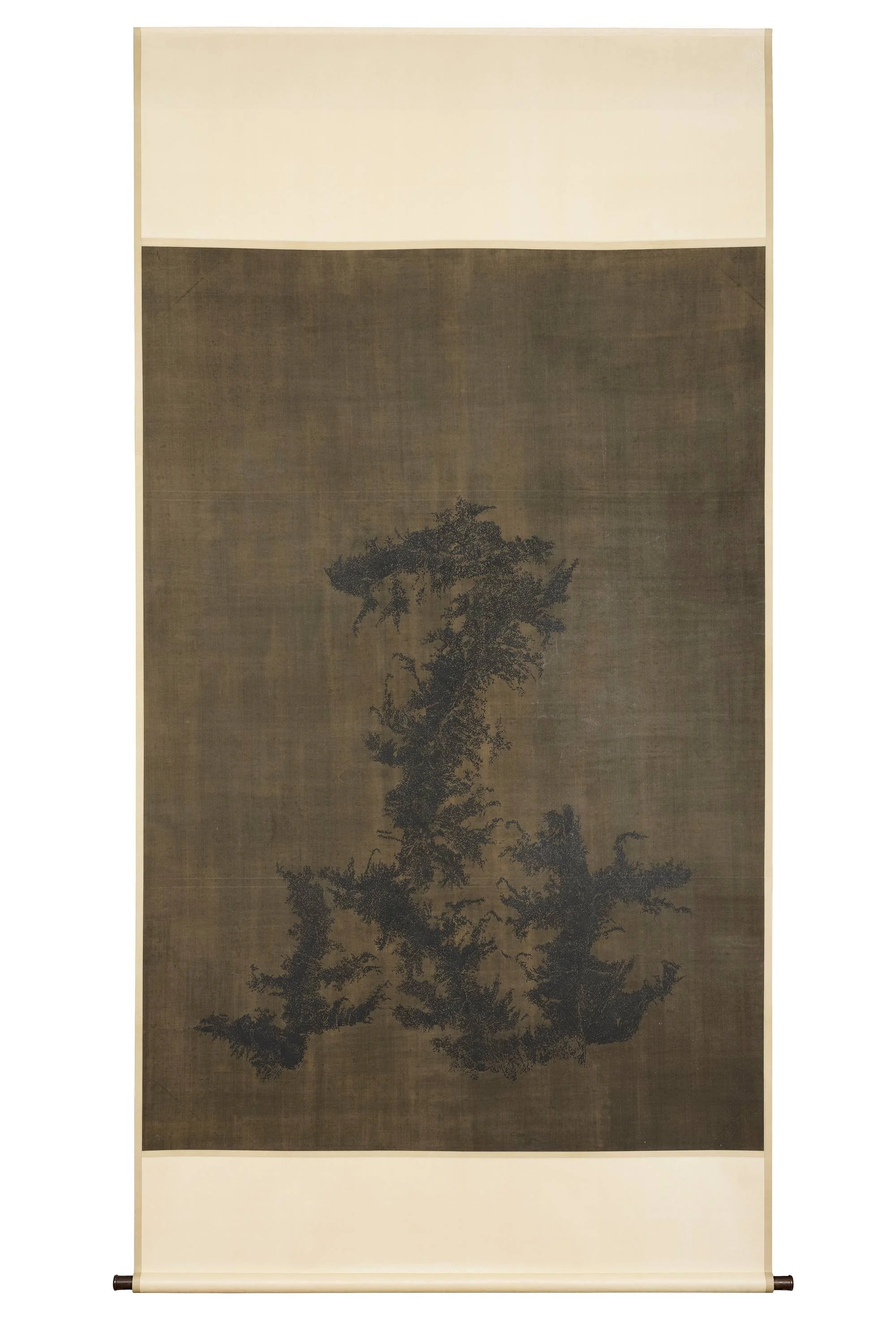
Xu Zhen
Scroll of the Bleak Autumn Wind (Altitude of view: 64.04 km) 2025
Ink on silk
249x173cm (image size)
350x189 cm (overall size)
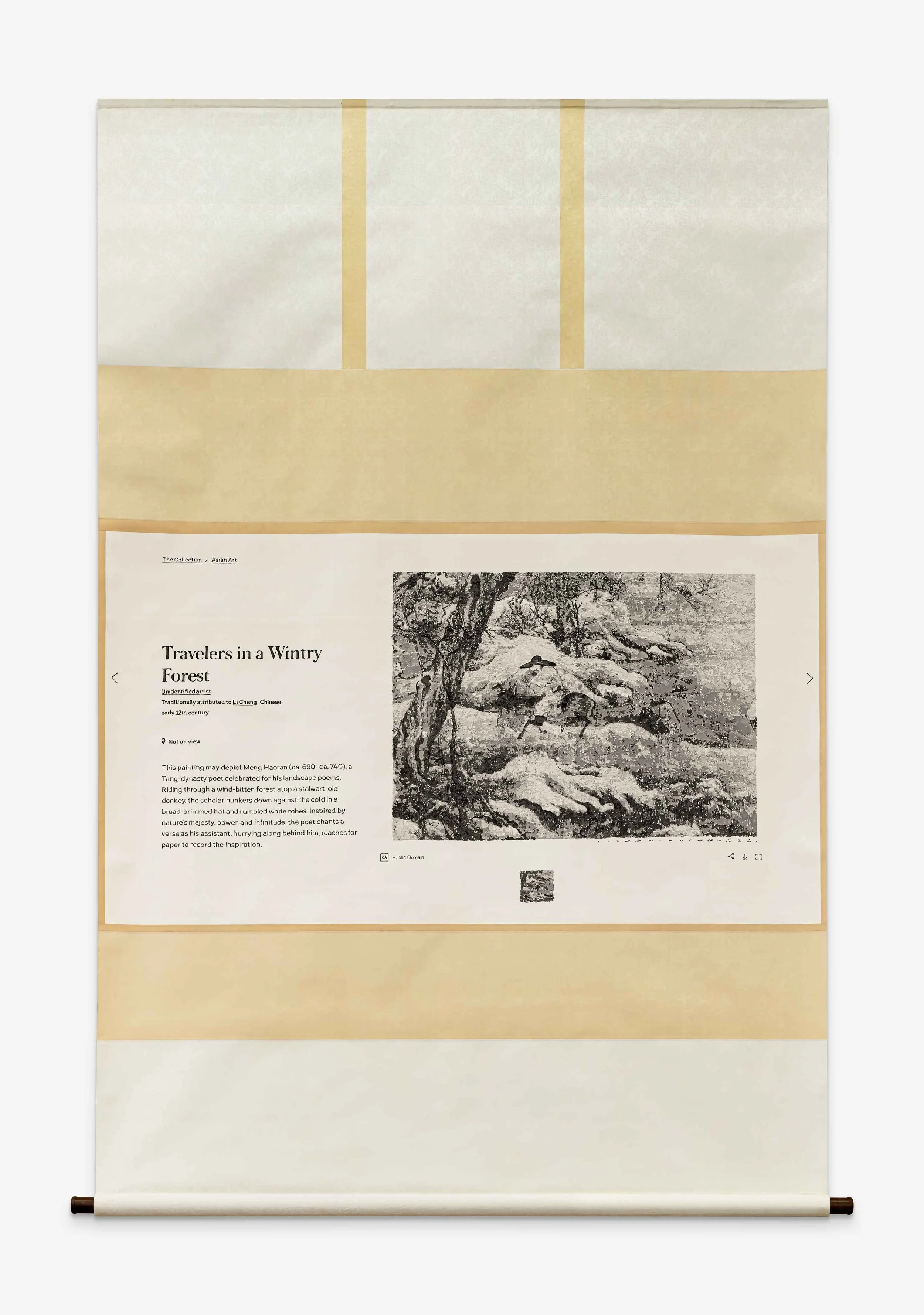
Interface – Travelers in a Wintry Forest 2024
Ink on silk
162 x 89 cm(without scroll) 166 x 248 cm(with scroll)
Interview by Jagrati Mahaver
What to read next