Ana Maria Caballero
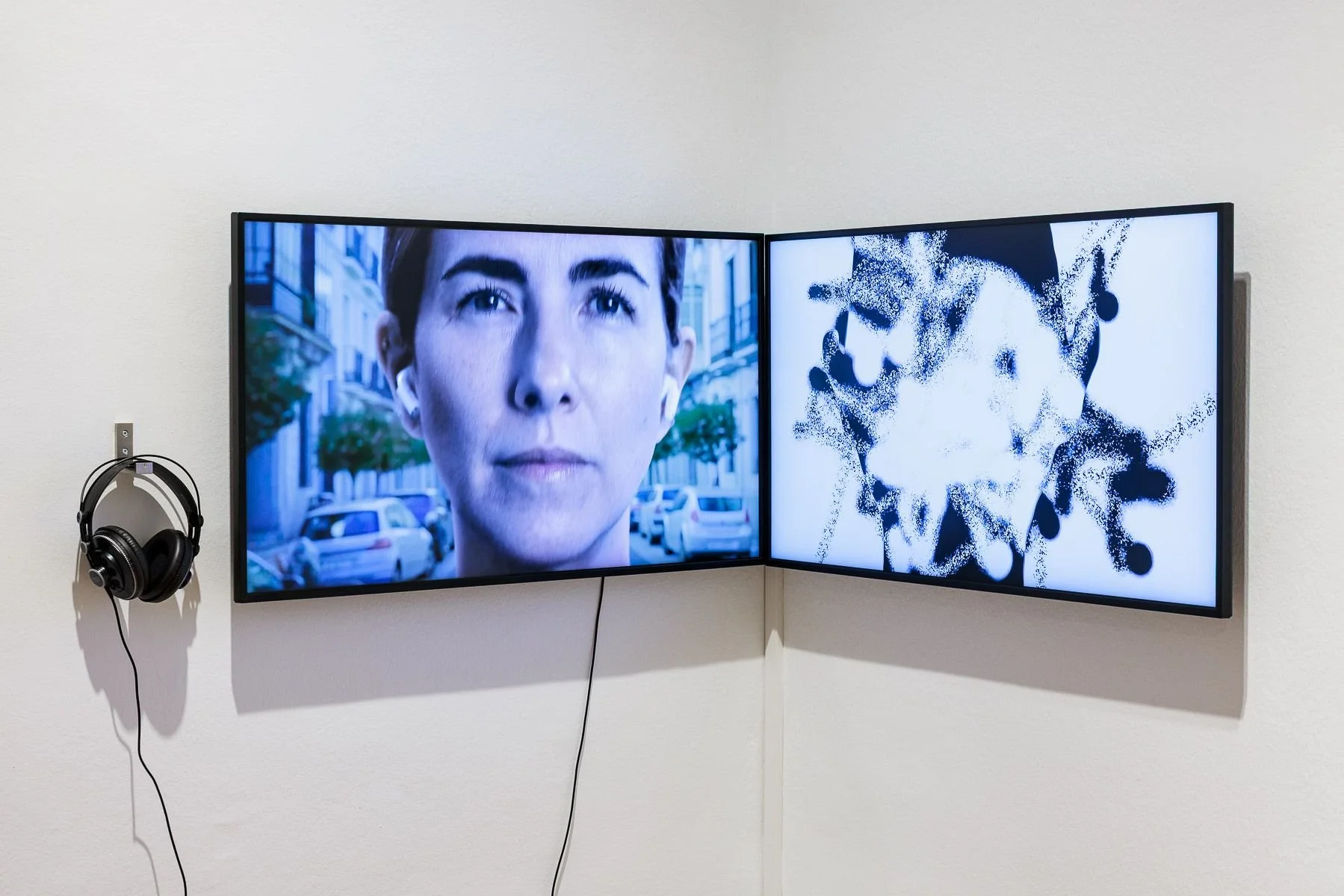
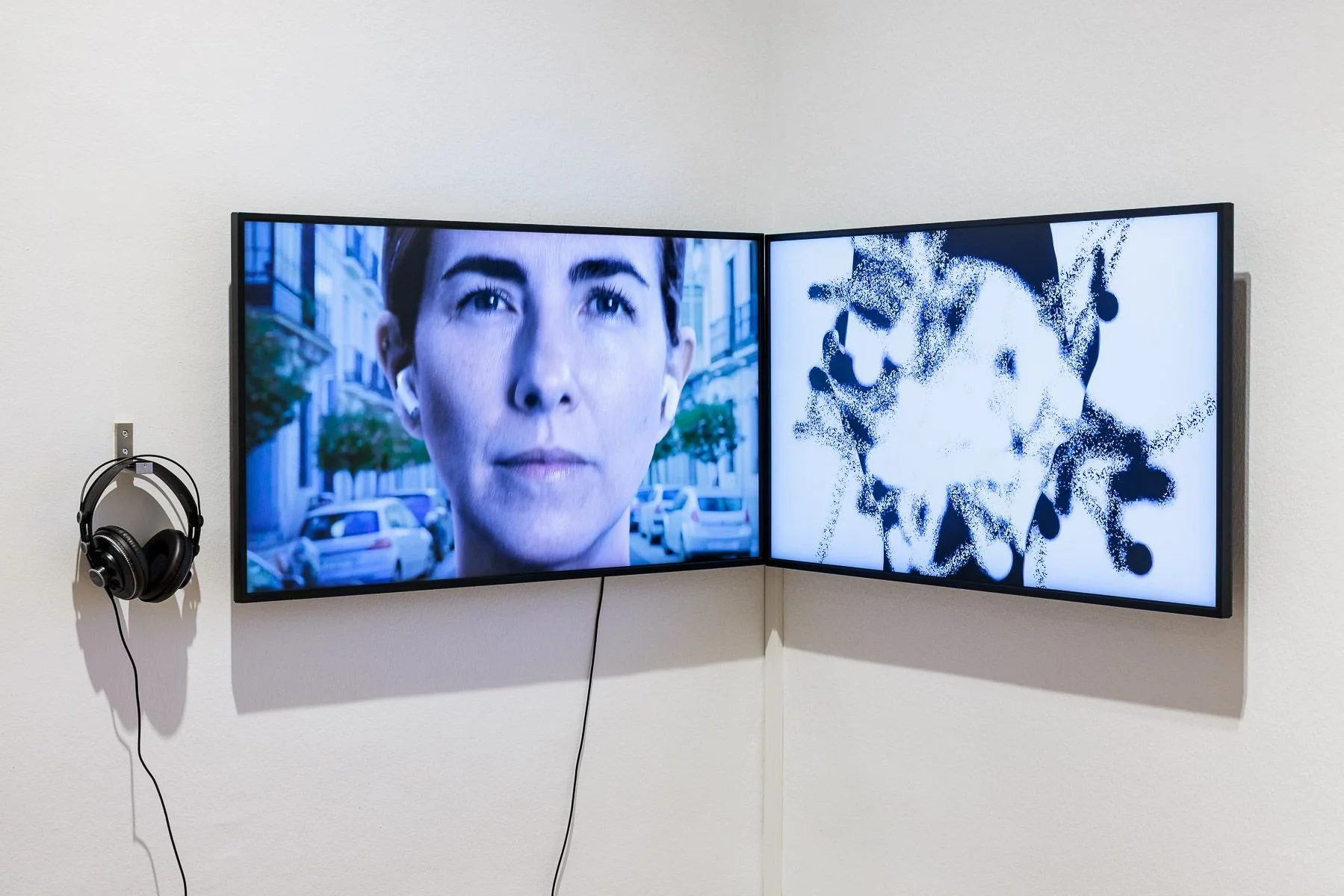
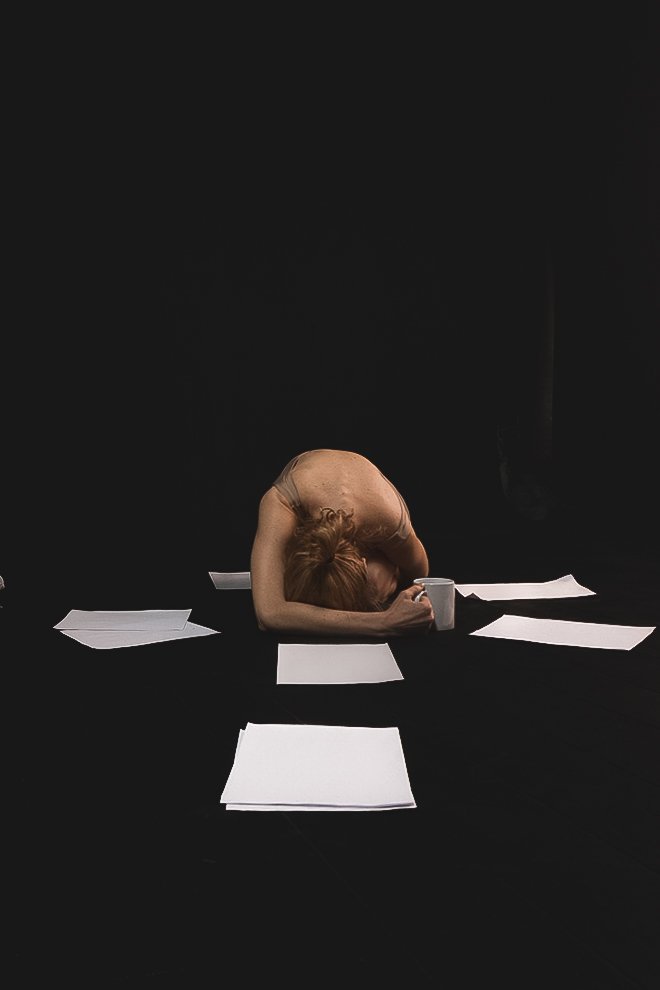
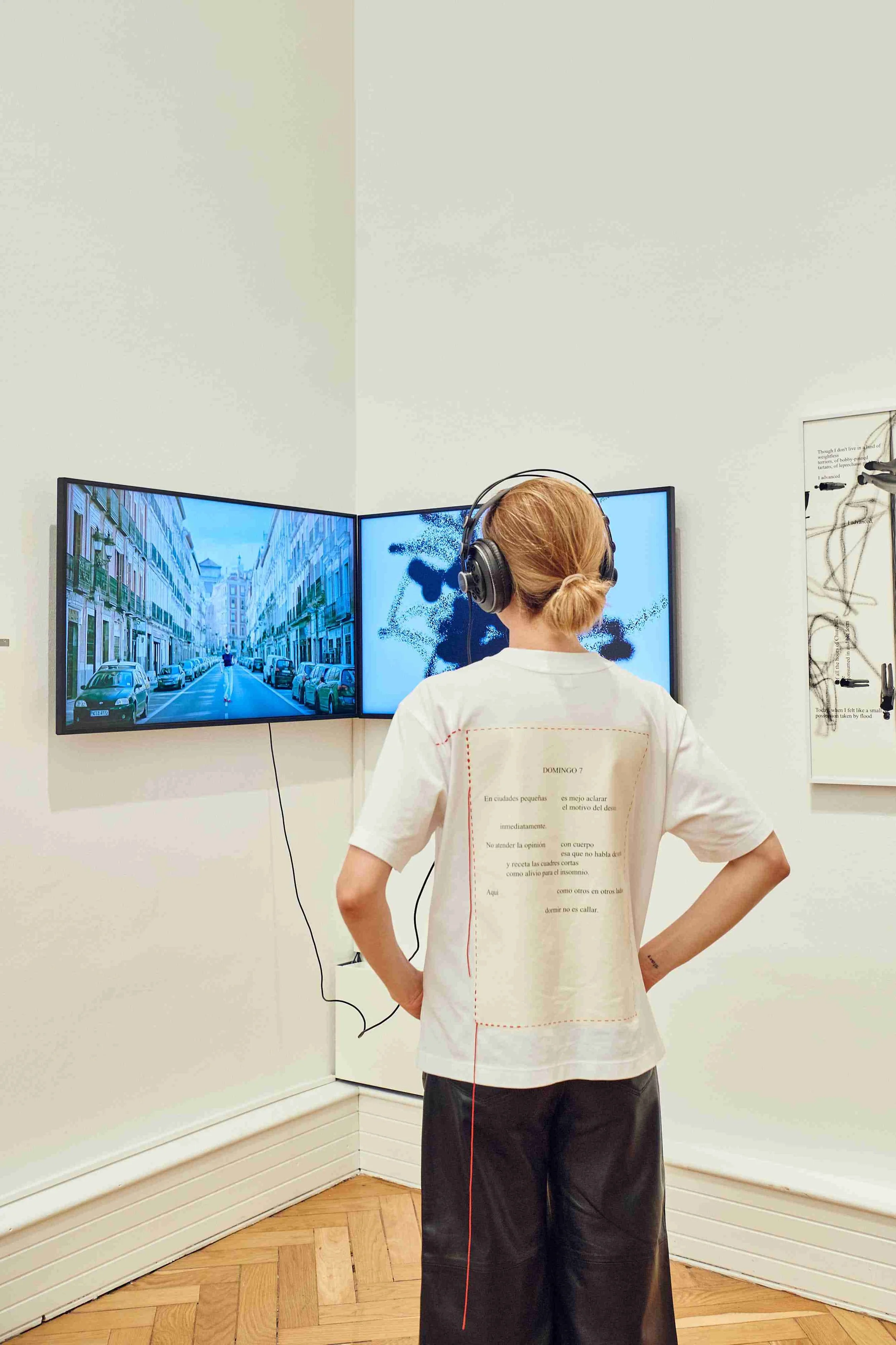
She has published seven books of poetry with an eighth forthcoming this year. She has also printed poems on fabric, hung them from trouser hangers, fitted them with security alarms and shown them at an art fair. The move off the page and on to the internet, web3 and the performative space began with what happened after a poem of hers appeared in Cream City Review magazine, so she could go beyond the silence of the literary journal.
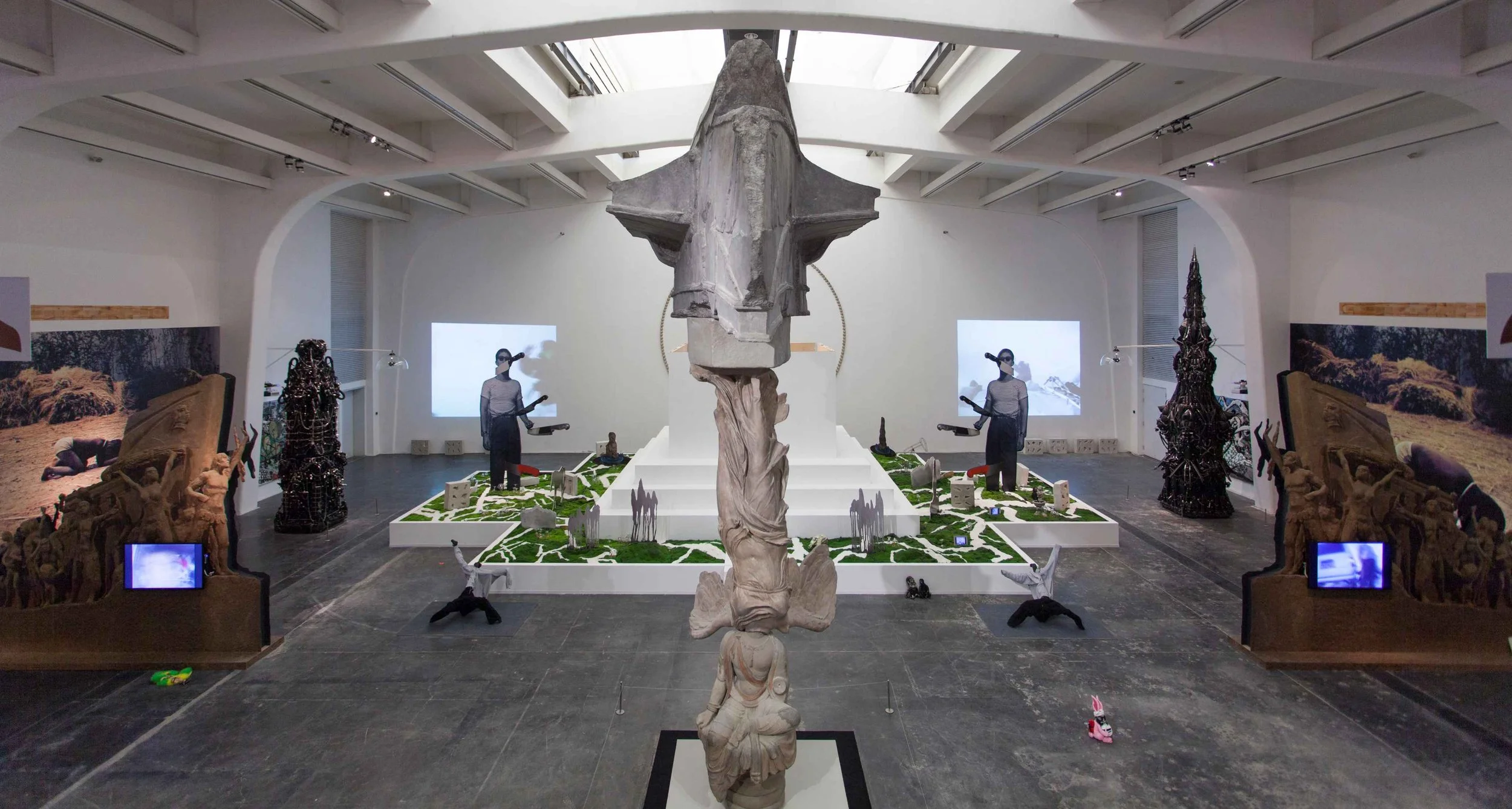
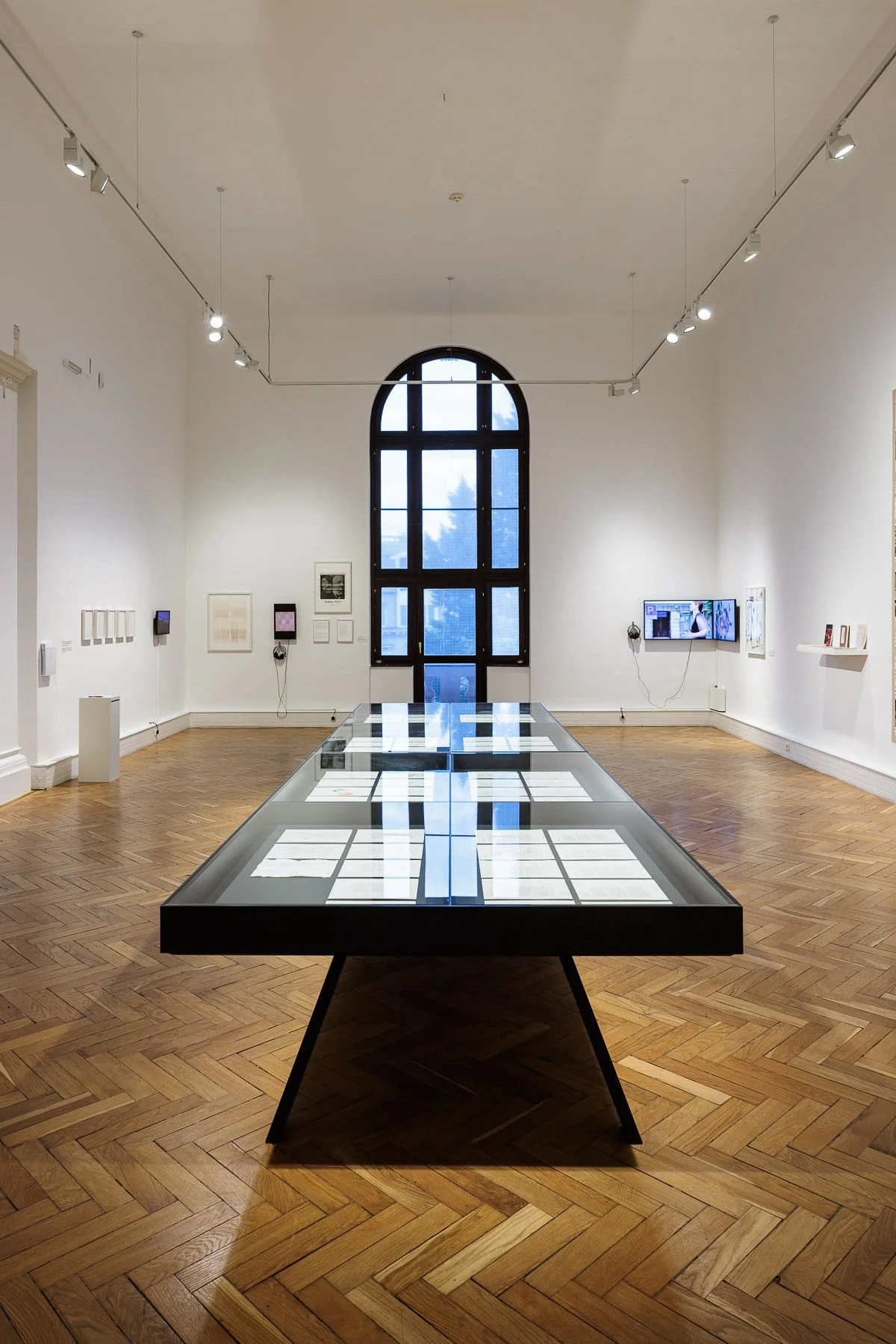
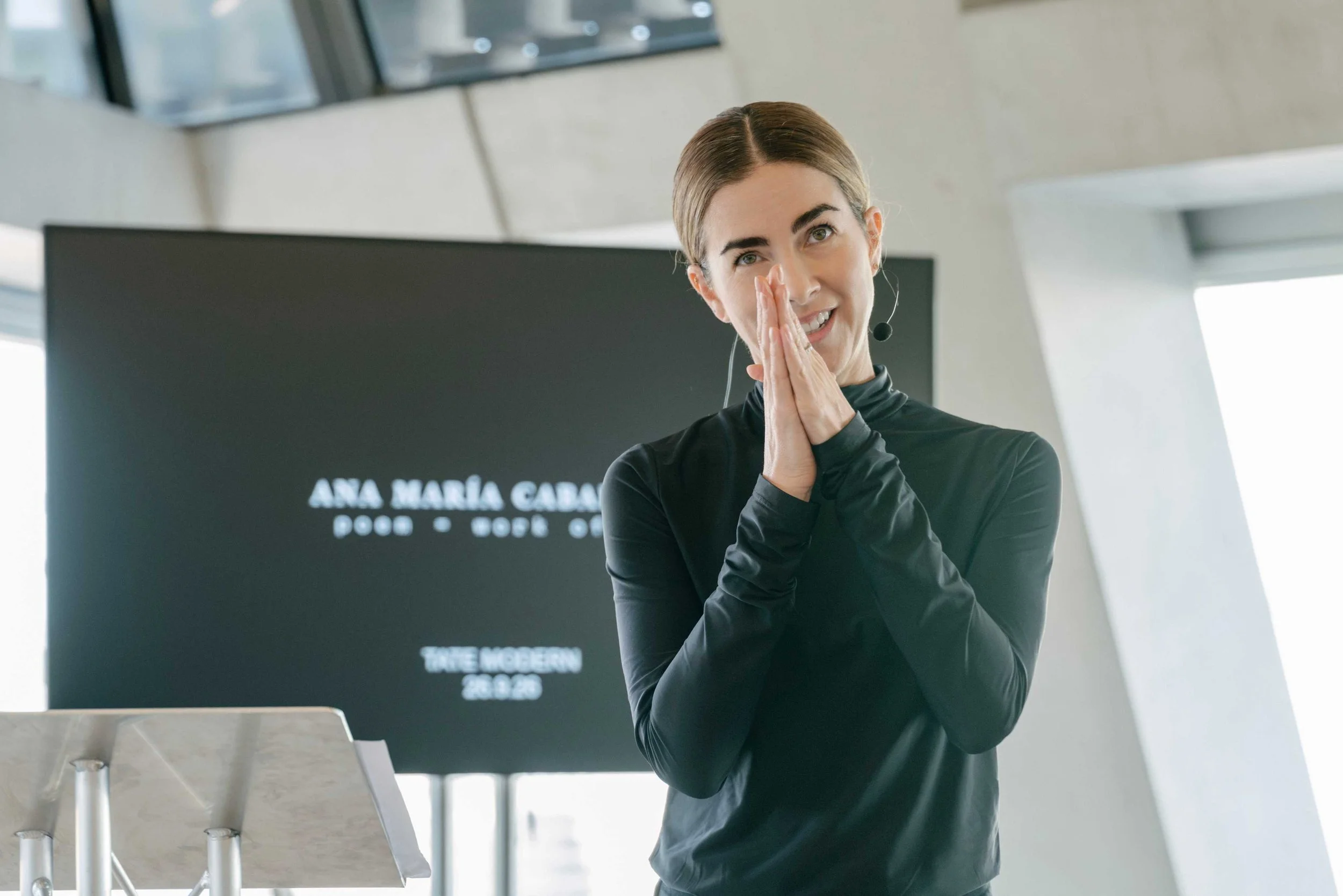
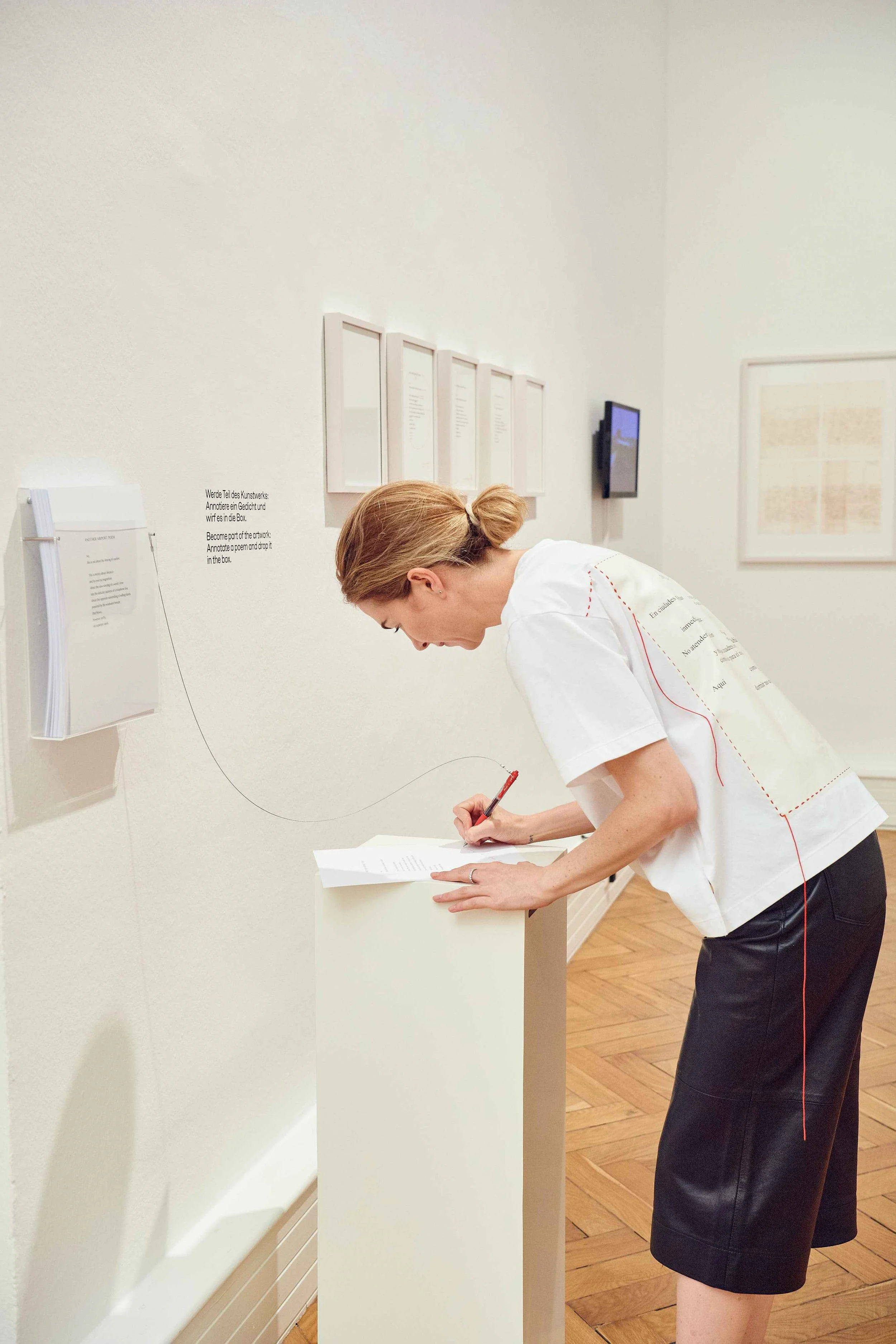
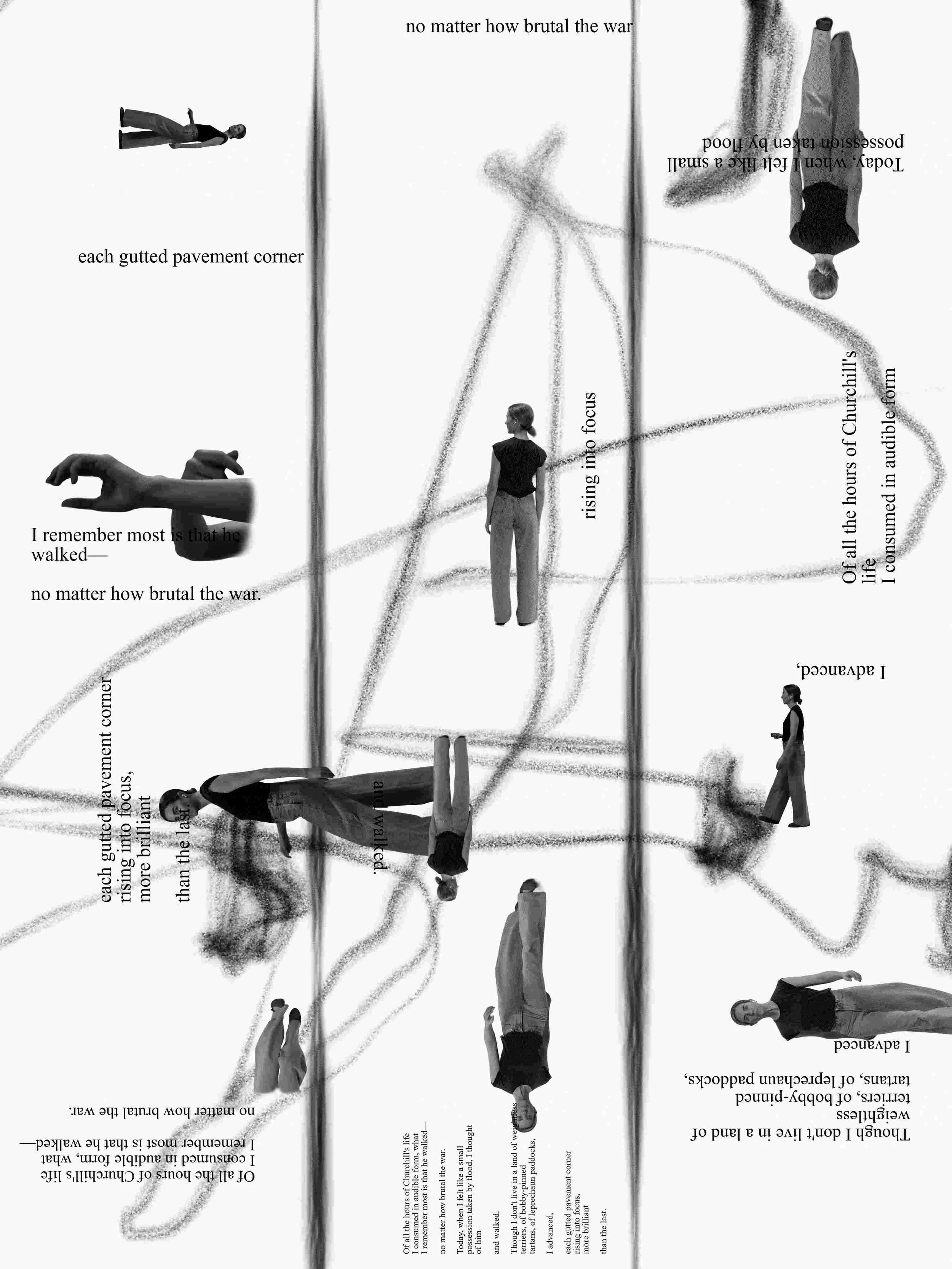
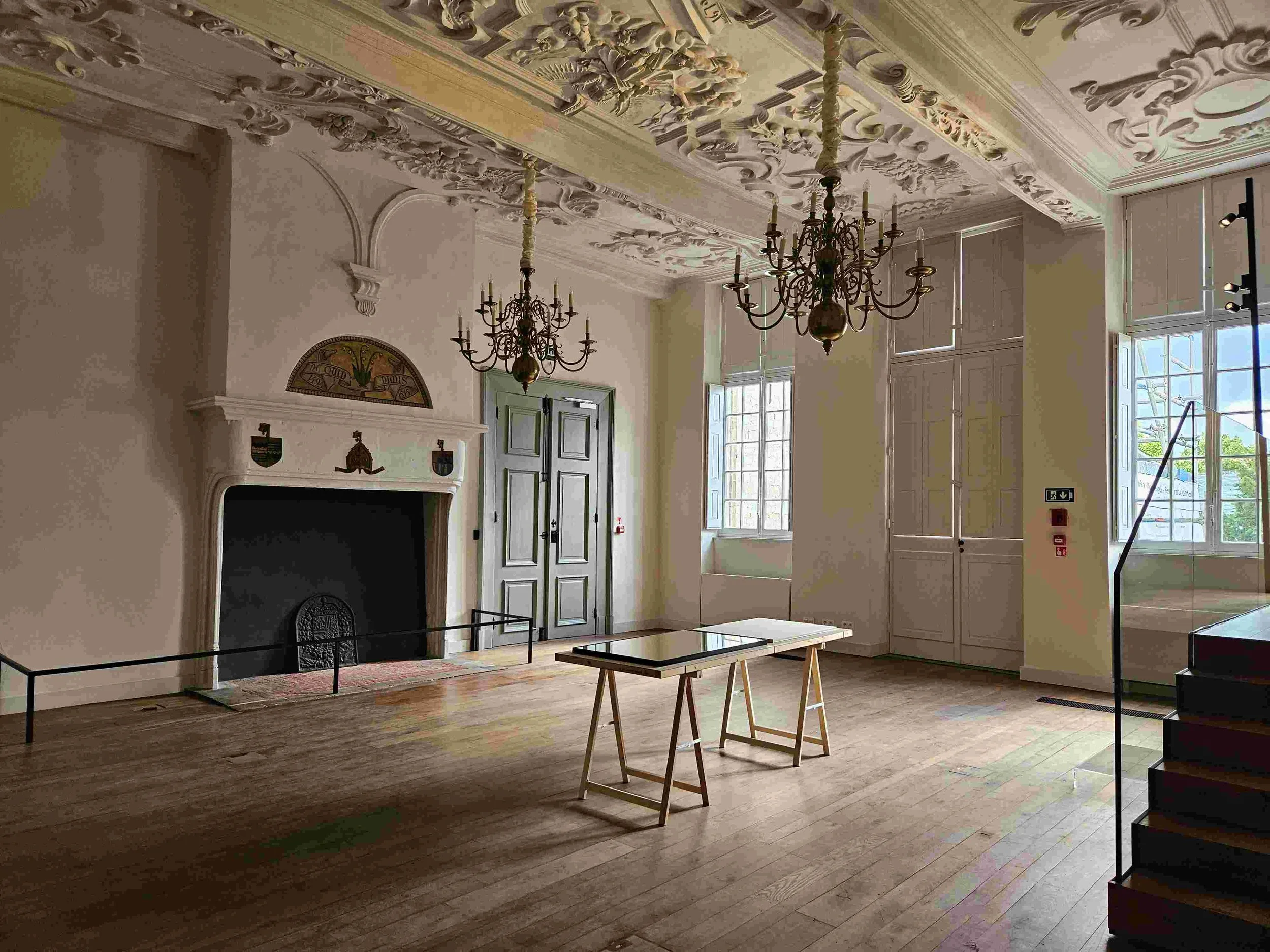
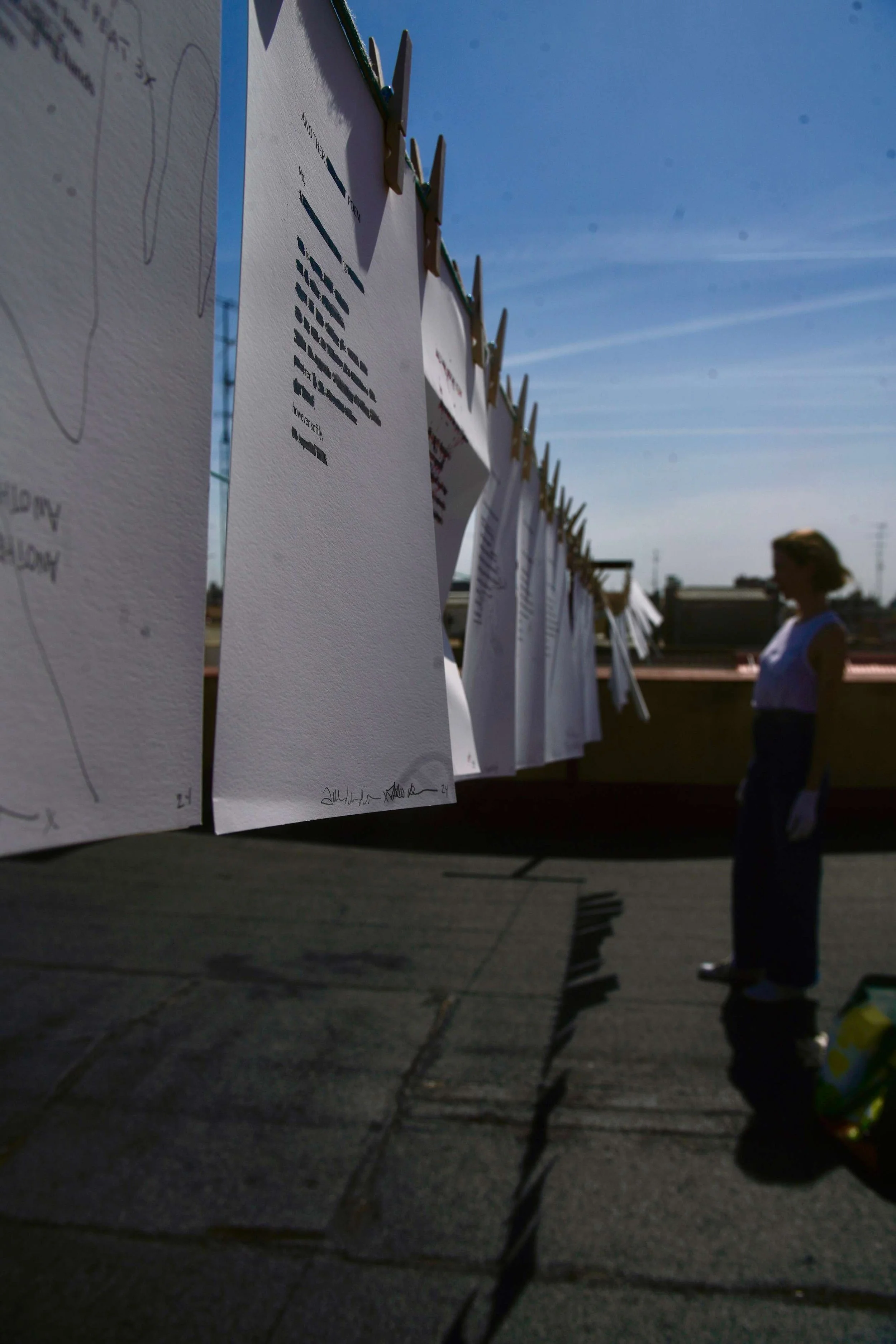
Read the Room, at the Francisco Carolinum in Linz until 7 February, is her first institutional retrospective. Curator Julia Staudach conceived it around Fifty Ways of Looking at a Poem, for which Caballero asked fifty readers annotated the same text.
Ahead of her exhibition, we spoke about what happens when language leaves the page, analogue generativity, and how humans have been flattening language for centuries.
Jeni Fulton: Seven books of poetry, an eighth due this year, and most of that time spent getting poems off the page and onto a wall. When did the page stop being enough?
Ana Maria Caballero: I am a poet and a novelist, and I have been taking my poetry beyond the page for years, out of an understanding of the limitations of the traditional writing establishment on one side, and on the other a strong feeling that poems are works of art and deserve to participate in the contemporary art world.
I am a child of the internet, so I had a blog where I shared my published work. That was the early 2000s. Then when social media came along I started digitising my poems into animations and putting them online. At least then my aunt would read them, or a family friend would say, hey, I read your poem.
I had a poem in Cream City Review, out of the University of Wisconsin, Milwaukee, a wonderful journal, and I felt so happy to finally be published in it, and then I also felt, wow, this is really quiet. It is really quiet. Who is actually engaging with this literature? As po
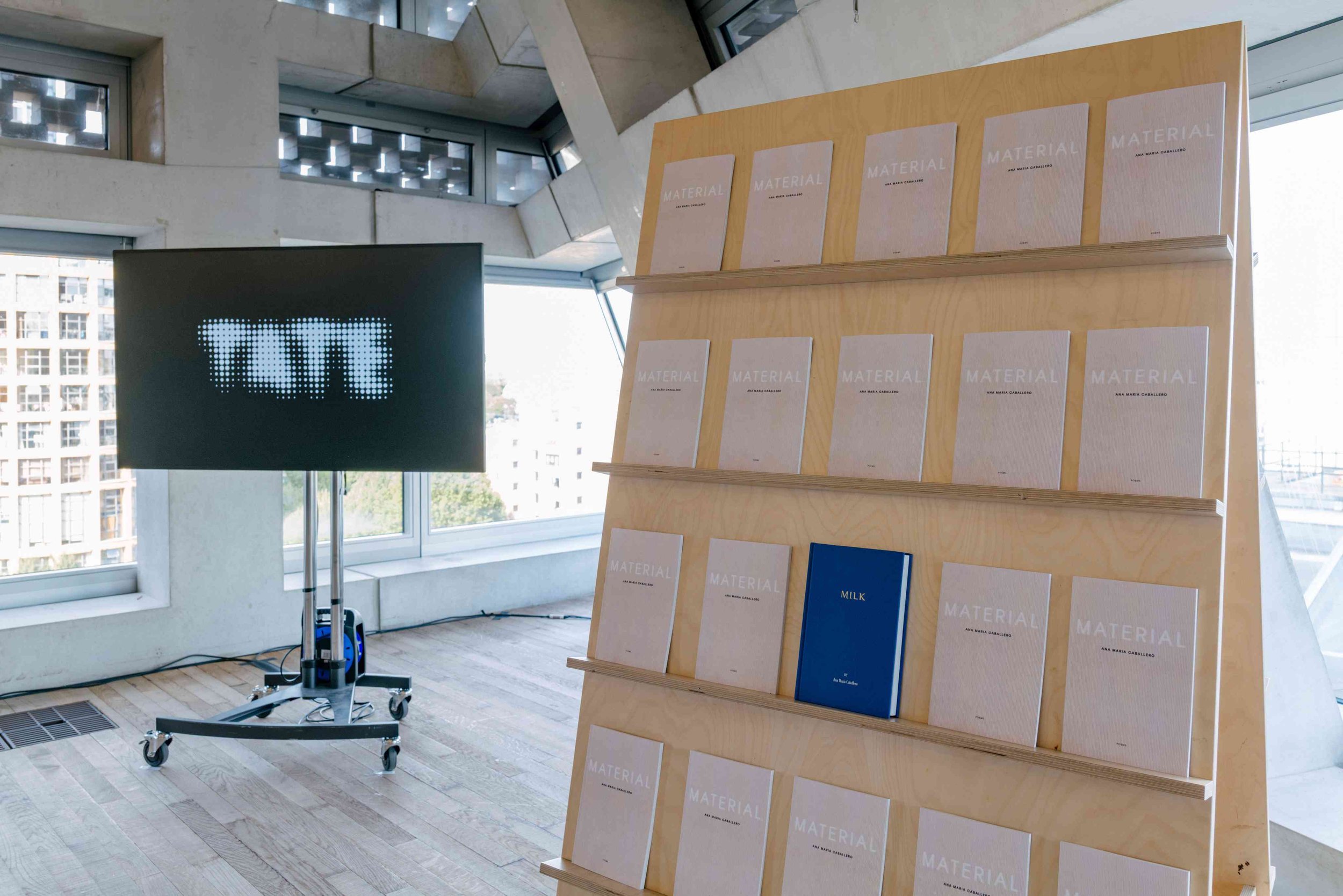
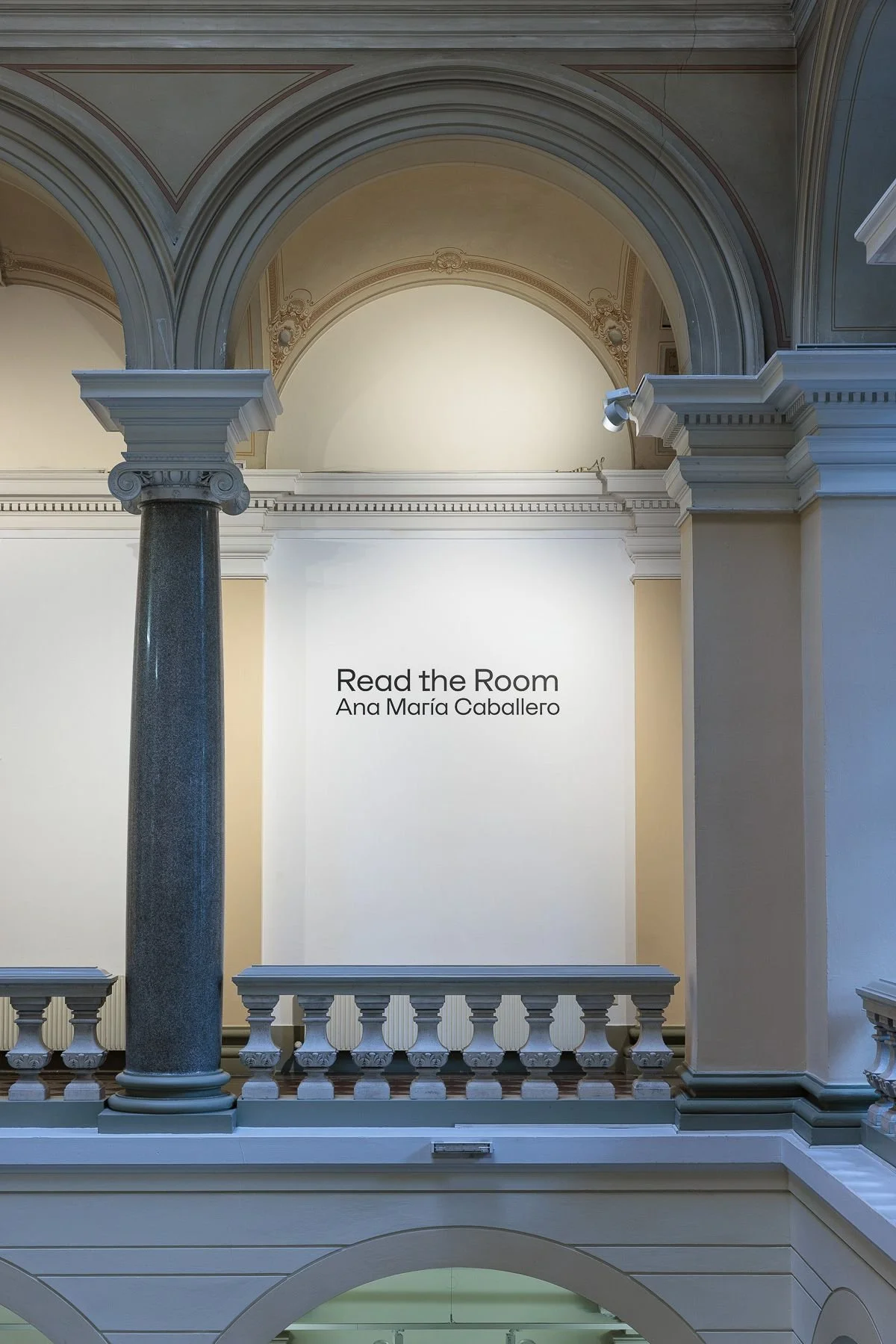
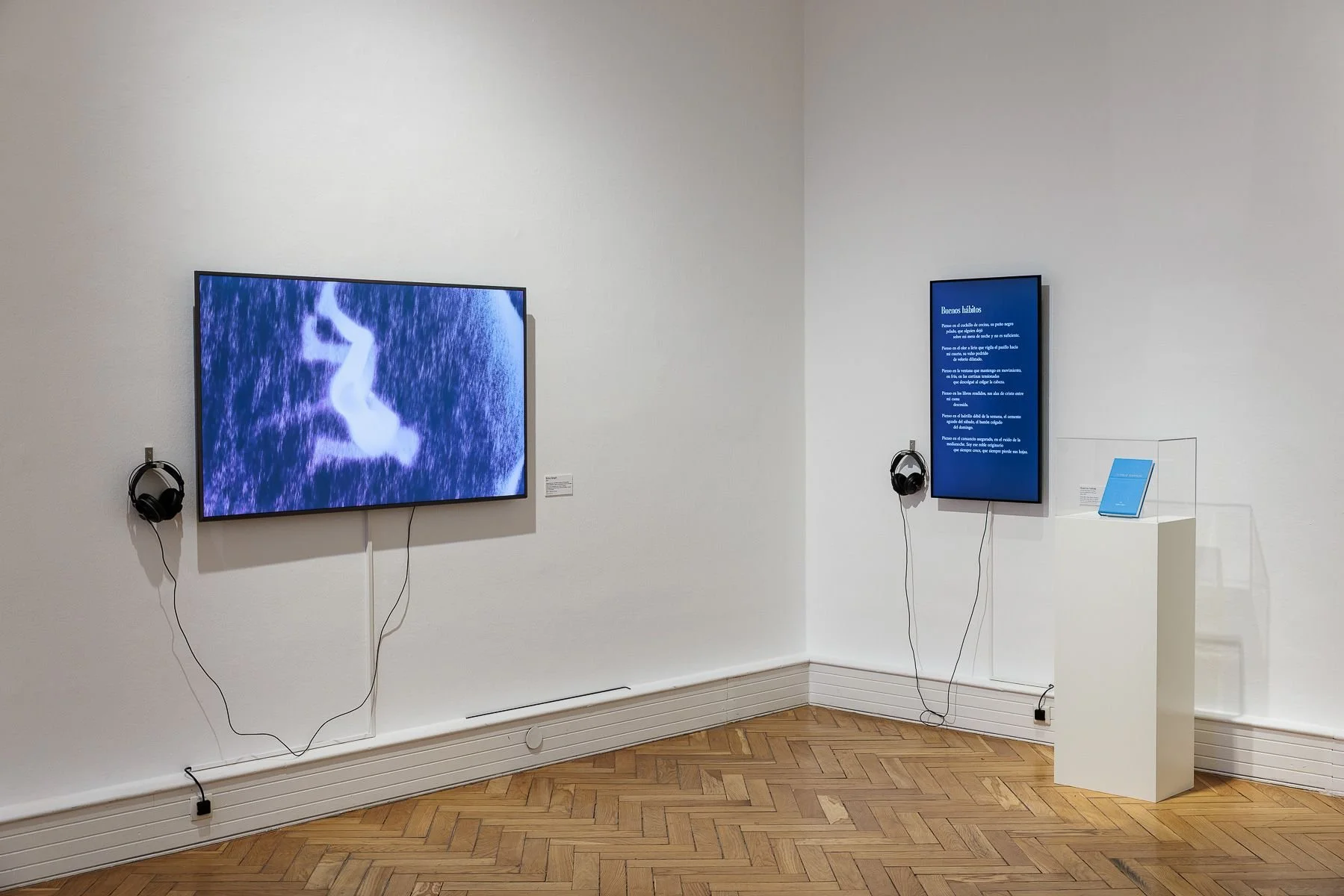
JF: Read the Room, your first institutional retrospective, puts poems from your first book, published in Colombia in your late twenties, in a museum. The title is an instruction rather than a description. What are you asking people to do?
AMC: The exhibition acknowledges that I have been publishing over a decade, and there are poems in the show from my very first book. I am 45 now, so there is an arc to be told. Those poems are presented in ways that speak to my more recent investigations as a visual artist.
As for the title, I am terrible at reading rooms. When you are supposed to read a room, you walk in and you are meant to see how people are feeling in order to engage with them and get what you want. There is a very transactional undertone to the expression.
I wanted to flip it on its head and say, no, here it is a set of instructions. You actually have to read the room to get the work. It also pushes back against the public space in which art transacts, where social interactions govern how art gets shown or shared. Read the poem, and if you like it, take it home. You do not have to finagle anything out of anyone.
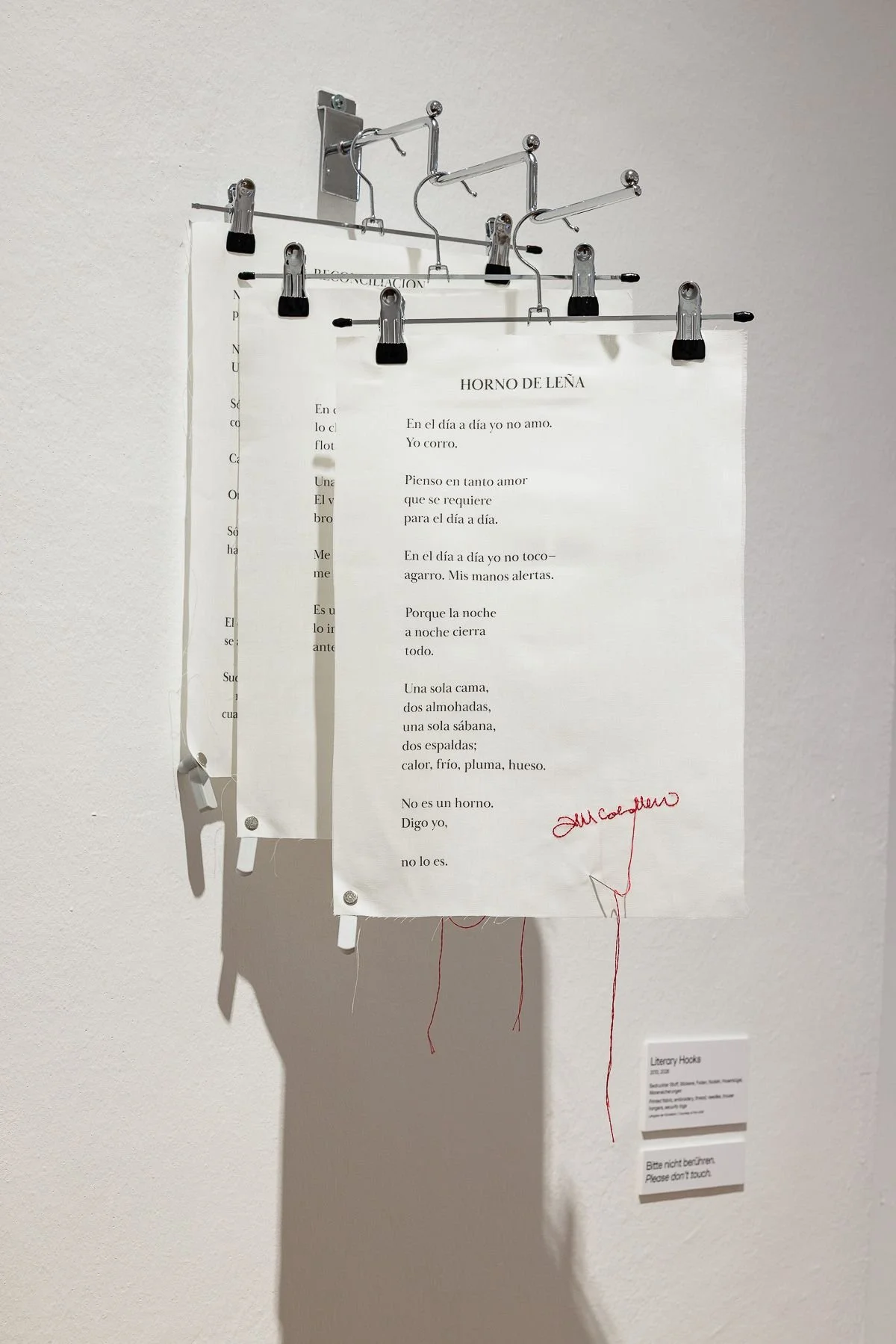

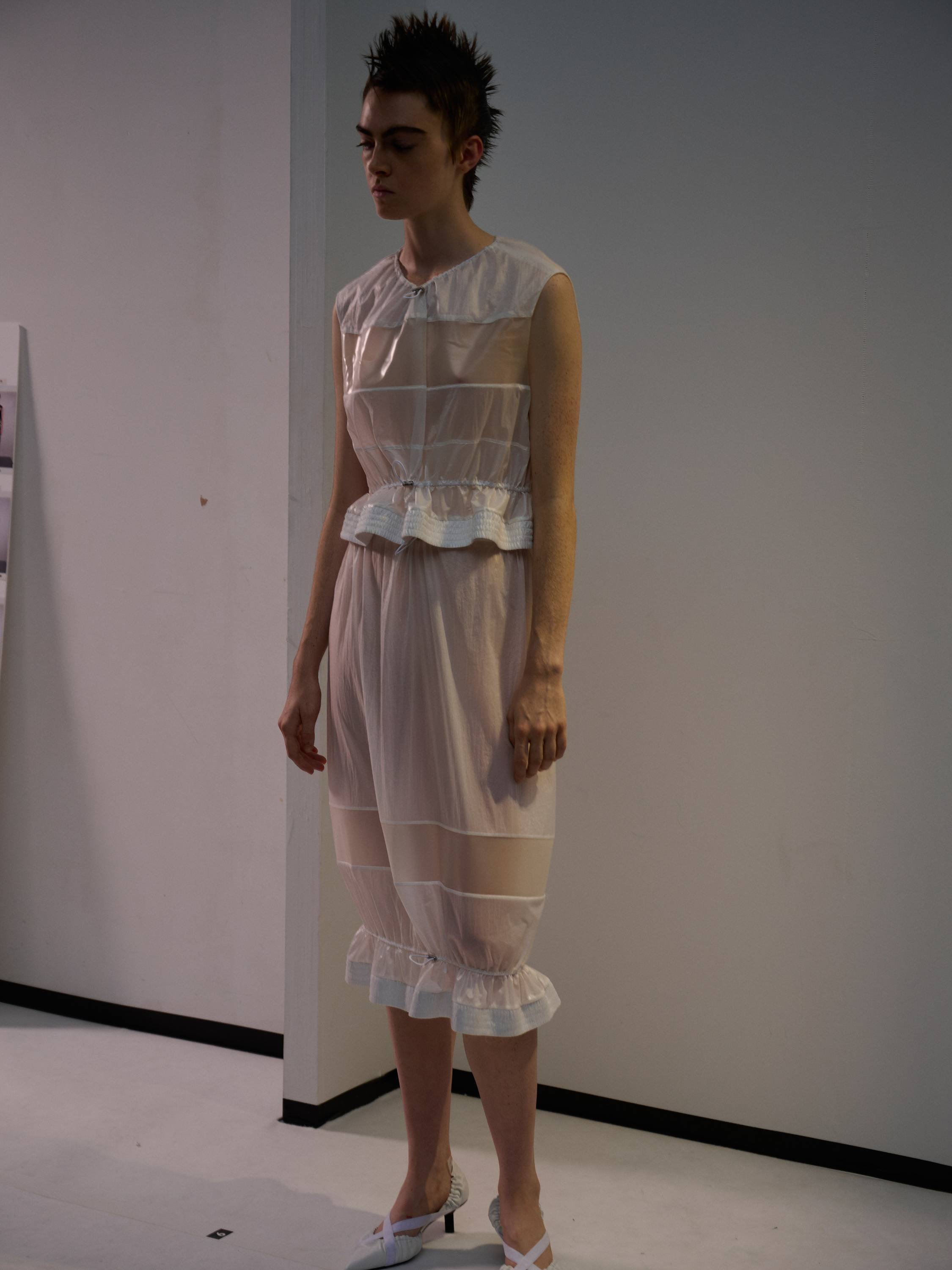
JF: In Literary Hooks, one of the works in Linz, you print poems on fabric that looks like paper, hang them from trouser hangers and fit them with security alarms.
AMC: The series acknowledges the tension between the private act of reading a poem and the very public consumption implied by an art fair or a museum, by the poem exhibiting itself, flaunting itself. They are wearing the codes of retail. It could be an item in Zara or H&M, ready to be purchased and reordered if supplies sell out.
At the same time they are hand-embroidered with my signature in red, which for me denotes intertextuality and is a recurring theme in my work. That gesture of the body denies the commodity. So there is the intimate act of engaging with literature, and then the series debuting at an art fair, in a commercial context.
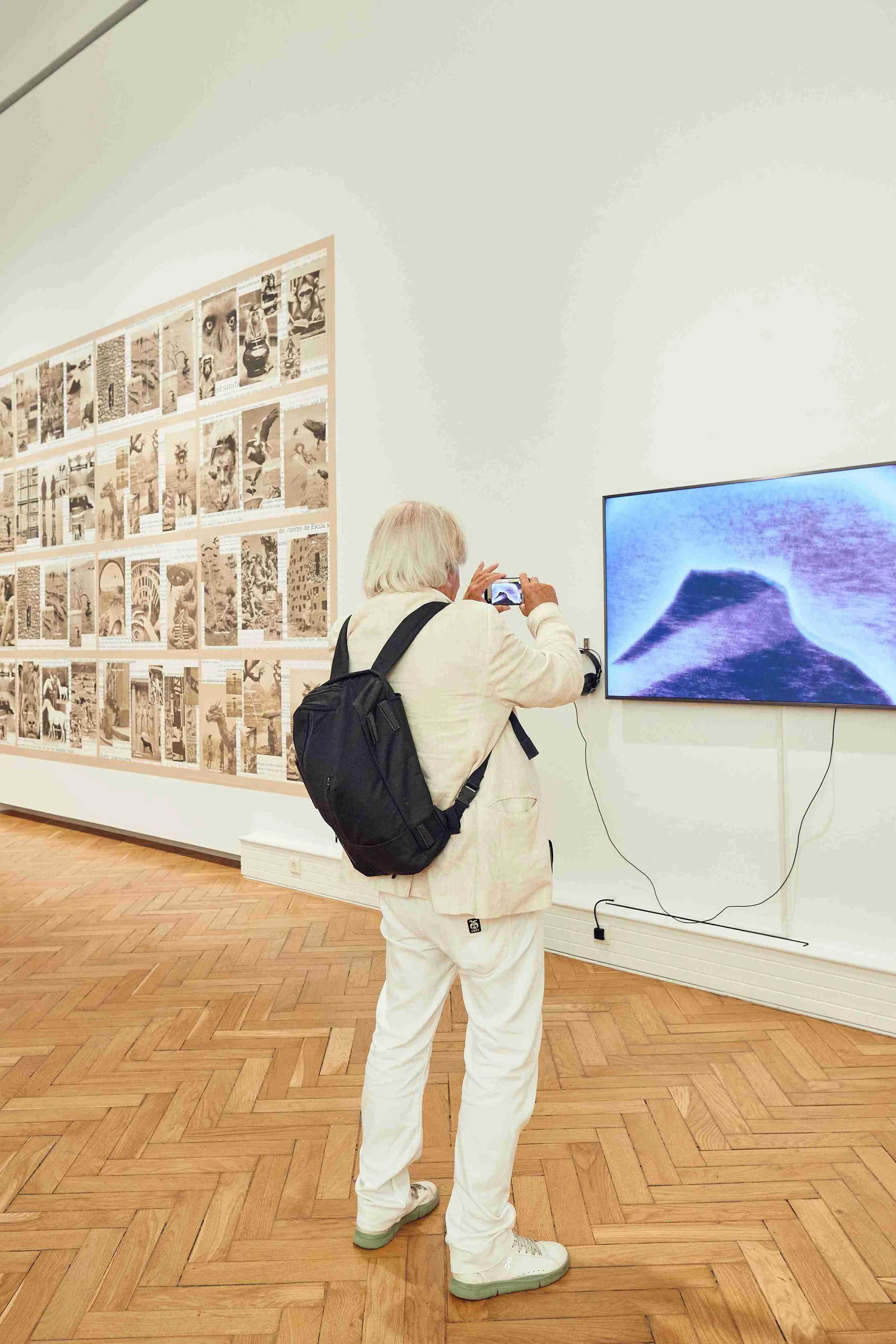
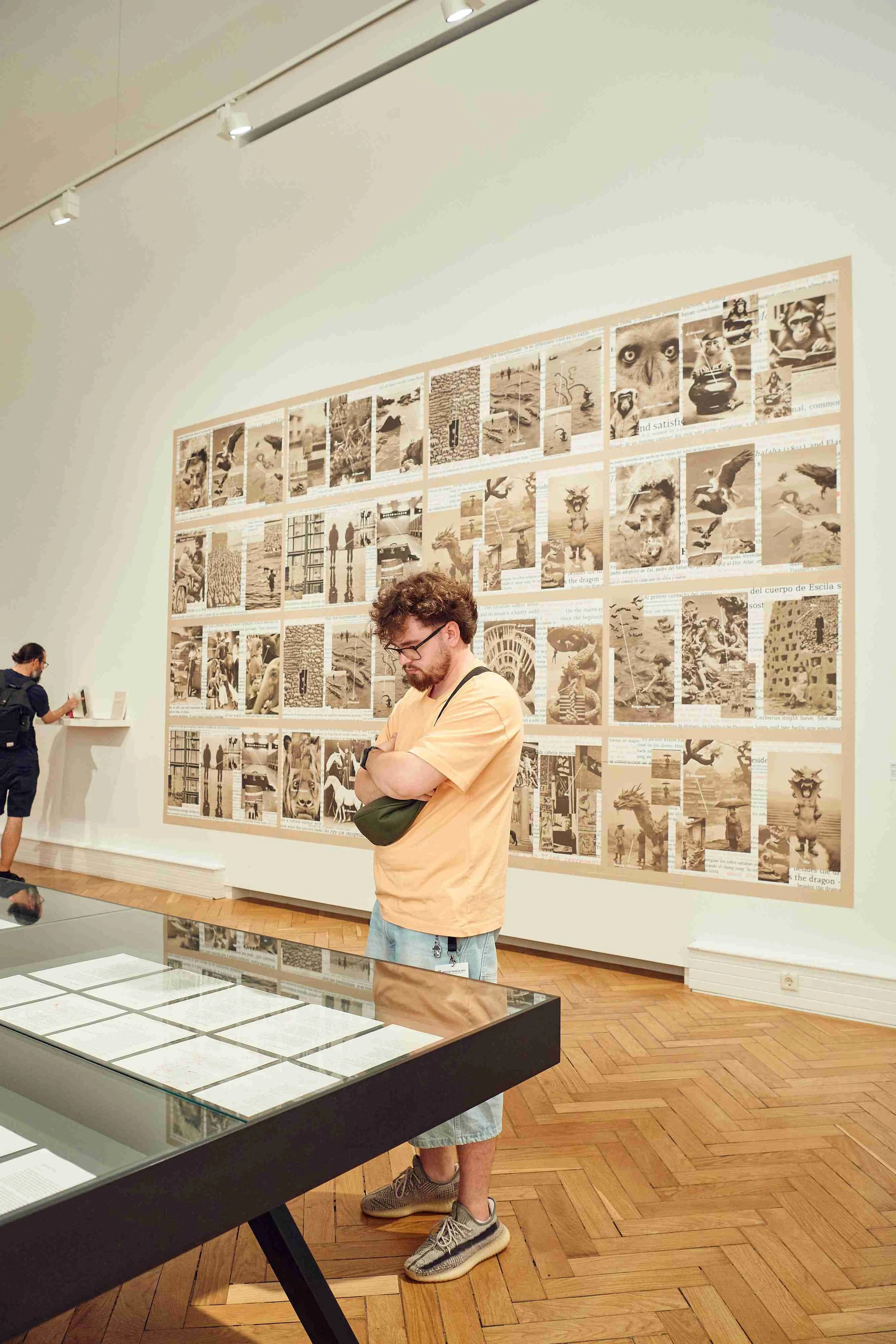
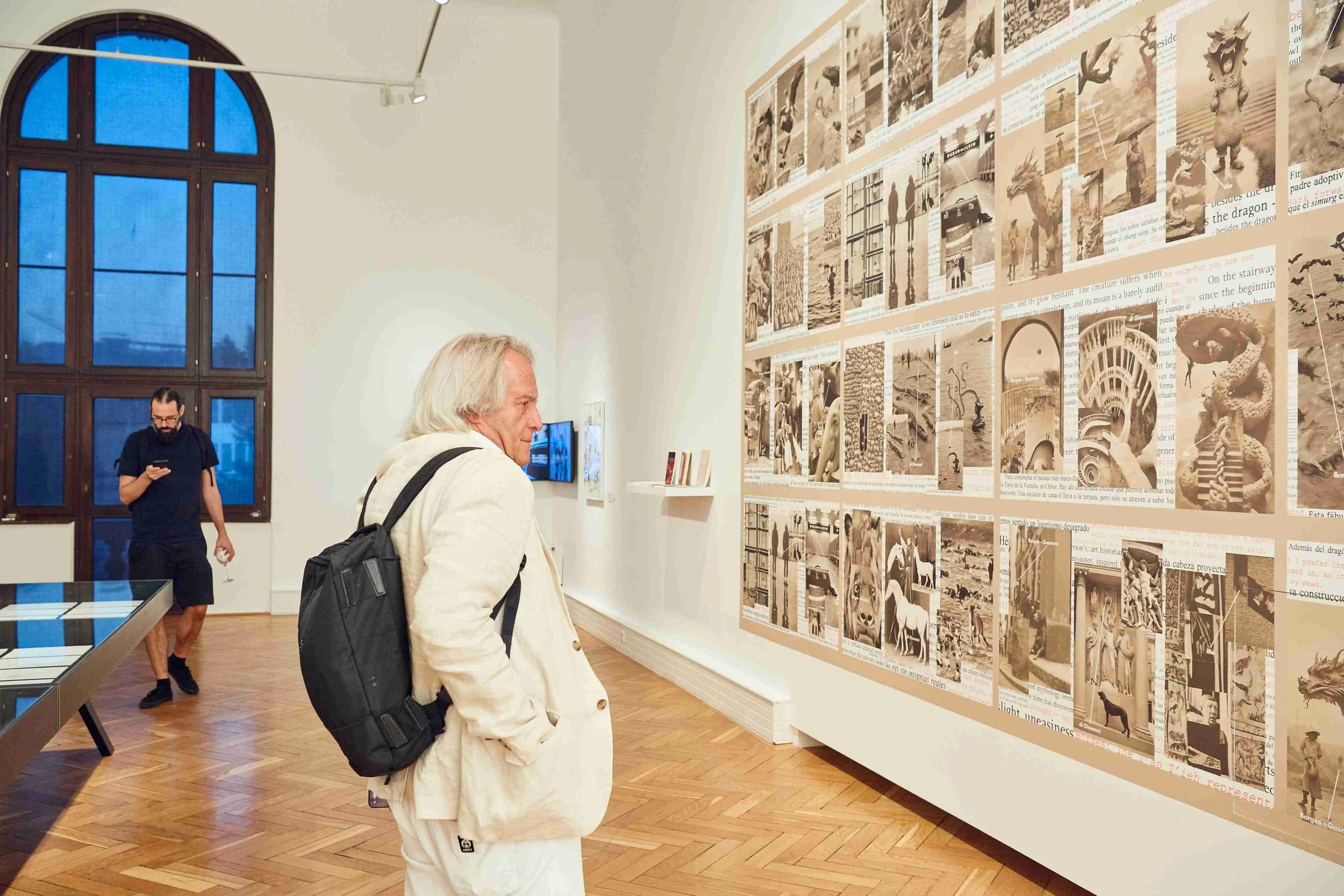
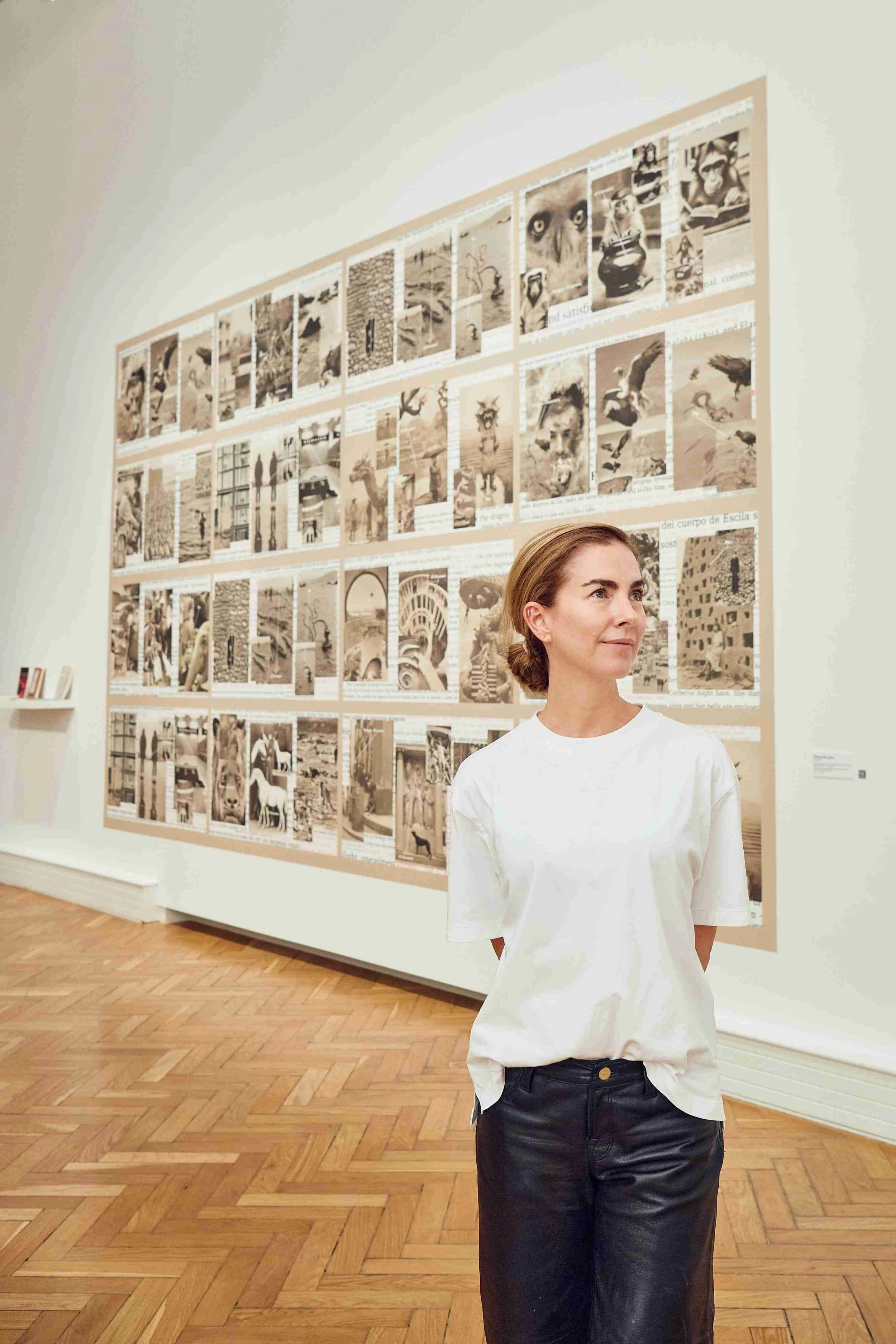
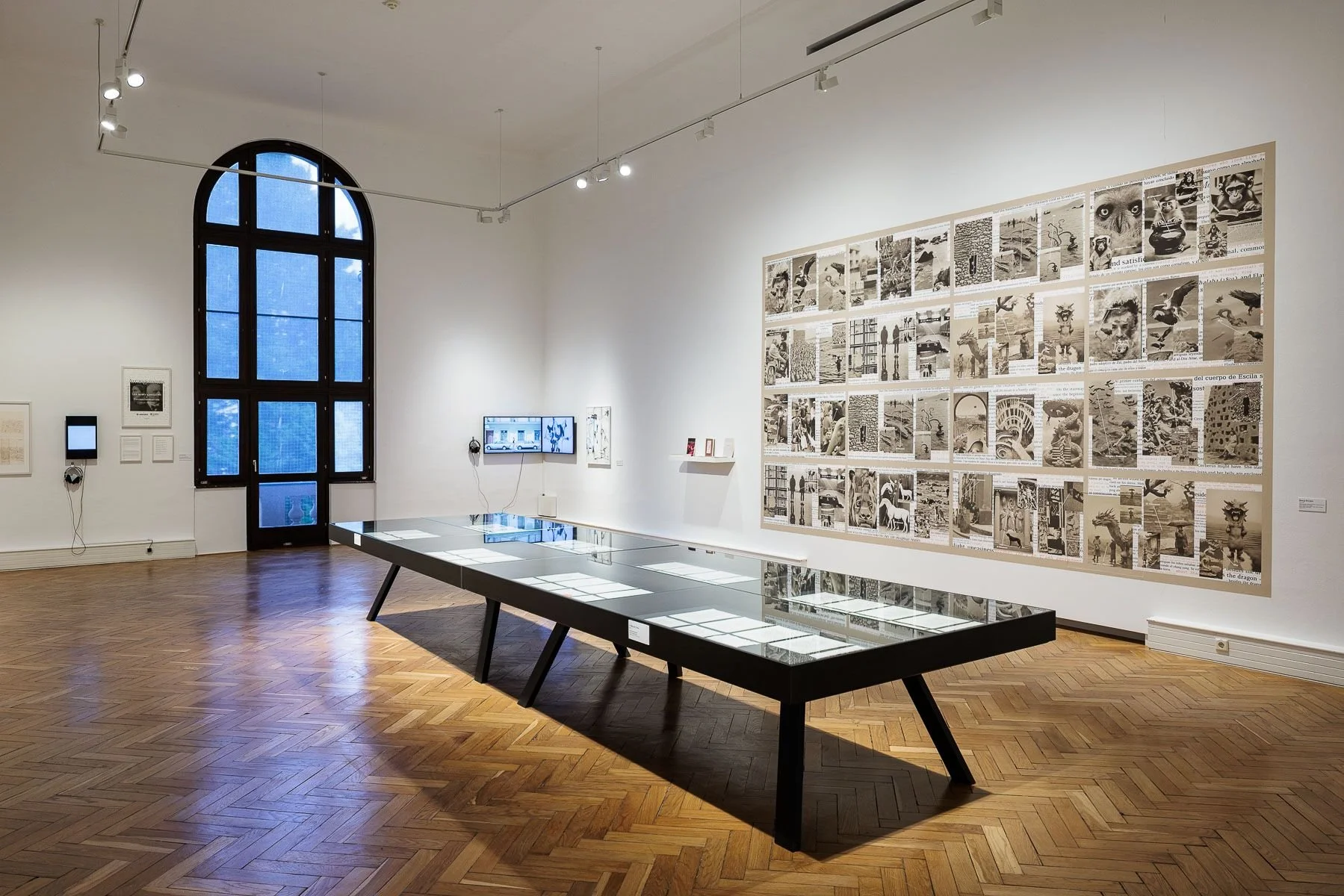
JF: Fifty Ways of Looking at a Poem rests on what you call analog generativity. Machine learning has taken the word generative almost entirely. Are you reclaiming it, or pointing at the older system?
AMC: I am doing both. It is a play on words, which is one of the wonderful things about language, that it can shape-shift depending on context. Poetry workshops are often called generative workshops: you are given a prompt, write about the fog in San Francisco, and twenty students in a room produce twenty different poems. Human readership is an infinitely generative process.
The title comes from Wallace Stevens' “Thirteen Ways of Looking at a Blackbird”. Here every single person, their eyes, their experience of the poem, is an artwork. Readers and writers construct each other, in a dance many writers have acknowledged before me. Every reading is going to be its own universe.
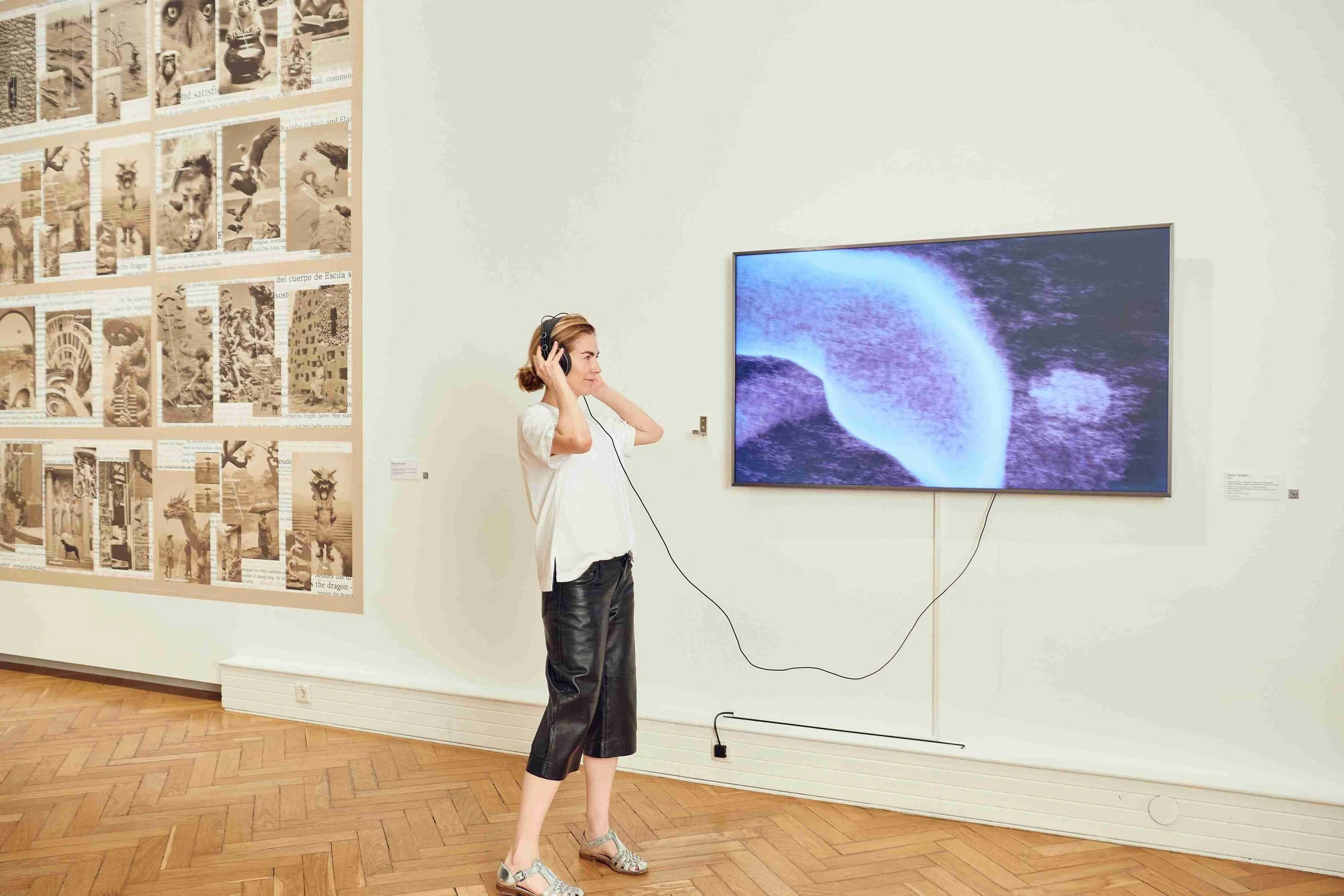
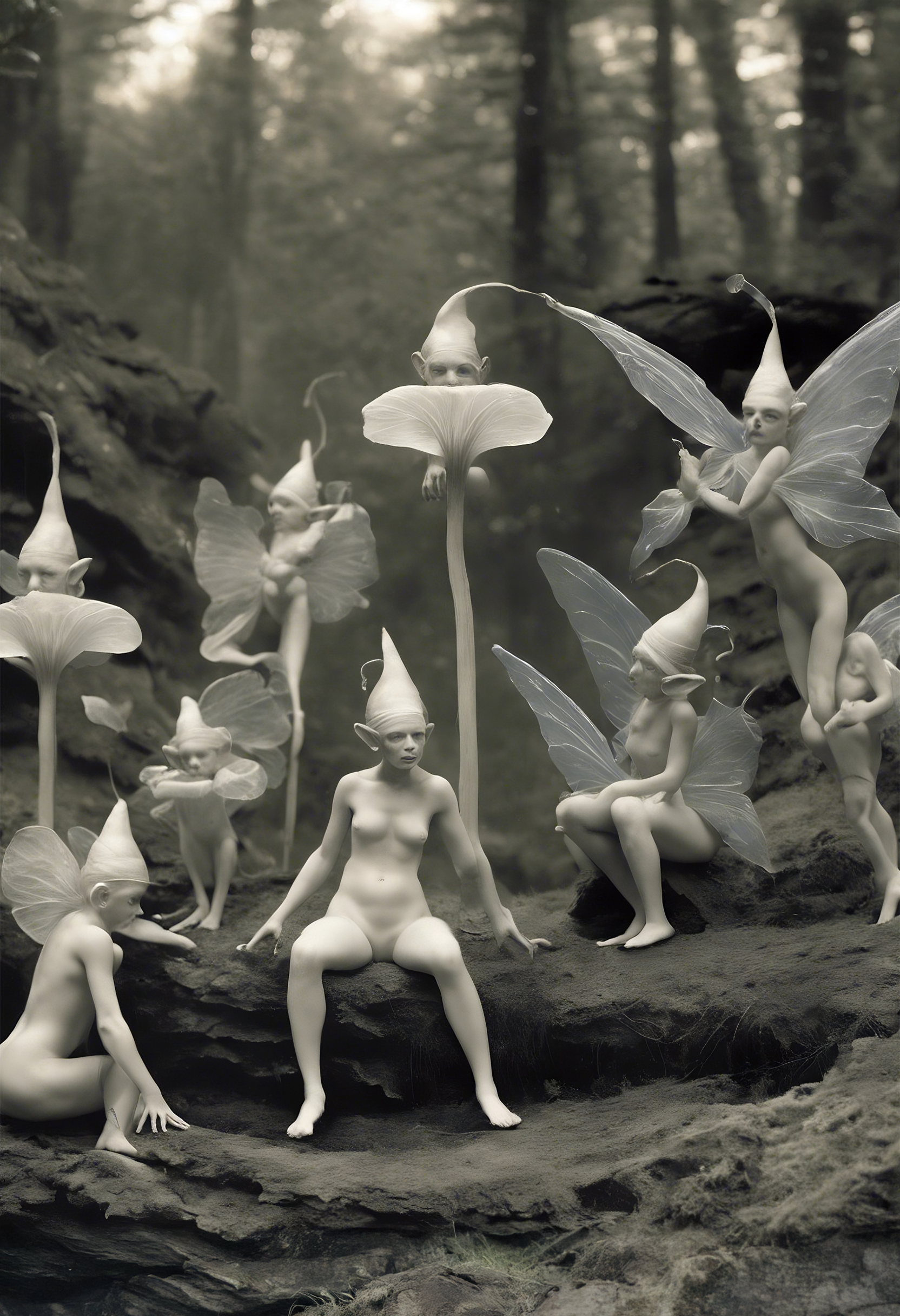
JF: The Sylphs, from your Being Borges series, won the 2025 Lumen Prize Still Image Award. Feeding Borges and Guerrero's descriptions of imaginary creatures to an image model, you found that the Spanish and the English produce different beings. Where was the split widest?
AMC: Take A Bao A Qu, one of the early beings I created based on the description in the book. In the Spanish there is a very distant, landscape-like imagery. You see Borges and Guerrero's description conveyed as scenery, with no human subjects. The English one is a very literal reading of the creature's story: a spiral staircase, an ascent people make, and if they are good people they are allowed to reach the top. And then a white man in a suit pops up, even though this is a Malaysian creature.
The same happened with the elephant that foretold the birth of the Buddha. The Spanish is again at a distance; the English gives you personal narratives with human subjects who are Western.
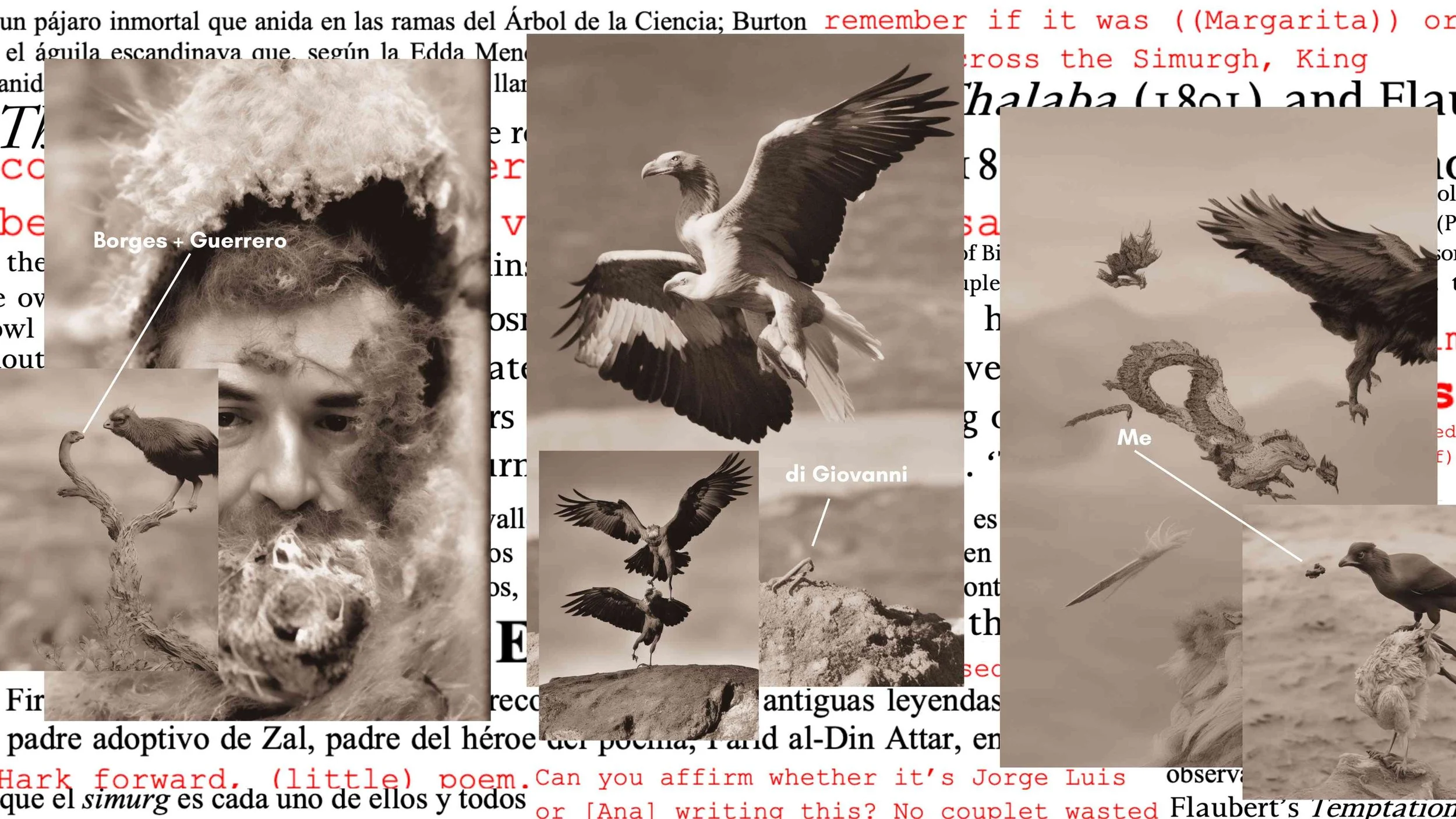
JF: You have written that the project shifts attention away from artificial intelligence and onto language as the true generative system. Does that mean the bias sits in the languages we already speak rather than in the model?
AMC: What Being Borges is trying to point at is that text-to-image generative AI is not a shift in visual culture but a shift in the ways we use language. We are bending language. We are tweaking words. We are adapting sentence structure in order to get what we want out of the machine. We would not write a letter like that, or an email, or a social media post, the way we ask the machine for what we want.
We accuse technological generative systems of flattening. AI is flattening, algorithms are flattening. But, as humans, we have been flattening narratives for centuries ourselves.
Take the creature of the double, which I visualised. The description gathers how the double has been conveyed by different writers and cultures throughout human history, and it is poignant that in different eras and different parts of the world we came up with similar ideas. Those ideas bleed into the database of AI, because they have accompanied our cultural creation for decades.
Of course AI cannot read Spanish and English the same way. They are different sign systems. But human interpretation is also always changing and evolving, and there is truly no substitute for that.
JF: The Academy of American Poets awarded you the Ambroggio Prize for Cortadas and then rescinded it, because the English manuscript had already won a prize in Texas. Both sets of rights are yours. What did that reveal about how literary institutions understand translation?
AMC: It was a very traumatic experience to be given an award and then have it taken away. As a writer you know there are certain milestones that can truly change your life, that change the way your writing is held.
I wrote a book in Spanish, translated it myself into English and submitted it widely. The English book was awarded Texas Review Press's Clay Reynolds Novella Prize, and I withheld Spanish rights because they do not publish in Spanish. The Ambroggio Prize guidelines specifically say it is for a Spanish manuscript by an American poet, accompanied by an English translation.
No one is making money off it. I offered to forgo all royalties too. The economics is not really what is at heart here, it is the rigidity. And at a moment when the US is going through these incredibly horrific raids against immigrants, it could not have come at a worse time to refuse to embrace the reality that language crosses borders and that publication crosses borders.
My reading is that it was a financial decision. The University of Arizona publishes the Academy of American Poets' winning manuscripts, and Arizona was not willing to work with Texas to make it happen.
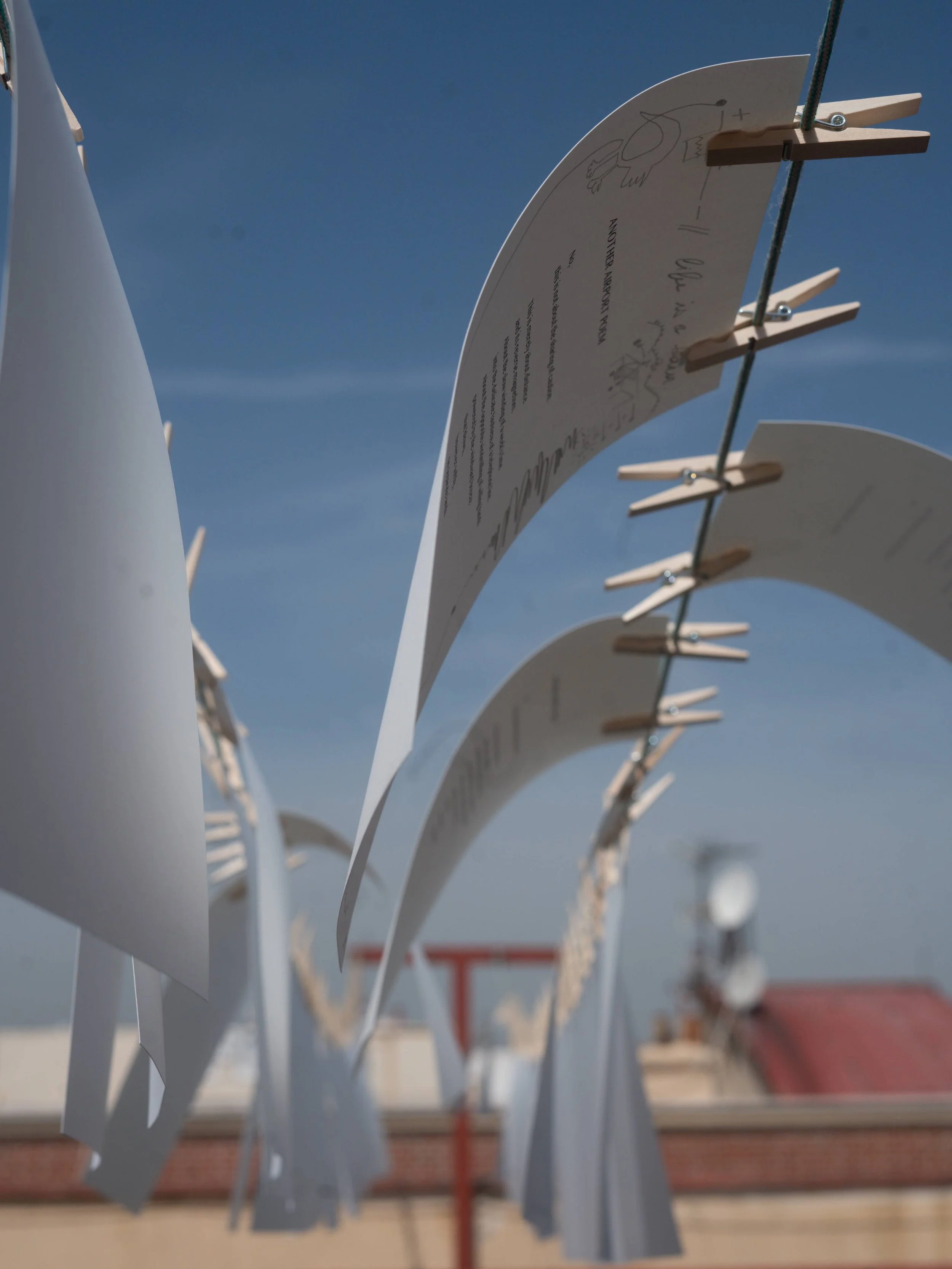
8. JF: What do you want a coder standing in front of an annotated poem in Linz to walk out understanding? And what is the next thing you want to make once the show has closed?
AMC: I would want a coder building automated systems, systems that do things for humans, to leave feeling that there is no code you can write that will replace the experience of reading something and connecting to it. And that there should be no desire to replace it to begin with. There is no replacement here, it is accompaniment.
And I will be focusing on a new novel. I feel like I have a new novel inside me.
Interview by Jeni Fulton
What to read next