Rebecca Salvadori
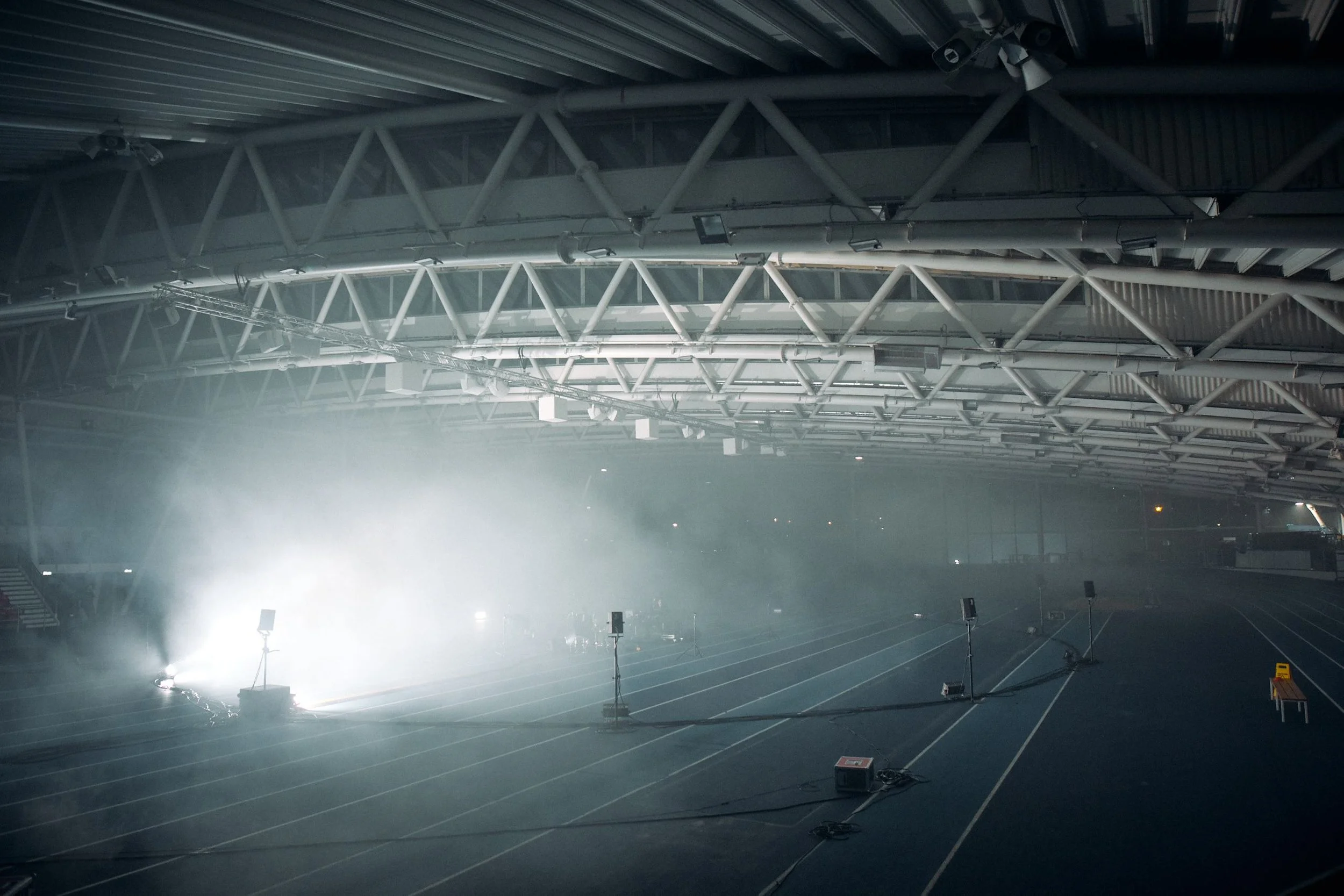
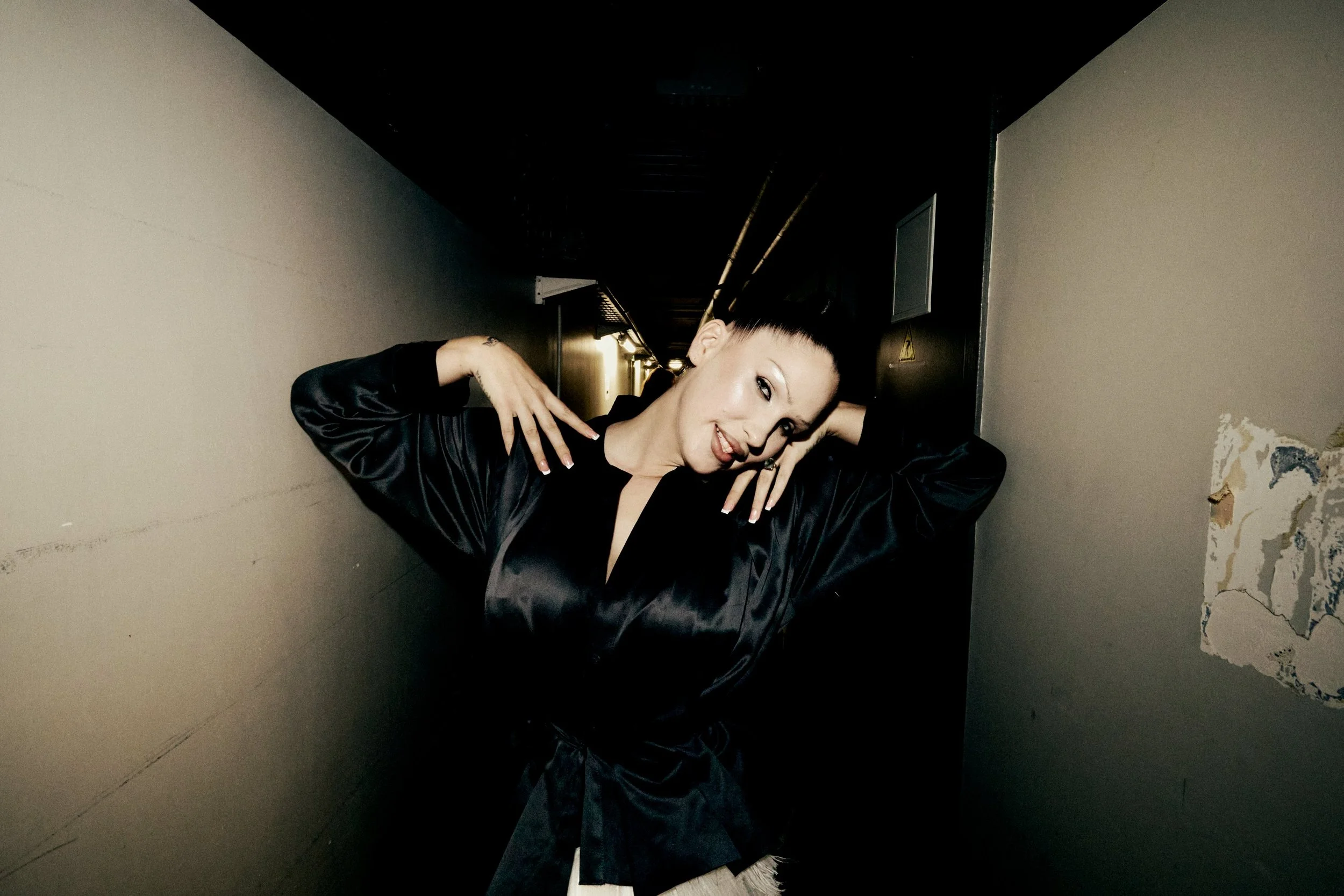
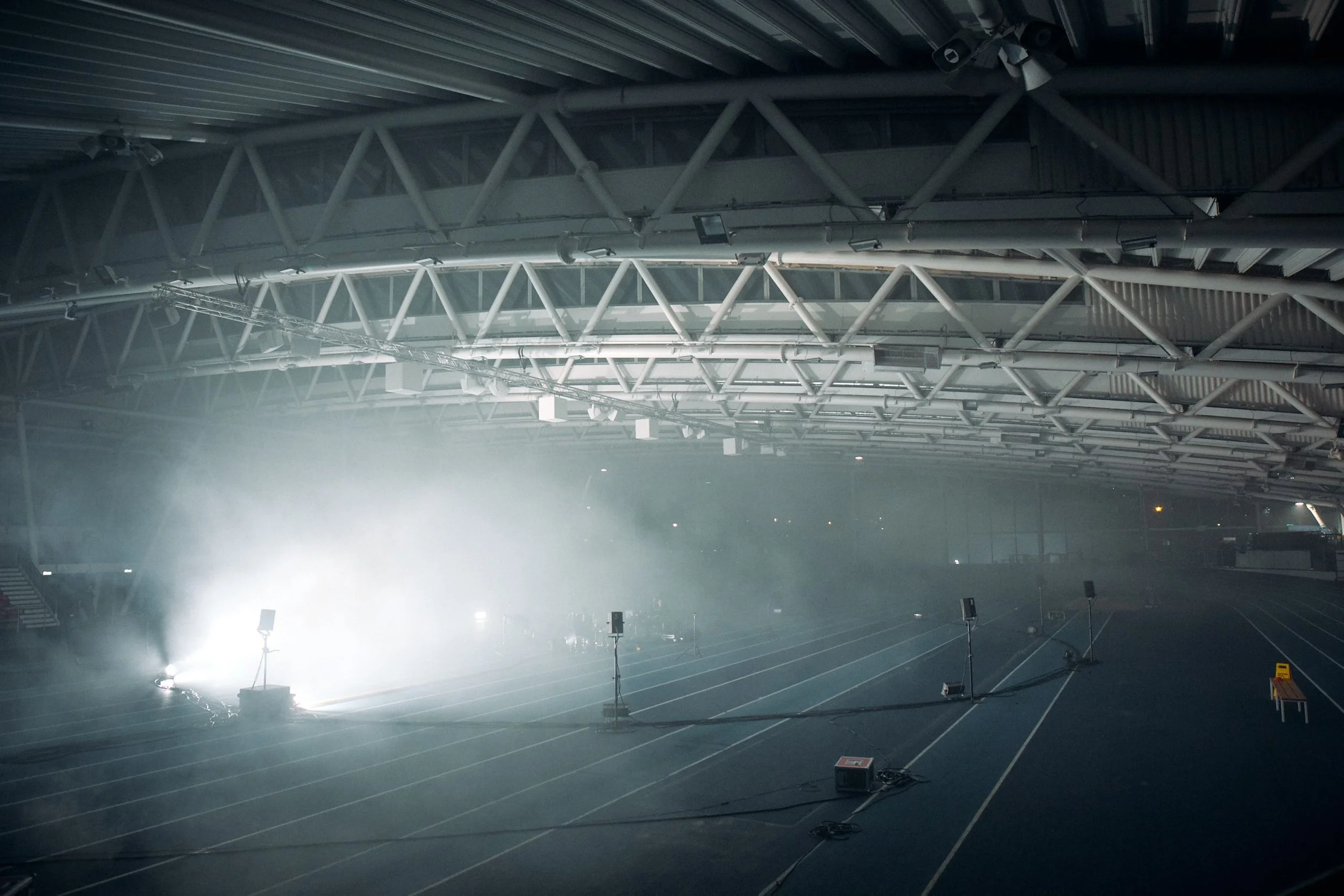
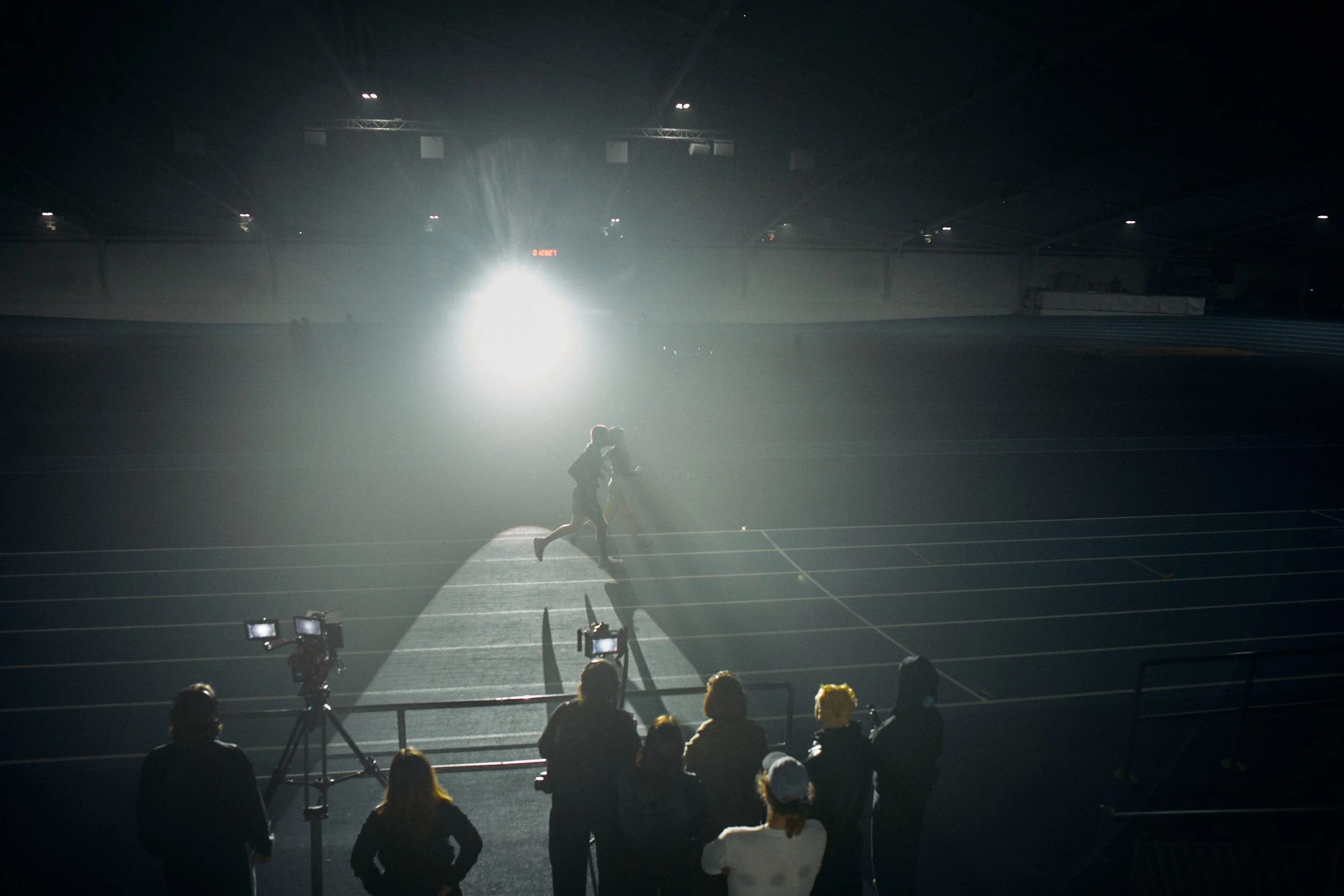
Not Running — photo credit: Fran Gomez de Villaboa.
The thought of filming in clubs is enough to fill some purist ravers with a brain full of cortisol or result in a clenched fist. However when Italian filmmaker Rebecca Salvadori started filming in venues in the 2010s, the relationship with cameras and clubs was vastly different. Saying that, even now, if Salvadori whipped out a camera next to you at your favourite dancing spot, you would probably be more excited to see the outcome than to feel it was intrusively disturbing the vibe.
Creating films about Tresor, FOLD and dance floors around the world, Salvadori knows how to do such a task both discreetly and tastefully. With her latest endeavour, she was commissioned by Adidas to create a film. The result was Not Running, a reflection on how sound, light and movement shape the individual experience of time, identity and collective space. Salvadori features longtime friend, collaborator and light artist Charlie Hope and musicians Coby Sey, Akihide Monna and Olivia Salvadori. Whilst not necessarily household names (yet), you will most likely have seen all these people’s work in some capacity through the various eggs they have put in the London creative scene’s basket.
Salvadori’s web of connections results in deep bonds with her collaborators rather than just a mutual ride up a scene’s ladder. This is what makes her films feel so personal, special and why they often present a real human vulnerability on screen. It’s part of the Salvadori charm.
In the wake of Not Running and a constant plethora of jobs on the go, Salvadori found time to sit down and chat about music, film and friends.
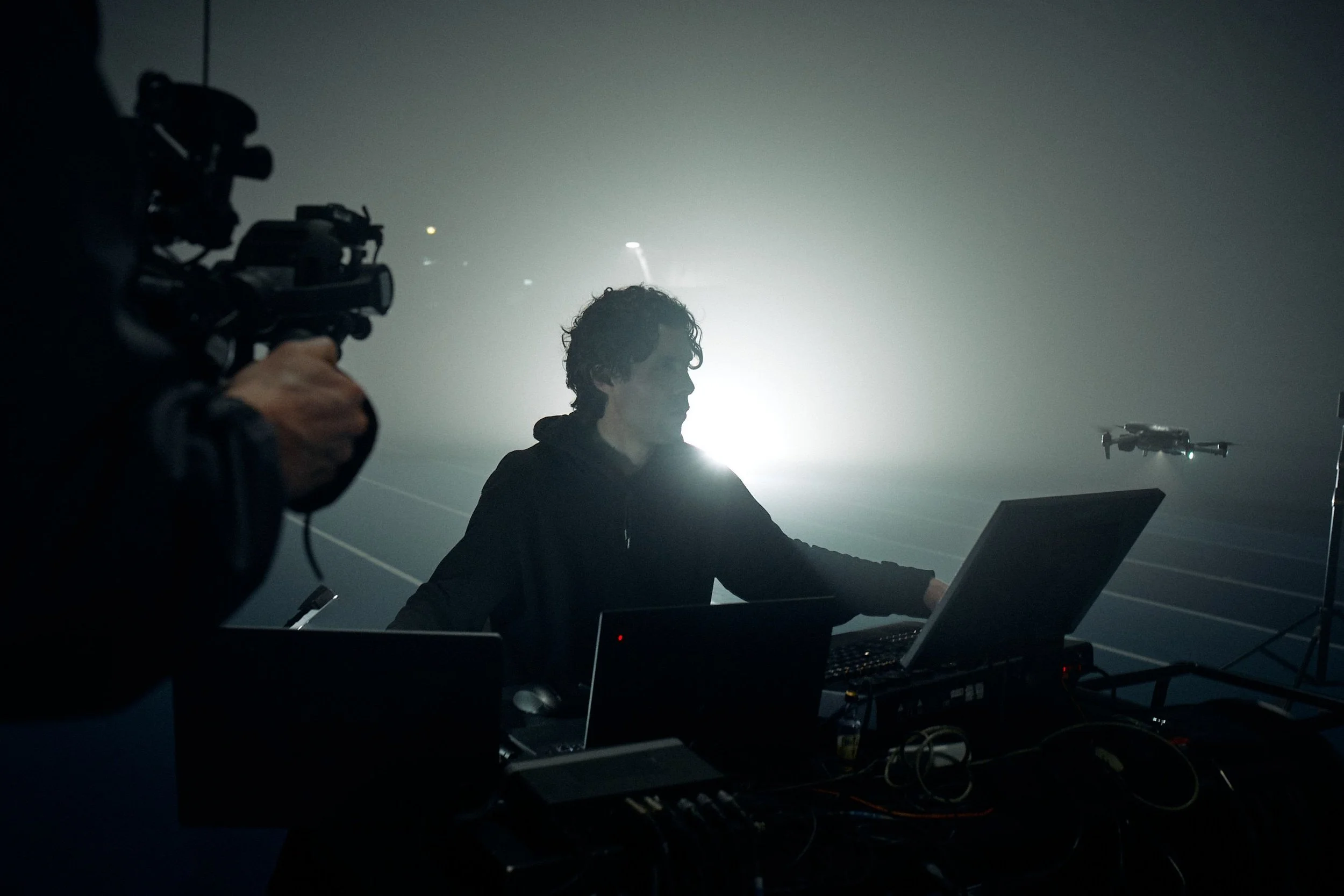
Not Running — photo credit: Fran Gomez de Villaboa.
“With time, I realised that there was a contradiction between the idea of “directing” or setting up something to shoot and when you film live, where you’re absorbing life. ”
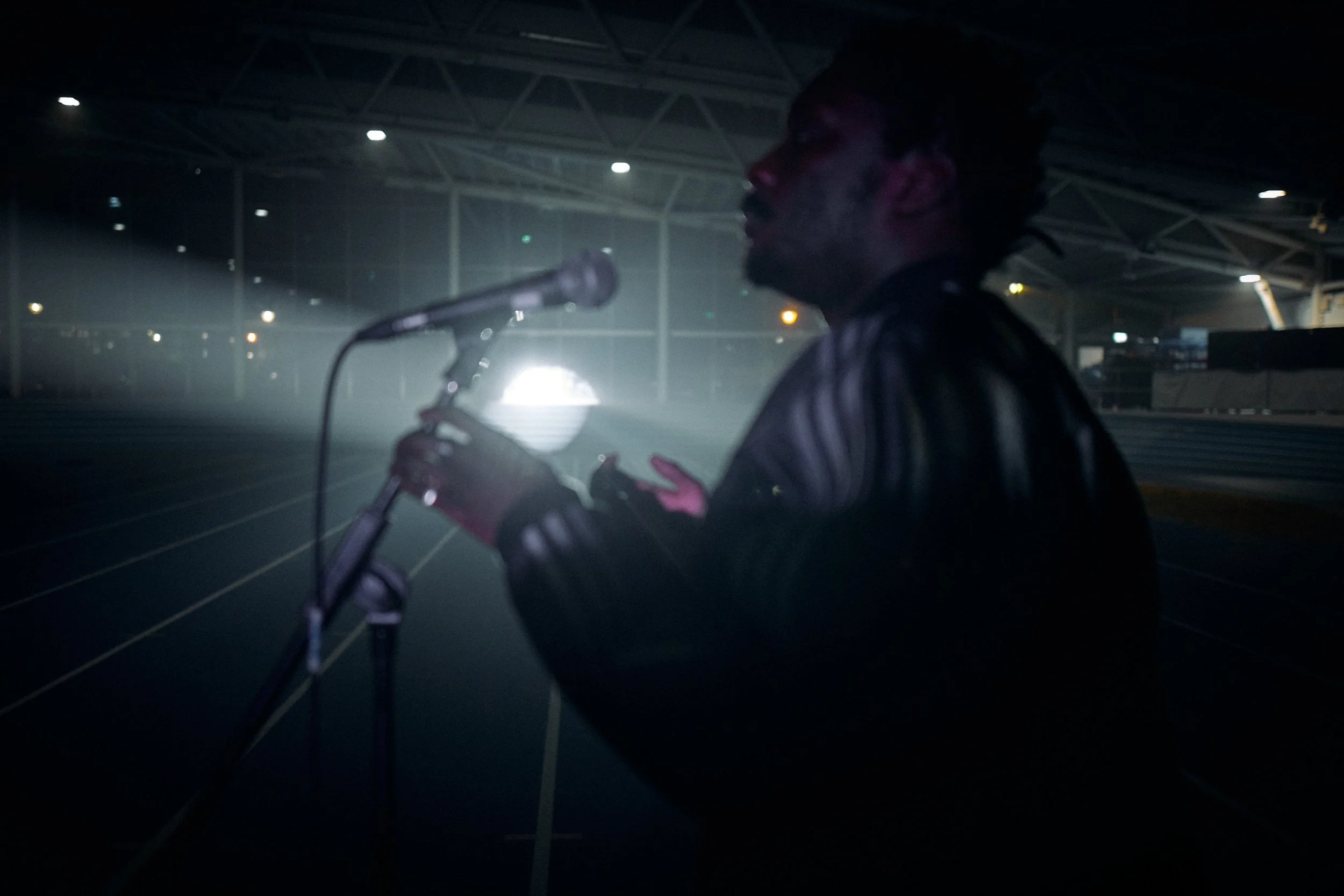
Not Running — photo credit: Fran Gomez de Villaboa.

Not Running — photo credit: Fran Gomez de Villaboa.
In what ways did your family upbringing encourage your cultural interests and ambitions when you were young?
I grew up in a family of artists. When I was 18, my father gave me my first camera, a Sony Cyber-shot 3.2. It recorded pixelated footage without sound, and I was hooked. I filmed my father making work, my sister singing, and the world around me in rural Tuscany. I filmed everything. I don’t think I ever decided to become a filmmaker; I was simply obsessed with filming the world.
Not Running — photo credit: Fran Gomez de Villaboa.
Did you continue your filming when you left home?
Yes. I studied visual arts at IUAV University in Venice, where I kept filming my friends and the moments that made up our student lives, gradually building an archive. In 2007, I moved to Berlin and continued filming. There, I used a Canon G9, a sturdy compact camera with a fixed lens that, finally, recorded sound too. Over time, I began to understand how different cameras changed the way I filmed and moved through different environments. Just as different friends bring out different sides of us, each camera taught me something new about the films I was making. In Berlin, I started working at .HBC, a gallery and nightclub in Alexanderplatz which was a vast Brutalist building that had once been East Germany’s Hungarian Cultural Centre. I was filming all the parties.
Documenting clubs was very different then from how it is now. The videos would exist on YouTube. I was experimenting a lot with editing. I’d take footage from a party and transform what had happened, building entirely different scenarios around it with different music. Over that year, I became more and more aware of how drawn I was to these nighttime environments and everything happening within them.I think part of it was the freedom to find my own intimate ways of relating to what was happening through the films. No one ever told me what to make or how to make it. With time, I realised that there was a contradiction between the idea of “directing” or setting up something to shoot and when you film live, where you're absorbing life.
I kept on filming everything, but I also felt overwhelmed because I was taking it all in with no filter. I somehow felt that life didn't really need my point of view. I just had this urge to absorb, without knowing how to put things together. Somehow I was disappearing in all of this. It was 2010. I left Berlin and moved to London.

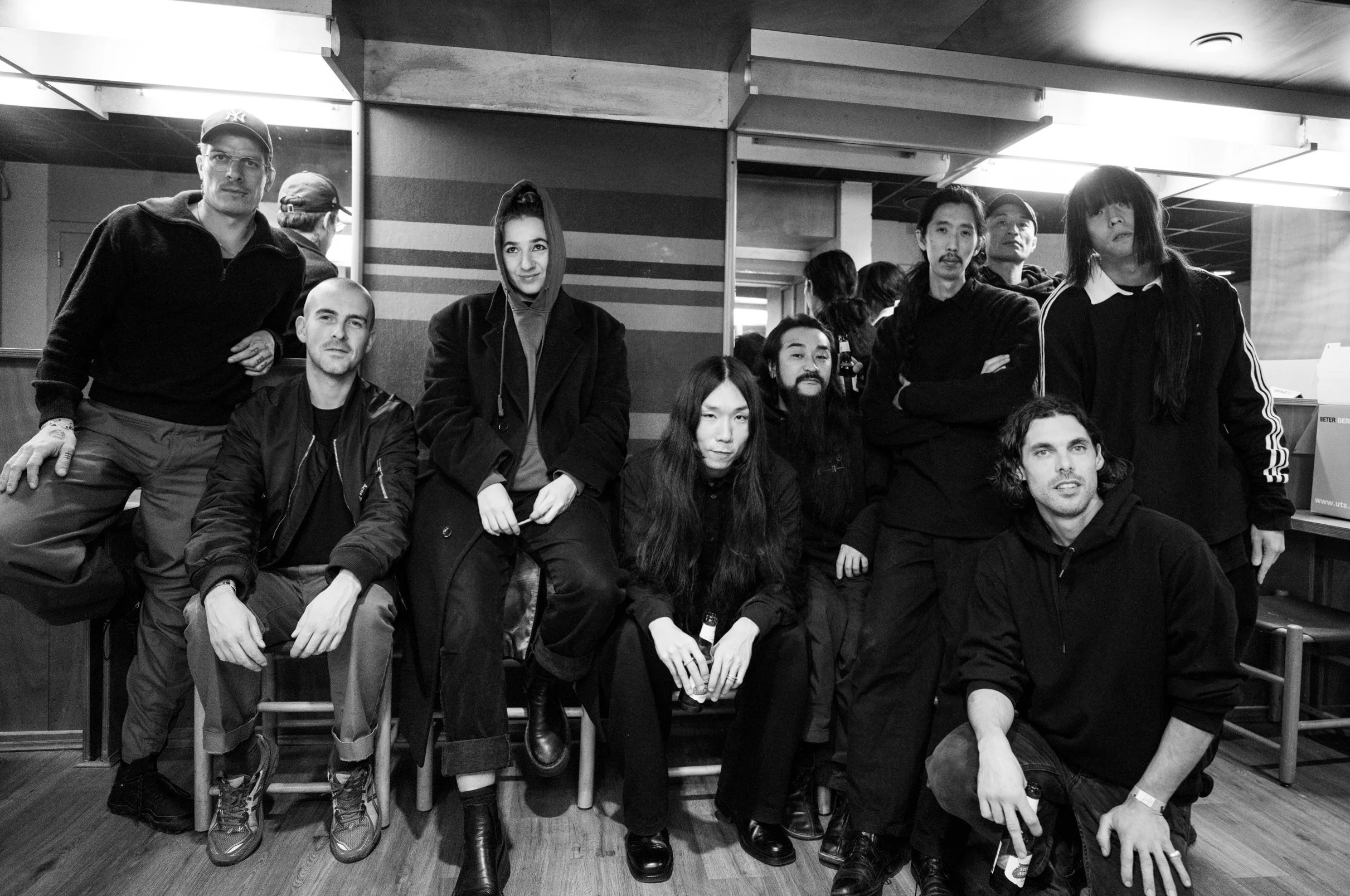
Stills from Rebecca’s films and photos from the Not Running premieres at Feuerle and Ormside.
Can you describe the effect that electronic music had on you? How does this seep into your views of the relationship between music and film?
I liked the inner silence I could find within loud sounds… no need to talk… no expectation to interact. Everyone exists at their own tempo.
That period [in Berlin], and everything I was thinking about then, led to films like Rave Trilogy, Different Beginnings, The Sun Has No Shadow and TRESOR TAPES. I think of them as a chapter of my work. But I’m interested in all the different ways music exists, and the different ways we can be around it. I guess I move between different musical worlds without necessarily belonging to any one of them. I’ve never really felt like I belonged anywhere. Certain environments match certain needs of a moment of time. I think it's a bit more about control now. So from that earlier feeling of disappearing and just absorbing, there's been a long process. The more I found myself, the more exciting it became to think of film as a structure. I'm thinking a lot about the tension between looseness and structure when editing. I’m now working with my archive of sixteen years of musical relationships, spending hours just thinking about structure.
In truth, I'm totally obsessed by the relationship between music and film, how incredibly generative it is and how many directions it can take. There’s so much exploration around it, and I feel like I've lived it in so many different ways from when I started. I would just shoot some footage and then put different genres of music over it to see how that affected the perception of the images. I would also make music videos and edit them with different music than the actual track. So, I think I always had a lot of desire to mix-matching that experience to see what happened. With time, it then became more about relationships. I would portray musicians and friendships and have the musicians that I filmed sonorise the materials live to see what happened to the perception of those relationships. If the musicians were involved directly, do you perceive the music differently? If you knew more about them as people, do you perceive that difference? I've done a lot of different experiments as part of this process, from disappearing to existing. It’s trying to understand what directing is and does. It’s not just about storytelling necessarily. It's not about building fiction, it's how life and film are all totally entangled.

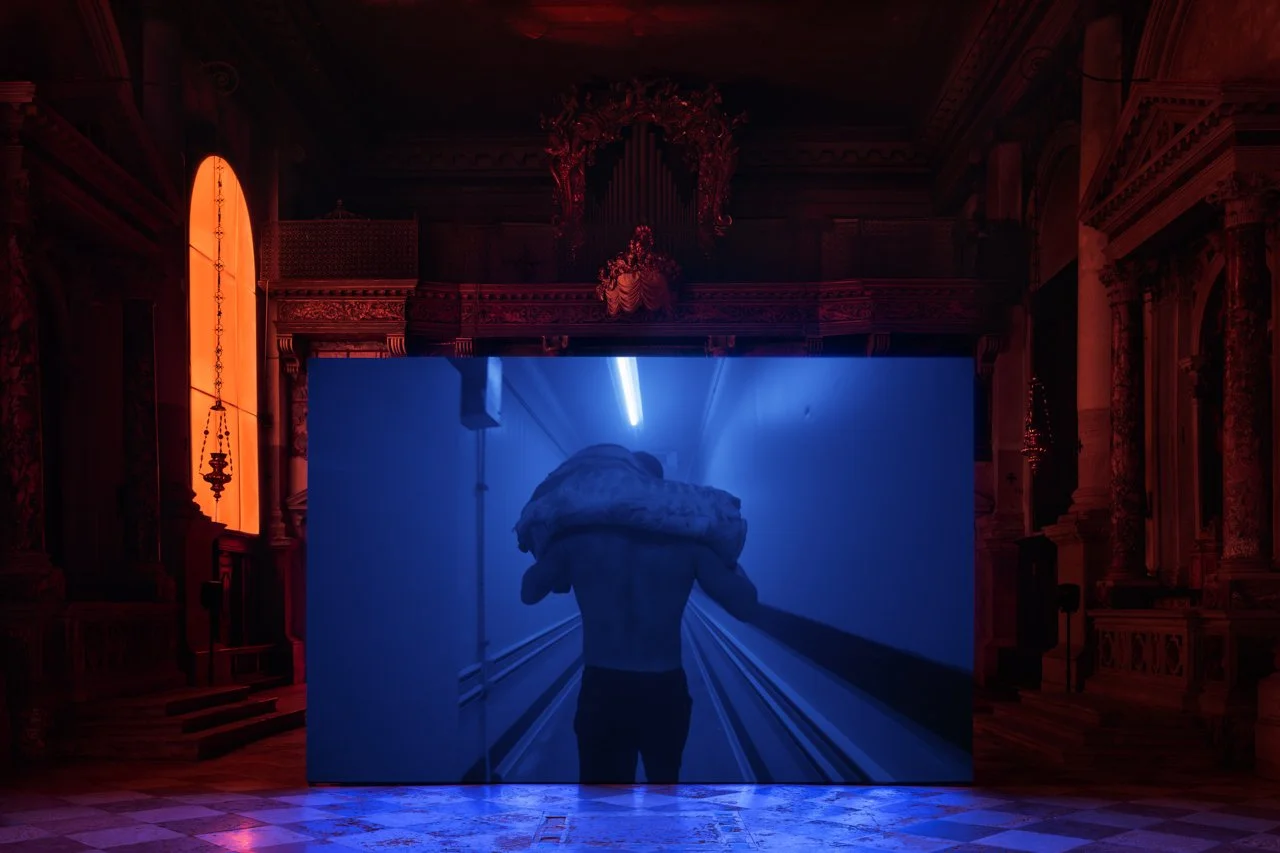
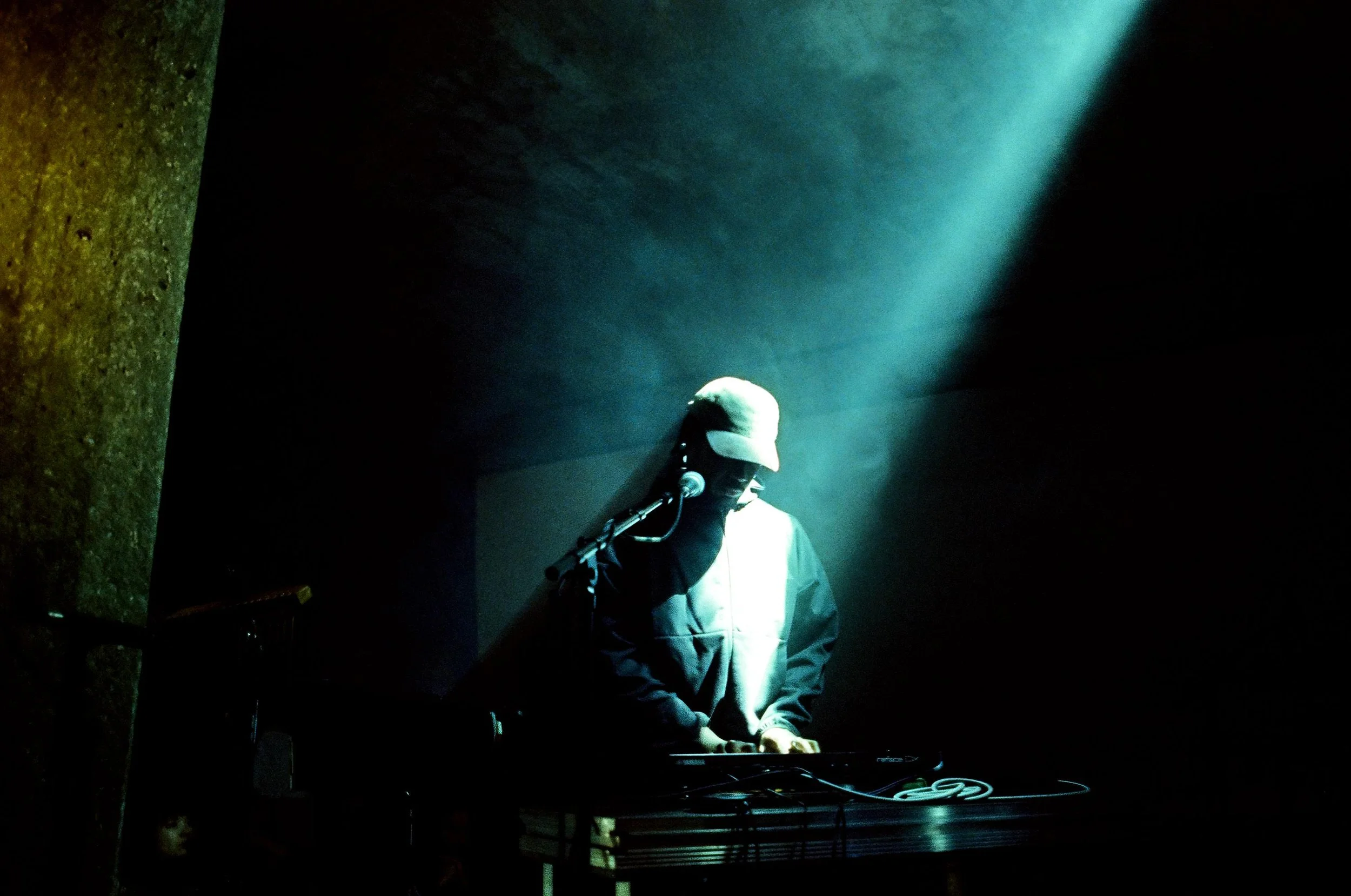
Images from A Forbidden Distance at Semibreve — photo credit: Semibreve / Adriano Ferreira Borges.
Images from A Forbidden Distance at Semibreve — photo credit: Semibreve / Adriano Ferreira Borges.
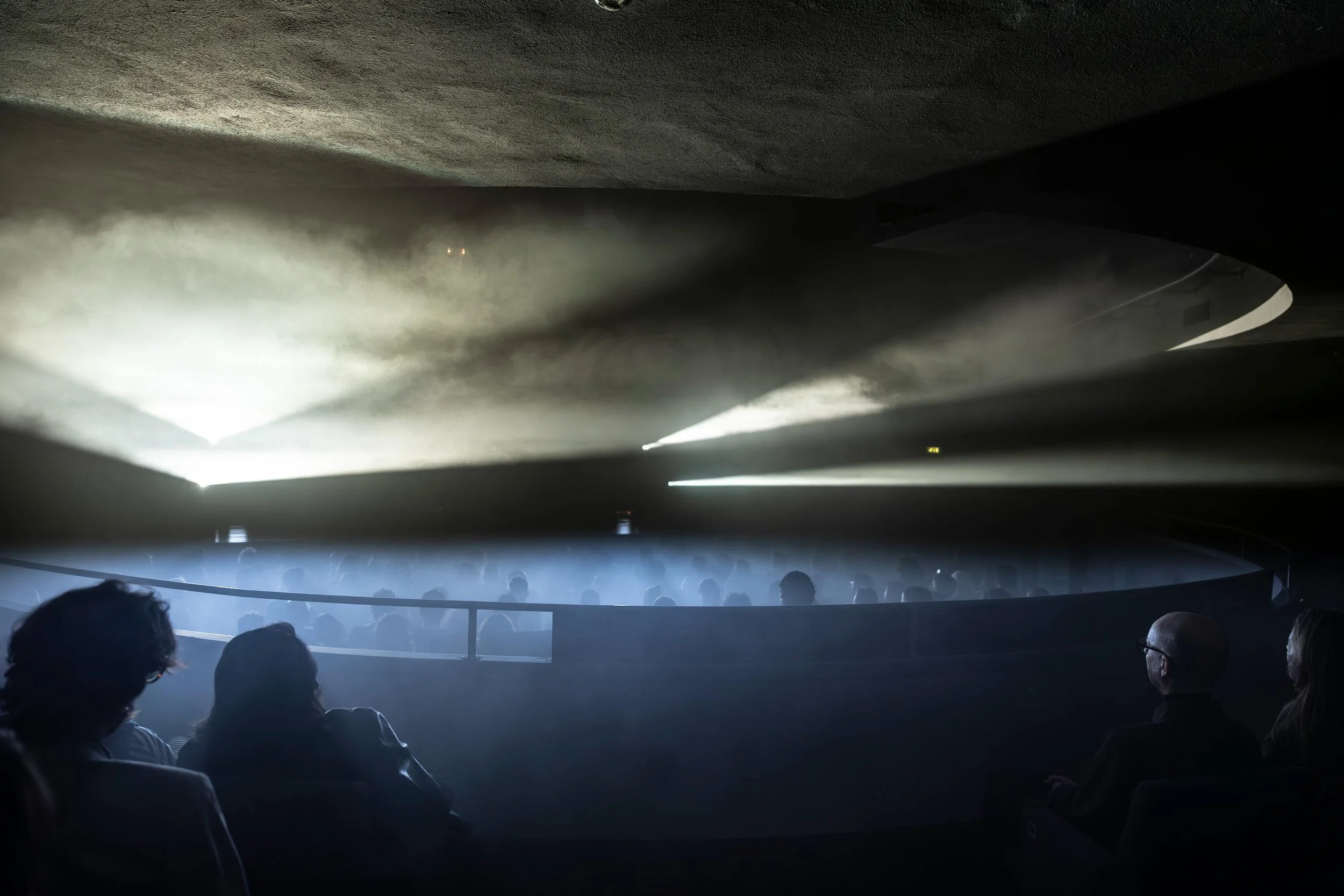
Images from A Forbidden Distance at Semibreve — photo credit: Semibreve / Adriano Ferreira Borges.
So, you have ambivalent feelings about being ‘a director’, particularly in terms of a director making choices, imposing a view, in effect setting up and framing a version of reality to film?
Yes, I do. On some occasions when I was asked to direct something, I felt that directing on set was more about making quick decisions. Those decisions would immediately affect the scene and how the different elements on set related to one another. I didn’t want or enjoy that responsibility.
People said, “do you want this here, do you want that there?” I didn’t like the feeling at all. I would just want to have things existing with me moving in and around the things, being both present and absent. Have them just happen. In 2022, Martin Mazanec, programme director of PAF - a festival and curatorial platform in Olomouc, Czech Republic, working across moving image, contemporary art and music - asked me, “If you could do whatever you wanted, what would it be?” It’s very rare that someone opens a door with no restrictions in that sense. So I said, “Well, actually, I would like to bring some musicians from London to your festival and do a sort of filmed workshop exploring how their friendships and personal relationships affect the music they make. But I want to film it with an audience present, as an act.” That was the beginning of Messengers, which was mind-blowing because it was the first time I had created an environment that was itself a form of directing.
Images from A Forbidden Distance at Semibreve — photo credit: Semibreve / Adriano Ferreira Borges.

Images from A Forbidden Distance at Semibreve — photo credit: Semibreve / Adriano Ferreira Borges.
How did it work out?
So, it was these musicians, this room, with these conditions. It was about building the conditions to then shoot the film. And then I realised, it's not constructing fiction, it's moving things that are already existing, giving them a context, and then filming that context. We filmed Kenichi Iwasa and Maxwell Sterling talking about their friendship and relationship with the city of London, and we did that with mics and audience, and that became a film. There were also light artist Charlie Hope and writer and curator Elaine Tam. Messengers unfolded over two days in two very different spaces, with musicians Kenichi Iwasa and Maxwell Sterling, light artist Charlie Hope, and writer and curator Elaine Tam and others. On the first day, we filmed Kenichi and Maxwell talking about their friendship, their collaboration and their relationship with London. With microphones and an audience present, the conversation became a live act in this beautiful white space, and later became a film. On the second day, we screened The Sun Has No Shadow in a wooden room that felt like the stomach of a whale. We put a screen in the middle of the room, and the audience was packed inside, really excited. It felt like the excitement of early cinema. They watched the film, then the screen was dismantled, revealing Kenichi and Maxwell behind it, and they started playing. The audience began running towards the live music. I was watching from above, thinking, “This is not a concert. This is a scene in the film I’ve created.” At that moment, Charlie turned all the lights off, and people started tripping. No one knew what was going on. They were all running towards the music. Then I ran in front of the audience and the musicians and filmed them all running towards me. That was such a powerful moment of moving from absorbing context to building context. It changed how I worked with the relationship between moving image and sound.
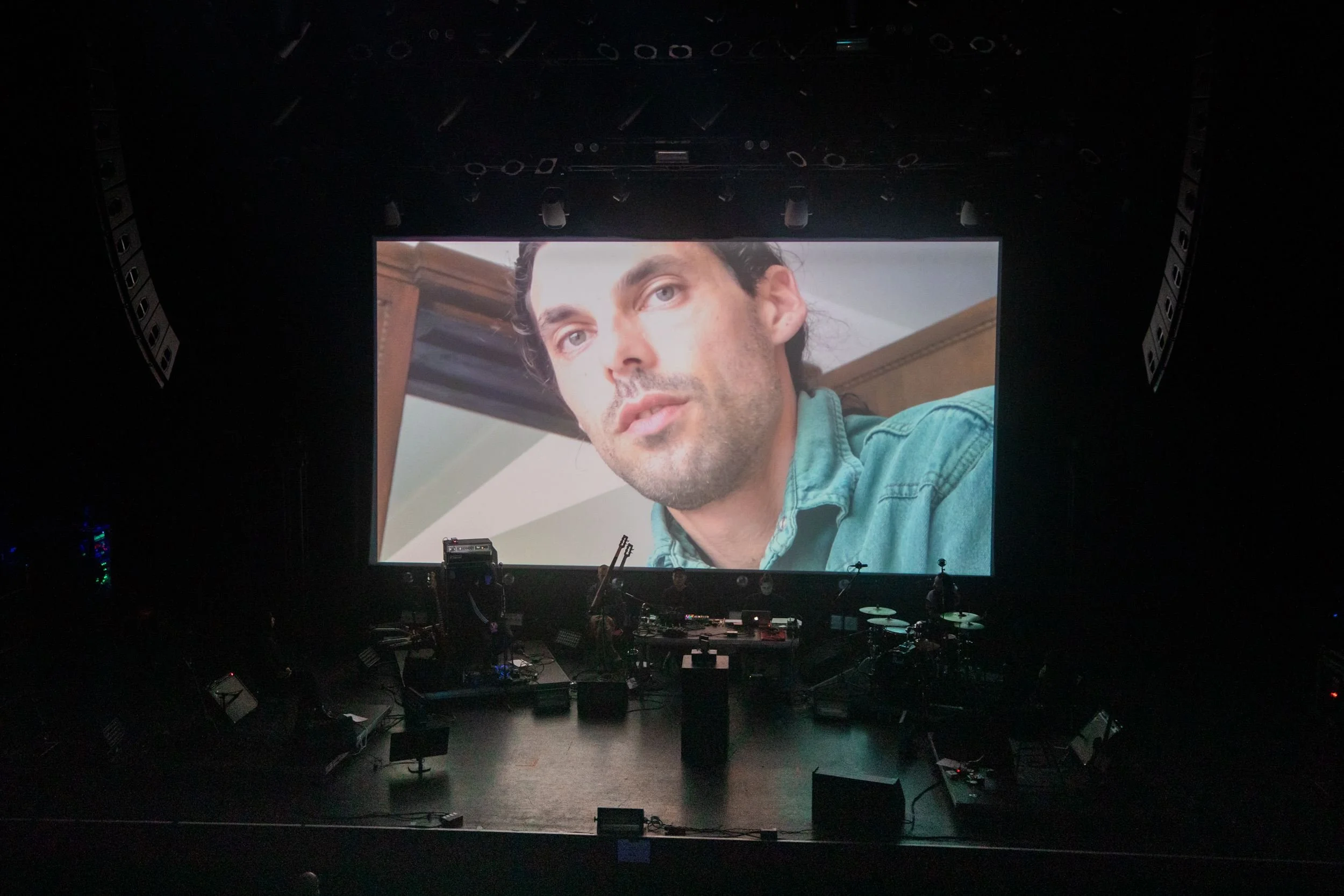
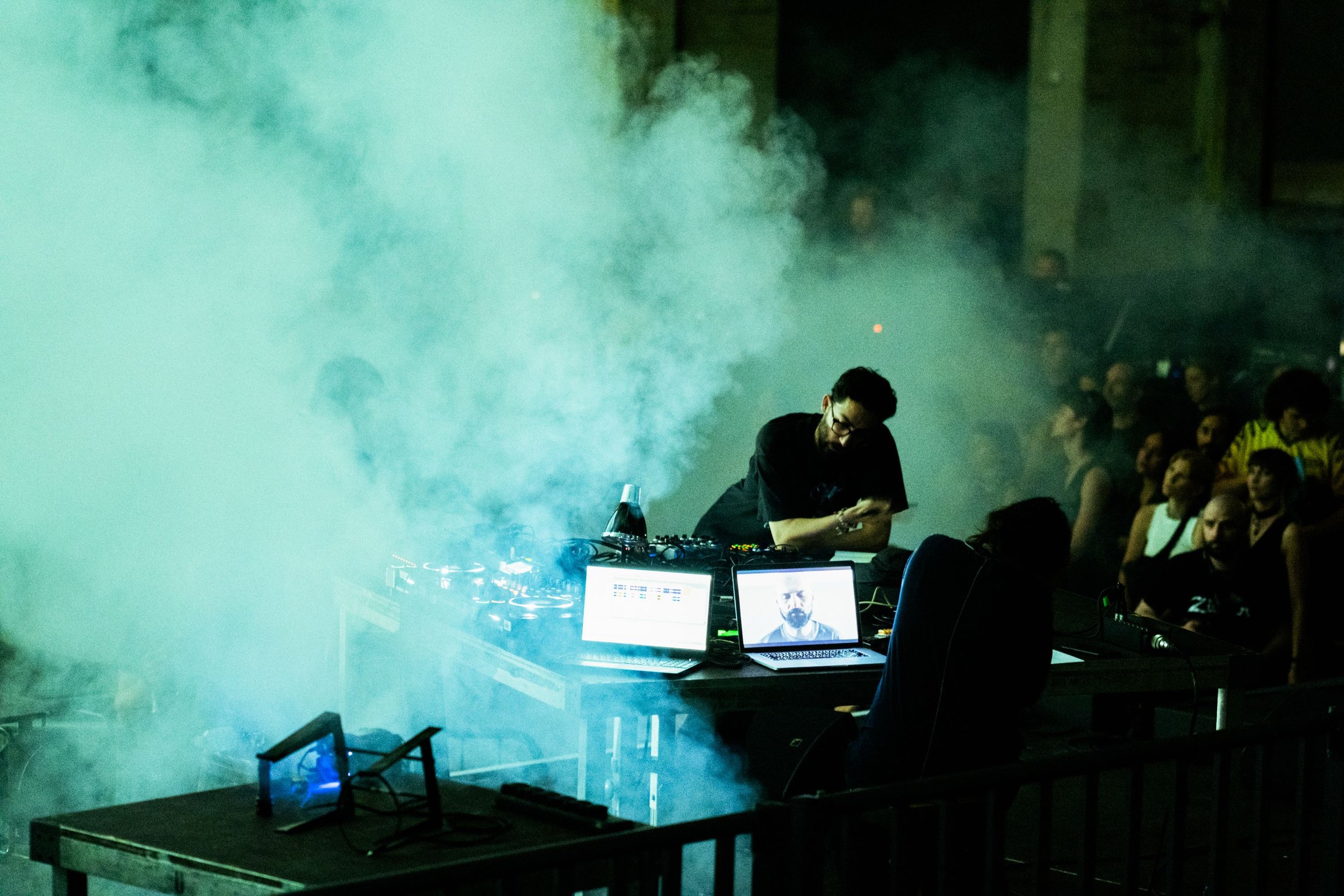
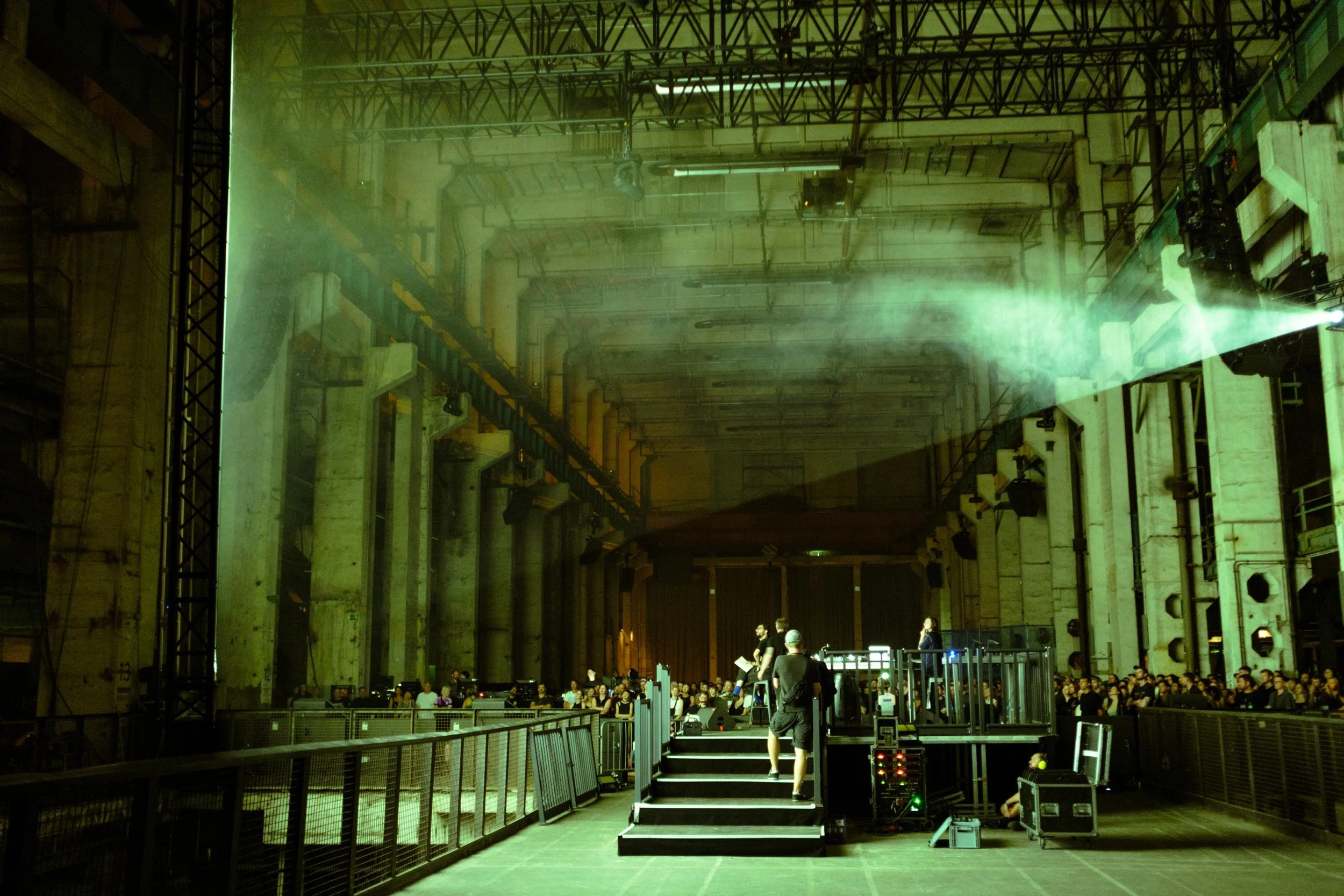
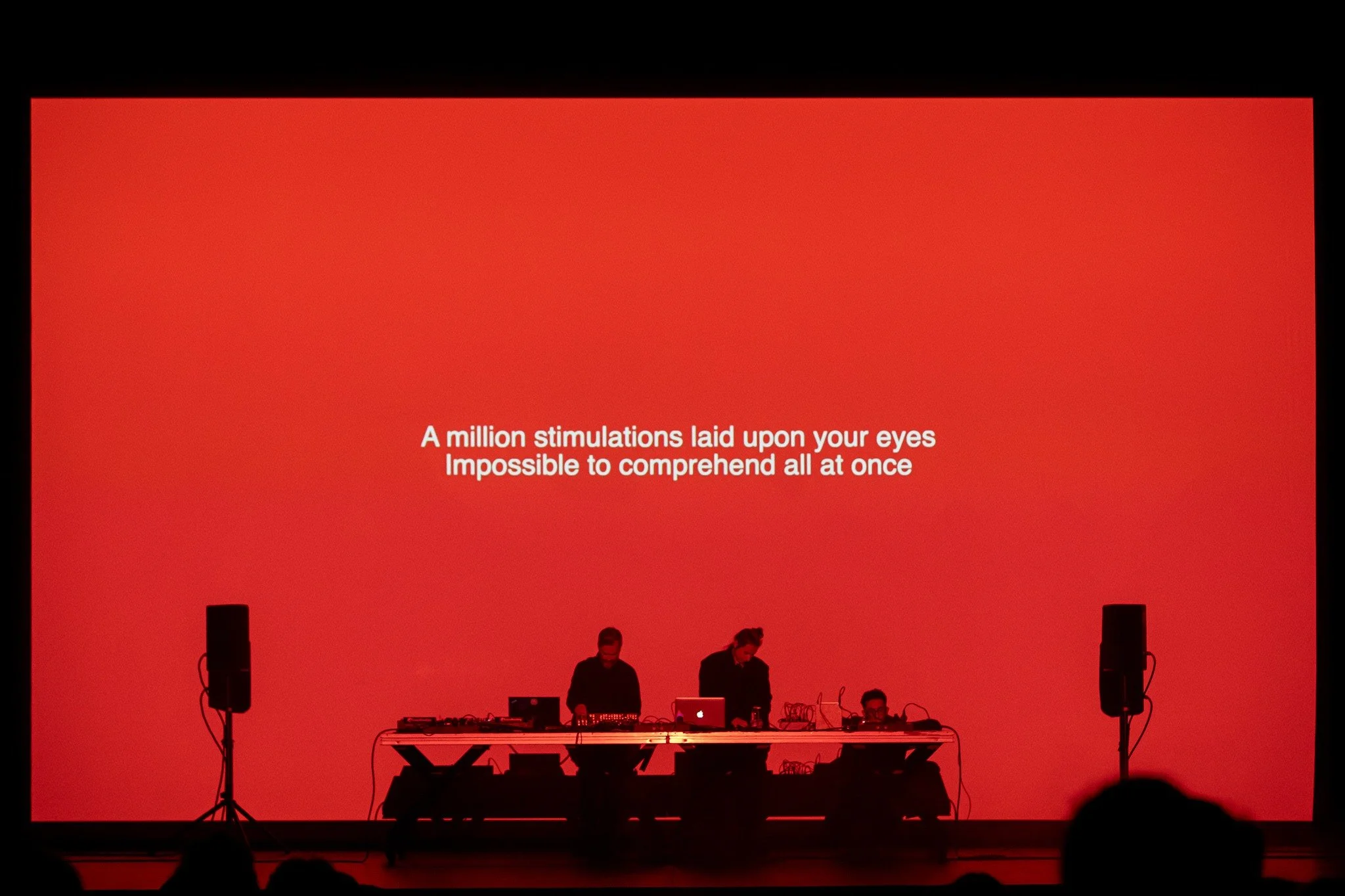
A Forbidden Distance was also a very important chapter of change because it was the first time I composed a film together with musicians. Messengers is an experiment in tension: who is deciding what, what is affecting what, who is directing, who is the audience, who is the performer—and breaking down those dynamics. With A Forbidden Distance, Mohammad [Mehrabani-Yeganeh], Ian [McDonnell], and I sat in a room and said, “We’re going to split the show into four parts. Each part is going to tell something different.” We built the music and the film together, which is a rarer dynamic. Usually, when someone works with film in a live music context, they’re understood to be doing the visuals. Other familiar relationships between film and music are biopics, backstage documentation or aftermovies. But building a show together in this way feels less explored. That’s where I find myself, where I’m pushing to exist. Sometimes I wonder if I’m a musician working with images.
Images from A Forbidden Distance at Semibreve — photo credit: Semibreve / Adriano Ferreira Borges.

Images from A Forbidden Distance at Semibreve — photo credit: Semibreve / Adriano Ferreira Borges.
You have developed a particularly close working partnership with visual artist Charlie Hope?
Since Charlie and I started working together, we have never stopped. We just have such a strong bond. We understand each other creatively. We don't even need to talk. It's a very deep, beautiful and collaborative friendship, where I feel we enrich each other. First of all, he works with light, so he works with something that affects the experience of music, but is often not considered the main role in a live music show. Both film and light are the ingredients that make an experience great, but they're also the ingredients that are the first ones to go, if budgets are tight, for example. It makes you always feel peripheral. I think the two of us really bonded over the fact our insistence that the shows are really built on equal awareness. We're building this show together, and I think both of us, in different ways, are enhancing each other. I feel there’s a kind of silent agreement with the friends I’ve filmed, something that rests on trust. When someone allows me into that level of intimacy, I feel a responsibility to try to portray them with love. It takes time and a lot of care.
Images from A Forbidden Distance at Semibreve — photo credit: Semibreve / Adriano Ferreira Borges.
Images from A Forbidden Distance at Semibreve — photo credit: Semibreve / Adriano Ferreira Borges.
This must be a very intense way of working?
I think, with Messengers, I reached a kind of peak at some point. It was a lot, and it became too much. I had no breaks to reflect or understand what was happening. I was constantly doing it.
It was like building a methodology, an alphabet of relationships, but also exploring different ways for the work to exist: a deconstructed film set with an audience at PAF Olomouc in 2022; a choral, expanded opera piece with Tutto Questo Sentire at the ICA in London in 2023; then back at PAF that same year, a closed-door film set with just two or three people at a time, alongside a photographic set. In 2024, it became an expanded three-hour version at Norient in Bern, a performance on the main stage at Le Guess Who? in Utrecht, and a screening at the BETA Architecture Biennale in Timișoara. In 2025, it took the form of a three-channel video installation within a group exhibition at FOMU in Antwerp.
These different forms were closely connected to site-specific commissions and the production possibilities each place offered. The commissions helped build the meaning of the work, but I feel that meaning never quite found its centre, because it was constantly evolving. Each new context changed the relationships between the people, the space, the filming and the audience—which is exactly what I wanted to explore. But desiring something and actually going through it, letting it pass through you and taking responsibility for it, are two different things.
Maybe it was also a form of resistance: trying to build a space where I could say, “I exist,” and, with the artist friends I felt I could build that space with, “We exist.”
Working that way takes a lot of restraint and care. I feel that staying in touch with yourself, with the people you work with, and with how everyone is feeling can be exhausting. I’m proud to have tested myself in so many different contexts, and each one has taught me so much. But I also felt the need to slow down, to look back at what had happened and understand what I had learned. So yes, it is exhausting, but it’s also brewing, like a living creature. A never-ending search for beauty, I guess…
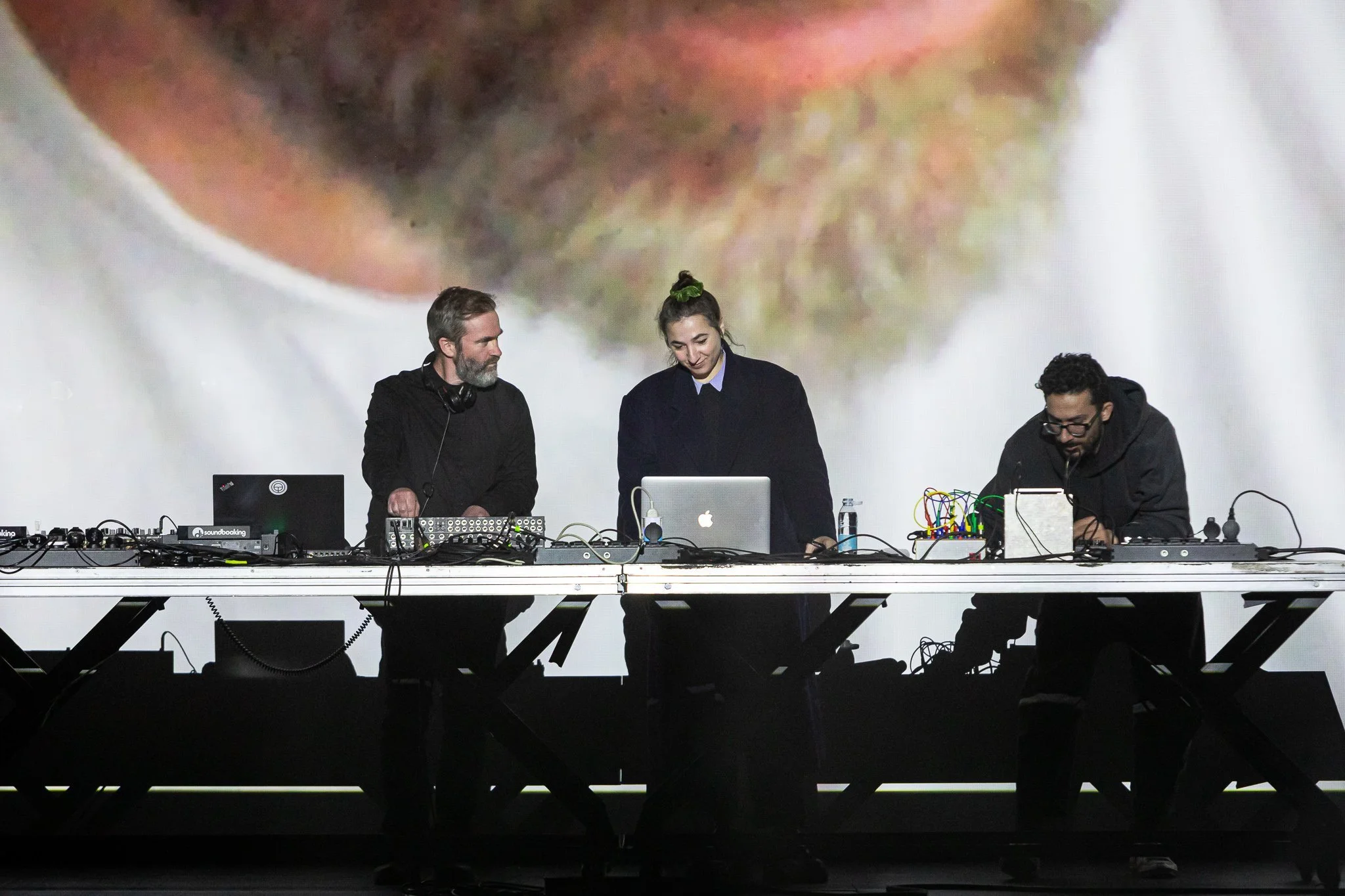
Images from A Forbidden Distance at Semibreve — photo credit: Semibreve / Adriano Ferreira Borges.
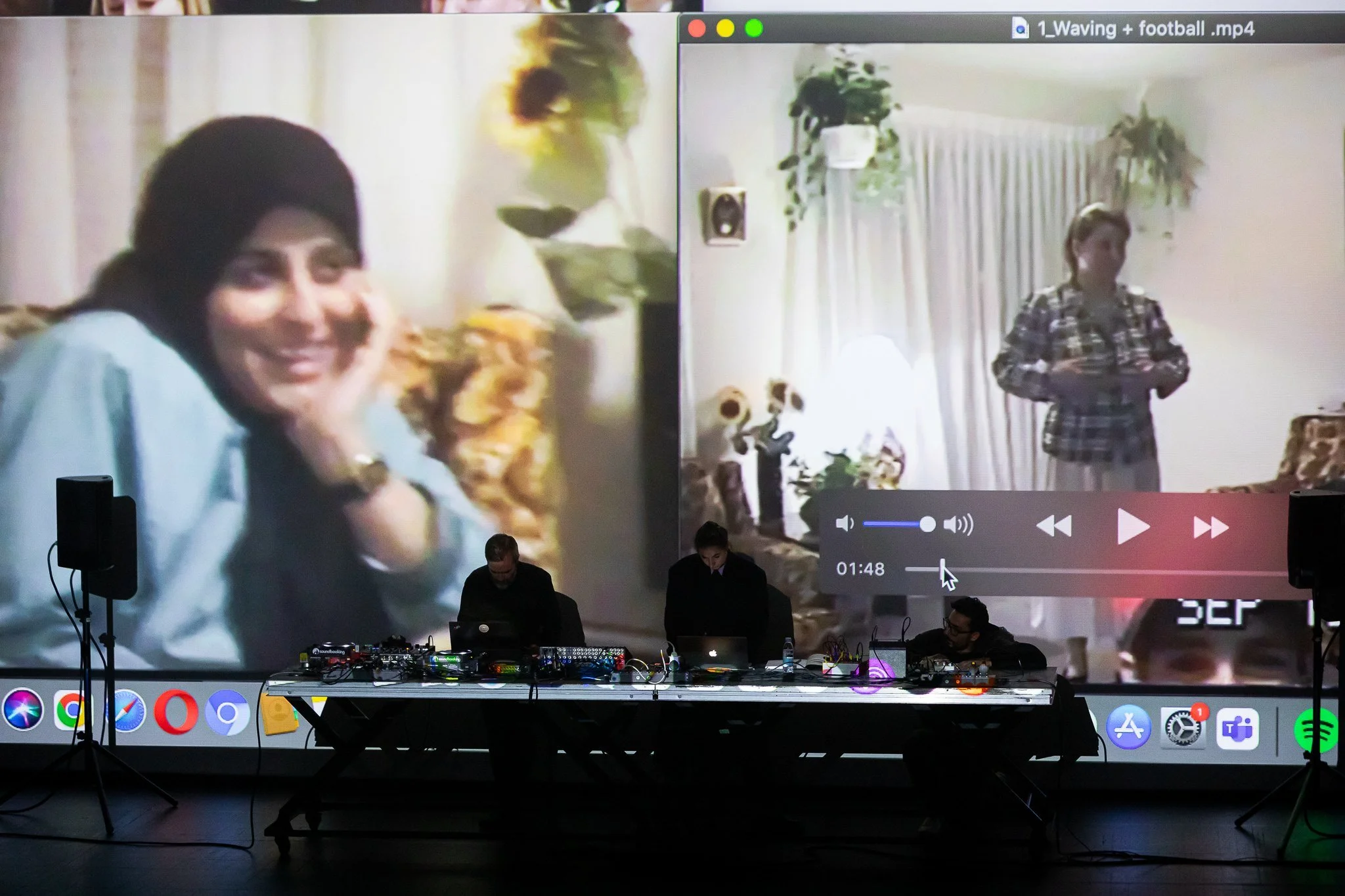
Images from A Forbidden Distance at Semibreve — photo credit: Semibreve / Adriano Ferreira Borges.

Images from A Forbidden Distance at Semibreve — photo credit: Semibreve / Adriano Ferreira Borges.
How do you choose new projects? Do they always need to present you with new opportunities to develop and learn?
For me, it really comes down to how I feel in conversation with someone. When someone comes to me with an idea or a desire, their enthusiasm and the conversations that spark from that connection are deeply entangled with how I end up making the work. Maybe it also has to do with the trust I feel they’re placing in me…
One of my latest commissions, Not Running, is a very interesting example. It was commissioned by Timothy Thompson, who oversees special projects at Adidas, together with David Fofe. Our meeting felt so special and encouraging that I became excited too, even though I had never worked with the support of a brand before.
Of course, I immediately thought about the relationship between music and running. Drawing on my experience of creating environments where different things happen in relation to one another, and bringing live performance and running into that context, felt like the right direction.
Not Running was a lesson in scale. I learned more about how I work within a larger environment, with different departments that understand they’re invited to make their own decisions. The camera team, often led by Toby Leary, makes decisions about the camera, Charlie makes decisions about light, and the musicians make decisions about music - Olivia and Coby have worked together for so many years. All these different degrees of connection and responsibility become part of what generates the actions. Somehow, no one needs to ask me about everything. It’s an ecosystem that functions autonomously, like a digestive system.
Then I can disappear into it, if I want, and just sit and film. I can step away and feel that the film will shoot itself. I really like the idea of my films “happening”—just happening on their own.
I like making decisions in editing. It’s a different kind of decision-making from being on set. Maybe it’s more accurate to say that what happens on set and what happens in the film are two very different experiences.
In Not Running, I think it might be possible to perceive a kind of self-consciousness about “mastering something.” Or maybe your own obsessions become so clear that you can see both sides of them at once: “The more I feel I’m mastering something, the more I feel it’s taking something away from me.” There’s this bittersweet sense that the more you understand something about yourself, the more you lose.
I think Not Running has that element of time perception: this contrasting feeling of understanding more about why I do the things I do, and how I do them, while also feeling that I’m losing a part of myself in the process.
In the film, I ask Akihide Monna from Bo Ningen how he feels when he’s performing, and he says, “When I’m drumming, when I’m performing, I feel like the more I’m performing, the more I’m losing life”, and yes, that’s how I felt at that moment. Losing and gaining… beauty and loss…
I tend to read different books at the same time. I don't read one book at a time. I'm more cross-booking. A bit like my films. If you've seen the use of subtitles in my films, they're all referencing different things I'm reading and watching at the time I'm making the film. For example, in Forbidden Distance, I was reading The Peregrine by J.K. Baker. The Peregrine is the story of a man who becomes obsessed with this bird. He becomes so obsessed with it, he writes about all the habits of the bird, what the bird eats, how it moves during the day, during the night. In fact, he's so obsessed with it that he starts acting like the bird. It's a story that shows the more you're obsessed about something, the more you become what you're obsessed about. At the time I was working on Forbidden Distance, when I was reading that, and I talked with Mohammed about it, he was like, “oh, how funny. There's this experimental Iranian film called The Cow from the 70s and it's exactly the same story.” This man has a cow, and the cow provides for the entire town. Then, when the cow dies, the man starts acting like the cow. I was thinking, that's so beautiful, these parallel mythologies that exist in different times in different countries and actually have similar sensitivities, and because I'm obsessed with what I do, I become what I'm doing. It's almost like I became the bird, I became the cow. I wanted it to become my obsession. With Not Running, I think I went really deep because I wanted to make something I would still be proud of in ten years. The more I obsessed over it, the more I understood that I was losing something else that was really important.
Now I feel I want to be light. I want to let myself breathe as I move through sixteen years of archive footage for my next film. Let the years, the relationships, just be.
Images from A Forbidden Distance at Semibreve — photo credit: Semibreve / Adriano Ferreira Borges.
Interview by Finn C.
What to read next