Sikau/Pubalova at Kunsthalle Praha
The Czech word zezelenat means, at once, the moment trees cross into spring, a face contorted with nausea or envy, the naivety of being young and inexperienced, a tech corporation’s marketing tool. All of these are different forms of seemingly contradictory “becoming green”. The word holds spring and sickness, innocence and greed, wonder and cynicism. It feels that a linguistic coincidence diagnoses the present moment; one that the artist duo sikau/pubalova have materialised and chewed in All Things Digesting, their first solo exhibition at Kunsthalle Praha.
Visitors are welcomed at the threshold by a falling voice that slips, unexpectedly, into the interior of your head, to withdraw again the moment you take a few steps forward. A skeptical Kunsthalle custodian describes what she likes about her daily work – seeing beauty in art – and speculates about the exhibition before it comes to exist. Through her disarmingly honest answer, touch toy grieve (2026) functions as a humorous airlock between the outside world and the haptic, scented, and sonic atmospheric environment that is made to be touched.
All Things Digesting, curated by Iva Polanecká as part of her initiative Aw Lab! – inspired by Czech avant-garde artist Zdeněk Pešánek's awe-creating kinetic and light sculptures – marks the first time that Kunsthalle Praha has an exhibition centred on multisensory installations and touch. Central to this is an unusual acoustic staging. The works are connected through a carefully synchronised sound design whose expansion of vibration, voices, and noise creates a constantly shifting sonic collage that achieves a deeply cohesive atmosphere. It generates a spatial experience of alternating proximity, presence and distance. The viewer is drawn to walk through it again, and again.
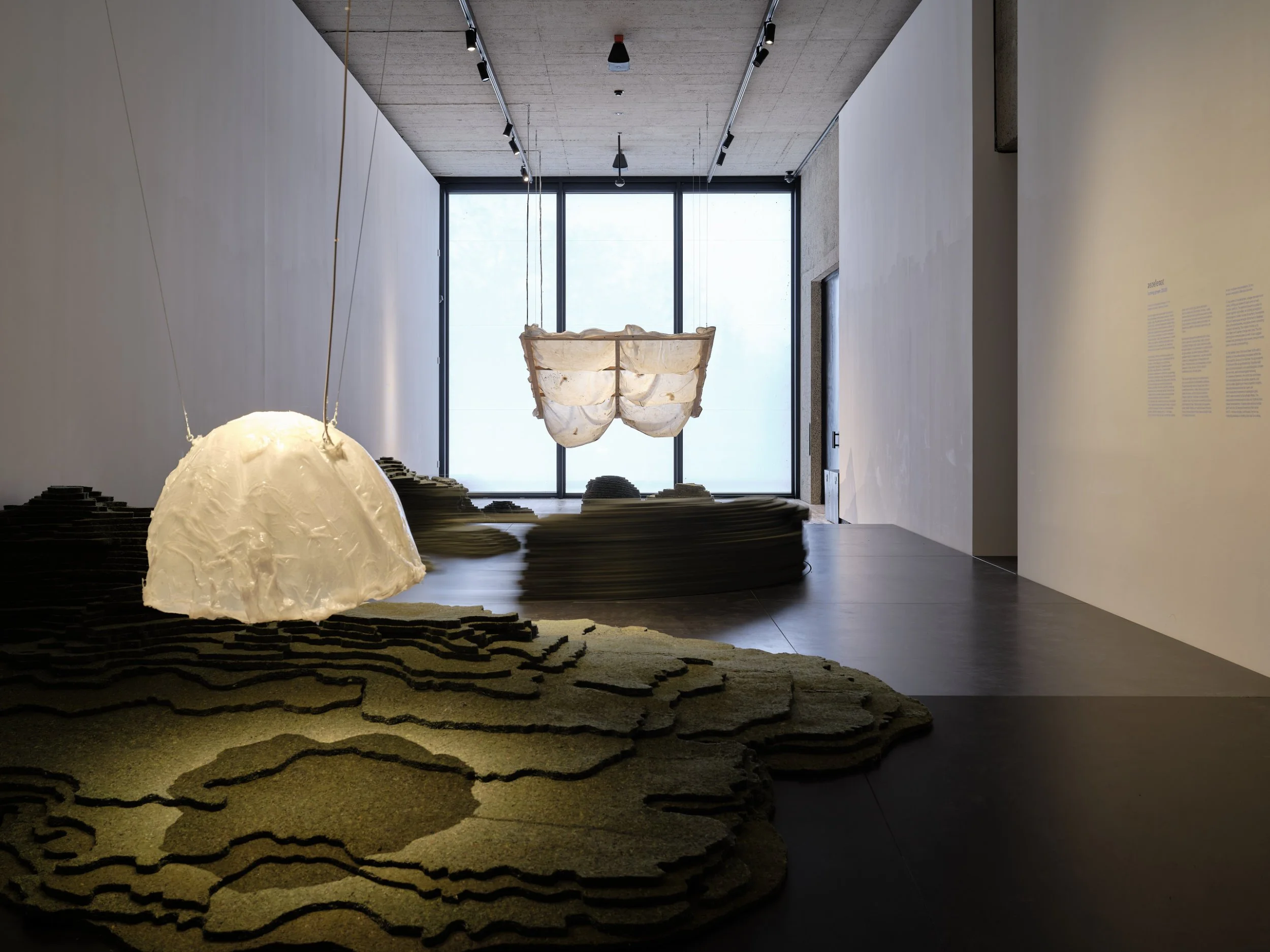
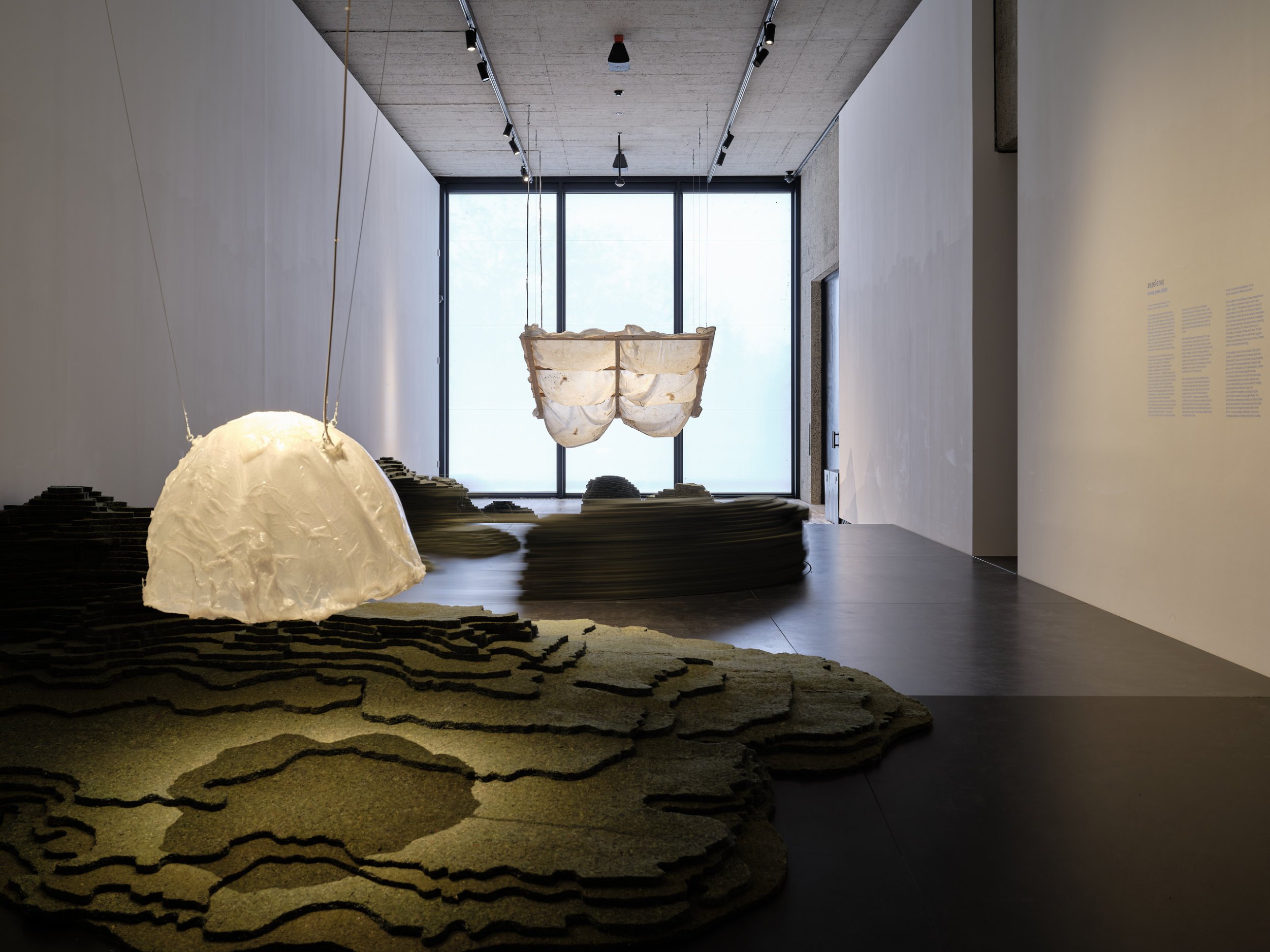
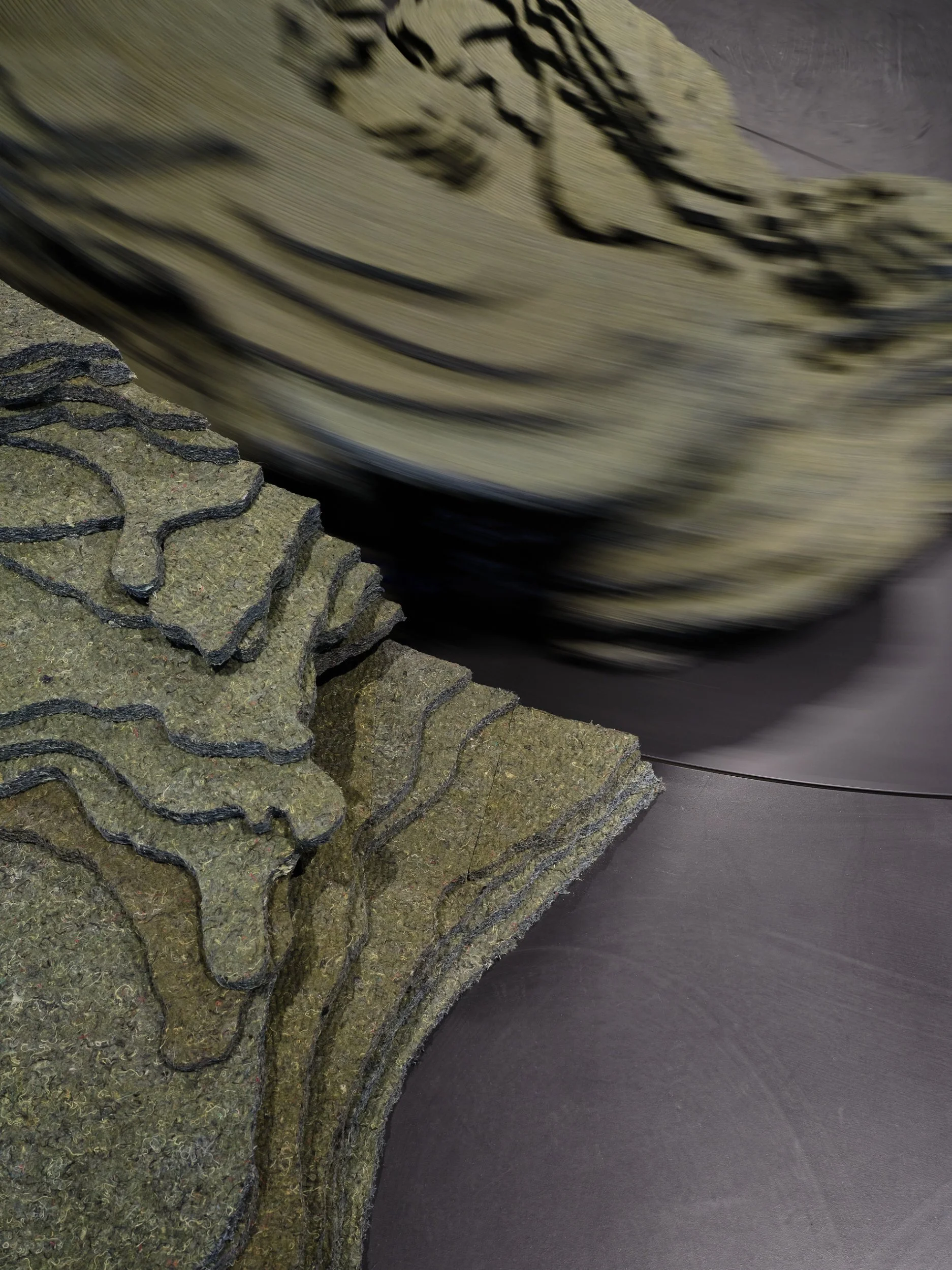
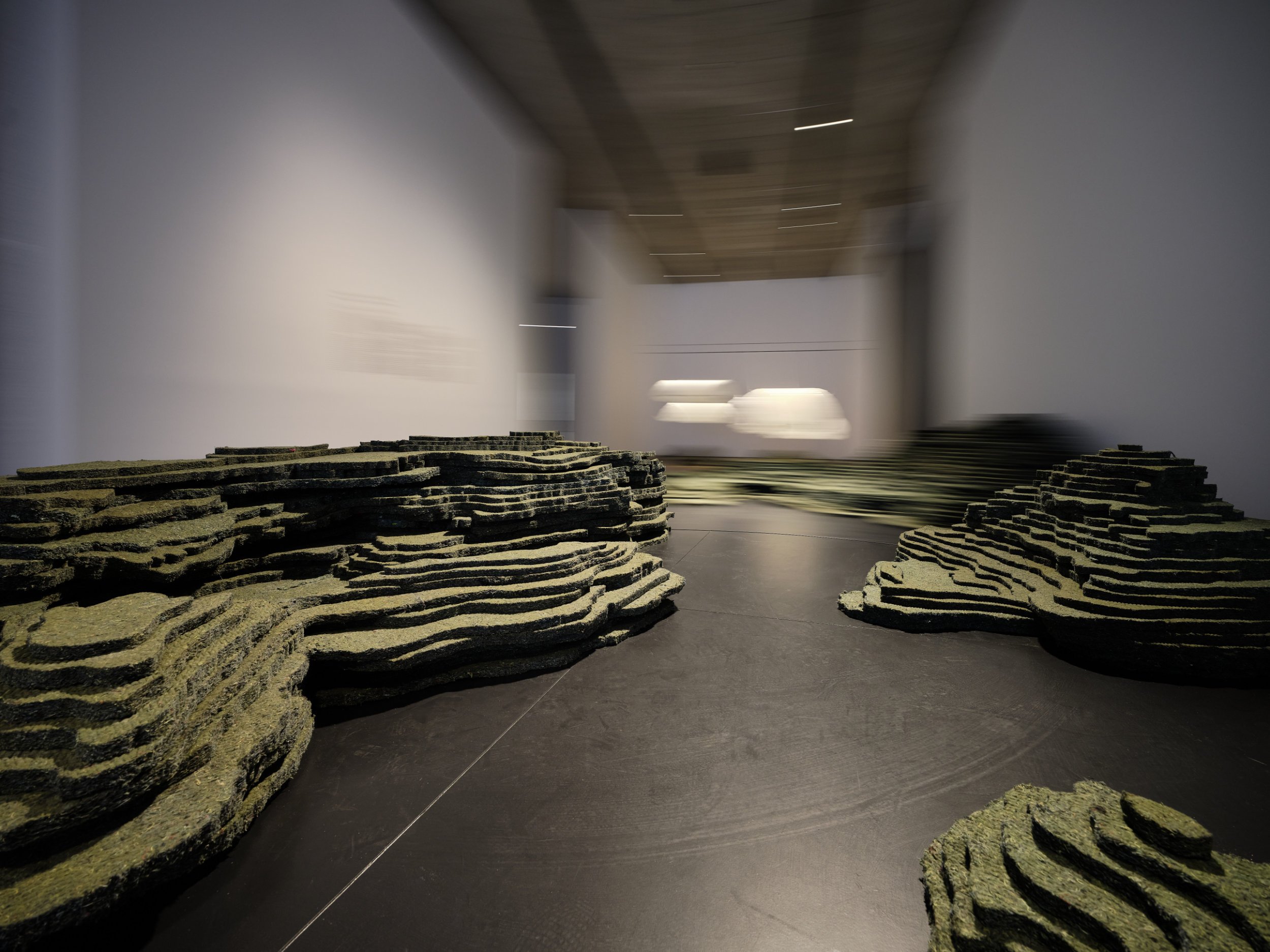
At the centre of the exhibition stands Turning Green (2026), a large-scale rotating carousel whose plush topographical surfaces were drawn from local mountains, depleted mining sites, and urban environments. Seated on recycled felt that slowly decomposes, you are surrounded by a quadraphonic sonic system. In its slow pace, vibration embeds you from the inside, but it has passed through a body before it reaches yours.
For the sound composition, the artists collaborated with Brazilian vocalist Marianna Carvalho, whose practice draws on the Movimento Antropofágico, the early twentieth-century modernist proposition that colonial cultures could be swallowed, digested, and transformed with Indigenous and Afro-Brazilian roots. Here the method becomes carnal: she places speaker membranes inside her mouth and routes microphones through her ears to play sound from inside out. Sikau, a mezzo-soprano herself, sings back into Carvalho's mouth. We hear cavernous murmurs, voices intertwined in suffocation, half-intelligible words, haunting whistles, soothing breaths. Rotating gently, the installation recalls a playground, but disturbing, estranged. An overheard, persistent siren holds the body in unresolved alert, suspended between warning or background noise.
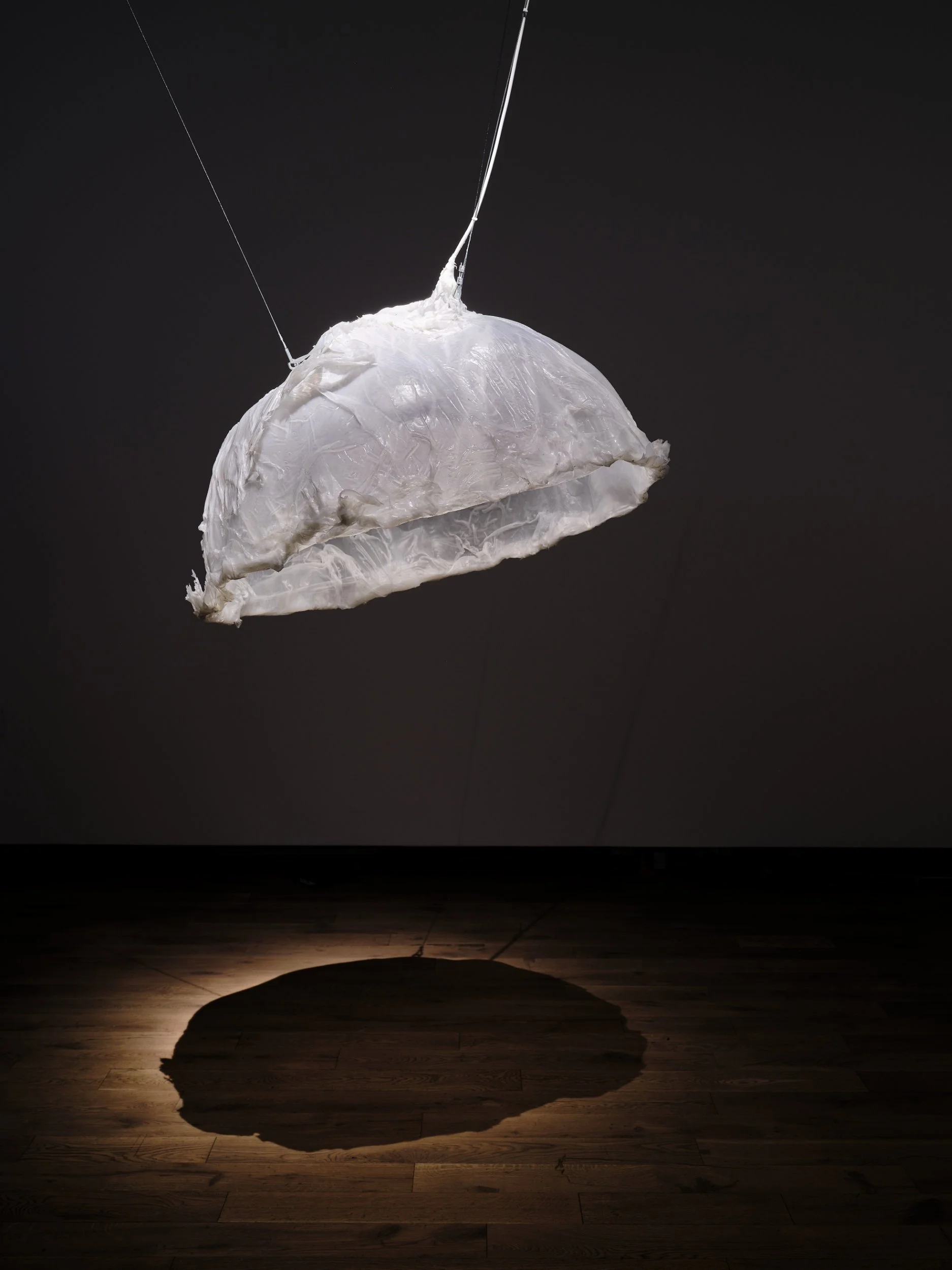
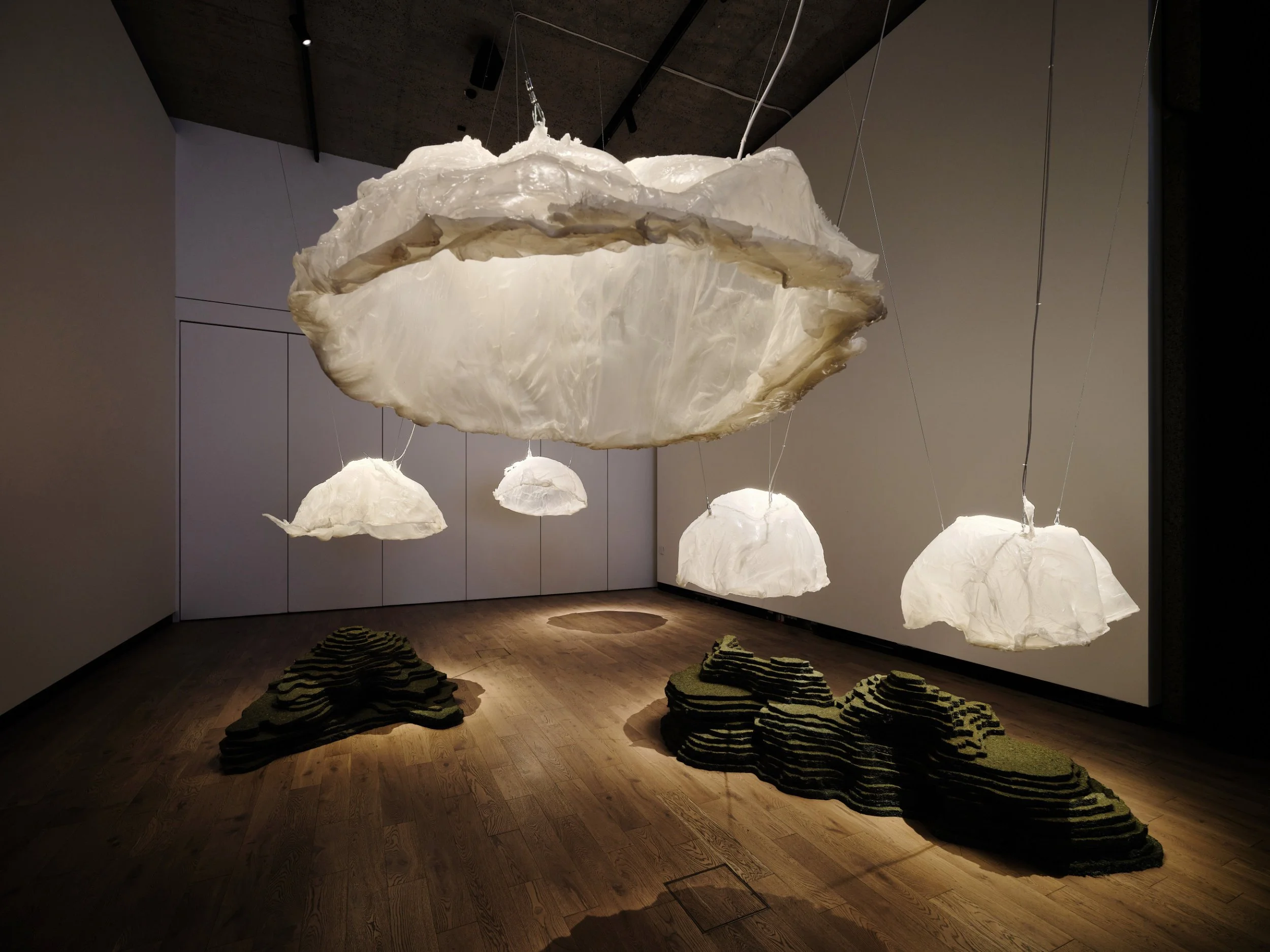
The raw verbal material came from locals who responded to an open call and shared their relationship to environmental collapse. sikau/pubalova drew on exchanges with agricultural sociologists, eco-psychologists, climate economists, and anthropologists, tracing the history of ecological grief, from the floods in the 17th century’s Little Ice Ages tied to religious sin, through the slow violence of industrial landscapes on postwar communities, to the diffuse mourning of the climate crisis. These interviews can be heard, before the digestive sound processing, in a series of hanging sculptural cocoons. Underneath one of these intimate listening devices, a Ukrainian scientist claims nature as ‘a silent victim’ of the war, to then speak with warm contradiction about preferring comedies and erotic films to environmental documentaries. A historian reflects on Czechoslovakian generations, whose living conditions have improved in the second part of the twentieth century, and whose experiences cannot be denied. Someone describes the moment Canadian wildfire smoke seeped under their door, 'My body knew what I imagine it would feel like if you were like an animal that gets hunted', then, quietly, 'Am I gonna be safe outside for another hour?'
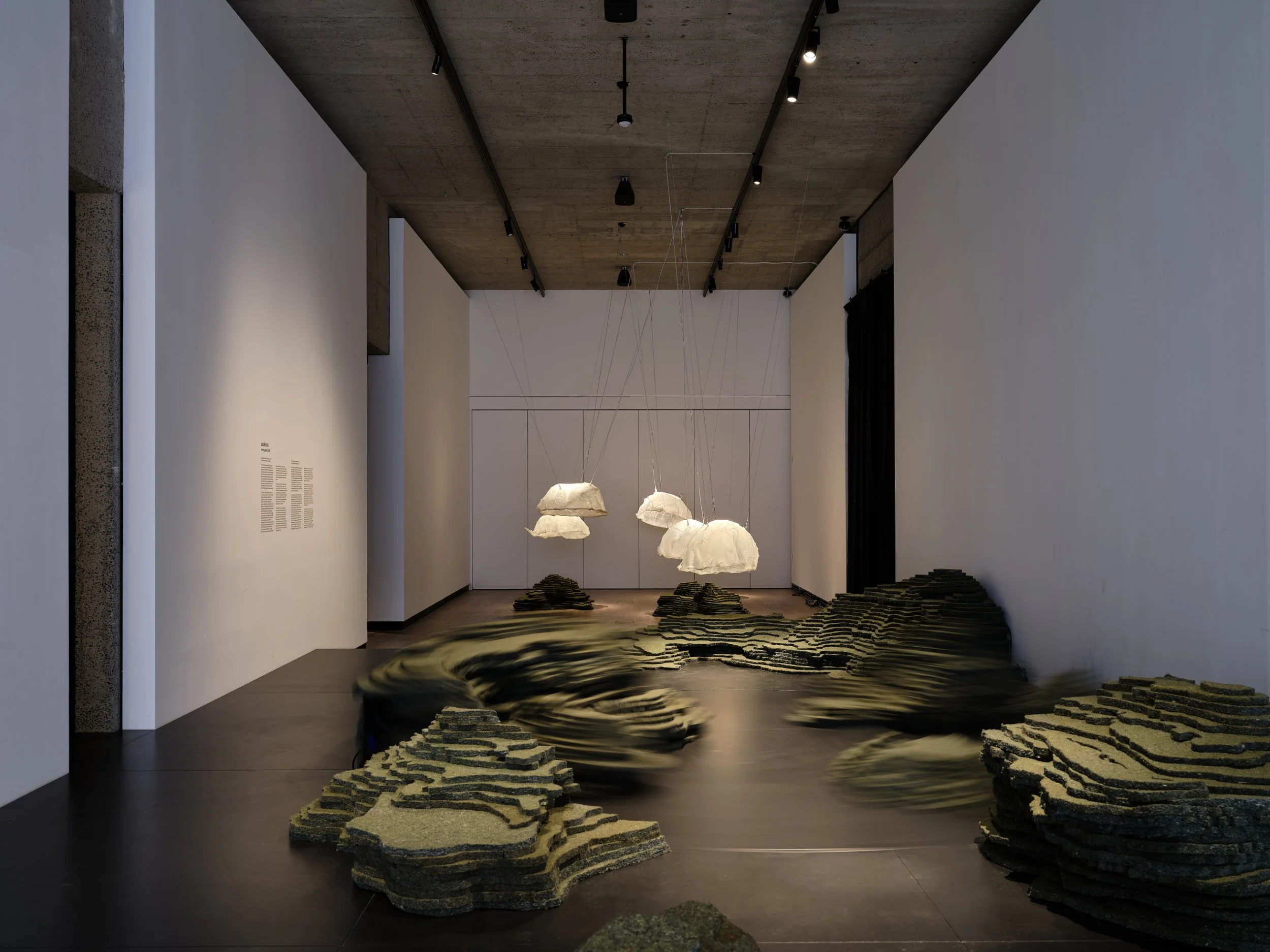
The voices do not resolve into a conclusion. What emerges is grief digested collectively and very differently across bodies, generations, and geographies. It persists as hauntological: something that demands translation but remains, stubbornly, incommensurable.
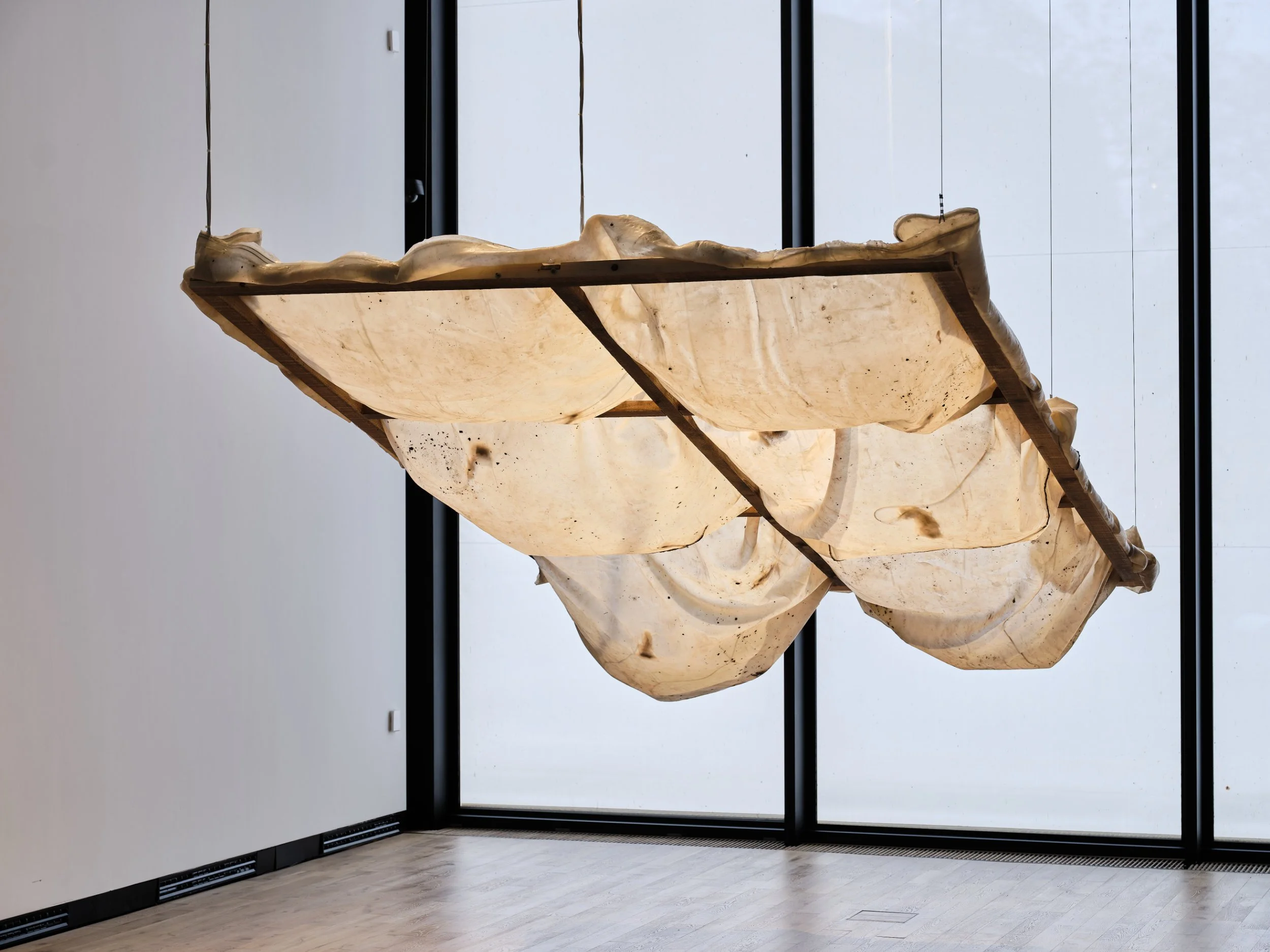
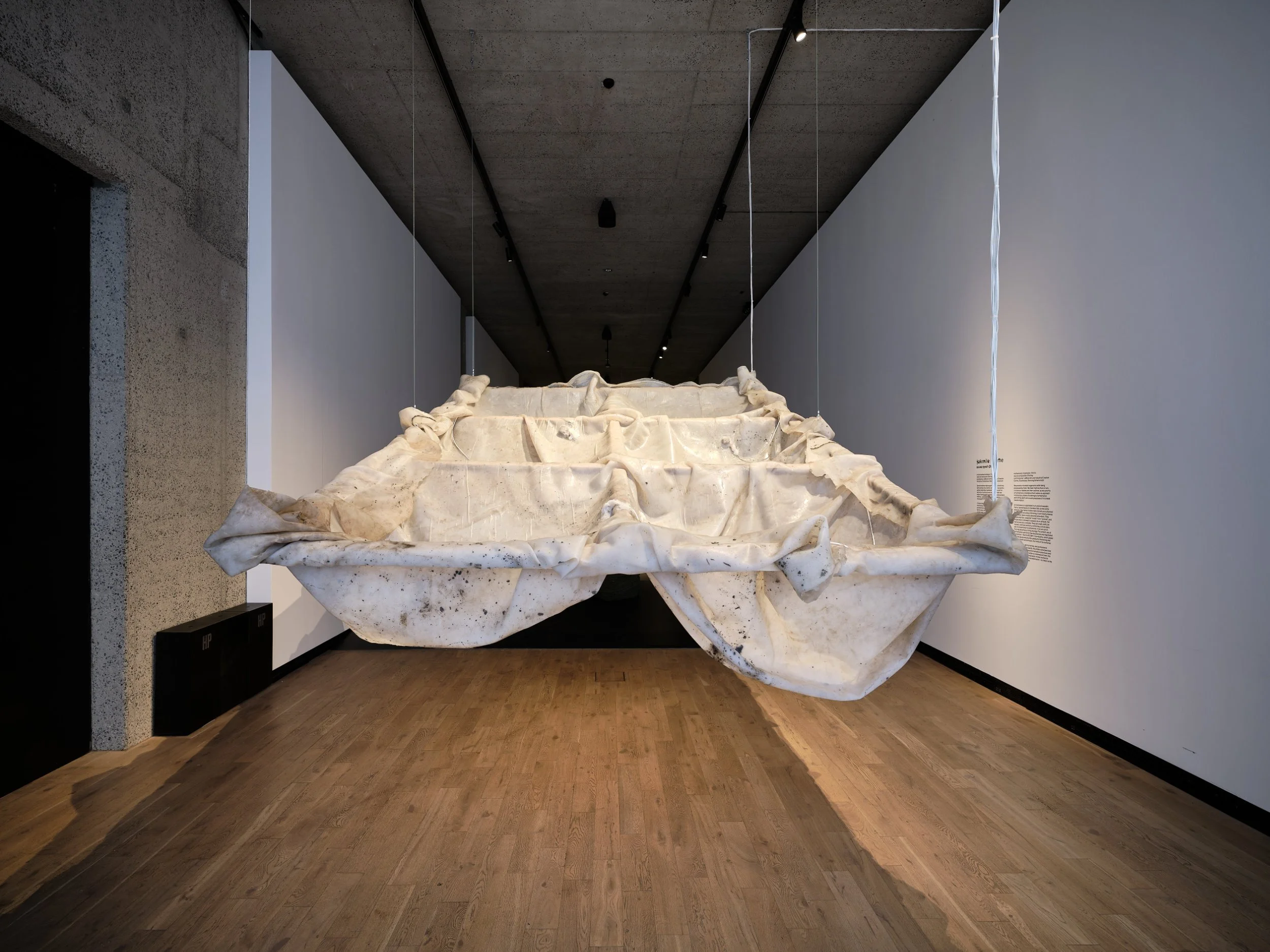
If Turning Green metabolises language, the surrounding works draw on the metabolisation of matter itself. Hanging diagonally nearby, As We Synch (2025) suspends a membrane of silicone and fibreglass, soil-dark and muddy, stretched across an ancient wooden frame. Moving underneath it, field recordings of traditional and scientific fermentation practices produce vibrational and sonic textures that draw you into the imperceptible timescales and slow rhythms of microbial transformation.
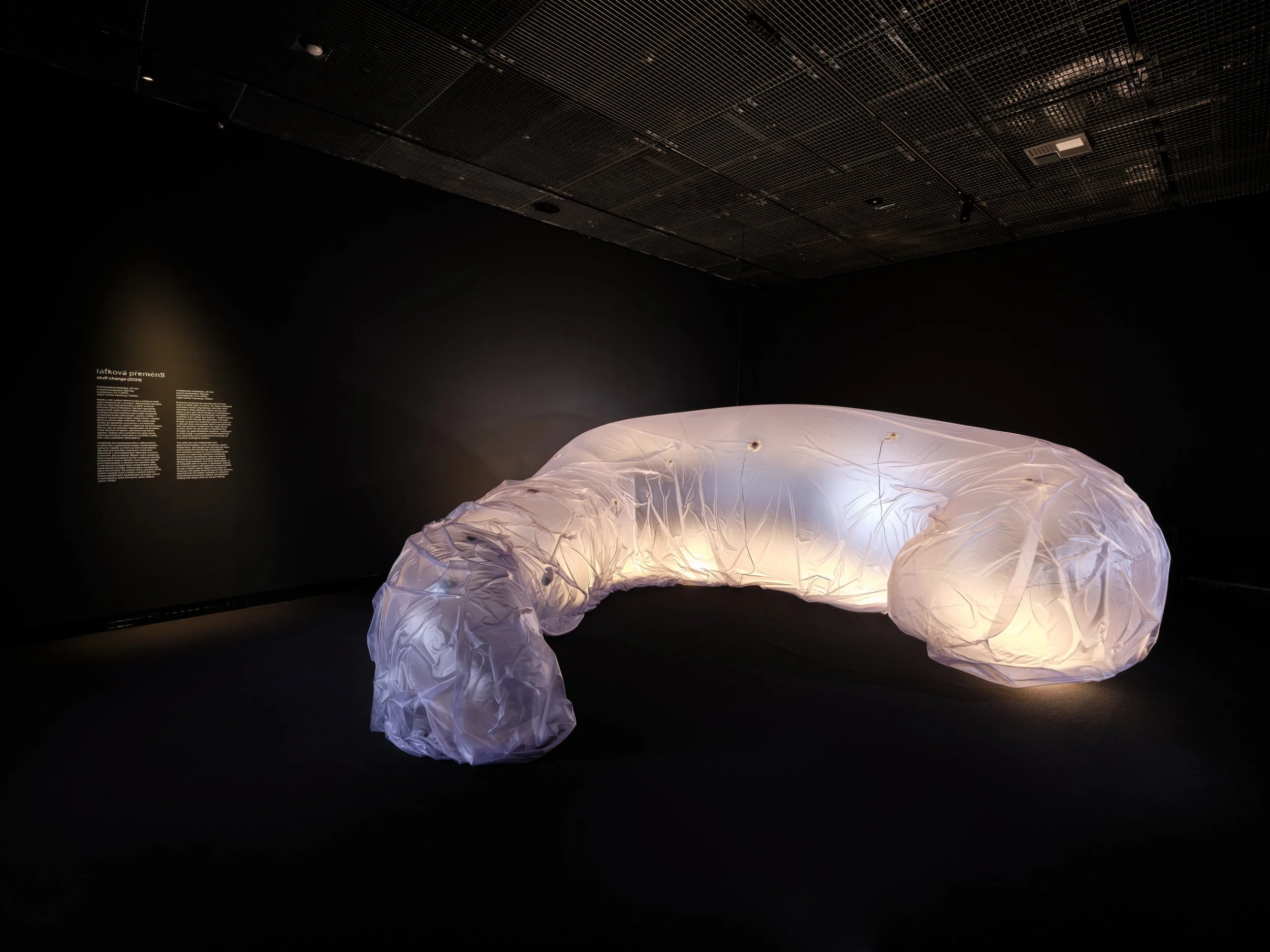
In an adjacent room, Stuff Change (2024) turns the attention to listening to your gut through a collective metabolical synchronisation. An inflatable sculpture swells and contracts outward, emitting an electroacoustic gutscape, a subtle orchestration of gurgles, growls, rumbles from the artists and stoma patients composed by sound artist Ella Kay. These sounds roll outward into the synchronised sonic collage of the main room, culminating in a moment where all the compositions align in a single swallow of sound that moves through the whole space, making the multisensory proposition feel genuinely spatial rather than room-by-room.
‘In some aspects, reality is initially a food,’ wrote Gaston Bachelard to describe the prescientific European perception of digestion as a metaphysical act: a process in which the body transforms the external world into itself. stuff change situates our digestive process within that threshold, the body as the site where outside becomes inside. In listening deeply to our – and others – guts, it opens a space to recognise intuition as a form of embodied, non conscious cognition: a space to trust the kind of knowing we call gut feeling.
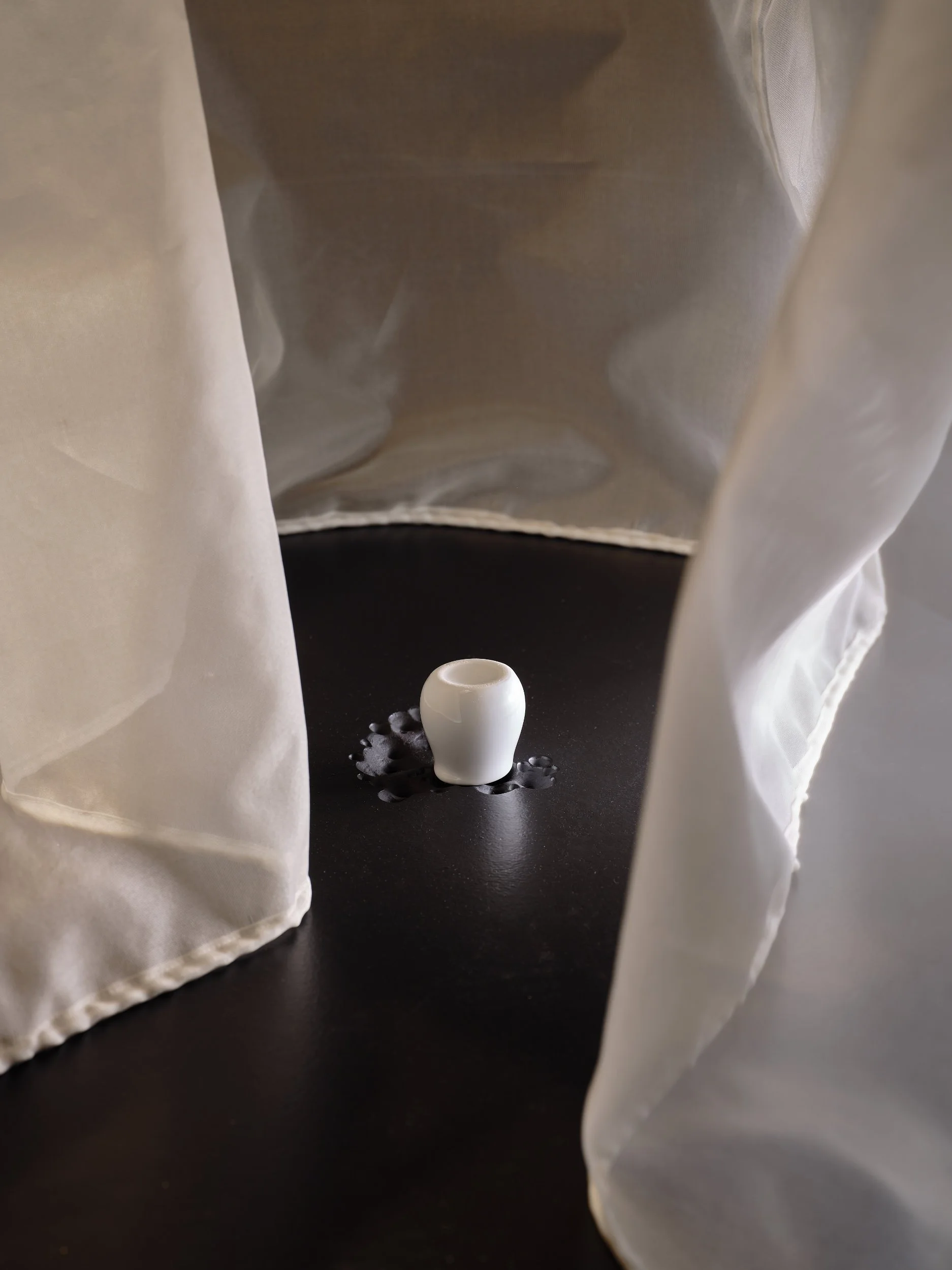
At a low, long wooden table, reality is initially volatile (2026) offers, building on Bachelard, the most intimate proposition of the exhibition. The viewer moves along a sequence of aromas the artists have developed in collaboration with a microbiologist, tracking a spectrum between aversion and attraction: burnt wood, musty earth, wet forest, familiar rubbish. Nothing lands as simply pleasant or unpleasant; everything is layered in ways that trigger somatic memory before the mind has time to intervene. Between each scent, you are asked to smell your own skin, a reset that is also a recognition of the body as its own baseline.
Permeable membranes, biological, sonic, and sculptural, allow substances, sound, and signals to pass through, making the foreign part of the self, where what the body absorbs becomes what it knows. The exhibition breathes as one body, striking a balance between provocation to thought and aesthetic experience. The conversation around solastalgia, sikau/pubalova suggest, has shifted: we have moved from naming the condition to the question of how to live through and within it. What the exhibition holds, across the intercultural, the microbial, the visceral, and the olfactory, is environmental grief as a perceptual, collective, and contradictory condition to be inhabited. A Czech ecologist describes it most precisely: ‘If the grief doesn't have this natural path through the intestines, then it is simply necessary to help it a bit.’ sikau/pubalova have built an exhibition where that can be felt, digested, and, perhaps tentatively, released.
Words by Ana Prendes
What to read next