'Tide of Returns' at Ocean Space
“Tide of Returns” opens the 2026 season of Ocean Space in the former Church of San Lorenzo in Venice, from late March through October 11. Like the tides themselves, the exhibition carries back what once seemed lost: objects, memories, identities torn from the communities that had given them life. Curated by Khadija von Zinnenburg Carroll and commissioned by TBA21 Academy, it brings together the Repatriates Collective and artist Verena Melgarejo Weinandt in a collective act of care and cultural restitution.
The role of the arts and water in processes of cultural restitution and repatriation. These are the themes that Ocean Space, commissioned by TBA21 Academy, brings to Venice at the opening of the 2026 exhibition season, a magnificent exhibition titled “Tide of Returns”. For the occasion, two large site-specific installations are presented by Repatriates Collective, a collective of artists from the northern Pacific of Australia, southern and western Africa, Europe, and Latin America. The venue is the magnificent former Church of San Lorenzo in Venice, open for the exhibition from late March through October 11. Built from gestures of giving and receiving, Tide of Returns at Ocean Space invites us into the ebbs and flows of tidal movements. The project redefines the notion of "return," approaching cultural restitution not as a political claim but as an act of collective care, kept alive across generations.
The location is peculiar: it carries centuries of trade, faith, empire, and the continuous circulation of political ambitions, people, and goods across the Mediterranean. Curated by Khadija von Zinnenburg Carroll, the exhibition brings together the work of Repatriates Collective and Verena Melgarejo Weinandt, developing a path centred on the theme of cultural restitution.
““Objects are stolen, taken, betrayed. They cross the ocean, enter display cases, and acquire new names. The communities that made them, the ceremonies that animated them, the lands they inhabited. None of these parts remain with them. What is left for us?” ”
Ocean Space, a platform for Ocean imagination, and TBA21 Academy
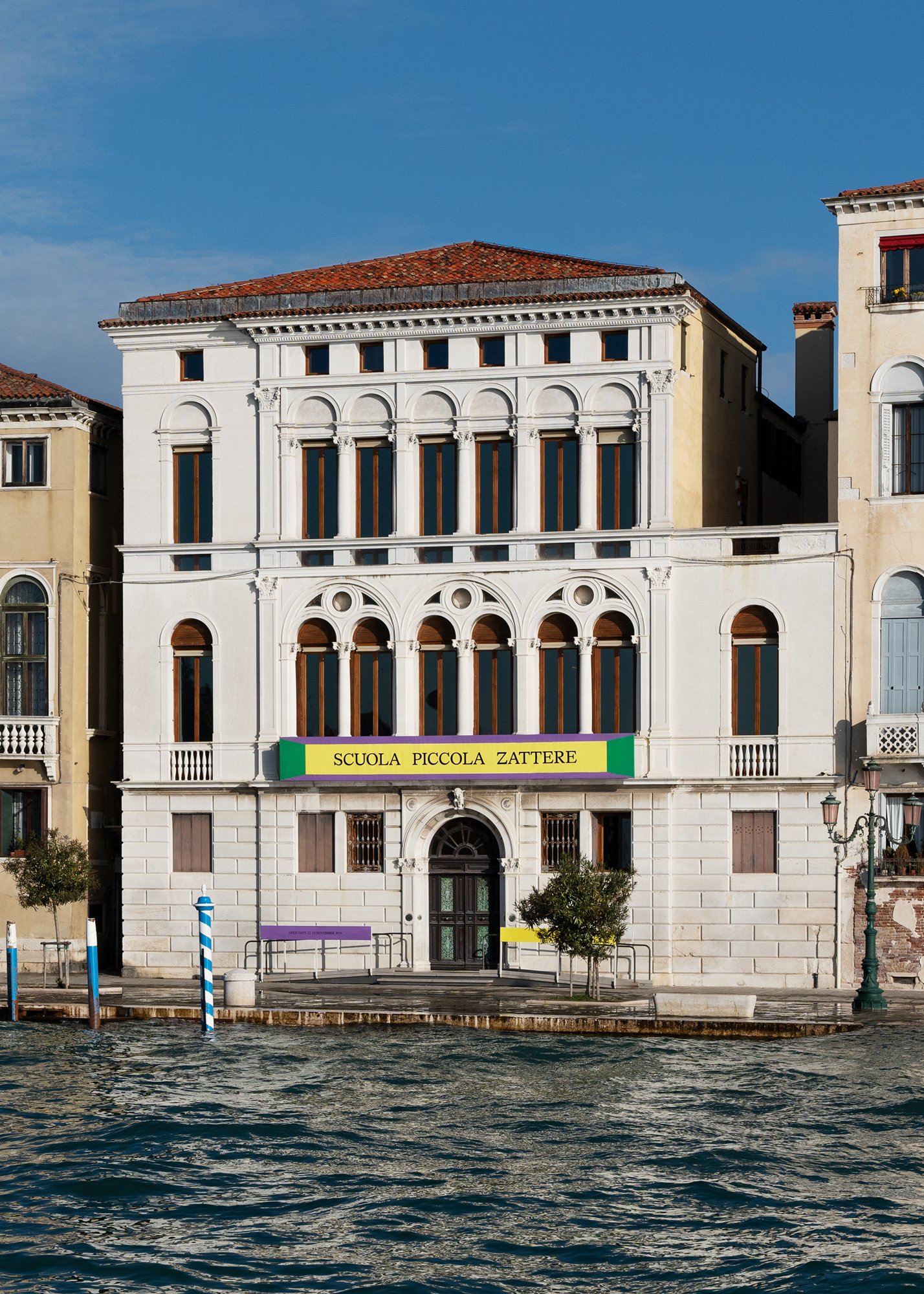
The church has hosted Ocean Space for several years, a planetary platform for exhibitions, research, and public programmes that catalyse critical ocean literacy, collaborative research, and environmental advocacy through the arts. Ocean Space opened to the public in 2019 with Joan Jonas's exhibition Moving Off the Land II, having been largely closed to the public for over 100 years and following extensive restoration works completed in early 2020. Ocean Space runs an annual programme and is open to the public from spring through autumn.
““The exhibition is a ceremonial act of reappropriation; a kind of homecoming that goes beyond activism, in search of a deeper form of resistance”.”
Founded and led by TBA21–Academy, under the direction of Markus Reymann, Co-Director of TBA21 Thyssen-Bornemisza Art Contemporary, this embassy for the Ocean promotes arts, engagement, and collective action. Since 2022, the art and patronage foundation has commissioned artistic practices that reimagine the world through long-term support of collaborative, transdisciplinary, artist-led research, fostering intercultural dialogue. TBA21–Academy, TBA21's research platform, promotes a deeper relationship with the Ocean and broader ecologies through the lens of art, to inspire care and action.
Activism in the context of cultural restitution
““Objects are stolen, taken, betrayed. They cross the ocean, enter display cases, and acquire new names. The communities that made them, the ceremonies that animated them, the lands they inhabited, none of these parts remain with them. What is left for us? What remains are the people in the factories, dressed for work, carrying the memory of their craft.””
These logics continue to structure museum acquisitions, negotiations, restitutions, and the legal architectures that separate objects from the communities to which they belong. They are not relics of a colonial past: they are operational now. I believe we can see, in all the violent conflicts around us today, that culture is always a front line and a first target.
Repatriates Collective has spent years working against this field, through film, installation, performance, and sustained collaboration with communities in Namibia, Australia, Mexico, and beyond, a path centred on the theme of cultural restitution.
This year's installations, curated by Khadija von Zinnenburg Carroll, focus on the possibility of moving beyond certain forms of cultural, social, and environmental violence, telling the story of "cultural return" through community histories, practices, ancestral lineages, and kinship ties, in dialogue with indigenous cosmovisions and the shaping power of water. Through video, sound, and textile works, the installations adopt indigenous perspectives to promote cultural preservation and environmental regeneration in two new multimedia commissions.
““We bring a different way of transmitting cultural knowledge. Only when we are able to deeply perceive our interconnectedness will we be able to practise care. These women guide us in the intergenerational teaching of stories that will give the future hope and love.””
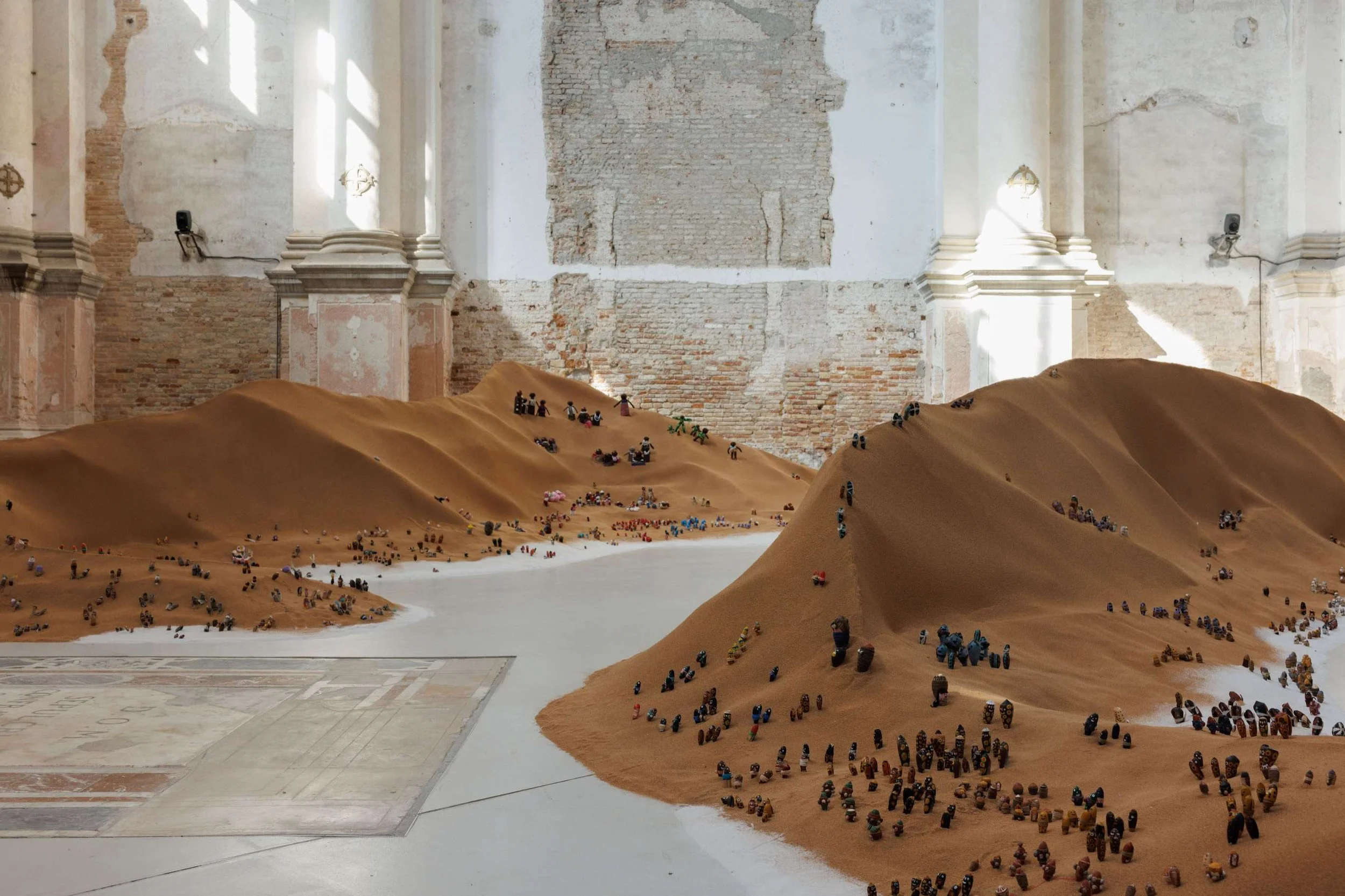
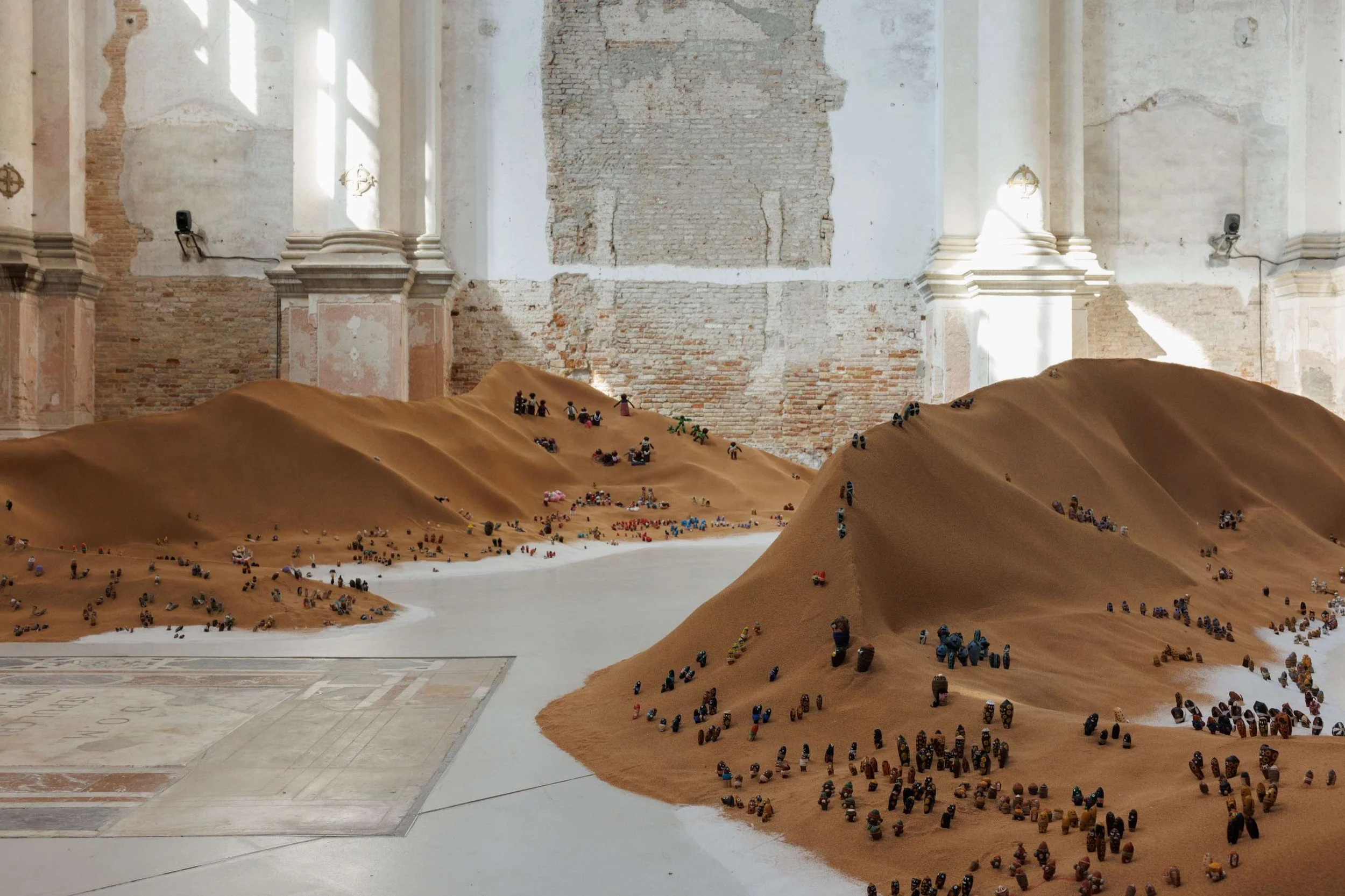
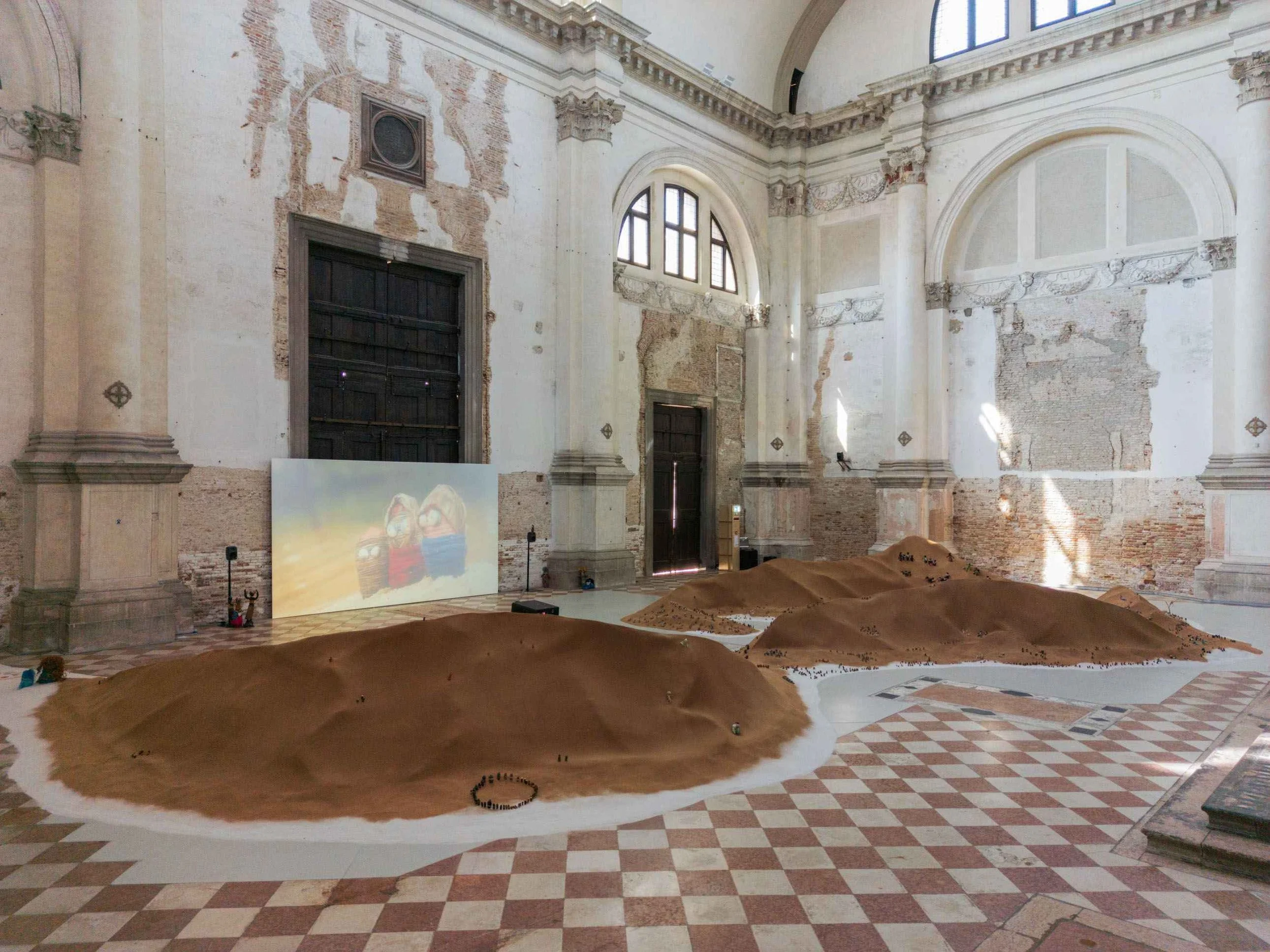
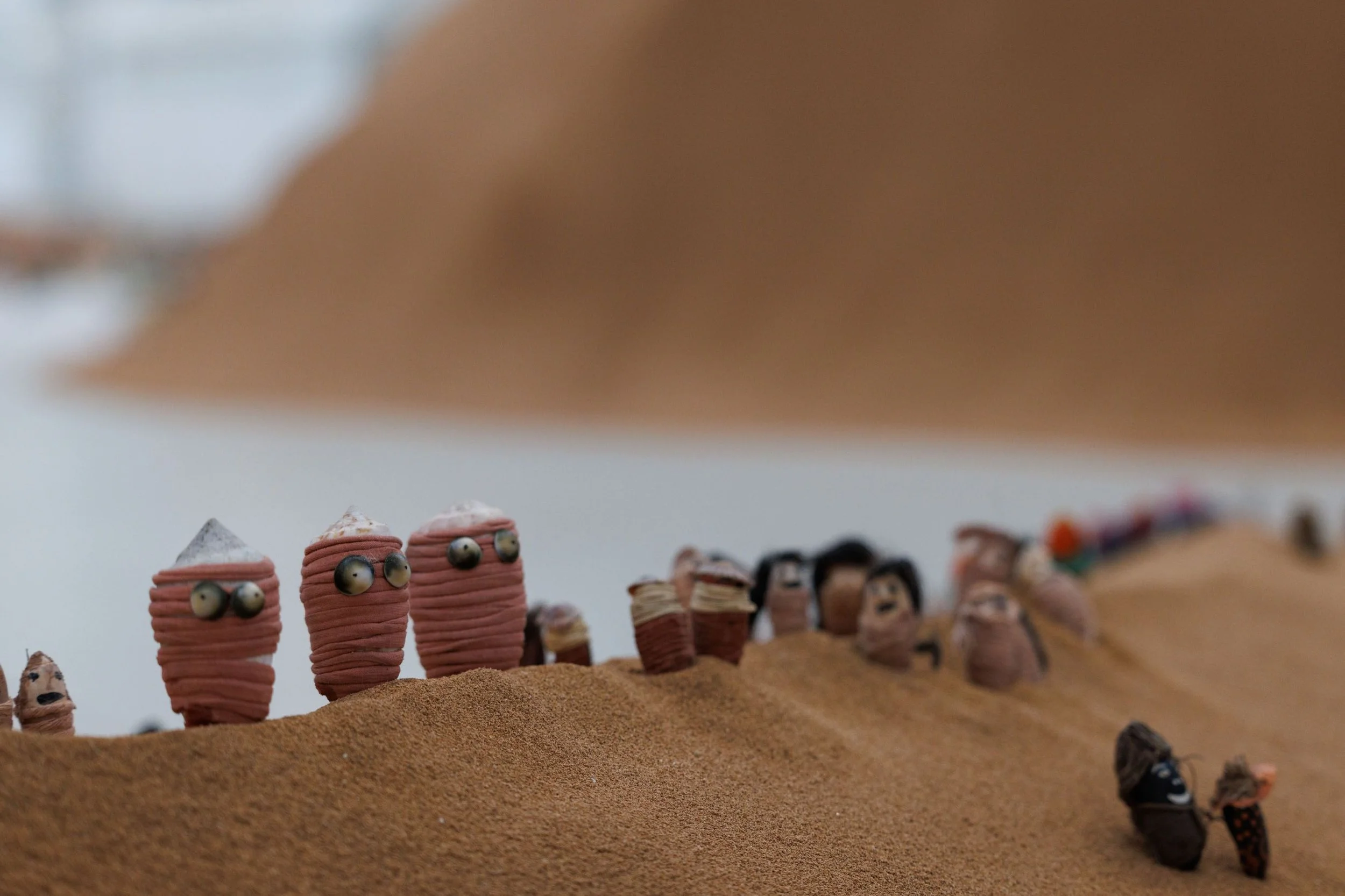
The two naves of the former Church of San Lorenzo have been structured into distinct installation moments. At the entrance, occupying the entire space, stands the majestic and poetic work of Repatriates Collective. Sand, thousands of dolls made from shells and fabrics, video and sound: “From My Mother's Country” is the installation that follows the dressing process of the Dadikwakwa-kwa, dolls that unite communities across continents, reaffirming indigenous resistance and knowledge, with Namibian textiles prepared for their journey to Venice, alongside a film on screen.
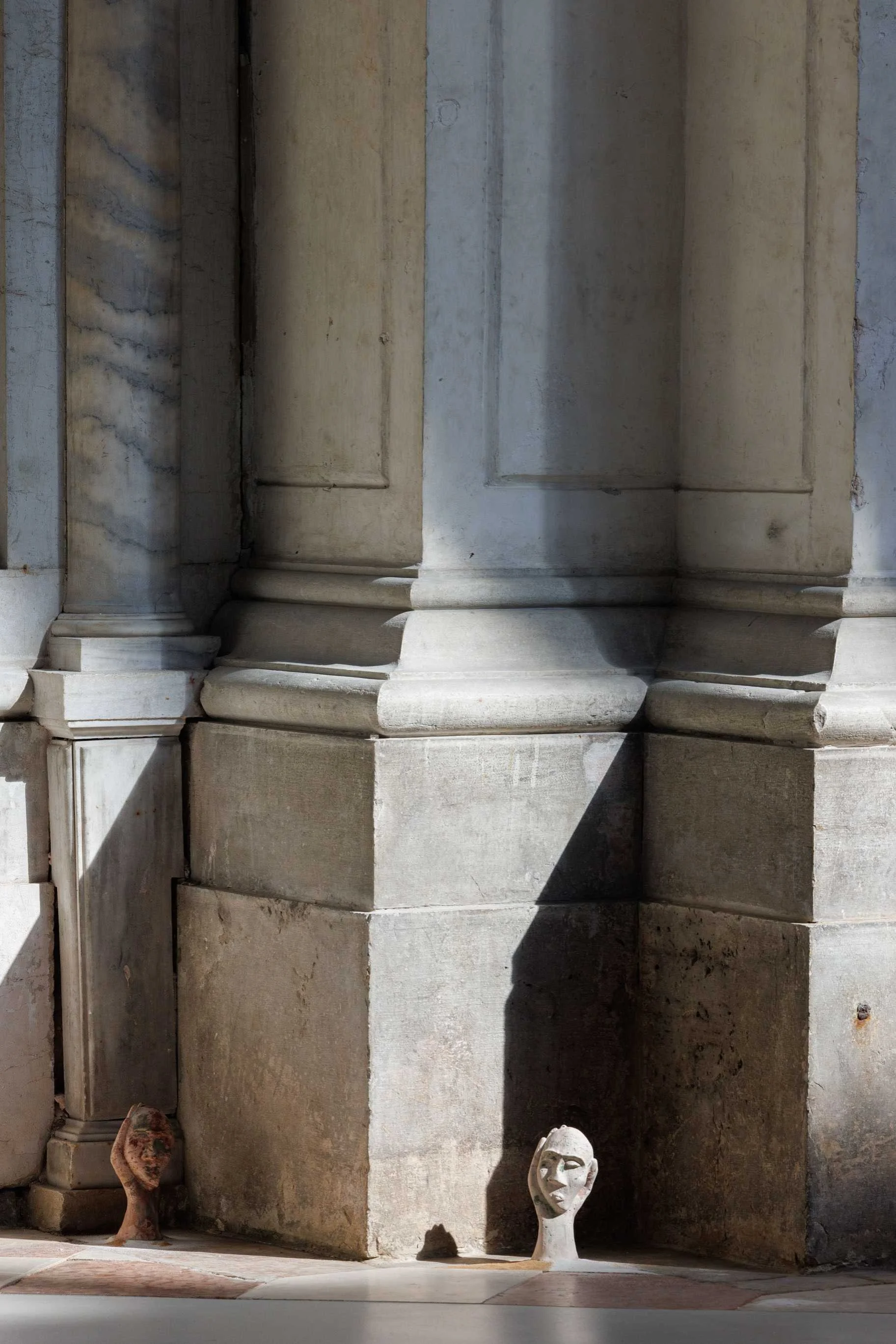
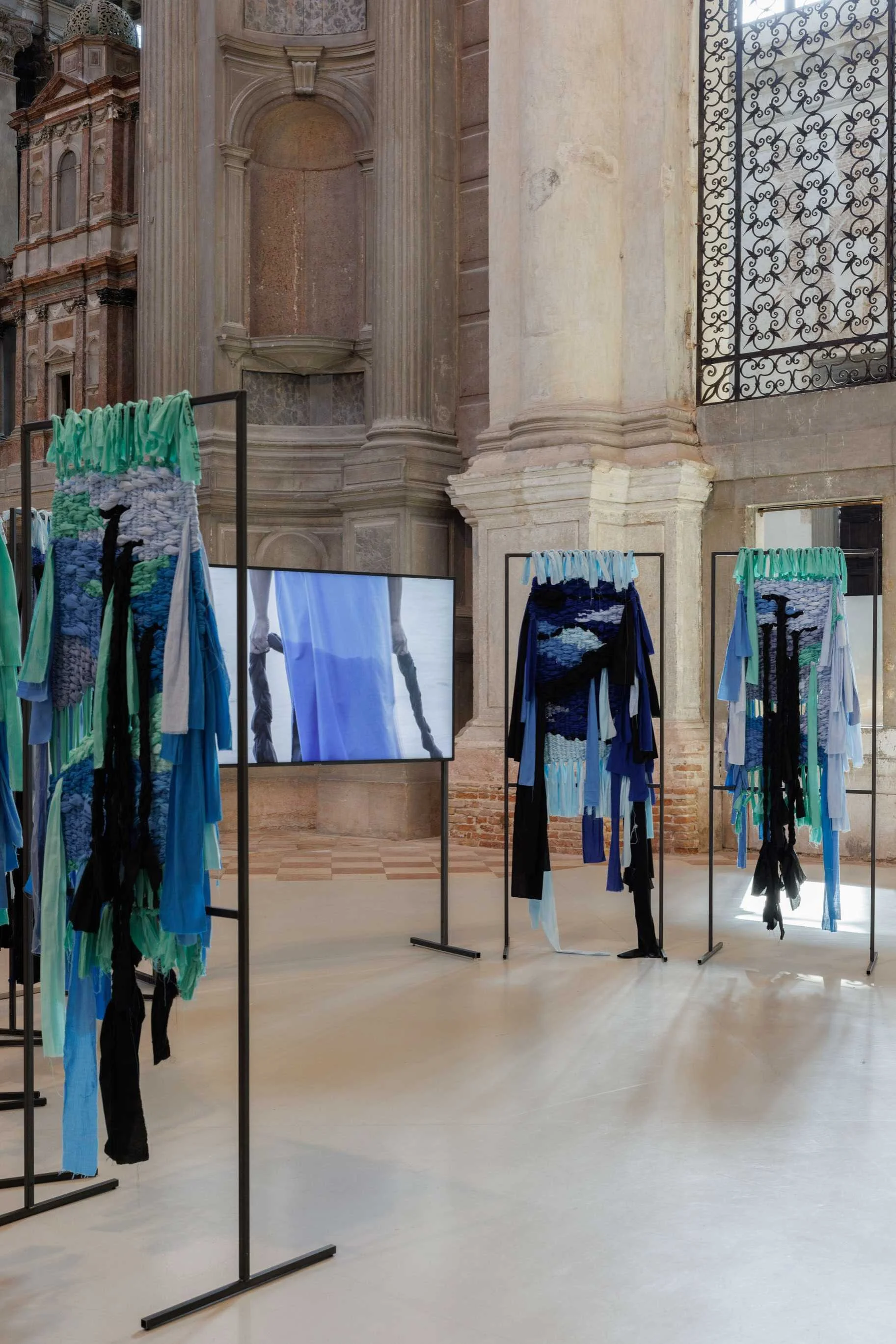
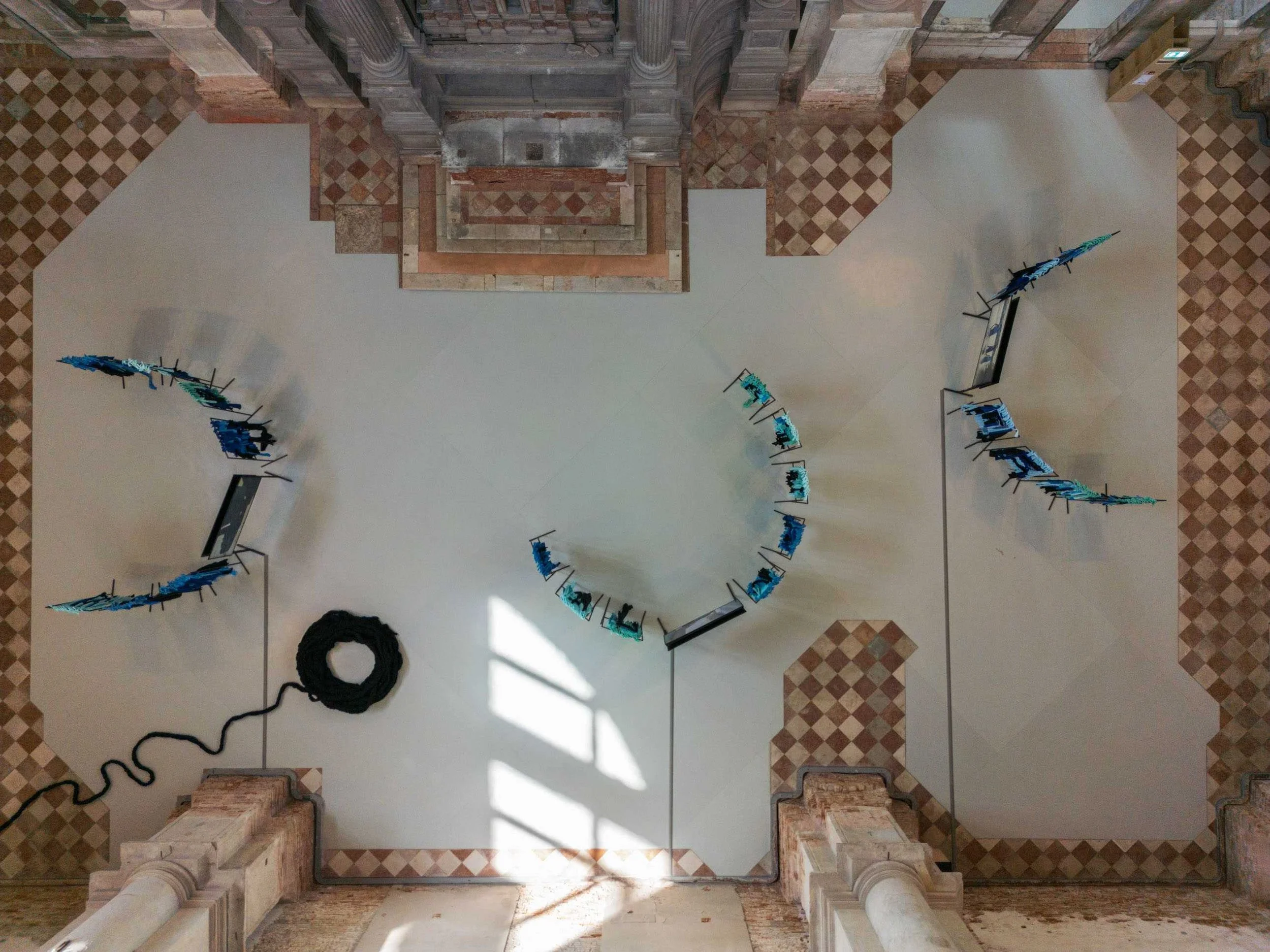
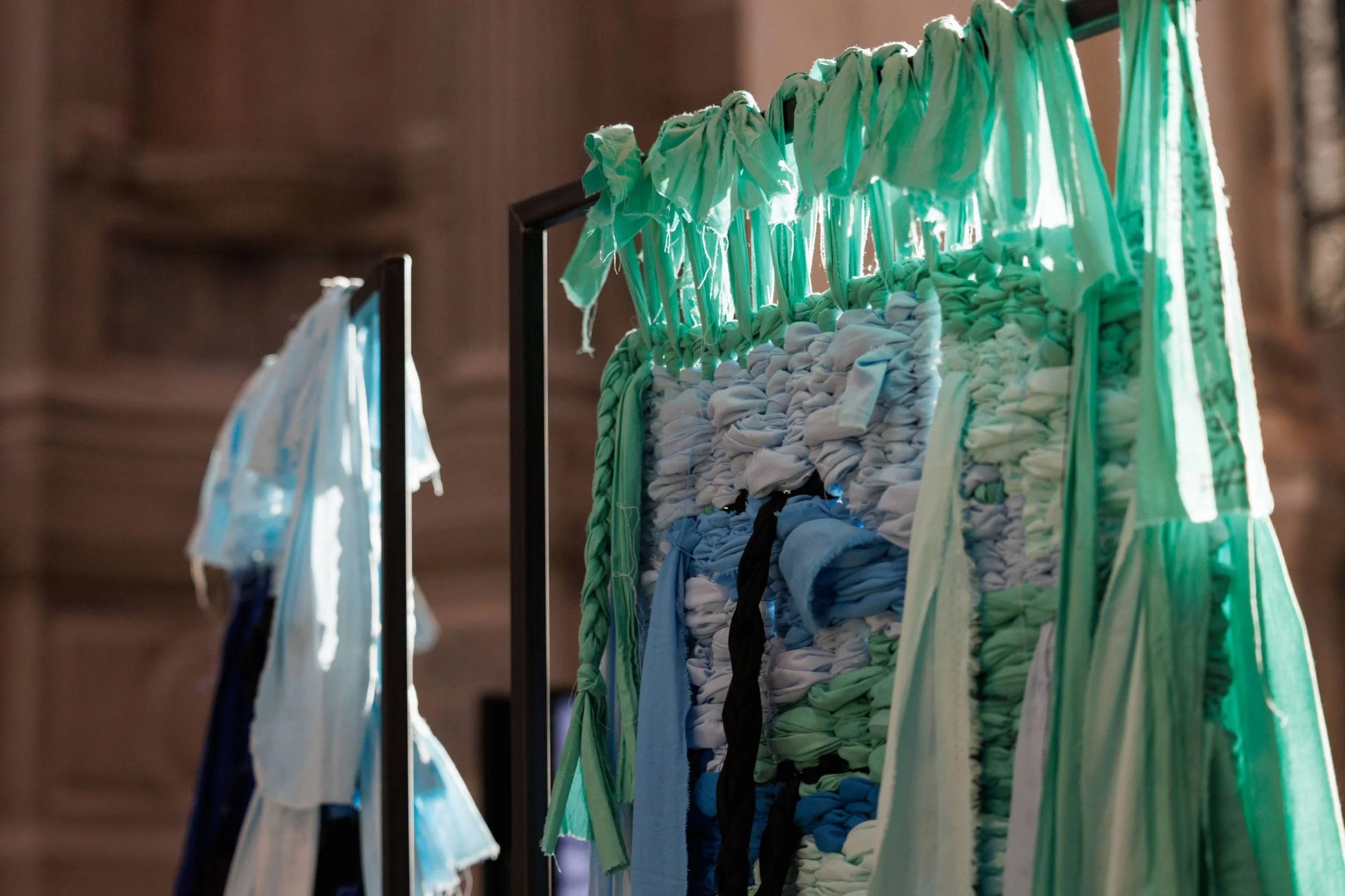
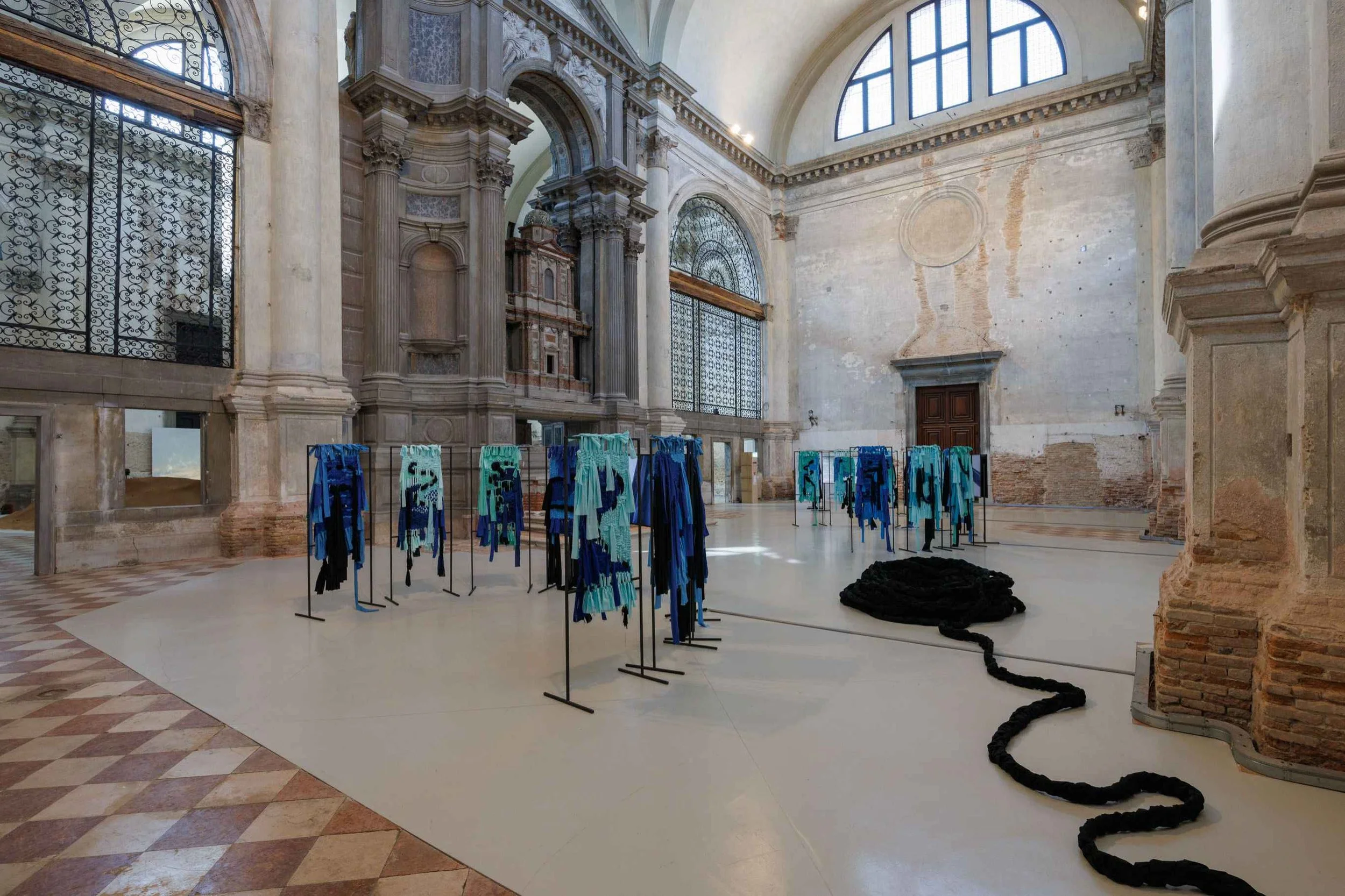
Woven textiles in shades of blue, threaded with black braids evoking the flow of water and strands of hair: “Weaving Connections”, in the east nave, is a textile-video installation by Verena Melgarejo Weinandt that traces gestures of care, belonging, and collective healing. In the space, a three-channel video follows a performance of preparing, weaving, and washing fabrics in a river.
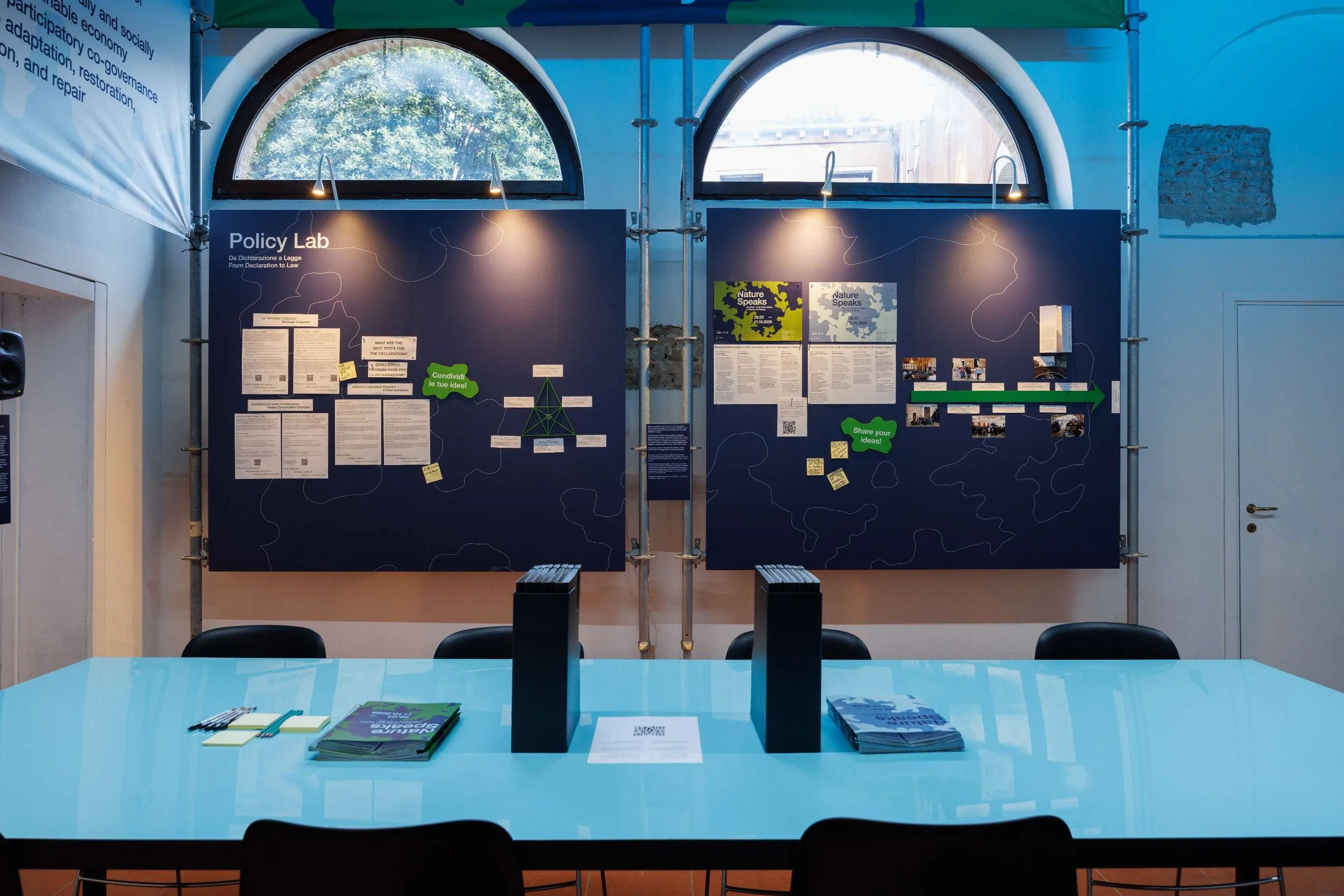
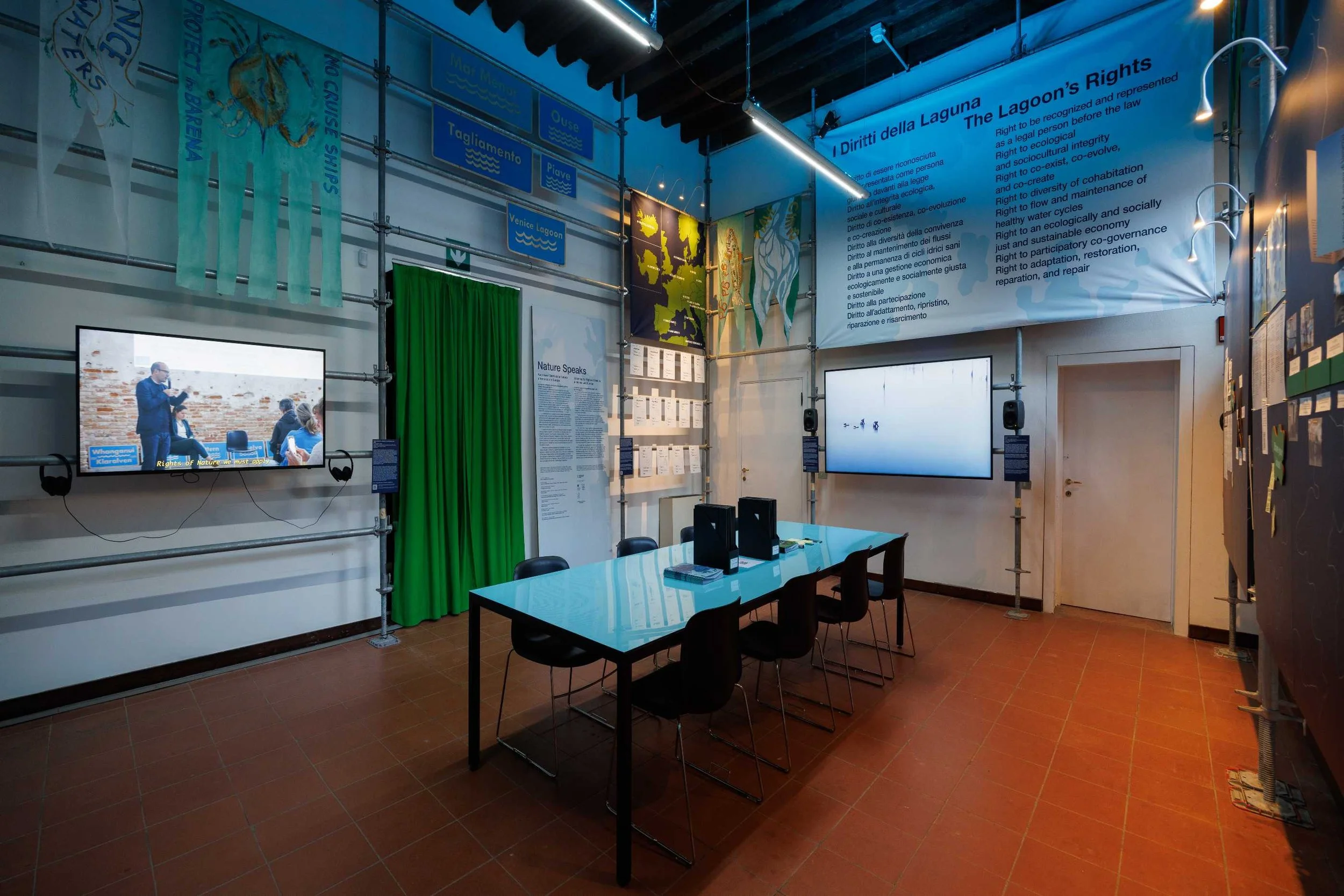
Alongside “Tide of Returns”, in the Research Room, Ocean Space presents the policy lab Nature Speaks: Listening to the Rights of Nature in Venice and Europe, curated by Pietro Consolandi and Amalia Rossi. Co-produced with the NICHE Centre for Environmental Humanities at Ca' Foscari University of Venice, this space functions as an open laboratory where the Venetian community can collectively explore the possibility of a new political horizon: advocating for the recognition of the Venice Lagoon as a legal entity under Italian, European, and international law. This project, arriving at a decisive moment in the struggle for ecosystem rights in Europe and worldwide, is developed in essential collaboration with two activist networks: IDRA - Initiative for the Rights of Water Networks and the Confluence of European Water Bodies.
“Tide of Returns” bringing together indigenous women artists from Australia and Namibia in a collective project of research, repatriation, and cultural resistance. The title evokes the movement of tides: something that goes and returns, carrying with it debris but also memory.
The starting point is at once geographic and political: Groote Eylandt, an archipelago in the Gulf of Carpentaria, in northern Australia, inhabited by the Warnindilyakwa people. Here, rising sea levels and decades of intensive mining (over 150 million tonnes of manganese extracted since 1965) coexist with a community that continues to transmit its culture through the Dadikwakwa-kwa, shell dolls laden with ancestral meaning. Each doll represents a clan, a totem, a relationship with the land and with the ocean. The women who make them use them to teach children mathematics, kinship systems, and the relationship with food and with the body.
In 2023, through an initiative of the Australian Institute of Aboriginal and Torres Strait Islander Studies, the Manchester Museum returned 174 of these objects to the Anindilyakwa community, after they had been donated to the museum in the 1950s by an anthropologist and kept as museum artefacts, not as objects of life. As part of the repatriation process, the community donated twelve new dolls to the museum, with a significant clause: children must be permitted to play with them once a year, a gesture that challenges the conservative conventions of Western museums.
The Venetian installation places alongside these the Namibian dolls, made in workshops in Windhoek drawing on pre-colonial practices, and a film that follows women at work along the coasts of Groote: fishing, digging for shells, building. The rhythm is that of the island, cyclical, patient, bound to the tides. The space of San Lorenzo, with its red sandstone, amplifies this sense of layering: the dunes seem to emerge from the walls, the manganese pigments mirroring the exterior masonry.
“From My Mother's Country”
Knowledge held in shells and dolls
“From My Mother's Country”: in the west nave of Ocean Space, the public will be able to discover thousands of these dolls in an installation that combines textile, shells, sand, video, and sound. In Namibia, girls, playing with these totem-dolls, learn the cycles of life, the value of their bodies, and the importance of honouring the wisdom of their ancestors. An expression of pre-colonial knowledge and decorative practices, Oilanda (beadwork) is made with shells carried ashore along the Atlantic coast of Namibia.
Commonly translated from Anindilyakwa (the language spoken by the Warnindilyakwa people on Groote Eylandt) as "shell dolls," these works preserve ancestral stories. Those who make them are deeply concentrated on their own creative process, and the film bears intimate witness to this. They do not perform for the camera, but are absorbed in the work of decorating the shells. Furthermore, the Dadikwakwa-kwa unite communities across continents, reaffirming indigenous resistance and knowledge. They are used to teach girls how to relate to their land, to food, and to family bonds.
"As part of the repatriation process, the community donated twelve new dolls to the museum, with a significant clause: children must be permitted to play with them once a year — a gesture that challenges the conservative conventions of Western museums," the artists recounts.
The dunes on which the community of dolls rests come in part from the country of Anindilyakwa artist Noeleen Lalara, in the Gulf of Carpentaria, where land and water meet at the edges of a world in constant transformation. The confrontational mode of decolonial discourse has been necessary to claim the restitution of objects and to assert the positions and rights of indigenous groups. Its workings can be rethought. Rather than focusing on institutions, a group of artists, predominantly women, has decided to teach their own cultural stories by working with materials that have always been in use: employing dolls and creating games designed to transmit stories to the youngest. This relationship is shaped by women who possess a knowledge of traditional culture that teaches a healthy relationship with nature and the body, and promotes respectful practices of naming and of growing.
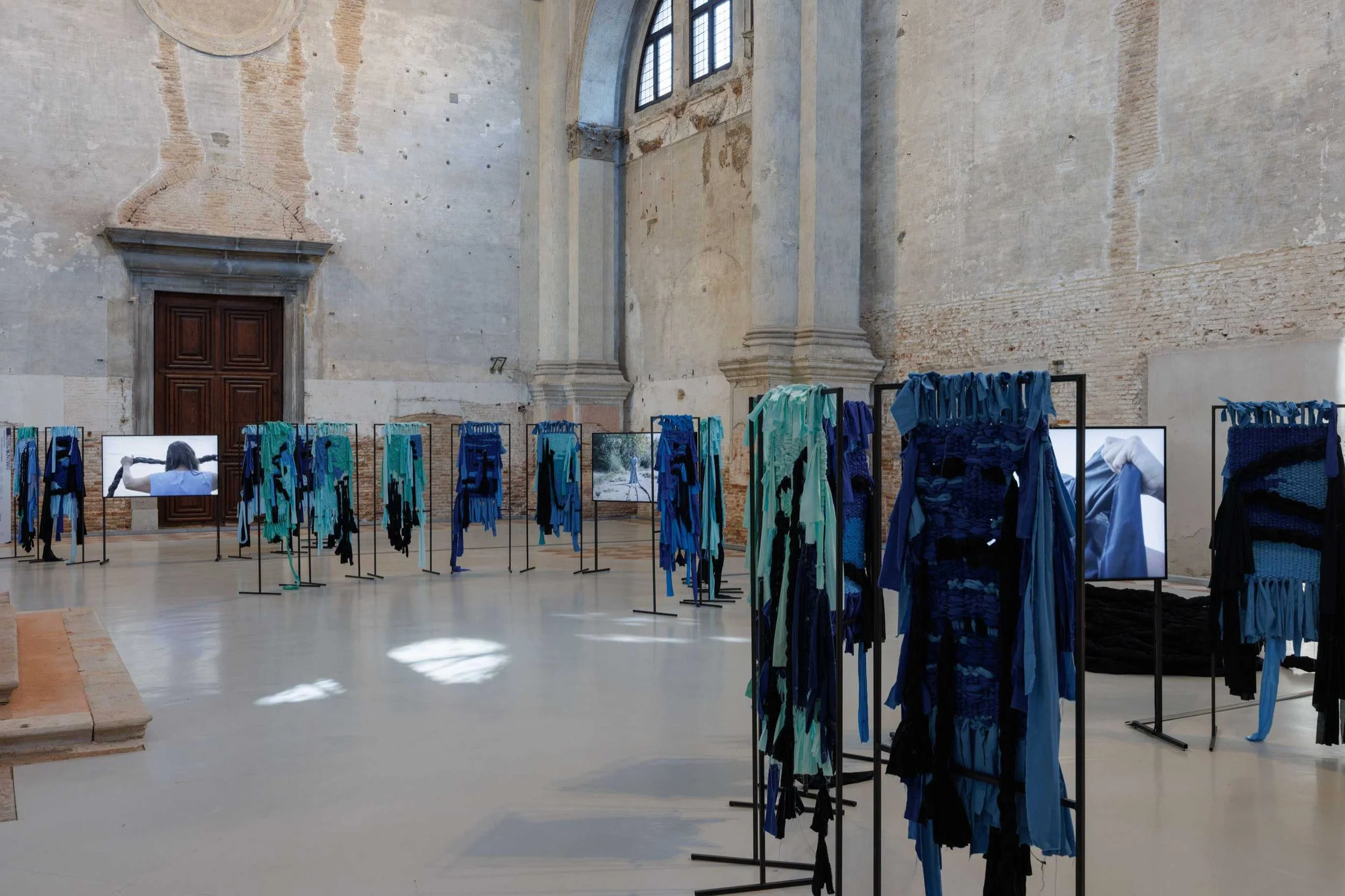
Weaving Connections
Blue textiles, ancient waters
How can we understand the connections between ourselves and others, beyond the logic of property? How can we unlearn the binary divisions that have been taught to us and that we have internalised?
In the east nave, “Weaving Connections”, a textile-video installation by Verena Melgarejo Weinandt, a German-Bolivian artist and researcher, retraces gestures of care, of belonging, and of collective healing. These reflections were born from a dialogue between the artist and the Repatriates project, which investigates the role of art in the multiple processes of repatriation.
Her dual cultural belonging, European and Latin American, is the ground from which an artistic practice entirely oriented toward the deconstruction of colonial and patriarchal structures takes root, in the search for forms of individual and collective healing through what the artist herself calls arte-sana.
In the east nave, “Weaving Connection”s articulates a dense reflection on identity, collective memory, and colonial violence. The installation combines woven textiles in shades of blue, threaded through with black braids evoking both hair and the flowing of water, with a three-channel video that follows a ritual performance of braiding and washing in a river.
Braids are a recurring conceptual knot in the artist's work: through them, Melgarejo Weinandt explores the ways in which identities, individual and collective, are formed in their interweaving of bodies, cultures, and histories. Water, meanwhile, functions as an epistemological principle: rivers never truly separate, but transform and continue, becoming oceans. This movement, which purifies without erasing, which transforms without dividing, is explicitly set against the logic of Western cultural institutions, accused of reproducing dichotomies and categorisations that operate a fracture between subjects and worlds.
““In my artistic vocabulary, water and braids serve as symbols for addressing interdependencies, relationships, and processes of identity formation in constant transition.””
This imagery takes on a precise critical significance: the work forms part of a long-term research project on the representation of indigenous peoples in German mass culture, analysing how stereotypes and colonial fantasies have contributed to the construction of German national identity. The critique extends to museum institutions, which continue to reproduce those same logics of separation and appropriation. Against this, the artist proposes the cyclical movement of water as an alternative model: a form of relation that knows neither fractures nor hierarchies.
A public programme within “Tide of Returns”, organised at Ocean Space in Venice, allows for further reflection on the collective's research themes. In an era of intensified imperialism and settler colonialism, the total disregard for the rule of law highlights the need to reassess debates around restitution.
These gatherings foreground indigenous and cross-cultural practices of return, contextualised within their own trajectories, to reflect on Italy through a method of comparative history. Through talks and roundtables, artists, historians, anthropologists, and cultural practitioners will address "return" as a living practice, not merely a ceremonial one. Artworks in European museums patiently study how to reverse circulatory flows, while European artistic and ethnographic institutions navigate a complex web of spiritual, aesthetic, and economic values, though not in direct exchange.
Among the topics under discussion: the legacy of ancestral craft languages, the creation of new networks of circulation, the institutional work of caring for private or public collections, and the gaps within them.
““Repatriation here is not understood as a transaction to be concluded, but as a continuously evolving and unpredictable process of justice, healing, and translation that reconstructs time, space, and the cosmologies of life.””
““To be placed at the opening of the article: ”This exhibition is more than an artistic expression; it is a ceremonial act of reclamation. It is a form of coming home that goes beyond activism.””
The exhibition season of Ocean Space opens with a show that deliberately avoids museological neutrality to become an immersive and political experience. Tide of Returns is not merely an exhibition project, but a relational device that places in crisis the very idea of cultural restitution, transforming it into a gesture of care and continuity.
Water becomes the guiding thread of the entire exhibition: an element that connects, transforms, puts into relation. There exists no clear separation between bodies, territories, and stories; everything flows, mingles, returns.
““From Manchester to the north Pacific coast of Australia, from Berlin to the Atlantic coast of Namibia, the shells and the songs of the oceans are returning. These echoes of the sea awaken memories of places: ancient yet contemporary, rooted both in the weight of history and in the fleetingness of the present.””
What emerges with force is a different conception of "return": not nostalgic recovery nor simple restitution, but a continuous process of regeneration. The exhibition invites us to think of culture not as a heritage to be preserved, but as a living practice, made of intergenerational transmission and of listening.
“Tide of Returns” is not an exhibition about colonialism in the militant sense of the word. It is something more subtle: a demonstration that cultural survival passes through everyday objects, the gestures of hands, the stories told to children. And that repatriation is not only the return of an object, but the reactivation of a relationship between a community and the world it inhabits.
Words by Matilde Crucitti
What to read next