Joan Horrach
Joan Horrach trained as a dancer but thought like a visual artist. Born in Palma de Mallorca, he arrived at a London ballet school at thirteen and spent the following years studying choreography at university, all while his real references, Lawrence Weiner, Bruce Nauman, Cindy Sherman, accumulated in a separate register entirely. The gap between where he was and what he was looking at eventually became the work itself.
The shift was not so much a rupture as a reorientation. Meeting Marina Abramovic in New York gave him the vocabulary to understand that performance could live inside the art world, not adjacent to it. From that point, his work began to take its own shape: durational actions, installation, photography, video. The body remained central, but the choreographic logic extended outward, into space, architecture, sound, and the sociology of shared silence.
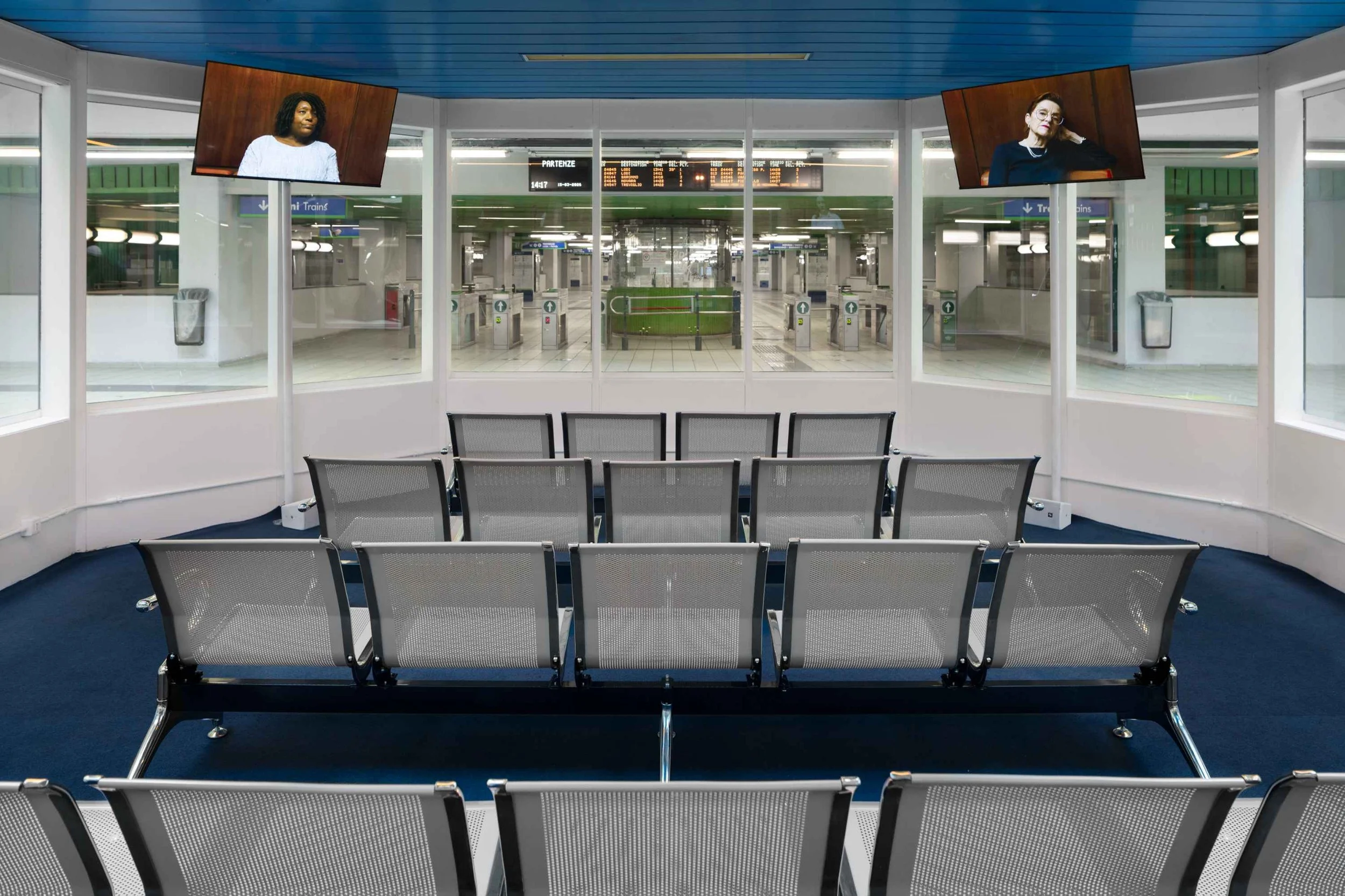
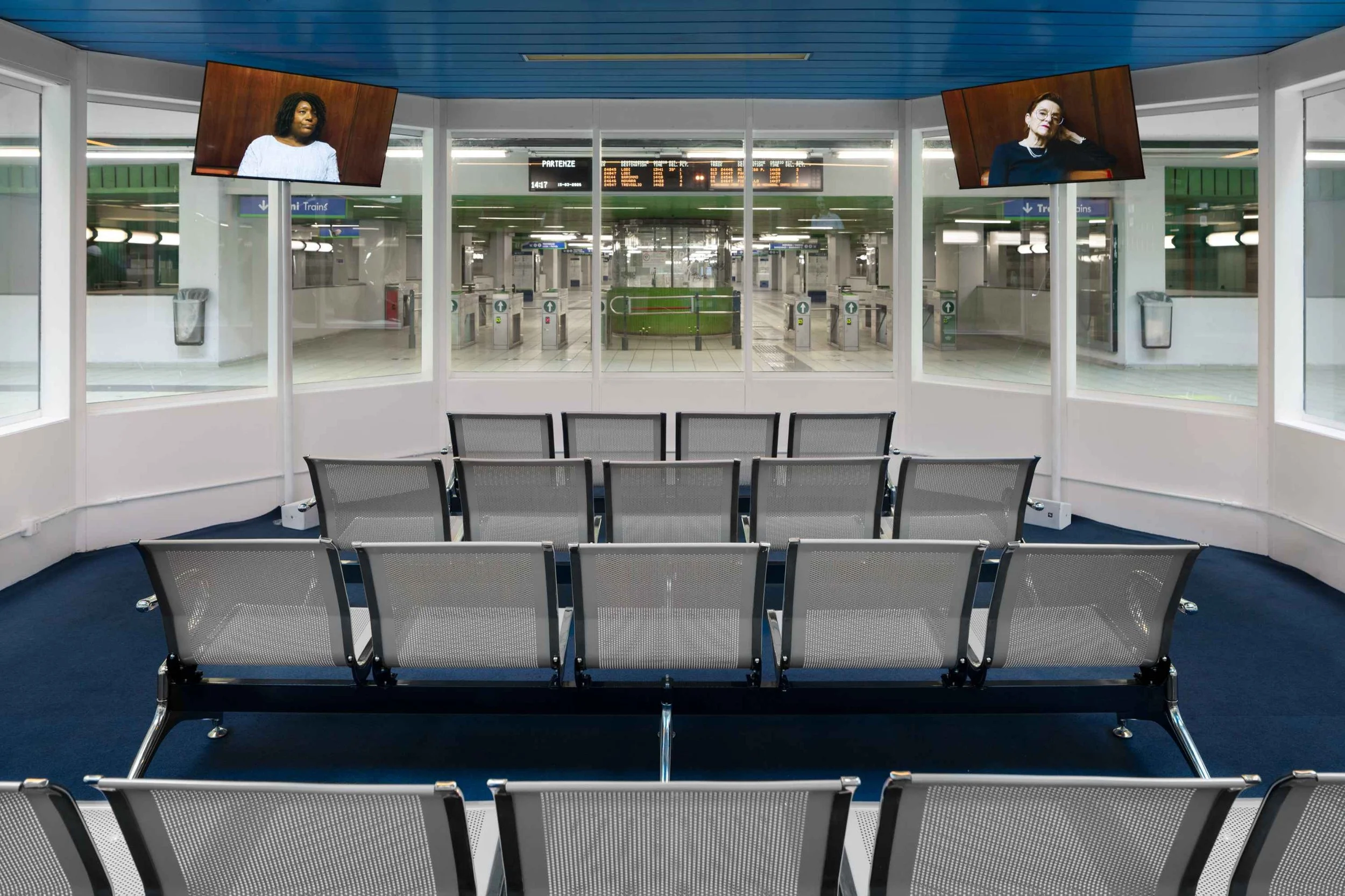
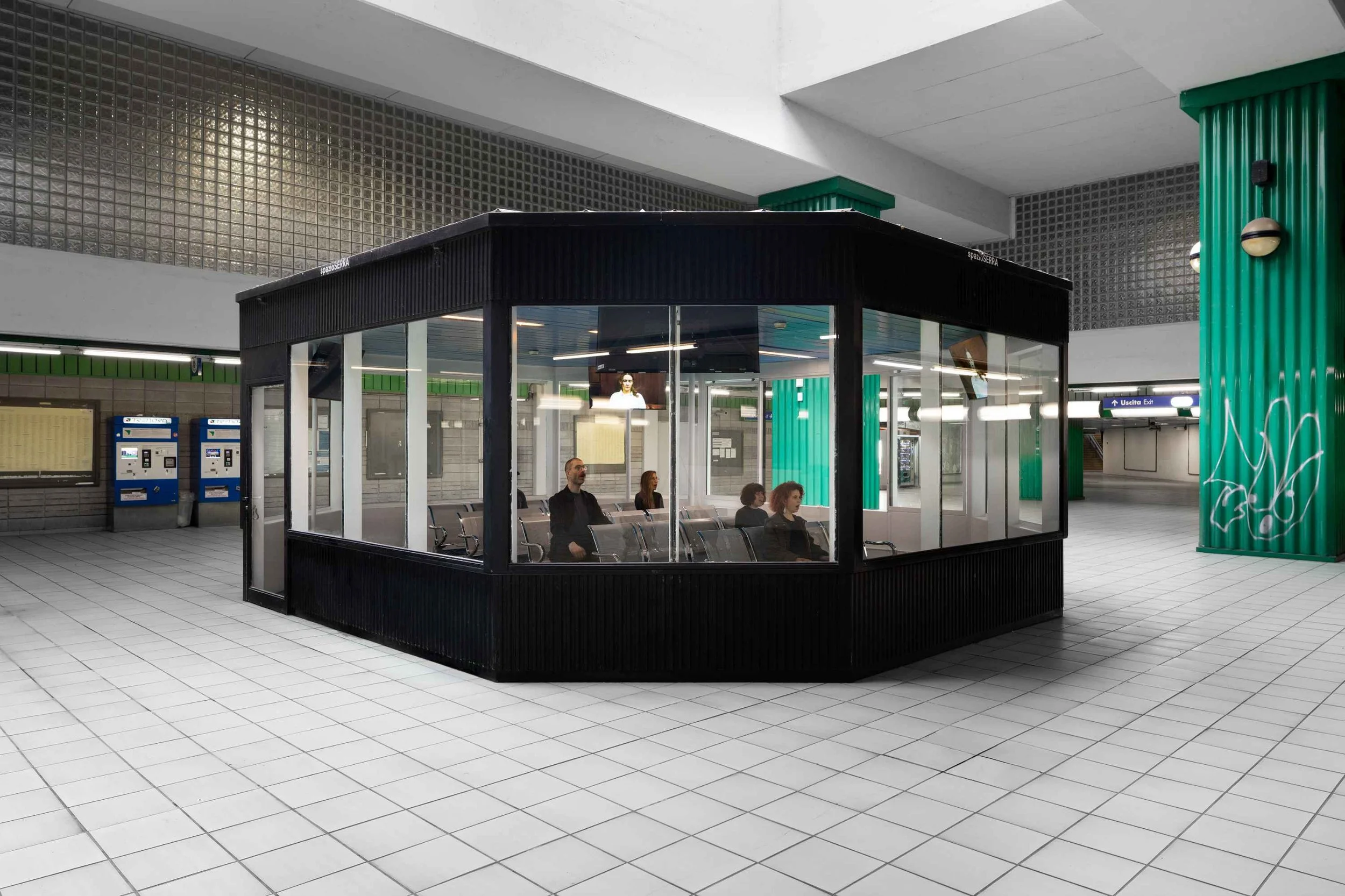
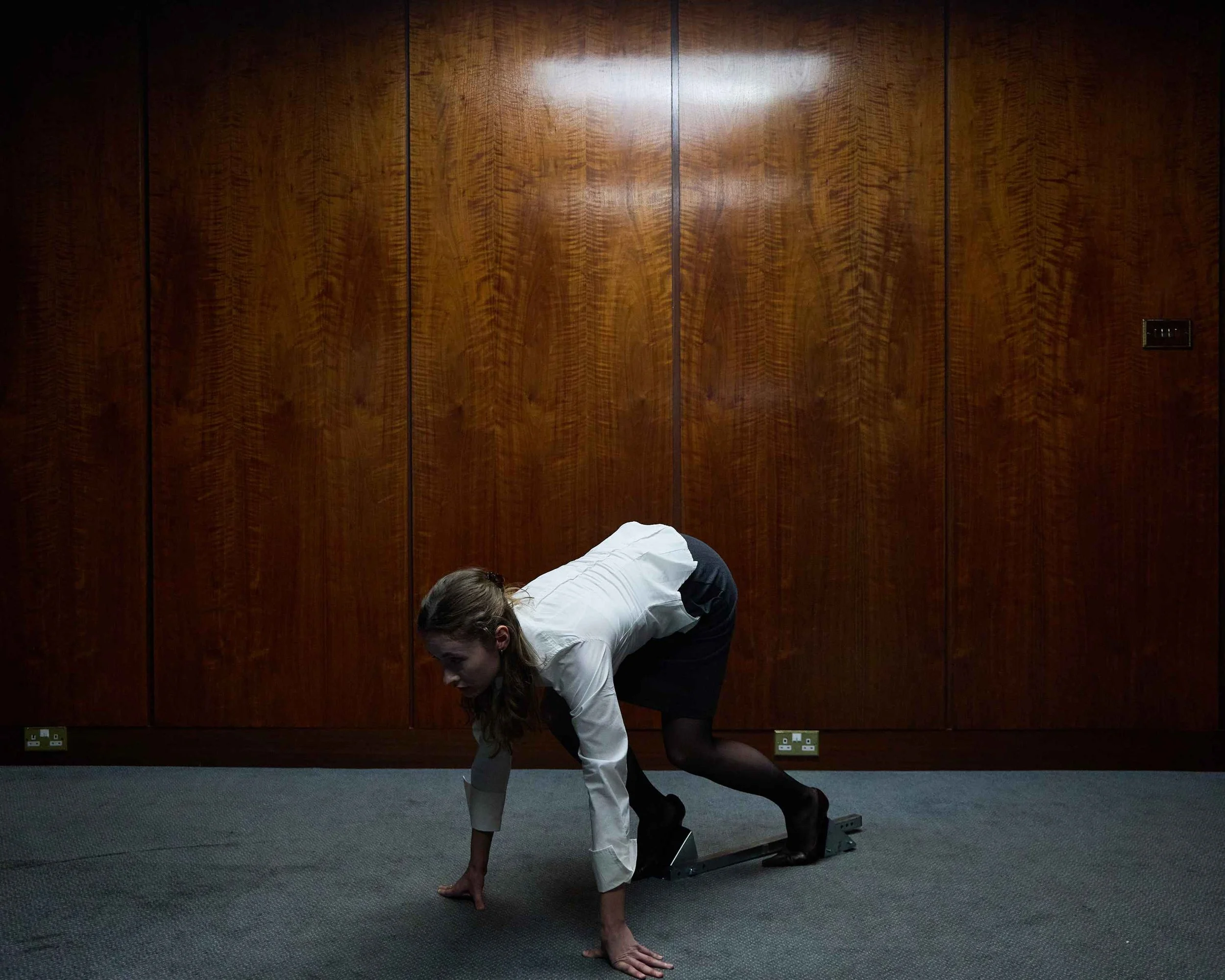
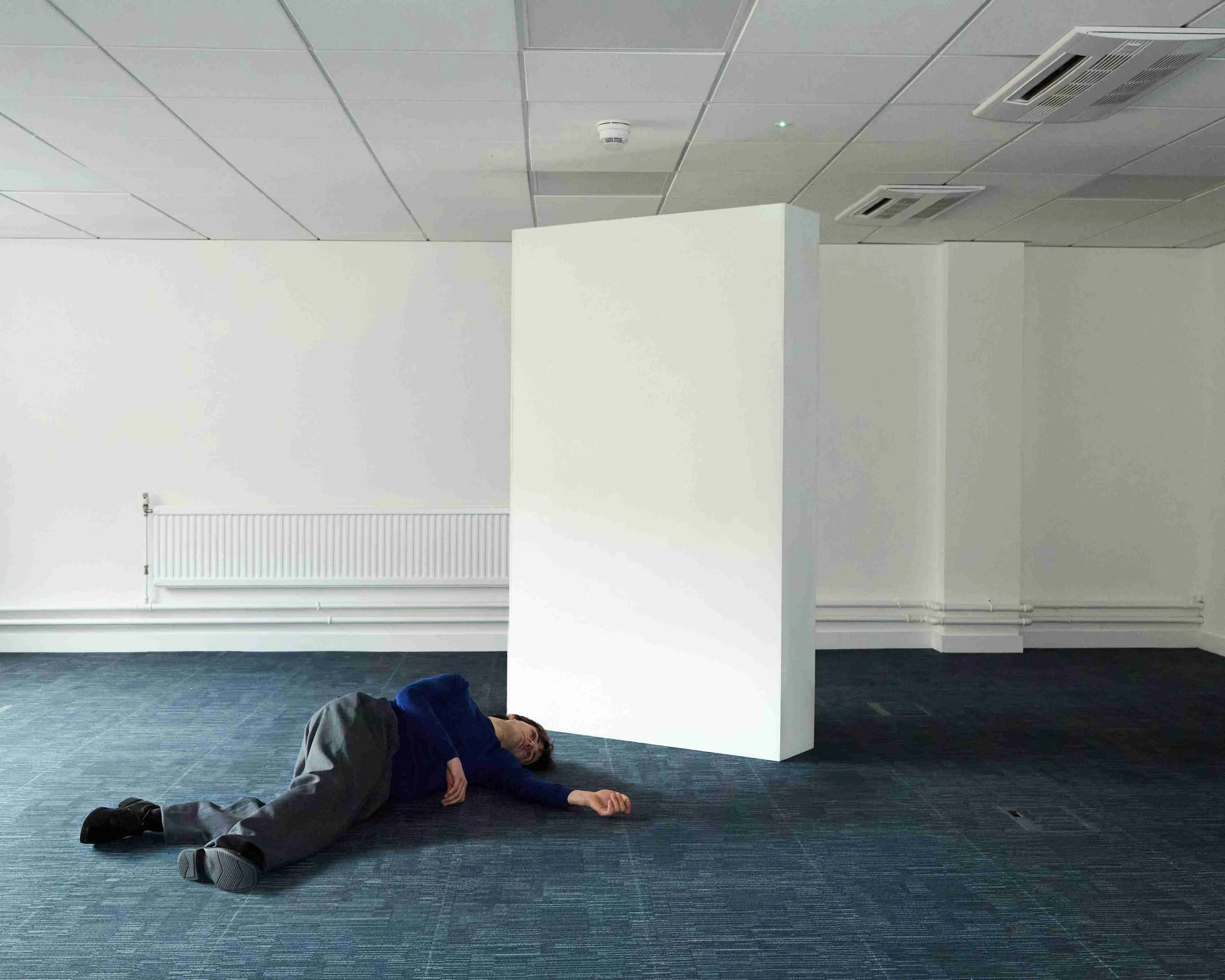
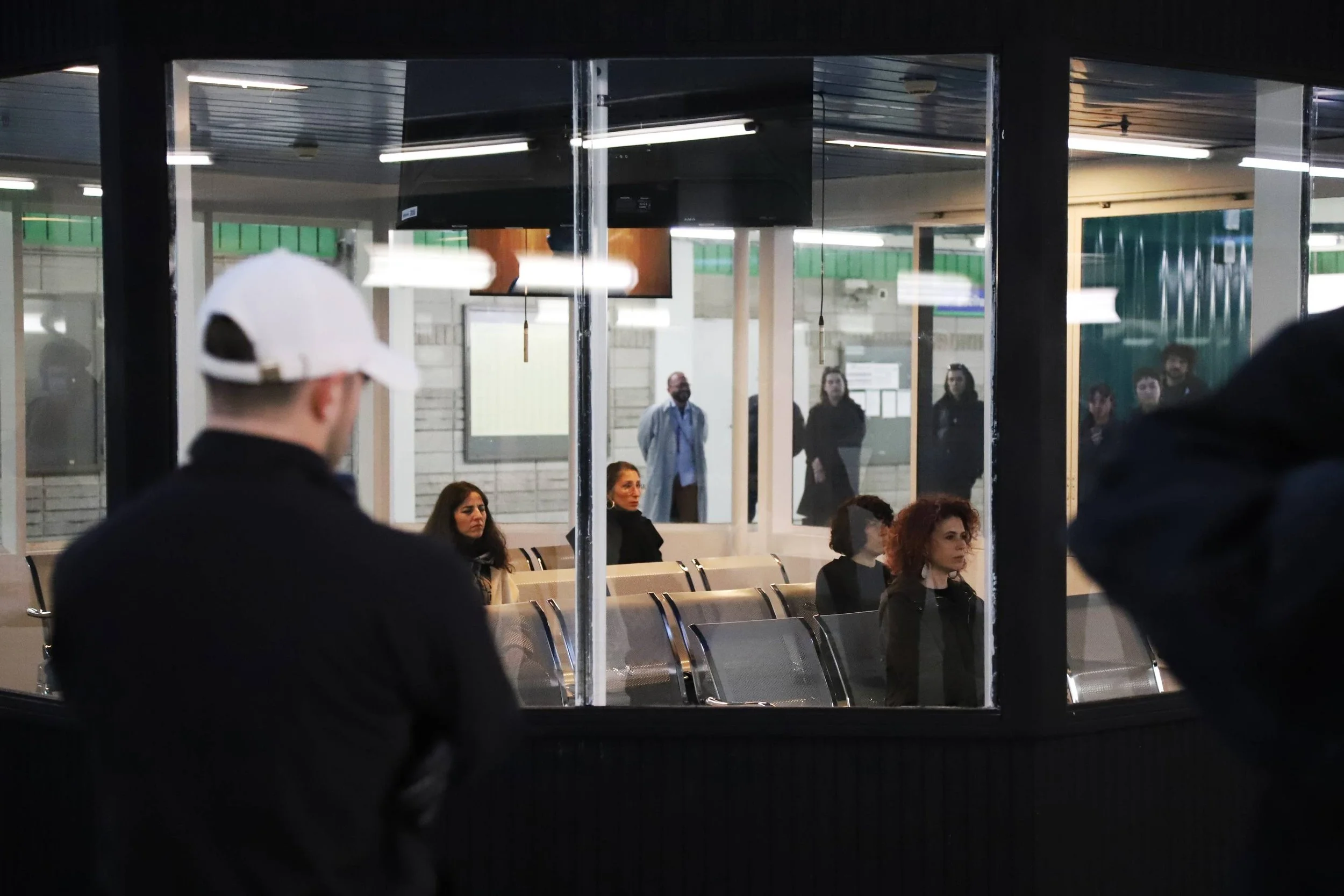
His recent installation at Spazio Serra, Distorted Scenarios, arrived after a period marked by surgical recovery and personal loss. Three meniscus operations kept him in hospital waiting rooms. In those months, waiting ceased to be passive and became a subject. Through Beckett and Heidegger and Byung-Chul Han, he arrived at the argument that waiting, the condition we most try to escape, is also where life shows its real face. The installation gave that argument form: filmed figures who never move, a room held in low-frequency vibration, a starting block with no signal ever given. The work does not comfort and it does not offer resolution but simply holds you inside the condition it describes.
Can you introduce yourself and tell us a bit about your background?
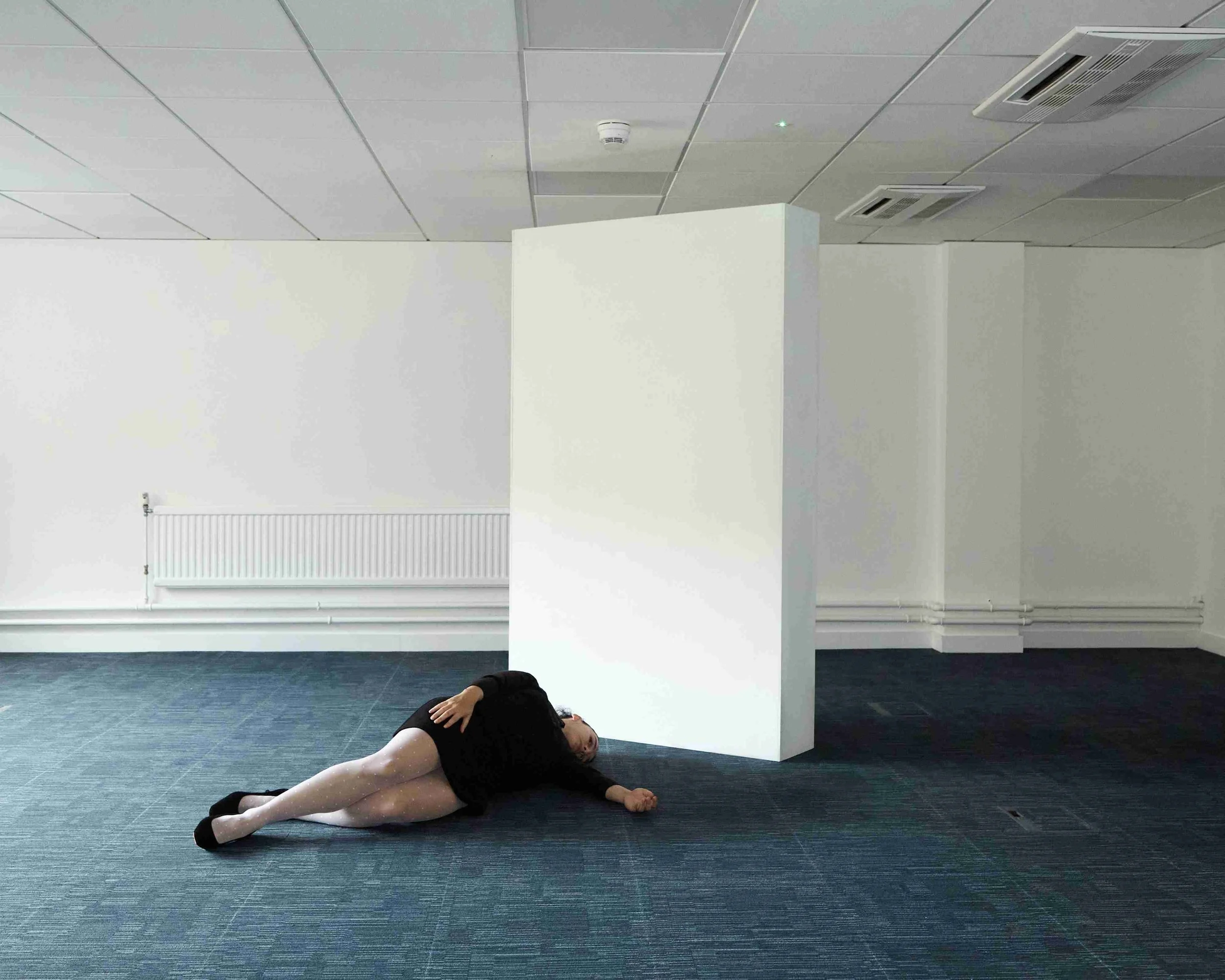
I was born in Palma de Mallorca (Spain). As a young person I was interested in dance so when I turned 13 somehow I got the opportunity of joining a ballet school in London. I did all of it classical ballet, contemporary dance etc.. but soon into that world I started developing a larger interest in choreography which took me to further study at a university that focused more on it from a theoretical and practical point of view.
Was there a moment during your dance training when you started feeling pulled toward the visual art ?
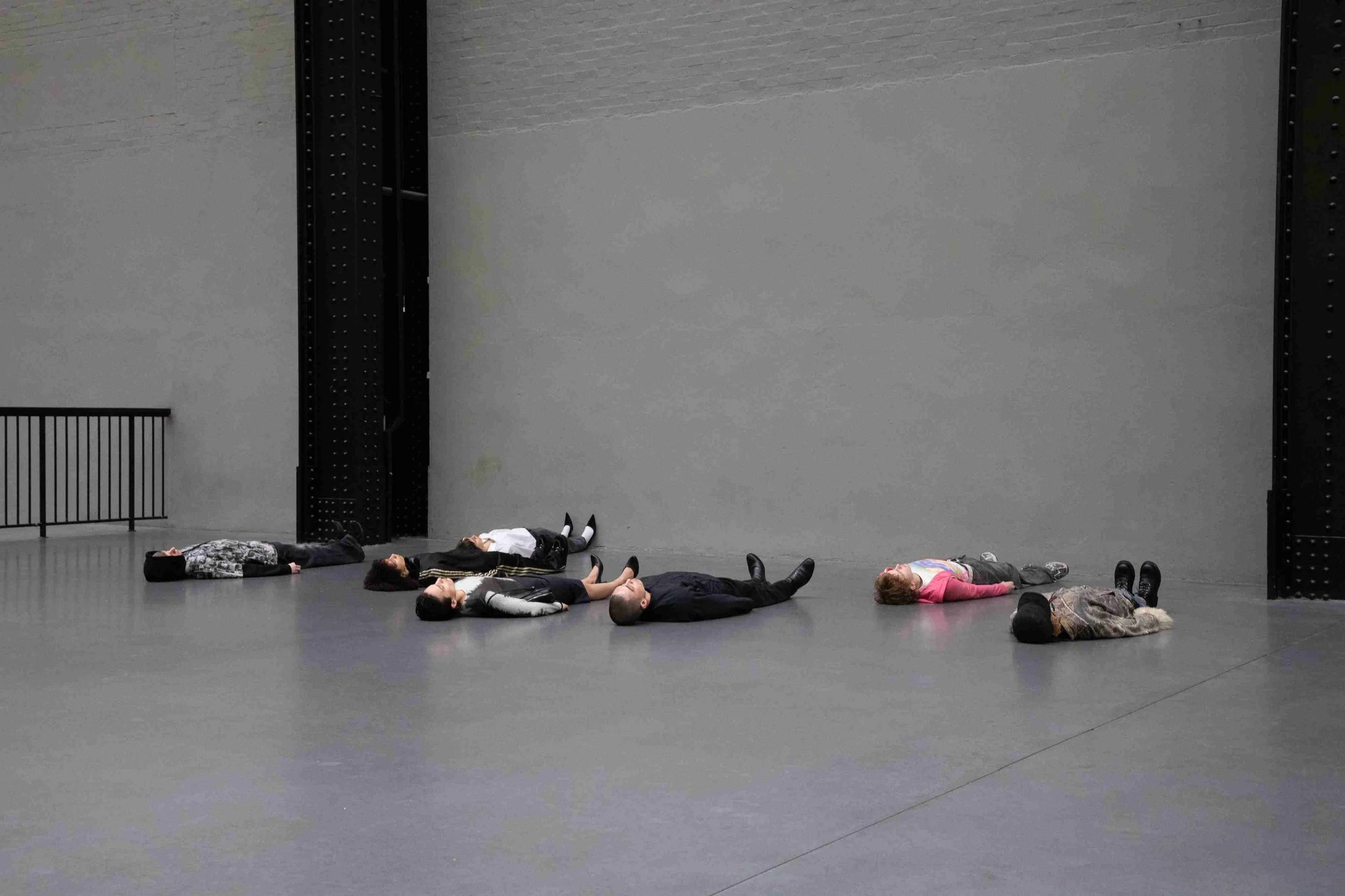
In those three years of studying contemporary dance and choreography, I was constantly thinking about artists such as Lawrence Weiner, Bruce Nauman or Cindy Sherman amongst many others. I was in a dance context, but all my references came from the art world. So there was this misalignment. I was like, I am here with dancers, yet my references are contemporary artists. When I finished dance university, that is when I met Marina. She was the one who, in a way, put the thought in my head that I could apply my knowledge of movement and choreography, into the realm of contemporary art, into performance. She invited me to go to New York. She said, New York is where you should be. So I started going there quite frequently, and that is where I started thinking about my own work. The first piece ‘Somehow, Elsewhere’ was born in that period. It was a very choreographic piece but placed in the context of the art world.

That is when the transition started happening.And at what point did you start defining yourself as an artist rather than a choreographer?
I remember we were having coffee with Marina and she introduced me to someone as a choreographer. We went home and I said to her, Marina I think, we need to stop saying choreographer I kinda hate it. She asked, should we say artist? I said, yes, we say artist now. And suddenly that opened a series of doors for me and started thinking of other mediums, that label set me free completely. My work has moved a lot more toward photography, video, and installation, but it still frequently starts with the body and many other choreographic ways of thinking and making.
Can you talk about the project you presented at Spazio Serra and how that idea came about?
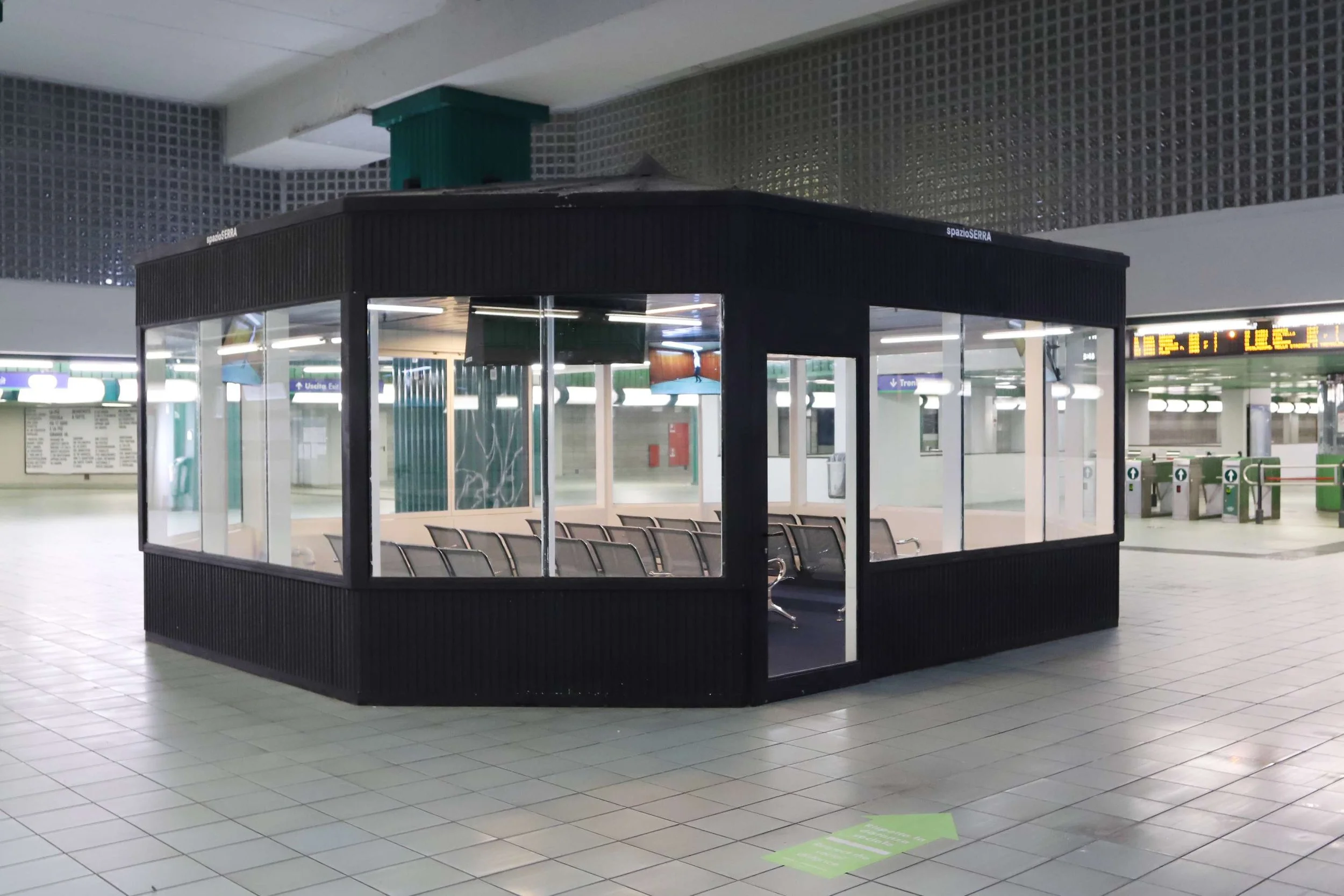
Before ‘Distorted Scenarios’ the work I presented at Spazio Serra there was ‘Somehow Elsewhere’, a performance I did for two years. It started at Tate Modern and I performed it seven times, in seven different spaces, ranging from art institutions to public spaces, train stations, offices. One of those iterations took place inside a waiting room, where the performers would wait and then do the piece. It did not work at all. The composition was bad, the video was bad, the costumes were bad. It was a failure. A year later, I found myself still drawn to the idea of the waiting room, without fully understanding why. I just knew I wanted to make a piece in or around one.
What helped you understand what it was you were trying to say about waiting?
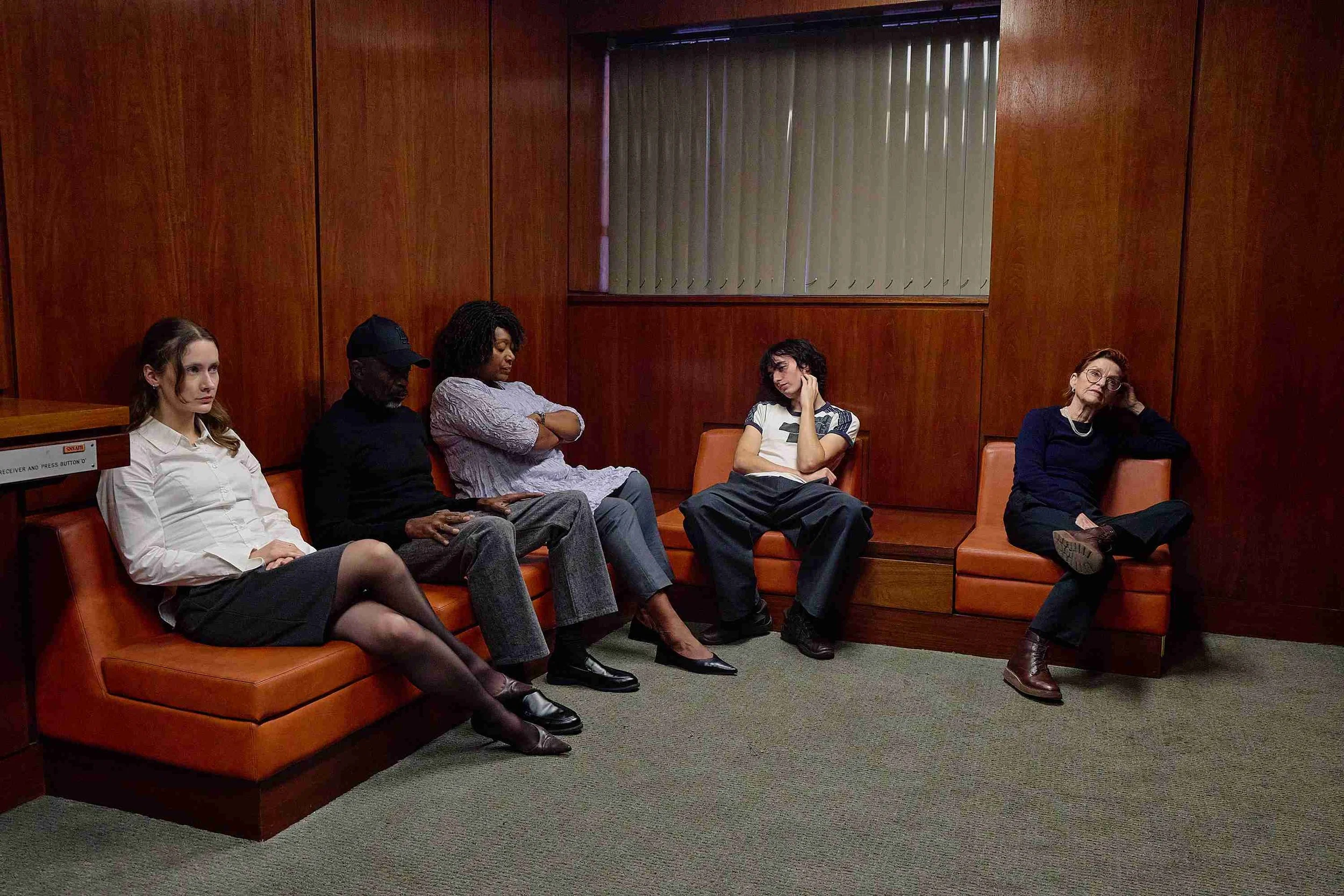
Around that time I had three different meniscus surgeries, so I spent a lot of time in hospital waiting rooms. They are so interesting. You are in pain, and next to you there is a family excited or nervous because their daughter is giving birth. There is a child crying. There is someone waiting for test results. Lots of emotions, but a certain silence. I started realizing it was a space where different people, from completely different situations and backgrounds, suddenly share the same condition. Waiting for something. And in a hospital, the body is reminded somehow of its fragility. You are not in the course of daily life. You are there, under a bureaucratic system. Also, my father passed away that year. So I encountered funeral waiting rooms as well. Waiting for a doctor to confirm his death, or waiting in a funeral home with other families, all sharing that silence. Only those who have lost someone might understand what that silence is. It is where life shows you its most real face.

How did that experience shape the concept behind the Spazio Serra piece?
I thought about how beautiful it was, all these different individuals who have nothing to do with each other, sharing the same silence in the same space. That image became the metaphor. I started thinking about the concept of waiting as a crucial element of life. The subtitle of the piece, almost its prologue, is a sentence I had been writing for two years: ‘waiting, waiting impatiently for something to happen’. It is a sentence I repeated until it became a project. Through Beckett, through Heidegger, I started understanding that waiting is woven into the human condition. We are always waiting for something to get better, for things to change, to go in, to go out, to get that job. I wanted to make a piece that perhaps attempted to make amends with that, that acknowledged waiting as one of the defining things about being human.
You mentioned Byung-Chul Han as well. How does his work relate to what you were exploring?
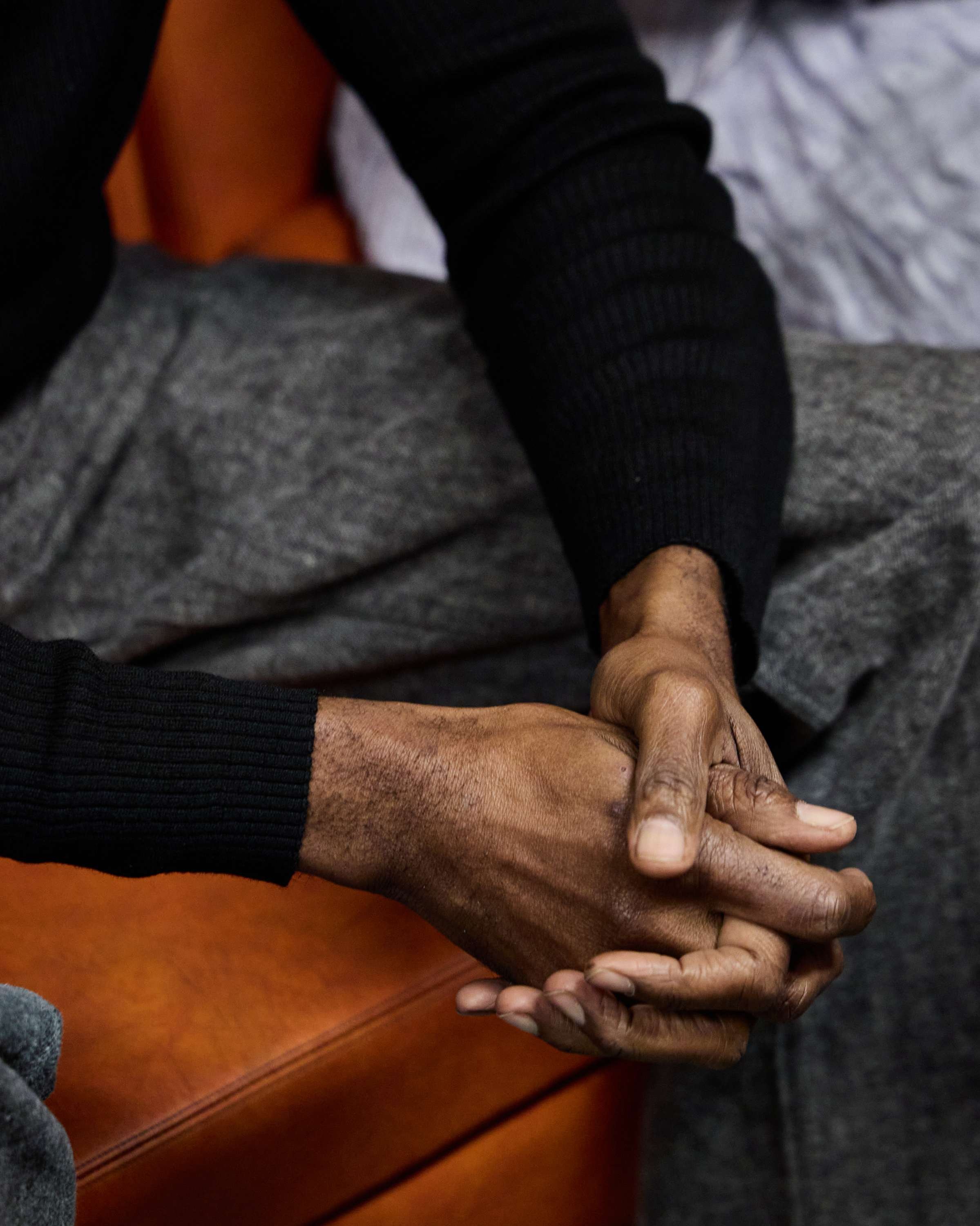
Han addresses that we have forgotten how to wait. The main premise of capitalism is to buy time, save time, kill time. We are given endless things to avoid waiting, because emptiness and stillness are something we are supposed to escape. We are what he calls achievement subjects. I need to make more, do more, produce more. So the concept of waiting has never been more absent than it is now. When I was designing the installation before I knew that I wanted to make a series of films, I knew I wanted screens, because there are almost no spaces left without some kind of technological device. For me, those devices are windows, windows for escapism, ways to escape the pressure and everything that unfolds while waiting.
How did that translate into the filmed actions?
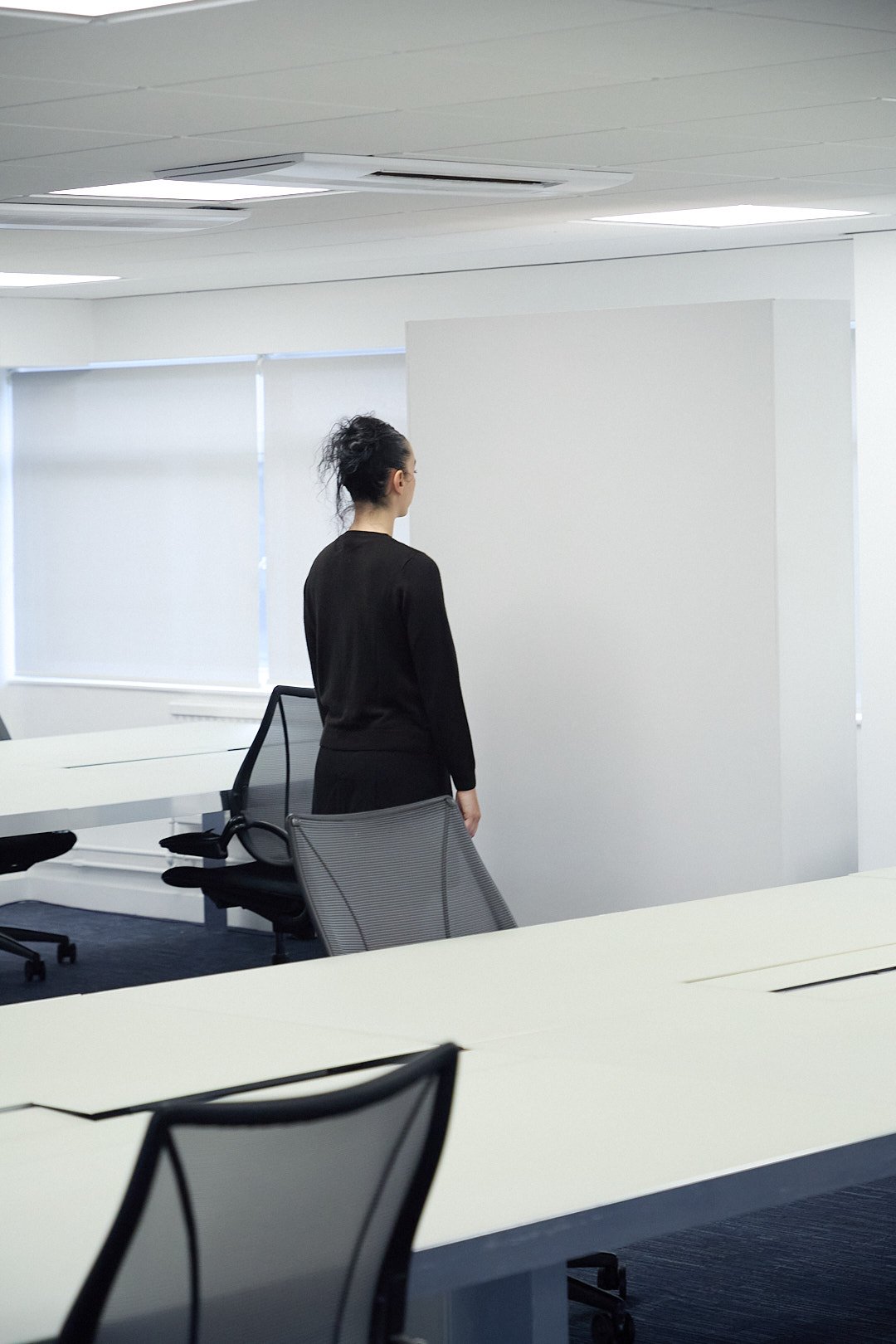
For the first action, I said to my casting director: find five individuals who do not know each other, place them in a room, and we just film them waiting. For 45 minutes. We paid them, we explained what we were asking, and they agreed. After those 45 minutes we had to stop. In fact, someone left and said they could not do it anymore. We spoke afterwards and discussed how doing nothing is one of the hardest things a person can do right now. The tension, the awkwardness, the discomfort became intense very quickly. And it was just waiting. The confrontation is that. Why are we not capable of that? When you wait and do nothing besides waiting, as Heidegger says, you confront time. And confronting time is one of the heaviest things one can do.
And the last action, the one that feels more ironic?
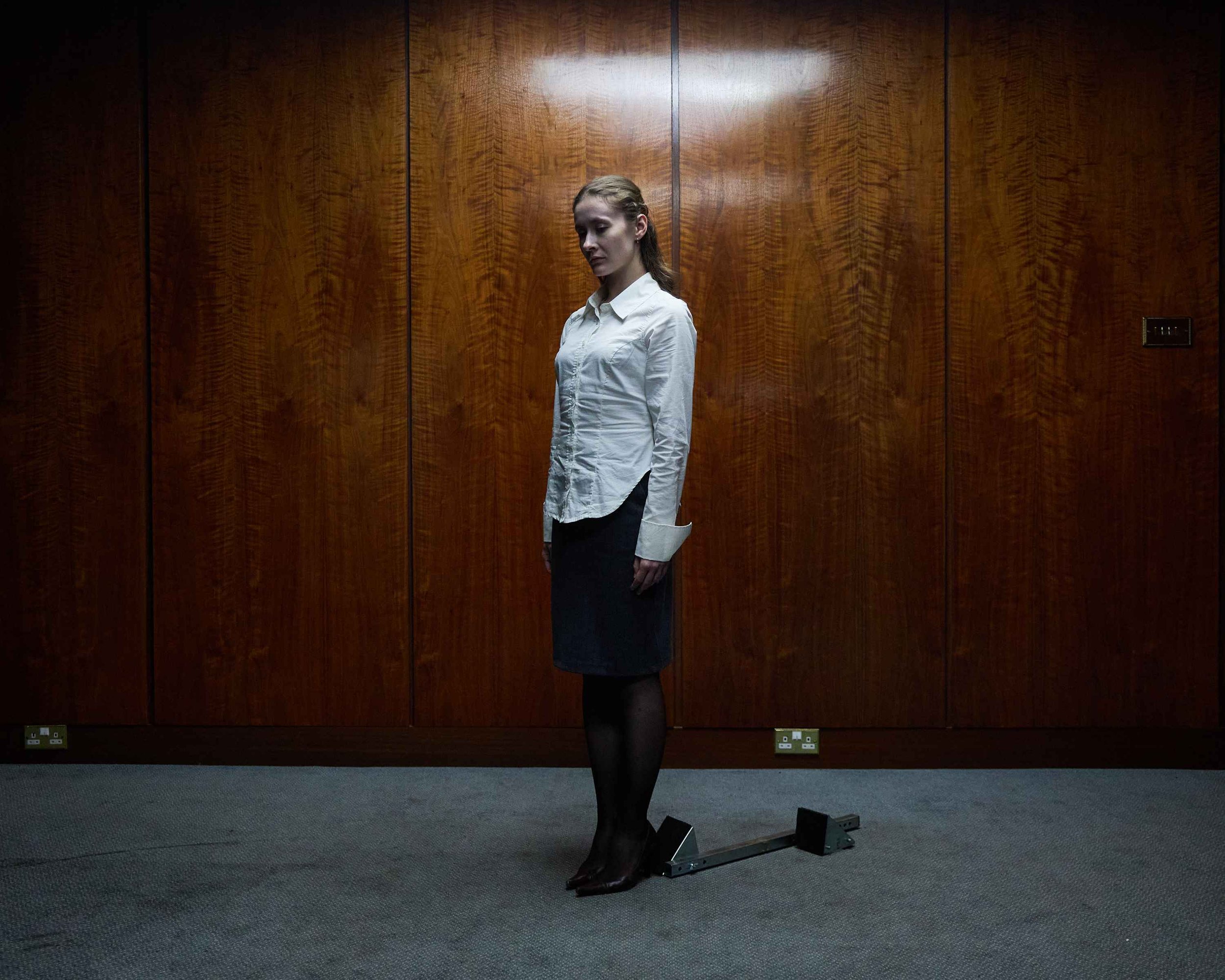
Yes, I like to play with irony. In the last action, you see someone in the starting position of a race. I told the performers: when we say go, you run. We started recording. They got into position. After around 10 minutes, we simply said, the action is finished. There was never a go. So the only thing that is visible is the waiting period, everything that unfolds between that state of readiness and the thing that never comes.
There was also a sound dimension to the installation at Spazio Serra. Can you speak about that?
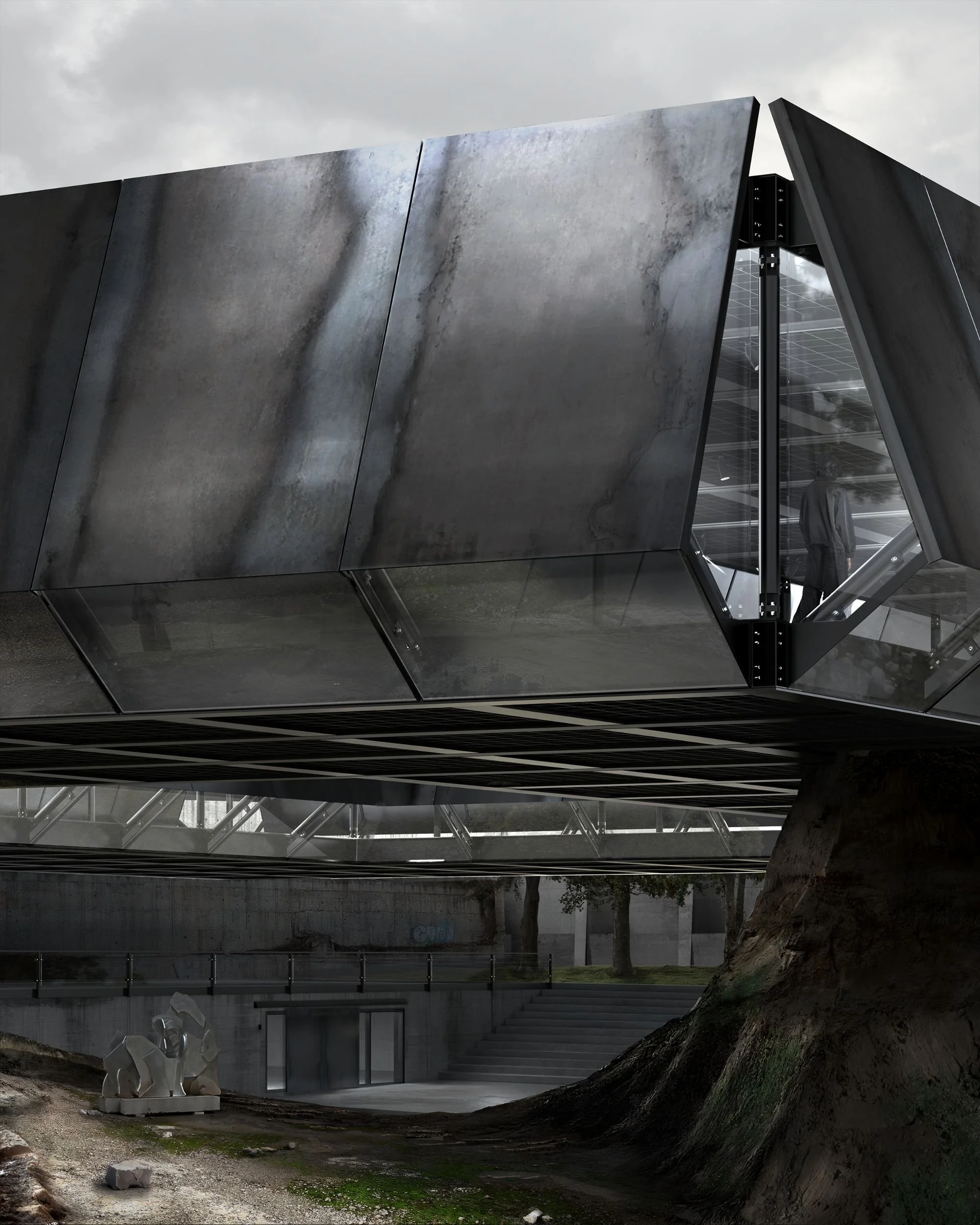
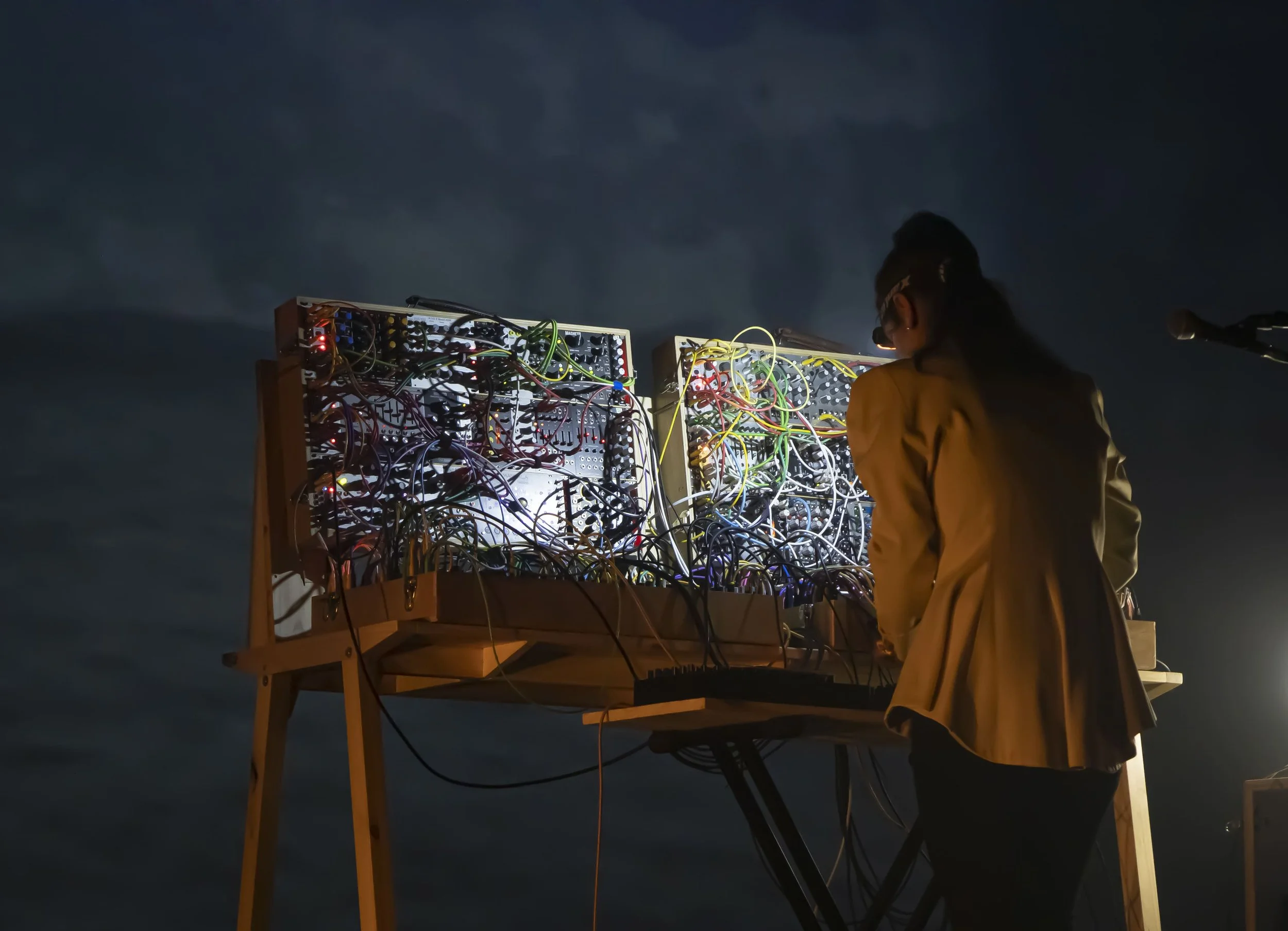
I wanted to materialize a certain tension. I created a series of frequencies that would make the room vibrate. Spazio Serra is a glass container, and when the piece was experienced purely as an installation from the outside, I wanted the space itself to vibrate, to signal that within that empty architecture there was a tension present.It was a mixture of frequencies moving from higher to lower, making the room vibrate. Those lower frequencies also have a physiological effect. They put you in a state of near-calm, a waiting state. I try to include this kind of sound in most of my indoor pieces. And there is always the scent of a resin that is burned before. Pure copal that is found in Mexico mixed with the smell of a cigarette. I never pitch this as a concept, but I always do it. Scent and sound are very direct ways to trigger a bodily and emotional reaction in relation to what you are seeing.
It sounds like you want the space to be almost uncomfortable.
Yes. I always want to make installations where people do not necessarily want to stay.
Where it gets a little bit intense.I like that aggression sometimes. It tests the reaction.
Going back a bit, can you talk more about Somehow Elsewhere, the performance that preceded all of this?
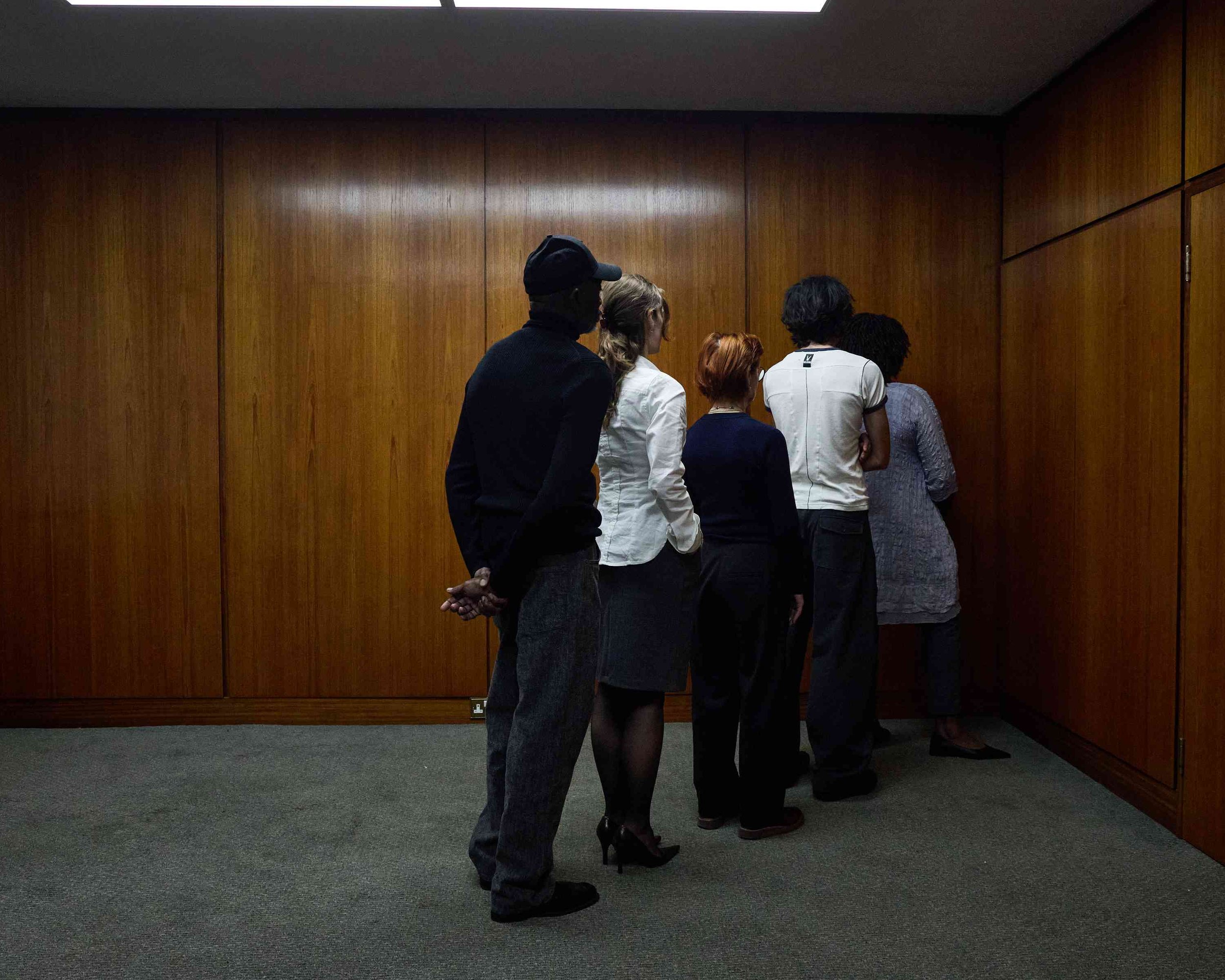
Somehow Elsewhere is a very simple performance. You see a group of individuals walking back and forth in front of a wall. The piece is very much what you see. It is a group of people trapped in a pattern, a condition someone else has created, and because of the repetitive movement they produce a mechanized, almost robotic behavior. At a certain point you stop thinking about what you are doing and your body is just conditioned to keep doing it. The piece is about existing under systematic conditions, under patterns that somebody else has designed, and how those affect the body. But there is also a constant shift between collectivity and individuality. They are always disconnected from one another, yet they are all doing the same thing. At some moments there is collectivity, and then it shifts to subjective individuality. Being alone within a collective. That is a topic I keep returning to.
You also did a choir performance at Spazio Serra that seems to follow a similar logic.
Yes, the framework is very similar. We designed a series of harmonies and each person had an individual harmony. At certain moments those individual harmonies would find a collective one. This constant shift between being alone and being together, between individuality and collectivity, I think is a big part of life.
““We spoke afterwards and discussed how doing nothing is one of the hardest things a person can do right now.” ”

Thinking about what comes next, do you already have a sense of where your practice is heading?
It is interesting because I always say I work with performance, and I do. I am very much a performance artist in the way I think, through physical reactions. In my studio there is always some form of movement, some physical action with the body. But even though it is performance, it always comes from a sculptural idea. I do not think about creating a performance with a beginning, middle, and end with an audience etc... I think about an image, with bodies, but from a sculptural point of view. Right now there are a lot of sculptural ideas in my head, which would be a genuinely new direction for me. I think that is what is next. It is time to start applying those sculptural ideas into actual sculpture. I will leave it there.
Does that feel exciting or more nerve-wracking?
Both. I control the performance world a little more. Sculpture is a new lane. So there is more room for failure. But that is also part of it.
Are there any contemporary artists whose work you are particularly drawn to right now?
There are so many, and they always change. I always have new obsessions, I always find new works by artists I did not know before, emerging artists, things I would never have expected. I would not give you one specific name. What I will say is that the privilege of being in the art world is constantly finding new ways of saying things, being taught new conversations about things you did not know. Every day there is something new. It is stimulating.
““It is a space where different people, from completely different situations and backgrounds, suddenly share the same condition.”
”
And in terms of where you will be working, what is next geographically?
I need to get back to New York soon. For Spazio Serra I had to be in Europe for four or five months. New York is a very inspiring city for me, and I am in conversation with quite a few institutions there. There are things in place but nothing confirmed yet. I need to work on that. So New York is next.
After completing a big project like this, what does that moment feel like?
I said this to you just before we started. After I finish a project I feel completely naked. It is like starting over. I feel like I do not know anything. After a year of working on something, there is this emptiness, a kind of reinvention. It is exciting and nerve-wracking at the same time. The question of what is next, waiting for something to happen, is more present than ever. But the world somehow gives it to you. You find yourself doing something new, starting a new project. And then, almost without realizing, you are in it again. I am excited. Excited to keep going, to learn more, to see more, to try more, to make more, and to fail more. Definitely to fail more.
Would you say your work is autobiographical?
I would not describe it as autobiographical. But it always comes from a personal point of view of something that concerns me. It always comes from a discomfort with the way the world presents itself. And then I always try to find through research whether there is a broader conversation to address and if others might sense or feel the same thing. So it is not autobiographical, but it always comes from personal experience. Because at the end of the day, it is me doing it and thinking about it.
Interview by Donald Gjoka
What to read next