RAMM:ELL:ZEE TIME:LINE at Museion in Bolzano
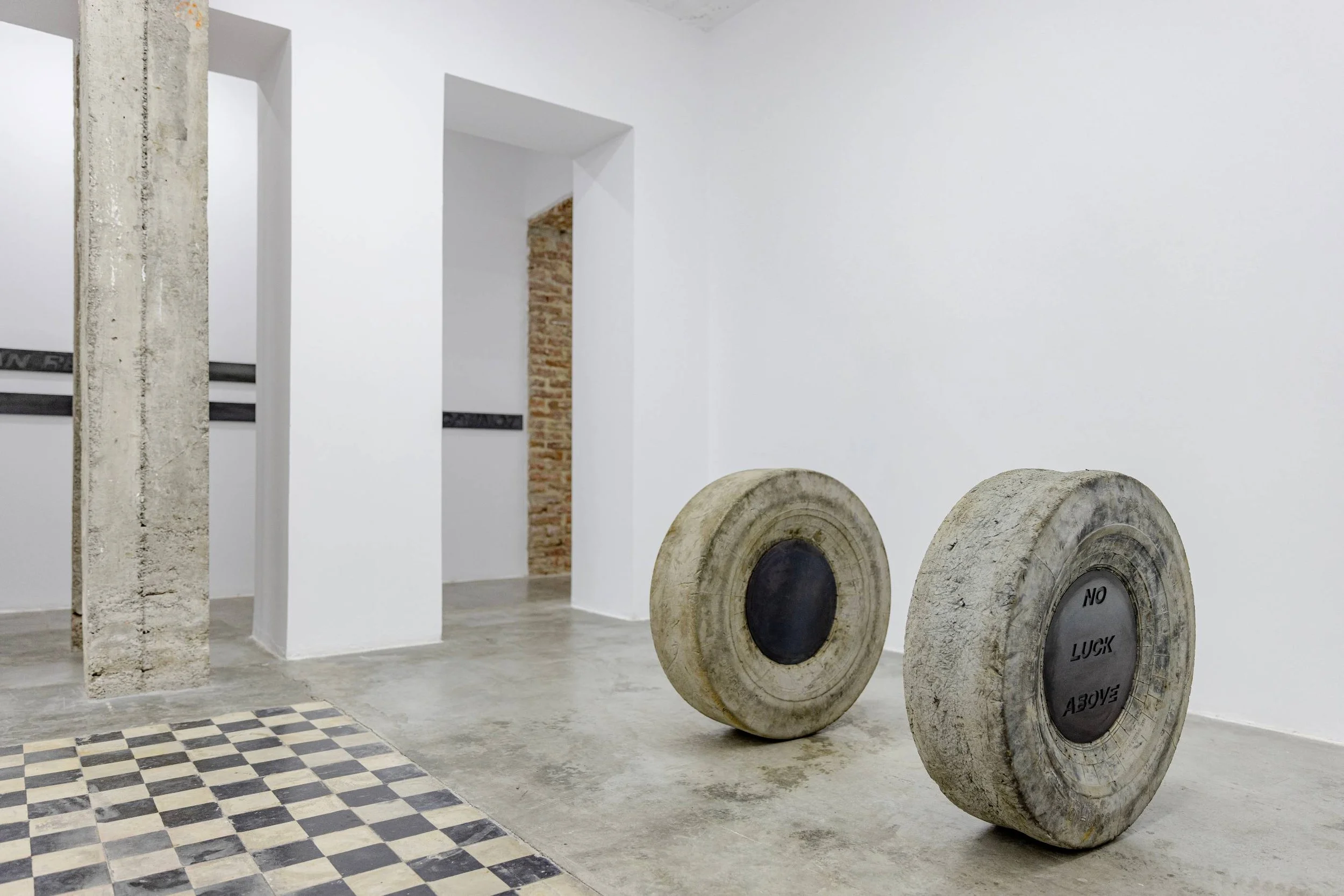
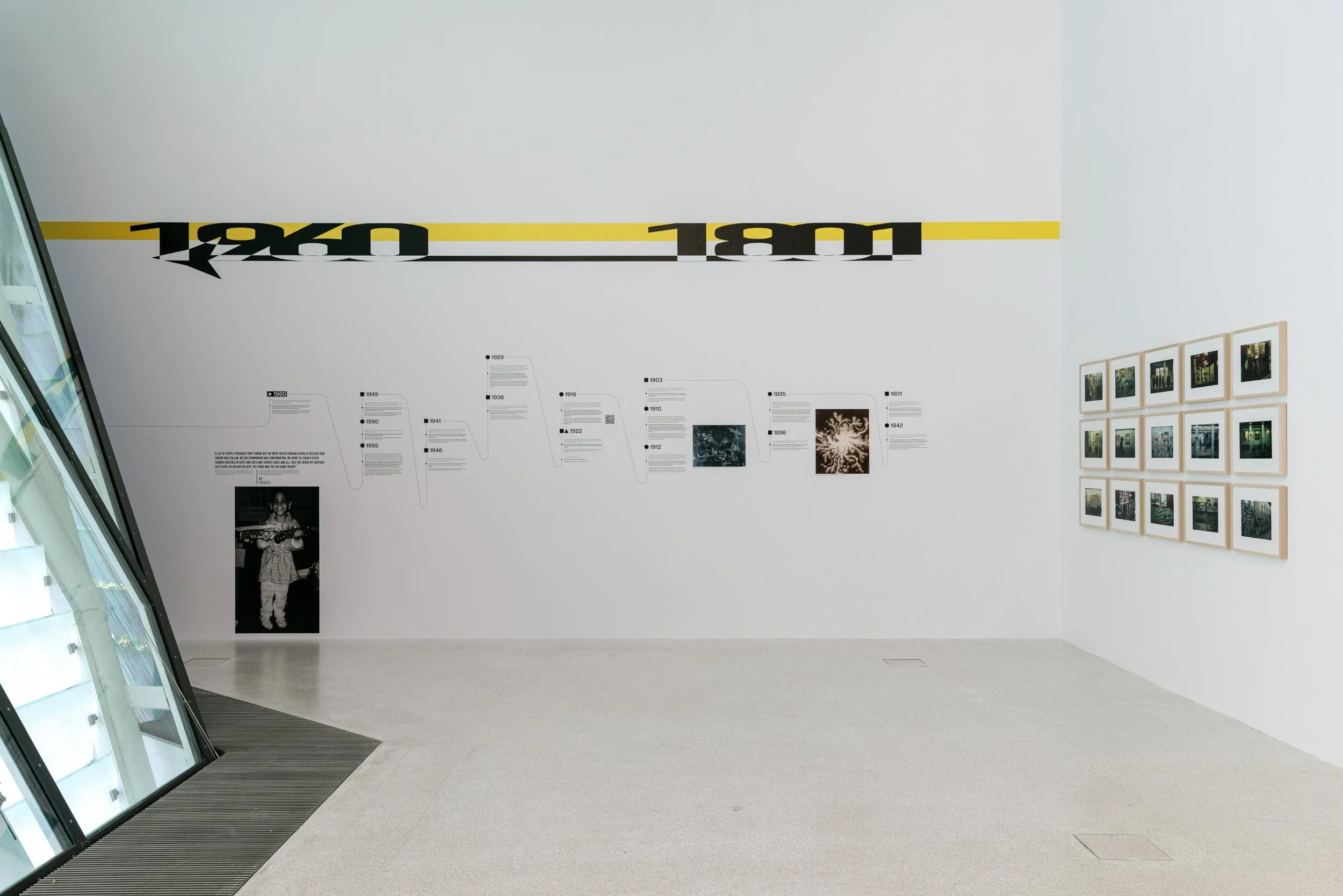
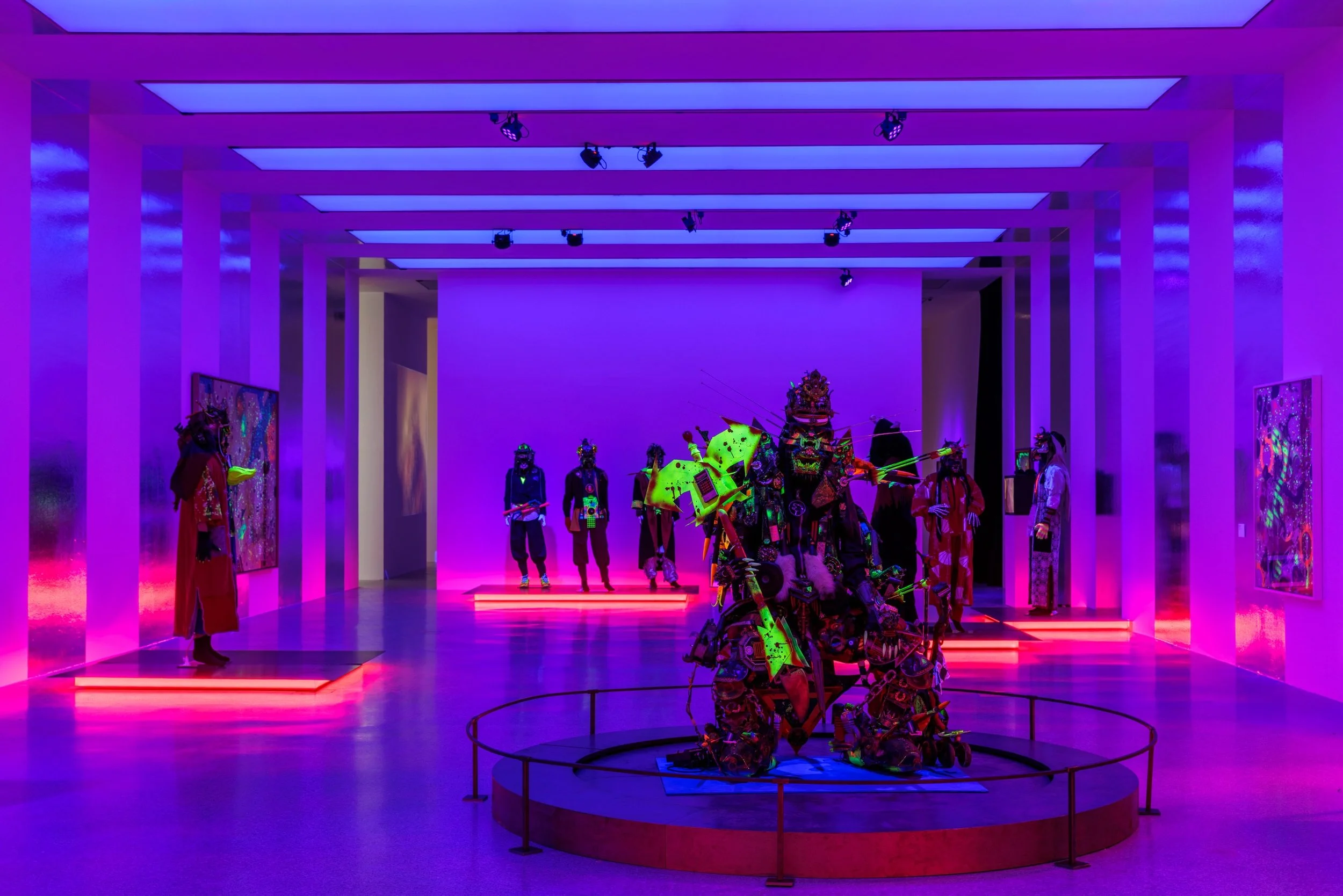
TIME:LINE is the third and final stage of a retrospective that opened at the Palais de Tokyo in Paris and continued at the CAPC Musée d'art contemporain in Bordeaux. Curated by Hugo Vitrani and Cédric Fauq, with an exhibition design by Pascal Rodriguez across the third and fourth floors, the Bolzano chapter follows a thread few people know: the trips and exhibitions that brought RAMMELLZEE to Milan, Bologna and Martina Franca. Paris immersed visitors in his substances and materials, Bordeaux set his work beside some forty artists from different generations, and Bolzano projects the whole story onto a timeline. Four parallel chronologies run through the rooms, tracing his life, art and culture, science and technology, society and politics, so that every object finds its place in a wider history.
The show also extends The Softest Hard, Museion's research line on art as a form of nonviolent resistance, launched in 2025 with Graffiti. That exhibition, the first institutional survey of its kind in Italy, followed spray painting from the first experiments of the 1950s to New York writing on canvas in the 1980s and on to a present where a single sprayed line instantly speaks of rebellion and city life. RAMMELLZEE already held a central place there. In Bolzano he takes the whole building.
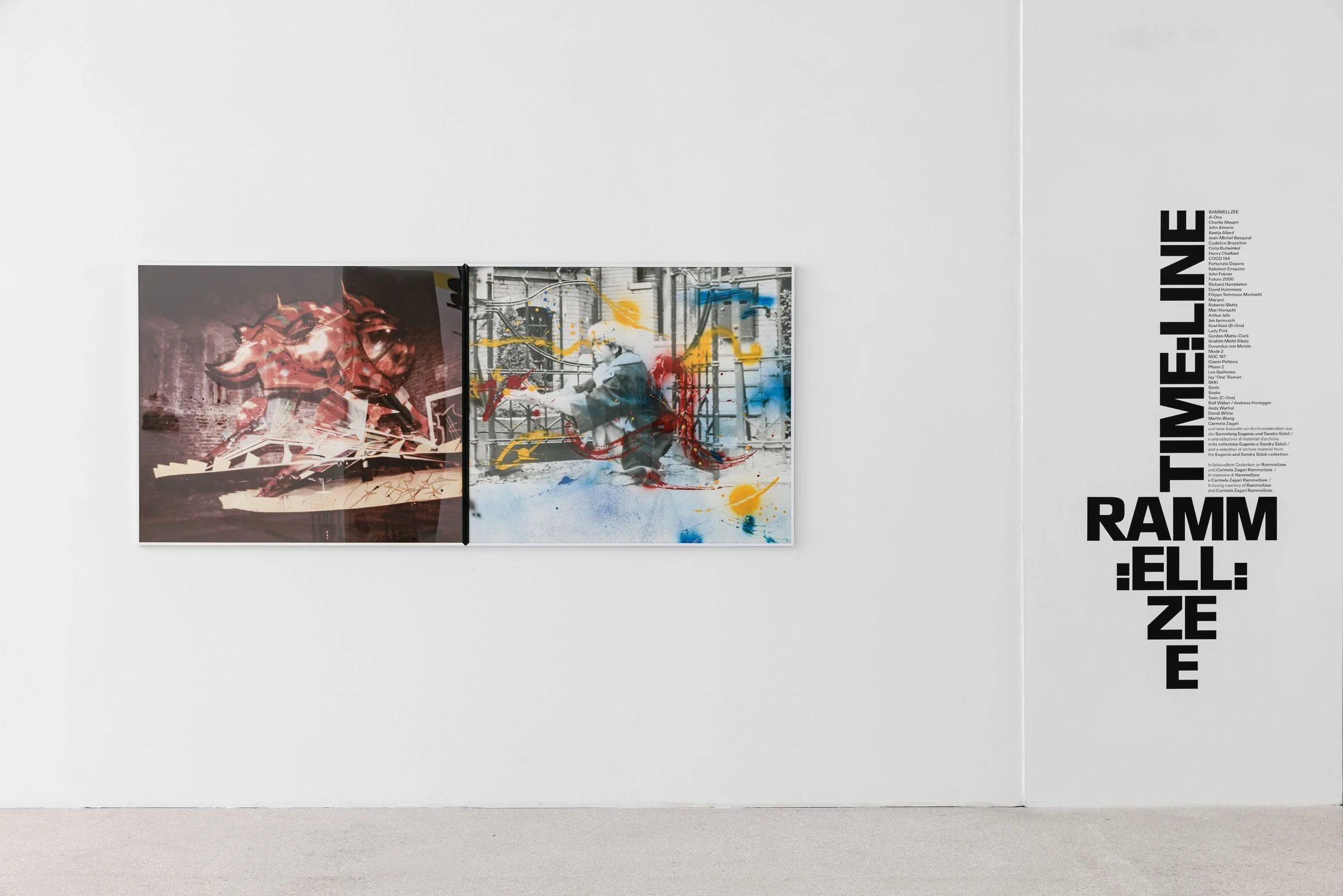
He was born on 15 December 1960 in Far Rockaway, at the end of the A line of the New York subway, and died there on 27 June 2010. In 1979, at nineteen, he officially took the name RAMM:ΣLL:ZΣΣ, a formula he described as an equation toward elevation, detail and perspective. It reads as RAM plus M for Magnitude, a Sigma for sum, two Ls for longitude and latitude, Z for Z-bar and a double Sigma for addition. Spoken aloud it becomes RAMM Elevation ZEE, and he liked to use it as a noun, the RAMMELLZEE. A member of the Five Percent Nation, the movement founded in 1964 as a branch of the Nation of Islam and a strong force in early hip hop culture, gave him the name. Its teachings, the Supreme Mathematics and the Supreme Alphabet, give every letter and number a symbolic value, and they shaped the manifesto he wrote that same year: Ionic Treatise Gothic Futurism Assassin Knowledges of the Remanipulated Square Points: One to 720° to 1440°.
In that treatise he drew a genealogy from the monks who illuminated medieval manuscripts to the writers who decorated the silver subway cars, and he named two theories that guided him for the rest of his life. Gothic Futurism joins the Middle Ages, the twentieth century and science fiction. Ikonoklast Panzerism takes its name from the German word for an armoured vehicle. Language, in his view, worked as an instrument of control, and the way to answer it was to attack the letters that build it. He called the process armamentation: ornament becomes a weapon, and every letter receives its own armour.
The critic Greg Tate described hip hop as the answer of Black bodies to post-industrial society, with graffiti as its visual language. From the early 1970s the movement raced across the silver surfaces of the New York subway at the speed of the trains, through soot, grime and the thrill of illegality. Many of its pioneers preferred the word writing and saw themselves as new authors of the city, while Norman Mailer spoke of a verbal atmosphere and a new religion of the name.
RAMMELLZEE painted on the trains only on occasion, yet the subway gave him a community, an attitude and the ground for what he called an alphabetic and martial imagination. He co-founded the TMK crew (Tag Master Killers) with A-One, Kool Koor and TOXIC, and looked up to Phase 2, Futura 2000 and Dondi White. To those who dismissed graffiti as scribbles he replied with a poetic and military strategy, a war of letters with a clear division of roles. He built the weapons. Futura 2000 watched the battlefield from above and drew history as a map. Phase 2 handled the carbon side of the war.
In the wild style of the period, writers broke letters apart to give them speed and fluidity. RAMMELLZEE read that practice as a revival of medieval illumination, a way for his generation to take back control of corrupted languages.
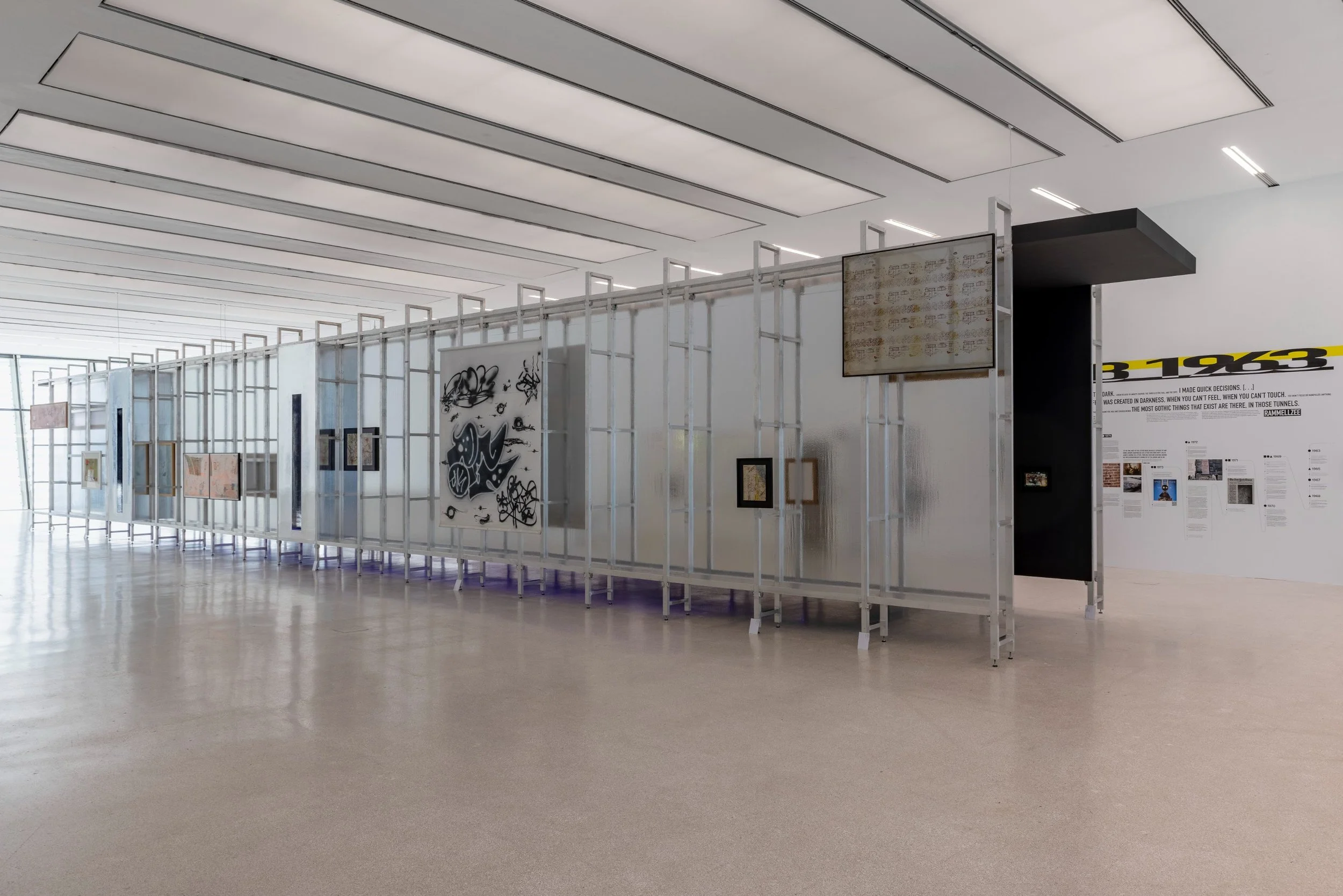
The 1980s made him a figure of both hip hop and the international art world. He appeared in Charlie Ahearn's Wild Style and in Stranger Than Paradise by his friend Jim Jarmusch, who admired his way of thinking and creating through resonance, repeating gestures, forms, materials, sounds and rhythms. He joined the 1982 New York City Rap Tour, the first world tour of American hip hop pioneers, with stops in London and Paris. With the Rock Steady Crew he worked as Master of Ceremonies and shaped a nasal delivery he called Gangsta Duck, a sound that later echoed in the Beastie Boys, Cypress Hill and MF DOOM. In 1983 he recorded Beat Bop with K-Rob, a cult track produced by Jean-Michel Basquiat, who also designed its cover. That same year Basquiat, friend and rival, painted Hollywood Africans, with RAMMELLZEE and TOXIC at his side.
Gallerists such as Yaki Kornblit, Lidia Carrieri and Renée Ziegler showed him in New York, the Netherlands, Switzerland and Italy. He often opened his shows with improvised performances he called Rammellzeean chants, a form he kept apart from both music and rap. He played experimental venues like the Squat Theatre in 1982 and society events like Valentino's 25th anniversary party in Milan in 1984. Costumes and a vocoder let him play with his own voice and image, pushing against the codes of masculinity of the scene around him. His circle spanned Futura 2000 and Virgil Abloh, Sylvère Lotringer and Greg Tate, Edit deAk, Valentino, Bootsy Collins and Madonna.
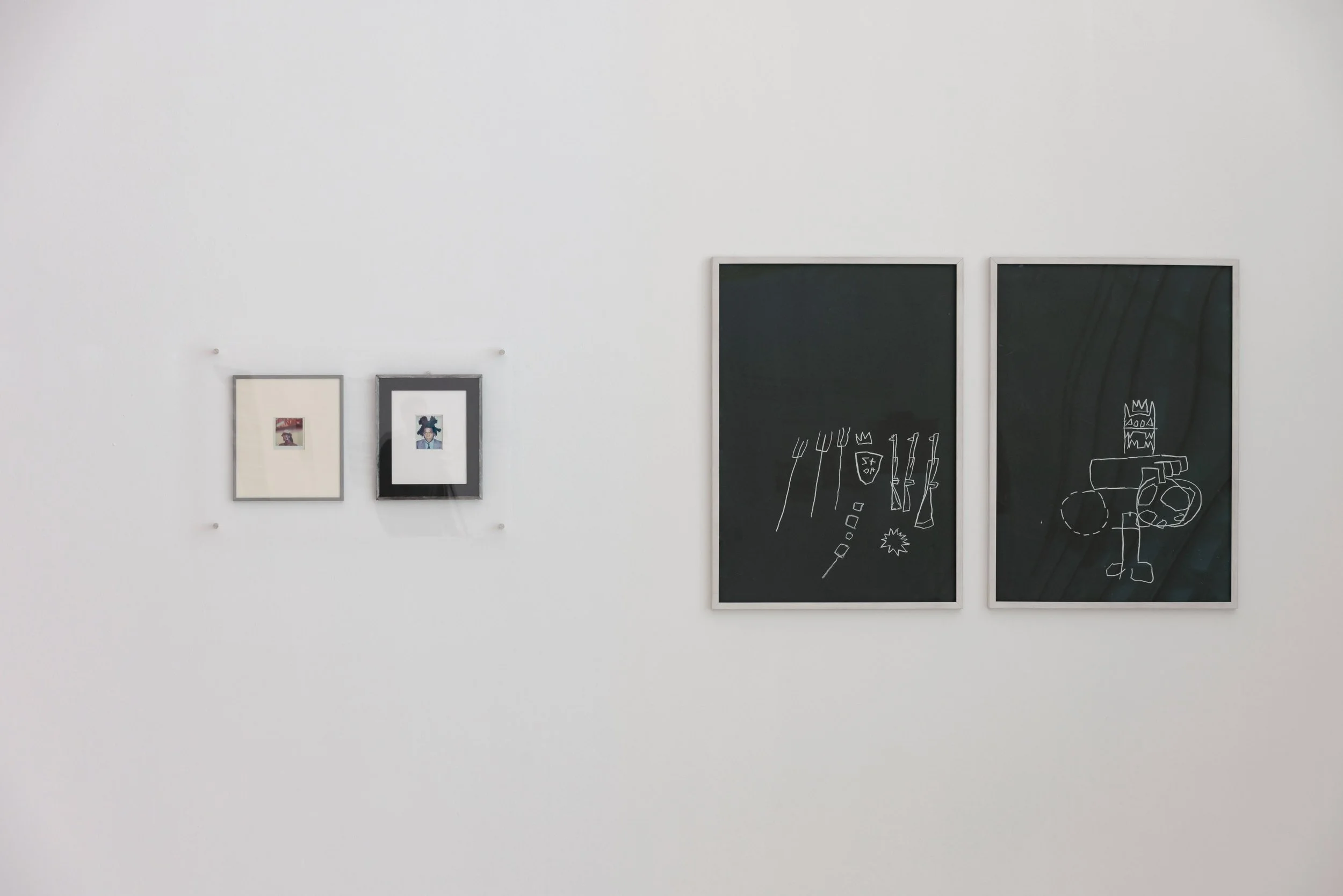
On the trains, the meeting of paint, surface and support fascinated him from the start. In the studio he began with smooth supports such as paper, cardboard, canvas and roller blinds, then moved on to rougher ground like carpet, stretching the usual limits of scale and touch. With stencils, acrylic and spray cans he painted motifs close to runes, heavier and more sculptural than the rest of his work, while testing formats, frames, epoxy resin and sculpture. Between 1984 and 1988 he painted a series on marble in Martina Franca, in Puglia, a key stop in the Italian story that Museion brings to light. He saw these works as a continuation of illumination: in his words, he completed his letters by constructing them.
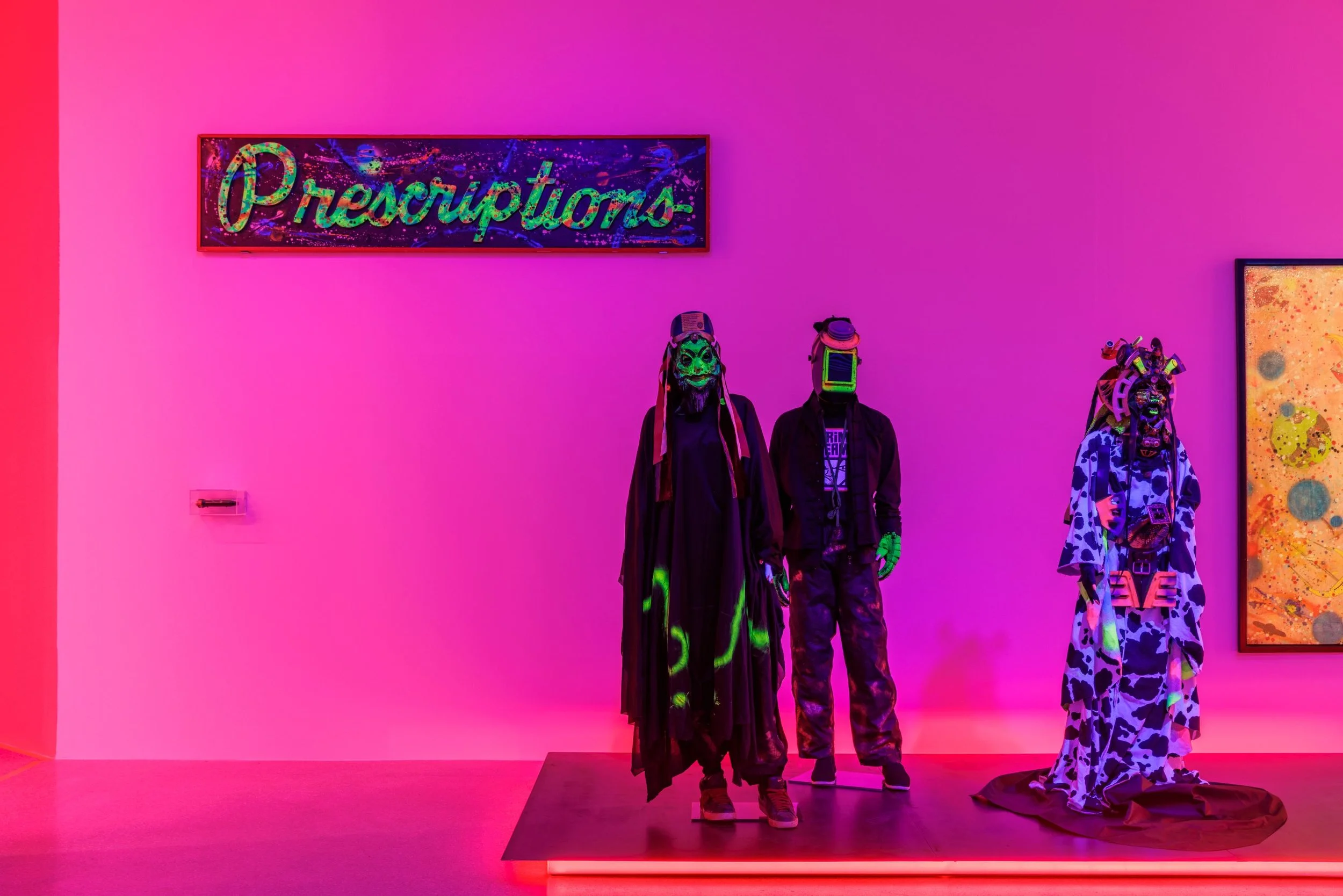
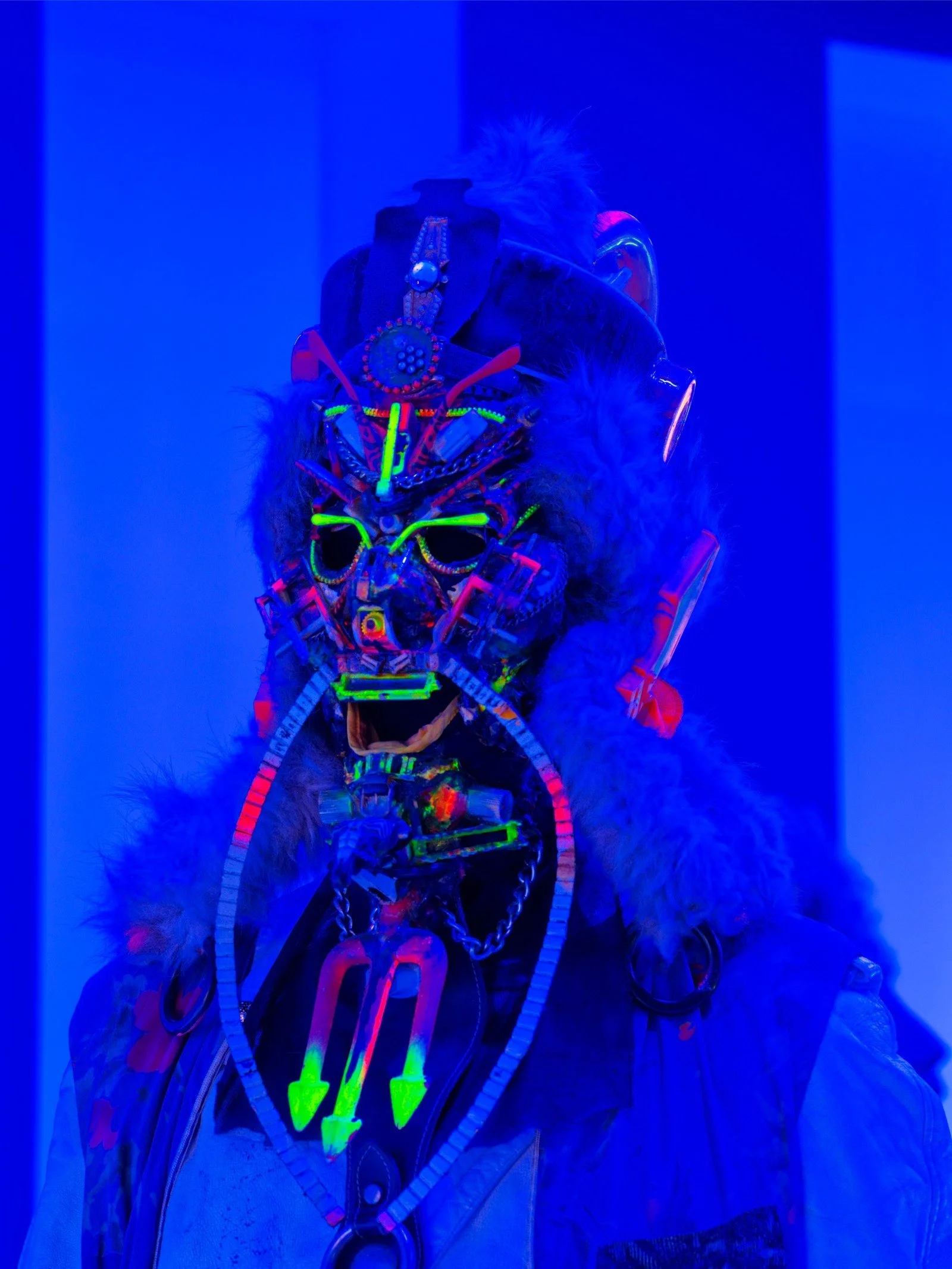
Some paintings he conceived as secrets, visible only under black light, a light that also wakes parts of his costumes. Today his work is often shown in that glow, a choice as political as it is poetic.
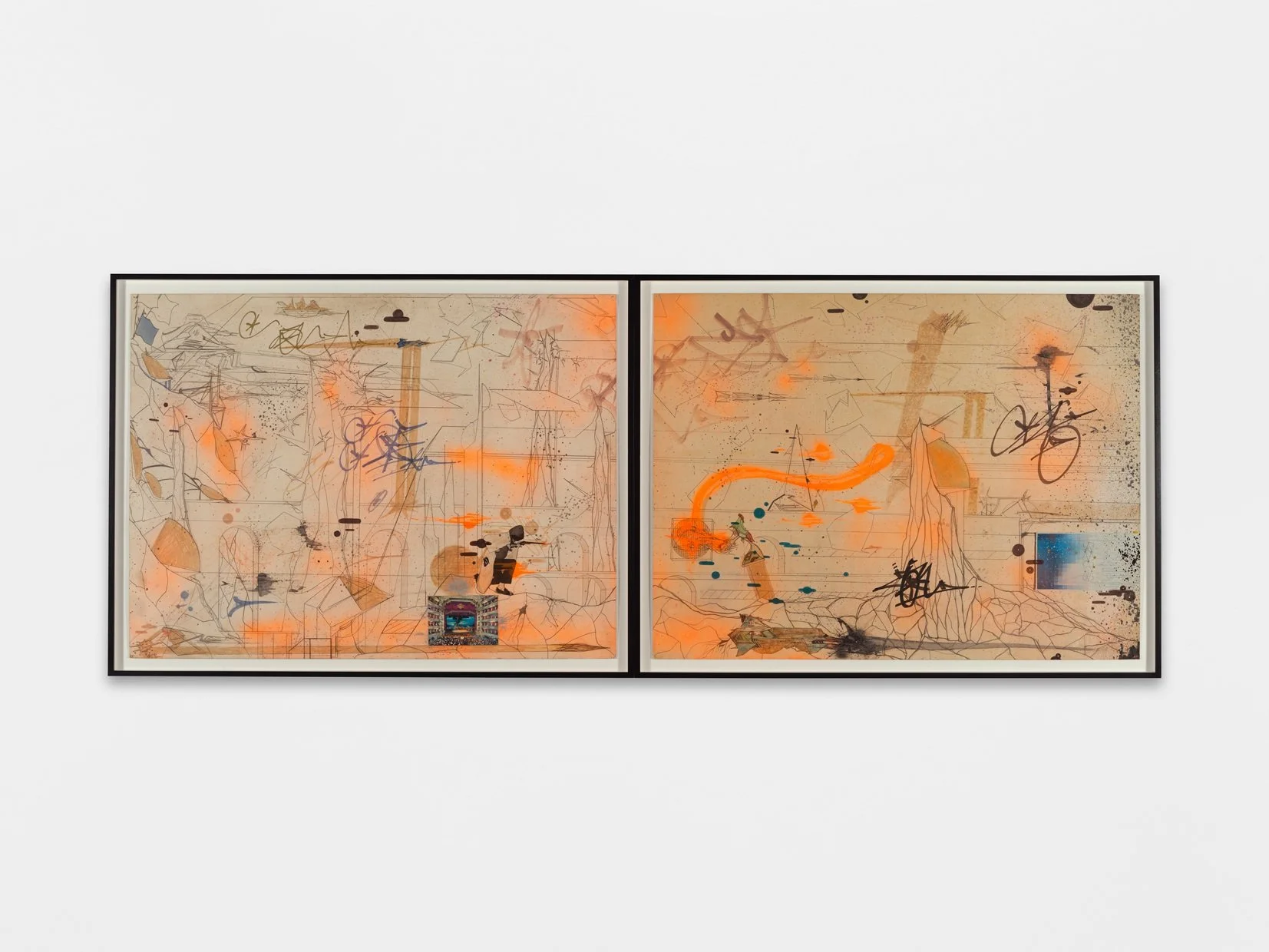
Black light, resin and spray paint let him play with depth, perspective, transparency and opacity. He painted signs and symbols and set them beside toy fragments and found objects, from plastic guns and rubber balls to chains and everyday materials, combining them with photographic archives into fragmented stories that hold many times at once. With epoxy he built sculptures and relief paintings that look like fossils, toxic aquariums or capsules from the future. Like a nouveau réaliste on acid, he layered his pieces into an augmented reality where the alphabet surfaces through the transparency and cracks of light bend perception.
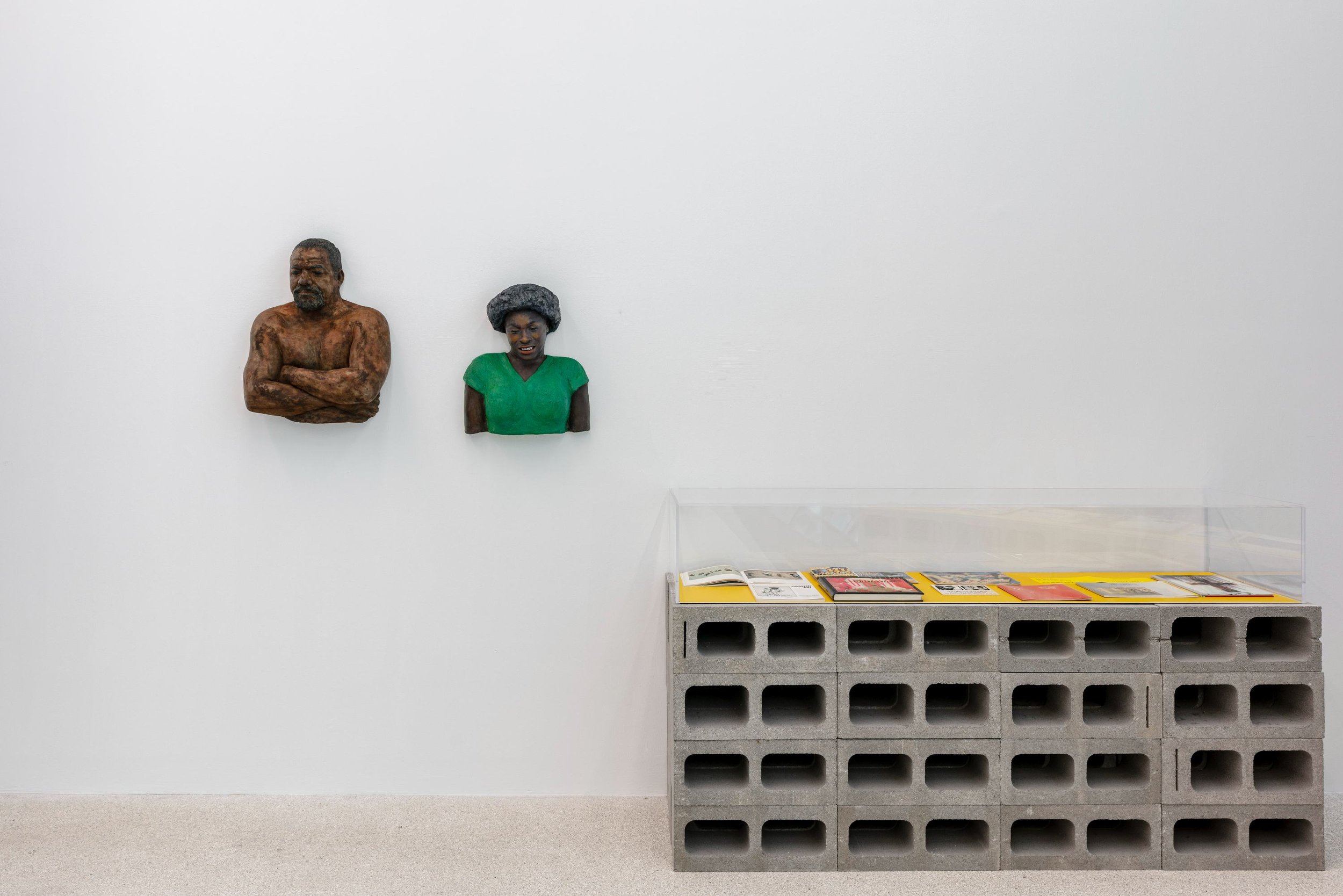
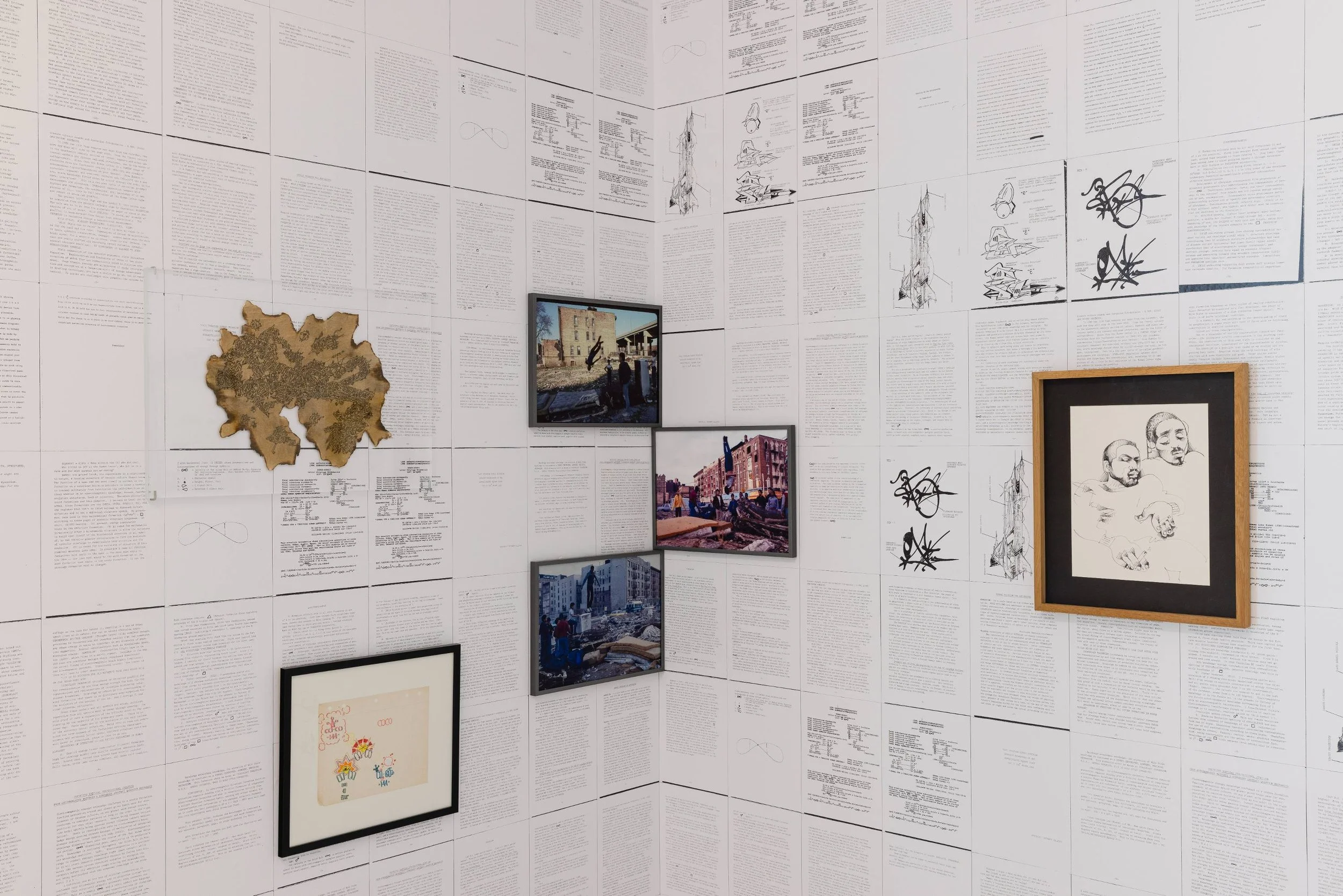
Thanks to the Ziegler family, Museion shows a rare group of historic works, some of them on public view for the first time since 1985. A film by Rolf Waeber and Andreas Honegger records his process at close range and lets visitors feel his energy while sparing them the fumes.
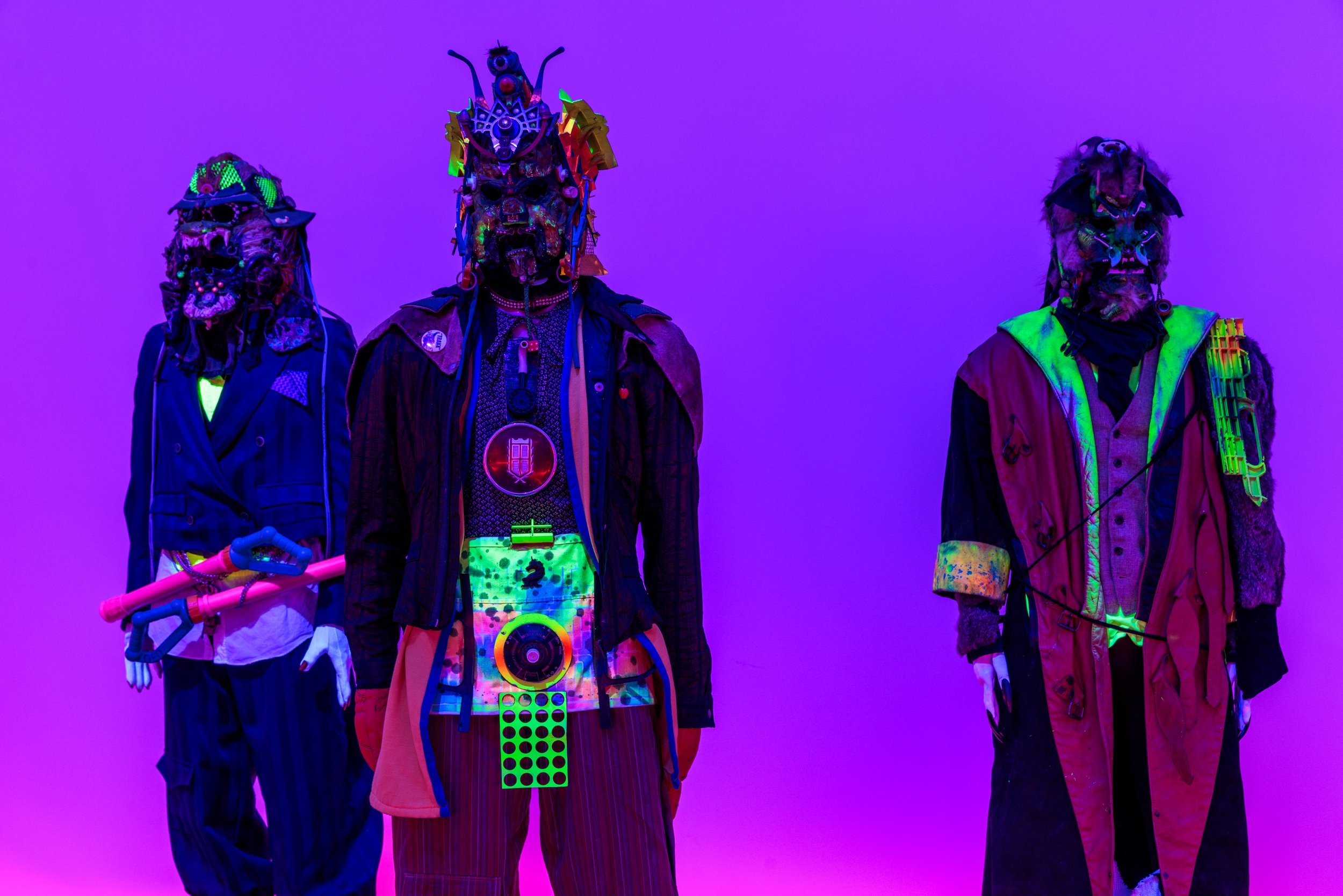
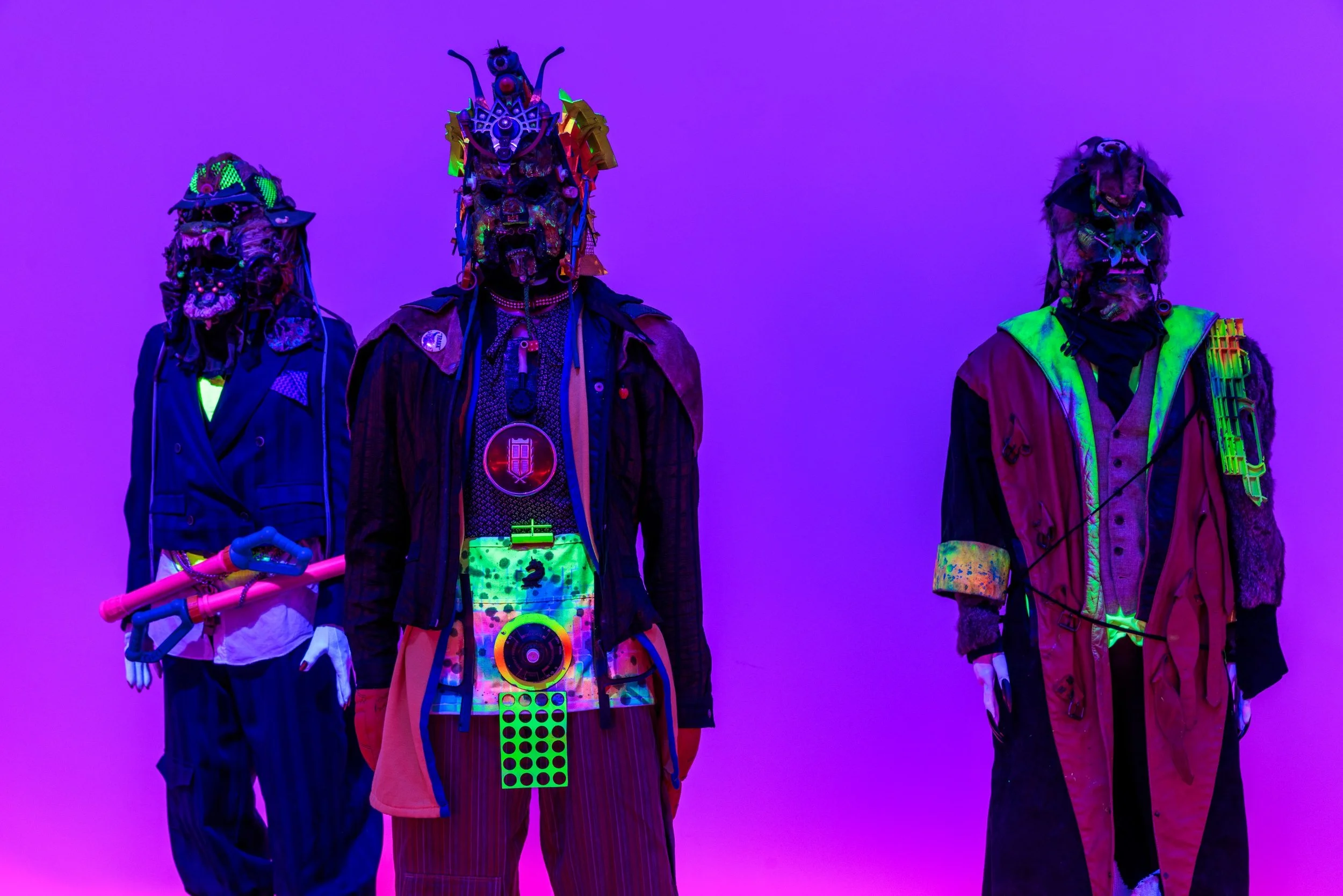
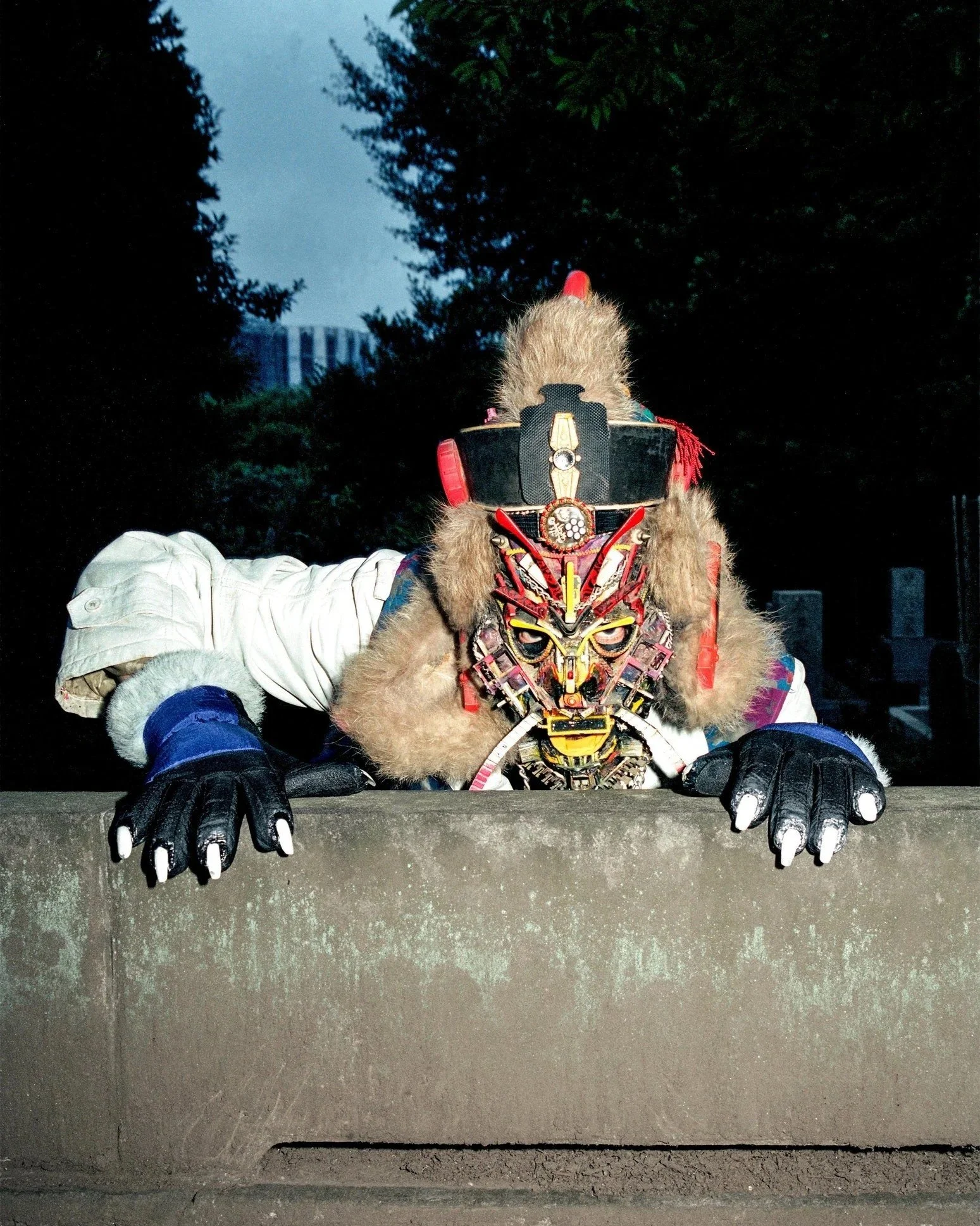
To give his warrior alphabet a body, RAMMELLZEE built the Letter Racers, a squadron made for an aerial war of language. Cut and assembled from toys, dolls and recycled fragments, they fall into two groups. The first follows the rule of armamentation: tank-styled letters on wheels and ball bearings, fitted with rocket launchers for simulated battle. The second, shown in full at Museion, gathers the Alphabiters, hybrid letters inhabited by human and animal figures, their name a crasis of alphabet and biter. Their missile-shaped tongues are designed to destroy other languages. Some move, others make sounds close to bats, whales or dolphins, and when they hang from walls and ceilings they sometimes spell words, to the delight of adults and children alike.
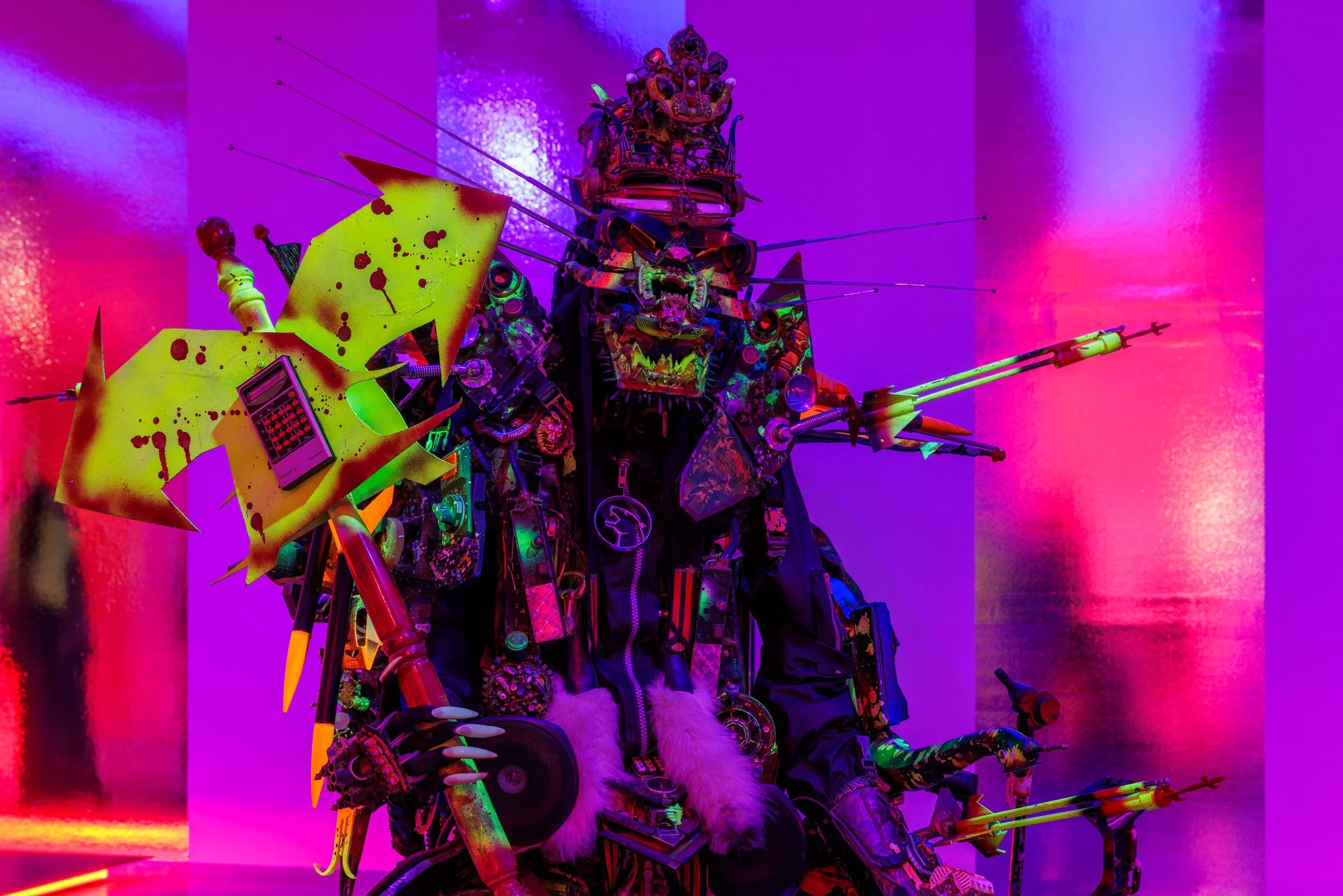
From 1994 he gave form to a pantheon of deities fighting the Lexicon Wars, the Garbage Gods. Made mostly from materials picked up on the streets of New York, each one has a name, a precise age, its own powers and weaknesses. The figures question fixed ideas of gender and cultural origin, and their look owes a clear debt to manga and Japanese mecha culture, along with the legacy of Italian Futurism, aerospace technology and quantum mechanics that fed his whole imagination.
The supreme Garbage God and the heart of the exhibition is Gasholear, the sculptural exoskeleton he worked on for years and wore in exhausting public performances. The name likely joins gas, hole and ear, and describes a powered armour where energy, weapons and sound produce new forms of radiation. By his own account it took four years to build this bulletproof arsenal, inspired by an android he first painted on a train in 1981. It weighs 150 kilos and holds a defence system, a pyrotechnic system and a sound system, with a flamethrower, rocket launchers, shoulder missiles, weapons on the belt and heels, four speakers, a vocoder and strobe lights.
Nearby stand the mirrored pyramid he designed with his wife, Carmela Zagari Rammellzee, to hold his ashes, and a group of crown-bracelets found in his storage and shown in public for the first time.
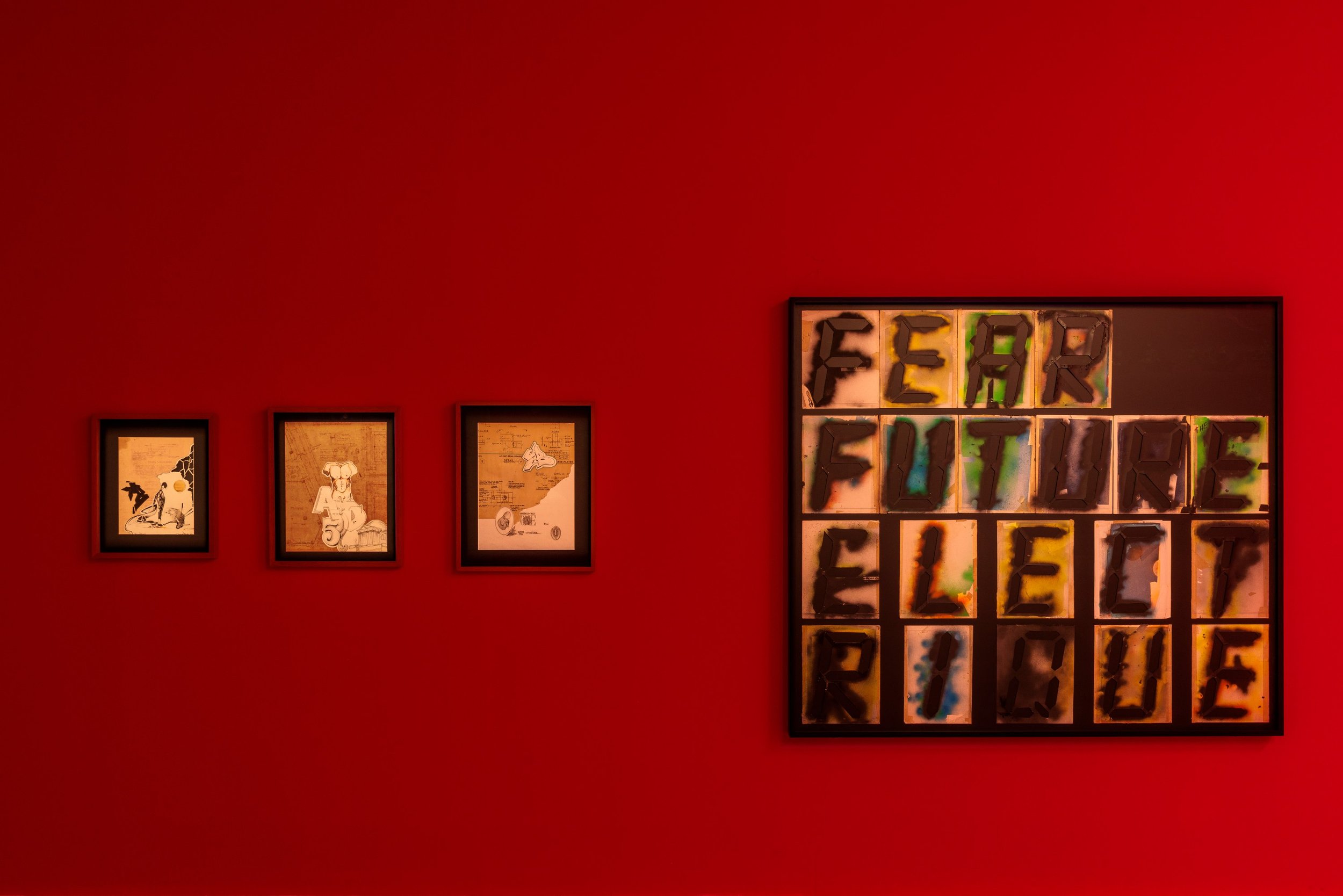
For many years he lived and worked inside the Battle Station, his studio, home and total artwork, open only to close friends and to those who brought his favourite drink, Olde English 800 beer, whose gothic lettering echoes medieval manuscripts. There he made drawings, toys, jewellery, resin paintings, vocoder compositions and armour, a personal arsenal built over three decades. In his final years, worn down by spray paint, resin, sleepless nights and excess, he kept his distance from the institutional art world. His last works combine painting, collage, drawings from personal archives and newspaper clippings, and look hard at the rise of nationalism and oppression. In one of them the word NEXT appears, a sign that reads today like a forecast of his own end.
He died in 2010, far from the institutions that now celebrate him. Red Bull Arts in New York, Deitch and MoMA have since shown his work, Virgil Abloh championed it, and the curator Maxwell Wolf dedicated a monograph to him with Rizzoli. After Paris and Bordeaux, the New Museum included him in its 2026 reopening show, New Humans: Memories of the Future. In Bolzano, his letters stand fully armed, ready for the centuries ahead.
RAMM:ELL:ZEE. TIME:LINE
Museion, Bolzano
17.10.2026 – 14.03.2027 (3rd and 4th floor)
Curated by Hugo Vitrani (@hugovitrani) and Cédric Fauq (@cedric.fauq)
Exhibition design by Pascal Rodriguez
Exhibition organized in collaboration with the Palais de Tokyo, Paris, and the Capc Musée d'art contemporain de Bordeaux.
Photography by Luca Guadagnini
Words by Donald Gjoka
What to read next