Telfar SS27
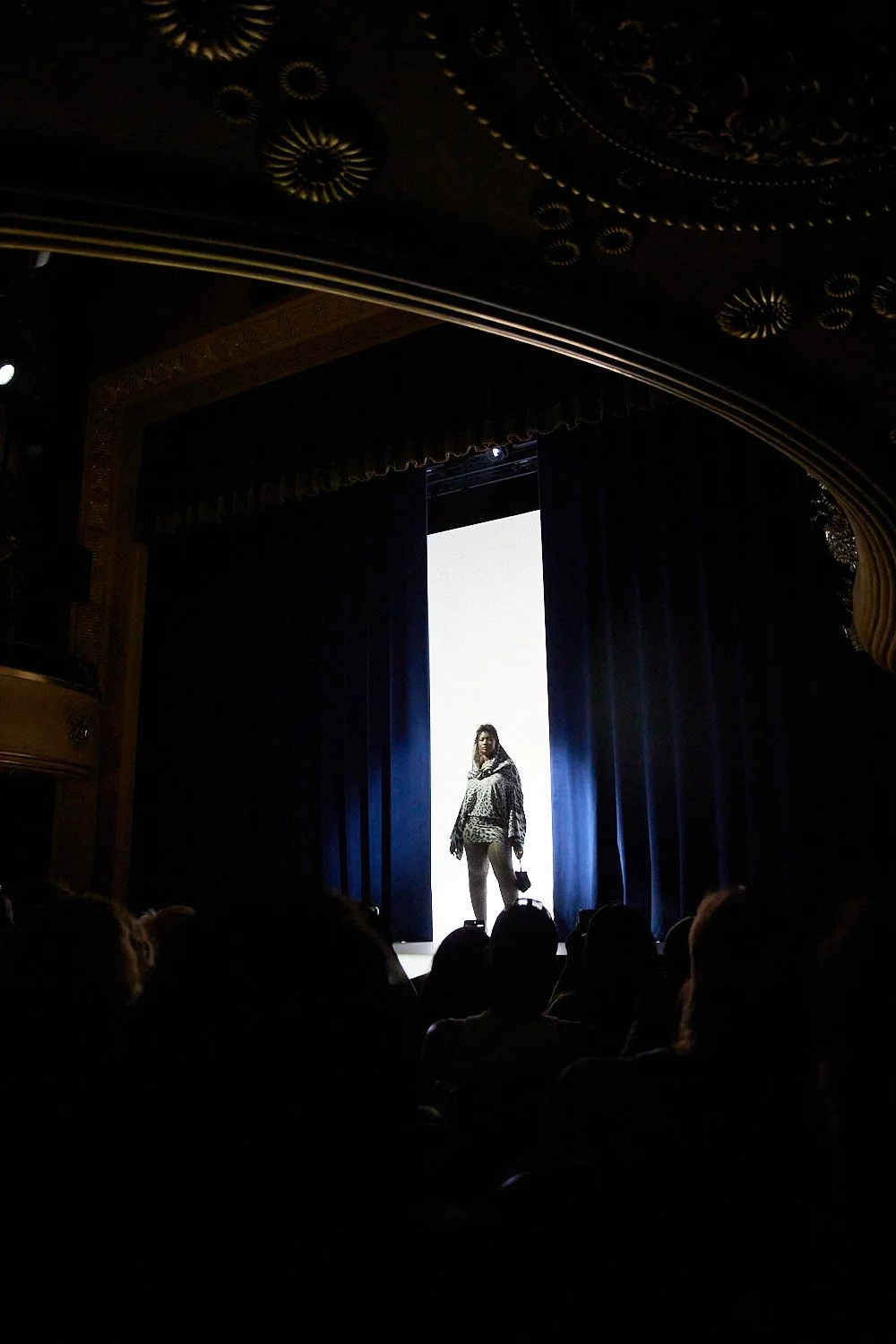
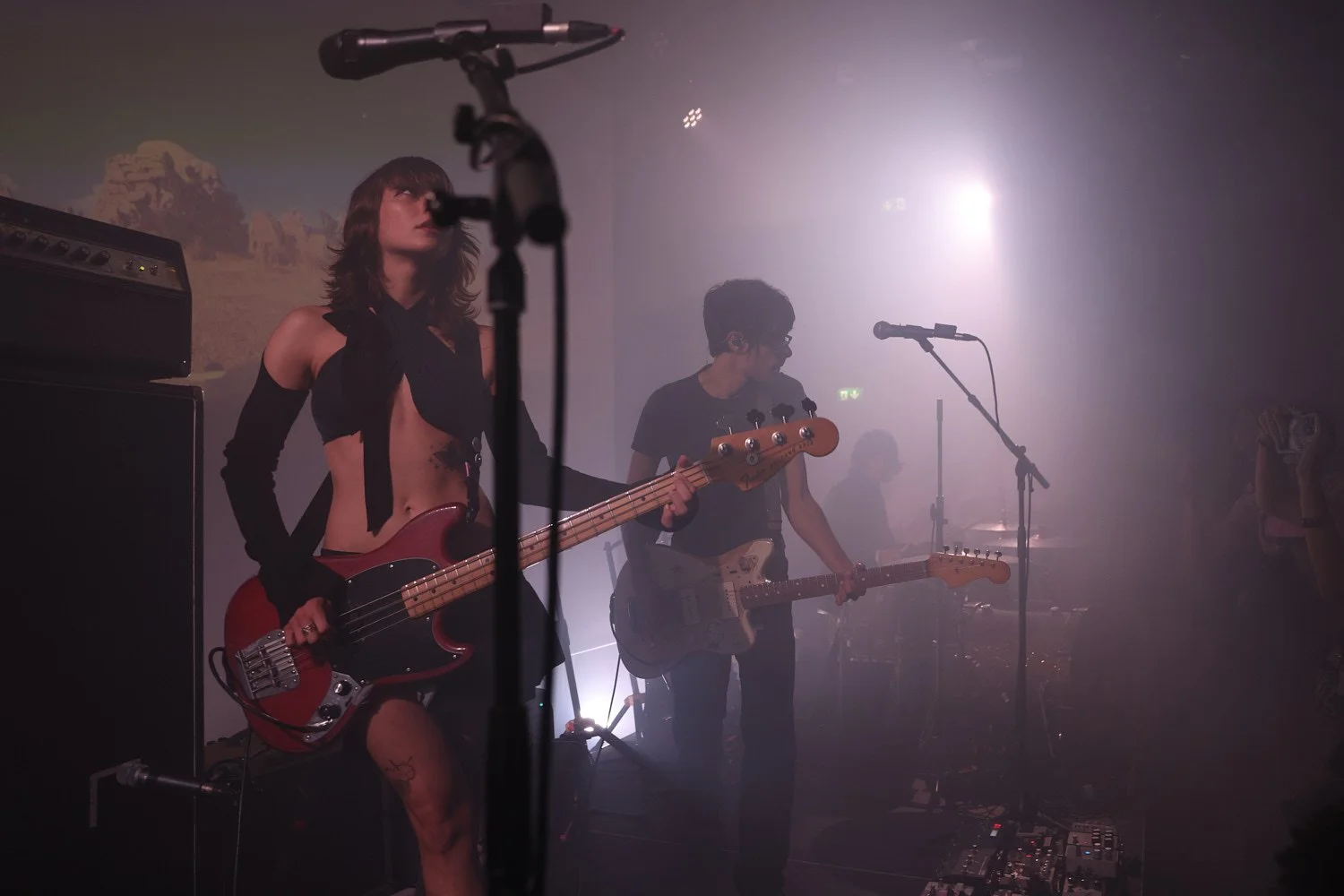
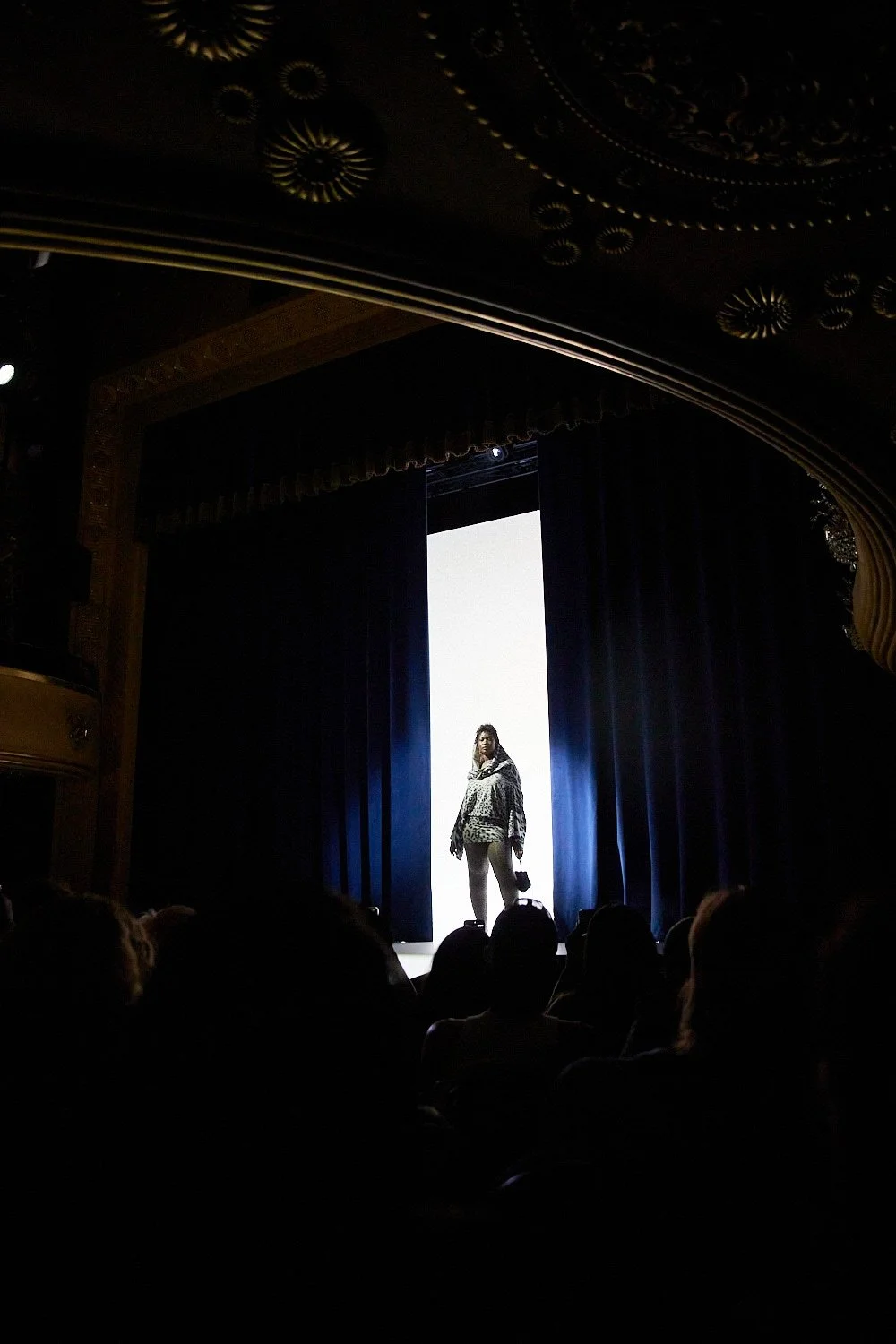
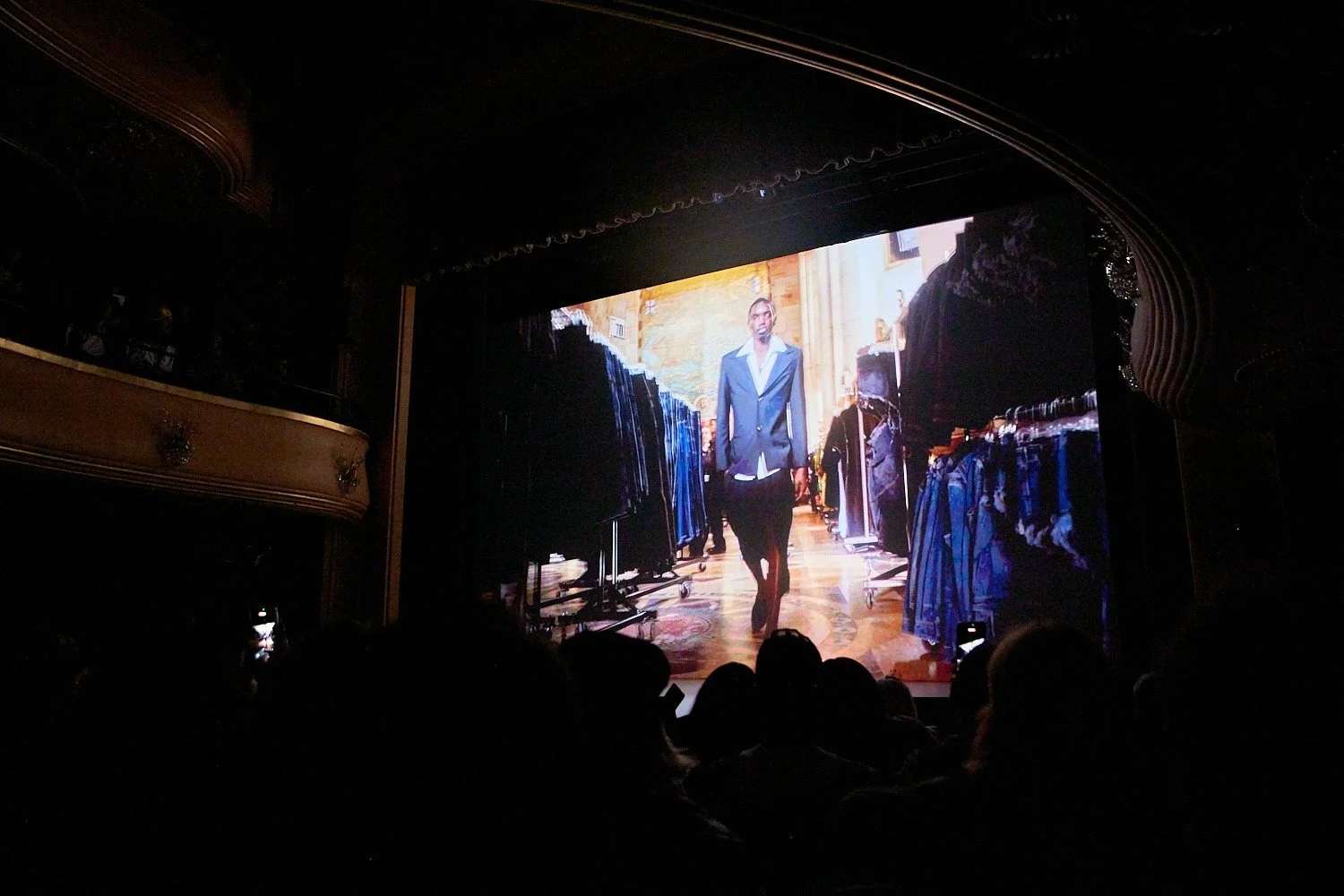
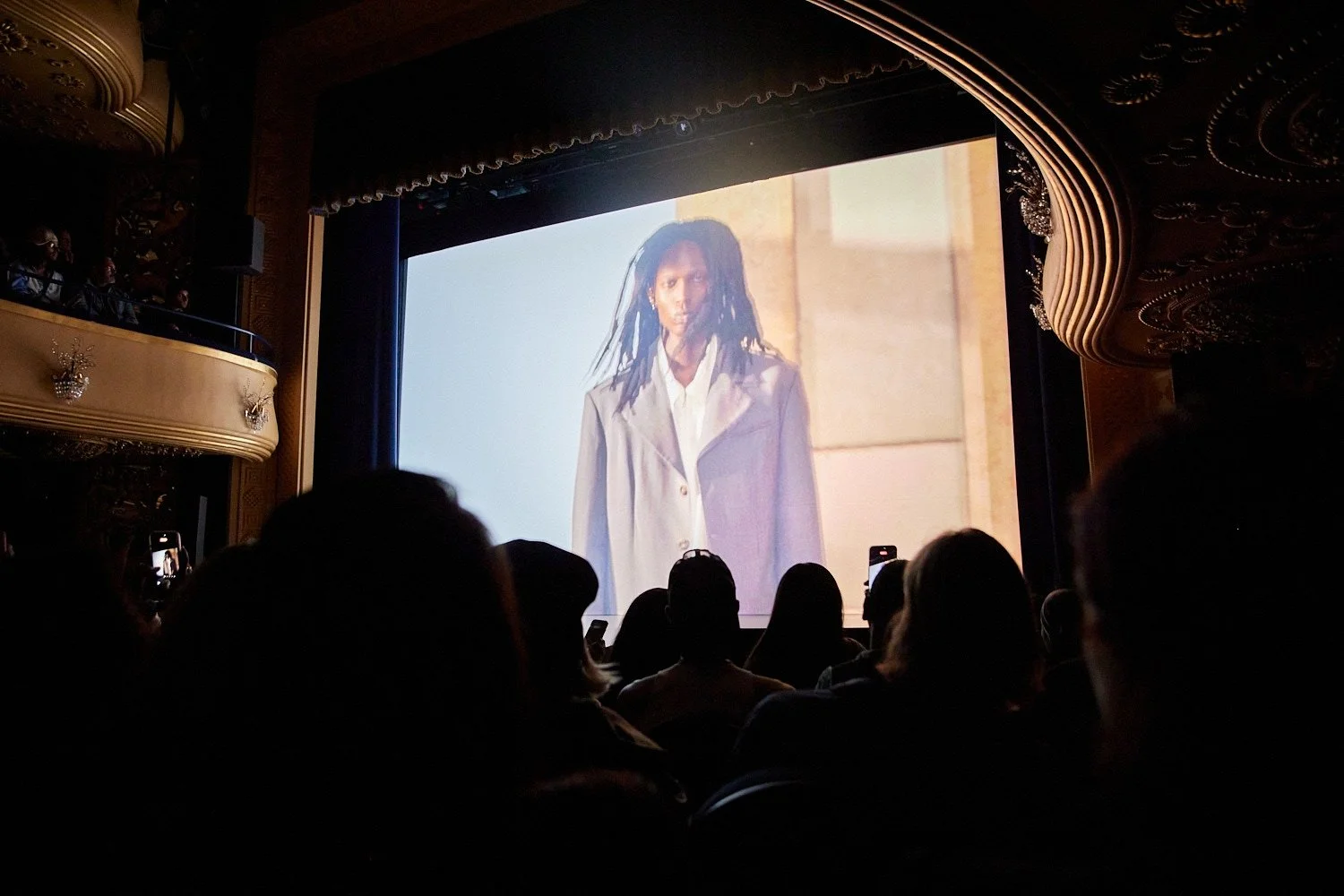
The invitation read like a riddle: for one audience the show occurs and goes unrecognized, for the other it is recognized and stays out of reach. On the day, the riddle resolved itself. In Brooklyn, people who had lined up from midnight to trade old bags for free shopping at the Telfar sample sale found themselves in the middle of a surprise runway. In Paris, the 300 guests on the official list watched a projection. The house leaves the reading of "SS" open: Spring Summer, or sample sale.
The gesture comes with a set of questions the brand hands straight to its audience. Founded in New York in 2005, Telfar counts among the few labels of its generation still led by its founder, independent of investors and operating at real scale. Who gets to write that chapter of fashion history is left for the reader to answer. "The context is part of the material," the statement reads, and the season is presented as a testament to more than twenty years of working by that rule.
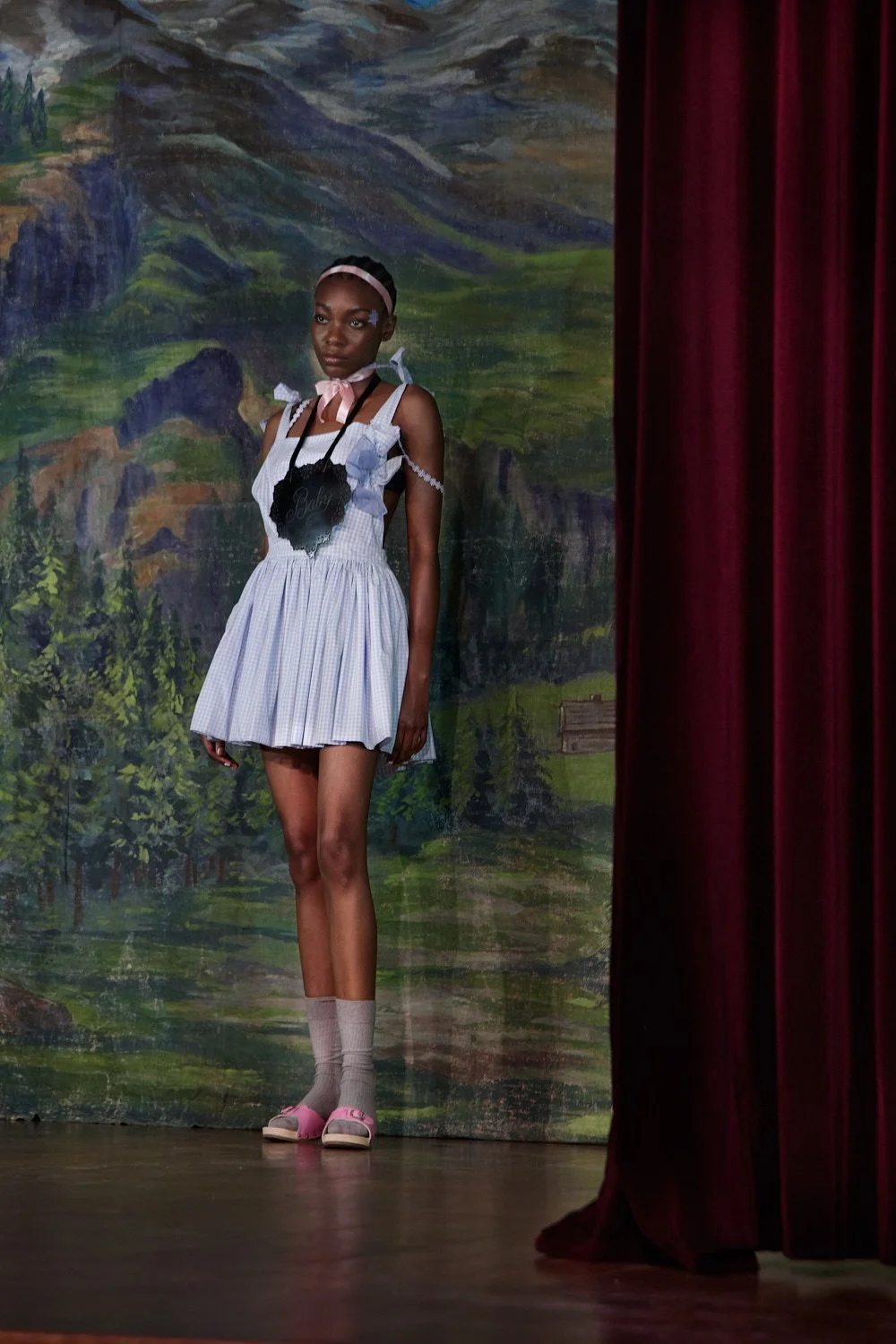
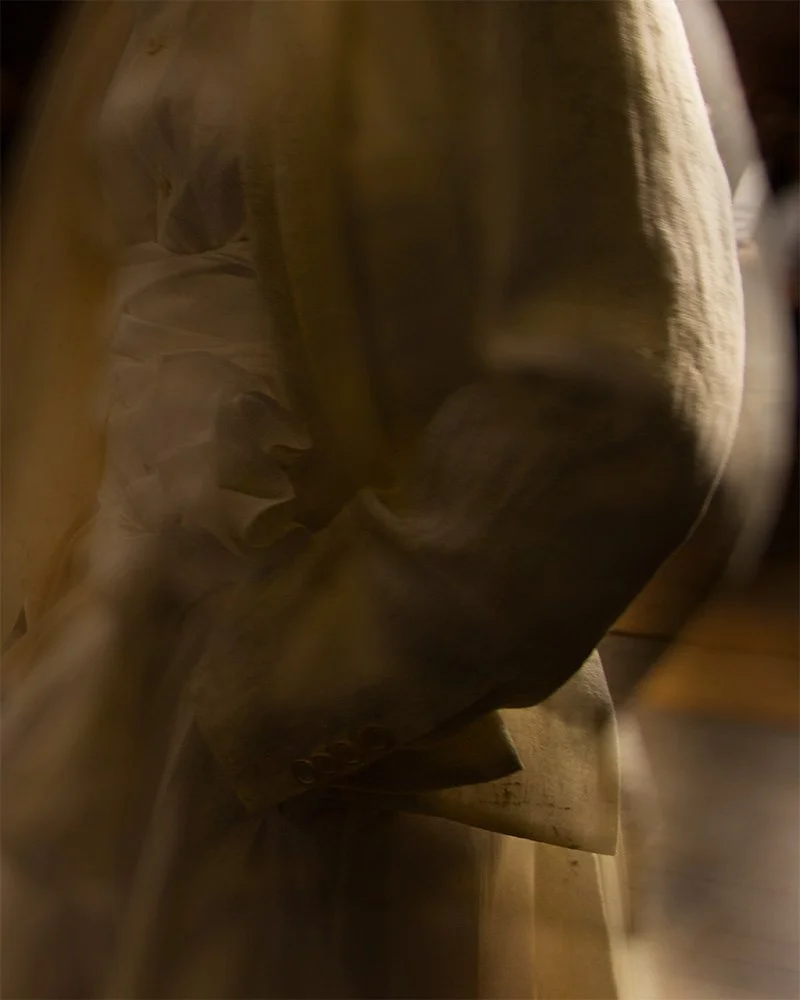
The collection starts on the street, where owners, workers and hustlers pass each other too fast to tell who is coming and who is going. Its first uniform is the suit, cut to be worn inside out. Jackets come cropped, classic and zoot. Trousers are balloon or straight with a split at the toe, next to raw hemmed skirts, a mid-calf culotte and an African wrap-short, all in flat black and checked gray virgin wool blend. The inside is finished as carefully as the outside, with branded silk jacquard linings, double buttons and hidden pockets. The same lining is then torn out and remade as funnel-neck dress shirts, oversized shirt-dresses and backless button halters with raw edges and loose threads, paired with crisp poplin button-ups closed by zippers.
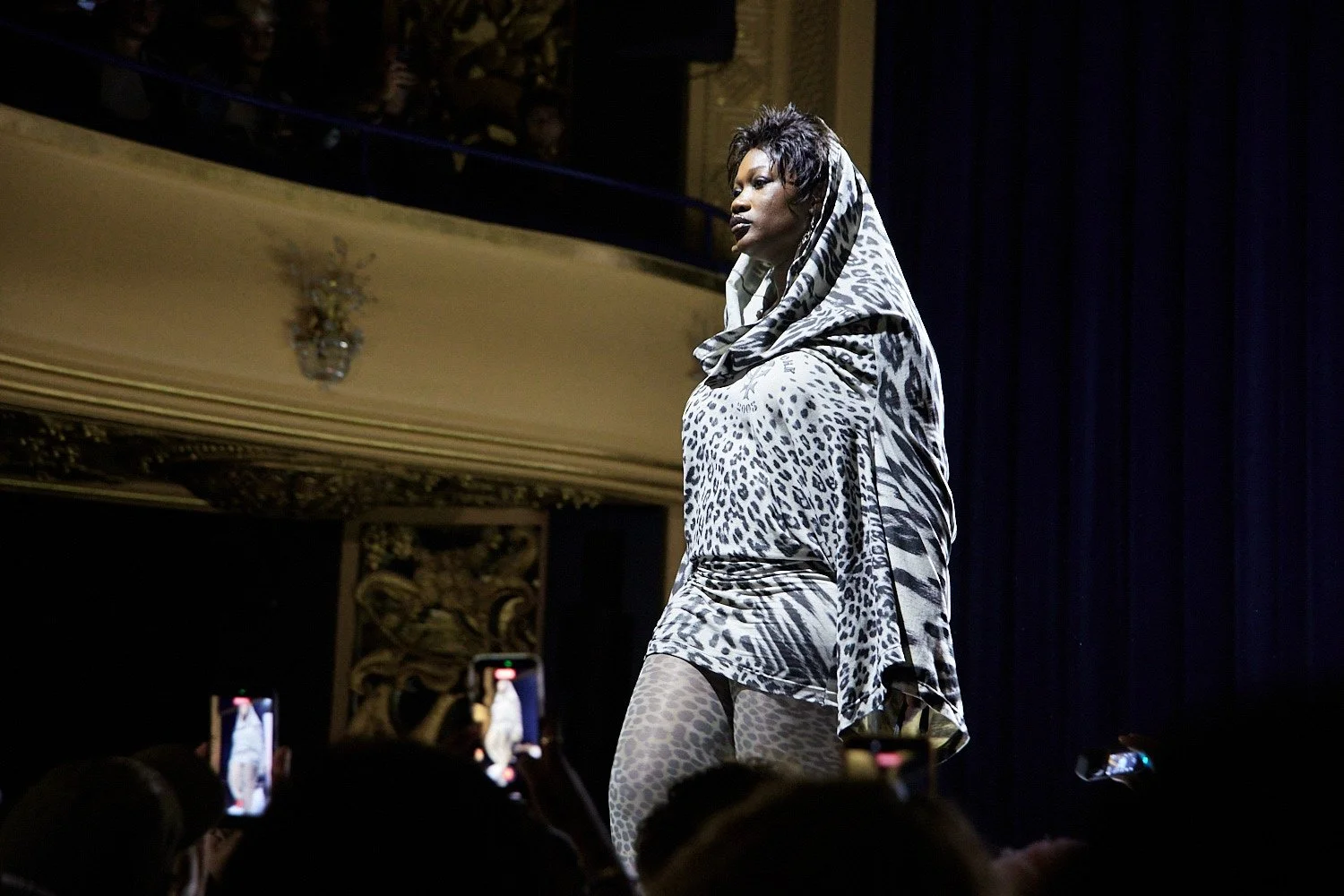
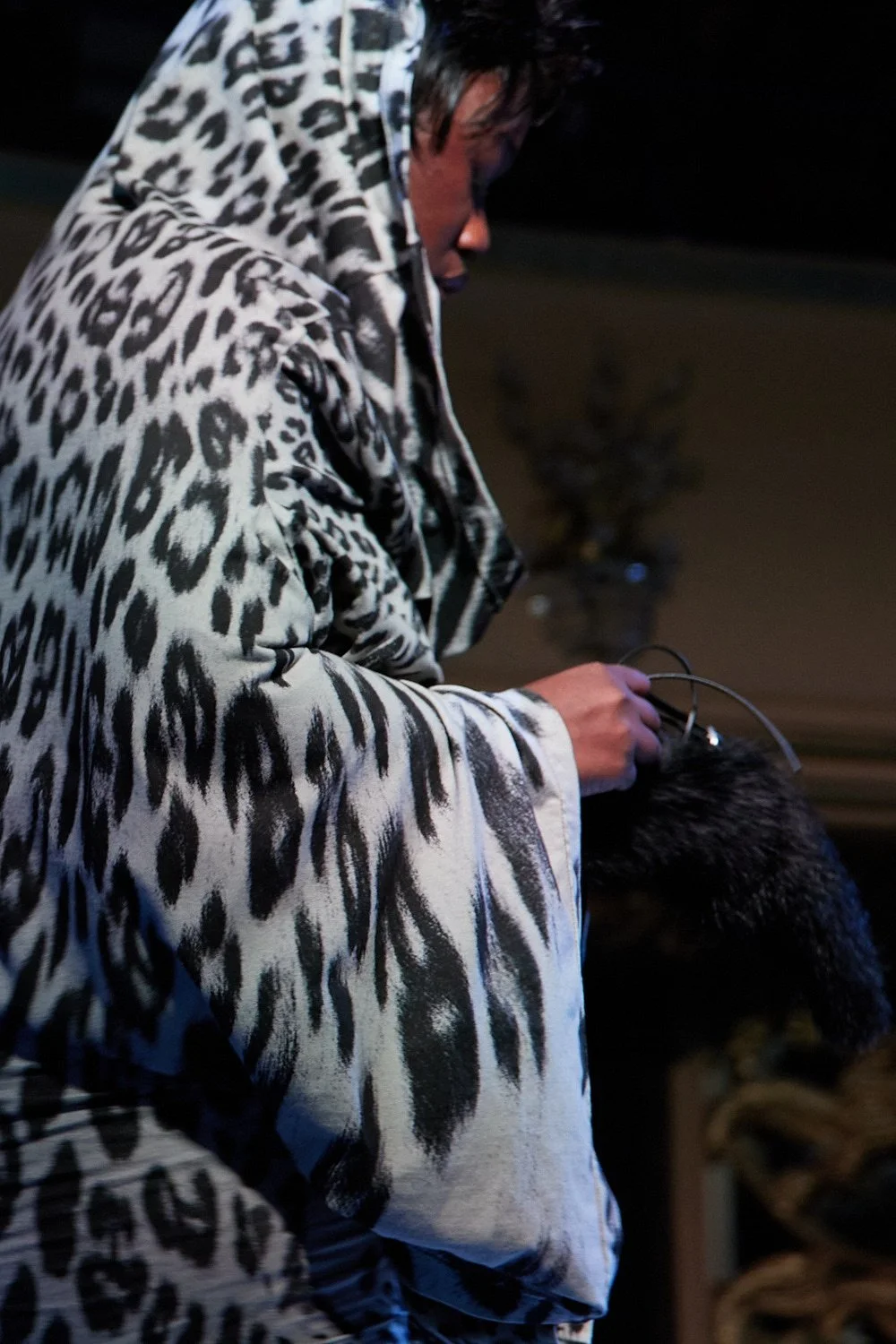
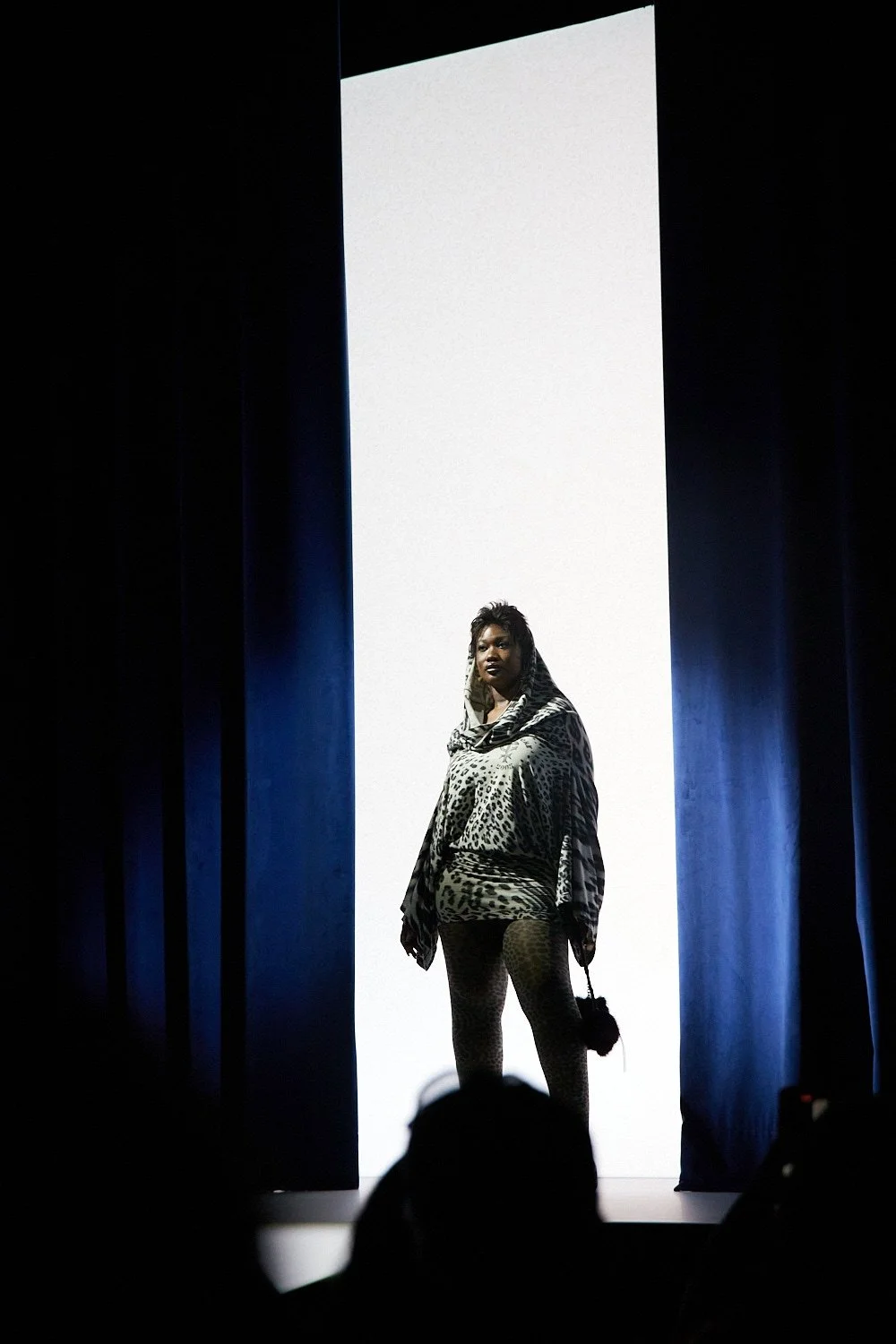
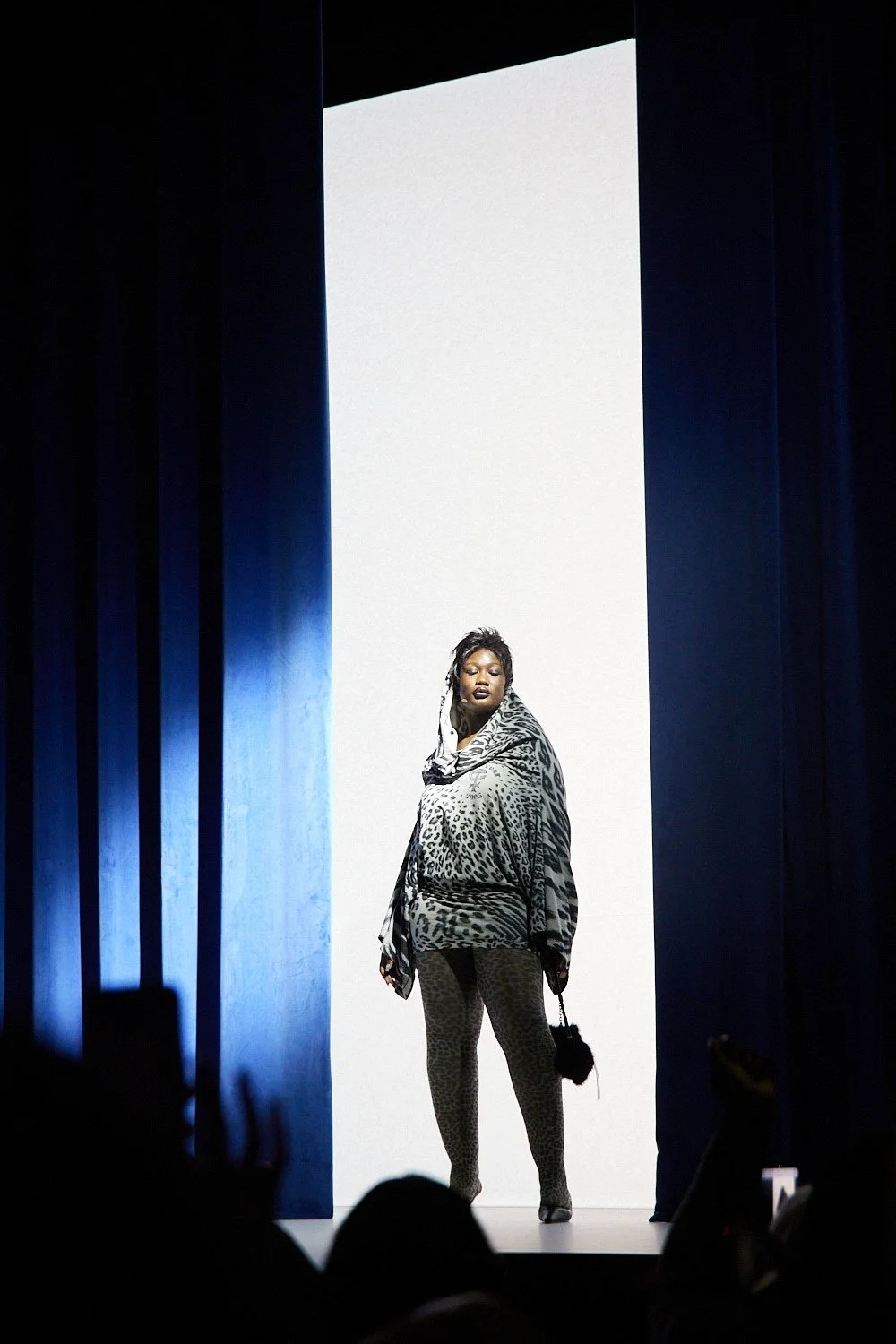
As day turns to night the animal prints arrive. Snake and leopard were developed from wild skins dragged across office scanners, then manipulated until the spots and scales camouflaged the house logo. They appear on gauzy dress shirts with pearl buttons, baby tees and scarf halters, then on garment-dyed rib and cotton basics: bodysuits, scuba tops, waffle hoodies, crews and leggings. Two T-shirts stand out. The Cross-T is a flat construction shaped like a perfect plus sign, wearable in any direction. The Skew-T nods to the 212 era, when tall tees were tucked askew for quick access to a beeper.
Sharkskin-Denim follows, crisp and subtly iridescent in red, purple, green and black with contrast stitching. It comes as a super-stacked skinny that cuffs all the way to the knee and as a drawstring barrel jean. The jackets are rebuilt from the bottoms: a long cowl-neck parka from the barrel leg, a denim racer from the skinny. Orchard Street bombers, embellished by the artist Cake, swap leather for crack-printed T-shirts and gray trapunto fleece. Making "leather" out of T-shirt ink turned out to cost as much as the real thing, a fact that became an obsession for the studio. Their answer is a set of cardigans, crews and trousers presented as cashmere, made by turning printed sweatshirts inside out and brushing out the fleece.
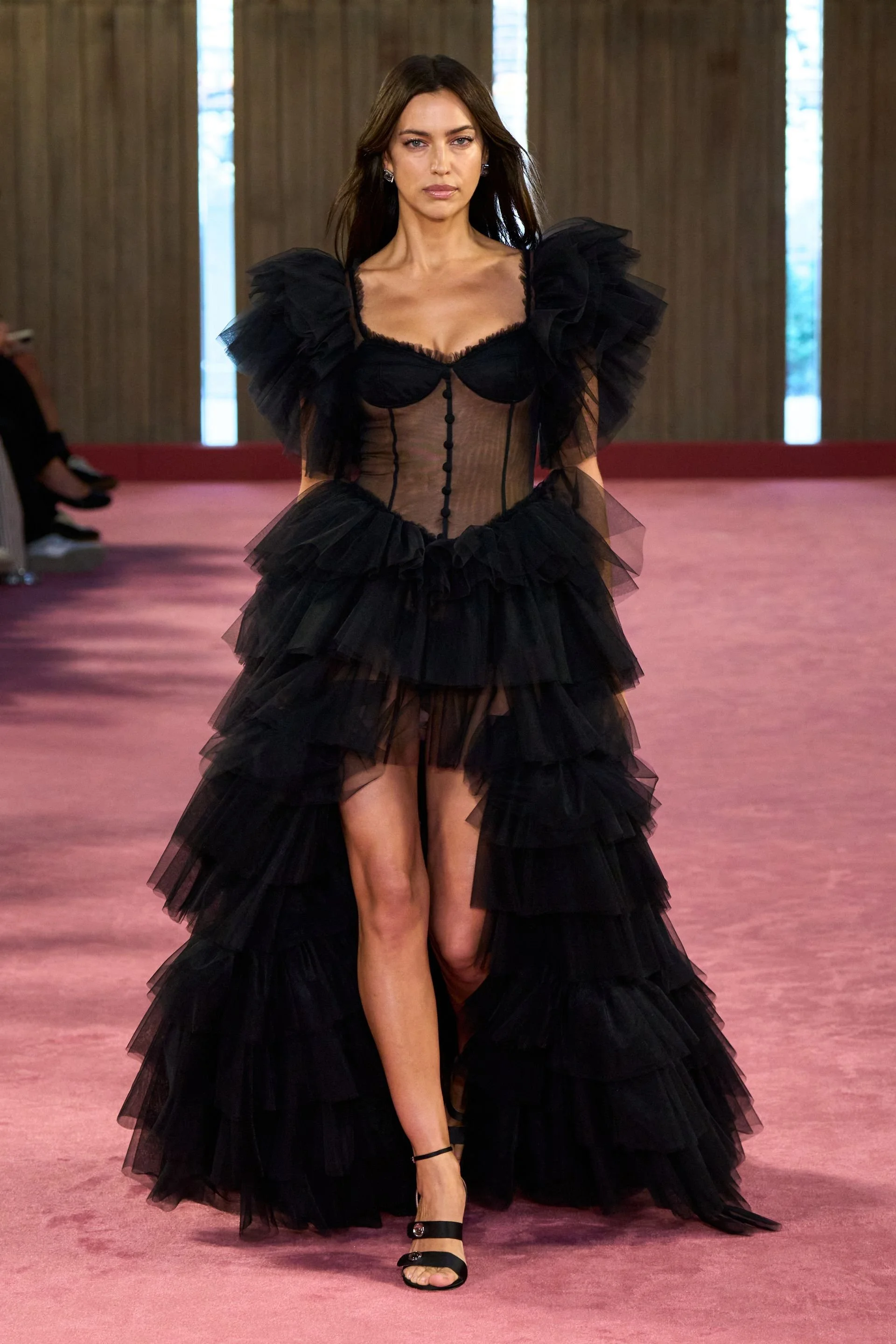
The final chapter turns to moto. A meticulously detailed motorcycle jacket and pants are cut from worn-in sweats in black and tan, over rib and cotton leggings, tops and a body-hugging hoodie padded at the shoulders, knees and elbows. The show then fades to black. Silks and suits return with a floor-length wool blanket coat whose crack leather sleeves recall the varsity jacket, over ribbed underpinnings and mirrored tanks and halters finished with brushed-metal chains. Those chains lead back to the bags seen throughout the show, including one planned for release next year that Telfar is keeping quiet about for now.

Photography by Eva Rivas Bao
Words by Donald Gjoka